TL;DR
- The Trend: The vintage bathroom look is having a real comeback, driven by nostalgia, sustainability, and social media, not just aesthetics.
- 12 Elements: From colored bath suites to reclaimed hardware, 12 specific design elements define the current retro revival.
- The Rule: Mix two or three elements rather than replicating one full decade, for a look that feels collected, not costumed.
- The Cost: A partial refresh runs $400-$900. A full antique vanity conversion or a clawfoot tub adds $300-$3,500 more.
- The Verdict: This trend has more staying power than a typical color-of-the-year pick because it borrows from a century of real design history.
The Vintage Bathroom Look Is Suddenly Everywhere Again
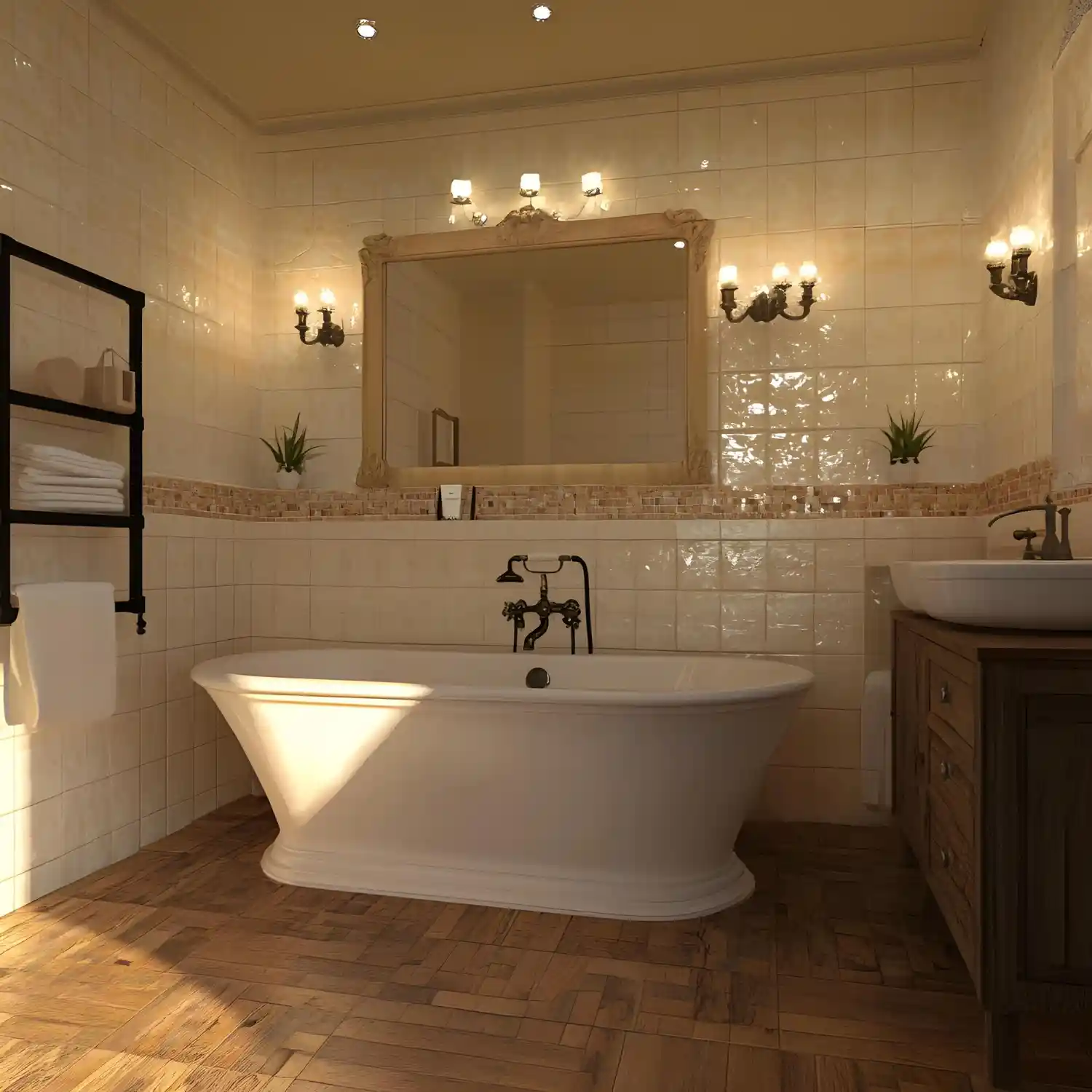
A bathroom built in 1952 keeps showing up next to freshly renovated ones on design blogs and Pinterest boards — and the older one usually looks more interesting. Why does a checkerboard floor or a pink tile suite from decades ago photograph better than a brand-new all-white shower wall?
Looking for more ideas? Explore our full guide to Bathroom Design Styles.
Vintage bathroom ideas bring back the colored suites, checkerboard tile, and clawfoot tubs of the 1920s through the 1960s, paired with today’s plumbing and finishes. The look works because it swaps sterile, all-white design for personality and warmth. Most vintage bathrooms mix two or three retro elements — a tile pattern, a fixture finish, a lighting style — rather than copying one full decade. That mix keeps the room feeling curated, not costumed.
If you have ever renovated a bathroom to look “clean and modern” and ended up with something that feels a little flat, you are not alone. Plain white tile and one chrome faucet do not automatically look designed — sometimes they just look unfinished.
Editorial field note: A blank white bathroom with one mirror and a single overhead light often photographs as generic, even when every material inside it is new. Swapping in one colored tile accent, a pair of brass wall sconces, and a vintage-style mirror gives the same room a sense of history it did not have before, without moving a single wall.
This guide walks through the design elements driving the current retro comeback — from colored bath suites to checkerboard tile to reclaimed hardware — along with what two or three of them actually cost to bring into a bathroom you already have. For the wider view of where bathroom design is headed overall, our bathroom design trends for 2026 piece is a useful companion read. Most readers start with just the tile and the hardware, then decide later whether a full color suite or a clawfoot tub is worth the bigger commitment.
Each idea below can stand alone or combine with one or two others for a fuller vintage look. And if you’re planning updates across more than one room, our home decor inspiration hub has ideas for every space. Bookmark this guide for quick reference.
| Quick Takeaways | |
|---|---|
| Palette | Soft pink, mint green, butter yellow, or black-and-white signals the era correctly. |
| Tub | A clawfoot or pedestal tub works as the room’s anchor piece. |
| Tile | Hex, penny-round, or checkerboard flooring is the fastest way to place a bathroom correctly. |
| Hardware | Cross-handle faucets and unlacquered brass patina in naturally over months. |
| Furniture | A sealed antique dresser makes a one-of-a-kind vanity. |
| Cost | Two or three elements cost far less than a full historic remodel. |
Why Are Vintage Bathroom Ideas Trending Right Now?
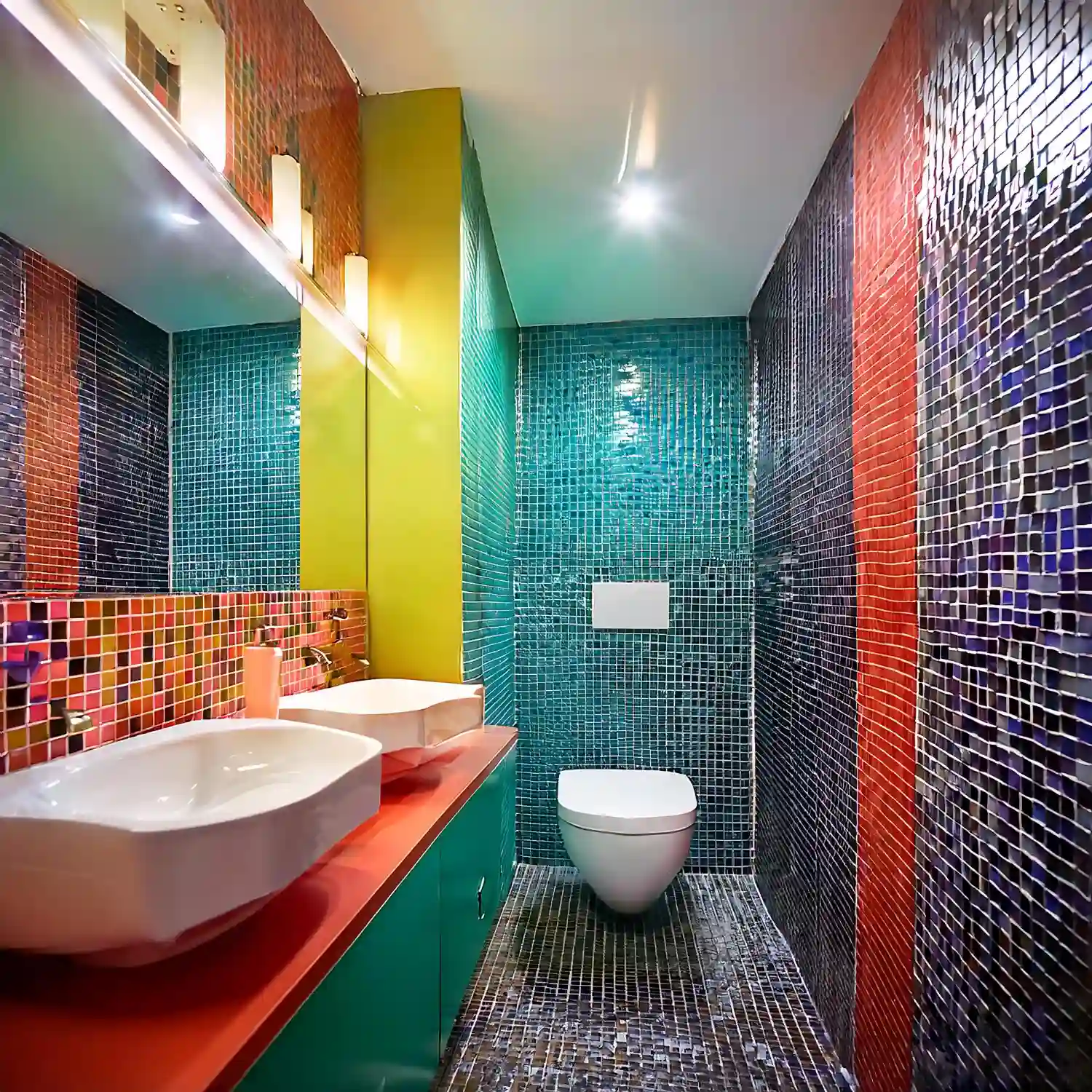
Vintage bathroom ideas are trending for a reason bigger than aesthetics. After a decade of matte white subway tile and near-identical chrome fixtures, homeowners are choosing rooms with a sense of history instead. Interior designers describe clients asking for spaces that feel lived-in and personal rather than showroom-perfect. Colored sanitaryware — the pink sinks, mint tubs, and black tile suites of the mid-20th century — is having a real comeback, a shift Homes & Gardens has been tracking closely rather than a one-season moment.
Three forces are driving it. Nostalgia comes first: the design term grandmillennial, coined by writer Emma Bazilian in a 2019 House Beautiful piece, describes younger homeowners drawn to their grandparents’ florals and antiques. That instinct has moved from living rooms into bathrooms. Sustainability comes second: an antique dresser turned into a vanity or a salvaged brass sconce keeps usable materials out of landfills, and reclaimed pieces are often cheaper than new ones built to imitate them. Social media comes third: Pinterest boards and short home-renovation videos reward bathrooms with a clear point of view, and a checkerboard floor photographs better than a neutral box.
Signs This Is Catching On:
- Home and design magazines are running dedicated retro and vintage bathroom roundups for 2026, not single features.
- Colored sanitaryware — pink, mint, and black-and-white suites — is showing up in new product lines again, not only architectural salvage yards.
- Antique furniture converted into vanities appears across home renovation accounts far more often than it did five years ago.
This is not the same territory as a mid-century modern bathroom, which leans on Eames-era walnut and sculptural lighting, or a timeless bathroom built to age quietly without chasing any specific era. If that crisper, Eames-era look appeals to you more than pastel nostalgia, our mid century modern living room ideas guide covers the same aesthetic applied to a different room. This retro style leans into unapologetic nostalgia instead — pastel tile suites, clawfoot tubs, floral wallpaper — and the palette stays light to mid-tone, not the deep, moody direction a color-led bathroom might take.
Vintage Bathroom Checklist
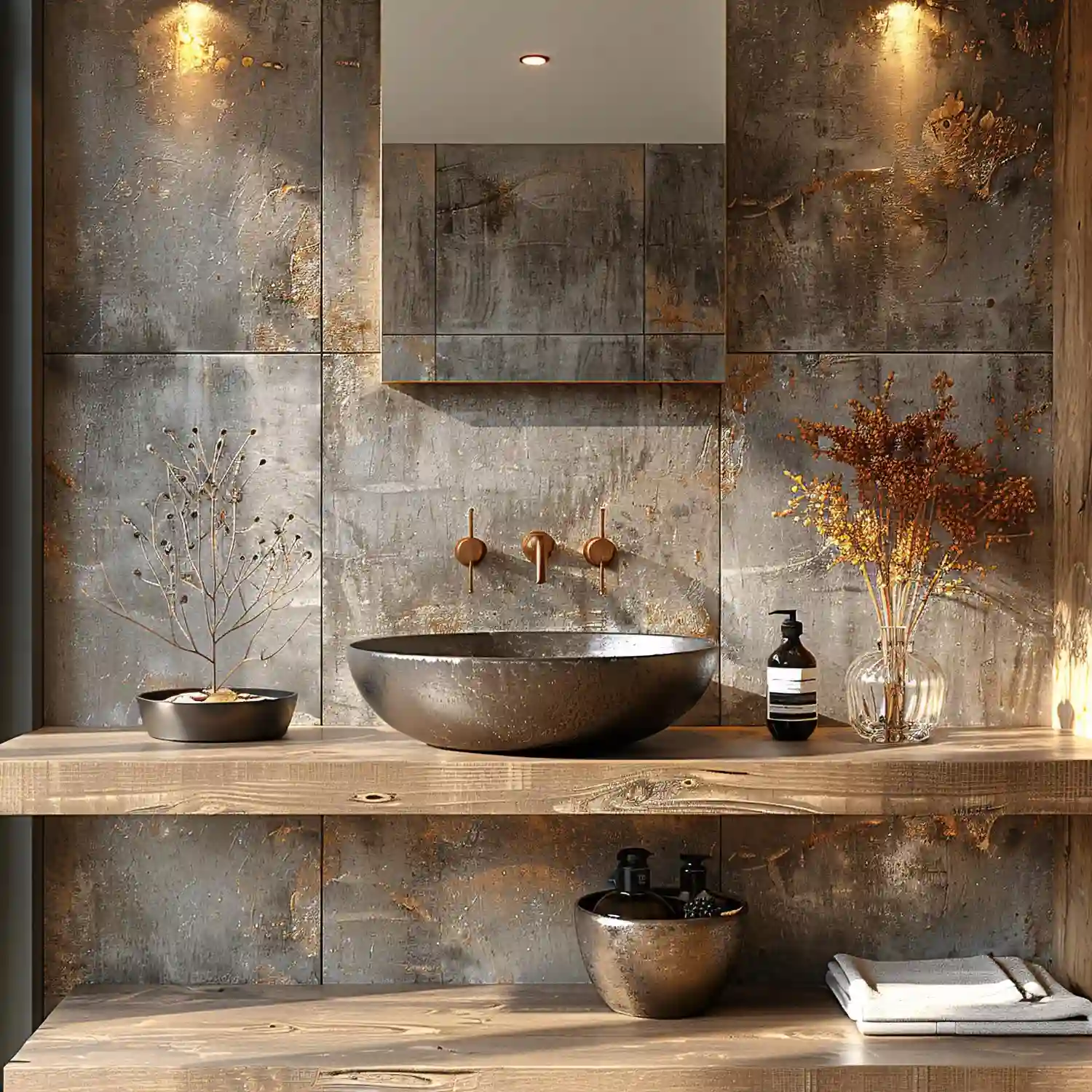
Before picking specific elements, skim our more bathroom design ideas hub for the full range of styles this category covers, then use the list below to narrow toward a vintage-specific plan.
- Pick one dominant retro color — soft pink, mint green, butter yellow, or black-and-white — and use it once, not on every surface.
- Choose the tub style first: a clawfoot, a pedestal-adjacent footprint, or a color-matched built-in sets the tone for everything else.
- Use hex, penny-round, or checkerboard tile on the floor only, and let the walls stay simpler.
- Match the faucet, sconce, and mirror hardware to one metal finish — unlacquered brass, nickel, or matte black.
- Set a wallpaper budget before falling for a pattern. Floral and damask rolls typically run $60 to $150 each.
- Source one antique or reclaimed piece — a dresser, mirror, or cabinet — before buying anything new.
- Keep grout and paint in the same warm or cool family as the tile to avoid a mismatched look.
- Leave one wall or surface plain so the retro elements have room to stand out.
KEY TAKEAWAY: The most convincing vintage bathrooms mix two or three retro elements at most — one color, one tile pattern, one fixture finish — instead of replicating an entire decade at once.
Colored Bath Suites From the 1950s and 60s
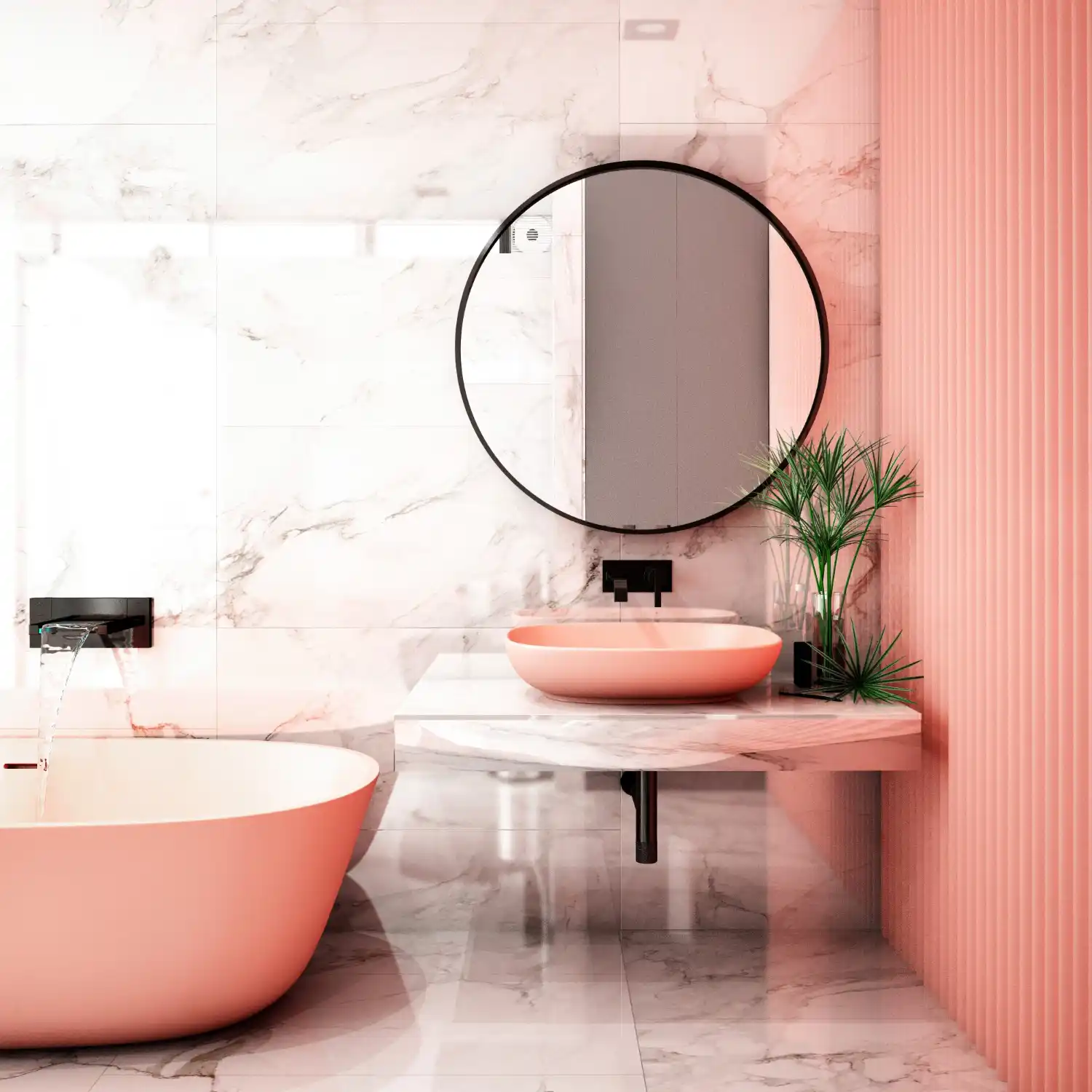
Colored bath suites are the clearest signal of a vintage bathroom. Between 1946 and 1966, an estimated five million new American homes received a pink bathroom, largely thanks to First Lady Mamie Eisenhower’s well-documented fondness for the color — a story the Craftsman Blog traces in detail. Mint green, butter yellow, and black-and-white suites followed the same demand for color instead of stark white porcelain.
Modern versions rarely replicate a full suite. A single colored pedestal sink, one wall of pink or mint tile, or a black-and-white tile band above the tub reads as vintage without committing an entire bathroom to one shade. For a deeper look at the pink end of the palette, our pink bathroom designs guide covers placement and pairing ideas.
Mint behaves a little differently depending on the tile finish — glossy leans playful and 1950s, matte leans softer and more contemporary. Butter yellow works best in small doses, since a full yellow suite can feel closer to a diner than a bathroom. Our green bathroom ideas piece breaks down the sage-versus-mint direction in more depth.
Why Do Clawfoot and Pedestal Tubs Anchor a Vintage Bathroom?
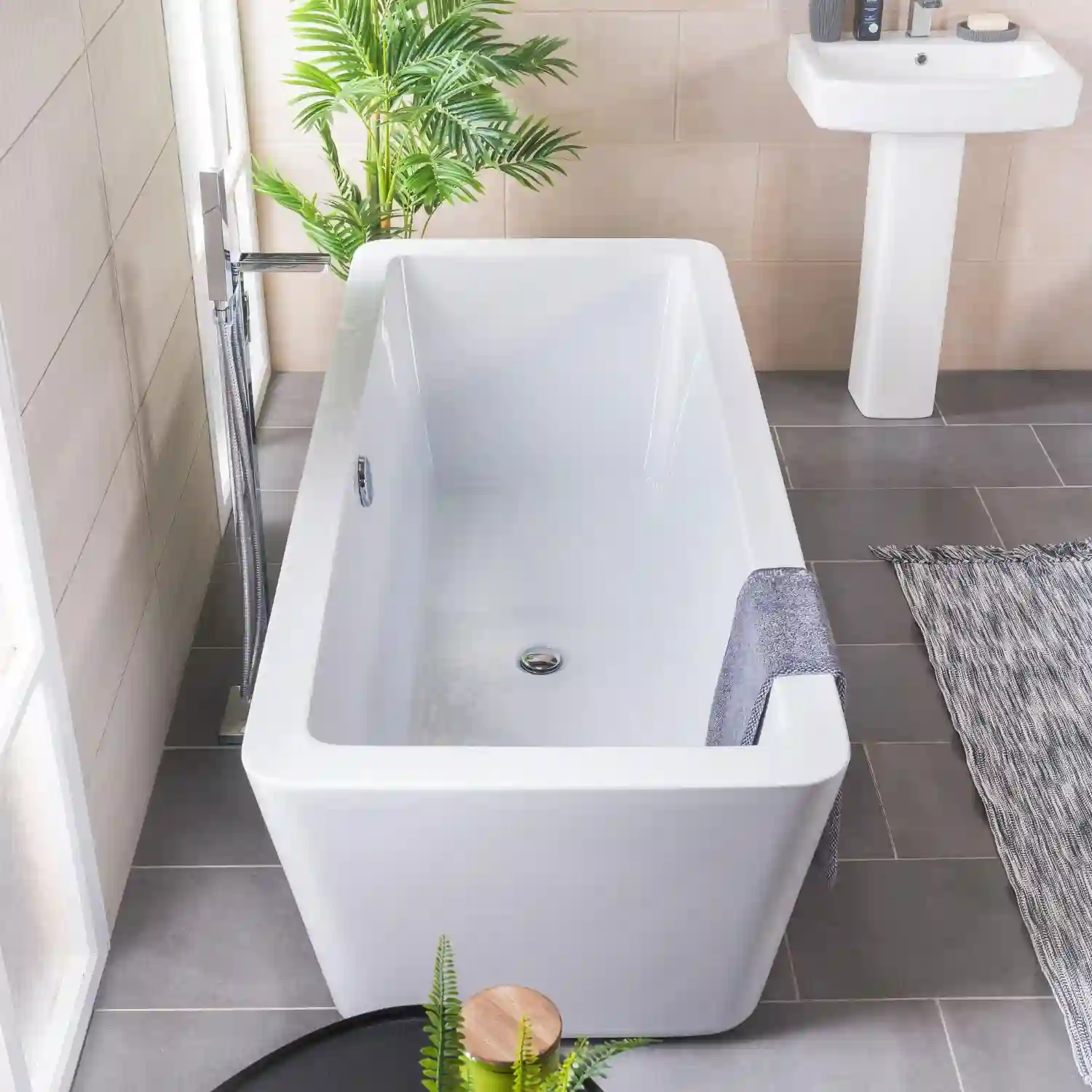
A clawfoot tub works as the anchor of a vintage bathroom the way a fireplace anchors a living room. The style dates to Victorian-era cast iron tubs raised on ball-and-claw feet, originally a status symbol before built-in tubs became standard. Acrylic reproductions start around $600, while cast iron versions typically run $1,500 to $3,000 based on current market pricing, and a fully restored antique piece can reach $10,000 or more.
A pedestal sink pairs naturally with the same era and takes up far less floor space than a full vanity, which matters in most pre-1960s bathroom footprints. A clawfoot tub needs roughly 30 by 60 inches of clear floor space plus room on at least three sides to use comfortably. Safety Note: moving a tub’s plumbing to a new location is structural work — treat the tub itself as a styling and sourcing decision, and leave any plumbing relocation to a licensed plumber.
Hex and Penny-Round Tile Flooring
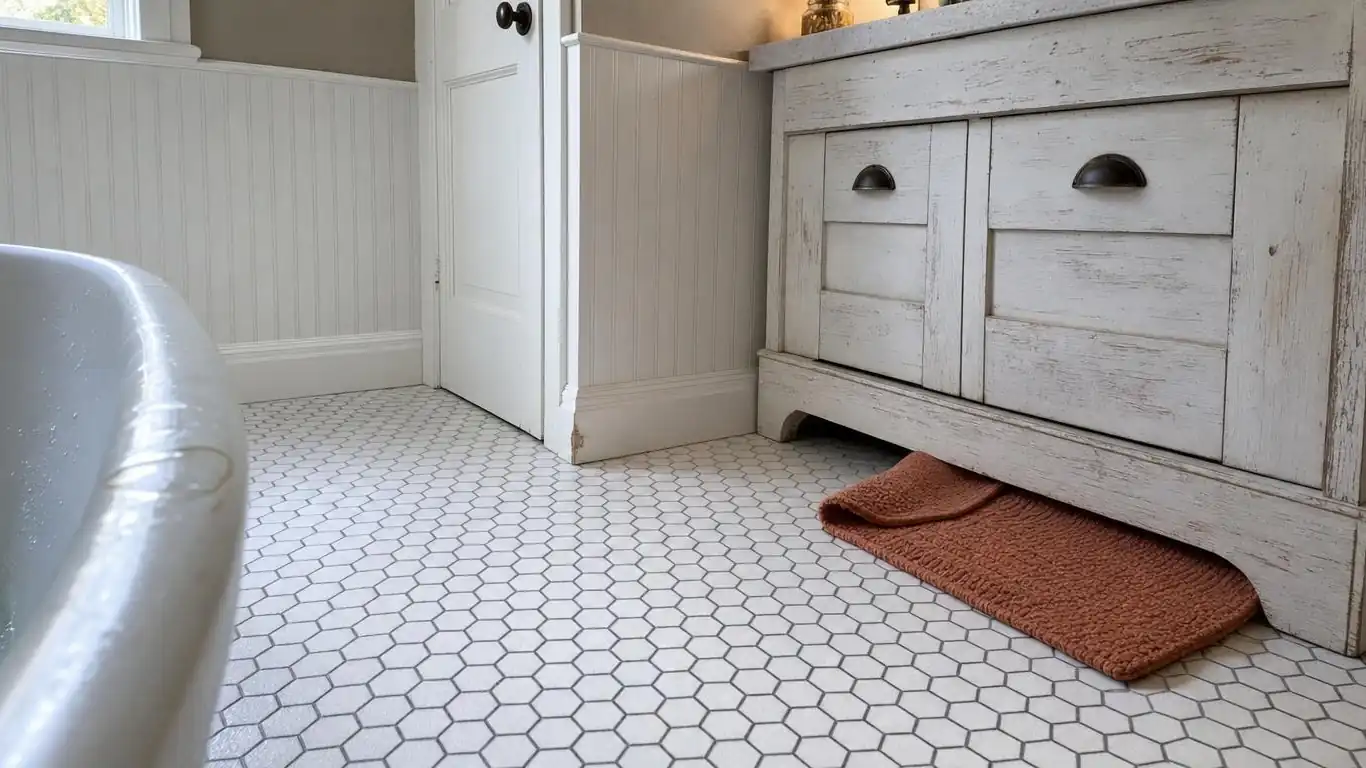
Hex and penny-round tile flooring trace back to the 1890s through the 1930s, when small-format tile became standard because it drained well and gave bare feet secure footing — a detail tied to the germ-theory-driven push for tiled, sanitary bathrooms that Apartment Therapy has documented. White one-inch hex tile with black dot accents remains the most historically accurate pattern.
Porcelain hex tile starts around $15 per square foot, and simple white penny tile can run closer to $5 per square foot before installation. Most vintage bathrooms keep this pattern on the floor only and let the walls stay plain tile or paint — mixing a busy floor with a busy wall usually looks cluttered rather than period-accurate. For more tile pairing ideas beyond the floor, our bathroom backsplash ideas guide covers wall and shower-surround tile in the same spirit.
Checkerboard Tile Patterns
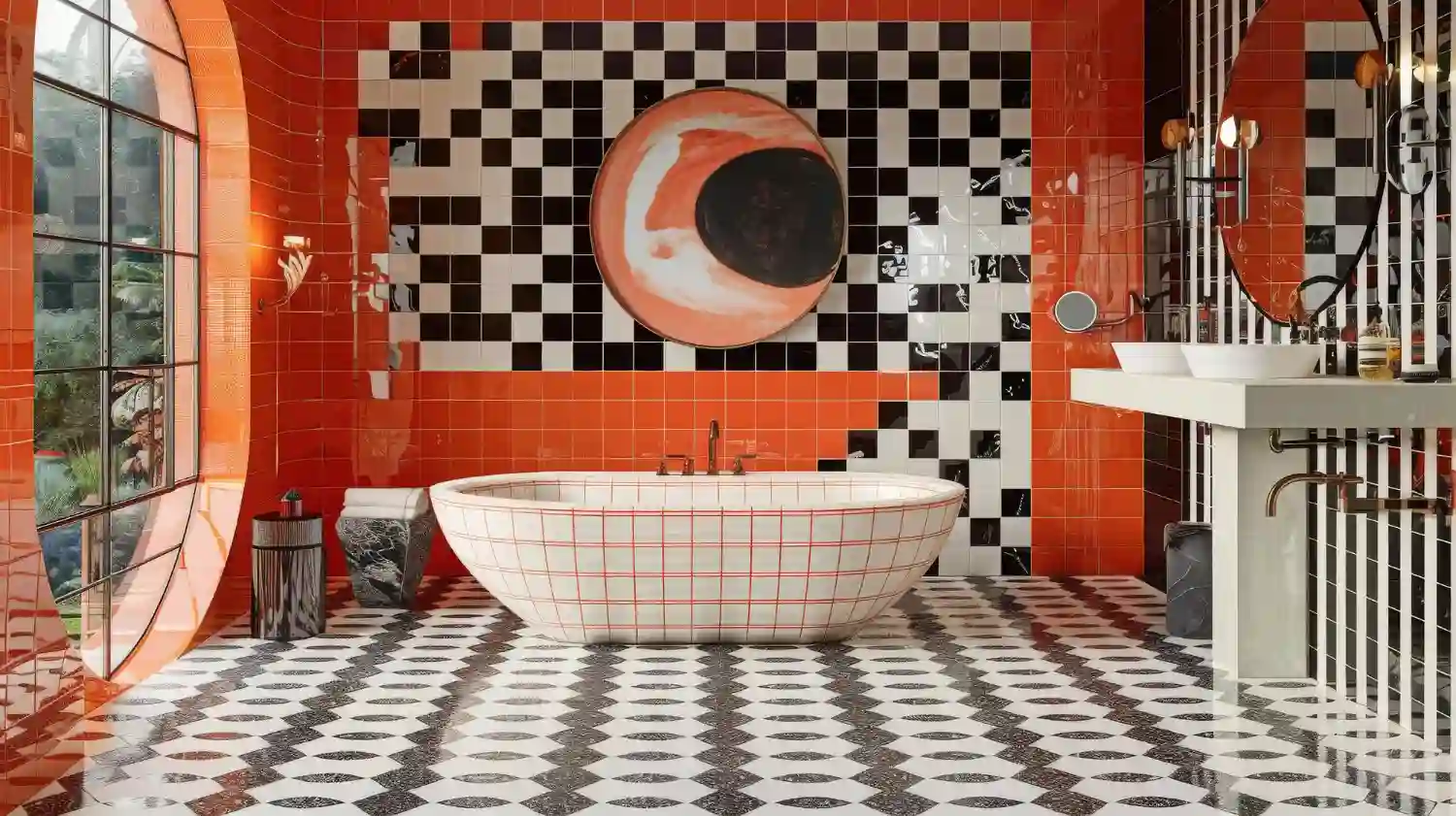
Black-and-white checkerboard flooring became a hallmark of Victorian-era interiors and reached peak popularity in American bathrooms by the 1920s, before colored tile took over in the following decade. The pattern works in bathrooms of almost any size because the contrast looks planned rather than busy, unlike many smaller-scale patterns.
DESIGNER TIP: keep a full checkerboard floor to bathrooms under roughly 40 square feet. Larger rooms usually look better with a checkerboard runner or a bordered section instead of wall-to-wall coverage, which can otherwise feel overwhelming underfoot. For a full color and material breakdown of this specific look, see our black and white bathroom guide.
What Fixture Finish Looks Most Vintage?
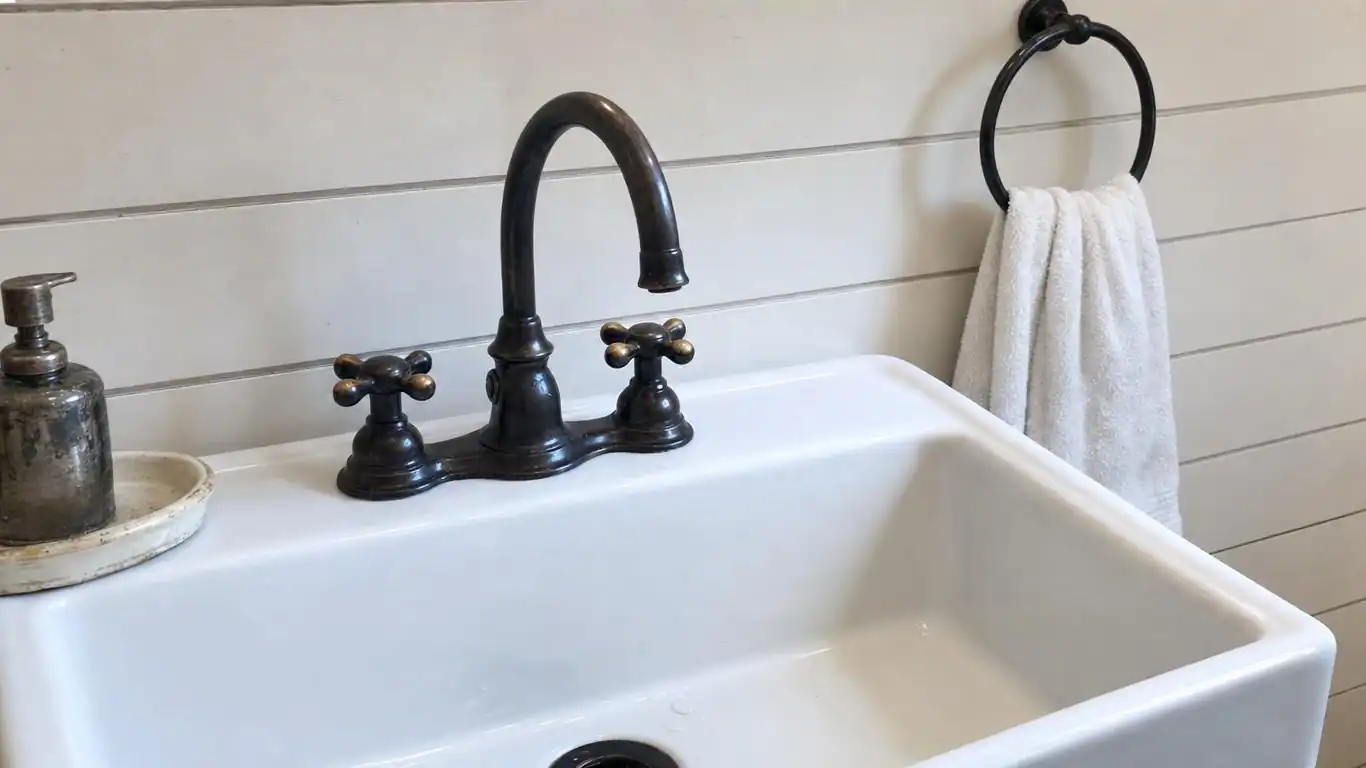
Cross-handle faucets — the X-shaped handles common before single-lever mixers took over — are one of the fastest ways to signal an earlier era without changing any plumbing behind the wall. Pair them with unlacquered brass or polished nickel rather than chrome for the fullest effect.
Material Note: unlacquered brass tarnishes on purpose. It typically shifts from bright gold to a warm honey tone within the first few months of regular use, then deepens toward amber and brown as it patinas — a natural process, not damage, and it will not rust or corrode. Designer Tip: match the faucet, cabinet hardware, and any exposed piping to one metal finish. Mixing three or more finishes in one small room usually looks accidental rather than collected.
Can Antique Furniture Really Work as a Bathroom Vanity?
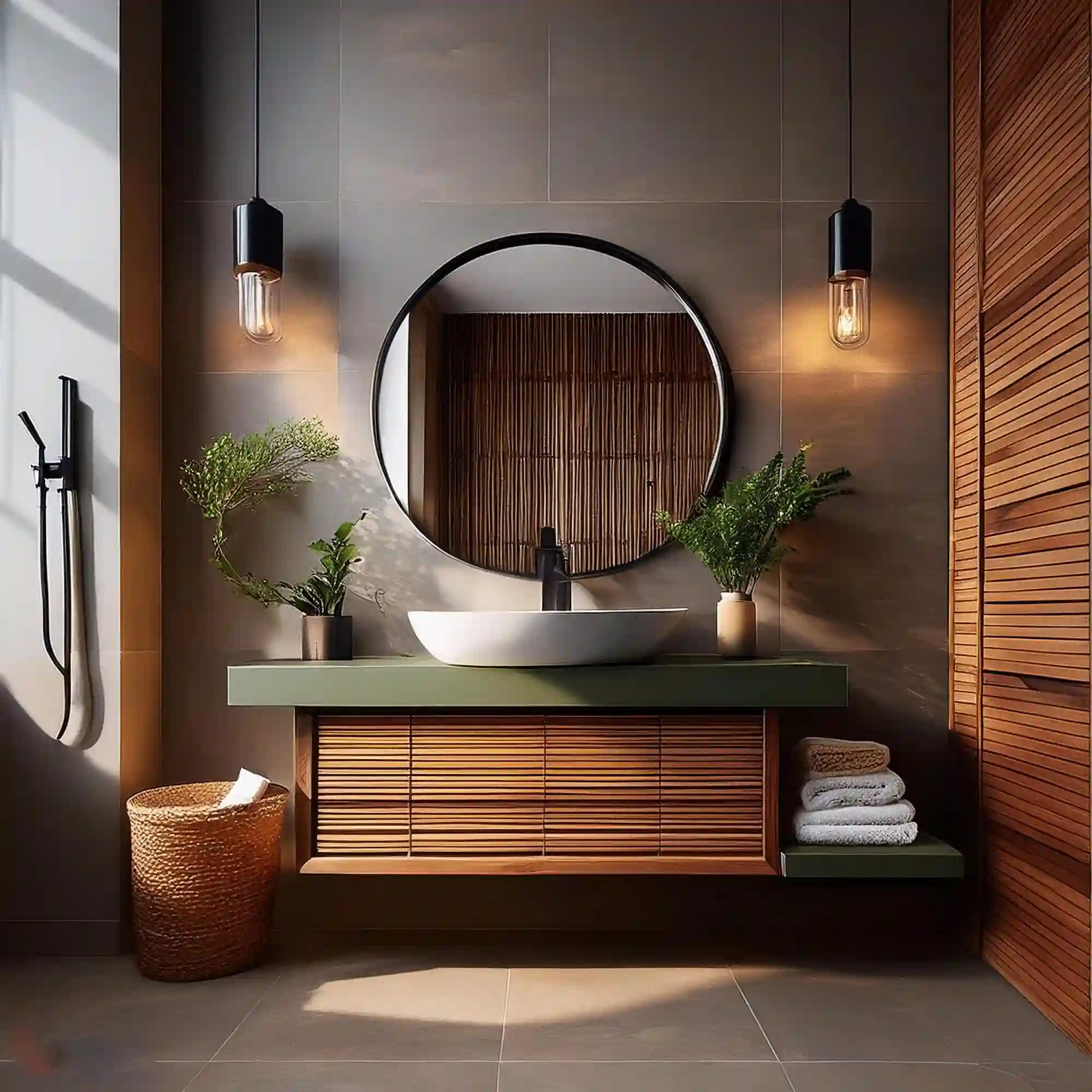
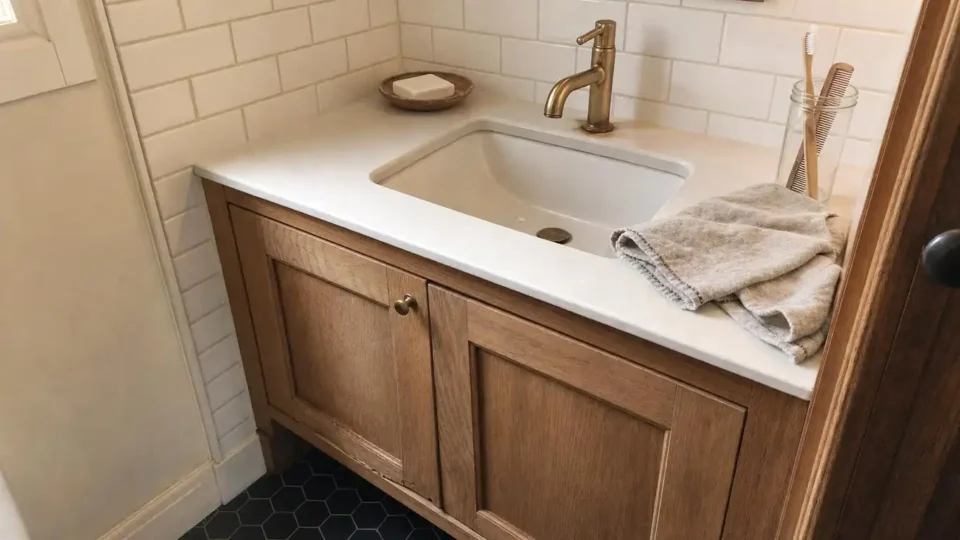
An antique dresser, washstand, or sideboard converted into a vanity gives a bathroom a piece of furniture no factory vanity can replicate. Total project costs for this kind of conversion typically land between $250 and $1,000, covering the piece itself, a vessel or undermount sink, a faucet, and finishing materials. The same small-footprint vanity thinking works outside the bathroom too — our bedroom vanity ideas guide shows how a compact vanity nook can fit into a corner without a full furniture conversion.
Material Note: any wood top near a sink needs a waterproof seal. A marine-grade wood sealer, an epoxy topcoat, or several coats of water-based polyurethane are the most common choices to protect against splashes and humidity. This same repurposed-furniture instinct shows up in farmhouse bathroom styling, though the vintage version leans toward mahogany, walnut veneer, and ornate hardware rather than farmhouse’s plainer pine.
Vintage-Style Medicine Cabinets
A recessed medicine cabinet with a beveled or scalloped mirror front does double duty — storage and a mirror in one footprint — and it has stayed part of the vintage bathroom vocabulary since the early 1900s. Look for cabinets with a metal or wood frame rather than a plain builder-grade mirror door.
Surface-mounted versions work in homes without an existing wall recess, though they add a few inches of depth into the room. Pair a vintage-style cabinet with a small sconce on either side rather than a single harsh overhead strip light, so the mirror gets even light from both sides.
Is Floral or Damask Wallpaper Safe for a Bathroom?
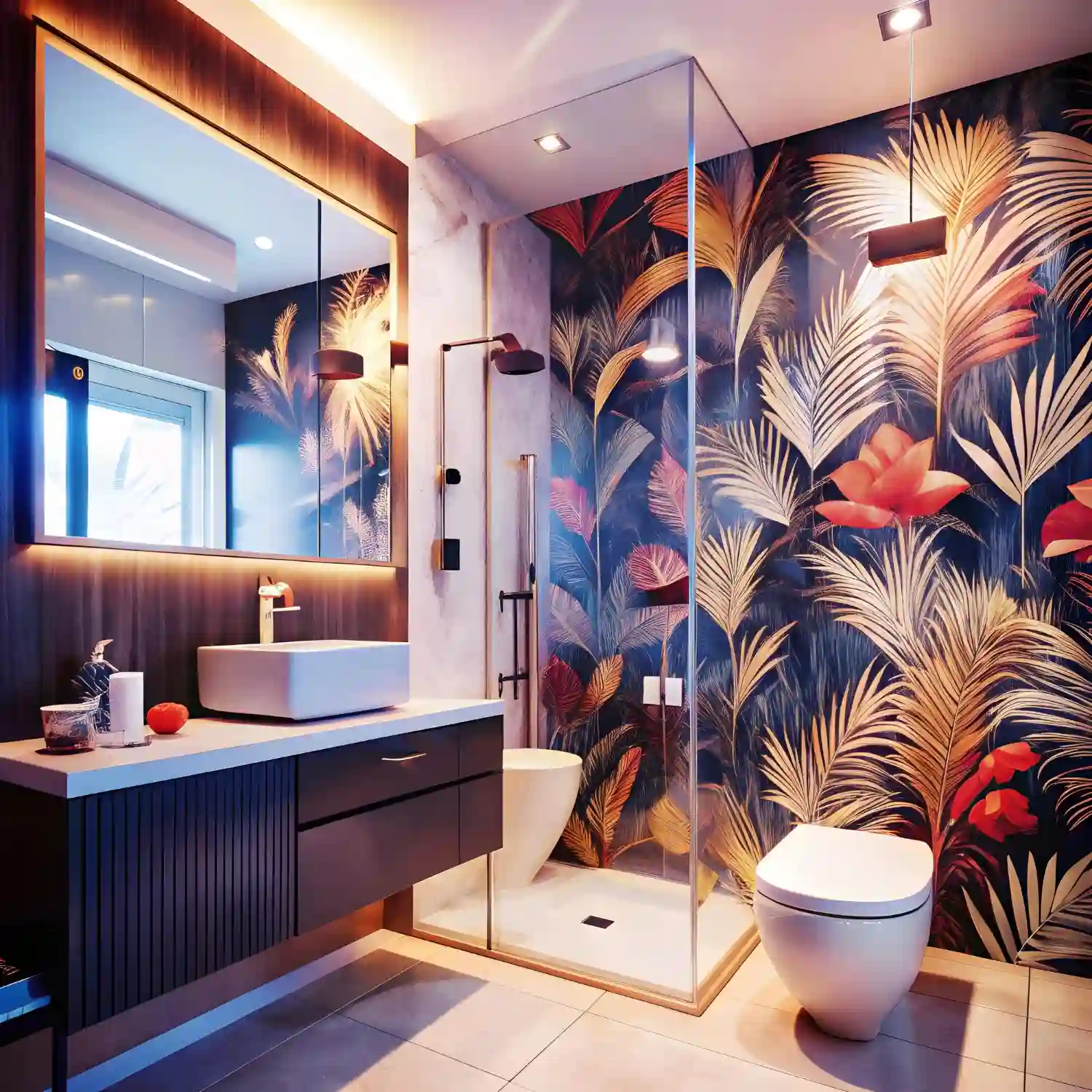
Floral and damask wallpaper is the element most closely tied to the grandmillennial instinct — patterns borrowed from a grandparent’s dining room, reapplied to a much smaller, damp room. A small, tightly repeating floral print works better in a compact bathroom than an oversized damask pattern, which can feel heavy in a five-by-seven-foot space.
Climate Note: bathroom wallpaper needs a vinyl-coated or specifically moisture-rated product, plus working ventilation, to avoid peeling and mold over time. One statement wall, often the one facing the door, usually looks better than wallpapering all four walls in a small room. If you gravitate toward layered pattern generally, boho bathroom styling pushes that same instinct even further, mixing multiple prints rather than just one.
Antique-Style Mirrors and Wall Sconces
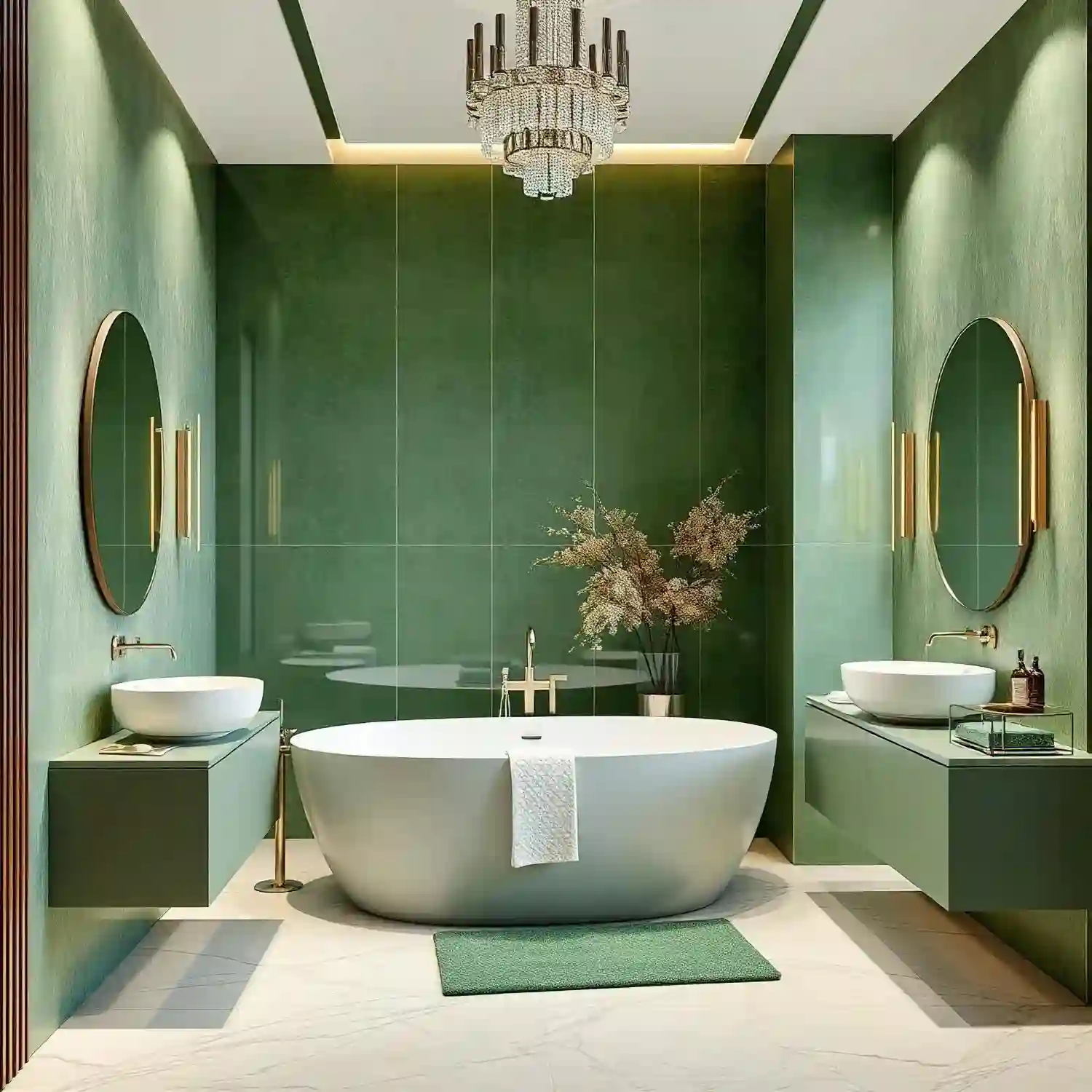
An arched or oval mirror with a brass, gilt, or dark wood frame replaces the plain builder mirror that came standard in most 1980s and 90s remodels. Flank it with two wall sconces mounted at 60 to 66 inches from the floor — roughly eye level for most adults standing at the sink — instead of one fluorescent strip overhead.
Cross-lighting from two sconces removes the shadows a single overhead fixture casts under the chin and around the eyes, which matters in a room used daily for grooming. A slightly aged or antiqued mirror finish, rather than a perfectly clear new one, adds to the sense that the piece has been there a while.
Vintage-Inspired Pendant and Schoolhouse Lighting
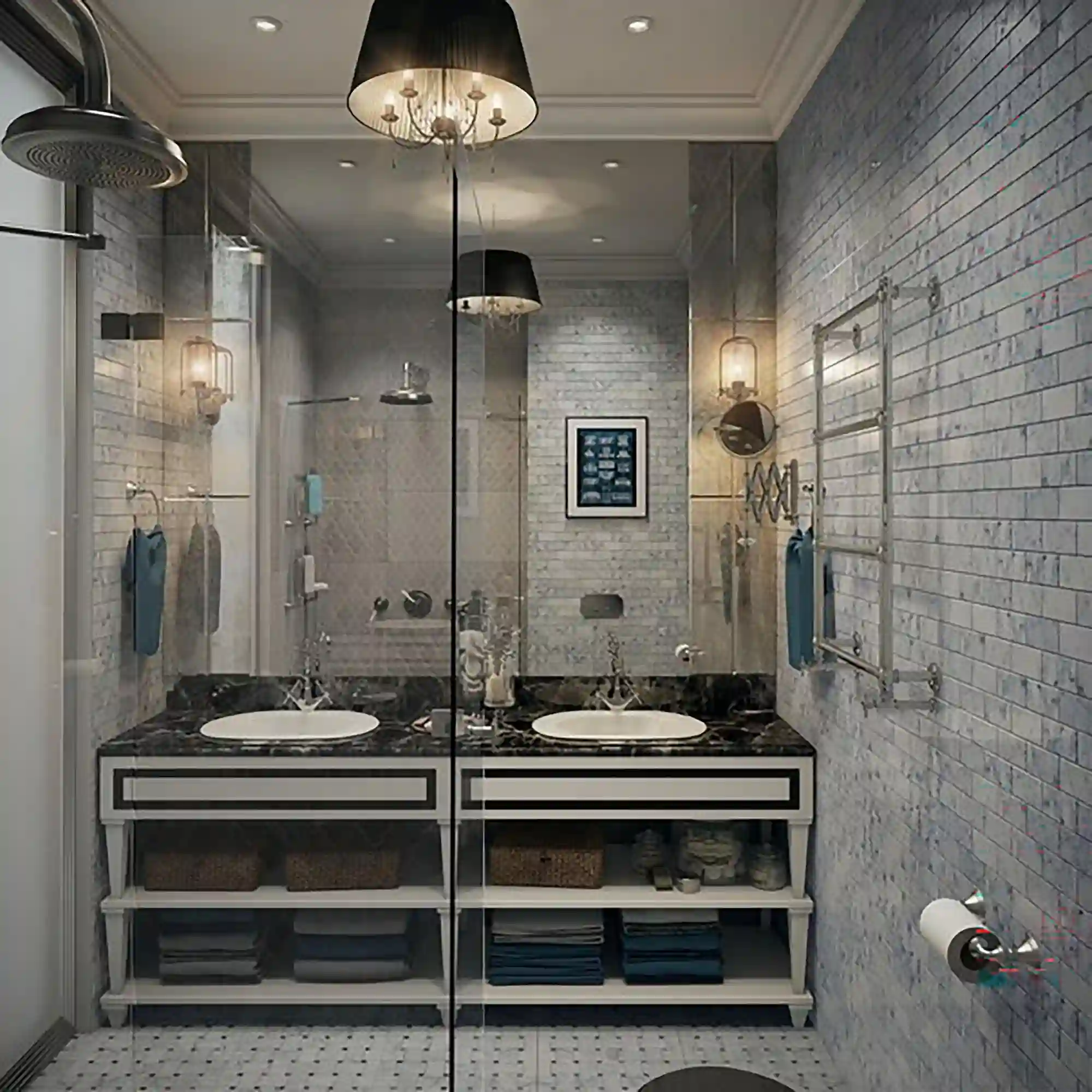
Milk-glass schoolhouse pendants and sconces are the lighting fixtures most associated with early-1900s bathrooms, and they are having their own moment inside the wider vintage revival. Simple wall sconces in this style typically run $75 to $90, while a full pendant with a milk-glass shade lands closer to $125 to $280 depending on size and brand.
Safety Note: any fixture installed near a tub or shower needs a damp- or wet-rated listing, not a standard indoor rating — check the fixture’s label and have an electrician confirm placement before installation. Warm 2700K bulbs suit the era better than the cooler daylight bulbs common in most hardware store multipacks.
Exposed Vintage-Style Plumbing as a Design Feature
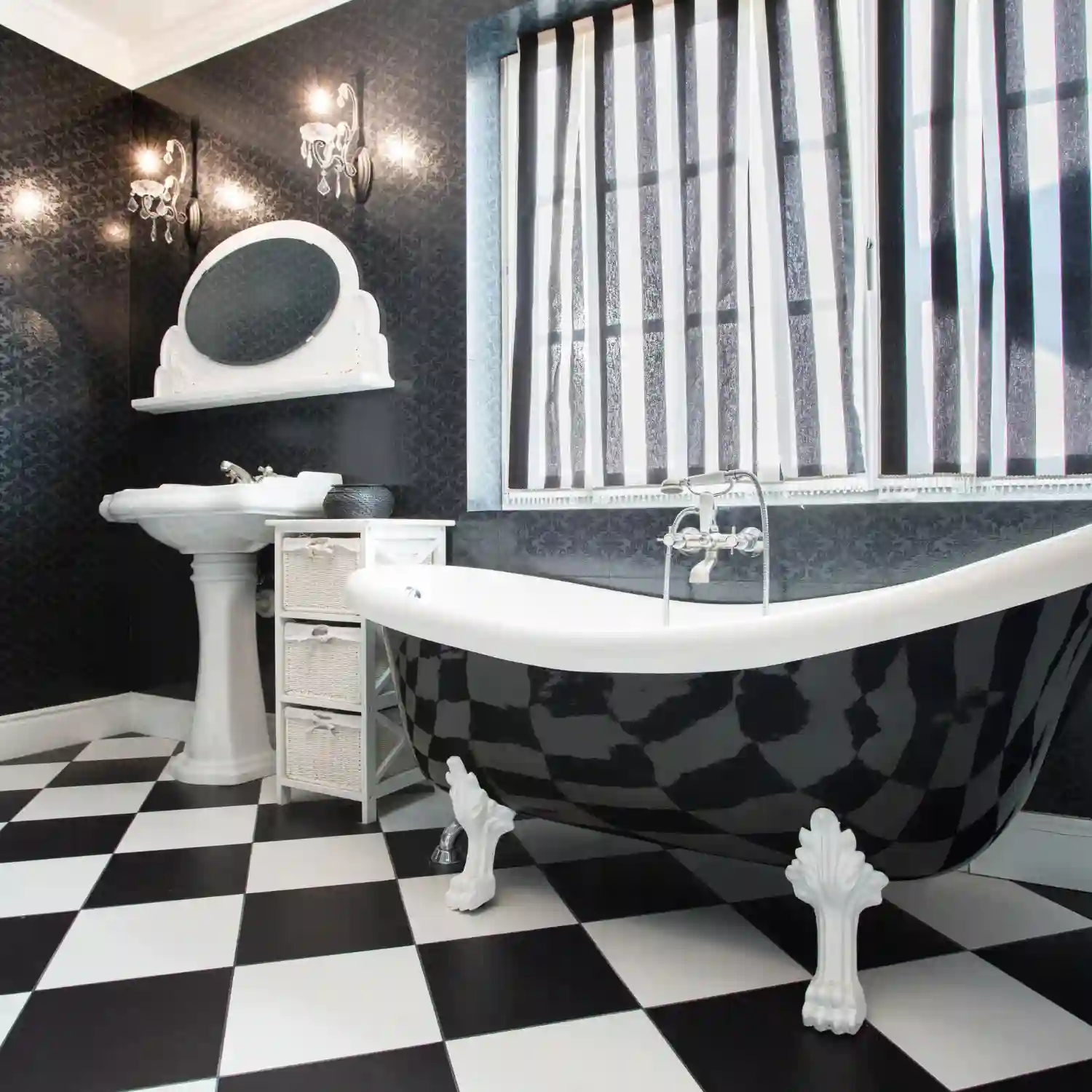
Exposed supply lines and a wall-mounted faucet, rather than a deck-mounted one hidden behind the sink, are a small detail that looks like older construction. Many current fixtures replicate this exposed-pipe look in new chrome or brass finishes without requiring any real change to the plumbing behind the wall.
This is a styling and sourcing choice, not a plumbing project. Any actual relocation of supply lines or drain pipes should go through a licensed plumber, the same guardrail that applies to the clawfoot tub above.
Reclaimed Hardware and Small Details
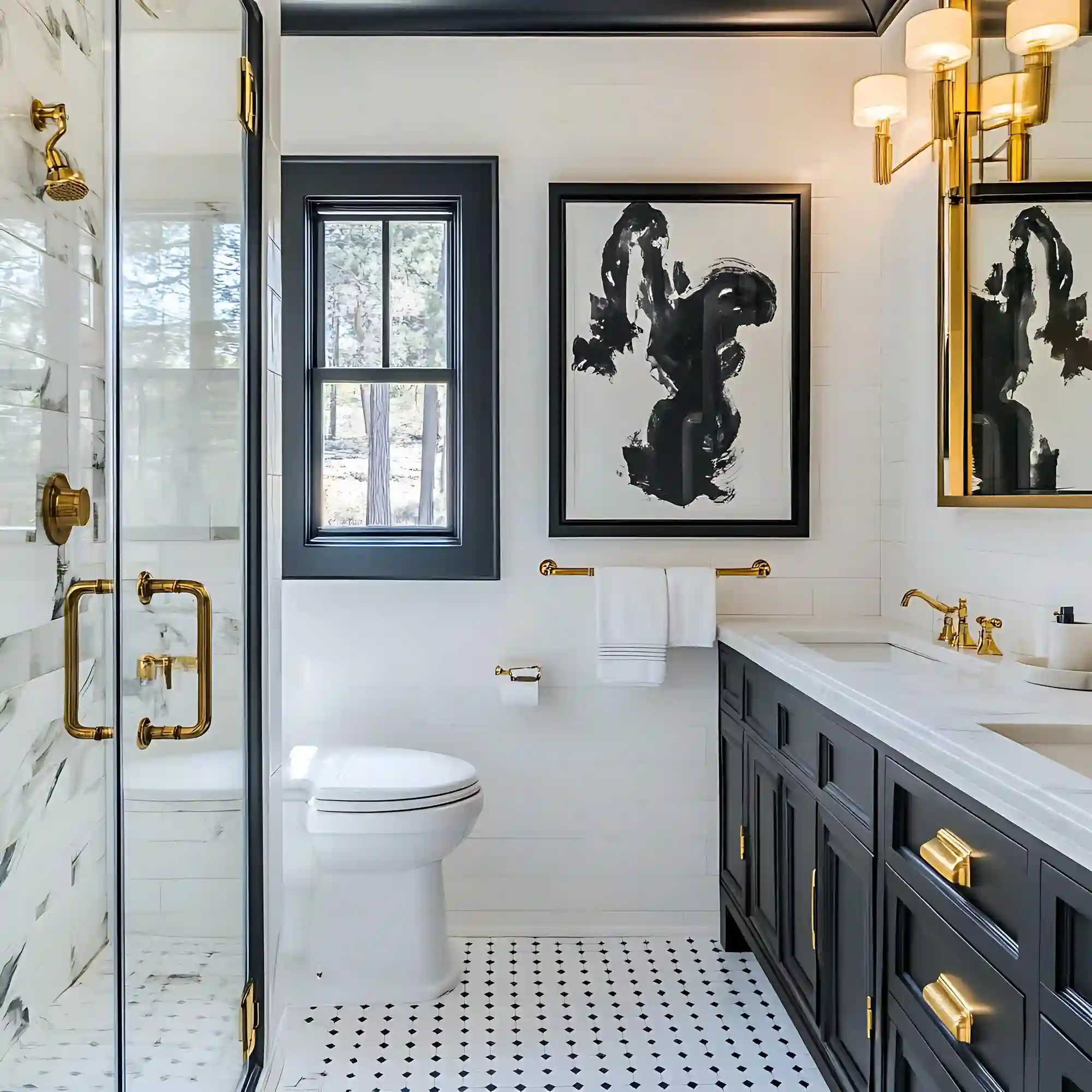
Reclaimed drawer pulls, towel bars, and door hooks — sourced from architectural salvage yards or estate sales — finish a vintage bathroom without a single new part looking mass-produced. Mismatched-on-purpose hardware, where pulls share a finish but not an exact shape, is closer to how a real 1940s or 50s bathroom would have accumulated pieces over time than a matched hardware set bought in one box.
These small, inexpensive details are often the easiest starting point for the whole look, since a full color suite or a checkerboard floor is a much bigger commitment than a salvaged glass doorknob. The same salvage-first instinct works well beyond the bathroom, too — our vintage craft room ideas guide applies it to a home studio or hobby space just as easily.
Where Do Vintage Bathrooms Go Wrong?
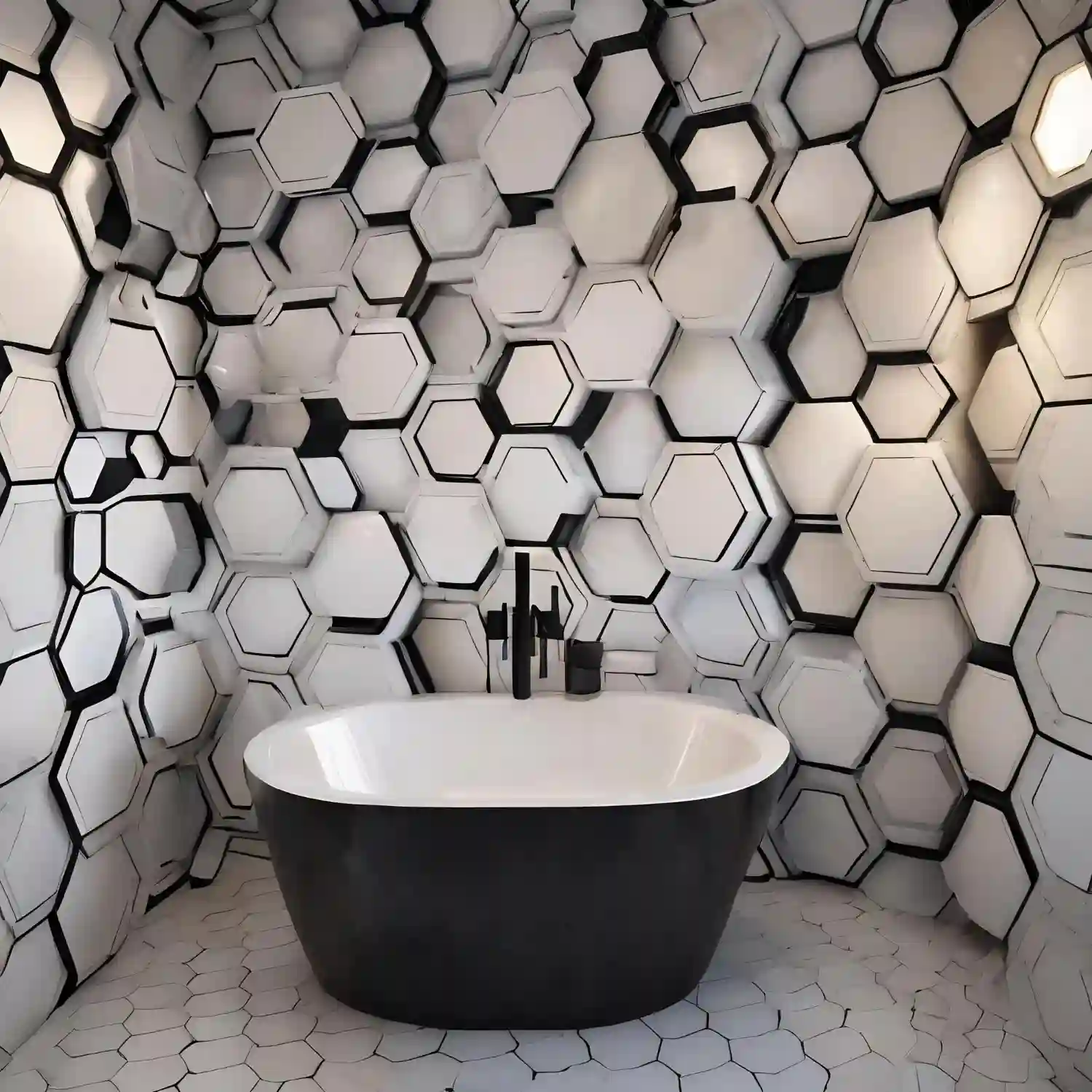
The most common mistake is buying every element as a matching reproduction set — same brand pedestal sink, same brand mirror, same brand faucet. Real vintage bathrooms accumulated pieces over decades, so a mix of one true antique, one reproduction, and one modern piece looks far more convincing than a full matching catalog order.
Picking a color that is too saturated is a close second. Original 1950s pastels were soft and slightly greyed down, not bright bubblegum pink or kelly green. A paint or tile sample that looks too vivid under store lighting usually looks too bright at home as well — test it against a real fixture before committing to a full wall or floor.
Skipping ventilation when adding wallpaper is a mistake that shows up months later, not on install day. A bathroom without a working exhaust fan will peel vinyl-coated paper and grow mildew behind it, regardless of how well it was hung. Confirm ventilation before choosing a pattern, not after.
Treating a full historic remodel — moving the tub’s plumbing, relocating a window, tearing into walls for reclaimed pipe runs — as a weekend project is the biggest risk. Anything structural or plumbing-related belongs with a licensed contractor or plumber. The vintage look itself comes from finishes, fixtures, and furniture, not from moving load-bearing walls.
If all of this pattern and color still feels like more commitment than you want, the opposite end of the spectrum — minimalist bathroom decor ideas — proves a pared-back bathroom can feel just as finished.
Is the Vintage Bathroom Trend Here to Stay?
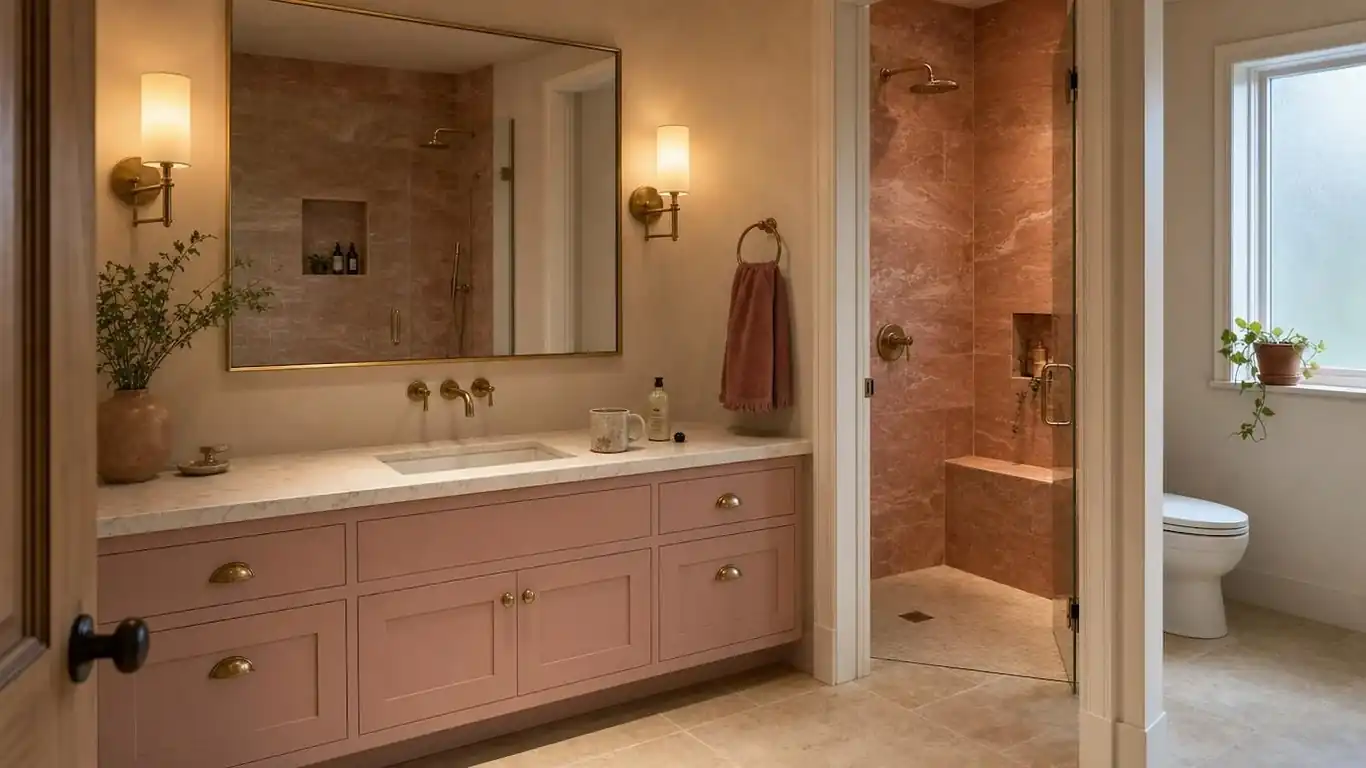
Designer’s Verdict: This retro style has more staying power than a typical color-of-the-year trend, because it borrows from a century of real design history rather than one social media season. A single colored tile accent or a reclaimed mirror will not date the way a trend-driven paint color can, since the look already survived one full cycle of being “outdated” before coming back.
For a lighter, lower-commitment refresh instead of a full retro overhaul, spring bathroom decor ideas offer a seasonal middle ground worth trying first.
Budget & Cost
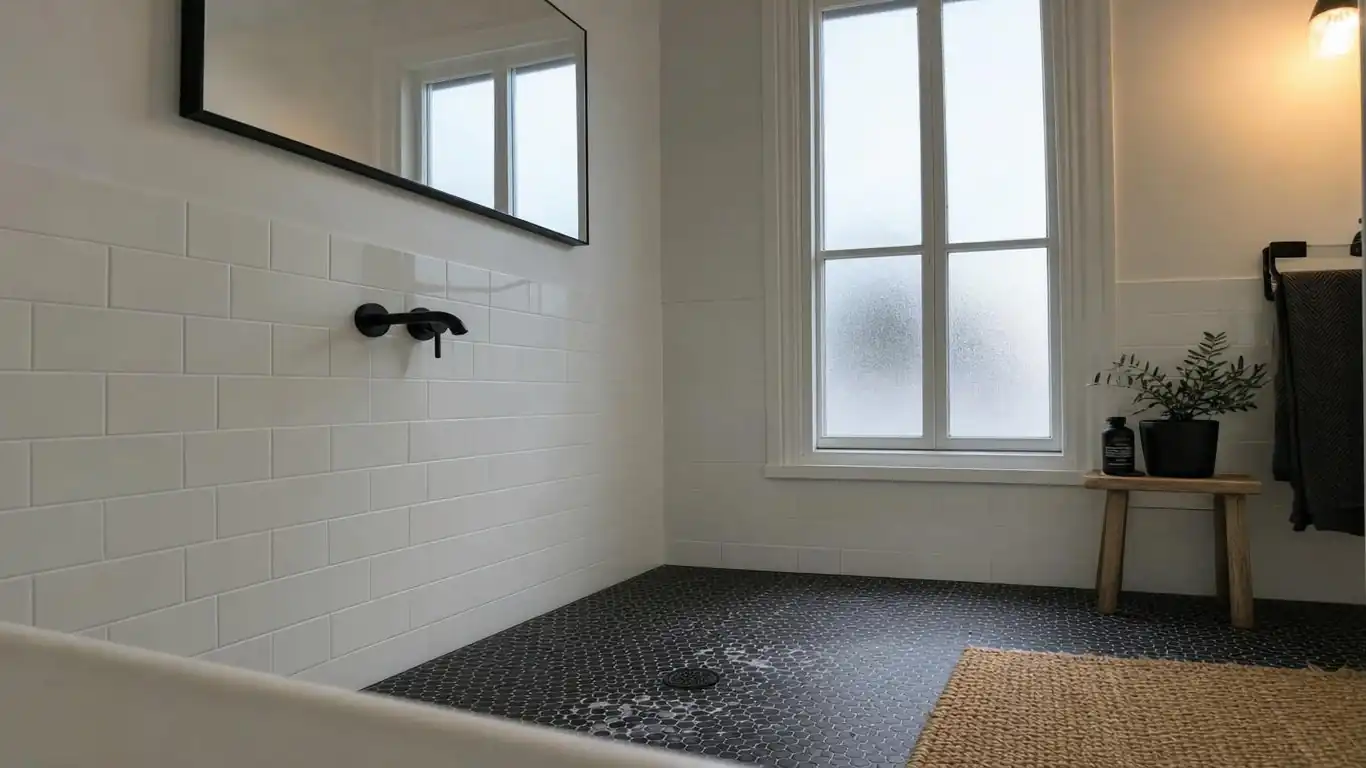
Two or three vintage elements cost far less than a full historic remodel, and most of the pieces above can be priced individually — browse more room-by-room decorating ideas if you’re weighing a vintage bathroom against updates elsewhere in the house.
| Project | Estimated Cost | Impact Level |
|---|---|---|
| Reclaimed hardware and refinished pulls, hooks, towel bar | $40-$150 | Medium |
| Hex or penny-round tile accent (small floor or backsplash area) | $400-$900 | High |
| Antique dresser converted to a vanity (sink, faucet, sealant included) | $300-$1,000 | High |
| Cast iron clawfoot tub with hardware and refinishing | $1,800-$3,500 | Very High |
Best First Upgrade: Reclaimed or refinished hardware paired with one colored tile accent gives the clearest visual signal of the style for the lowest cost.
Skip for Now: A full clawfoot tub installation that requires moving plumbing — start with finishes and furniture, and save that project for when a licensed plumber is already involved in other work.
Frequently Asked Questions
Conclusion
Vintage bathroom ideas work best as a mix, not a full costume change — one colored tile accent, one reclaimed fixture, one piece of antique furniture, chosen the way a real 1950s homeowner would have added pieces one purchase at a time. Editorial field note: bathrooms that lean into just two or three of these elements tend to photograph and live better than ones that chase an entire matching decade at once. For more inspiration across every room, browse our home decor inspiration hub next.
Next Steps
- Pick one dominant retro color and test a physical paint or tile sample against your existing fixtures before buying more.
- Source one reclaimed or antique piece — a mirror, cabinet, or dresser — before ordering anything new.
- Match faucet, sconce, and hardware finishes to a single metal finish across the whole room.
- Price out your top two elements using the budget ranges above, then start with the lower-cost one first.
More Bathroom Design Styles
- 15 Luxury Bathroom Ideas for a Five-Star Hotel Feel at Home
- 13 Scandinavian Bathroom Ideas for a Bright, Hygge-Warm Space
- 14 Japandi Bathroom Ideas for a Warm, Minimalist Retreat
- 15 Coastal Bathroom Ideas for a Bright, Airy Retreat
- 14 Spa Bathroom Ideas to Create a Calming At-Home Retreat
- Aesthetic Bathroom Designs for a Clean and Trendy Look
- Modern Bathroom Design Is Trading Cold Minimalism for Warmth
- 14 Mid Century Modern Bathroom Ideas That Feel Truly Timeless