TL;DR
The short version, in the order that matters:
- Pick the wreath against a photo of your door, not against the store shelf.
- Contrast in lightness beats color choice — a wreath must be a full step lighter or darker than the door.
- Dark doors need pale materials; white doors carry black wreaths; wood doors fight anything grapevine.
- Check the view from thirty feet — that is where almost everyone sees it.
- Confirm exposure before buying: sun and rain ruin foam, paper, and dyed fabric fast.
The Wreath Aisle Can’t See Your Door
Drive down any street in the second week of October and count the wreaths. The same orange-and-black ring shows up on six doors in a row. It looks great on two of them, fine on one, and it disappears completely on the rest. Same wreath, same price, same effort — completely different results.
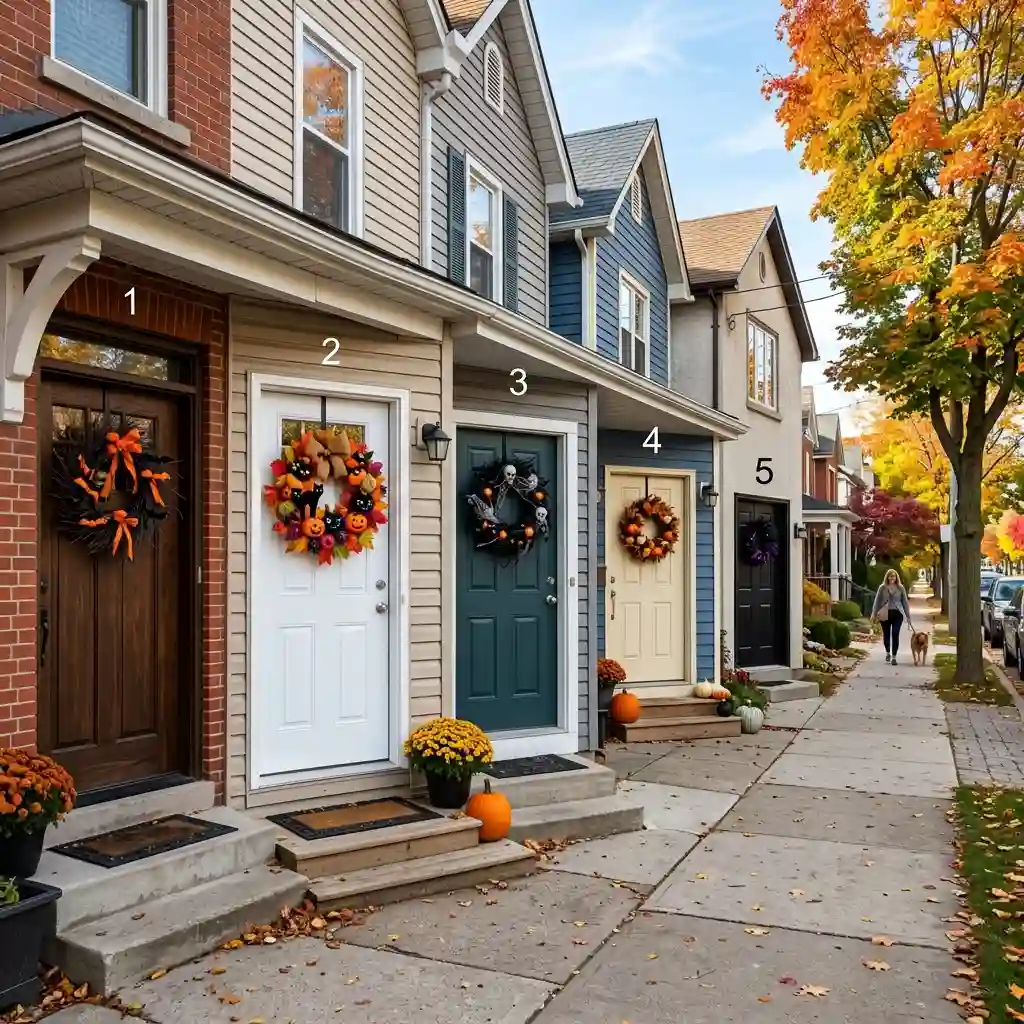
The difference is never the wreath. It is the door behind it. A Halloween front door wreath is chosen against a specific background — your door’s color, its glass, its depth from the street — and none of that information exists in the store aisle. Match the wreath to the door and almost any style works. Ignore the door and even a $130 wreath vanishes.
Editorial field note: A deep navy door wearing a black-ribbon wreath usually looks like an empty door from the sidewalk. Swap in bone-white ruscus and cream ribbon, and the same door suddenly carries the strongest display on the block. The door did not change. The contrast did.
This guide walks through the door-first way to choose: what works on dark, white, wood, and bold-color doors, the thirty-foot test, and what holds up outdoors. It sits alongside the rest of our Halloween decorating ideas as the piece that decides whether the others get seen.
Why the Halloween Front Door Wreath Outgrew Orange and Black
Front doors changed, and wreath advice never caught up. The classic formula — orange ribbon, black accents, a few faux leaves — was written for the white and cream doors that dominated American houses for decades. Those defaults assume a pale background that makes dark colors pop.
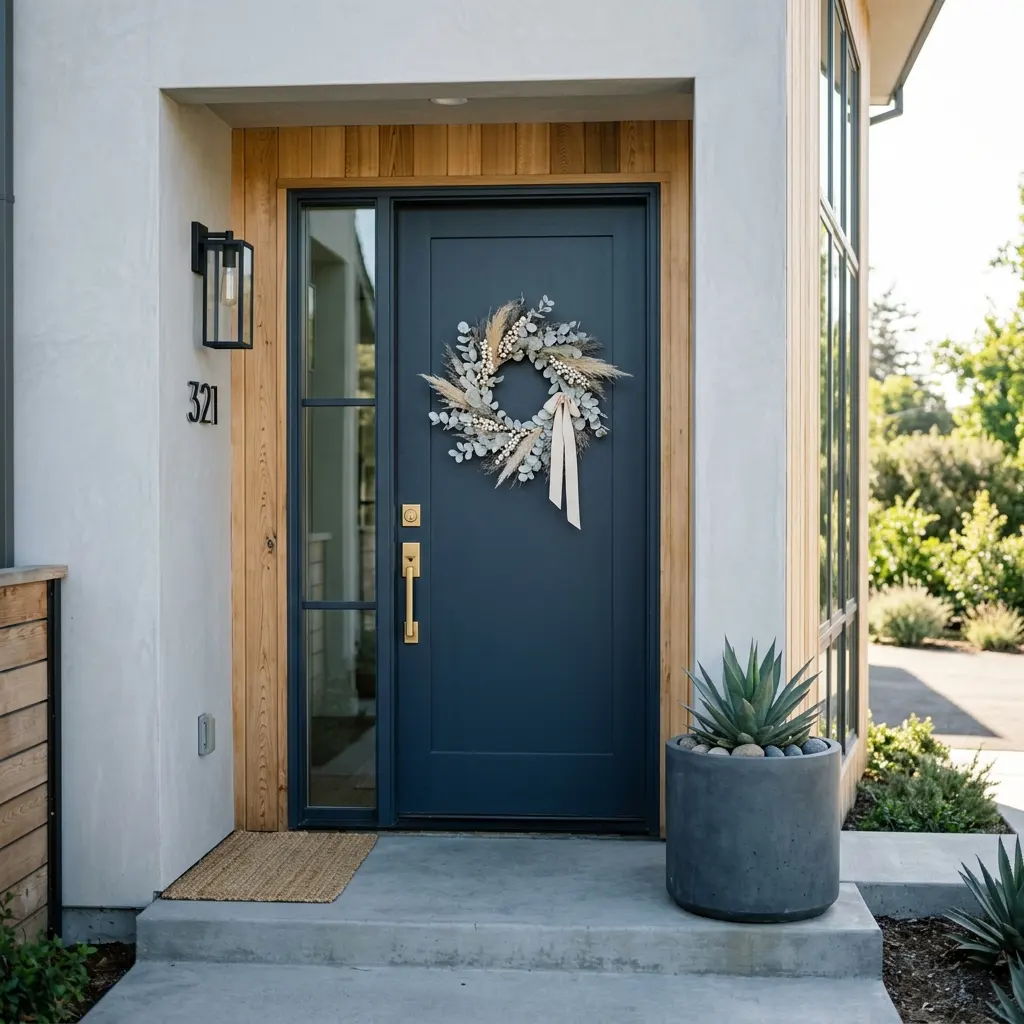
That pale background is disappearing. Source Note: Zillow’s 2022 paint color study found buyers would pay up to $6,449 more for homes with slate blue or black front doors, the strongest result of the eleven door colors tested. Black, charcoal, navy, and deep green doors are now everywhere — and on those doors, the traditional dark Halloween palette sinks without a trace.
There is a second shift. More wreaths are bought online now, photographed flat against white backgrounds that flatter every dark material. The store — physical or digital — shows you the wreath at arm’s length on white. Your neighbors see it at thirty feet on charcoal. Our exterior decor guides keep coming back to the same principle: curb decisions get made at curb distance.
Signs This Is Catching On:
- Seasonal retailers now stock white, silver, sage, and natural-toned Halloween wreaths alongside the classic orange — a shelf that did not exist a few years ago.
- Pinterest search behavior shows “black halloween wreath” and “neutral halloween wreath” as established searches, which only happens when shoppers are matching wreaths to specific doors.
- Dark and moody front door colors keep expanding across paint-brand exterior palettes, pushing more homes into the pale-wreath camp each season.
What Does a Door-Matched Wreath Look Like?
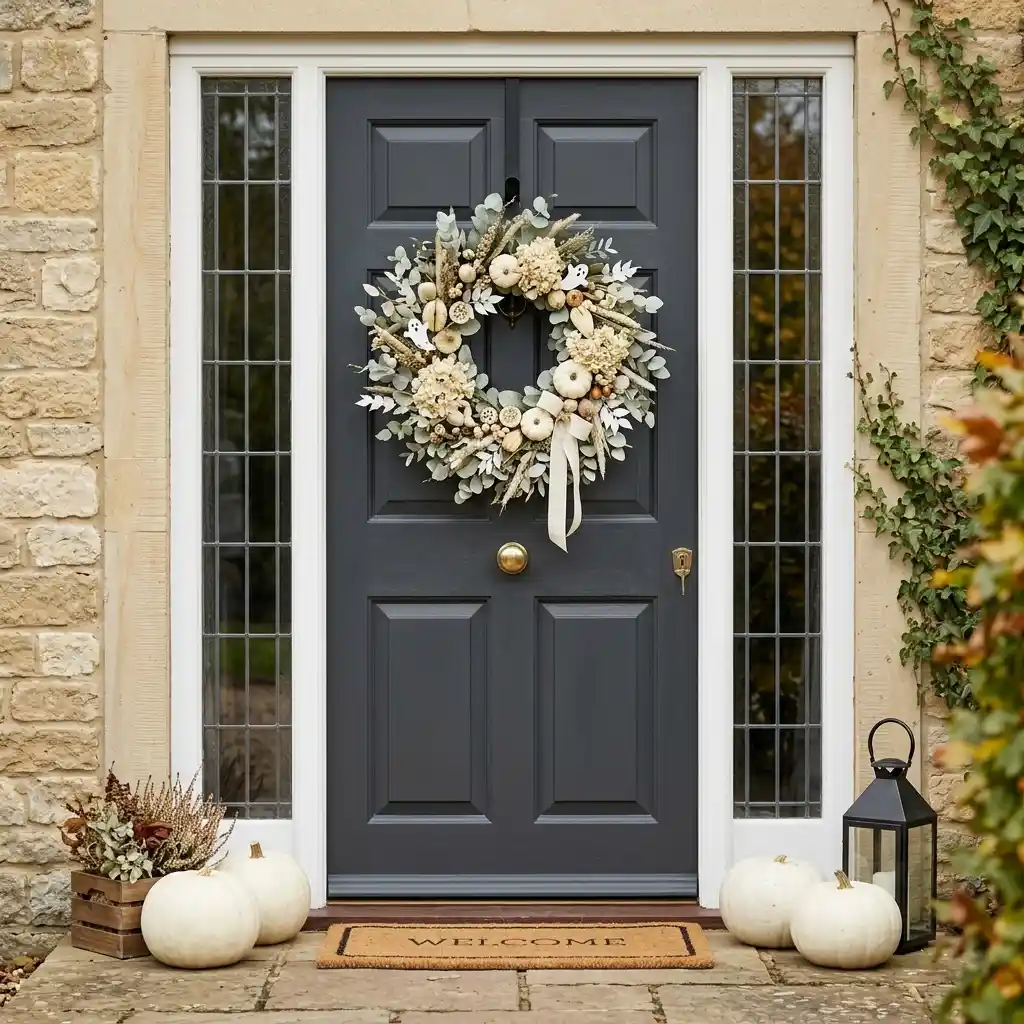
A door-matched wreath obeys one rule: it is unmistakably lighter or darker than the door behind it. Designers call this value contrast — the difference in lightness between two surfaces — and it decides visibility before color, theme, or price get a vote. A pale wreath on a dark door shows up from the street. A dark wreath on a dark door might as well not be hanging there.
Color comes second. Orange, purple, black, and white are all fine choices — on the right door. The wrong pairing is not ugly; it is invisible, which is worse. The wreath also has to work with everything around it, so if the porch already carries pumpkins and lanterns, keep the palette connected — our front porch decor ideas show how one repeated color ties a whole entry together.
Here is how the pairing plays out on the four most common doors.
On a Black, Charcoal, or Navy Door
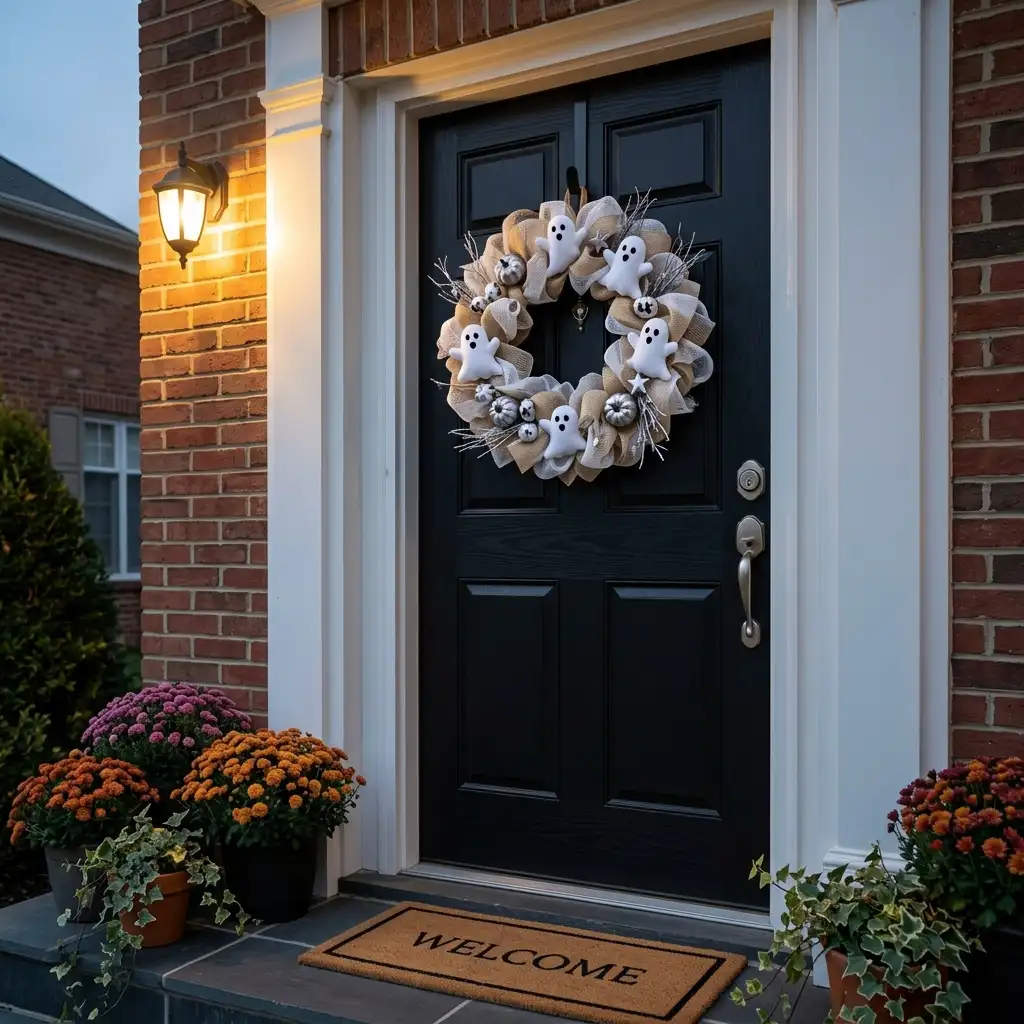
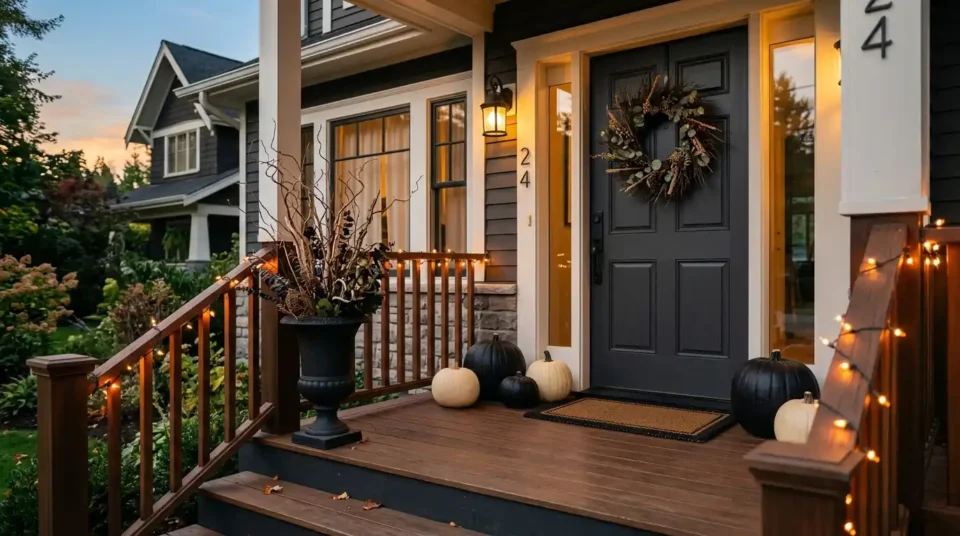
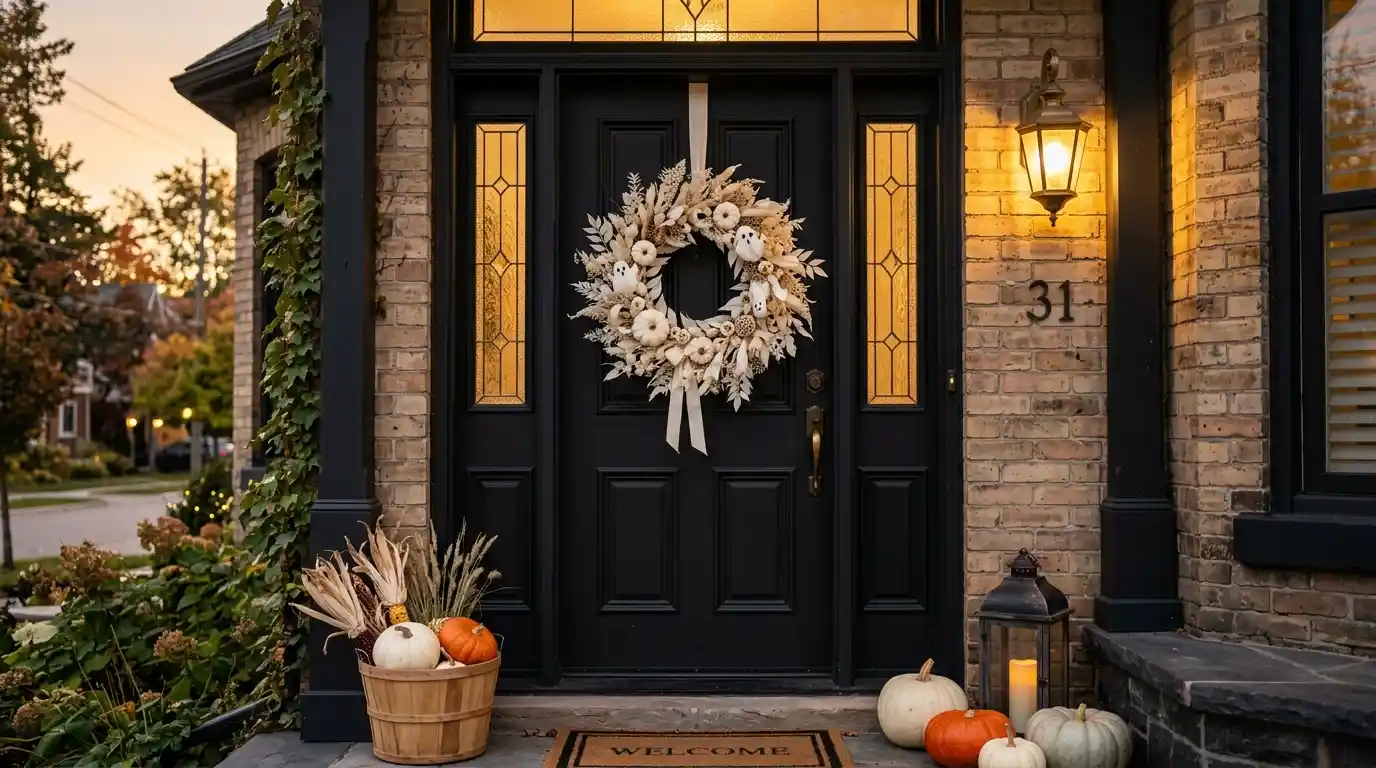
Dark doors are the easiest doors to decorate and the most common ones to get wrong. Go pale: bone-white ruscus, bleached eucalyptus, silver-grey lamb’s ear, cream ribbon, white mini pumpkins. A white ghost wreath that would look like a craft project on a beige door looks sharp and expensive on black. Skip anything mostly black, deep purple, or dark orange — from the street it merges into the door. If you already own a darker wreath you love, go up one size or work one pale material through it so the outline survives.
On a White or Cream Door
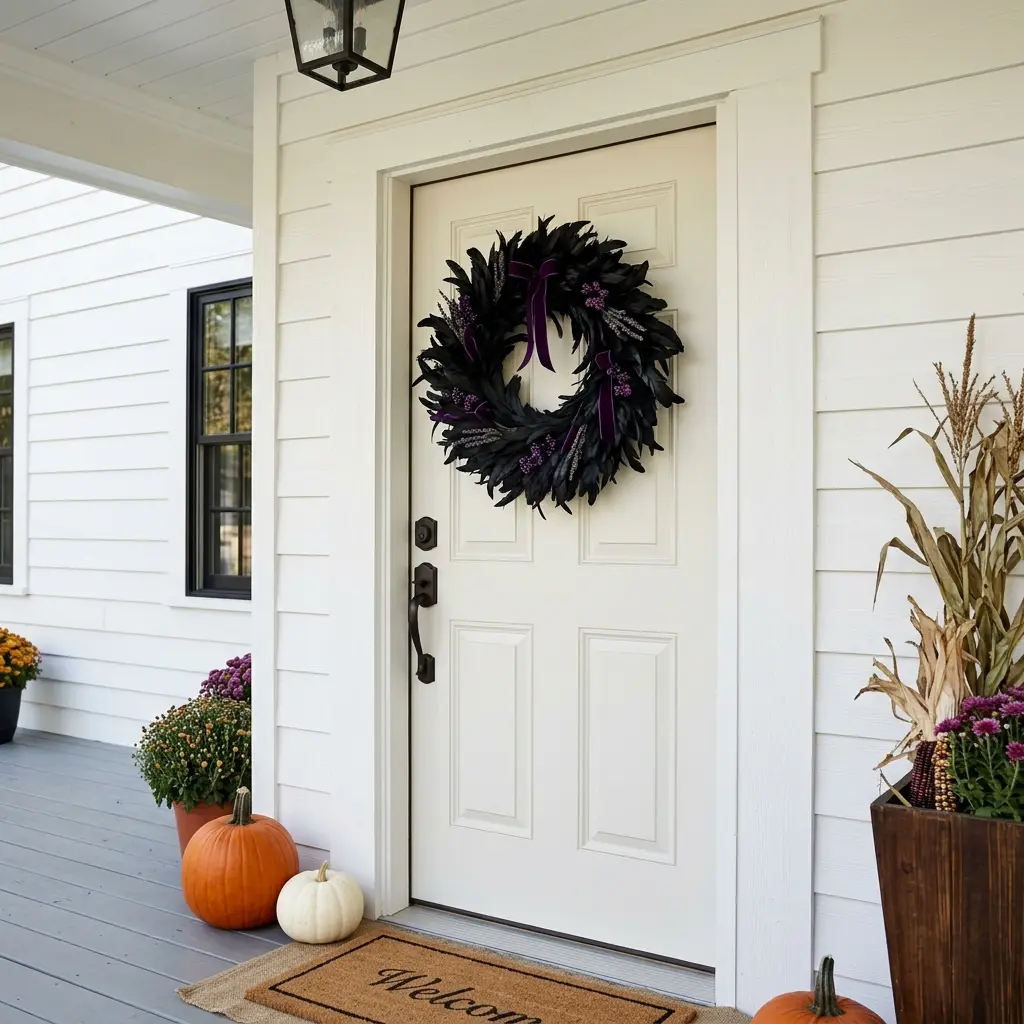
White doors are where the black Halloween wreath earns its reputation. Matte black feathers, black-dyed eucalyptus, or a black-and-purple wreath all hold a crisp silhouette against a pale door. This is also the one door where the classic orange-and-black formula still works exactly as advertised. The risk here is washing out, not sinking in — a white or pastel wreath on a white door disappears just as thoroughly as black on black. Anchor pale wreaths with one dark element, like charcoal ribbon or deep green stems.
On a Wood-Stained or Glass-Panel Door
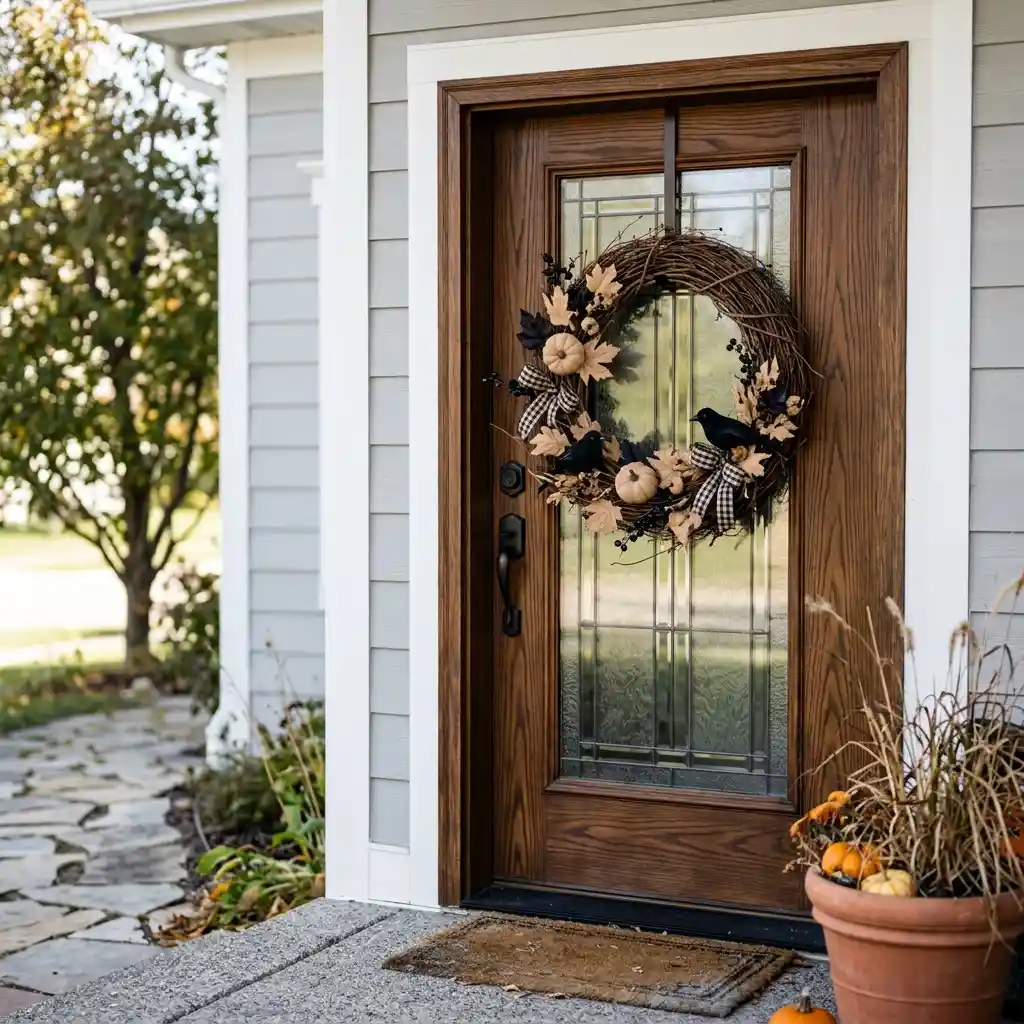
Wood doors create a mid-value problem: they are neither light nor dark, so both extremes work and the middle fails. A plain grapevine wreath against oak or walnut stain is the most common invisible wreath in America — brown ring, brown door, no edge anywhere. Swing hard toward light with cream and white, or hard toward dark with black and deep plum, and let the wood act as the neutral. Glass-panel doors add a twist: the wreath reads against whatever is behind the glass, which is usually a dark hallway by day. Hang the wreath over the solid section of the door when you can, or choose a dense ring that holds its own shape.
On a Red, Teal, or Any Bold-Color Door
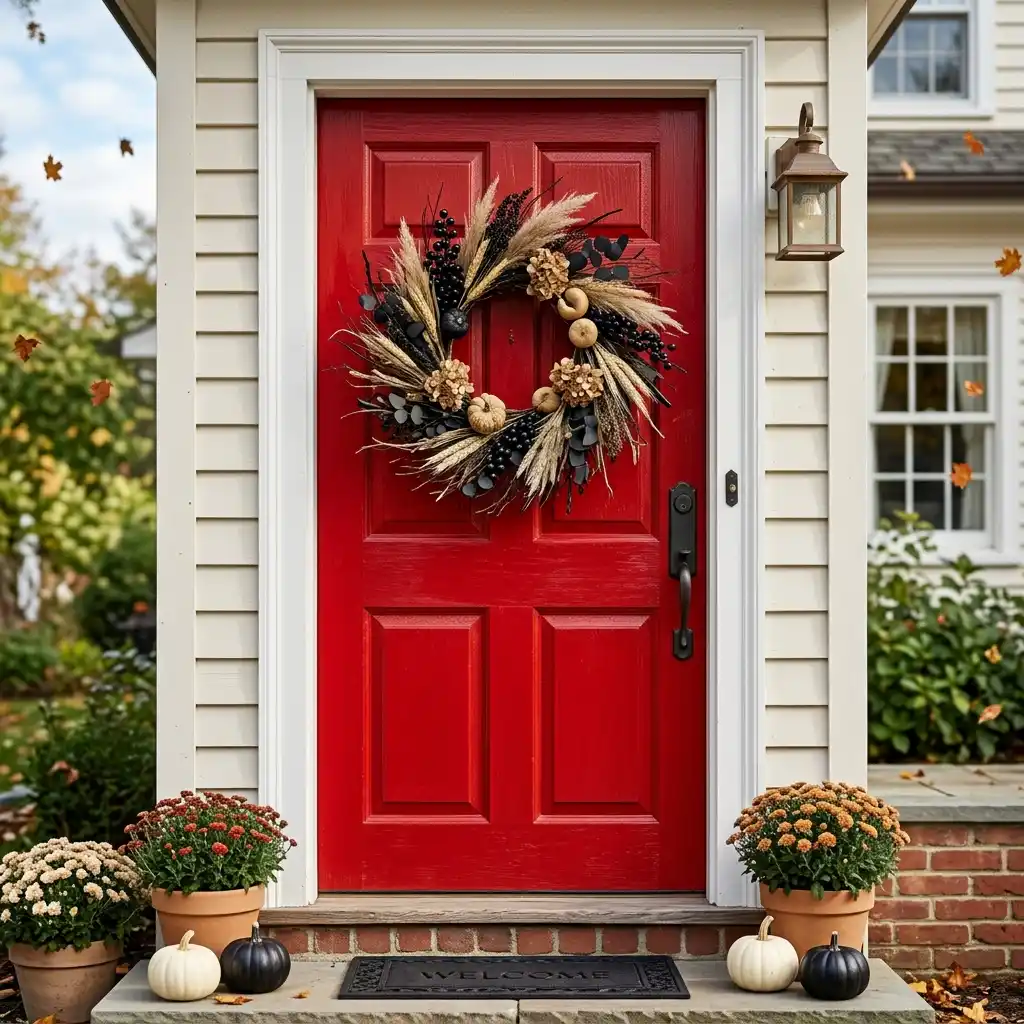
A bold door is already a statement, so the wreath’s job is to join it, not compete with it. Neutral wreaths — black, white, or natural dried stems — sit comfortably on almost any strong color. Adding a third loud color family is where these doors go wrong: orange on red and purple on teal both turn the entry into noise. A soft pink door is the one playful exception, where a pink and black Halloween wreath leans into the color instead of fighting it. Designer Tip: repeat the door’s color once inside the wreath — a thin ribbon in the same red or teal makes the pairing look planned rather than lucky.
The Thirty-Foot Test
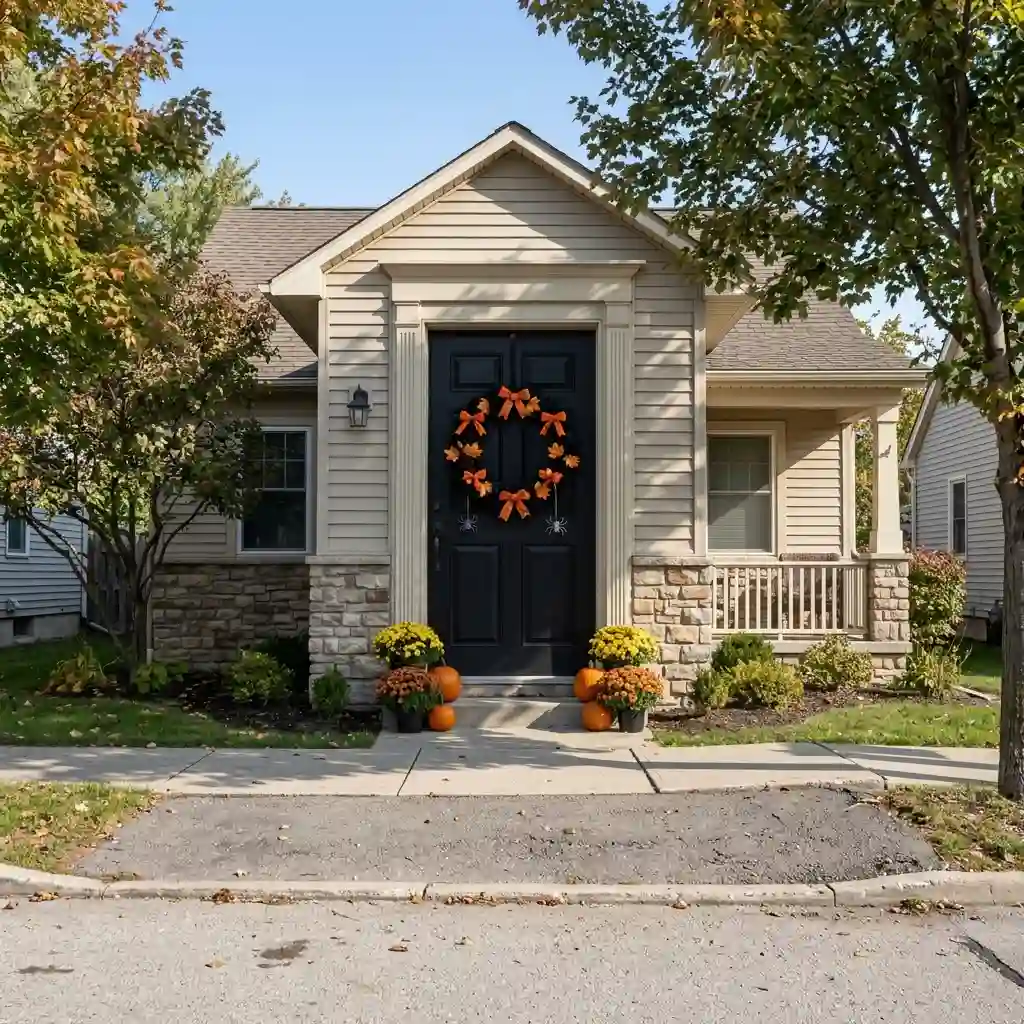
Almost nobody sees your Halloween front door wreath from where you hang it. They see it from the sidewalk, the school-run car, the trick-or-treat route — roughly thirty feet away, often moving. At that distance, detail dies. Small spiders, lettering, dangling charms, and thin garland strands all blur into texture. What survives is silhouette and contrast: one clear ring shape, fully separated from the door.
So test at the real distance. Walk to the curb and look back, or photograph the door from across the street and judge the photo. If the wreath registers as a distinct shape in half a second, it passes. If you have to search for it, no amount of up-close charm will rescue it. Deep porches raise the difficulty, because shadow eats contrast — a door sitting six feet back under a roof needs a bolder, paler wreath than the same door at the front wall. A modern porch refresh that brightens the entry surround makes every seasonal display after it work harder.
DESIGNER TIP: take the curb photo, then switch it to grayscale on your phone. Color drops out and only value contrast remains — if the wreath vanishes in grayscale, it has already vanished for every passerby.
| Quick Takeaways | |
|---|---|
| Contrast | The wreath must be obviously lighter or darker than the door — decide this before color. |
| Dark doors | Bone-white, silver, and cream materials read best on black, navy, and charcoal. |
| Pale doors | Black and black-purple wreaths hold the sharpest silhouette on white and cream. |
| Distance | Judge every wreath from thirty feet — silhouette survives, fine detail doesn’t. |
| Exposure | Uncovered doors need outdoor-rated materials; foam and paper fade and sag fast. |
Does the Wreath Still Work After Dark?
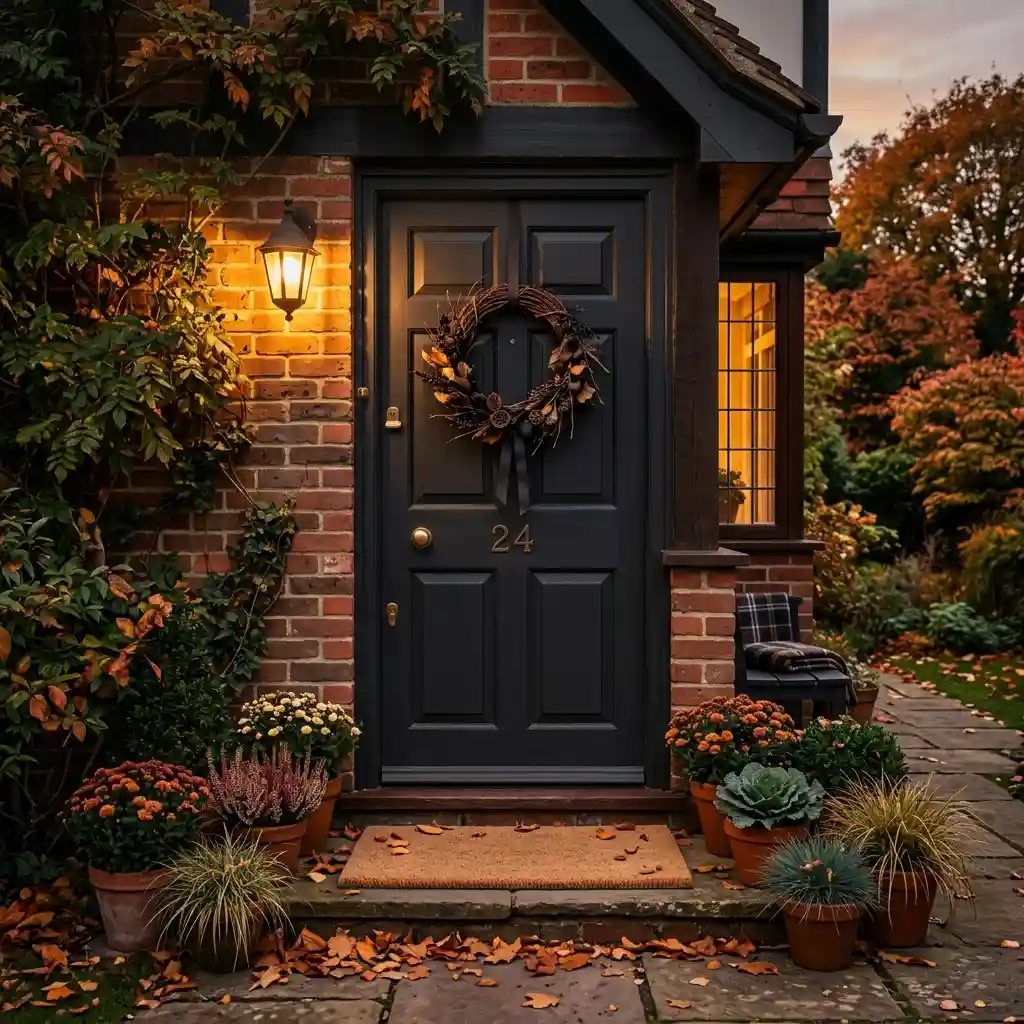
Halloween is the one holiday where your door gets most of its visitors at dusk. A wreath that looks perfect at noon can turn into a dark smudge by 6:30 p.m., especially matte black materials, which absorb light instead of returning it. Night flips the contrast math: the porch light becomes the background, and anything that cannot catch it disappears.
Three things keep a wreath alive after dark. First, one pale or metallic element — cream ribbon, silver berry stems, brushed brass bells — that reflects the porch light. Second, a warm bulb around 2700K, which flatters oranges, creams, and wood tones; cold blue-white bulbs flatten everything to grey. Third, if the door is dim, a short string of battery fairy lights woven through the ring does more than any color change. Safety Note: on an uncovered door, use outdoor-rated battery lights and keep the battery pack tucked out of direct rain.
Letting glass and metallics do the night work is not unique to October, either. The same thinking powers Christmas window decor two months later, when lit glass carries from the street and solid color does not.
How to Adopt the Door-First Habit
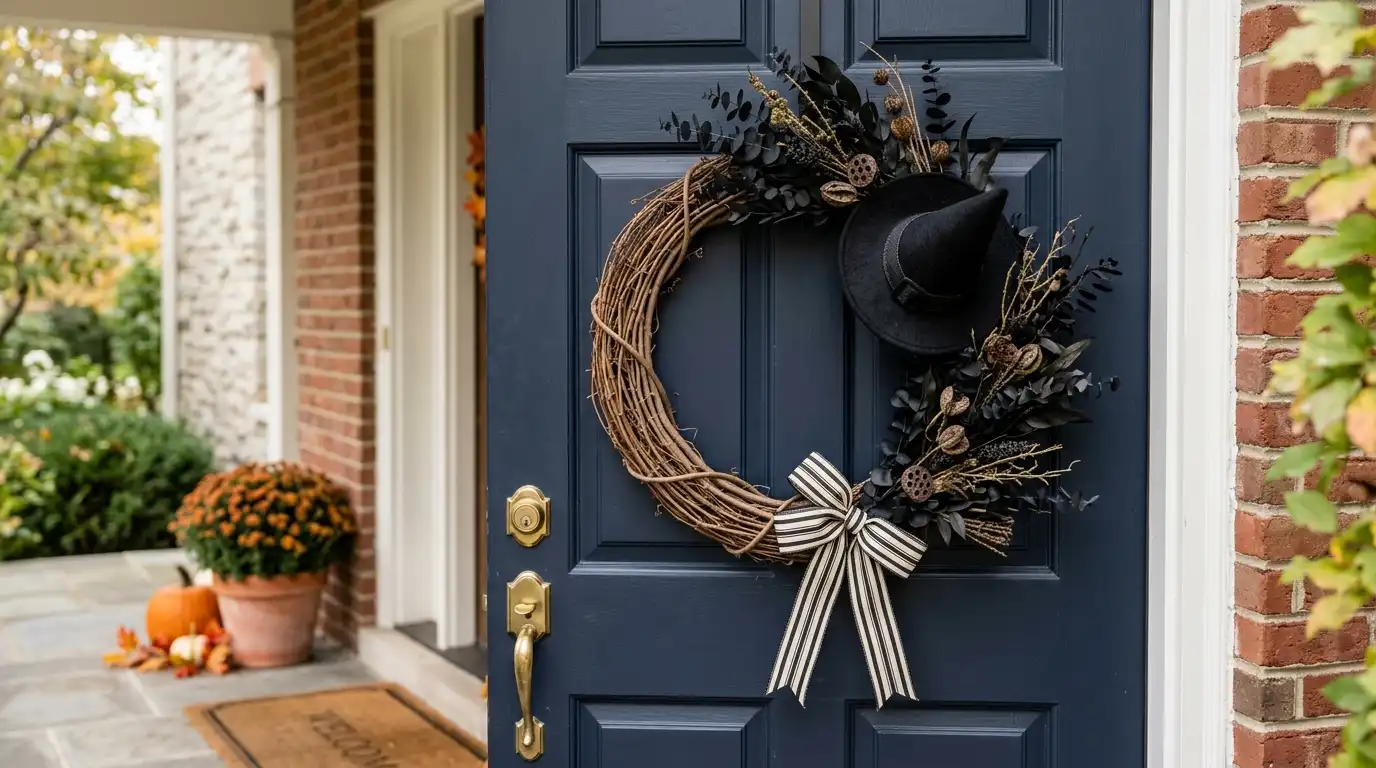
The whole method takes ten minutes and happens before you spend anything. Five moves, in order:
- Photograph the door from the street. This one image replaces guesswork — it shows the door’s true value, the porch shadow, and how much presence the entry needs. Shop against the photo, not from memory.
- Decide lighter-or-darker before picking a theme. Contrast is the decision; ghosts versus pumpkins is just styling. A door-matched neutral wreath beats a mismatched themed one every time.
- Check the exposure. A covered porch protects almost anything. An uncovered door facing weather is another climate entirely. Material Note: foam pumpkins, paper elements, and dyed fabric tend to fade, warp, or sag with direct sun and rain — for exposed doors, choose outdoor-rated faux botanicals and UV-stable ribbon.
- Confirm what the door is made of before buying hardware. A magnetic hanger holds on steel and does nothing on fiberglass or wood, so the door material quietly decides your hanging method.
- Plan the handoff. Most doors wear a fall wreath from September, switch to Halloween in October, and switch back for November — our fall and autumn decor ideas cover that longer season. Choosing a Halloween wreath whose base works in both directions saves a purchase and a storage bin.
What If Your Door Is a Rental or Opens on a Corridor?
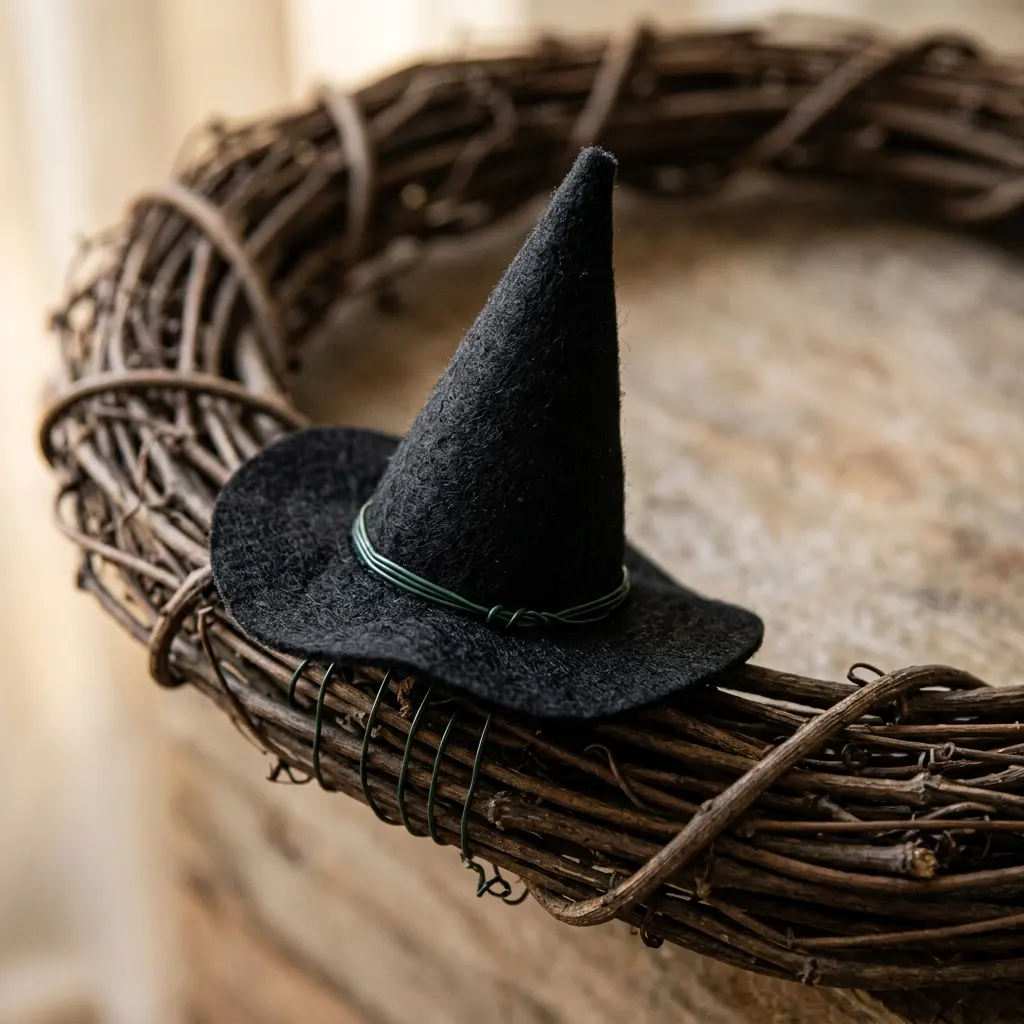
An apartment door flips every rule above. Nobody sees it from thirty feet — they see it from three, walking a hallway. That means fine detail finally pays off: small typography, delicate paper bats, a mini eyeball wreath, things a house door cannot use. Scale drops too; a 16 to 18-inch wreath suits most corridor doors, where a full-size ring crowds the frame.
The background problem gets easier as well, since most rental doors are flat white or beige — the friendliest possible backdrop, where black, purple, and orange all show up sharply. Styling a corridor entry has more in common with entryway decorating than with yard display: one wreath, maybe a small mat, done. Rental Note: use an over-the-door or adhesive hanger rather than nails, and check building rules first — some fire codes restrict decorations on corridor-facing doors.
The Pre-Shop Door Checklist
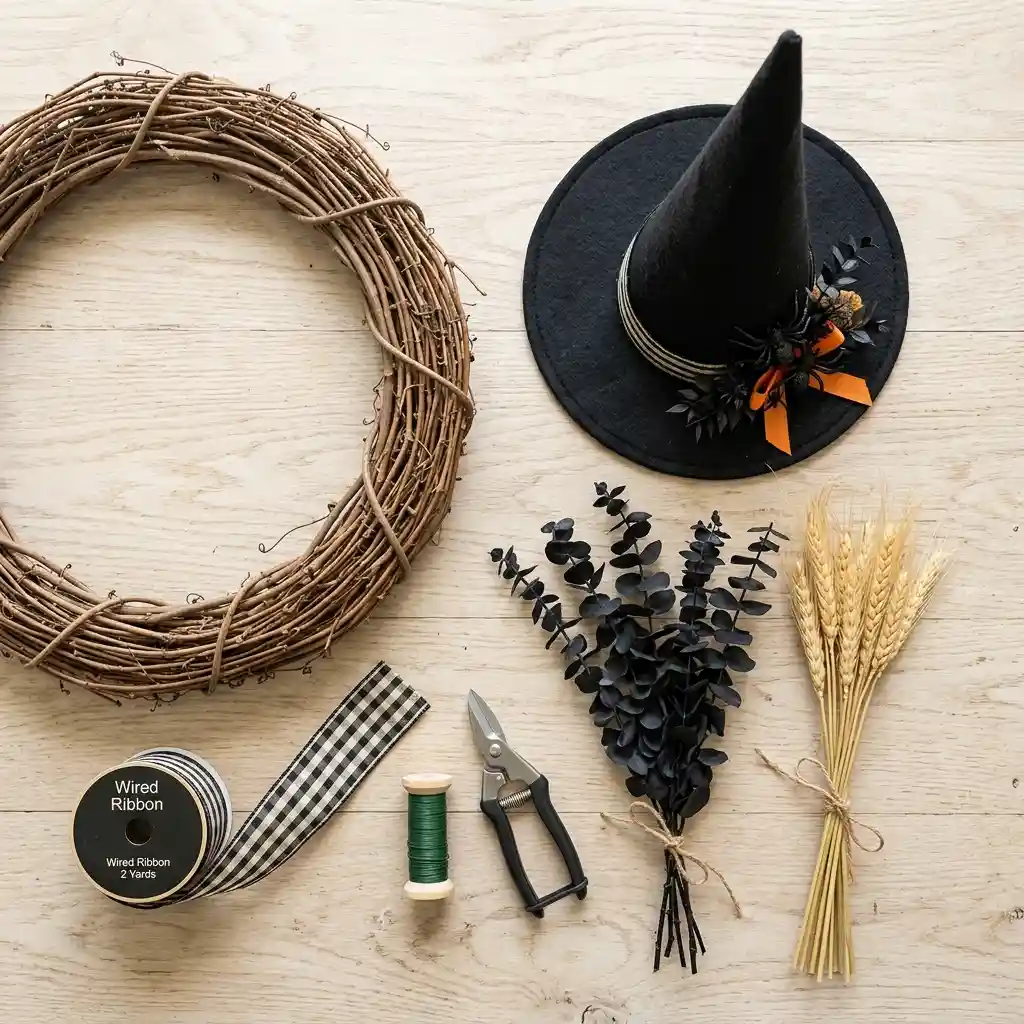
Run through this before buying or making anything:
- Photograph the door from the curb in daylight and keep the photo on your phone while shopping.
- Note the door’s value — light, mid, or dark — and buy the opposite.
- Grayscale-test your current wreath against the door photo before replacing it.
- Confirm covered or exposed, and reject foam and paper for exposed doors.
- Measure the flat area available; note any glass panel position before choosing wreath density.
- Check whether the door is steel, wood, or fiberglass, and pick the hanger to match.
- Look at the porch bulb: warm 2700K flatters a wreath, cool blue-white kills it.
- Decide the November plan — a grapevine or eucalyptus base can be restyled instead of stored.
KEY TAKEAWAY: One curb photo of your door answers more wreath questions than an hour in the store aisle.
The Mistakes You Can See From the Street
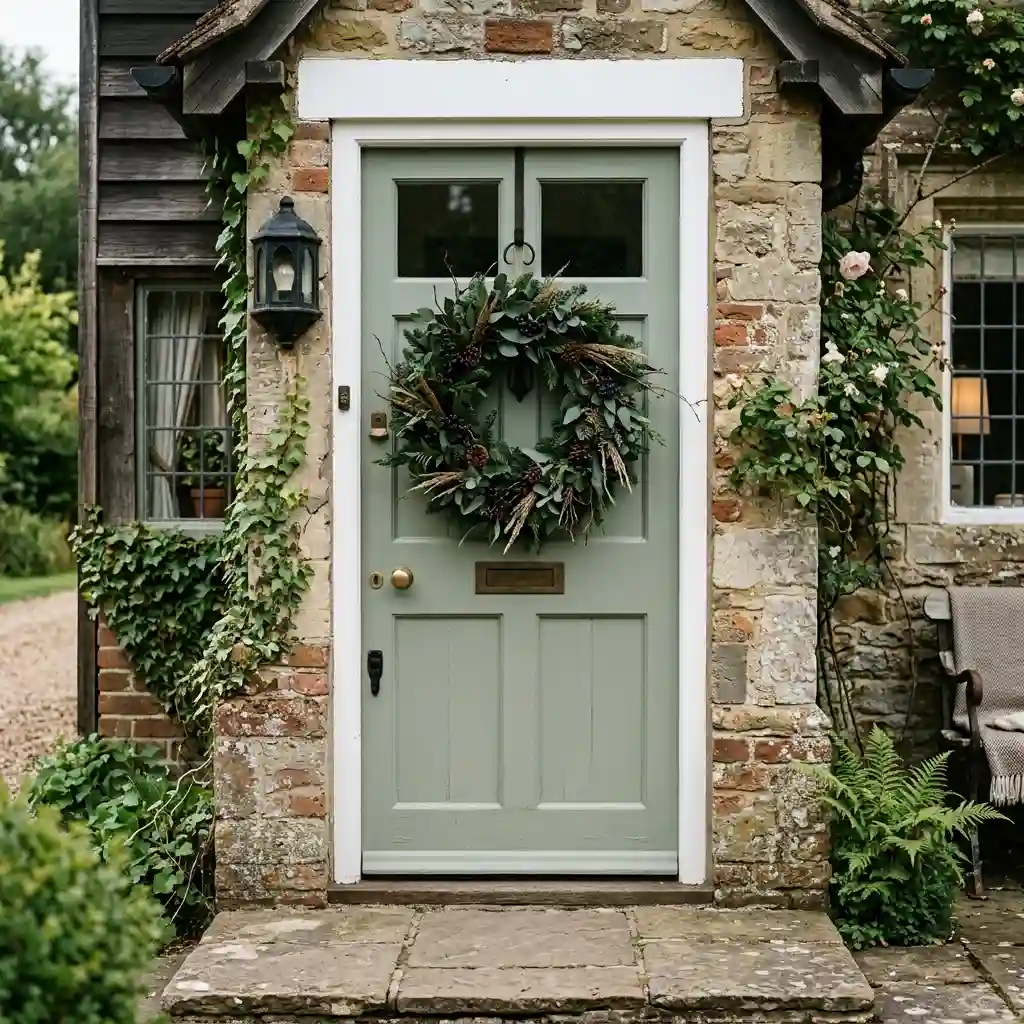
❌ Choosing the wreath that looked best on the shelf → ✅ Choose against your curb photo — the shelf background is white, your door probably isn’t.
❌ Hanging orange-and-black on a black or navy door → ✅ Go pale: bone-white, silver, and cream keep their outline on dark paint.
❌ Buying fine detail for a house door → ✅ Save small spiders and lettering for corridor doors; a street-facing door needs one bold silhouette.
❌ Putting an indoor-grade wreath on an exposed door → ✅ Use outdoor-rated materials, or accept a two-week lifespan and a drooping ribbon by mid-October.
Budget at a Glance
A door-matched wreath is a contrast decision more than a spending decision, which is why the cheapest tier here can outperform the most expensive one hung on the wrong door.
| Project | Estimated Cost | Impact Level |
|---|---|---|
| Re-ribbon an existing wreath to flip its contrast (cream ribbon on dark stems, or black on pale) | $8-$25 | High |
| Ready-made mesh or foam Halloween wreath, big-box seasonal aisle | $25-$60 | Medium |
| Quality faux-botanical wreath — bleached eucalyptus, ruscus, or feather, outdoor-rated | $60-$130 | High |
| Designer wreath or matched pair for double doors, with warm porch bulb and lights | $140-$320 | Very High |
Best First Upgrade: an $8 ribbon swap in the opposite value of your door — it fixes the invisible-wreath problem on most houses in one move.
Skip for Now: the matched pair. Unless you genuinely have double doors, the second wreath adds cost without adding curb presence.
Will Door-First Wreath Choosing Last?
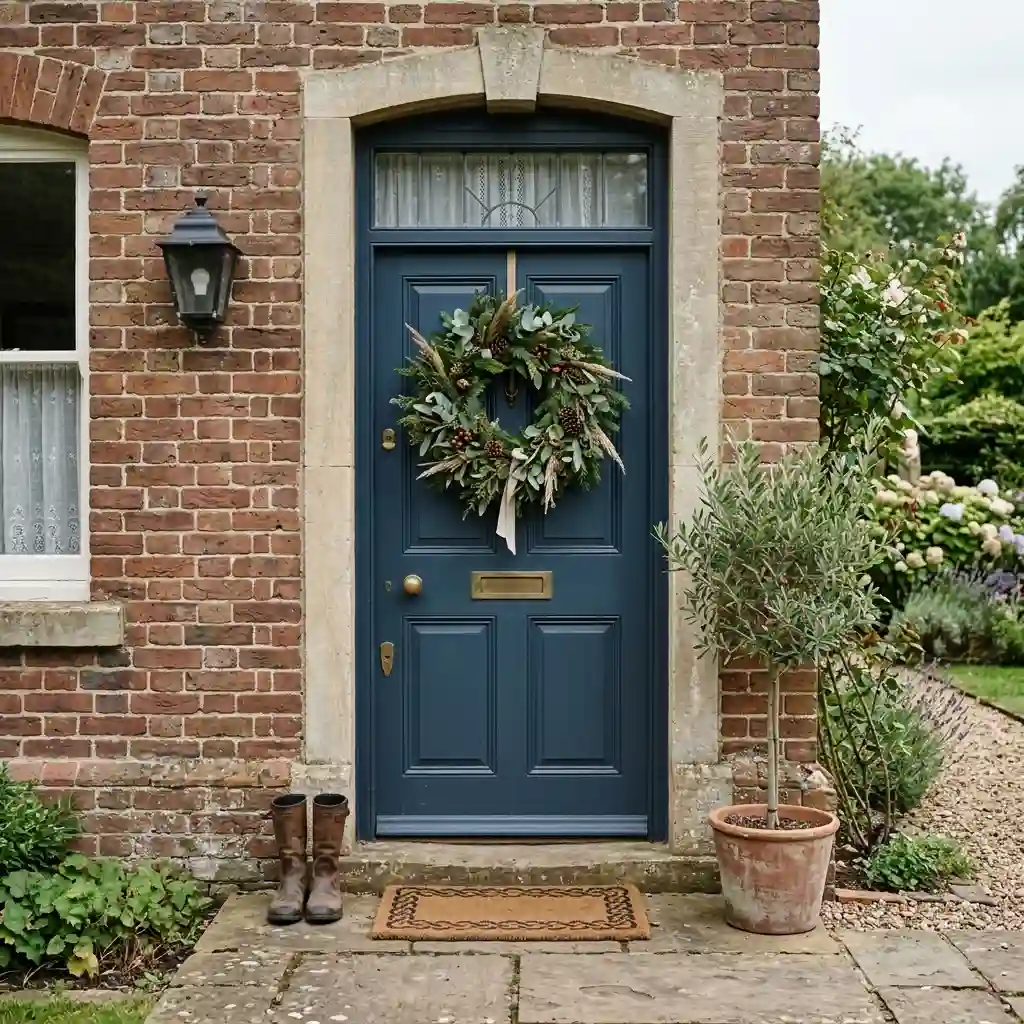
Trends in the wreath itself will keep rotating — feathers one year, dried botanicals the next, glam metallics after that. The door-first habit is not one of those trends. It is closer to a correction, and the same shift runs through the rest of our seasonal decorating guides: backgrounds first, objects second. Front doors went dark and glassy over the past decade, the old advice quietly stopped working, and matching to the door is simply the fix. As long as black and navy doors keep selling houses, pale Halloween wreaths keep being the answer on those doors.
There is also a practical dividend. A wreath chosen for contrast rather than theme survives the season change — the same pale base that stands out on your charcoal door in October takes red berries in December, and the palette logic carries straight into black-accented Christmas decor without a restart. The door-first test transfers to every season unchanged — it is the same logic that picks a spring front-door wreath in March and keeps a cozy winter porch legible in January.
Designer’s Verdict: door-first choosing outlives every wreath trend it touches — buy contrast once and restyle the theme each year for the cost of ribbon.
Frequently Asked Questions
Conclusion
Start with the curb photo — everything else in this guide flows from that one image of your own door. A Halloween front door wreath succeeds on contrast first, theme second, and the door you already have decides both. When the season wraps, our home decorating ideas can carry the same door-first thinking into every holiday that follows.