TL;DR
- Warm porch lighting at 2700K–3000K is the single most important element of a cozy winter exterior — it comes before any decoration.
- Two large evergreen planters flanking the front door replace the visual structure summer annuals provide once the season ends.
- A fresh cedar or juniper garland adds scent, texture, and color to a space that winter otherwise leaves bare.
- Seasonal detail works at close range — concentrate everything within 10 feet of the front door.
- A deep, warm front door color — burgundy, terracotta, navy, or forest green — holds the facade together when the landscape goes dormant.
What Cozy Actually Means on a Winter Exterior
A cozy winter house exterior is not about hanging a wreath. Most people do exactly that — one wreath, one doormat, maybe a ribbon on the mailbox — and wonder why the house still reads as cold and bare from the street.
Cozy on a winter exterior is a sensory experience. It is the feeling of warmth and life pulling you toward the front door even when the temperature is in the 20s. Three things produce that feeling reliably: warm light at human scale, natural texture that holds up in cold weather, and visible signs of life at the entry zone. When all three are present, the house reads as sheltered and welcoming. When any one is missing, the exterior reads as simply cold.
Getting a cozy winter house exterior right starts with understanding what winter does to a facade. Deciduous trees lose their canopy. Perennial beds go dormant. The visual mass that surrounds a house from May through October simply disappears by December. What’s left is bare architecture, grey winter light, and an empty porch. That visual gap needs to be filled deliberately.
Browse all our exterior decor ideas and outdoor design inspiration for the full seasonal range. If you’re combining interior and exterior updates this winter, 14 cozy winter cabin interior aesthetic ideas for a dreamy home pairs naturally with the exterior work covered here. Start the full picture at 101homedecor.com.
Bookmark this guide for quick reference.
KEY TAKEAWAY: A cozy winter house exterior fills three gaps winter creates — warmth from lighting, depth from natural texture, and structure from evergreen plantings at the entry.
| Quick Takeaways | |
|---|---|
| Lighting | 2700K–3000K bulbs in porch, path, and accent fixtures create a warm visible glow. |
| Greenery | Cedar, juniper, and boxwood hold color and structure through February. |
| Texture | Woven baskets, natural jute mats, and pinecone clusters add depth at close range. |
| Color | A warm front door color holds the facade together when the landscape goes dormant. |
| Scale | Large planters and a proportional wreath fill the space a bare tree canopy leaves behind. |
Why a Warm Winter Exterior Works the Way It Does
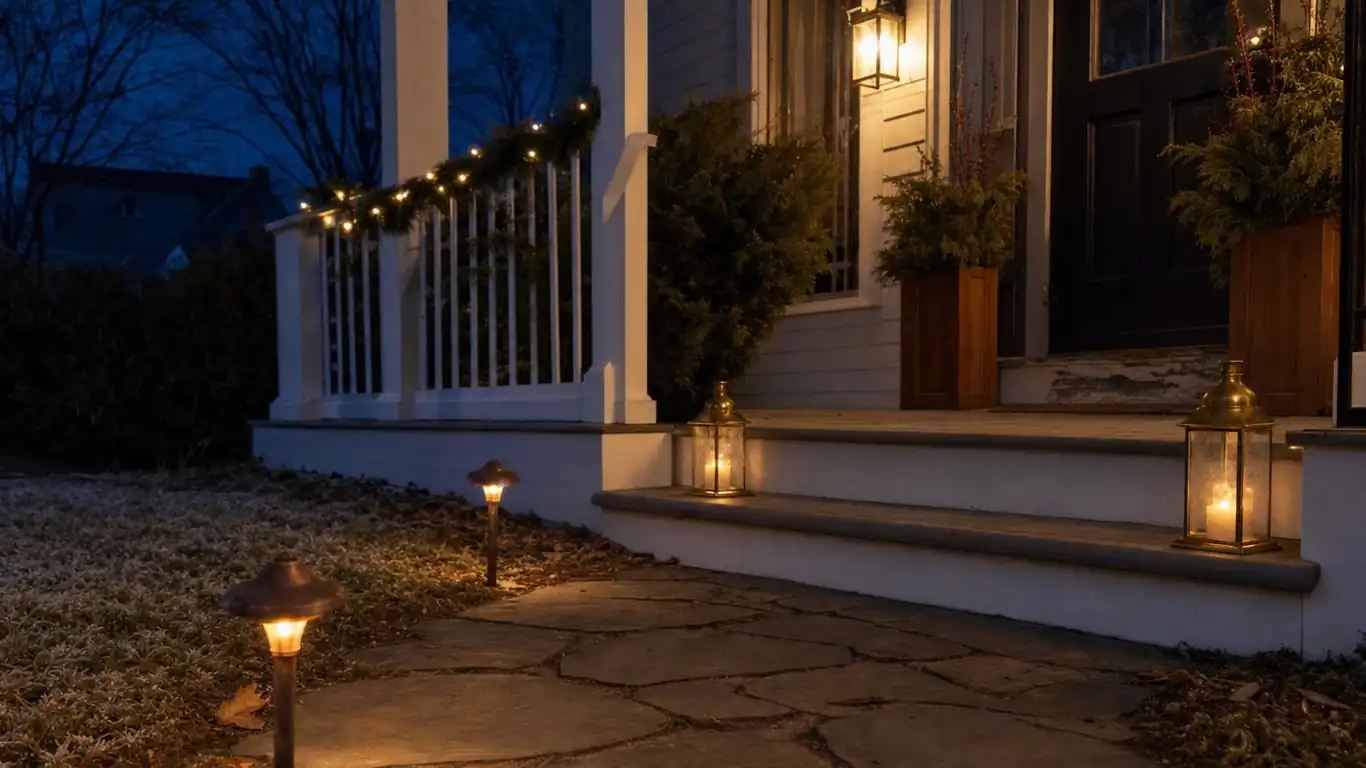
Warm light reads as fire-adjacent to the human eye. A 2700K bulb produces an amber glow — soft, directional, and warm. The brain reads it the same way it reads candlelight or a fireplace: as a signal of shelter and safety. This is why two lit porch lanterns on a dark December evening feel more welcoming than a fully decorated porch lit with cool daylight bulbs. Bulb temperature matters more than fixture style or seasonal decoration volume.
Natural materials — cedar, juniper, raw wool, terracotta, stone — carry the visual language of the landscape even when the landscape itself is bare. They age honestly in the cold. Cedar garlands darken slightly at the tips over six weeks. A raw wool blanket left on a porch bench shows the season without looking neglected. Terracotta planters develop frost patterns that read as character rather than damage. Artificial or plastic alternatives don’t behave this way — they look identical from November through January, which is to say they look like they don’t know what season it is.
Evergreen plants fill the structural role that summer container gardens fill in warmer months. Cedar, juniper, boxwood, and winterberry holly carry color through the dead months and give the eye an anchor at the entry. Without them, even a beautifully lit porch reads as empty because the planters are gone. For interior ideas that carry the same warmth inward from the front door, 15 cozy winter decor ideas to keep your home warm and stylish are directly complementary. The seasonal exterior shift also works best when it starts before winter — creative fall and autumn decor ideas for a seasonal refresh show where the transition begins.
KEY TAKEAWAY: Warm lighting, natural materials, and evergreen plants work because each one fills something winter removes — light, texture, and color.
How to Apply It at Your Home
Turning inspiration into your own porch is easier in a set order. These five moves — lighting, evergreens, a defined entry, facade color, and close-range texture — walk you through applying the look step by step.
Start With the Porch Lighting
Every cozy winter house exterior starts with lighting, not decoration. Replace any bulb above 3500K in a porch or entry fixture with a 2700K–3000K warm white LED. This single change costs $4–$10 and shifts the entire reading of the exterior at night — before a single garland goes up.
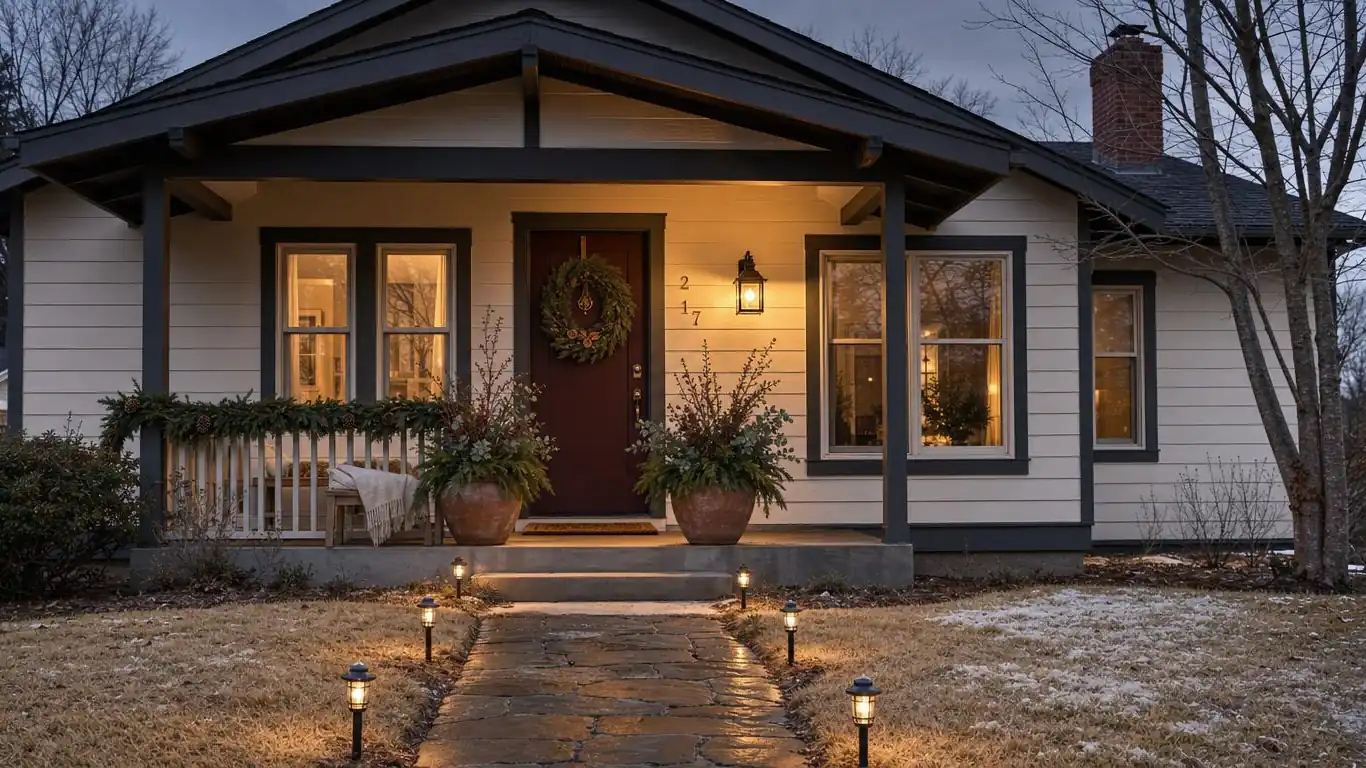
Three layers of light create a genuinely warm winter exterior. The first layer is the porch fixture — the ambient anchor above or beside the door. The second is path lighting at step or ground level, guiding the eye from the driveway to the door. Low-voltage lanterns or solar step lights with warm bulbs, spaced every 4–6 feet along the walkway, handle this well. The third is accent lighting — Edison-bulb string lights on copper wire draped from an eave to a post, or battery-powered candle lanterns on the porch steps. Three light sources at three heights create layered warm glow that reads as a genuinely inhabited home rather than just an illuminated one.
For porch fixture and layout ideas that carry year-round, 12 modern front porch ideas to refresh your home’s exterior design cover the structural decisions worth making before the seasonal layering begins. For a broader exterior view that puts the porch in context with the whole facade, simple ranch style home interior and exterior updates for better curb appeal offer a useful whole-exterior perspective.
DESIGNER TIP: Wire the porch light to a dusk-to-dawn photosensor. It turns on automatically at the first sign of dark — even on early December evenings when dusk falls at 4:30 PM. A house with its light already on when you pull into the driveway feels lived-in in a way a dark house never does.
Build the Entry With Evergreen Arrangements
Two large evergreen planters flanking the front door are the single most effective structural upgrade for a cozy winter house exterior. They replace the visual anchors summer annuals provide — holding scale, framing the door, and giving the eye a place to rest that isn’t bare concrete.
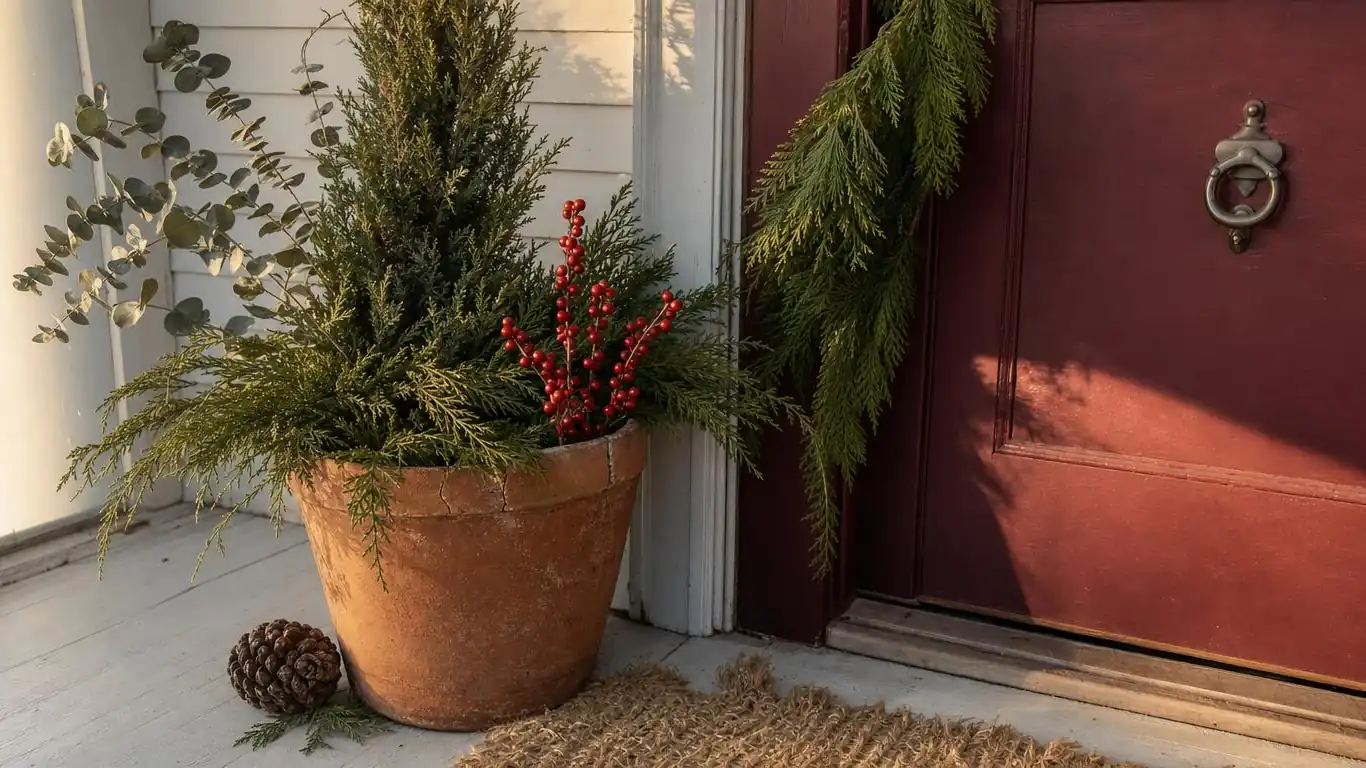
Planters should be at least 24 inches tall to hold visual weight at door level. Combine a cedar or juniper base with a vertical element – a slim juniper topiary, a spiral shrub, or tall dried birch branches — and fill gaps with winterberry holly for red berry color and dried eucalyptus for texture contrast. Cedar and juniper hold their green through February in USDA zones 4–8 and release a clean resinous scent in cold air. A fresh cedar garland wrapping the porch railing or door frame adds horizontal texture the vertical planters don’t provide. A 6-foot garland covers a standard porch railing span and costs $25–$60 at a garden center. For container and planting scale ideas that extend beyond the porch, 11 secret garden ideas to create your own hidden oasis show proportion principles that apply equally well in winter.
Style the Entry Zone as a Dedicated Space
The entry zone — the 10-foot area between the edge of the porch and the front door — is where a cozy winter house exterior actually registers. Beyond 10 feet, most seasonal detail disappears into the broader facade.
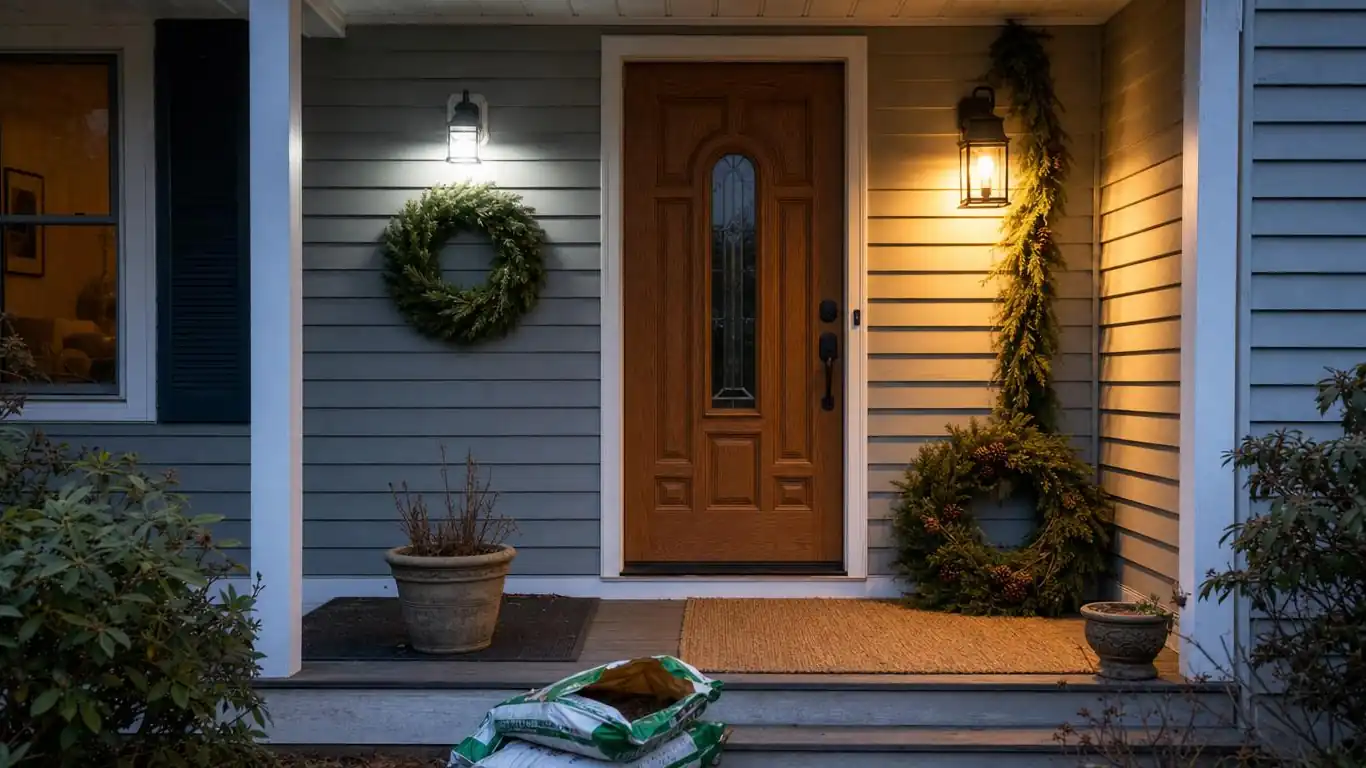
A warm entry zone has five elements working together: a proportional wreath (24–30 inches minimum for a standard 36-inch door), two flanking planters at door height, a warm porch light, a natural fiber doormat in sisal or jute, and one close-range texture detail — a woven basket, a raw wool throw on a bench, or candle lanterns on the step risers. Each element has a job. The wreath marks the door. The planters provide scale. The light provides warmth at dusk. The doormat anchors the threshold. The texture detail signals life at close range. Together, they create a welcome path that reads as warm and intentional from 30 feet away.
The same five-element formula adapts as the season turns — 14 spring front porch decor ideas that make your home inviting show how the structure stays the same while the materials shift. If expanding the porch zone is part of a longer plan, 14 enclosed porch ideas to transform your home into a private retreat cover the full range of options.
Use the Facade Color to Counter Winter’s Greyness
A facade color does different work in winter than in summer. Deep warm charcoal, warm greige, dark olive green, and rich off-white read warmer against flat grey winter light than they do in summer sun. Cool grey, icy blue, and stark white amplify the season’s bleakness rather than countering it. The body color and the tree-bare sky interact in winter in a way they don’t when the canopy is full.
If repainting the full exterior isn’t on this season’s plan, the front door handles the color job. A door in deep burgundy, warm terracotta, forest green, or deep navy creates a warm focal point that anchors the facade when dormant landscaping offers nothing. Matte or satin finish reads warmer than high-gloss. Oil-rubbed bronze or matte black hardware in the same tonal range completes the picture at no additional paint cost.
For exterior color choices that work across seasons, 16 simple barndominium exterior ideas for a modern farmhouse look show how grounded palettes hold up year-round. 14 best privacy fence ideas for backyard seclusion and style include stain and finish references that complement a warm winter exterior palette.
Add Seasonal Texture at Close Range
Seasonal texture is most effective within 10 feet of the front door. At 15 feet or beyond, small details read as visual noise from the street rather than warmth up close. This is the most common planning mistake in winter exterior styling — spreading small pieces across the whole facade rather than concentrating them where they actually register.
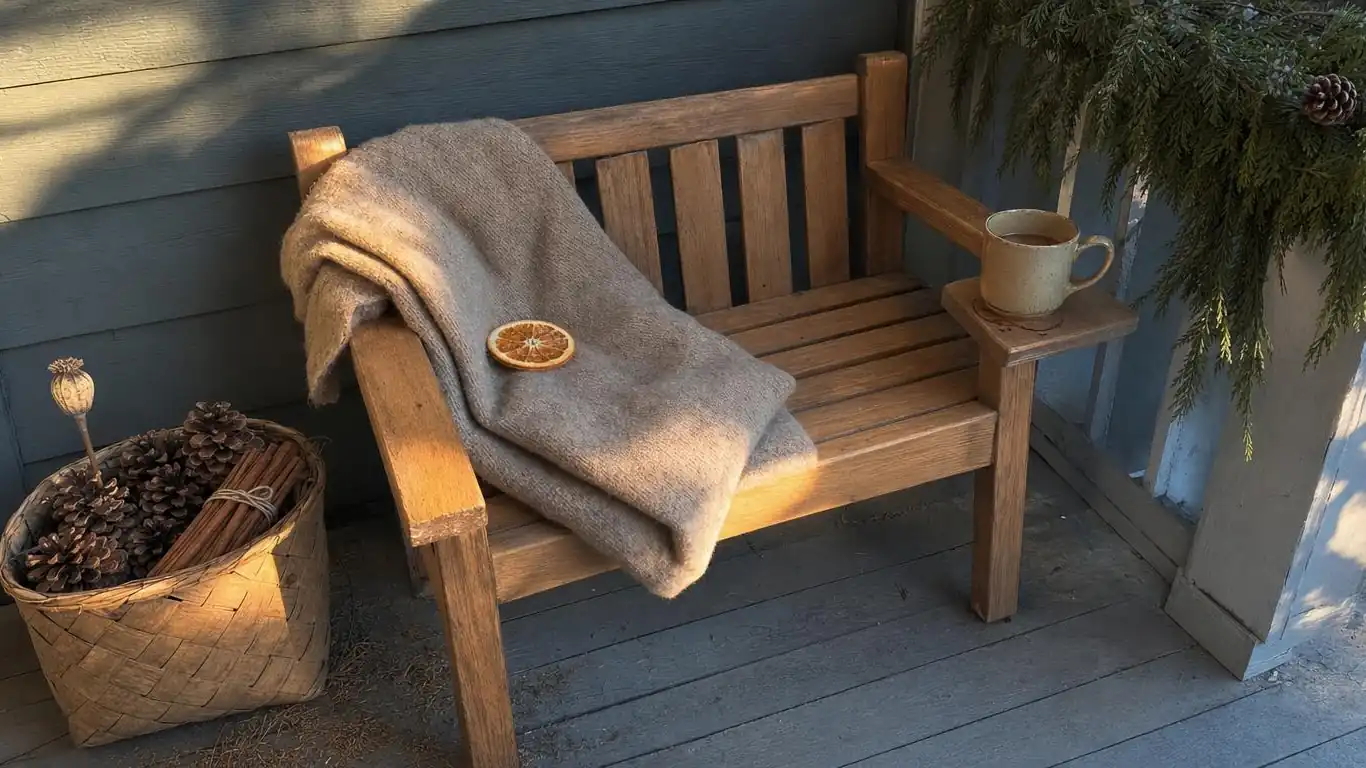
Close-range detail that works: a pinecone cluster in a woven birch basket beside the door; a raw wool blanket folded over a porch bench arm; brushed brass lanterns with battery pillar candles placed on the step risers; a bundle of cinnamon sticks tucked into the garland; a small terracotta pot of forced paperwhite bulbs on the top step. These details add fragrance, handmade character, and natural texture that synthetic decoration doesn’t replicate. They’re also what make the exterior feel like someone lives there and cares, rather than like a staged model home.
15 simple outdoor patio ideas for small and large backyards extend the seasonal warmth idea to the patio and rear yard beyond the front entry. For homes with a graded front yard, 12 modern sloped backyard ideas for landscaping on a hill add context for how seasonal texture and planting work on tiered terrain.
KEY TAKEAWAY: Seasonal texture works best within 10 feet of the front door — concentrate all detail in the entry zone before adding anything visible only from the street.

A Recent Project:
Last November, I worked with a homeowner in Connecticut on a 1980s colonial with zero exterior warmth — cream siding, black shutters, and a single flood light on the garage bay. The total budget was $600. We added two 28-inch cedar and juniper planters flanking the door, swapped the flood light for a matte black lantern with a 2700K LED, wrapped the porch railing in fresh cedar garland with pinecones and dried eucalyptus, and hung a 30-inch natural wreath on the front door. That evening she turned on the porch light and texted me a photo at 6:05 PM: “it looks like a completely different house.” Total spend: $580. Setup: three hours.
KEY TAKEAWAY: The biggest cozy exterior shift costs under $600 and takes one afternoon — the impact comes from addressing lighting, evergreen structure, and entry zone detail at the same time.
What Most People Get Wrong
❌ Cool or daylight bulbs in porch fixtures → ✅ Replace with 2700K–3000K warm white — the lowest-cost, highest-impact fix
❌ Undersized wreaths that disappear on the door → ✅ For a 36-inch door, use a wreath at 24–30 inches minimum diameter
❌ Artificial or plastic greenery at the entry → ✅ Fresh cedar and juniper cost the same, hold through February, and release scent in cold air
❌ Small seasonal details spread across the whole facade → ✅ Concentrate everything within 10 feet of the front door where it registers
For outdoor budget ideas that extend the seasonal upgrade beyond the entry zone, 15 cheap backyard ideas to upgrade your space on a budget and 17 dreamy backyard hot tub ideas you’ll actually want to use are worth bookmarking for the full winter outdoor plan.
KEY TAKEAWAY: Most winter exterior mistakes come from undersizing elements or spreading them too thin — one well-executed entry zone beats ten scattered small details every time.
Frequently Asked Questions
Conclusion
A cozy winter house exterior doesn’t need a large budget or a full renovation. It needs three things in the right place: warm light at the porch, evergreen structure at the door, and seasonal texture concentrated in the entry zone. Those three elements work in every climate, at every budget level, on every architectural style.
I drove past that Connecticut colonial last February on a grey Tuesday afternoon. The cedar garland had darkened at the tips, the paperwhites on the step had finished blooming, and a light dusting of snow sat on the planter tops. The porch light was on. The house looked like it had always been exactly that warm — not decorated, just cared for. That is what a cozy winter house exterior actually looks like at its best. For more outdoor and exterior inspiration through every season, 101homedecor.com is where to continue. The same porch that reads cozy in January reads fresh and welcoming in April — timeless spring porch decor that makes your home feel inviting shows how the seasonal transition works when the structure is already in place.