
Two of the Three Layers Never Wilt
A well-dressed fall porch is made of three layers, and two of them will look exactly the same on November 20 as they did in August. The third is finished by mid-October. Almost everyone buys them in the wrong order — plants and pumpkins first, the durable pieces later or never — which is why so many porches brown out weeks before the season does.
Looking for more ideas? Explore our full guide to Fall Ideas.
Fall porch decor works best when it is built in three layers and added in stages. Start with the floor: a layered doormat and an outdoor rug. Add the door next — a wreath, and paint if the door needs it. Add plants and pumpkins last, once nights turn cool. Buying in that order keeps the porch full from late August through Thanksgiving.
The floor and door layers also cost the most, which is the part that trips people up. Spending $90 on a rug in August feels less fun than spending $90 on mums and pumpkins in September. The rug is still there next fall. The mums are compost by Halloween.
Editorial field note: A porch with a bare concrete floor, one small doormat, and three mums on the steps looks thin no matter how many pumpkins get added. Put down a 2×6 outdoor runner, swap the mat for a larger one, and the same three mums suddenly look like part of a plan. The plants did not change.
If you are decorating the whole house this season, start with our broader guide to creative fall and autumn decor ideas. This page is the porch and front entry piece of it. You can also browse more home decor inspiration while you plan. Bookmark this guide for quick reference.
| Quick Takeaways | |
|---|---|
| Order | Buy the floor first, the door second, and living plants last. |
| Palette | Warm brown, cream, and olive look richer than orange on orange. |
| Timing | Start in late August with neutrals; add pumpkins after the first cool week. |
| Pumpkins | Whole and uncarved, lifted off the boards, out of direct afternoon sun. |
| Lighting | Wet-rated fixtures on open porches, damp-rated only under a solid roof. |
Why Is Fall Porch Decor Going Warm-Neutral This Year?
Warm neutrals are replacing bright orange because the palette now has to work for four months, not four weeks. Orange belongs to Halloween, and Halloween owns about ten days of the season — our outdoor Halloween decorations guide covers that layer separately. A porch built on burnt umber, cream, olive, and dried wheat tones carries from late August to the end of November without looking like it missed its own party.
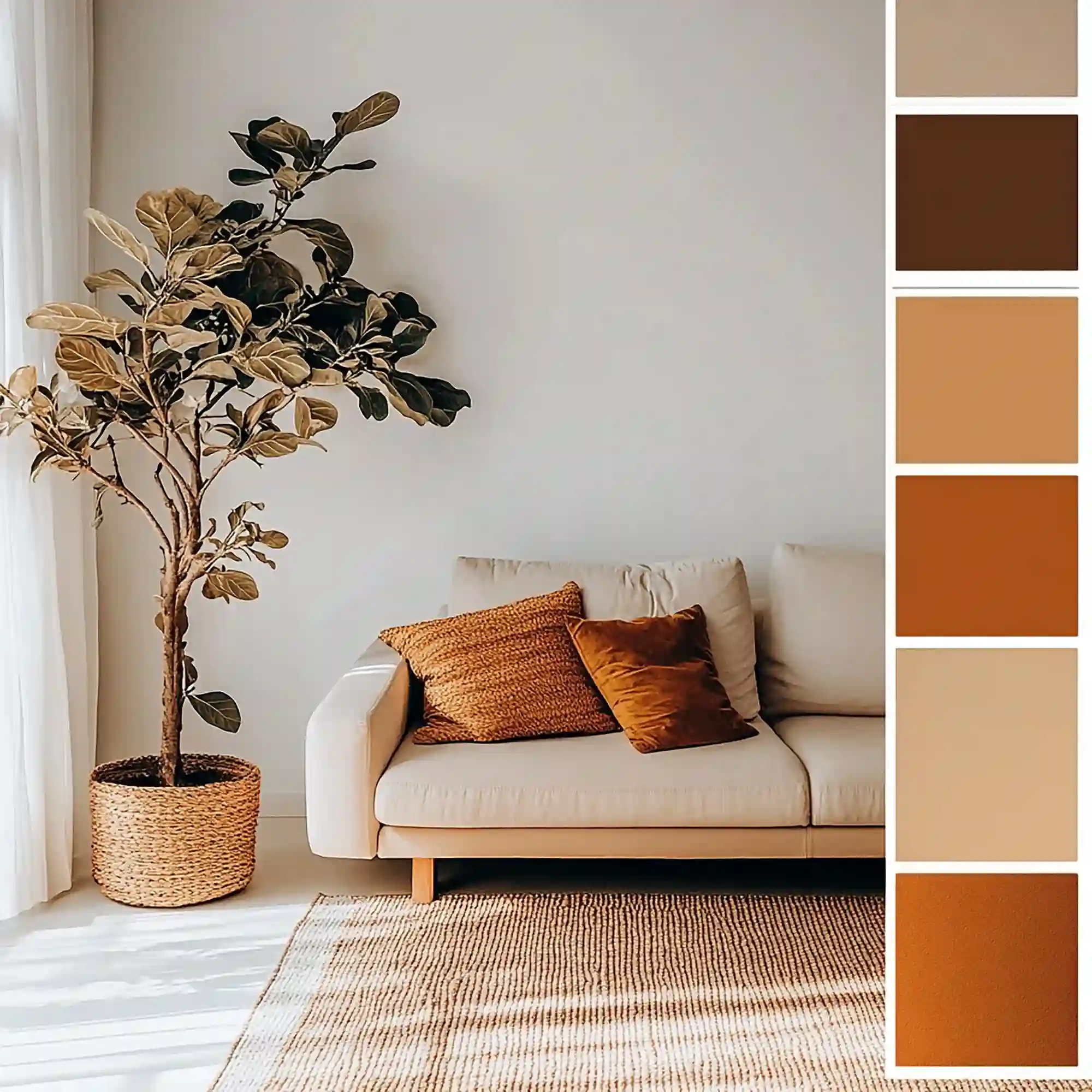
The paint industry is pointing the same direction. Benjamin Moore named Silhouette AF-655 its 2026 Color of the Year — a burnt-umber brown with charcoal in it. Sherwin-Williams picked Universal Khaki SW 6150, which it describes as a mid-tone neutral with a slight yellow undertone. Both are earth tones with warmth. Neither is orange.
Signs This Is Catching On:
- Garden centers now stock white, sage, and heirloom pumpkins beside the standard orange ones, at similar prices.
- Dried pampas, wheat bundles, and preserved eucalyptus show up in fall porch displays where plastic leaf garland used to sit.
- The two biggest paint brands both chose warm, grounded earth tones for 2026 rather than a bright accent shade.
- Neutral fall decor and cozy fall aesthetic searches climb every August, while the pure-orange look holds steady rather than growing.
None of this means orange is banned. It means orange works better as one accent inside a warm-neutral porch than as the whole idea.
What Does a Layered Fall Porch Actually Look Like?
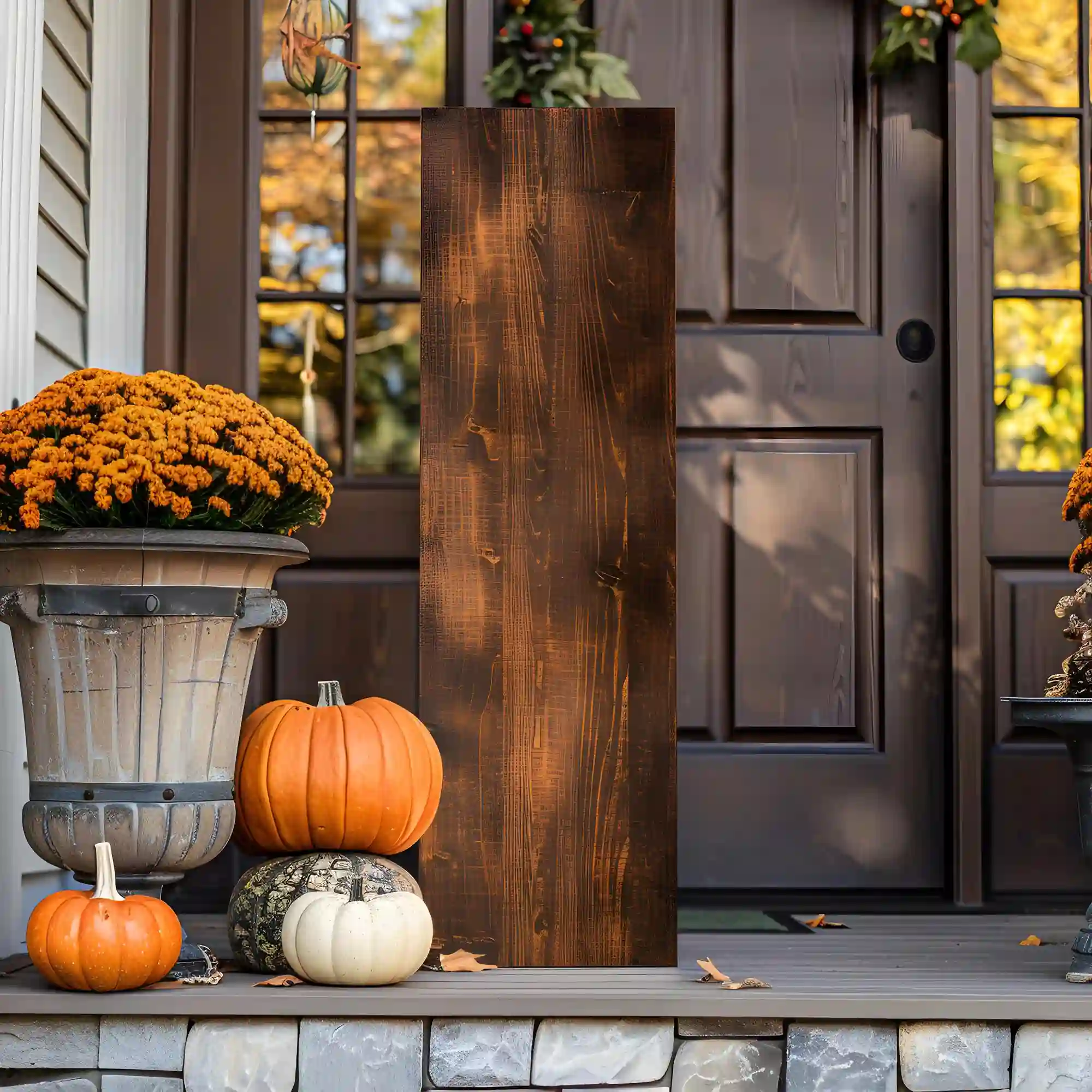
A layered fall porch has four to six material types and no more than three colors. The materials do the work: a flat-woven outdoor rug, a coir doormat, one or two ceramic or aged-metal planters, a real or dried wreath, natural wood or woven baskets, and warm light after dusk. Our fall wreath ideas cover which of those hold their shape into November. Repetition is what makes it look planned — one material appearing three times looks better than six materials appearing once.
The color rule is simple. Pick one warm dark (burnt umber, deep olive, near-black), one cream or oatmeal, and one accent pulled from your house — brick red, blue-grey siding, brass hardware. Everything else is plant green and wood brown, which count as neutrals outdoors.
Height is the part most porches miss. A good display has three levels: something at ankle height (pumpkins, low planters), something at hip height (a bench, a stack of crates, a tall lantern), and something at eye height (the wreath, a hanging basket, string lights). A porch with only ankle-height objects looks like storage.
DESIGNER TIP: Group pumpkins and planters in odd numbers and in three different sizes, then place them so they touch or overlap slightly. Evenly spaced, same-size objects read like a store display, not a home.
The Three Layers, in the Order You Should Buy Them
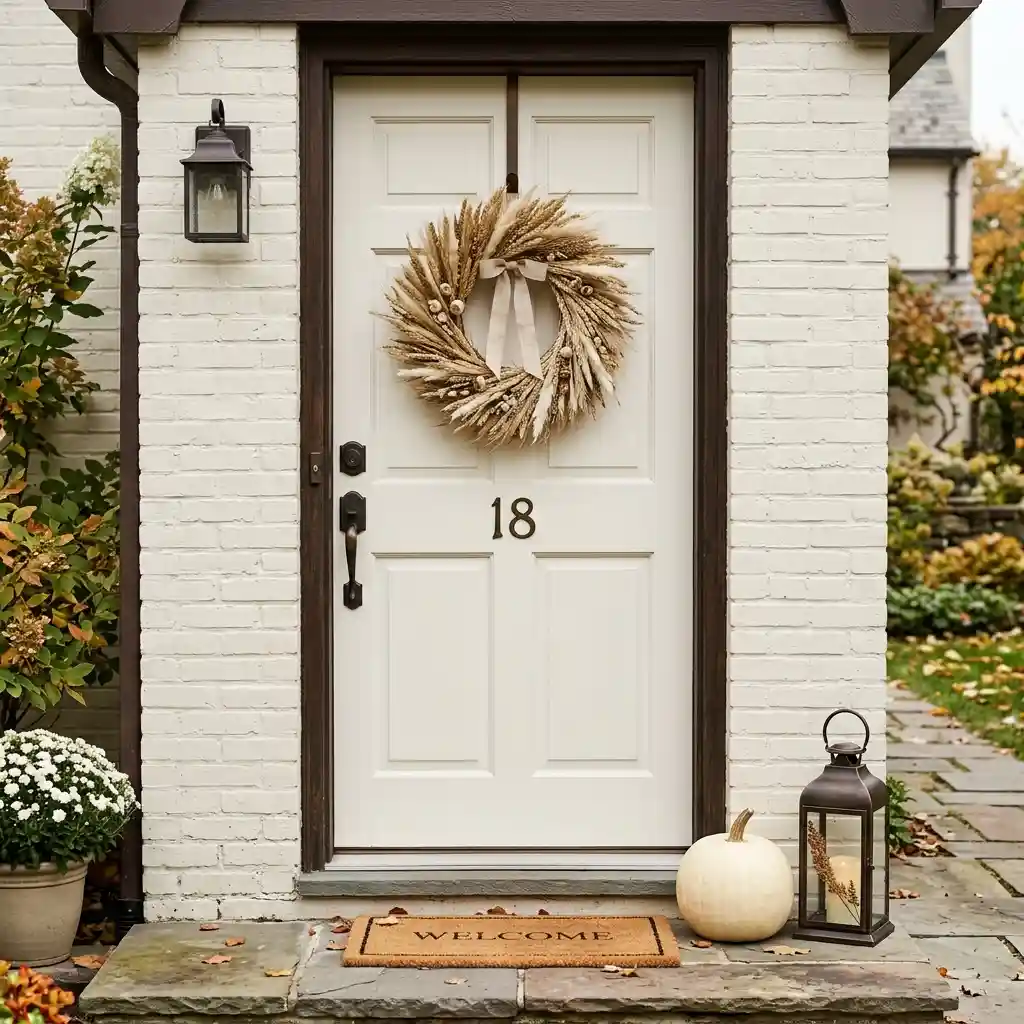
The three layers are floor, door, and living things. Buy them in that sequence and each purchase makes the next one look better. Buy them in reverse — plants first, floor last — and you end up adding more plants to fix a problem the floor was causing.
This order also spreads the cost. The floor layer is a one-time buy that lasts several seasons. The door layer gets refreshed every year or two. Only the third layer is truly disposable, and it is the cheapest of the three.
Layer One — The Floor Under Your Feet
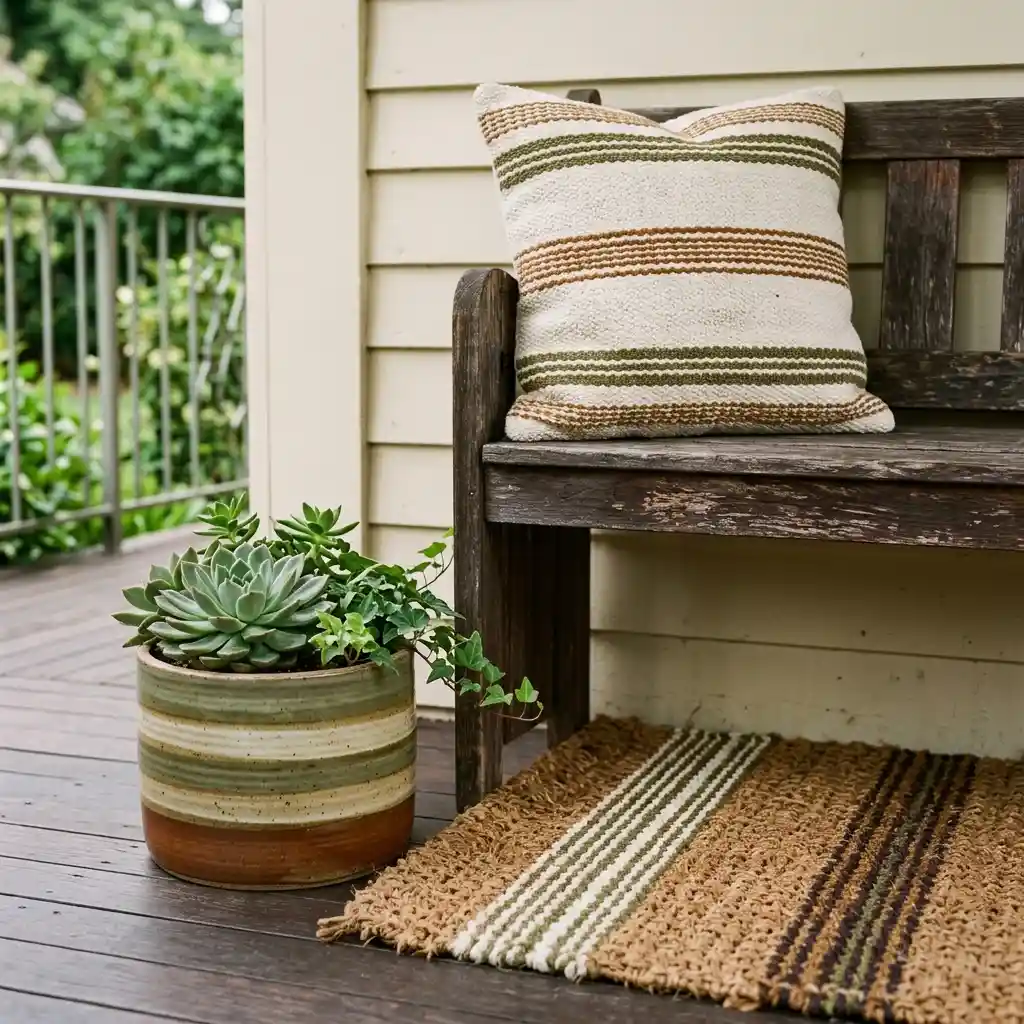
The floor layer is a doormat plus one outdoor rug underneath it. A doormat alone almost always looks undersized against a standard 36-inch door. Layering a 2×3 coir mat over a 3×5 or 2×6 flat-woven outdoor rug fills the landing and gives the pumpkins something to sit against.
Size it to the door, not the porch. The rug should be at least as wide as the door plus its trim, and deep enough that both feet land on it before you reach for the handle. On a long, narrow porch, a runner beats a rectangle.
Material Note: Polypropylene outdoor rugs are solution-dyed, so color runs through the fiber instead of sitting on the surface, and the fiber does not absorb water — which is why they dry fast and resist mildew better than natural jute in a rainy fall. Lift the rug after heavy rain so the boards underneath dry out.
Layer Two — The Door and the Wreath
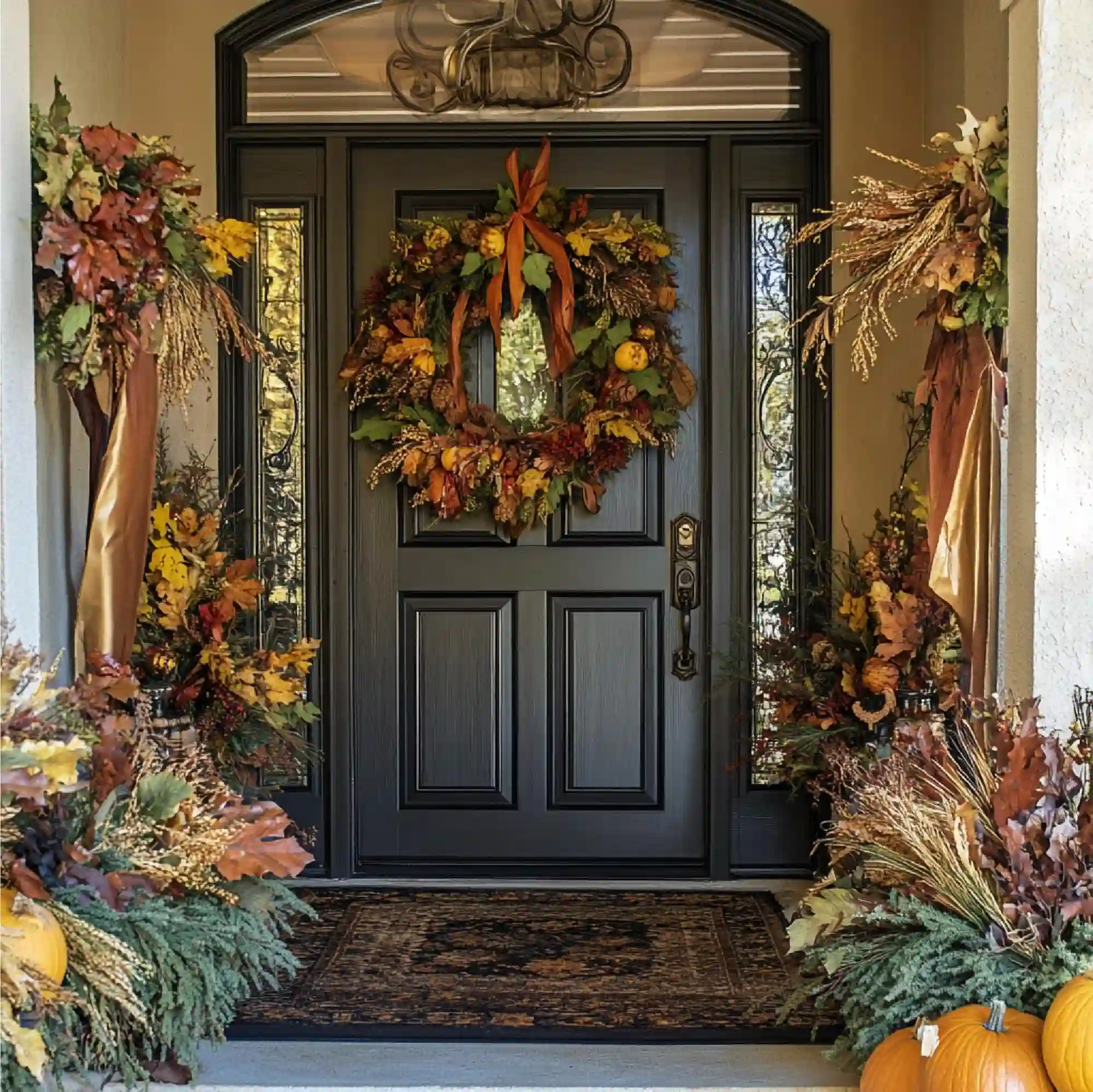
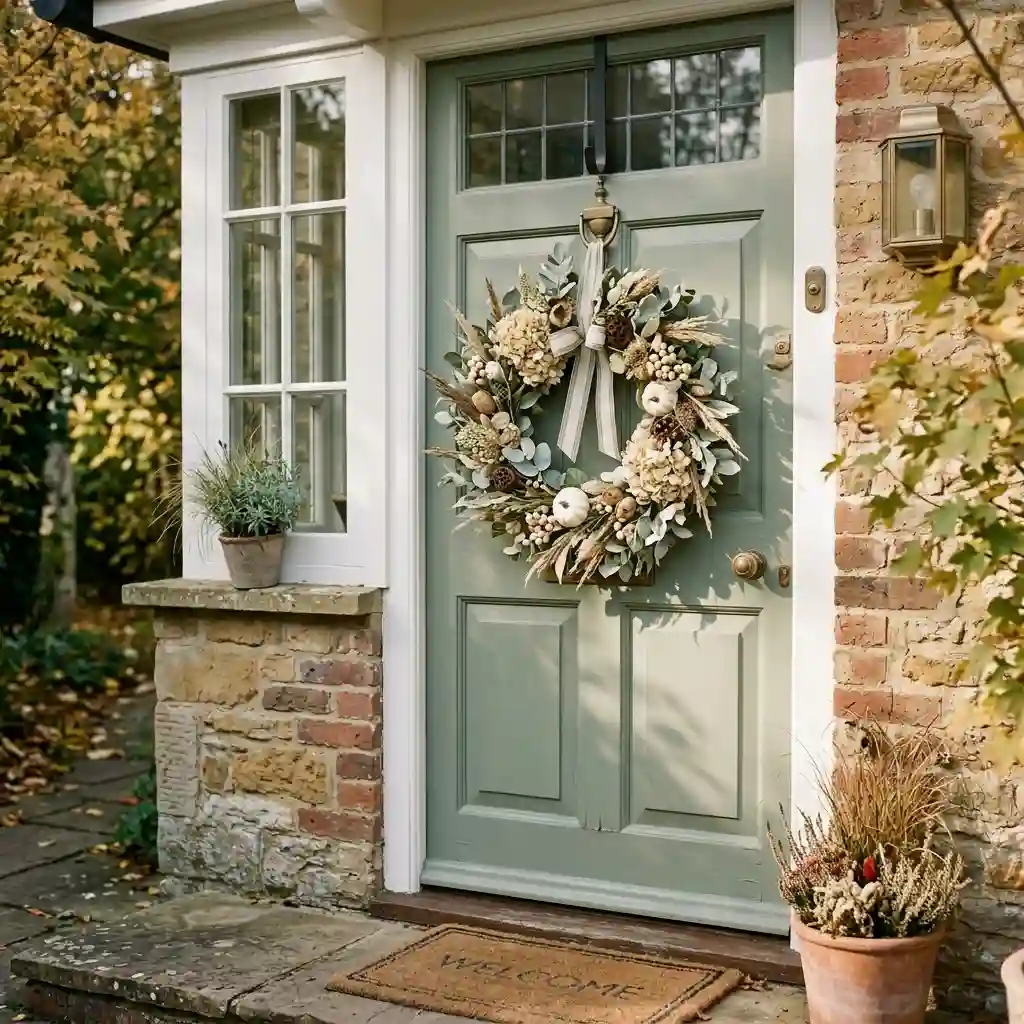
The door layer is the wreath, the hardware, and the paint. A wreath should cover roughly half to two-thirds of the door’s width — on a 36-inch door, that means 22 to 26 inches. Smaller wreaths float and look like an afterthought.
Skip the plastic maple-leaf ring. Dried wheat, preserved eucalyptus, magnolia leaf, and grapevine bases all hold their shape for two or three seasons and cost about the same. If you want a seasonal-cousin reference for shape and scale, the same rules apply to these spring wreath for front door ideas — only the materials change.
Hang it without drilling. An over-the-door wreath hanger or a heavy-duty removable adhesive hook rated above the wreath’s weight protects the door face and the trim, which matters on a rental and on any painted door you would rather not patch.
Paint is the cheapest upgrade on the whole porch if the door is tired. A warm dark — deep olive, burnt umber, or a soft near-black — sits well behind dried and neutral materials and still looks right in December.
Layer Three — The Living Stuff
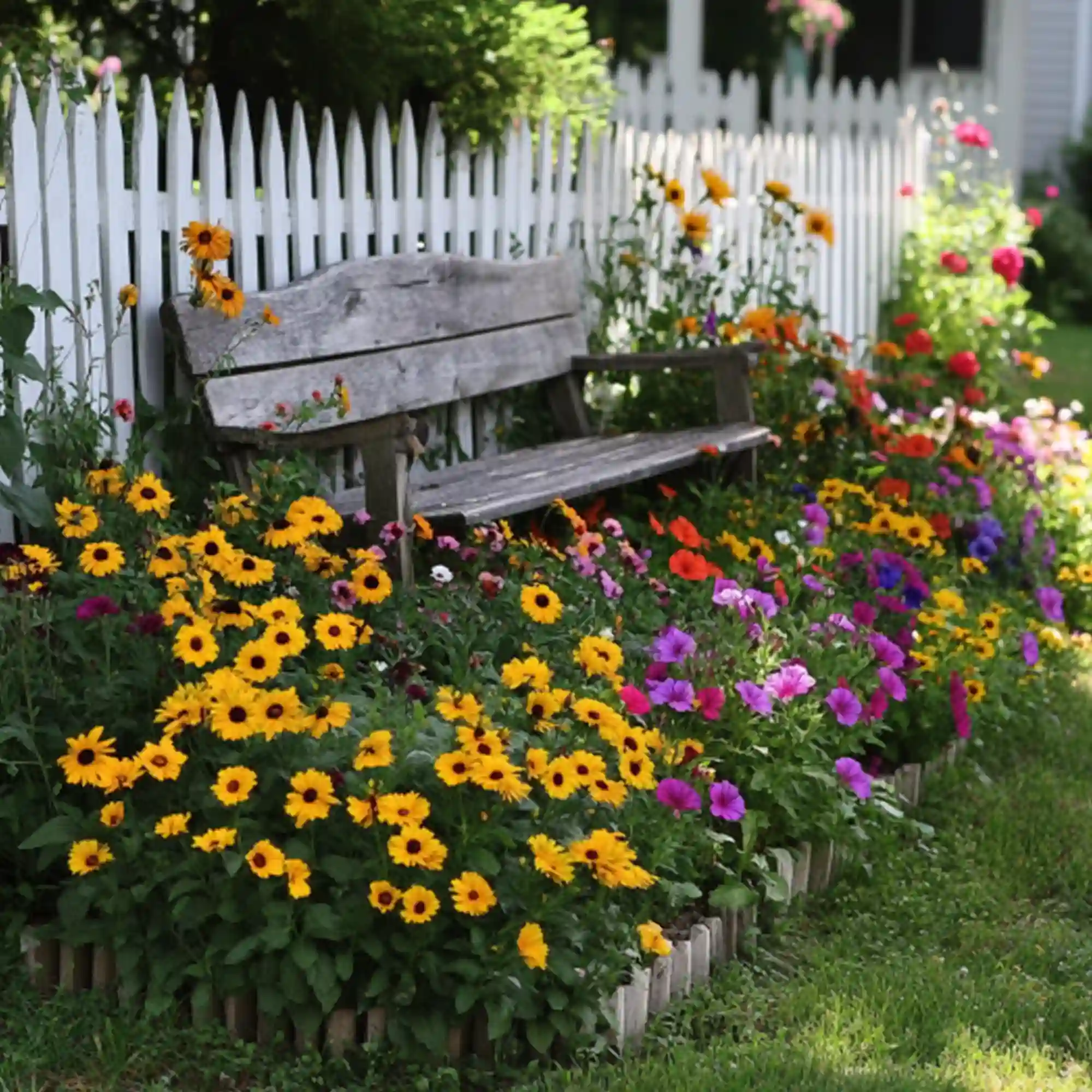
The plant layer is where most of the money gets wasted, because most of it is bought in full bloom. Garden mums sold in full flower are already at the end of their display window. Buy them tight-budded instead and you gain two to three extra weeks.
Garden mums want six or more hours of direct sun a day and daily water checks in a container — a mum in a pot on a covered porch dries out faster than one in the ground. Ornamental kale, ornamental cabbage, and grasses like little bluestem hold their color after the first frost, so they carry the porch into November when mums are done. If your porch is fully enclosed the watering and light both change, which our enclosed porch ideas cover.
Pair one large planter of something tall (fountain grass, dried wheat bundle) with two or three lower pots. Add three to five whole pumpkins in mixed sizes and at least two colors — one white, one heirloom green or tan, the rest orange if you want it. That is the entire plant layer.
Safety Note: Dried cornstalks, straw bales, and paper decorations catch fire quickly, so use battery LED candles inside porch lanterns rather than open flame and keep any lit candle well clear of stacked dried materials.
When Should You Start Decorating for Fall?
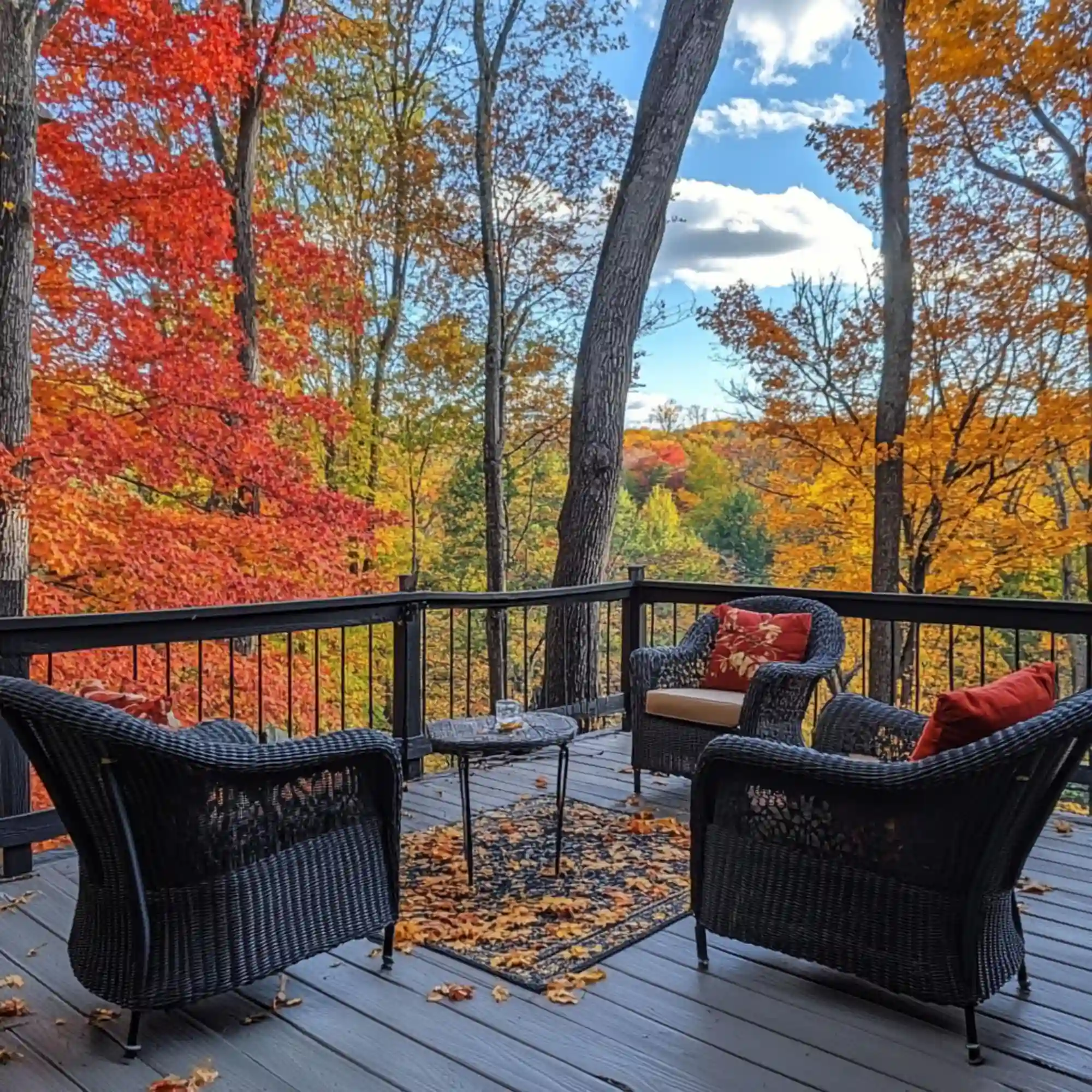
Start in late August with the non-perishable layers, then add produce and plants in mid-to-late September. Late August is early enough that the porch does not look bare while the neighbors ramp up, and the rug, mat, wreath, and lanterns are all weather-proof, so nothing is at risk. Pumpkins and mums bought in August are simply money burned in the heat.
A workable calendar looks like this. Late August: rug, doormat, wreath, lanterns, one dried arrangement. Mid-September: mums, grasses, first pumpkins. Early October: top up pumpkins, add ornamental kale. Late October: anything truly spooky belongs to Halloween, and our Halloween decorating archive covers that side of the season. Early November: pull the spent mums, keep the kale and grasses, and the porch looks like Thanksgiving without a single new purchase. When the season finally turns, our spring front porch decor ideas pick the porch back up.
The handoff at the end matters too. Fall porch decor should come down the weekend after Thanksgiving, not linger into December — that is when the cozy winter front porch decor palette takes over with evergreen and cooler tones.
How Do You Keep Porch Pumpkins From Rotting?
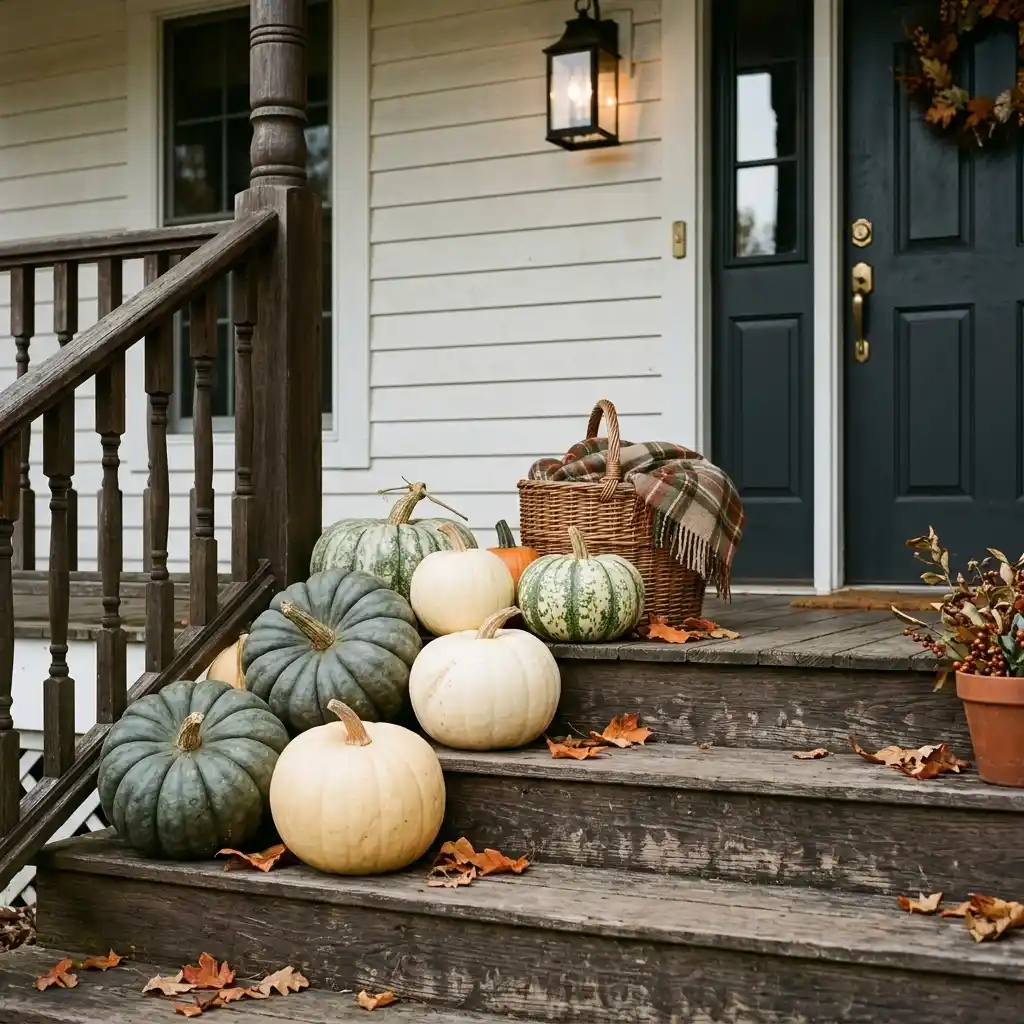
Keep pumpkins whole, lifted off the boards, and out of direct afternoon sun. Whole, unblemished pumpkins keep best in a cool, dark spot between 50 and 60°F at 50 to 70 percent relative humidity, and Illinois Extension advises storing them in a single row off the floor rather than piled up, so air can move around them. A porch is warmer and wetter than that, but the same three rules still apply outdoors.
In practice: set pumpkins on a wood crate, a slate paver, or a riser instead of directly on damp boards. Leave a finger’s gap between them so they are not sharing moisture. Move the display to the shaded half of the porch if your entry gets hard afternoon sun.
Carved pumpkins are a different object with a different lifespan, and carving belongs to Halloween rather than to fall styling. For a display meant to last from September into November, buy whole pumpkins with an inch or two of stem left on and never lift one by the stem.
Material Note: Foam and resin pumpkins in matte, uneven finishes now pass at a distance and cost less over three seasons than buying real ones twice a year — mix two or three fakes into a group of real ones rather than going all-faux.
What Works on a Small Porch or Apartment Landing?
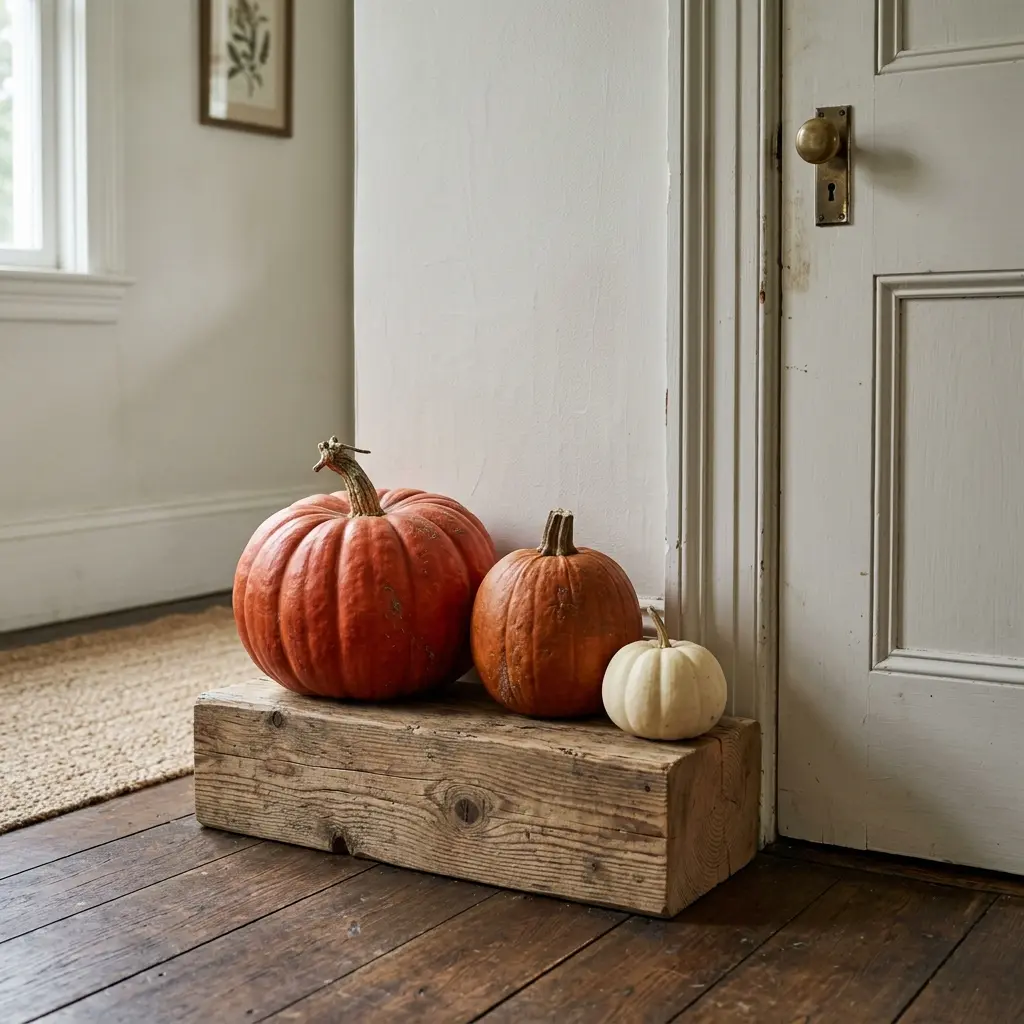
A small porch needs vertical layers, not fewer objects. Stack the display upward: a narrow plant stand or a two-step riser holds three pots in the footprint of one. One tall lantern beside the door does the job that three low pumpkins cannot do in a two-foot-deep landing.
Cut the object count and raise the quality. On a landing under 25 square feet, one oversized doormat, one wreath, one tall planter, and three pumpkins is a complete display. Adding a fourth and fifth item is what makes small porches look cluttered rather than full. The year-round version of that restraint is in our modern front porch ideas.
Climate Note: On an uncovered landing, use fixtures and string lights labeled for wet locations; damp-rated products are only meant for porches with a solid roof and no blowing rain.
Rental Note: Skip drilling entirely — use a freestanding shepherd’s hook or plant stand for height, and a weighted lantern instead of a hanging one, so nothing touches the building.
If your outdoor space is a balcony rather than a porch, the same vertical-first approach applies, and our front porch decor ideas guide covers the year-round version of these layouts.
What Should the Entryway Just Inside the Door Do?
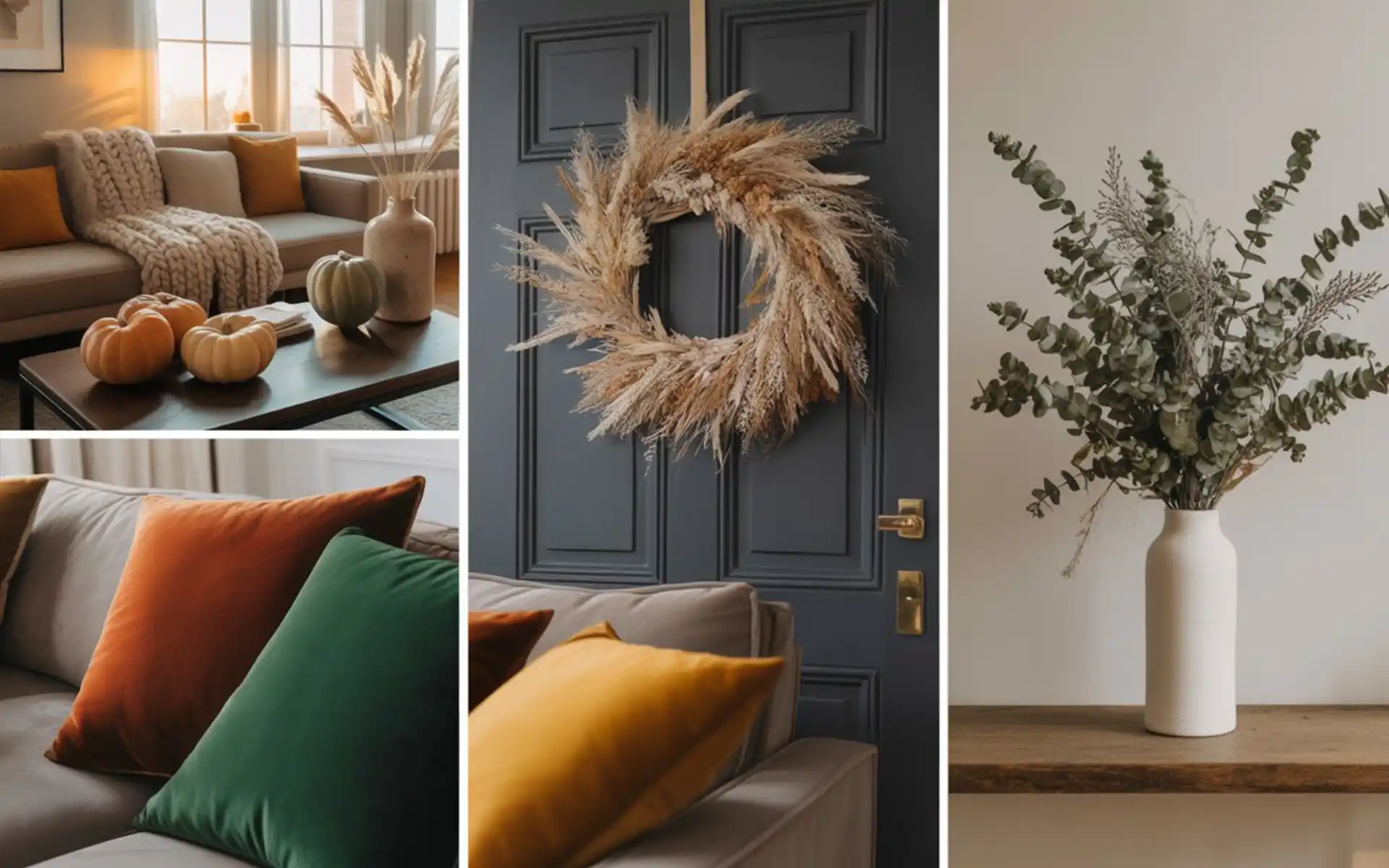
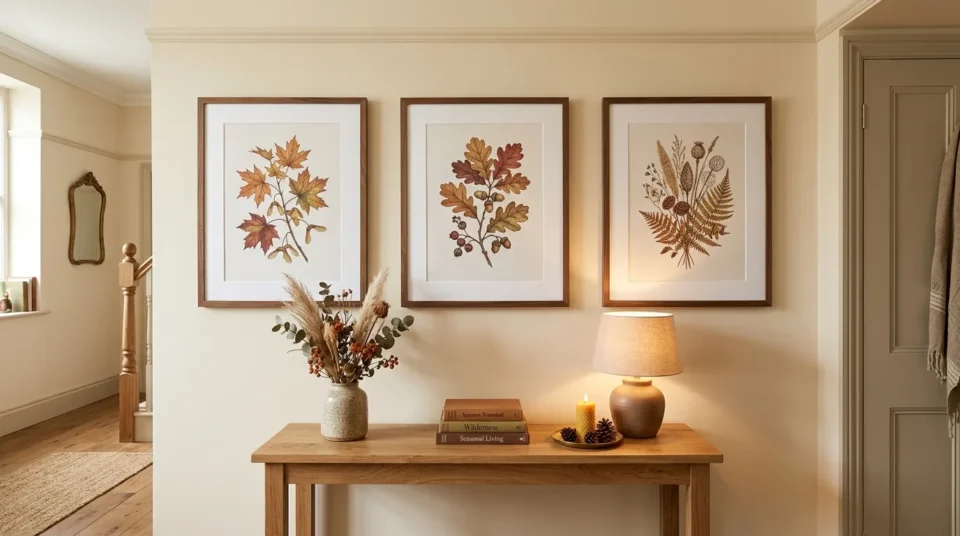
The entryway should repeat one material from the porch and stop there. If the porch uses dried wheat, put a small wheat bundle in a vase on the console. If it uses white pumpkins, set two on the entry table. That single repeat makes the inside and outside feel like one house instead of two separate projects.
Three changes cover an entry: swap the runner to a wool or washable flatweave in oatmeal or warm brown, change the console styling to one tall object plus one low group, and switch the bulb in the entry fixture to 2700K so the light matches the porch lantern. Nothing structural, nothing expensive.
Keep the floor clear. Fall entryways collect boots, bags, and pumpkins fast, and a hallway that has to be stepped around cancels out everything the porch just did. The same styling logic behind these spring entryway decor ideas works in autumn with warmer materials.
What Most People Get Wrong on a Fall Porch
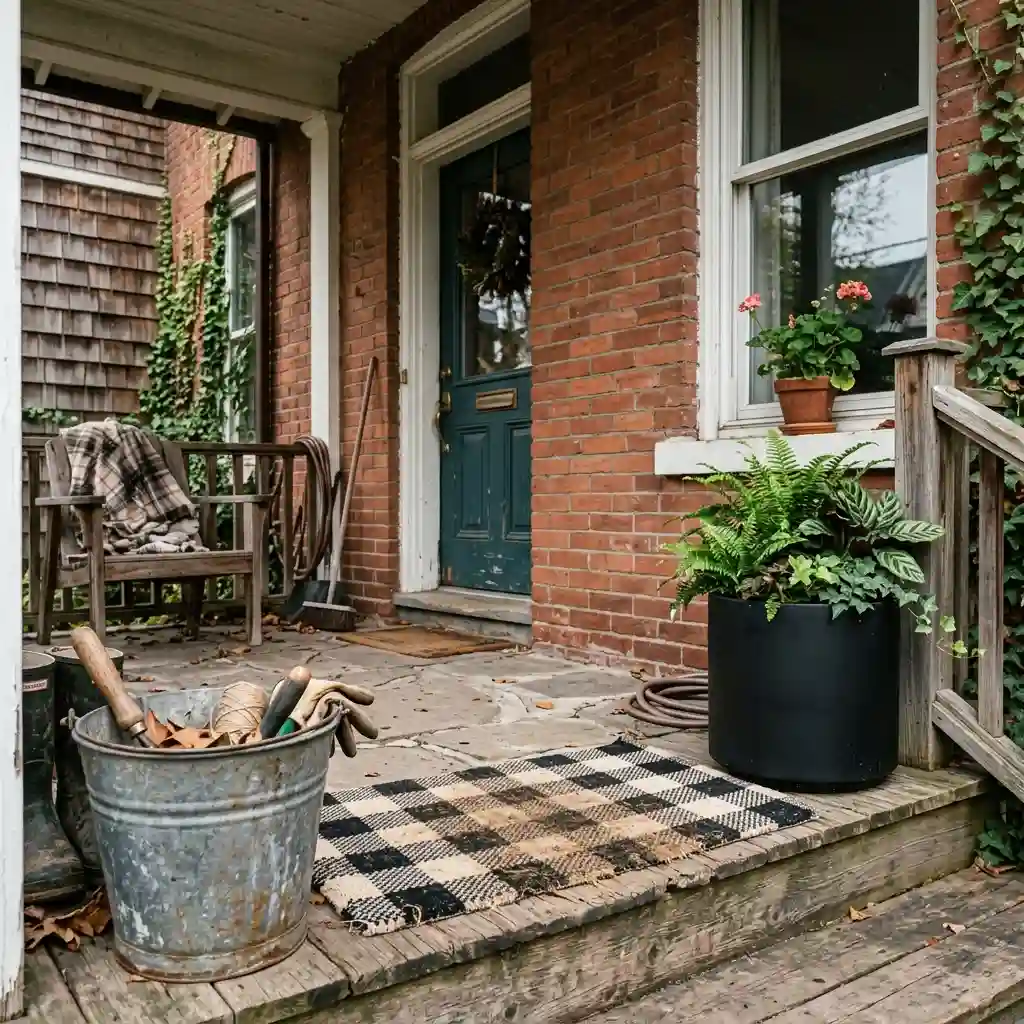
Buying everything on one September Saturday is the expensive version of this project. The plants start their clock the day they arrive, so the porch peaks in week two and declines for the next eight. Split the trip: durable layers in late August, plants and pumpkins about three weeks later.
A single small doormat on bare concrete is the second failure, and it is the one people misdiagnose. The porch does not need more objects — it needs a bigger floor. A coir mat over a 3×5 or 2×6 flat-woven outdoor rug fixes the scale problem that makes every pumpkin beside it look undersized.
Orange on orange on orange flattens the whole display. Orange pumpkins against orange mums against an orange leaf garland leaves nothing for the eye to separate, especially on a red-brick house. Hold to one warm dark, one cream, and one accent, then let plant green and wood brown fill the rest.
Keeping everything at ankle height is the last common miss. A porch styled only with pumpkins and low pots looks like items left by the door rather than a display. Add one hip-height piece — a bench, a crate stack, a tall lantern — and one at eye height, usually the wreath.
Your Fall Porch Checklist
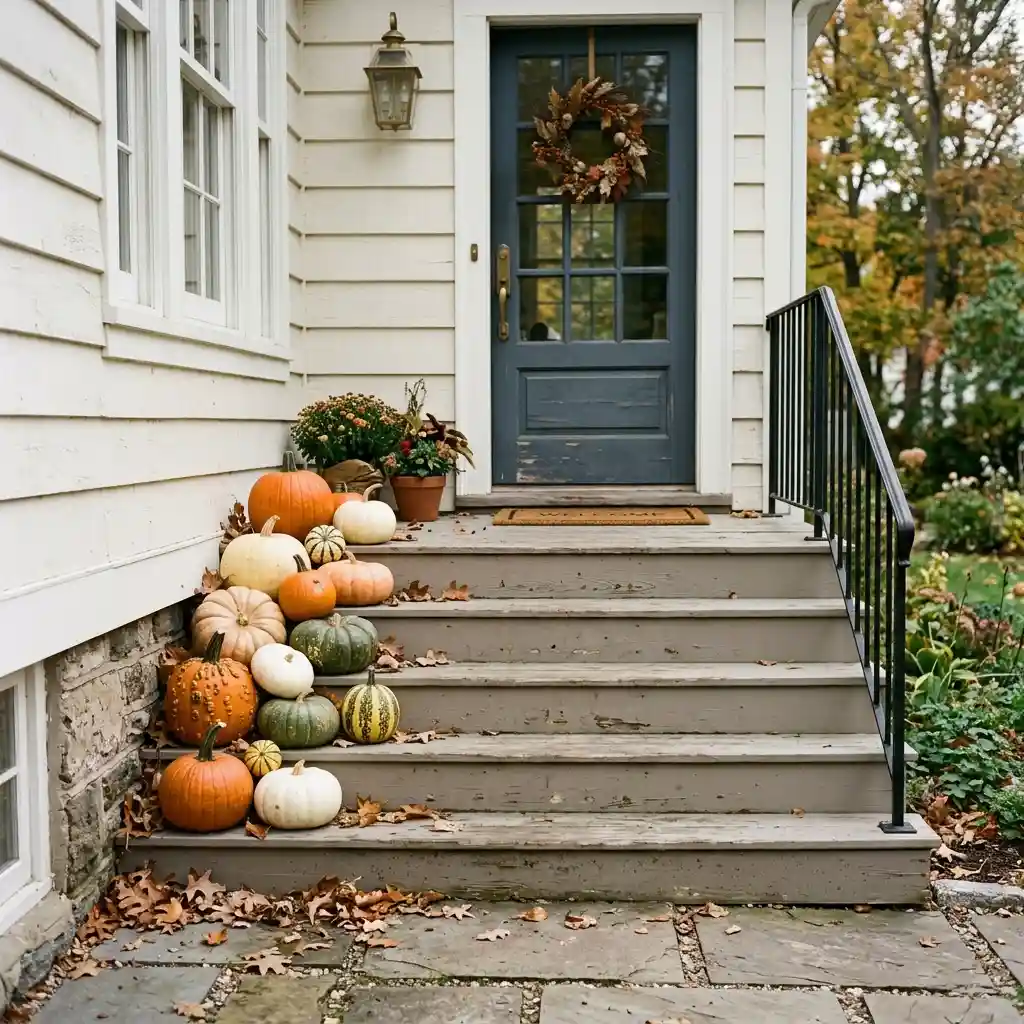
- Measure the door width first, then buy a wreath at 22 to 26 inches for a standard 36-inch door.
- Buy the outdoor rug before any plants; size it to the door plus trim, not to the porch.
- Choose mums with tight buds rather than open flowers to gain two to three weeks.
- Set every pumpkin on a riser, crate, or paver instead of directly on damp boards.
- Confirm string lights and lanterns are wet-rated if the porch has no roof over it.
- Add one hip-height object and one eye-height object before adding a single extra pumpkin.
- Repeat exactly one porch material inside the front door and stop there.
KEY TAKEAWAY: The porch that still looks good in mid-November is the one whose best pieces were bought before the plants, not after.
Price Ranges by Layer
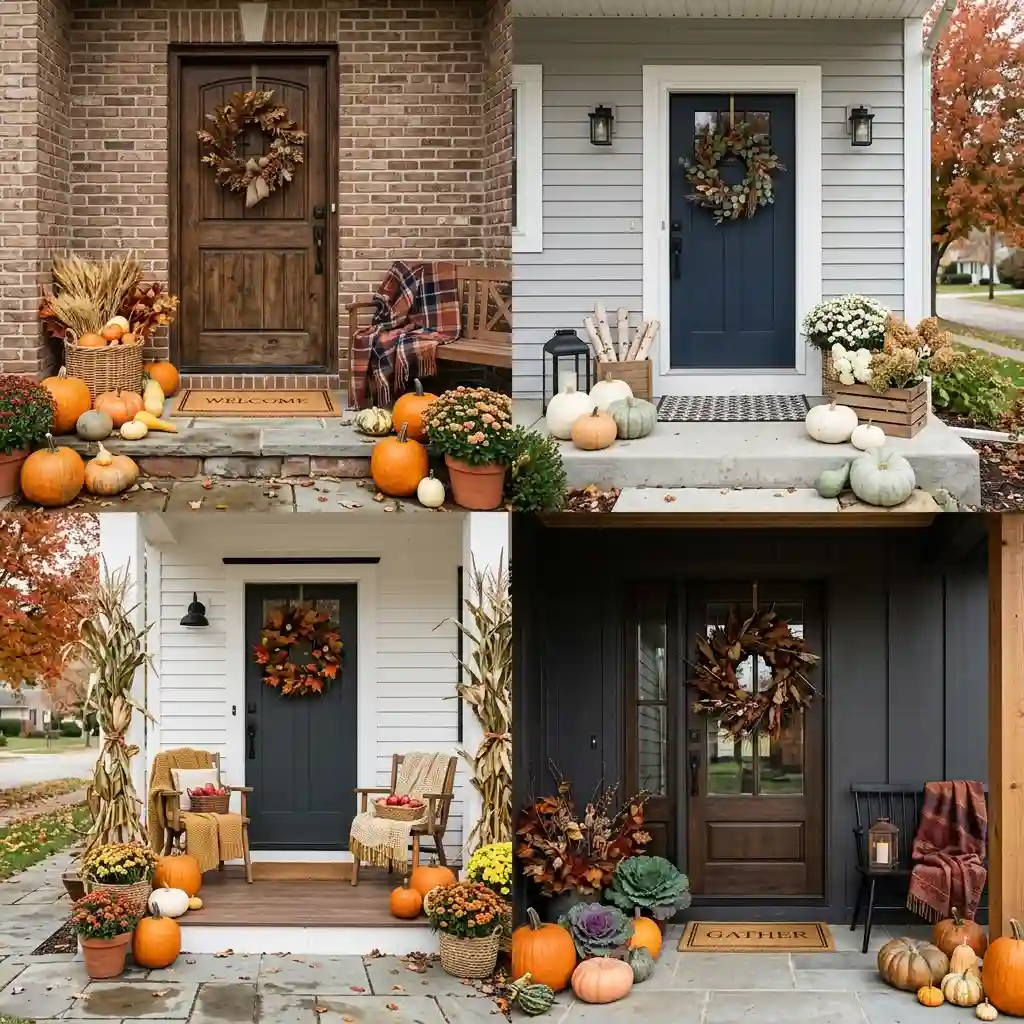
Most of a fall porch is a one-time cost that carries for several seasons. A budget refresh lands under $100 and covers a doormat swap plus five pumpkins. A mid-range build runs $150 to $300 and adds the outdoor rug, a real wreath, and two planters. A premium reset — rug, dried wreath, two ceramic planters, lanterns, grasses, and a full pumpkin group — sits between $450 and $600, and roughly two-thirds of that is reusable next year.
| Project | Estimated Cost | Impact Level |
|---|---|---|
| Layered doormat over a flat-woven outdoor rug | $45-$120 | Very High |
| Dried or preserved wreath plus a no-drill door hanger | $35-$90 | High |
| Three garden mums, one grass, two ceramic planters | $60-$150 | Medium |
| Full porch reset with lanterns and a mixed pumpkin group | $250-$500 | Very High |
Best First Upgrade: The rug-and-mat pairing, because it fixes the scale problem that makes every other object on the porch look small.
Skip for Now: Plastic leaf garland and pre-lit foam pumpkins — they photograph poorly, fade in one season, and cost more than dried materials that last three.
The Pick
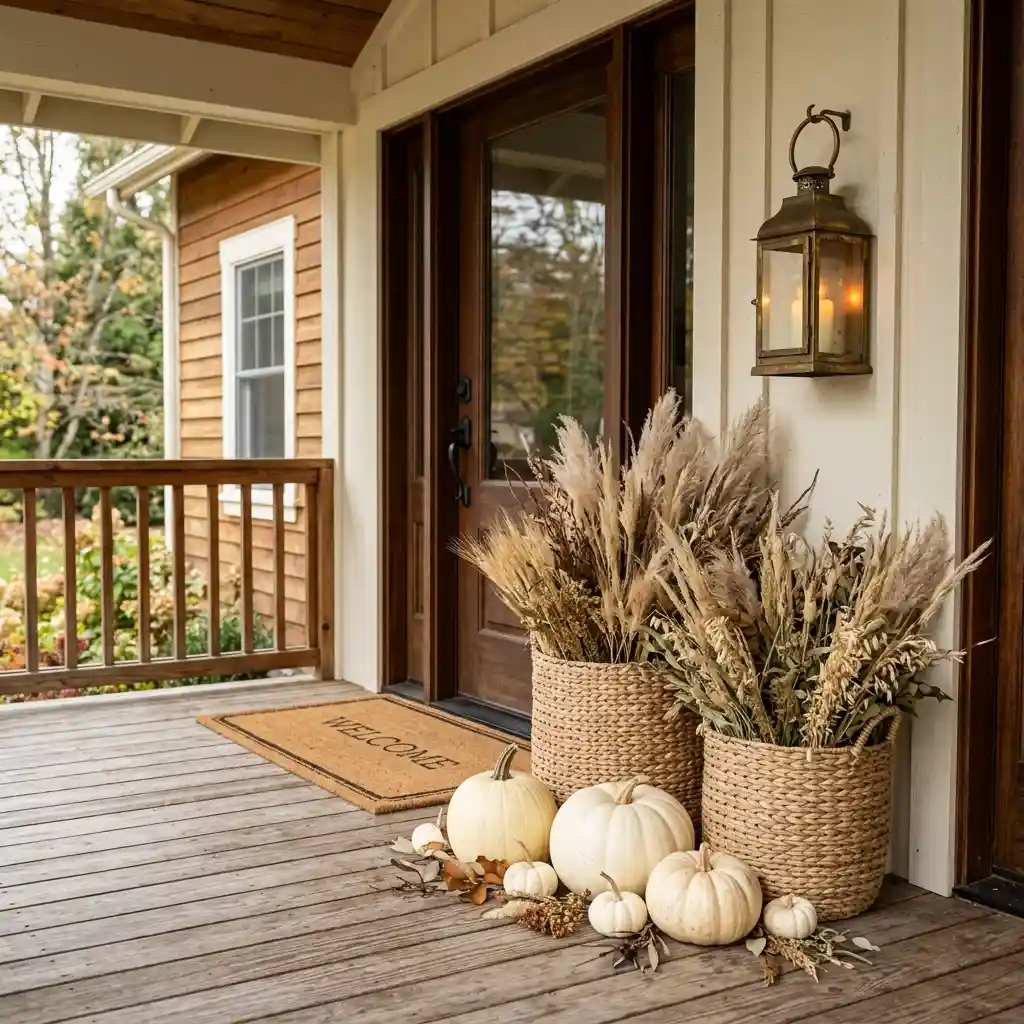
Designer’s Verdict: The three-layer, staged approach wins over the one-weekend build, because the two layers that cost the most are also the two that never wilt — and that is what keeps a porch looking finished in the third week of November instead of the second week of October.
Editorial field note: A porch that already has a full-size rug, a good wreath, and warm light needs only three pumpkins and one grass to look done. The same porch with no rug and no wreath still looks unfinished after a dozen pumpkins. The cheap layer cannot fix what the expensive layers are missing.
Frequently Asked Questions
Conclusion
Good fall porch decor is a sequencing problem before it is a styling problem — buy the floor and the door first, add the living layer three weeks later, and the porch holds up for the whole season instead of one photo. Choose warm browns and creams over wall-to-wall orange and the same display still looks right in late November. Browse more seasonal home decor ideas when you are ready for the next room.
Next Steps
- Measure your front door this week and write down the width — it sets both the wreath size and the rug size.
- Order the outdoor rug and doormat now, before you buy a single pumpkin or mum.
- Pick your three colors, then screenshot them so you stop buying stray accents at the garden center.
- Check whether your porch has a roof over it, and buy wet-rated lighting if it does not.
Explore Fall Porch Decor
- Cozy Fall Porch: What to Add Before the Evenings Get Cold
- Fall Front Door Decor Ideas That Fix the Door First
- Fall Front Porch Decor Should Match Your House, Not a Trend
- Fall Porch Pumpkin Display Ideas That Still Look Good in November
- Fall Porch Signs Worth Buying and the One Measurement to Check First
- Small Porch Fall Decor Doesn't Need Full-Size Everything
- Which Fall Porch Decor Ideas Work Together as One Look?