The Pinterest Arch Nobody Warns You About
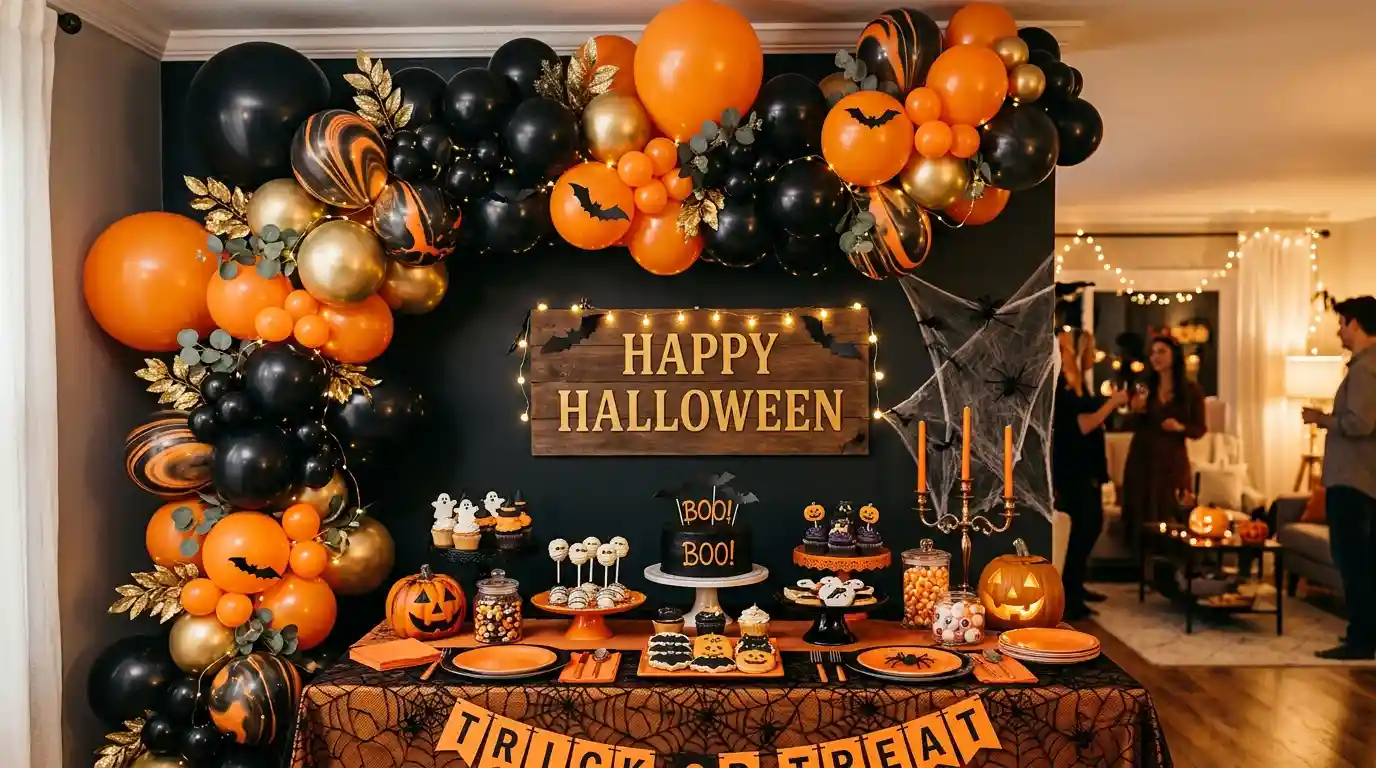
The photo shows a full, curling balloon arch over a dessert table. The reality, four hours in, is a half-covered strip, two bags of popped latex, and a host googling “why does my balloon garland sag.” If that has been you, the problem was not your craft skills. You were building event decor on a season-decor plan.
That distinction is the whole subject. A Halloween balloon garland is the one item in the wreath-and-garland family with a lifespan measured in days: it peaks the night it goes up, fades within a week, and cannot be stored for next year. Built for a party date, that is a feature — maximum drama, zero storage. Built “for October,” it is a slow-motion disappointment.
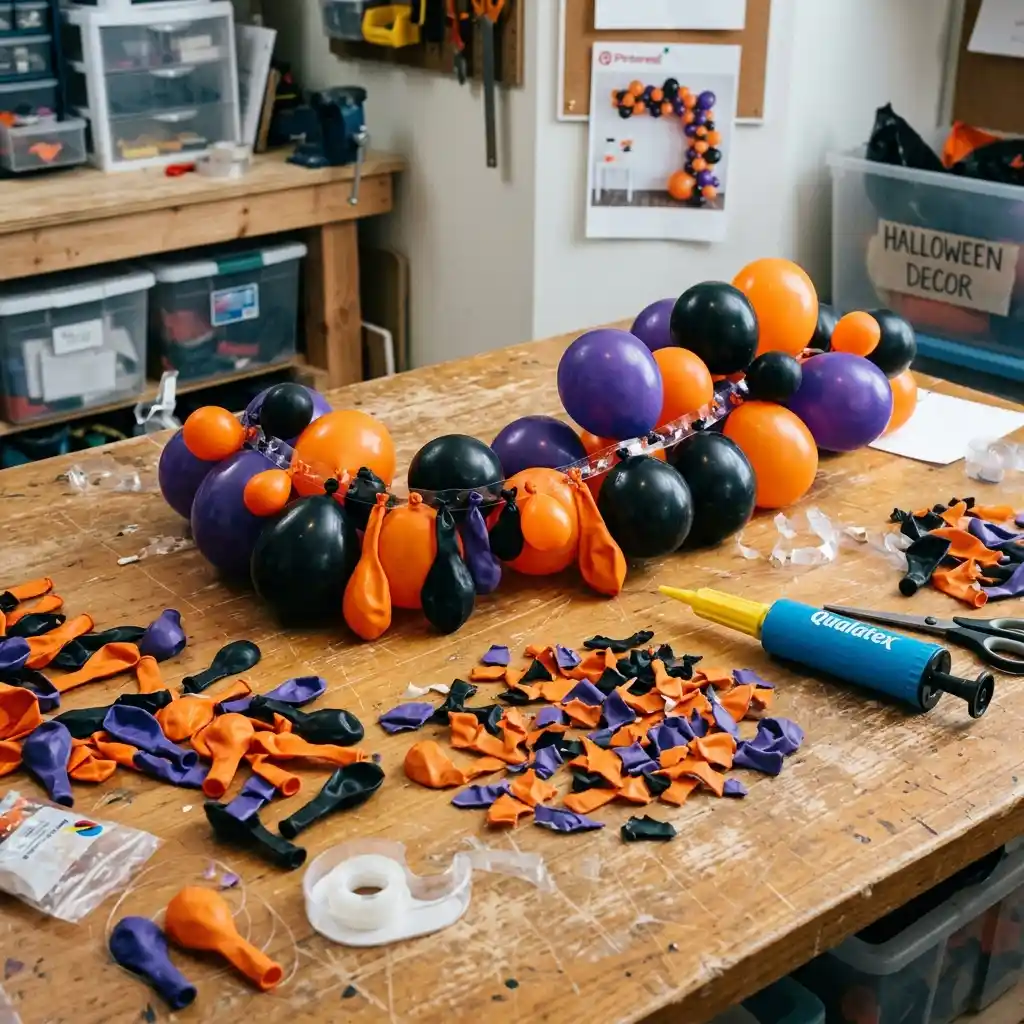
Editorial field note: A dining room with an orange-and-black garland hung on October 1st usually looks tired by the 10th — balloons dull, a few gaps where pops went unrepaired. The same garland assembled the afternoon before a party reaches the photos at full size and comes down before a single balloon dies. Timing, not technique, decided both outcomes.
This guide makes the honest case: when a balloon garland earns the work, the palettes and assembly method that get you the Pinterest result, and the cost math against buying or hiring. The rest of our Halloween decorating ideas cover the layers that do last the season.
One Night or Six Weeks? Decide Before You Buy
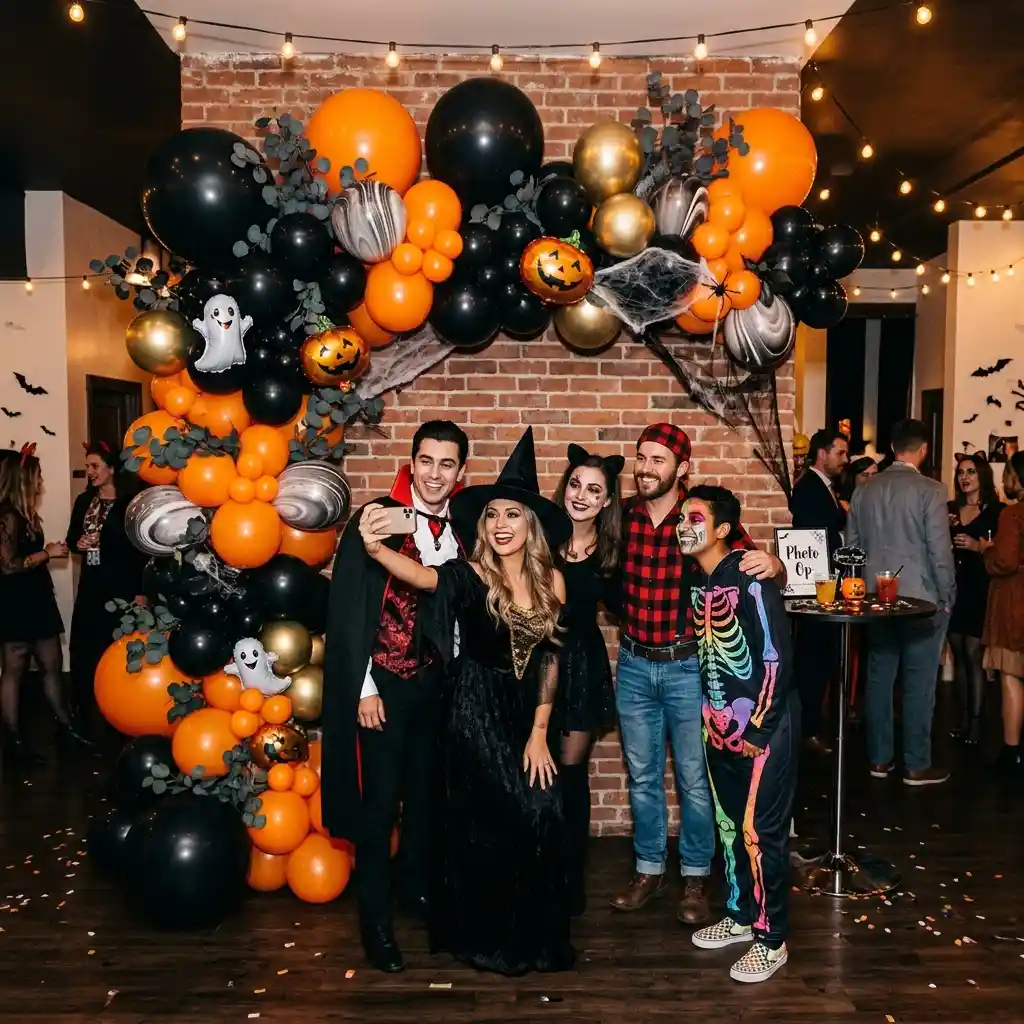
Every other layer in this pillar — the wreath, the botanical garland — is bought once and works for six weeks. Balloons invert that. So run one test before spending anything: is there a date on the calendar? A party, a birthday that falls near Halloween, a planned photo session, even a single hosted dinner justifies the build. A vague plan to “make the house festive” does not; the botanical garland covers the season, and this is its one-night party cousin.
The date-first rule also sets your build schedule. Air-filled balloon garlands hold shape far longer than anyone expects — assembly the afternoon before is safe, and morning-of is unnecessary heroics. Working backward: order balloons a week out, assemble the day before, hang the morning of, photograph that night. Take it down within a couple of days while it still looks deliberate.
Why Balloon Garlands Took Over Halloween
The balloon garland migrated. It started as birthday-party decor, jumped to weddings and baby showers on the strength of one attribute — no other $40 item fills an entire wall for a photo — and holidays were next. Halloween took to it faster than most because the palette is unmistakable: orange, black, and purple signal Halloween from across a room, no printed banner required.
The product side kept pace across the seasonal calendar: kits with pre-mixed sizes and colors now sit in every seasonal aisle, and the decorating strip — a plastic tape with punched holes that turned a florist’s skill into an assembly job — made the organic, clustered look achievable for anyone with a $6 hand pump.
Signs This Is Catching On:
- “Halloween balloon garland” is an established Pinterest search in its own right, with “small” and “neutral” variants behind it — the fingerprint of a project that has gone mainstream and started segmenting.
- Seasonal retailers now sell Halloween-specific garland kits alongside their birthday lines, a shelf that did not exist a few years ago.
- Party content keeps moving toward the photographed backdrop moment, and the balloon garland is the cheapest square footage of backdrop there is.
Which Balloon Palette Reads Halloween?
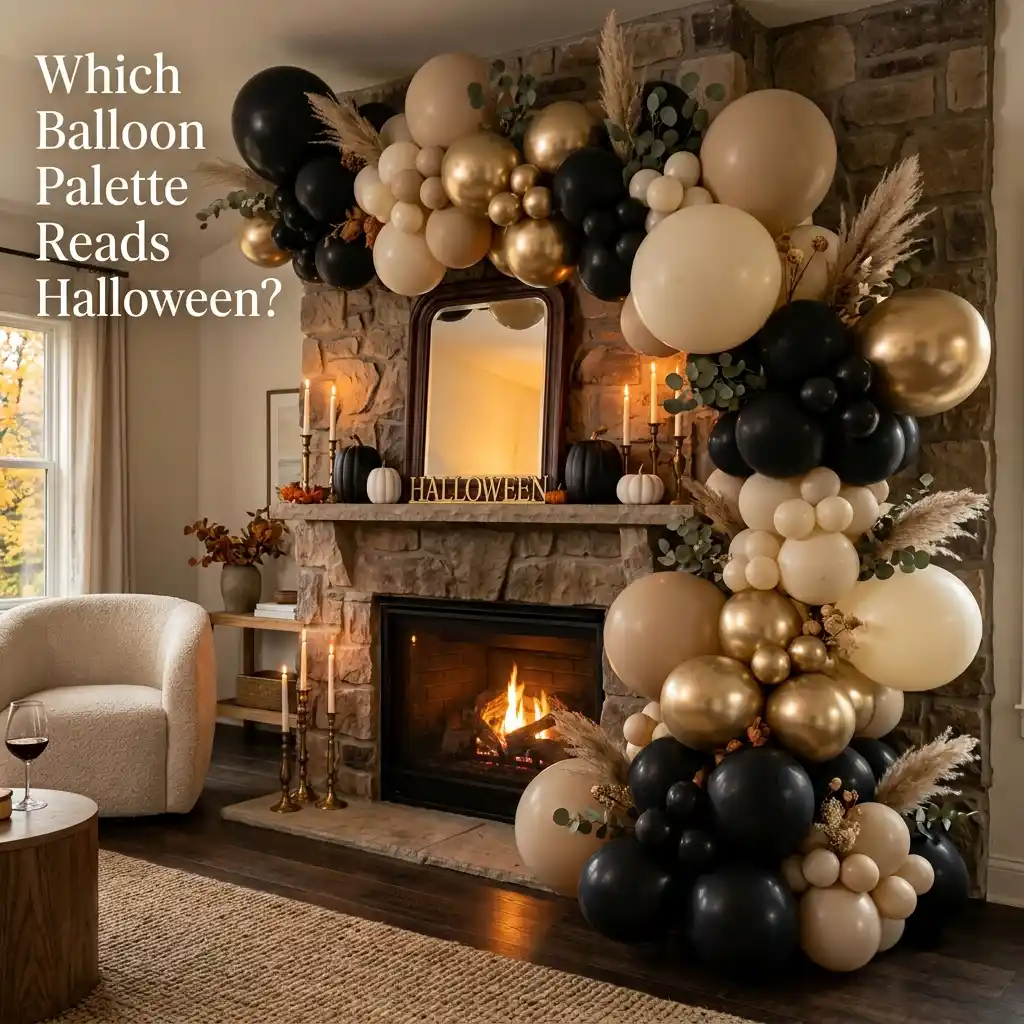
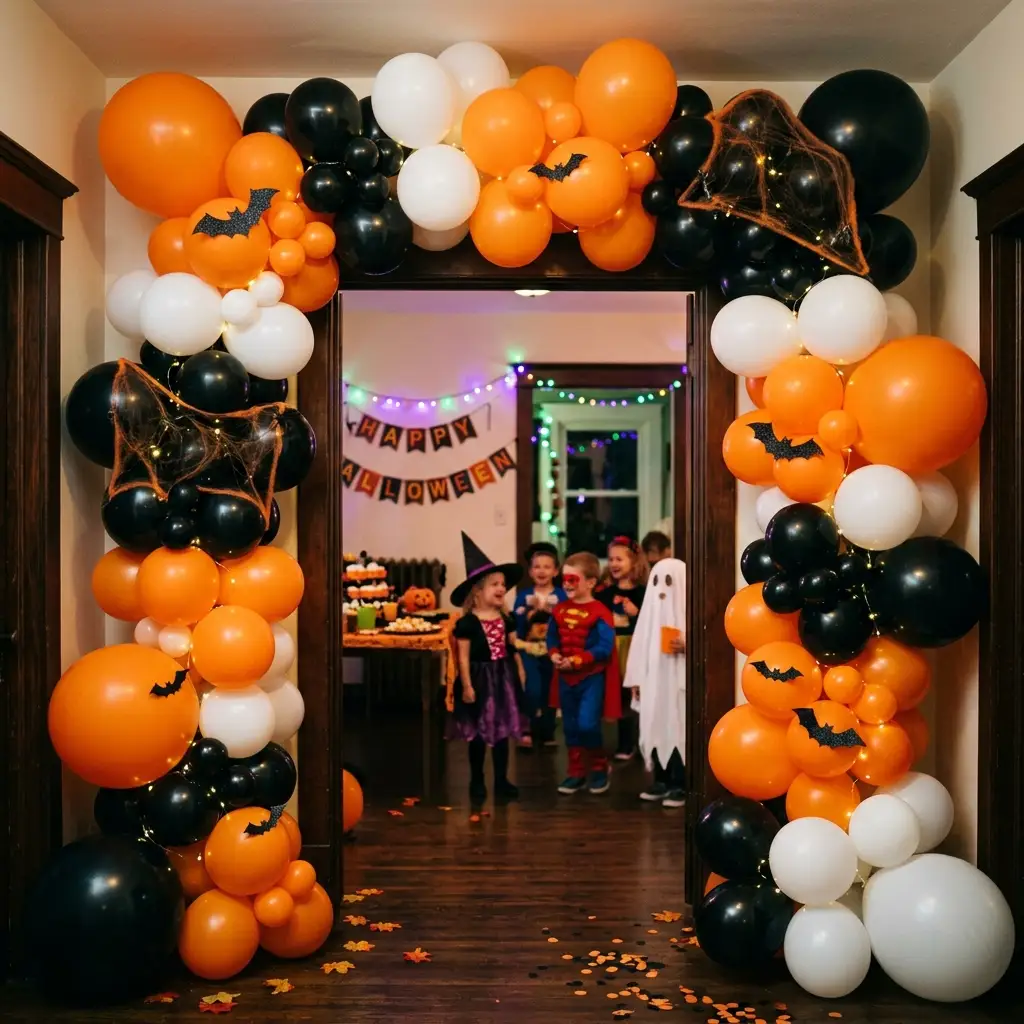
Pick the palette by the party, and keep it to three colors plus one metallic finish. Classic orange-black-white is the kid-party workhorse — unambiguous, cheap, and forgiving. The grown-up version is the neutral Halloween balloon garland: black, sand, cream, and one run of chrome gold, which photographs like decor instead of a party aisle and survives into November group photos. A witch-leaning party takes purple, emerald, and black; a pastel one takes pink and black, where the black is what keeps it Halloween.
Finish does more work than color here. Matte and chrome balloons mixed in one garland create the depth the kits call “organic,” while a single-finish garland goes flat in photos. Designer Tip: double-stuff the accent color — inflate a black balloon inside a purple one — and you get a deep, expensive-looking tone no single balloon sells in. The same black-plus-metal logic carries straight into a modern black Christmas scheme two months later, so leftover balloons rarely go to waste.
How the Garland Actually Goes Together
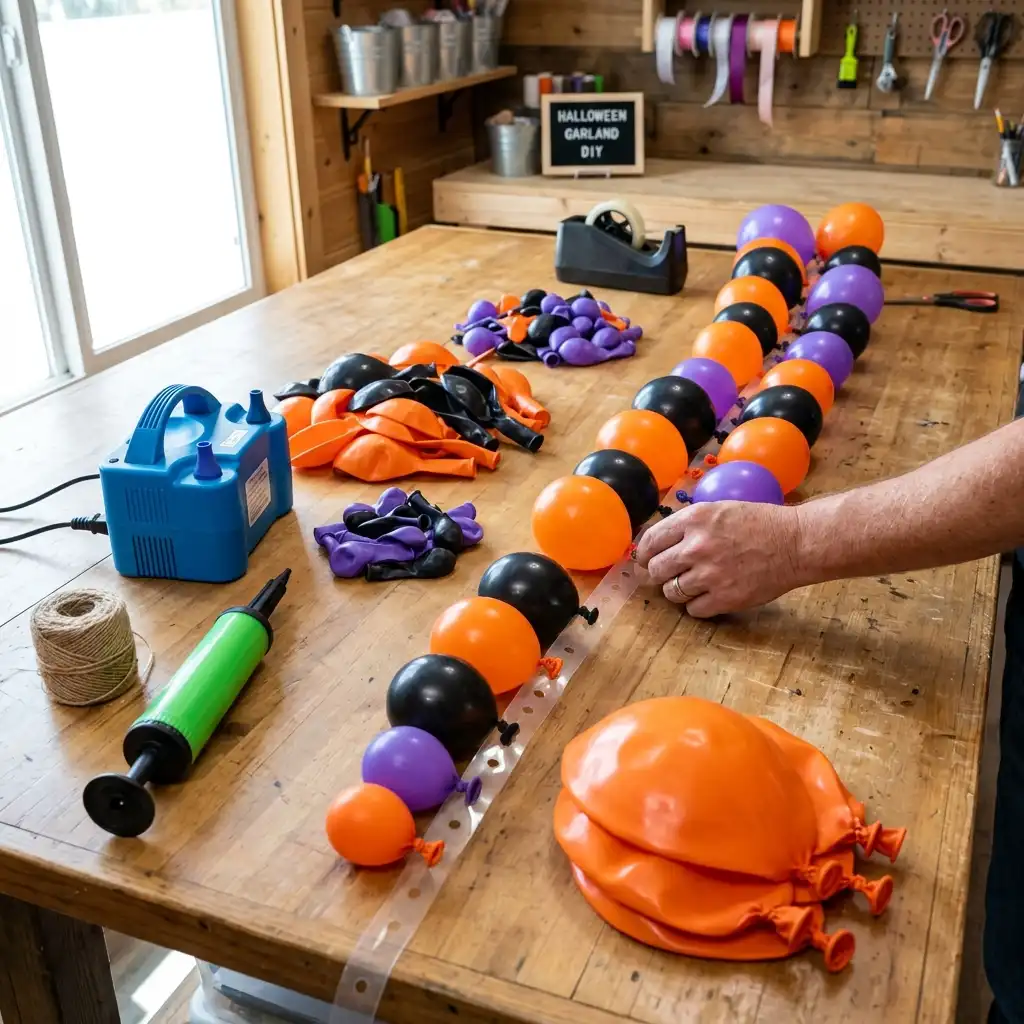
The method is the same regardless of palette, and none of it involves helium — a balloon garland is air-filled from end to end, which is why it can last days instead of hours and cling to a wall instead of a ceiling. Three moves, in order.
The Strip, the Pump, and the Three Sizes
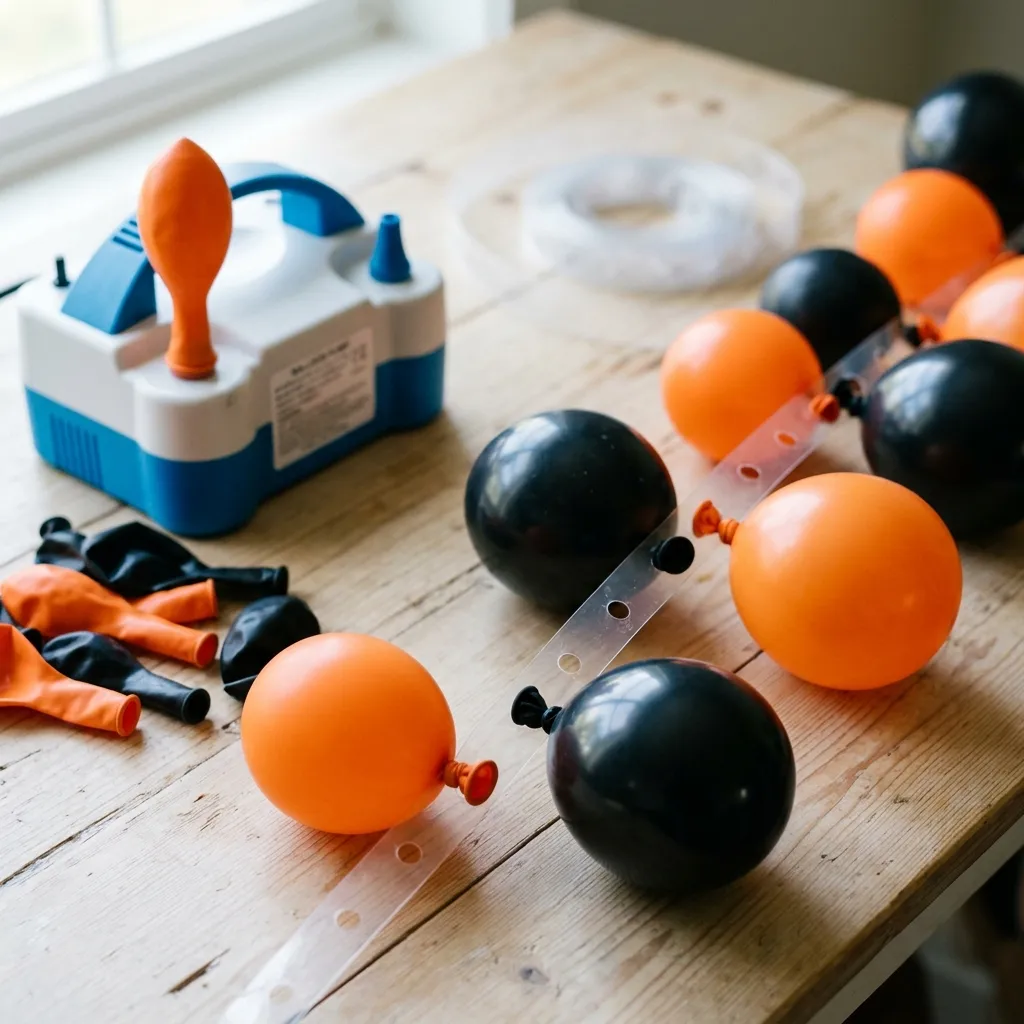
The decorating strip is the skeleton: a flexible punched tape you knot balloon necks through, two per hole, alternating sides. Inflate with a hand or electric pump — lungs are slower, less consistent, and the reason garlands take four hours instead of ninety minutes. The organic look comes almost entirely from size variety: a working mix is roughly two-thirds standard 11-inch balloons, with 5-inch minis and a few 17-inch statements making up the rest. Cluster the minis in twos and threes into the gaps after the strip is full. Designer Tip: under-inflate the minis by about a third — the slight squish is what lets them nest into crevices and turns the garland into one connected mass instead of a row of spheres.
Attaching It Without Wrecking the Wall
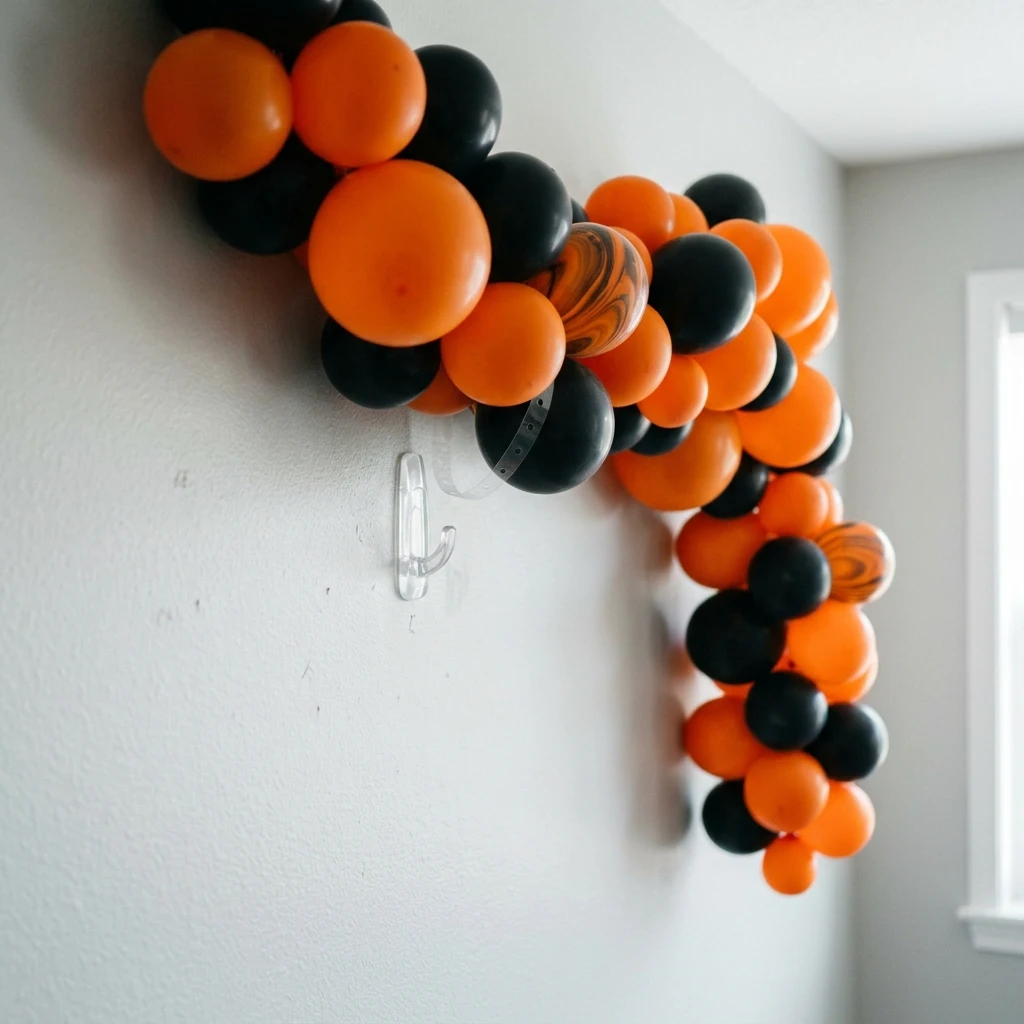
An air-filled garland weighs almost nothing, so light hardware carries it: adhesive hooks at each end and one mid-span, with the strip’s punched holes looping straight over the hook heads. On textured or delicate walls, clear removable mounting dots hold individual balloons directly. Drape the ends asymmetrically — one tail longer than the other — because a perfectly symmetric arch is the fastest way to make a handmade garland look like a rented one. Work near a doorway or corner where two anchor walls meet and the garland gains depth for free. Rental Note: press adhesive hooks onto clean paint and remove them by their release tab after the party, not by pulling the hook.
Working In the Halloween Props
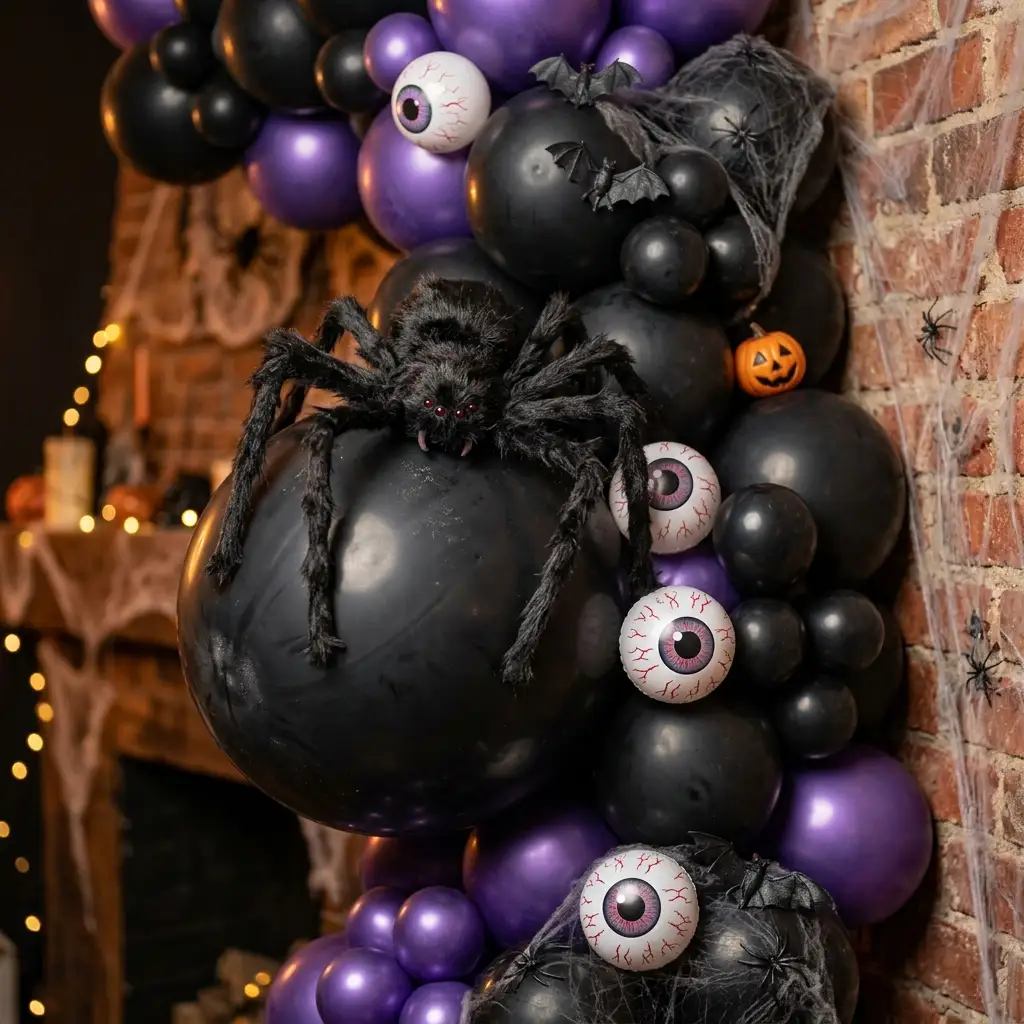
The props are what turn a generic garland into a Halloween one, and they go on last. Printed spider and eyeball balloons earn their place inflated smaller than the plain balloons around them, so the print stays taut and readable. Non-balloon add-ons do the rest: a fuzzy spider perched on a 17-inch balloon, black paper fans or honeycomb ghosts tucked into gaps, a few stems of black faux leaves borrowed from the botanical garland’s material bin. One prop type repeated twice beats four prop types used once — the same restraint that governs every build in this cluster. Safety Note: balloons carry a mandatory under-8 warning for good reason — uninflated and broken balloons are a leading choking hazard for young children, per the CPSC — so keep the spares bag out of reach and sweep up burst pieces the moment they happen.
Where It Goes: Three Party Zones
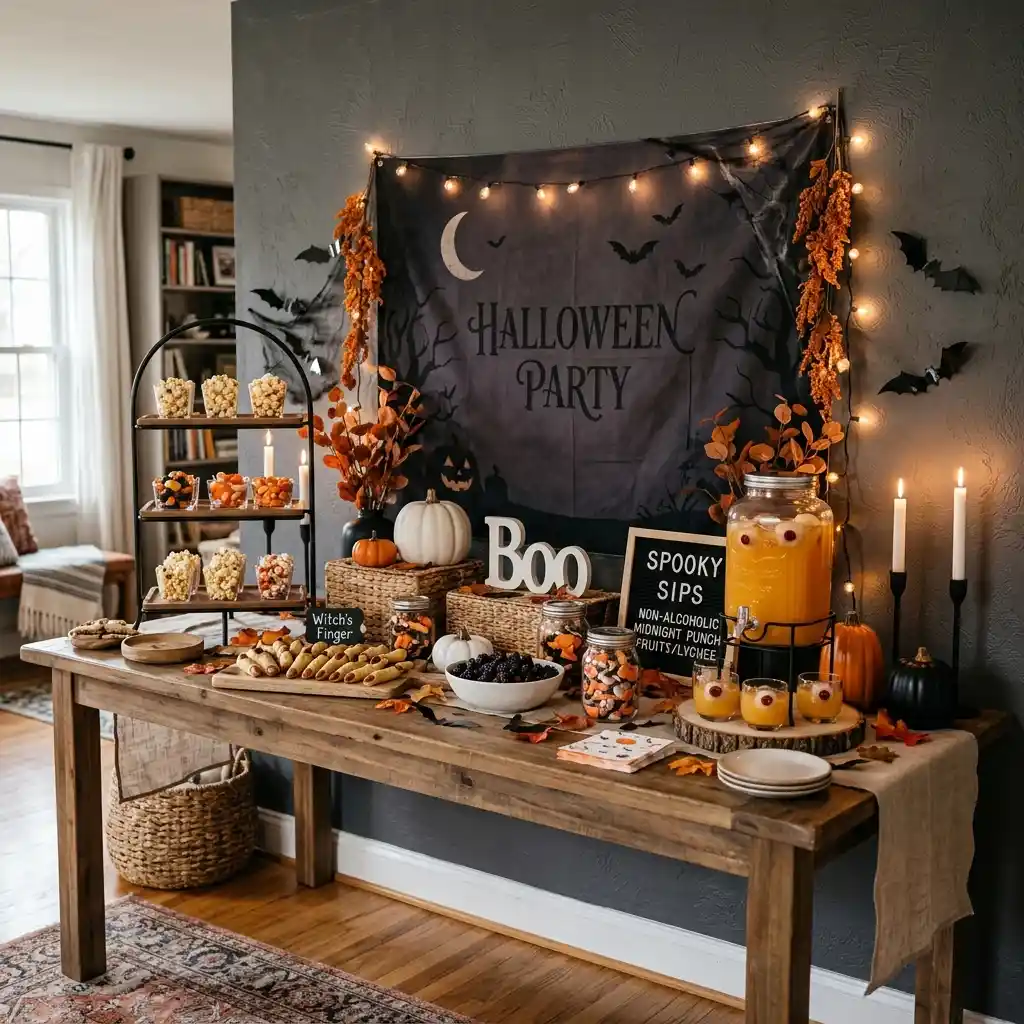
The backdrop wall is the default and the best: the wall guests photograph against, usually behind the dessert or drinks table, with the garland sweeping one top corner and trailing down a side. Above a table, keep the height generous — a standing party’s sightlines run high, a rule the party-decor playbook covers in detail — so the garland frames faces in photos rather than cake. A styled table beneath it finishes the zone; the garland is the frame, not the whole picture.
The entry arch is the greeting version, over the front door outside or the party room’s doorway inside. Outside placement borrows the porch’s rules — covered position, secured ends — and plays beside the rest of the front porch layers rather than replacing them.
The third zone is the table skirt: a short garland run pinned along the front edge of a serving table. It comes across as generous styling at half the balloon count of a wall build, and it is the easiest zone to pull off solo. A kitchen island on party duty takes the same treatment along its counter edge.
How Long Does a Balloon Garland Last?
Indoors, an air-filled latex garland holds a photogenic shape for one to two weeks — the minis dull first, then the garland slowly loses its plumpness rather than dying in one dramatic pop. Outdoors the clock runs faster: direct sun oxidizes latex to a velvety matte within a day (a look some hosts actually like, but not one that reverses), heat expands air and pops the tightest balloons, and wind does mechanical damage no re-taping fixes. An outdoor garland is a same-day decoration, full stop.
That lifespan is the deepest reason for the one-night rule. Material Note: standard latex balloons are single-season by design — pop them and bin them after the event, and never release them outdoors, where latex scatters as litter and hazards wildlife. Foil balloons deflate slower but belong as accents, not structure.
KEY TAKEAWAY: A balloon garland’s clock starts at inflation — schedule the build against the party date, not against the month of October.
The Small-Space, One-Hour Version
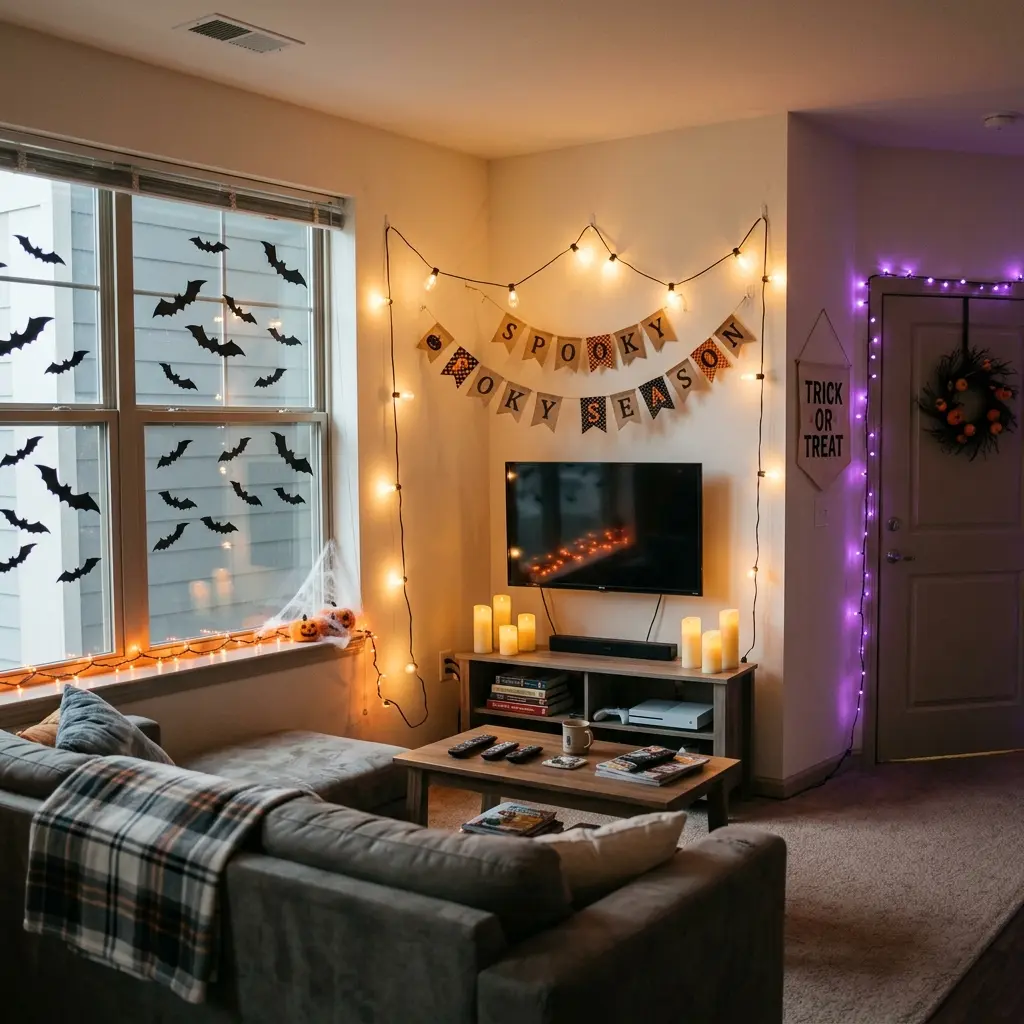
A full arch takes 60 to 100 balloons and most of an afternoon. The small Halloween balloon garland — a 4 to 6-foot run of 20 to 30 balloons — takes about an hour with an electric pump and delivers most of the photo value in an apartment. Run it along one top corner of the main doorway, across a bookshelf top, or down one side of the drinks table. Keep the full three-size mix even at this scale; shrinking the count is fine, shrinking the variety is what makes small garlands look like leftovers. One garland, one zone, fully built — the same rule every small space already knows.
| Quick Takeaways | |
|---|---|
| Rule | Build for a dated event, not for the month — peak beauty lasts about a week. |
| Method | Air-filled on a decorating strip; no helium anywhere in the build. |
| Mix | Three sizes — mostly 11-inch, with 5-inch minis and a few 17-inch anchors. |
| Palette | Three colors plus one metallic; neutral black-sand-cream for the grown-up look. |
| Zones | Backdrop wall first, then entry arch, then table skirt. |
| Timing | Assemble the day before, hang the morning of, down within two days. |
Before You Inflate Anything
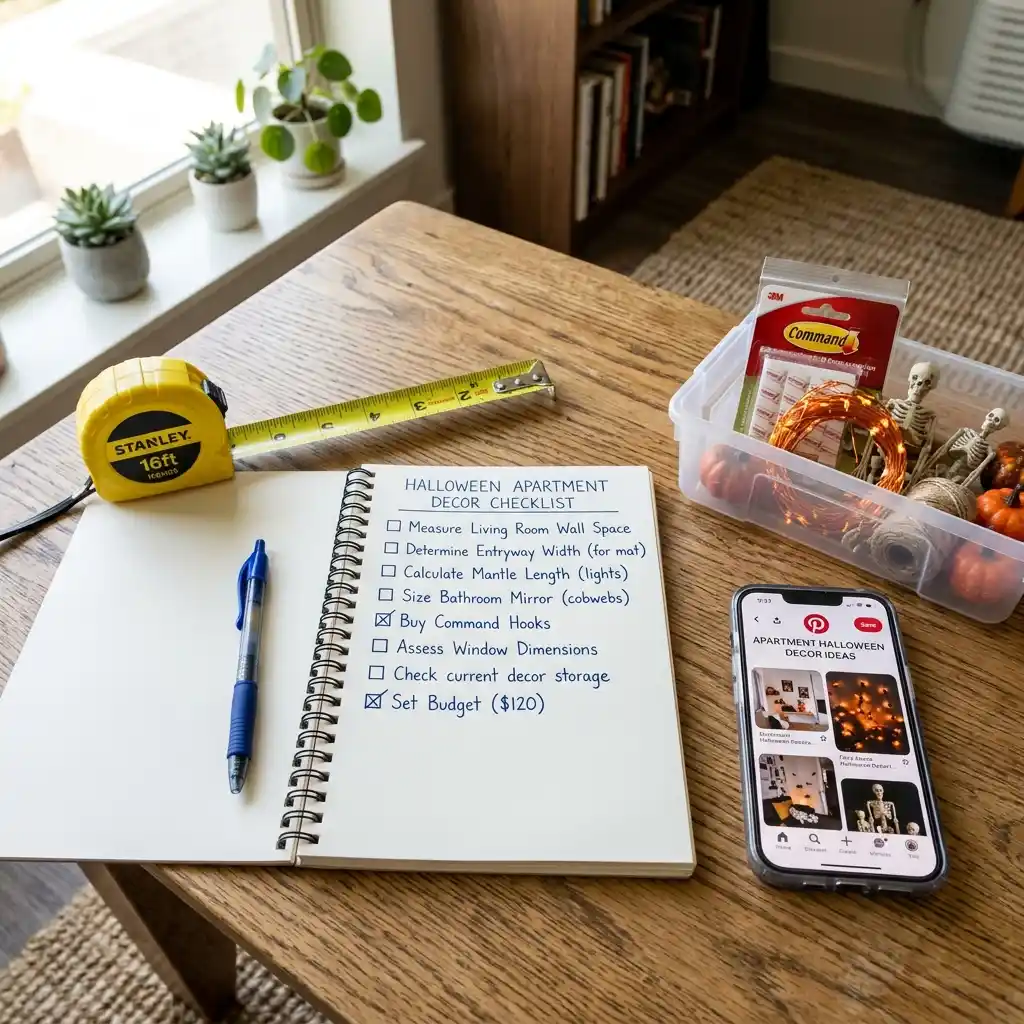
- Confirm the event date and count backward: order balloons a week out, assemble the day before.
- Buy the three-size mix — roughly two-thirds 11-inch, the rest 5-inch minis and a few 17-inch.
- Get an electric or hand pump and a decorating strip; retire your lungs from the project.
- Pick three colors plus one metallic and stop there, even in the kit aisle.
- Stage the build zone: hooks up, table cleared, spares bag stored above kid height.
- Plan the teardown night now — pop, bin, and pull hooks by the release tab.
Three Ways a Balloon Garland Falls Flat
- It gets built too early. A garland inflated on October 1st for an October 25th party spends three weeks dying in public. Assembly the day before the event costs nothing extra and delivers the garland at full plumpness for the only night that counts.
- Every balloon is the same size. Uniform balloons in a straight row read as a birthday aisle no matter how black the palette is. The organic look is a size trick — minis crammed into gaps, a few oversized anchors — and skipping the 5-inch bag is what flattens most first attempts.
- It fights the sun. An outdoor garland hung at noon for an evening party arrives at dusk matte, shrunken, and missing casualties. Outdoors, hang it in shade as late as possible and accept it as same-day decor — or move the whole moment inside where the clock runs slower.
Kit, DIY, or Pro: The Cost Math
The garland’s price swings harder than any other Halloween purchase — the same wall of balloons runs $25 or $250 depending on whose hands do the work.
| Project | Estimated Cost | Impact Level |
|---|---|---|
| Small DIY run — 20-30 balloons, strip, and hand pump | $18-$35 | Medium |
| Full DIY arch from a Halloween garland kit, 60-100 balloons | $25-$60 | High |
| DIY from components with upgrades — electric pump, chrome accents, props | $50-$95 | High |
| Professional install for a party wall | $150-$350 | Very High |
Best First Upgrade: the $15-$25 electric pump — it cuts assembly from four hours to about ninety minutes and survives to every future party.
Skip for Now: the pro install, unless the event is big enough to have a photographer. Their advantage is speed, not a look you cannot build.
Will the Balloon Garland Outlive the Trend Cycle?
Balloon garlands will eventually read as dated the way balloon columns from the 2000s now do — every party medium cycles. But the underlying job it does, filling a photographed wall for under $50, is not going anywhere, and Halloween is the holiday where its loud palette does the most work per balloon. Ride the medium while it peaks and spend nothing on it that assumes a second year.
Designer’s Verdict: build it happily for any party you are actually hosting this month — and let the one-night lifespan discipline the budget, because nothing about a balloon garland is an investment.
Frequently Asked Questions
Conclusion
If your budget or energy is short this season, the Halloween balloon garland is the item to cut first and the botanical layers are the ones to keep — balloons reward the host with a party on the calendar, not the decorator filling a month. If that party is real, build it the day before, photograph it that night, and enjoy the one decoration that never needs storing. Our home decorating ideas will still be here when the last balloon is binned.