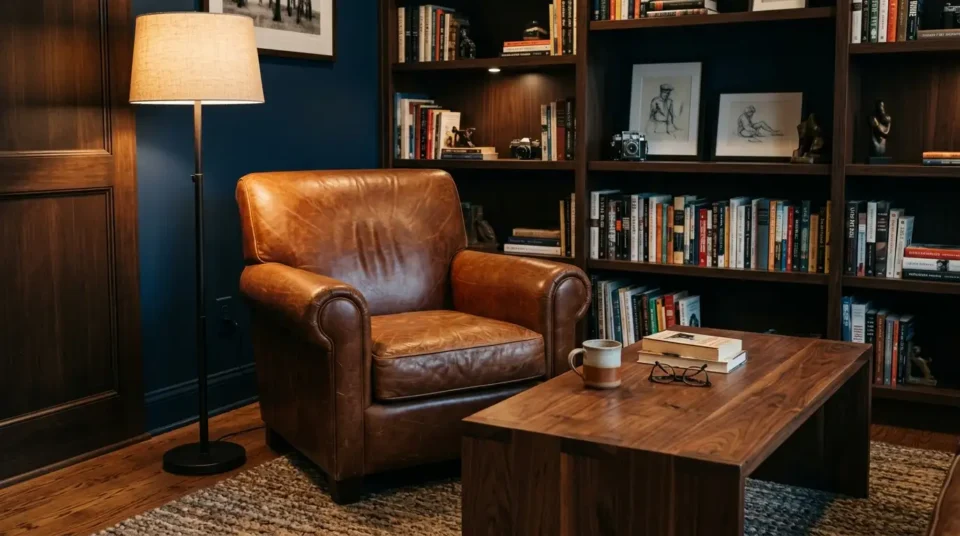
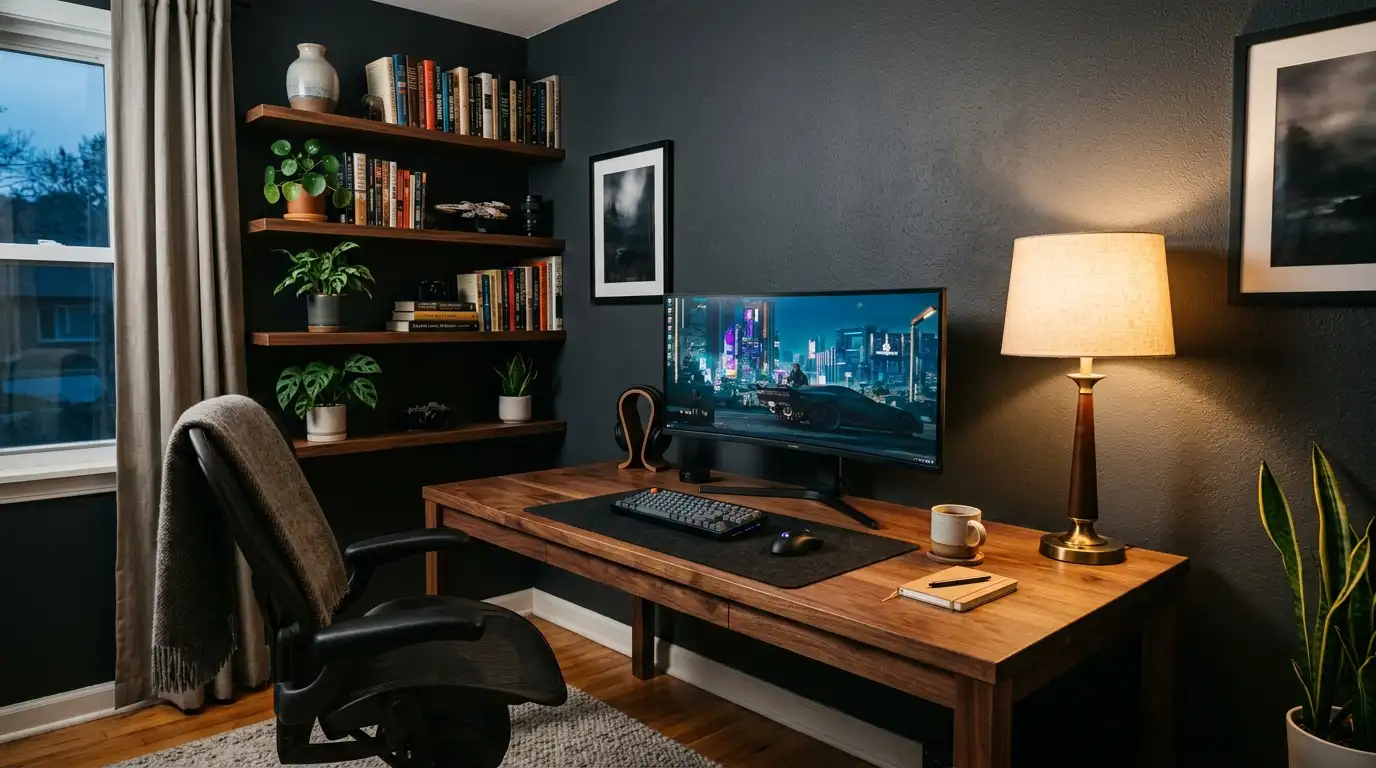
What Actually Makes a Gaming Man Cave Work?
Walk into ten gaming man caves and nine look identical. Black desk, glass top, a purple strip behind the monitor, a chair shaped like a race-car seat. Most gaming man cave ideas online still sell that exact box. It photographs well for about six months. Then it just looks loud.
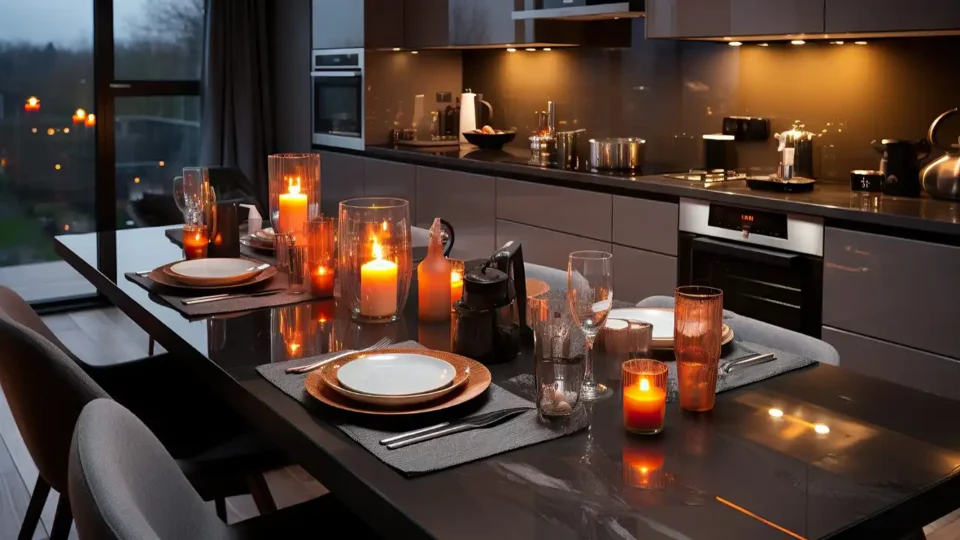
A gaming man cave works when the room controls light, sound, and sightlines around one screen. Warm 2700K lamps sit behind the player. A single 6500K bias light sits behind the display. Matte paint kills glare, and soft materials cut echo. The gear stays the same — the room around it changes.
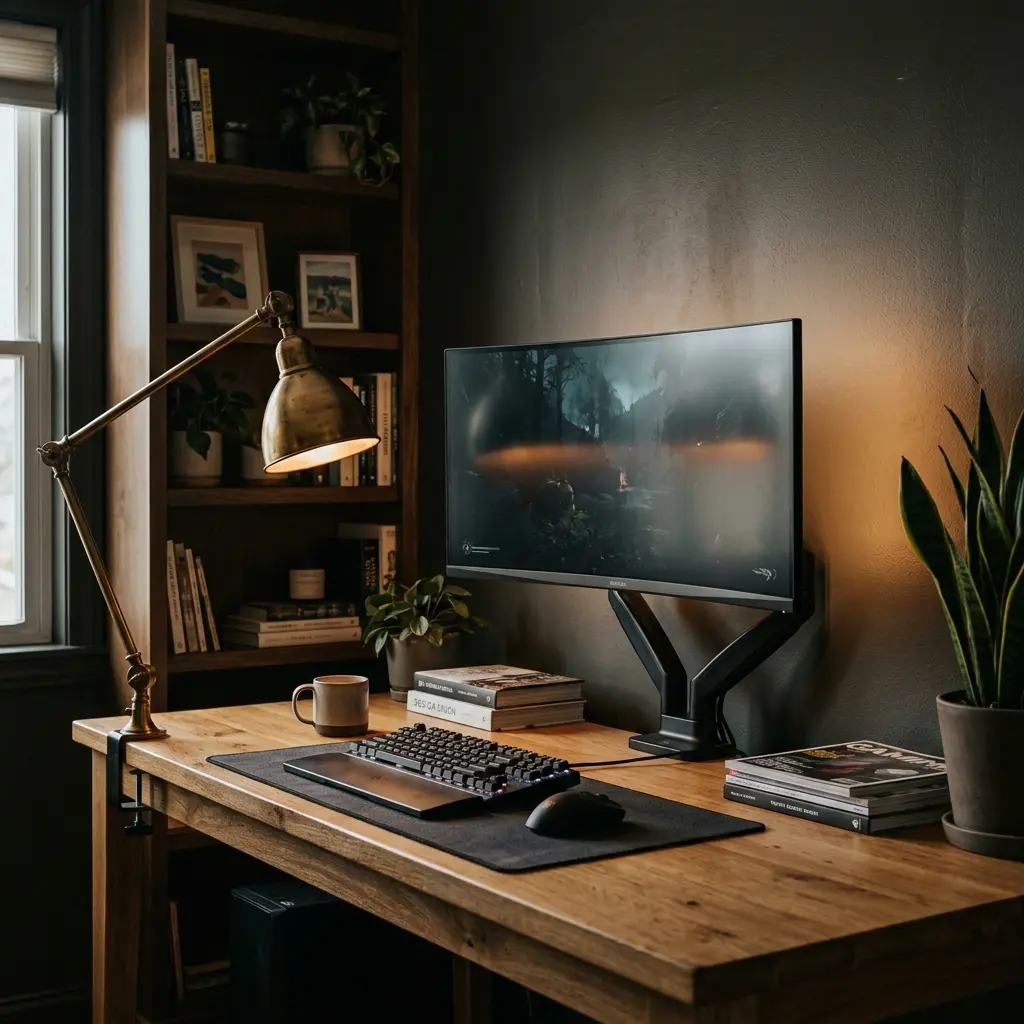
Editorial field note: A basement gaming room with white walls, one overhead LED panel, and a purple strip circling the desk looks flat on camera and feels tiring in person. Painting the screen wall matte charcoal, switching off the ceiling panel, and moving that strip behind the monitor fixes most of it before any furniture moves.
That is the shift. The old approach added more — more strips, more decals, more screens. The new one subtracts. If you are starting from an empty room, the broader man cave ideas for a personal sanctuary cover layout and zoning first. Our home decor inspiration has more room-by-room starting points too. Bookmark this guide for quick reference.
Why Are Gamers Ditching the RGB Look?
Screens got better. OLED and mini-LED panels hold deep blacks and bright highlights in the same frame, and a room full of saturated light fights that picture instead of supporting it. A purple wash across the wall pulls color out of everything on screen. Turn it off and the display suddenly looks more expensive than it did an hour ago.
Cameras changed things too. Streaming and clip culture put these rooms on video constantly, and video rewards depth — wood grain, fabric texture, a lamp with a shade — far more than saturation. A flat wall of magenta flattens into noise on a webcam. A dark olive wall with one warm lamp holds its shape.
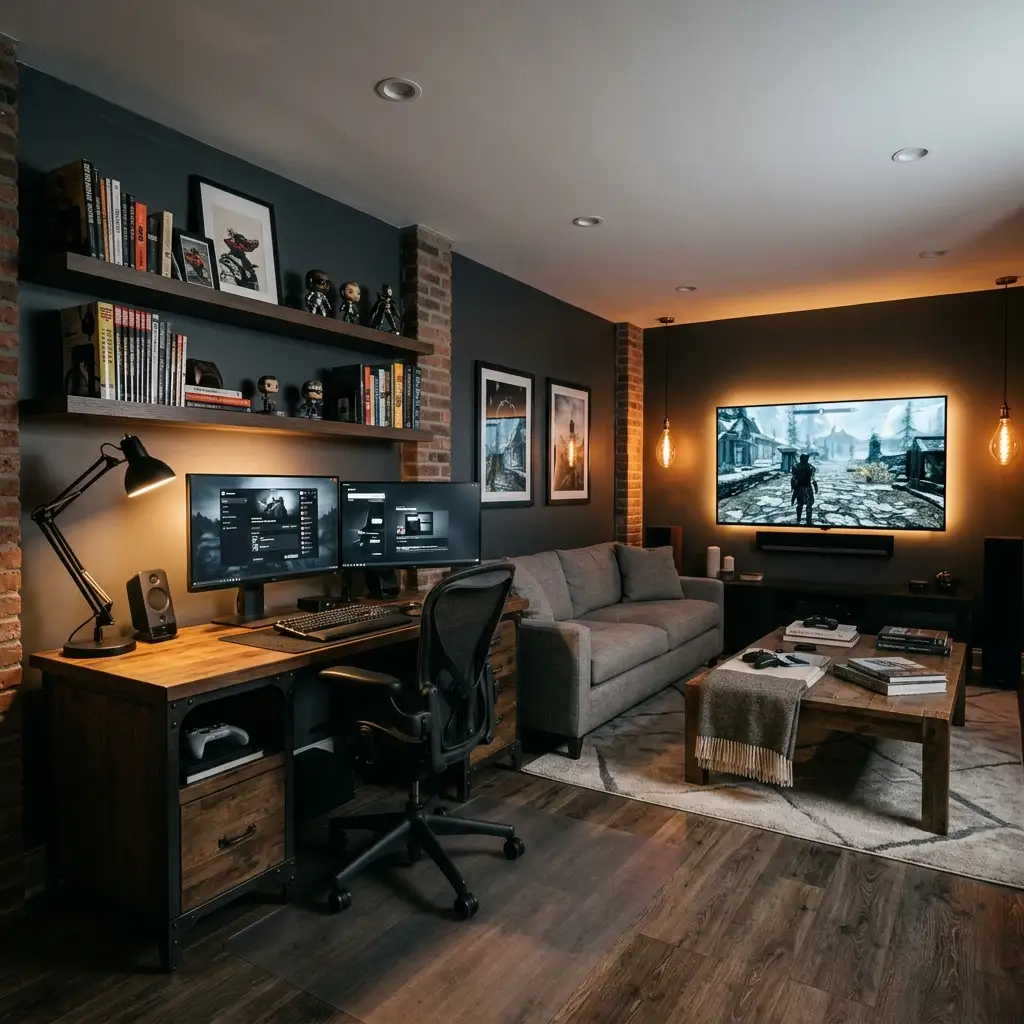
Bias lighting is the one light the trend kept. It sits behind the display, aimed at the wall, so the eye stops jumping between a bright screen and a black room. Source Note: Bias lighting makers such as MediaLight recommend a 6500K D65 white point with CRI 90 or higher, the same neutral white professional displays are calibrated to.
Signs This Is Catching On:
- Setup roundups for 2026 now lead with “cozy,” “minimalist,” and “organic tech” categories rather than pure RGB builds.
- Warm wood desks, wool rugs, and houseplants appear in gaming setup galleries that used to be all-black and glass.
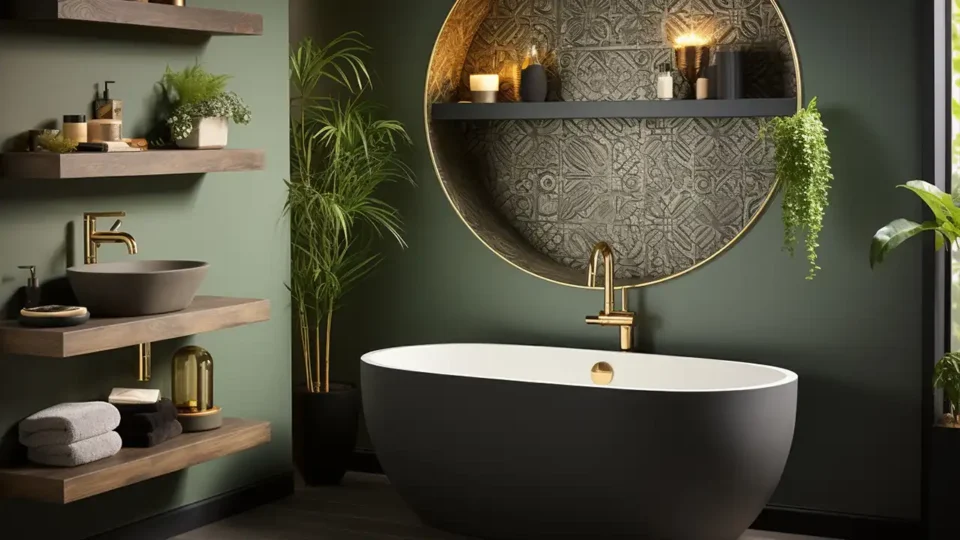
- Deep green, charcoal, and warm greige show up as gaming room paint colors where matte black used to be the only option.
- Peripheral makers now ship white, sand, and sage colorways alongside the standard black-and-red lines.
What the New Gaming Man Cave Looks Like
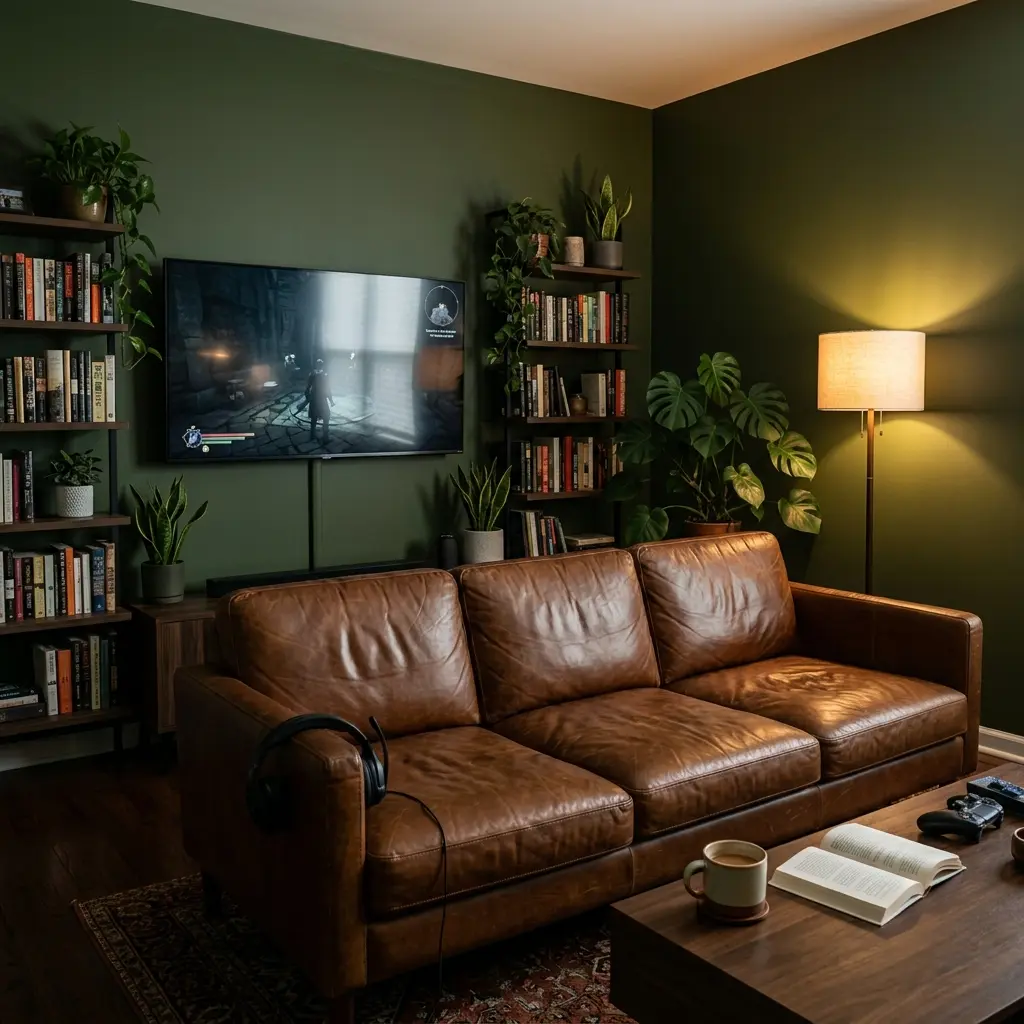
The strongest gaming man cave ideas right now share one habit: they treat the room like a den that happens to hold a PC, not a showroom for lighting effects. Six looks below cover the range, from a single-desk corner to a full two-zone build. Each one works in a basement, a garage, or a spare bedroom, and each one leans on materials rather than gear. If you want the cleaner, harder-edged version of this, the modern man cave ideas guide runs parallel to it.
The Warm-Wood Battlestation
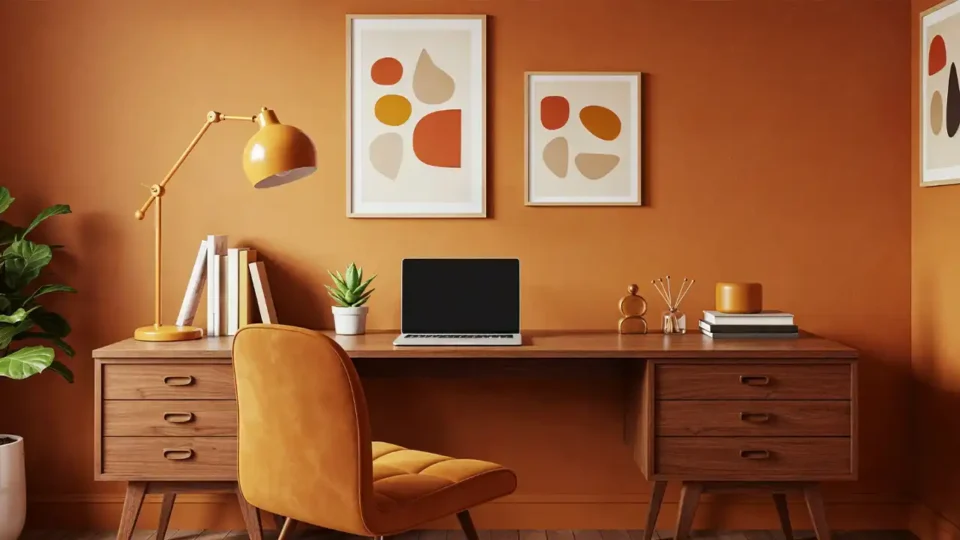
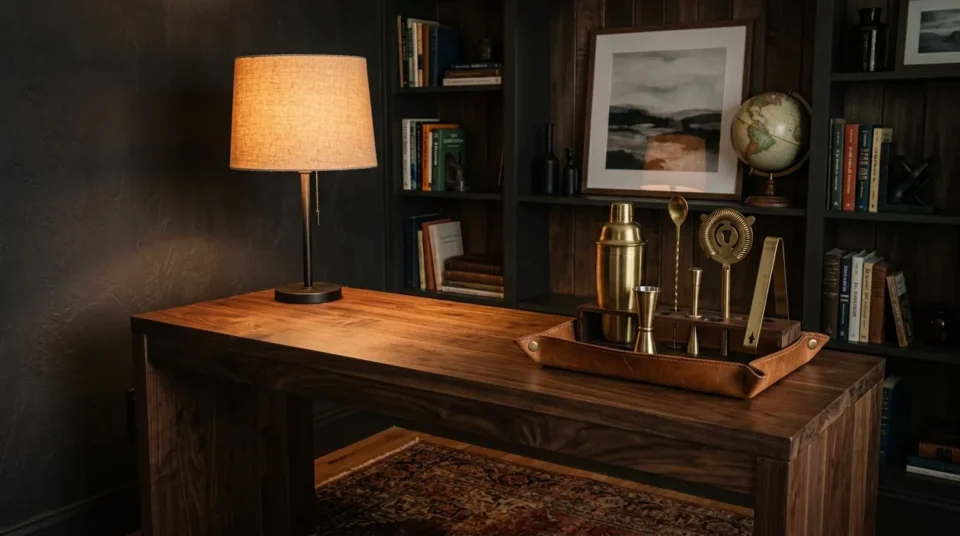
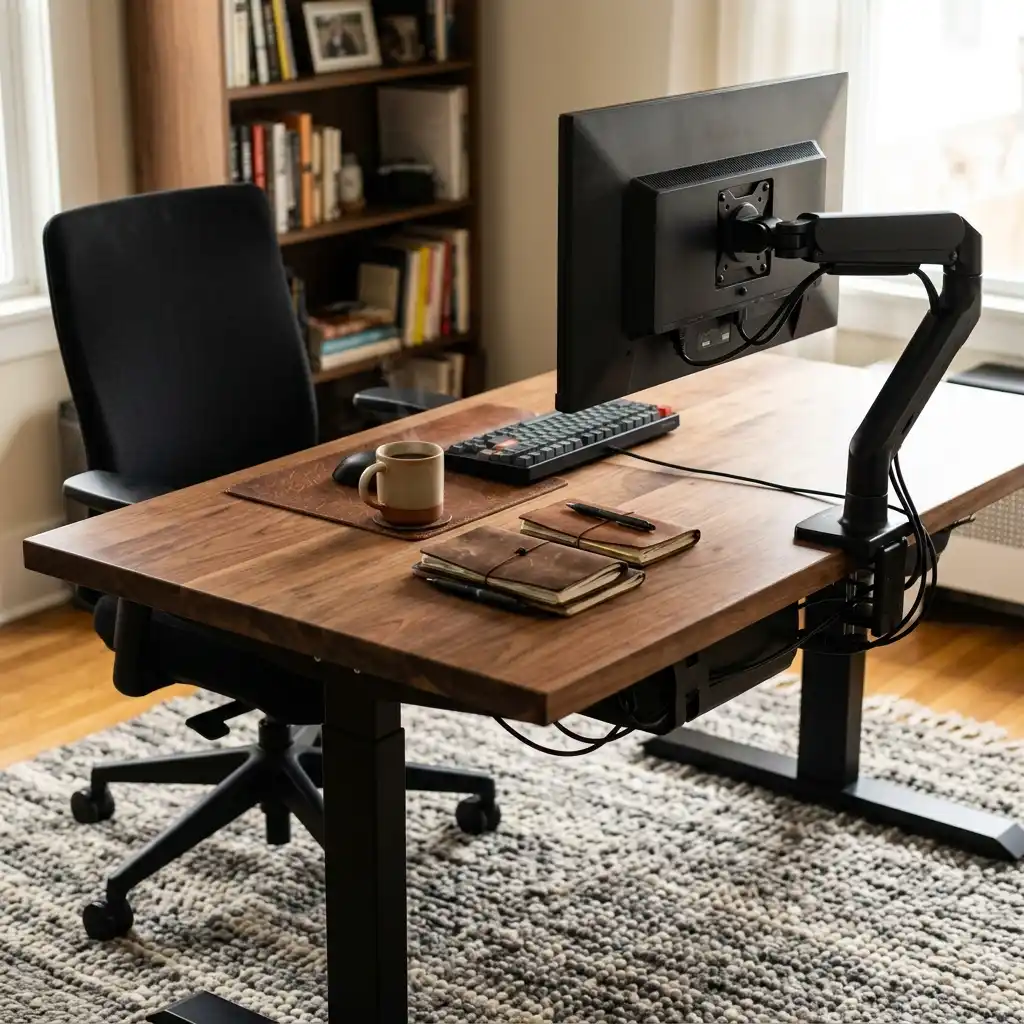
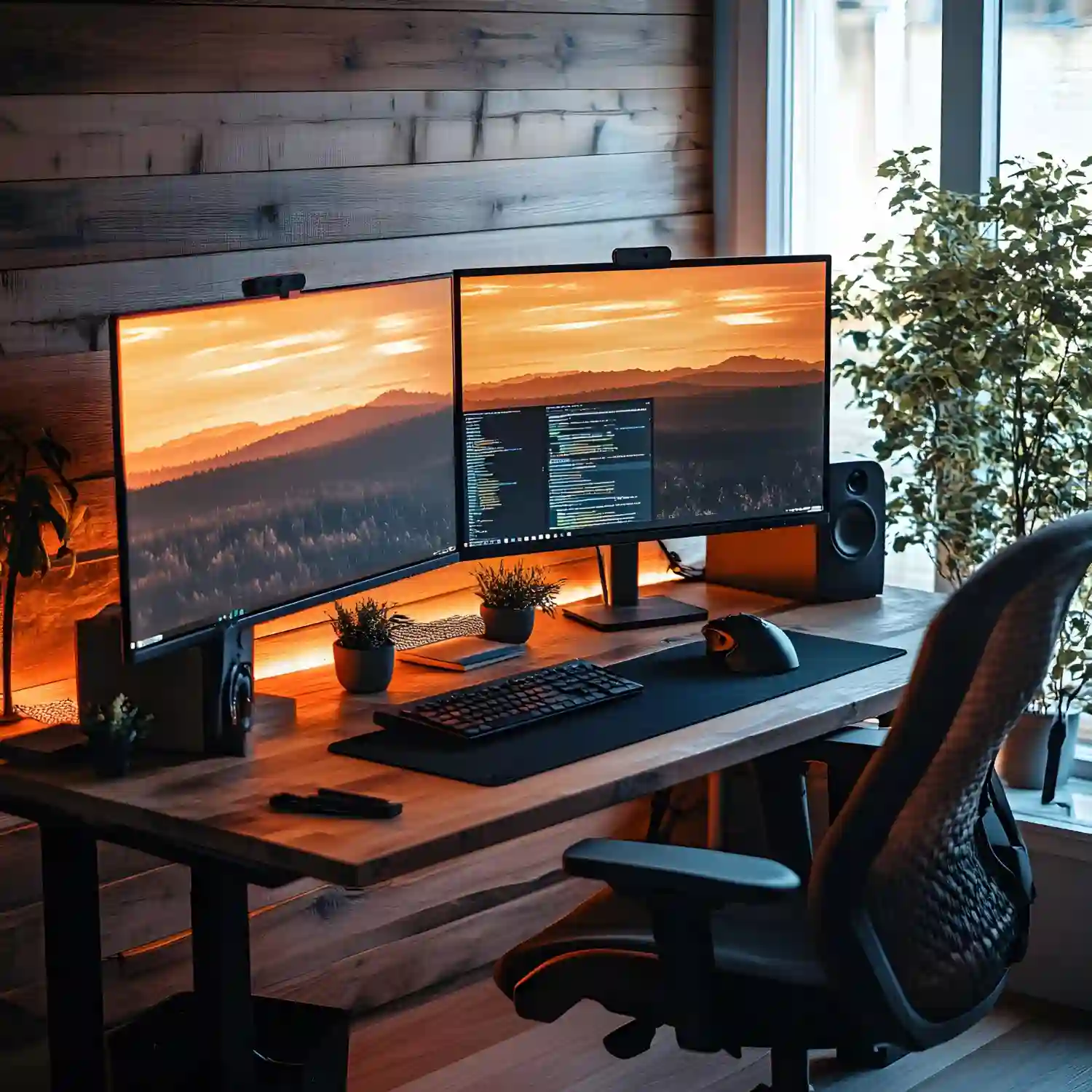
A solid oak or walnut-veneer desk, roughly 60 by 30 inches, replaces the glass-and-steel gaming desk. Wood absorbs a little light instead of bouncing it, so the monitor stops reflecting in the surface. Pair it with a matte black monitor arm, a warm greige wall, and one brass swing-arm lamp clamped to the back edge.
Get the distance right before you decorate. OSHA’s computer workstation guidance puts the preferred viewing distance at 20 to 40 inches from eye to screen, with the top of the display roughly at eye level. A monitor arm makes that adjustable in seconds. If the desk pulls double duty on weekdays, these man cave office ideas handle the work side without wrecking the look.
The Deep Green Console Lounge
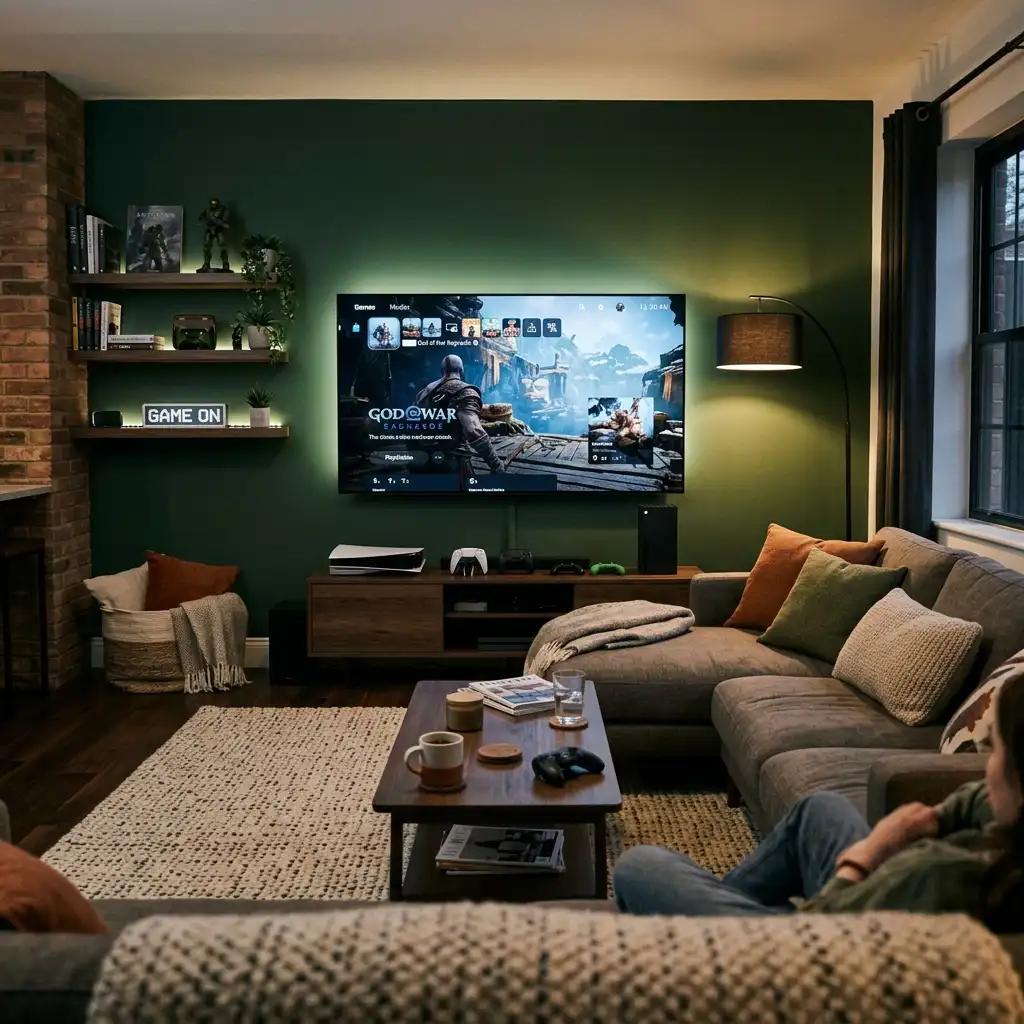
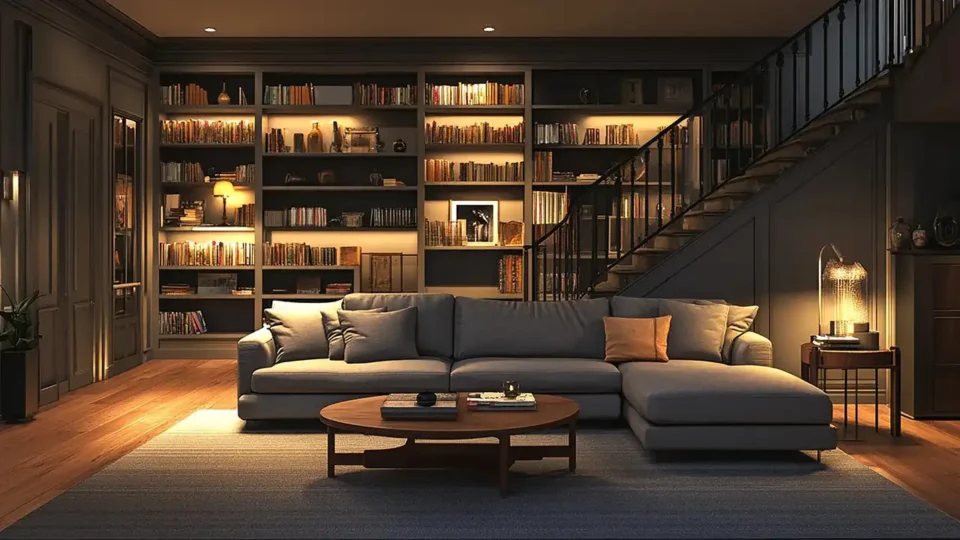
Forest or olive green in a matte finish covers the TV wall, and a low leather or boucle sectional faces it from across a wool rug. No desk at all. This is the console version — controller, coffee table, one warm floor lamp in the far corner.
Size the screen to the seat, not the wall. THX puts the immersive viewing angle near 40 degrees, which works out to sitting roughly 1.2 times the screen’s diagonal away. At nine feet back, that lands around a 75-inch panel. Sit closer than that and menu text crowds your peripheral vision; sit farther and the room feels like a waiting area. Movie nights the real priority? These home theater man cave ideas go deeper on projectors and tiered seating.
The Acoustic Wall That Looks Like Art
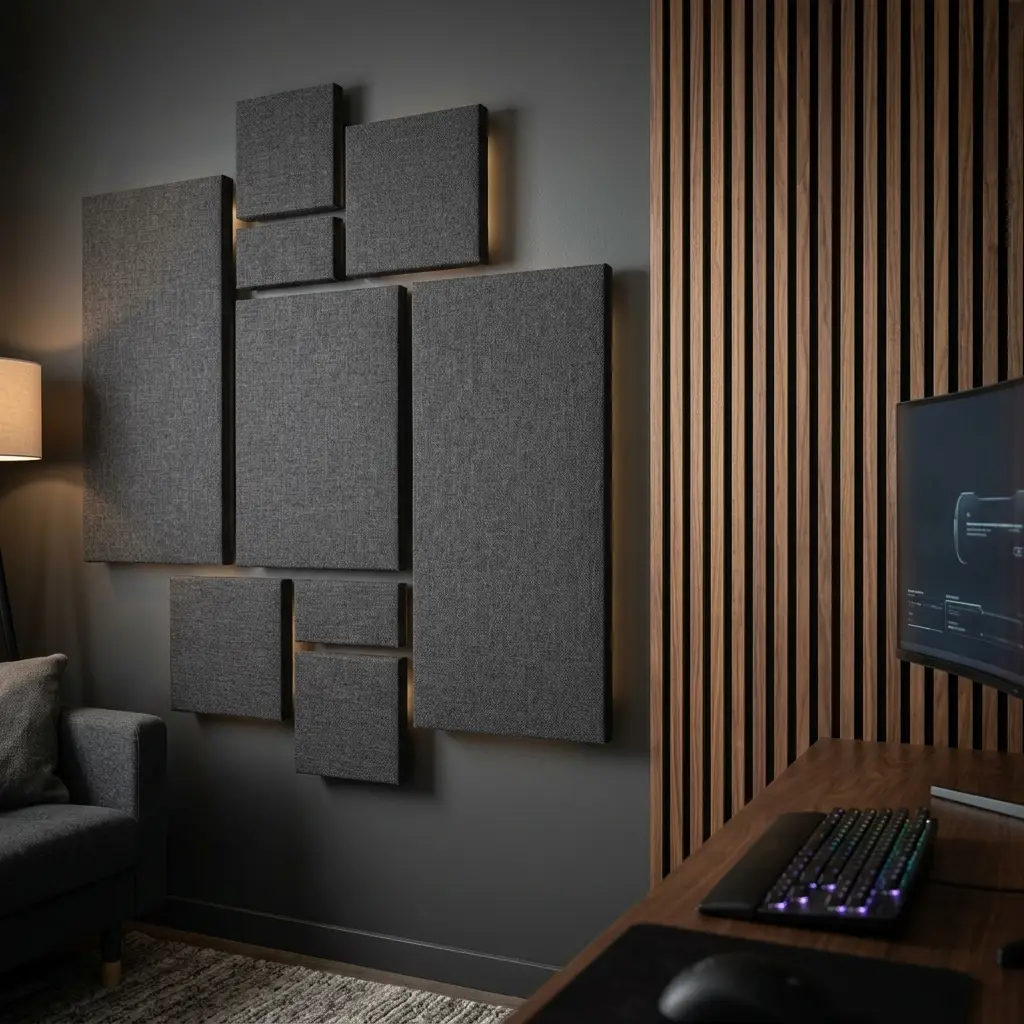
Hard basement rooms echo, and echo is why headset audio sounds better than the room speakers you paid for. Fabric-wrapped acoustic panels in charcoal, olive, or oatmeal fix it and look like wall art from six feet away. Slat wood panels do a lighter version of the same job with more warmth.
NRC is the number to check. It runs from 0.00 to 1.00 and measures how much sound a material absorbs across mid frequencies. Acoustic suppliers such as Commercial Acoustics explain the NRC scale and how coverage affects results — as a working target, treat 25 to 35 percent of one wall with panels rated 0.75 or higher. A wool rug and heavy curtains handle more of the high end for free. For frames, signage, and the rest of the wall, the man cave decor guide covers what belongs next to panels.
DESIGNER TIP: Hang panels at ear height when seated, on the wall to your left and right — first reflection points do more damage than the wall behind the TV.
The Hidden-Tech Media Wall
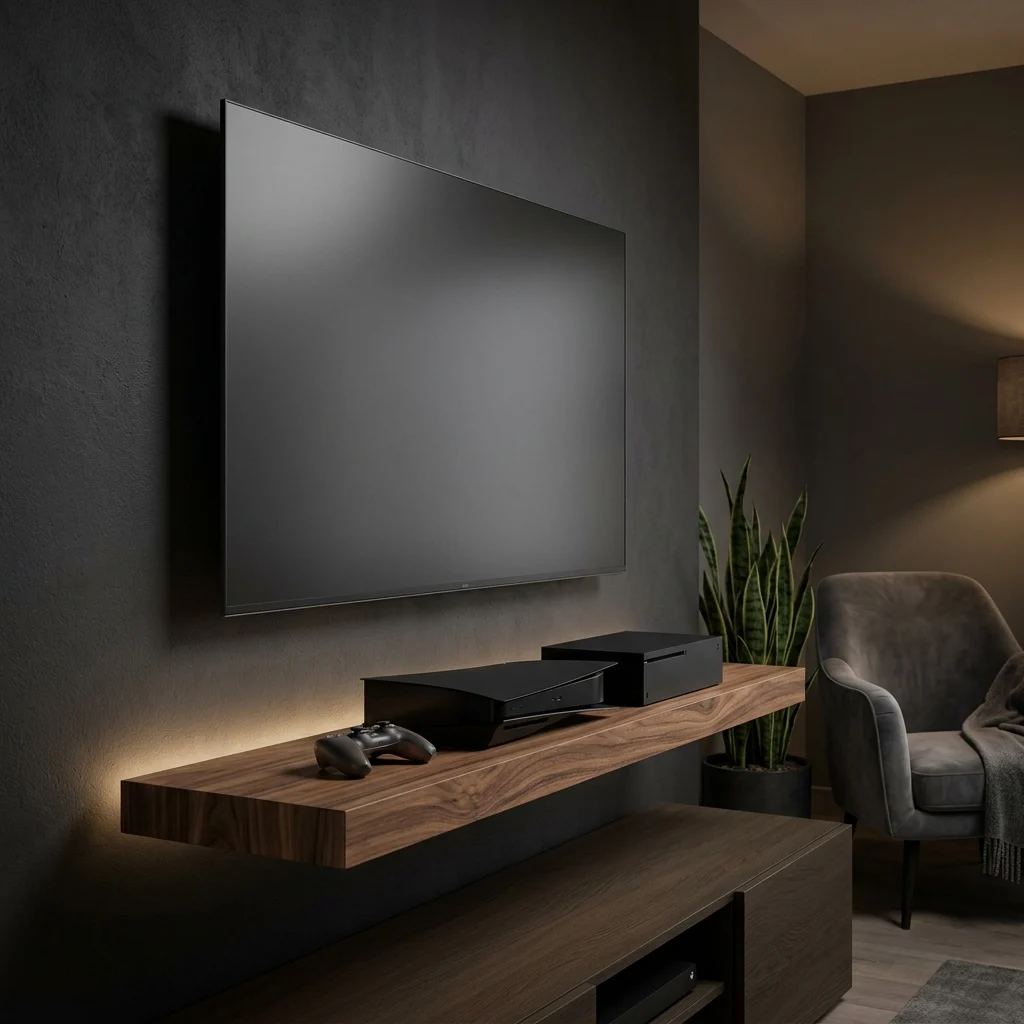
Consoles sit on one floating walnut shelf under a wall-mounted screen, and every cable runs inside a paintable raceway finished in the wall color. From the couch, you see a screen and a shelf. That is it. A full-motion mount holds most panels two to three inches off the wall when folded flat, which is enough clearance for the cable channel behind it.
Safety Note: Mount any screen over 40 inches into wall studs with a rated bracket, never into drywall anchors alone. A stud finder and a $30 mount upgrade cost less than the TV.
Skip the glass cabinet. Open shelving in oak or walnut keeps airflow around the consoles and looks lighter in a small room. The man cave essentials list covers what actually earns shelf space.
The Edited Arcade Corner
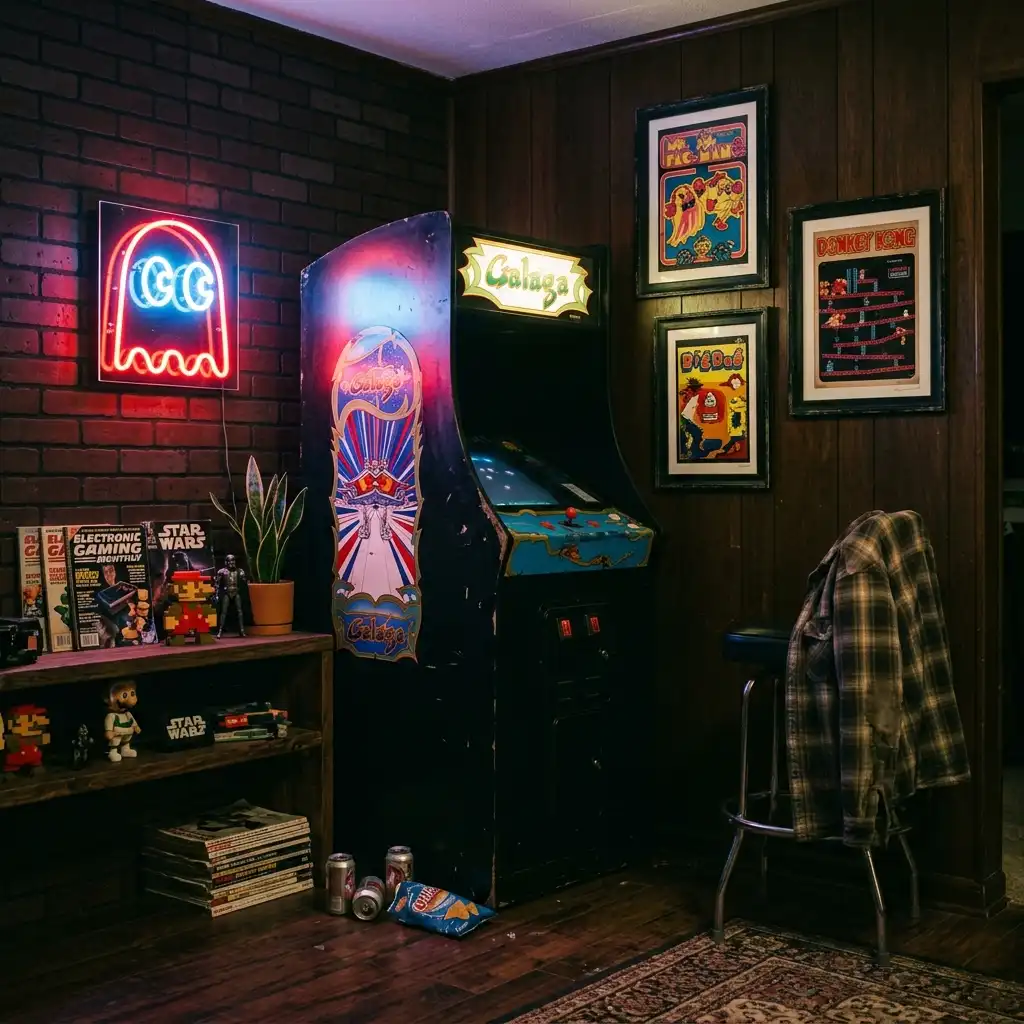
One cabinet. Not five. A single upright arcade machine or a compact bartop unit on a wood console gives the room a focal point without turning it into a themed restaurant. Set it on the wall opposite the main screen so the two never compete for attention.
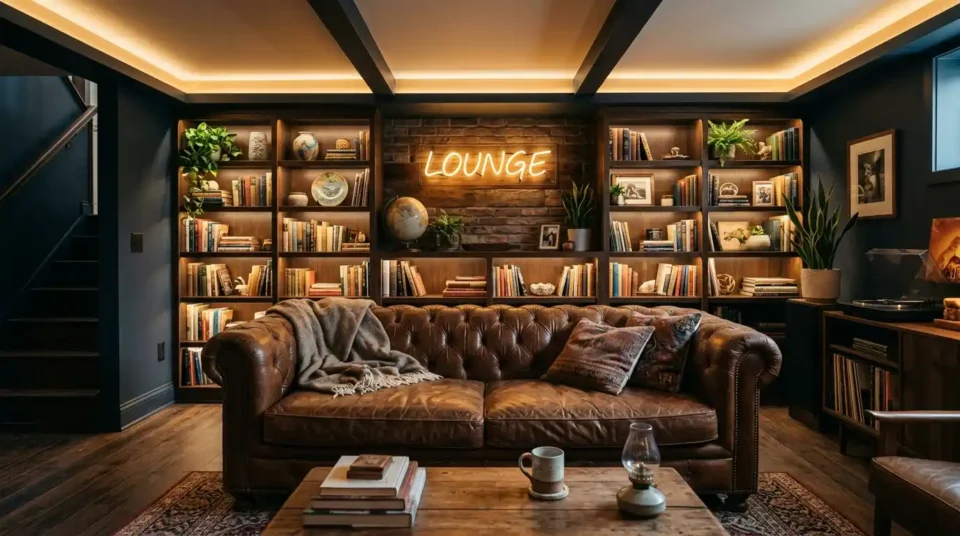
Keep the retro signal quiet everywhere else — one neon sign, one shelf of boxed cartridges, and stop. Three framed game prints in matching black frames do more than fifteen loose posters. The man cave styles guide helps you pick a lane before you start buying.
The Two-Zone Split: Desk and Couch
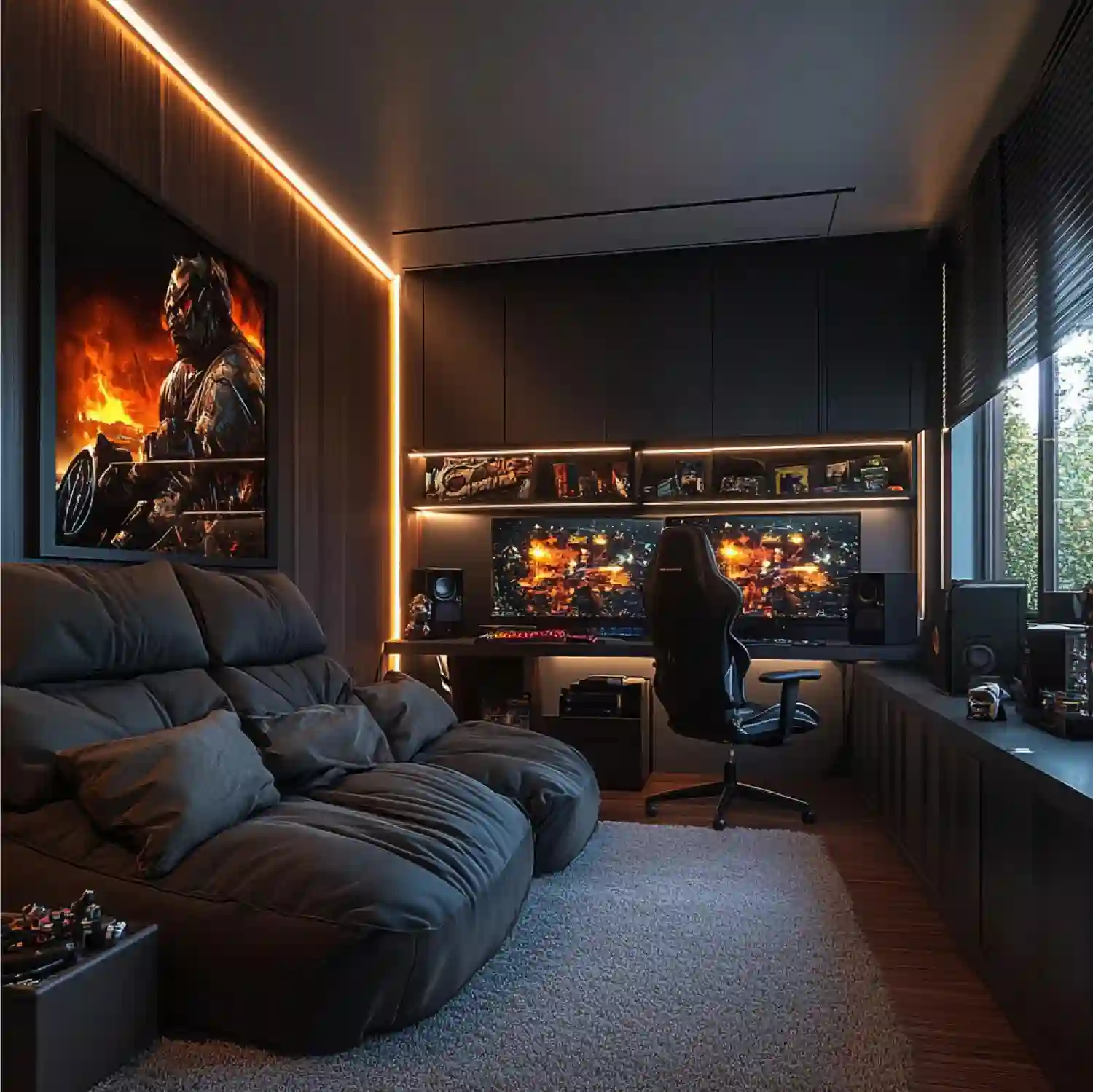
Bigger rooms split into a PC zone and a console zone, and a rug defines each one. The desk faces a side wall so the window sits to your left, not behind the monitor. The couch faces the mounted TV on the opposite side. Each zone gets its own light switch or smart plug, so one can go dark while the other stays on.
This layout also saves an awkward room. A long, narrow basement that feels wrong with one big furniture group usually works fine as two smaller ones. In tighter footprints, these small man cave ideas show how to get both zones under 120 square feet.
How Do You Copy These Gaming Man Cave Ideas Without Starting Over?
You do not need new furniture. Five changes, in this order, carry most of the difference:
- Paint the screen wall matte. Matte paint scatters light instead of reflecting it, so glare and hotspots drop immediately. Deep charcoal, forest green, and warm greige all work. One wall is enough.
- Kill the overhead light. Overhead LED panels flatten a room and reflect straight into a screen. Replace them with one 2700K floor lamp behind your seat and one dimmable desk lamp.
- Add the bias light. A 6500K strip behind the monitor or TV, aimed at the wall, cuts the harsh contrast between a bright screen and a dark room. This is the one light that stays.
- Hide every cable. Run them through a single paintable raceway or an under-desk tray. Nothing else on this list changes the room as much for as little money.
- Add one soft surface. A wool rug, a fabric panel, or lined curtains — any one of them takes the hard edge off the audio and makes the room look finished.
Rental Note: Command strips hold light strips and small frames, freestanding acoustic screens skip the drilling, and clamp-on lamps replace hardwired fixtures without touching the walls.
Budget-first version? Start with paint and bulbs, then follow the man cave ideas on a budget breakdown for the rest. You can also browse all our man cave ideas for setups in other rooms.
What Ruins a Gaming Man Cave?
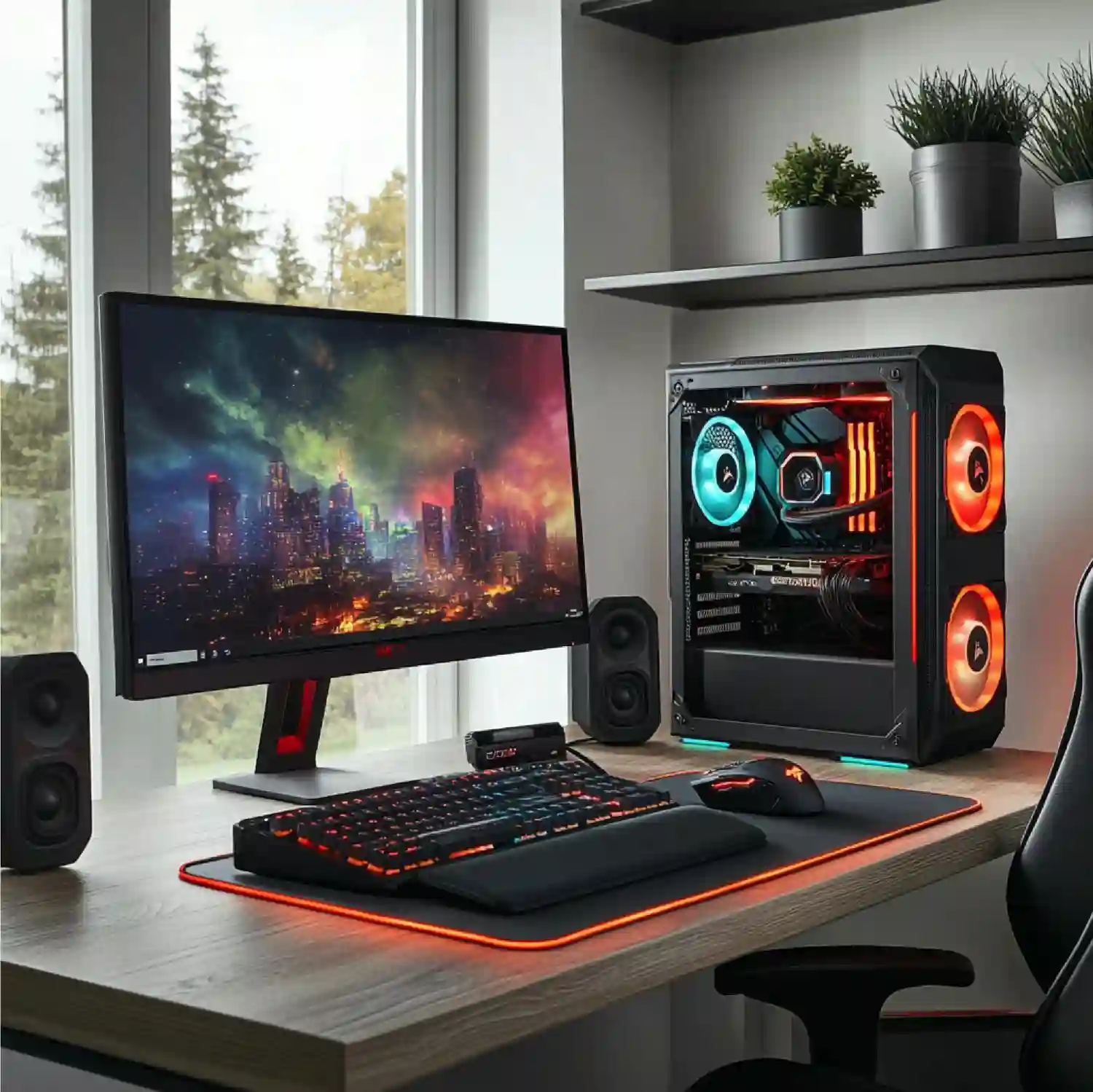
Instead of ringing the whole room in color-shifting LED strips, Try one bias light behind the screen and one warm lamp behind your chair. Color everywhere turns into visual clutter; color in one place reads as a choice.
Instead of a glass-top gaming desk, Try solid wood or a matte laminate. Glass reflects both your ceiling light and the monitor, and it shows every fingerprint under a desk lamp.
Instead of gluing up cheap foam wedges, Try fabric-wrapped panels with a published NRC rating. Foam wedges do almost nothing below 500Hz, yellow with age, and look like a dorm room in every photo.
Instead of a pitch-black room, Try a dim one. A completely dark room makes your pupils work overtime against a bright screen. Material Note: Basement rooms also need a humidity check before wool rugs, leather, or wood panels go in — basement man cave ideas cover damp-proofing first.
Gaming Man Cave Setup Checklist
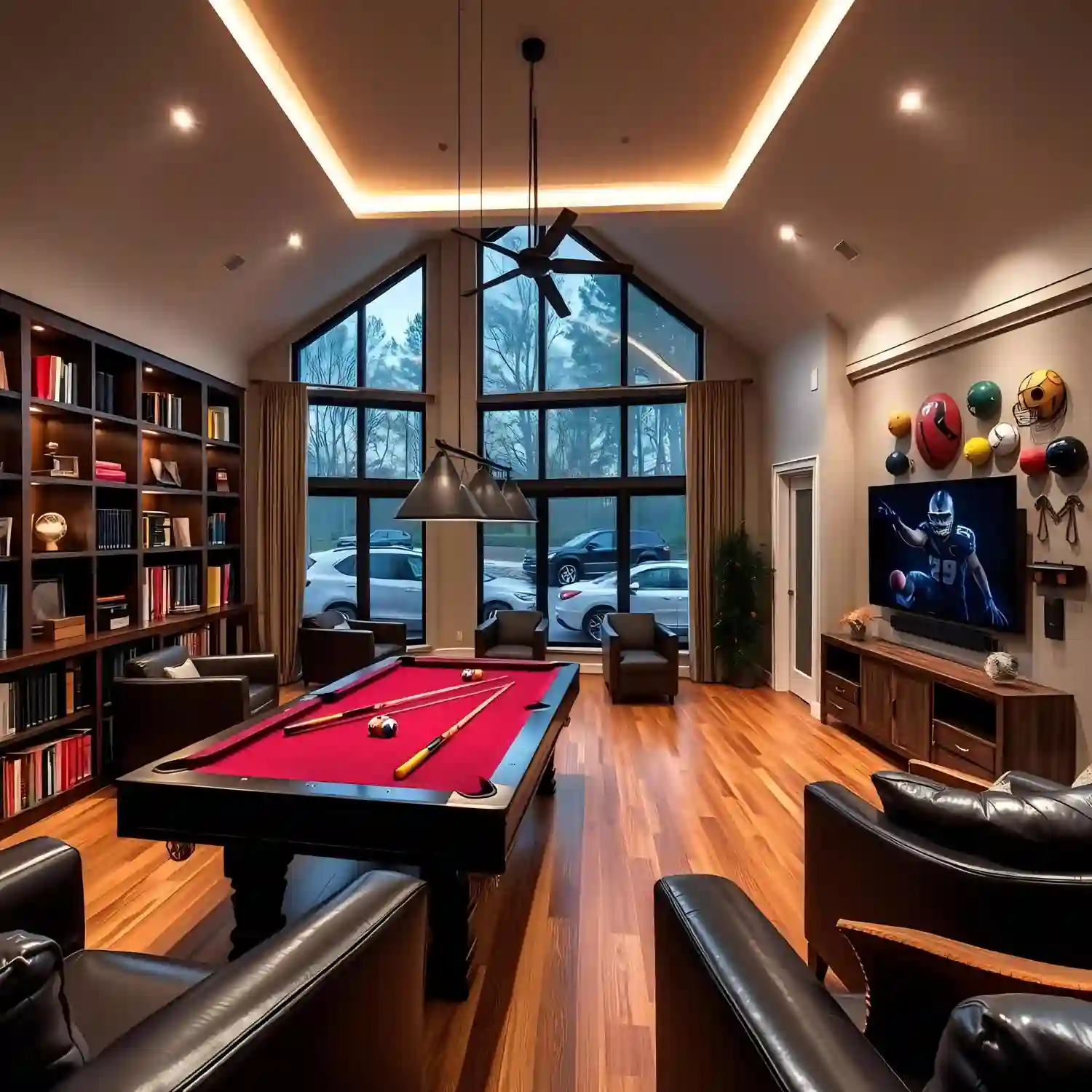
- Paint the wall behind your screen matte, in charcoal, deep olive, or warm greige.
- Place one 6500K bias light behind the display, aimed at the wall, never at your face.
- Swap ceiling bulbs for 2700K and add one dimmable lamp behind your seat.
- Sit 20 to 40 inches from a monitor, with the top of the screen at eye level.
- Treat 25 to 35 percent of one wall with panels rated NRC 0.75 or higher.
- Run every cable through one painted raceway or under-desk tray before adding decor.
- Pick one accent color, repeat it exactly three times, and skip the rest.
- Renters: use command strips, freestanding panels, and clamp-on lights instead of drilling.
KEY TAKEAWAY: A gaming man cave improves fastest through light, paint, and cable control — not through more gear.
Cost Breakdown
Most of this look is cheap. The expensive parts are furniture, and furniture is the last thing you should buy.
On a budget under $150, a gallon of matte paint, four 2700K bulbs, and a cable raceway kit cover the highest-impact changes in a single weekend. Mid-range, expect $120 to $280 for a proper bias light strip, a full-motion wall mount, and a set of under-desk cable trays. Premium territory starts with acoustics and seating: a six-panel fabric-wrapped set plus an 8 by 10 wool rug runs $260 to $700, and a solid-wood desk with a real ergonomic chair and monitor arm lands between $650 and $1,900. Garage conversions add their own line items — the garage man cave guide covers insulation and flooring before decor.
| Project | Estimated Cost | Impact Level |
|---|---|---|
| Matte paint on screen wall plus four 2700K bulbs | $70-$140 | Very High |
| 6500K bias light, full-motion mount, cable raceway | $120-$280 | High |
| Six fabric-wrapped acoustic panels plus 8×10 wool rug | $260-$700 | High |
| Solid-wood desk, ergonomic chair, monitor arm | $650-$1,900 | Medium |
Best First Upgrade: Matte paint on the wall behind your screen, because it fixes glare, color accuracy, and photos in one afternoon.
Skip for Now: A second or third monitor. Fix the light and the seating distance first, or you will just have more glare to look at.
The Bottom Line
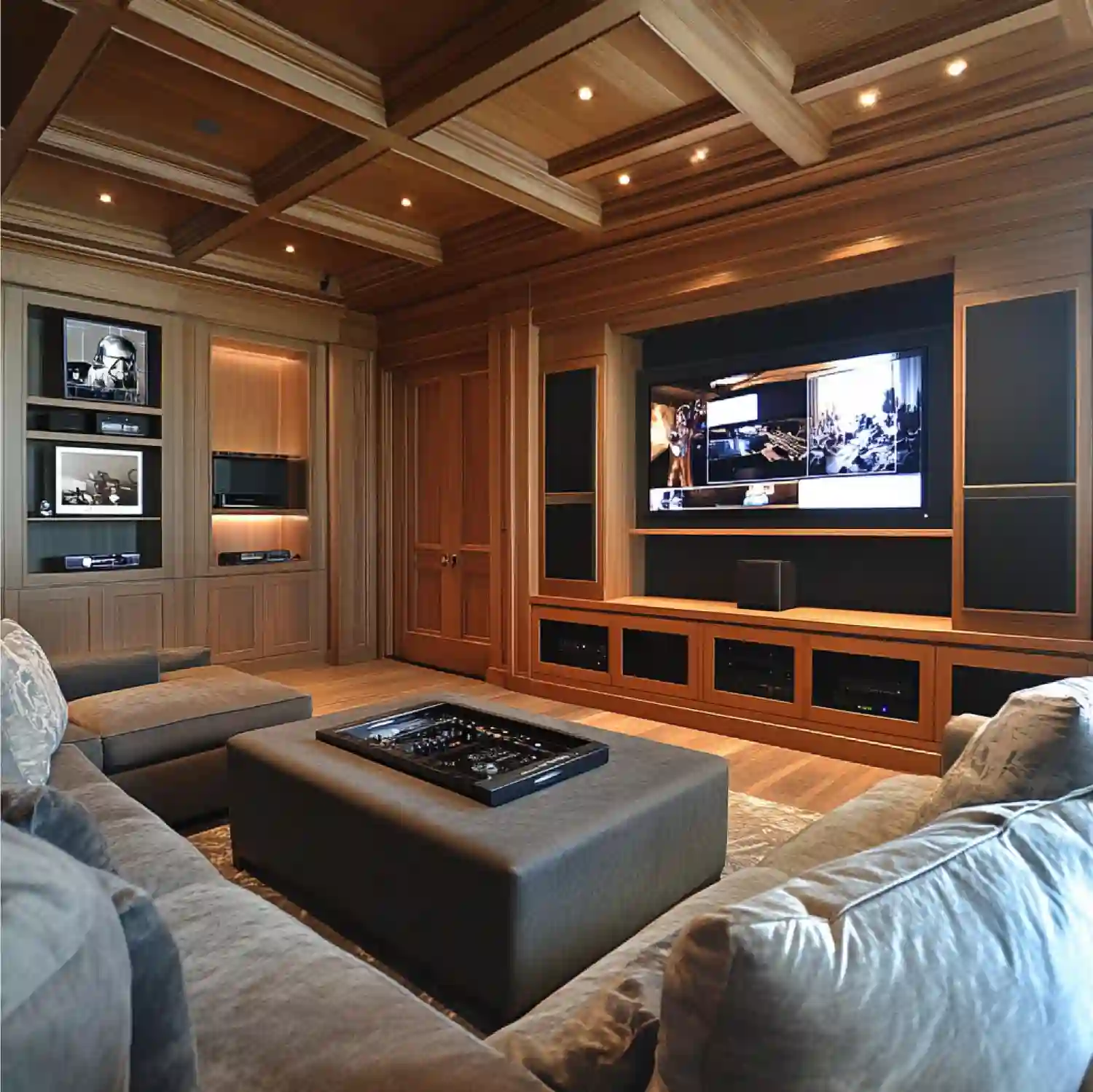
Designer’s Verdict: The warm, quiet gaming man cave wins, because it survives the three-year test — RGB builds date the moment the color trend moves, while oak, matte charcoal, and a wool rug still look right long after the gear inside them gets replaced.
Composite example: Picture a 12 by 14 basement with white walls, a glass desk, and strips along every edge. Swap the strips for one bias light, paint the screen wall matte olive, add a low-pile wool rug and three fabric panels, and the same PC now sits in a room people want to hang out in. Nothing about the build changed. Nothing about the room stayed the same.
For deeper theme-by-theme planning across bars, gyms, and sports setups, the complete man cave theme guide maps the whole category, and you can explore more room design ideas across the rest of the house.
Frequently Asked Questions
Conclusion
The best gaming man cave ideas now start with what you remove: the ceiling light, the visible cables, and every LED strip except the one behind the screen. Fix light and glare first, add one warm material second, and buy furniture last.
Next Steps
- Paint the wall behind your screen in a matte charcoal, olive, or warm greige and let it cure for 24 hours.
- Order one 6500K bias light strip and mount it behind the display, aimed at the wall.
- Swap your ceiling fixture for a 2700K floor lamp placed behind your seating position.
- Measure your seat-to-screen distance and adjust to 20 to 40 inches for a monitor, or 1.2 times the diagonal for a TV.