TL;DR
- The problem: props decorate in dots; Halloween garland is the line that connects them into one styled room.
- The surfaces: mantel, stair rail, doorway, and open shelving — in that order of payoff.
- The buy: black faux botanicals over tinsel, one material repeated over several short strands joined together.
- The install: adhesive hooks and zip ties, not nails — and warm amber micro-lights on a timer.
Your Halloween Decor Is a Row of Dots
Most Halloween garland sold in stores comes in six-foot strands. Almost nothing you would actually decorate stops at six feet — a mantel wants slack and tails, a stair rail runs double that, a door frame more than triple. So people buy one strand, stretch it thin, and conclude garland doesn’t work. The strand was never the problem. The length was.
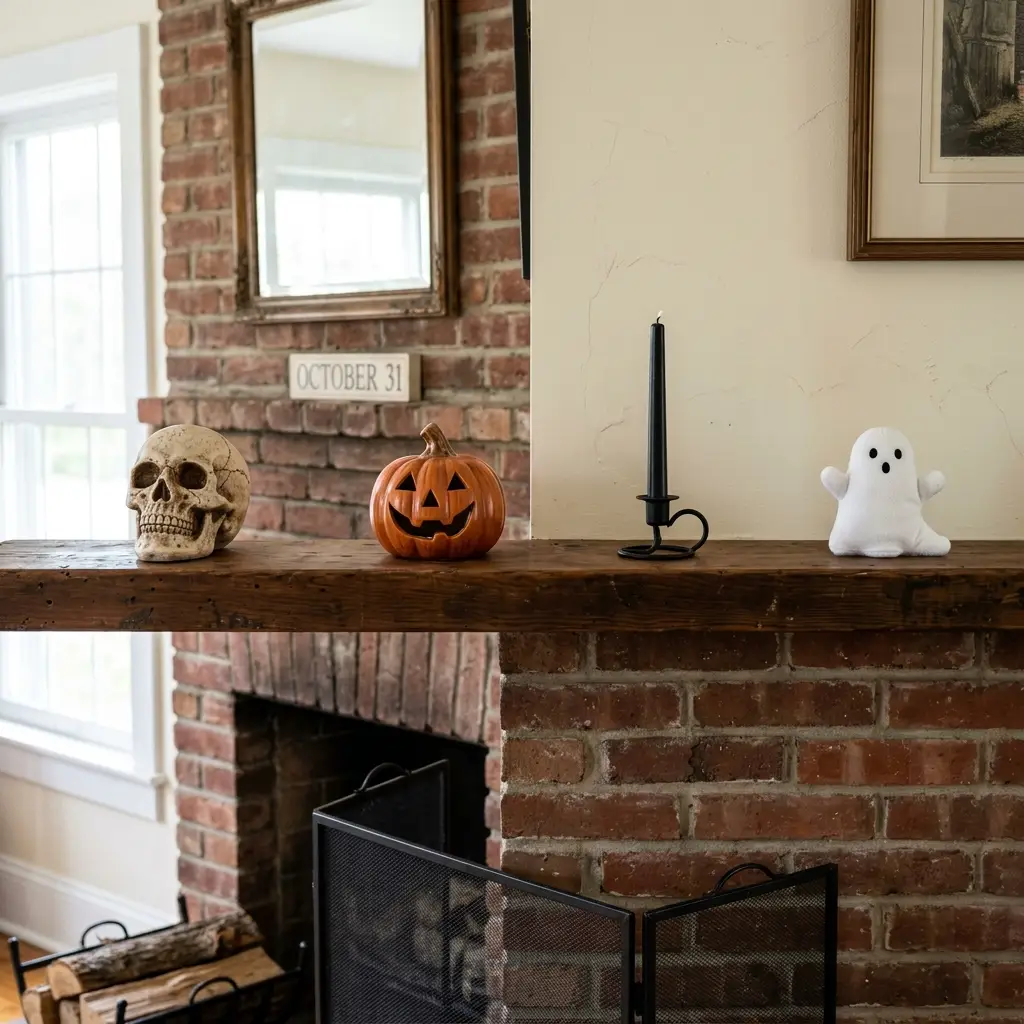
It matters because garland fixes the thing most Halloween decorating suffers from. A skull here, a pumpkin there, a candle cluster on the shelf — each object sits alone, and the room stays a row of dots. Halloween garland is the only layer that works as a line: it connects the objects, carries the eye across the room, and makes the whole display look installed instead of placed.
Editorial field note: A living room with a decorated mantel often still feels half-done — three objects up top, nothing linking them. One black leaf garland draped beneath them, before anything else changes, and the same three objects suddenly look arranged on purpose. The objects didn’t improve. The line appeared.
This guide covers the four surfaces that earn garland, which materials to buy, how to hang everything without wrecking paint, and whether lights belong in it. For the rest of the season’s layers, our Halloween decorating ideas pick up where the garland stops.
The Four Surfaces Where Garland Earns Its Space

Not every surface deserves a line. Garland pays off where there is a horizontal run the eye already follows — and in most homes that is exactly four places. Work down this list in order and stop when you run out of garland or patience; one surface done fully beats four done thin.
The Mantel
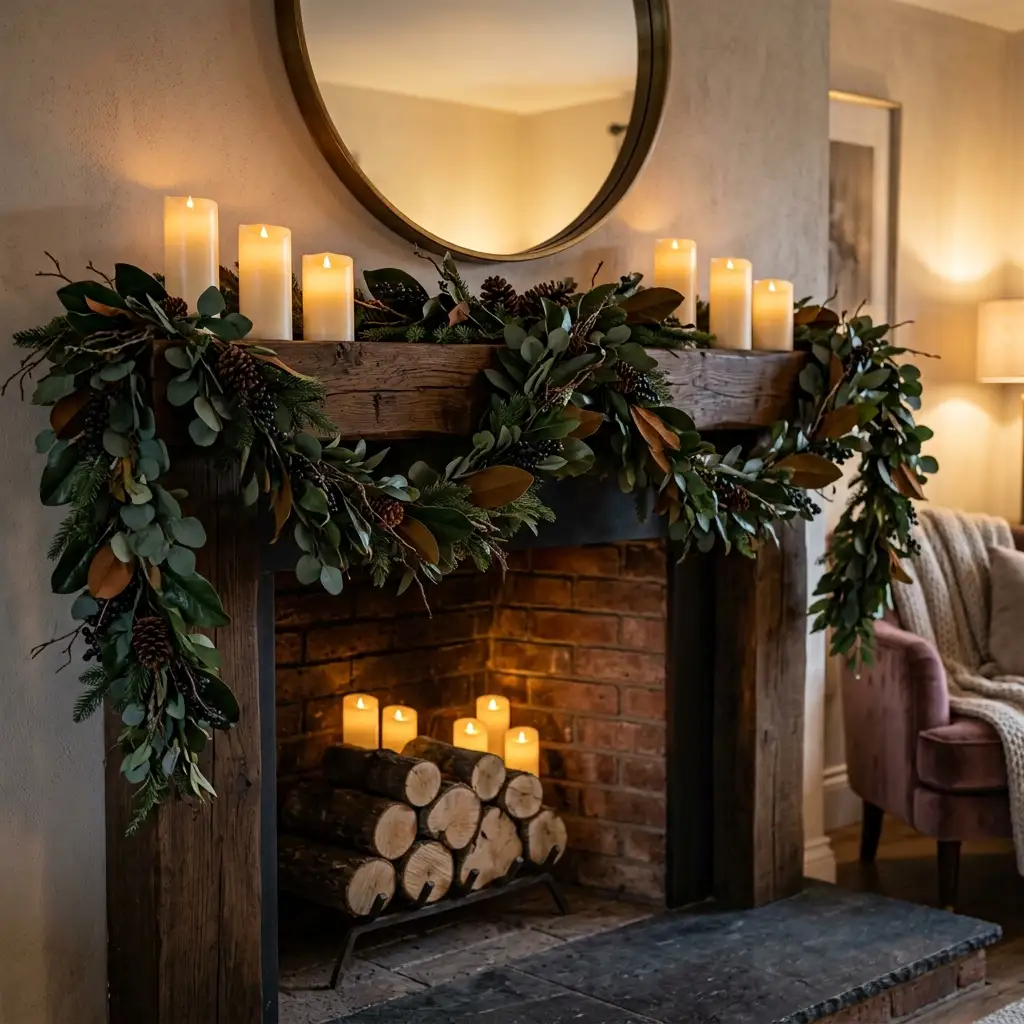
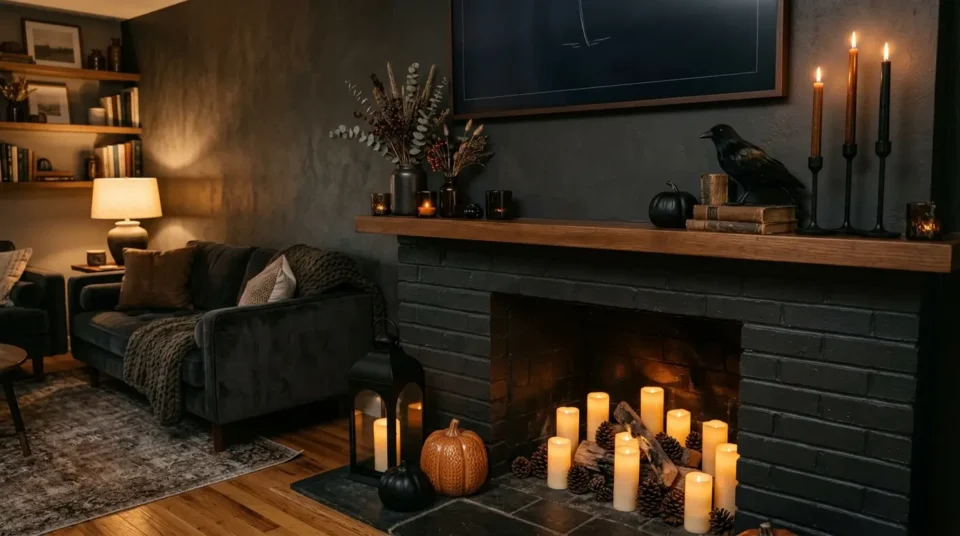
The mantel is the highest-payoff surface because it is already the room’s focal point. Drape the garland along the front edge with a gentle dip between two or three anchor points rather than laying it dead straight on top — the dip is what makes it look dressed. Let a tail fall 8 to 12 inches down each side. Around it, keep existing mantel objects behind the line, not buried in it. Safety Note: a decorated mantel is no place for open flames — swap real candles for flameless LED pillars the day the garland goes up. Sizing follows the door-and-mantel math covered in our wreath sizing guidance, so measure before you buy rather than trusting the packaged length.
The Stair Rail
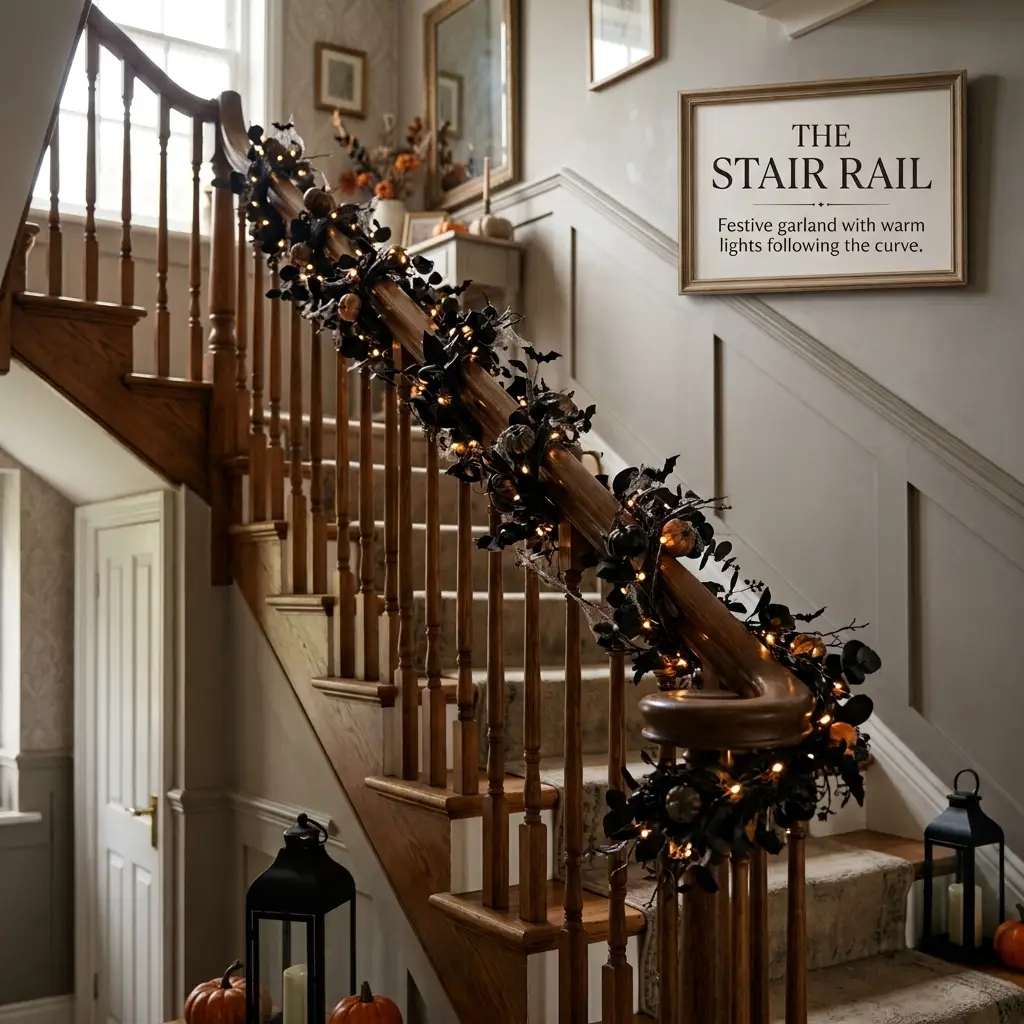
A staircase is the longest line in the house, and it is usually bare. Wrap the garland around the banister in loose, even spirals — roughly one full wrap every arm’s length keeps the rhythm consistent — or swag it along the outside face with a dip between each baluster group. Secure with soft zip ties or velcro straps at every anchor, never wire that scratches the finish. Safety Note: decorate the outside face of one rail and leave at least one handrail fully graspable — a stairway you cannot grip is a worse Halloween surprise than any prop. Batteries for lights hide neatly at the newel post.
The Doorway and Door Frame
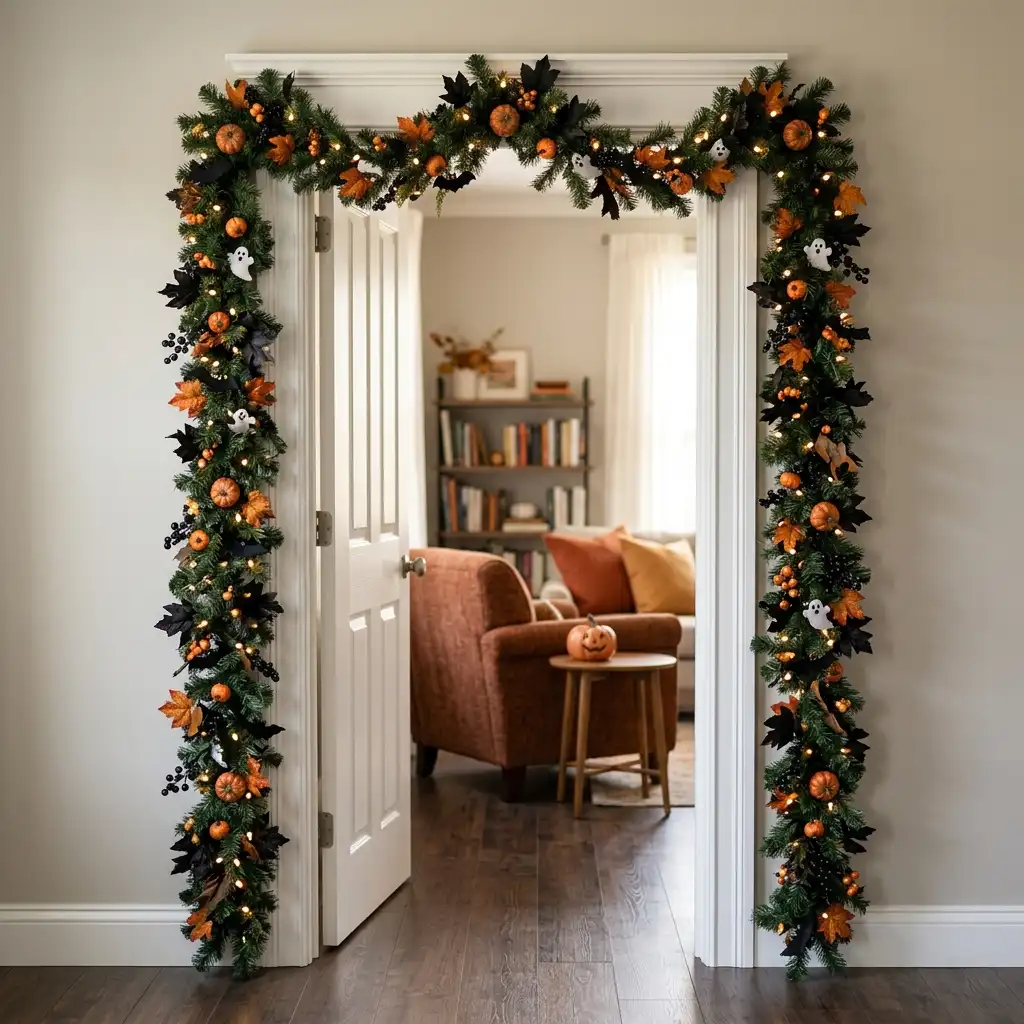
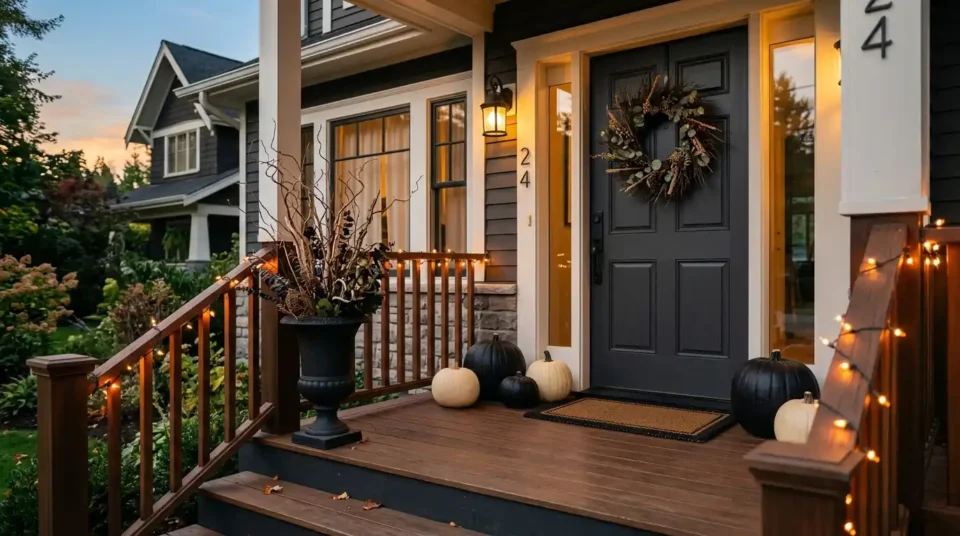
Framing a doorway turns an ordinary opening into the room’s entrance moment. You have two honest versions: the top-only swag, which takes one strand and reads generous, and the full three-sided surround, which takes far more length than anyone expects — measure all three sides before buying, because falling short in the middle of a frame is unfixable. Interior doorways take the surround best; on an exterior front door, contrast against the door color decides visibility, and the garland plays supporting act to the wreath rather than replacing it. If the whole entry is getting the treatment, our front porch decor ideas cover what surrounds the frame.
Shelves, Mirrors, and the Table Edge
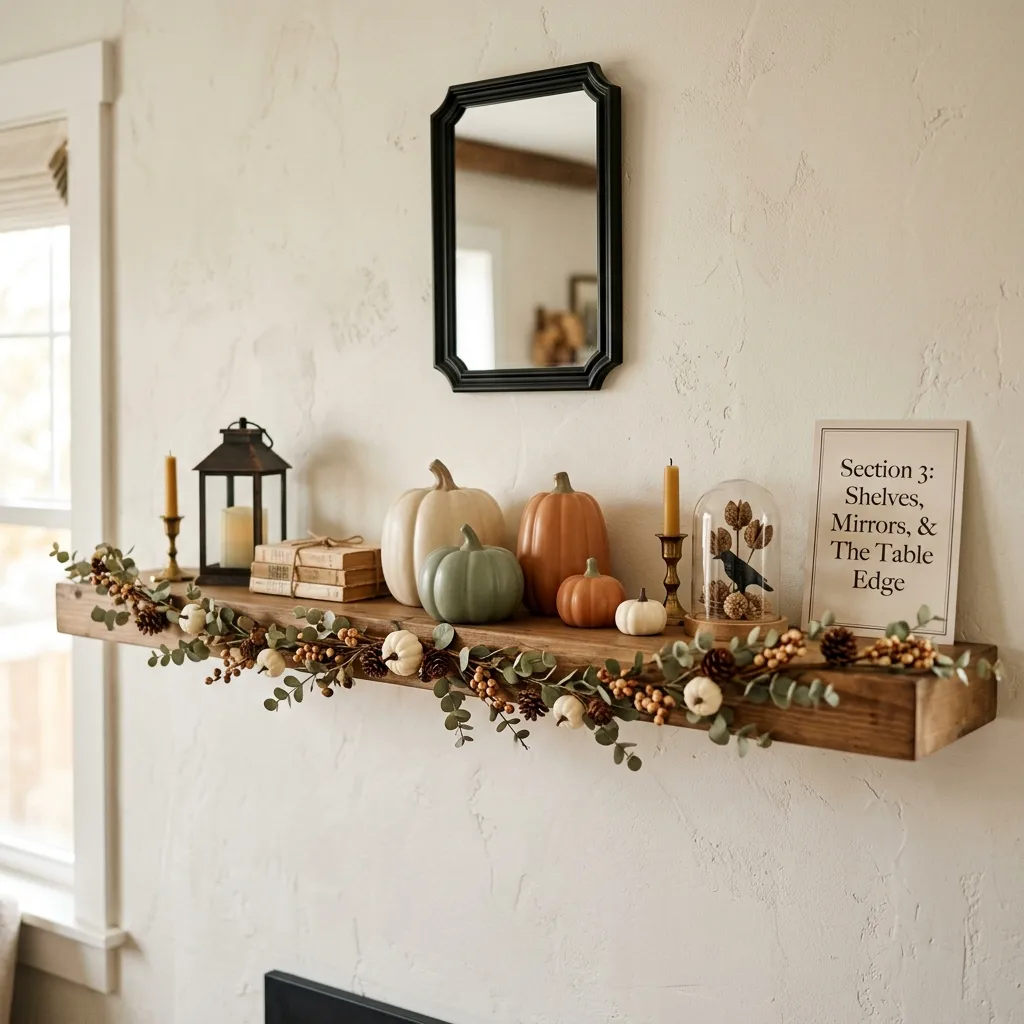
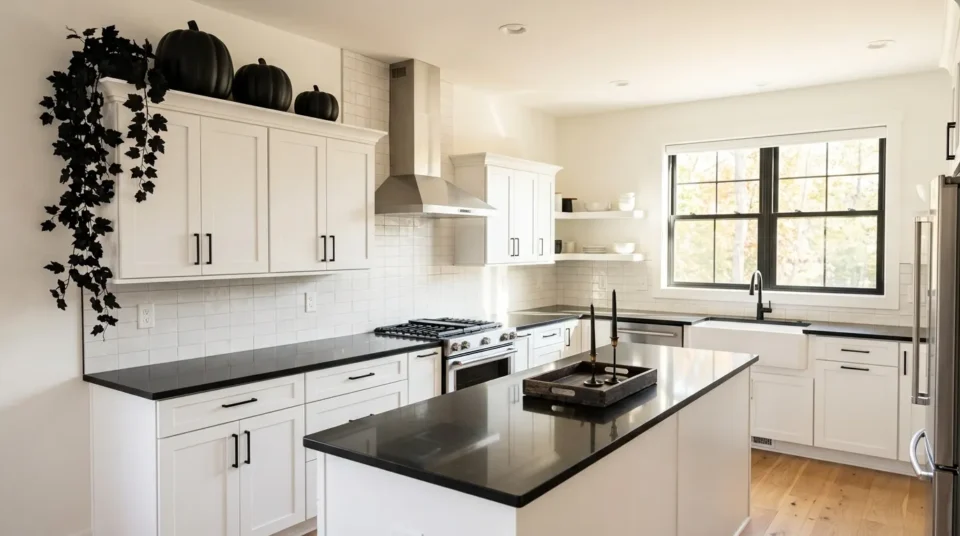
The quiet fourth surface is the horizontal edge you already own: an open shelf, a mirror top, a console, the dining table. Here garland lies flat instead of hanging — run it along the shelf lip and let existing objects sit in its gaps, or drape one corner of a mirror asymmetrically and stop, because a full mirror wrap tips into festive-restaurant territory. On a dining table, a garland runner down the center replaces a centerpiece entirely and clears in one lift when the table is needed. This is also the surface where short six-foot strands finally fit without joining.
Why Garland Is Having Its Halloween Moment
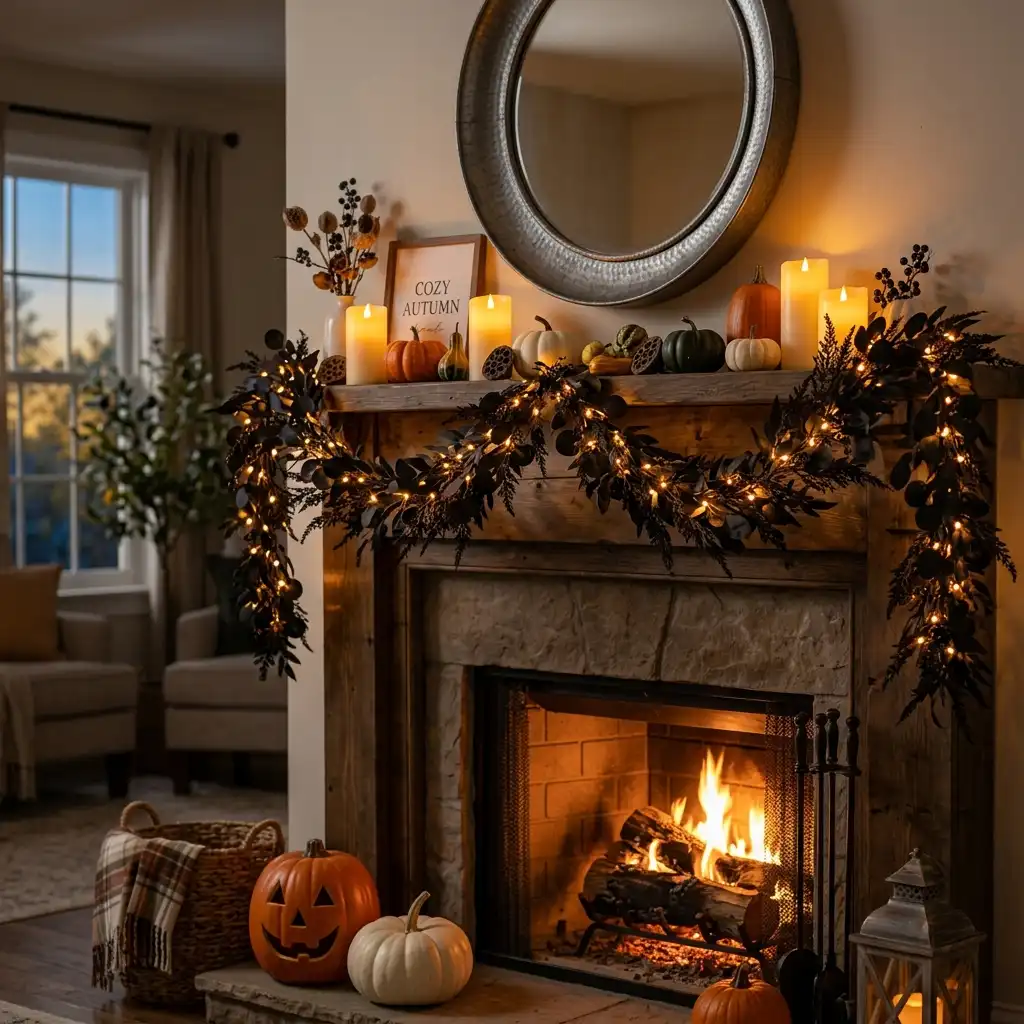
Halloween spent a decade getting louder outdoors — bigger skeletons, taller inflatables — and the indoor counter-move is quieter and more styled. Mantel-scaping crossed over from Christmas, and garland is its backbone: the same drape-and-anchor habit, restocked in black eucalyptus and dried-look stems instead of pine. The material itself grew up, too. What used to mean orange tinsel now means faux botanicals convincing enough to survive a close look, and that single upgrade moved garland from classroom decoration to something a design-led home will hang.
Signs This Is Catching On:
- “Halloween garland” holds its place as an established search on Pinterest year over year — repeat-demand behavior, not a one-season spike.
- Seasonal retailers now sell pre-lit black garlands in the same realistic-botanical style as their Christmas lines, a product tier that barely existed a few seasons ago.
- Fireplace and mantel-focused Halloween content keeps growing across the seasonal decorating calendar, with garland as the recurring base layer under everything else.
Which Garland Material Should You Buy?
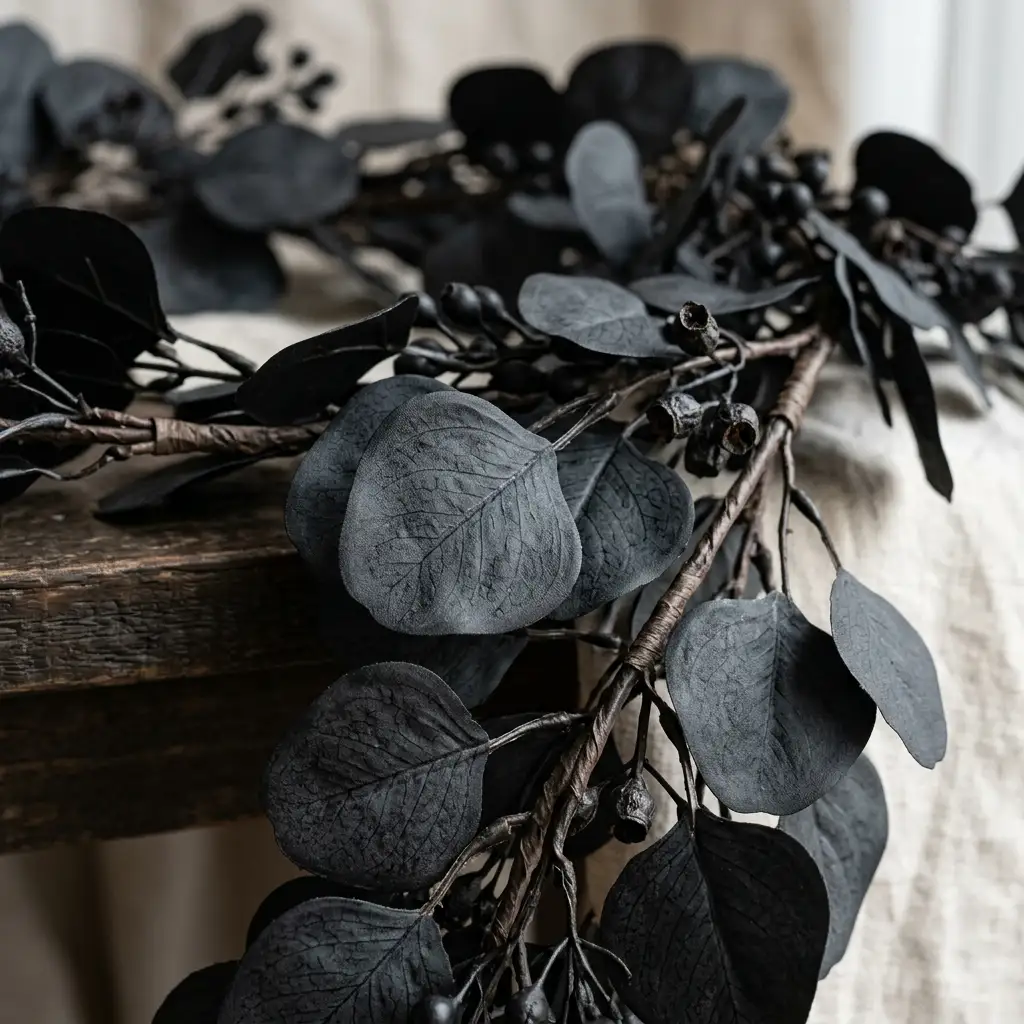
Black faux botanicals are the default answer — eucalyptus, leaf, or bare-branch styles hold their shape, look expensive at close range, and slide straight into November and even a black-accented Christmas scheme without a restock. Buy several matching strands and join them with floral wire; one long seamless-looking run of a single material beats a patchwork of three different ones every time. Designer Tip: stagger the joins so each lands inside a dip — the slack hides the wire twist, and the run scans as one continuous piece.
The other lanes are situational. Tinsel and foil garland is the dated one — it photographs as classroom party and is the first thing to cut. Strung-shape garlands — felt bats, paper ghosts, wooden beads, resin skulls — work as a second layer twisted loosely over a botanical base, not alone, where they hang as a thin sad line. Pre-lit garland saves threading lights yourself but marries you to its bulb color, so check for warm white before buying. Fresh greenery is the one to skip entirely: it dries to a fire-prone crisp long before October ends.
KEY TAKEAWAY: One botanical garland material, bought in multiple strands and joined, out-styles any mix of novelty garlands — repetition is what looks expensive.
How Do You Hang Garland Without Wrecking the Paint?
Nails are never the answer for a six-week season. Adhesive hooks handle almost every indoor run: per Command’s own weight limits, a medium hook carries up to 3 pounds and a large one up to 5 — and a strand of faux botanical garland weighs well under a pound per arm’s length, so the math clears easily even with lights added. Place a hook at each anchor point of the drape, press adhesive strips onto clean paint, and give them the hour they need to cure before loading.
Rails take soft zip ties or velcro straps, mirrors take the mirror’s own frame corners, and shelves need nothing at all. Rental Note: pull adhesive strips by their stretch-release tab, straight down and slow — levering the hook off the wall is how security deposits die. Skip painter’s tape entirely; it cannot carry garland weight and fails overnight.
Do Lights Belong in Halloween Garland?
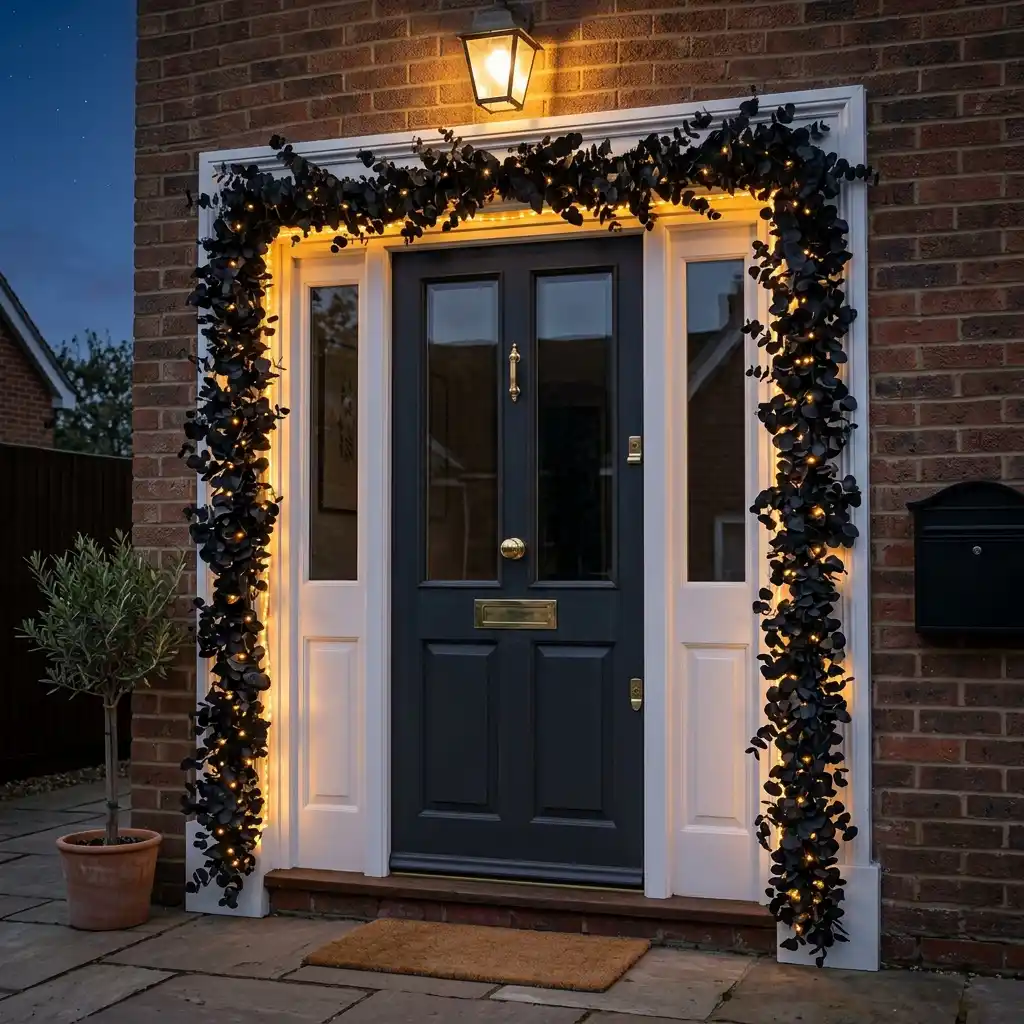
Yes — with two rules. First, color: warm white or amber micro-LEDs on a fine dark wire disappear into black garland by day and turn it into the room’s glow line by night. Purple and green washes belong on the lawn, and anything blinking belongs nowhere. Second, control: put battery packs on a six-hour timer so the garland lights itself at dusk and shuts off after the household goes up to bed — LEDs run cool, but an unattended always-on strand earns nothing except a dead battery by mid-October. Outdoors, the same rule the front door follows applies here: use outdoor-rated sets and tuck the pack out of the rain.
Thread the strand through the garland after it is hung, following the same line as the drape, and hide the pack behind a mantel object or at the newel post. One strand of 100 micro-LEDs covers a mantel run; a staircase wants two.
No Mantel, No Stairs? The Apartment Version
Apartments usually lack both marquee surfaces, and garland still works — the line just moves. The interior doorway becomes the mantel: one top swag over the main room’s entrance carries the same connecting job. A bookshelf edge takes a flat run with objects sitting in the gaps, a window frame takes a one-sided drape, and a bed’s headboard takes a swag that makes the whole bedroom seasonal with one move. Everything hangs on adhesive hooks, so the deposit survives; the same entry-styling logic behind our spring entryway decorating ideas applies in October, just in a darker palette.
The one apartment mistake is scale. In a small room, one garland line is styling and three are cobwebs — pick the surface you look at most and give it the full length.
| Quick Takeaways | |
|---|---|
| Job | Garland is the line that connects prop “dots” into one styled room. |
| Mantel | Drape the front edge with a dip and 8-12 inch tails; flameless candles only. |
| Stairs | Loose spirals or outside-face swags, zip-tied; keep one handrail graspable. |
| Doorway | Top-only swag from one strand, or measure all three sides for a surround. |
| Material | Black faux botanicals, several strands joined; skip tinsel and fresh greens. |
| Hanging | Adhesive hooks (3-5 lb rated) and velcro — never nails for six weeks. |
| Lights | Warm amber micro-LEDs on a dusk timer; nothing blinking, nothing colored. |
| Small spaces | One fully dressed surface beats three thin ones. |
Four Ways Garland Turns Into Clutter
The mantel version of the failure is burial. Garland goes on top of the mantel shelf, objects get pushed into it, and the line disappears into a hedge. Keep the garland on the front edge and the objects standing clear behind it.
The staircase version is tension. A strand pulled tight along a rail reads as rope, not decoration. The drape between anchors — the part that hangs loose — is the part that looks styled, so leave slack at every span.
The doorway version is the short buy. A surround that runs out halfway up one side cannot be disguised, and joining mismatched strands mid-frame shows. Measure first, buy long, and hide the extra in a deeper tail.
The whole-house version is repetition without hierarchy. The same thin strand on every surface makes the home feel wrapped rather than styled. Rank the surfaces, dress the top one or two fully, and let the rest of the rooms breathe.
Price Ranges by Garland Type
The spend scales with material realism, and the difference is visible from across the room.
| Project | Estimated Cost | Impact Level |
|---|---|---|
| Basic strand — tinsel, paper shapes, or bead string, per 6 feet | $8-$20 | Low |
| Quality faux botanical garland in black or dried tones, per 6 feet | $20-$45 | High |
| Full surface build — 2-3 joined strands, pre-lit or with micro-LEDs, hooks and timer | $55-$130 | Very High |
Best First Upgrade: one quality botanical strand for the mantel edge — it upgrades everything already sitting there.
Skip for Now: garland for every room. The budget for three thin surfaces buys one that actually looks finished.
Before You Buy a Single Strand
- Rank your four candidate surfaces and commit the budget to the top one or two.
- Measure the full run — including dips, tails, and all three sides of any door frame — before shopping.
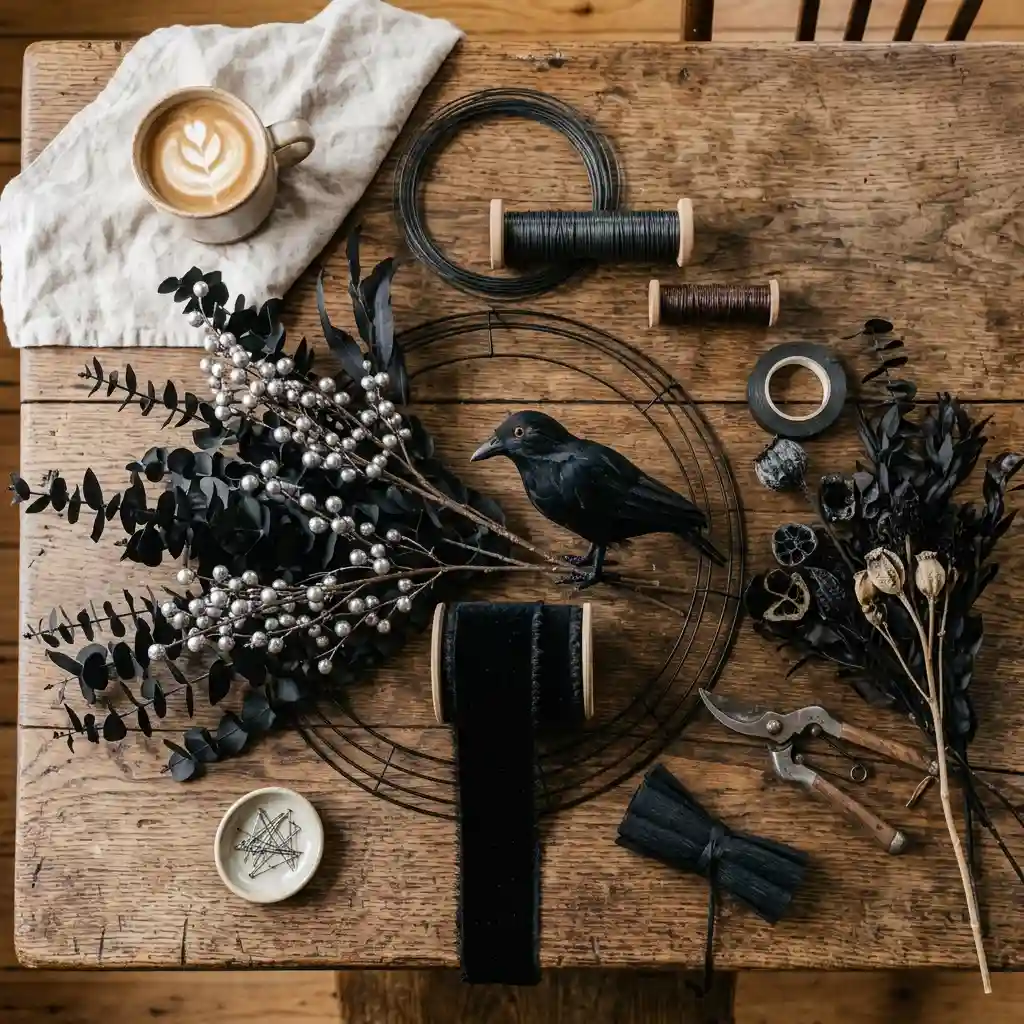
- Pick one garland material and buy every strand in it, plus floral wire for joining.
- Count anchor points and buy one adhesive hook per anchor, 3-pound rating or better.
- Add one micro-LED strand per surface, warm white or amber, battery pack with timer.
- Swap any real mantel candles for flameless versions in the same cart.
- Keep the packaging — coiled storage in November is what makes next year free.
Will Garland Outlast the Prop Arms Race?

The oversized-skeleton era will cycle — yard spectacles always do — but the garland habit sits on different ground. It borrowed its logic from Christmas, where greenery on the mantel and rail has survived every trend for a century, and a habit that transfers across three holidays a year does not disappear when one of them changes taste. The same black botanical strand that carries October picks up berries for a rustic farmhouse Christmas and pale stems for the cozy winter stretch after it.
Designer’s Verdict: garland is the most durable purchase in the Halloween budget — the props expire with the trend cycle, the line does not.
Frequently Asked Questions
Conclusion
The insight worth keeping is the line: props are dots, and Halloween garland is what connects them into a room that looks decorated on purpose. Dress one surface fully before touching a second, and the rest of the season’s styling gets easier from there — our home decorating ideas carry the same one-layer-at-a-time thinking through every holiday after this one.