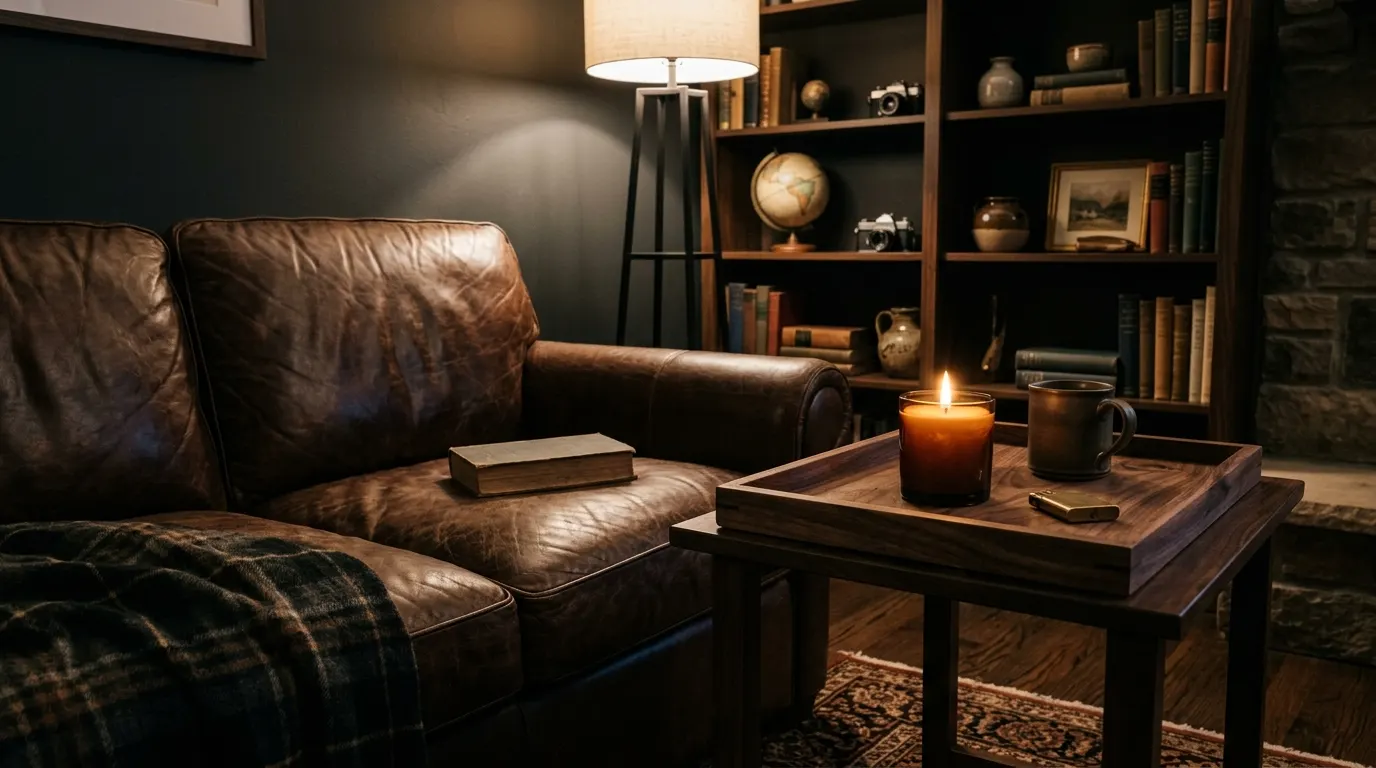
Why Does a Man Cave Still Smell Like a Garage?
Open the door to your man cave after it has been shut for a few days and you get the room’s real answer. Damp concrete in a basement. Motor oil in a garage. Old carpet and last weekend’s beer almost anywhere else. None of the decorating touches the air.
If a finished room still feels unfinished to you, this is usually why. Scent is the one layer almost nobody plans, and the first thing a guest takes in.
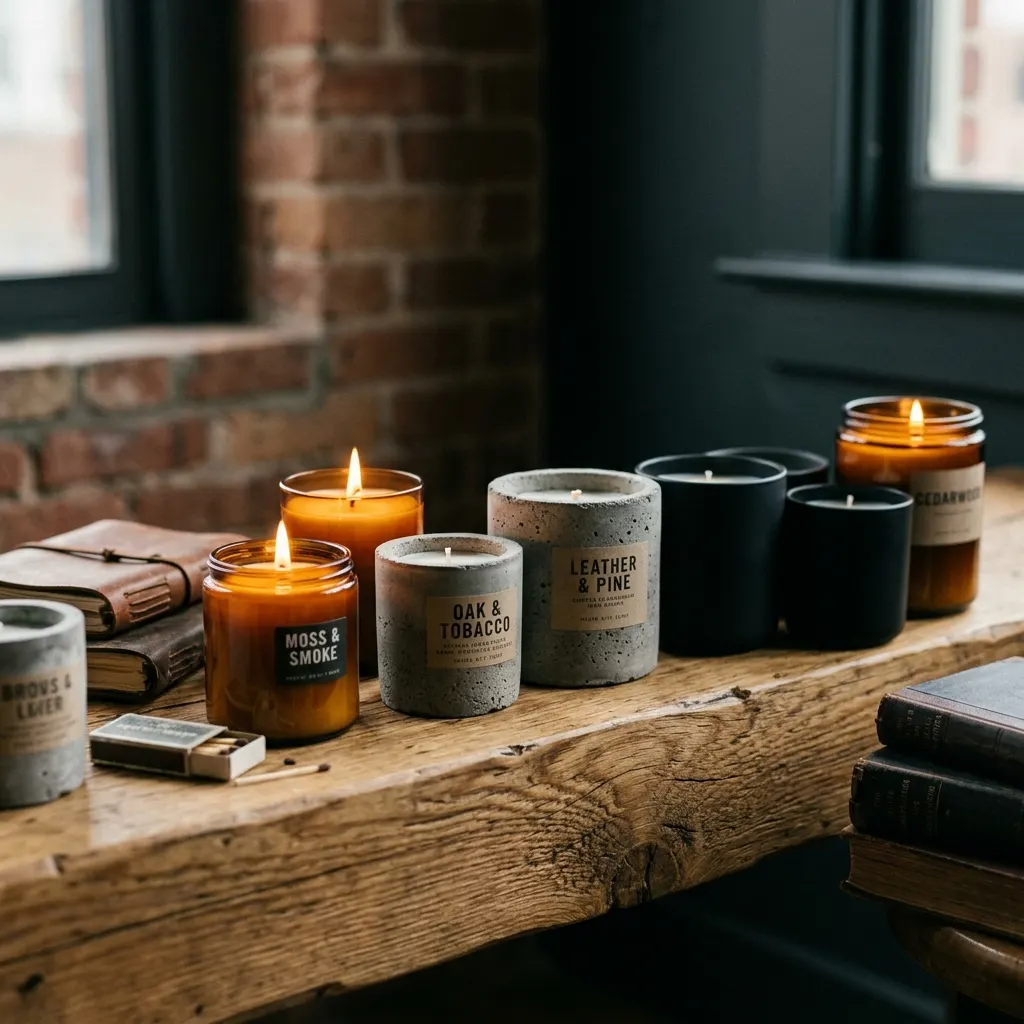
Man cave candles fix that faster and cheaper than almost anything else on the list. The scents that work sit in grounded families — leather, tobacco, cedar, woodsmoke, bourbon, dark coffee — burned one at a time in a vessel that matches the room’s metals and wood. Skip novelty fragrances and stacked scents. In a garage or basement, deal with the moisture first, because a candle covers a musty smell but never removes it.
Editorial field note: A basement with new leather seating and a good screen can still feel unused, because the air smells like the storage room it replaced. One cedar-and-smoke jar lit an hour before people arrive changes that first impression before anyone sits down. Nothing hanging on the walls does that job.
This post covers scent only — what to burn, what it costs, and what to stop buying. Seating, wall treatment, and fixtures are separate jobs, and the whole picture lives in our man cave decor ideas hub.
Scent is also the cheapest layer in the room. A single jar costs less than a set of coasters, and it changes the first ten seconds of every visit. Browse more home decor inspiration when you are ready to work on the rest of the house. Bookmark this guide for quick reference.
Why Did Leather and Smoke Take Over the Candle Shelf?
The candle aisle used to be vanilla, fresh linen, and clean cotton — scents built for a living room, not for a room with a pool table in it. That has flipped. Smoky wood, dry resin, weathered leather, and tobacco now lead the premium candle shelf instead of sitting at the bottom of it.
The numbers behind that shift are unusually clear. Candle Delirium’s 2026 luxury candle report shows leather, tobacco, smoke, and suede taking two of the top six bestsellers, including the number one spot — a year earlier, the strongest of them ranked thirteenth. The top seller sold 4.7 times as many units as the previous year, climbing from twentieth place.
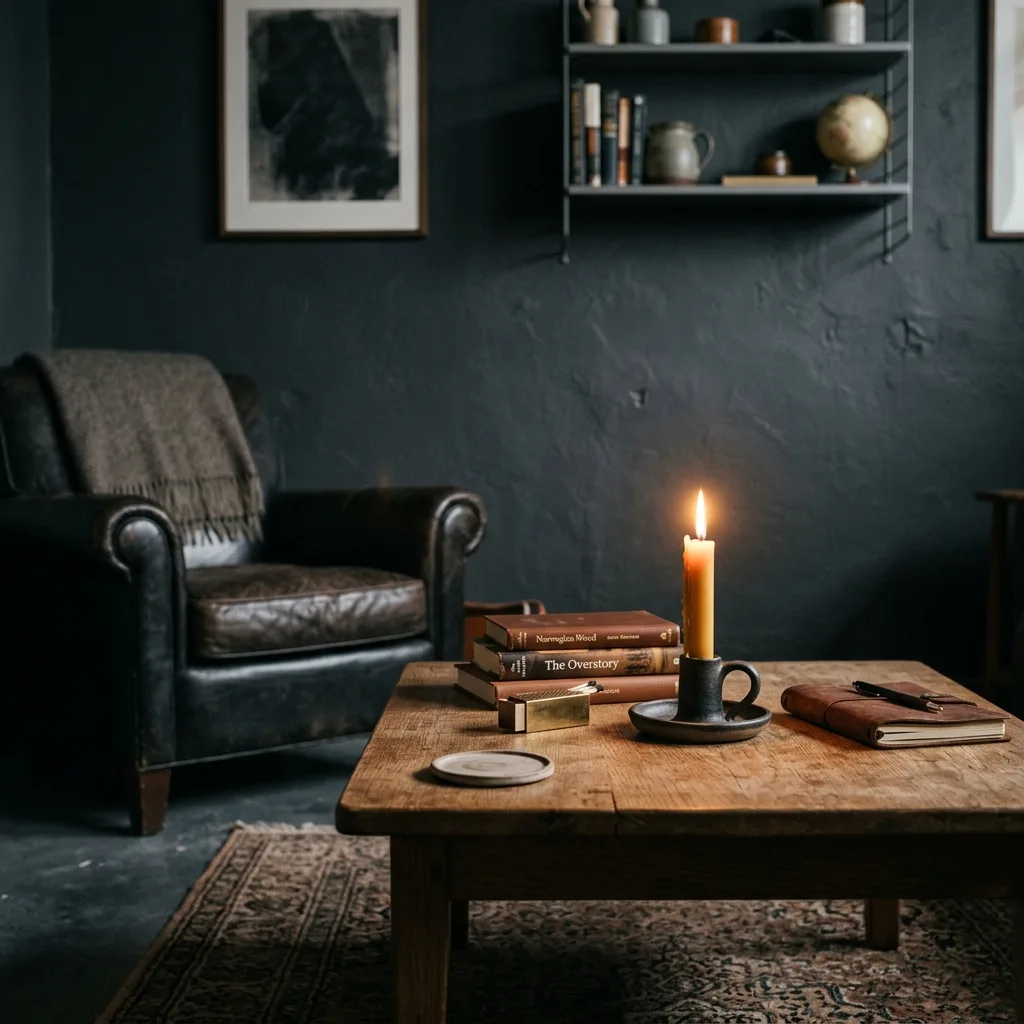
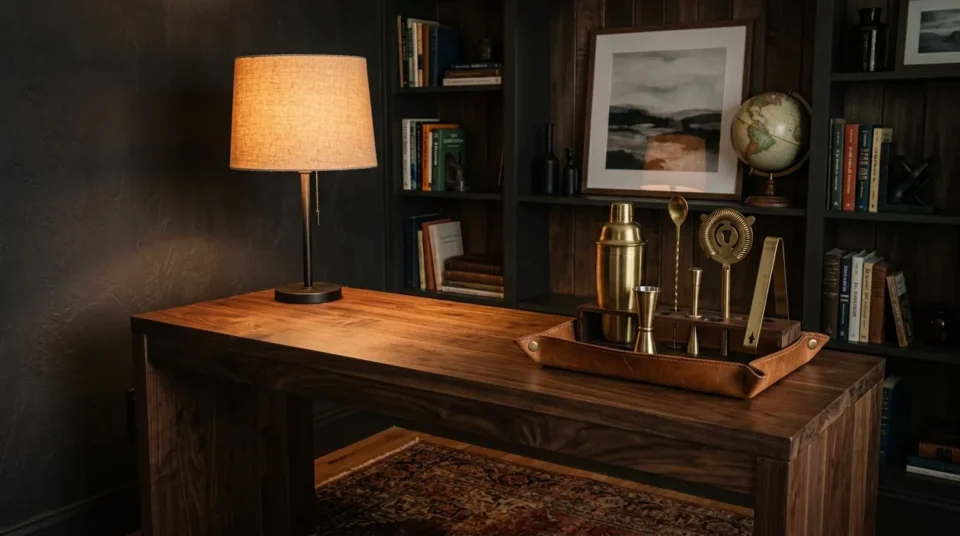
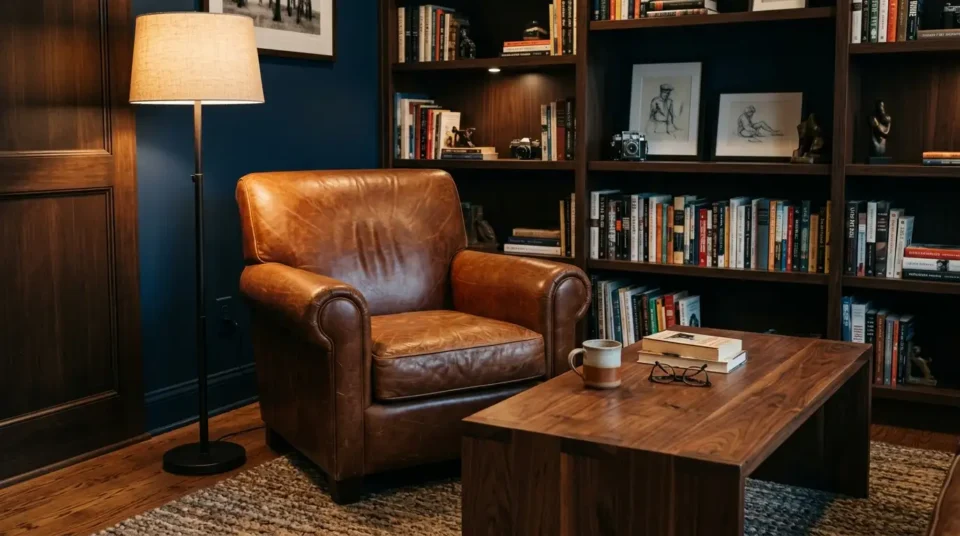
There is a simple reason this landed. Man caves are built from leather, walnut, brass, wool, and dark paint. The scent shelf spent years offering nothing that matched those materials, so the room stayed sensory-flat: visually loud, with nothing in the air. Smoke and leather finally gave these rooms a scent that belongs to them.
What Does a Good Man Cave Candle Look Like Now?
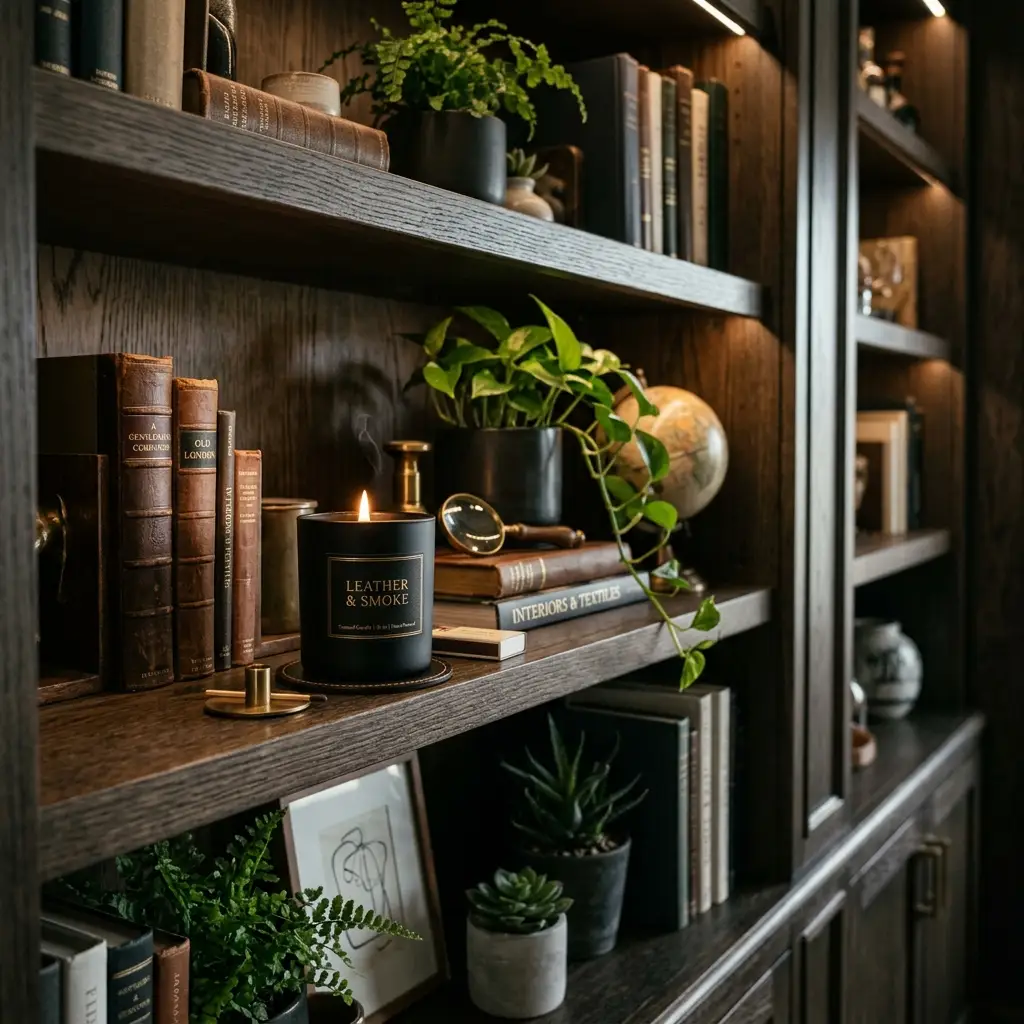
The best man cave candles sit in one of four scent families, in one of three vessel types, on one surface. That is the whole system. Scent throw is the distance a candle’s fragrance travels through a room, and it depends far more on jar size and wick count than on price.
Leather, Tobacco, and Smoked Whiskey
This is the closest match for a room with a leather sofa and a bar in it. Leather and tobacco notes are dry, slightly bitter, and warm rather than sweet, so they sit under conversation instead of over it. Look for blends that name suede, oud, tonka, or pipe tobacco on the label. They work best in rooms that already have brown or oxblood leather, walnut, or aged brass, because the scent echoes what is already there. This family fits the polished end of the category well — the same territory covered in these classy man cave ideas.
Cedar, Campfire, and Woodsmoke
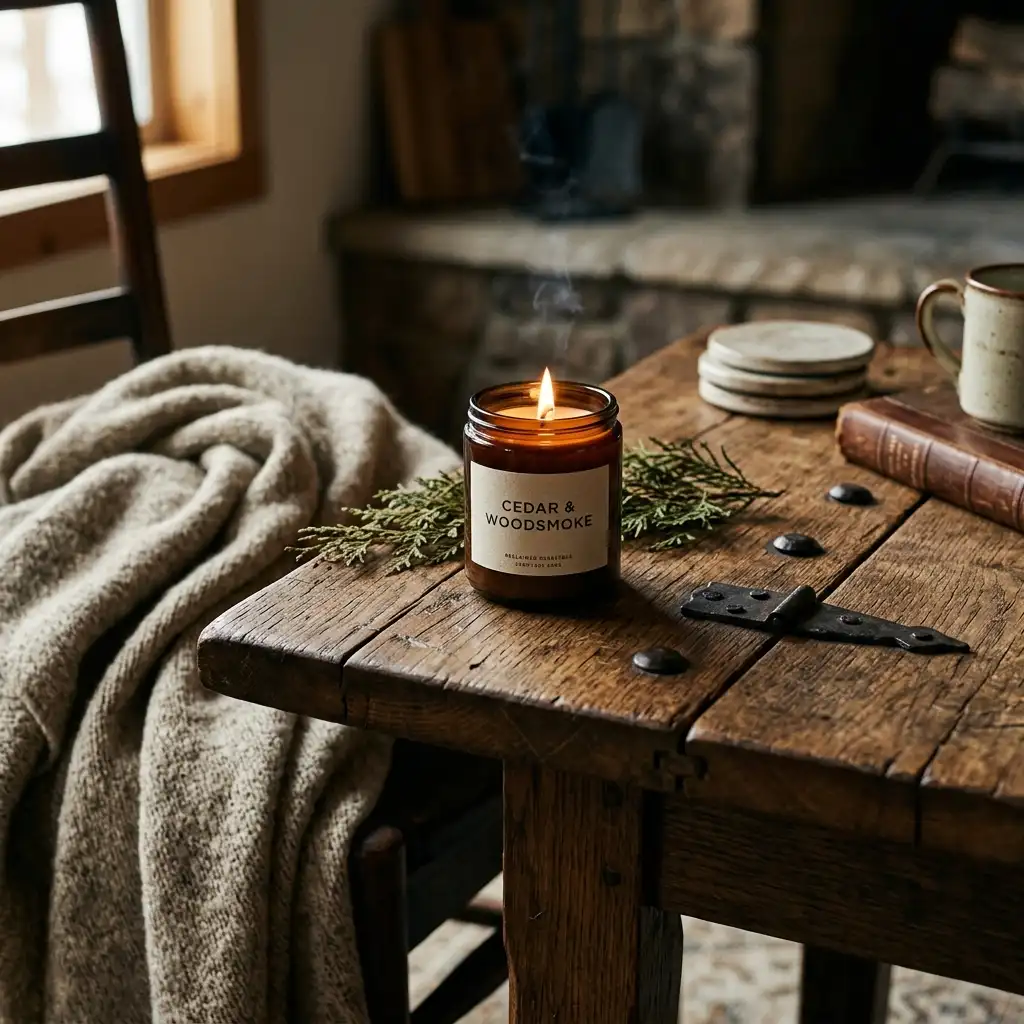
Cedar and woodsmoke are the workhorses of this category. They feel warm and outdoorsy without the sweetness of vanilla or the sharpness of pine cleaner, which is why they cover a musty basement better than anything else. Cedarwood, birch tar, smoked vetiver, and dry moss are the notes worth looking for. Keep this one away from a working fireplace or wood stove, where the real thing is already doing the job. Woodsmoke pairs naturally with the palette in our rustic man cave ideas — reclaimed oak, wool, and iron.
Bourbon, Amber, and Warm Spice
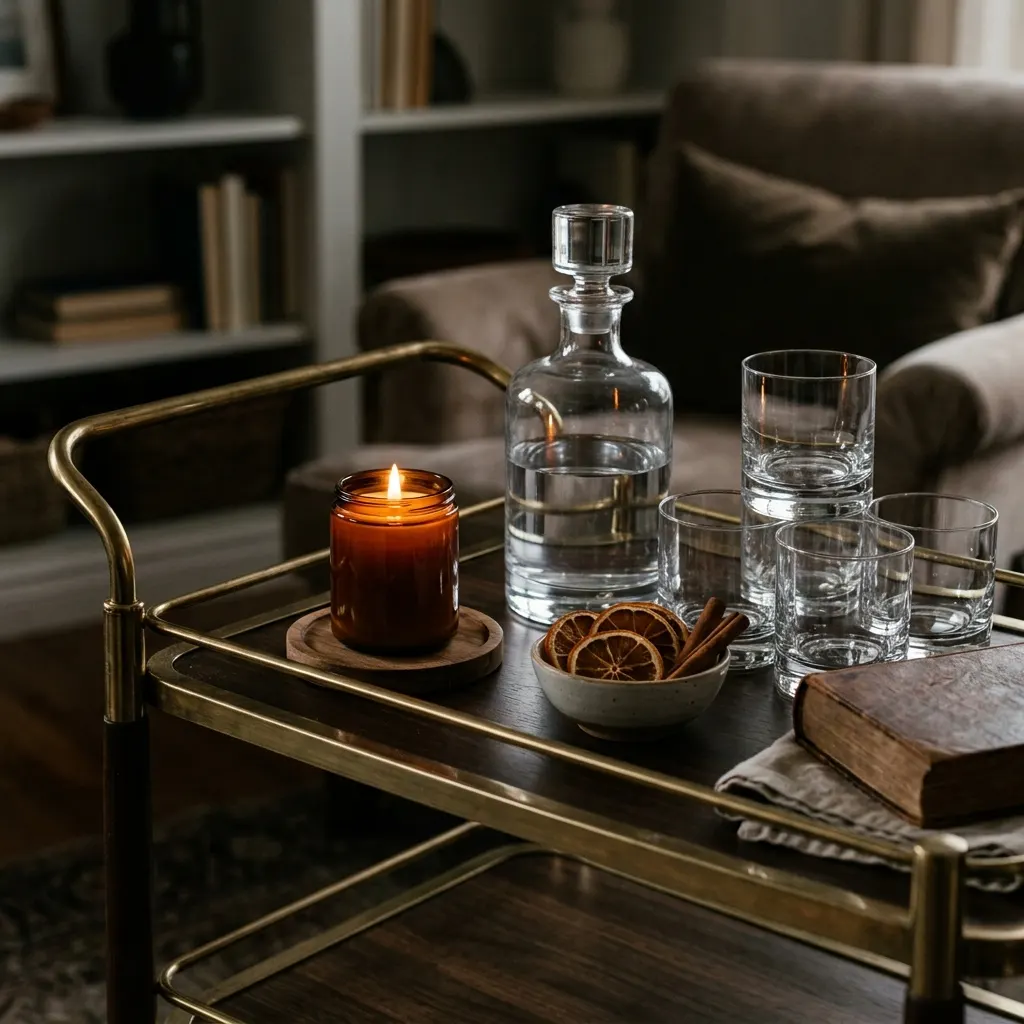
Bourbon and amber blends belong near the bar, not across the room. They lean sweeter than leather or cedar, with vanilla, oak, clove, and dried orange running underneath, so a large jar can turn cloying fast in a small space. Buy this family in a 6 to 8 ounce size and set it on the bar top or the shelf behind it. The scent then stays local to the drinks instead of filling the whole room. Amber glass suits this family visually, since the wax and the vessel share the same color.
Coffee, Cocoa, and Dark Roast
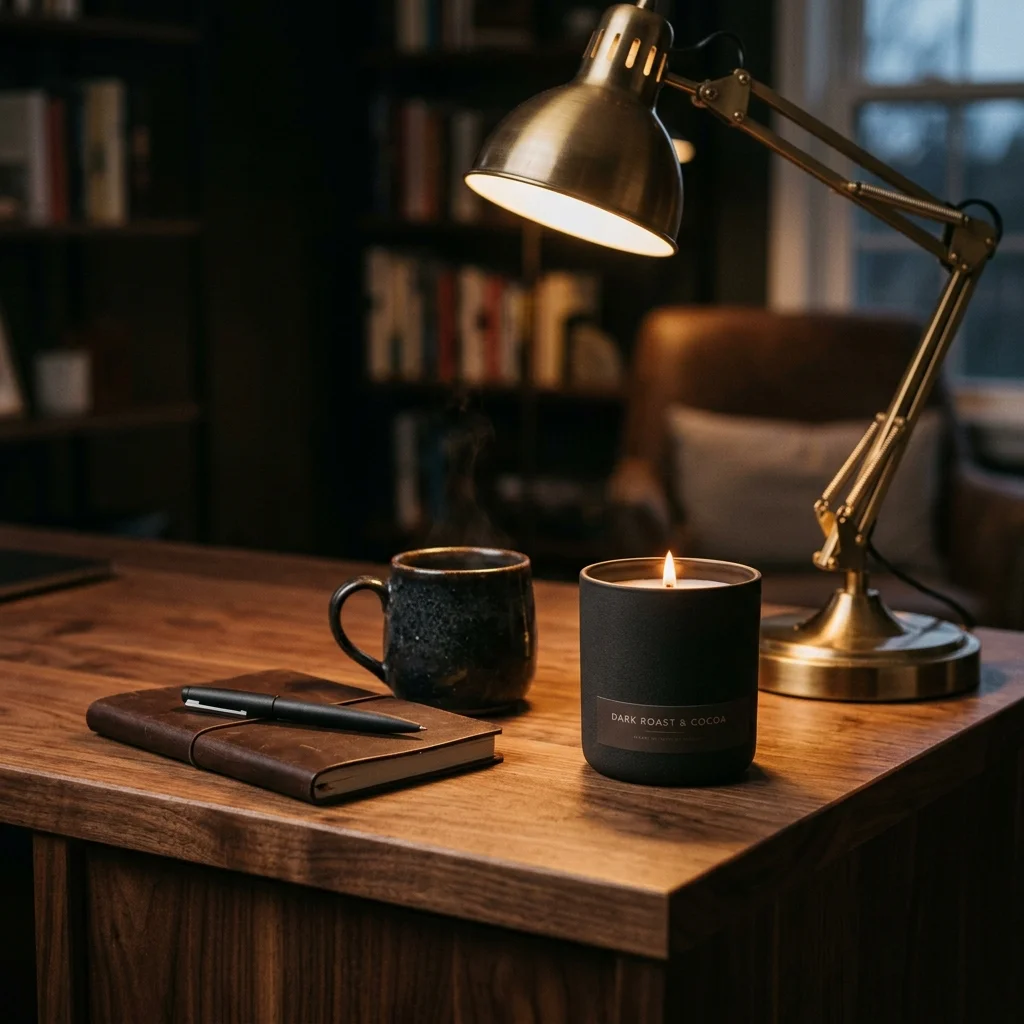
Coffee and dark cocoa are the quiet option, and they are the right call for a man cave that doubles as a workspace. The scent is bitter and grounded rather than dessert-sweet, especially in blends that add cardamom, tobacco leaf, or black pepper. It suits a desk corner, a gaming setup, or a workshop bench better than a bar. Because coffee notes fade quickly, this family is best in a smaller jar you burn often. It also fits well in a man cave office setup where the room has two jobs.
Concrete, Matte Black, and Amber Glass Vessels
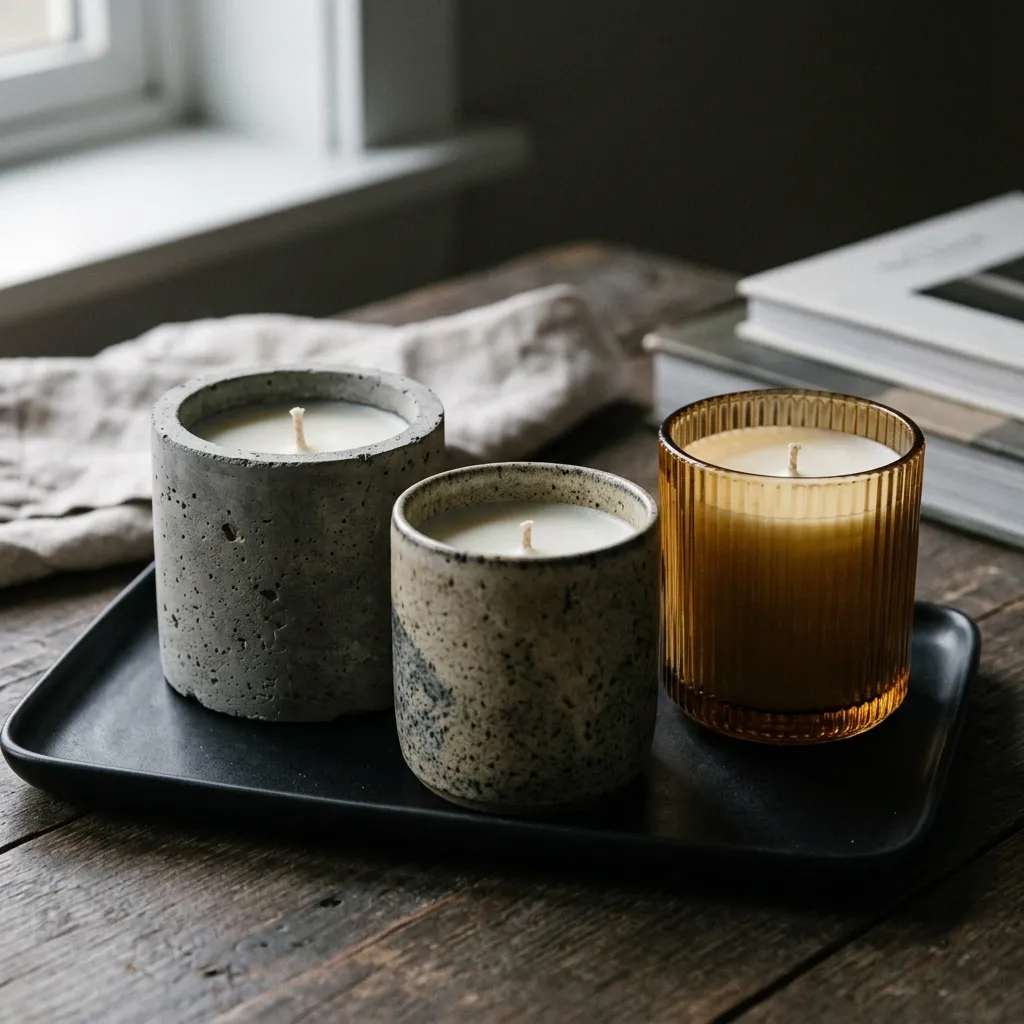
The vessel matters as much as the scent, because the candle spends most of its life unlit. A candle sitting on a shelf is a decorative object twenty-three hours a day. Concrete, stone-look ceramic, matte black metal, and ribbed amber glass all belong to the same material family as the rest of these rooms — raw, dark, and matte. Printed jars with slogans or team logos are the one thing to avoid here. They date fast, and they turn a $40 purchase into clutter the moment the joke wears off. Concrete and blackened metal look especially right against the raw surfaces in these industrial man cave ideas.
Wood Wicks That Crackle
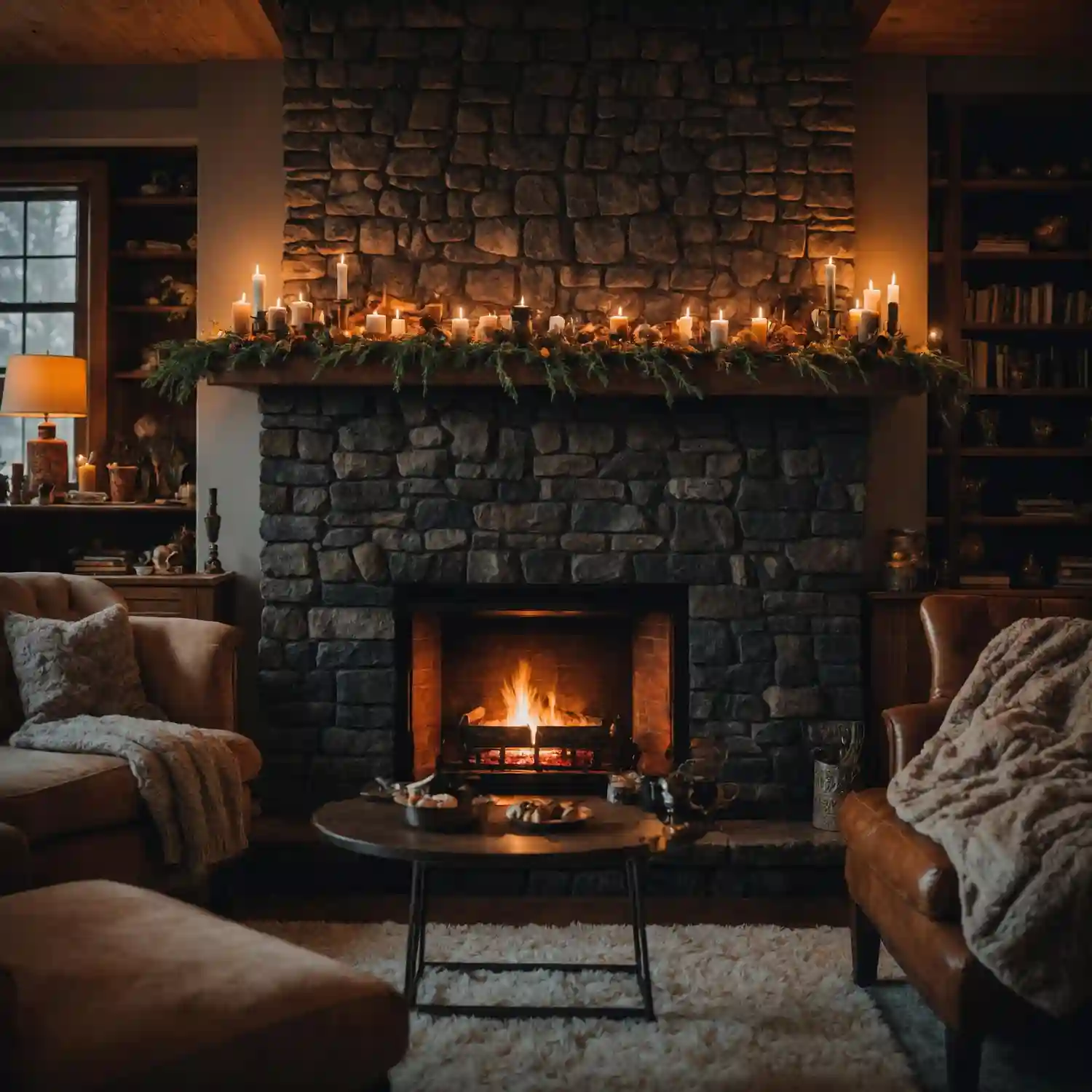
A wood wick is a thin strip of pressed wood that crackles as it burns, at roughly the volume of a small fire two rooms away. In a space built around a screen and a sound system, that low crackle fills the silence between plays better than a cotton wick ever could. Wood wicks also burn with a wider, shorter flame, so they warm a bigger melt pool and throw scent faster on a short burn. The trade-off is fussiness: they need a wider trim, closer to an eighth of an inch of char removed before each light, or they struggle to stay lit.
How Big a Candle Does a Basement Need?
Jar size and wick count decide how far the scent travels. A three-wick jar holds roughly three times the melt pool of a single-wick candle, which is why it is the honest answer for a garage, a basement, or a pole barn with high ceilings.
Designer Rule of Thumb: One 9 to 12 ounce single-wick jar covers a small room of roughly 150 to 200 square feet. Above that, move to a 12 to 21 ounce three-wick, or set two matching single-wick jars at opposite ends of the room rather than side by side.
Small rooms need the opposite correction. In a converted spare room or a compact setup like these small man cave ideas, a three-wick jar is too much and turns the air heavy within twenty minutes. Stay at 6 to 9 ounces and burn it for shorter stretches.
Where Should the Candle Actually Sit?
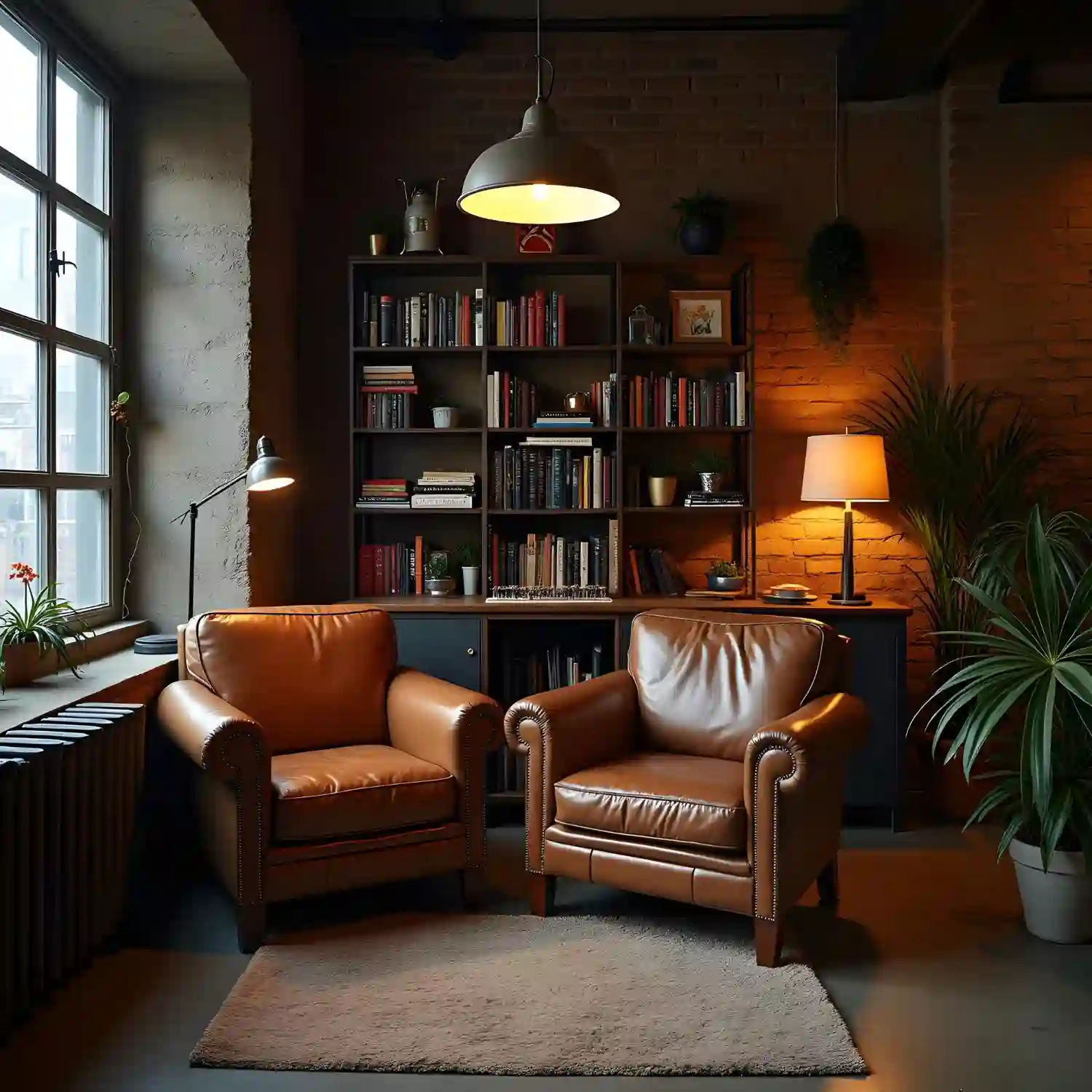
Give the candle a fixed home instead of moving it around. A small tray on the coffee table, the bar top, or a shelf beside the seating works best, because it keeps the flame off the main walking path and gives the jar a reason to stay put. Set it below seated eye level, roughly 18 to 30 inches off the floor, so nobody looks straight into the flame. Keep it clear of the screen, any speaker vent, and the door — moving air pushes scent out of the room and makes the flame flicker and smoke.
The tray trick works in every room in the house. Small objects look like clutter loose on a surface and look styled the moment something groups them.
DESIGNER TIP: Buy two of the same candle rather than two different ones. Burn one, leave the second unlit on a shelf across the room. Cold throw is the scent a candle gives off unlit, so the second jar holds a faint version of the same smell between burns without a second flame.
Man Cave Candle Checklist
Pick one scent family for the room and buy every candle in it, so nothing competes.
Match the vessel to the room’s lead material — concrete, matte black metal, or amber glass.
Size the jar to the space: 6 to 9 ounces for a small room, 9 to 12 for a standard one, 12 to 21 for a garage or basement.
Trim the wick to a quarter inch before every burn, and stop the burn at four hours.
Keep the candle at least a foot from anything that can catch, and off the traffic path.
Light it 20 to 30 minutes before guests arrive so the melt pool is open when they walk in.
Fix damp, mold, or a blocked vent before you spend anything on scent.
KEY TAKEAWAY: One good jar in the right scent family beats four cheap ones in four different scents, every time.
How Do You Add Scent to a Room You Already Built?
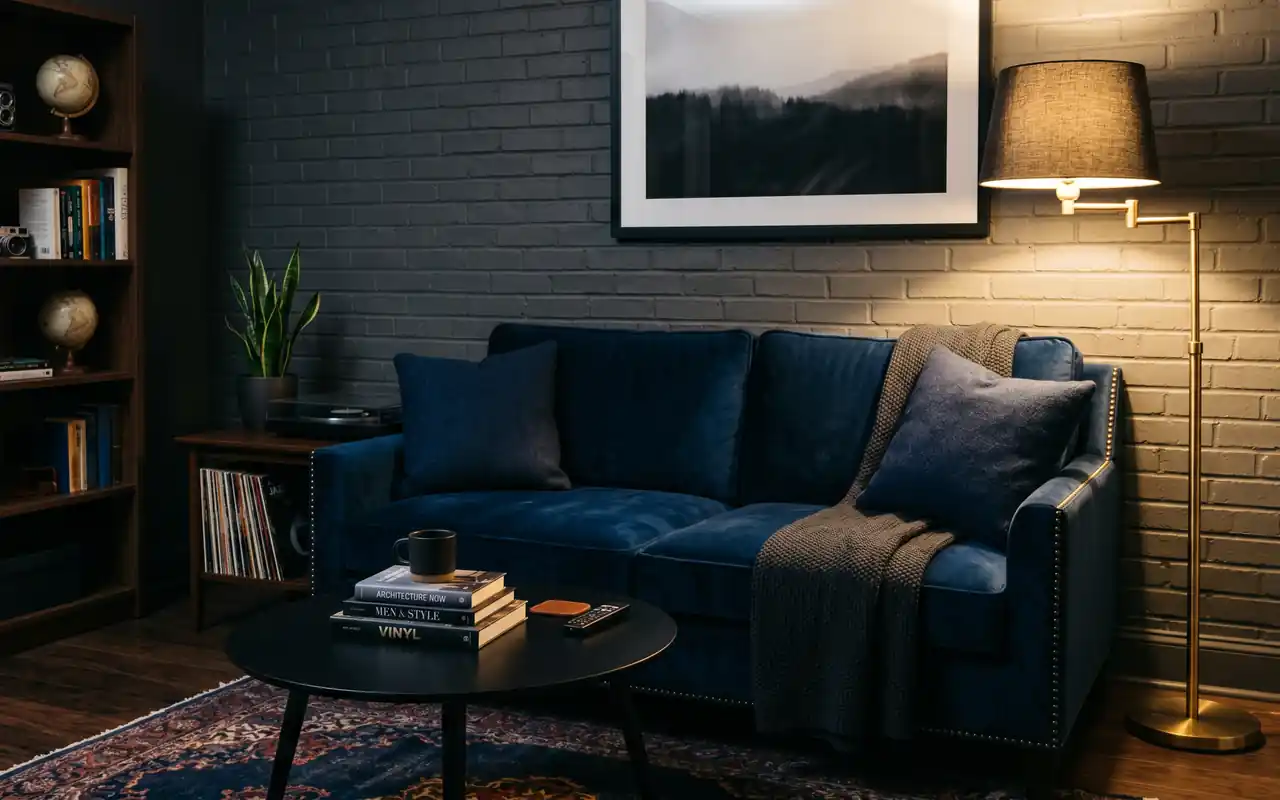
Four steps, in this order. The first one is the one most people skip, and skipping it wastes everything spent on the other three.
Start With the Air, Not the Candle
A candle covers a musty smell for as long as it burns. It does not remove the cause. The EPA’s guide to mold, moisture and your home puts it plainly: the key to mold control is moisture control, and indoor humidity belongs below 60 percent, ideally between 30 and 50. In a basement or garage that usually means a dehumidifier, a working vent, and dry storage before anything else. Wash or replace the soft items too — old rugs, throw blankets, and fabric seating hold smells far longer than hard surfaces do. This matters most in the room types covered in our man cave basement ideas, where concrete and low airflow do most of the damage.
Pick One Scent Family and Stay There
Three different candles burning in one room do not layer. They cancel. Choose one family — leather, cedar, bourbon, or coffee — and buy everything in it, including any diffuser or soap in an attached bathroom. The room then smells like one place rather than a candle shop. Rotating seasonally is fine, but rotate the whole room at once. If you want a second scent, put it in a different space entirely, such as the garage man cave next door rather than six feet away.
Light It Before Anyone Arrives

Scent is strongest in the first thirty minutes, then your nose tunes it out. That is why the person who lit the candle is the last one to smell it. Light it 20 to 30 minutes before people come over so the melt pool has opened and the scent has spread. Blow it out an hour or two into the evening rather than leaving it burning all night. The room keeps the smell long after the flame is gone.
Safety Note: The National Candle Association advises trimming the wick to a quarter inch, burning no longer than four hours, cooling at least two hours before relighting, and keeping candles away from fans, vents, and open windows.
Give It a Permanent Home
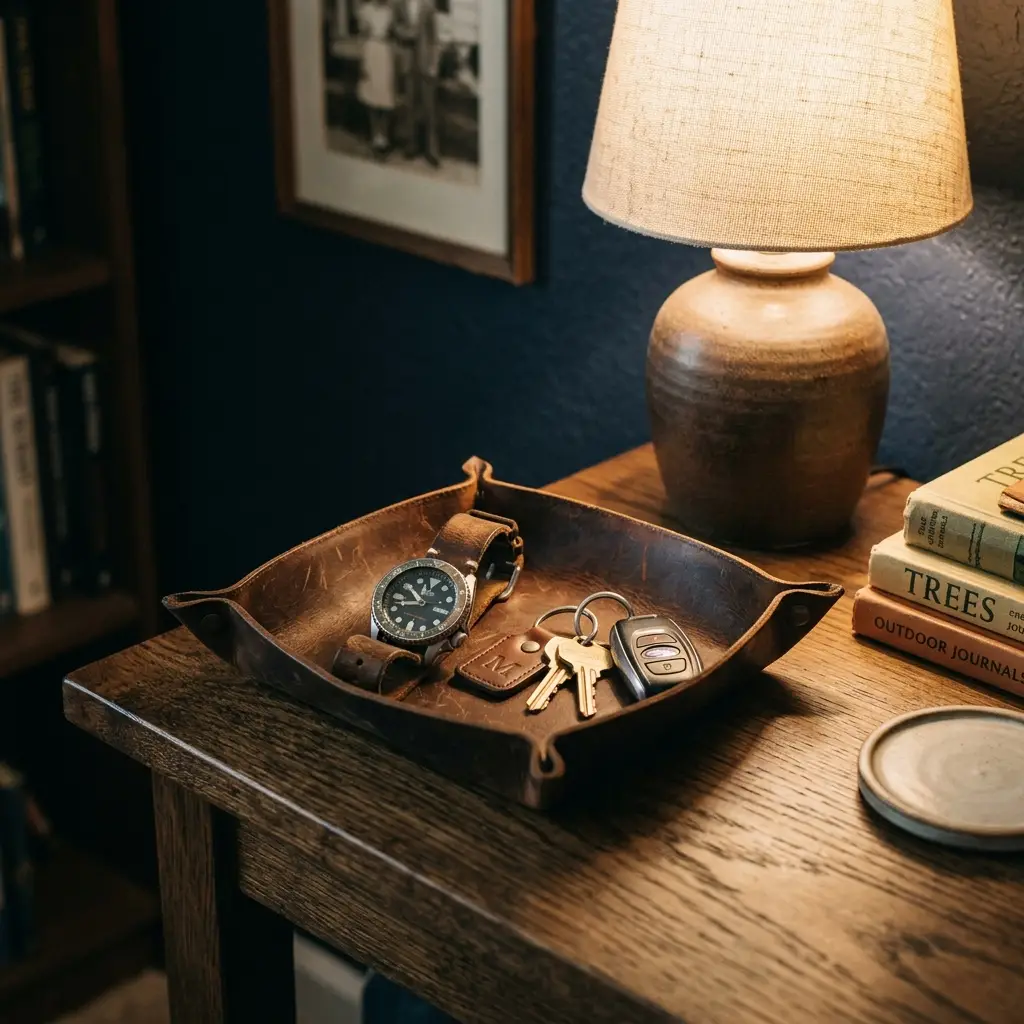
A candle that lives in a drawer gets lit twice a year. Put a small metal or stone tray on the bar top, the coffee table, or a shelf, and leave the jar there with a lighter beside it. The tray catches wax, protects the surface, and makes the candle part of the room instead of an object you have to go find. If the room already follows a plan, this is the kind of small finishing move that shows up in most man cave essentials lists for a reason.
Rental Note: If open flame is a problem — a lease clause, a shared wall, or a sensitive smoke detector — use a rechargeable wax-warmer lamp or a reed diffuser in the same scent family, and keep the unlit jar on display for the cold throw.
Which Candle Habits Are Worth Dropping?
Instead of a novelty scent — bacon, beer, campfire s’mores, new car —, Try a real one pulled from the room’s own materials. The instinct behind the gag scent is right, because you do want something that suits the space. A joke in a jar earns one laugh and then makes the room smell like a gift shop.
Instead of burning three candles at once to build a layered scent, Try one jar from one family. Fragrances do not blend the way paint does. The strongest one wins and the rest turn to noise, so a single candle carries further than three and costs a third as much.
Instead of buying the biggest jar on the shelf, Try matching the wax to the square footage. A 21 ounce three-wick in a 120 square foot spare room turns the air thick within half an hour, and somebody opens a window — which cancels the whole point.
Instead of treating a candle as the cure for a musty room, Try dealing with the water first. If the smell returns within a day of airing the room out, that is moisture, not a decorating gap. No amount of cedar covers a wet wall. The same order applies across every man cave design guide we publish — a room has to be dry before it is worth decorating.
What Candles Cost Over a Year
Man cave candles are a consumable, so the honest number is annual, not per jar. A mid-range candle burned most weekends lasts roughly six to eight weeks, which puts a steady habit somewhere between $240 and $420 a year. At the budget end, big-box jars run $8 to $20 but use cheaper fragrance loads and often tunnel, so you burn more of them for less effect. The mid tier is where the value sits: $28 to $48 buys a soy or coconut-blend wood-wick jar in a vessel worth leaving out. Premium three-wick jars and stone vessels run $55 to $120 and make sense for a large basement or garage, where a small jar would never reach the corners. Cheap upgrades for the rest of the room are covered in these man cave ideas on a budget.
| Project | Estimated Cost | Impact Level |
|---|---|---|
| Big-box jar candle, 8 to 10 oz | $8-$20 | Low |
| Soy or coconut wood-wick jar, 9 to 12 oz, matte or amber vessel | $28-$48 | High |
| Three-wick jar or concrete vessel, 12 to 21 oz | $55-$120 | Medium |
| A year of steady use, roughly 8 to 10 mid-range jars | $240-$420 | High |
Best First Upgrade: One 9 to 12 ounce wood-wick jar in leather or cedar, on a tray where you actually sit.
Skip for Now: Plug-in warmers, aerosol sprays, and any jar with a slogan or logo printed on the glass.
Material Note: Soy wax melts at a lower temperature than paraffin, so it burns slower and lasts longer, while paraffin runs hotter and pushes scent harder on a short burn. Beeswax burns longest of the three and carries a faint honey smell of its own.
What I’d Choose
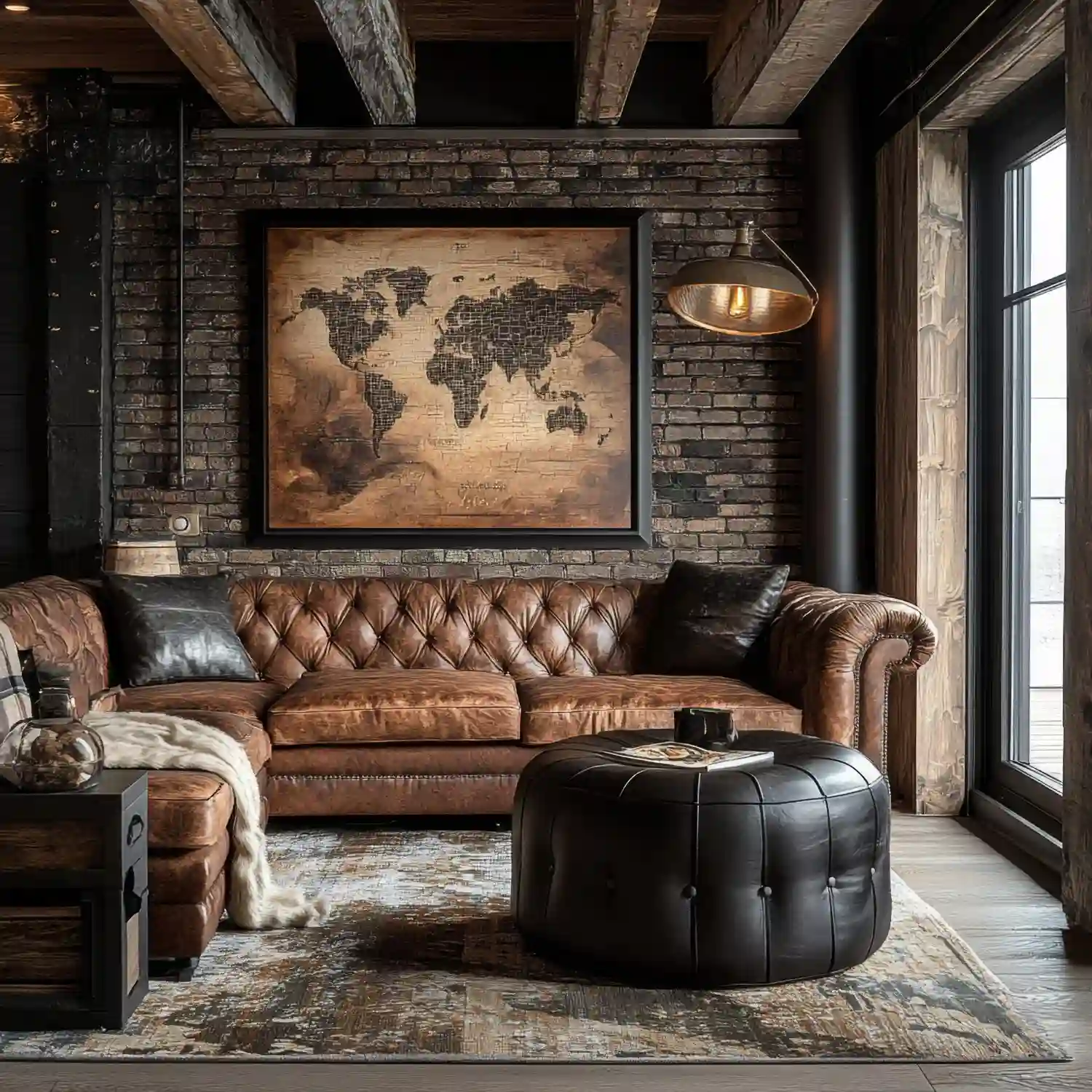
If the room only gets one candle, make it a 9 to 12 ounce soy wood-wick jar in a leather-and-smoke blend, in a matte black or concrete vessel, on a small tray beside the seating. It suits nearly every version of this room, the crackle earns its place in a quiet space, and the vessel still looks right unlit. Save the three-wick for a garage or basement that genuinely needs the reach. Skip the novelty scent no matter how good the label looks — it never survives a second season. For a wider look at what belongs in these rooms, our man cave ideas round-up covers the full setup.
Frequently Asked Questions
Conclusion
Man cave candles are the cheapest change you can make to a room that already has everything else, because scent is the first thing a guest notices and the last thing most people fix. Pick one grounded family, size the jar to the square footage, and give it a permanent home on a tray. Our home decor inspiration covers the rest of the house when this room is finished.
Next Steps
- Open the door to your man cave after it has been shut for a day and note what you smell — damp, smoke, rubber, or nothing.
- Run a dehumidifier and check the vent first if the smell is musty, before buying any candle.
- Measure the room’s square footage and pick a jar size from it: 6 to 9 oz under 150, 9 to 12 oz to 200, three-wick above that.
- Buy one 9 to 12 ounce wood-wick jar in leather or cedar, add a small metal tray beside your seat, and leave a lighter with it.