TL;DR
The kitchen is the only room in the house with no display surface — every flat plane in it has a job. So Halloween kitchen decor works when it moves off the counters and onto the five surfaces nobody is using: the gap above the upper cabinets, the range hood, the cabinet fronts, the window over the sink, and one movable tray on the island. Keep everything at least three feet from the cooktop, choose wipeable materials over paper and fabric, and make sure the whole thing comes down in under two minutes.
The Kitchen Is the Room That Gets Skipped
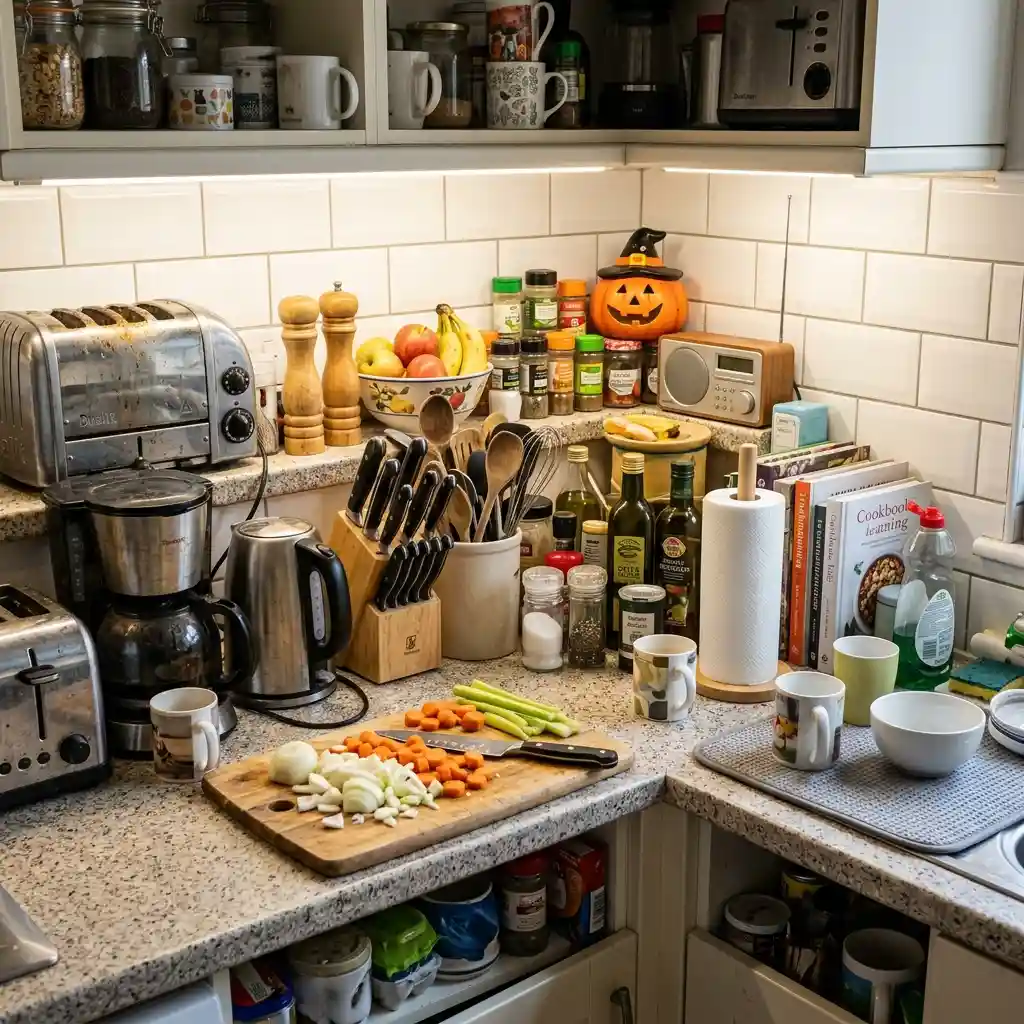
Why does the kitchen end up being the last room decorated, and often the only one skipped? Not because people do not want to. It is because every other room hands you a surface for free — a mantel, a console, a coffee table, a hall shelf — and the kitchen hands you nothing. Every flat plane in a kitchen is already employed.
Halloween kitchen decor works when it stops competing for counter space and moves to the planes nobody uses. There are five of them in a standard kitchen: the gap above the upper cabinets, the front of the range hood, the cabinet doors themselves, the window over the sink, and one movable tray on the island. None of those costs you a single inch of workspace.
Editorial field note: A kitchen with three ceramic pumpkins on the counter beside the sink usually looks cluttered by day two, because the pumpkins have been pushed into a corner to make room for a chopping board. The same three pumpkins grouped on top of the cabinets read as a display and never move again. The objects did not change — only the plane they sit on did.
That is the whole shift, and it is why the kitchen is worth decorating at all now. The rest of our Halloween decorating ideas cover rooms that hold still. This one is about the room that does not.
Halloween Kitchen Checklist
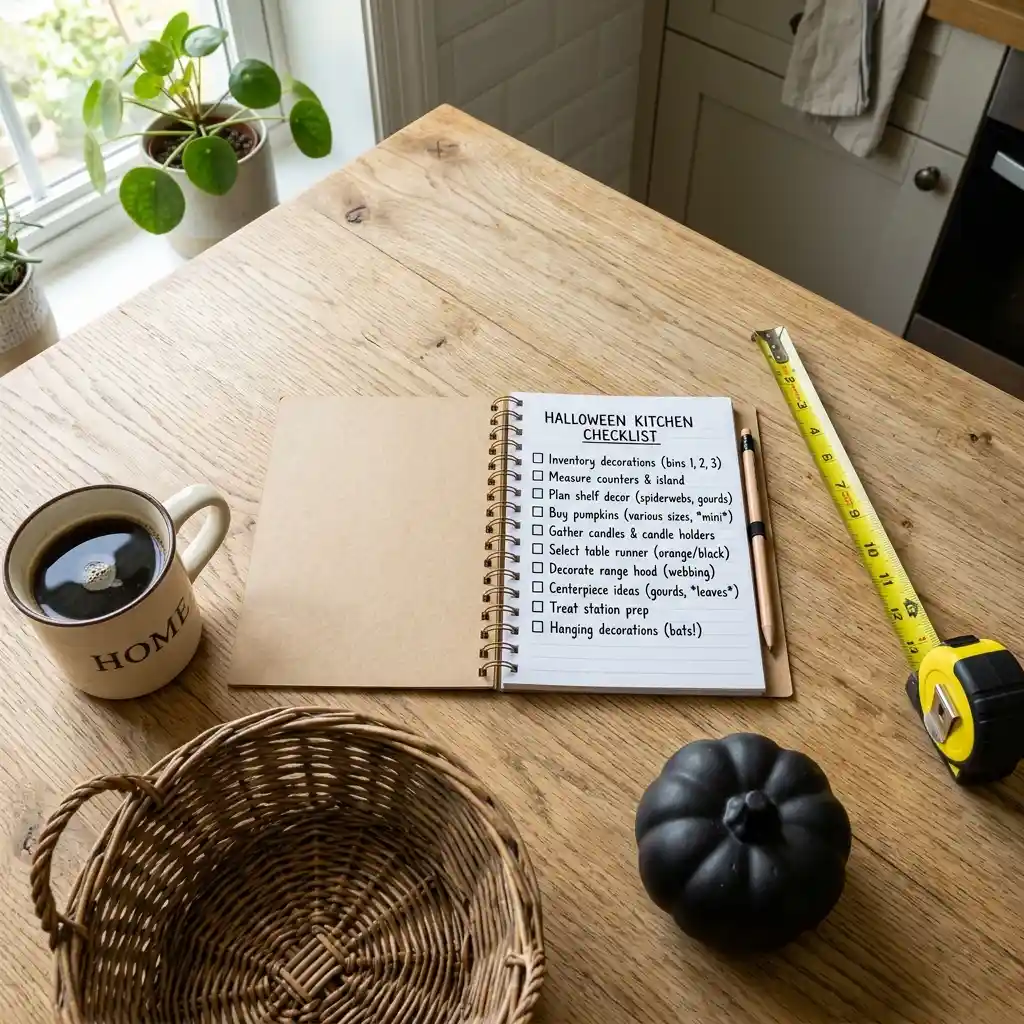
- Clear a three-foot radius around the cooktop and treat it as permanently off-limits.
- Measure the gap above your upper cabinets — under 10 inches means small objects only.
- Choose ceramic, glass, metal or sealed wood over paper, felt and dried botanicals.
- Keep the sink splash zone and the main prep run completely clear.
- Test any adhesive hook on a hidden cabinet edge before using it on a painted door.
- Put everything you buy in one basket so teardown takes two minutes, not an evening.
KEY TAKEAWAY: A kitchen has no spare horizontal surface at hand height, so the only Halloween decor that survives the season is the decor that never touches a working counter.
Which Part of the Kitchen Can’t Be Decorated?
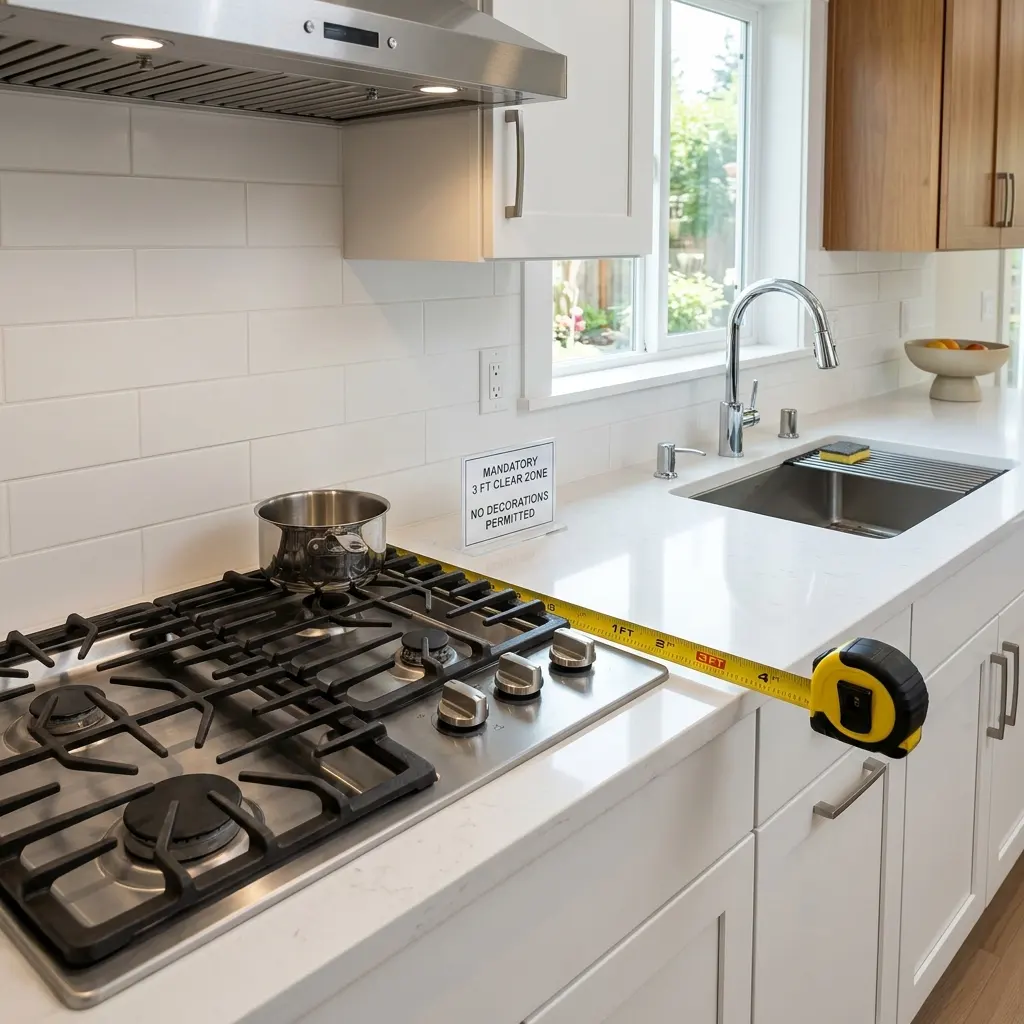
Three areas are off the table before you start, and knowing them saves you buying things you will end up storing. The first is the cooktop and everything within about three feet of it. The second is the counter run beside the sink, which gets wet every day. The third is the main prep stretch between the two, usually 18 to 24 inches of counter that is the busiest surface in the house.
The cooktop rule is a real safety limit rather than a styling preference. Cooking is by far the leading cause of home fires, according to the U.S. Fire Administration, and the mechanism is almost always something that can burn sitting too close to a hot surface. Paper bats, cotton spider web and dried corn behave exactly like the dish towels and food packaging that cause those fires.
Safety Note: NFPA guidance is to keep anything that can burn at least three feet from cooking equipment — that includes seasonal decor, not just towels and packaging.
The sink and prep zones are a practical limit rather than a safety one, and they fail more quietly. Anything sitting there gets splashed, moved, or shoved to the back of the counter within a day or two. You will not notice the decision being made. You will just notice, in the second week, that the kitchen looks untidy rather than decorated.
| Quick Takeaways | |
|---|---|
| The limit | Three feet clear around the cooktop, always, no exceptions for one night. |
| The free shelf | The gap above upper cabinets is the kitchen’s only unused horizontal surface. |
| The focal point | A range hood is the one large vertical plane most kitchens already have. |
| Materials | Grease and steam ruin paper and fabric within about two weeks. |
| The test | If it cannot come down in ninety seconds, it will still be up in November. |
Why Is the Kitchen Getting Decorated Now?
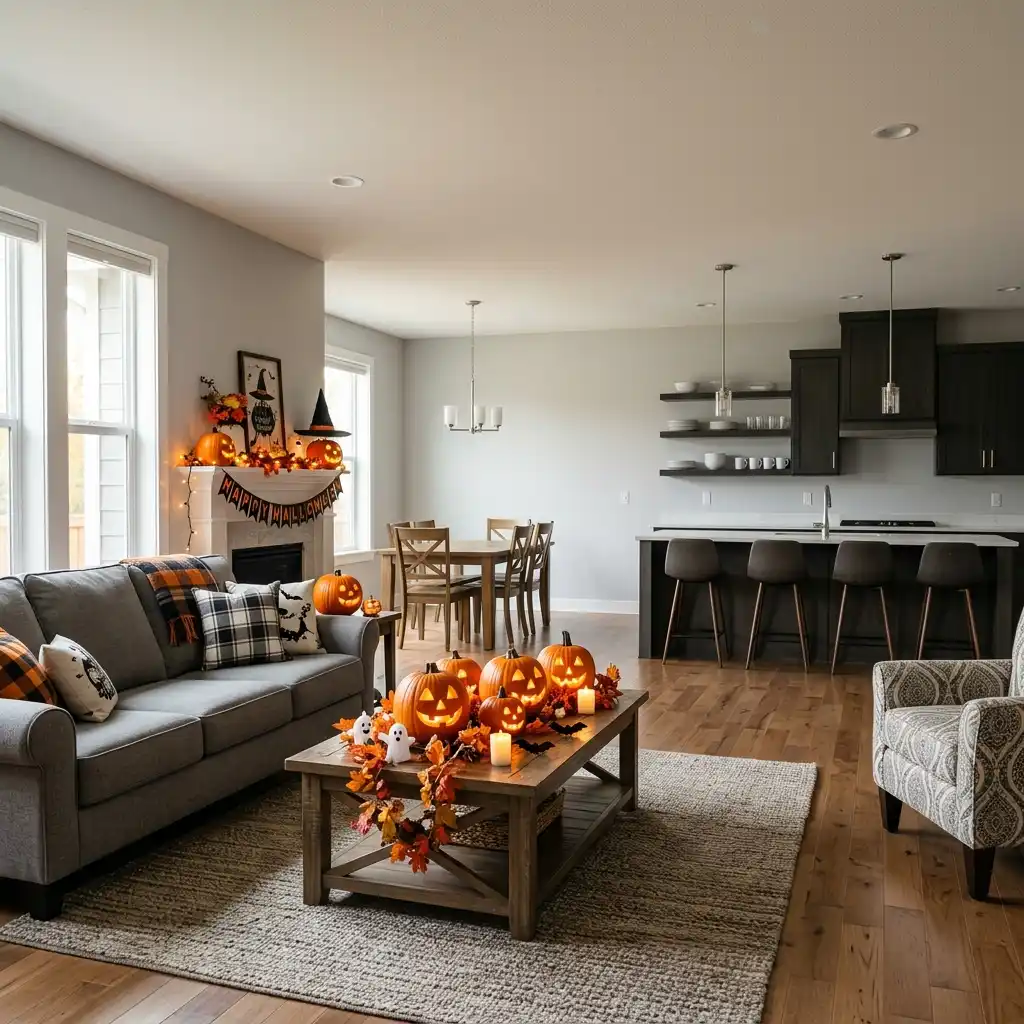
The kitchen used to be a room you could skip, because nobody saw it from anywhere else. Open-plan layouts ended that. In most newer homes the kitchen is visible from the sofa, which means an undecorated kitchen now sits in the same sightline as a fully decorated living room and reads as a gap. Anyone planning a luxury living room in an open-plan home is really planning two rooms at once.
The second push is that counters got busier while getting no bigger. More home cooking, more small appliances and more island seating mean the flat surfaces are under more pressure than they were, not less. So the demand went up and the available space went down at the same time — which is exactly the condition that forces decorating upward.
Signs This Is Catching On:
- Search interest has shifted toward specific surfaces rather than the room in general, with phrases like “above kitchen cabinet Halloween decor” and “kitchen window Halloween decor” now common.
- Seasonal ranges lean heavily on ceramic, glass and metal pieces at cabinet-top scale, rather than the paper cutouts and table scatter that used to define kitchen decorating.
- Black-and-white and monochrome kitchen schemes have made a dark seasonal palette read as design rather than as a costume, which is why so many white kitchens now carry black Halloween pieces.
Which Surfaces Are Actually Free?
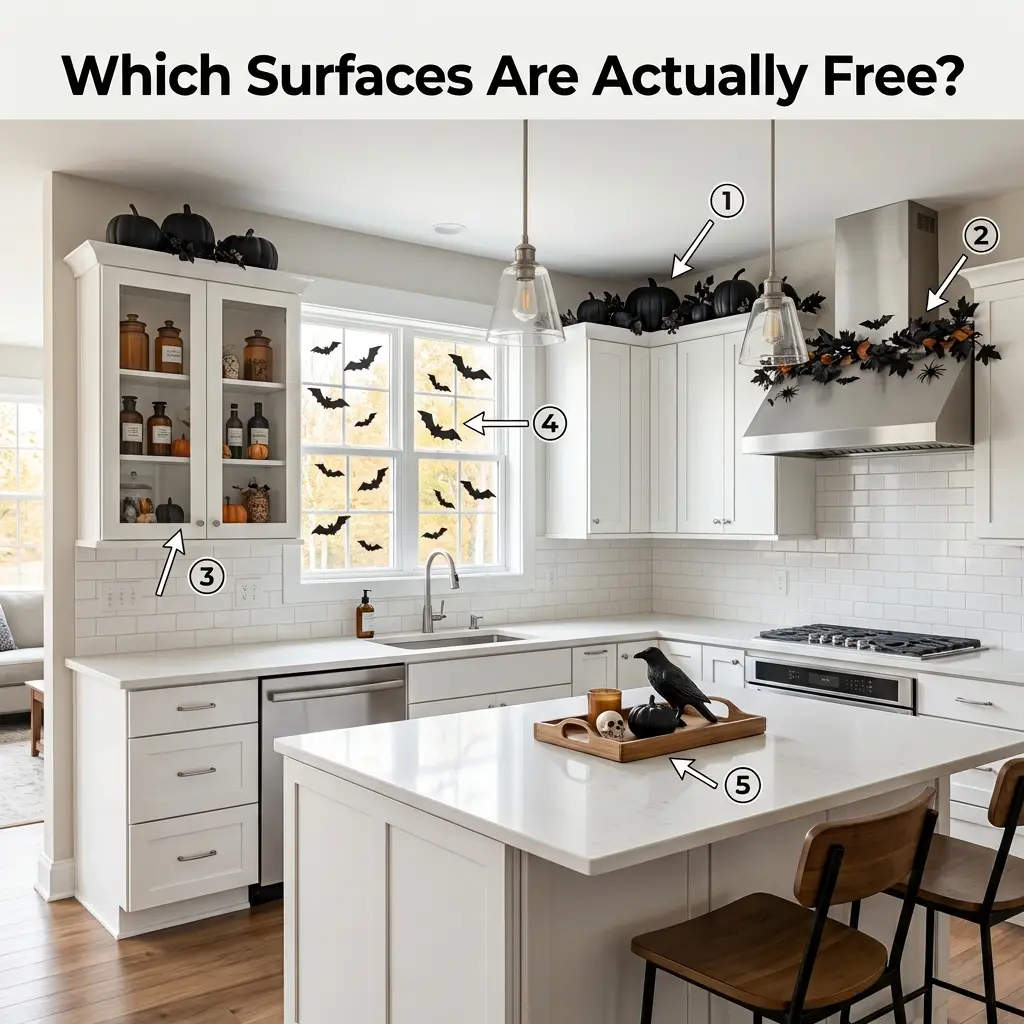
Five planes in a standard kitchen do no work at all. They hold nothing, get cleaned rarely, and sit in the sightline anyway. Between them they give a kitchen more display room than a mantel, which is why the room that feels impossible to decorate is actually one of the easier ones once you stop looking down.
Work them in order of visibility rather than convenience. The cabinet top and the hood carry from across an open-plan room. The window and the cabinet fronts work at conversational distance, and the island tray is the only one anybody sees up close. If you are still working out the room itself, our kitchen decorating ideas cover the layout underneath all of this.
Above the Cabinets Is the Only Free Shelf You Have
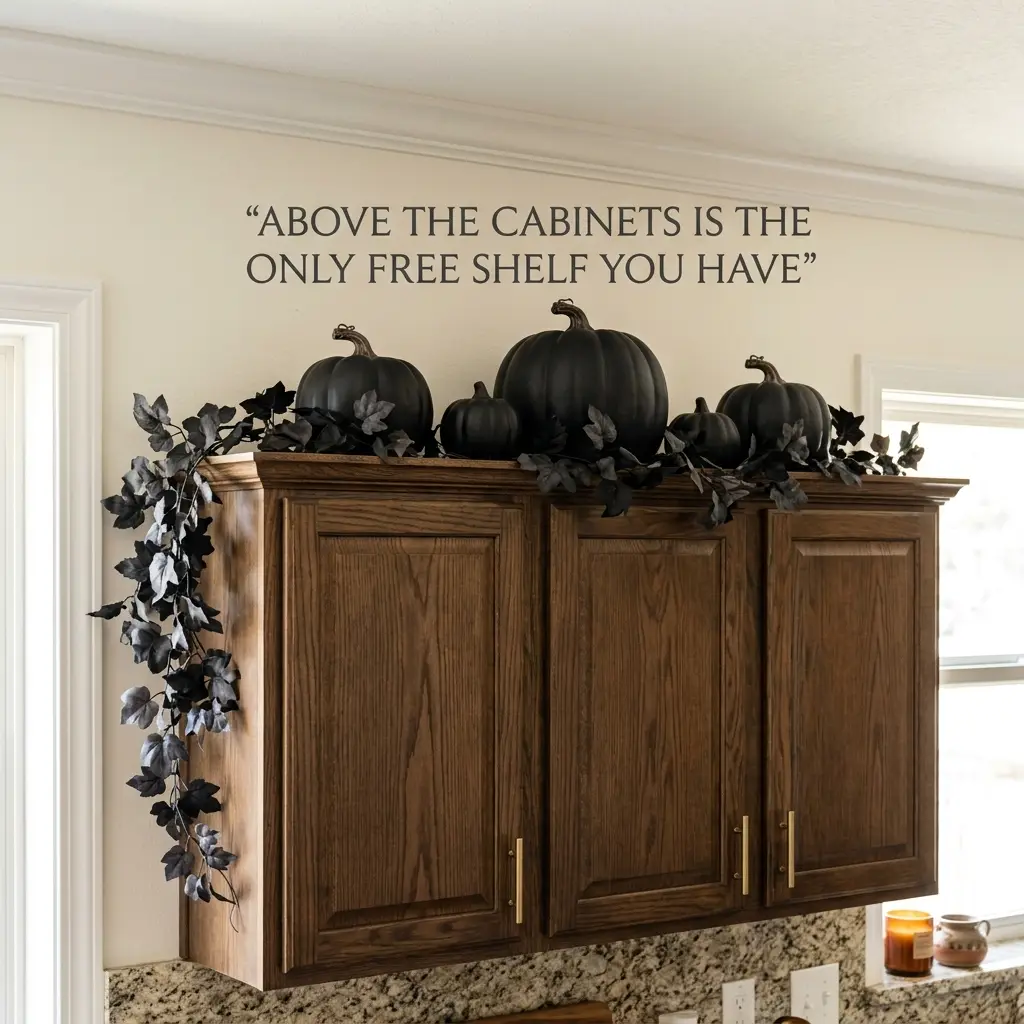
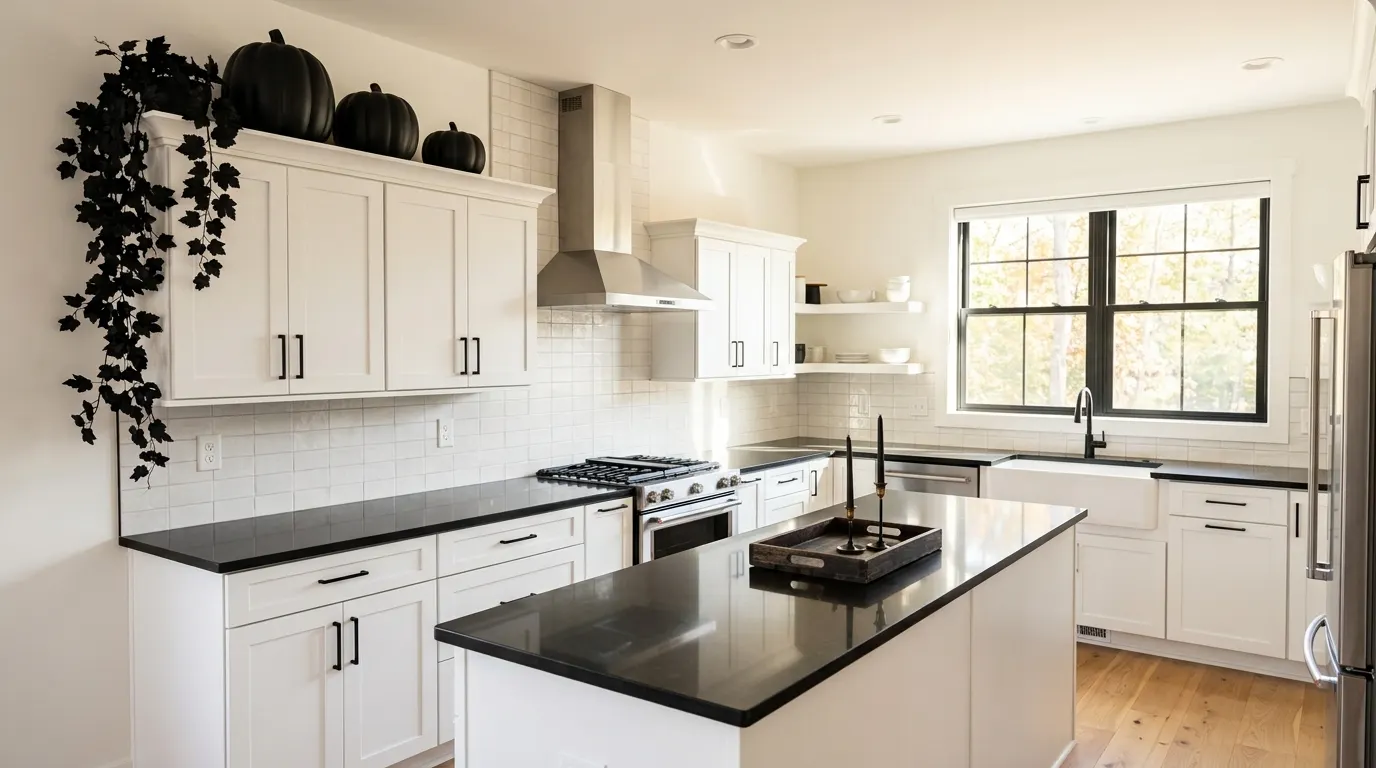
The gap between the upper cabinets and the ceiling is the kitchen’s one genuine display shelf, and in most homes it is either empty or holding a dusty basket. It sits above eye level, nothing ever needs to be moved off it, and it is far outside every work zone. Measure it first — under 10 inches of clearance limits you to low objects, while 15 inches or more takes a full grouping.
Scale up hard here. Objects read as half their size at that height, so a 12-inch ceramic pumpkin looks modest and a 6-inch one disappears. Group in odd numbers, push everything back an inch from the front edge so it does not look precarious, and let a trailing black faux vine soften the line. The same styling logic applies to what to put on top of kitchen cabinets year-round.
The Range Hood Is Your Vertical Focal Point
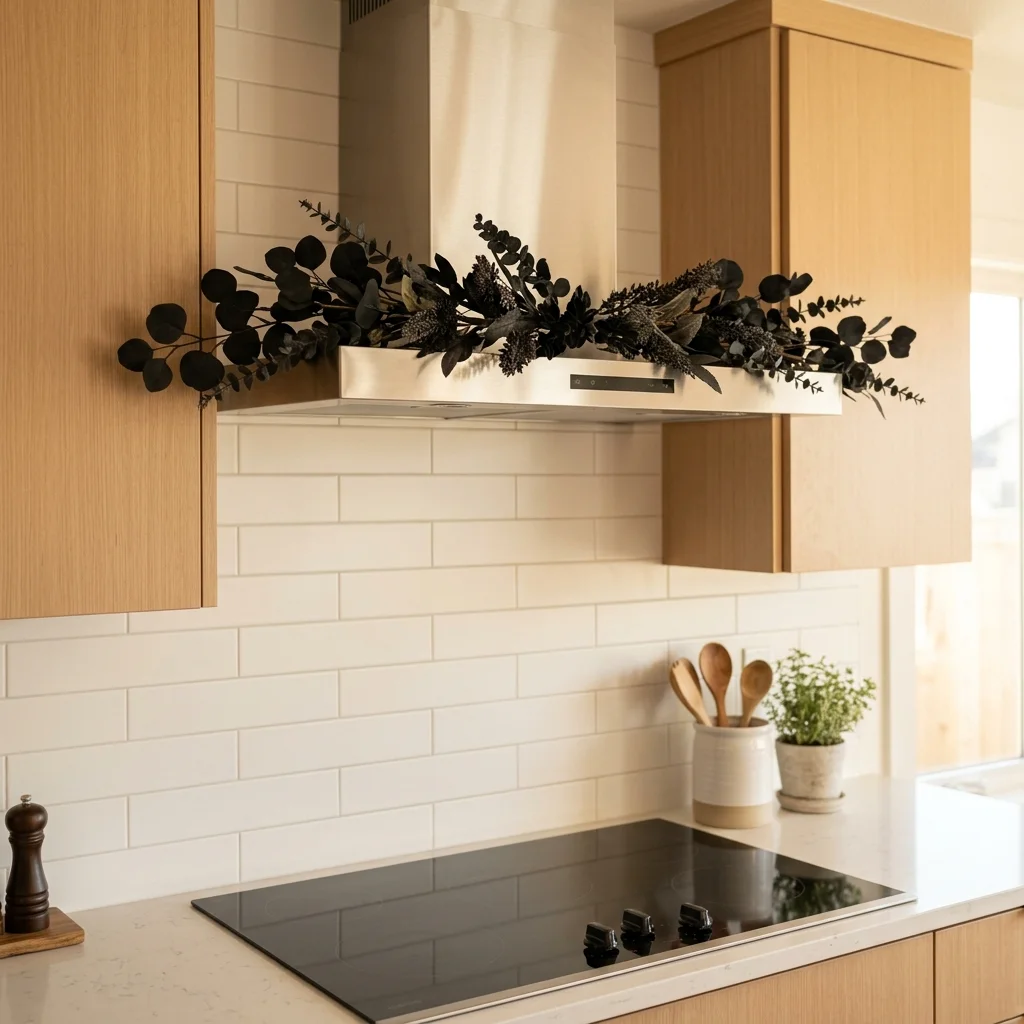
A range hood is the largest uninterrupted vertical plane in most kitchens, and it sits dead centre on the main wall. That makes it the closest thing a kitchen has to a fireplace. A slim garland along its top edge, or a single wreath centred on the face of a chimney-style hood, does more for the room than anything on the counters below it.
The heat limit decides the material. Nothing soft, dry or paper-based belongs on a hood you cook under, so this is where faux botanicals with wire stems, metal, or a ceramic piece on a shelf above earn their place. Keep the bottom edge of anything you hang well clear of the burners, and take it down entirely before any high-heat cooking.
Cabinet Fronts Take Decor Nothing Else Will
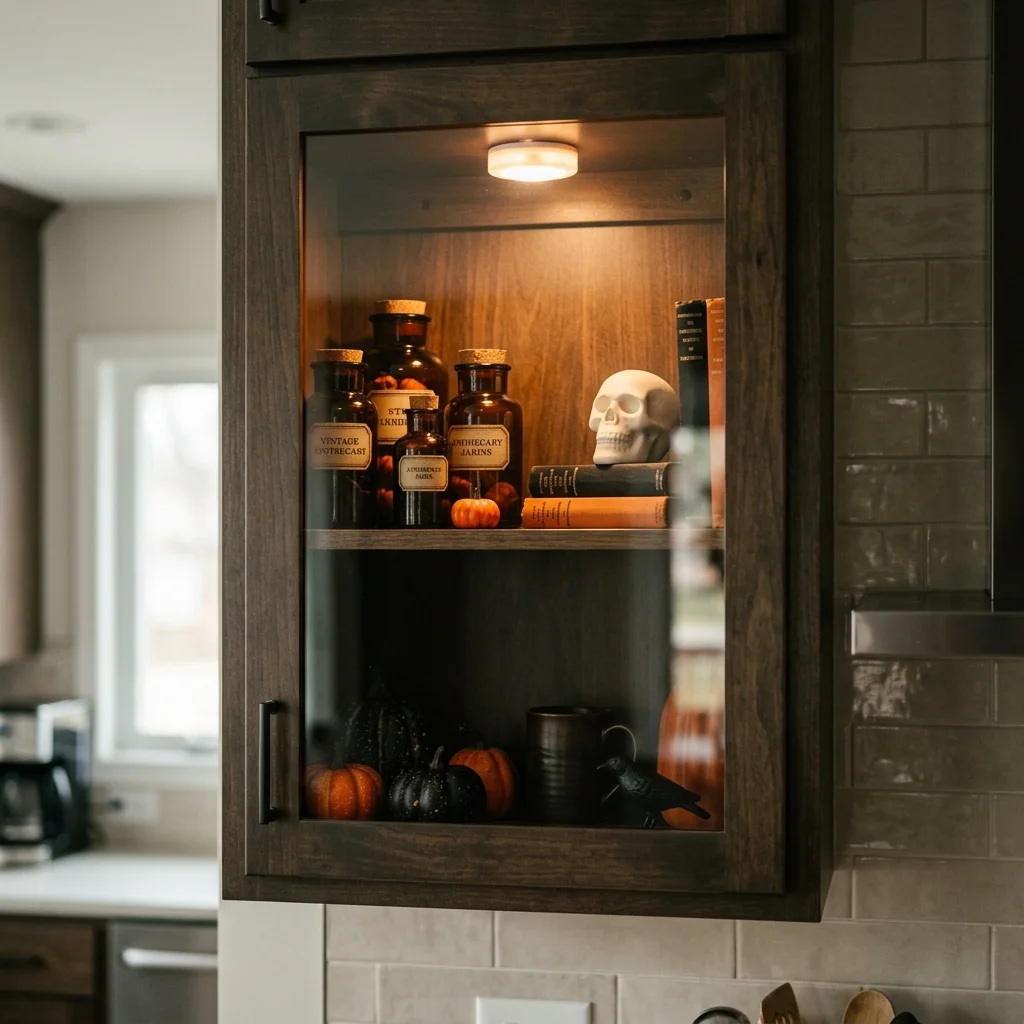
Cabinet doors are vertical, wipeable and completely unused, which makes them the most overlooked surface in the kitchen. Glass-fronted cabinets are the strongest version: backlight the interior with a battery puck light and a few dark glass bottles or apothecary jars behind the glass turn into a lit vignette after dark. Solid doors take vinyl cling decals, a small wreath on a ribbon, or nothing at all.
Attachment is the whole risk here. Painted and lacquered cabinet doors lift when adhesive is pulled off, especially on the softer finishes used on rental units. The same seasonal logic that governs Christmas decor for cabinets applies in October, including the part about testing a hook somewhere nobody looks.
Rental Note: Test any adhesive hook on the inside edge of a cabinet door for 24 hours before using it on a visible front — laminate and painted MDF lift more easily than solid wood.
The Window Over the Sink Works After Dark
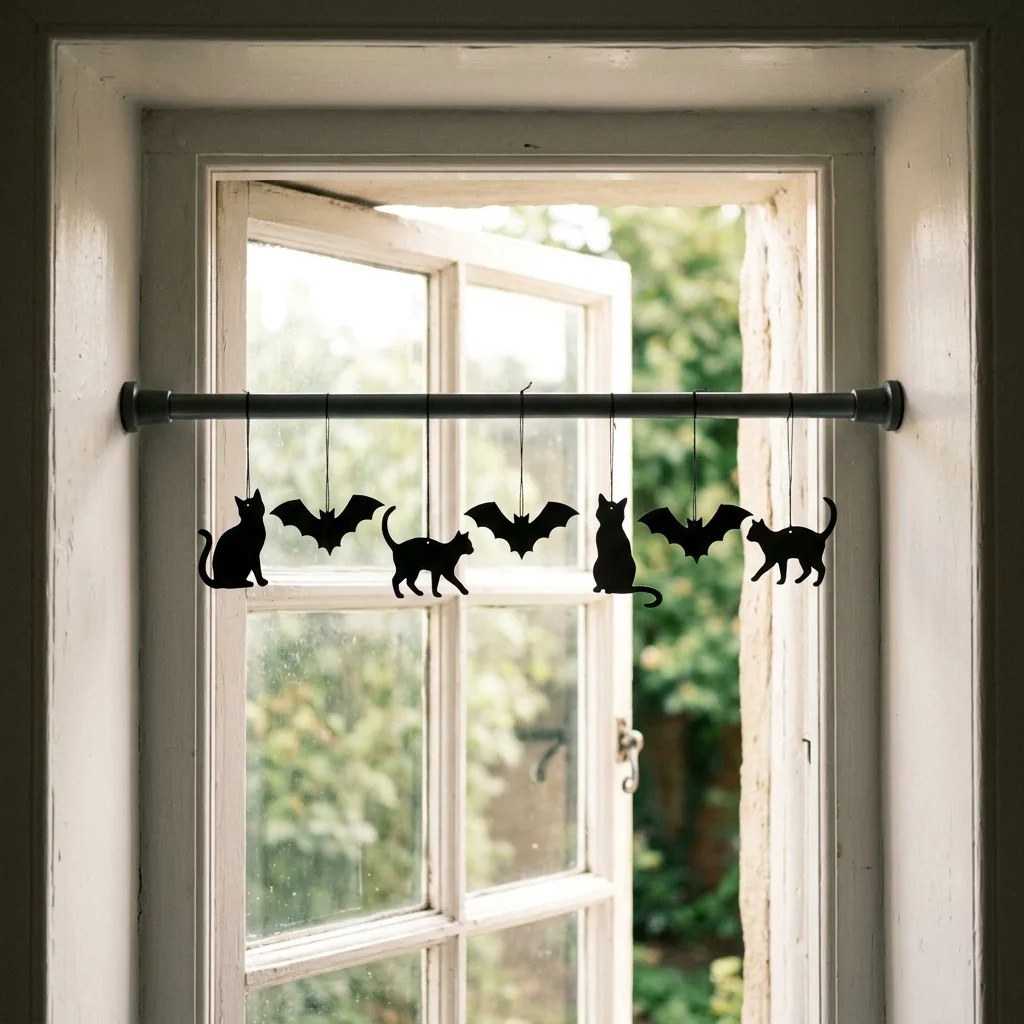
The window above the sink is the one kitchen surface that decorates two audiences at once — you from inside, and anyone arriving from outside. It also solves the sink-splash problem, because everything hangs above the working zone rather than sitting in it. Silhouette pieces are the right call: black paper bats, a cut-out cat, or a row of small hanging ghosts read as shapes against the glass from both directions.
Light is what makes it work. A single warm bulb on the sill behind the silhouettes turns the whole window into a lit panel after dark, and it is the same trick that carries Christmas window decor through winter. Keep the sill itself clear of anything absorbent, since it collects more water than any other ledge in the house.
The Island Gets One Tray and Nothing Else
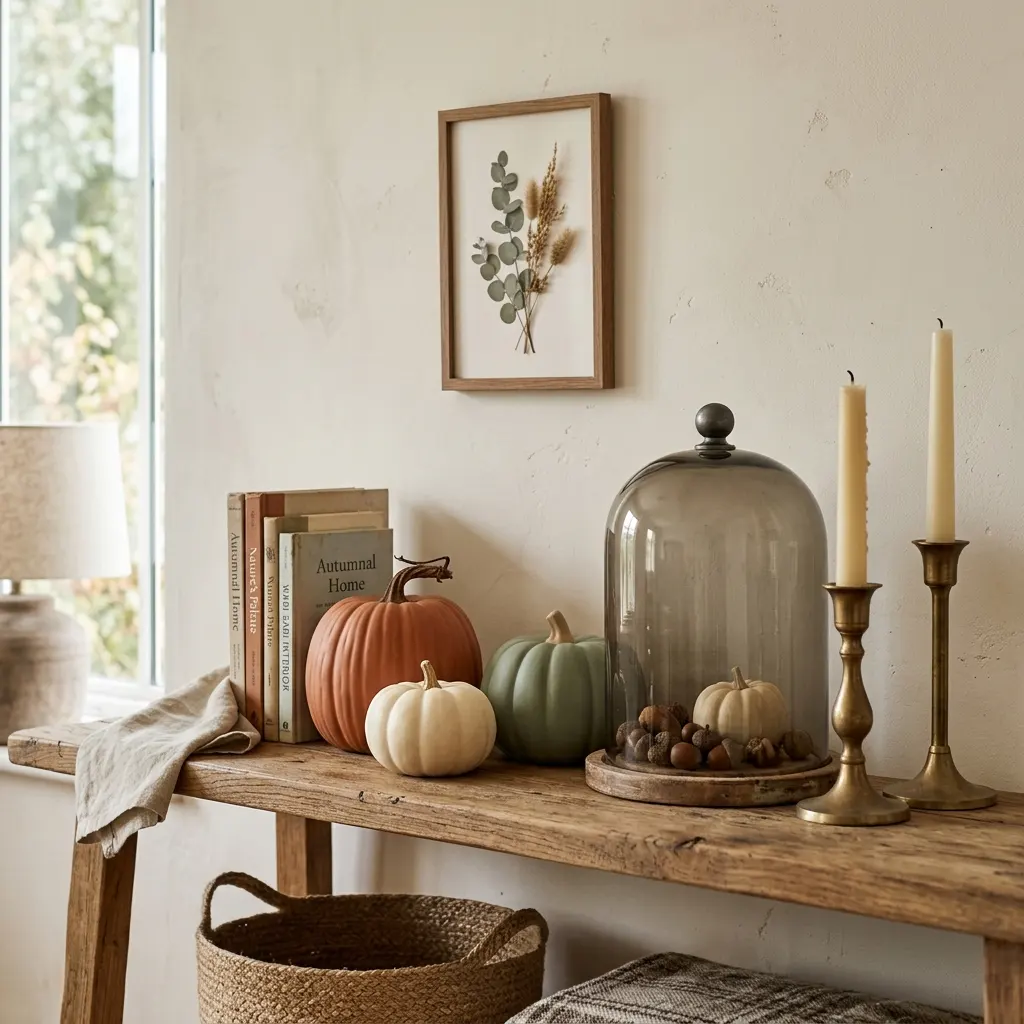
An island is a working surface pretending to be a table, and the same problem shows up in Christmas kitchen island decor every December. The rule here is one tray and nothing loose. A single 12 by 18-inch tray holding three or four objects can be lifted off in one movement when the island is needed, which is the only reason it survives past the first week. Loose objects scattered across the same island get relocated one at a time until none of them are where you put them.
Keep the tray to the end furthest from the prep side, and keep it low. Anything over about 10 inches tall blocks the sightline across an open-plan room and gets moved for that reason alone. Pendant lights above the island are worth considering too, since living room lighting principles carry straight over — warm and low beats bright and overhead in October.
DESIGNER TIP: Choose one finish and repeat it on three of the five surfaces — matte black, antique brass or milk glass — so the kitchen reads as one scheme rather than five separate arrangements.
Which Materials Survive a Working Kitchen?
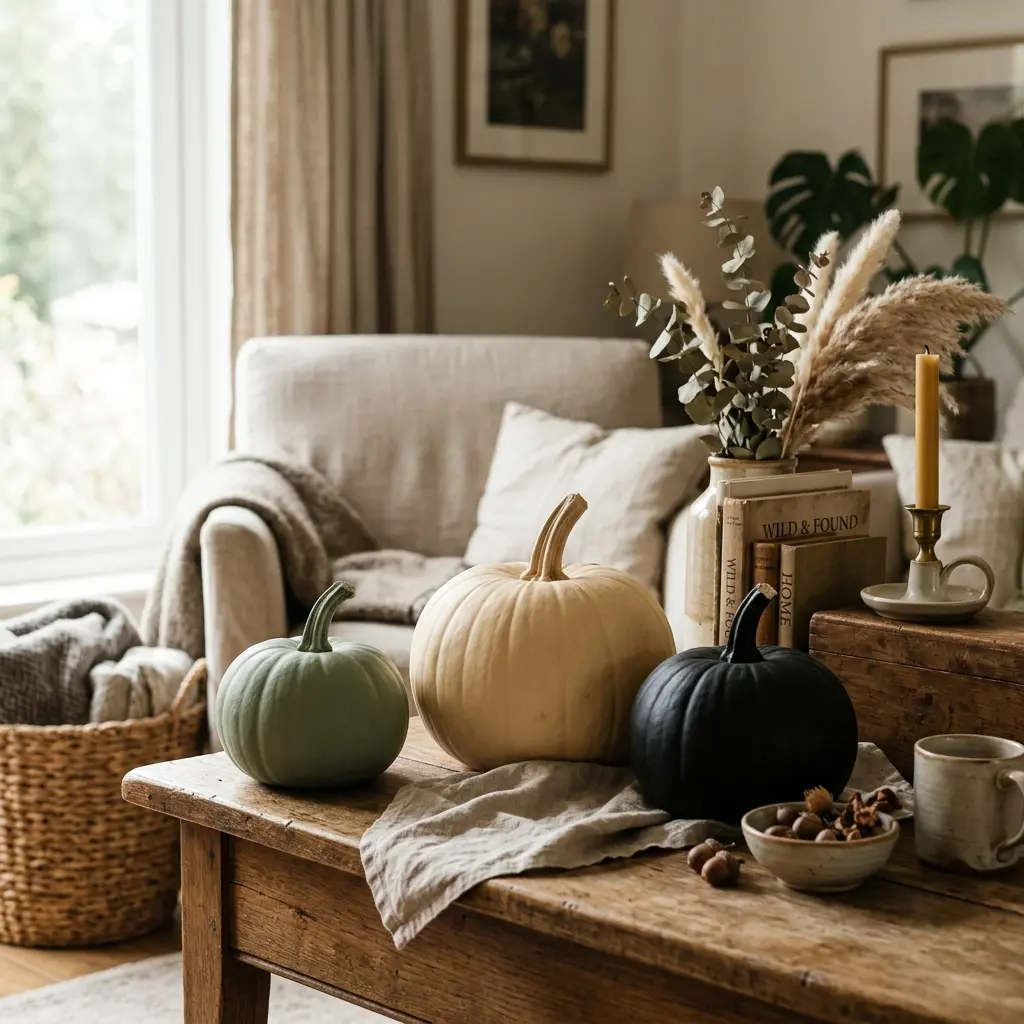
A kitchen is a hostile environment for decor, and this is the part most people learn the expensive way. Cooking releases grease aerosol and steam that settle on every surface in the room, including the ones nowhere near the stove. Anything absorbent collects that film, and once it does it cannot be cleaned.
Material Note: Paper, felt, cotton spider web and dried botanicals go limp, dull and slightly tacky in a working kitchen within roughly two weeks, while ceramic, glass, metal, sealed wood and vinyl wipe clean and last several seasons.
Buy accordingly, and the cost per year drops sharply. A ceramic pumpkin, a glass cloche, a metal lantern or a set of resin figures are all things you unpack again in five years, and most of them carry across the rest of our seasonal decorating ideas too. The paper garland is a single-season purchase every single time, which is why the kitchen rewards fewer, better objects more than any other room in the house.
Can It Come Down in Ninety Seconds?
This is the test that separates kitchen decor from every other room, and it is worth applying before you buy rather than after. A kitchen has to be fully usable at short notice — a big cooking session, a spill, a repair, a guest. If clearing the decor is a twenty-minute job, it does not get cleared. It gets worked around, and then resented.
So attach nothing permanently and group everything. One tray lifts off the island. One basket holds the cabinet-top group. Command hooks come off the hood in seconds. Anything wired, taped or balanced individually fails this test and should go back on the shelf.
The same rule governs the end of the season. Halloween kitchen decor that comes down in two minutes actually comes down on November 1st, which matters more here than anywhere else in the house — a mantel can carry a stray pumpkin into December, but a kitchen that still looks like October in mid-November just looks neglected. Our creative fall and autumn decorating ideas cover what should replace it.
What Ruins a Halloween Kitchen by Week Two
- Decor creeps onto the counters. It usually starts with one pumpkin beside the kettle, and within a week there are four objects competing with the toaster. Set the rule before you start: nothing new on a counter, ever, and the whole problem disappears.
- Paper and fabric go in first because they are cheap. A paper garland across the hood looks right for about ten days, then the grease film arrives and it goes dull and slightly sticky. Spend the same money on three ceramic pieces and they come out again next year.
- Something flammable ends up near the cooktop. This is the only failure on the list that matters beyond looks, and it happens because the hood is the best surface in the kitchen and also the most dangerous one. Three feet of clearance is the number, and it is not negotiable for a single evening.
- Decorative pumpkins get treated as food. Ornamental gourds are generally not edible, and Michigan State University Extension is clear that a carved pumpkin becomes a perishable food within two hours at room temperature. Keep display pumpkins off chopping boards and away from prep surfaces entirely.
- Adhesive goes on a cabinet front untested. Painted and laminate doors lift when a hook is pulled off, and a stripped patch on a cabinet outlasts the holiday by several years. Twenty-four hours on a hidden edge is the whole test.
Renting, Galley Kitchens and No Upper Cabinets
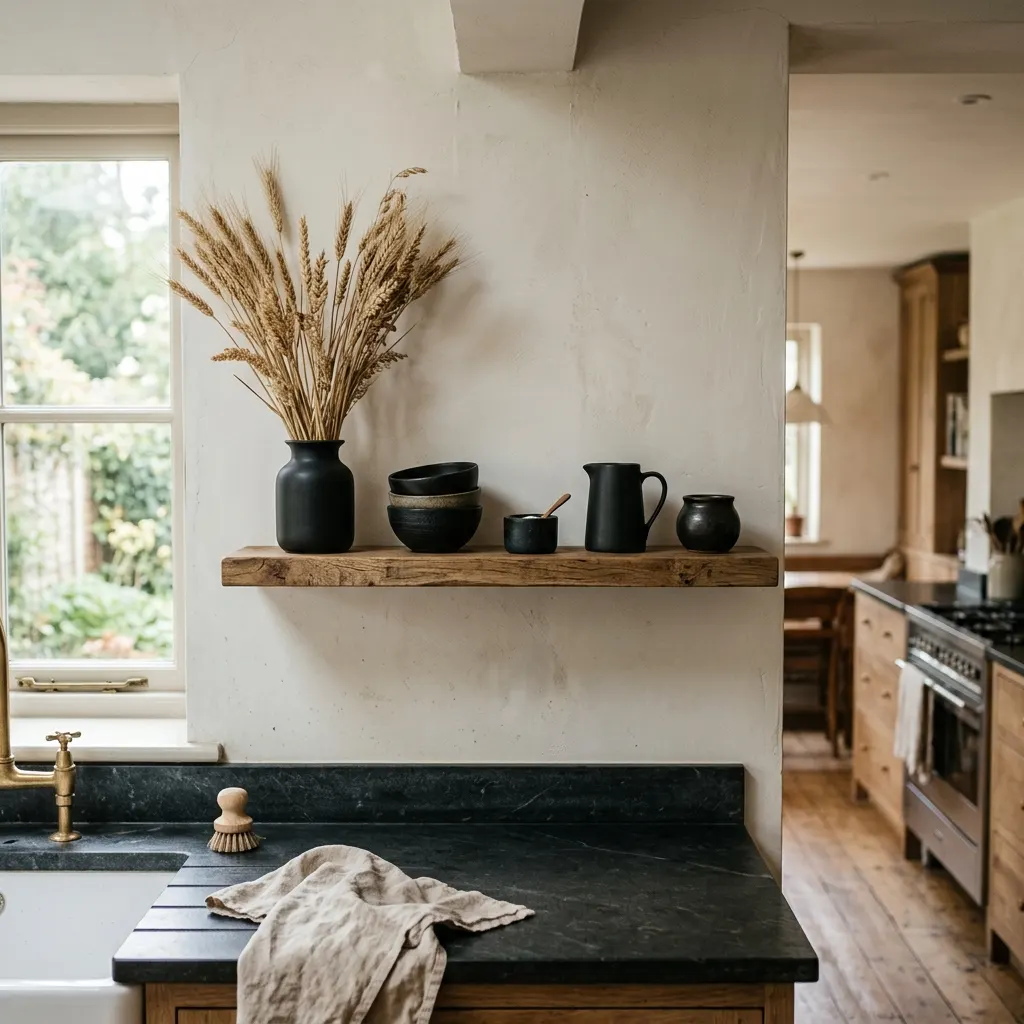
Three kitchen types break the five-surface plan, and each has a workaround. A rental kitchen rules out anything adhesive on visible fronts, so the cabinet top, the window and the island tray carry the whole scheme — three surfaces is still more than a mantel gives you.
A galley kitchen has no island and very little counter, which sounds worse than it is — the same point comes up across tiny kitchen ideas for small apartments. Galley layouts usually have two full runs of upper cabinets, so the cabinet-top gap is twice as long as normal and does the job on its own. Run a single low line of objects along one side only, and leave the opposite run empty so the corridor does not close in.
Open shelving instead of upper cabinets removes the free shelf entirely, because those shelves are already holding plates. Here the move is to swap rather than add: take down two or three everyday items and put seasonal objects in the gap, keeping the shelf count identical. The negative-space rules from shelf styling matter more here than anywhere else in the house.
Budget by Surface, Not by Room
Kitchen decorating costs less than any other room in the house, because the surfaces are small and the material rules push you toward fewer, larger objects. Budget by surface rather than by room and it is easy to stop at the point where the kitchen looks done.
| Project | Estimated Cost | Impact Level |
|---|---|---|
| Window only — paper silhouettes plus one warm sill bulb | $12-$30 | High |
| Cabinet top — three to five ceramic or glass pieces at scale | $45-$110 | Very High |
| All five surfaces — hood garland, decals, island tray included | $120-$230 | High |
Best First Upgrade: The cabinet-top group. It is the only surface that reads from an adjoining room, and the pieces are reusable for years.
Skip for Now: Paper garlands, printed banners and anything felt. In a kitchen specifically, they are a one-season purchase every time.
Should the Kitchen Get Any of Your Halloween Budget?
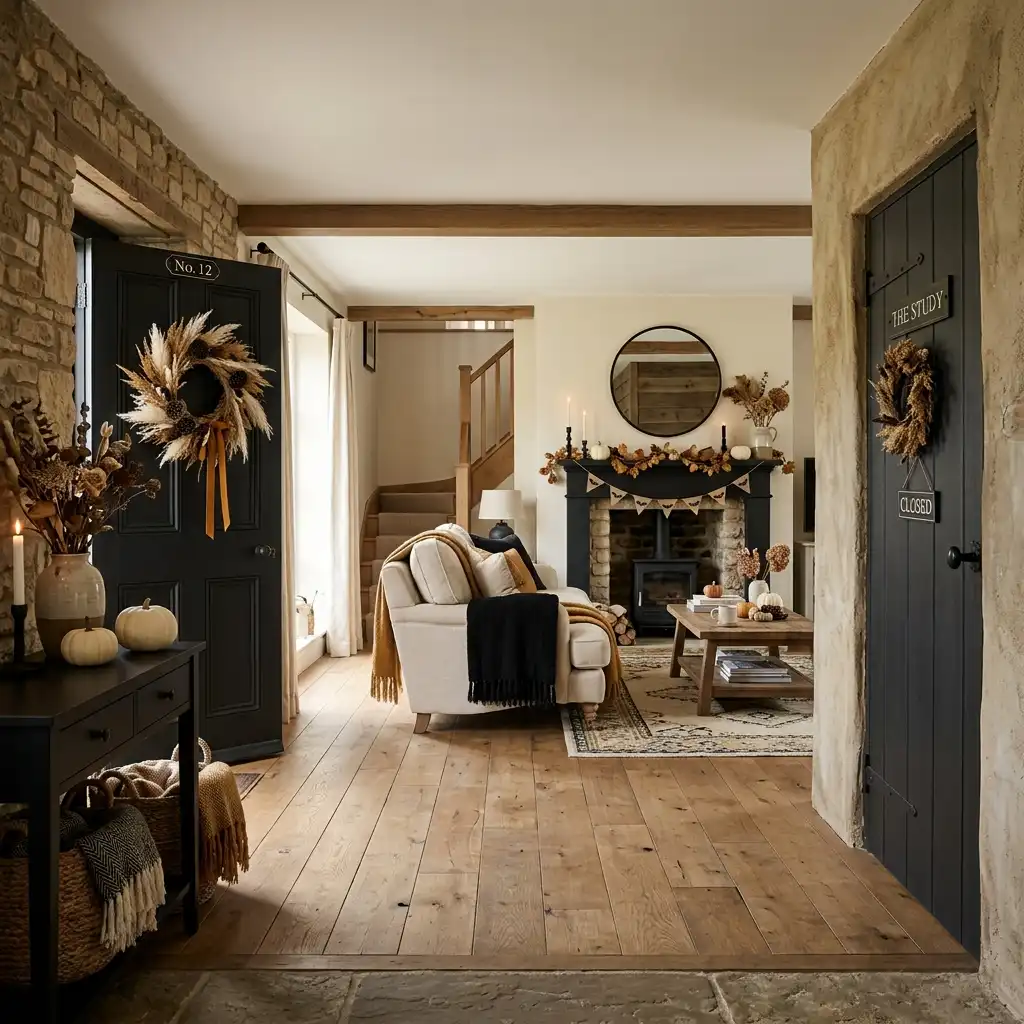
If your kitchen is closed off from the living space, the honest answer is that it comes last. A galley kitchen behind a door is seen by the household and nobody else, and the same money spent on the front door or the living room does more work. That priority order holds in most small apartment ideas too, and there is no shame in skipping the kitchen entirely.
If the kitchen is open to the living room, it stops being optional. An undecorated kitchen inside a decorated sightline pulls the eye more than a decorated one ever would, because the boundary between the two rooms becomes visible. In that layout the kitchen is not an extra room to do — it is the back half of the room you already decorated.
Designer’s Verdict: Decorate the kitchen only if it is visible from a decorated room, and when you do, spend the whole budget on the cabinet tops and the hood rather than spreading it across all five surfaces.
Frequently Asked Questions
Conclusion
Start with the gap above your cabinets, because it is the only surface in the kitchen that costs you nothing to use and reads from the next room. Everything else in Halloween kitchen decor follows from that one decision — once the display lives above eye level, the counters stay clear and the room stays usable. Our home decorating ideas cover the rooms it connects to.