The One-Bulb Problem Nobody Talks About
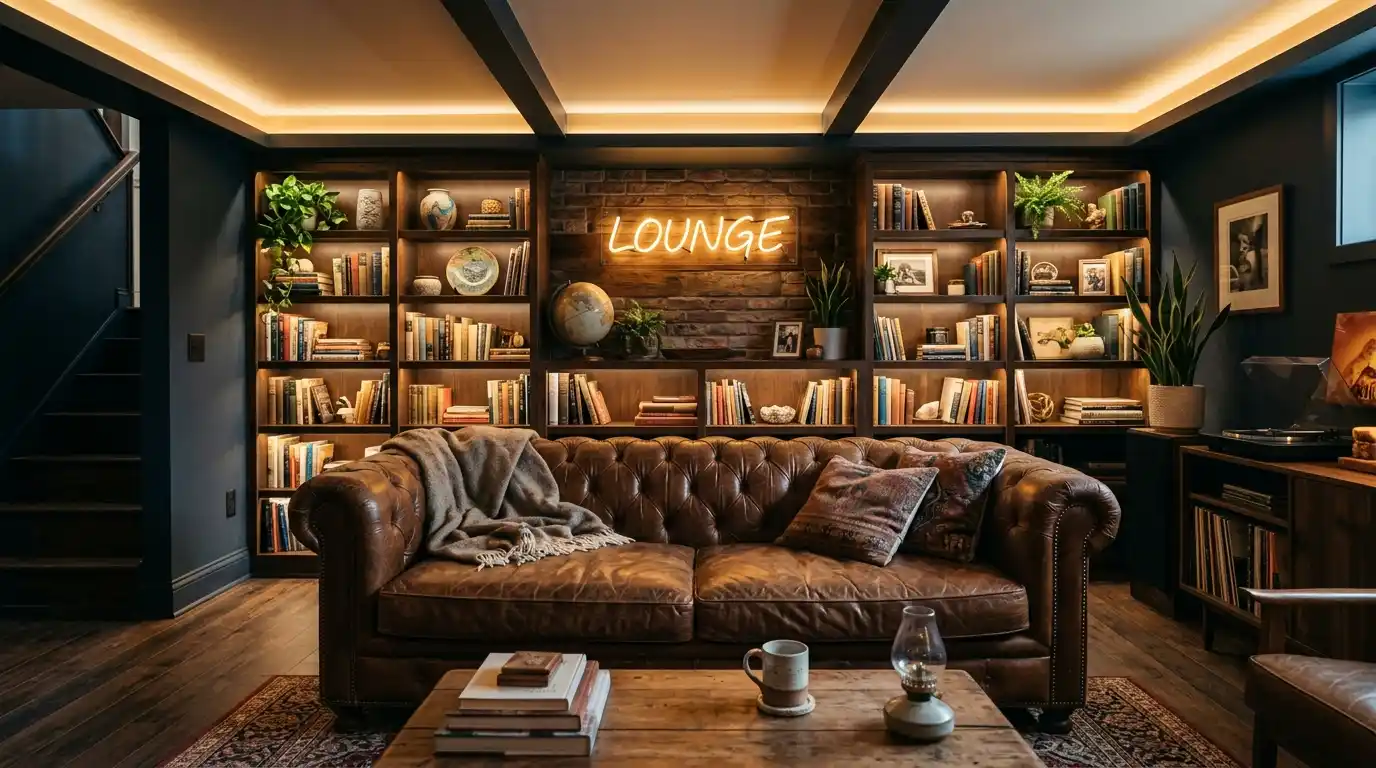
Flip the switch in most man caves and the same thing happens. One fixture in the middle of the ceiling floods everything with flat white light. The pool table, the leather sofa, the memorabilia wall — all lit the same way, all at once. Then someone runs a strip of color-cycling RGB behind the TV and the room jumps from flat to loud without ever stopping at good.
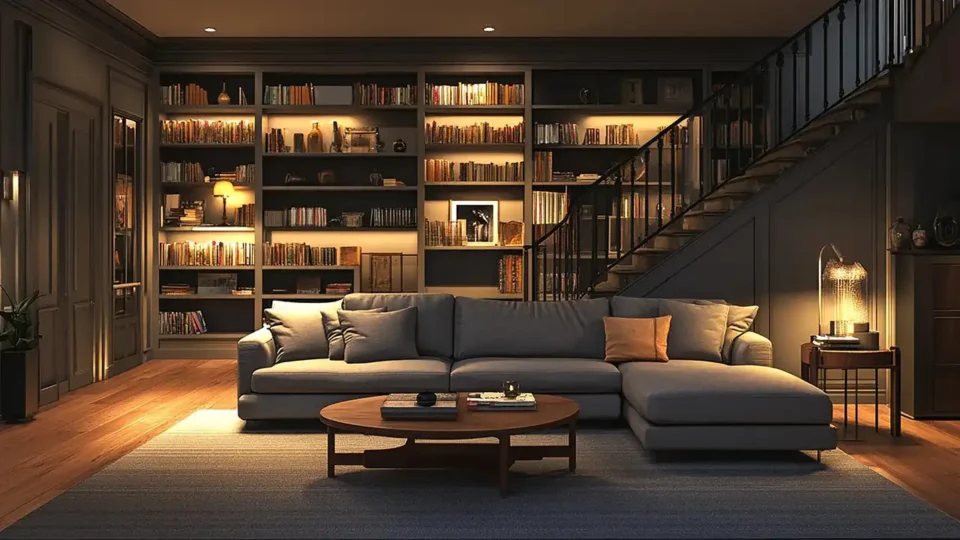
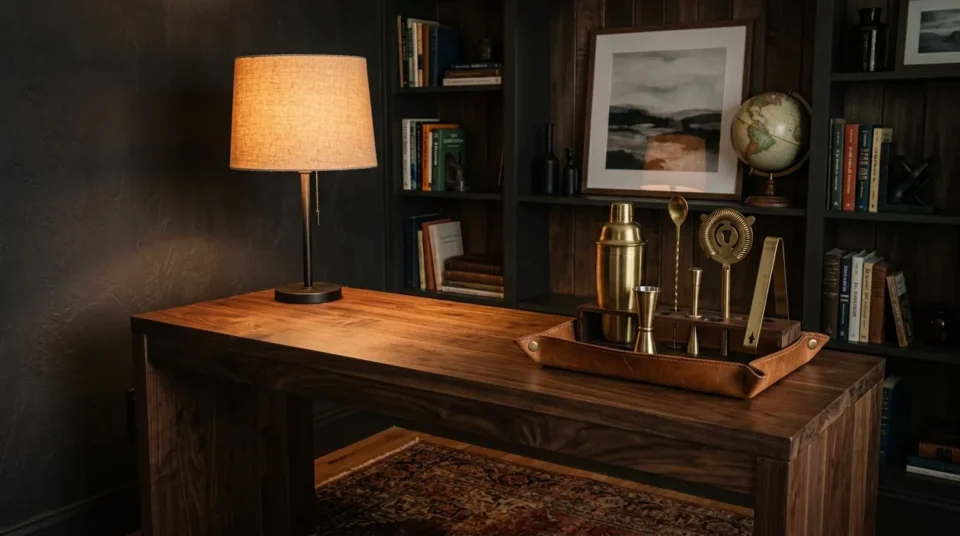
Good man cave lighting works the other way around. You build it in layers: a warm base around 2700K, hidden LED strip light doing the quiet work, focused task light where you actually play or pour, and exactly one bold piece — usually a neon sign — allowed to shout. Brightness is not the goal here. Control is.
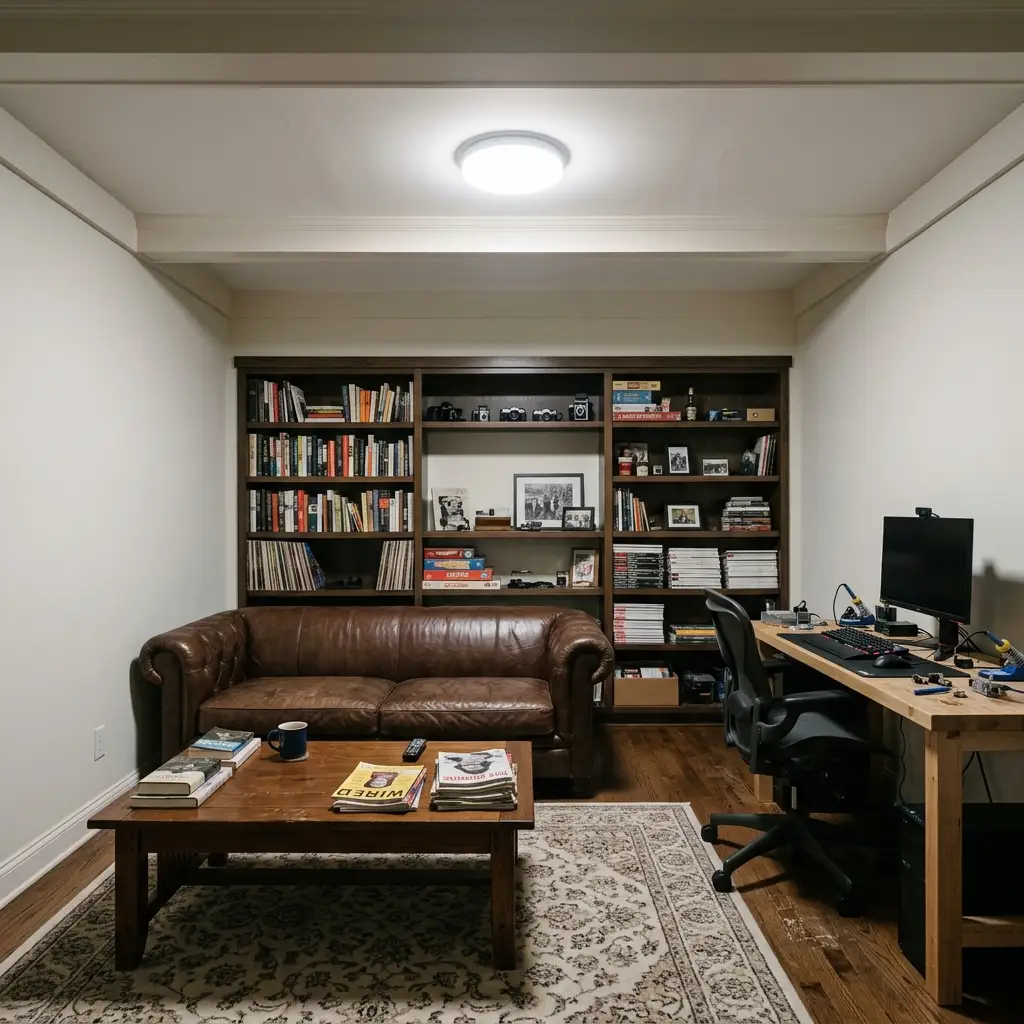
Editorial field note: A garage cave lit by a single 5000K shop fixture looks like a workspace no matter how good the furniture is. Swap that one fixture for two warm floor lamps and a dimmable strip along the ceiling edge, and the same room looks like a lounge before anything else moves. Nothing changed but the light.
That shift is the whole trend. Start with the wider home decor inspiration library if you are planning a full build, or go straight to the fixtures, furniture and accents in our man cave decor ideas guide. Bookmark this guide for quick reference.
Man Cave Lighting Checklist
- Count your light sources. Fewer than three separate ones means the room will look flat.
- Set every bulb in the lounge zone to the same color temperature, ideally 2700K.
- Run LED strip inside an aluminum channel with a frosted cover so you never see the dots.
- Put the strongest light directly over the bar top, pool table, or card table — not the sofa.
- Choose one neon or backlit sign as the focal point and leave the other walls quiet.
- Add a dimmer to the ceiling circuit, or replace hardwired fixtures with plug-in lamps you can dim.
- Keep any screen-adjacent light behind the display, never beside it or aimed at it.
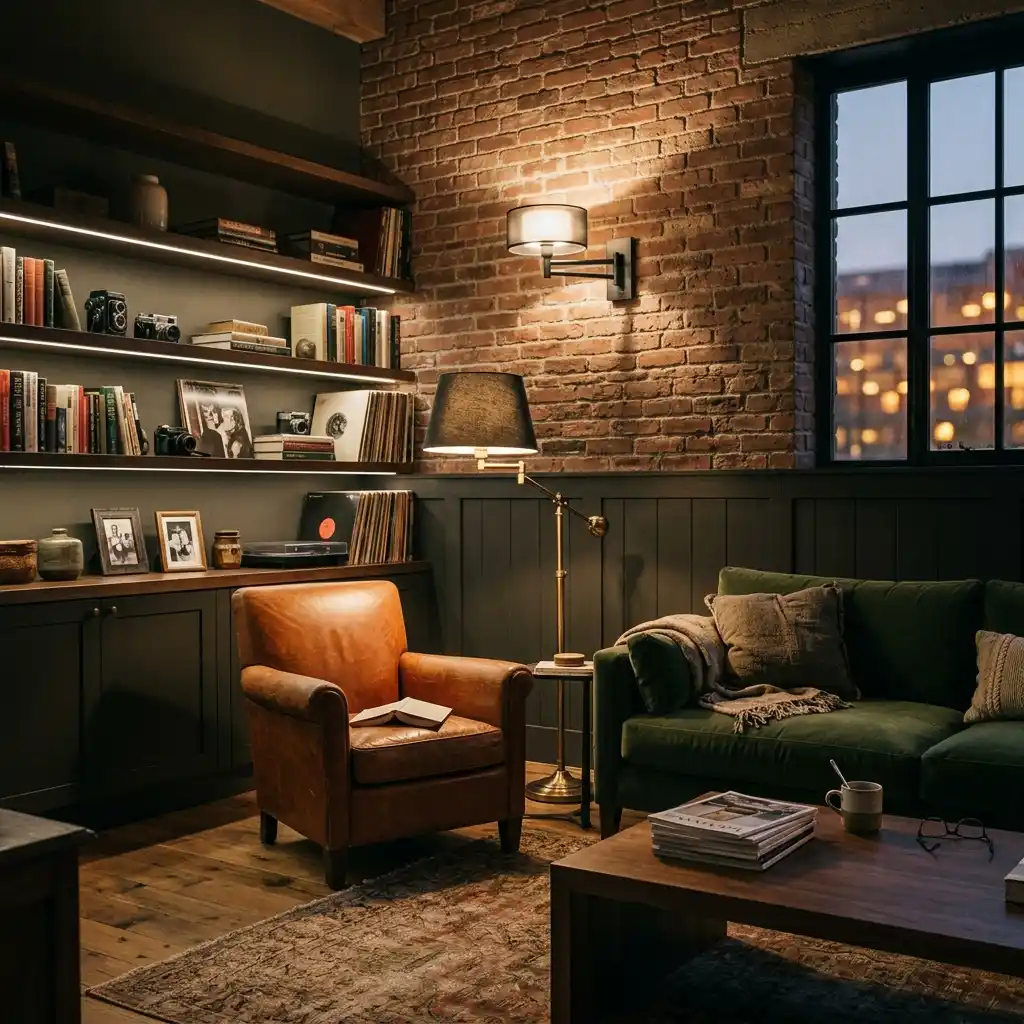
KEY TAKEAWAY: A man cave needs at least three light sources at three different heights — ceiling, mid-wall, and table level — before any single fixture starts to look good.
For the full room build around these layers, the 25 man cave ideas for the ultimate personal sanctuary roundup covers layout, seating, and zoning.
Why Is the RGB Rainbow Falling Out of Favor?
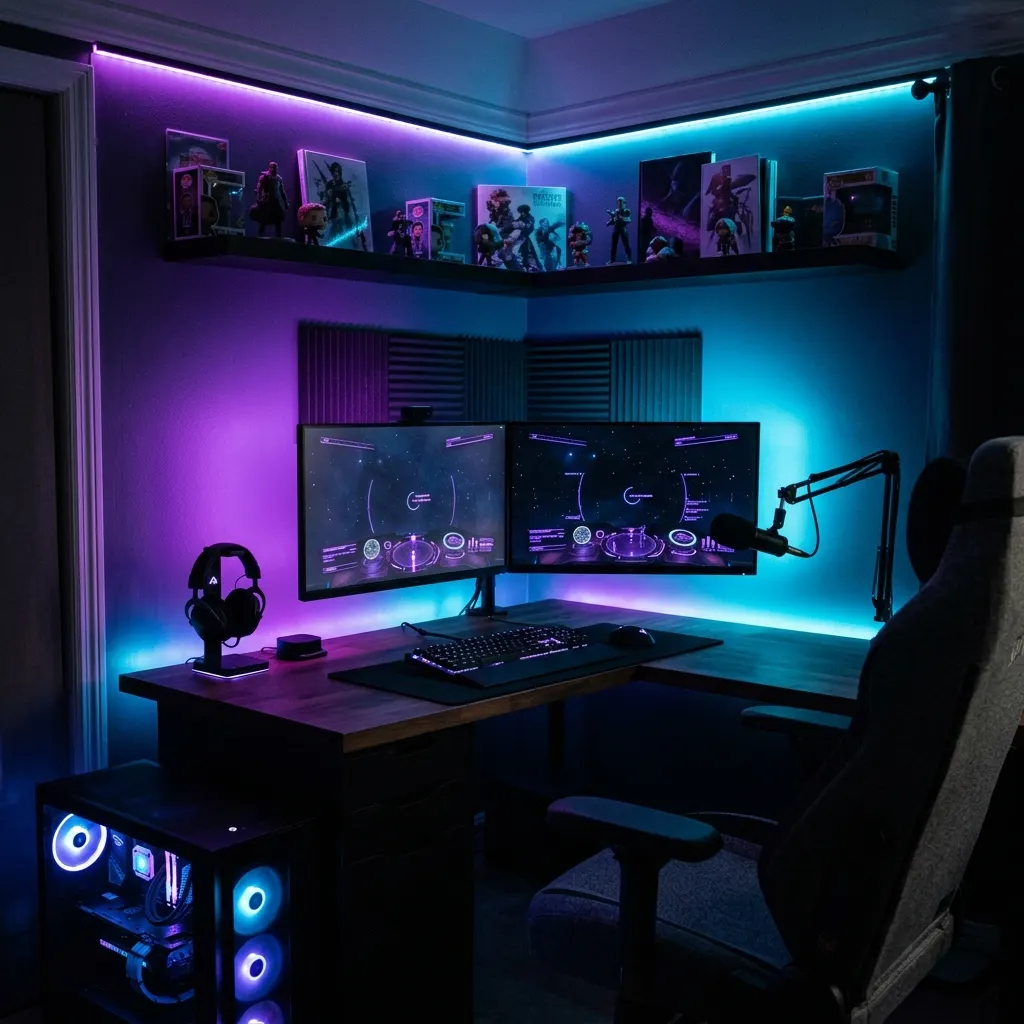
The rainbow look came from gaming rigs, and it made sense there. A desk setup is small, close to your face, and mostly screen. A whole room is not. Once you scale color-cycling light across an entire wall, skin tones go strange, wood grain flattens out, and every photo of the space looks like a phone store display.
Cheap hardware made the problem worse. Early consumer RGB strips ran low CRI diodes, so brown leather went muddy and warm oak looked grey. The strips also came bare, which meant you saw individual dots instead of a clean line of light. The look aged fast, and it aged badly.
There is a second culprit, and it lives in garages. The 4-foot 5000K shop fixture is fine for cutting wood and terrible for relaxing. It is the single biggest reason a converted garage man cave still looks like a garage after the furniture arrives.
Signs This Is Catching On:
- LED neon flex has largely replaced glass tubing for home signs, because it runs cool and does not shatter.
- Aluminum diffuser channels now sell alongside strip kits at mainstream hardware retailers, not just specialty suppliers.
- Warm-white and tunable-white strip products have moved to the front of product listings that used to lead with RGB.
- Smart plugs and plug-in dimmers have made layered setups possible for renters who cannot touch wiring.
Source Note: Color temperature is measured in Kelvin, and LEDVANCE places 2700K in living and lounge spaces while putting 3000K where visibility and focus matter more.
Browse the rest of our man cave design ideas if you want to see how these lighting layers land in different room types.
What Does Good Man Cave Lighting Look Like Now?
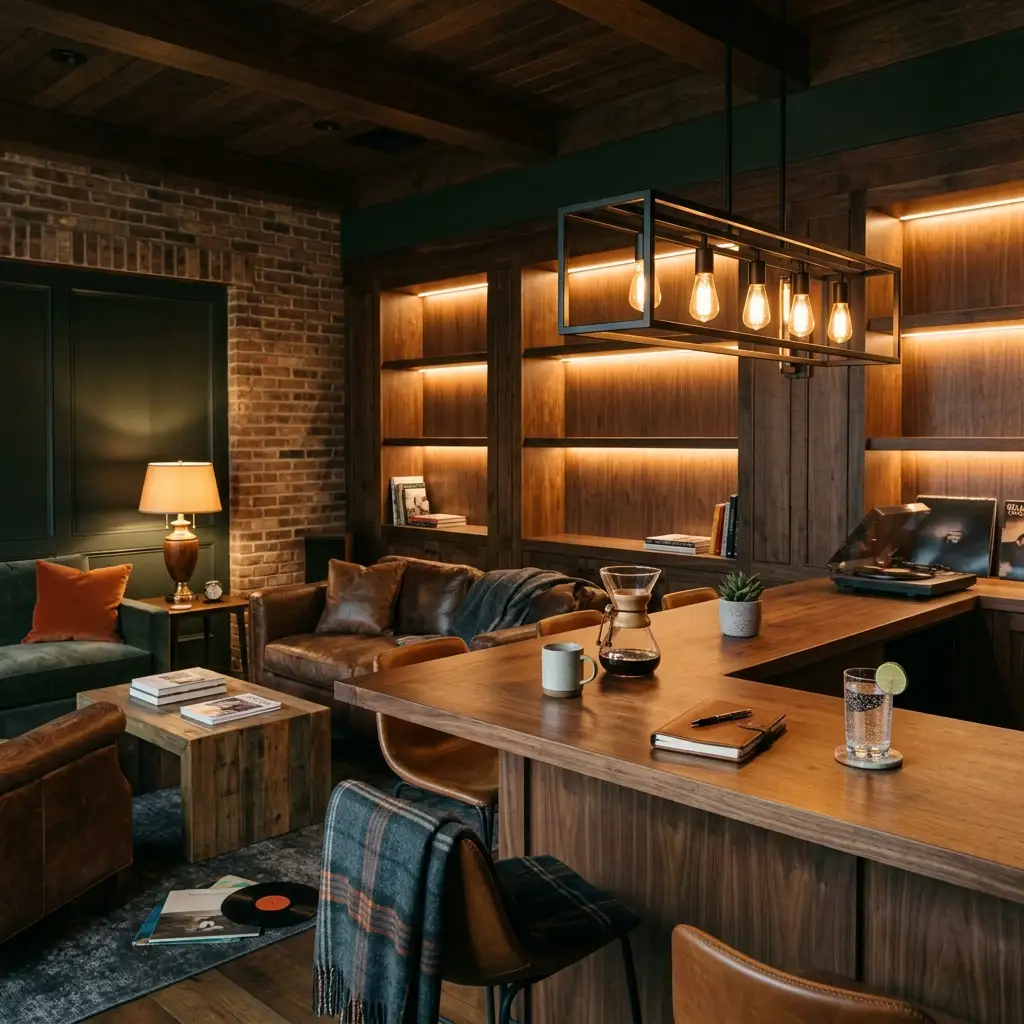
The current look is warm, low, and controlled. Most of the light comes from below eye level. The ceiling does very little. Color shows up in one or two places instead of everywhere, and the brightest spot in the room is wherever you are doing something with your hands.
Six layers do the work. You do not need all six, but you need at least three. Sleek, streamlined rooms like these modern man cave setups usually run four.
A Warm Ambient Base at 2700K, Not a Ceiling Full of Downlights
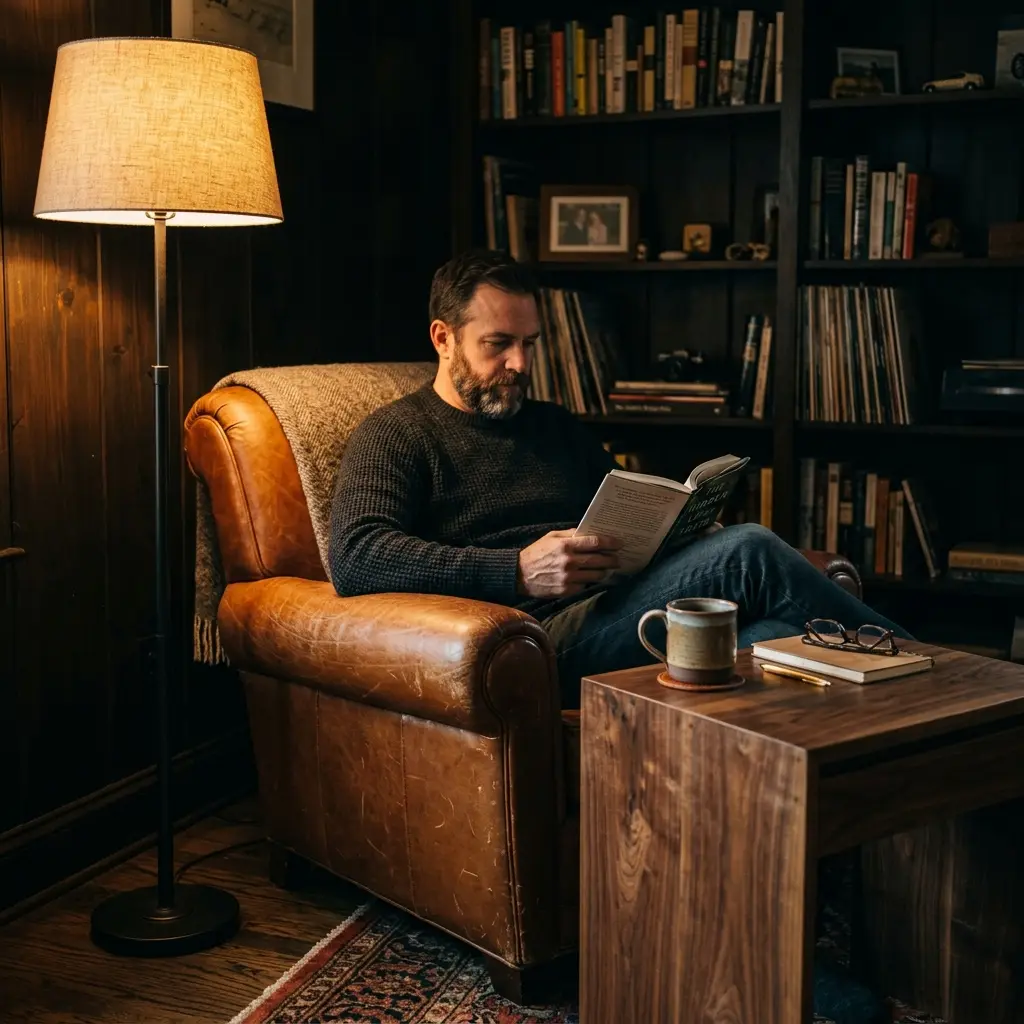
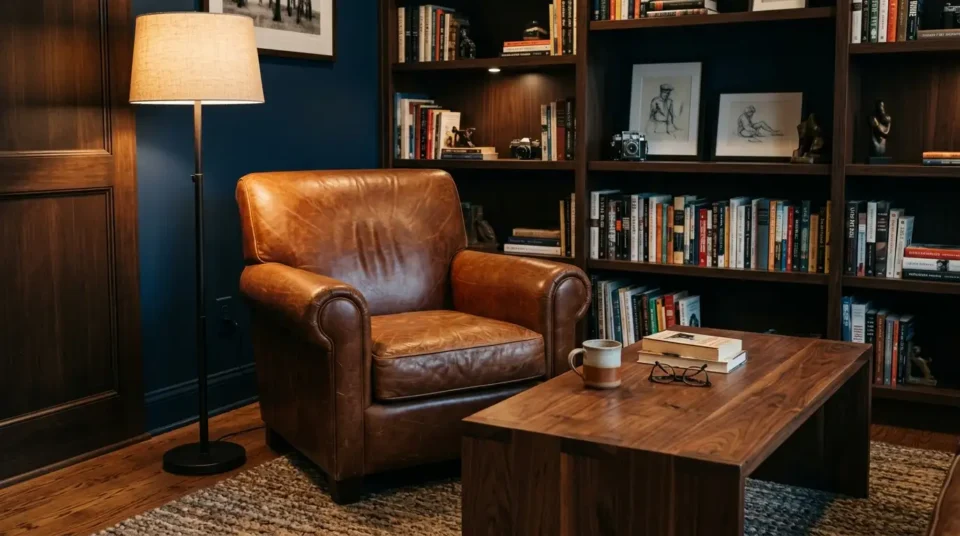
2700K is warm white — the color of a traditional incandescent bulb. It flatters cognac leather, walnut, brass, and every wood tone a man cave usually contains. Two floor lamps and one table lamp at 2700K will out-perform six recessed downlights for lounge use, because the light sits low and spreads sideways instead of raining down on everyone’s head.
Keep the whole lounge zone on one color temperature. Mixed Kelvin is the fastest way to make a room look unfinished — one 2700K lamp beside one 4000K bulb reads as a mistake even to people who cannot name why. Warm, woodsy rooms like these rustic man cave ideas depend entirely on holding that warm base steady.
Where Should LED Strip Lights Actually Go?
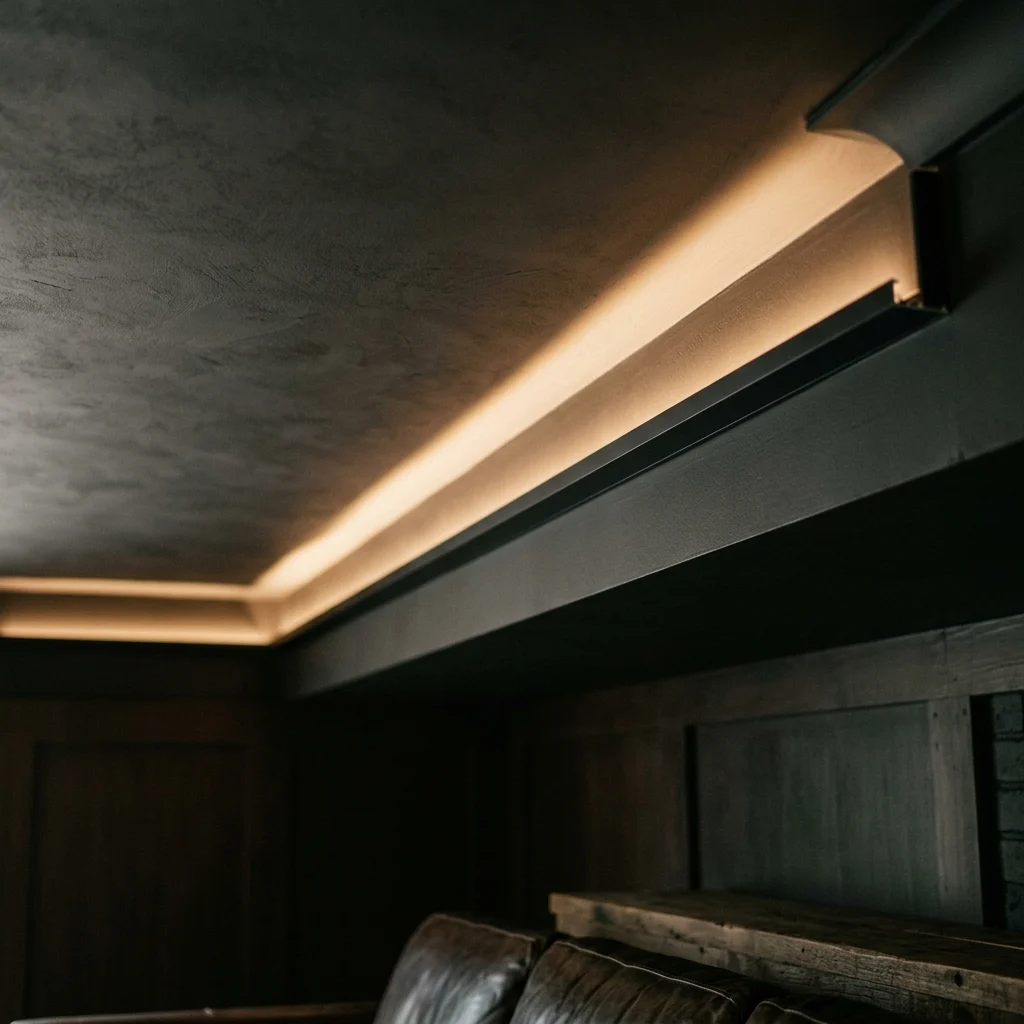
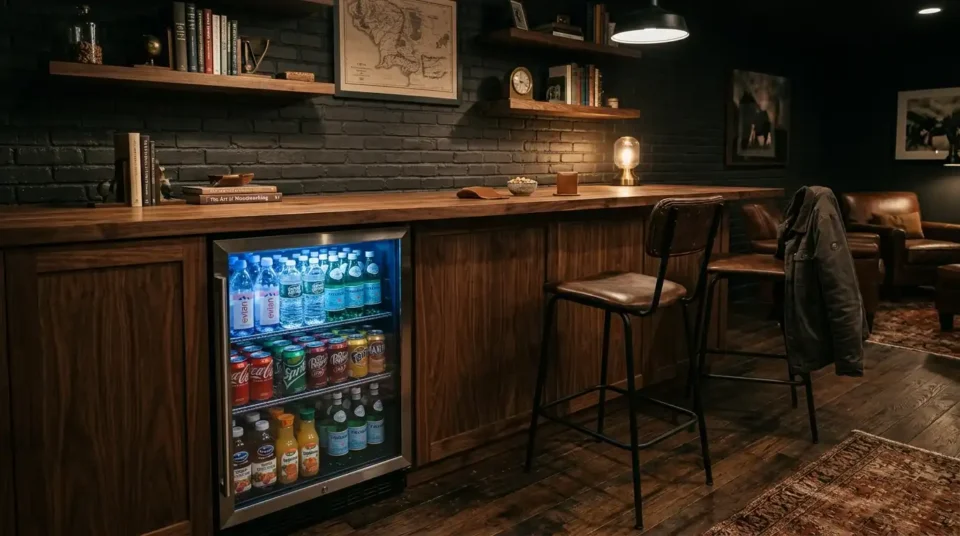
LED strip light belongs where you can see the glow but not the source. That means inside a ceiling cove, under a bar overhang, behind a floating shelf, or along the underside of stair treads. An aluminum channel with a frosted cover is called a diffuser, and it turns a line of visible dots into one clean band of light.
Buy warm white at 2700K–3000K and CRI 90 or higher. Low-CRI strip is the reason so many older setups make leather and wood look dead. Hidden strip is also the highest-value move in a tight room — it adds a whole lighting layer without taking a single square foot, which is why it shows up in nearly every good small man cave design.
DESIGNER TIP: Mount strip channel at least 2 inches back from the edge of the surface it sits under. Any closer and you get a hot line on the wall instead of a soft wash.
How Many Neon Signs Does One Room Need?
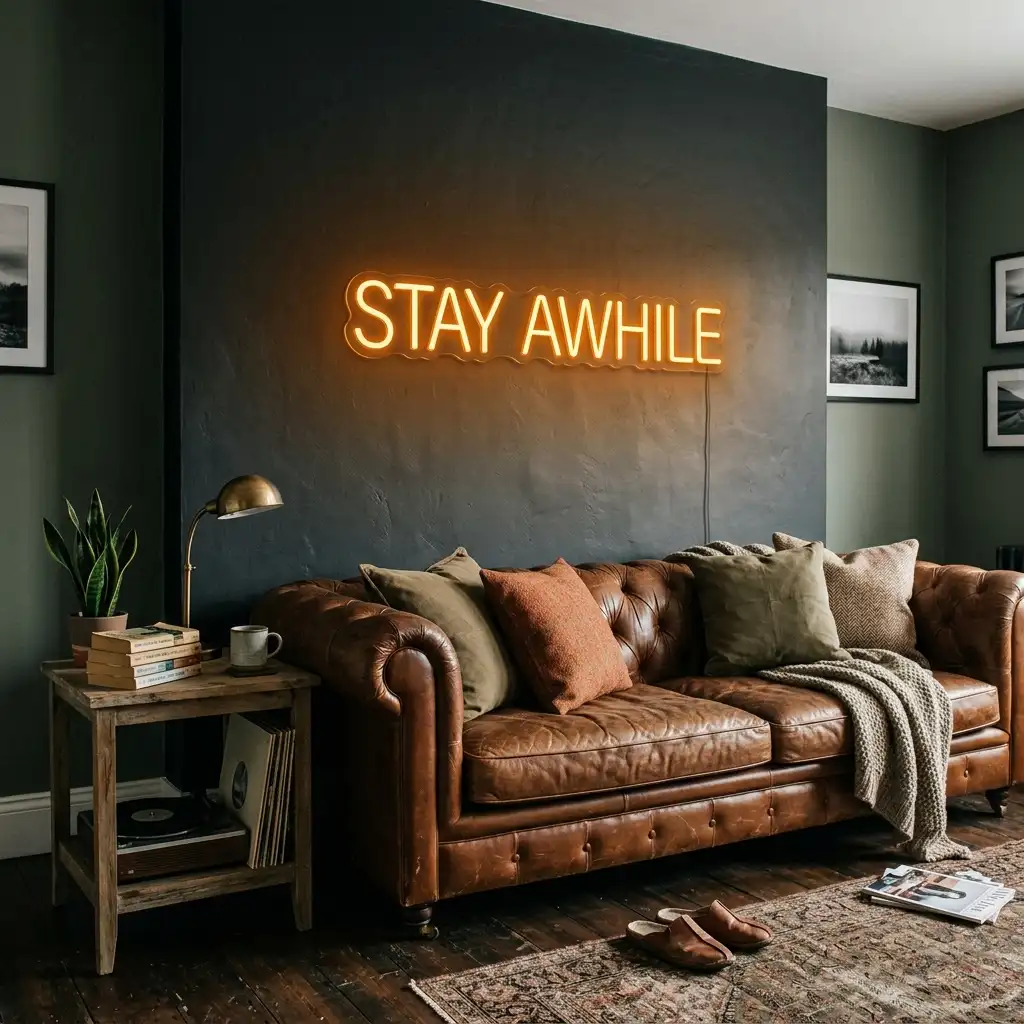
A neon sign is a focal point, and a room only gets one. Two bright signs on facing walls cancel each other out and the eye stops knowing where to land. Pick the wall people see first when they walk in, hang one sign there, and leave the other three walls to art, shelving, or nothing.
Modern home signs are LED neon flex rather than glass. That matters for more than looks. Vital Neon notes that LED neon runs on 12V or 24V DC while traditional glass tubing runs between 2,000 and 15,000 volts, and LED versions are rated past 50,000 hours. Safety Note: Glass neon needs a high-voltage transformer and licensed electrical work — LED neon flex plugs into a standard outlet, which makes it the better call for a home room with kids or pets.
The one-loud-piece rule is what separates a sharp room from a busy one. It is the same logic behind these classy man cave ideas — one statement, held.
Focused Task Light Over the Bar, Table, or Board
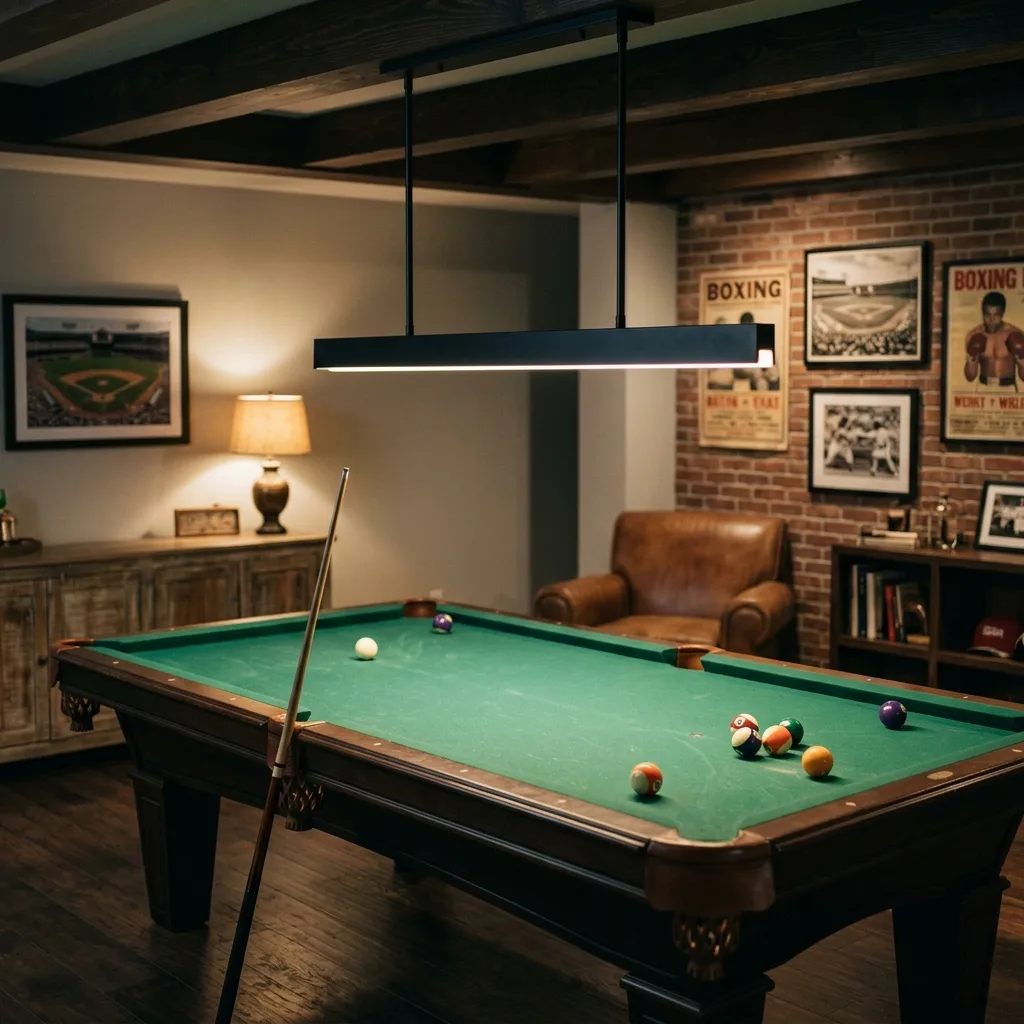
Task light is the layer most people skip, and it is the one that makes a room feel built rather than decorated. Hang a pendant or linear fixture directly over the surface where something happens: the bar top, the pool table, the poker table, the dart line.
Height is a real number, not a guess. Blatt Billiards recommends 31 to 33 inches from the bottom of the fixture to the playing surface, which spreads light across the whole table without hot spots, dark corners, or glare in a player’s eyes. For a bar top, hang pendants 30–36 inches above the counter and space them 24–30 inches apart. Every other must-have that pairs with these zones is in our man cave essentials list.
Bias Lighting Behind the Screen, Not Around It
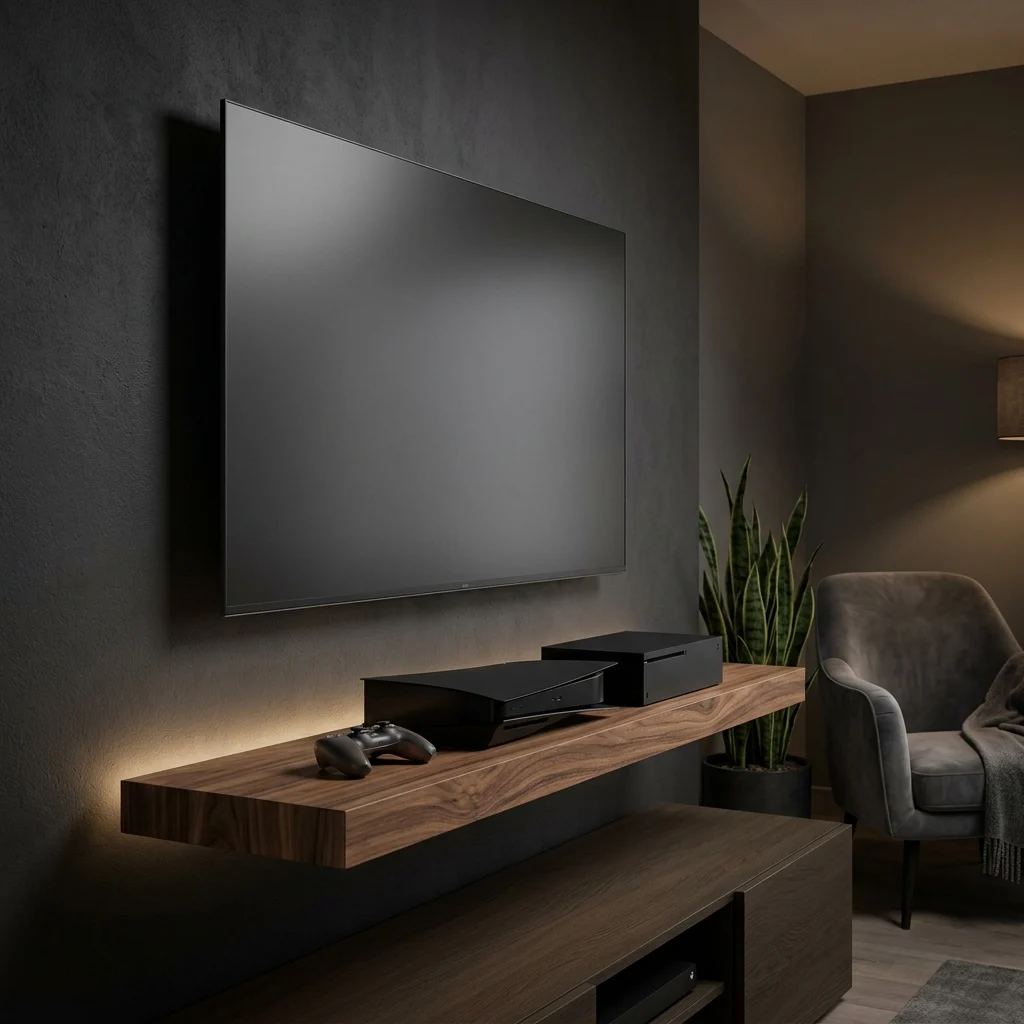
Bias lighting is a strip of light mounted on the back of the TV, facing the wall. It reduces the harsh contrast between a bright screen and a dark room, which cuts eye strain during a long session and makes black levels look deeper than they are.
This is the one place where warm light is wrong. Bias lighting should be neutral white at 6500K, matching the D65 white point your display was calibrated to — the same reference the SMPTE ST 2080-3 viewing-environment standard is built around. Warm bias light throws off how you perceive color on screen. Keep it dimmer than the picture, keep it behind the panel, and never put a lamp beside the screen. Screen-first rooms get the full treatment in our home theater man cave setups.
Real Metal Fixtures Instead of Plastic Housings
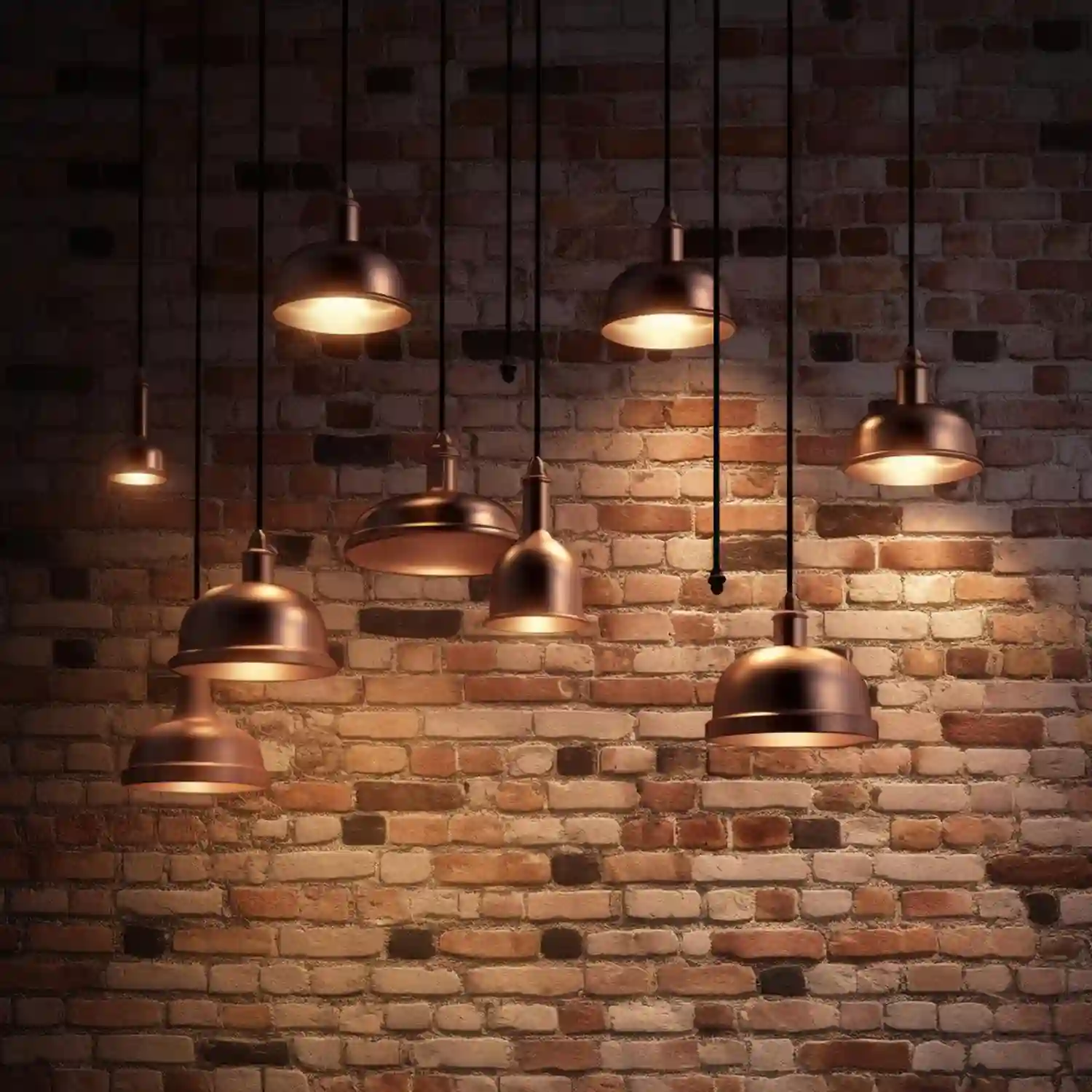
The fixture itself is decor, even if you never thought about it that way. Matte black steel, aged brass, and oil-rubbed bronze all photograph better than the glossy white plastic most builder-grade housings come in, and they cost less than people expect once you shop cage pendants and gooseneck barn sconces.
Pick one metal finish and repeat it at least three times across the room — pendants, sconces, and bar hardware, for example. Exposed cage fixtures and raw metal shades sit naturally in industrial man cave rooms, but they work just as well against warm wood.
How Do You Layer Man Cave Lighting Without Overdoing It?
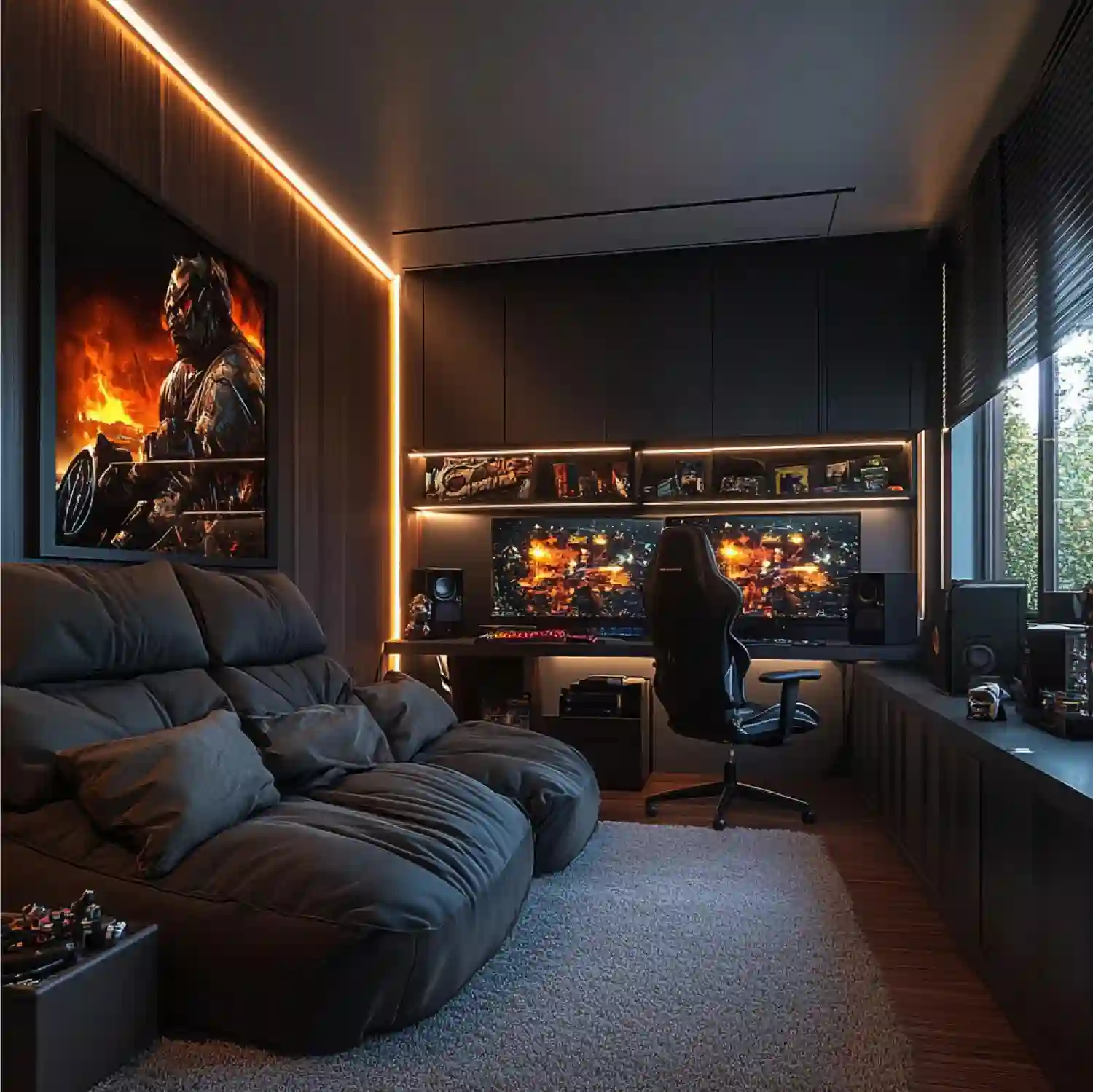
Four moves, in this order. Doing them out of order is why so many rooms end up with expensive lighting that still looks wrong. The same sequence works in any room — it is exactly how these living room lighting ideas get built too.
Step 1 — Turn the Overhead Off and Sit There
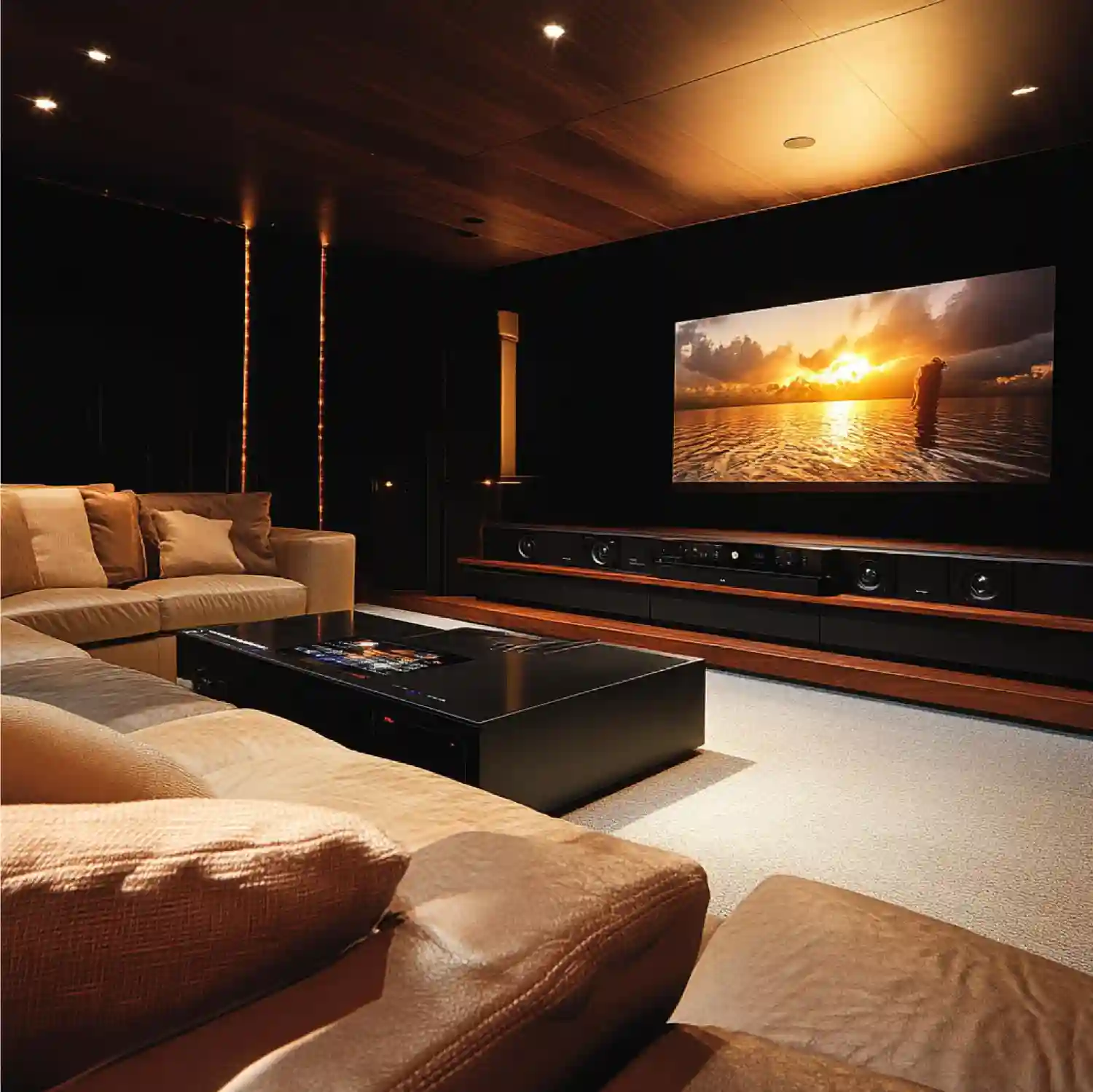
Kill the ceiling light and spend ten minutes in the room. The dark spots you notice are your lamp positions. Most man caves need two floor lamps and one table lamp before anything else gets added. Plug-in lamps at 2700K cost $25–$60 each, need no wiring, and are fully renter-safe.
Outcome: the room already looks calmer and warmer, and you have not spent $100 yet.
Step 2 — Run One Hidden LED Line
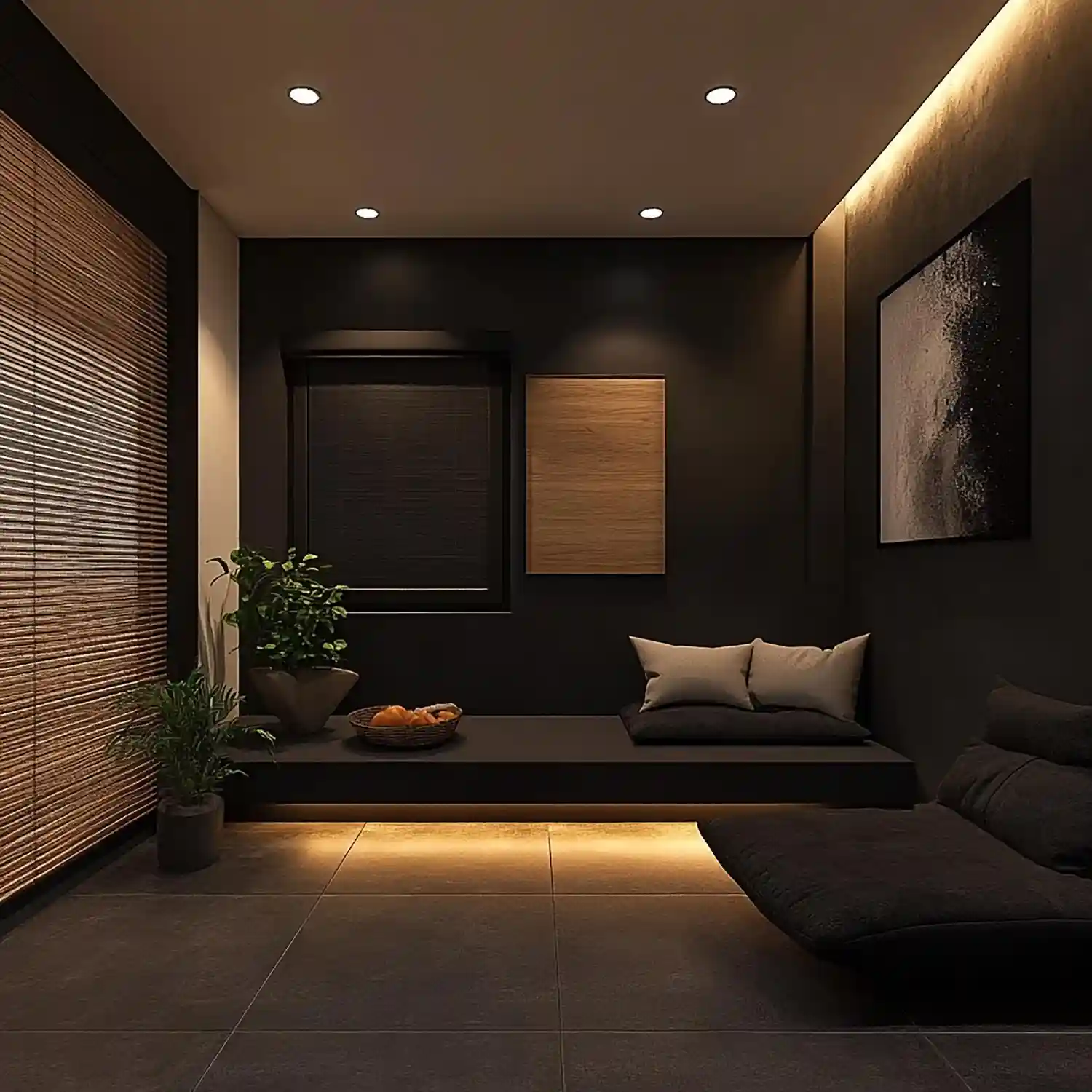
Pick a single line and light it: under the bar overhang, along one ceiling cove, or behind the TV console. One well-placed strip beats four scattered ones. Use warm white, CRI 90+, inside a diffuser channel, and run it on a dimmer or app control.
Outcome: the room gains depth and a glow that has no visible source, which is the whole point.
Step 3 — Add Your One Loud Piece
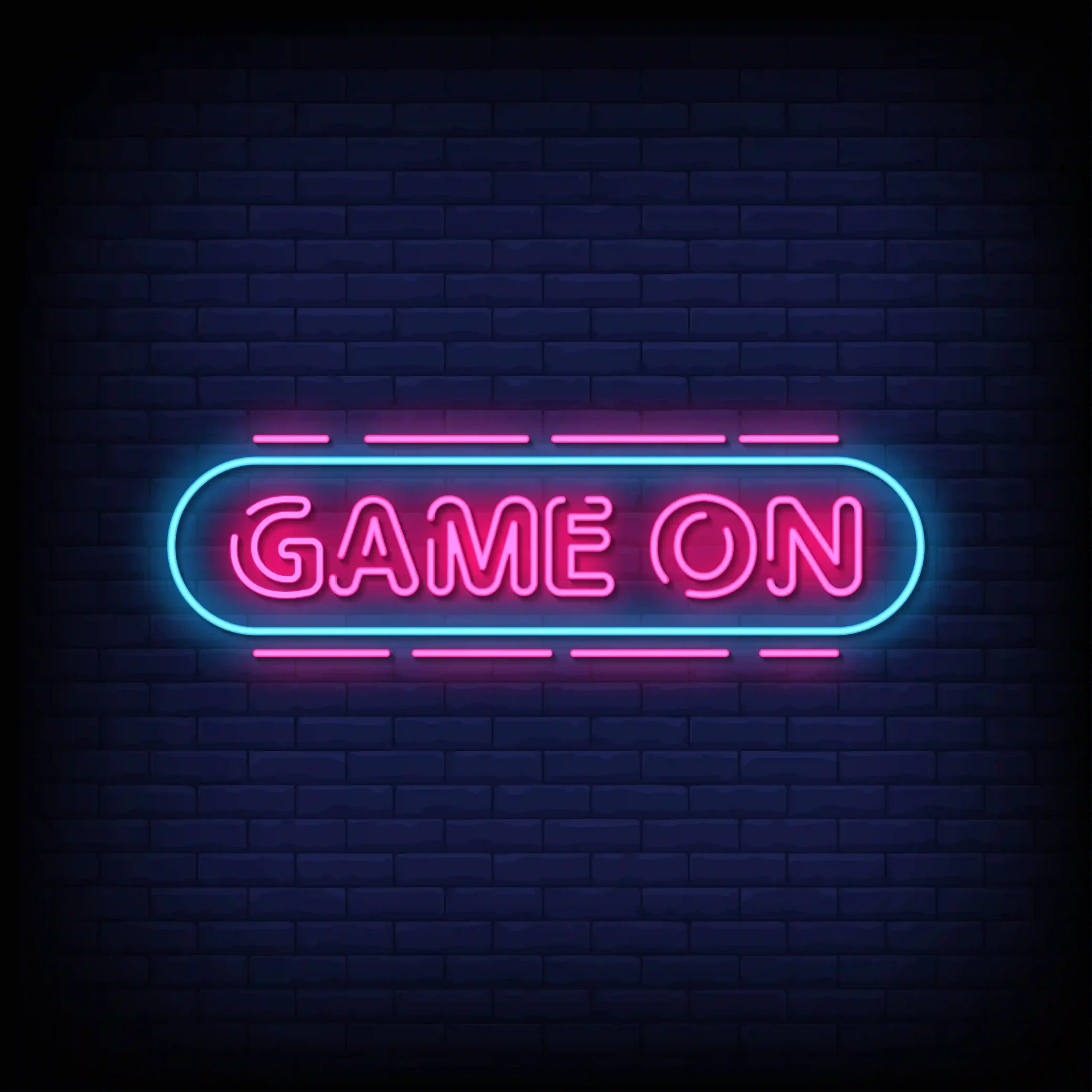
Now, and only now, add the neon. Hang it on the wall people face when they sit down, roughly at or just above eye level. Keep the sign to one or two colors — warm amber, deep red, or a single cool blue all hold up better than multicolor script.
Outcome: the room gets its personality without the light fighting the rest of the layers.
Step 4 — Put Everything on Dimmers and Scenes
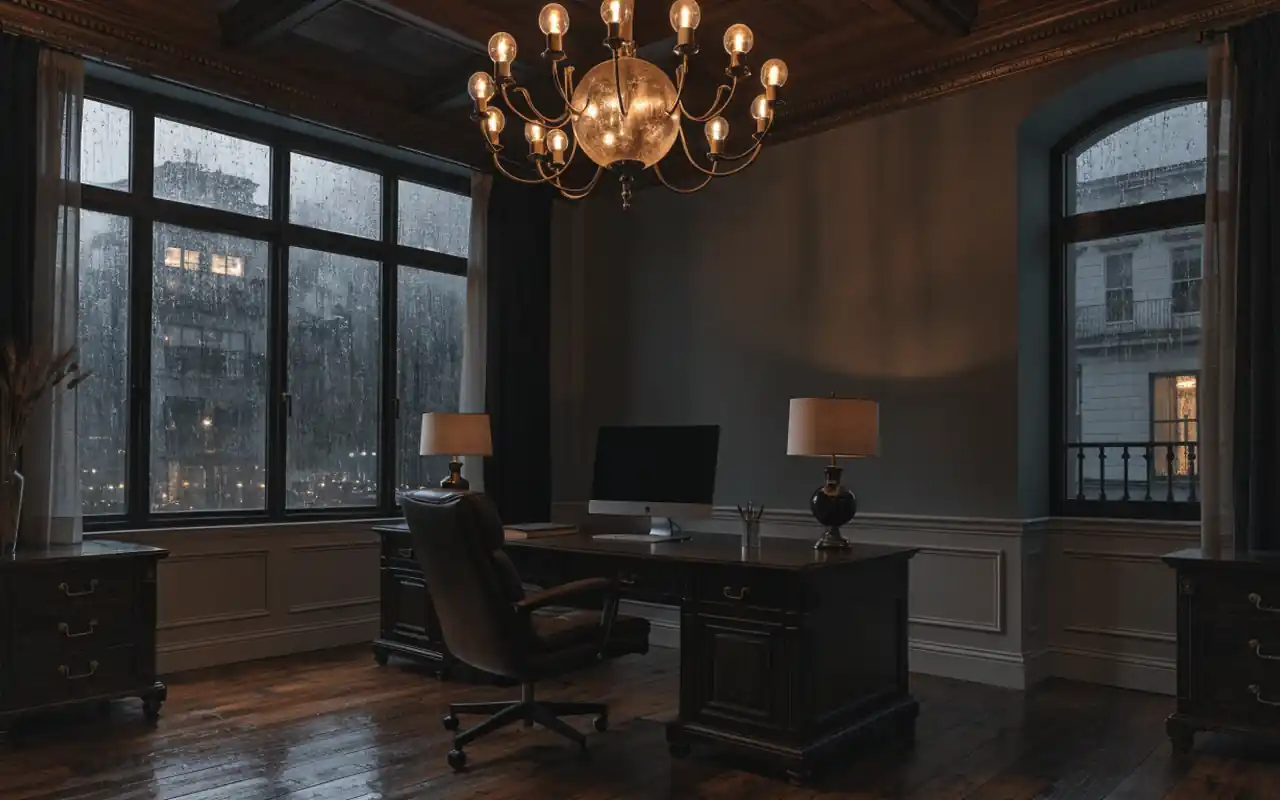
Dimmers matter more than fixture count. Set two presets and you will use both: a bright one around 70% for games and company, and a low one near 20% for movies. Smart bulbs and smart plugs do this without an electrician, which keeps the whole build renter-friendly.
Rental Note: Use plug-in dimmers and smart plugs rather than replacing wall switches, and mount strip channel with removable adhesive instead of screws.
Outcome: one room that works for poker night and a movie without changing a single bulb.
Lighting Moves That Kill the Mood
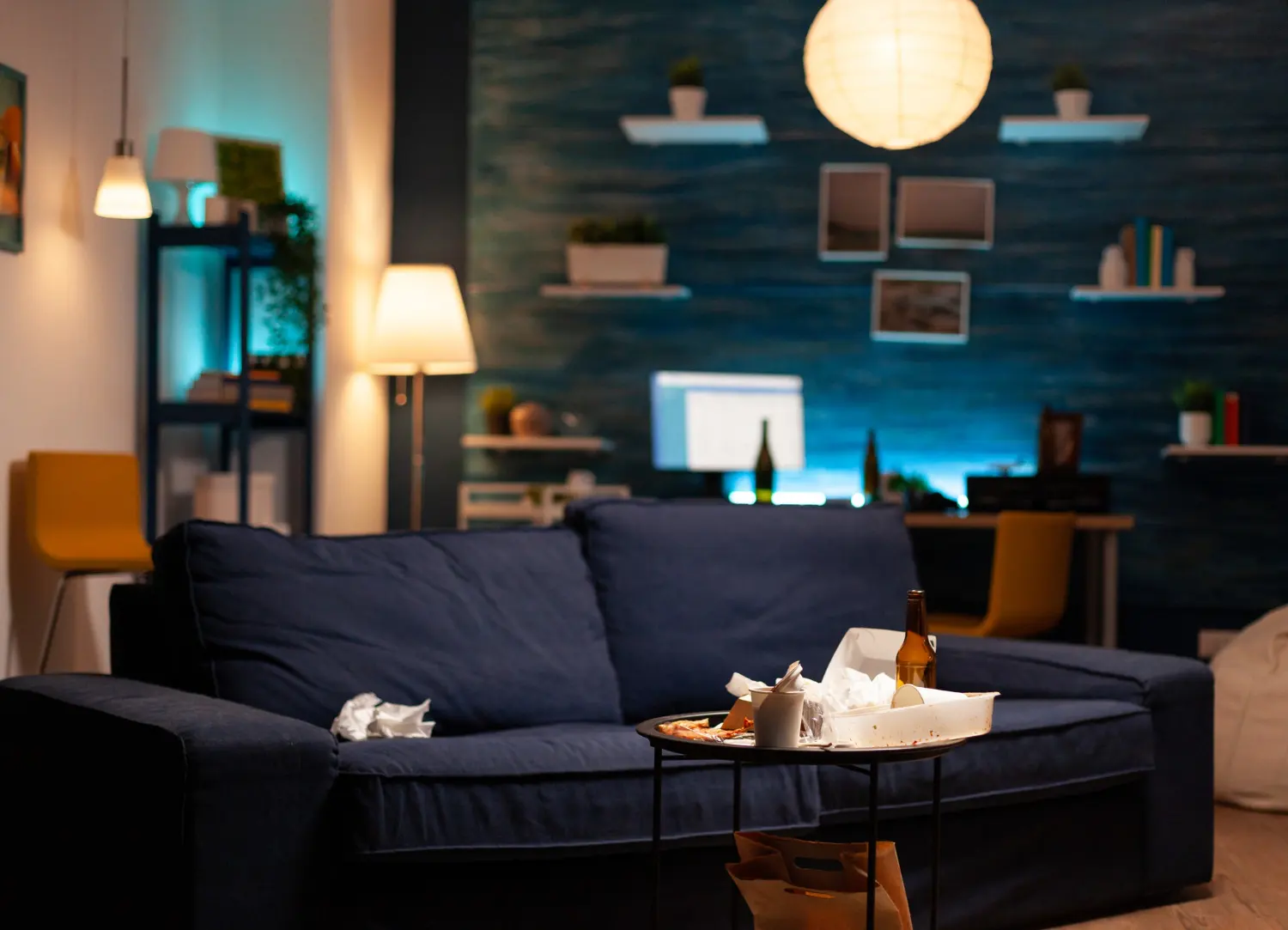
Instead of one bright ceiling fixture doing all the work, Try three smaller sources at different heights and put the ceiling light on a dimmer as backup.
Instead of running bare LED strip along every edge in the room, Try one hidden line inside a diffuser channel and let the rest of the surfaces stay dark.
Instead of hanging three neon signs because they were all on sale, Try one sign on the main wall and framed prints or shelving on the others.
Instead of mixing 2700K lamps with 4000K bulbs across the same zone, Try matching every bulb in the lounge area and saving cooler light for the workbench.
What This Costs, Layer by Layer
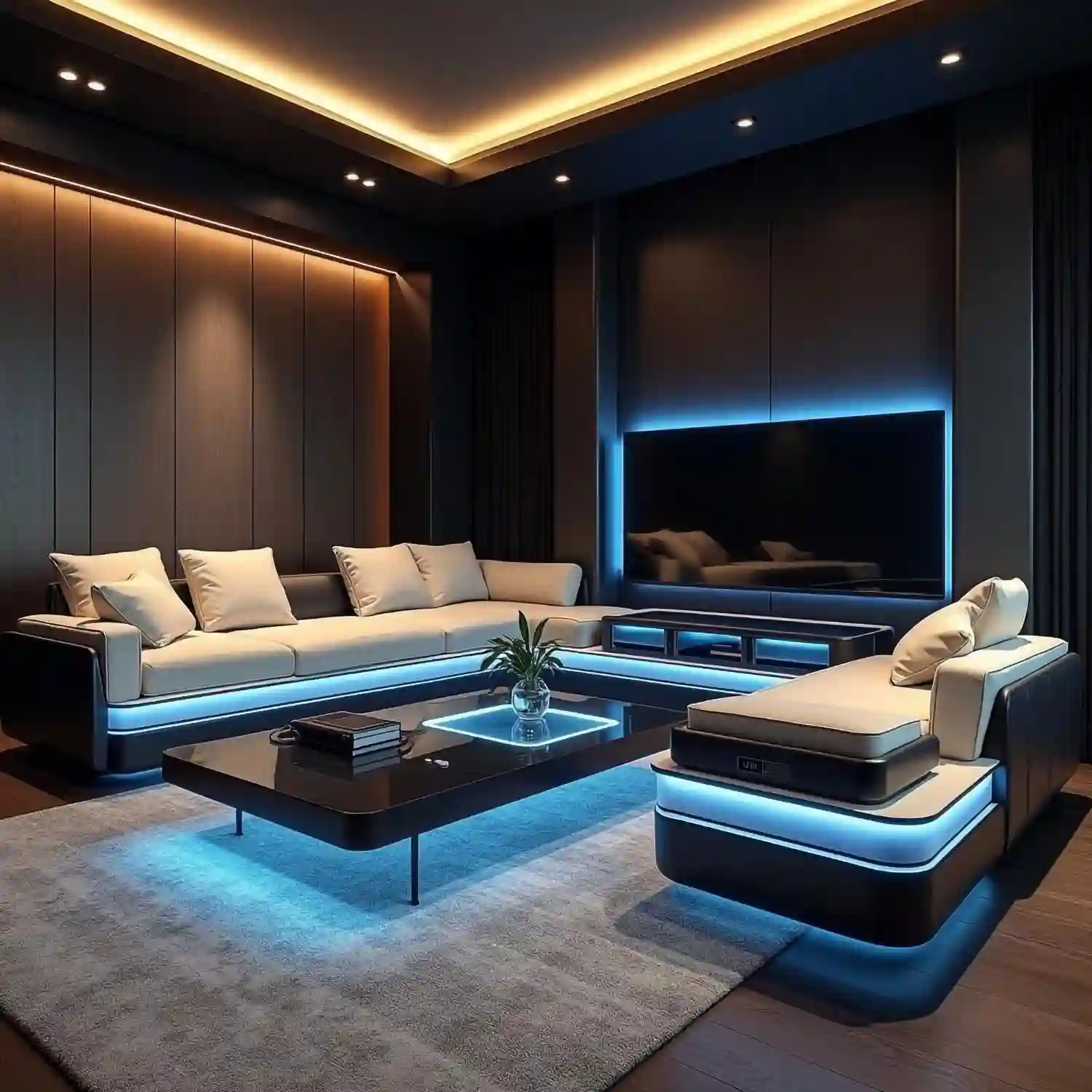
Lighting is one of the cheapest high-impact upgrades in the room, because most of the budget goes to bulbs and strip rather than construction. On the budget end, two plug-in lamps and warm 2700K bulbs will change the room for under $100. Mid-range, a 16-foot warm-white strip kit with an aluminum diffuser channel and a dimmer runs $35–$90 and adds an entire layer. The premium spend is the sign — a custom LED neon piece at 24–30 inches typically lands between $180 and $500, with larger 36–48 inch signs climbing past $1,000.
| Project | Estimated Cost | Impact Level |
|---|---|---|
| Two plug-in lamps with 2700K bulbs and a plug-in dimmer | $60–$140 | High |
| 16 ft warm-white CRI 90+ LED strip with diffuser channel | $35–$90 | High |
| Custom LED neon sign, 24–30 inches, one or two colors | $180–$500 | Medium |
| Full four-layer setup: lamps, hidden strip, task pendant, one sign | $400–$900 | Very High |
Best First Upgrade: Swap the overhead bulb for a dimmer-compatible 2700K bulb and add two plug-in lamps — under $100 and it changes the room immediately.
Skip for Now: Hardwired recessed downlights. They cost the most, need an electrician, and light the room from the worst possible angle for lounging.
More cheap wins live in our man cave ideas on a budget roundup.
Final Recommendation: Does This Trend Last?
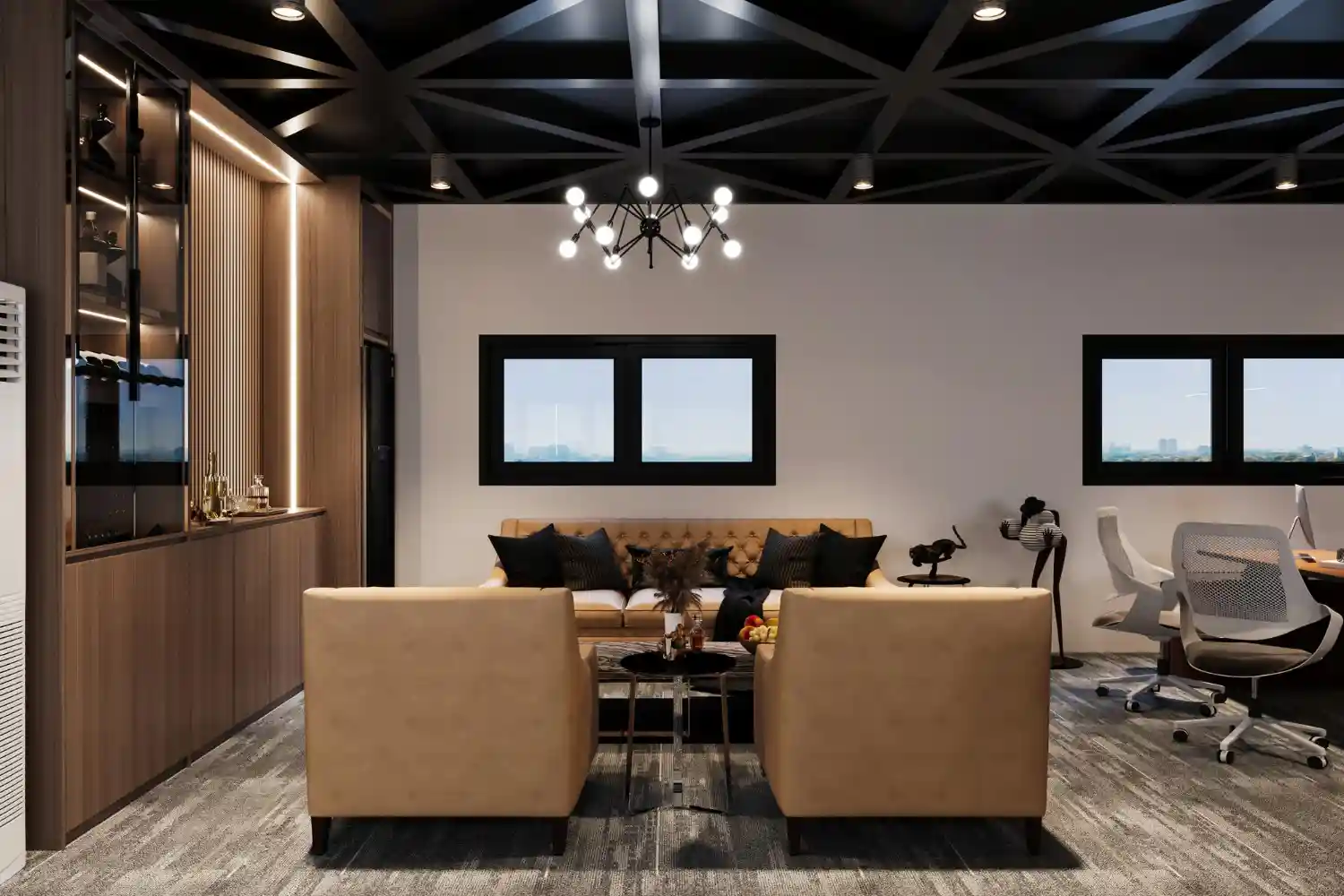
This one lasts, because it is not really a trend — it is the same layered approach that has governed good living-room and restaurant lighting for decades, finally applied to a room that used to get one bulb and a beer sign. The RGB rainbow will keep circling back in gaming corners, and that is fine. It just will not run the whole room again.
Designer’s Verdict: Warm layered light with a single neon focal point wins, because it makes cheap furniture look better and expensive furniture look right — something a color-cycling strip has never done for anyone. Explore more room-by-room inspiration across all our room ideas.
DESIGNER TIP: If you only change one thing this month, put the room on a dimmer. A $20 plug-in dimmer does more for the atmosphere than a $200 fixture at full brightness.
Frequently Asked Questions
Conclusion
Man cave lighting stops being a problem the moment you stop asking one fixture to do five jobs. Give the room a warm 2700K base, hide one strip of LED where the source never shows, aim real light at the bar or table, and let a single neon sign carry the personality. Start with a dimmer and two lamps, then build outward — more setups worth copying are waiting in our home decorating ideas collection.
Next Steps
- Turn off your overhead light tonight and mark the two darkest corners — those are your floor lamp positions.
- Replace every bulb in the lounge zone with a dimmable 2700K bulb so the whole area matches.
- Order one 16-foot warm-white LED strip kit with an aluminum diffuser channel for your bar or ceiling cove.
- Measure the wall people face when they sit down, then size a single neon sign to roughly one-third of that wall’s width.