TL;DR
- Almost any room works — basement, garage, spare room, or shed — when you plan the layout around one clear focal wall before choosing furniture.
- A functional small man cave starts around $500 for a cosmetic build. A fully styled setup with seating, AV, and decor lands between $1,500 and $3,000.
- Wall-mounted shelves, modular seating, and storage ottomans do the most work in tight spaces — oversized furniture is the most common build mistake.
- Sports den, gaming cave, rustic bar lounge, and office lounge are the four themes that scale down to a compact room without losing their identity.
- Start with 15 Small Man Cave Ideas to Maximize Every Square Inch for hands-on room-by-room examples built specifically for tight spaces.
Why Most Small Man Caves Feel Cluttered — And How to Fix It
Why do so many small man cave ideas fall flat in practice — too much gear, no clear purpose, and nowhere comfortable to actually sit? The answer is almost always the same. The room tried to be four things at once.
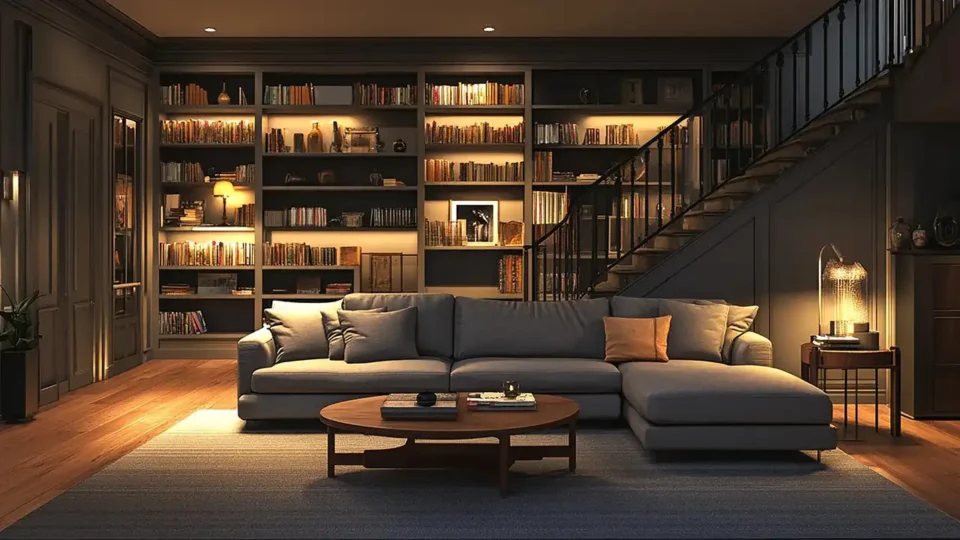
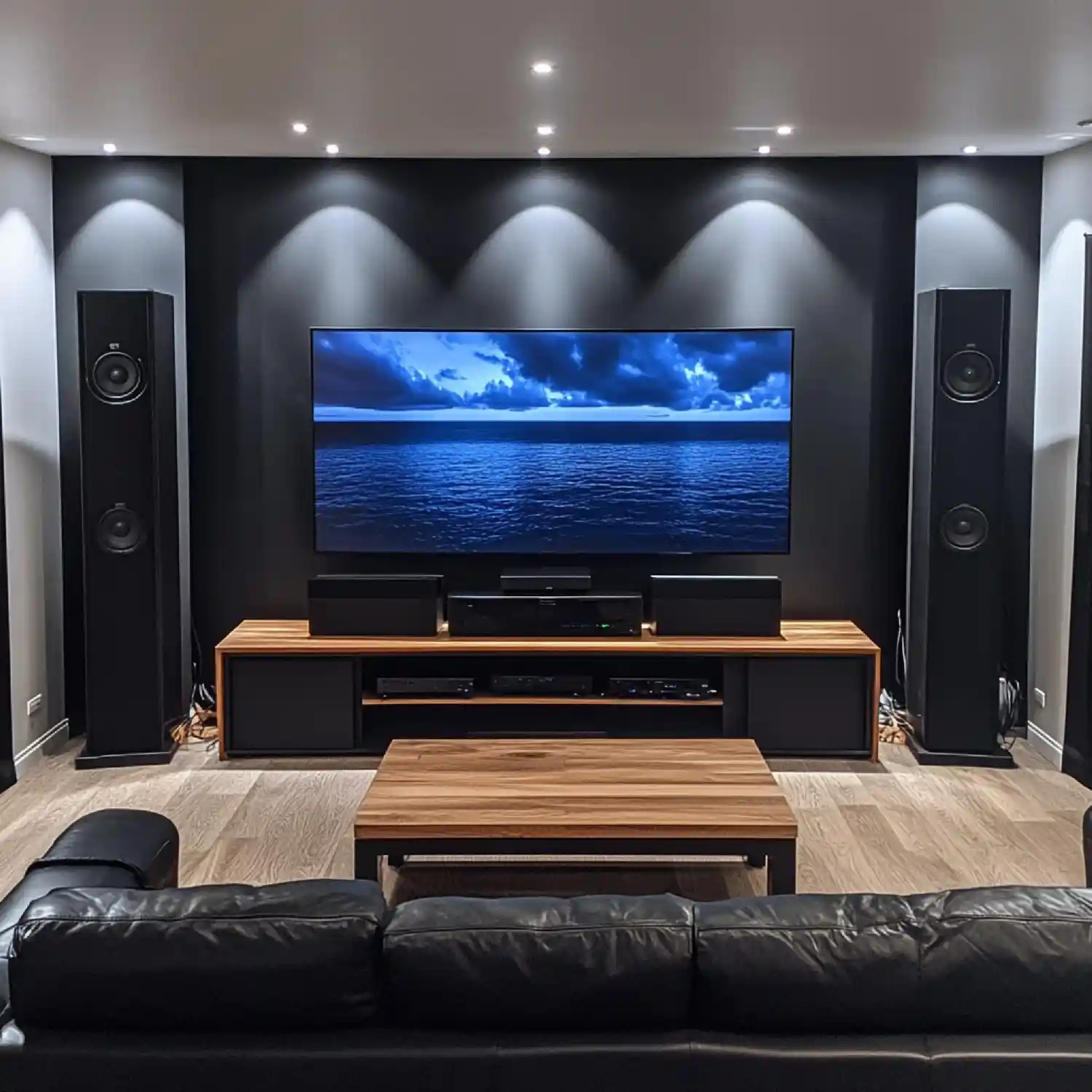
A small man cave works best when it starts with a single focal point — a TV wall, a bar counter, or a game table — and builds outward from there. The focal point decides where furniture sits, where lighting points, and what gets cut from the room entirely. For spaces under 200 square feet, one primary function and three pieces of furniture are almost always enough to build a finished, comfortable retreat. More than that and the room stops reading like a sanctuary and starts reading like a junk room with good intentions.
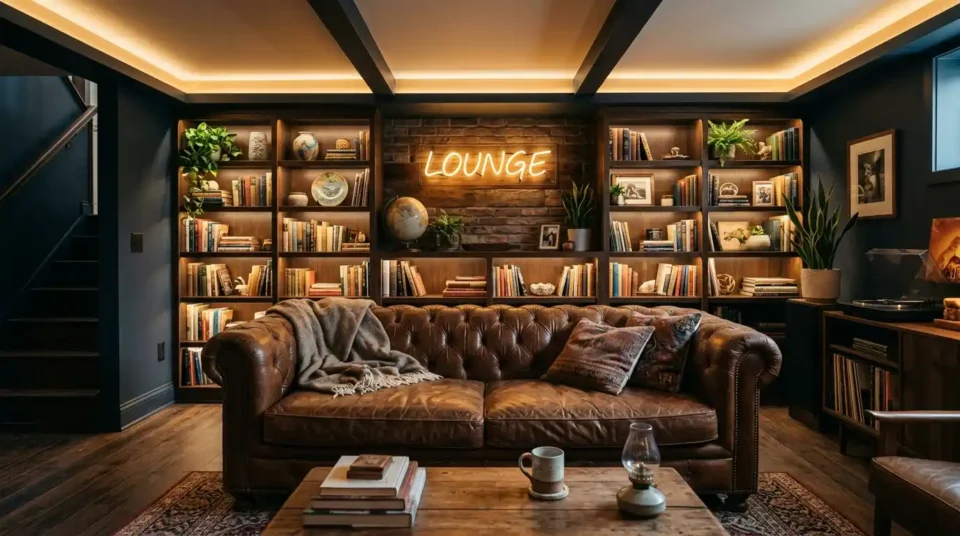
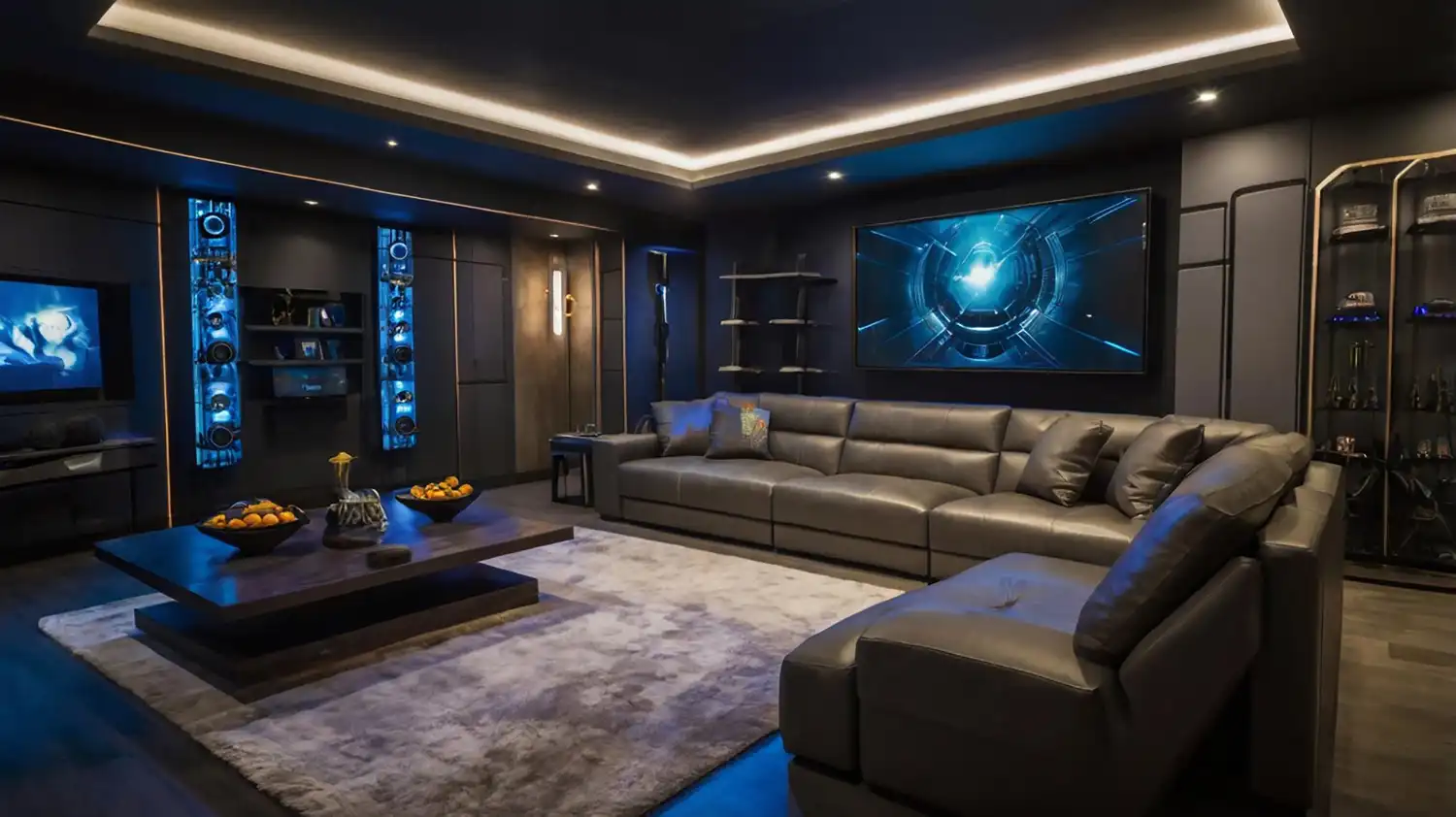
The materials do the heavy lifting in a compact space. Dark wood shelving, leather or faux-leather seating, warm-tone LEDs at 2700K, and one strong wall treatment — wood paneling, brick veneer, or dark paint in charcoal or deep navy — all signal man cave without needing square footage. Small man cave ideas succeed when the material choices are strong, not when the room is large.
For the full collection of man cave designs and setups at every scale, see 25 man cave ideas for the ultimate personal sanctuary — the root hub that covers every theme, room type, and style before you zoom into the small-space and budget-first versions here. Explore all of our home decor ideas and room guides at 101homedecor.com. Bookmark this guide for quick reference.
KEY TAKEAWAY: One focal point, one primary function, and the right materials turn even 100 square feet into a finished man cave.
| Quick Takeaways | |
|---|---|
| Focal Point | Pick one: TV wall, bar counter, game table, or workshop bench. Build the entire room outward from it. |
| Function | One primary purpose per room. Trying to be four things at once kills the vibe in a tight space. |
| Materials | Dark wood, leather, warm LEDs at 2700K, and one panel or dark-paint feature wall signal man cave without square footage. |
| Furniture Count | Three pieces maximum for rooms under 150 sq ft — focal unit, seating, one side piece. Nothing beyond that until the room is finished. |
| Budget | A cosmetic build starts at $400–$500. A fully styled small man cave runs $1,500–$3,000. |
Small Man Cave Planning Checklist
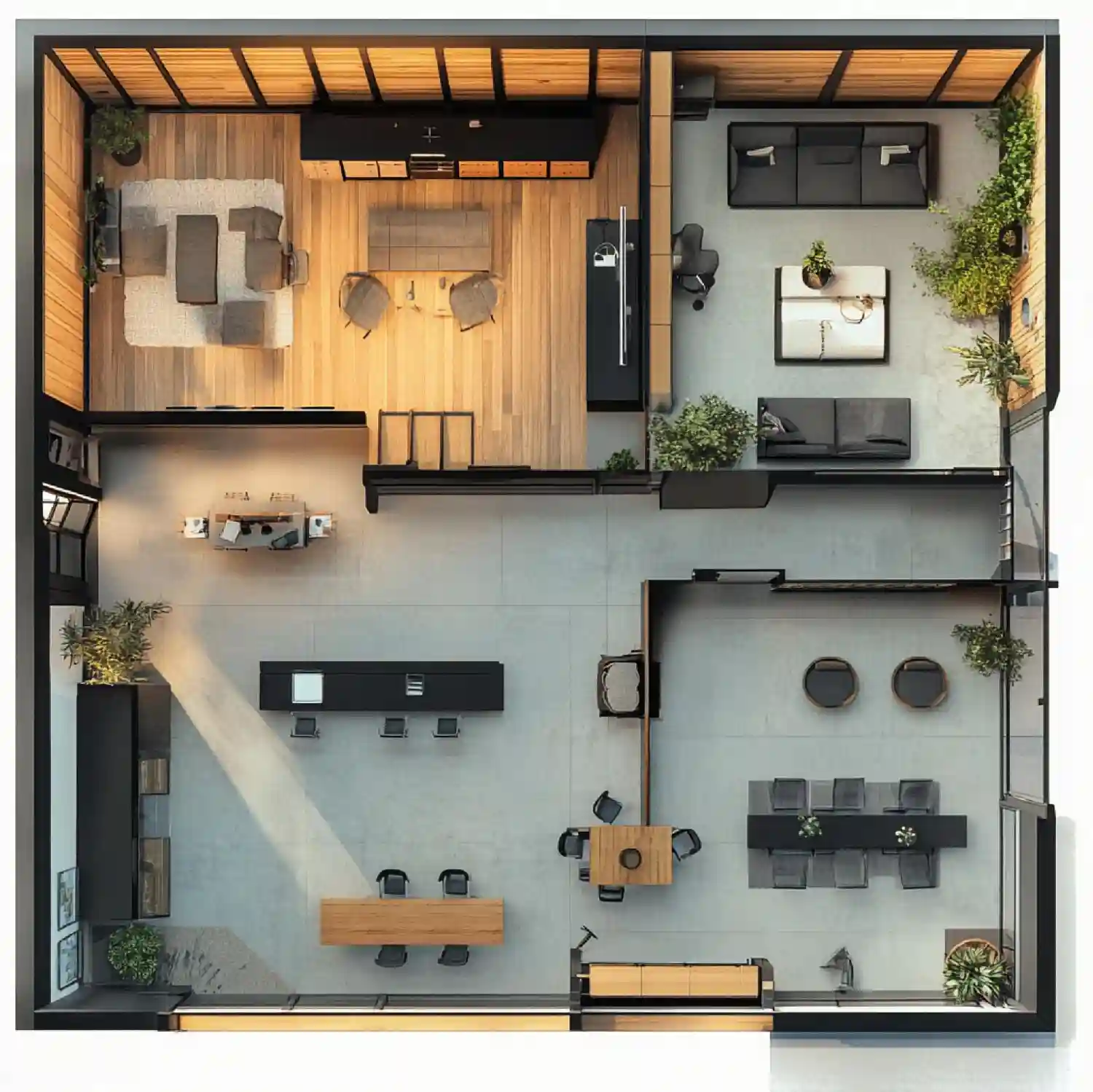
- Measure the room: width, length, ceiling height, and door-swing direction before planning any furniture — outlet and cable locations matter too.
- Identify the focal wall — usually the longest or most prominent wall — and plan your TV, bar, or gaming setup against it first.
- Decide on one primary function: sports den, gaming setup, home bar, office lounge, or music and hobby room.
- Choose a wall treatment before any furniture arrives: dark paint (charcoal, deep navy, or forest green), wood paneling, or brick veneer sheets.
- Apply a three-piece furniture rule: one primary seating piece, one media or bar unit, one side table or storage piece. Add nothing beyond that until the room is completely styled and you’re sure it fits.
- Plan lighting in three layers — ambient (recessed cans or ceiling LED strip), task (reading or desk lamp), and accent (LED strip behind the TV or under floating shelves).
- Allocate 25–30% of your total budget to the focal piece — the TV wall setup, bar counter, or gaming desk. This one item sets the tone for everything else in the room.
KEY TAKEAWAY: A floor plan, a focal wall, and a three-piece furniture limit prevent most small man cave mistakes before a single dollar is spent.
Small Basement Man Cave Ideas
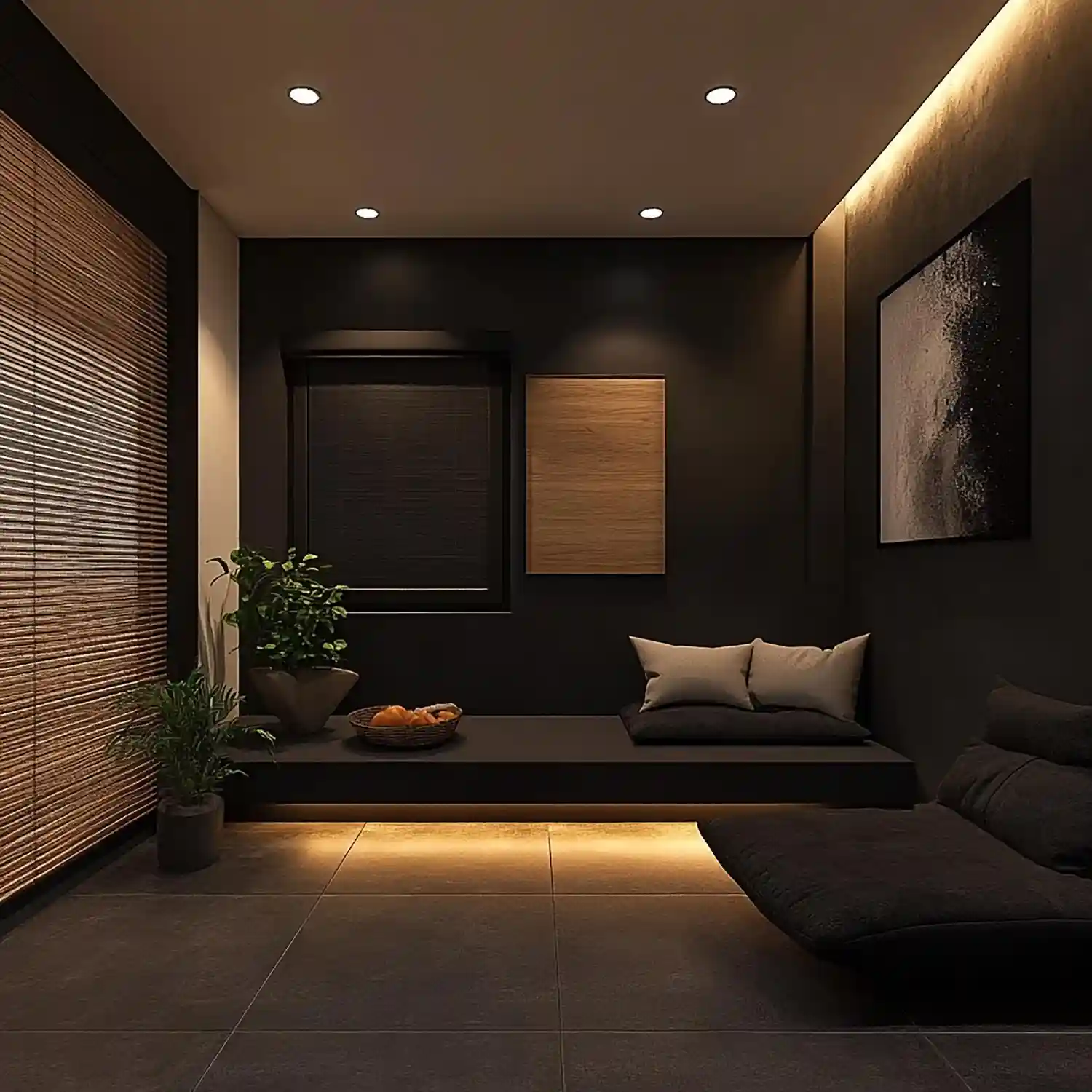
Basements are the most common home for a small man cave — and the most forgiving. Low ceilings, concrete floors, and no natural light are liabilities in every other room. In a man cave, they become assets.
Paint the ceiling the same dark color as the walls. A low ceiling in charcoal or matte black disappears. The room reads like a proper den instead of a storage space with furniture in it. This one move is the most underused trick in basement man cave design — and it costs less than $100.
For layout in a basement under 250 square feet, run the TV or bar along the longest wall. A sectional sofa or two oversized recliners in front creates the viewing zone without touching the opposite wall. Add open floating shelves above and beside the TV for collectibles, framed jerseys, or bar glassware. One clear path from the door to the seating is all the floor plan needs.
Flooring transforms a basement faster than any other single change. Luxury vinyl plank in a warm walnut or dark oak tone runs $3–$5 per square foot installed and handles moisture better than carpet. A jute or dark industrial area rug over existing concrete adds warmth without a full flooring install at all.
For a full room-by-room guide with layout blueprints, see our man cave basement ideas — covering low ceilings, moisture management, built-in bar setups, and theater configurations for tight basement spaces.
KEY TAKEAWAY: Match the ceiling paint color to the walls in a basement man cave — the low ceiling becomes the room’s best feature, not its worst.
DESIGNER TIP: In a basement man cave with no natural light, run warm LED strip lighting along the ceiling perimeter rather than installing a single overhead fixture. It creates the illusion of depth along the walls and fills the room with the kind of even, low-glare glow that overhead cans struggle to deliver in a compact space.
Small Garage Man Cave Ideas
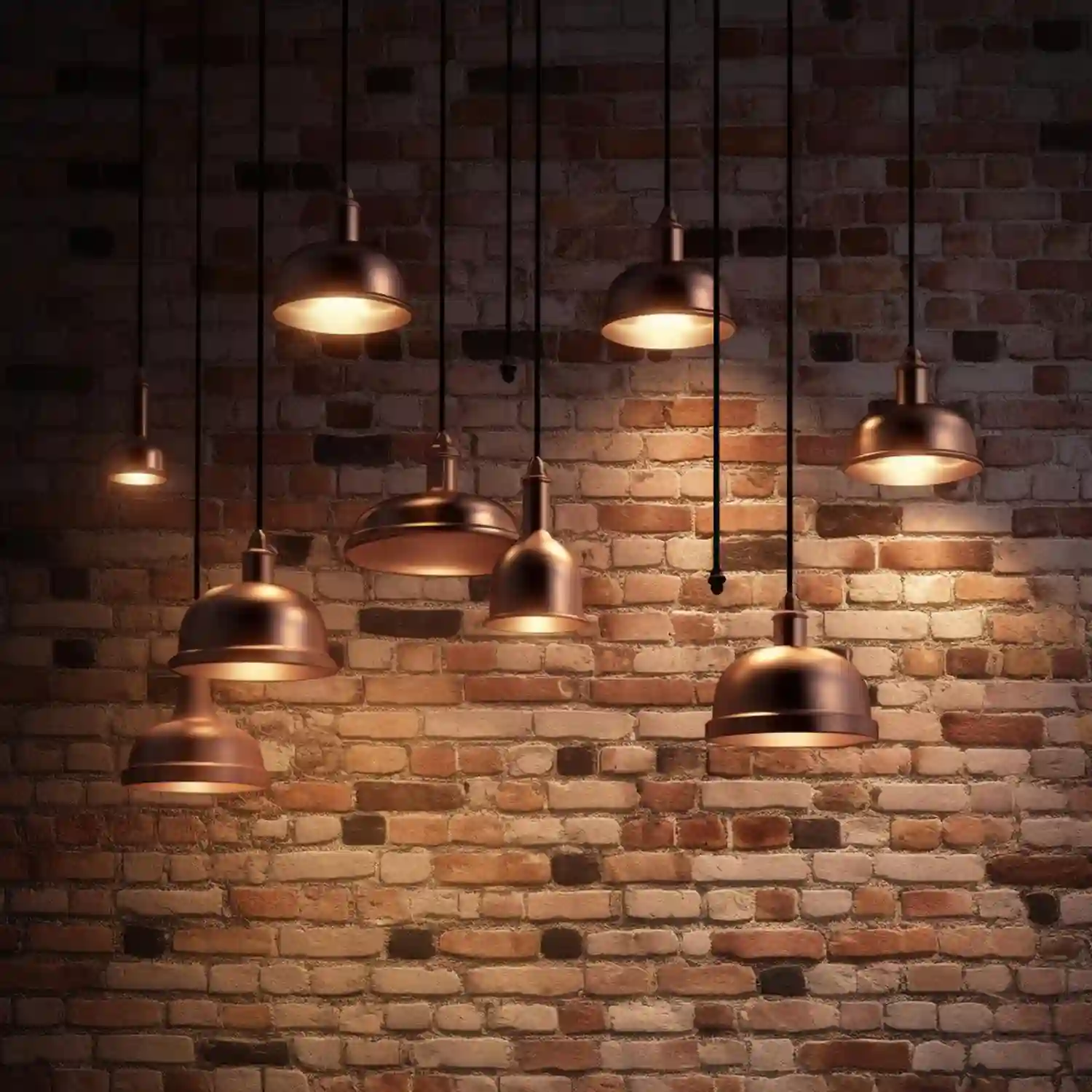
A single-car or half-car garage gives you 150–240 square feet — enough for a proper small man cave with careful planning. The challenge is what happens before any decor: insulation and climate control.
A well-insulated garage with a mini-split unit or portable AC is the line between a year-round retreat and a space you use three months of the year. Insulating garage walls with rigid foam board runs $300–$600 in materials for a typical single-bay space. A mini-split unit costs $700–$1,500 installed, but pays back in genuine daily usability across every season.
For layout, the entertainment or bar wall goes along the back of the garage. Heavy-duty wall-mounted shelves along the side walls keep tools, gear, or collectibles organized without eating floor space. A fold-down workbench or a Murphy-style bar unit gives dual-purpose utility without a permanent footprint cost. If the bench is the point rather than the bar, see our workshop man cave layouts.
The aesthetic that fits a small garage best is industrial or vintage. Concrete floors, exposed ceiling joists, a corrugated metal panel on one accent wall, and Edison bulb pendants in brushed bronze. This look costs less because it works with the existing structure rather than covering it.
Source Note: Mini-split installation costs vary by BTU size, existing electrical setup, and labor market — get at least two local quotes before budgeting.
See our full garage man cave ideas guide for layout options, insulation strategies, and budget-tier examples from a basic cosmetic build to a fully equipped setup.
KEY TAKEAWAY: Insulate first, decorate second — a garage man cave that is unusable in summer defeats its own purpose before a single jersey is hung.
Spare Room Man Cave Ideas
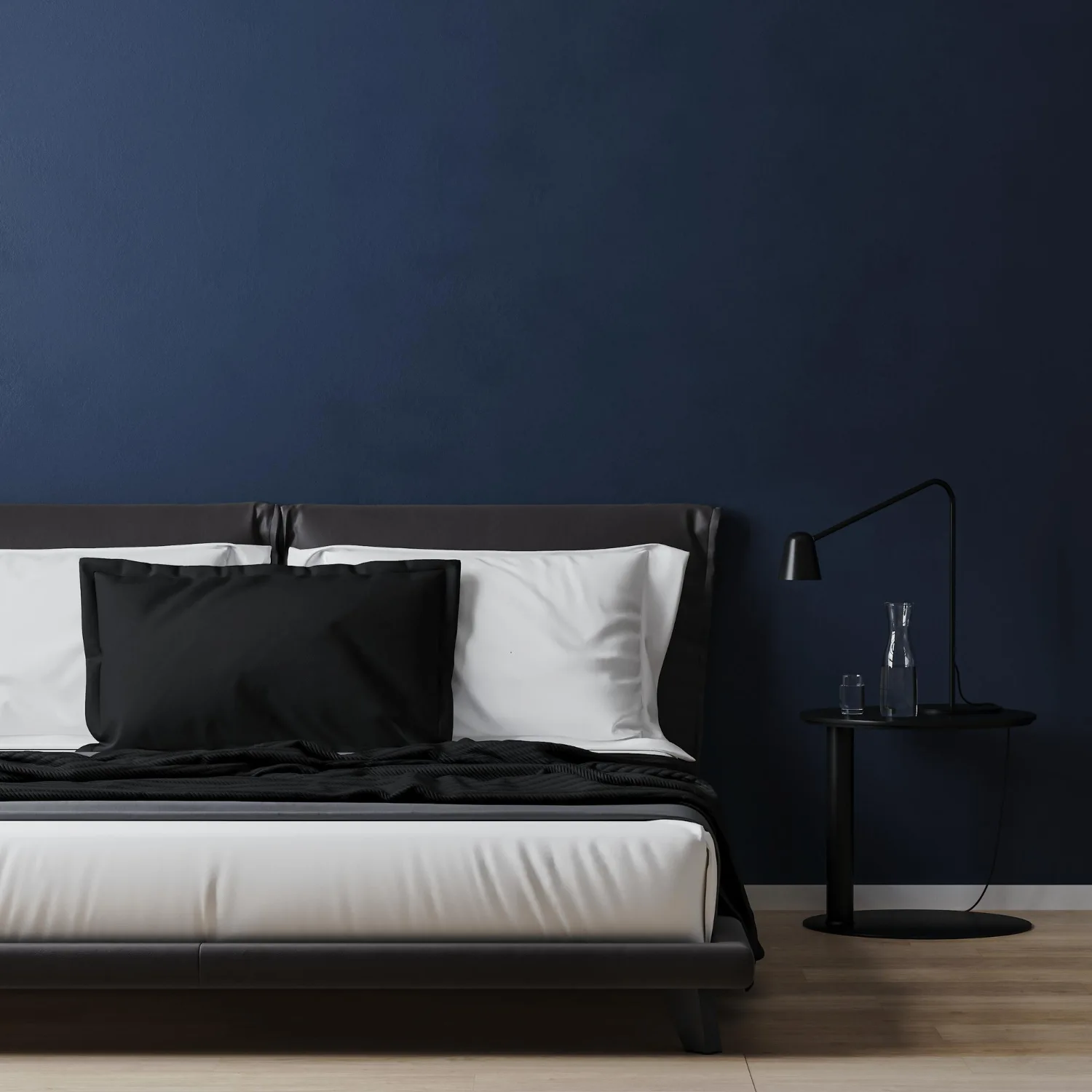
A spare bedroom is the easiest room to convert because it already has finished walls, a door that closes, flooring, and lighting. A 10×12 or 12×14 spare room gives you 120–168 square feet — enough for a single-function man cave that genuinely feels finished.
The closet is the most underused asset in a spare room conversion. A built-in bar setup behind bifold doors — bar shelving, a mini fridge, a small countertop, and glassware — costs $400–$800 in materials. Close the doors and the room doubles as a guest space, and our guest-ready spare bedroom layouts take that further. Open them and it’s a bar. This one decision separates a room that truly works from one that just looks the part.
If bar space is not the goal, convert the closet into a built-in media cabinet: AV equipment on the upper shelves, gaming console storage on the lower, and all cables routed behind the wall for a clean finish. The result looks custom-built for under $300 in materials.
The fastest aesthetic shift in a spare room conversion is one dark accent wall — deep navy, forest green, or charcoal — behind the TV or seating, paired with framed art prints or jerseys. Under $100 in paint. One weekend of work. The room stops looking like a guest bedroom.
For a version that balances a home office with the man cave feel, our man cave office ideas guide covers how to set up dual-purpose rooms where productivity and comfort share the same footprint. For broader space-saving strategies that apply directly to compact builds, browse our small spaces guides.
KEY TAKEAWAY: Convert the spare room closet into a hidden bar or built-in media cabinet before spending on furniture — it is the move that makes the room feel designed, not assembled.
Shed and Outdoor Small Man Cave Ideas
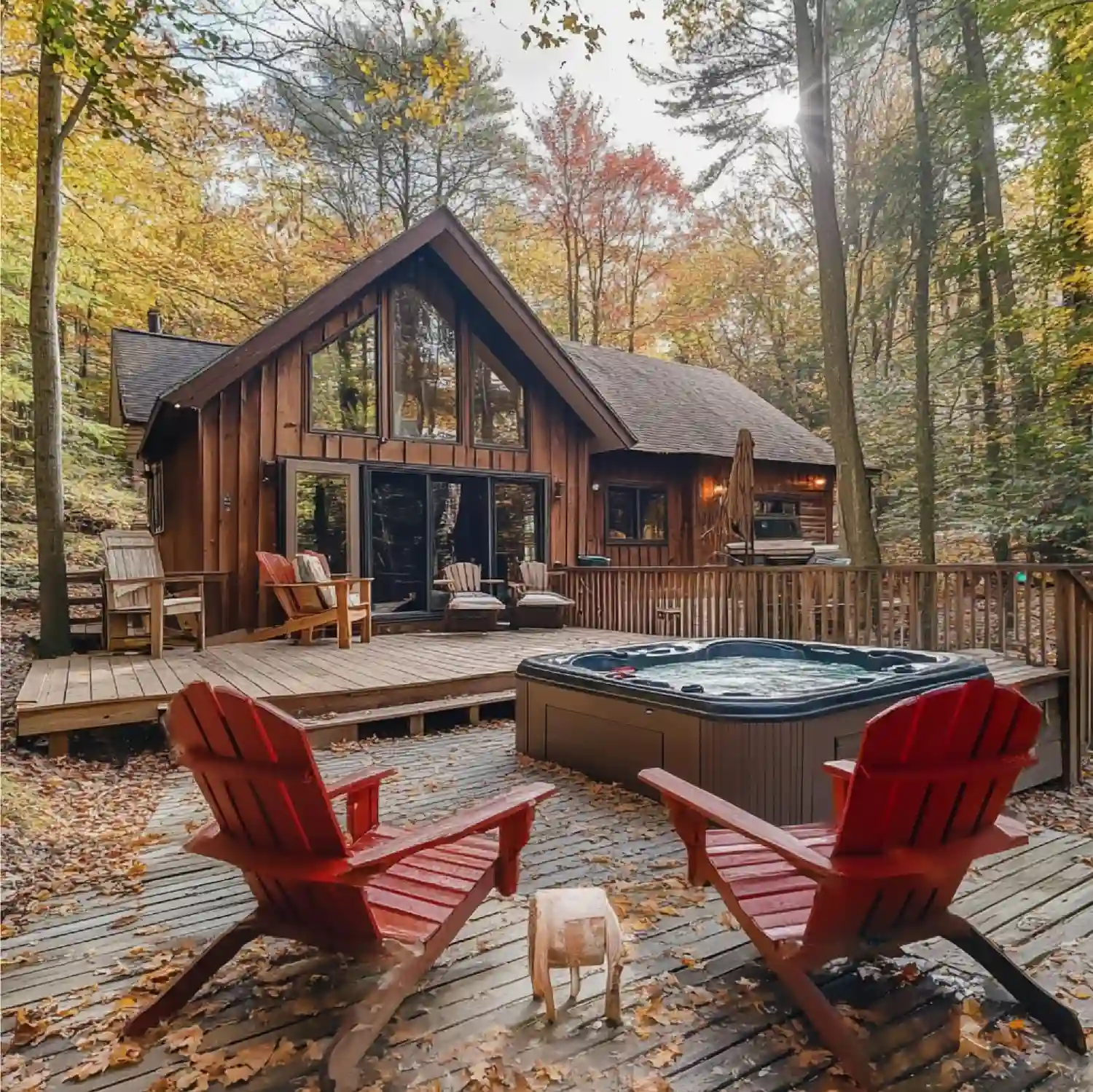
A backyard shed man cave is the most private option on this list. No shared walls, no foot traffic through the space, no negotiating TV volume with the household. A standard 10×16 shed gives you 160 square feet — the same footprint as most spare bedrooms.
Weatherproofing comes first. Insulate walls and ceiling with spray foam or rigid insulation board, run a dedicated electrical circuit from the main panel, and add a mini-split or portable AC unit. These three steps run $800–$2,500 depending on what is already in place, but they separate a livable shed man cave from a glorified storage space with a TV in it.
Material Note: Running a dedicated electrical circuit to a detached shed requires a licensed electrician and a permit inspection in most US jurisdictions — check with your local municipality before starting electrical work.
For style, lean into the outdoor-industrial or cabin aesthetic. Tongue-and-groove pine walls stained in a warm cedar tone, Edison bulb pendant lights, a compact mini fridge, a leather recliner, and a 55-inch wall-mounted TV. The smaller footprint makes this feel immersive, not limited.
Material Note: Tongue-and-groove pine shiplap for 160 square feet of wall coverage runs approximately $400–$700 in materials at standard lumber prices, depending on grade and regional pricing.
KEY TAKEAWAY: Insulation, climate control, and a dedicated electrical circuit are the non-negotiable foundation for a shed man cave — everything aesthetic comes after.
Budget at a Glance: What You Can Build at Every Price Point
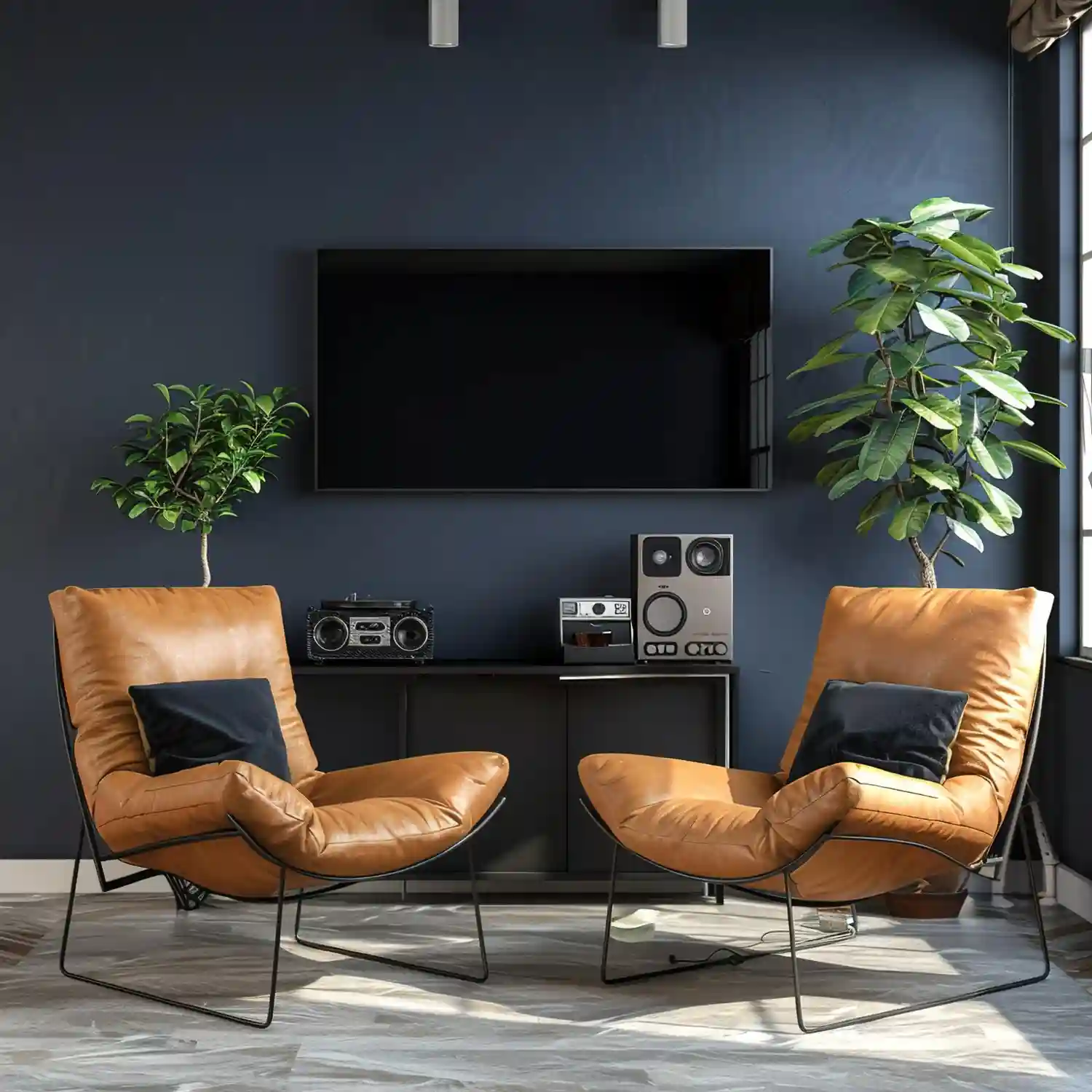
Most small man cave builds fail at the budget stage — either by overspending on the wrong things first, or by underspending cosmetically and wondering why the room never feels finished. Here is how the budget breaks down at three real levels.
Under $500 — Cosmetic Build. One dark accent wall in charcoal, navy, or forest green costs $60–$100 in paint and supplies. Warm LED strip lights behind the TV and under shelves run $40–$80. Framed jerseys, vintage posters, or team prints add $50–$150. A mini fridge runs $100–$180. No new furniture required — this build transforms a room that already has a couch and a TV.
$500–$1,500 — Core Setup. This level covers a quality 65-inch wall-mounted TV ($400–$700), one modular sofa or pair of recliners ($300–$600), LED accent lighting ($80–$150), a wall treatment such as wood paneling or brick veneer sheets for a single accent wall ($100–$250), and basic shelving and decor ($100–$200). This is the sweet spot for most small man cave ideas at an honest real-world budget.
$1,500–$3,000 — Fully Styled. A proper leather sectional or two real leather recliners, a wall-mounted TV with a built-in media console, custom floating shelves, a mini bar counter or cabinet, layered lighting (recessed cans, LED strips, and a floor lamp), plus a cohesive decor theme with collectibles, area rug, and finishing details. This is the build that feels genuinely complete.
For ongoing budget decorating strategies that apply directly to a man cave project, Budget Decor tips and guides cover how to prioritize, phase, and stretch a decorating budget room by room.
| Project | Estimated Cost | Impact Level |
|---|---|---|
| Dark accent wall (paint, primer, supplies) | $60–$120 | High |
| Layered LED accent lighting setup | $80–$200 | High |
| TV and media wall setup | $400–$1,200 | Very High |
| Seating (recliner pair or modular sofa) | $300–$900 | Very High |
Best First Upgrade: Paint one dark accent wall behind the TV or seating area — it shifts the entire room mood for under $100 and takes one weekend.
Skip for Now: A full built-in bar. Start with a mini fridge and a small bar cart. Add the built-in bar counter once the core seating and TV wall are in place.
KEY TAKEAWAY: Spend 50–60% of the total budget on seating and the TV or bar wall — these two items define the room more than anything else.
Space-Saving Furniture for a Small Man Cave
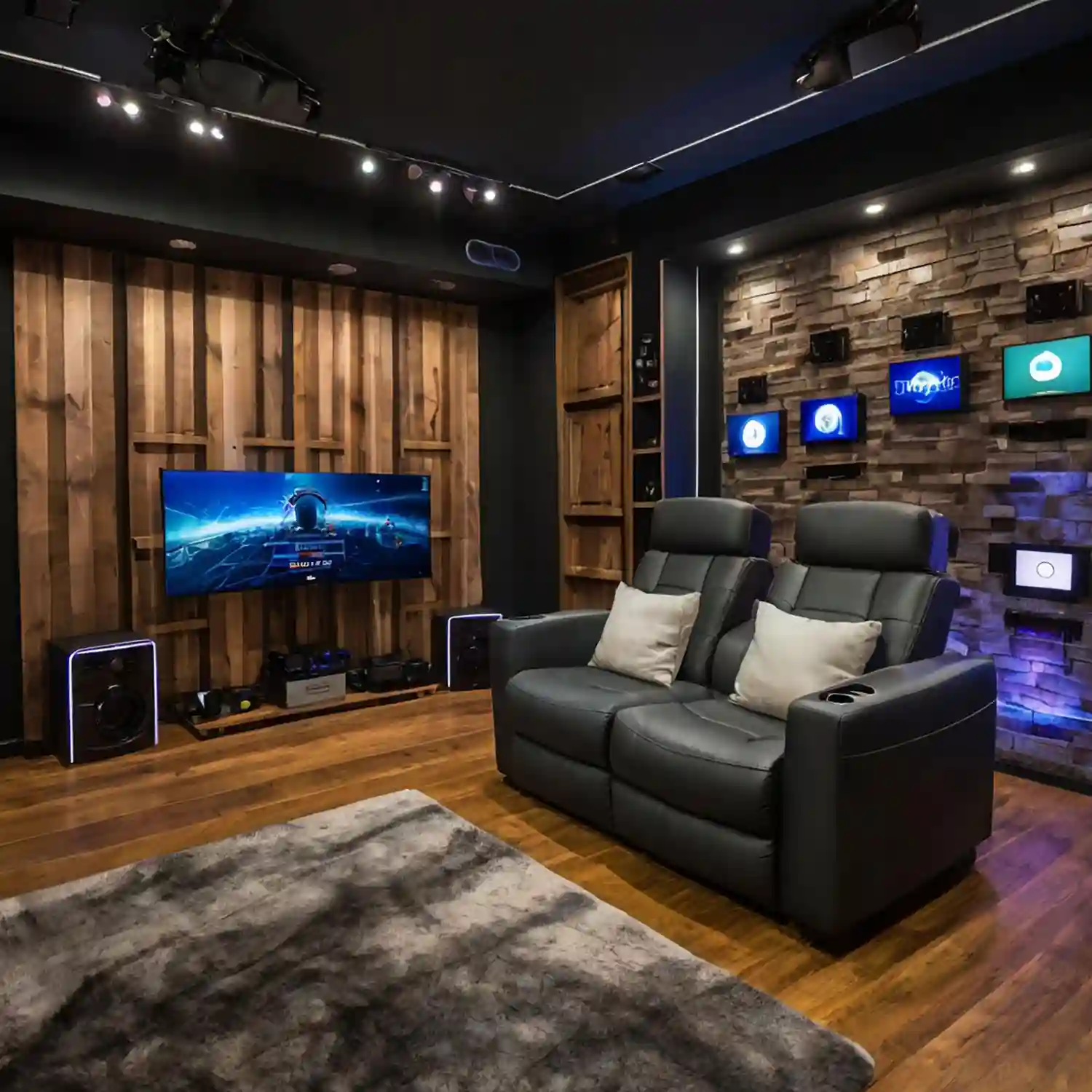
The furniture decisions in a small man cave are where most builds succeed or fall apart. Too large and the room feels blocked. Too sparse and it looks like an afterthought.
Wall-mounted TV and floating shelves. A wall-mounted 55–65 inch TV takes zero floor space. Floating shelves at 12-inch depth hold AV equipment, gaming consoles, and collectibles above and beside the TV without a bulky entertainment unit eating the floor. A floating media console mounted 18–24 inches off the floor completes the wall and keeps cables manageable.
Modular seating over a traditional sofa. In a room under 150 square feet, a standard three-seat sofa at 90–100 inches wide blocks the floor path entirely. Two modular sections — typically 54–60 inches combined — give the same seating capacity with a more flexible footprint. Look for sectionals with built-in USB ports and hidden storage in the chaise or ottoman base.
Storage ottomans over coffee tables. An ottoman with a lift-top lid stores controllers, remotes, and throw blankets. It works as a footrest and as an extra seat. A standard coffee table eats 8–12 square feet of prime floor space for almost no practical return in a tight room.
Mini fridge over a full bar unit. A 4.4–5.0 cubic foot mini fridge fits under a floating bar shelf or beside a media console. It holds a case of drinks plus snacks without the footprint cost of a full bar unit.
DESIGNER TIP: Choose furniture with legs rather than flat base panels whenever possible. Furniture raised 4–6 inches off the floor makes the room look larger — you see more floor, the space under each piece stays visible, and cleaning underneath is never a chore.
KEY TAKEAWAY: Wall-mounted TV, floating shelves, modular seating, and a storage ottoman handle a small man cave footprint better than any single statement piece.
Small Man Cave Themes That Scale Down Well
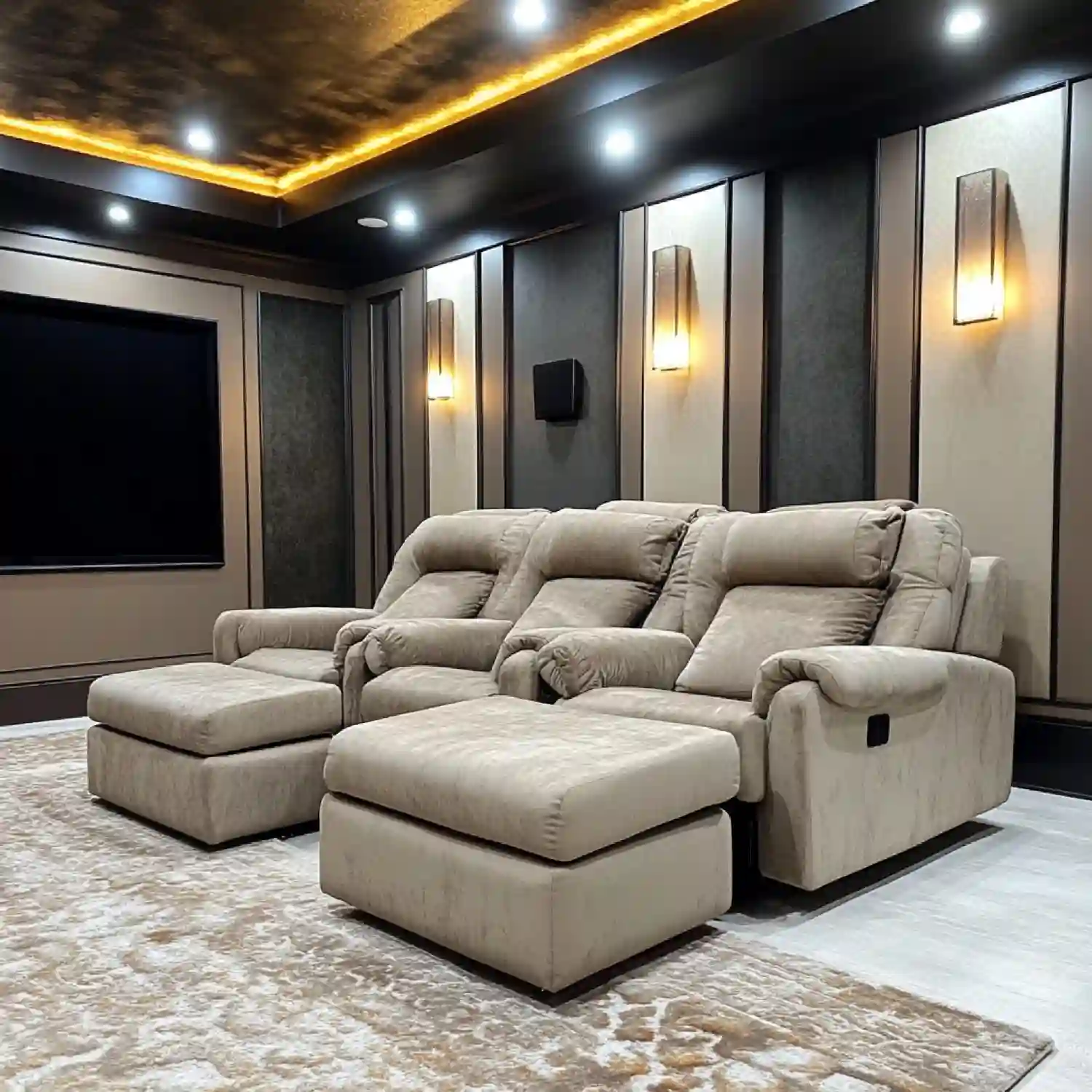
Not every man cave theme shrinks gracefully into a compact room. These four do — and each works between 100 and 200 square feet without losing its identity.
Sports Den. A dark accent wall in team colors, two or three framed jerseys, a 65-inch wall-mounted TV, a sports ticker strip, and team memorabilia on floating shelves. This theme works in 100 square feet and scales to 400 without a structural change. The visual density of collectibles and color does the heavy lifting.
Gaming Cave. A single desk setup with a monitor arm, under-desk cable management, RGB accent strips along the back wall, a gaming chair, and a pegboard behind the setup for controllers and headsets. The monitor arm is the critical piece — it frees desk space and establishes the right visual tone. For a more tech-forward take on a specialist setup, see how it extends in our golf simulator room man cave ideas guide.
Rustic Bar Lounge. A floating bar shelf (even 30 inches wide), two bar stools, a mirror backsplash, open shelving for bottles and glassware, and Edison pendant lights in aged bronze. This theme needs just 40–50 square feet of dedicated bar space. The rest of the room becomes the lounge. Raw oak shelves and leather bar stools maximize impact at minimum cost.
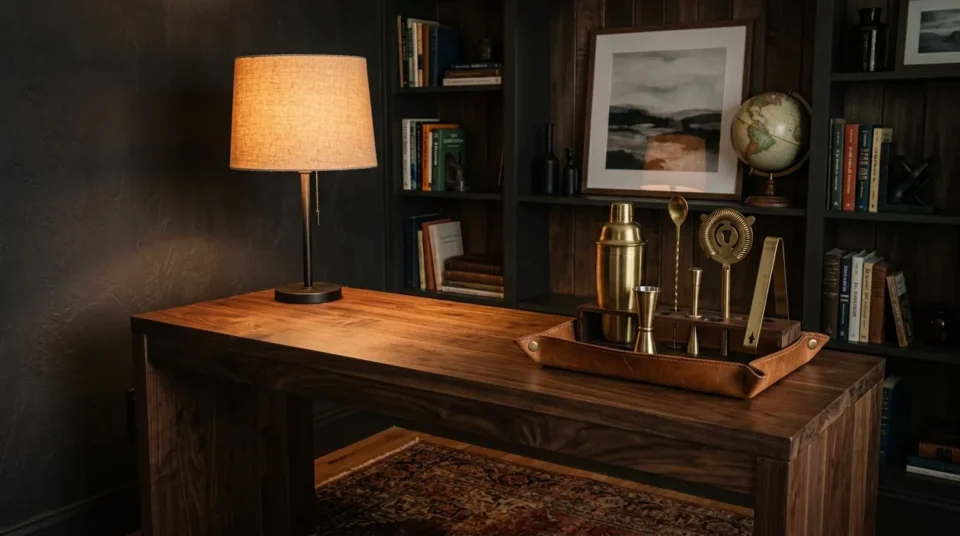
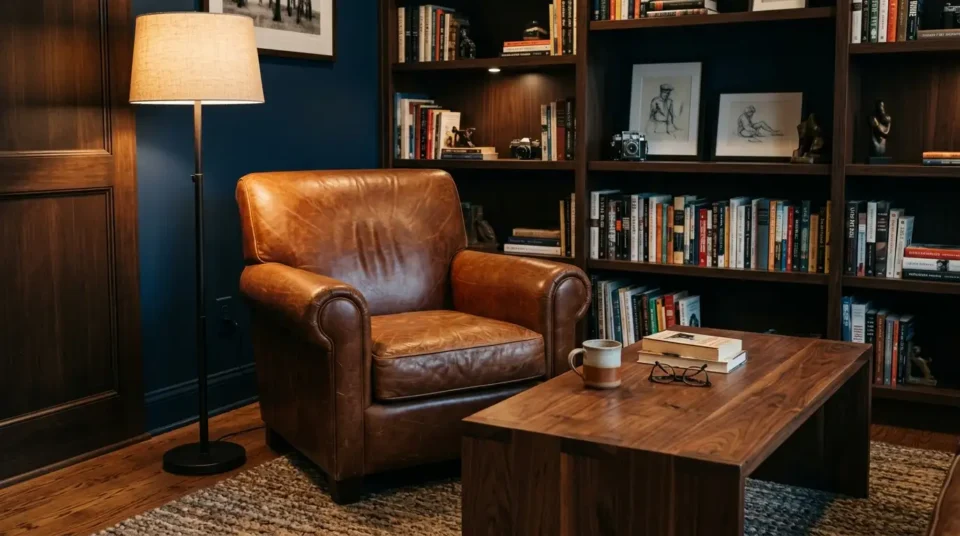
Classy Office Lounge. A leather wingback chair or low-profile leather sofa, a walnut media console, a credenza with a whiskey decanter and two crystal glasses, framed art in dark frames, and a pair of warm table lamps at 2700K. This version works in any room that also functions as a home office. See classy man cave ideas for the full version of this aesthetic — and 12 pole barn man cave designs if you want to see how themes like this scale into large, high-ceiling spaces.
KEY TAKEAWAY: Sports, gaming, rustic bar, and office lounge are the four themes that scale to a compact room without losing their identity.
Pitfalls to Skip in a Small Man Cave
❌ Too many themes at once → ✅ Pick one. A sports den that also tries to be a gaming cave, a bar lounge, and a workshop looks like a storage unit — not a retreat.
❌ One overhead light only → ✅ A single ceiling fixture in a small room creates flat, harsh light with no warmth. Replace it with warm recessed cans, LED strip accents behind the TV, and one floor lamp or table lamp at 2700K.
❌ Full-size sofa in a small room → ✅ A 90-inch sofa in a 12×14 room blocks the entire floor plan. Scale down to modular seating or two recliners sized to the actual room dimensions.
❌ Skipping the wall treatment → ✅ White walls in a man cave always look unfinished. One dark accent wall or a panel feature costs under $200 and changes the room completely.
KEY TAKEAWAY: Single theme, layered lighting, scaled furniture, and one strong wall treatment — fix these four things and most small man cave problems disappear.
Frequently Asked Questions
Conclusion
Small man cave ideas work best because the room is focused, not in spite of being small. The builds that feel most complete — the tight sports dens, the compact gaming rooms, the spare-bedroom office lounges — share the same structure: one focal wall, one primary function, and materials that do more than furniture count alone.
Editorial field note: A 10×12 spare bedroom with a dark navy accent wall, a wall-mounted 65-inch TV, two leather recliners, floating walnut shelves, and warm Edison pendant lighting feels like a finished sanctuary — not a compromise. The same room with white walls, four mismatched pieces, and one overhead light feels like storage. The wall treatment and the lighting do the heavy lifting. Everything else just follows.
Browse our full man cave ideas and design guides for every setup, style, and room type. Explore all our home decor and room ideas to find companion pieces across every part of your home. And wherever you start — $400 or $4,000, a shed or a basement — the approach stays the same: pick one focal wall, commit to one function, and let 101homedecor.com guide every decision from there.