Where to Start With Bathroom Wall Ideas
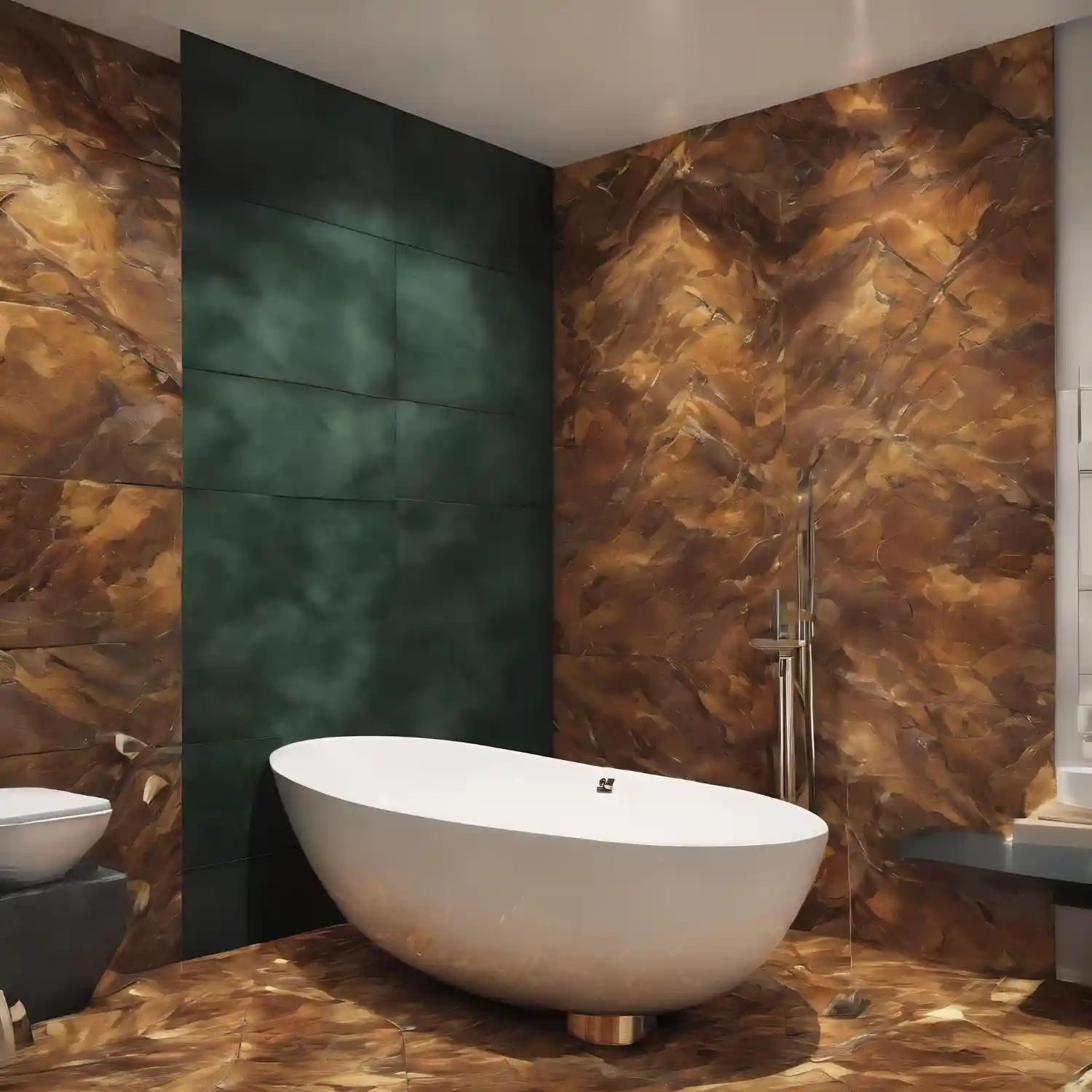
Blank bathroom walls are hard to picture. You know you want something better than flat paint, but tile, wallpaper, shiplap, and panels all compete for the same wall. If you have ever stood in the tile aisle unsure what belongs by the shower versus behind the sink, you are not alone.
Part of our guide to Bathroom Ideas.
The best bathroom wall ideas match each surface to how wet that wall gets. Tile belongs in the shower and splash zones because it shrugs off water. Wallpaper, shiplap, and paint work on dry walls away from spray. Pick the finish per wall, not per room, and the whole bathroom looks planned instead of pieced together.
That single rule is the spine of this guide. Below, we walk surface by surface, from shower tile to wallpaper to a half-wall of beadboard, so you can browse the look you want and see where it works. For a wider view of current finishes, our roundup of bathroom design trends for 2026 pairs well with this page. You can also start from our full home decor inspiration hub.
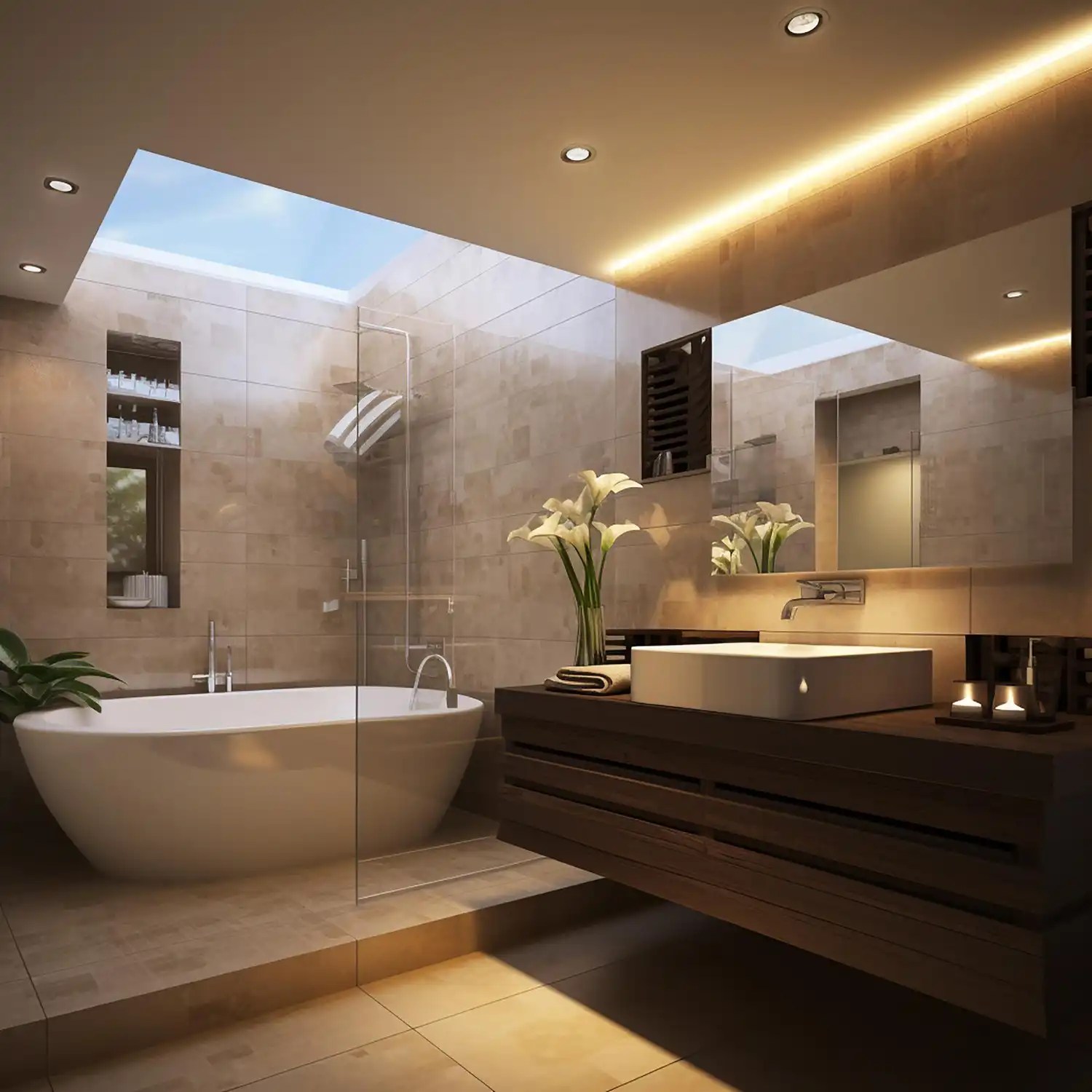
Editorial field note: A small bathroom with white walls and a single builder mirror often feels unfinished, not clean. Tiling one wall to the ceiling and leaving the rest in warm paint gives the eye a focal point. The room reads finished before a single towel is hung.
| Quick Takeaways | |
|---|---|
| Wet walls | Tile the shower and tub surround; nothing else survives daily spray. |
| Dry walls | Save wallpaper, shiplap, and paint for walls away from splash. |
| Half height | Wainscoting and half-tile protect the lower wall and cost less. |
| One focal point | Pick a single accent wall so surfaces do not fight each other. |
| Grout matters | Epoxy grout in showers resists stains and skips resealing. |
Bookmark this guide for quick reference.
How Do You Choose the Right Wall Surface?
Start with water. A bathroom has three zones: the wet zone (inside the shower and tub surround), the splash zone (behind the sink and toilet), and the dry zone (everywhere else). Tile owns the wet zone. The splash zone wants tile or a wipeable finish. The dry zone is open to almost anything, including wallpaper and wood paneling.
Durability is the second filter. Tile carries a PEI rating from 0 to 5 that scores how much wear it handles. Wall tile can sit at PEI 0 or 1 because walls take no foot traffic, while floor tile needs PEI 2 or higher. It helps to understand how the PEI durability scale rates tile before you fall for a delicate wall tile and try to use it on the floor.
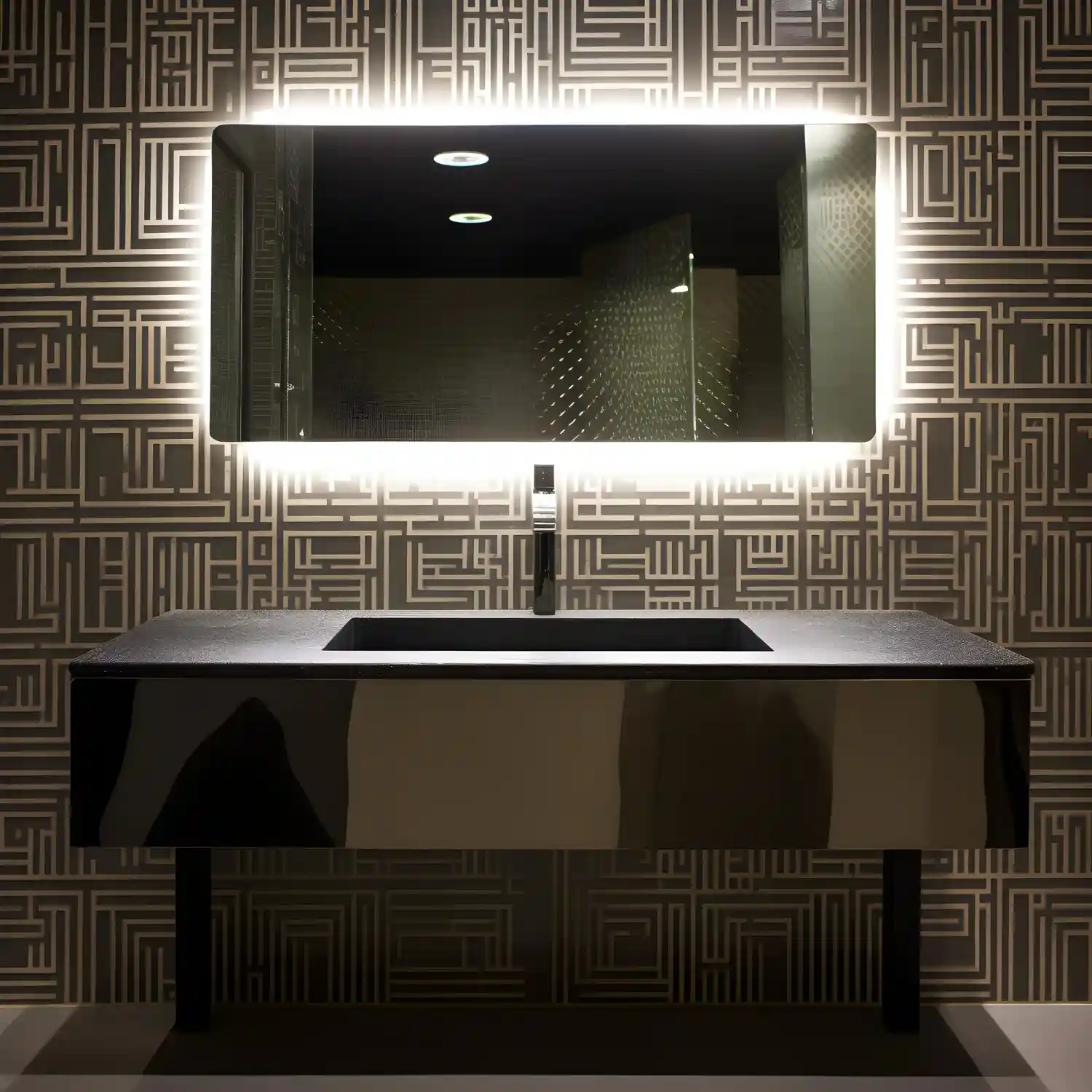
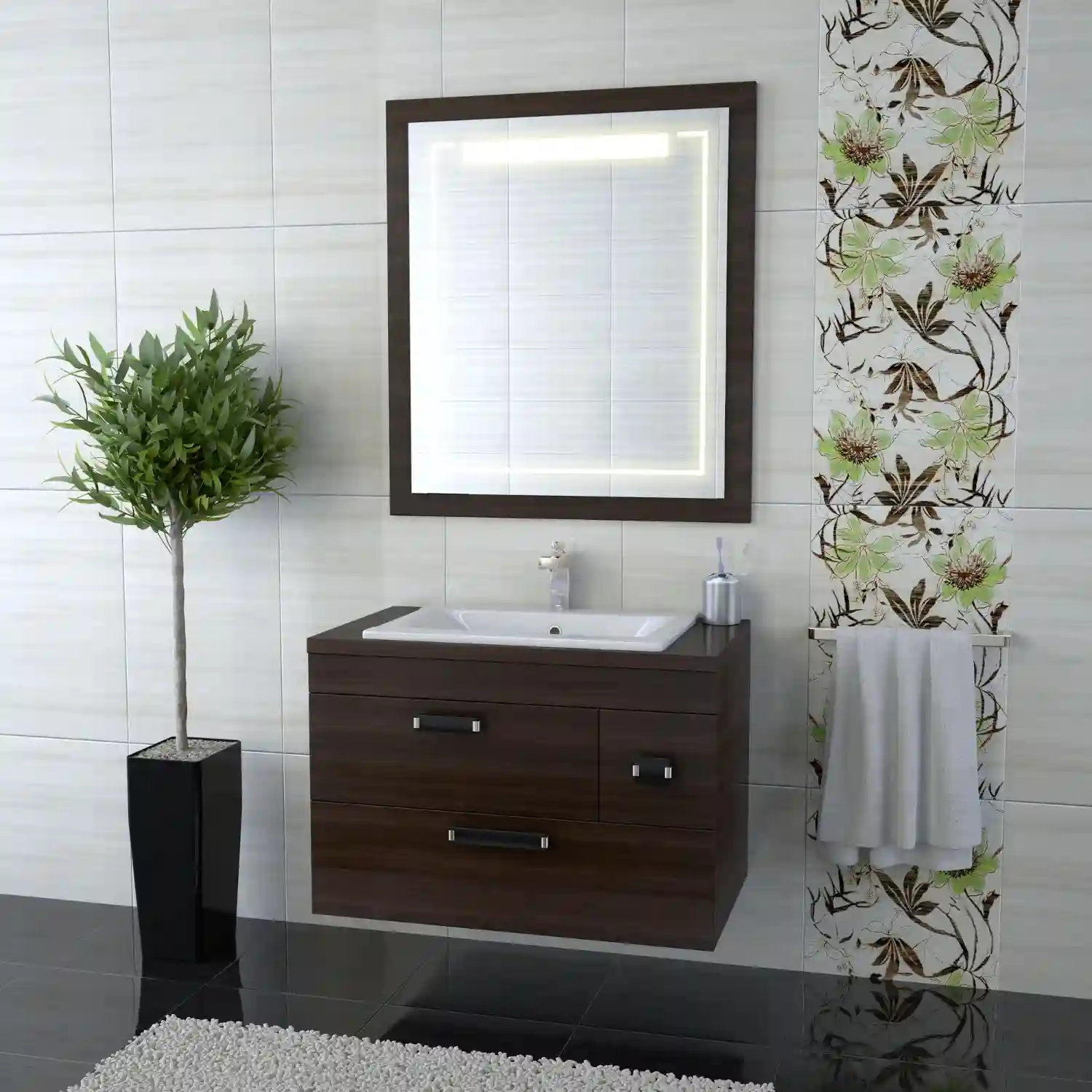
Style is the last filter, and it is the fun one. Once you know a wall is dry and low-traffic, you can layer in the look: warm beige, marble veining, green zellige, black-and-white geometry, or a soft floral wallpaper. Color and pattern follow the surface decision, never the other way around.
DESIGNER TIP: Limit yourself to two hard finishes and one soft one per bathroom. For example, subway tile plus marble hex plus painted shiplap. More than that and a small room starts to feel busy.
Your Bathroom Wall Planning Checklist
Run through this quick list before you buy anything. It keeps the surface, the budget, and the splash level lined up.
- Map each wall as wet, splash, or dry before choosing any finish.
- Tile every wall the shower spray can reach, floor to at least 72 inches.
- Choose PEI 0 to 1 tile for walls; save PEI 2 and up for floors.
- Pick epoxy grout for showers and cement grout only for dry accent tile.
- Keep wallpaper and shiplap in the dry zone with a working exhaust fan.
- Set one accent wall as the focal point; keep the other three calm.
- Match metal finishes across fixtures, mirror frame, and hardware.
KEY TAKEAWAY: Map every wall by how wet it gets first; the finish, tile rating, and grout choice all fall out of that one decision.
Bathroom Tile Ideas: The Wall Workhorse
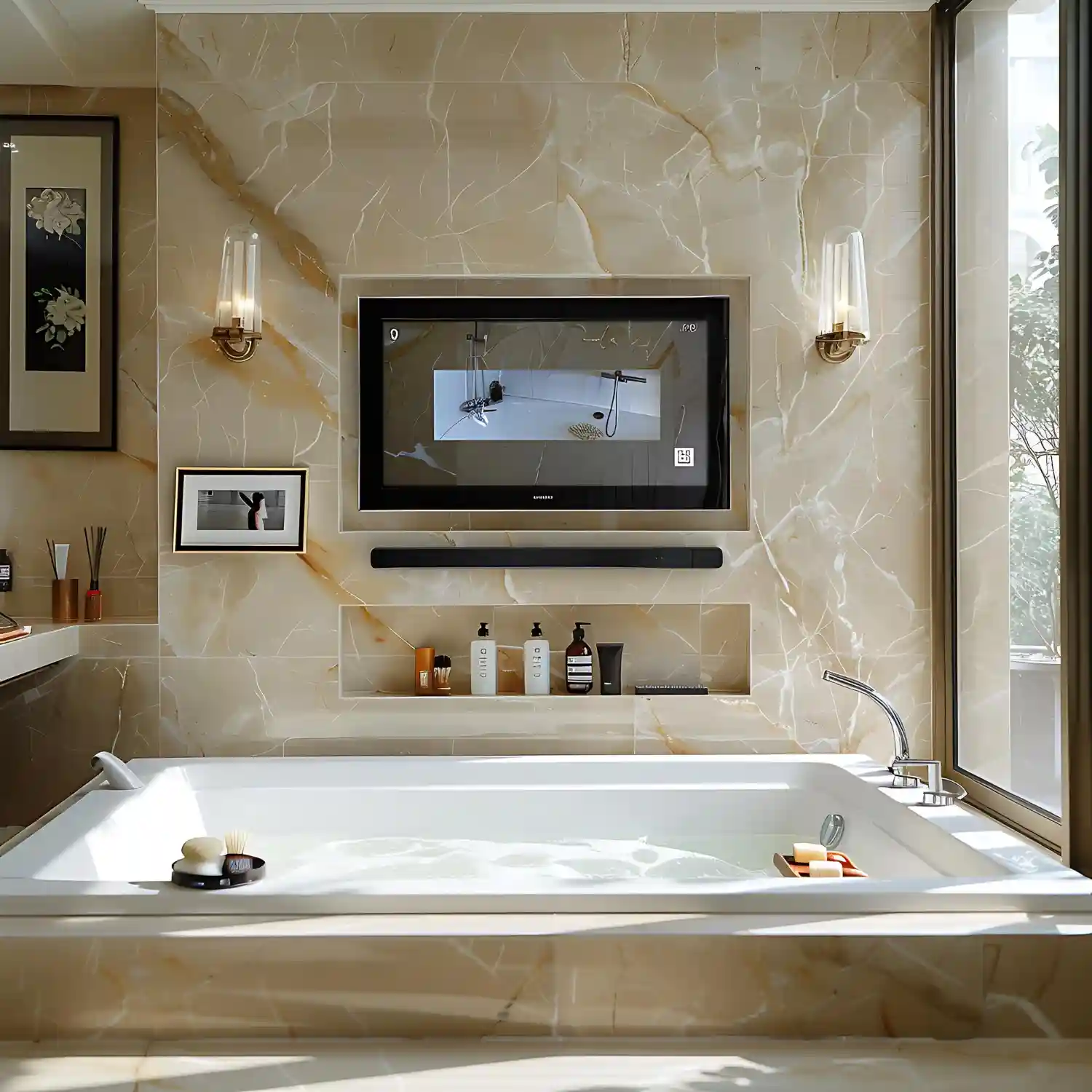
Tile is the backbone of most bathroom wall ideas because it handles water, wipes clean, and lasts for decades. A classic white subway tile is the safe start, but the layout is where character comes in. Stack it vertically for a modern look, run it in a herringbone for movement, or set it in a grid with dark grout for contrast.
Bathroom tile ideas do not have to mean plain white. Warm beige and cream tiles soften a north-facing room. Green zellige adds handmade texture and a spa feel. Marble-look porcelain gives you the veined luxury of stone without the sealing that real marble needs. A crisp black-and-white bathroom leans on tile geometry more than color, so the pattern does the heavy lifting.
Material Note: Porcelain tile absorbs less than 0.5% of its weight in water, which is why it holds up in wet rooms where softer ceramics can craze.
Height changes the mood. Tile to the ceiling for a bold, wrapped look, or stop at 48 inches for a half-tiled wall that reads classic and costs less. For a full palette of tile-forward schemes, our guide to an elegant black and white bathroom shows how far pattern alone can carry a room. A sage green and forest green bathroom does the same with tone.
Shower Tile Ideas That Handle Daily Steam
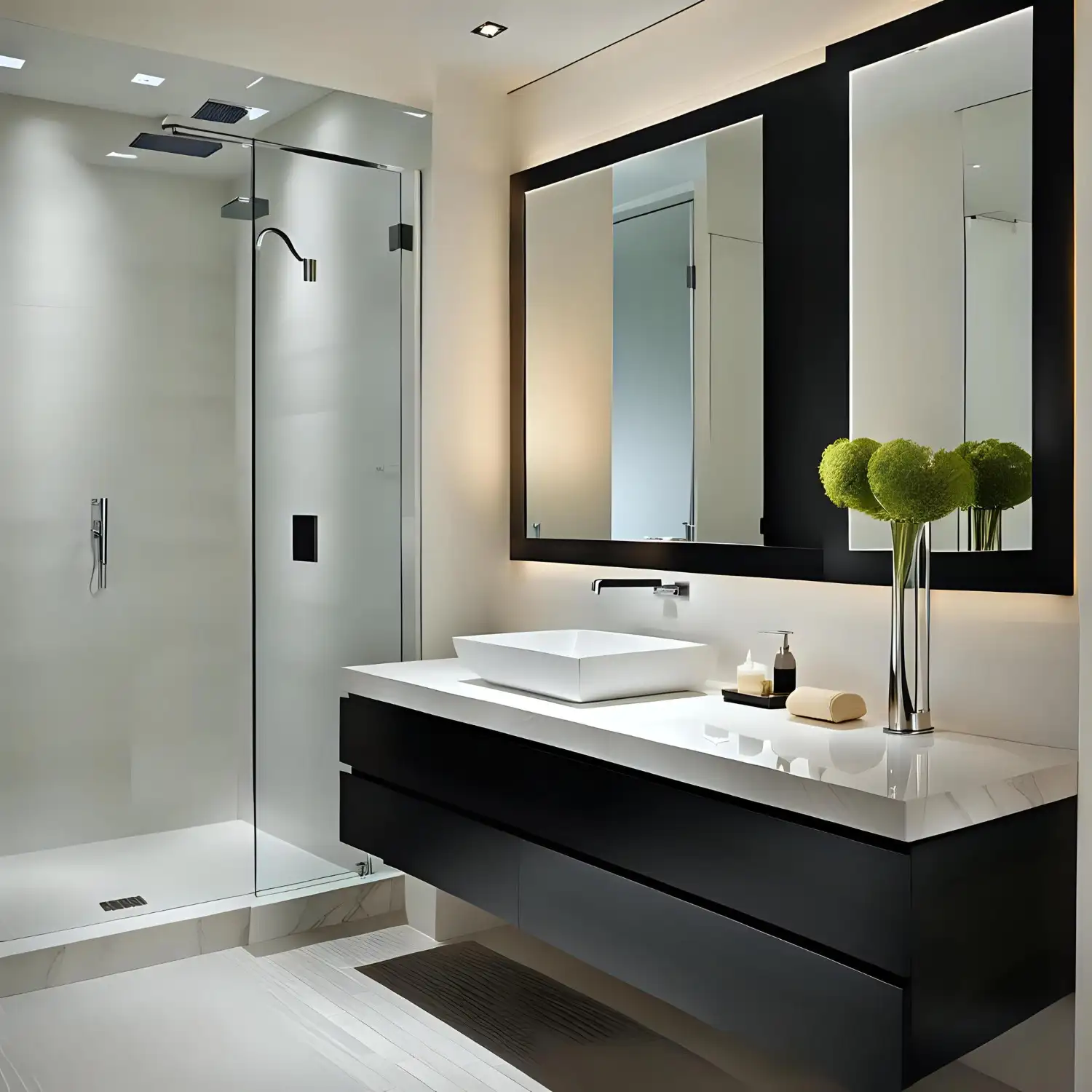
The shower is the one wall that has no forgiveness. It gets direct spray, steam, soap, and hard-water minerals every day, so the surface has to be fully waterproof. Porcelain and glazed ceramic tile are the standard here. Natural stone works too, but it needs regular sealing to avoid water spots.
Grout is where showers succeed or fail. Cement grout is porous, holds stains, and needs resealing every three to five years. Epoxy grout does not absorb water, resists soap scum, and can last decades without sealing. Learning the difference between epoxy and cement grout is worth it before you tile a single shower wall.
A tiled niche is the detail that makes a shower feel custom. Set a recessed shelf into the wall at chest height, line it in the same tile or a contrasting mosaic, and you get storage without a single bottle on the floor. Keep the niche away from the plumbing wall so it sits cleanly between studs.
Safety Note: A tiled shower floor needs a slip-resistant surface; choose a small mosaic or a textured tile so grout lines add grip underfoot.
Bathroom Floor Tile Ideas That Ground the Room
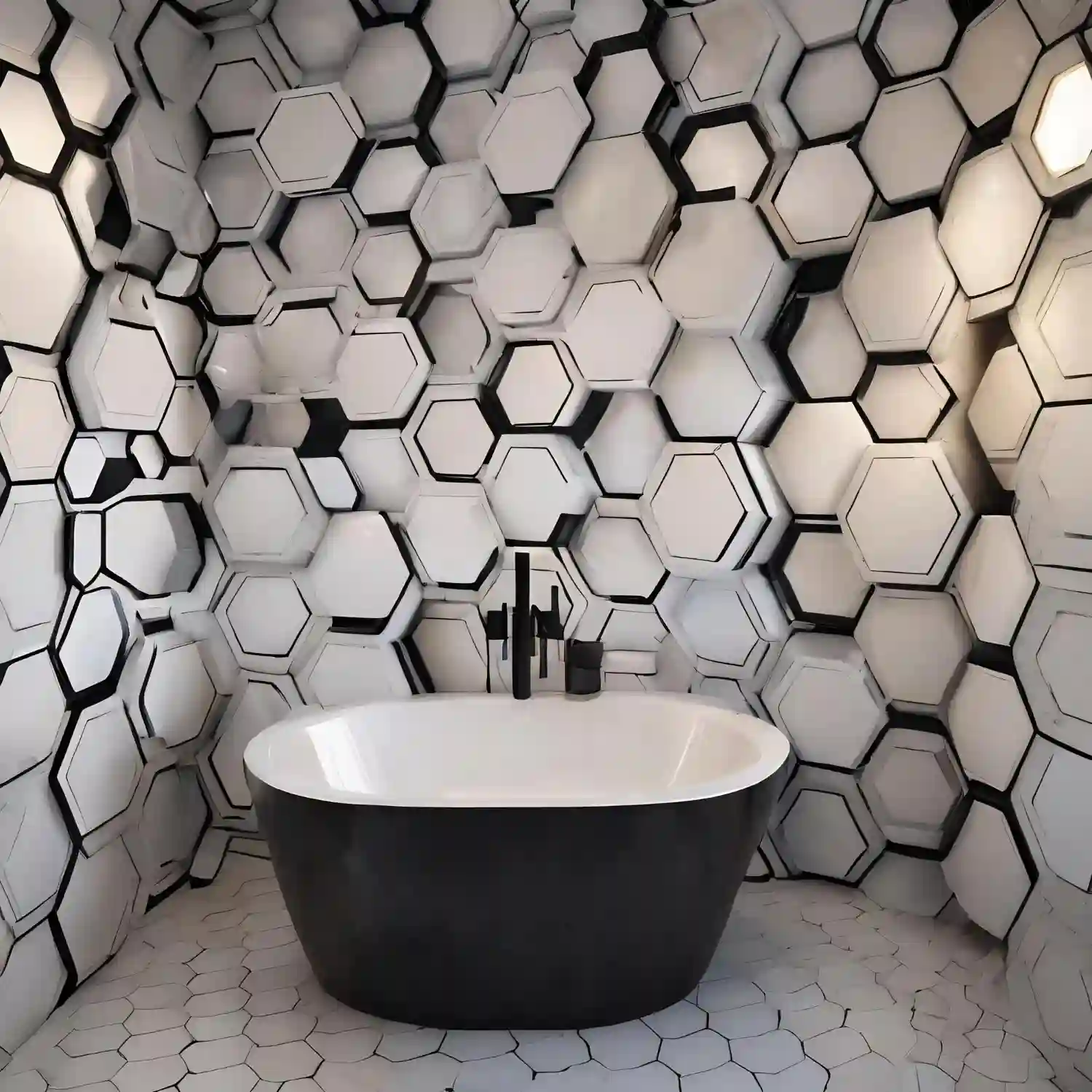
Floor tile finishes the surface story from the ground up. Because floors take foot traffic, they need a higher PEI rating and a bit of slip resistance. A matte porcelain in warm greige or soft slate hides water spots better than a high-gloss finish and feels safer underfoot.
Pattern on the floor can carry a plain-walled bathroom. A classic marble hexagon reads timeless. Encaustic-look cement tiles bring a bold, patterned floor that pairs well with quiet white walls. Wood-look plank porcelain gives you the warmth of oak with none of the water worry, which suits a farmhouse or spa direction.
Floor and wall tile do not need to match, but they should agree. Repeat one color between them, or let a busy floor sit under calm walls so the room stays settled. A dark floor grounds a light room; a light floor opens a small one.
Bathroom Wallpaper Ideas for a Softer Look
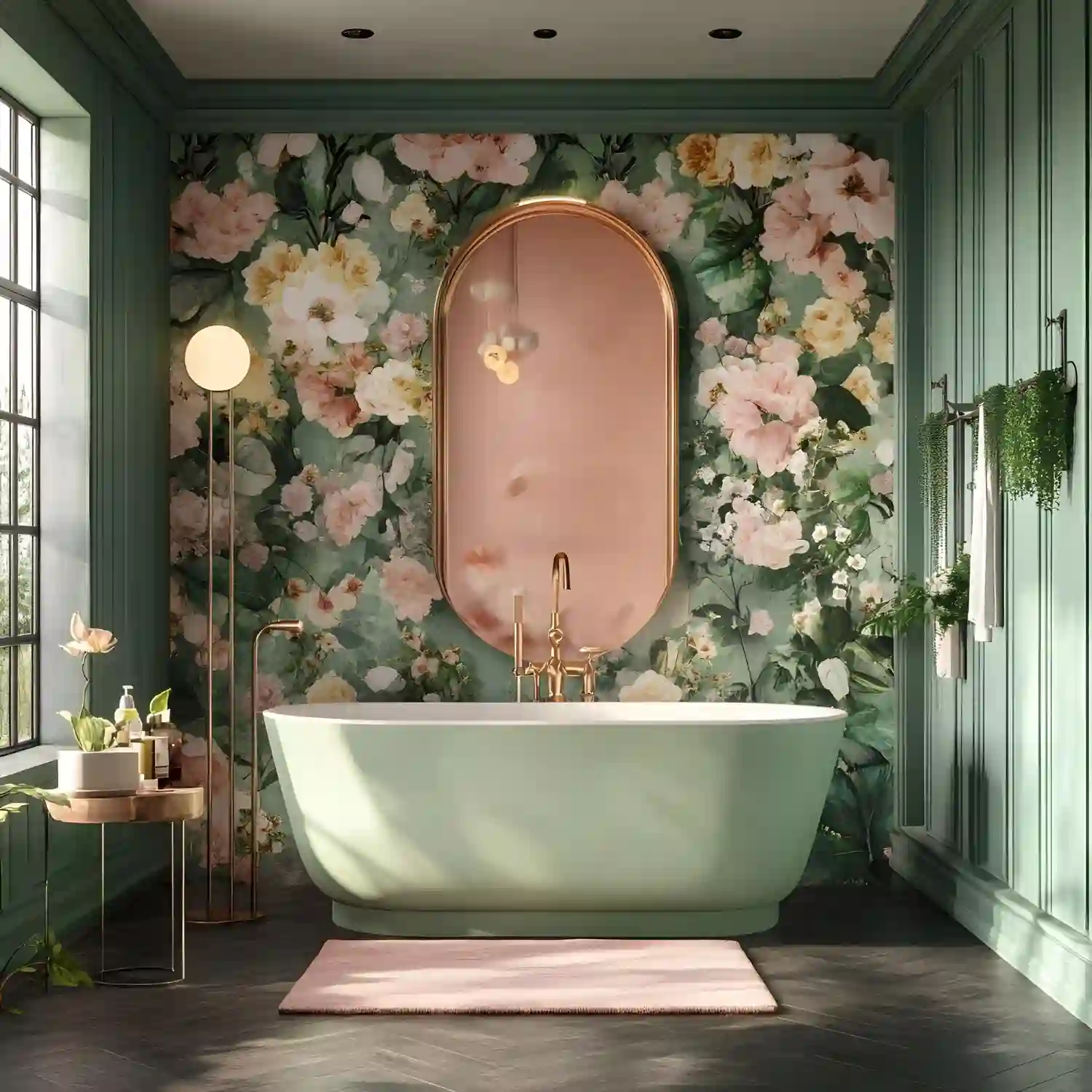
Wallpaper brings pattern and warmth that tile cannot. In a powder room or on a dry wall away from the shower, it turns a plain box into a room with real personality. Bold botanicals, moody florals, and small geometric prints all work, and peel-and-stick options make it renter-friendly.
Match the paper to the moisture, though. Vinyl and vinyl-coated papers handle bathroom humidity best. Peel-and-stick usually lasts three to five years on a well-prepped, well-ventilated wall, but it belongs outside the direct splash zone. A guide to which wallpaper types hold up in a bathroom is worth a read before you commit.
Climate Note: In a bathroom without a window, run the exhaust fan during and after showers; steady humidity is what lifts wallpaper seams over time.
Wallpaper pairs beautifully with a half-wall of tile or beadboard below it. The lower panel takes the wear and splashes, and the paper sits safely above. A relaxed boho bathroom look leans on this exact mix of pattern and natural texture.
Shiplap and Paneling for a Farmhouse Bathroom
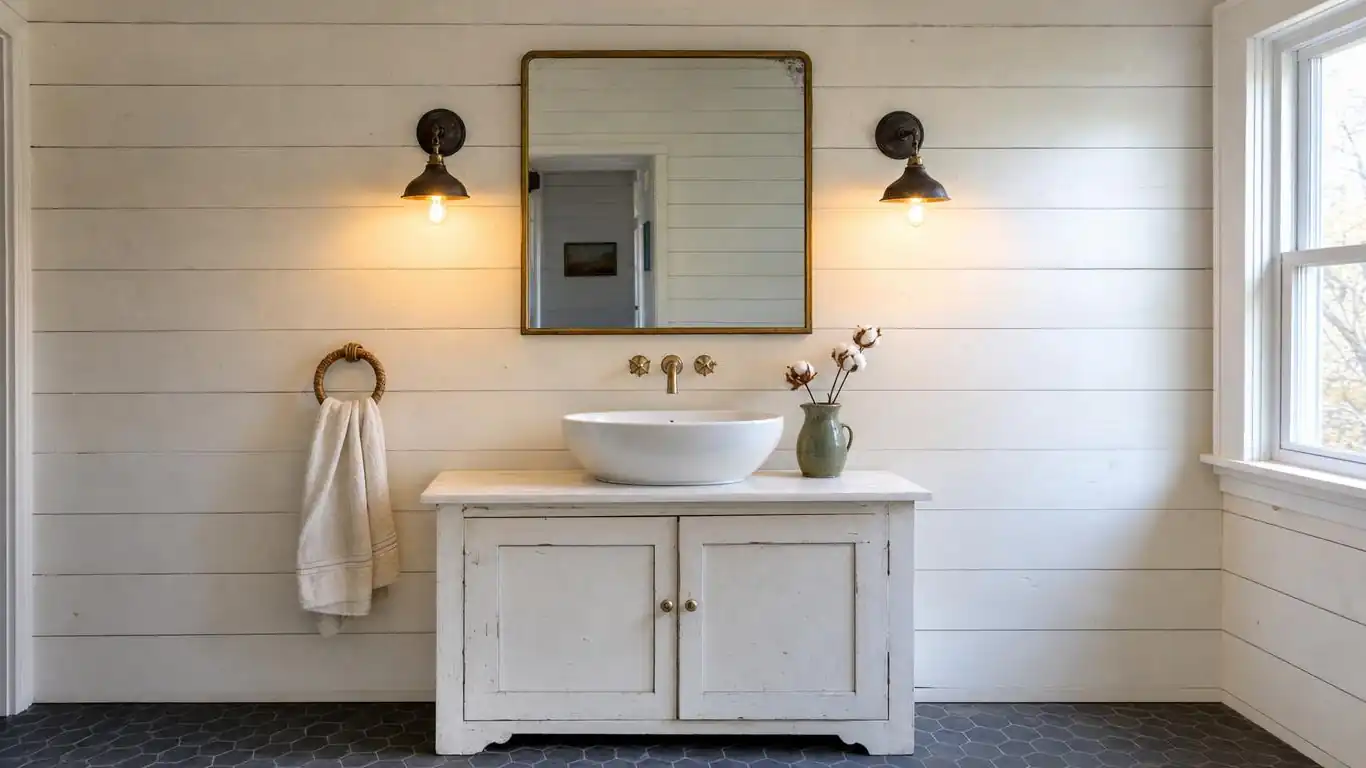
Shiplap adds texture and a cozy, cottage feel that flat drywall never delivers. Run horizontal boards for a classic farmhouse look, or go vertical to lift a low ceiling. Painted in soft white or warm greige, shiplap gives a bathroom quiet depth and a clear point of view.
Keep wood paneling in the dry zone. Shiplap, board-and-batten, and tongue-and-groove all handle everyday humidity when they are sealed and painted, but they are not shower material. Use them on the vanity wall, behind the toilet, or as a feature behind a freestanding tub set away from spray.
A half-height run of shiplap works like wainscoting: boards below, paint or paper above. It protects the wall the toilet and sink splash and adds a crisp horizontal line. Our full cozy farmhouse bathroom guide shows how shiplap, warm wood, and matte black hardware come together.
Wainscoting and Beadboard: The Classic Half-Wall
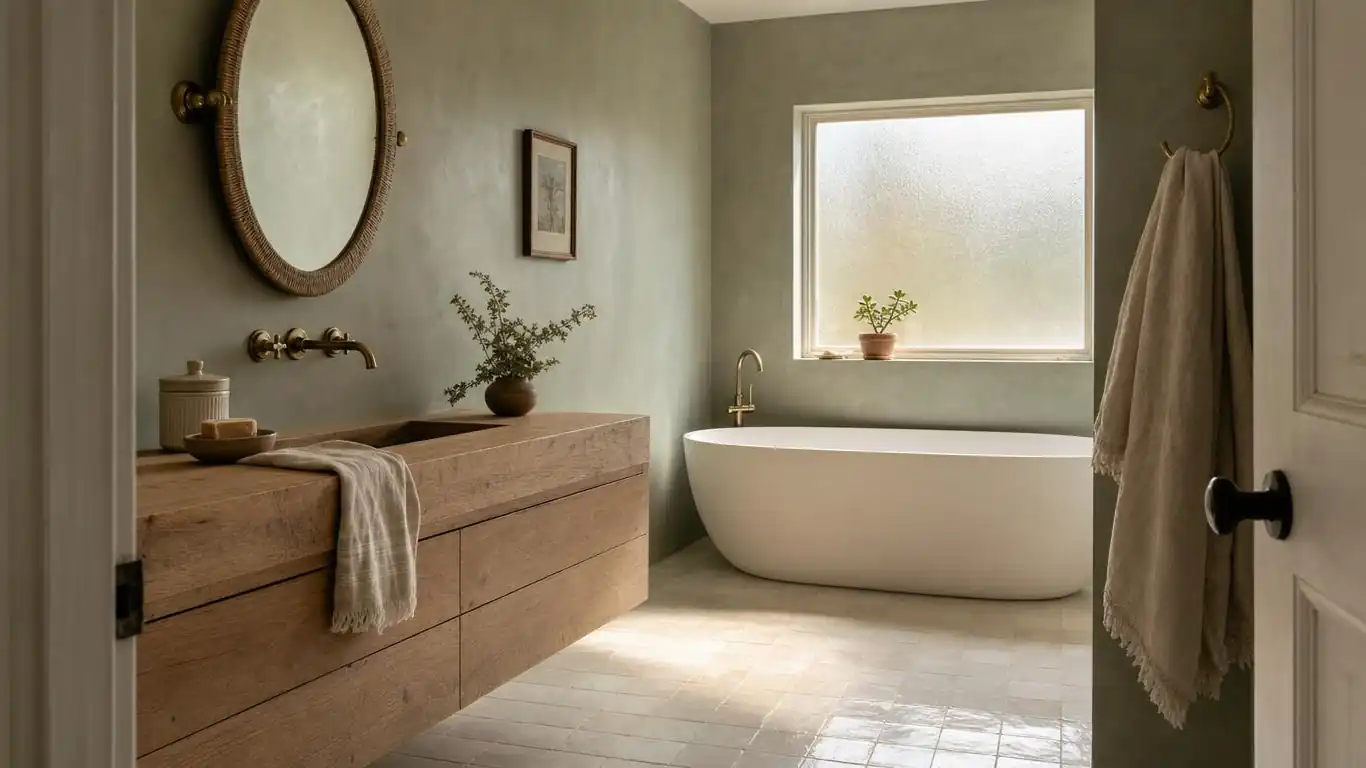
Wainscoting is the half-wall treatment that protects the lower wall and adds instant character. Beadboard, with its narrow vertical grooves, is the most common style and suits cottage and traditional bathrooms. Raised-panel wainscoting feels more formal and dresses up a powder room.
Height sets the tone. A run at 32 to 36 inches reads traditional, while a taller run near 48 inches feels bolder and more current. Cap it with a simple chair-rail ledge, and you get a small shelf for a candle or a folded hand towel.
Beadboard is a favorite because it hides imperfect walls and paints up crisp. In a rental, a peel-and-stick beadboard panel gives the same lines without commitment. Paint the lower half in a soft slate or muted sage and leave the upper wall pale, and a plain bathroom gains a designed edge.
DESIGNER TIP: Run the wainscoting cap line level with the top of the vanity backsplash or the window sill. Lining these heights up is what separates a custom look from a builder one.
Bathroom Accent Wall Ideas With Personality
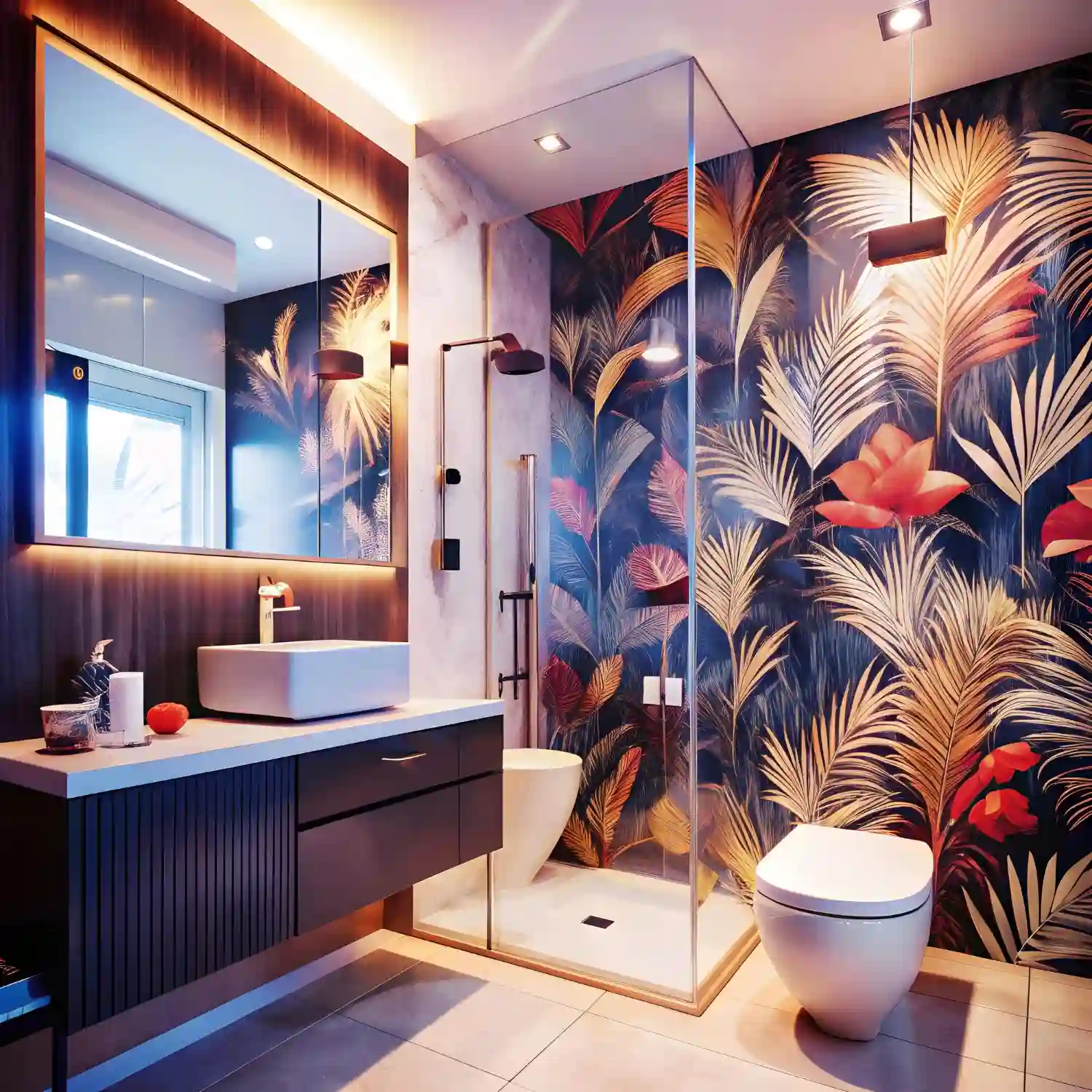
An accent wall is the fastest way to give a bathroom a focal point. Pick one wall, usually the one behind the vanity or tub, and make it the star. Everything else stays calm so the accent has room to land. Choosing one wall is the whole trick; a room with four accent walls has none.
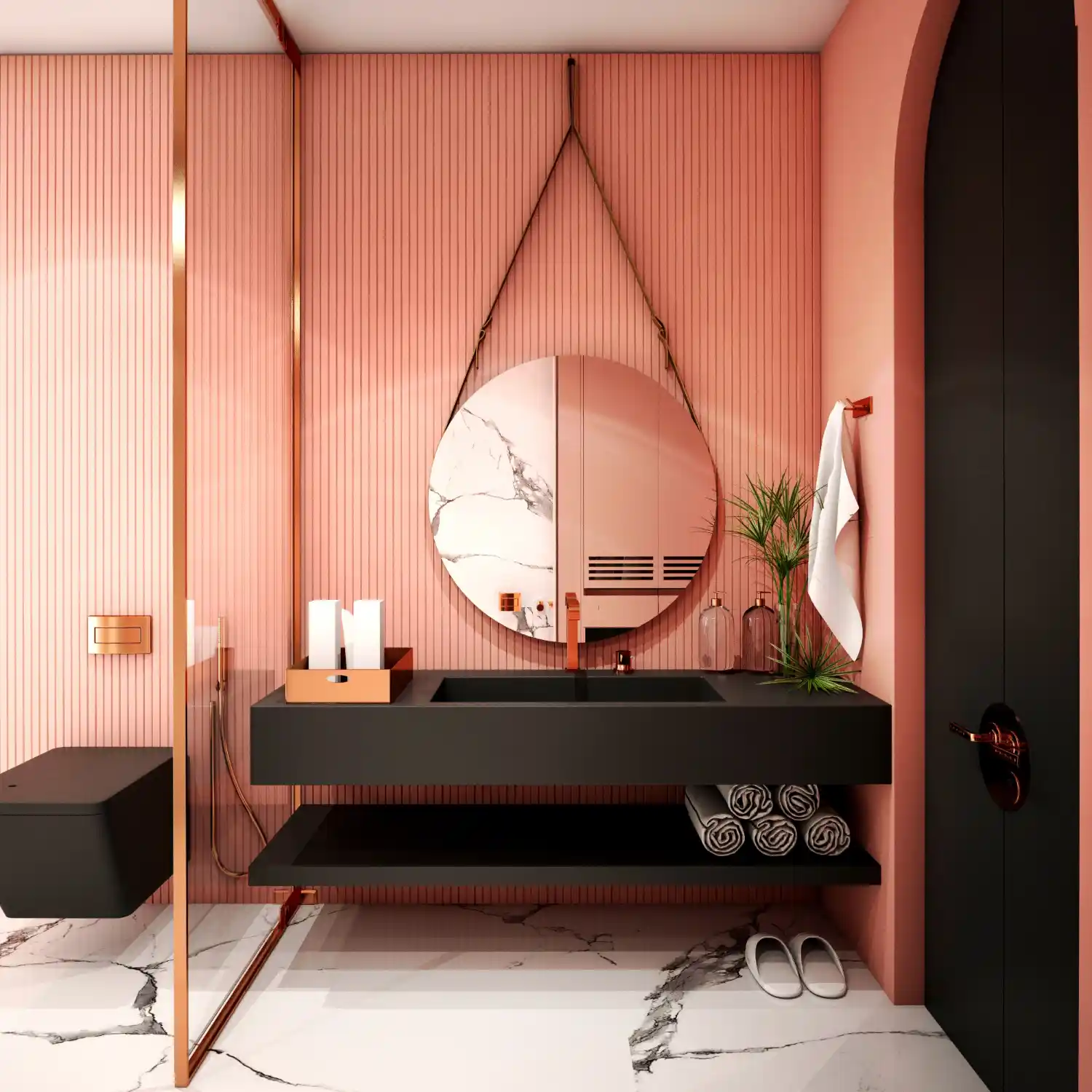
The options are wide. Tile the accent wall in a bold zellige or a stacked vertical pattern. Wrap it in a moody floral wallpaper. Panel it in board-and-batten. Or color-drench it in a deep charcoal or forest green while the other walls stay soft white. A blush or dusty-rose accent brings warmth; a sophisticated pink bathroom design shows how grown-up that can look.
Editorial field note: A long, narrow bathroom often feels like a hallway. Putting the accent on the short end wall, not a long side wall, pulls the eye to the end and makes the room feel wider. The proportions settle without moving a single fixture.
Bathroom Backsplash Ideas Behind the Vanity
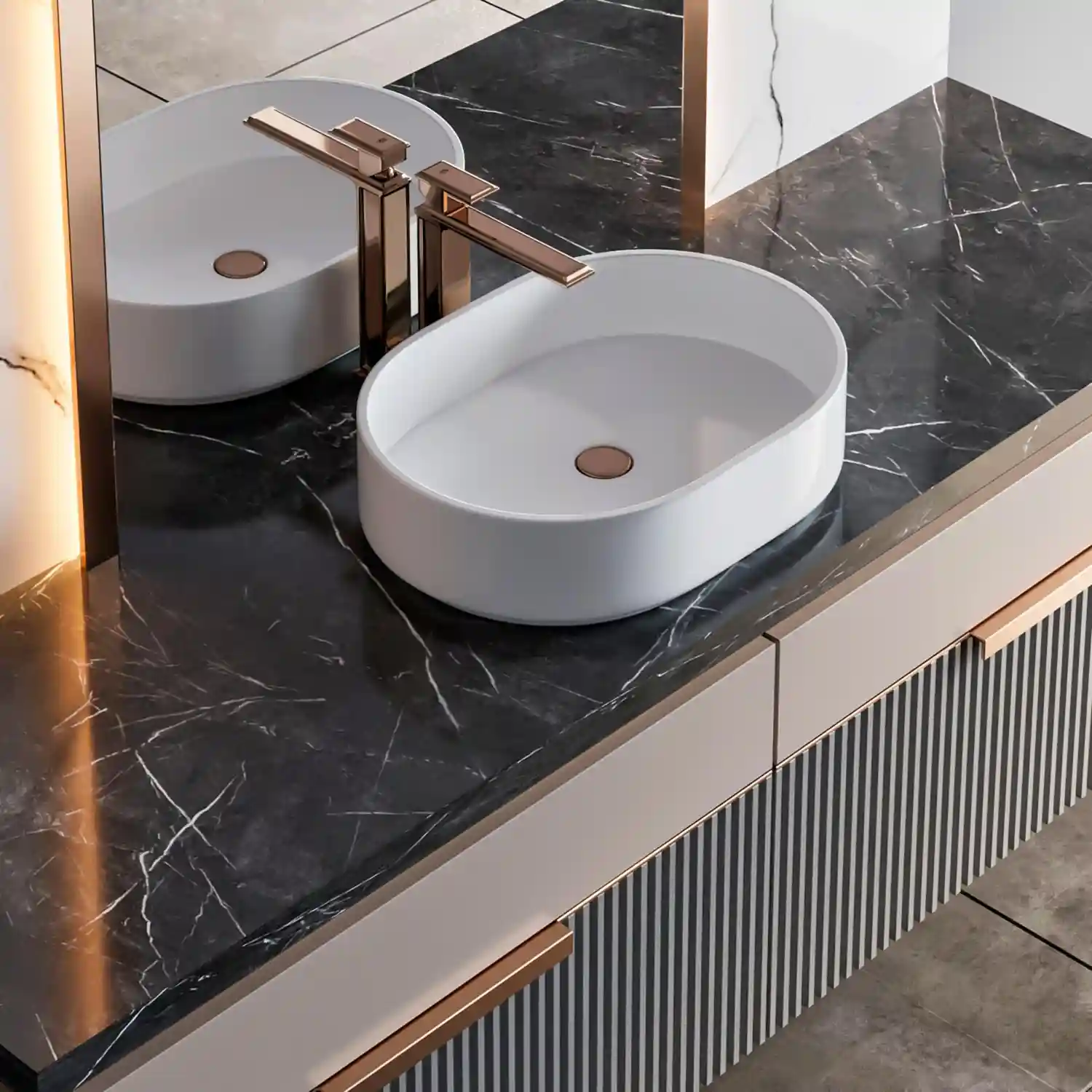
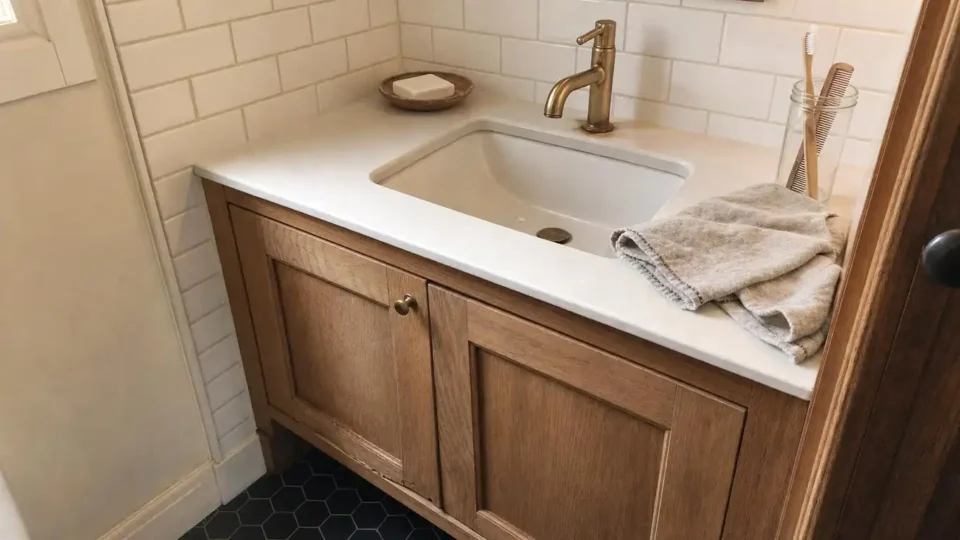
The vanity backsplash is a small surface with a big job. It catches water and toothpaste, so it needs a wipeable finish, and it frames the sink and mirror. A simple 4-inch tile strip is the builder default, but a full-height backsplash run to the mirror or ceiling reads far more custom.
Material sets the mood. Marble slab feels luxe and seamless. Zellige tile adds handmade shimmer. A penny-round mosaic brings retro charm, and a mirrored or fluted glass panel bounces light in a dark room. Keep the backsplash tied to your main tile or let it be the one bold moment in an otherwise quiet room.
For a full walkthrough of this surface, our guide to stylish bathroom backsplash ideas for every budget breaks down heights, materials, and cost tiers in depth.
Bathroom Wall Decor and Finishing Touches
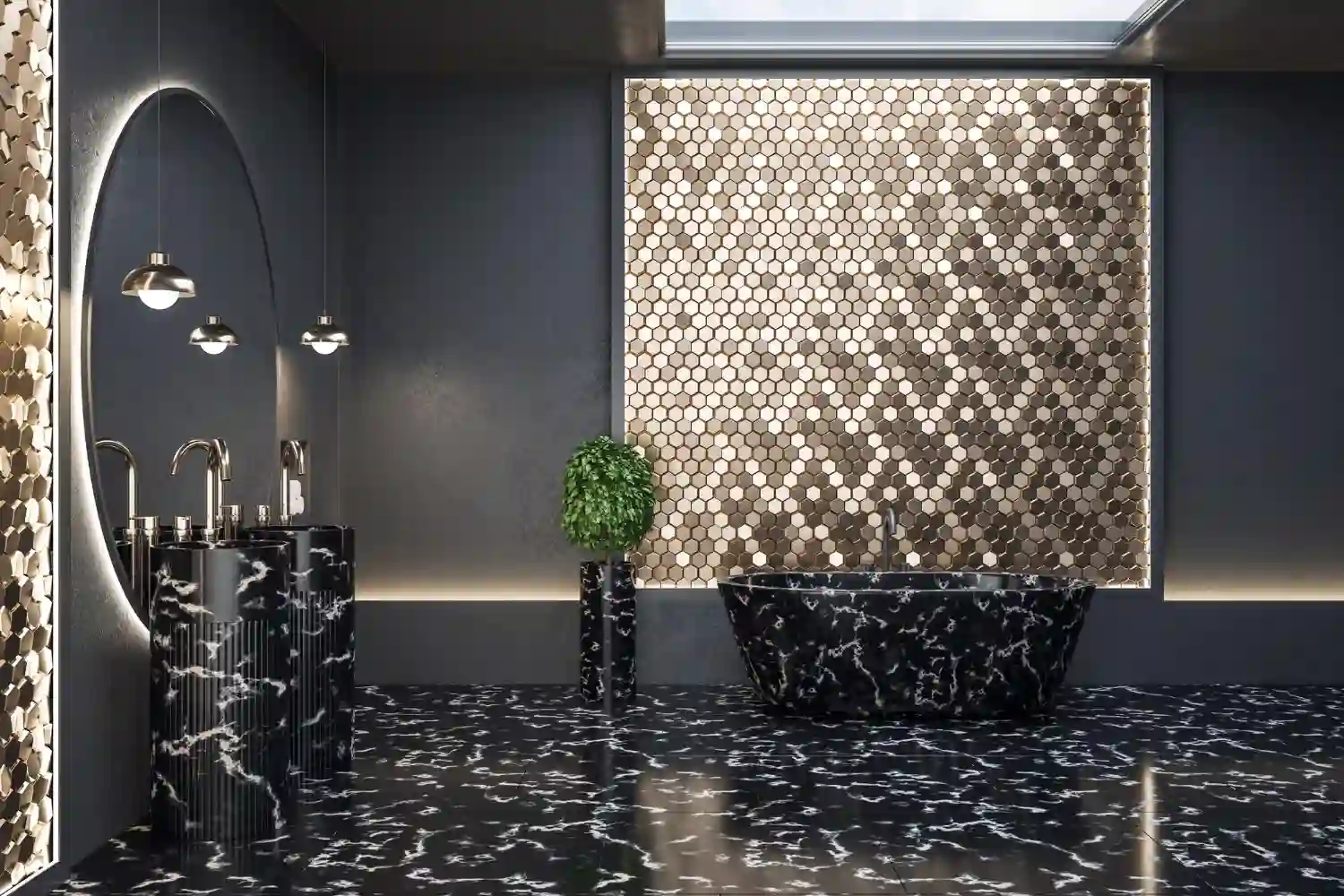
Once the surfaces are set, wall decor is what makes the room feel lived-in. Blank upper walls above tile or wainscoting are prime spots for a framed print, a small gallery pairing, or a round mirror with a warm brass frame. In humid rooms, choose framed art with a sealed backing or lean toward ceramic, wood, and metal pieces over delicate paper.
Finishes tie the whole wall story together. Repeat one metal, brushed brass or matte black, across the mirror frame, sconces, and hardware. Add a pair of wall sconces beside the mirror for even, shadow-free light. These small repeats are what make a mixed-surface bathroom look intentional. A minimalist bathroom decor approach keeps this layer restrained and calm.
Keep the styling light. One or two pieces per wall is plenty in a small bathroom; empty wall space is part of the design, not a gap to fill.
Bathroom Wall Surface Cost Guide
Surface choice drives most of your wall budget, so it helps to see the cost-per-look side by side. These are typical material-and-install ranges for a standard bathroom wall area, not a full remodel estimate.
| Surface Option | Estimated Cost | Impact Level |
|---|---|---|
| Peel-and-stick wallpaper or beadboard (dry wall) | $40-$200 per wall | Medium |
| Painted shiplap or board-and-batten | $3-$8 per sq ft | High |
| Ceramic or porcelain wall tile, installed | $8-$25 per sq ft | High |
| Marble or natural stone feature wall, installed | $25-$60 per sq ft | Very High |
Best First Upgrade: Tile the shower wall properly with epoxy grout; it is the one surface that fails fastest when done cheaply.
Skip for Now: Do not tile all four walls to the ceiling in a small bathroom; a single accent wall gives more style for less money.
Common Bathroom Wall Mistakes to Avoid
❌ Putting wallpaper or shiplap inside the shower → ✅ Keep soft surfaces in the dry zone and tile the wet zone only.
❌ Using porous cement grout in a heavy-use shower → ✅ Choose epoxy grout so you skip resealing and stains.
❌ Giving a small bathroom four competing accent walls → ✅ Pick one focal wall and keep the other three calm.
❌ Mixing three or four metal finishes on the walls → ✅ Repeat one metal across the mirror, sconces, and hardware.
Designer’s Verdict
Designer’s Verdict: If you only invest in one surface, make it the shower wall in porcelain tile with epoxy grout, then let a single wallpaper or paneled accent wall carry the personality elsewhere. That split gives you the durability where water demands it and the character where it is safe, which is the heart of smart bathroom wall ideas.
Frequently Asked Questions
Conclusion
The bathrooms that look most finished follow one habit: the shower is fully tiled, and just one dry wall does something bold while the other three stay quiet. Read each wall by how wet it gets, and the right bathroom wall ideas fall into place. Browse more finishes through our full bathroom design ideas archive or the wider home decor inspiration library.
Next Steps
- Walk your bathroom and label each wall as wet, splash, or dry before you shop.
- Choose one accent wall and pick its surface first, then keep the other three calm.
- Confirm epoxy grout for any shower tile and a PEI 2+ rating for floor tile.
- Browse related finishes across our rooms and spaces archive to lock in your palette.
Explore Bathroom Wall Ideas
- Bathroom Accent Wall Ideas: Which One Wall Is Worth It?
- Bathroom Countertop Ideas: Why 2026 Rewards a Statement Slab
- Bathroom Floor Tile Ideas: Why the Floor Should Lead the Room
- Bathroom Tile Ideas: Why Warm, Textured Tile Beats the Cold White Grid
- Bathroom Wall Decor: Why Your Blank Walls Are a Wasted Opportunity
- Bathroom Wallpaper Ideas: Why One Bold Wall Changes the Whole Room
- Shiplap Bathroom Walls Feel Modern and Refined, Not Dated
- Shower Tile Ideas: Why the Busy Accent Strip Is Finally Over