TL;DR
- Verdict: Sage green suits small, north-facing bathrooms; forest green needs large rooms with strong natural light.
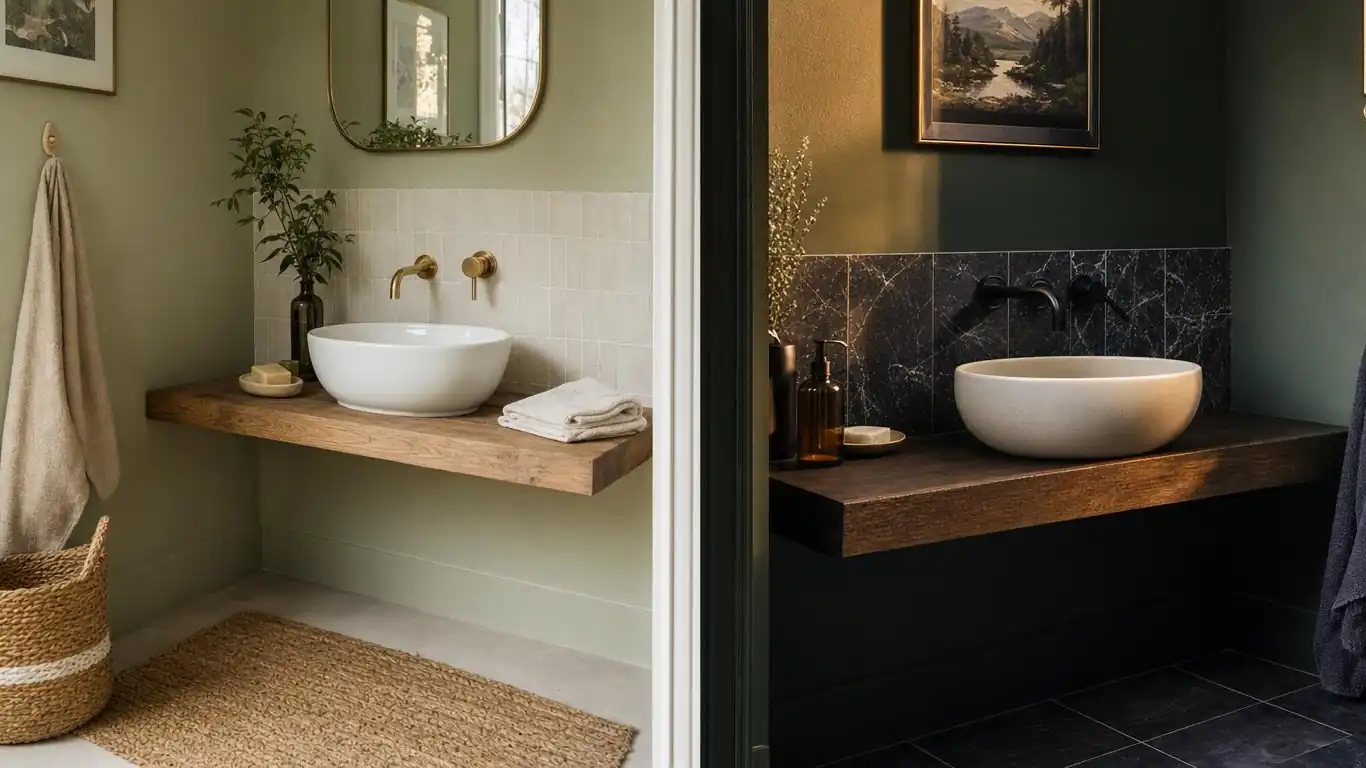
- Sage green: Muted, airy, spa-like — pairs with brushed brass, warm white tile, and raw oak.
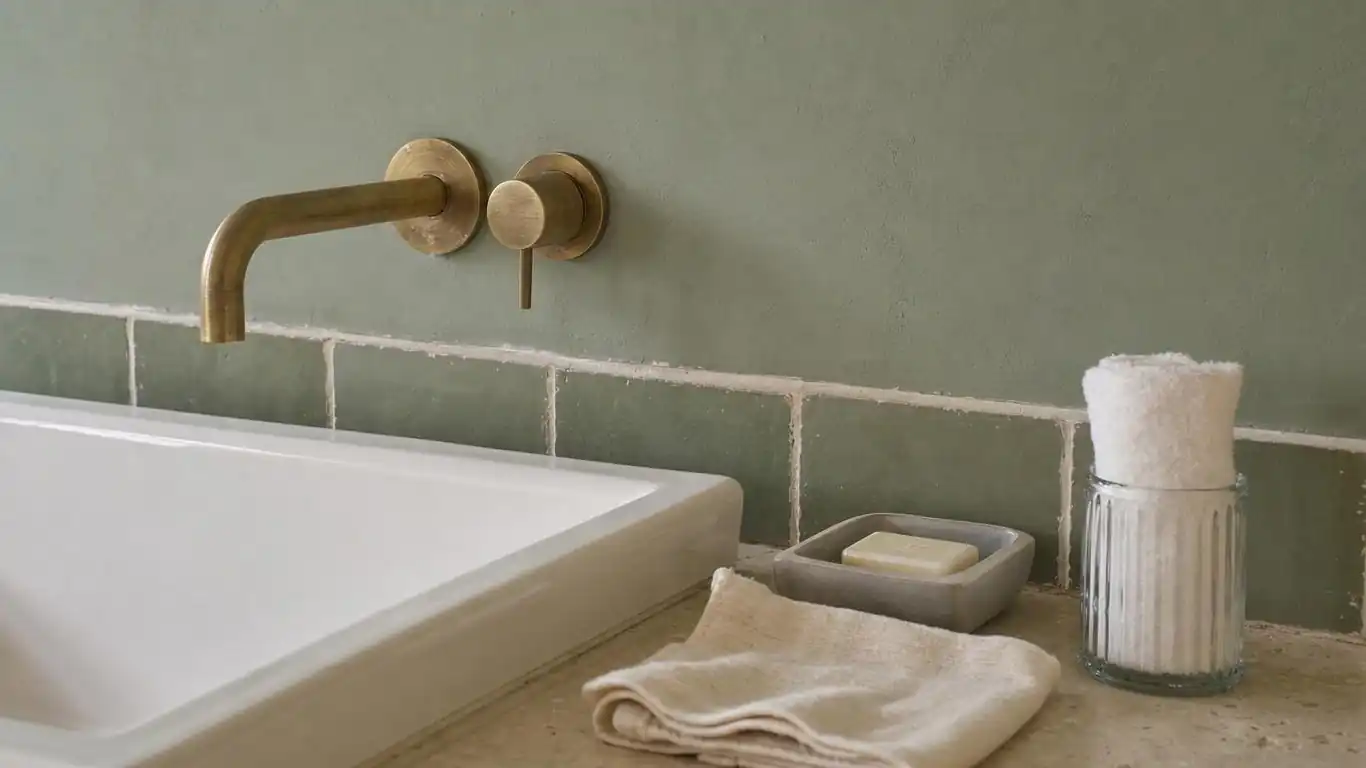
- Forest green: Bold, deep, dramatic — pairs with matte black fixtures, marble tile, and unlacquered brass.
- The rule: The darker the shade, the more natural light your bathroom needs to carry it well.
- Both shades: Work best as tile or on a single accent wall in windowless or very small bathrooms.
Why the Right Shade of Green Changes Everything
Step into a boutique hotel bathroom and notice why the green feels different from every “just paint it green” result you’ve seen online. One feels like a spa. The other just feels green. The difference comes down almost entirely to shade — whether the designer chose a soft sage or a deep forest tone.
Green bathroom ideas have become one of the most searched bathroom color choices heading into 2026. Green connects to nature, to calm, to the outside world — and bathrooms are one of the few rooms where that botanical connection feels completely right. But sage green and forest green are not the same choice. They create opposite moods and suit opposite conditions. To weigh green against every other palette, this complete guide to bathroom color ideas compares schemes and shades for the whole room.
I helped redesign a narrow master bath in a townhouse last spring. The client had her heart set on forest green walls — she’d saved dozens of images. We painted a test patch and knew immediately it wasn’t right. The room went from narrow to oppressive in one afternoon. We switched to sage green and everything opened up. She liked it more than the original idea. The lesson stuck: shade matters more than color family when you’re choosing green bathroom ideas.
Bookmark this guide for quick reference as you browse more bathroom design ideas and explore your options. The bathroom design trends for 2026 confirm both shades as top choices — but they serve completely different spaces. Find more room-by-room inspiration on 101homedecor.com.
KEY TAKEAWAY: Choosing between sage and forest green comes down to room size and natural light — get the shade wrong and even a well-executed design will feel off.
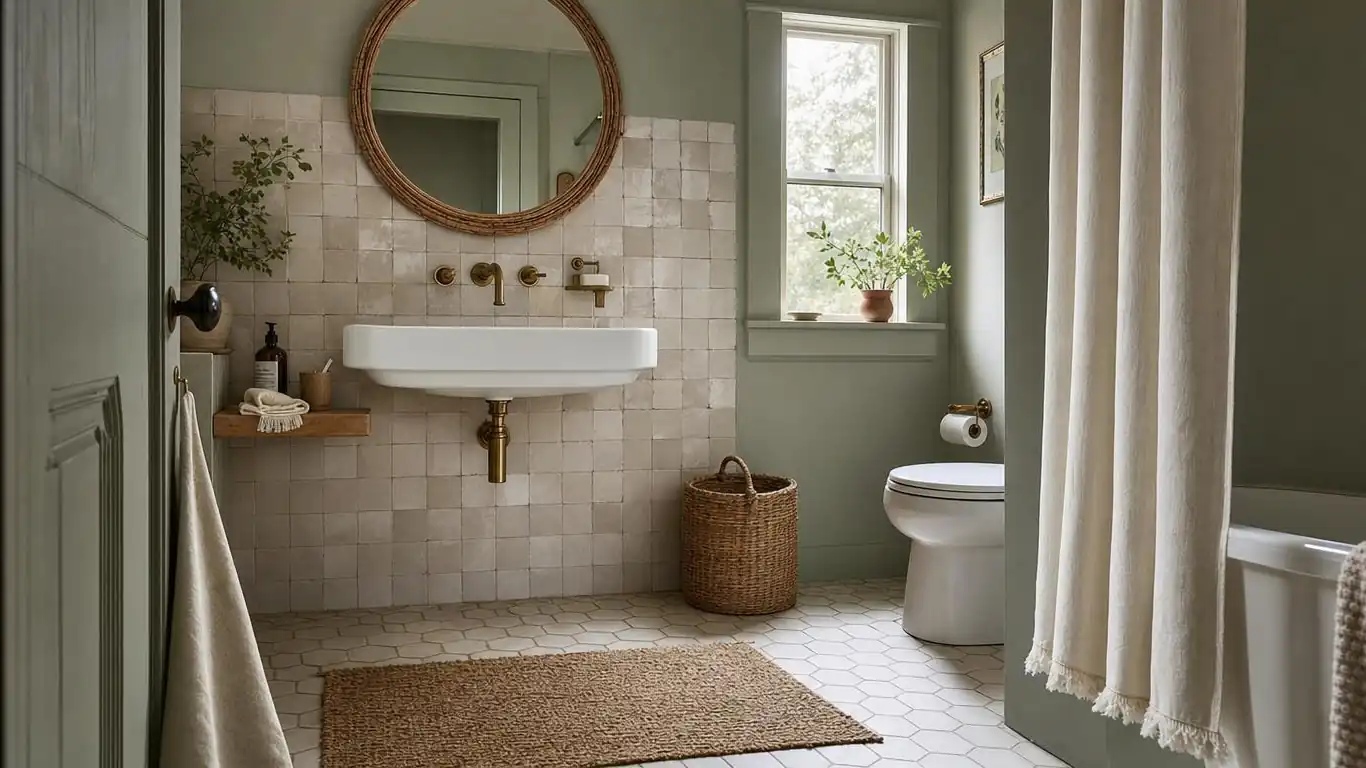
| Quick Takeaways | |
|---|---|
| Sage Green | Muted and airy — works in small and medium bathrooms. |
| Forest Green | Bold and rich — needs space and strong natural light. |
| Fixtures | Brushed brass for sage; matte black or unlacquered brass for forest. |
| Light Rule | North-facing bathrooms should default to sage, not forest green. |
What Are These Two Greens, Exactly?
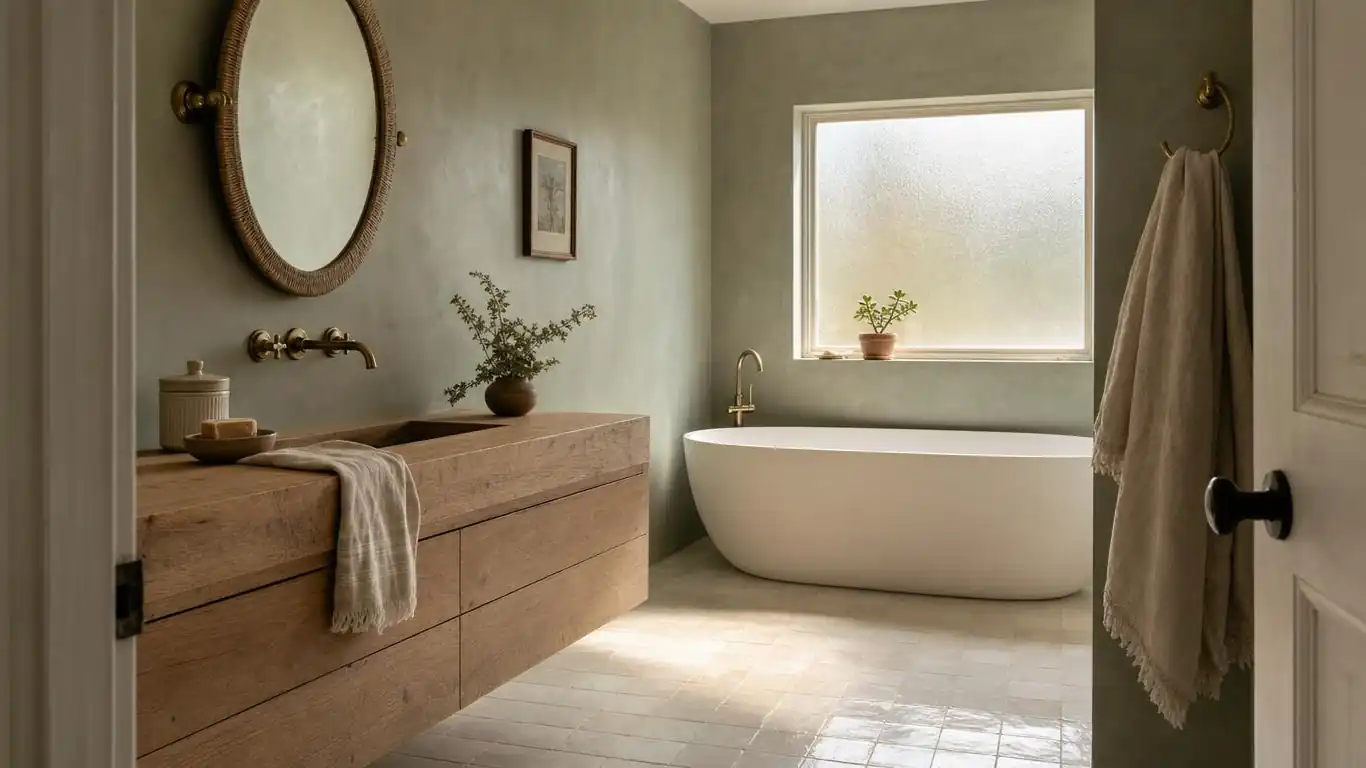
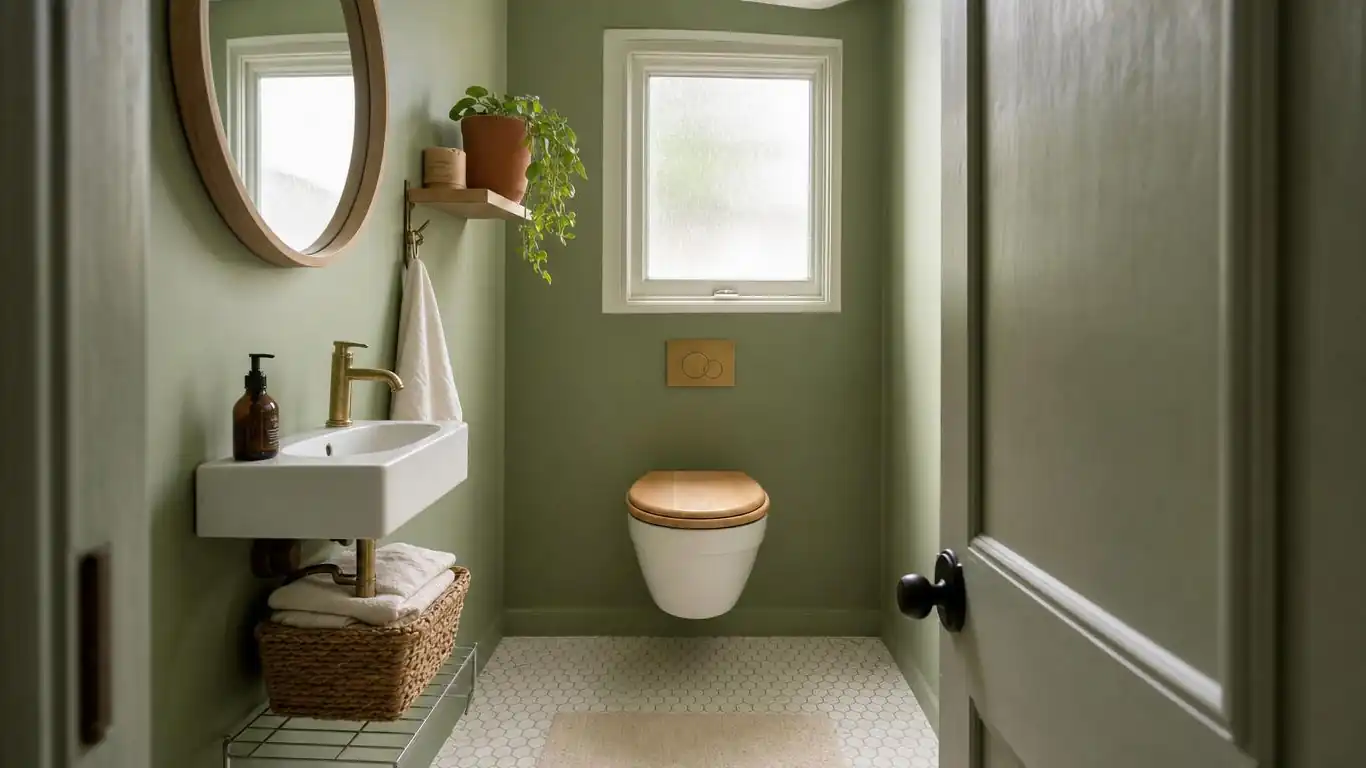
Sage green is a muted, grey-toned green — often with a warm undertone that reads dusty rather than vivid. Think Farrow & Ball Mizzle or Benjamin Moore October Mist. Sage sits closer to warm greige and soft white than to vivid botanical greens. It works quietly, adding color depth without visual pressure. Sage green tile, especially handmade zellige or ceramic, is one of the most versatile options across the full range of 14 stylish bathroom backsplash ideas — it pairs naturally with almost every tile body color and glaze variation.
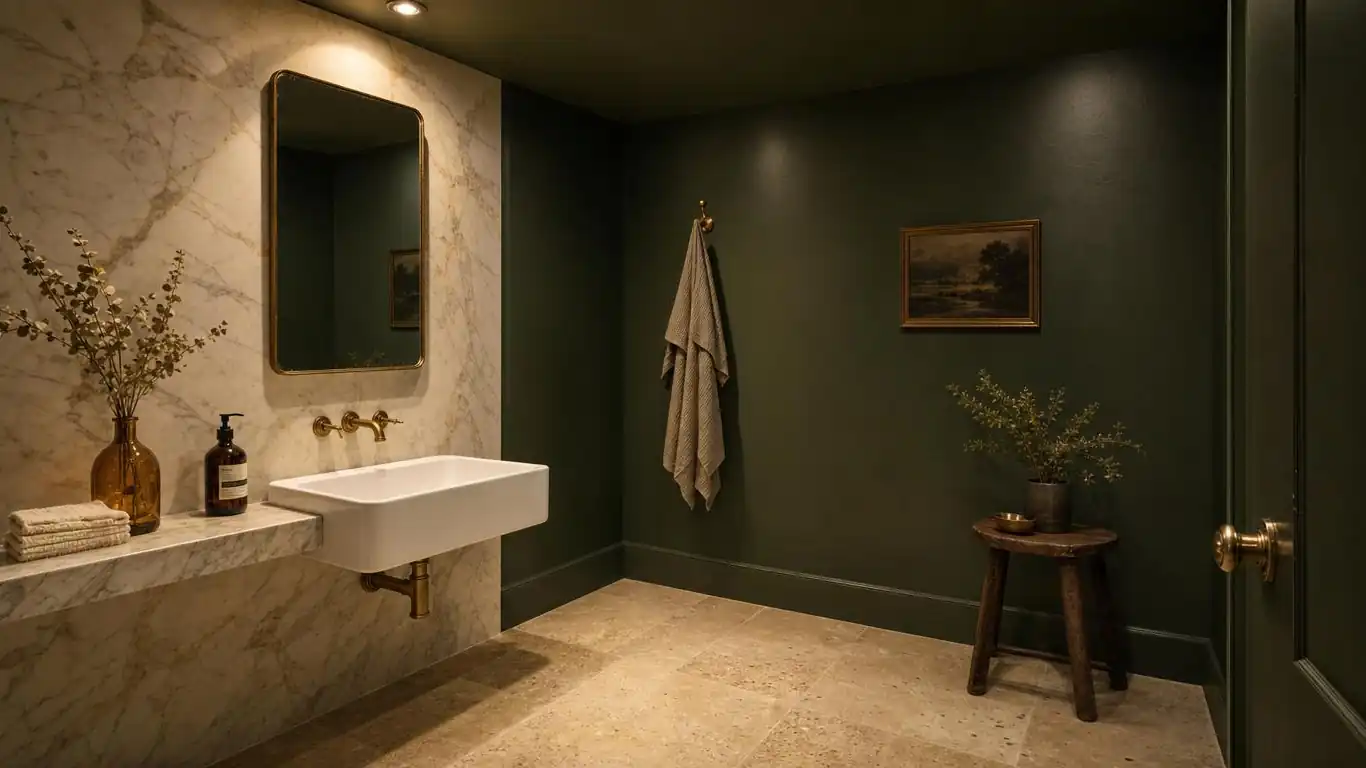
Forest green is a deep, rich green with high saturation — confident, grounded, and unmistakable. Think Farrow & Ball Calke Green or Benjamin Moore Forest Green 2047-10. These shades draw from the design language of English country houses and dramatic editorial interiors. Forest green has real visual weight. It occupies a room rather than sitting back in it.
KEY TAKEAWAY: Sage green and forest green aren’t different intensities of the same choice — they are fundamentally different design statements that suit different rooms.
Side by Side: How They Compare
| Feature | Sage Green | Forest Green |
|---|---|---|
| Visual weight | Light and airy | Heavy and grounding |
| Best room size | Small to medium | Medium to large |
| Light requirement | Works in low-light rooms | Needs strong natural light |
| Best fixture finish | Brushed brass, warm chrome | Matte black, unlacquered brass |
| Tile pairing | White subway, cream zellige | Marble, dark slate, travertine |
| Overall mood | Calm, spa-like, botanical | Rich, editorial, dramatic |
KEY TAKEAWAY: Sage and forest green create completely opposite bathroom moods — match the shade to your room’s actual light conditions before committing.
Sage Green Bathrooms: Calm, Botanical, and Universally Flattering
Sage green is the more forgiving of the two shades. Its muted, grey-green tone reflects light well even in north-facing or windowless rooms. A sage green bathroom wall creates a backdrop that feels fresh without feeling competitive — it works with white, cream, raw oak, rattan, and almost any neutral. Sage green tile, especially handmade zellige or ceramic, picks up natural glaze variation that makes a small bathroom feel considered rather than decorated.
What makes sage green work in bathrooms:
- Sage reads as a neutral from a distance but adds real color depth up close.
- Its grey undertones prevent it from feeling childlike or too vivid.
- Sage pairs naturally with brushed brass hardware, which has dominated 2025-2026 bathroom design.
- The muted quality means accessories in cream, warm white, and natural linen all work without clashing.
Pros:
- Works in small and medium bathrooms without adding visual mass
- Compatible with nearly every fixture metal — brushed brass, warm chrome, even nickel
- Calming and spa-like without heavy visual commitment
- Classic enough to outlast current trends by a decade
Cons:
- Can feel flat if paired with too many cool whites and chrome fixtures
- Less dramatic — some homeowners want stronger visual impact
- Popular enough that it can feel expected in some design circles
DESIGNER TIP: Pair sage green walls with a raw oak vanity and brushed brass faucets. The warm wood prevents the green from reading cool or clinical.
Sage green pairs naturally with the clean, uncluttered feel of 12 minimalist bathroom decor ideas. If your bathroom adjoins a bedroom in earthy tones — as in earthy modern bedroom ideas — sage creates a calming visual continuation rather than a jarring shift. The same warm-neutral quality that makes sage work in bathrooms is why it also shows up so often in 15 grey bedroom design ideas alongside soft charcoal and warm cream.
KEY TAKEAWAY: Sage green is the low-risk, high-reward choice for green bathroom ideas — it works in almost any size room and pairs with the widest range of fixtures and materials.
Forest Green Bathrooms: Bold, Grounded, and Unmistakably Intentional
Forest green is not a background color. It is a statement. A forest green bathroom announces a design point of view the moment you walk through the door. Done well, it looks like a page from a design magazine. Done poorly, it feels like a dark cave.
The key to making forest green work is light — both natural and artificial. Forest green absorbs light rather than reflecting it. A bathroom that receives strong south-facing or afternoon sun can carry forest green on all four walls. An interior bathroom with no window should avoid all-over forest green entirely and use it instead on a single feature wall, in tile, or on the floor.
What makes forest green work in the right context:
- High-saturation dark greens create a cocoon effect that feels intentional and luxurious.
- Forest green pairs naturally with marble, unlacquered brass, and dark-veined travertine.
- A recessed ceiling light at 2700K warm white pulls depth out of the shade rather than flattening it.
- Forest green is one of the most-searched bathroom color looks on design platforms in 2025-2026.
Pros:
- Dramatic, high-impact design — feels bespoke and confidently styled
- Pairs beautifully with Calacatta marble tile, matte black fixtures, and antique gold hardware
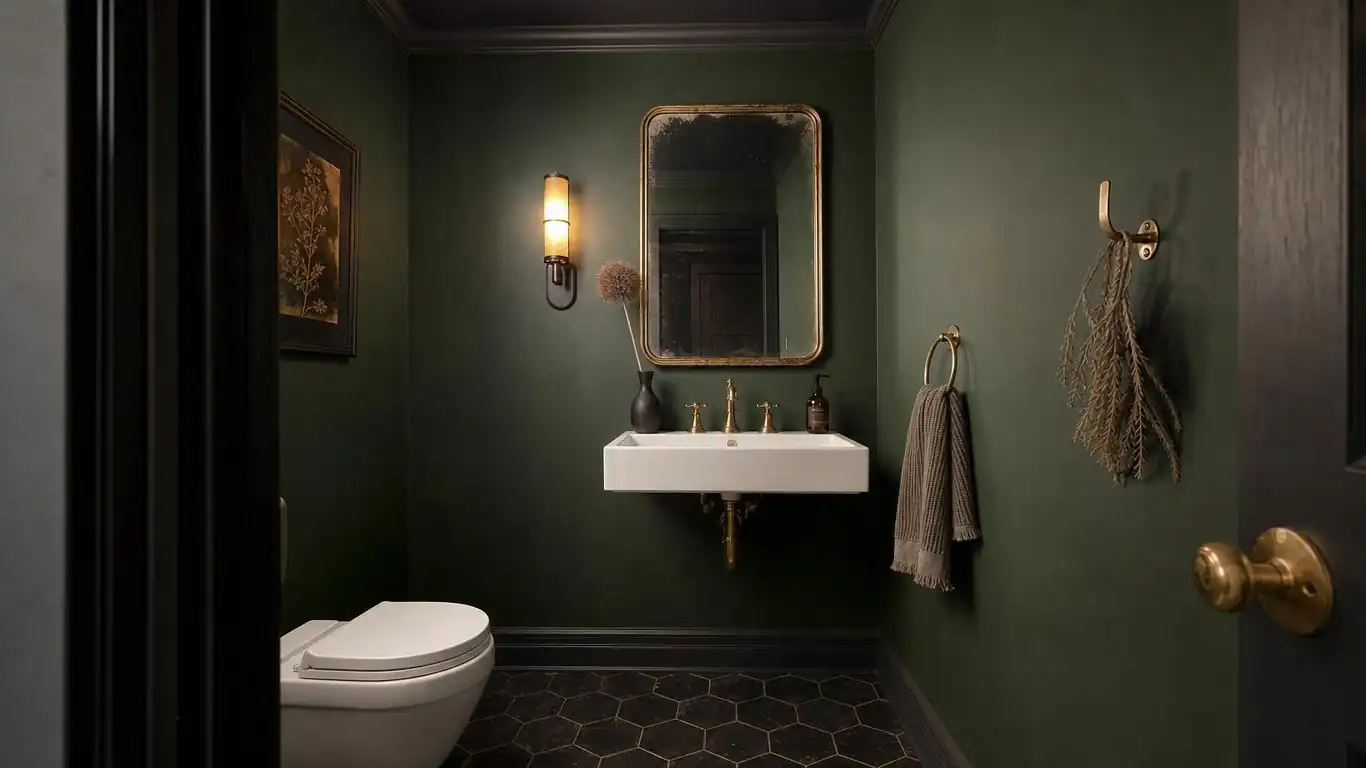
- Perfect for powder rooms where maximum impact matters more than daily softness
- Creates a strong focal point that turns a utilitarian room into a designed one
Cons:
- Requires generous natural light or deliberate warm artificial lighting to avoid feeling oppressive
- Less versatile with fixture metals — works best with black, aged bronze, or unlacquered brass
- Harder to repaint over than sage — higher visual and physical commitment
- More trend-dependent than sage — may need refreshing in 5-7 years
DESIGNER TIP: Forest green paired with unlacquered brass that develops a natural patina over time creates a bathroom that feels purposefully aged — not just decorated.
For seasonal ways to refresh a forest green bathroom without repainting, 12 refreshing spring bathroom decor ideas has a strong section on textiles and ceramic accessories that complement both green shades. The rich, enclosed quality of a forest green room shares the same intentional-retreat energy as secret garden ideas — enclosed, botanical, and purposeful. It also connects naturally to the confident depth found in moody boho bedroom ideas when you’re carrying a rich palette through connected rooms.
KEY TAKEAWAY: Forest green is the higher-risk, higher-reward choice — when the light is right and the fixtures are bold, it delivers a bathroom that reads as truly designed.
When Should You Choose Sage Green?
Sage green is the right call in these specific situations:
Your bathroom is small. Rooms under 60 square feet benefit from sage’s light-reflecting quality. Forest green in a small bathroom adds visual mass and makes the space feel smaller than it is.
The room faces north or northeast. North-facing bathrooms receive cooler, lower-light conditions throughout the day. Sage’s warm undertones offset that grey cast — forest green amplifies it.
You want a calming, spa-like feeling every morning. Sage green bathrooms read as restful and restorative. If your bathroom is your daily decompression space, sage supports that mood better than forest.
You have chrome or nickel fixtures already installed. Sage green pairs cleanly with silver-toned metals. Forest green does not.
You’re designing a shared family bathroom. Sage’s neutrality means it won’t compete with the towels, bath mats, and personal items that accumulate in a family space.
The same calming, muted quality that makes sage green effective in bathrooms also translates directly to sage green nursery decor — the grey-green tone is inherently soothing across many room types and lighting conditions. In compact rooms especially, the light-reflecting principle works the same way it does in 25 tiny living room ideas where pale, muted tones make square footage feel generous.
KEY TAKEAWAY: Sage green is the right choice for small bathrooms, low-light rooms, and any space where calm and everyday livability matter more than drama.
When Should You Choose Forest Green?
Forest green wins in these specific situations:
Your bathroom is large or has high ceilings. Rooms over 80 square feet absorb the visual weight of dark green without feeling oppressive. High ceilings make it even more manageable.
The room faces south or west. Strong afternoon sun balances forest green’s depth and brings out its warmth rather than its darkness.
You want a statement powder room. Half-baths and powder rooms are the best possible use of forest green. Guests experience them briefly — maximum impact, zero daily commitment.
Your fixtures are already matte black or aged brass. Forest green and black metal fixtures create one of the most consistently striking bathroom combinations in current design.
You have marble or dark-veined tile already installed. Forest green against Calacatta marble or dark slate reads genuinely luxurious.
The confidence required to commit to forest green is the same energy behind 11 navy blue bedroom ideas — deep, saturated shades that reward full commitment over half-measures. And the restraint on accessories that works so well in minimalist bedroom ideas 2026 applies directly here: keep surfaces nearly empty to let the shade breathe.
KEY TAKEAWAY: Forest green is the right choice for large bathrooms, south-facing rooms, and powder rooms where a bold design statement matters more than daily softness.
The Bottom Line
Both sage green and forest green are strong green bathroom ideas. They are not interchangeable, and the choice is not simply about personal preference.
Choose sage green if: your bathroom is small, your room faces north, or you want a calming, livable space you’ll love every morning. It is the reliable choice that ages gracefully and forgives a lot.
Choose forest green if: your bathroom has generous square footage, strong natural light, or you are designing a powder room where maximum visual impact is the whole point.
The one rule that applies to both shades: avoid painting all four walls in a windowless bathroom. In a room without windows, use green as tile, on a single feature wall, or in accessories and textiles only. Browse all rooms inspiration to see both green shades in complete, styled room contexts.
Designer’s Verdict: For most homeowners exploring green bathroom ideas for the first time, sage green is the smarter starting point. It delivers the botanical, spa-like mood without the risk. Forest green is the upgrade you reach for when you know your room has the light and scale to carry it.
KEY TAKEAWAY: Sage green is the smarter first choice for most bathrooms; forest green rewards the homeowner who knows their room can support it.
Frequently Asked Questions
Conclusion
The choice between sage green and forest green isn’t about taste alone. It’s about what your specific bathroom can actually support. Light, square footage, and existing fixtures determine which shade performs well — and which one you’ll be repainting two years later.
I styled a powder room in a Victorian terrace last autumn using Farrow & Ball Calke Green on all four walls. The room had no window — just a deep-recessed ceiling light at 2700K warm white. That single warm light source transformed the dark green into something that felt like a jewel box rather than a closet. The client messaged me six months later to say it had become her favourite room in the house. The lesson: forest green can work in low-light rooms when the artificial lighting is designed alongside the color, not added as an afterthought.
Whichever green you choose, test it first. Paint at least a 12 by 12-inch patch and view it at different times of day before committing. For green bathroom ideas and the full library of bathroom design guides, visit 101homedecor.com. To carry your green palette through to an adjacent bedroom, olive green bedroom ideas shows how earthy greens work as a connected palette through multiple rooms without feeling repetitive.