TL;DR
- Bathroom color ideas work best when you match the shade to the room’s light and size, not the paint chip.
- North-facing bathrooms need warm undertones, while south-facing rooms can carry cool blues and greens.
- Soft white, greige, and sage green open up small or windowless bathrooms; save navy and charcoal for larger, well-lit rooms.
- Build a scheme with the 60-30-10 rule: one main color, one secondary, and one accent.
- Choose a satin or semi-gloss finish so the paint resists steam, and expect about $150 to $400 to repaint a small bathroom.
How Do You Choose the Right Bathroom Color?
Why does the same soft blue feel crisp and spa-like in one bathroom and cold and clinical in the next? The color rarely changes. The light, the tile, and the room size do. If you have ever painted a bathroom a shade you loved on the chip, then watched it turn gray on the wall, you are not alone.
Part of our guide to Bathroom Ideas.
Bathroom color ideas work best when you match the shade to the room’s light and size. Soft white, warm greige, and sage green make small or windowless bathrooms feel bigger and brighter. Deep navy, forest green, and charcoal add drama in larger or well-lit rooms. Start with one main wall color, then layer two supporting tones for a balanced bathroom color scheme.
Editorial field note: A north-facing bathroom with cool daylight can drain the warmth out of a greige, leaving it flat and gray. The same greige in a west-facing room looks soft and warm by late afternoon. The paint did not change. The light did.
This guide walks through choosing color by light and size, browsing shades from sage to charcoal, building a palette, and picking a finish that survives steam. For color palettes across every style, our bathroom decor archive gathers full makeovers by room. Start with your room’s light, then use the shade menu below to shortlist two or three colors you like. If you want a wider view, our home decor inspiration hub links out to color guides for the whole house. Bookmark this guide for quick reference.
| Quick Takeaways | |
|---|---|
| Light | North-facing bathrooms need warm undertones; south-facing rooms can handle cool blues and greens. |
| Room Size | Soft white, greige, and sage make a small bathroom feel larger; save dark shades for bigger rooms. |
| Scheme | Use the 60-30-10 split: one main color, one secondary, one accent. |
| Undertone | Match grout, trim, and tile to the wall’s undertone so the color looks planned. |
| Finish | Choose satin or semi-gloss paint to resist steam and wipe clean. |
| Budget | A small-bathroom repaint runs about $150 to $400 as a DIY or light pro job. |
Bathroom Color Ideas Checklist
- Test paint on a large swatch by the mirror and in the darkest corner before you commit.
- Check which way the window faces, since north light looks cool and south light looks warm.
- Pick one dominant color for about 60% of the room, usually the walls or tile.
- Add a secondary color for roughly 30%, like a vanity, curtain, or floor.
- Save the boldest shade for the last 10%, in towels, hardware, or art.
- Keep grout and trim within one or two shades of the main color’s undertone.
- Buy satin or semi-gloss paint, not flat, so it handles steam and cleaning.
- In a windowless bathroom, lean lighter or add layered light before going dark.
KEY TAKEAWAY: The best bathroom color starts with the room’s light and size, then builds outward into a simple three-color scheme.
How Do Light and Room Size Change Your Color Choice?
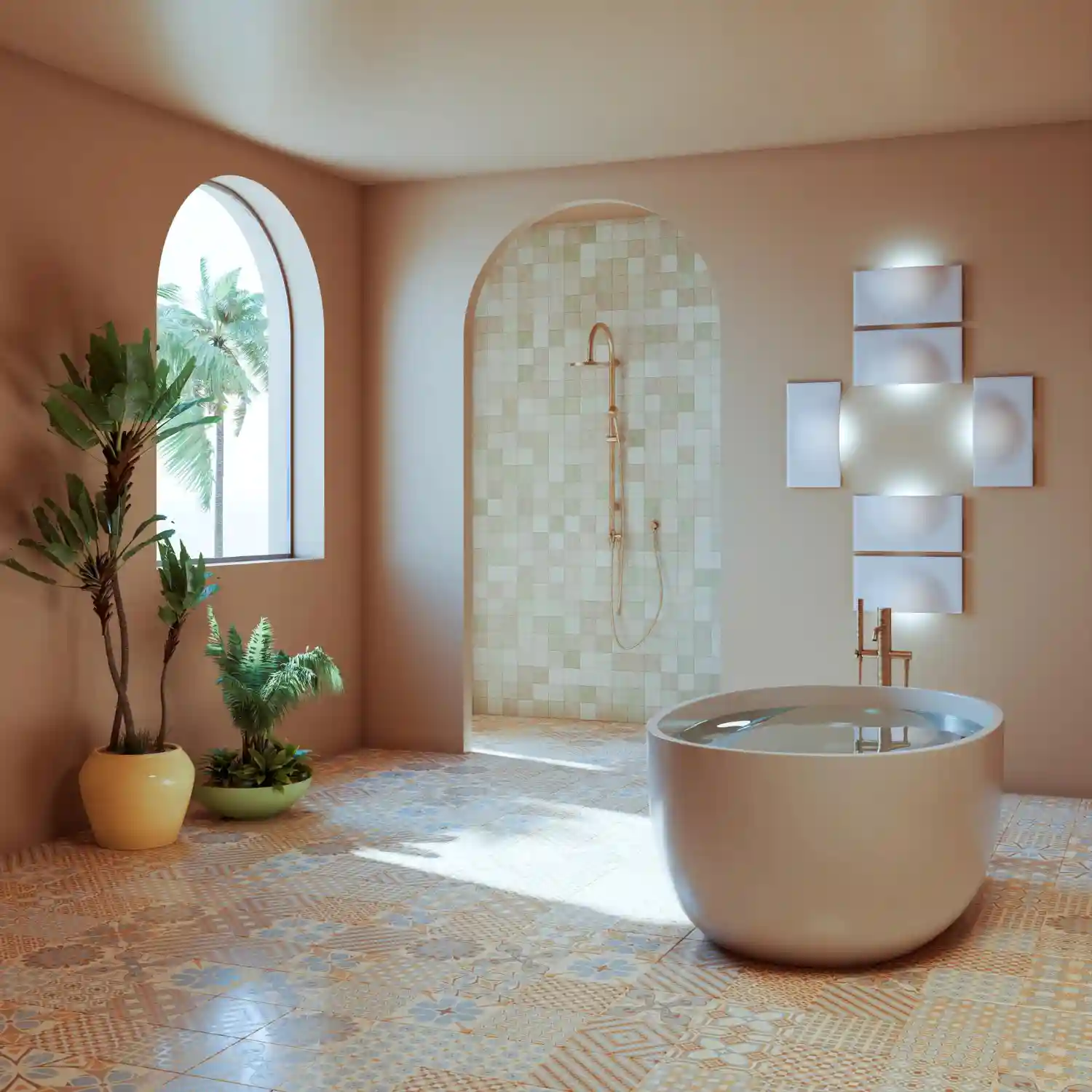
Light decides how any bathroom color really looks. North-facing bathrooms receive cool, blue-toned daylight that can make gray and greige look flat or dingy. South-facing bathrooms get warm light for most of the day, so they can carry cooler blues and greens without feeling cold. Benjamin Moore’s color team suggests warm whites with a yellow or red undertone for low-light, north-facing rooms to lift the space (Benjamin Moore Colors by Direction).
Room size sets the second rule. A small or windowless bathroom bounces more light off pale shades like soft white, warm cream, and sage green, so the walls recede and the room feels larger. A dark shade absorbs light, which can shrink a tiny powder room unless you layer in sconces and a mirror. In a larger, well-lit bathroom, deep navy or charcoal looks rich instead of cramped.
Artificial light matters as much as daylight. Warm bulbs near 2700K push beige and greige warmer, while cooler 4000K bulbs sharpen whites and grays. Test your color under the actual bulbs you use, not just the store lights. Designer Tip: Paint a large poster board instead of the wall, then tape it beside the mirror and in the shower corner for two days so you see the color in morning, evening, and artificial light.
Browse the Best Bathroom Colors by Shade
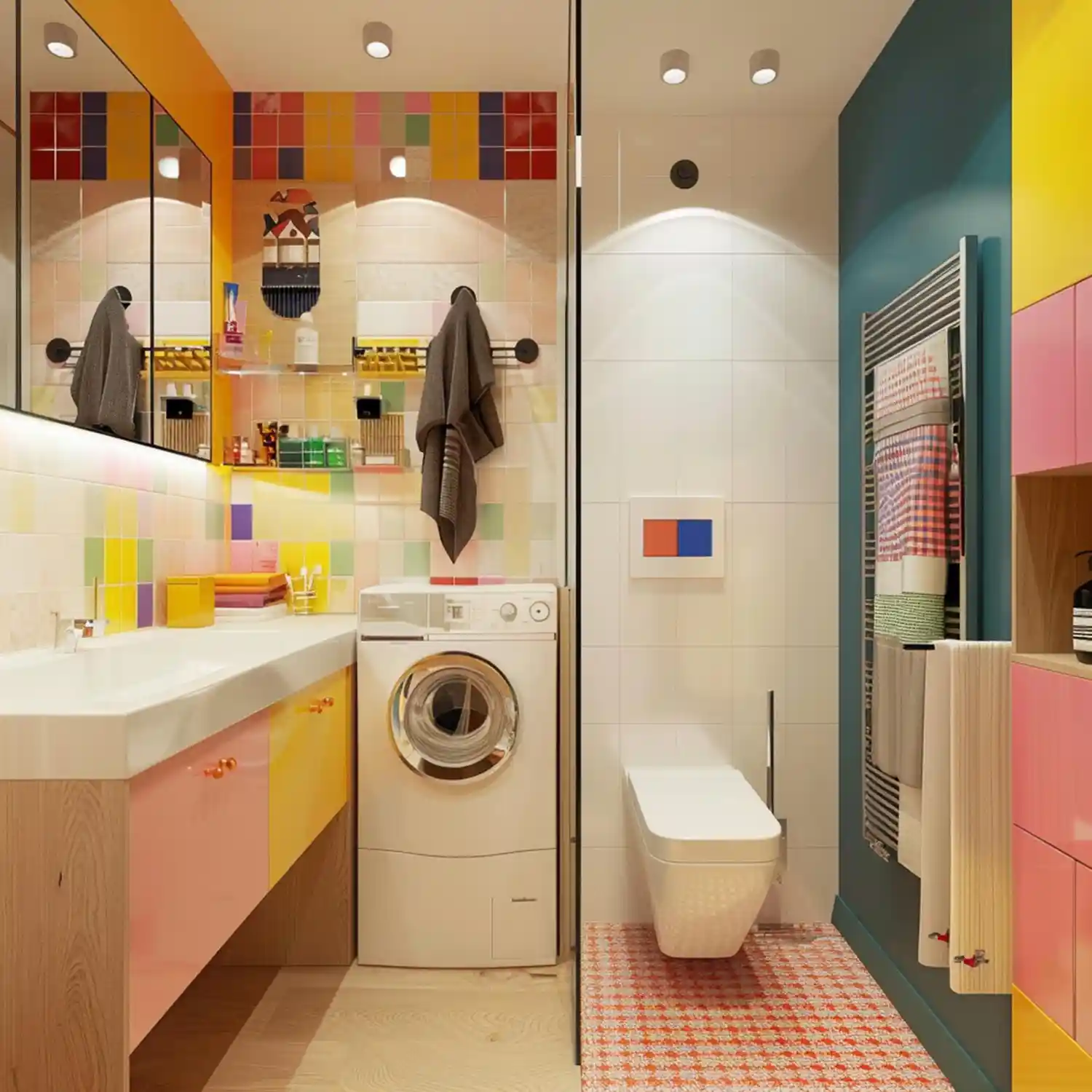
The easiest way to narrow bathroom color ideas is to browse by shade, then check each one against your light and size. Every color below works in a bathroom, but each has a sweet spot. Some suit small windowless rooms, others need daylight or a larger footprint. Use this as a color menu, and follow the deeper guides linked in each section when a shade feels right.
Green Bathroom Colors, From Sage to Forest
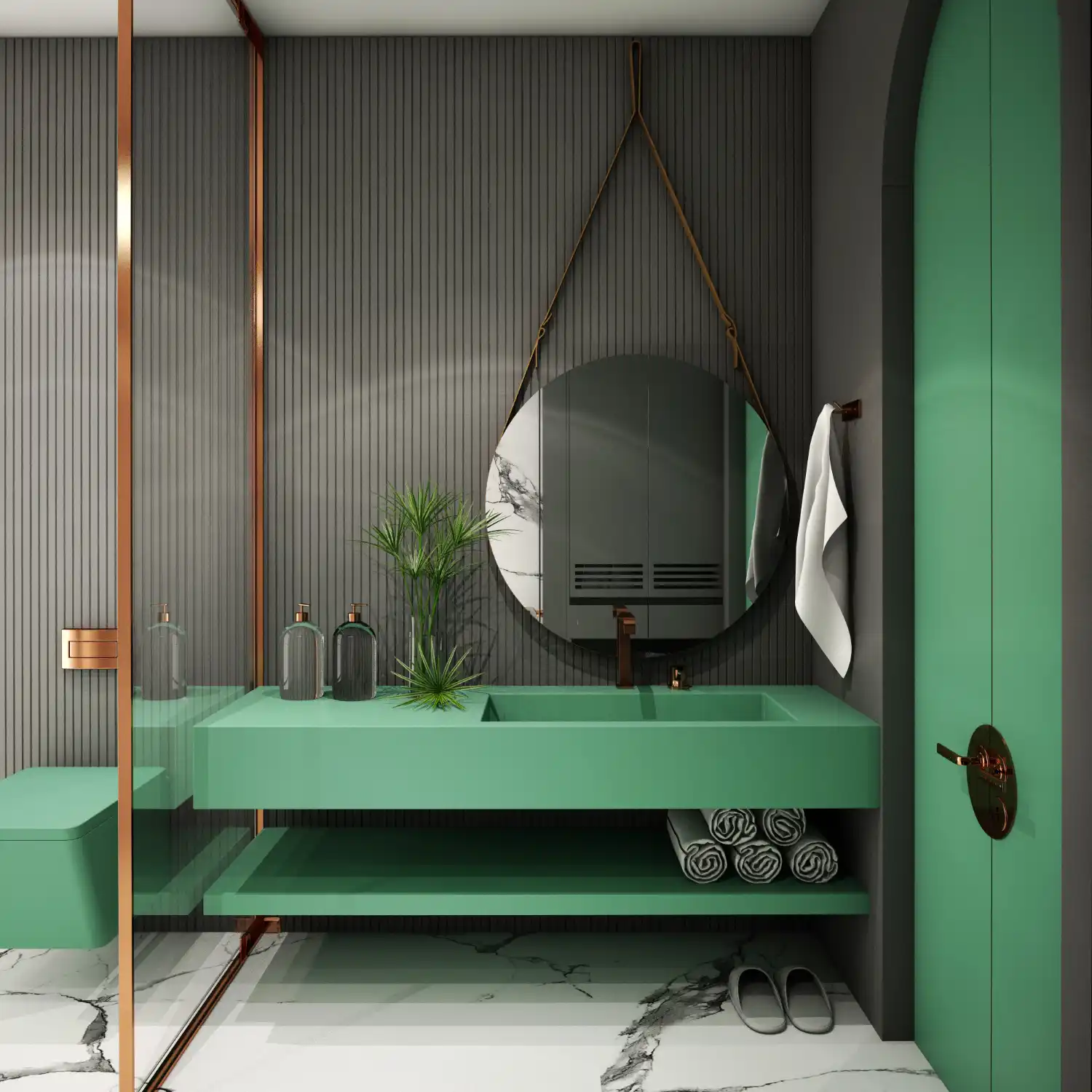
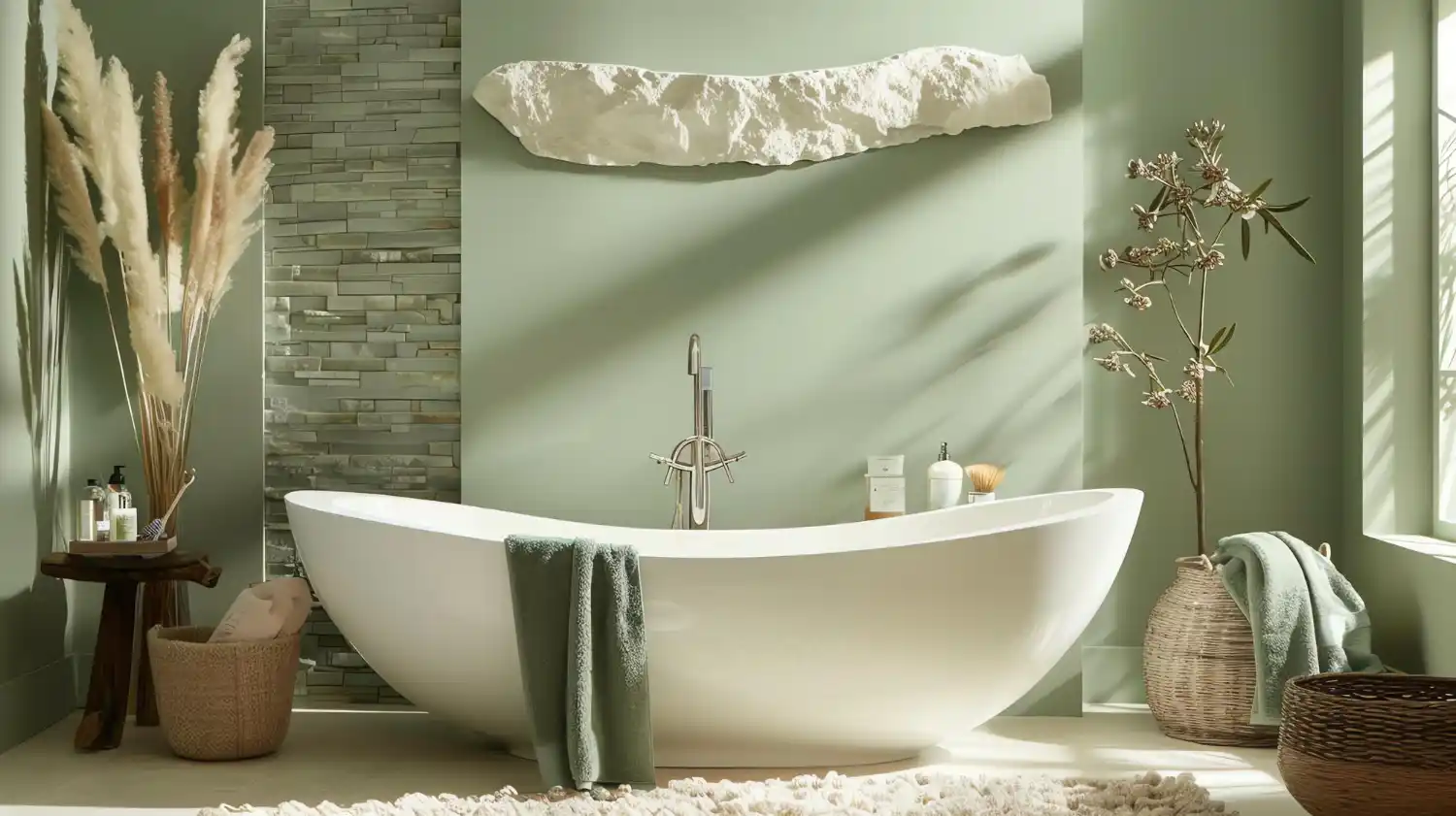
Green is one of the most flexible bathroom colors because it spans a huge range. Sage green and soft eucalyptus feel calm and reflect light well, so they suit small or shared bathrooms. Deeper olive and forest green add a spa-like, grounded mood but want good light or a larger room. Green pairs naturally with warm brass, oak, and cream. To choose between the lighter and darker end, compare shades side by side in our sage green versus forest green bathroom guide.
Blue Bathroom Colors, From Sky to Navy
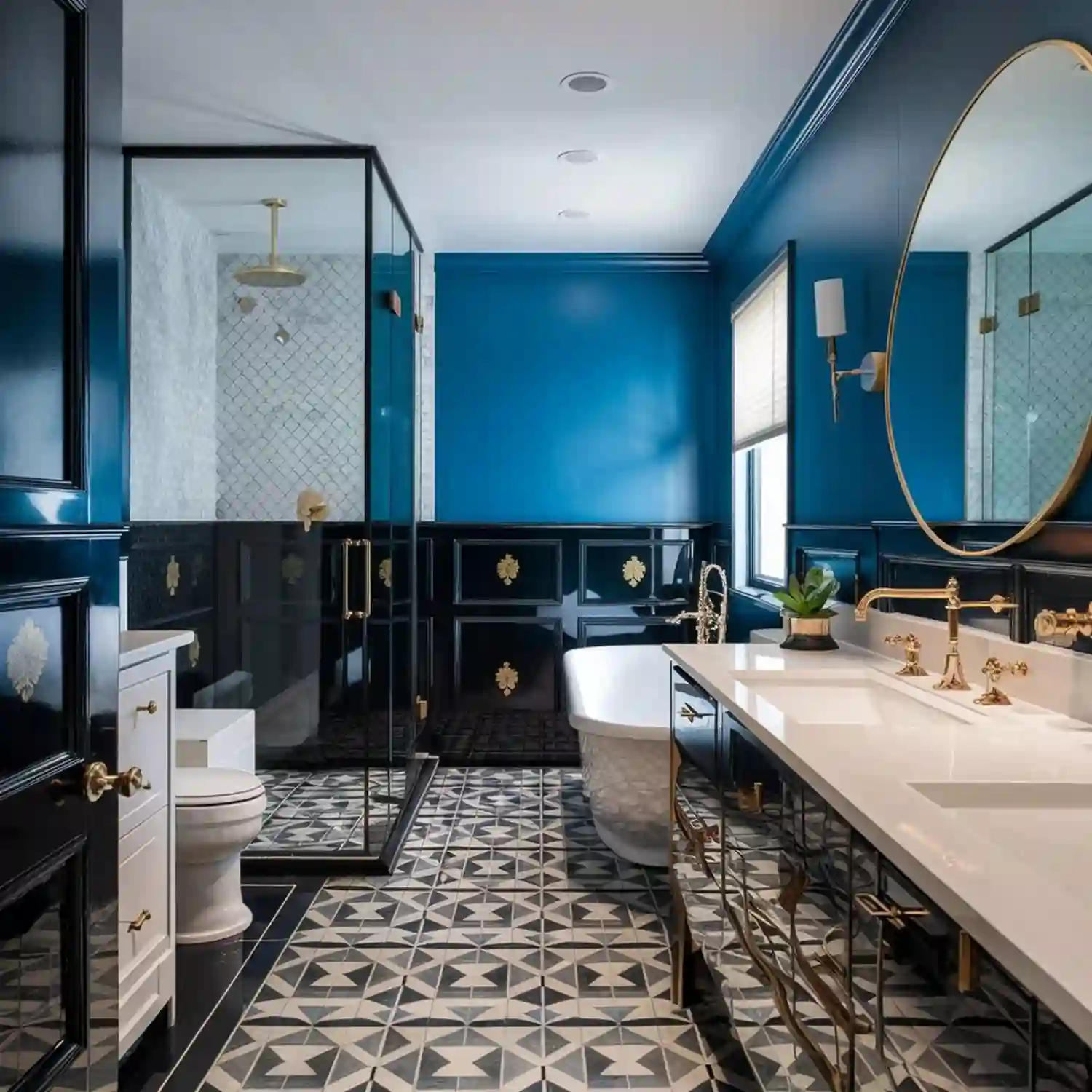
Blue is the classic bathroom color for a reason. It looks clean, fresh, and spa-like across almost every shade. Light sky blue and powder blue open up a small bathroom and pair well with white tile and chrome. Dusty blue and slate blue feel softer and more grown-up. Navy blue works as a bold anchor on a vanity or lower wall, but it turns much darker in a windowless room, so add mirror and sconce light to keep it from closing in. Blue and white stays a timeless bathroom color scheme.
Black-and-White Bathroom Colors
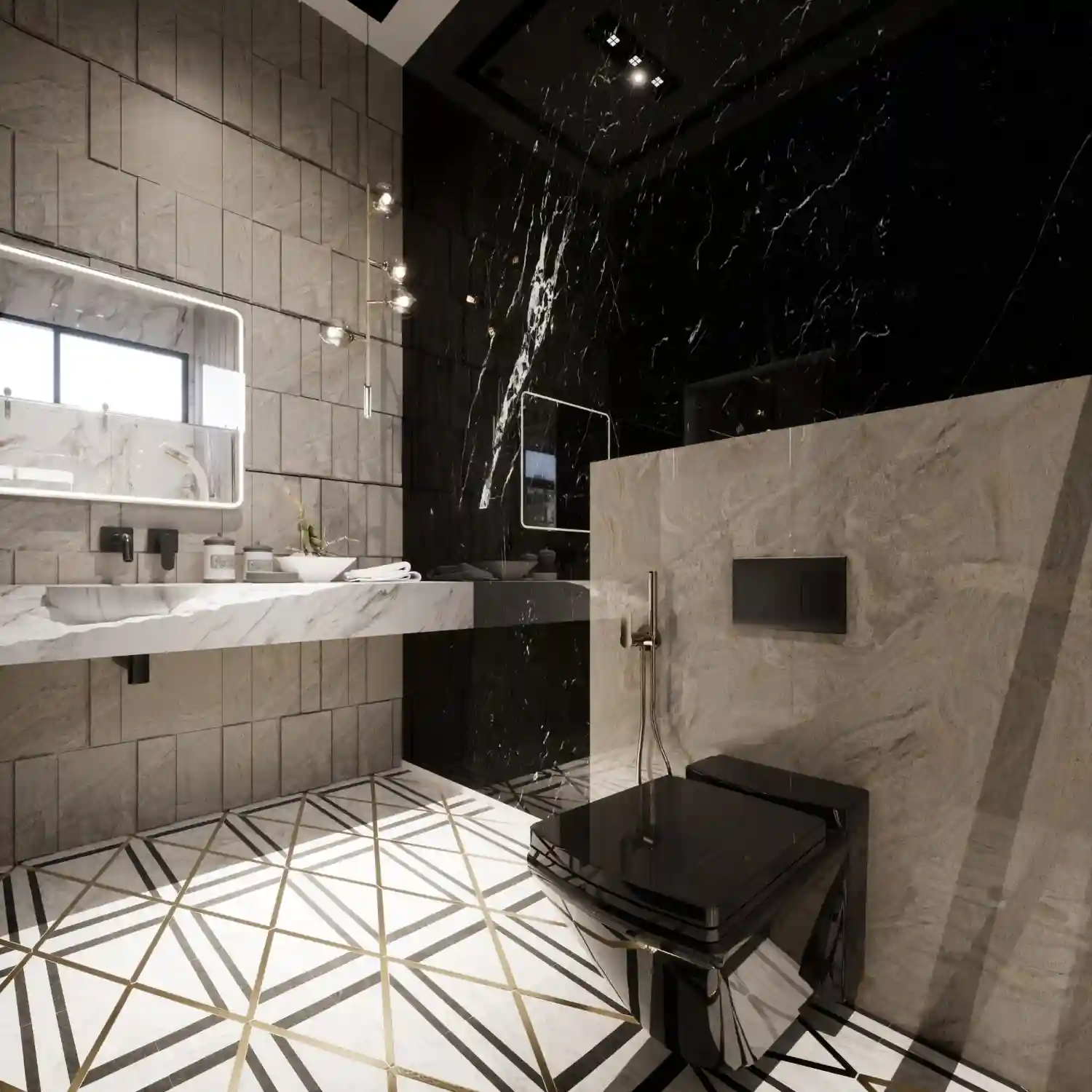
Black and white is the most graphic bathroom color pairing, and it never dates. White walls or tile keep the room bright, while black hardware, a black frame, or a checkerboard floor adds sharp contrast. This palette suits both tiny powder rooms and large primary baths because you control the ratio. Keep black to about 10 to 20% in a small room so it stays crisp instead of heavy. See how to balance the two tones in our black and white bathroom designs.
Pink and Blush Bathroom Colors
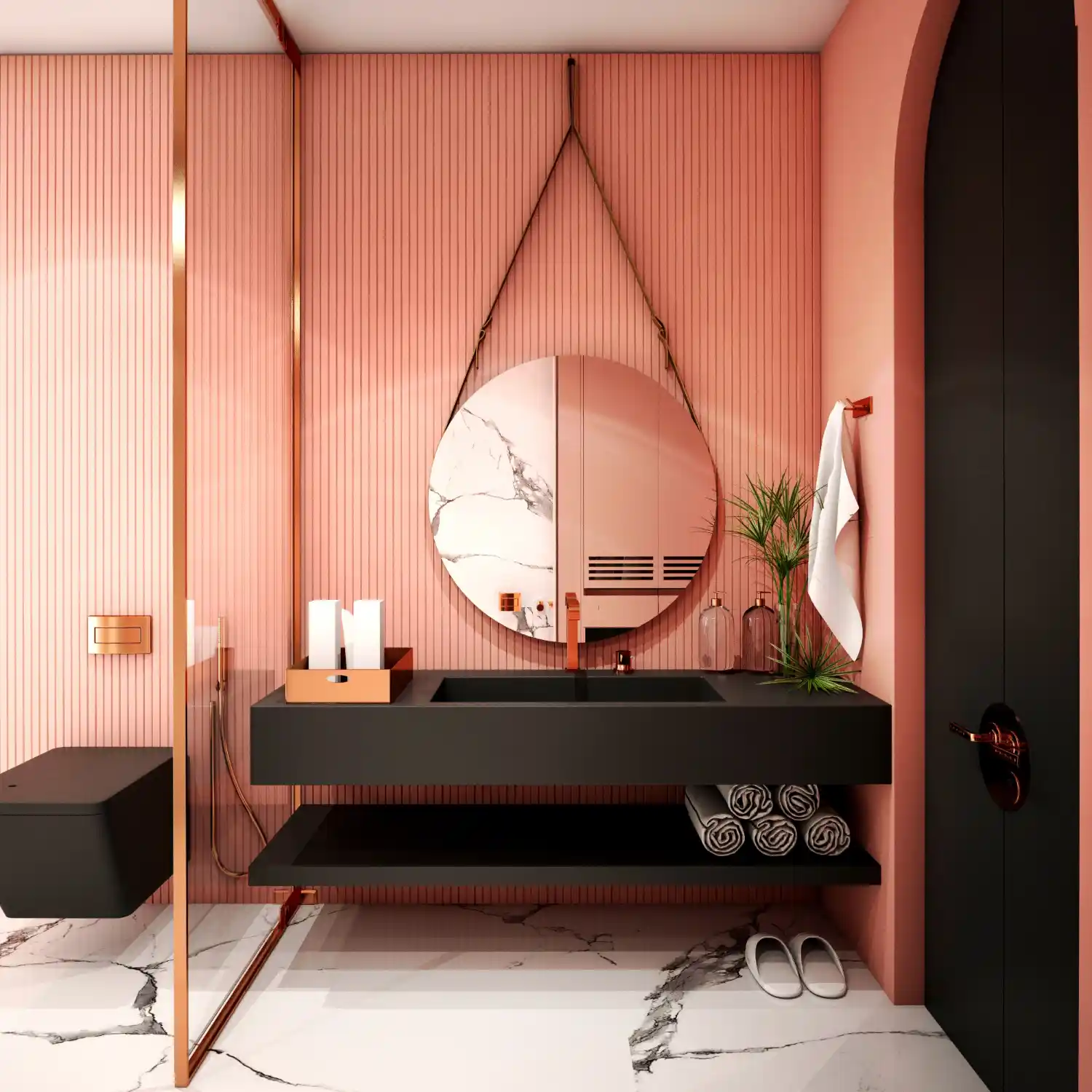
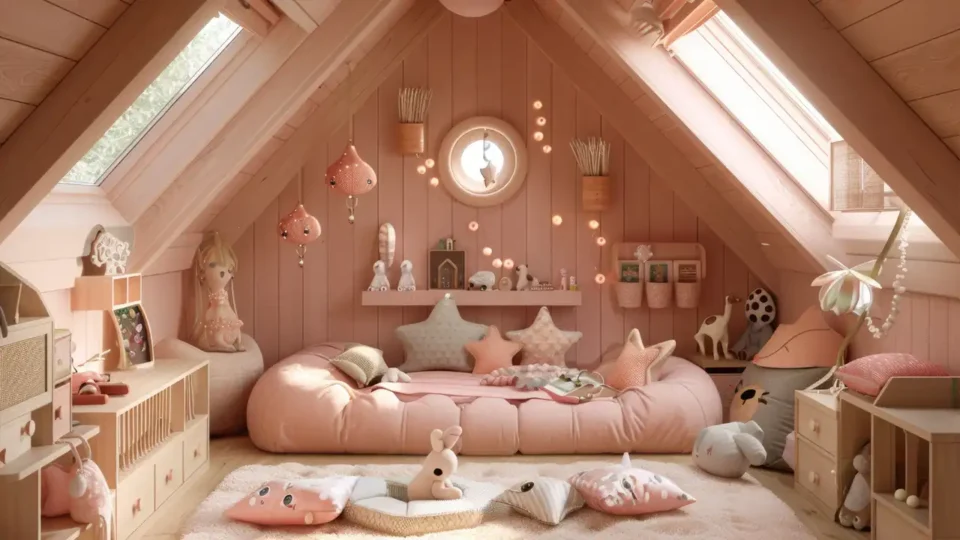
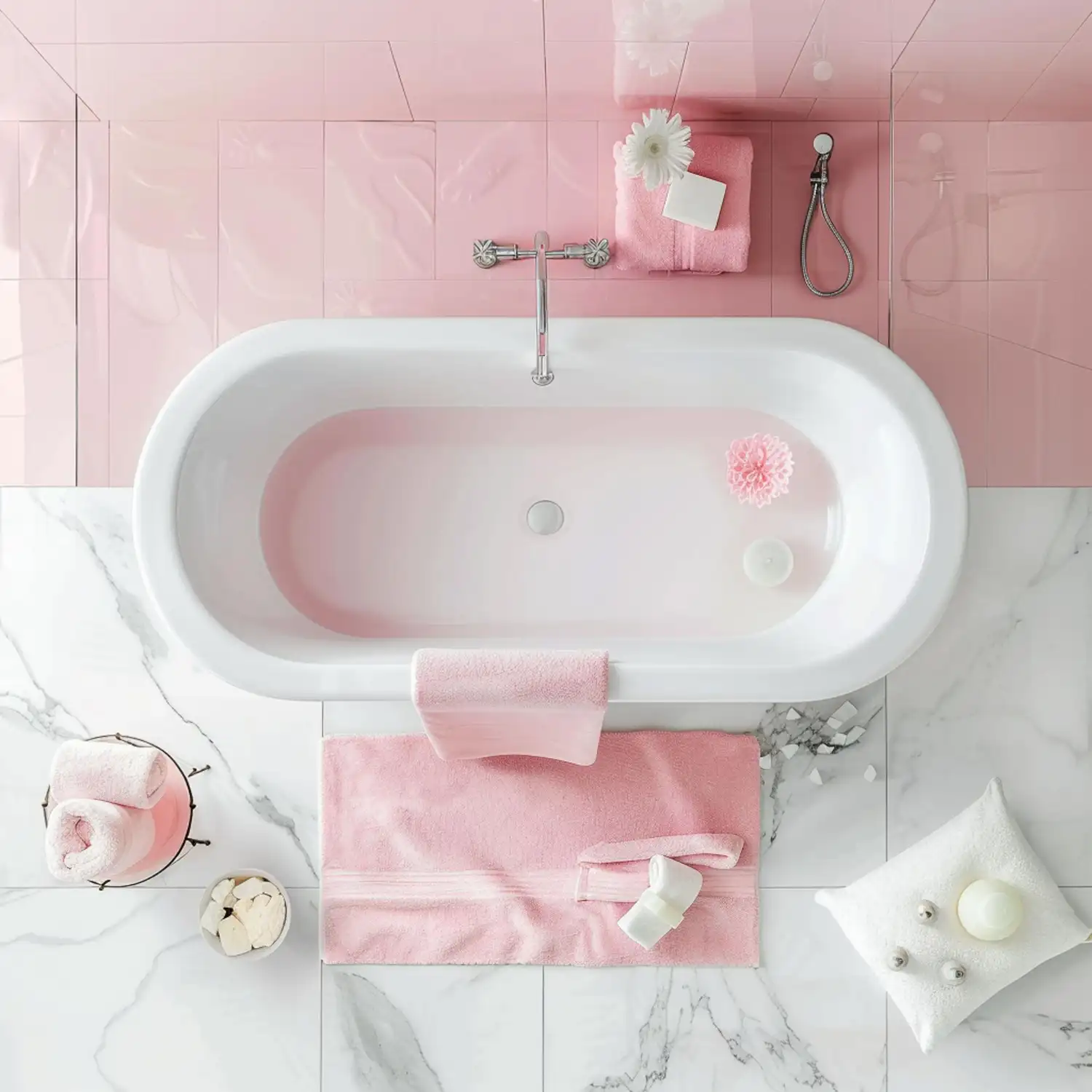
Pink has grown far past the dated 1980s tile look. Modern blush, clay pink, and muted rose look warm and soft, not sweet, especially against black hardware or warm wood. Blush works as a whole-room color in a powder bath or as a 10% accent in towels and art. It flatters skin tones in mirror light, which makes it a smart pick for a vanity area. For grown-up ways to use it, browse our pink bathroom designs for a modern space.
Warm Neutrals: Beige, Greige and Cream
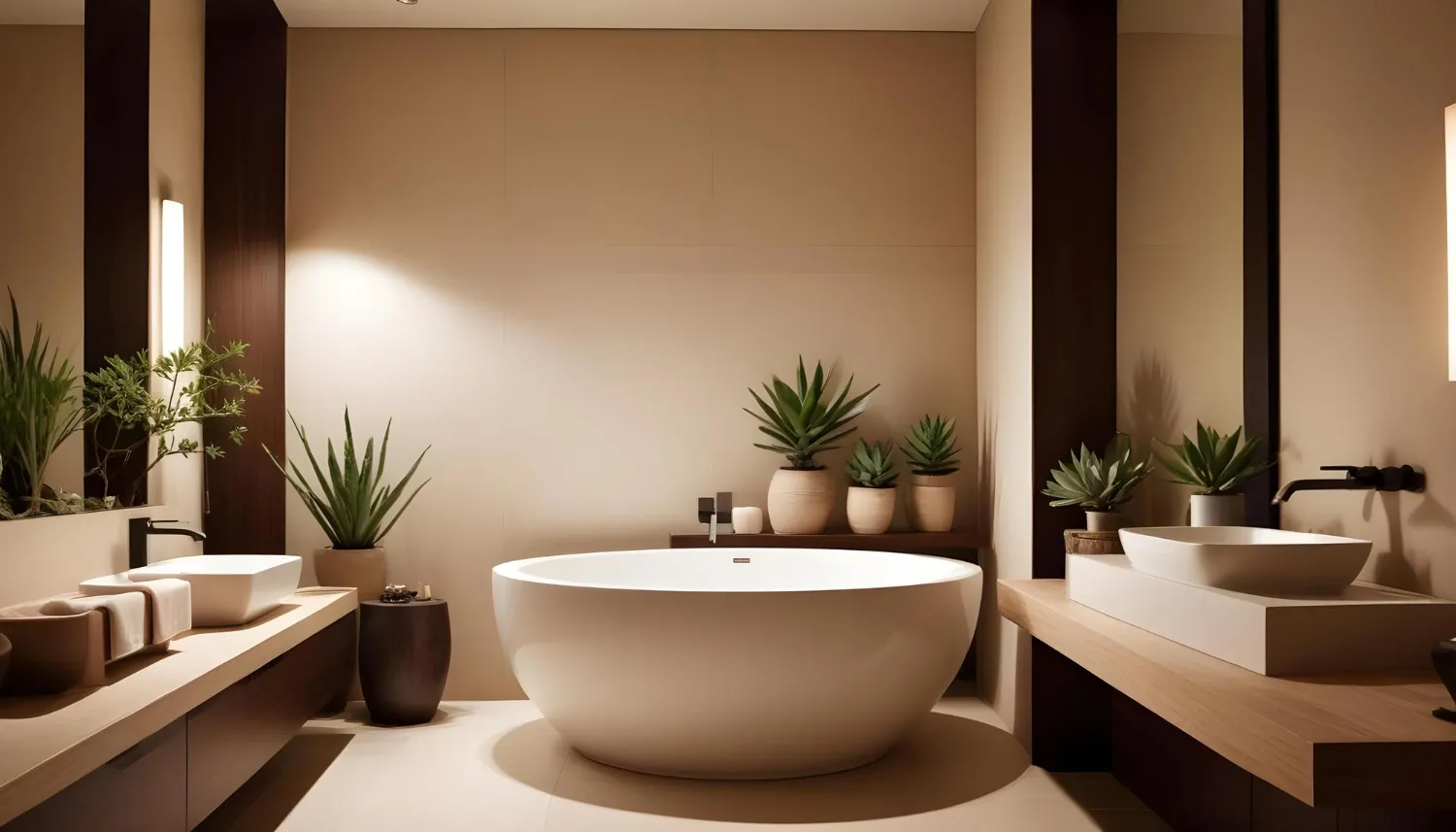
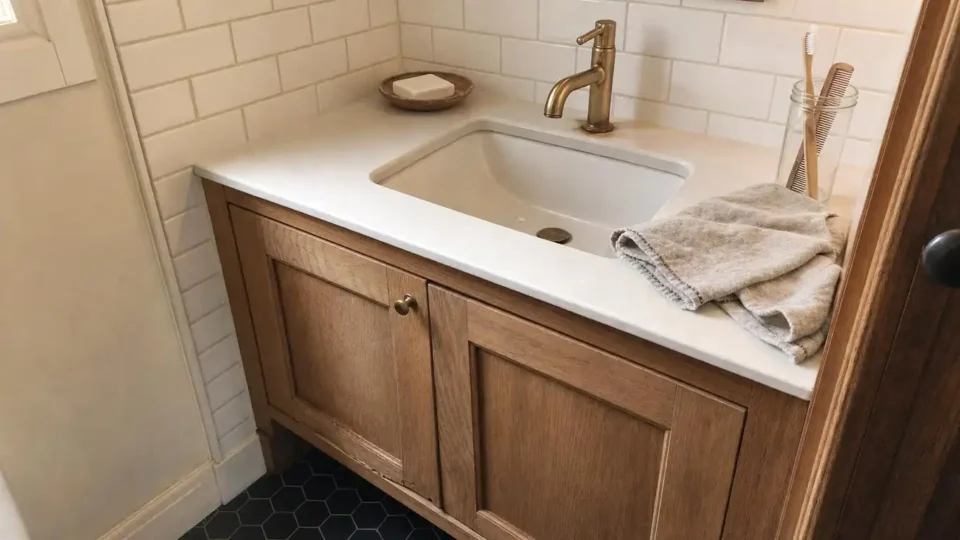
Warm neutrals are the quiet workhorses of bathroom color. Warm greige carries both gray and beige undertones, so it bridges cool tile and warm wood. Cream and soft beige add warmth to a room that gets cool north light. These shades rarely fight with existing tile, which makes them the safest repaint. A warm neutral base is the backbone of most cozy farmhouse bathroom palettes, layered with wood, linen, and matte black.
Gray Bathroom Colors
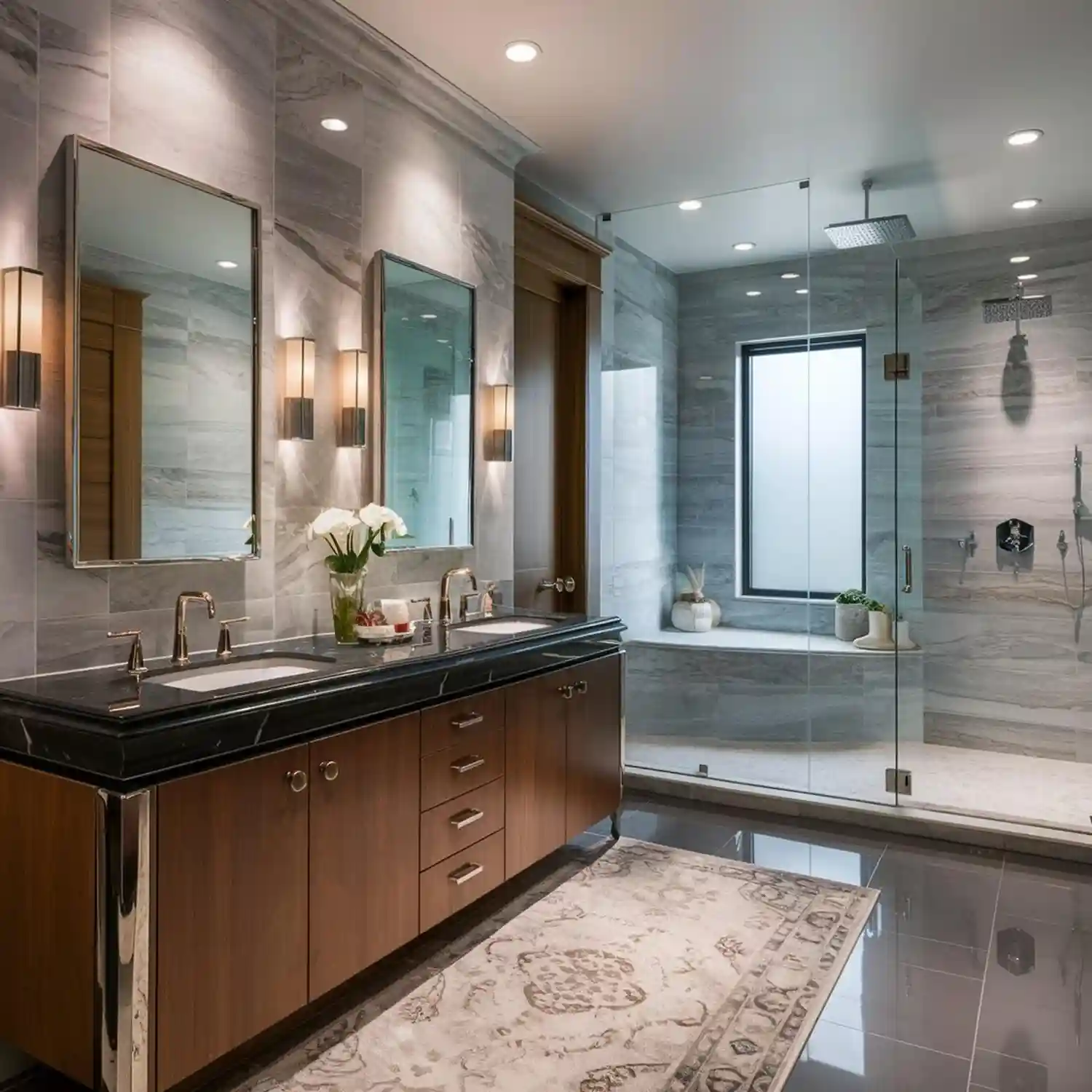
Gray still works in a bathroom, but the undertone decides everything. A cool gray can feel sterile in north light, while a warm gray with a hint of taupe stays soft and calm. Gray pairs cleanly with white tile, chrome, and glass for a modern look, and with wood for a warmer one. Keep it out of a dark windowless room unless you add plenty of light. Gray suits a pared-back scheme, like the ones in our minimalist bathroom decor ideas.
Brown, Terracotta and Earthy Colors
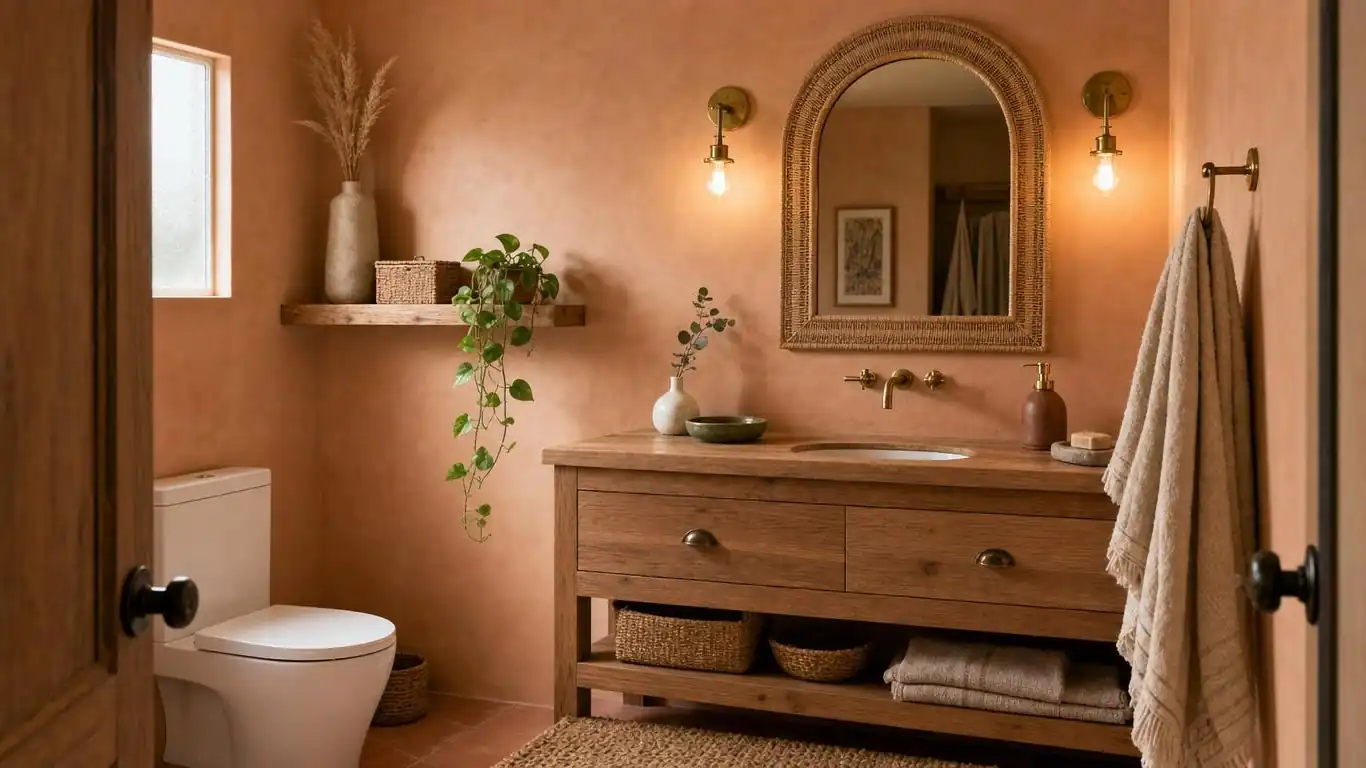
Earthy colors are the biggest shift in bathroom palettes right now. Warm brown, tan, terracotta, and clay bring a natural, grounded feel that pairs beautifully with travertine, oak, and rattan. Terracotta feels warm and sunlit, so it lifts a room with little natural light. These tones anchor a relaxed, layered look, which is why they show up in so many boho bathroom spaces. Keep the rest of the room simple so the earthy color leads.
How Do You Build a Bathroom Color Scheme?
A single wall color is not a scheme. The simplest way to build one is the 60-30-10 rule, a long-standing design guideline. It splits the room into 60% main color, 30% secondary color, and 10% accent. In a bathroom, that usually means walls or tile as the 60%, a vanity or floor as the 30%, and towels, hardware, or art as the 10%.
Undertone is the piece most people miss. Every neutral leans warm or cool underneath. A greige with a green undertone can clash with a pink-beige tile, even though both look neutral alone. Hold your paint chip against the tile, grout, and countertop in daylight before you buy. Tile is often the easiest place to bring in color without paint, and our bathroom backsplash ideas show how one accent tile can set the whole palette.
For a two-color bathroom, pick shades that share an undertone or sit opposite each other, like sage green and clay pink, or navy and warm brass. Designer Tip: Match grout and trim to the wall’s undertone instead of a default bright white, so the whole scheme looks chosen rather than accidental. To see how other rooms handle palettes, browse our color ideas archive for cross-room inspiration.
What Paint Finish Holds Up in a Bathroom?
Color is only half the choice. The finish decides whether the paint survives steam. Satin and semi-gloss finishes resist moisture better than flat or matte paint, and both wipe clean. Satin gives a soft, low sheen that hides wall flaws and suits most full bathrooms. Semi-gloss reflects more light and handles heavy humidity or a windowless room, though it shows drywall bumps more (Sherwin-Williams paint sheen guide).
For a bathroom with real steam, a mold-resistant or bathroom-specific paint adds a layer of protection. Climate Note: In humid or poorly ventilated bathrooms, choose a mold-resistant paint and run the exhaust fan during and after every shower, since paint alone will not stop mold without airflow. Deep and dark colors usually come in a slightly lower sheen, so test a sample board before you commit to a full wall.
Which Colors Make a Bathroom Feel Calm or Bold?
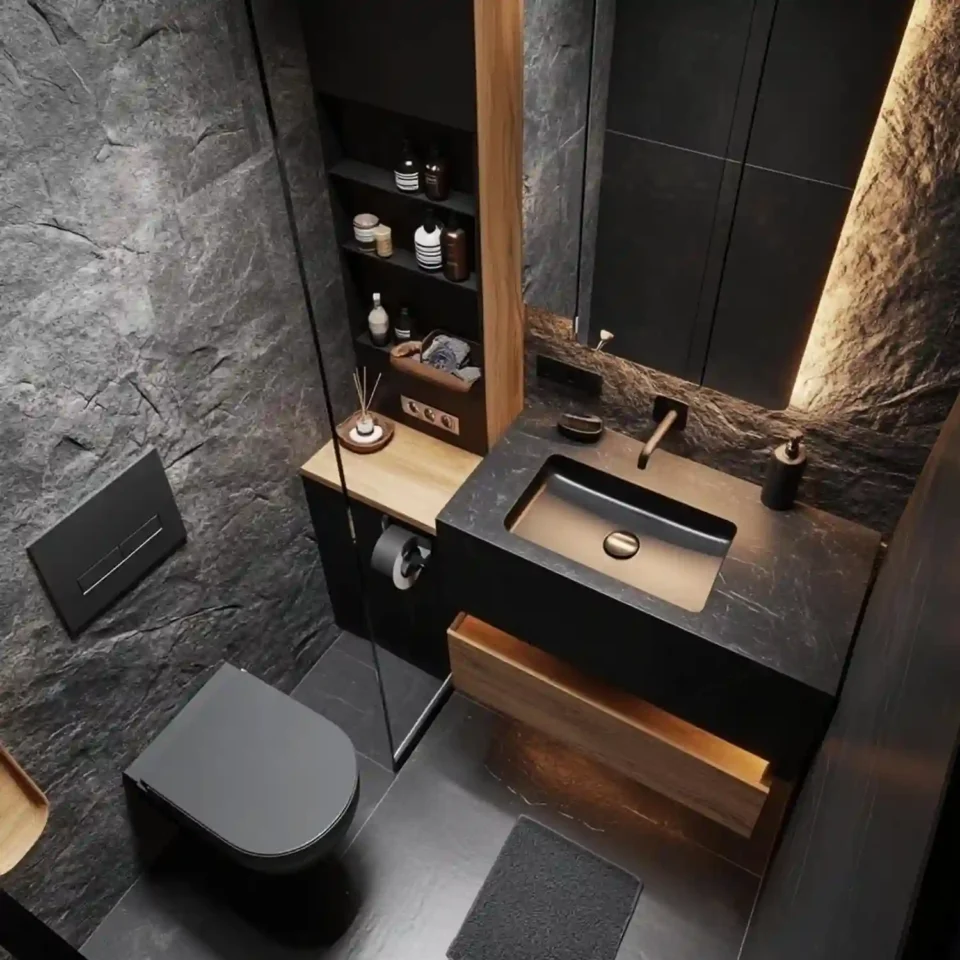
The best bathroom color ideas are chosen for mood as much as for light. Color sets the mood of a bathroom faster than any other choice. Soft blue, sage green, and warm white feel calm and spa-like, which suits a room built for winding down. Warm neutrals and blush feel cozy and inviting. Deep navy, charcoal, forest green, and black feel bold and dramatic, best in a powder room or a large primary bath where you want impact over airiness.
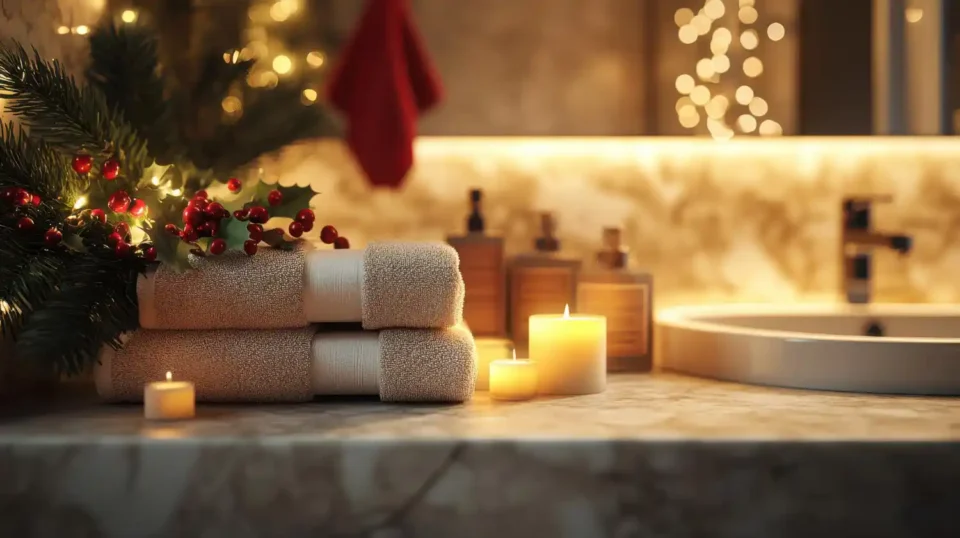
Season can guide a lighter refresh too. Swapping towels, a shower curtain, and art in fresh spring shades updates the mood without repainting, an approach our spring bathroom decor ideas lean into. Warmer, nature-based colors are clearly leading bathroom palettes right now, from sage green to terracotta. Our roundup of current bathroom design directions tracks that shift in more detail.
Where People Go Wrong With Bathroom Color
❌ Picking color from a tiny paint chip → ✅ Test a large swatch on two walls, in daylight and lamp light, for a couple of days.
❌ Ignoring the tile and grout you already have → ✅ Match your new color’s undertone to the fixed elements you cannot change.
❌ Going dark in a small windowless room with one light → ✅ Add a mirror and sconces first, or choose a lighter shade.
❌ Using flat paint for a bathroom wall → ✅ Choose satin or semi-gloss so the paint resists steam and wipes clean.
What Does a Bathroom Color Update Cost?
A color update is one of the cheapest ways to change a bathroom, and you can scale it to any budget. The cost to paint a small bathroom runs about $150 to $400 for a DIY or light professional job, with pros charging roughly $2 to $6 per square foot (Angi bathroom painting cost). Color that comes through tile, vanities, or hardware costs more but lasts longer.
| Project | Estimated Cost | Impact Level |
|---|---|---|
| Repaint walls plus new towels and accents | $150-$400 | High |
| Painted vanity, new hardware, and mirror frame | $300-$900 | High |
| Accent tile or wallpaper on one wall | $500-$2,000 | Medium |
| Full color reset with new tile and fixtures | $3,000-$8,000+ | Very High |
Best First Upgrade: Repaint the walls in satin and swap towels and hardware to the accent color. It changes the whole scheme for the least money.
Skip for Now: Re-tiling just to change color, unless the tile is damaged or dated. Paint and accents shift the palette for a fraction of the cost.
Frequently Asked Questions
Conclusion
The best bathroom color ideas start with the room, not the paint chip: read the light, measure the space, then build a simple scheme of one main color, one secondary, and one accent. Editorial field note: a windowless powder room painted a cool gray under a single bulb looked flat and dim, but the same room in warm greige with a mirror and one sconce felt calm and finished. For more palettes and full makeovers, visit our home decor inspiration hub.
Next Steps
- Check which direction your bathroom window faces before choosing a shade.
- Tape a large paint swatch by the mirror and in the darkest corner for two days.
- Pick your three colors using the 60-30-10 split, then match grout and trim to the undertone.
- Buy satin or semi-gloss paint, and start with the walls plus new towels and hardware.
Explore Bathroom Color Ideas
- 12 White Bathroom Ideas That Feel Warm, Not Clinical
- 13 Blue Bathroom Ideas From Soft Sky to Deep Navy
- 14 Black Bathroom Ideas That Feel Bold, Not Cold
- 14 Terracotta Bathroom Ideas for a Warm, Earthy Retreat
- 15 Gray Bathroom Ideas That Feel Warm, Not Cold
- 15 Warm Neutral Bathroom Ideas That Feel Cozy, Not Boring
- Bathroom Paint Colors for a Calm, Modern Bathroom