TL;DR
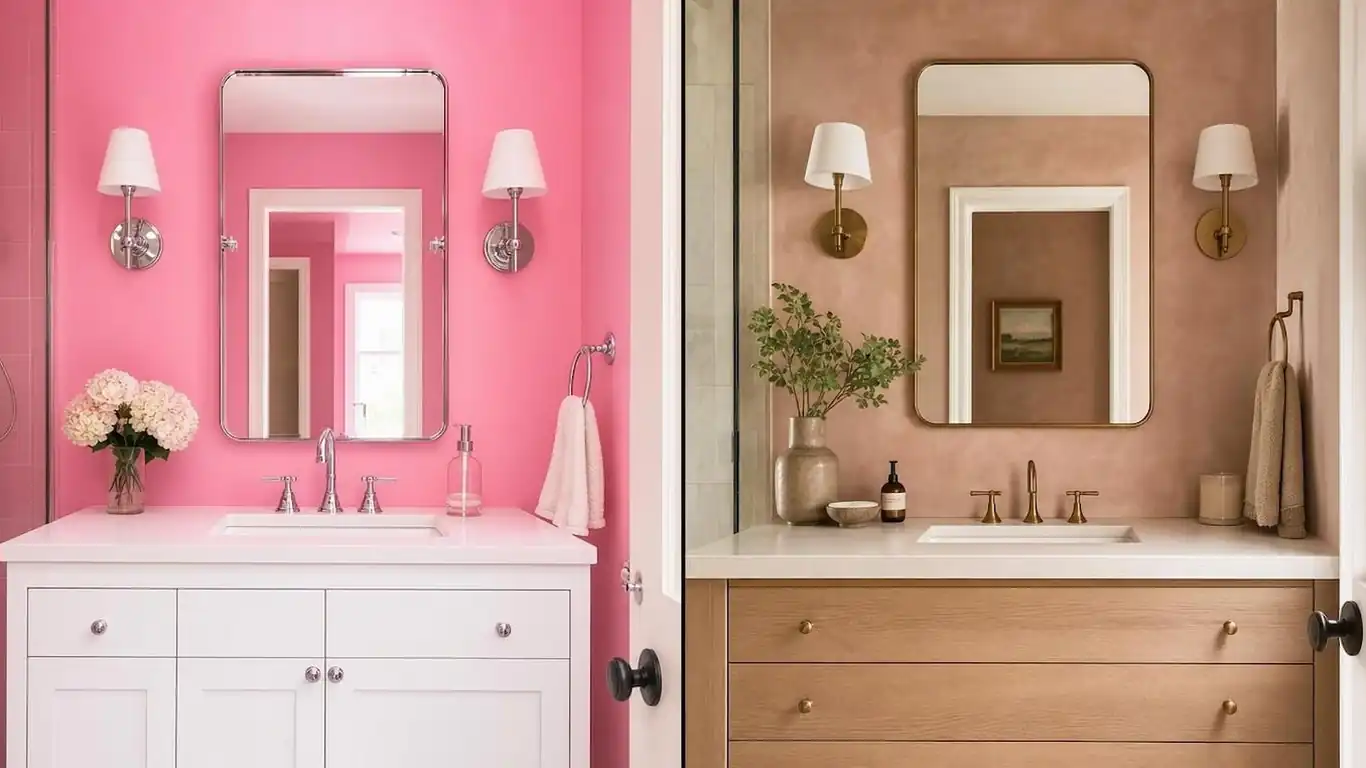
- Shade matters most: Dusty rose, warm blush, and terracotta-pink all read as adult — bubblegum and hot pink do not.
- Finishes upgrade pink: Matte black, brushed brass, and oil-rubbed bronze hardware make pink feel intentional, not childish.
- Mix materials: Travertine, marble, and raw plaster alongside pink tiles create depth that pure pink walls can’t achieve alone.
- Less pink, more impact: Use pink as an accent — one wall, one tile layer, one vanity — and let neutral tones do the heavy work.
- Pink pairs well: Deep charcoal, warm cream, sage green, and soft slate all complement pink without flattening it.
Why Does Pink Feel Grown-Up in Some Bathrooms?
Why does the same blush color look like a spa retreat in one bathroom and a child’s playroom in another? The answer is almost never the pink itself. It’s the company it keeps — the finish on the faucet, the veining in the tile, the weight of the materials around it.
Pink bathroom designs work for adults when pink is treated as a neutral, not a statement. A dusty rose zellige tile has the same visual energy as warm greige ceramic. A blush-toned travertine slab reads the same way a cream marble slab does. The color isn’t the disqualifier — the execution is.
I reworked a primary bathroom in a 1960s split-level last spring. The owners were convinced pink was off the table. We used terracotta-tinted Venetian plaster on one wall, paired it with matte black fixtures, a walnut floating vanity, and a 12×24 cream travertine tile on the floor. The room felt rich, warm, and completely adult. The client laughed when she realized the wall was technically pink. That’s the goal.
For the full range of what’s possible in bath spaces right now, browse all bathroom design ideas — there’s a lot more than pink happening in 2026.
Bookmark this guide for quick reference.
KEY TAKEAWAY: Pink bathroom designs read as sophisticated when you pair the right shade with matte finishes, natural materials, and a strong neutral base.
| Quick Takeaways | |
|---|---|
| Shade | Dusty rose, terracotta-pink, and warm blush work for adults — avoid saturated or cool-toned pinks. |
| Hardware | Brushed brass, matte black, or oil-rubbed bronze finishes anchor pink and stop it reading as juvenile. |
| Tile | Zellige, travertine, and ceramic in blush tones add texture that flat paint cannot. |
| Balance | Keep pink to one surface — wall, vanity, or floor — and use warm neutrals everywhere else. |
| Materials | Walnut, marble, raw plaster, and linen towels give pink the natural grounding it needs. |
12 Pink Bathroom Design Ideas That Work for Adults
Pink can read grown-up and sophisticated in a bathroom with the right materials. These twelve ideas — zellige tile, plaster walls, and charcoal contrast — make blush feel elevated, not childish.
1. Dusty Rose Zellige Tile Walls
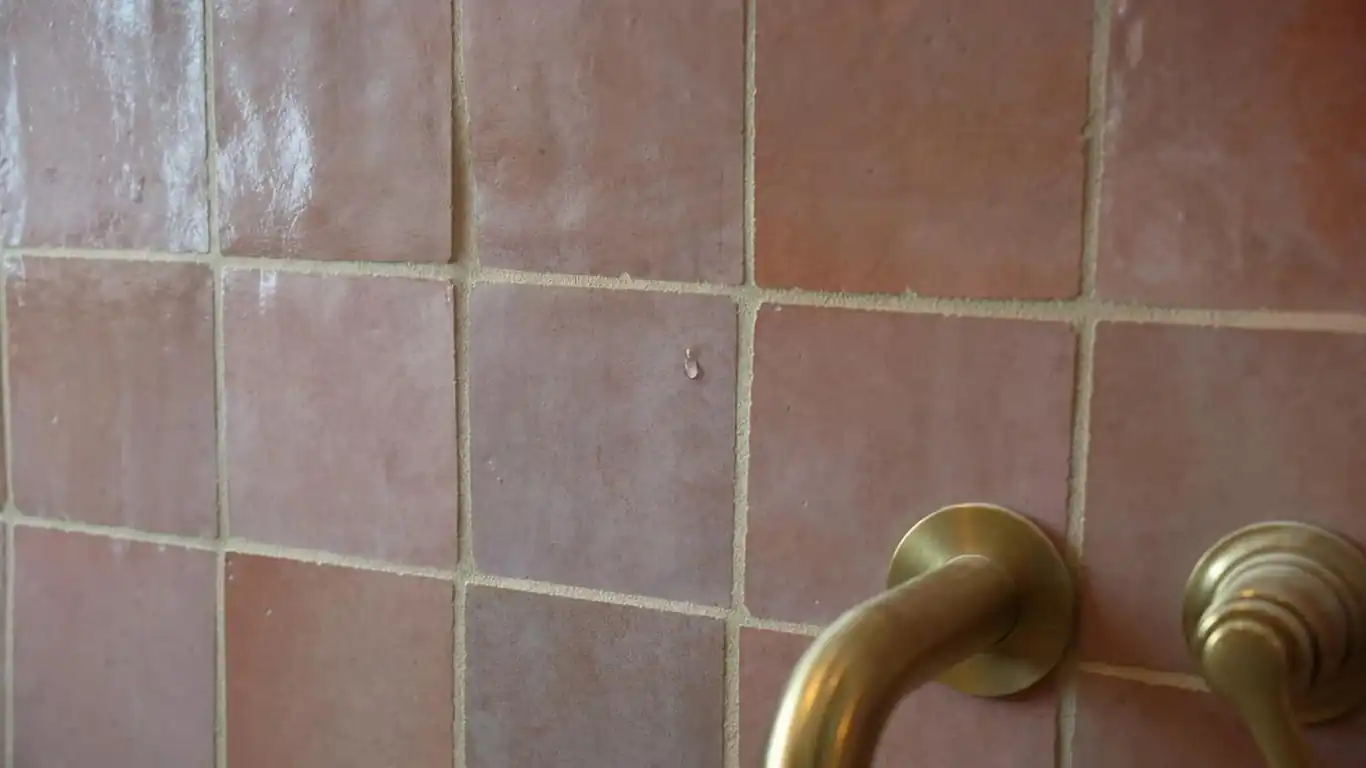
Dusty rose zellige tile is one of the strongest pink bathroom designs for adults. Zellige is a hand-pressed Moroccan ceramic with an uneven, matte-glazed surface — each tile reflects light slightly differently, giving the wall a living, textured quality. The dusty rose version sits in the warm-neutral zone, closer to terracotta than to pink candy. Pair it with brushed brass fixtures, a warm cream floor tile in 6×12 format, and a white oak floating vanity. Keep grout warm — a sand or putty tone stops the tile from looking clinical. This wall works in full bathrooms and powder rooms equally well.
2. Blush Venetian Plaster Feature Wall
Venetian plaster in a warm blush tone creates the softest possible pink bathroom. Venetian plaster is a lime-based application burnished to a low sheen — it has depth without shine, and the subtle color variation within the plaster itself prevents the wall from reading as flat or cheap. Use it on a single feature wall behind the vanity. Keep the remaining walls in warm white or soft limestone. Add matte black hardware and a round frameless mirror. The result is moody, textural, and completely grown-up. This is one of the 10 major bathroom design trends for 2026 worth paying attention to.
3. Terracotta-Pink Floor Tiles
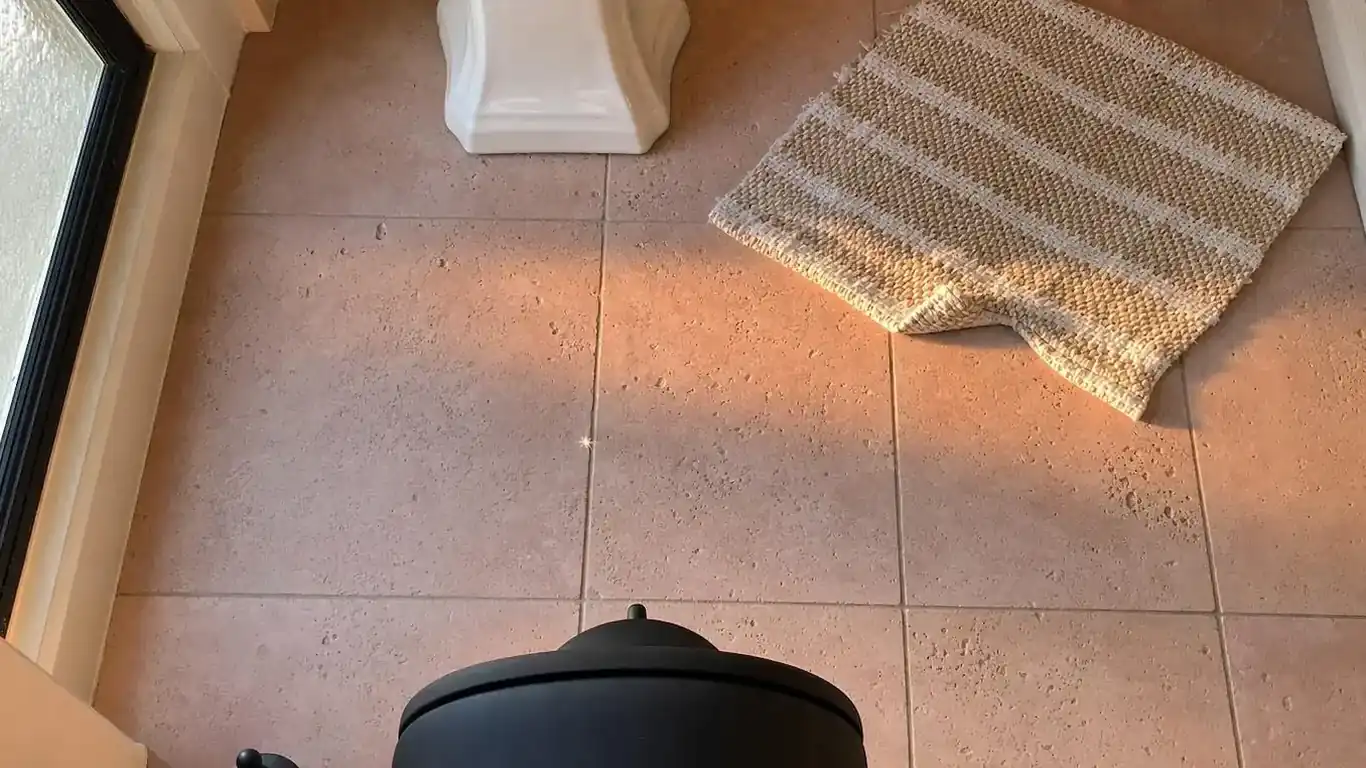
Terracotta-pink floor tiles blur the line between warm orange and soft pink in a way that reads as earthy and natural rather than feminine. A 4×4 or hexagon terracotta tile in a pinkish tone grounds the whole bathroom in warmth. Keep walls white or very pale plaster. Use oil-rubbed bronze fixtures — the dark, aged finish of oil-rubbed bronze against terracotta creates a rich, Mediterranean quality. Lay the tile in a simple grid for a cleaner look or in a running bond for something more traditional. A single jute bath mat in natural tan completes the palette without adding visual noise.
DESIGNER TIP: Seal terracotta tiles with a penetrating stone sealer rated for wet areas — unsealed terracotta absorbs water and develops uneven patchy tones within months.
4. Matte Blush Vanity Cabinet
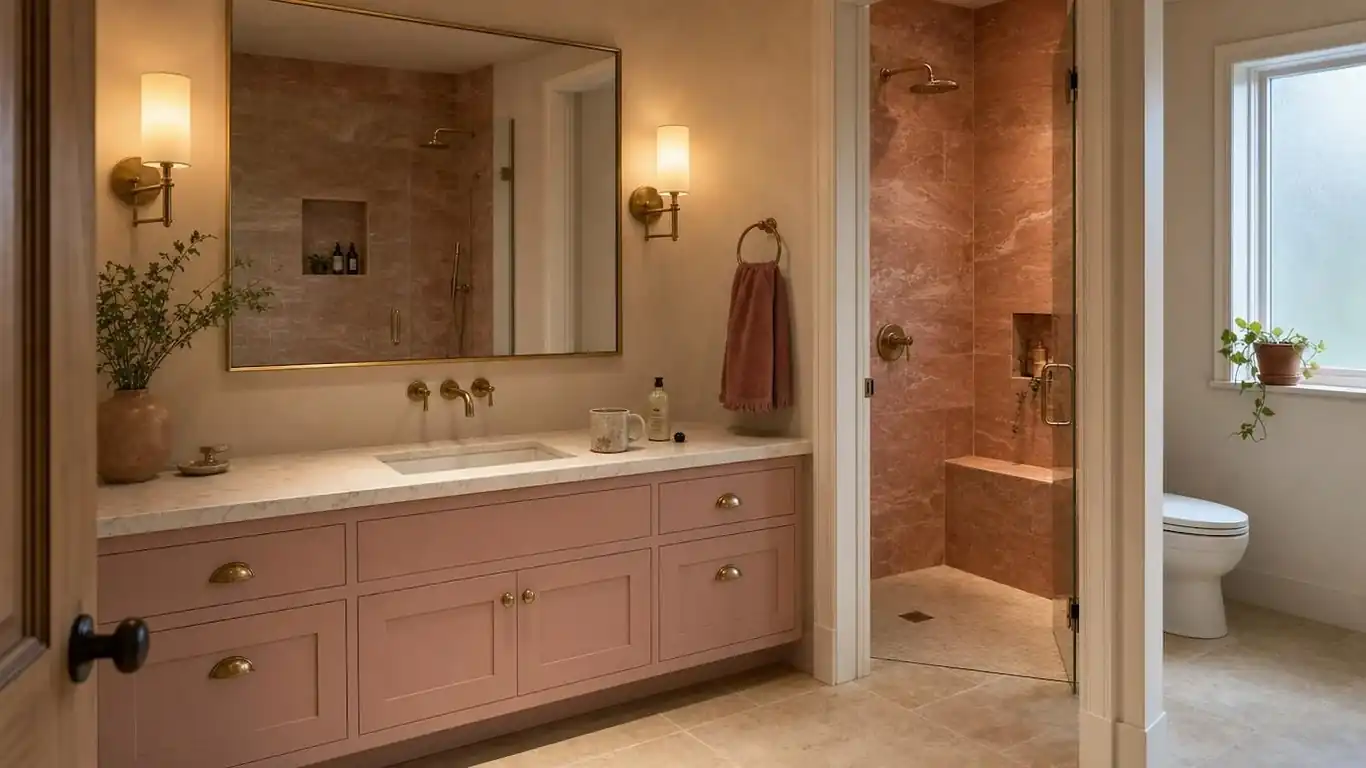
A matte blush vanity cabinet is a low-commitment way to bring pink bathroom designs into a space you’re not ready to tile in pink. Matte blush is a soft, slightly grey-toned pink — it has none of the sweetness of baby pink, and it photographs beautifully in flat natural light. Pair it with a white quartz or soft grey marble countertop. Add brushed brass hardware in a simple cup-pull style. A large rectangular mirror with a thin brass frame above the vanity reflects light without adding visual weight. This works in both full bathrooms and compact powder rooms where a bold vanity is the only focal point needed. For a similar approach in adjacent spaces, 12 chic vanity ideas for bedroom corners shows how vanity styling carries across rooms.
5. Pink and Charcoal Contrast Scheme
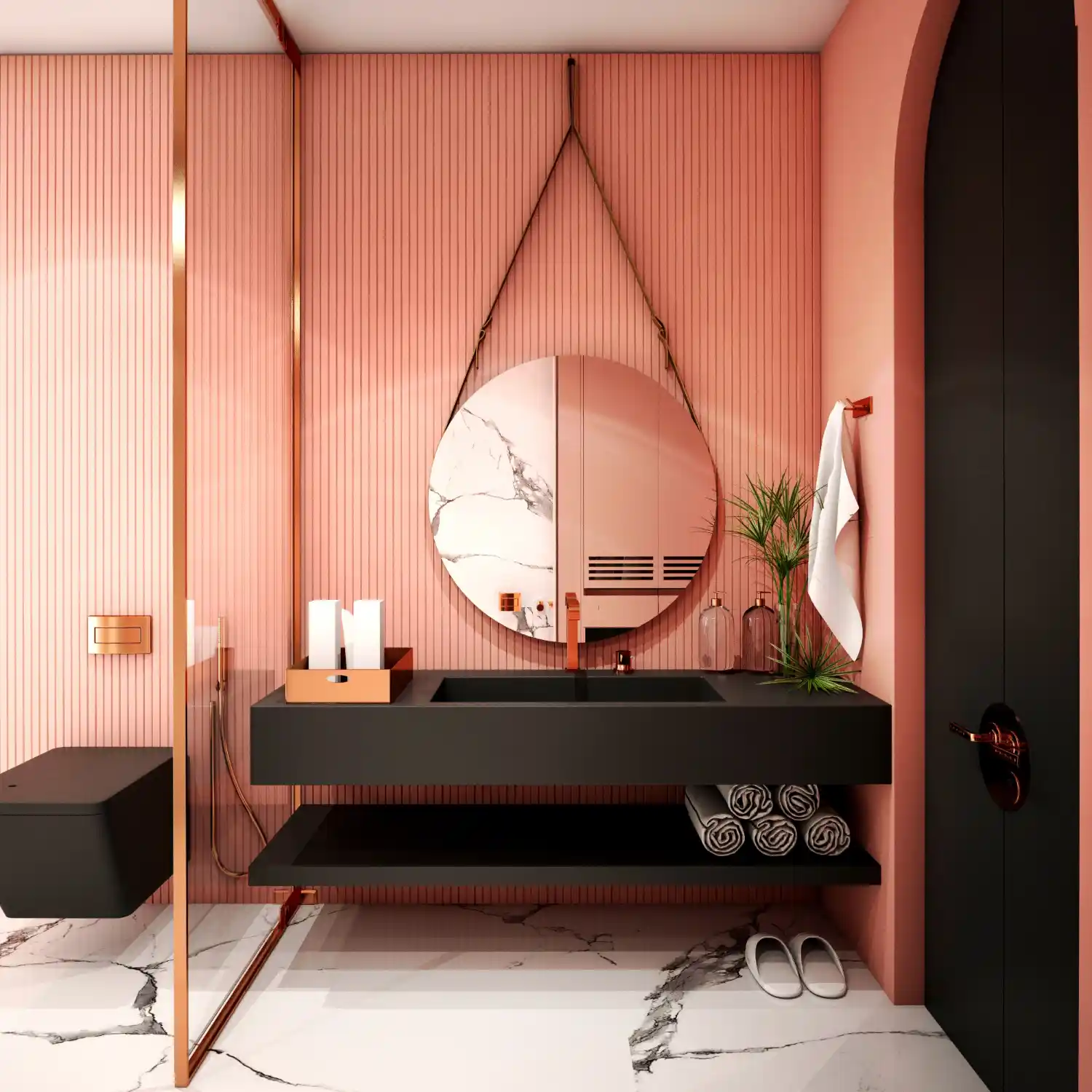
Deep charcoal paired with warm pink is one of the most unexpected and successful pink bathroom combinations. The contrast is high enough that neither color dominates — the charcoal grounds the pink, the pink warms the charcoal. Use pink on a single wall in a clay-toned plaster or a soft rose tile. Run charcoal matte ceramic on the remaining walls or the shower surround. Brushed brass fixtures tie the two tones together. A white or cream floor tile keeps the scheme from reading too dark. This combination translates well into smaller bathrooms where a single wall treatment creates maximum impact. It’s also one of the better counterparts to 11 navy blue bedroom ideas if you’re designing adjacent rooms with connected palettes.
6. Blush Marble Shower Surround
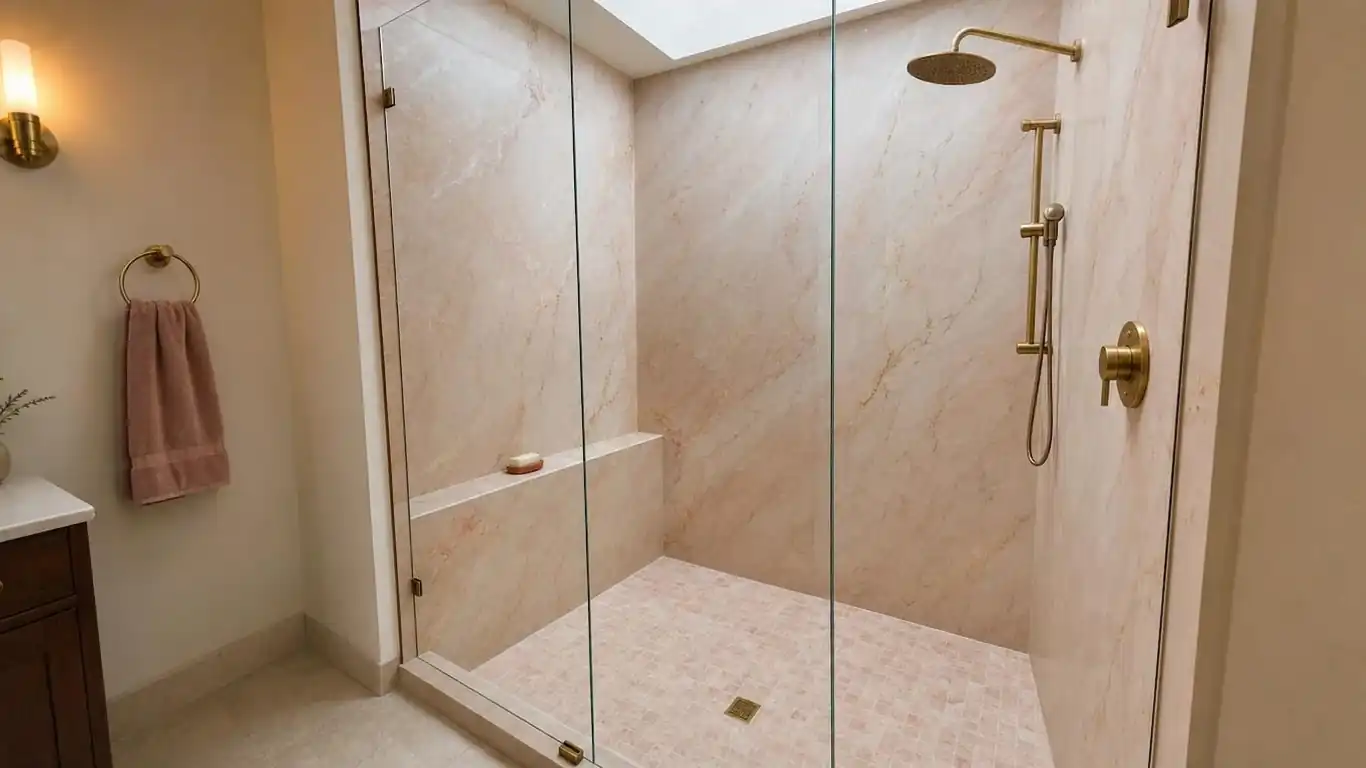
Blush marble is a naturally occurring pink-veined stone — varieties like Rose Aurora and Pink Portogallo have a warm, creamy base with pink and gold veining that looks luxurious without trying. A blush marble shower surround creates a pink bathroom design that most people wouldn’t immediately clock as pink — they’d call it warm, rich, or spa-like. Keep the slabs large, ideally 24×48 inches or larger, and avoid busy grout patterns. Use a simple matte white grout line under 3mm. Fixtures in unlacquered brass develop a warm patina over time that deepens the overall warmth of the marble. This is the kind of pink that gets called sophisticated rather than girly, every single time.
7. Dusty Pink and Sage Green Pairing
Dusty pink and sage green are complementary earth tones that work naturally together — both sit in the desaturated, warm zone of their respective color families. Use sage green subway tile in a 3×6 or 2×8 format on shower walls, and bring in pink through a single painted vanity in dusty rose or a warm blush limewash on one wall. The two colors share a natural, botanical quality that makes the bathroom feel like a curated retreat. Warm cream towels and a rattan storage basket complete the palette. This pairing has a fresh, slightly retro quality that connects well to the 12 refreshing spring bathroom decor ideas approach — organic, soft, and seasonless. For more color pairing context, browse all color ideas.
8. Warm Blush Limewash Paint
Limewash paint in a warm blush tone is the fastest route to an adult pink bathroom. Limewash is a traditional lime-based paint with a chalky, layered texture — each coat builds depth, so the finished wall looks like it has been there for decades. Warm blush limewash sits between pink and terracotta, with a slightly aged, organic quality. Apply it to all four walls in a powder room or as a single accent wall in a full bathroom. Pair with a white pedestal sink, chrome or unlacquered brass fixtures, and a simple oval mirror. The result has a European country quality — warm, soft, and nothing like a little girl’s bedroom. This tone also pairs naturally with earthy modern bedroom design ideas if you’re carrying a palette through the home.
DESIGNER TIP: For a more textural finish, apply limewash with a wide natural-bristle brush in irregular strokes — the variation between strokes is what gives the wall its depth and age.
9. Blush Pink Mosaic Tile Accent
A blush pink mosaic tile accent strip or niche creates pink bathroom designs with precision control — you decide exactly how much pink appears and where. A standard niche above the bathtub or within the shower, lined in 1×1 or 1×2 blush penny tile, adds a specific moment of color without committing the whole room. The small scale of mosaic tile reads as texture first, color second. Use a warm cream or putty grout to keep the mosaic from looking stark. Surround the niche with large-format neutral stone or white porcelain tiles so the blush accent stands alone as a deliberate design move. This is a good approach for rental bathrooms or for homeowners who want a reversible pink touch. The overall aesthetic aligns closely with 12 minimalist bathroom decor ideas — restrained, intentional, and easy to live with.
10. Pink Travertine or Stone-Look Tile
Travertine naturally contains warm pink, cream, and beige tones in its veining — a pink-dominant travertine tile is nature’s own version of a pink bathroom design. Look for varieties labeled “Rosa” or “Warm Pink” in travertine or travertine-look porcelain. A large-format 24×24 or 18×36 tile in a honed (matte) finish covers floor and walls with consistent warmth. No additional pink elements are needed. The stone itself carries the color. Add matte black fixtures and white towels for high contrast, or brushed brass and cream linen for a softer tone-on-tone approach. This is one of the most durable, highest-impact pink bathroom designs available at a mid-range price point. For all rooms design inspiration, travertine is appearing across bathroom, kitchen, and living spaces this year.
11. Dusty Rose Wall Paint With White Fixtures
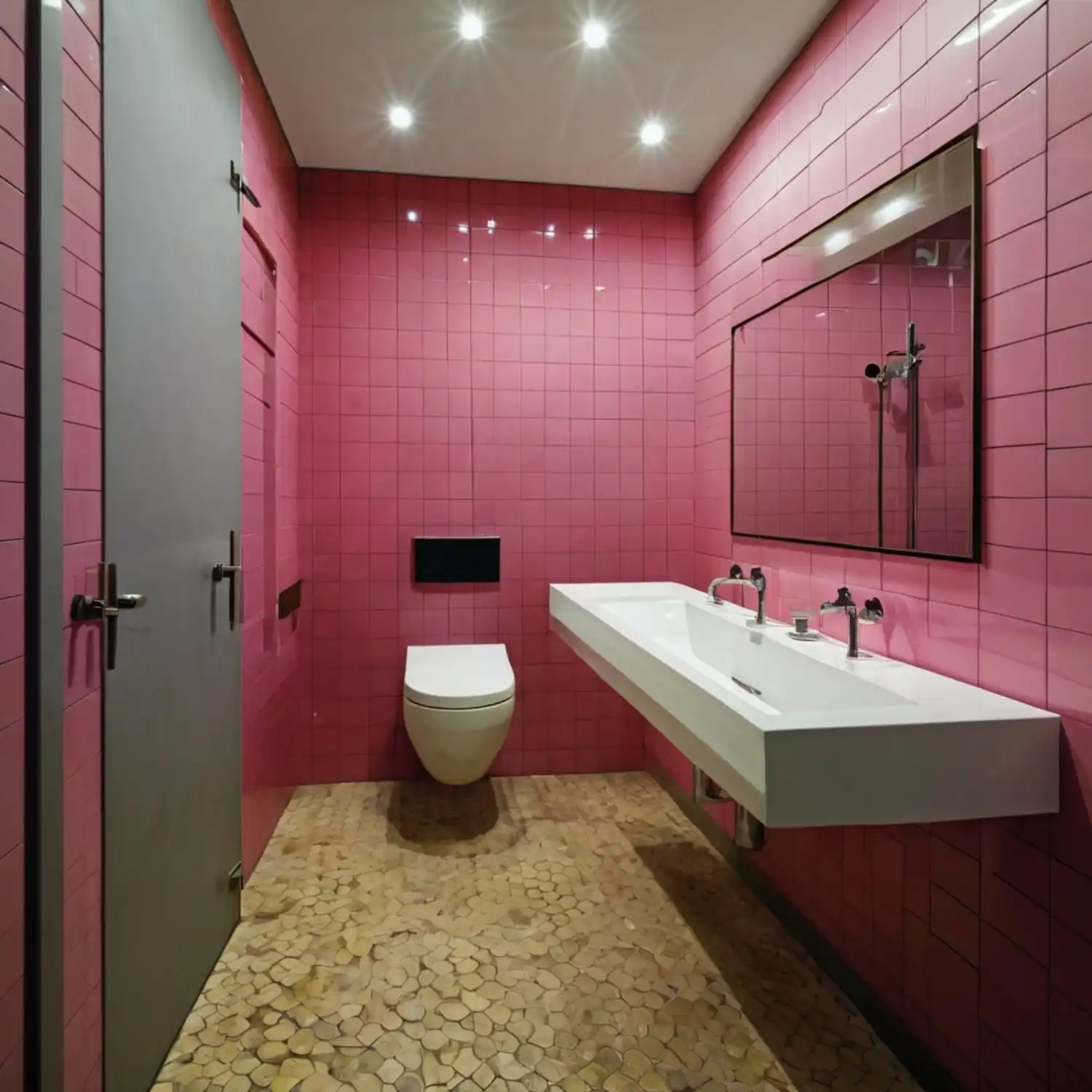
A simple dusty rose wall in flat or eggshell finish works in bathrooms where budget or rental restrictions rule out tile. Dusty rose is a grey-toned, desaturated pink — it has none of the brightness of salmon or the sweetness of bubblegum. Paint all four walls the same tone, keep the fixtures crisp white, and add brushed nickel or brushed brass hardware. A large rectangular mirror and a single pendant light in aged brass complete the space. This is the most affordable pink bathroom design approach and one of the most flexible. It pairs naturally with white subway tile, white pedestal sinks, and white quartz countertops. The budget-friendly version of this concept sits comfortably alongside smart design hacks for decorating on a budget. It also complements pink-adjacent bedroom schemes — 15 pink small bedroom ideas shows how the shade carries across rooms beautifully.
12. Tone-on-Tone Pink — Walls, Grout, and Accessories
A tone-on-tone pink bathroom uses multiple shades and textures of pink layered together — pale blush walls, slightly deeper rose grout, a terracotta-tinted soap dish, and a warm pink linen hand towel. The effect is luxuriously quiet, like a room that has grown into its identity over time. Start with a pale plaster pink on the walls. Choose a 4×4 or 3×3 cream-pink ceramic tile for the shower with a barely-there rose grout. Add a matte clay-pink soap dispenser and a folded dusty rose towel. Keep all hardware in one finish — unlacquered brass works best here. No white, no charcoal, no contrasting tone. Just pink, played at different volumes. This approach deserves full confidence and a willingness to commit — see how the same tonal approach works in 15 grey bedroom design ideas for proof that single-color layering always reads as sophisticated.
DESIGNER TIP: In a tone-on-tone scheme, vary the finish — matte walls, glazed tile, brushed metal, and a soft fabric — so each element reads distinctly even within the same color family.
KEY TAKEAWAY: Pink bathroom designs work at any budget and scale — the key is choosing a desaturated pink shade and keeping all surrounding materials natural and specific.
Mistakes That Wreck the Look
❌ Using a saturated or bright pink → ✅ Stay within dusty rose, warm blush, terracotta-pink, or muted clay tones — cool or bright pinks flatten against white fixtures and read as juvenile.
❌ Chrome fixtures with pink → ✅ Chrome has a cold, blue-toned quality that clashes with warm pink — swap it for brushed brass, matte black, or oil-rubbed bronze to keep the warmth intact.
❌ Too many pink elements at once → ✅ Choose one pink surface — wall, vanity, or tile — and let neutrals carry the rest; stacking pink on pink on pink creates visual noise rather than atmosphere.
❌ Pink with cool whites → ✅ Warm whites and cream tones sit beside pink naturally; bright or blue-toned whites fight against warm pink and make the room feel unresolved.
KEY TAKEAWAY: Most pink bathroom failures come down to shade choice and fixture finish — fix those two variables and the design corrects itself.
What You’ll Spend
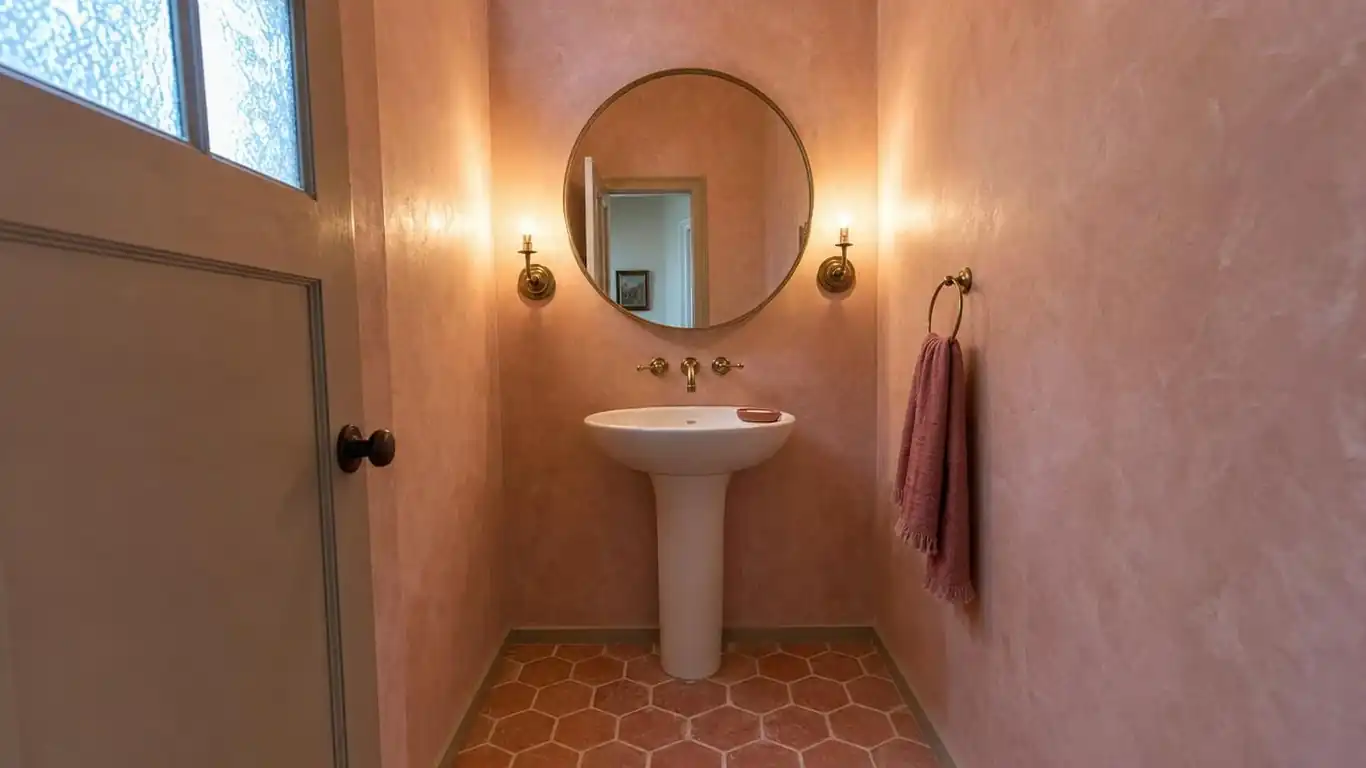
Pink bathroom designs sit across a wide cost range depending on the approach. Tile work and vanity replacements are mid-range investments; paint is the most affordable entry point.
| Project | Estimated Cost | Impact Level |
|---|---|---|
| Dusty rose wall paint (full room) | $80–$200 materials + labor | High |
| Blush zellige or terracotta tile (accent wall) | $600–$1,800 installed | Very High |
| Matte blush vanity cabinet (pre-painted) | $400–$1,200 | High |
| Blush marble shower surround (slab) | $2,500–$6,000 installed | Very High |
KEY TAKEAWAY: Paint delivers the highest pink bathroom impact per dollar — a $120 can of dusty rose flat paint transforms a room more than most people expect.
Special Considerations
A few practical questions come up with a pink bathroom. Here’s how to handle a very small space, a shared family bathroom, and adding pink without renovating.
What if my bathroom is very small?
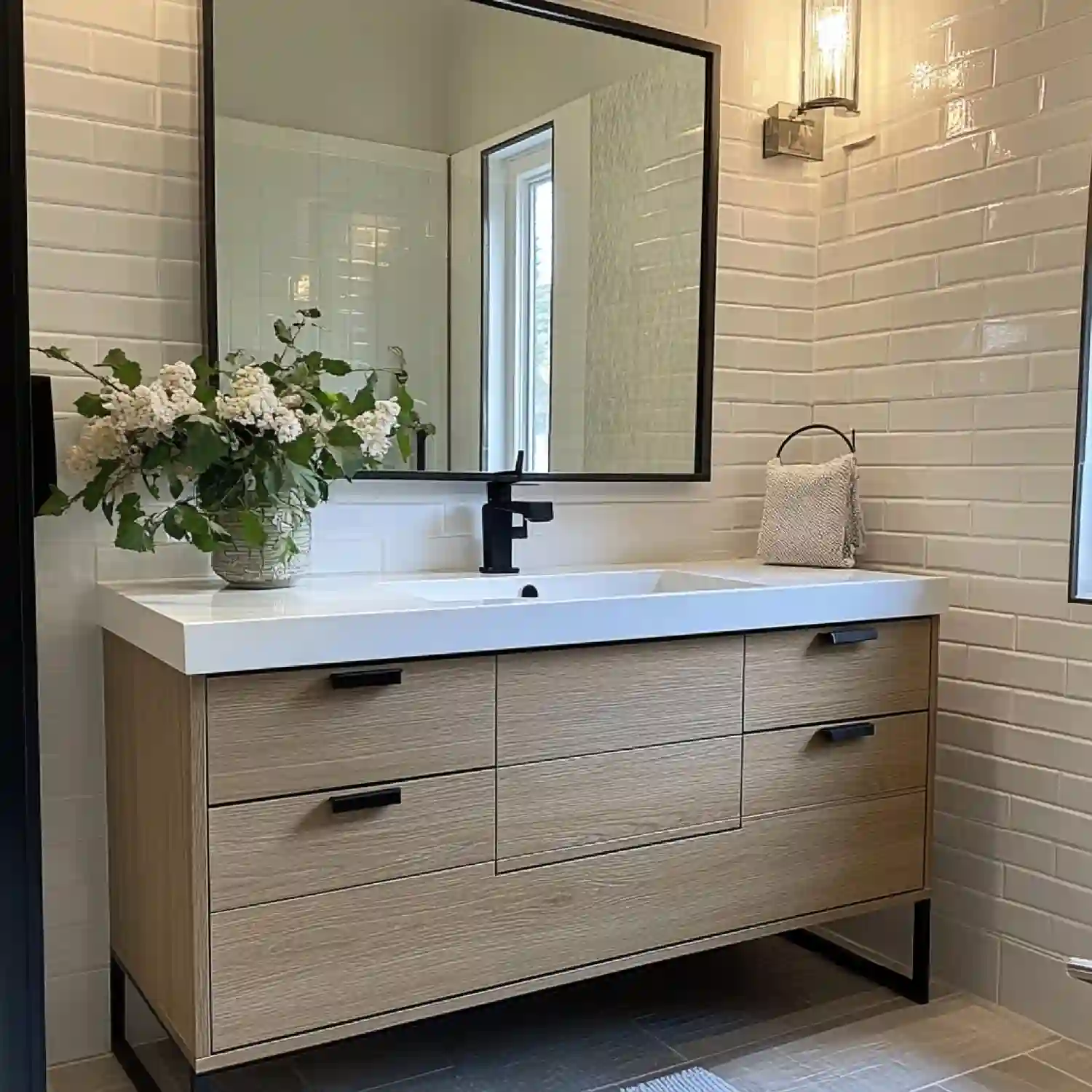
Small bathrooms benefit from pink more than large ones. A dusty rose or warm blush wall in a powder room or compact ensuite makes the space feel warm and intentional rather than cramped. Use one color across all four walls — including behind the vanity mirror — for a cocooning effect. Keep fixtures white or cream to maintain brightness. A large round mirror helps. For layout help in tight spaces, 25 tiny living room ideas covers the visual-weight and scale principles that also apply in small bathrooms.
Does pink work in a shared or family bathroom?
Pink bathroom designs work in shared bathrooms when the shade is warm and neutral rather than specifically feminine. A terracotta-pink floor tile, a dusty rose limewash wall, or a blush travertine tile reads as a color choice — not a gender marker. Pair it with matte black fixtures and clean-lined storage in walnut or white oak. The result feels modern and universal. If you’re also refreshing bedroom spaces nearby, 11 serene neutral coastal living room ideas shows how to carry warm neutrals across an open-plan home. For storage inspiration to complement a refreshed bathroom, 12 laundry room cabinet ideas covers adjacent utility spaces well.
Can I add pink without renovating?
Yes. Swap to dusty rose or warm blush towels. Add a terracotta ceramic soap dish. Hang a single art print with pink tones. Replace a dated chrome mirror frame with a warm brass or matte black version. These four changes create the color story of a pink bathroom without touching tile or paint. The principle is the same one used in 12 minimalist bedroom ideas 2026 — layer color through objects and textiles before committing to surfaces. For broader decor style context, explore all decor and style ideas to see how color layering works across different room types.
KEY TAKEAWAY: Pink bathroom designs are achievable at every renovation level — from a $30 towel swap to a full travertine tile installation.
Frequently Asked Questions
Part of our guide to Bathroom Color Ideas.
Conclusion
Pink bathroom designs have earned a permanent place in adult interiors — not despite the color, but because of what modern pairing and material choices have done to it. Dusty rose zellige, warm blush plaster, terracotta tile, and blush marble all speak a completely different design language than the pink bathrooms of the 1980s. They’re warm, grounded, and confident.
After the split-level project I mentioned earlier, the client sent photos three months later of the same bathroom styled with walnut accessories, linen hand towels, and a small trailing plant on the windowsill. The room had taken on a life of its own. That’s what good pink bathroom designs do — they create warmth that grows more layered over time, not less. For more rooms and color inspiration, 101 Home Decor covers the full range of what’s working in home interiors right now.