The Craft-Store Fall Haul Is Finally Over
Here is the uncomfortable part of most fall craft advice: it counts success in units. Fifteen painted mini pumpkins. A burlap banner. Four mason jars wrapped in twine. You lose a Saturday, spend $60, and the house ends up busier rather than warmer. The projects were fine. The plan behind them was wrong.
Looking for more ideas? Explore our full guide to Fall Ideas.
DIY fall decor works best when you make three or four large pieces from real materials instead of a dozen small crafts from foam and glitter. Dried grasses, bare grapevine, raw linen, dried citrus and uncarved heirloom pumpkins cost less per season because you reuse them for years. The most common mistake is making too many small things at once.
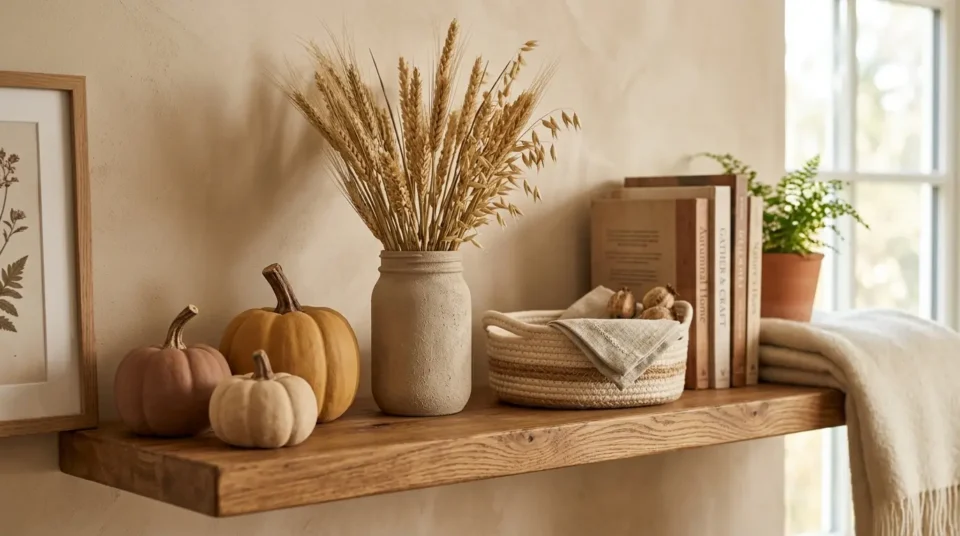
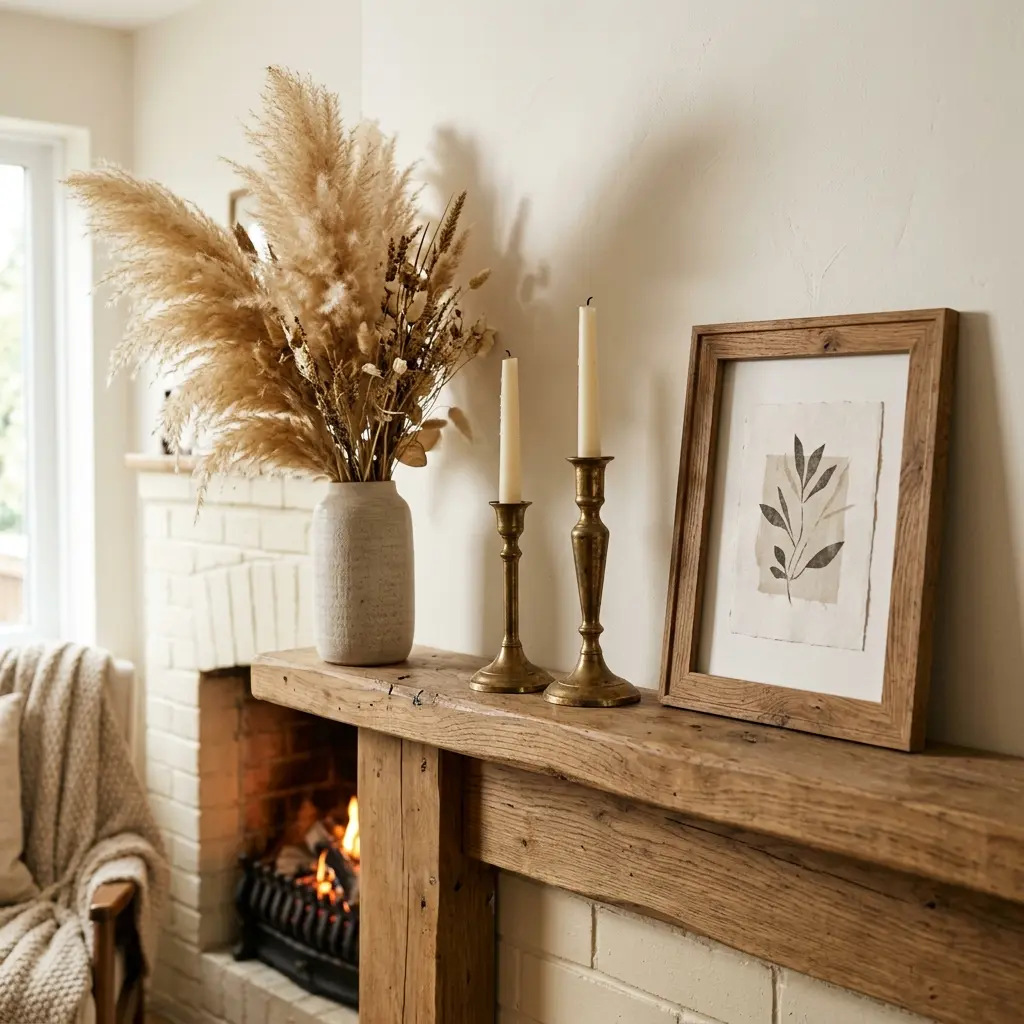
Editorial field note: A mantel holding twelve tiny craft objects usually looks cluttered by October. Swap them for one tall arrangement of dried wheat and hydrangea, two white pumpkins, and a single low candle, and the same shelf finally looks calm. Nothing was added. Nine things left.
That shift is the whole story this season. If you are starting a full seasonal refresh, our broader creative fall and autumn decor ideas cover the room-by-room plan, and the wider home decor inspiration library holds the year-round version. This page is the make-it-yourself half. Bookmark this guide for quick reference.
| Quick Takeaways | |
|---|---|
| Scale | Three or four large pieces beat a dozen small crafts. |
| Materials | Dried grasses, grapevine, raw linen, wood, real gourds. |
| Palette | Wheat, warm cream, muted clay, olive, oxblood. Skip orange plastic. |
| Budget | Spend on reusable bases, not single-season trinkets. |
| Time | One afternoon covers the porch, mantel and table. |
Your DIY Fall Decor Checklist
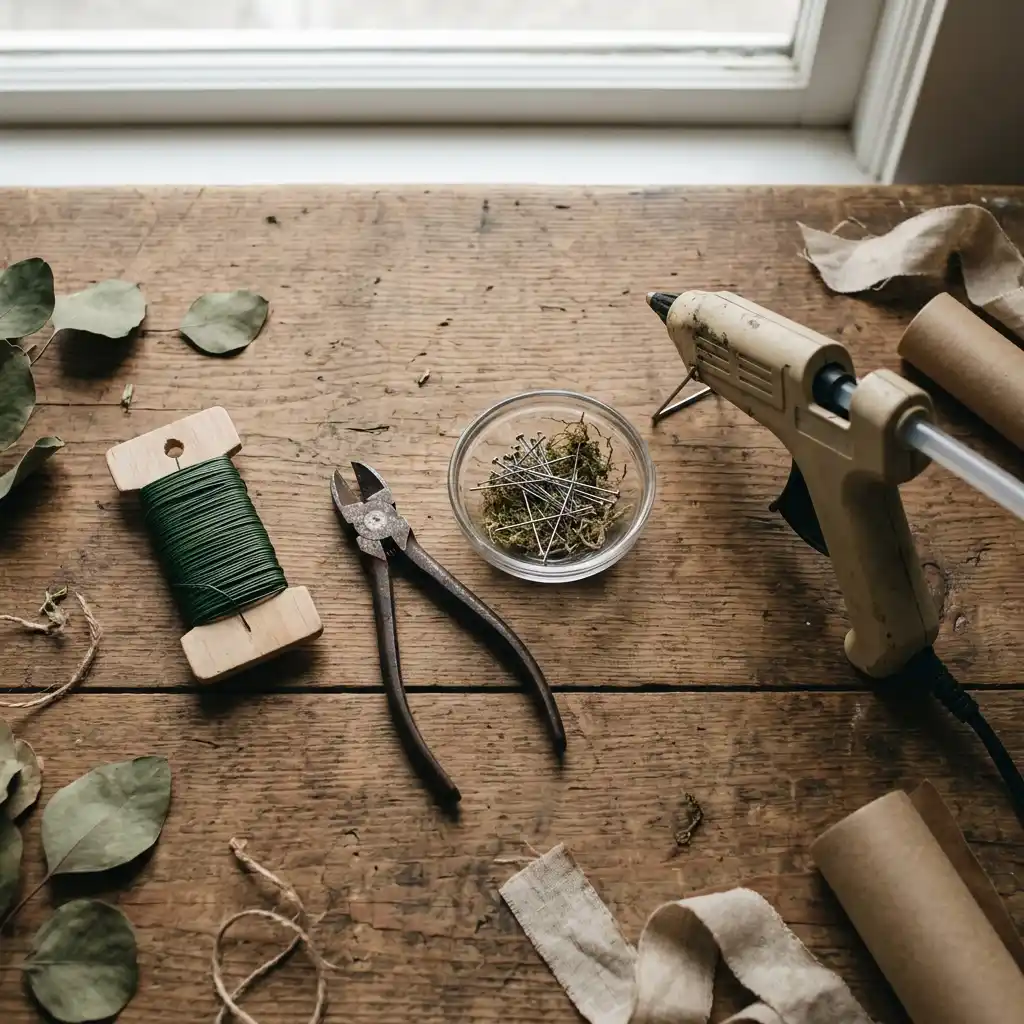
- Pick three spots only: front door, mantel or console, and the dining table.
- Buy one heavy ceramic or stoneware vessel per spot before buying any stems.
- Choose a five-color palette and refuse anything outside it at the store.
- Cut or buy stems at three heights, with the tallest about 1.5 times the vase height.
- Group pumpkins and candles in odd numbers of three or five, never in pairs.
- Keep one reusable base per project — a grapevine ring, a linen runner, a wood tray.
- Store dried material flat in a box, not crushed in a bin, so it survives to next year.
KEY TAKEAWAY: Buy the reusable base first and the seasonal filler second — that single order change is what makes homemade decor stop looking homemade.
Why Is Everyone Making Their Own Fall Decor Again?
Home decorators moved back to DIY because store-bought fall decor started looking identical. Big-box seasonal aisles now carry the same pumpkin shapes, the same lettered signs, and the same wired ribbon in every region. Making the pieces yourself is the fastest way to get something the neighbors do not already own.
The second driver is money, and it is not the reason most people assume. A $6 foam pumpkin is cheap once and worthless twice. A $12 grapevine ring is not cheap once, but it works for five autumns and costs about $2.40 a season. That math is why “cheap fall decor” and “make it yourself” stopped being separate searches. The same logic runs through our DIY Halloween decorations guide.
Signs This Is Catching On:
- Dried and preserved stems now sit in the permanent floral aisle year-round, not just in a seasonal end-cap.
- Uncarved white and heirloom pumpkins have taken over porch photos that used to be filled with carved orange ones.
- Fall palettes have drifted from bright orange and black toward wheat, olive, clay and oxblood — colors that read as natural material rather than plastic.
- Foraged branches, wheat bundles and dried hydrangea now appear in the same arrangements people used to fill with silk maple leaves.
You can see the full seasonal picture in our complete guide to fall decor ideas for the home, which covers both the shop-it and make-it approaches.
What Does Good DIY Fall Decor Look Like Now?
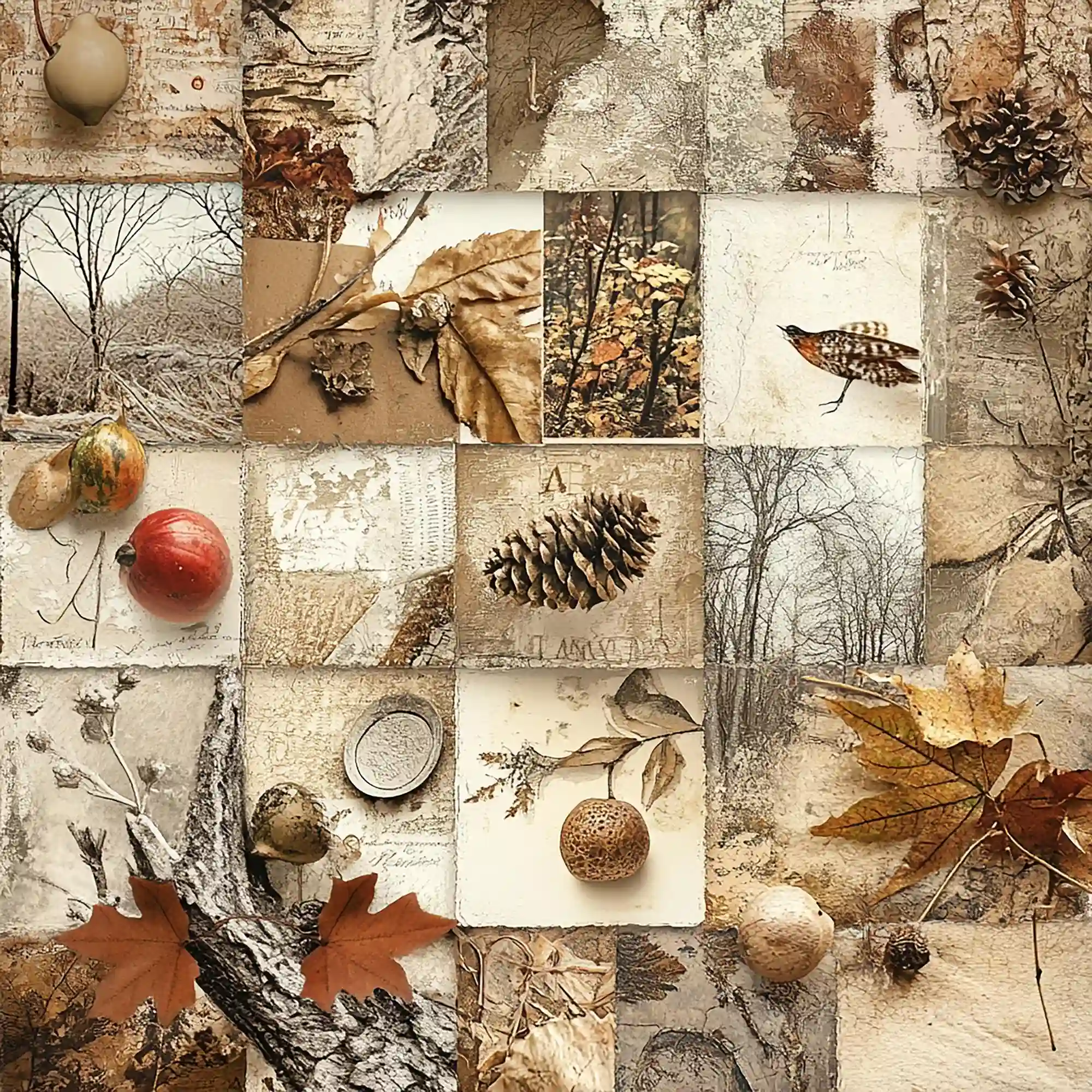
Good DIY fall decor looks like natural material at real scale. Think a two-foot bundle of dried wheat in a heavy stoneware jug, not a handful of silk leaves in a jam jar. The pieces are bigger, fewer, and made from things that were once alive — grapevine, bay leaf, oak branch, linen, wood, gourd.
The palette carries most of the work. Warm cream, wheat, muted clay, olive green and a single deep oxblood accent will look expensive together in any room. Bright pumpkin orange, glitter, and printed cartoon leaves are what make a homemade piece look homemade. Pick five colors and hold the line.
Texture does the rest. Dried hydrangea is papery, pampas grass is soft, grapevine is woody, and raw linen is loose and slightly rumpled. Four textures in one vignette give the eye somewhere to go without adding a single extra object. This is the same layering approach behind our cozy winter decor ideas, moved forward two seasons and warmed up.
Material Note: Dried stems shed. Shake each bundle outdoors before it comes inside, and a light mist of cheap hairspray on pampas or cattails cuts the drop considerably.
Which DIY Fall Decor Projects Are Worth Making?
Six projects earn their weekend. Each one produces a piece large enough to carry a surface on its own, uses material you can source in one trip, and stores flat for next year. What decides which of them you can still make this year is lead time — the DIY fall decor projects worth starting three weeks early are sorted by how long each material takes to dry.
A Dried Stem Arrangement You Build Once and Reuse
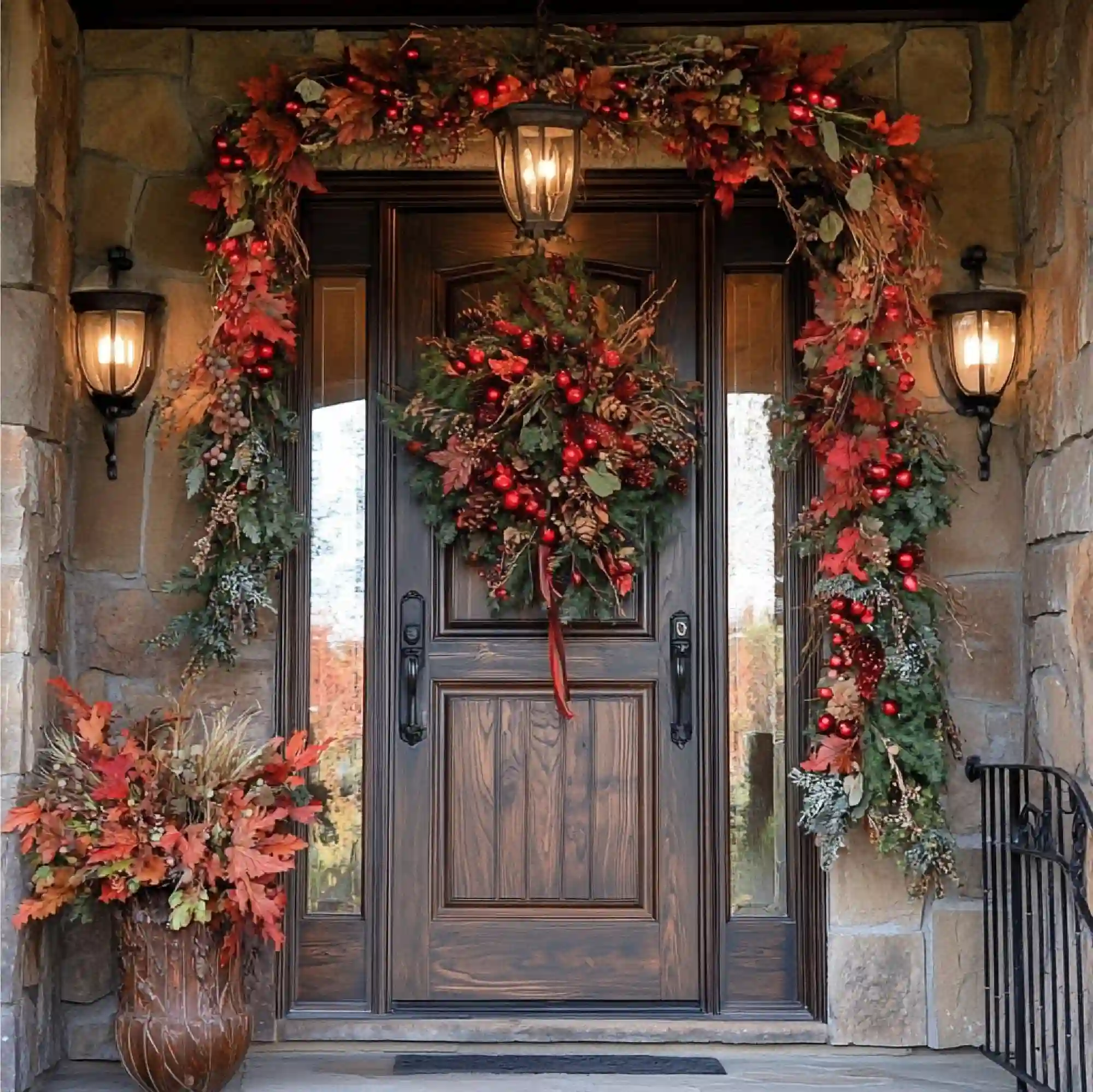
A dried stem arrangement is the single highest-impact fall project. Start with one heavy vessel — a stoneware jug, a ribbed ceramic vase, or a footed compote in warm cream. Fill it with three stem types at three heights: dried wheat or pampas at the top, dried hydrangea in the middle, and something woody like oak or eucalyptus spilling low over the rim.
Dried pampas grass holds its shape for three to four autumns indoors. That makes a $45 arrangement cheaper per season than a $15 grocery-store bouquet you replace monthly. Build it once in August and it carries your table straight through to the winter centerpiece arrangements you swap in during December.
DESIGNER TIP: Cut your tallest stem to about 1.5 times the height of the vase. Shorter than that and the arrangement looks stumpy; taller and it tips.
A Grapevine Wreath Base You Restyle Every Year
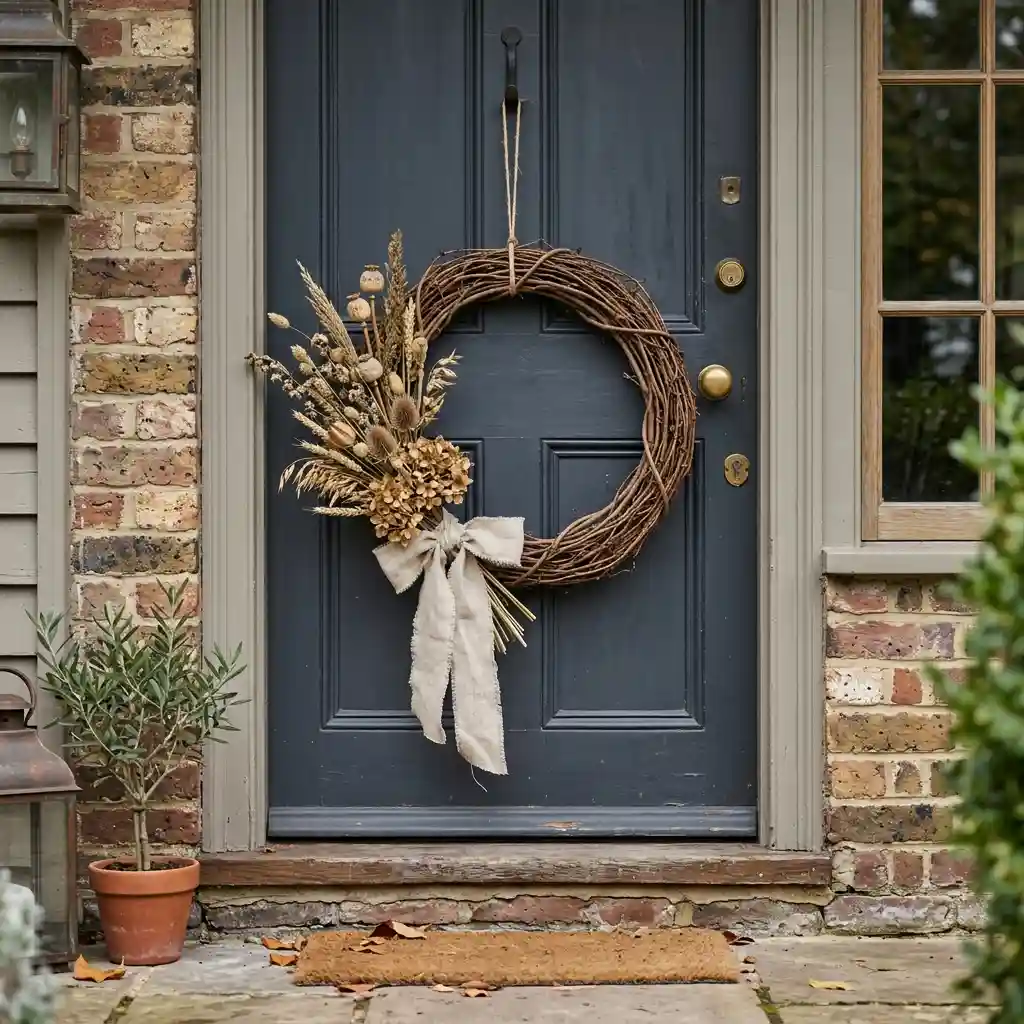
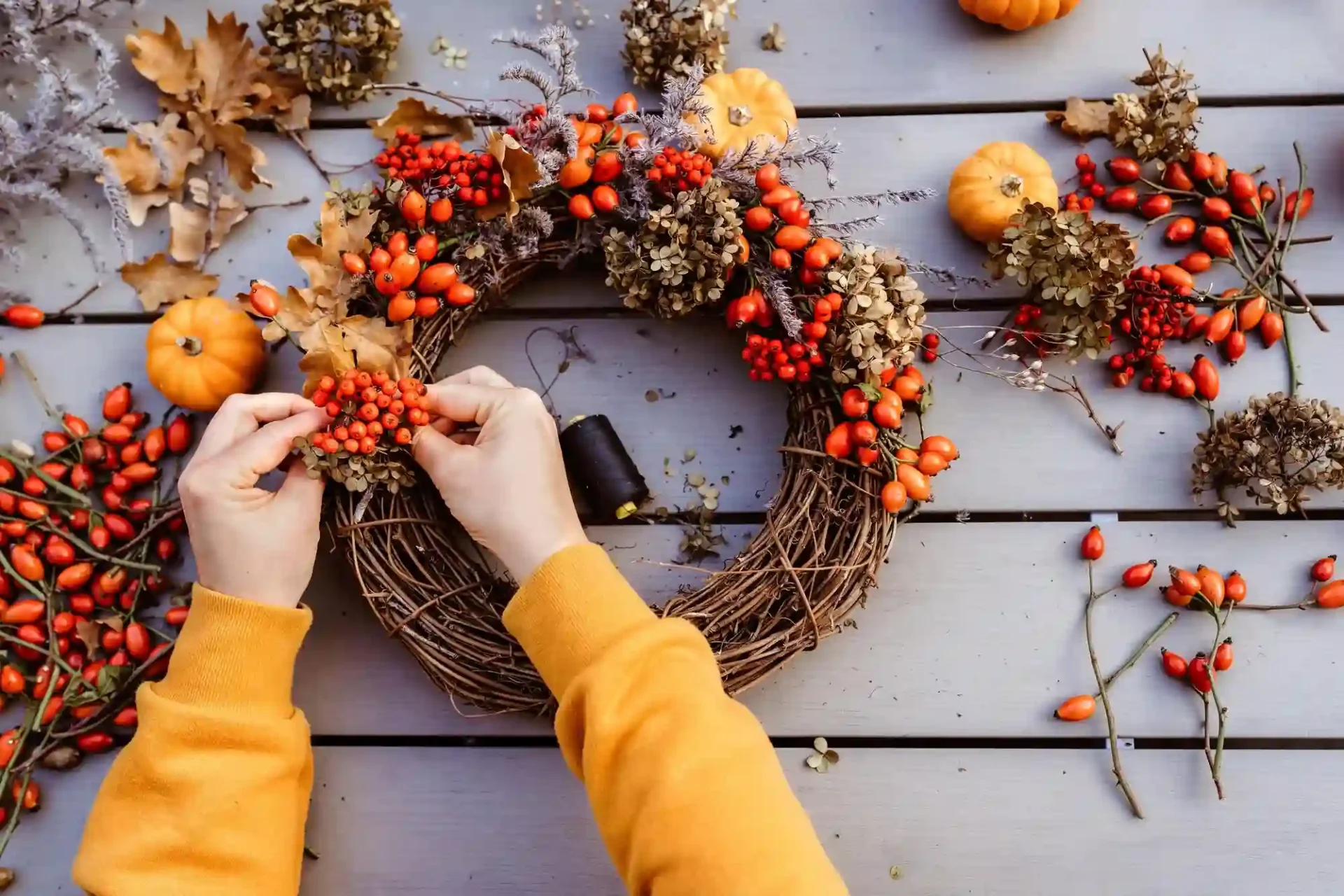
Grapevine wreath bases are sold bare for roughly $8 to $15 and last for years. That bare ring is the real purchase. Every autumn you wire on a different mix — dried wheat one year, preserved eucalyptus and oxblood dahlia the next — then strip it back down in November and store the ring flat.
Wire the stems in one direction only, filling about two-thirds of the ring and leaving the last third bare. A fully covered wreath looks like a store product. The two-thirds rule is what makes a homemade one look florist-made. The same styling logic drives our modern spring wreath ideas, so one base really does cover two seasons.
For door-specific sizing and hanging, the spring wreath for front door ideas guide covers proportion rules that apply year-round: the wreath should span roughly half the width of the door panel.
An Uncarved Pumpkin Grouping in Odd Numbers
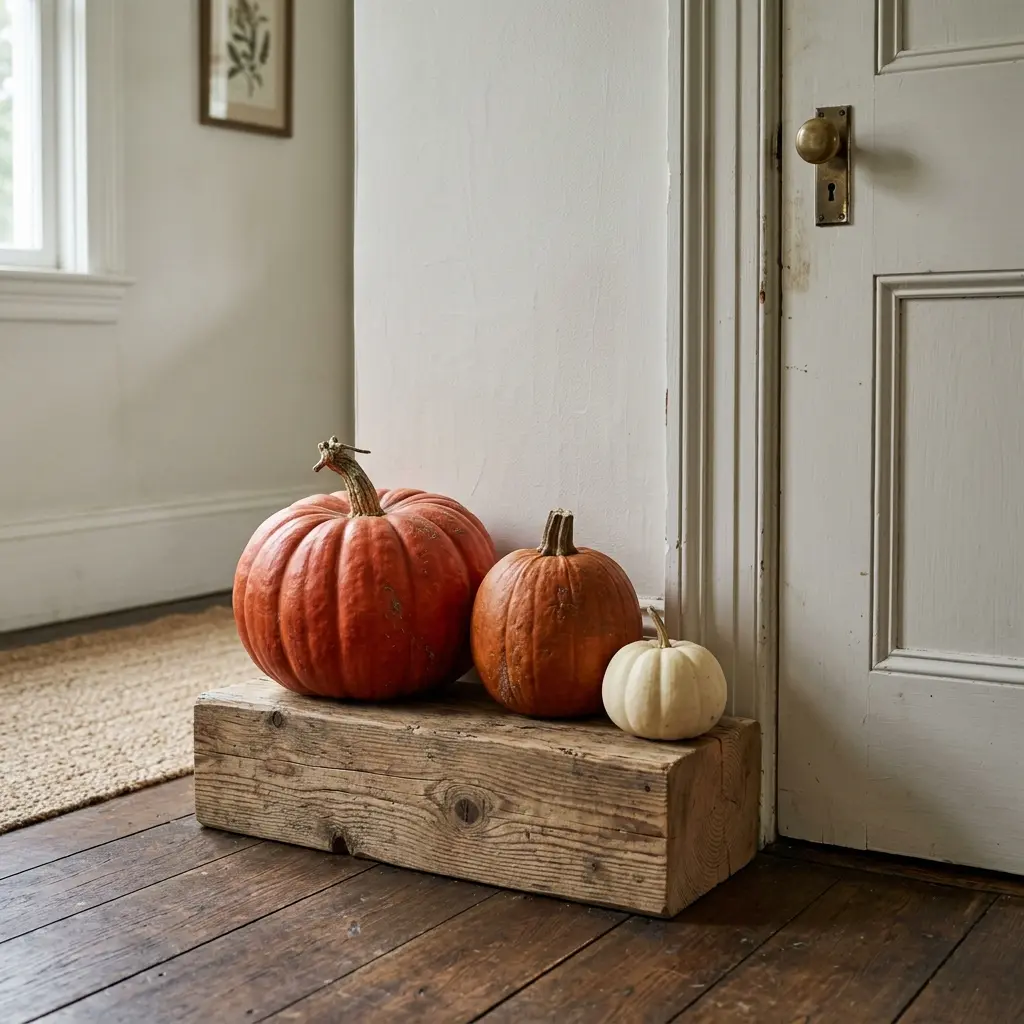
Uncarved pumpkins are the cheapest high-impact fall decor available, and they last dramatically longer than carved ones. Buy five in three sizes — one large, two medium, two small — in white, pale green and warm tan rather than bright orange. Set them on steps, a hearth, or a wood tray in a loose triangle, never in a straight line. For the outdoor version at scale, see our porch pumpkin display ideas.
Odd-numbered groupings look composed; even numbers look like a matched set. Raise the largest pumpkin on an upturned crate or a stack of books so the group has a high point. Keep the whole arrangement off wet ground and out of direct afternoon sun, which is what actually shortens their life on a porch.
Source Note: The University of Minnesota Extension advises storing pumpkins and winter squash around 50 to 60°F with good air movement, and warns that they are sensitive to temperatures below 45°F — see UMN Extension’s harvesting and storing guidance. A shaded, sheltered corner beats a sunny top step. For placement, our front porch decor ideas show how the grouping sits against door and rail lines.
A No-Sew Raw-Edge Linen Table Runner
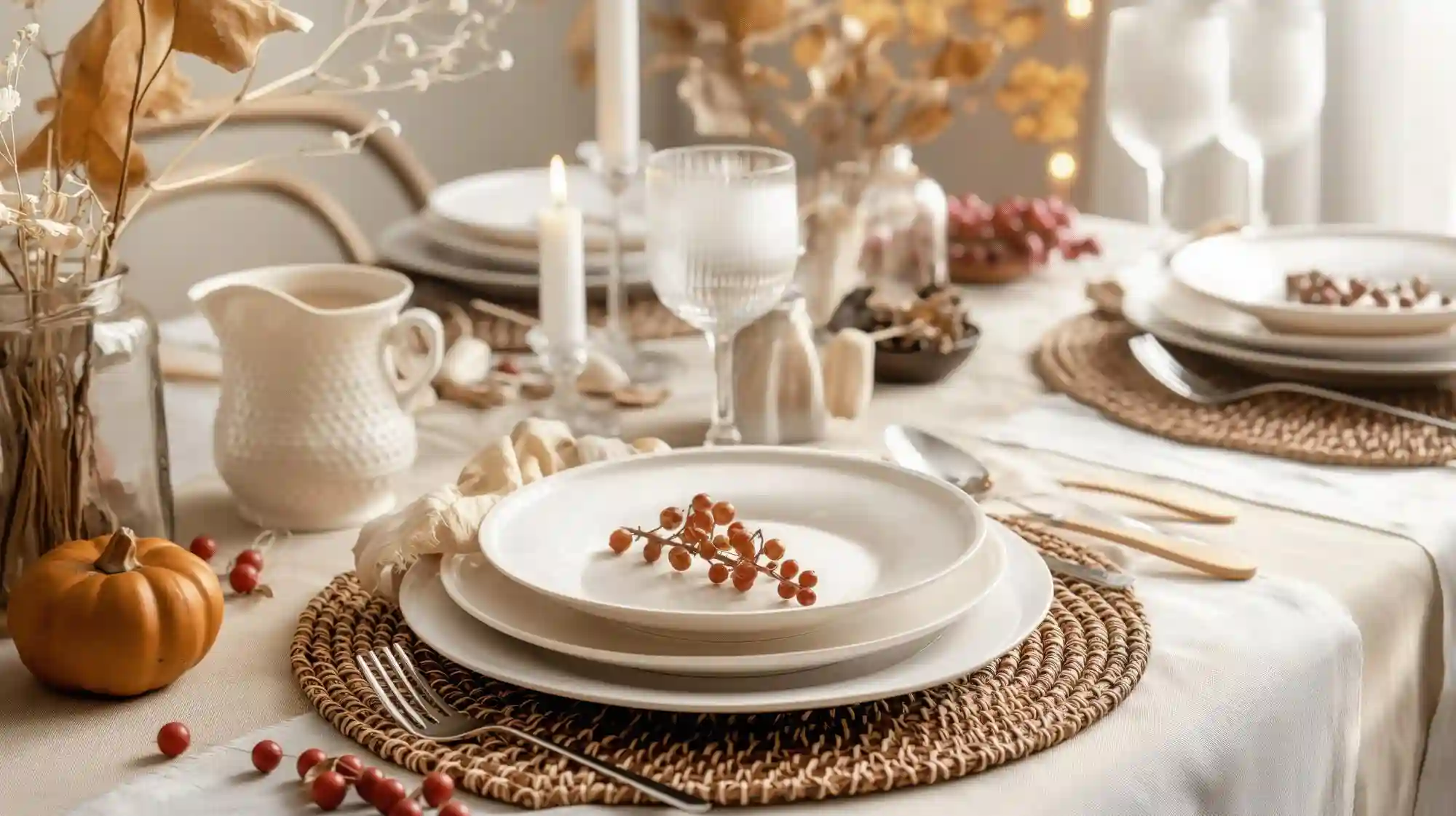
A raw-edge linen runner takes fifteen minutes and no sewing machine. Buy one yard of mid-weight linen in oatmeal, olive or warm clay, cut it to your table length plus twelve inches, then pull threads along each cut edge to create a soft fringe. Raw linen frays into a clean fringe when you pull threads along a cut edge — cotton does not do this nearly as well.
Run it down the centre of the table with the dried arrangement at one end and two low candles at the other. That single piece of fabric does more for a fall table than a dozen scattered props. Our winter tablescape ideas use the same runner in a colder palette, so one yard of linen covers autumn and December.
A Dried Citrus and Bay Leaf Garland
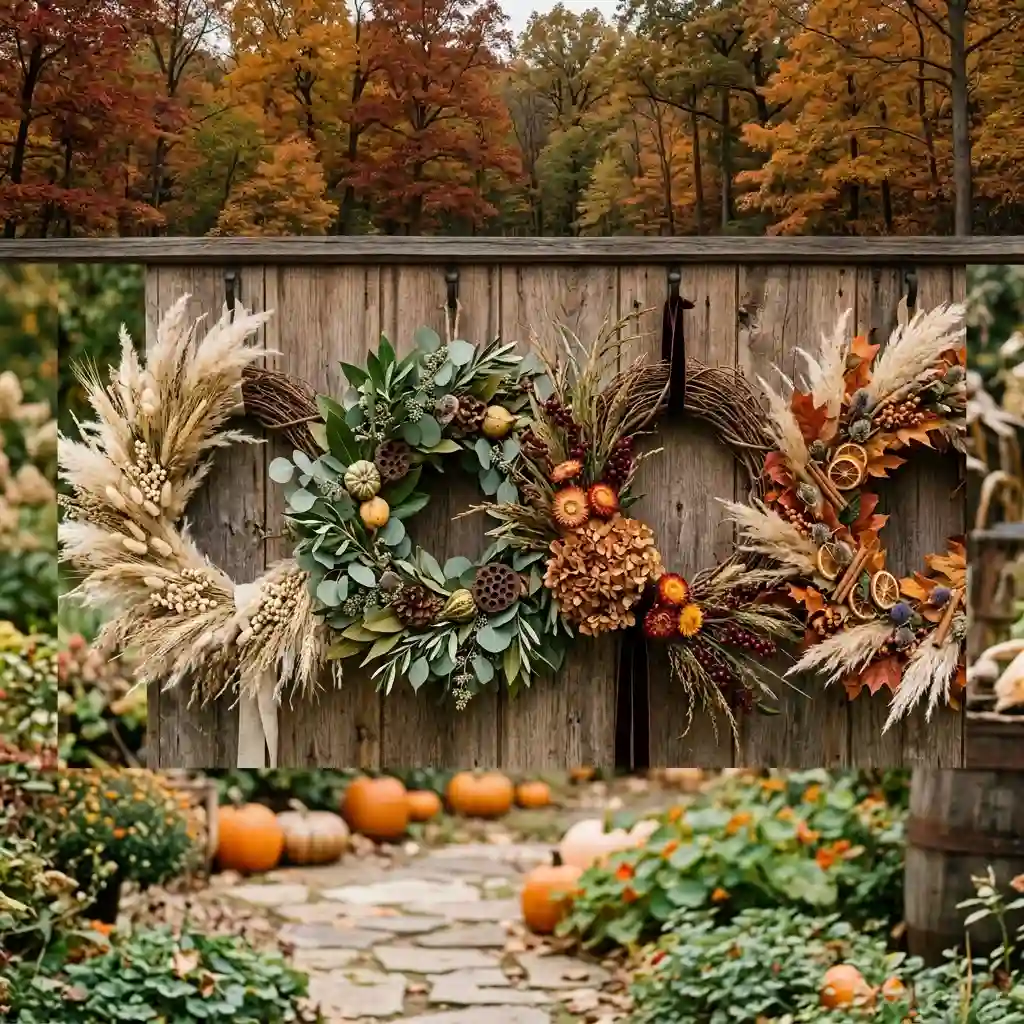
Dried orange slices cost almost nothing and look far more expensive than they are. Slice oranges to about an eighth of an inch, blot them dry, and bake them on parchment at 200 to 250°F for three to four hours, flipping every thirty minutes. Lower and slower keeps the color bright. String them on jute twine with whole bay leaves and small cinnamon sticks between.
Dried citrus slices are translucent, so they look best with light behind them — a window, a mirror, or a lamp. Bay leaves keep their scent for a full season. Hang the garland across a mantel or a kitchen window rather than on the door, where damp weather will soften it within a week.
Safety Note: Dried botanicals are highly flammable. The NFPA recommends keeping anything that can burn at least 12 inches away from a burning candle, and notes that most candle fires start when combustible material sits too close — see NFPA’s candle safety guidance. Use flameless LED candles inside dried garlands and wreaths.
One Painted Wood Sign or Framed Fall Print
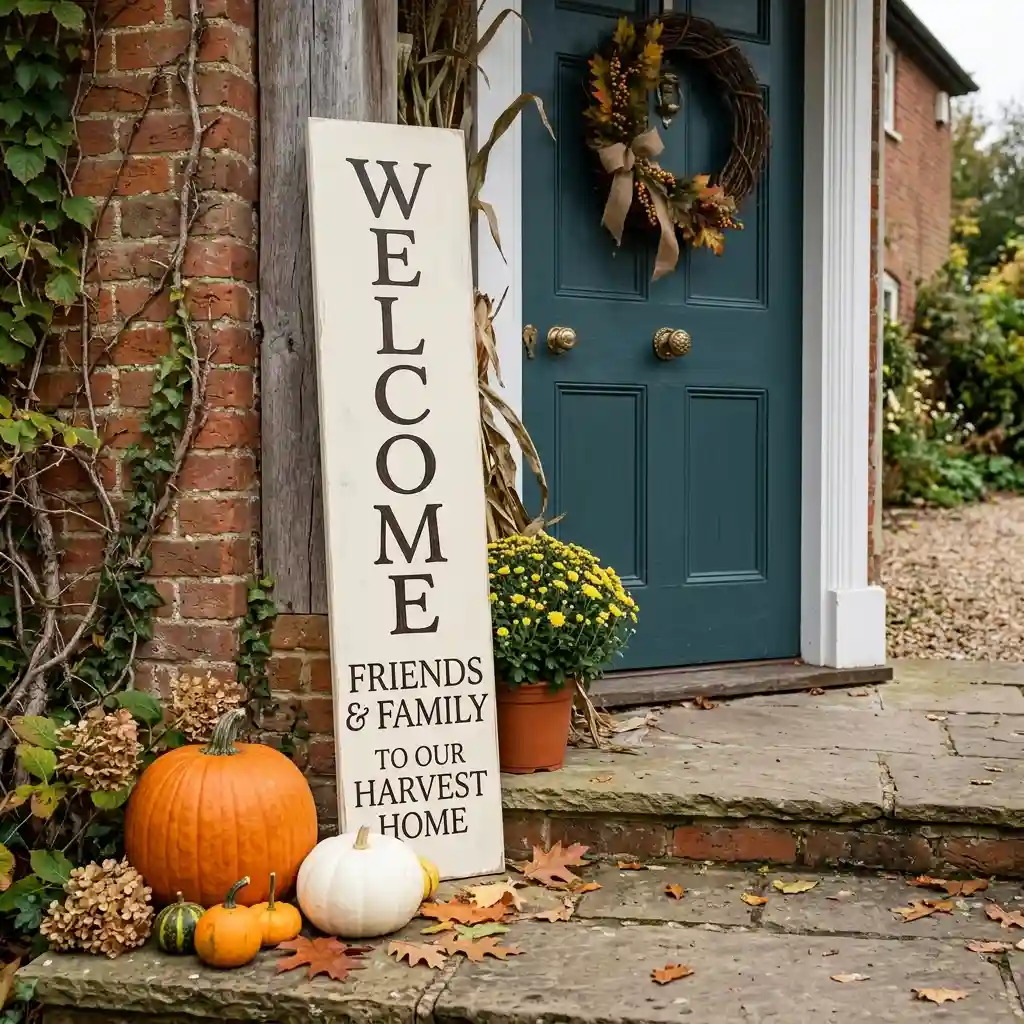
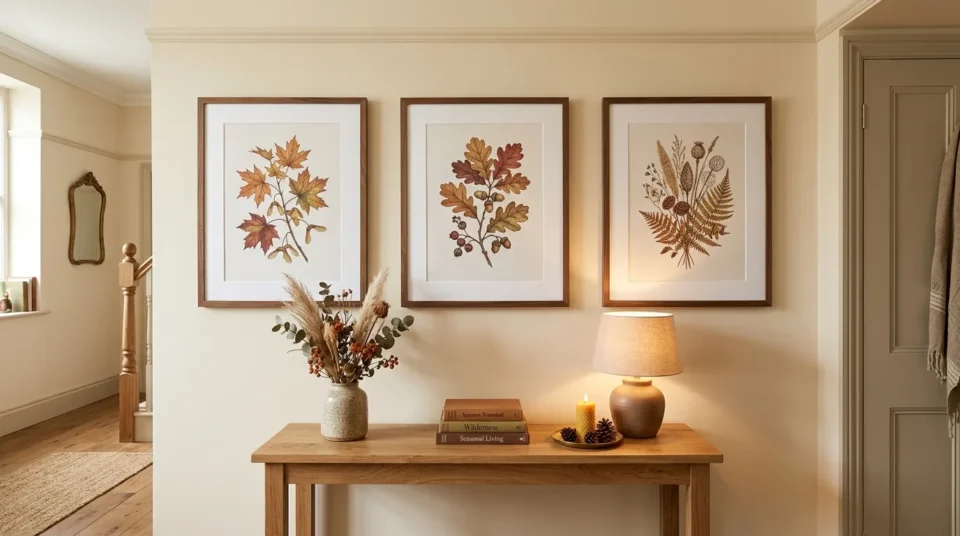
One wood or paper piece finishes the wall, and one is the limit. Paint a scrap board in flat olive or warm charcoal, or slide a simple printed botanical into a $12 oak frame. Skip script fonts and seasonal slogans entirely — a plain pressed-leaf print or a dark harvest still life ages better and works past November. A downloaded file does the same job for less — our guide to fall printables and wall art covers the paper and framing that decide whether it reads as art.
Matte latex paint sits flat on wood and pumpkin skin; craft acrylic dries with a plastic shine that gives the project away instantly. Buy a sample pot of flat interior paint instead. If you want something softer on the wall, our DIY floral wall hangings work in dried autumn material just as well as spring stems.
What Should You Just Buy Instead?
Not everything is worth making, and pretending otherwise is how people end up with a garage full of half-finished projects. Buy the things where manufacturing simply beats a glue gun.
Buy real candles, ceramic vessels, wool or jute rugs, and good faux stems. Quality faux hydrangea and dried-look grasses have improved enormously and are worth the $8 to $14 a stem — our felt flower craft ideas cover the handmade version when you want texture instead of realism.
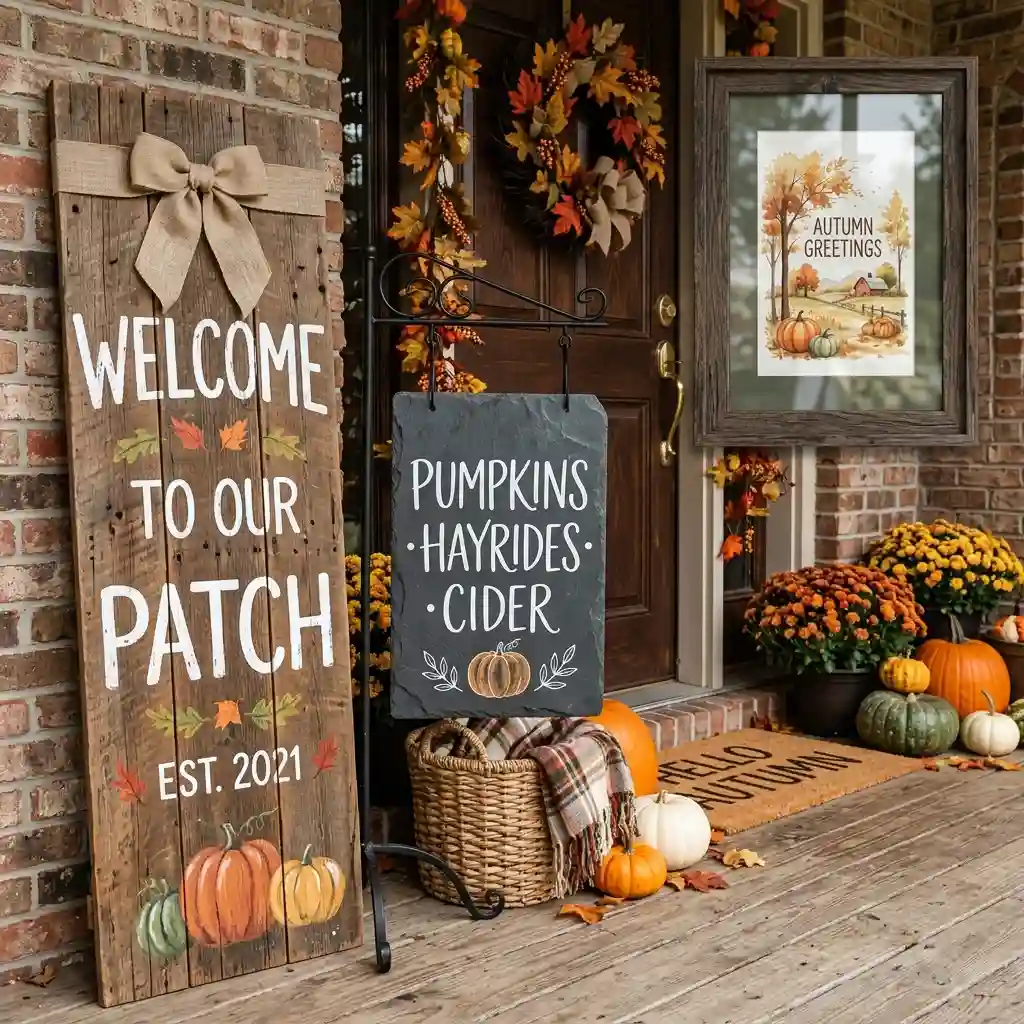
Skip making foam pumpkins, glitter anything, burlap banners, twine-wrapped mason jars and vinyl-lettered signs. These are the four projects that make a room look craft-fair rather than finished. If you want a truly thrifty route, reworking what you already own beats buying craft supplies — our spring upcycling crafts approach translates directly to autumn material.
What Does DIY Fall Decor Actually Cost?
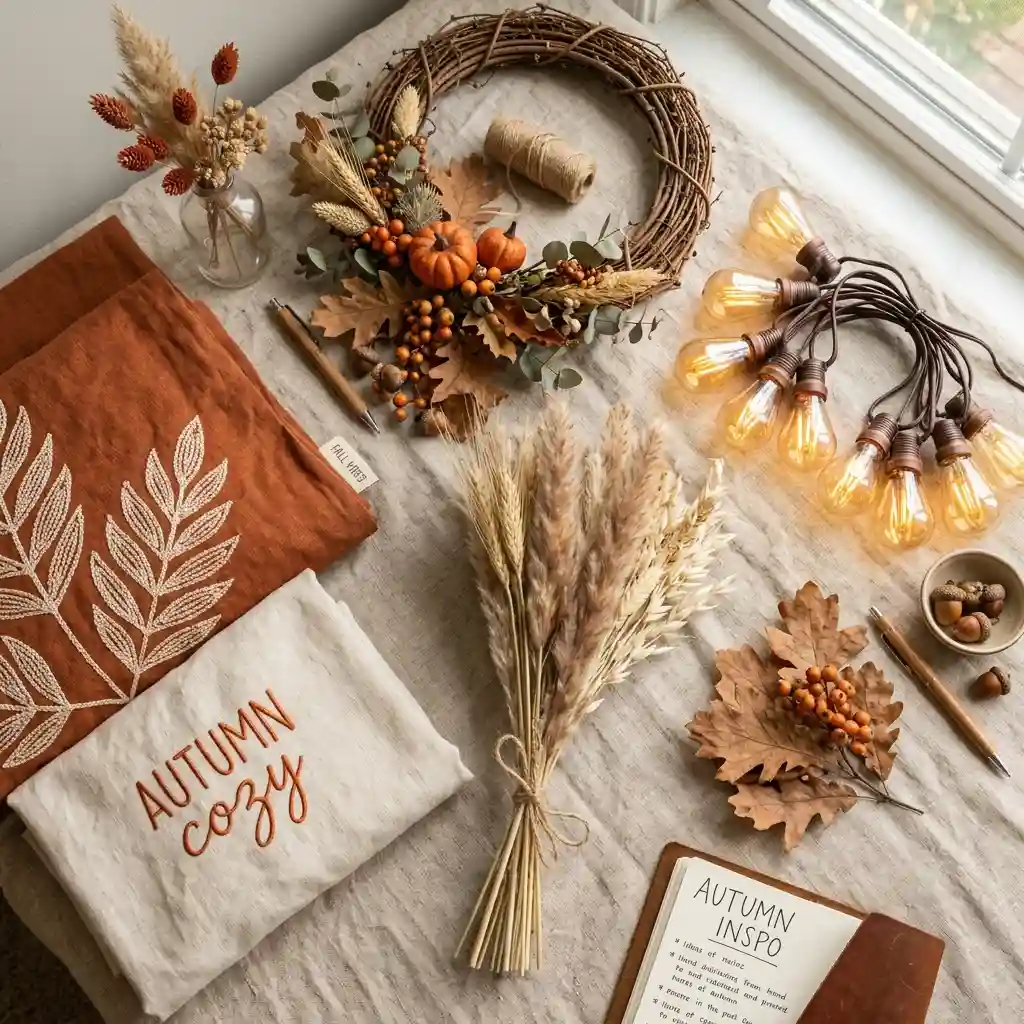
Making your own is cheaper than buying, but only in the second year. Year one you are buying bases; every year after, you are buying filler.
The budget entry point is the dried citrus garland at $8 to $18 — three oranges, a bag of bay leaves and jute twine. The mid-range project is the grapevine wreath at $25 to $55, where the ring is reusable and only the stems get replaced. The premium project is the dried stem arrangement at $45 to $95, because the weighted stoneware vessel carries most of that cost and lasts indefinitely.
| Project | Estimated Cost | Impact Level |
|---|---|---|
| Dried citrus and bay leaf garland | $8-$18 | Medium |
| Grapevine wreath base plus dried stems and wire | $25-$55 | High |
| Dried stem arrangement in a weighted stoneware vase | $45-$95 | Very High |
| Full set: porch, mantel and table plus five uncarved pumpkins | $130-$240 | Very High |
Best First Upgrade: The dried stem arrangement — one vessel and three stem types change more surfaces than any other single purchase.
Skip for Now: A second wreath. One good door wreath is enough until the base and stems have proved they store well.
Designer Rule of Thumb: Spend about 70% of your budget on reusable bases — vessels, rings, trays, linen — and 30% on the seasonal filler you replace.
The Mistakes That Make DIY Look Homemade
❌ Making a dozen small crafts → ✅ Make three or four large pieces and give each one its own surface. Most of them are finish problems rather than skill problems — our guide to fall decor crafts works through the four tells that give a homemade piece away.
❌ Using craft acrylic on pumpkins and wood → ✅ Use a sample pot of flat interior latex for a chalky, matte finish.
❌ Covering the whole wreath ring → ✅ Fill two-thirds and leave the last third of grapevine bare.
❌ Buying filler before you own a vessel → ✅ Buy the heavy pot, tray or ring first, then shop stems to fit it.
So Is DIY Fall Decor Worth the Weekend?
For most homes, yes — but only in the version described above. Making twenty small things is a craft project. Making four large things from real material is decorating, and it costs less over three seasons than replacing a big-box haul every year.
The honest limit is time. If you have one free afternoon, make the arrangement and the wreath, buy the pumpkins, and stop there. Those three moves cover the door, the mantel and the table, which is roughly 80% of what anyone sees. The same logic drives our cozy winter front porch decor once the harvest palette gives way to evergreen, and it carries indoors through our fall bedroom refresh ideas when you want the quiet version.
Designer’s Verdict: The grapevine wreath base wins as the single best project — it is the cheapest piece per season, it restyles completely every year, and it is the one homemade item most people assume was bought.
Frequently Asked Questions
Conclusion
The best diy fall decor is not the most projects — it is three or four large pieces in dried grass, grapevine, linen and real gourds that come back out of the box next year. Start with the vessel and the wreath ring, then shop stems to fit them. More seasonal plans sit in our seasonal decorating ideas archive and across the wider home decor library.
Next Steps
- Buy one heavy stoneware or ceramic vessel before buying a single stem.
- Pick your five-color palette and write it down before you shop.
- Make the dried stem arrangement first — it changes the most surfaces.
- Store the grapevine ring and linen runner flat so year two costs a third of year one.