Why Does DIY Fall Decor Always Feel Rushed?
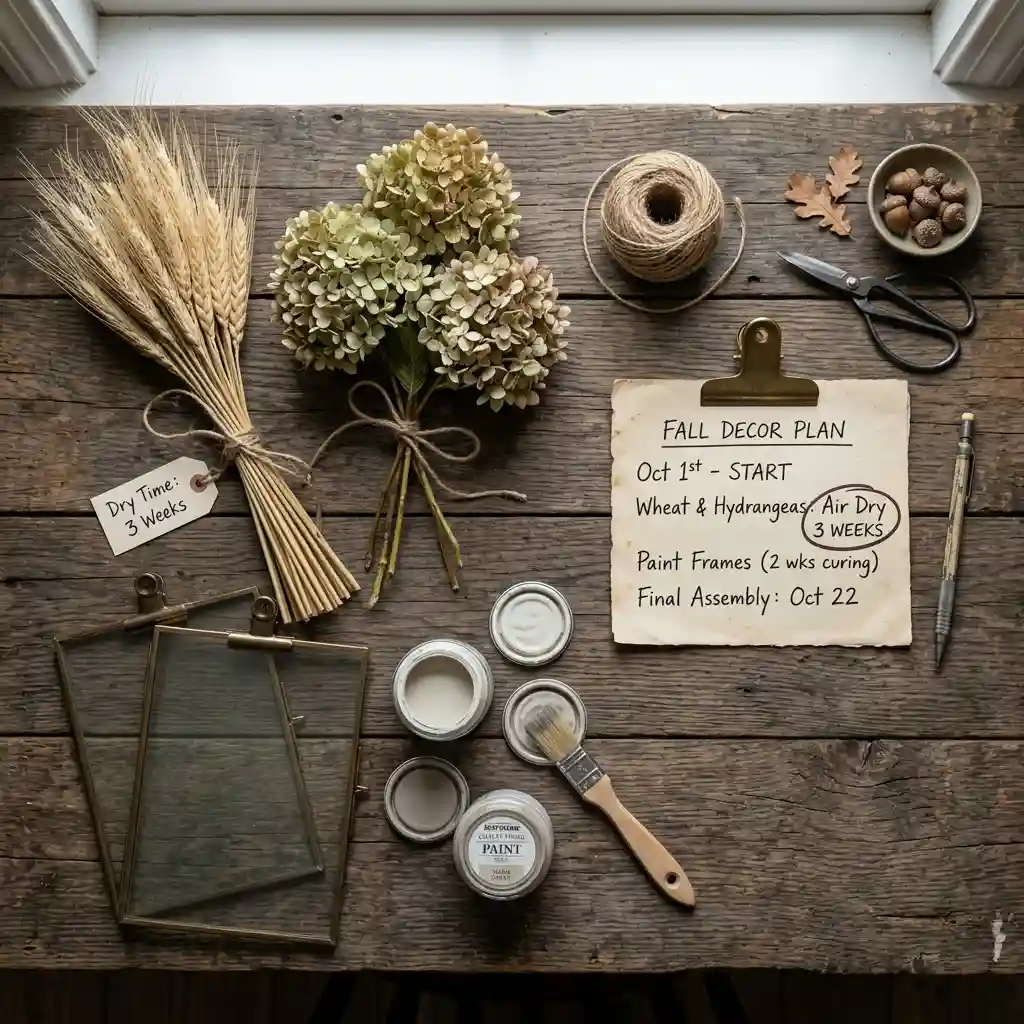
Two to three weeks. That is how long a bundle of hydrangea needs to hang before it is dry enough to use, according to Iowa State University Extension. Almost nobody checks that number in advance. The list gets written on the first cold Saturday in October, and by then the slow projects are already out of reach.
DIY fall decor projects sort cleanly by lead time rather than by skill. Three weeks buys you dried stems and pressed leaves, which is where most of the season’s good texture comes from. One weekend buys you anything that needs paint or stain to harden. One hour buys you assembly only. Pick the tier that matches the calendar you actually have.
Editorial field note: a house decorated entirely from the one-hour tier looks bought, even when every piece was handmade. The dried and pressed material is what makes a room look like autumn arrived slowly rather than in a single shopping trip.
Start dates are the whole point here. Our guide to which DIY fall projects are worth making sits underneath every seasonal layer, and the projects below are sorted by the one thing you cannot speed up: how long a material takes to dry. Nothing on the list needs a workshop or a power tool.
What Changed About Fall DIY This Year?
Fall decorating has moved earlier in the calendar. Late August now carries the same seasonal shopping that used to happen in the second week of October, and the craft aisle has followed it. Dried and preserved botanicals — bunny tail grass, pampas, preserved eucalyptus, bleached wheat — are stocked as a standing category rather than a two-week seasonal drop.
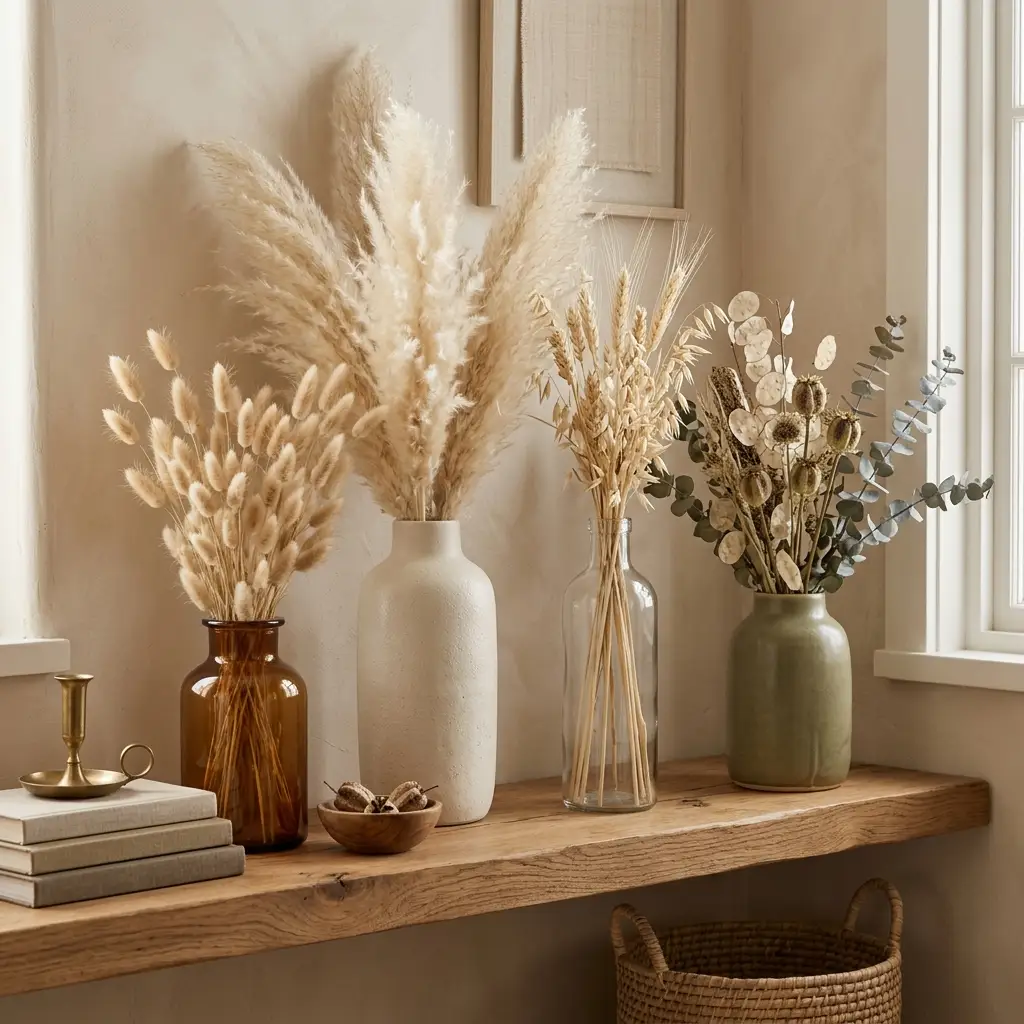
That shift rewards patience in a way the old craft haul never did. A bundle of dried grass costs more than a bag of foam pumpkins and lasts four seasons instead of one. The projects that look best in photographs are also the ones with the longest lead time, which is why the same handful of ideas keeps circulating in September and disappointing people in October.
If you want the wider room-by-room picture before you pick projects, this guide to fall decor room by room covers what to change and what to leave alone. Everything below assumes you have already decided the season is worth the effort.
Signs This Is Catching On:
- Craft retailers now stock dried and preserved stems year-round in the floral aisle instead of only during the autumn drop.
- Seasonal ranges have shifted toward bone, clay, olive and umber, replacing the orange-and-burgundy default of a few years ago.
- No-carve pumpkin styling has become a standard category of its own rather than a fallback for people who dislike carving.
- Limewash and chalky matte finishes are sold in sample-size tins aimed at small objects, not just walls.
Which DIY Fall Decor Projects Need Three Weeks of Drying Time?
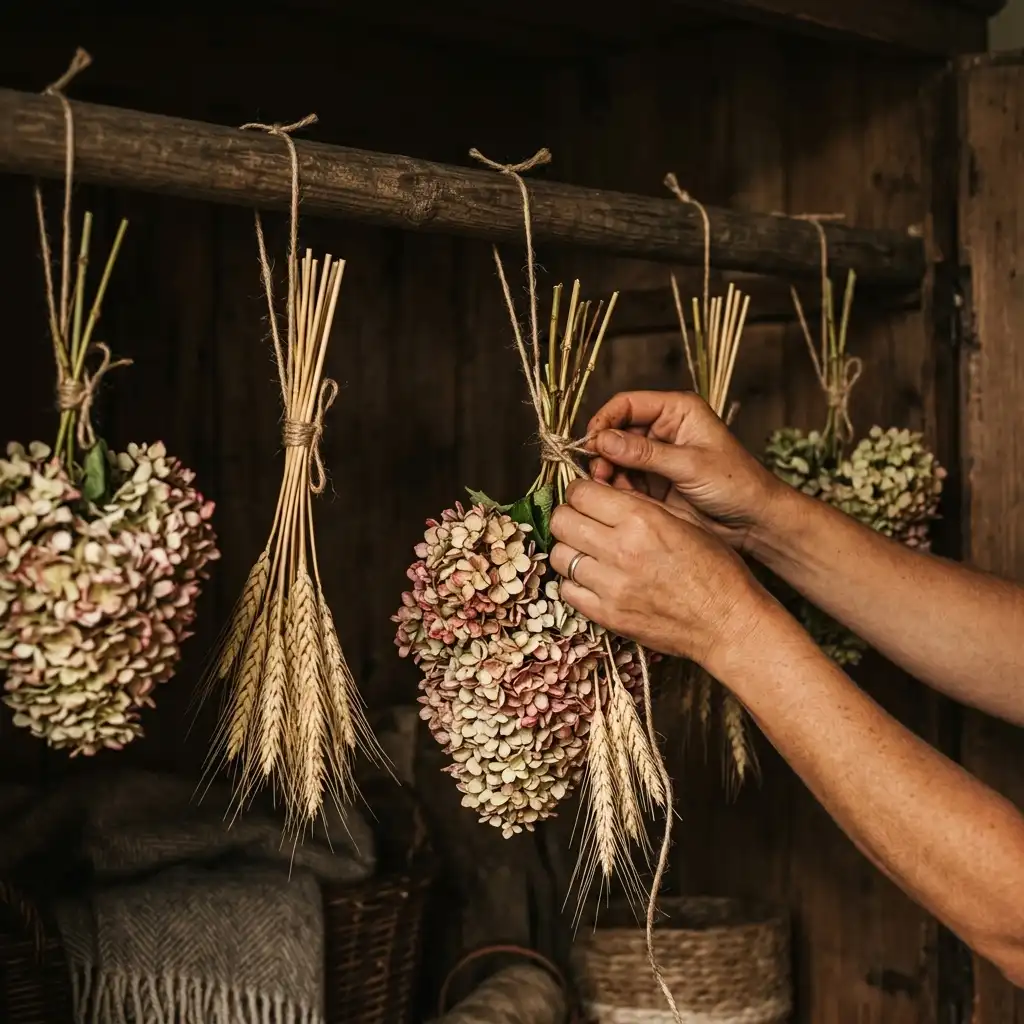
Three projects belong in the slow tier, and all three depend on moisture leaving a material rather than on any skill you need to learn. Air drying is the method: strip the leaves from the stems, tie small bunches with rubber bands, and hang them upside down somewhere warm, dark, dry and well ventilated. Iowa State Extension puts the timeline at two or three weeks.
Climate Note: humid rooms slow air drying and can leave stems mouldy rather than dry, so pick the driest space in the house and keep air moving past the bunches.
Pressed-Leaf Glass Frames
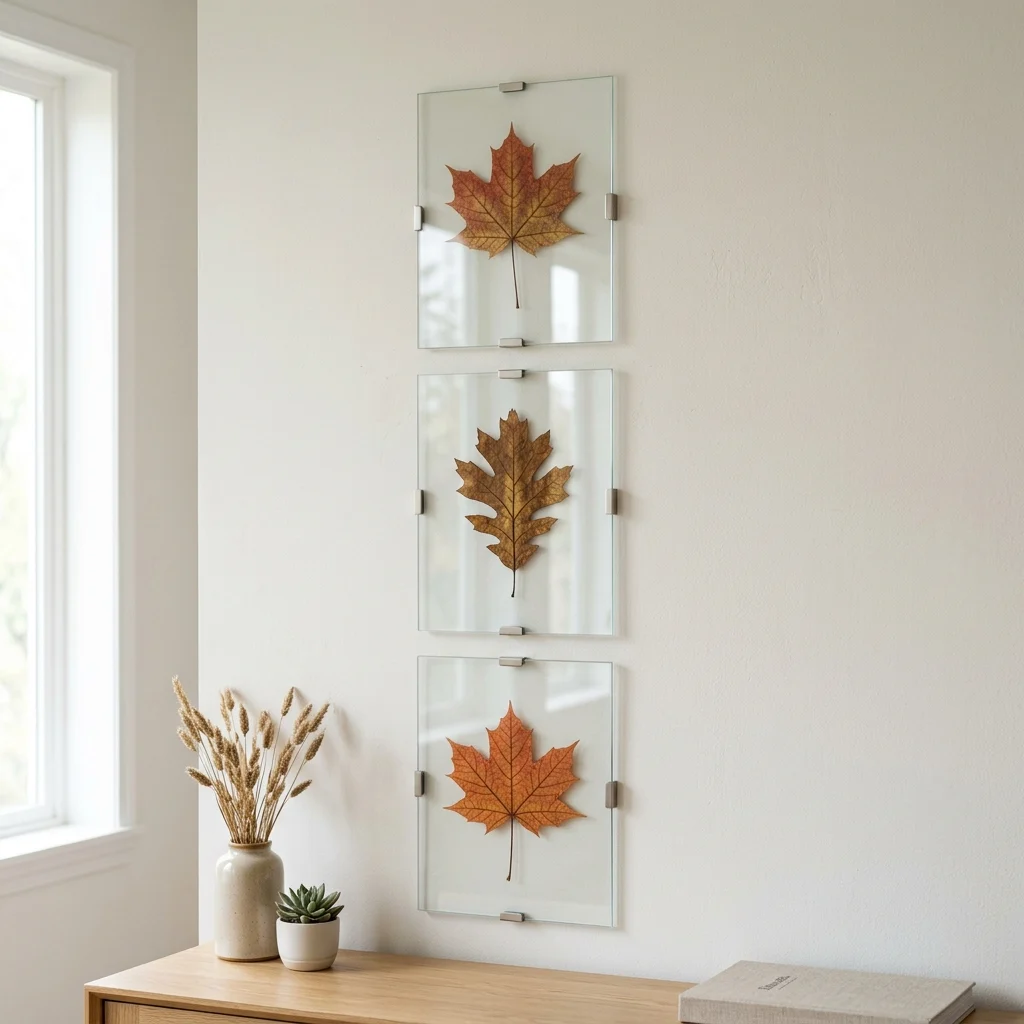
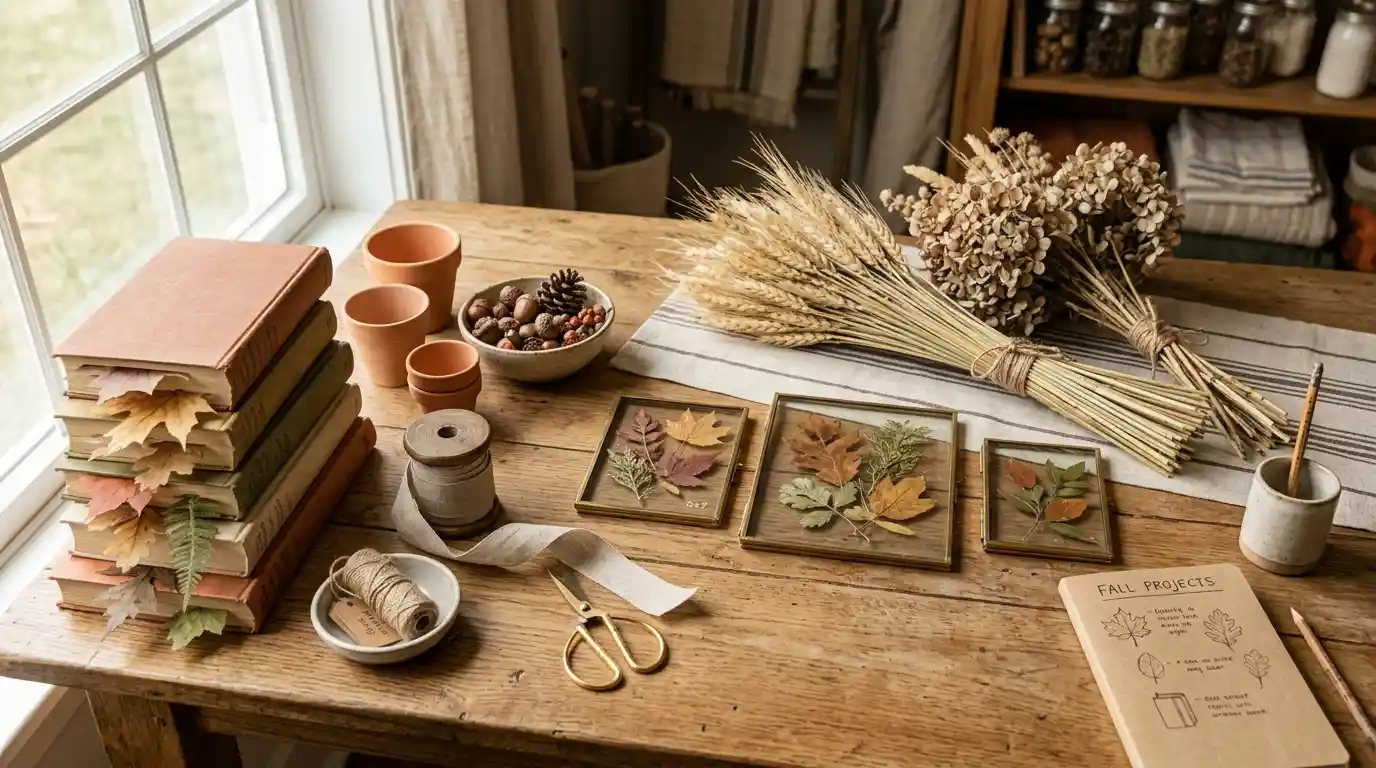
Pressed leaves in clip-together glass frames are the cheapest wall piece in the whole season. Collect flat, unblemished maple, oak or ginkgo leaves before they go brittle, layer each one between sheets of newspaper, and weight the stack with heavy books in a dry spot. UNH Extension’s plant press guide says to leave it alone for at least two weeks.
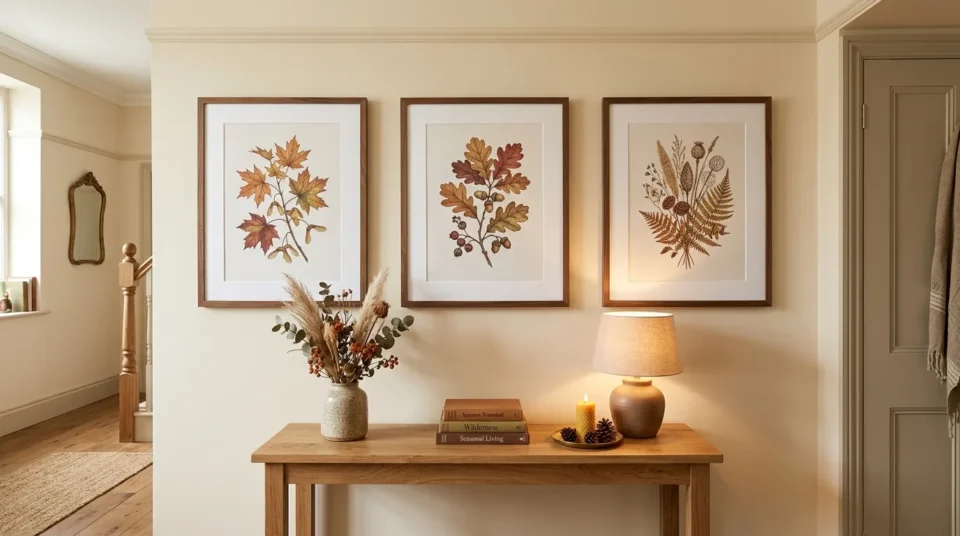
Three frames in a vertical column beat one large frame on most walls, because the repeated shape carries further across a room than a single specimen does. Skip any backing board and let the wall show through the glass — a leaf is a translucent object, and light passing behind it is half the effect. A trio of 8 by 10-inch frames costs under $30 and stores flat when the season ends. For the wider arrangement question, these wall hanging craft ideas cover how to group handmade pieces without crowding the wall.
An Air-Dried Hydrangea Door Swag
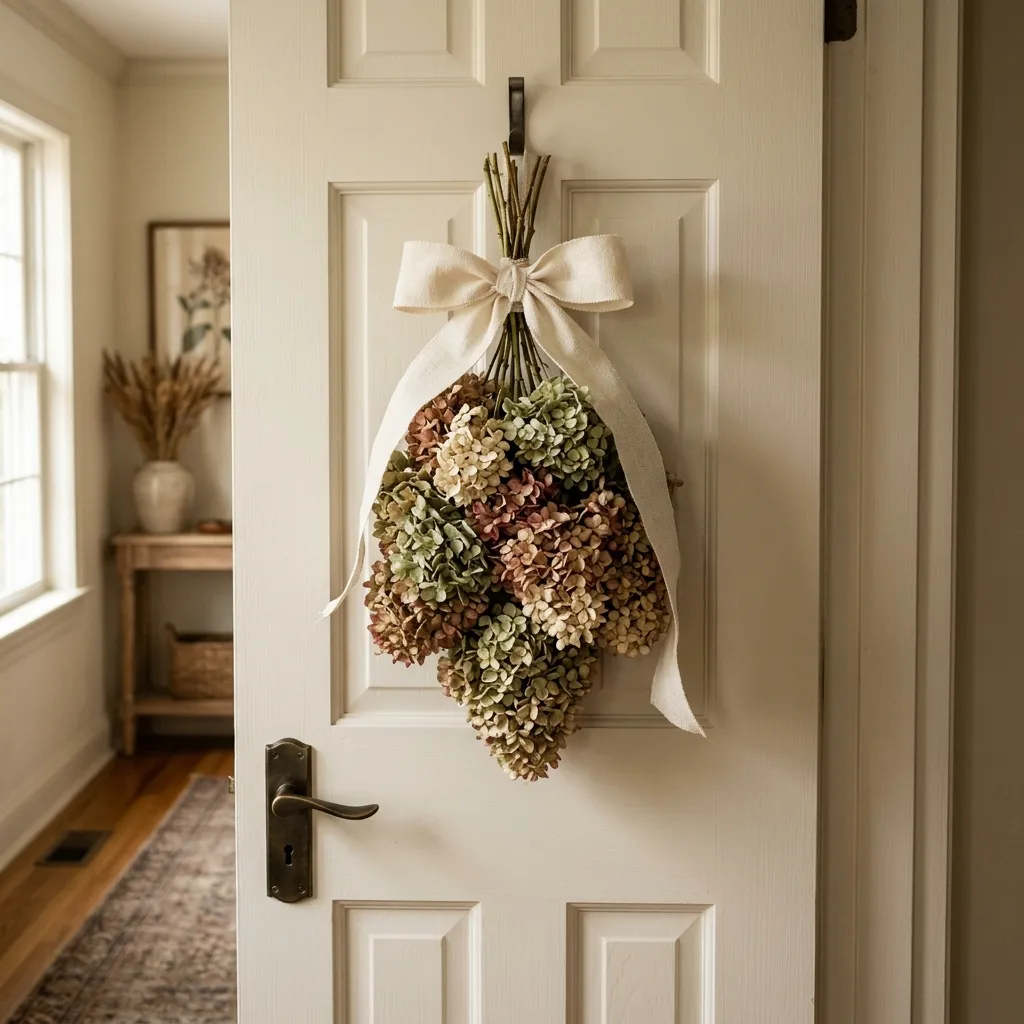
A swag is a bundle, not a ring, and it suits an interior door or a hallway better than a full wreath does. Hydrangea heads are large, so hang them individually rather than in bunches — crowded heads trap moisture against each other and dry unevenly. After two to three weeks the petals turn papery and hold a muted sage, dusty rose or antique cream that fresh stems never show. A swag is also the easier build if you have never built a fall wreath from scratch.
Bind the dried stems with 22-gauge paddle wire about three inches below the heads, then cover the binding with a wide linen ribbon in warm cream. Keep the bundle loose. A swag that is packed tight looks like a broom, and the papery heads crush against each other every time the door swings. The paddle wire and wide ribbon are the same items on any fall wreath supply list, so one shopping trip covers this and a wreath.
Aged Terracotta Pots in Clay and Bone
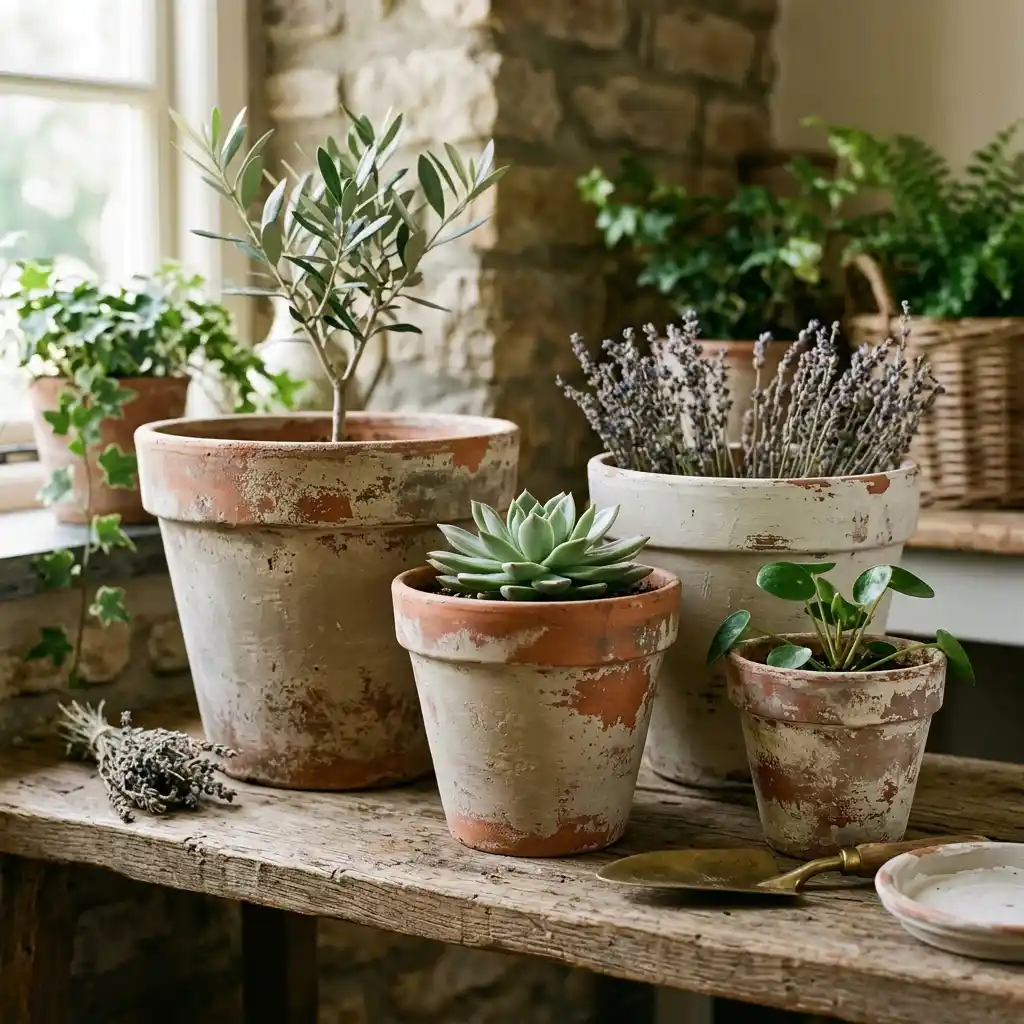
Raw terracotta is the most underrated autumn material in a hardware store. A plain $4 pot takes a wash of watered-down chalky paint in bone or warm greige, sponged on and wiped back so the clay shows through at the rim and base. The result looks like a weathered garden pot rather than a painted craft object, and it works from September straight through winter.
Material Note: Sherwin-Williams puts latex paint at one to two hours to dry to the touch but two to three weeks to fully cure, so a pot that feels finished on Saturday is still soft underneath.
That gap is why this project sits in the slow tier despite being a one-afternoon job. Stack the pots too early and they mark each other. Do the washes at the same time you hang your stems, leave everything alone for a fortnight, and both finish together. The same wash-and-wipe method rescues the glass and ceramic in a Dollar Tree fall decor haul.
Which Fall Projects Fit Into One Weekend?
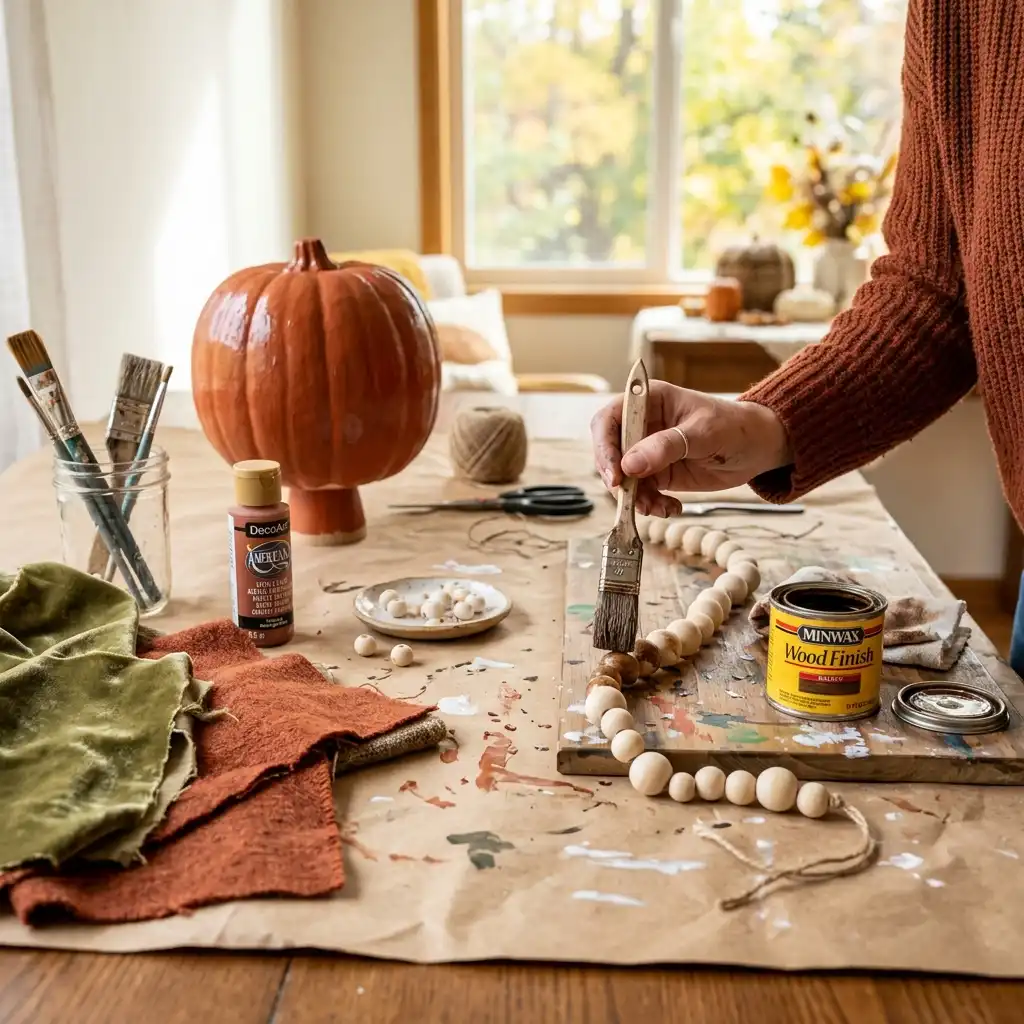
The middle tier covers anything that needs one drying window rather than three weeks of them. Two projects earn the weekend, and both trade material cost for the time you save. You are buying finished texture — velvet, wool, stained wood — instead of waiting for a plant to give it to you.
DESIGNER TIP: do the weekend tier on the same Saturday you start the slow tier. The stems dry while you work, so one afternoon produces two waves of finished pieces instead of one.
Fabric-Wrapped Pumpkins in Velvet and Wool
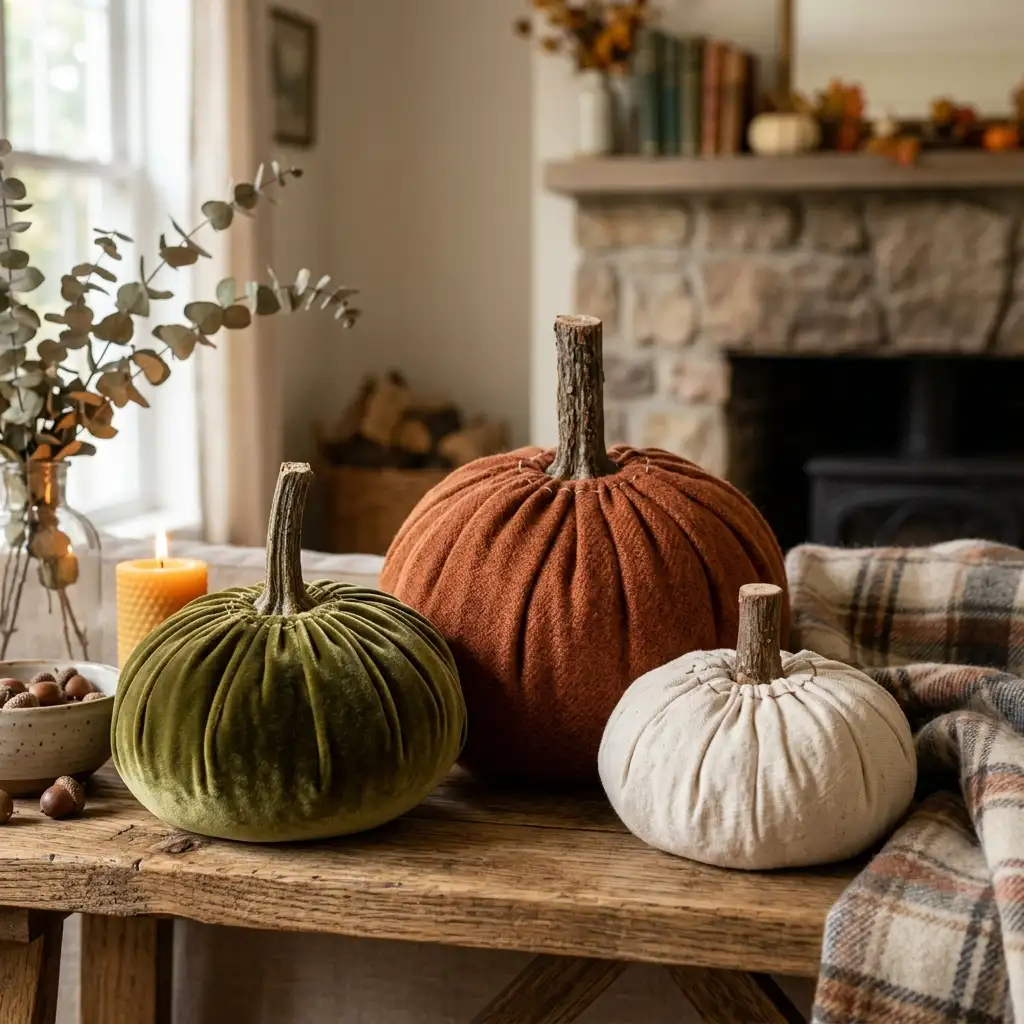
Fabric-wrapped pumpkins solve the problem with foam pumpkins, which is the surface. A half-yard of cotton velvet or a felted wool remnant wrapped over a foam form and gathered at the top reads as a real object from across a room. Cut a circle roughly twice the width of the form, pull the edges up, and tie them off with twine under the stem.
The stem is where these succeed or fail. Swap the moulded plastic stem for a short length of real branch pushed into the foam and secured with glue — that single change is the difference between a craft object and something that passes for a decorative piece. Work in muted olive, rust, bone and charcoal, and make three in odd sizes rather than a matched pair. Cut the remnants from the same velvet and wool you would buy as cozy fall textiles, and one half-yard covers both.
A Stained Wood-Bead Garland
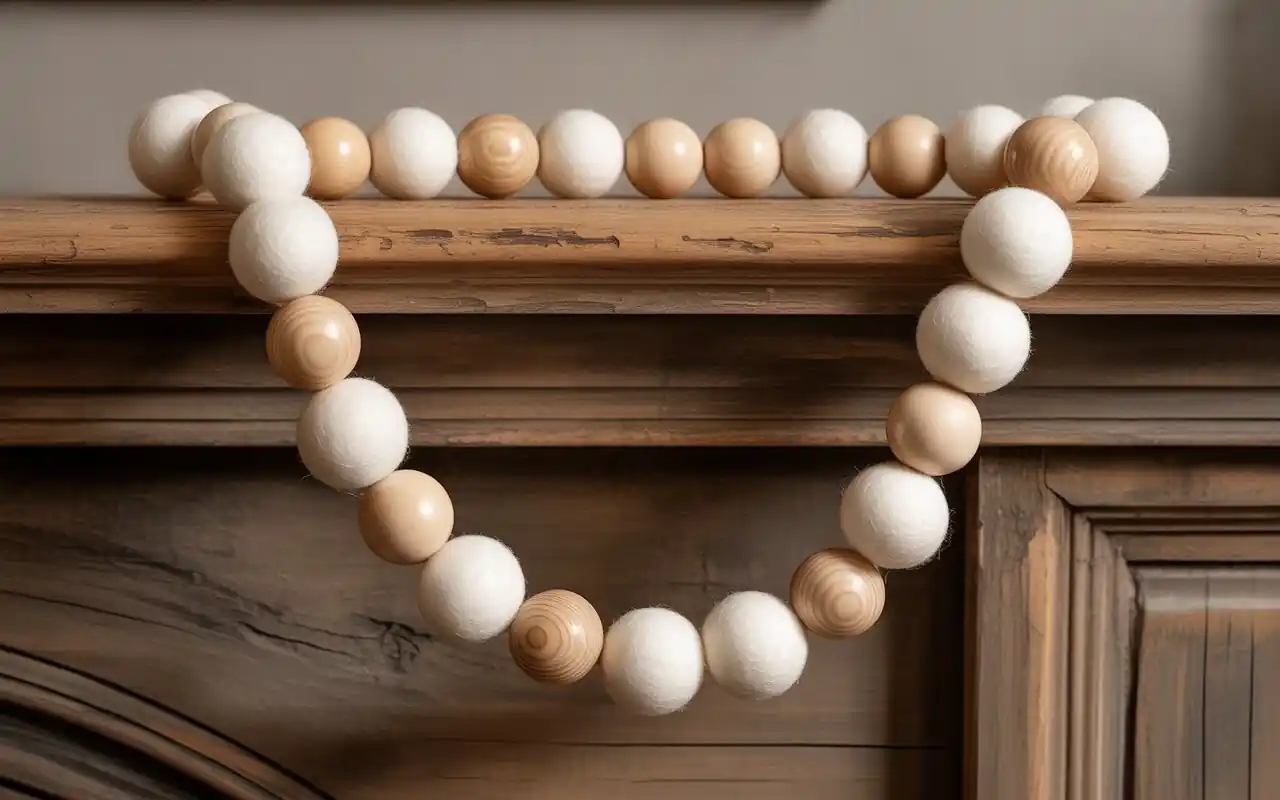
Unfinished wood beads take a wood stain beautifully and cost very little. Thread 20mm and 30mm beads onto waxed cotton cord in an uneven rhythm, finish with a leather tassel, and you have a piece that works on a shelf, a stair rail or a ladder for years rather than one season. Stain in walnut, warm oak or a single coat of ebony wiped back to grey.
Stain needs its own drying window, which is why this is a weekend job rather than an hour. Spread the beads on wax paper, stain in one pass, and leave them overnight before threading. Skip a sealant unless the garland will hang somewhere it gets handled — bare stained wood ages better than a glossy topcoat.
Which Projects Take Under an Hour?
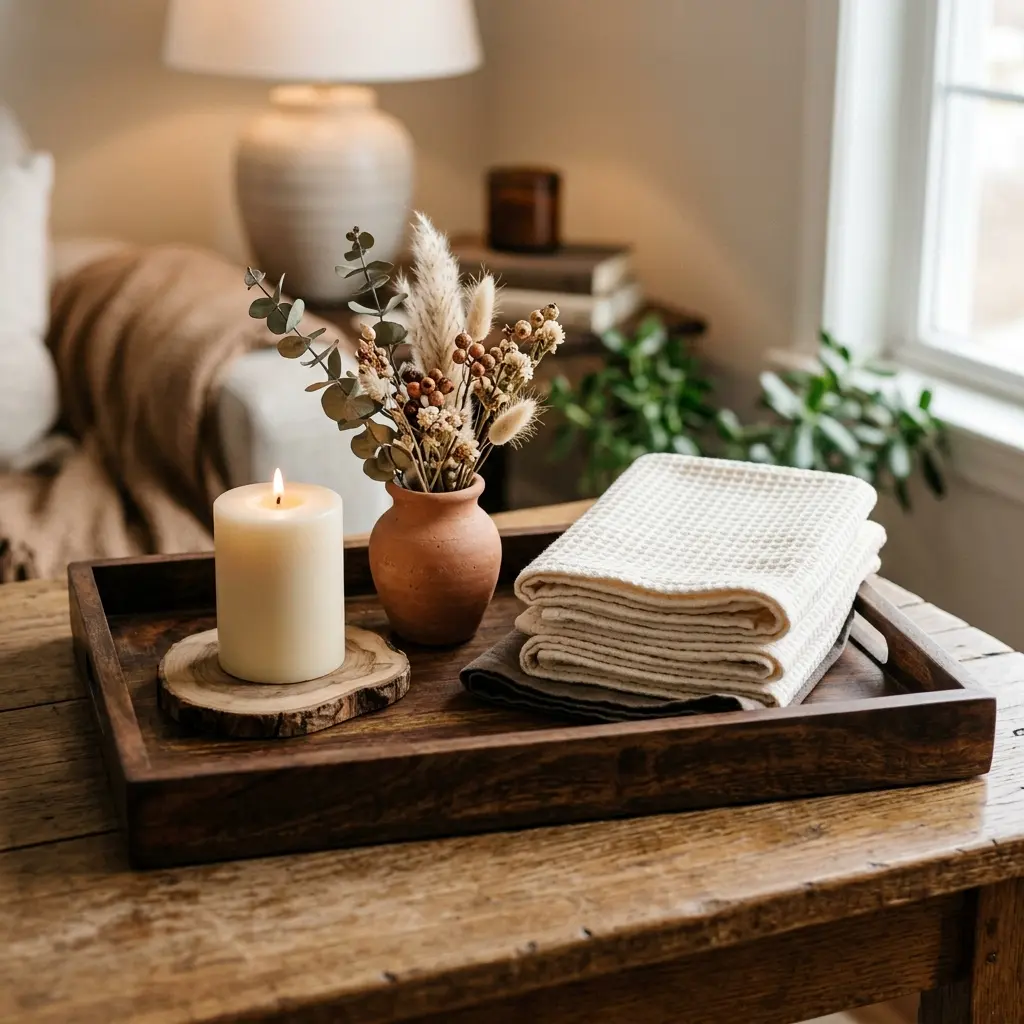
The fast tier finishes the same day, with nothing to hang and nothing to cure. Two projects here are worth the hour, and both are the same-day answer to a slow-tier project you did not start in time. Treat them as the finish rather than the plan. An hour of work on top of dried and painted pieces looks layered; an hour of work on its own looks like a last-minute run to the shops. The same one-hour logic drives most fall centerpiece ideas: one vessel, refilled as the season moves.
Safety Note: melt wax in a heatproof bowl over simmering water rather than over direct heat, and use flameless LED candles anywhere a flame would sit close to dried stems, leaves or paper.
Wax-Dipped Leaves for a Bowl or Shelf
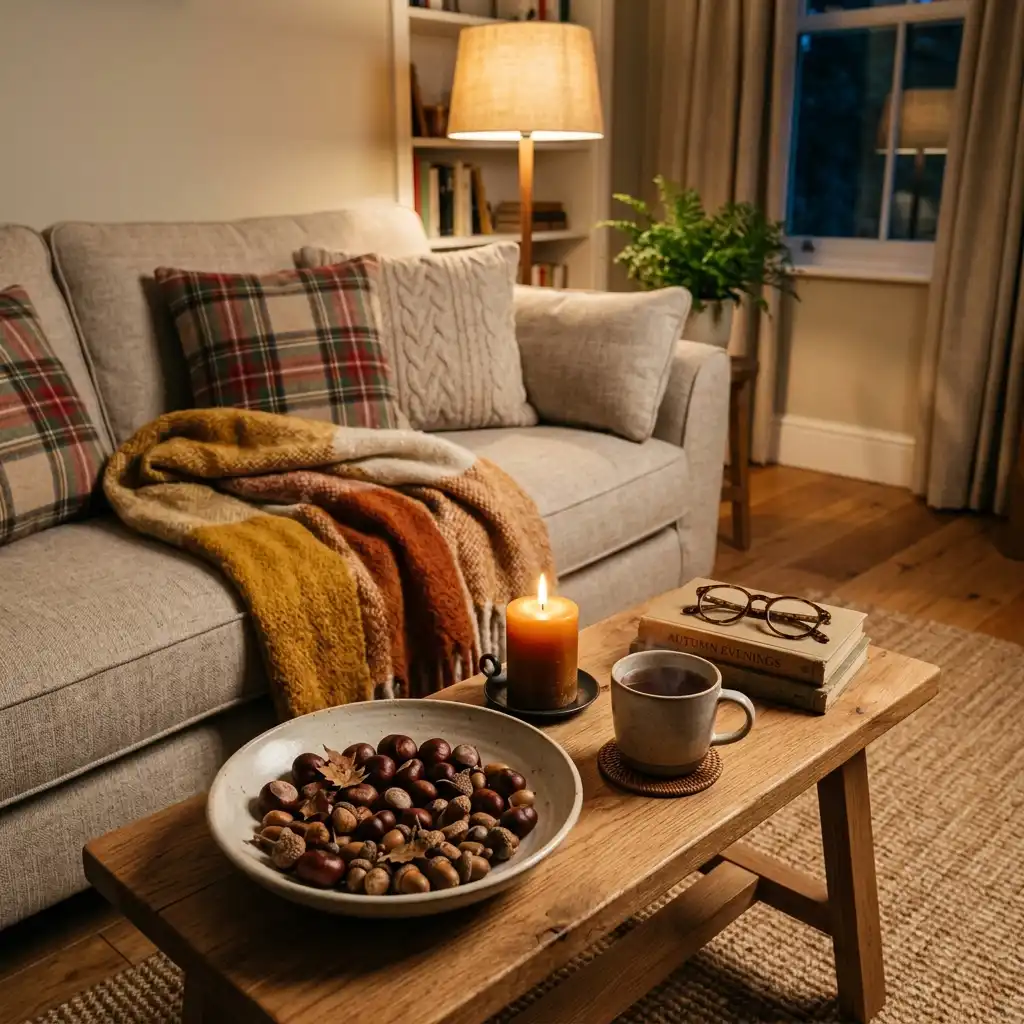
Wax dipping is the one-hour version of pressing, and it gives you the opposite result. Pressing flattens a leaf and drains it over two weeks; a dip in melted paraffin or beeswax seals the colour in on the spot and keeps the leaf’s natural curl. Melt the wax in a heatproof bowl set over a pan of simmering water, hold each leaf by the stem, dip once, lift, let the excess run off, and lay it on parchment. Each leaf sets in about a minute.
Freshly fallen maple and oak in red, ochre and burnt umber hold their colour for weeks this way, where a bare leaf on a shelf goes brown and brittle within days. Pile a dozen in a shallow ceramic bowl, run them along a mantel edge, or thread them onto jute at uneven spacing. This is the project to reach for on the first cold weekend in October, when the two-week options have already closed.
Leaf-Wrapped Hurricane Lanterns
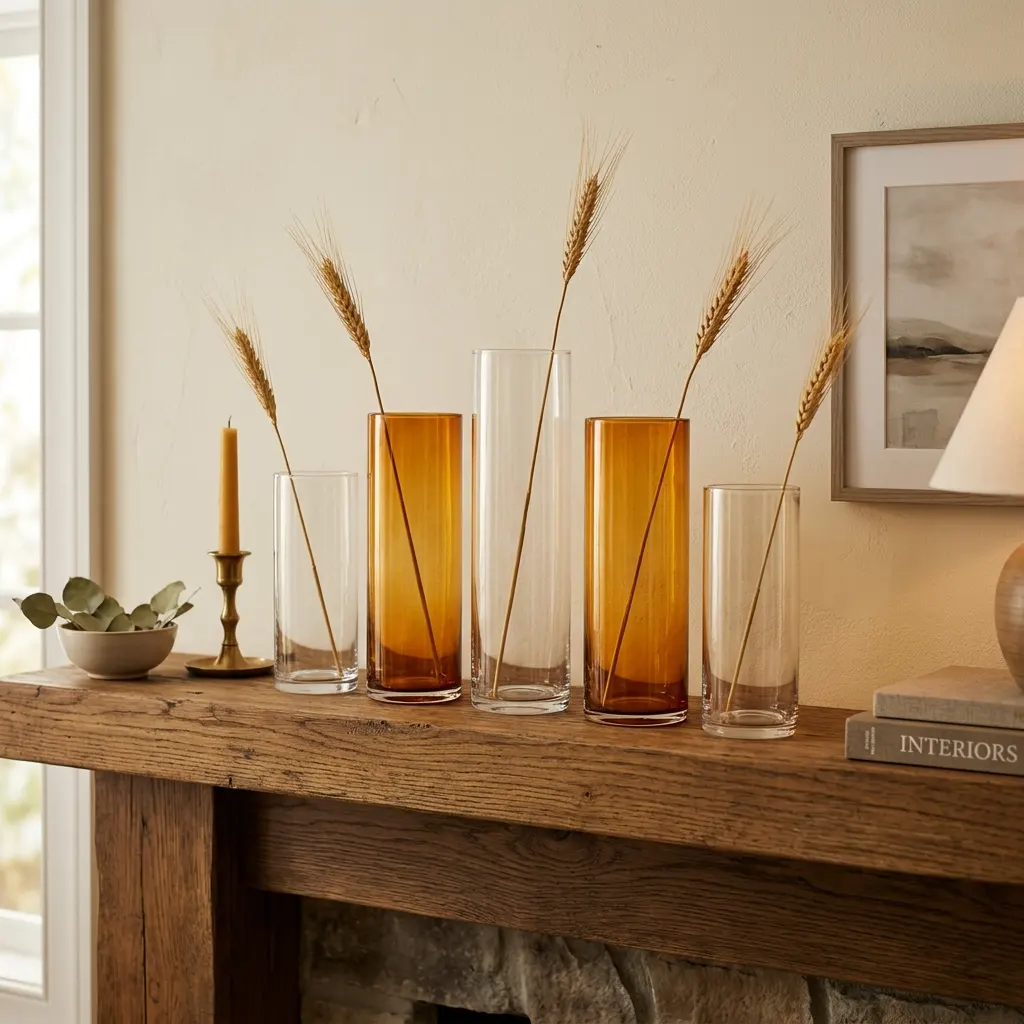
A pressed leaf glued to the outside of a plain glass hurricane throws a leaf-shaped shadow when the light is on. Use one large maple or oak leaf per lantern, a thin line of clear-drying craft glue along the central vein only, and let the edges lift slightly away from the glass. Pressed-flat contact all over looks laminated and dull.
This is also where leftover pressed leaves go when the frames are done, which is why the two projects belong on the same list. Three lanterns at different heights on a hall table or windowsill give you the softest light in the house for under $15. Keep the glue line off the rim so the glass still washes clean. A pair of them is also the easiest thing to add when you are working out fall entryway decor on a narrow console.
Your Fall DIY Start-Date Checklist
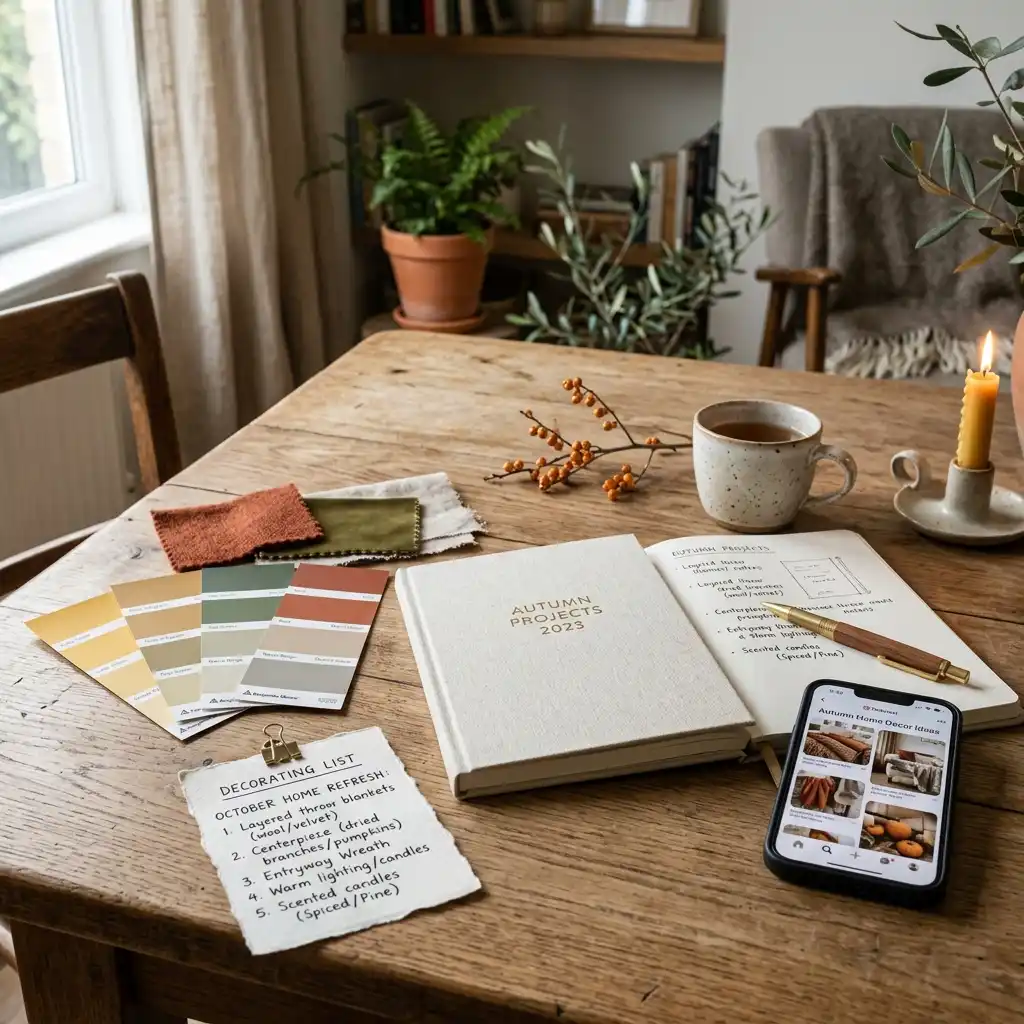
- Count backwards three weeks from the date you want the house finished, and start the drying projects that day.
- Hang stems in small bunches, upside down, somewhere warm, dark, dry and moving with air.
- Press leaves between newspaper under heavy books for at least two weeks before you check them.
- Do all paint and stain washes on the same afternoon you hang the stems, so both cure together.
- Buy dried and preserved botanicals if you missed the window — they cost more but skip the wait entirely.
- Keep every dried piece away from bathrooms, kettles and radiators, which soften papery petals fast.
- Leave the one-hour projects until last, and use them to fill the gaps you can still see.
KEY TAKEAWAY: The order matters more than the skill. Start what needs drying first, paint on the same day, and assemble last.
Where a Fall DIY Plan Usually Breaks Down
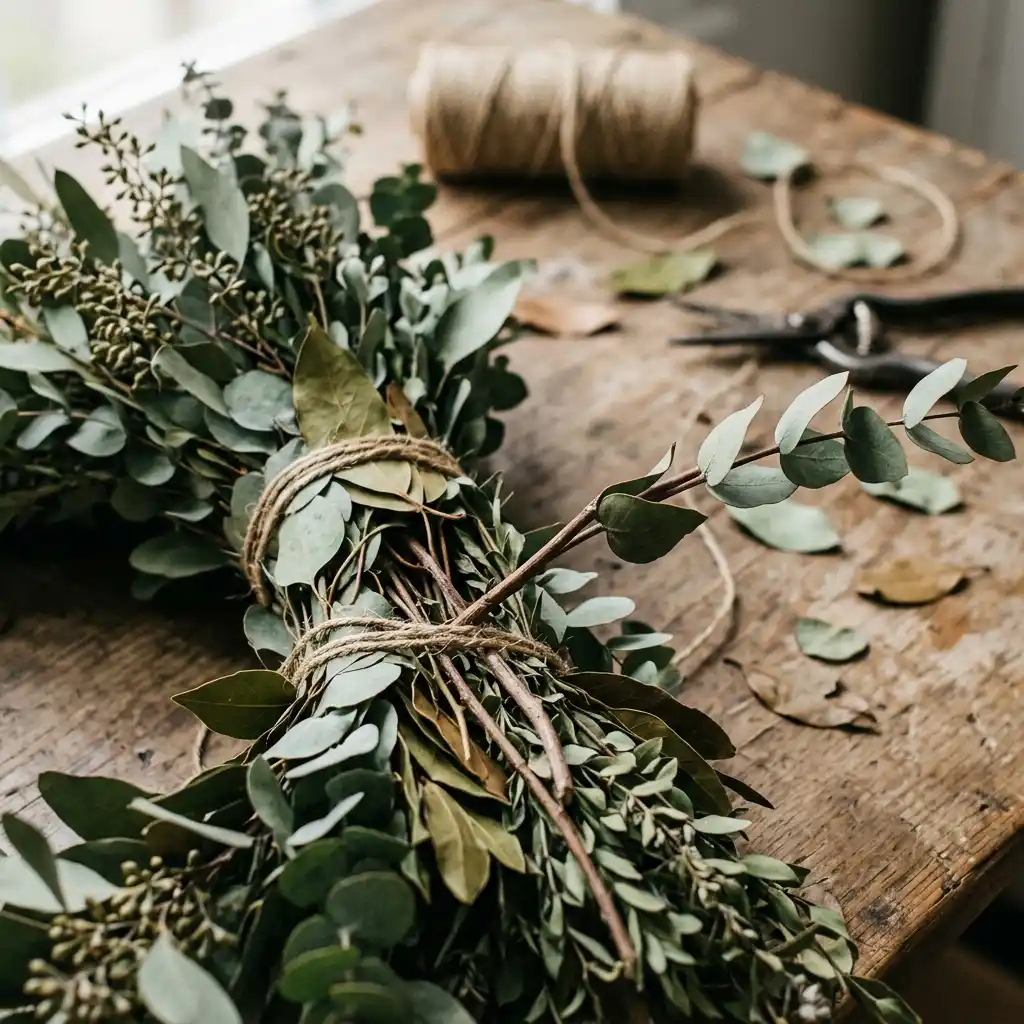
Instead of writing the project list on the first cold Saturday in October, Try setting one start date in late August and hanging stems that weekend, before you have decided what they will become.
Instead of treating paint that feels dry as finished, Try leaving washed pots somewhere they can sit untouched for a fortnight — latex stays soft for weeks, and day-one stacking leaves marks that never wipe off.
Instead of storing dried bundles wherever there is room, Try a wardrobe or a lidded box in a heated part of the house. Basements, bathroom shelves and cupboards near a kettle put damp air back into material that dried perfectly.
Instead of buying fresh supermarket flowers to dry, Try buying stems already sold dry or preserved. Fresh blooms bred for vase life often brown in the bundle rather than drying cleanly, and you lose three weeks finding out.
Instead of doing the satisfying one-hour projects first, Try running the order backwards. The fast pieces will still be fast pieces in three weeks; the dried stems will not exist unless you start them now.
Supply Costs Before You Commit a Weekend
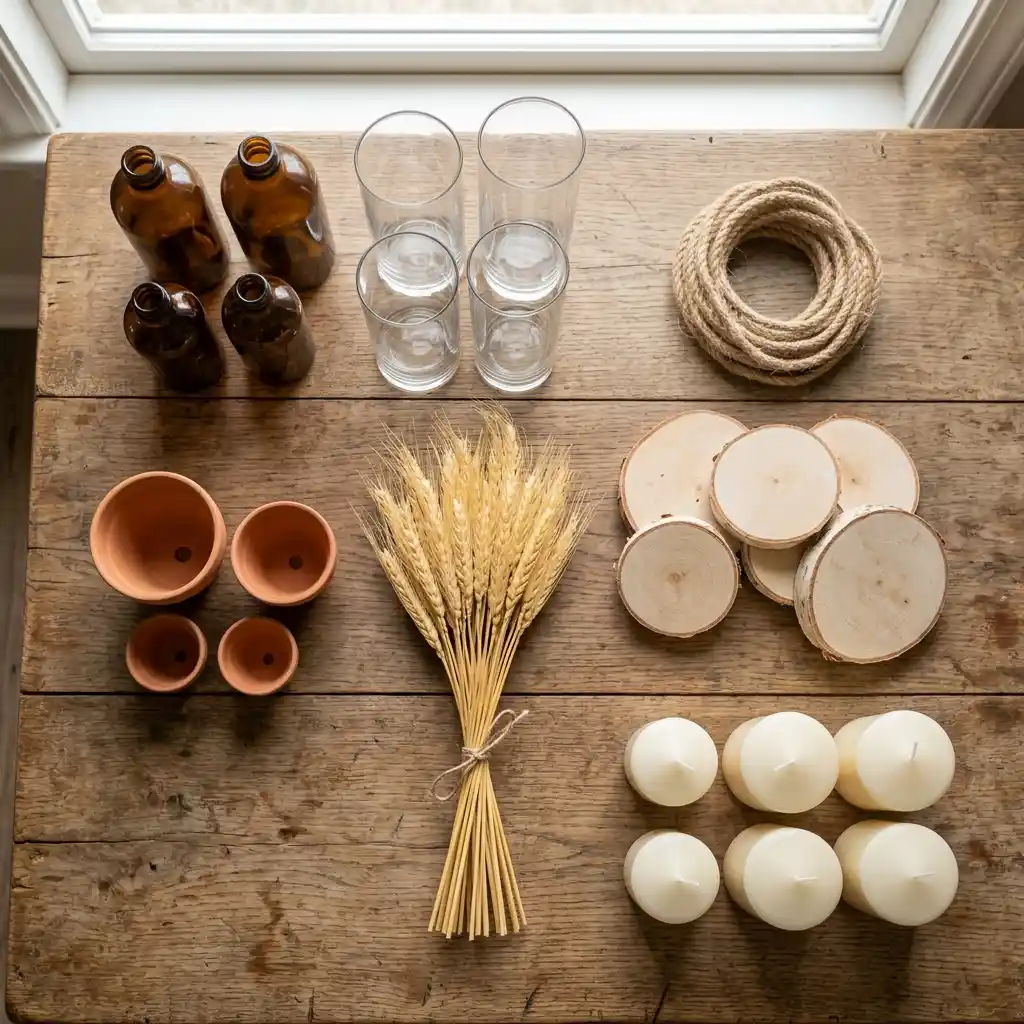
Every project here lands under $80 in materials, and all five start at $35 or less. The cheapest entry is a block of paraffin, a bag of jute and glass you already own, at roughly $10. The middle of the range is a set of four terracotta pots with one sample tin of chalky paint, near $40. The most expensive is three fabric-wrapped pumpkins in cotton velvet, which can reach $80 once the remnants and forms are counted. The figures below assume you buy supplies new rather than forage, which is the honest upper end.
| Project | Estimated Cost | Impact Level |
|---|---|---|
| Wax-dipped leaves and leaf-wrapped lanterns | $10-$28 | Medium |
| Three pressed-leaf glass frames | $18-$45 | High |
| Aged terracotta pots, four with sample paint | $30-$55 | Medium |
| Stained wood-bead garland with leather tie | $25-$50 | Medium |
| Fabric-wrapped pumpkins in velvet or wool | $35-$80 | High |
Best First Upgrade: The pressed-leaf frames, because they cost the least, need no skill, and put colour at eye level where a room shows it. Browse more budget fall decor if the whole season has to stay under $100.
Skip for Now: A second batch of anything. Finish one wall, one door and one surface before you start duplicating a project you have only made once.
Can You Do This in a Rental With No Attic?
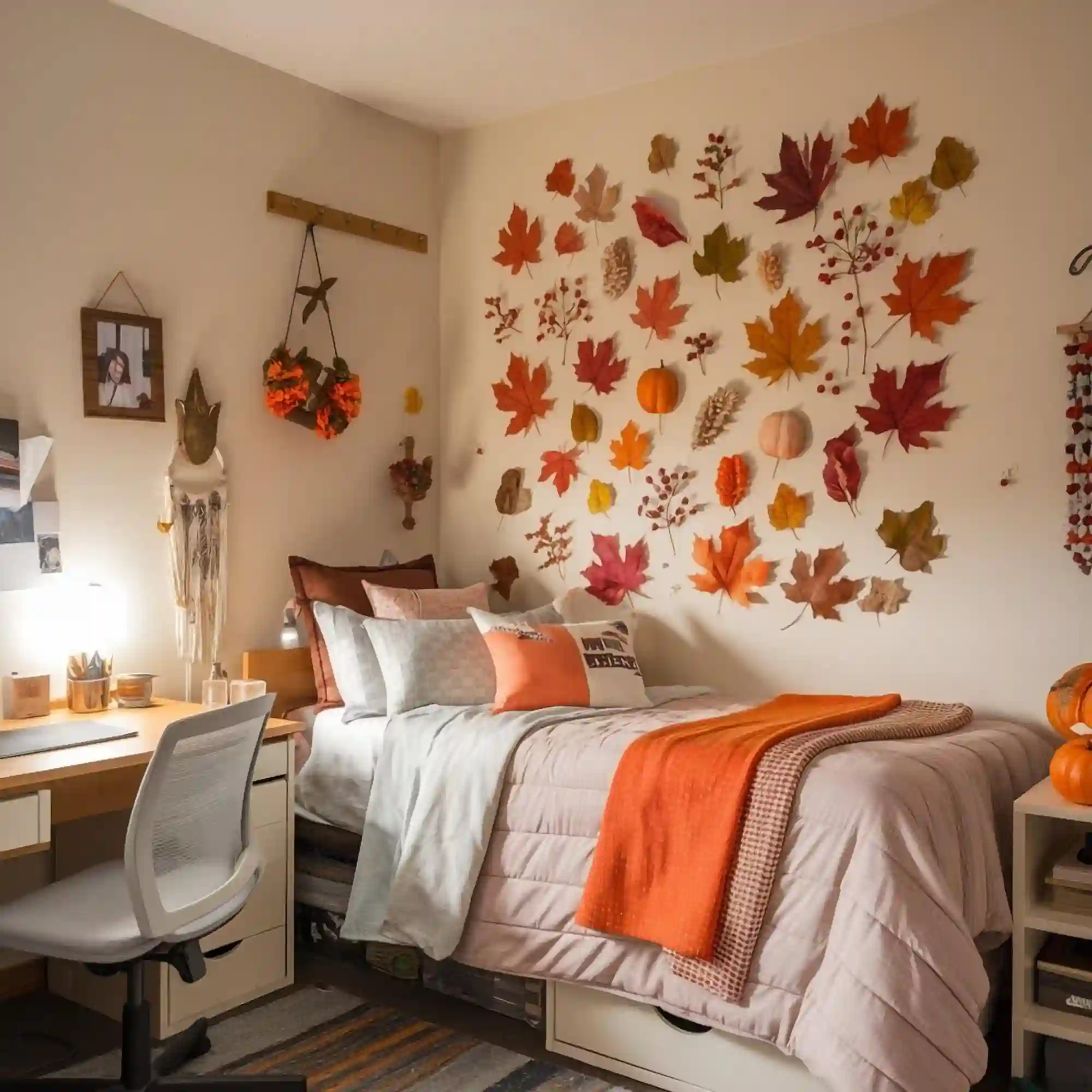
Yes, and the drying step is the only part that needs solving. A wardrobe with the door left ajar works well — it is dark, it is dry, and clothes keep the air still without sealing it. A spare-room curtain rail behind a closed door does the same job. What you need is warm, dark and dry air moving slowly, not a dedicated space.
Rental Note: hang drying bunches from a tension rod inside a wardrobe or a removable adhesive hook rated for 3 to 5 pounds, so nothing goes into the ceiling or the door frame.
Small flats have one real advantage here. Three pressed-leaf frames, one swag and a bowl of waxed leaves is a complete seasonal layer in a one-bedroom, where the same set would look thin across a whole house. Pick the projects that sit on walls and narrow surfaces rather than the ones that need floor space, and the whole season fits into a single storage box.
For the bedroom version of this, these fall bedroom decor ideas show where handmade pieces land best. Hallways and windowsills take the rest of the set. A narrow console holds two lanterns and a small pot without crowding the walkway. If you want the styling side rather than the making side, our guide to fall apartment decor covers what survives the next move.
What I’d Actually Make First

Designer’s Verdict: Start the pressed leaves and the hydrangea swag on the same August afternoon — they cost almost nothing, they need the most time, and they are the two pieces that make a house look like autumn rather than like a shopping trip.
The slow tier has staying power because it is not really a trend. Dried and preserved material has been drifting into decorating for years, and the muted palettes that come with it — bone, clay, olive, umber — carry into winter without looking out of place. The fast projects are the ones that date. A velvet pumpkin will still look right in five years; a foam one already does not.
If you want to see where these pieces go once the weather turns, these cozy winter decor ideas pick up the same neutral materials in December. Plenty of what you make in September stays out until February. Nothing has to come down the day the pumpkins do. Building one warm corner of cozy fall decor is where the handmade pieces earn their keep.
Frequently Asked Questions
Conclusion
The best DIY fall decor projects are not the clever ones. They are the ones you started early enough for the material to do half the work, which is why a start date matters more than a skill level. Pick one drying job this weekend, then let our complete guide to fall decor ideas for the home fill in the rest while it hangs.