What Five New Pillows Can’t Fix
Every fall decorating list opens the same way: add pillows, add a throw, add a candle. That advice moves a lot of product and fixes almost nothing. A sofa carrying five new pillows is a fuller sofa, not a warmer one, and the color of those pillows was never the problem.
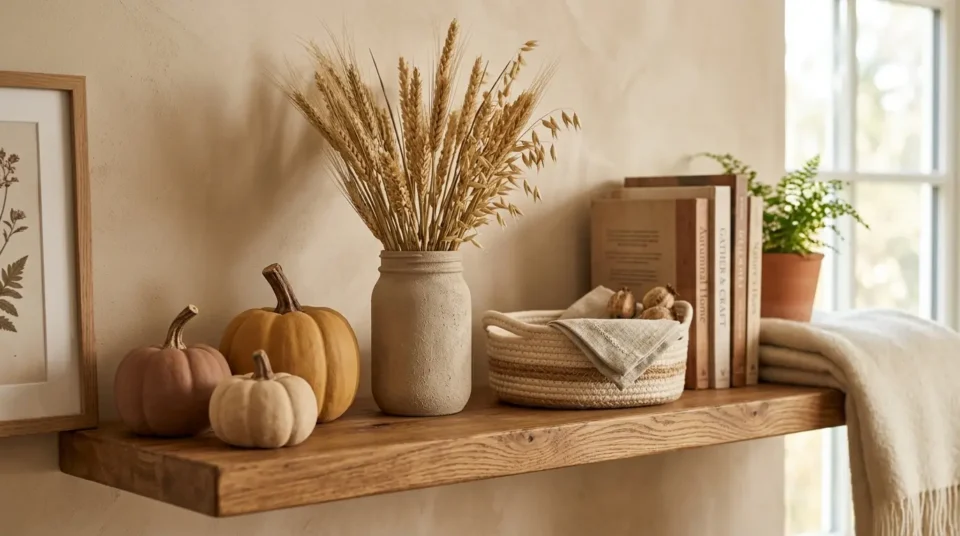
Cozy fall textiles work when you mix three fabric weights, not when you add more pieces. A smooth base like cotton or linen, a mid-weight woven such as herringbone or waffle, and one chunky knit or shearling give a sofa real depth. Buy the neutral base once, then swap two or three accent covers each September.
Looking for more ideas? Explore our full guide to Cozy Fall Aesthetic.
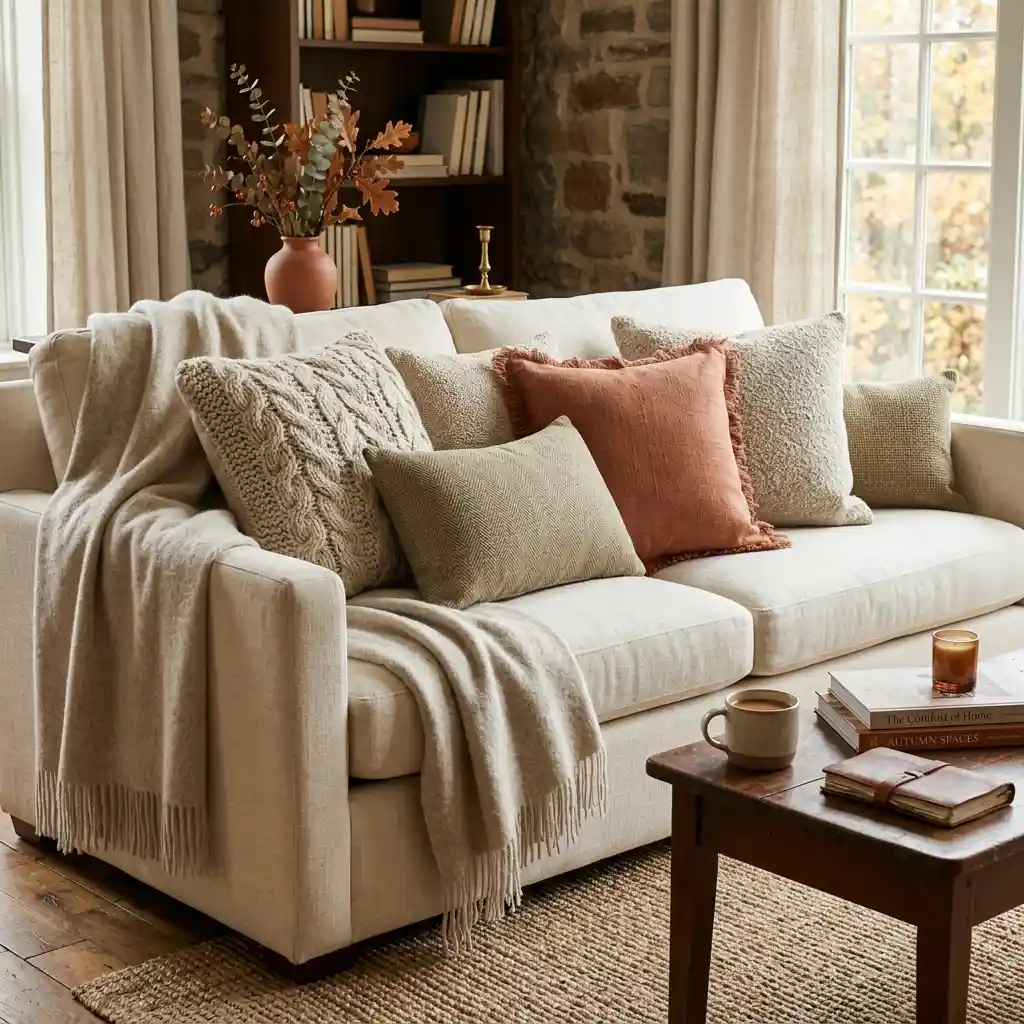
Most seasonal textile hauls fail for the same reason. Five pillows come home from the same store, in the same fabric family, at the same thickness. The eye registers five of one thing instead of a layered surface. Warmth in a room is a texture signal before it is a color signal, and identical fabrics cancel that signal out.
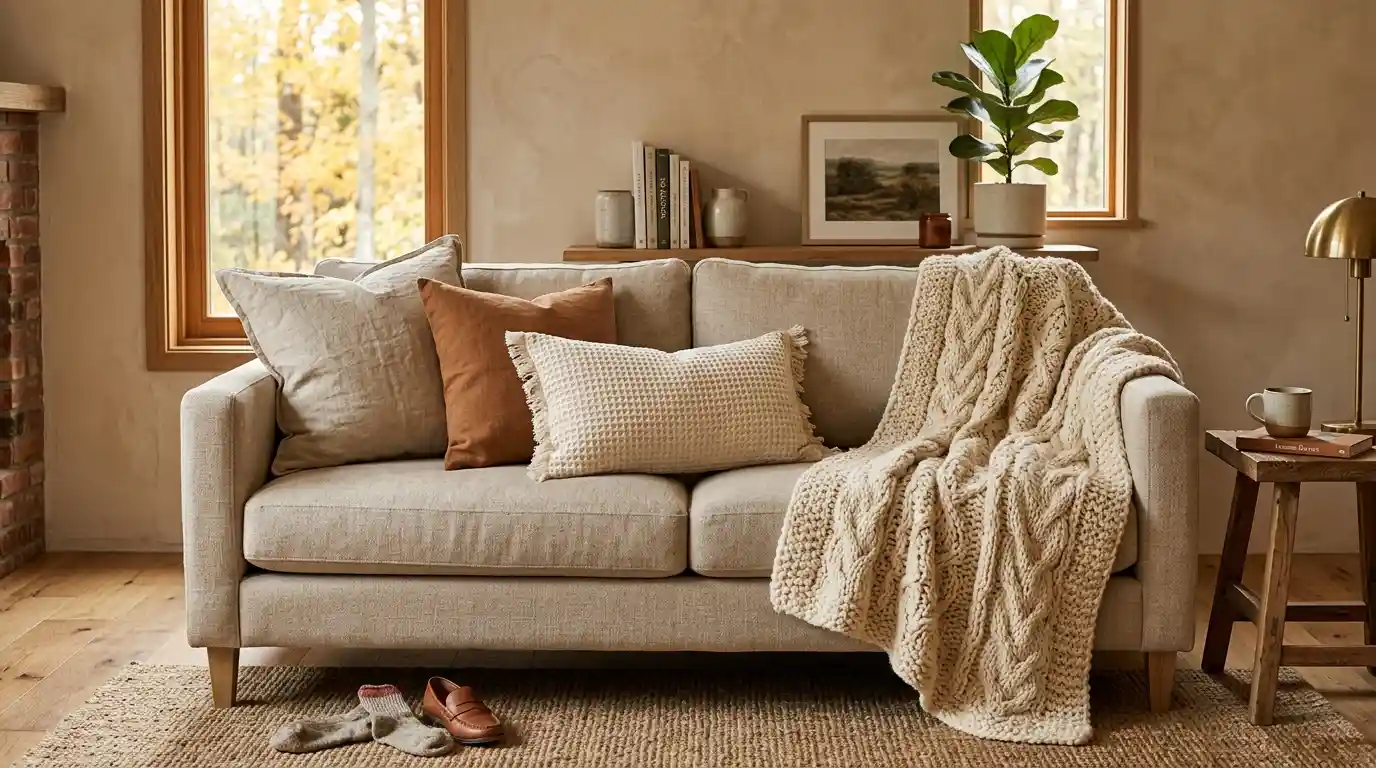
Editorial field note: A cream linen sofa styled with four matching woven pillows in rust tones consistently looks thinner than the same sofa with two linen pillows, one waffle-weave lumbar, and a single wool throw pushed into the corner. The second version has fewer pieces and more contrast, and the contrast is what the eye reads as warm.
This guide covers the layering rule, the fibers worth paying for, the sizing math for pillows and throws, and the split between what you buy once and what you swap. For the wider seasonal picture, our creative fall and autumn decor ideas cover the rest of the house. Lighting and palette sit outside this post — this one is about fabric.
The Three-Weight Rule Behind Every Layered Sofa
A layered surface needs three distinct fabric weights sitting next to each other. Layer one is the flat base — cotton, linen, or a smooth velvet that sits close to the cushion. Layer two is a mid-weight woven with visible structure, such as herringbone, waffle, or boucle. Layer three is the one piece your hand notices: a chunky knit, a shearling, or a thick wool throw.
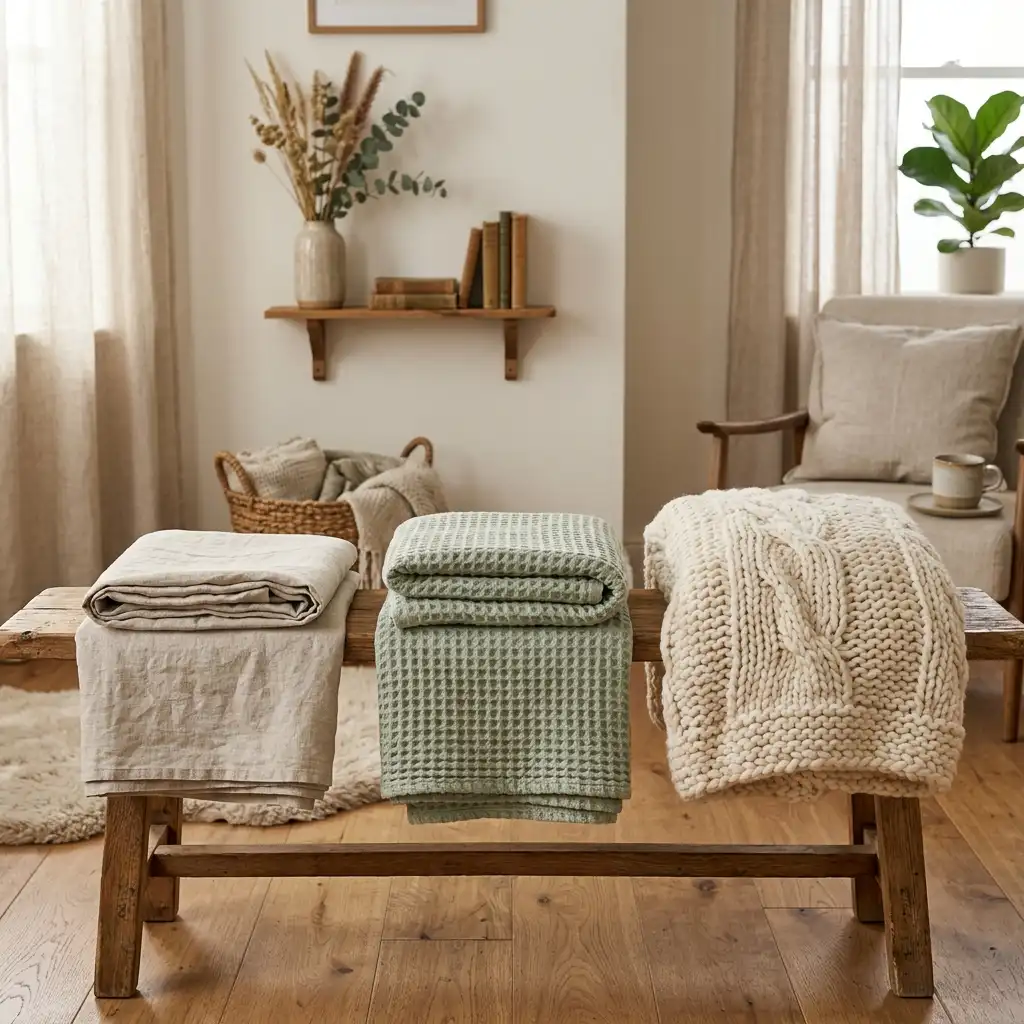
Rule of Thumb: If you could not tell two pieces apart with your eyes closed, one of them is decoration rather than a layer. Swap it for something thicker or thinner.
The rule scales down as easily as it scales up. A reading chair with one linen cushion, one waffle lumbar, and a wool throw over the back covers all three weights in three pieces. A four-seat sectional needs the same three weights, just repeated across the length. The count changes; the contrast rule does not. Darker, moodier versions of the same three-weight stack run through our cozy moody farmhouse living room ideas.
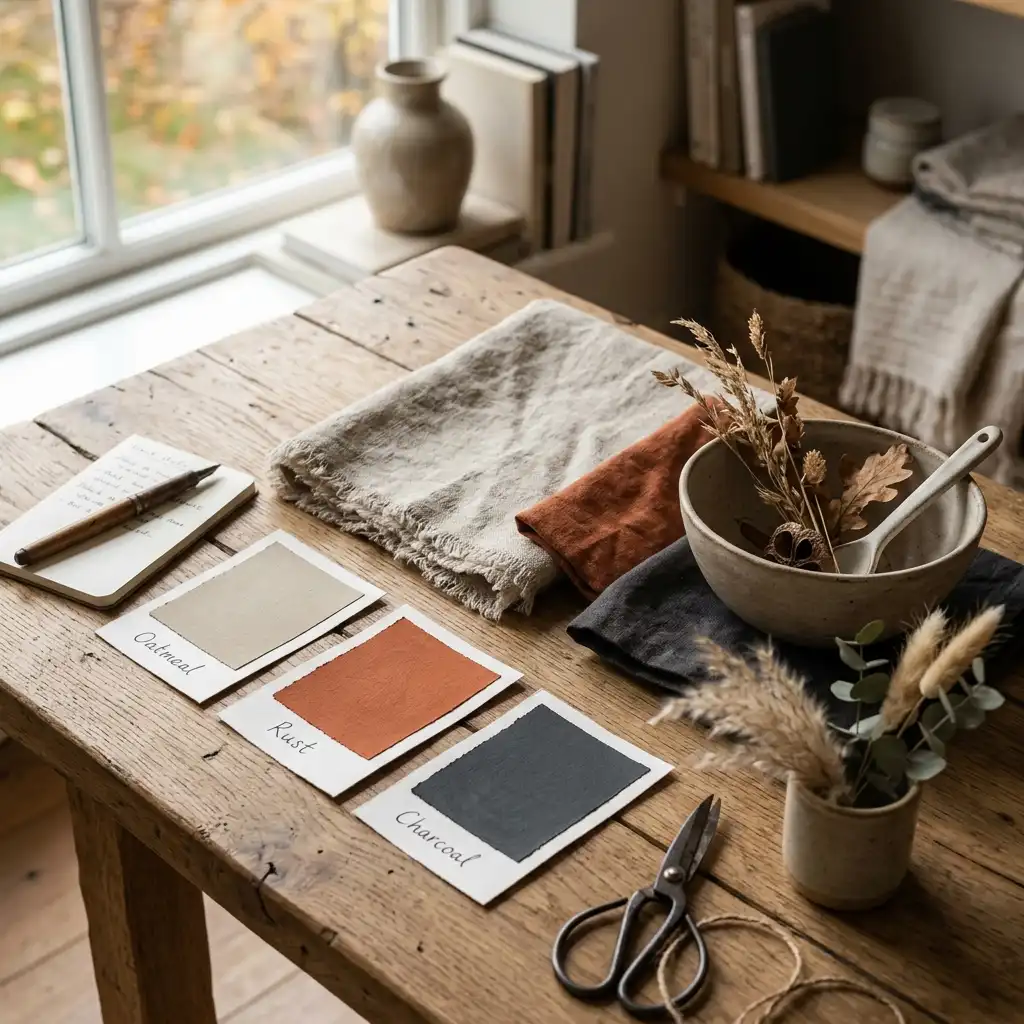
Color does less work here than most seasonal advice suggests. Three tones from one warm family — oatmeal, warm khaki, and a deeper clay or espresso — hold together at any weight. Those same neutral fall decor tones also make the pieces reusable, which matters when you get to the budget section. The same three-tone approach runs through most of the layered rooms in our home decorating ideas.
Is This a Real Shift or Just Seasonal Habit?
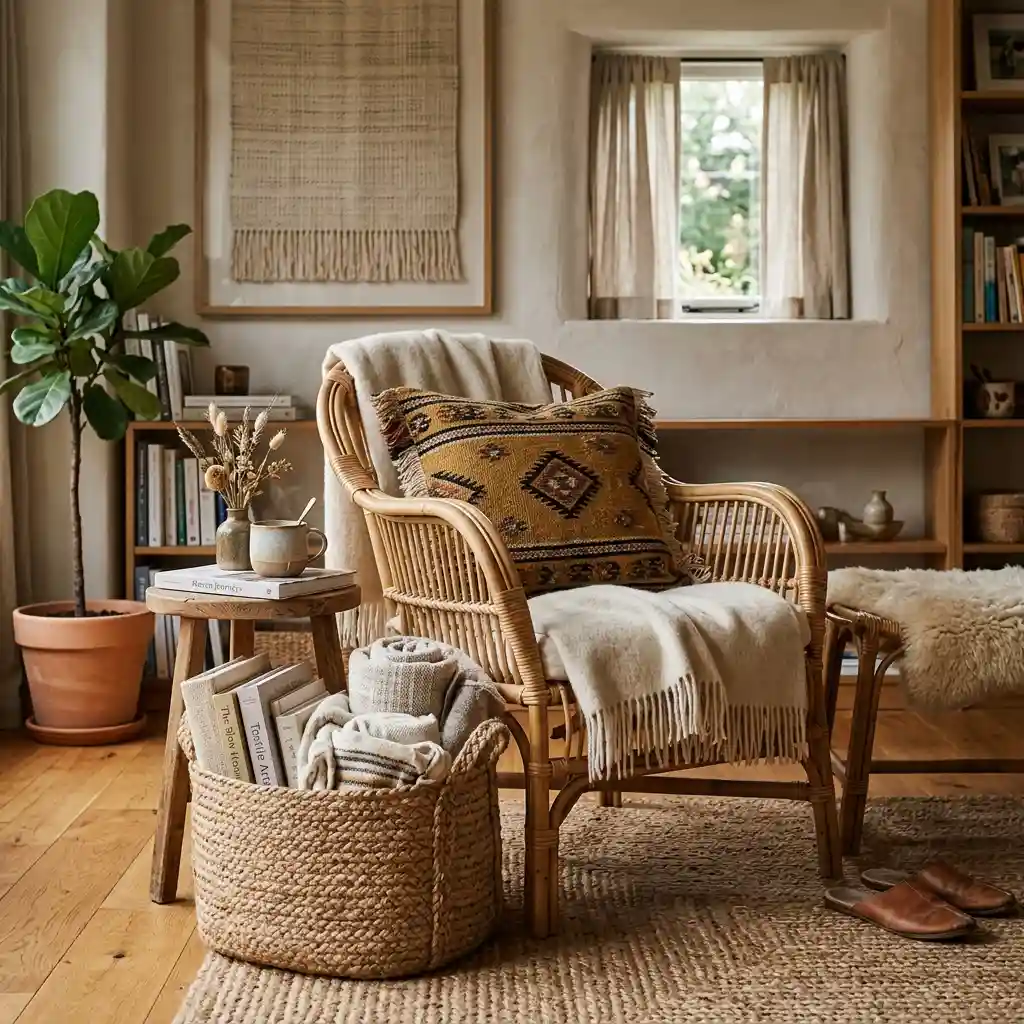
Textile-led decorating is running ahead of furniture-led decorating right now, and the search numbers behind it are public.
Signs This Is Catching On:
Pinterest named Afrohemian Decor one of its 21 trends in the Pinterest Predicts 2026 report, with searches for “afrobohemian home decor” up 220% and “adire fabric” up 130% — both textile terms, not furniture ones.
Searches for “rattan accent chair” rose 50% in the same report, which points to natural-fiber texture moving from accent to main event.
Autumn retail lookbooks now lead with warm khaki, espresso, and oatmeal neutrals instead of the orange-and-plaid pairing that defined fall decor a decade ago.
The practical read: fabric is the cheapest way to change how a room feels, and shoppers have worked that out. A $40 throw changes a sofa more than a $400 side table does. That is why this category keeps growing while seasonal hard decor flattens out, and why our cozy decorating ideas archive keeps coming back to fabric first.
Which Fall Fabrics Are Worth Paying For?
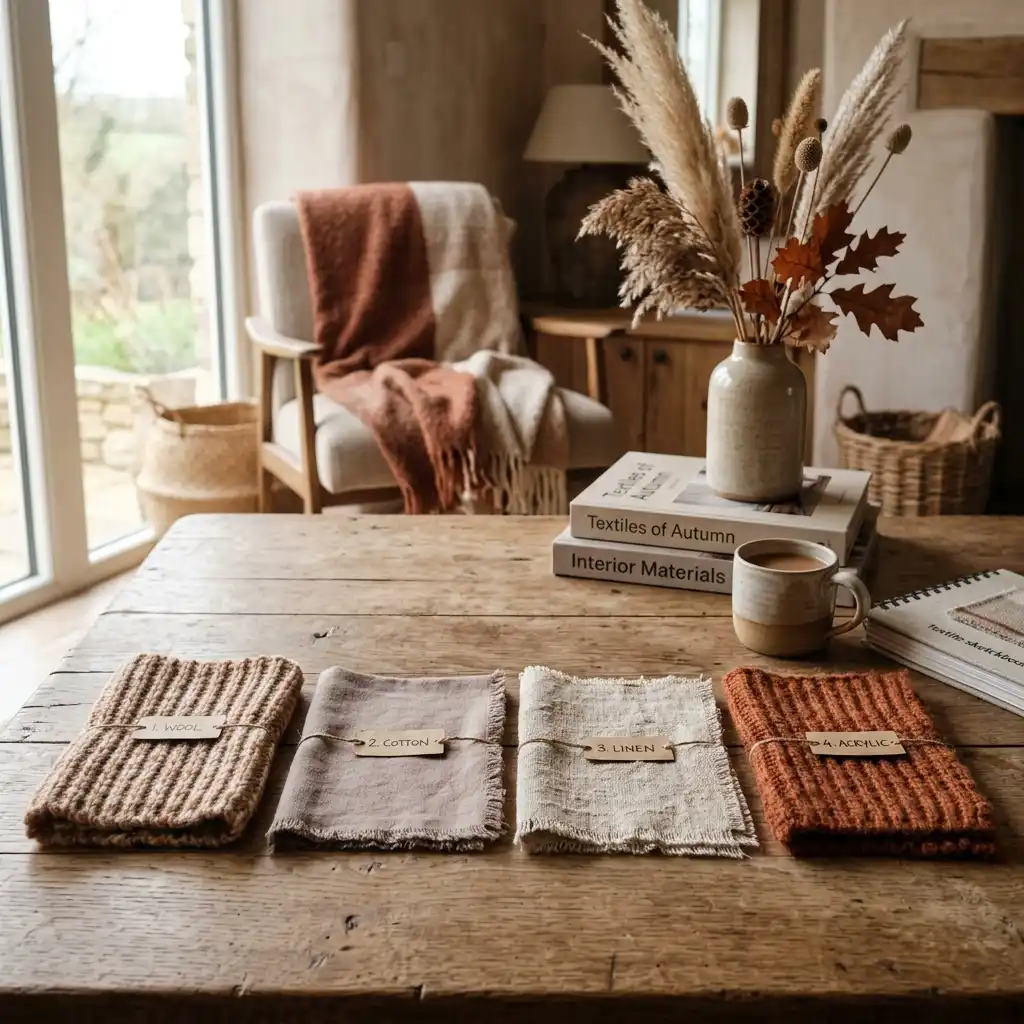
Fiber choice decides how long a piece survives and how warm it actually feels, not just how it photographs. Four fiber groups cover almost every fall throw and pillow cover on the market, and they fail in different ways.
Wool and Wool Blends
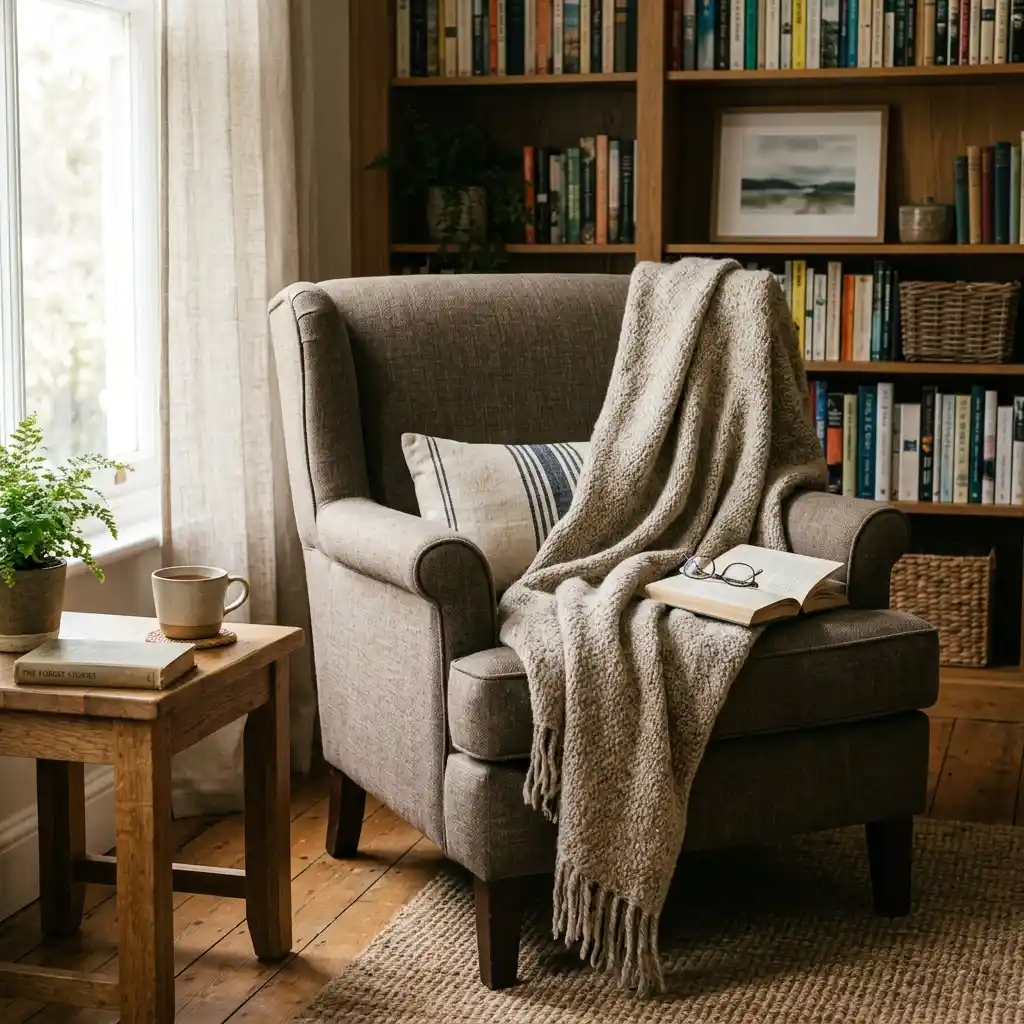
Wool holds warmth better than any common household fiber at the same thickness, and it keeps its shape through years of use. Merino runs softest and costs most. Lambswool and wool blends sit lower on price and still resist the surface fuzz that ruins cheap knits. A wool or wool-blend throw is the single piece worth buying once and keeping for a decade. The same wool-first layering carries a whole room in our cozy winter cabin interior aesthetic ideas.
Cotton and Linen
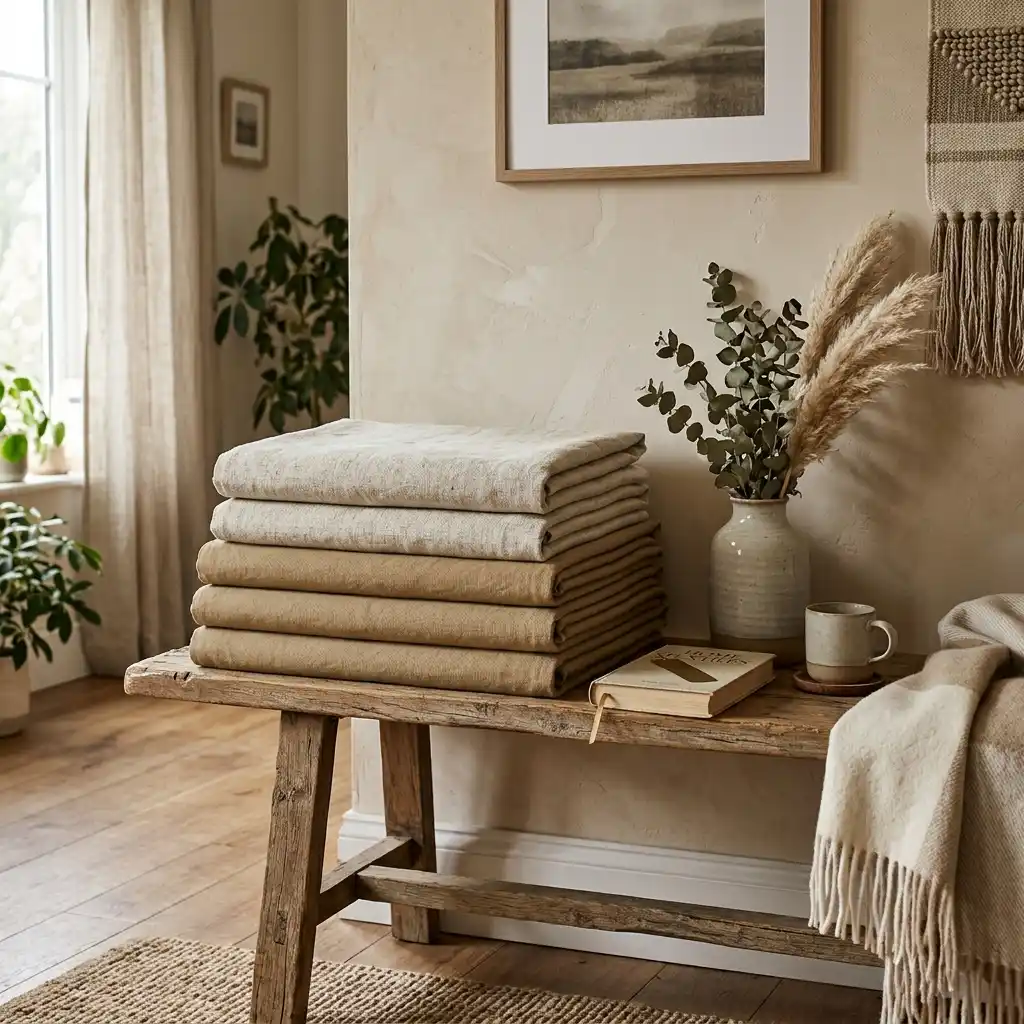
Cotton and linen belong underneath, not on top. Both wash easily, hold a crisp edge, and cost little, which makes them the right choice for the flat base layer and for pillow covers you plan to rotate. Neither adds much warmth on its own. Linen also softens with every wash, so a stiff new cover usually improves by its third cycle rather than needing replacement.
Acrylic and Chenille
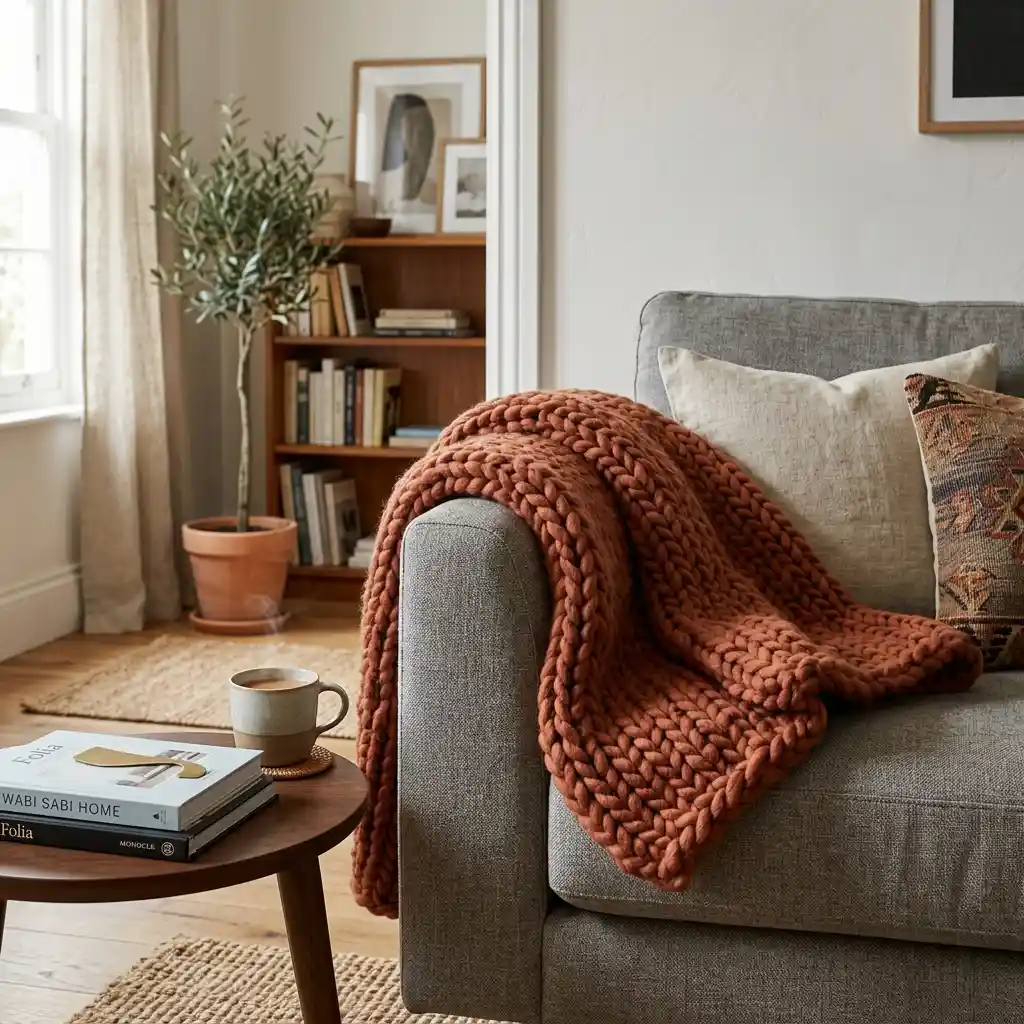
Acrylic and chenille deliver the chunky-knit look at the lowest price, usually $25 to $50 for a full throw. Material Note: Acrylic pills at friction points — the sofa arm, the seat edge — often within one or two seasons of regular use. Treat these as the pieces you replace, not the pieces you keep. They work best somewhere the fabric drapes rather than rubs.
Faux Fur and Sheepskin
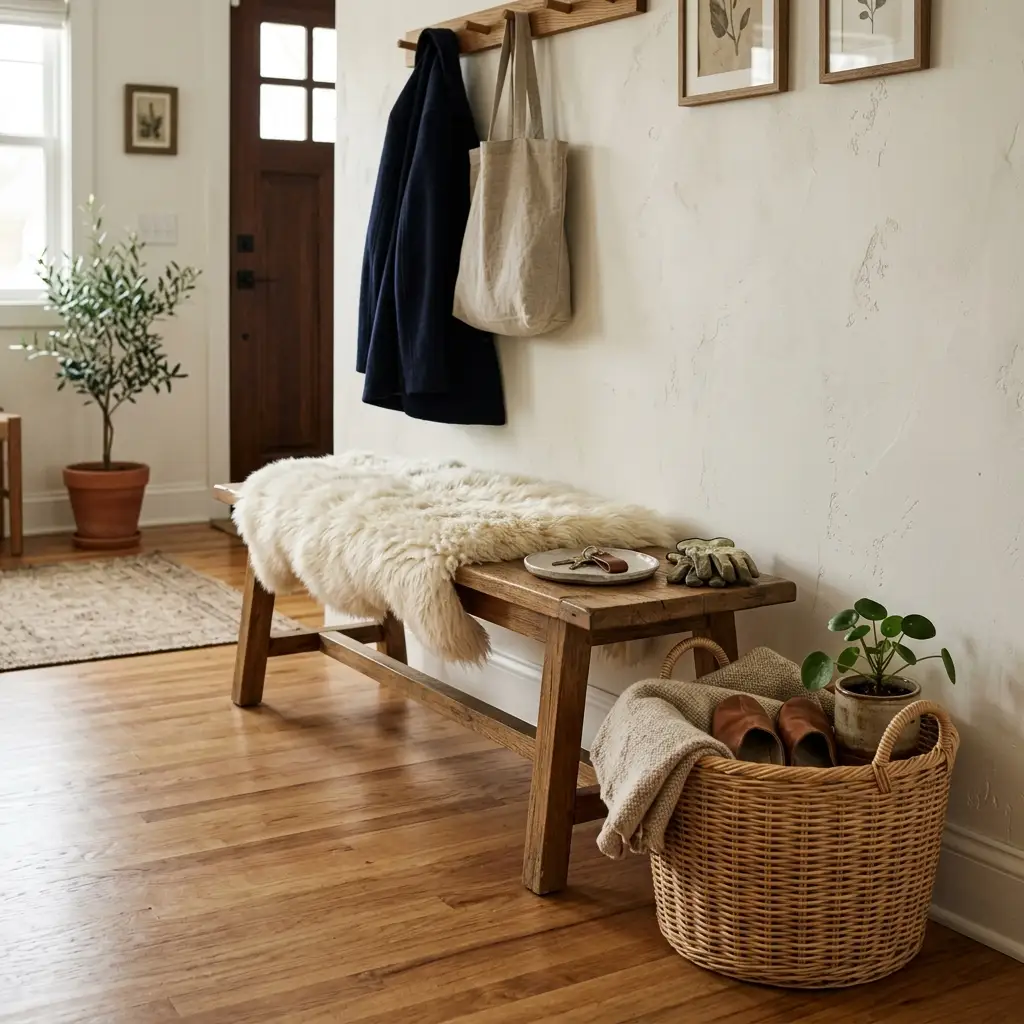
Faux fur and sheepskin give the most visible warmth per dollar spent, which is why they show up in every autumn living room decor shot. Matting is the failure mode. Pile crushes wherever weight sits on it repeatedly, so these belong over a chair back, across an entry bench, or under a coffee table as a small hide — not as the blanket you actually sleep under. The same sheepskin-and-wool pairing carries the winter hygge bedroom ideas look once the season turns.
How Many Throw Pillows Does a Sofa Actually Need?

A standard three-seat sofa around 84 inches wide holds five pillows comfortably; a loveseat holds three. Odd numbers look arranged rather than counted out. Beyond five, pillows stop being decor and start being an obstacle between the reader and the seat.
Size matters more than quantity. Build a ladder rather than a set: a 22-inch pillow at the back corner, a 20-inch in front of it, and an 18-inch square or a 12-by-20 lumbar at the front. Three sizes create the same depth effect that three fabric weights create, and the two rules stack.
Source Note: Interior guides including The Citizenry’s pillow insert guide recommend an insert two inches larger than the cover — a 22-inch insert inside a 20-inch cover — so the pillow fills its corners instead of sagging.
That single rule fixes most flat-looking pillows without buying anything new. A limp 20-inch pillow usually has a 20-inch insert inside it. Down and down-alternative compress more than polyester, so they benefit from the extra two inches most.
What Size Should a Fall Throw Be, and How Should It Sit?
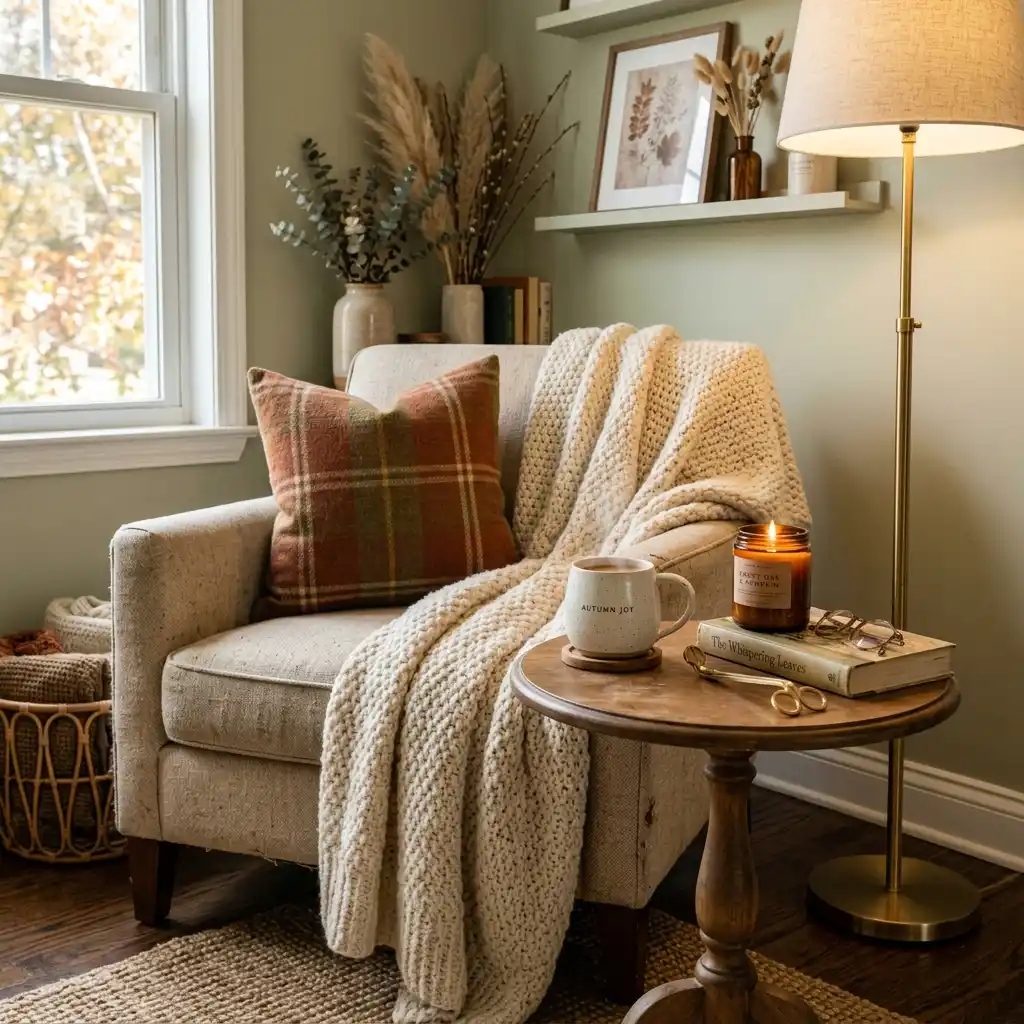
The US retail standard for a throw is 50 by 60 inches, which covers one seated adult and drapes over a standard sofa arm without pooling on the floor. Oversized throws run closer to 60 by 70 inches and suit two people sharing a couch or anyone over about six feet.
Placement does more than size. Drape the throw over one arm on a diagonal and let it break across the seat cushion, so part of it hangs and part of it folds. The neat folded triangle centred on the back cushion looks staged and never gets used, which defeats the point of a blanket. The same drape rule applies at the foot of a bed, which our rustic bedroom ideas layer over a warm, textured base.
DESIGNER TIP: Style one throw per seating zone, not per seat. A sofa and its two flanking chairs need one throw between them, placed on the piece someone actually sits in most.
Which Spots Outside the Living Room Deserve a Layer?
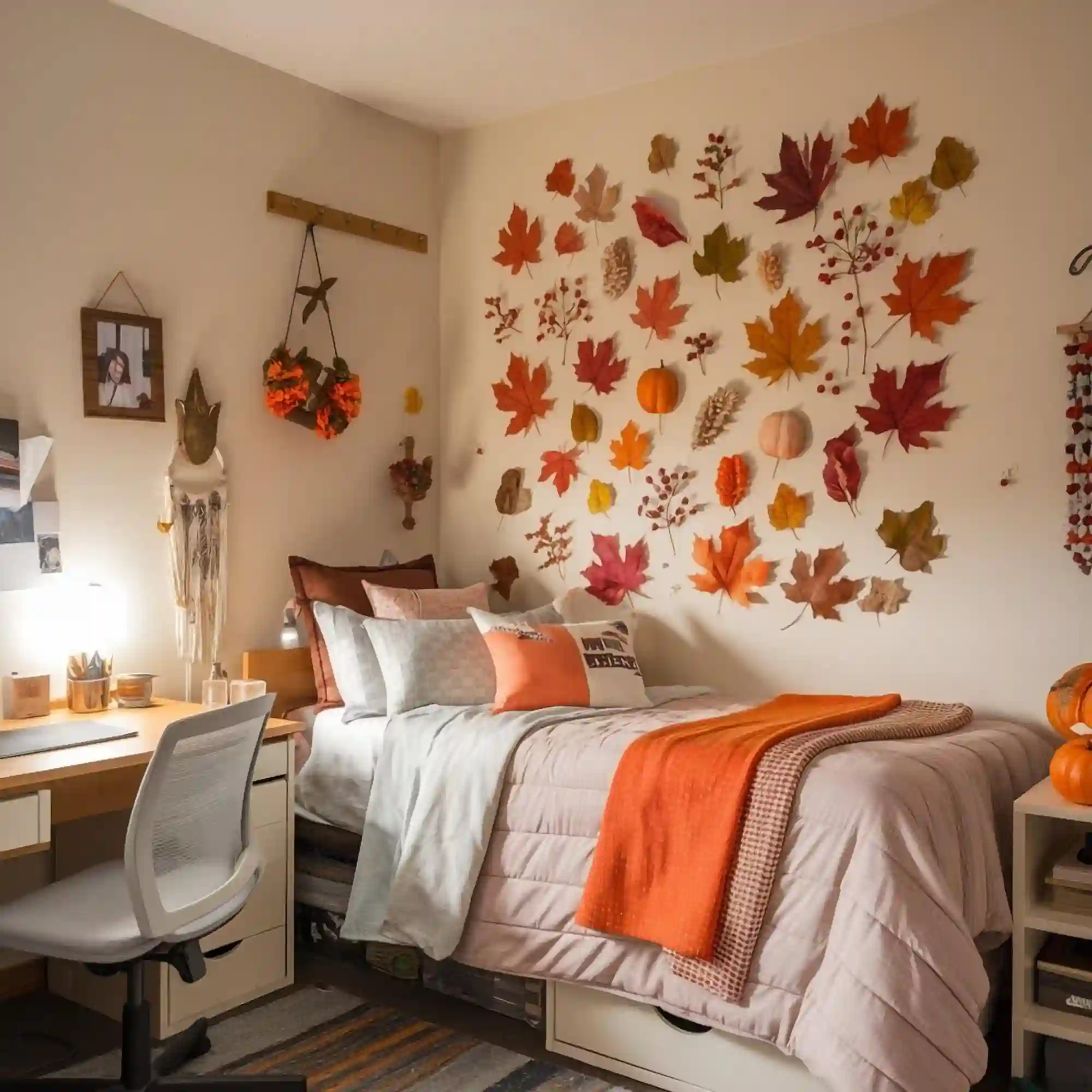
The sofa gets almost all the attention, and it is the least surprising place to add fabric. Four other spots carry a seasonal layer with almost no effort.
The foot of the bed takes a throw folded across the bottom third of the mattress — enough to register as a layer without hanging to the floor. Our fall bedroom refresh ideas go deeper on bedding weight and pillow stacking for that room specifically.
An entry bench holds a sheepskin or a folded wool square, which is the first texture anyone sees walking in. Two dining chairs — not all six — take a linen cushion or a draped runner across the backs. And a floor basket beside a chair stores the throws you are not using while doubling as texture at floor level.
Rooms with natural fiber already in them need less added fabric. A jute rug and rattan seating carry texture at the floor and furniture layer, so one wool throw finishes the room. Flat painted walls and a leather sofa need all three layers to catch up. The layering techniques in our guide to making a bedroom feel cozy apply almost unchanged to a living room.
What Should You Buy Once and What Should You Swap?
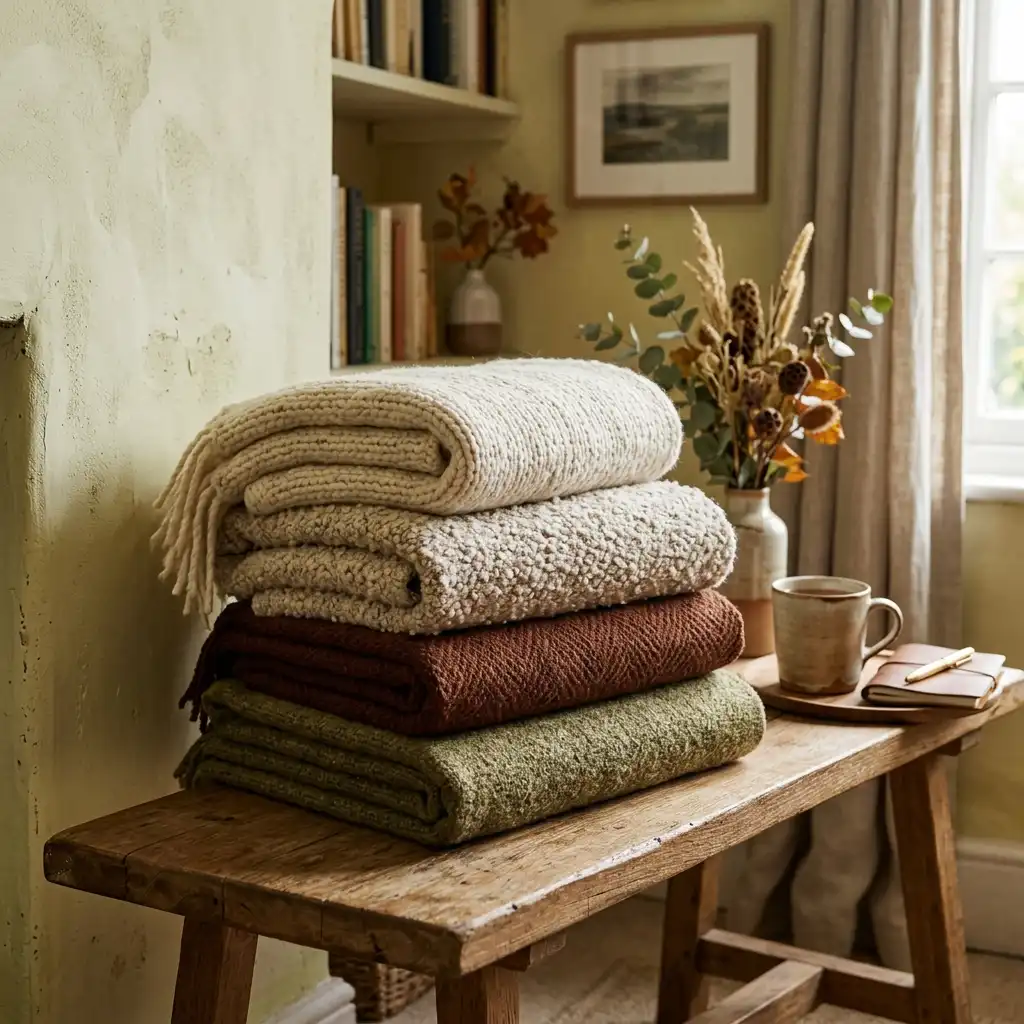
Split your spending on cozy fall textiles into two buckets and the yearly cost drops sharply. The permanent bucket holds pillow inserts, one wool or wool-blend throw in a neutral, and any layered natural-fiber rug. None of those are seasonal, and none of them should be rebought.
The seasonal bucket holds two or three pillow covers in the year’s warm tone. Covers cost a fraction of finished pillows because the insert is the expensive part, and covers fold flat into a single drawer. Swapping covers instead of pillows also removes the storage problem that makes people throw seasonal decor away.
Store the wool properly or the buy-once plan collapses. Source Note: The National Pesticide Information Center notes that clothes moths damage wool, fur, hides, hair, and feathers, and advises washing or dry-cleaning items before long-term storage and keeping them in airtight bags or containers. Body oils on a worn throw are what attracts them.
That same neutral base carries straight into December. Our cozy winter decor ideas show the swap — the wool throw stays, the clay and ochre covers come off, and evergreen and deeper tones take their place. Fall runs warm and harvest-toned from late August through November; winter runs cooler and greener from December.
The Fall Textile Layering Checklist
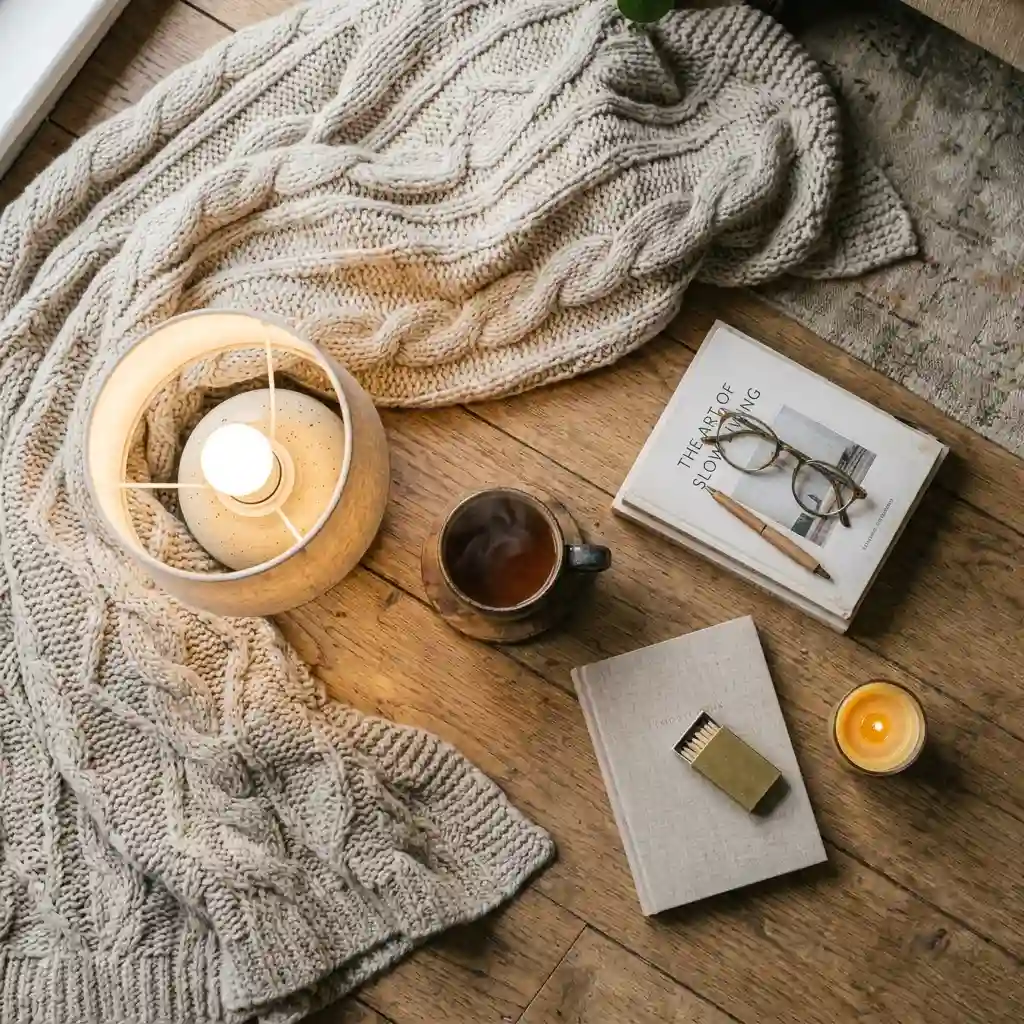
- Count the fabric weights already in the room; add only the ones missing from the flat, mid, and chunky tiers.
- Measure your pillow covers before buying inserts, then order inserts two inches larger in both directions.
- Pick three tones from one warm family — oatmeal, khaki, clay — and skip anything outside it.
- Choose 50 by 60 inches for a single-seat throw and 60 by 70 inches if two people share the sofa.
- Check where each piece takes friction; put acrylic where it drapes and wool where it gets handled.
- Count your seating zones and buy one throw per zone rather than one per seat.
KEY TAKEAWAY: Contrast in weight does the work that quantity cannot, so three well-chosen pieces beat six matching ones every time.
The Fabric Choices That Undo the Whole Layer
Five pillows in one fabric is the costliest misstep. Identical weaves give the eye nothing to separate, so the sofa gets fuller without getting warmer.
A travel-size throw disappears on a full-size sofa. Pieces around 40 by 50 inches barely cover a seated adult and look undersized over a standard arm.
Folding the throw into a neat triangle on the back cushion makes it decorative and unused. Fabric looks warm when it looks handled.
Wool packed into a plastic tote in an unheated garage rarely survives the off-season. Damp air causes mildew, and unwashed items attract clothes moths.
Buying whole decorative pillows every September wastes the money on the part that never changes. The insert is the expensive component and it has no season.
Chunky knits placed where bodies rub — the seat edge, the arm you lean on — pill within a season or two. That same knit lasts years over a chair back.
Where the Money Actually Goes
A full seasonal textile layer runs anywhere from about $50 to well past $600, depending on how much you already own and how much wool you buy. The pieces that change a room most are not the expensive ones.
| Project | Estimated Cost | Impact Level |
|---|---|---|
| Two woven pillow covers | $20-$45 | High |
| Pair of down-alternative inserts | $25-$50 | Medium |
| Mid-weight woven or waffle throw | $30-$70 | High |
| Wool or wool-blend throw | $80-$200 | Medium |
| Layered jute or wool area rug | $150-$400 | Very High |
Best First Upgrade: Two pillow covers in a mid-weight weave plus correctly sized inserts, for under $80 total.
Skip for Now: A second chunky knit throw. One is a layer; two in the same room is clutter that nobody uses.
The Two Purchases That Matter
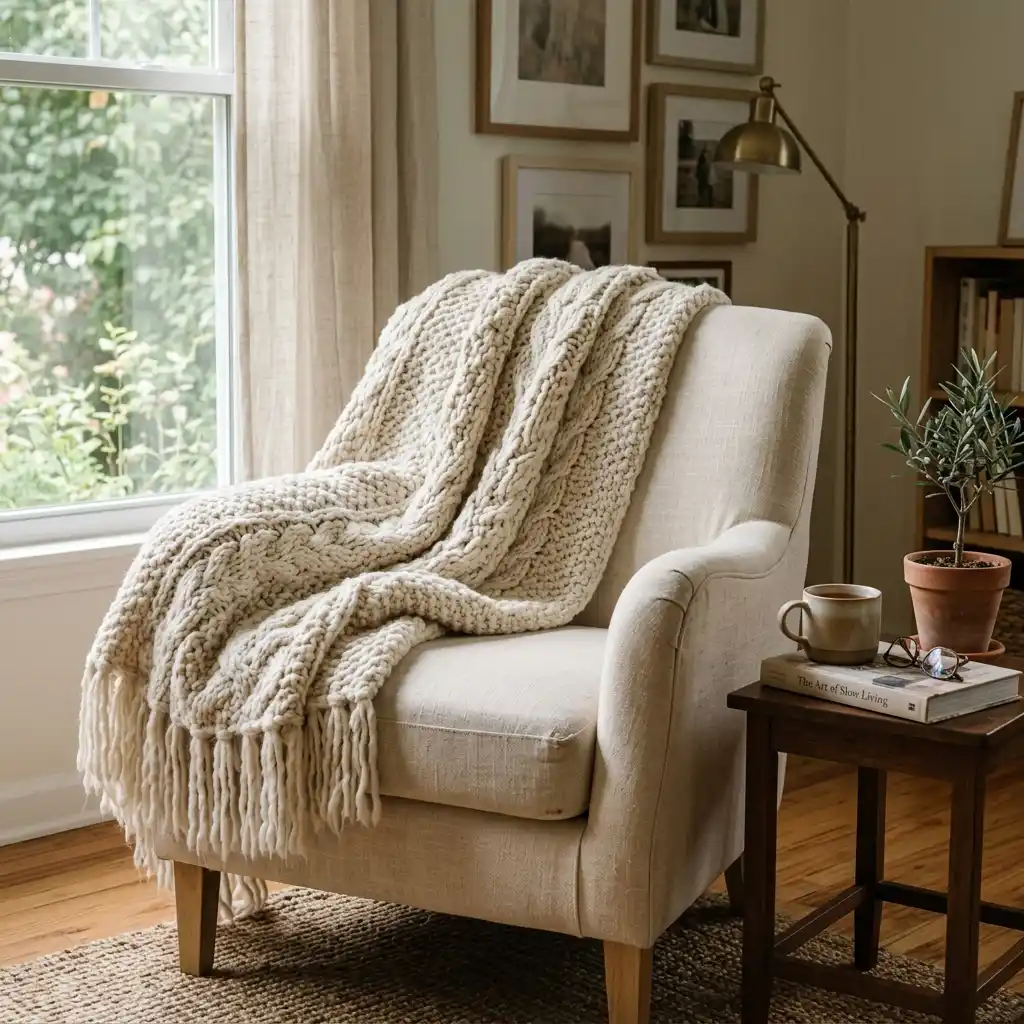
Buy the wool throw and the inserts once, then treat covers as the annual purchase. Wool holds its shape and warmth long enough to justify the price, inserts never go out of season, and covers are the only piece that actually needs to look like autumn. For a deeper version of the same layered look in a bedroom, our beige and cream bedroom ideas show how far three tones can stretch.
Related Cozy Layering Ideas:
Frequently Asked Questions
Conclusion
A year from now you will still be using the wool throw and the pillow inserts, and you will have swapped the covers once for the price of a lunch. That is the whole argument for treating cozy fall textiles as two purchases instead of one annual haul. The rooms that hold up season after season are almost always the ones where the expensive piece stays neutral and the cheap piece carries the color. For more ways to layer a room through the year, visit our home decor inspiration.