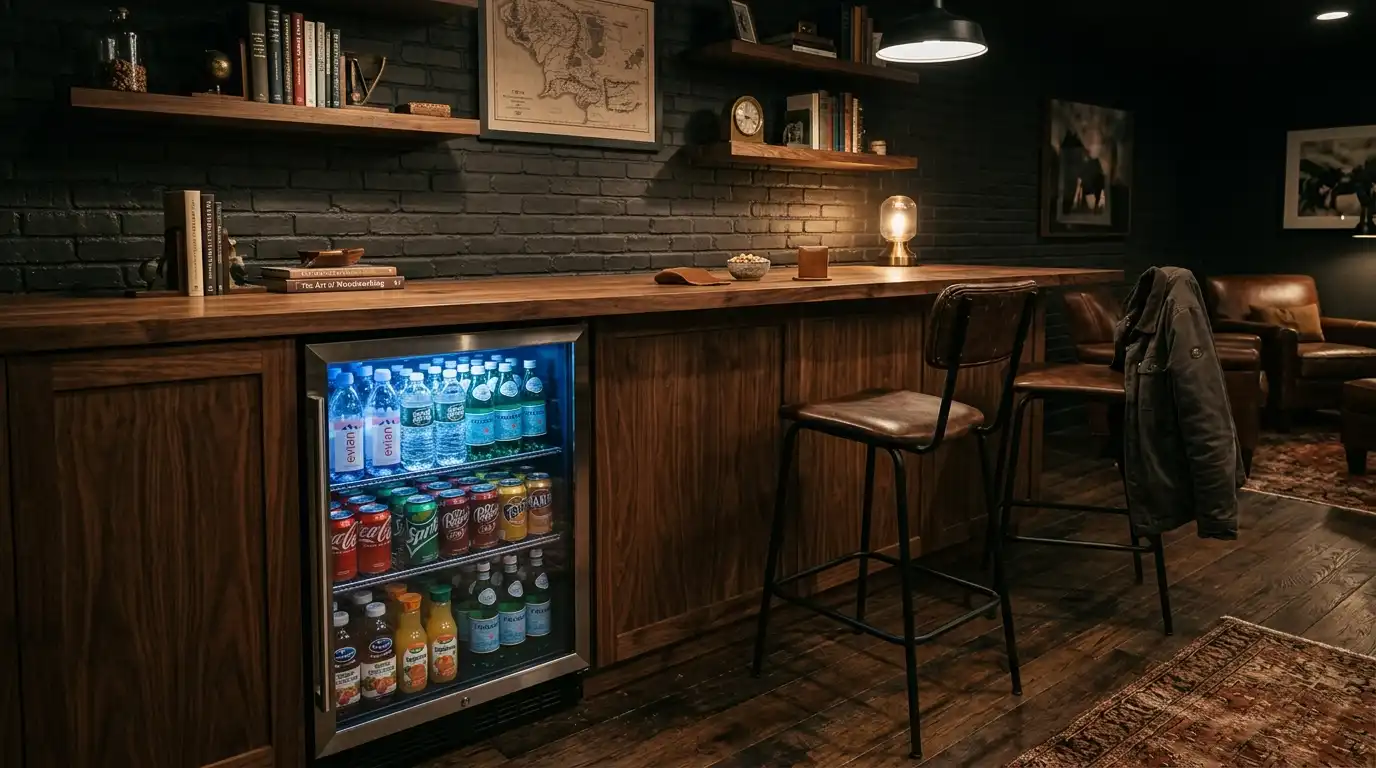
What Should a Man Cave Fridge Actually Do?
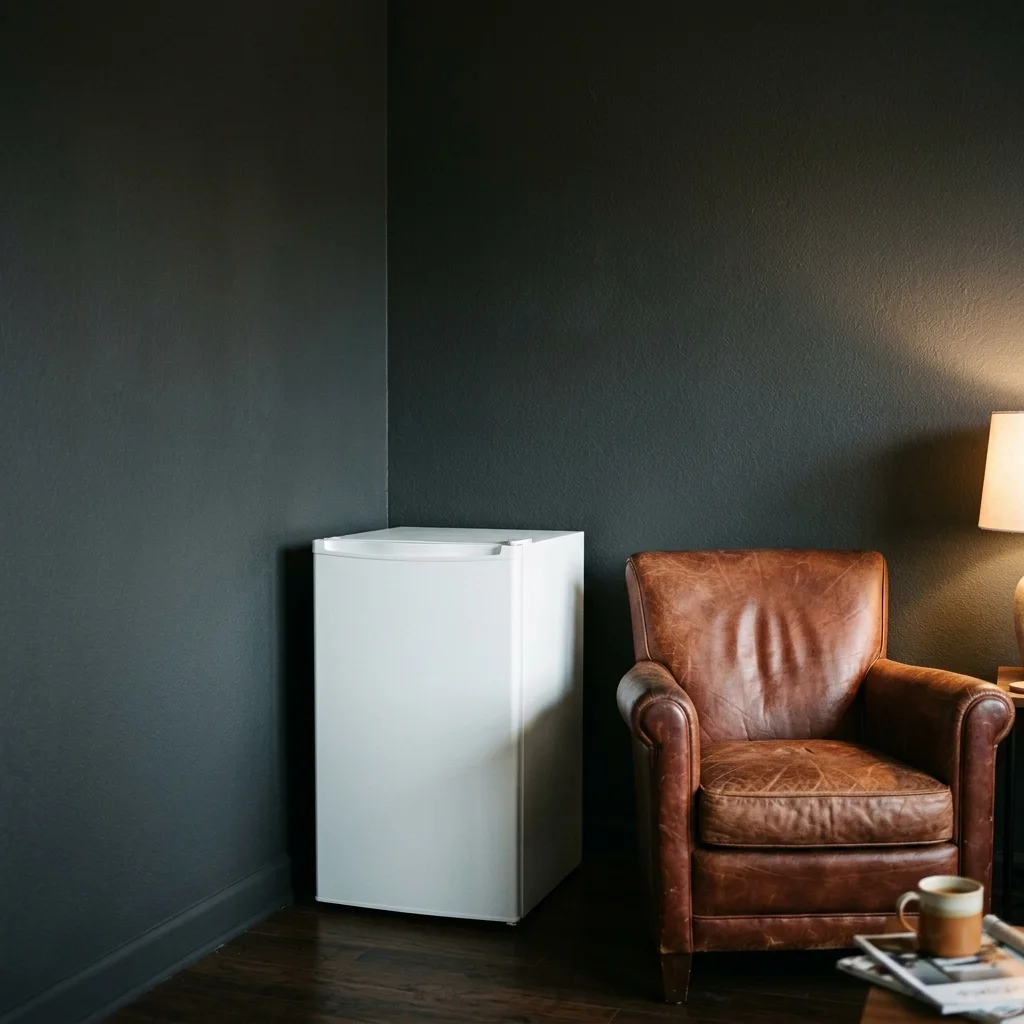
“Add a mini fridge” sits near the top of every man cave checklist, right below the TV. It is the line on that list that has aged worst. A glossy white box at knee height, half-empty, covered in magnets, facing the couch — nobody ever planned that.
A man cave fridge has three jobs: hold one full night of drinks, run quiet enough to forget, and survive the room’s real temperature. For most man caves a beverage center beats a mini fridge, because it is built for cans and bottles and it slots into a cabinet gap instead of standing in the open. A mini fridge still wins on price and on food storage. Check the temperature rating first, the opening second, the finish last.
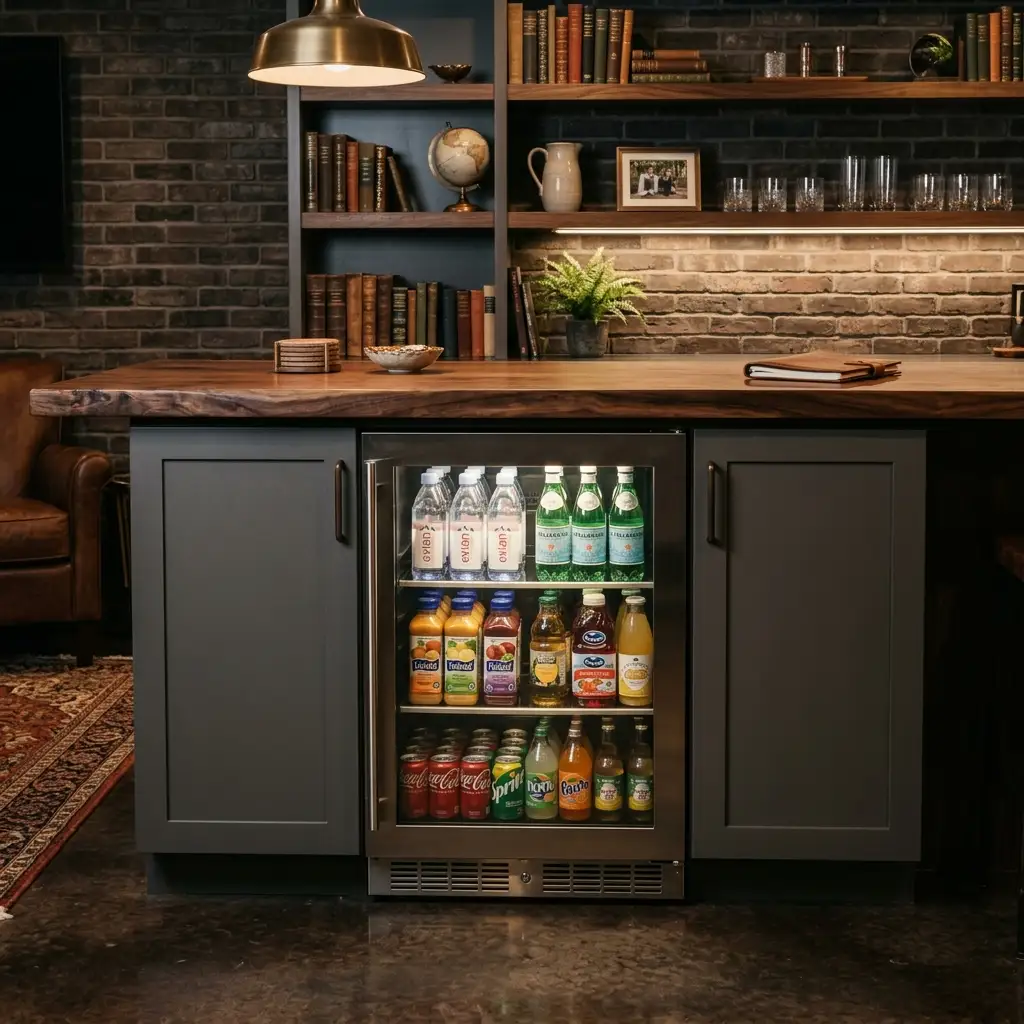
Editorial field note: Two man caves can share the same chairs, the same screen, and the same paint, and only one of them photographs as finished. The tell is usually a white appliance standing alone at knee height. Slide that same fridge into a 24-inch cabinet gap under the bar counter, swap the solid door for a glass front, and nothing else in the room has to change.
This is an opinion piece with a tape measure attached. Below is why the loose corner fridge is fading, the six setups replacing it, the four specs that decide the purchase, and honest prices for each tier. If you are styling the whole room rather than shopping for one piece, the man cave decor guide covers furniture, lighting, and accents together. A fridge lands better once the room has a plan. Our home decor inspiration is a good starting point if you are still working that out. Bookmark this guide for quick reference.
What Happened to the Corner Mini Fridge?
The dorm fridge earned its place honestly. It was cheap, it fit anywhere, and for years the man cave was a leftover basement furnished with hand-me-downs. A white box in the corner was not a style problem in a room that had no style yet.
The rooms changed. Man caves now get painted, rugged, lit, and photographed. A glossy white appliance sitting in the open, at knee height, next to a dark leather chair is the loudest wrong note in a finished space. It also holds about two six-packs and freezes whatever touches the back wall.
The second shift is on the spec sheet. Undercounter beverage centers used to be a luxury-kitchen item. They now ship in 15-inch and 24-inch widths from mainstream appliance brands, in stainless, matte black, and panel-ready fronts. That single change moved the fridge out of the corner and under the counter, where it belongs.
Signs This Is Catching On:
Beverage centers are now sold as their own product category, separate from compact refrigerators, at a colder and steadier temperature range built for cans and bottles.
“Garage ready” appears as a printed feature on spec sheets instead of a sales-floor promise, with a named ambient temperature range behind it.
Panel-ready fronts let the fridge take the same wood or matte panel as the cabinet run, so the appliance disappears into the bar.
Undercounter kegerators are built to built-in depth now, not only as freestanding boxes on casters.
Glass-door models ship with interior lighting as standard, which turns a stocked shelf into the display it always wanted to be.
None of this makes a compact fridge wrong. It makes an unplanned one wrong. A room still needs cold drinks within reach — the question is whether the box announces itself or joins the furniture. The 25 man cave ideas roundup shows what a complete setup includes. If the bar area itself is still a blank wall, the man cave theme guide covers how the whole drinks corner comes together before you shop for the appliance.
Which Man Cave Fridge Setups Actually Work?
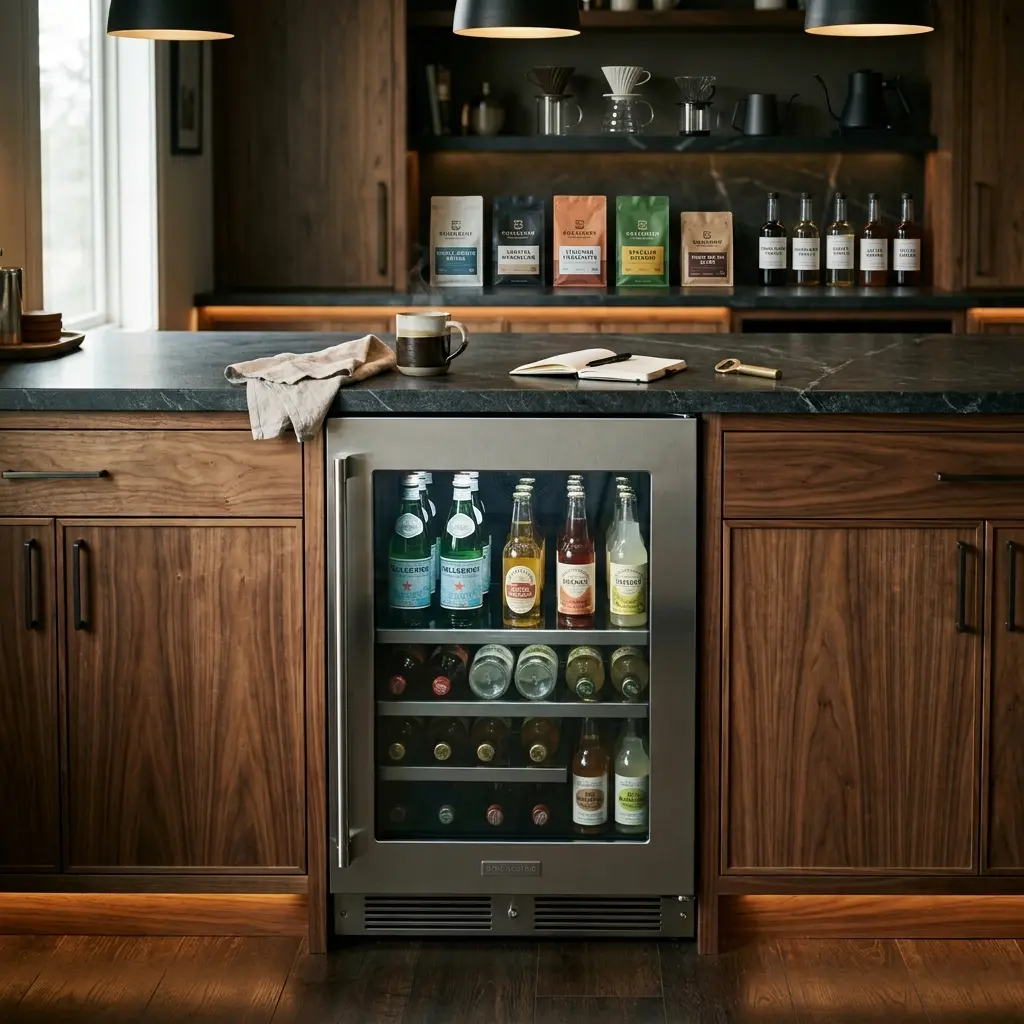
Six setups cover nearly every man cave and nearly every budget. Each one solves a different problem: hiding the fridge, showing it off, pouring draft, or fitting a room with no spare floor. Pick by the room you have, not by the photo you liked.
Match the front to a finish already in the room. Stainless goes with almost anything and excites nobody. Matte black disappears into a dark bar run. A wood panel makes the appliance vanish completely.
The Built-In Beverage Center Under the Bar
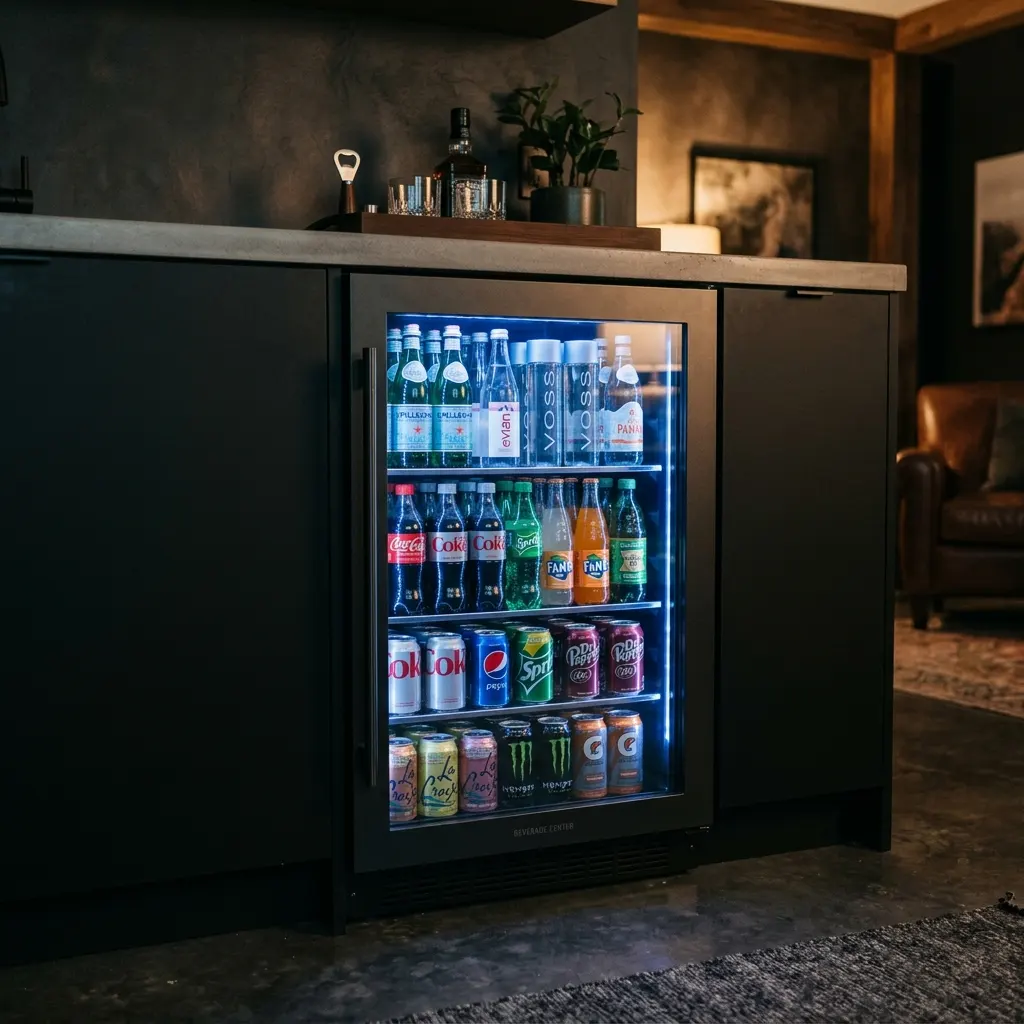
A built-in beverage center is the upgrade most man caves actually need. It slides into a base-cabinet gap and sits flush with the doors on either side, so the bar looks like one run of cabinetry instead of counter, gap, appliance.
Undercounter units come in two widths: 15 inches and 24 inches. Frame the opening 34 to 35 inches tall so the unit slides under a standard 36-inch counter, and allow 23 to 27 inches of depth. A 24-inch unit holds a serious night’s worth of cans and bottles. A 15-inch unit fits where a base cabinet already sits.
Designer Rule of Thumb: Leave the fridge front on the same plane as the cabinet doors, not recessed and not proud. A quarter-inch of difference is what separates “built in” from “shoved in.”
The Glass-Door Fridge as a Lit Display
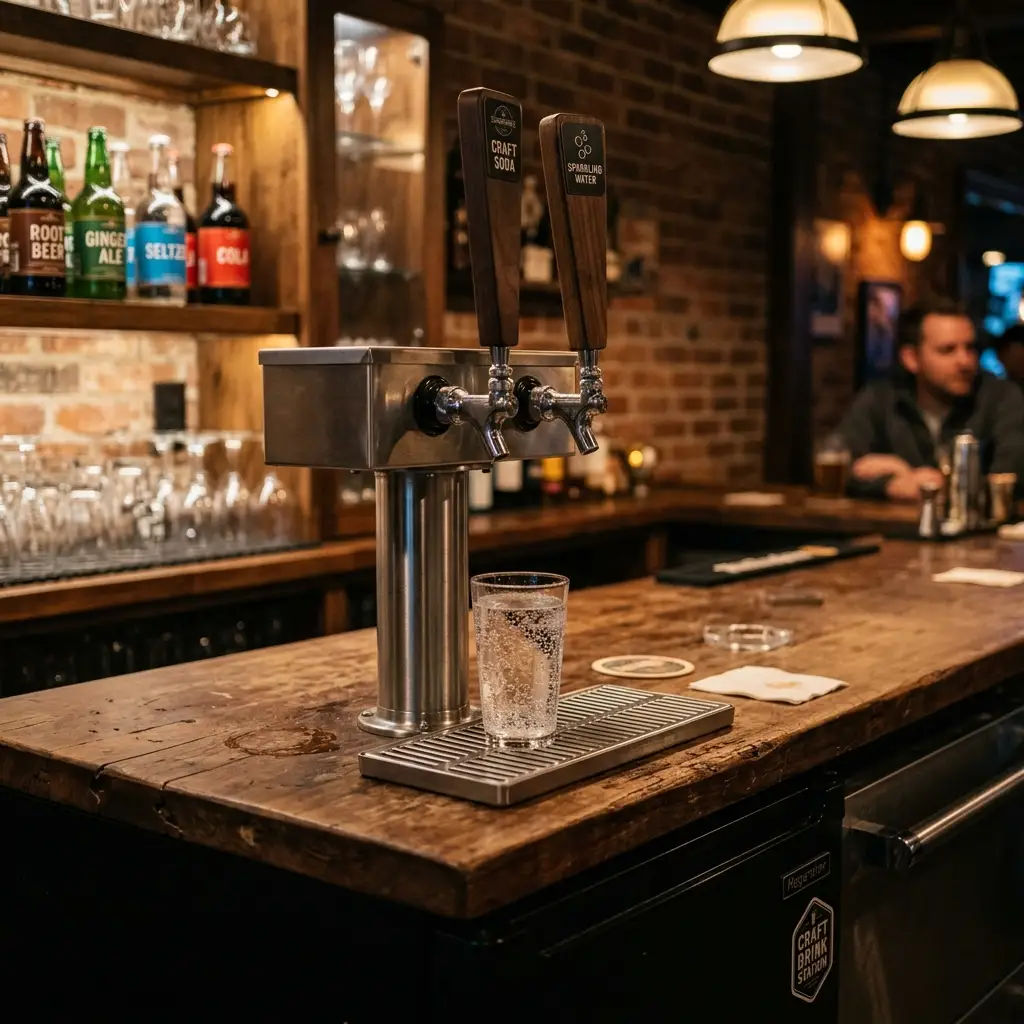
A glass door changes what the appliance is for. A solid white door hides the contents and shows you a blank rectangle. A glass door with interior lighting shows rows of amber bottles and dark cans, which is a better piece of decor than most signs on the wall.
Stock it like a shelf, because that is what it now is. Bottles at the back, cans in rows at the front, labels facing out, nothing lying on its side. A glass-door beverage center only looks good when it is at least two-thirds full.
Glass shows fingerprints and dust far more than solid stainless does. Plan on wiping the front the same week you vacuum the rug, or the display works against you.
The Undercounter Kegerator
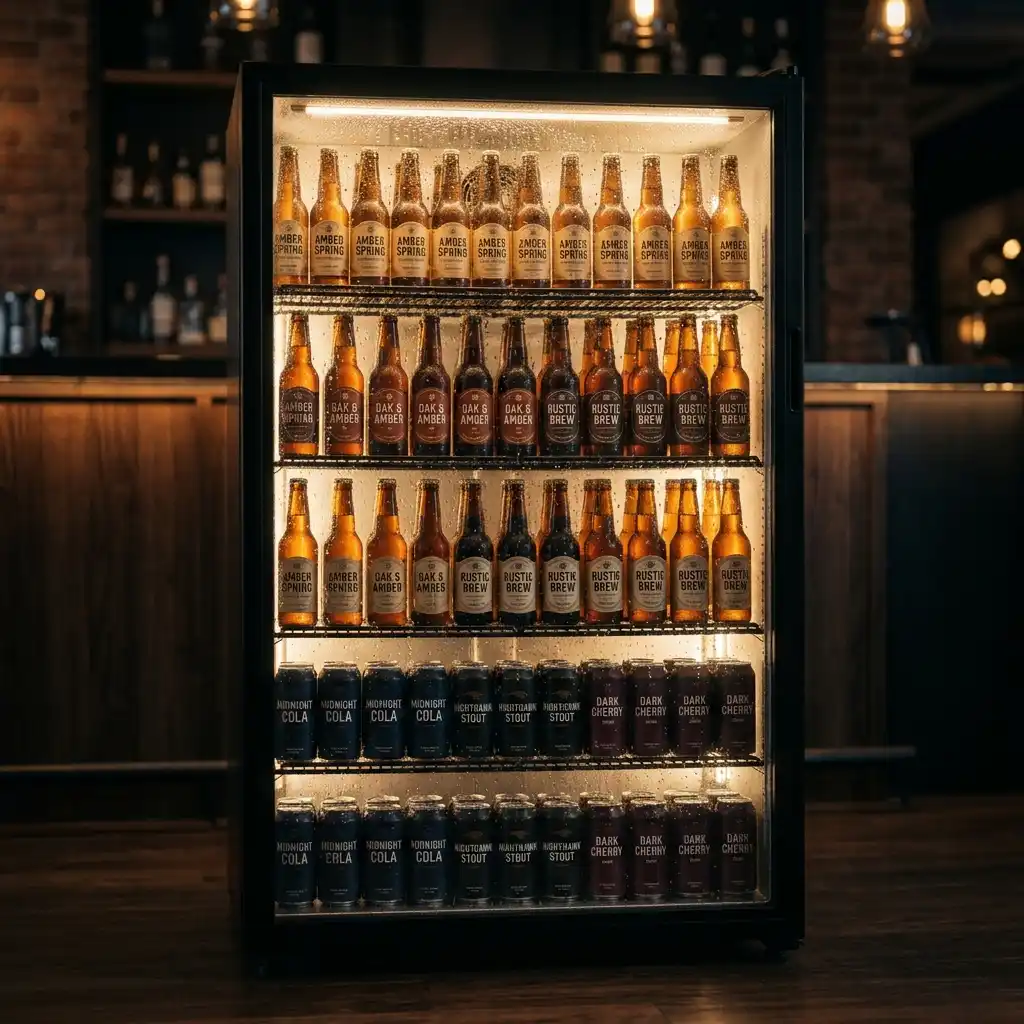
A kegerator is the one appliance in this list that earns its footprint through use, not looks. It replaces bottles with draft, and the tap tower does the same job on a bar top that a faucet does on a sink.
Size it by keg, not by cubic feet. Source Note: KegWorks, a draft equipment supplier, lists a half barrel keg at 15.5 gallons and 23⅜ by 16⅛ inches — roughly 165 twelve-ounce pours — and a sixth barrel at 5.16 gallons and 23⅜ by 9¼ inches, or about 55 pours. Two sixth barrels fit the cabinet space of one half barrel in many units, which is how you get two beers on tap instead of one.
Be honest about volume before you buy. A half barrel is 165 servings. If the room hosts four people twice a month, a sixth barrel or a bottle fridge finishes fresher.
The Panel-Ready Fridge That Disappears
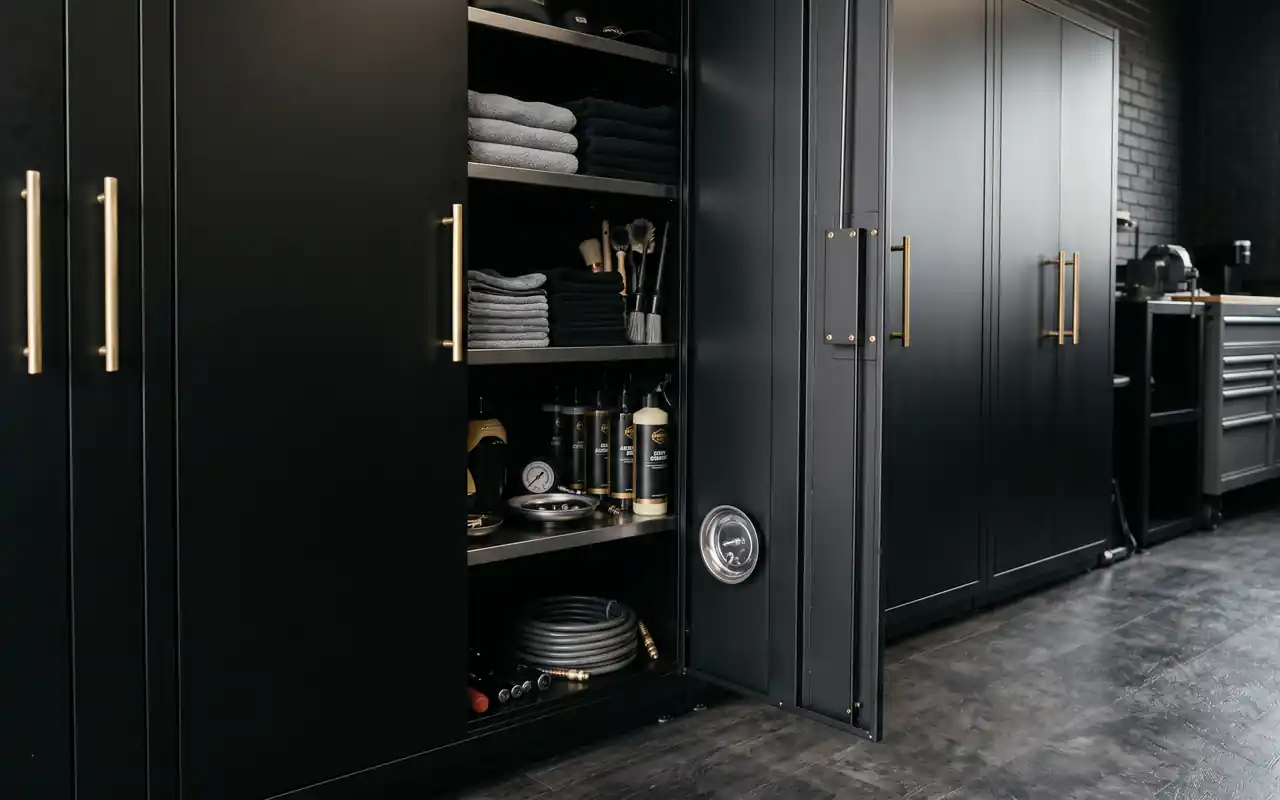
A panel-ready fridge takes a custom door panel on the front, so it matches the cabinets exactly. Walk into the room and you see a run of walnut or matte black doors. One of them happens to be cold.
This is the right call when the bar wall is short and the cabinetry is the feature. It is the wrong call when the fridge is the only nice thing on that wall, because you just spent the premium to hide it. Panel-ready units cost more than the stainless version of the same model, and the panel is a separate line item from the cabinet maker.
The Retro Fridge as the One Loud Piece
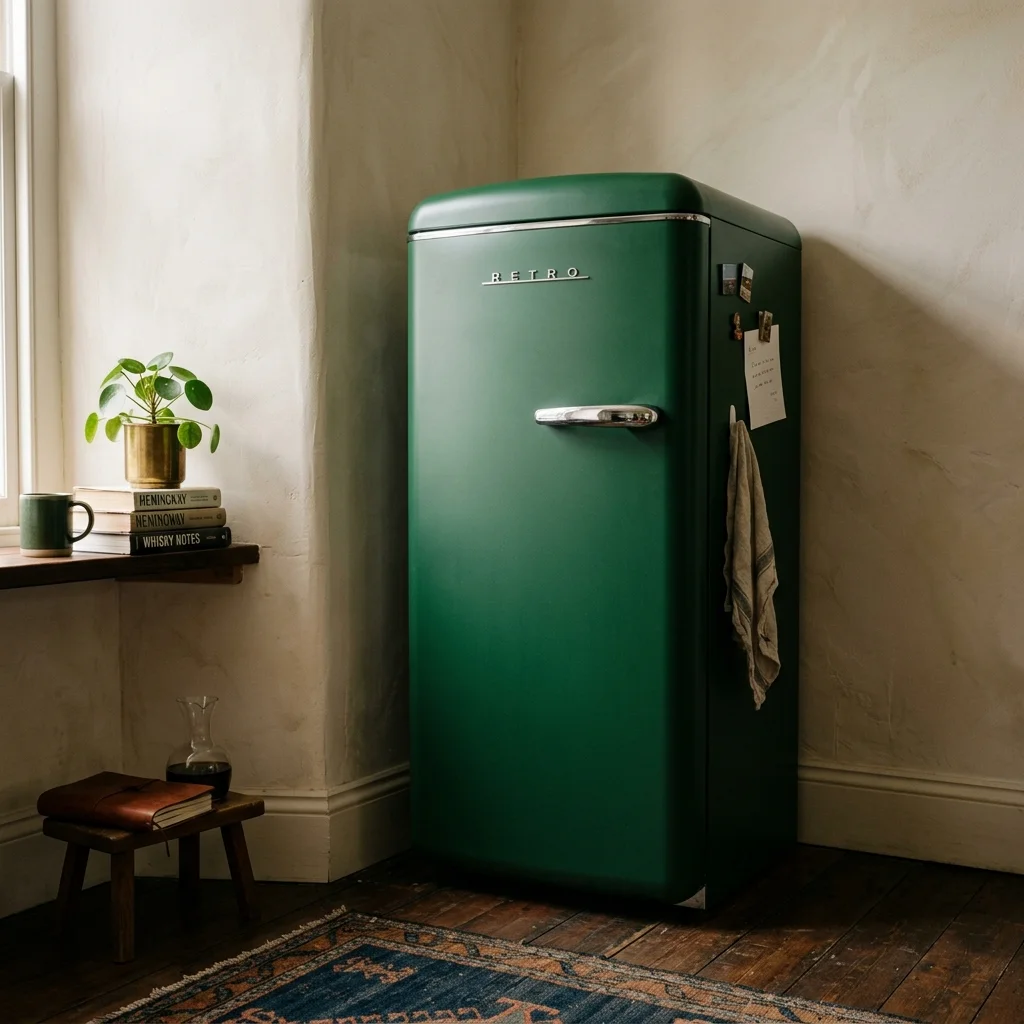
A retro fridge is the exception to every rule above. A rounded, chrome-handled unit in cream, forest green, or faded red is furniture pretending to be an appliance, and it works when the room gives it space to be the loudest thing in the corner.
One rule keeps it from looking like a prop: the retro fridge must be the only retro object in the sightline. Pair it with plain surfaces and a warm wood counter, not with tin signs, checkerboard flooring, and a jukebox. If the whole room is leaning that direction, the man cave style guide is the fastest way to name the look before you commit to a color.
Refrigerator Drawers for Tight Rooms
Refrigerator drawers solve the room where nothing else fits. Two pull-out drawers sit under a counter with no swinging door, which means no clearance arc eating into a four-foot walkway.
Drawers are the most expensive cold storage per can in this list, and they hold less than a door unit of the same width. Buy them for the layout problem, not the capacity. In a room under 150 square feet, that layout problem is usually the whole story — the small man cave guide covers what else changes at that size.
Which Specs Actually Decide This?
Four specs separate a fridge that works from one you replace in two years. None of them are on the front of the box. All four are on the spec sheet, and three of them are easy to check before you order.
Is the Fridge Rated for the Room It Lives In?
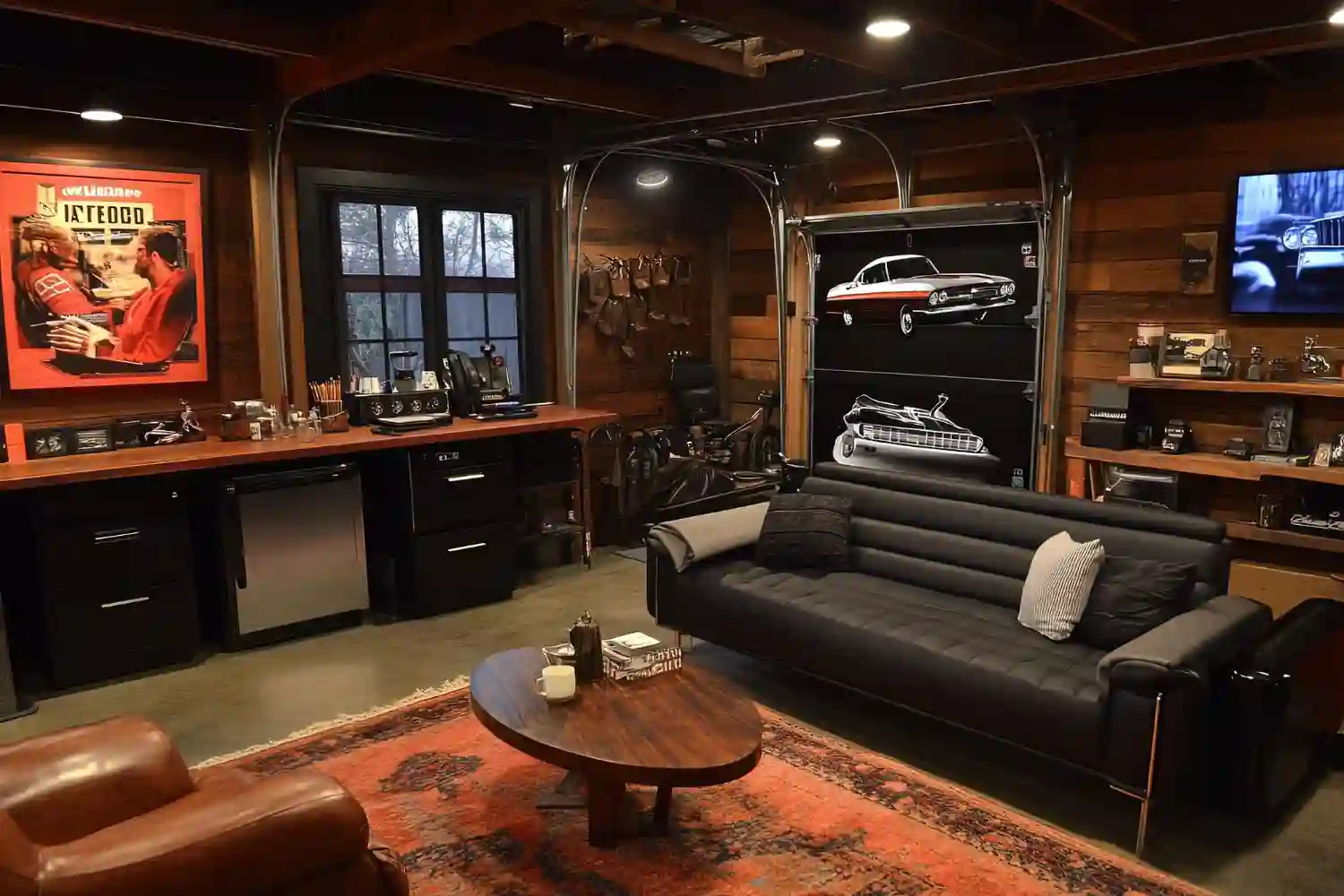
Ambient temperature rating is the single most important number for a garage or basement man cave, and most buyers never look at it. A refrigerator’s thermostat reads the room, not the food. In a cold garage the thermostat thinks the job is done, the compressor stops running, and the freezer section thaws while the fridge section stays fine.
Source Note: GE Appliances rates its garage-ready refrigerators for ambient temperatures from 38°F to 110°F and does not recommend installing non-garage-ready models where temperatures drop below 60°F. That 60°F line rules out a lot of unheated spaces for a standard unit.
Garage conversions live or die on this spec, since the space shares its temperature with the outdoors — the garage man cave guide covers what else changes in that room. Detached buildings are stricter still. A backyard shed retreat can swing 40 degrees between a February morning and an August afternoon, so garage-ready is the only safe spec out there.
Compressor Cooling vs Thermoelectric
Compressor cooling is real refrigeration. It holds a set temperature no matter what the room does. Thermoelectric cooling uses a solid-state plate with no moving parts, runs almost silently, and costs less.
Material Note: Thermoelectric coolers typically pull only about 20 to 25 degrees below room temperature, so an 85°F garage leaves the contents somewhere in the sixties.
That trade is fine on a desk in a climate-controlled room. It fails in a garage, a sunroom, or any space above roughly 75°F in summer. Buy compressor cooling for any man cave that is not on the home’s main heating and cooling loop.
Front-Vented or Freestanding?
Built-in models vent through a grille in the front toe kick. Freestanding models vent out the back and sides. This is the spec people ignore, and it is the one that kills the appliance.
A freestanding fridge boxed into a tight cabinet has nowhere to dump heat. The compressor runs longer, the unit gets loud, the interior never quite holds temperature, and the motor wears out early. If the fridge will sit flush between two cabinets, buy a front-vented built-in unit. If it is going in an open corner or an open shelf bay, freestanding is fine — just leave roughly half an inch of air at the back and sides.
Safety Note: Plug any fridge straight into a wall outlet, never a light-duty extension cord or a daisy-chained power strip.
Noise, Capacity, and Door Swing
Noise is the spec that ruins movie night. A compressor cycling on during a quiet scene is impossible to un-hear once you notice it. Most compressor units sit in the mid-thirties to mid-forties on the decibel scale, which is background hum in a bar corner and an intrusion ten feet from the screen. Rooms built around picture and sound have stricter needs, and the home theater man cave guide covers where the noisy gear should live.
Capacity is simpler than the marketing suggests. Source Note: ENERGY STAR classifies any refrigerator under 7.75 cubic feet and 36 inches or shorter as a compact model, which covers nearly everything sold for a bar. Under 2 cubic feet holds a couple of six-packs. Around 5 cubic feet handles a full night for a group.
Door swing is the last check and the most commonly skipped. Confirm the hinge is reversible, then open the door on paper against the nearest wall, stool, or walkway before you order.
Where Should the Fridge Go?
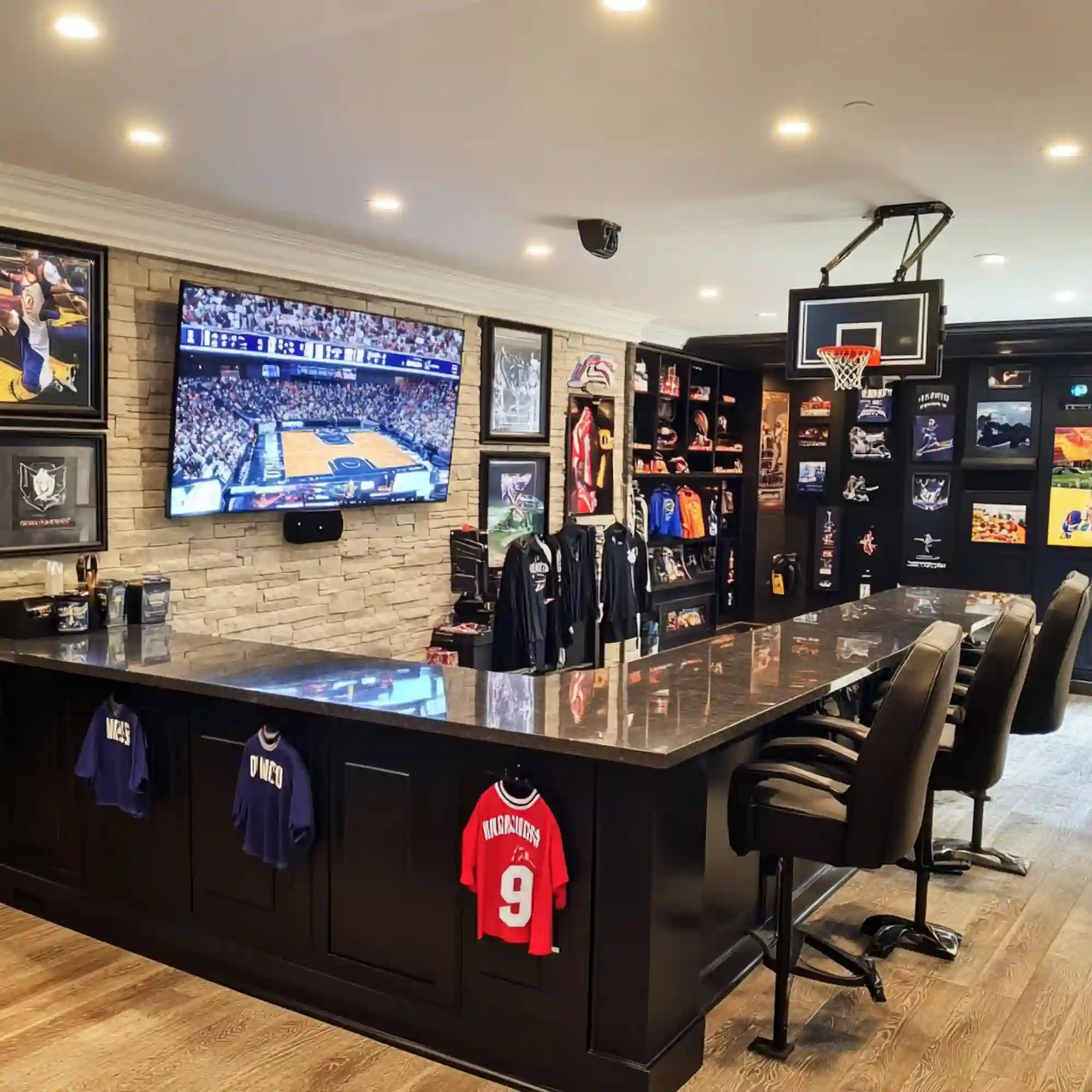
The best spot is the bar wall, not the seating wall. Cold drinks belong where the glasses, the ice, and the bottle opener already are, so one trip serves the whole room. Putting the fridge beside the couch feels convenient and turns the nicest seat in the room into a service station.
Distance also solves noise. Eight to ten feet between the fridge and the main seating puts the compressor far enough back that nobody tracks it. Corners are good. Under a bar counter is better.
Basements bring one extra factor: humidity. A cold appliance in a damp basement sweats at the door seal and along the back, so leave the air path clear and keep the unit off a rug. The basement man cave guide covers what else that room asks for.
Tight rooms flip the priority order. When floor space is the constraint, the fridge goes under the counter or into drawers, and the door swing decides the location before the sightline does. The space-saving man cave layouts guide covers how to claim those inches back.
Man Cave Fridge Checklist
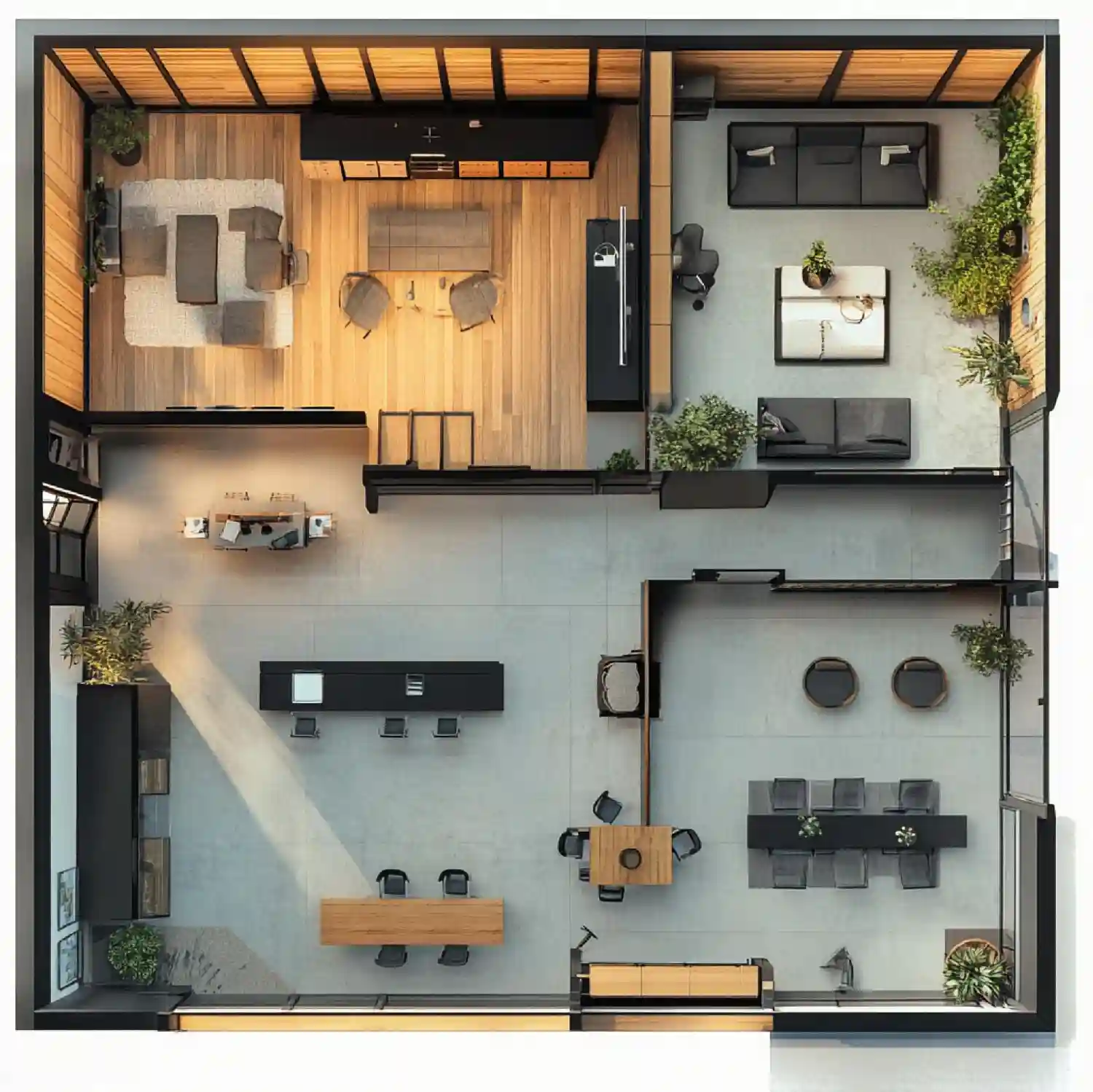
Measure the opening height, width, and depth first, then subtract an inch for hinge and hardware clearance.
Choose a garage-ready model rated 38°F to 110°F for any garage, shed, or unheated basement.
Pick compressor cooling over thermoelectric in any room that climbs past 75°F in summer.
Buy a front-vented built-in unit whenever the fridge sits flush inside cabinetry.
Confirm the door hinge is reversible, and swing it on paper against the nearest wall or stool.
Keep the fridge on the bar wall, 8 to 10 feet from the main seating.
Match the front to one finish already in the room: stainless, matte black, or a wood panel.
KEY TAKEAWAY: The rating and the venting decide whether a man cave fridge works. The finish only decides how it looks.
What Nobody Tells You Before Delivery Day
❌ Boxing a freestanding fridge into a cabinet → ✅ Buy a front-vented built-in model, or leave the back and sides open.
❌ Putting a standard fridge in an unheated garage → ✅ Choose a garage-ready unit rated down to 38°F ambient.
❌ Shopping by cubic feet alone → ✅ Measure the opening and the door swing before you compare capacity.
❌ Parking the fridge beside the seating → ✅ Move it to the bar wall, 8 to 10 feet from the couch.
What a Man Cave Fridge Actually Costs
This category spans an unusually wide price range, because the cheap end and the expensive end are not the same product. Under $220 buys a compact freestanding fridge in the 1.7 to 3.2 cubic foot range with a solid door — fine in an open corner, wrong inside cabinetry. Between $250 and $600 sits the sweet spot: a 15-inch freestanding glass-door beverage center with interior lighting, which is the single biggest visual jump on this page. Kegerators run $600 to $1,600 once you include the tap tower, coupler, regulator, and CO2 tank. Above $900 you are buying true built-in units — front-vented 24-inch beverage centers and refrigerator drawers — where the money buys installation flexibility rather than capacity.
| Project | Estimated Cost | Impact Level |
|---|---|---|
| Compact freestanding fridge, 1.7-3.2 cu ft, solid door | $90-$220 | Low |
| 15-inch freestanding glass-door beverage center | $250-$600 | High |
| Undercounter kegerator with single tap and CO2 kit | $600-$1,600 | High |
| Built-in front-vented 24-inch beverage center or drawers | $900-$2,200 | Very High |
Best First Upgrade: A 15-inch glass-door beverage center with interior lighting, because it fixes both problems at once — more cold storage and a front worth looking at — for under $600.
Skip for Now: A panel-ready unit, unless the cabinetry is already built and the panel is quoted. Paying a premium to hide an appliance only pays off when there is something better to look at.
Building the room in stages rather than all at once? The man cave ideas on a budget breakdown ranks the cheap upgrades by impact.
What I’d Buy First

Designer’s Verdict: Buy the 15-inch glass-door beverage center — it costs a fraction of a built-in, holds three times what a dorm fridge does, and it is the only version of this appliance that improves the room by being visible.
This shift has staying power because it is a fix, not a fashion. A fridge sized to the cabinet gap, vented the right way, and rated for the room’s real temperature will still be right in ten years. The corner box was never a style choice — it was what was cheap and available. The same order applies anywhere in the house: measure the opening, check the rating, then pick the finish, and more room-by-room decorating ideas follow it. Want to see how the appliance fits the rest of the space? Browse every man cave setup we cover and find the one your room resembles.
Frequently Asked Questions
Conclusion
A man cave fridge is worth planning around, not squeezing in at the end. Measure the opening, check the ambient rating, confirm how the unit vents, and the finish takes care of itself. Our home decor inspiration covers the rest of the house when the bar corner is done.
Next Steps
- Measure the cabinet gap or corner you plan to use — height, width, and depth — and write the three numbers down before you shop.
- Check whether the room drops below 60°F in winter or climbs past 85°F in summer, and buy garage-ready if either is true.
- Decide now whether the fridge sits flush in cabinetry or stands in the open, because that single answer picks built-in or freestanding.
- Open the door on paper against the nearest wall, stool, or walkway, and confirm the hinge is reversible before ordering.