Why Man Cave Decor Makes or Breaks the Room
Why does one man cave feel like a genuine retreat and another feel like a storage room with a TV? The difference is rarely budget. It is whether the owner approached the space with man cave decor ideas that follow a clear sequence: seating first, lighting next, wall decor third, and accent pieces last. Skipping the order produces rooms where individual items are fine but nothing connects.
Looking for more ideas? Explore our full guide to Bedroom Decorating Ideas.
Man cave decor ideas work best when the room has one clear purpose — or clear zones when it serves two. A home theater setup treats the TV wall as the focal point and pulls all seating toward it. A dual-use gaming and lounge space uses two rugs and two lighting circuits to give each zone its own feel. Both approaches work. What does not work is filling a room with pieces that serve different purposes and compete for visual attention at the same time.
This is the hub for man cave decor — for the full man cave starting point, browse our 25 Man Cave Ideas to Design the Ultimate Personal Sanctuary. For home decor inspiration across every room, visit 101homedecor.com.
Bookmark this guide for quick reference.
KEY TAKEAWAY: Man cave decor ideas work best in one sequence — seating, lighting, wall decor, accents — not assembled piece by piece without a plan.
Man Cave Decor Checklist
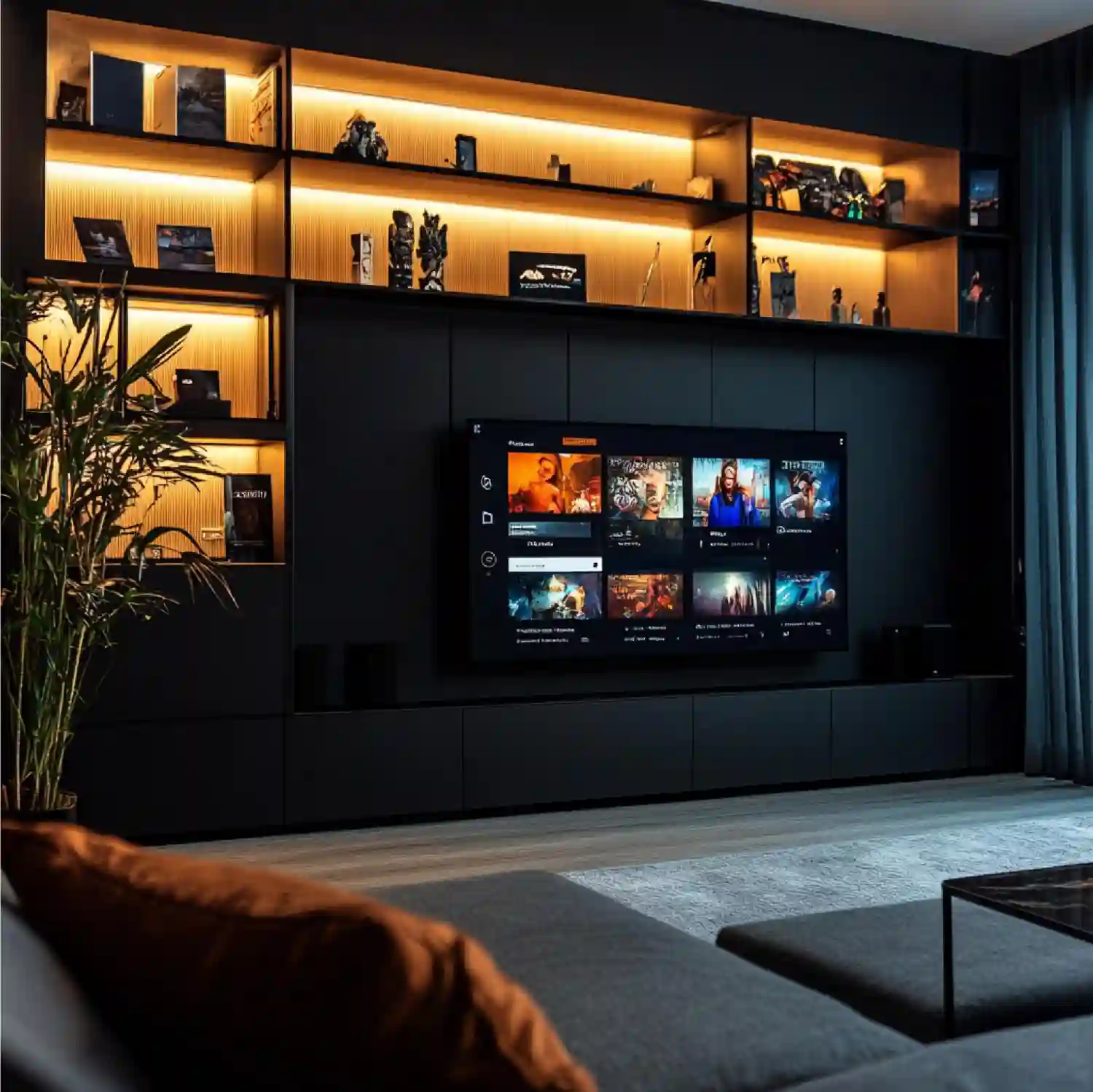
- Identify the room’s primary activity and mark the focal point before moving any furniture.
- Size your sectional (90–110 inches for rooms 12 feet or wider) or select two power recliners for rooms under 12 feet wide.
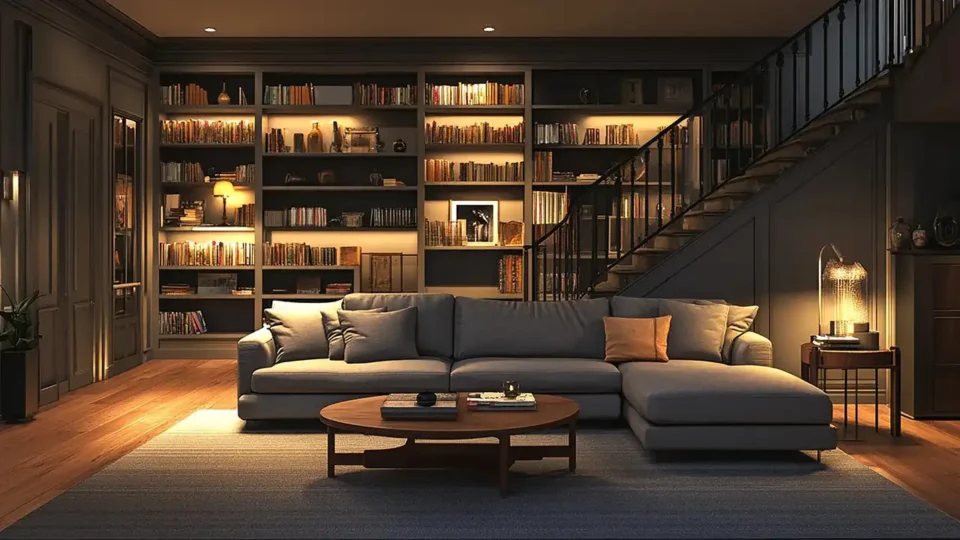
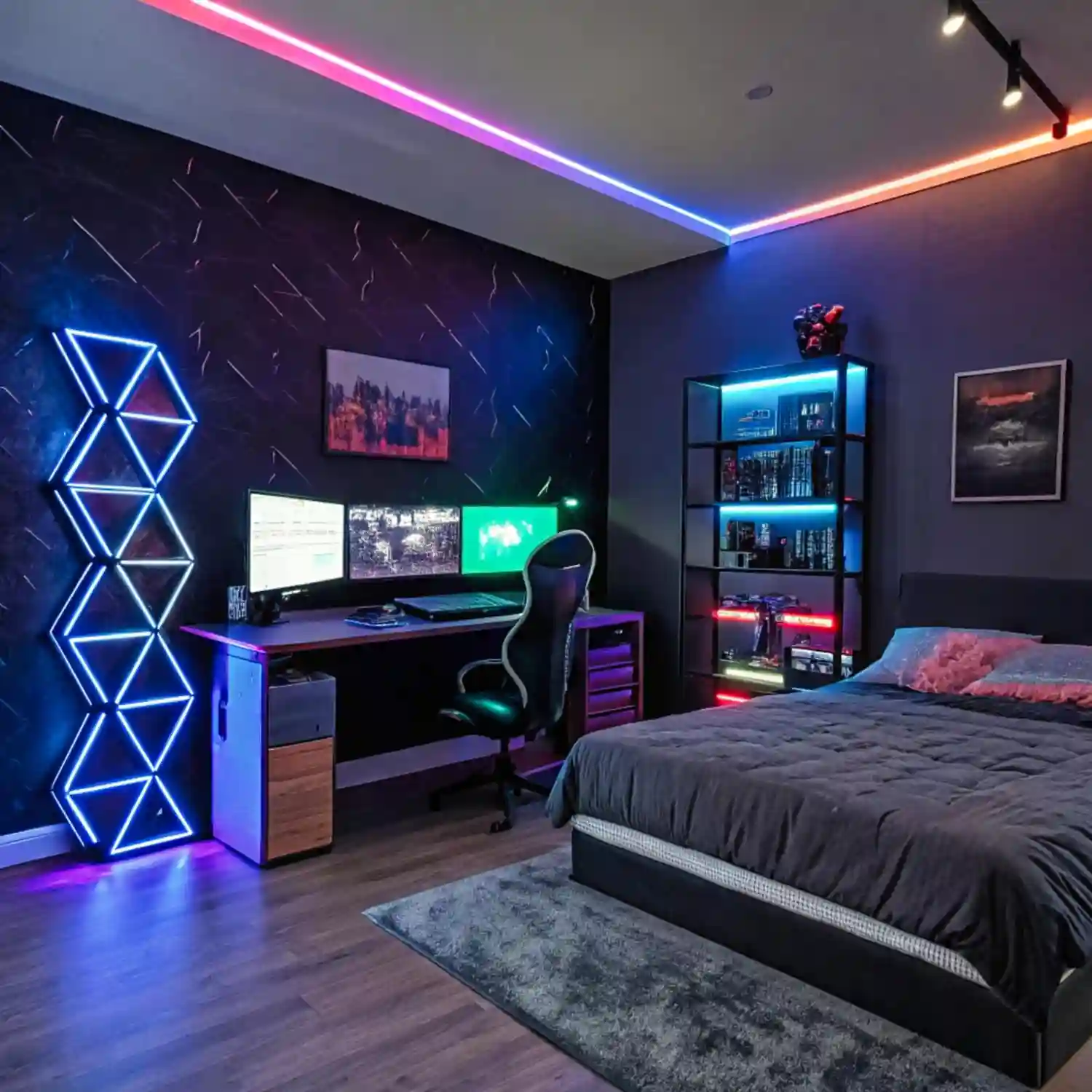
- Install three light sources: one dimmable overhead at 2700K, one floor or table lamp, and one accent piece — neon sign, LED strip, or wall sconce.
- Choose a wall color before buying any decor — dark charcoal, navy, or forest green anchor the space best.
- Lay an 8×10-foot area rug (or larger) under the seating zone to define it.
- Hang one large statement piece — a framed print, jersey shadow box, or metal sign — on the focal wall before adding secondary items.
- Position a bar cart or mini-fridge station in a corner adjacent to the seating, not behind the TV wall.
- Limit open shelving to three to five curated collectibles — more reads as clutter, not personality.
KEY TAKEAWAY: Follow the checklist in sequence — focal point, seating, lighting, color, rug, wall anchor, bar station, accents — before buying anything individually.
Man Cave Wall Decor Ideas
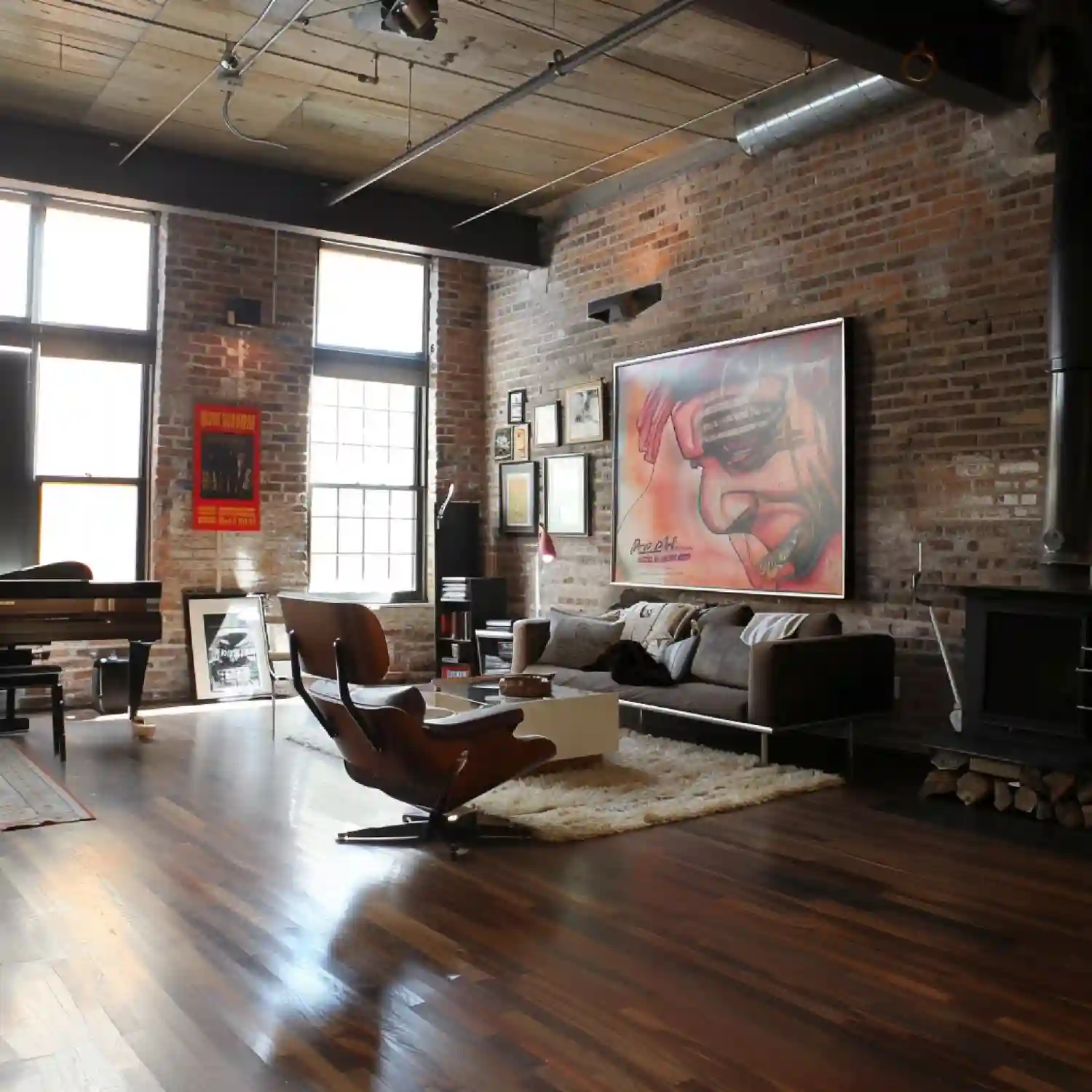
Man cave wall decor is where most rooms either come together or fall apart. Blank walls make a finished basement feel permanently unfinished. Too many small pieces make a finished room feel chaotic. The formula that works consistently: one large anchor piece on the focal wall, one or two medium framed prints in supporting positions, and one personality item — a neon sign, a vintage pennant, or a framed team jersey.
Man cave wall decor falls into three categories: framed art and prints, signs and neon, and themed pieces like jersey shadow boxes and vintage pennants. Most rooms need two of the three categories — not all three at once.
Framed Art and Vintage Prints
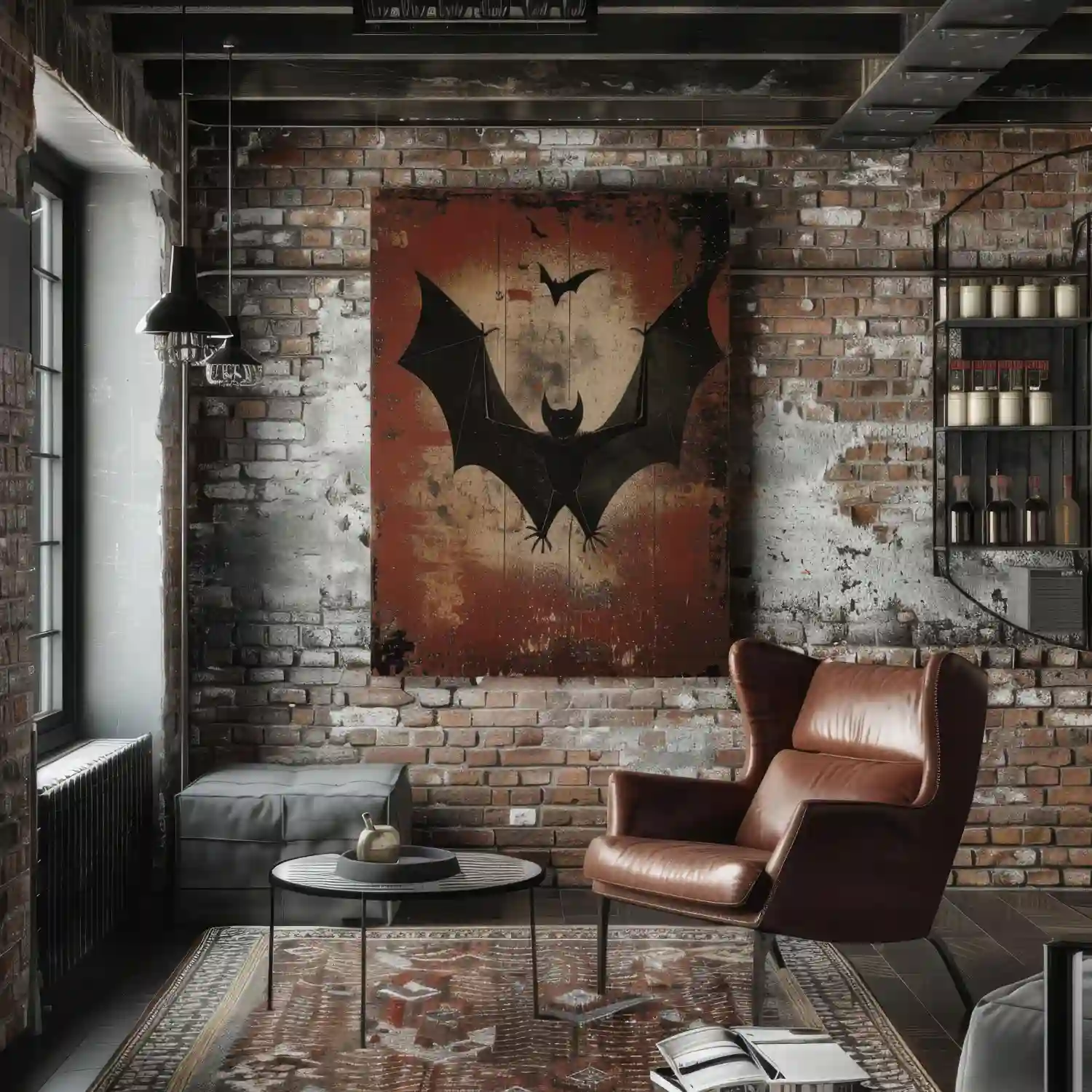
Framed art gives a man cave a designed, intentional feel that bare walls never achieve. Scale is the deciding variable. A single canvas at 24×36 inches reads well on a 10-foot wall. Two framed prints at 18×24 inches flanking a TV work cleanly as a pair without competing with the screen. Anything smaller than 16×20 inches looks accidental unless it sits in a tight gallery wall with consistent frame sizes and 2-inch spacing between pieces.
Vintage sports prints, black-and-white automotive photography, topographic maps, whiskey distillery labels, and retro film posters are reliable choices. Matte black, charcoal, and raw wood frames in the same visual weight give a curated look without matching exactly. Avoid thin chrome frames — they read as temporary rather than chosen.
Neon Signs, Metal Signs and Statement Pieces

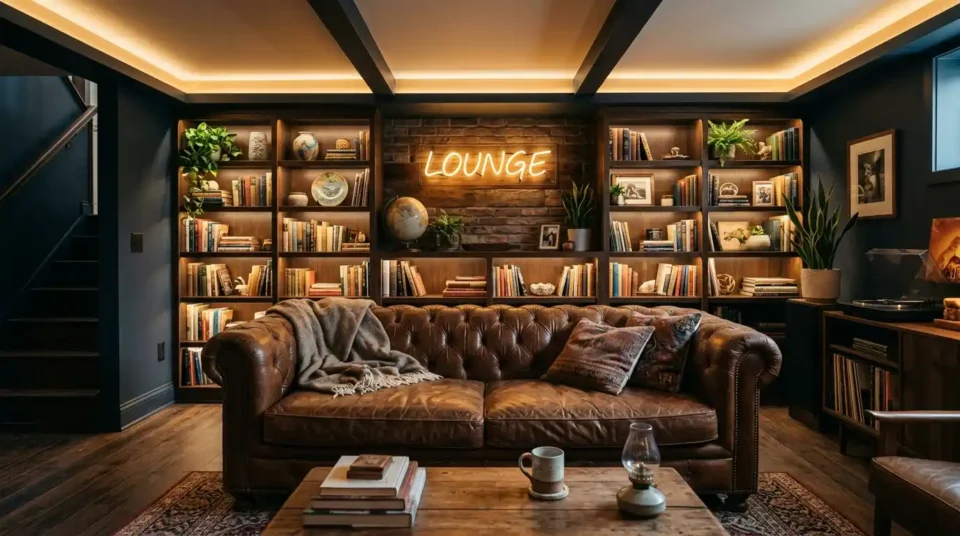
A neon sign adds light and personality at the same time — one of the most efficient man cave accent pieces. LED neon, not glass, is the practical choice: it runs cooler, uses 70–80% less power than traditional glass neon, and holds up far better in enclosed garage or basement spaces.
DESIGNER TIP: Mount the neon sign on the wall directly opposite the TV, at seated eye level. That position fills the visual field without creating screen glare and gives the room depth when viewed from the entrance.
Metal signs work as secondary pieces, not anchors. A 12×18-inch metal sign positioned below a TV or beside a framed print completes the wall without competing with it. Vintage bar graphics, team logos, and retro automotive designs hold up well where humidity makes paper-based prints impractical.
KEY TAKEAWAY: One LED neon sign and one 24×36-inch framed print on the focal wall deliver more personality than a dozen smaller scattered pieces — and take up far less visual noise.
Man Cave Furniture That Actually Fits
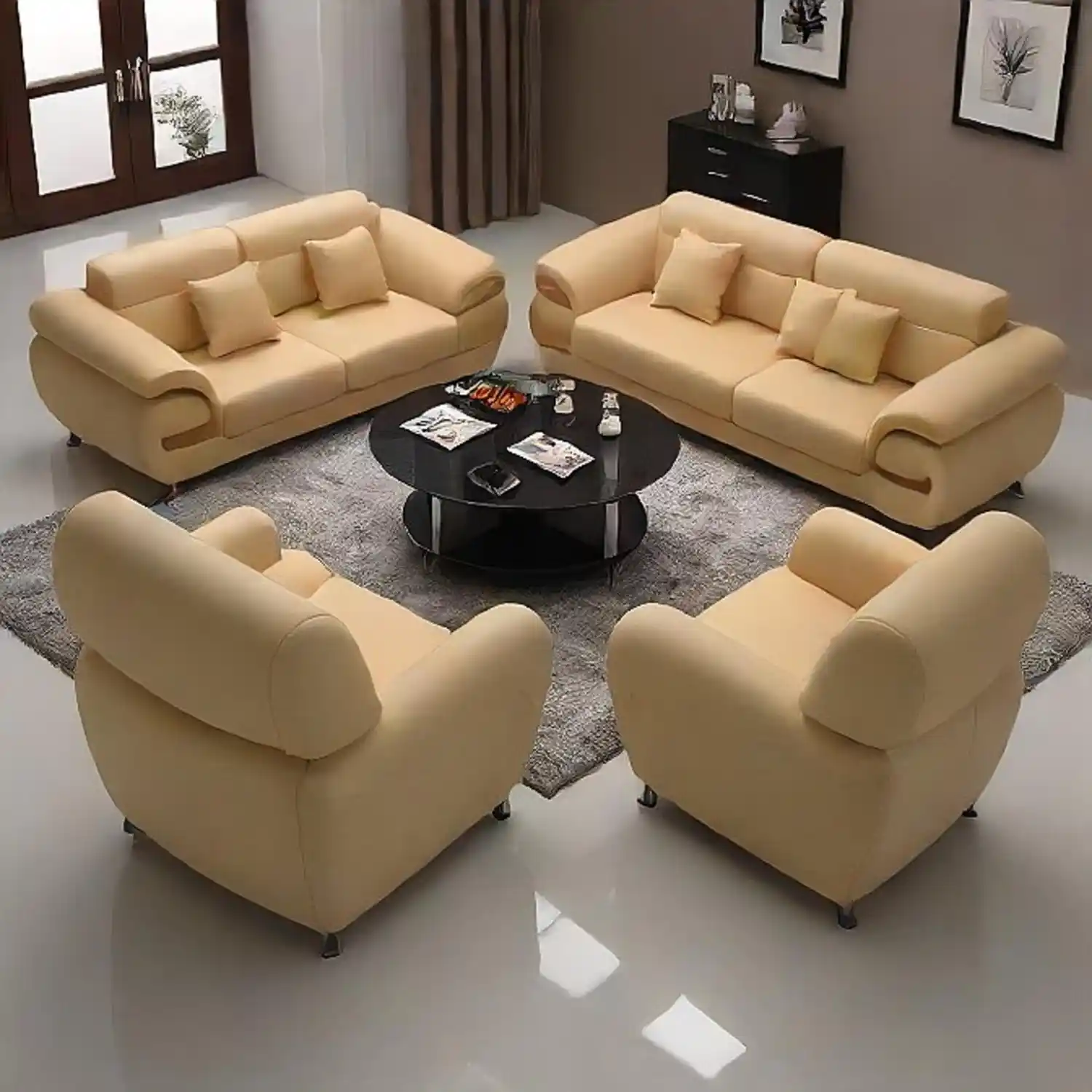
Man cave furniture ideas begin with one rule: size the seating to the room, not to what looks good in the store. A sectional at 110 inches wide needs at least a 12-foot wall and 18 inches of clearance on each side to avoid a cramped layout. In a 10×12-foot room, two power recliners and a shared ottoman give more usable space and cleaner sightlines than any sectional on the market.
Man cave furniture divides into three roles: primary lounge seating, bar or task seating, and surface pieces — coffee table, side tables, and storage shelving. A complete man cave needs all three working together, not just the seating category covered.
Sectionals, Recliners and Lounge Seating
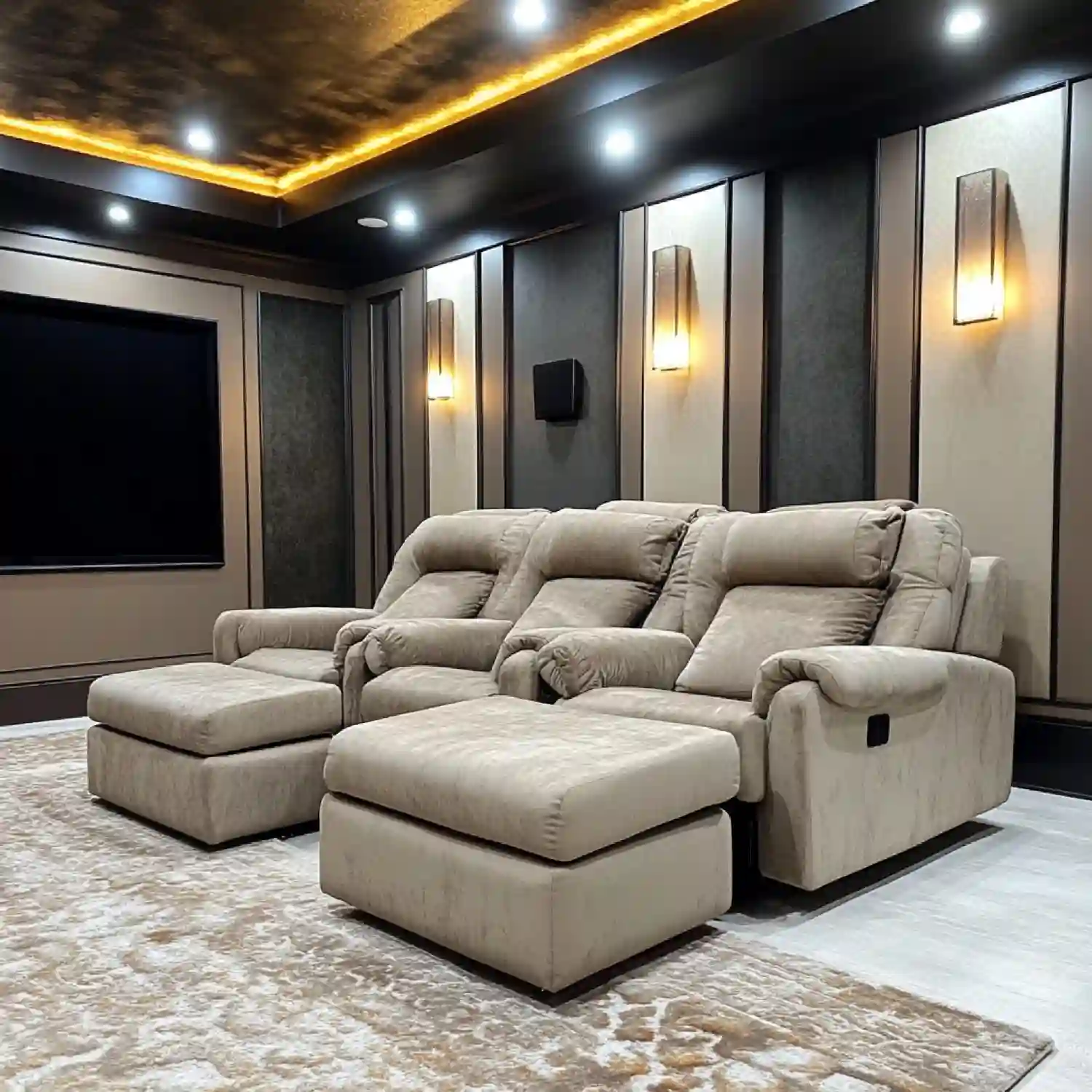
A power recliner sectional is the most popular man cave furniture choice because it handles the two primary activities — watching and reclining — in one piece. Standard three-piece power recliner sectionals run 92–120 inches wide. A 3-piece with chaise at 110 inches fits most 12×14-foot rooms with clearance on both sides.
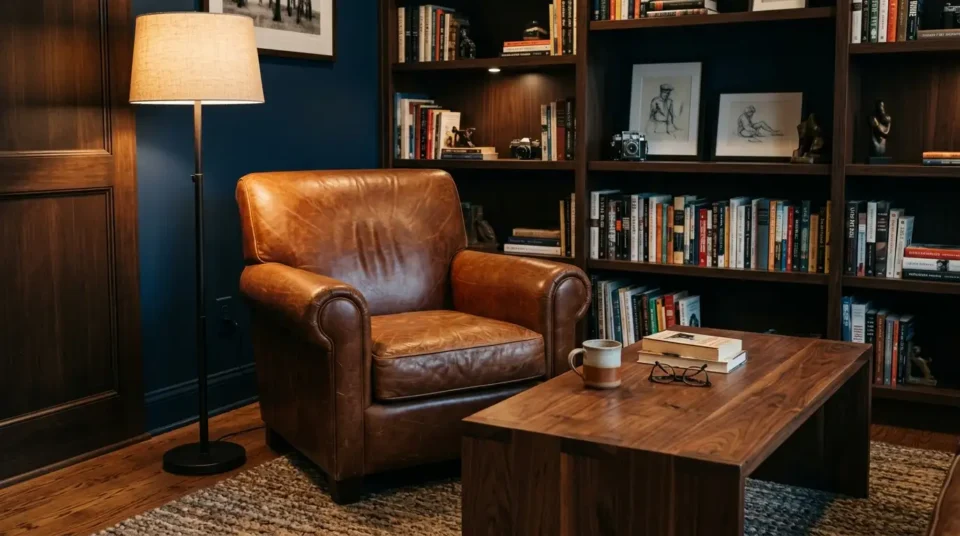
Leather and faux leather are the most practical upholstery for man caves. They wipe clean, resist spills, and hold up in basement environments where humidity stresses standard fabric over time. Performance velvet and microfiber work too but need more upkeep. Stick to dark upholstery — charcoal, cognac, deep navy — to match typical dark-wall palettes and hide daily wear.
For compact setups where floor space is tight, 15 Small Man Cave Ideas covers seating configurations that work in rooms under 150 square feet.
Bar Stools and Multi-Use Seating
A bar-height counter with stools is one of the highest-impact man cave furniture additions. It creates a secondary seating zone, allows eating and drinking away from the main sectional, and defines a bar or snack area without a full built-in bar build-out.
Bar stools for man caves should be 28–30 inches high for standard bar-height counters, which run 40–42 inches. Industrial metal, upholstered faux leather, and swivel wood designs work well across most man cave styles — rustic, modern, or industrial. Avoid stools under 18 inches wide — they feel unstable at counter height and look undersized against a full bar counter.
KEY TAKEAWAY: Size primary seating to the floor plan first — correct furniture scale makes a 12×14-foot room feel spacious, not enclosed.
What Lighting Actually Works in a Man Cave?
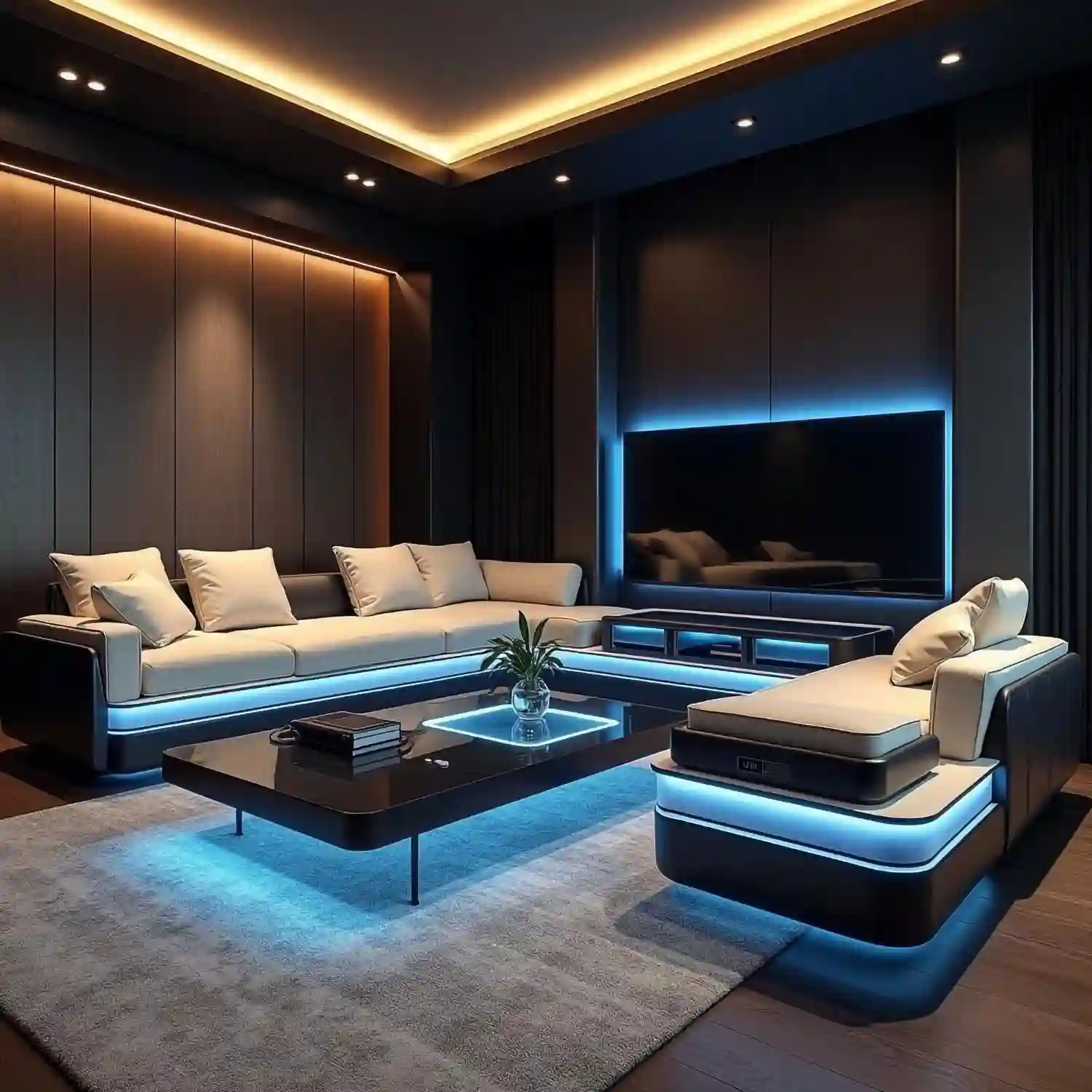
Man cave lighting ideas break into three layers: ambient (overhead, general), task (specific to the primary activity), and accent (mood and personality). Most man caves only have ambient — one ceiling fixture — which leaves the space flat and clinical. Adding one floor lamp near the sectional and one accent source changes the atmosphere entirely without touching the ceiling wiring.
Man cave lighting should run warm: 2700K to 3000K color temperature. Standard LED bulbs at 4000K–6500K produce a harsh, cool light that reads as a workshop or utility space, not a retreat. The color temperature shift is free — it requires only replacing bulbs, not fixtures.
How Do You Layer Lighting in a Man Cave?
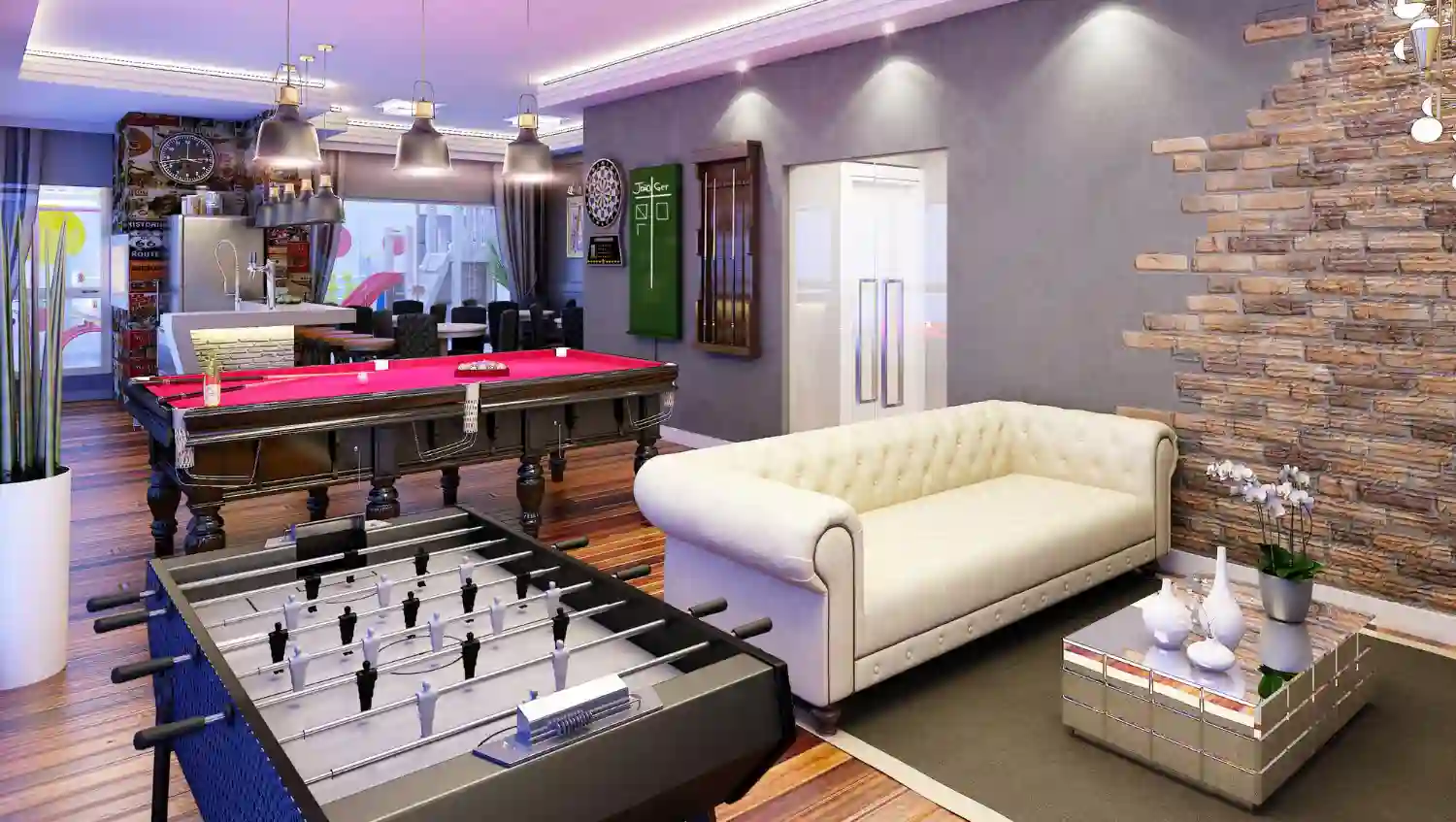
Ambient lighting is typically handled by recessed ceiling downlights or a ceiling fan with integrated LED. Dimmable recessed lights at 2700K let the room shift from bright (for billiards or tasks) to dimmed (for movie watching) without adding hardware. If there is only one overhead fixture, add a dimmer switch first — it is the cheapest single lighting upgrade in any man cave.
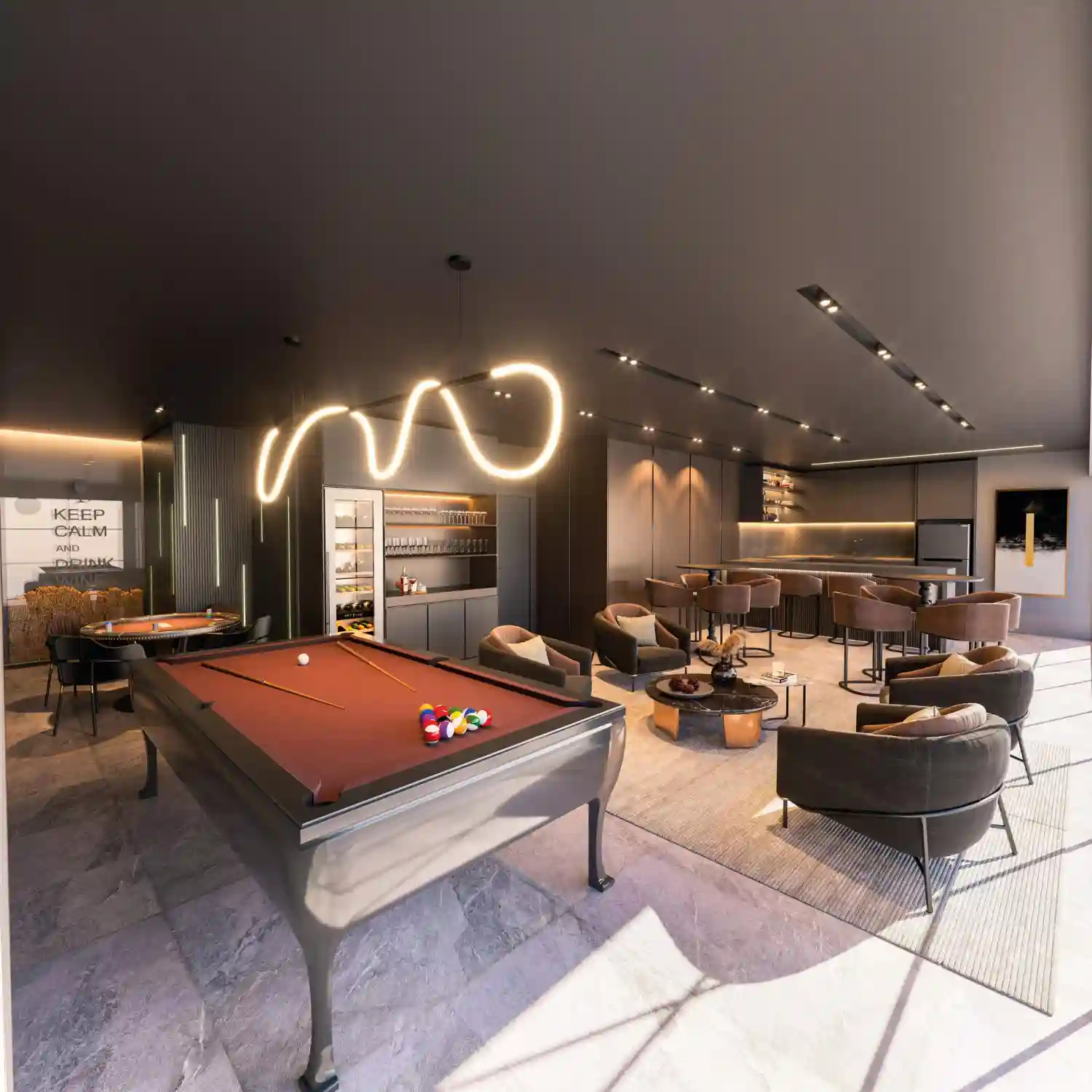
Task lighting covers the primary activity. A billiard table needs a hanging pendant 33–36 inches above the felt — any higher and the table shadows unevenly. A gaming setup benefits from LED bias lighting behind the monitor at 6500K (cool) to reduce eye strain during extended sessions without affecting the room’s overall warm atmosphere.
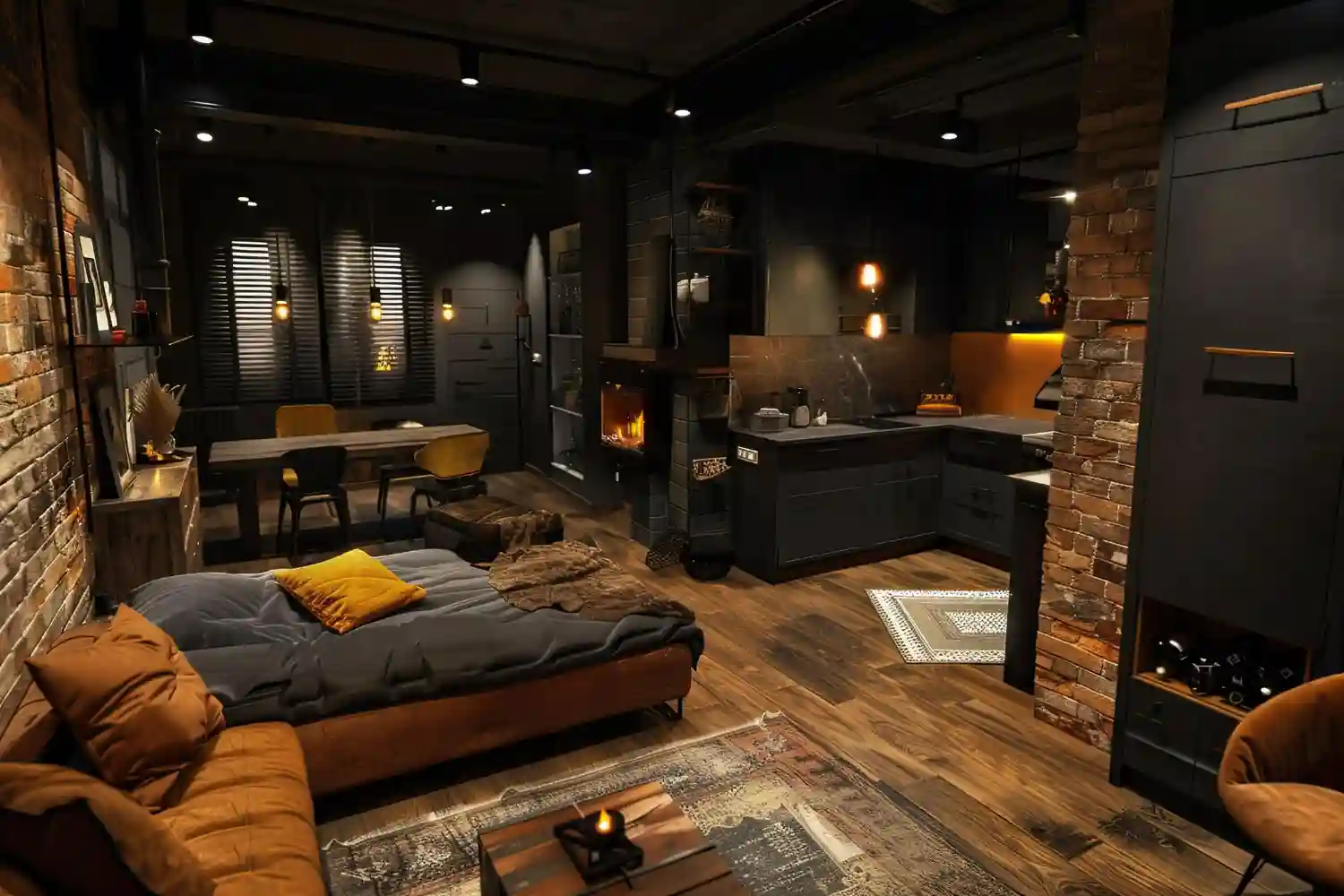
Accent lighting is where personality enters. LED strip lights under a bar counter, a neon sign on the focal wall, and wall sconces flanking a TV all add warmth and visual depth at low cost. Three sources working together — one overhead, one task, one accent — create the layered quality of a professionally designed space.
For basement man caves where natural light is limited, 10 Creative Man Cave Basement Ideas covers lighting strategies specific to below-grade rooms.
Material Note: LED neon flex strips last 30,000–50,000 hours and run cool to the touch, making them safer and more durable than traditional glass neon in enclosed basement or garage environments.
KEY TAKEAWAY: Three lighting layers at 2700K–3000K — one ambient, one task, one accent — transform a man cave from a furnished room to a retreat without major electrical work.
Which Accent Pieces and Accessories Finish the Room?
Man cave accent pieces — rugs, bar carts, open shelving, collectibles, and throw cushions — are the finishing layer that closes the gap between furnished and finished. The guiding rule is restraint: three curated items on an open shelf read as a personal collection. Fifteen items across every surface read as a move-in pile that was never unpacked.
An 8×10-foot area rug under the sectional or recliners defines the seating zone and adds acoustic softness. In basement spaces with concrete floors, a rug reduces echo noticeably and prevents the room from sounding like an empty box. In garage man caves, choose a rubber-backed rug rated for garage floors — standard rug pads slide on smooth concrete and can create a trip hazard.
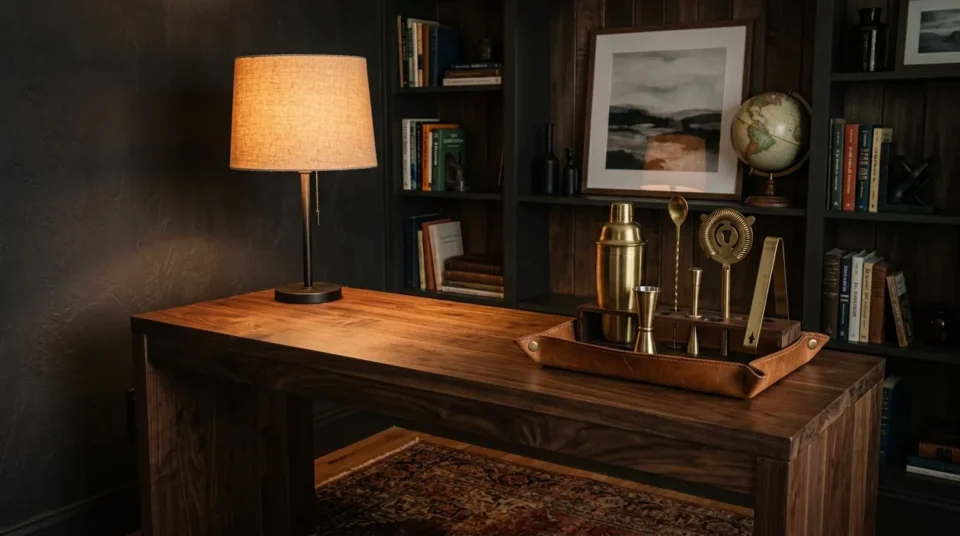
For a bar cart or drink station: position it in a corner adjacent to the seating area, not behind the TV wall where it disappears during use. A metal or mirrored cart with four to six bottles, a small ice bucket, and a branded cocktail set is enough. Avoid filling every horizontal surface with bottles — it reads as a liquor store, not a styled corner.
For higher-end accent styling that leans toward leather chairs, whiskey, and refined details, 15 Classy Man Cave Ideas covers sophisticated man cave aesthetics in detail.
KEY TAKEAWAY: A rug under the seating, a bar cart in the corner, and one curated shelf close the gap between a room that is filled and a room that feels finished.
Man Cave Paint Colors and Flooring
Man cave paint colors tend toward dark, saturated palettes — and for good reason. Deep charcoal, navy blue, forest green, warm espresso, and slate grey make the space feel enclosed and intentional rather than like an unfinished basement. In rooms without natural light, dark walls actually outperform pale ones: they eliminate the washed-out grey effect that white or cream takes on under artificial lighting.
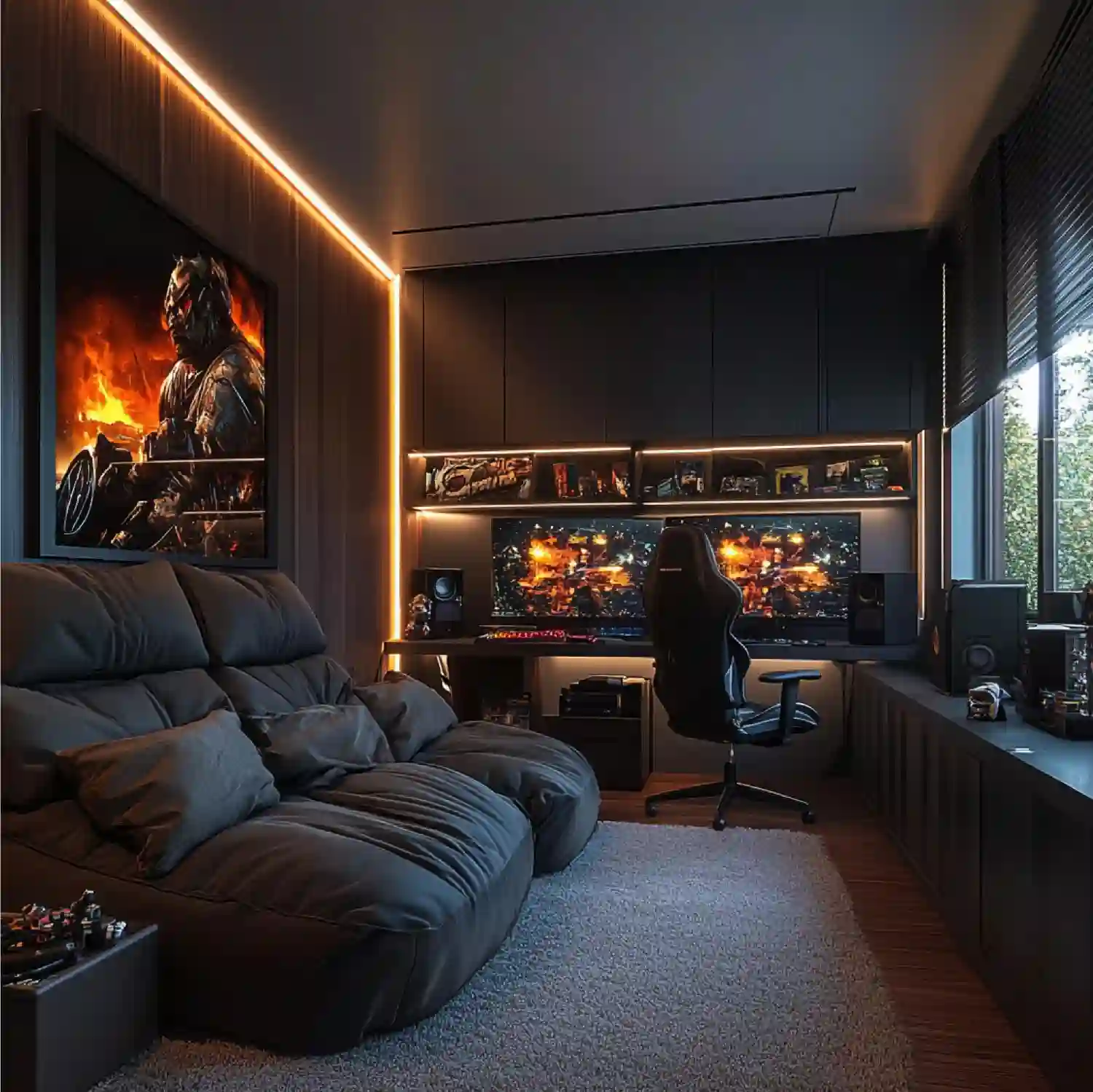
Vinyl plank flooring (LVP) is the most practical choice for basement man caves. It installs over slightly uneven subfloors, resists below-grade moisture, and comes in realistic wood-look and concrete-look finishes for $2–$5 per square foot installed. It also handles the rolling casters and heavy furniture that man caves typically accumulate without cracking or delaminating under point loads.
Epoxy floor coating is the right call for garage man caves. It handles vehicle traffic, resists oil and chemical stains, and costs $3–$12 per square foot depending on surface prep and finish. A full flake or metallic epoxy finish adds visual texture while maintaining the durability garage floors require.
Avoid carpet in basement environments unless the space is fully climate-controlled with active dehumidification. Carpet in a humid basement traps moisture and develops odors that compound with time.
Climate Note: In below-grade man caves, pair any flooring with a dehumidifier sized for the room — a 50-pint unit covers spaces up to 2,000 square feet and prevents moisture cycling that degrades both flooring and upholstered furniture.
For garage-specific flooring and storage decisions, 15 Garage Man Cave Ideas covers epoxy options and overhead configurations. For large-format spaces, 12 Pole Barn Man Cave Designs addresses high-ceiling scale decisions for decor that reads well in bigger rooms.
KEY TAKEAWAY: Dark paint and durable flooring — vinyl plank in basements, epoxy in garages — are the two highest-leverage finish decisions in a man cave.
How to Pull a Man Cave Together
A man cave comes together when one decision guides all the others: the primary activity. A home theater room makes the TV wall the focal point and orients all seating toward it. A billiards room centers the table and places secondary seating at the perimeter. A dual-purpose gaming and lounge space uses two rugs and two lighting circuits so each zone has its own feel.
The layout mistake most common in man caves is placing furniture against every wall. This creates a waiting-room feel where nothing is grouped and nothing connects. Float the sectional 2–3 feet off the back wall, angled toward the focal point. Keep at least 18 inches of walk-around space on each side of the main furniture zone.
Man cave decor ideas pull together fastest when the owner picks two colors and one material finish — matte black, brushed steel, or warm oak — and repeats them across the room. That material thread connects the recliner frame, bar cart, wall frames, and shelving without requiring expensive coordination or a design background.
For a dual-purpose man cave that balances work and relaxation without sacrificing either, 12 Man Cave Office Ideas covers desk placement, zone separation, and lighting splits in detail. For themed setups like a sports simulator or golf room, 12 Golf Simulator Room Man Cave Ideas covers task-specific layout and projection lighting requirements.
For basement conversions that serve the broader household, Modern Basement Ideas for Extra Living and Storage Space adds context for shared-use spaces below grade.
KEY TAKEAWAY: One primary activity, one focal point, two colors, and one material finish — those four decisions resolve almost every man cave decor layout question.
Where Man Cave Decor Falls Apart
❌ Single overhead light only → ✅ Add a floor lamp near the sectional and one accent source — three sources at 2700K are the minimum for a retreat atmosphere.
❌ No rug → ✅ An 8×10-foot rug under the seating zone defines the space, reduces echo, and makes the room look significantly more finished immediately.
❌ Furniture pushed against every wall → ✅ Float the seating 2–3 feet off the walls, angled toward the focal point — this removes the “waiting room” feel without buying anything new.
❌ Too many small wall pieces → ✅ Consolidate into one 24×36-inch framed print and one sign on the focal wall — fewer, larger pieces always read as more designed.
KEY TAKEAWAY: Most man cave decor failures come from filling space reactively rather than designing for a focal point first — fixing these four issues solves the majority of “why doesn’t this room feel finished?” problems.
What You’ll Spend
A man cave decor budget covers five categories. Furniture and lighting deliver the most impact per dollar. Wall decor and accent pieces can be built out over time without disrupting the room’s function.
| Project | Estimated Cost | Impact Level |
|---|---|---|
| Power recliner sectional (3-piece) or two power recliners | $800–$2,500 | Very High |
| Vinyl plank flooring or epoxy coating (200 sq ft) | $400–$2,400 | High |
| Layered lighting (floor lamp, neon sign, LED strips) | $100–$400 | High |
| Wall decor, area rug and bar cart | $200–$700 | Medium |
Best First Upgrade: Layered lighting at 2700K — adding a floor lamp and one neon sign costs under $200 and makes the single biggest atmospheric difference in any man cave.
Skip for Now: A custom built-in bar — a well-positioned bar cart at $80–$250 delivers 80% of the function and can be repositioned as the room’s purpose evolves.
Conclusion
Man cave decor ideas are most effective in one sequence: anchor the focal point, size the seating to the room, layer the lighting from three sources, then add wall decor and accent pieces. Skipping the sequence produces a room that feels furnished but never quite finished.
The shift most man caves need is not more — it is better editing. Two framed prints and one neon sign beat fifteen random wall pieces. A power recliner sectional sized correctly to the floor plan beats three mismatched chairs. Warm light at 2700K beats a single overhead fixture. Each correct decision builds on the last, and the room settles into something that earns the name retreat.
Frequently Asked Questions
For the complete category, browse all our man cave ideas, explore all rooms for broader home inspiration, or visit 101homedecor.com for more.