What Makes a Bathroom Design Style Work?
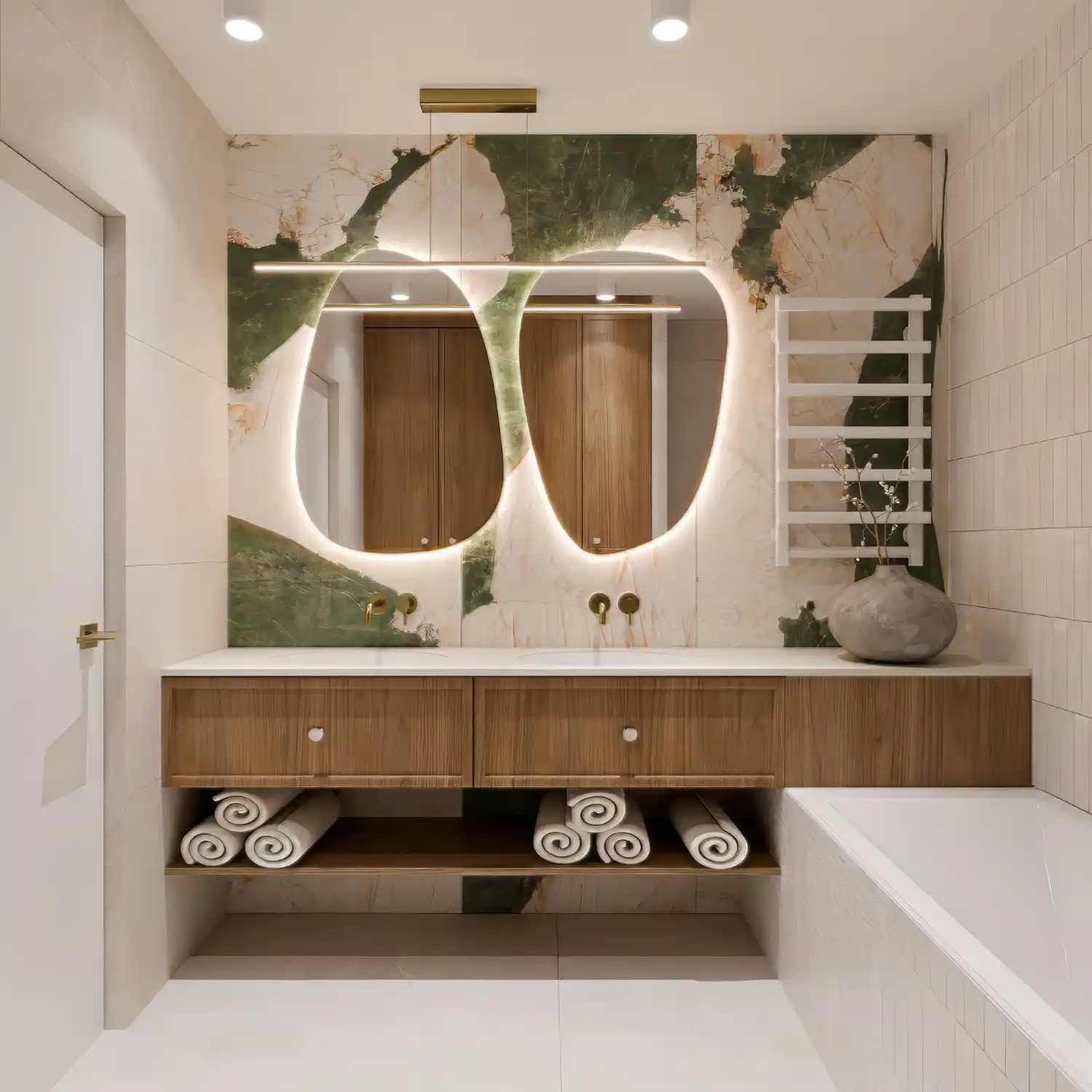
Bathroom design styles come down to a set of choices, not a single object. The tile, the vanity, the metal finish, and the light all point in one direction — or they quietly fight each other. That is why two bathrooms with the same budget can look completely different. If you have ever pinned a hundred bathrooms and still felt stuck, you are not alone. The problem is rarely taste. It is that the pieces were picked one at a time instead of as one look.
Part of our guide to Bathroom Ideas.
Looking for more ideas? Pair your chosen style with the right palette in our guide to bathroom color ideas.
Editorial field note: A bathroom with builder-grade chrome, glossy white tile, and cool overhead light usually feels flat. Swap the chrome for matte black, warm the bulbs to 3000K, and add one oak shelf. The room looks chosen, not default — before any tile comes off the wall. This guide gives you 12 clear looks to copy, so you decide the whole direction first. For more room-by-room ideas, browse our home decor inspiration as you plan. Bookmark this guide for quick reference.
Bathroom design styles are named looks built from a matching palette, fixtures, tile, and lighting. The most popular ones are modern, minimalist, farmhouse, boho, coastal, industrial, Scandinavian, Japandi, traditional, transitional, black-and-white, and nature-inspired green. Each one gives your room a clear direction. Pick the style first, then choose every faucet, tile, and light to match it — that single habit is what makes a bathroom look designed instead of assembled. For a look at what is current, see the bathroom design trends for 2026.
| Quick Takeaways | |
|---|---|
| Palette | Pick 2-3 colors and repeat them on walls, tile, and textiles. |
| Metal | Choose one finish — matte black, brushed brass, or nickel — and repeat it. |
| Lighting | Vanity light at 3000K-3500K, CRI 90+, on a dimmer. |
| Tile | Use a wet-floor tile rated DCOF 0.42 or higher for safety. |
| Wood | One wood tone across the vanity and shelves keeps it calm. |
12 Bathroom Design Styles to Inspire Your Remodel
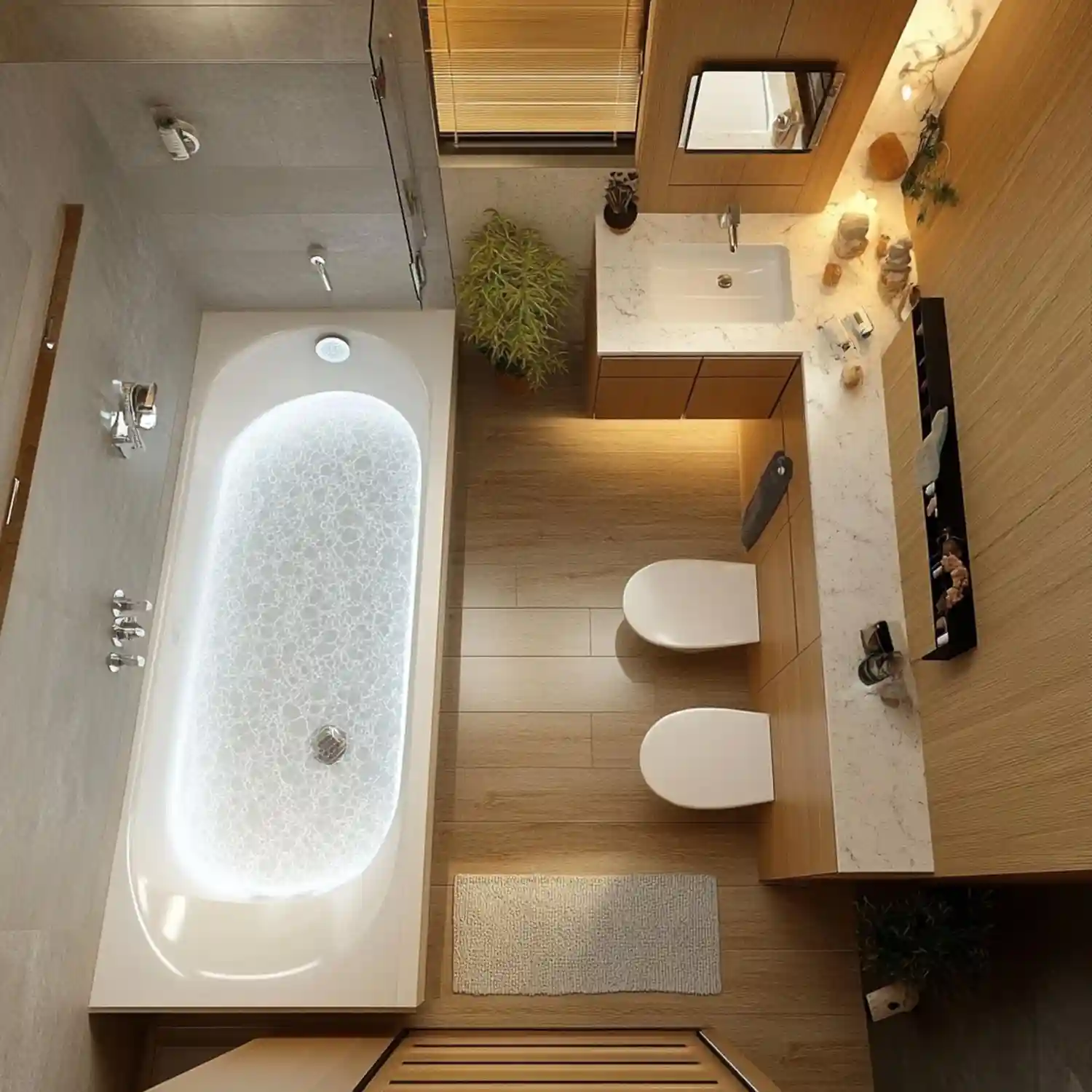
Each style below is a full look, not a single idea. You get the palette, the anchor fixture, the tile and material mix, the metal finish, and the lighting cue. Read them like menus. Most homes land on one main style with a touch of a second — a farmhouse bathroom with modern glass, or a coastal room with Japandi calm. Start with the one that matches how you want the room to feel. For dozens more real examples, browse our full library of bathroom design ideas.
1. Modern Bathroom
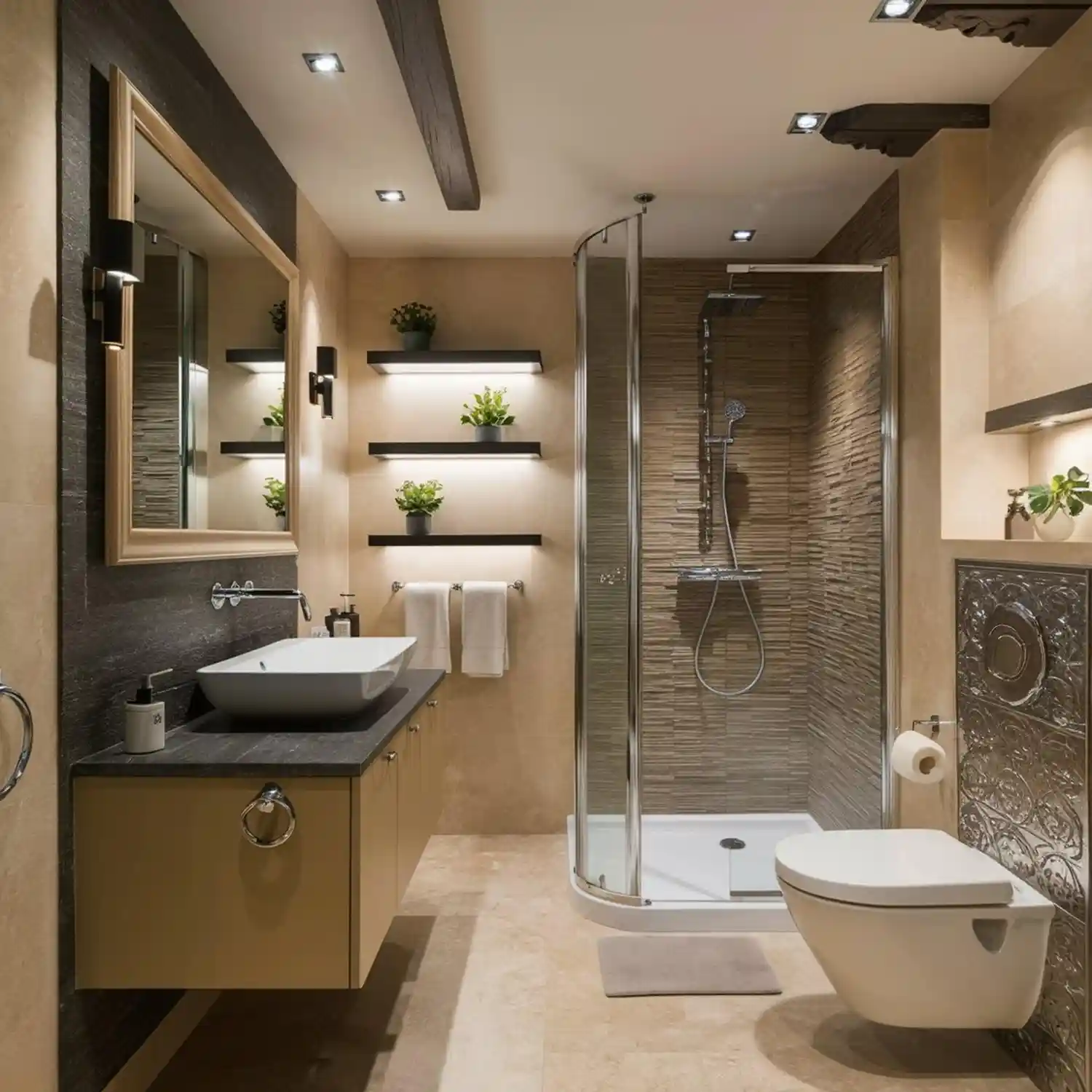
A modern bathroom leans on clean lines and clear surfaces. The palette stays tight: soft white, warm greige, and one deep accent like charcoal. A floating vanity is the anchor piece, paired with large-format porcelain tile that keeps grout lines few. Matte black fixtures and a frameless glass shower add crisp edges. Keep the counter almost empty. Warm the recessed lighting to 3000K so the room feels current, not cold. This is the base most other “bathroom ideas modern” looks build from, so it is a safe, timeless starting point.
2. Minimalist Bathroom
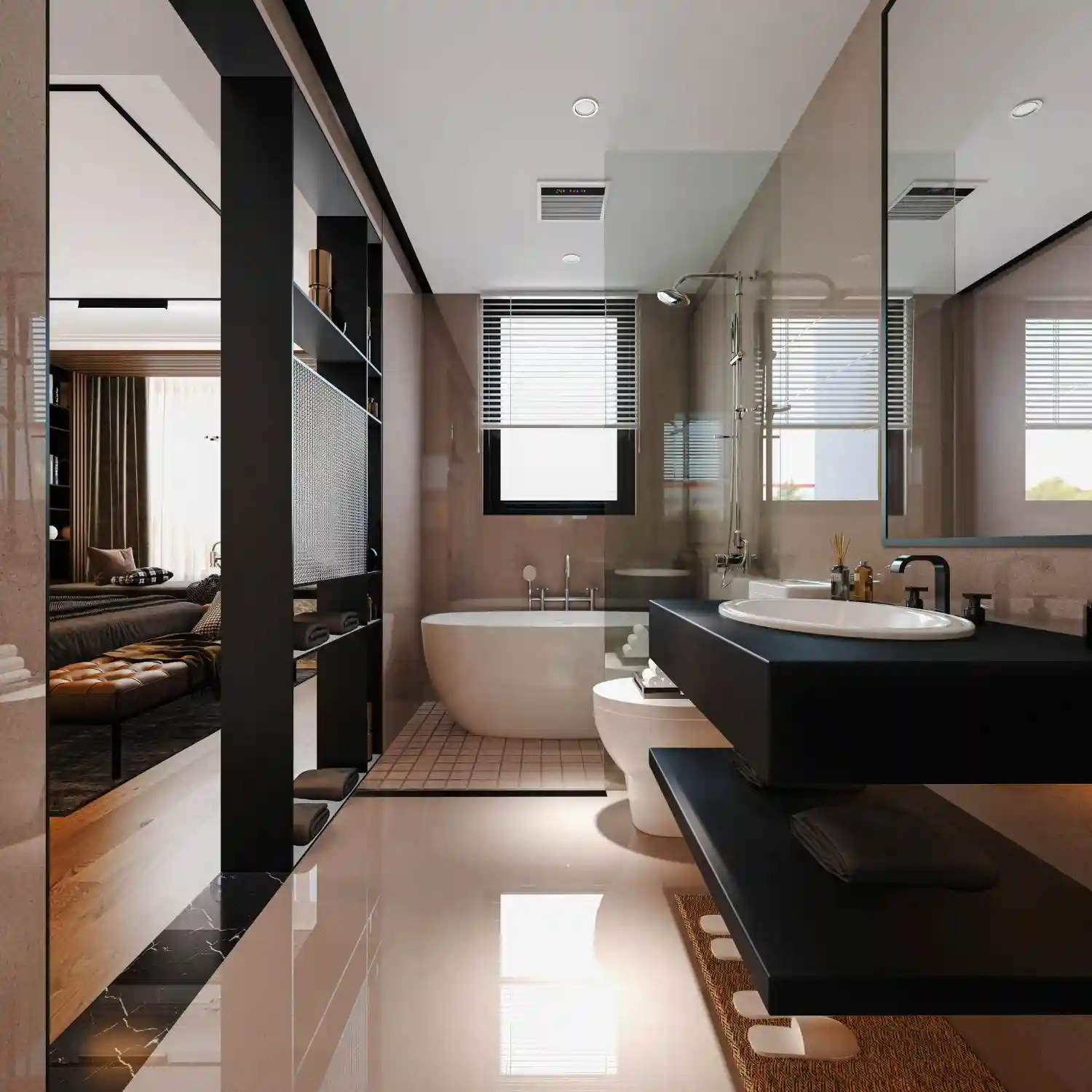
A minimalist bathroom removes everything that does not earn its place. The palette is nearly monochrome — warm white with soft greige or pale stone. A wall-hung toilet and a single-slab counter keep the floor and surfaces open. Storage hides behind flat, handleless cabinet fronts. One matte metal, usually black or brushed nickel, repeats on the faucet and towel bar. The look lives on quiet order, so ruthless storage matters more than decor. For a full breakdown, see our minimalist bathroom decor ideas for a clean, tidy space.
3. Modern Farmhouse Bathroom
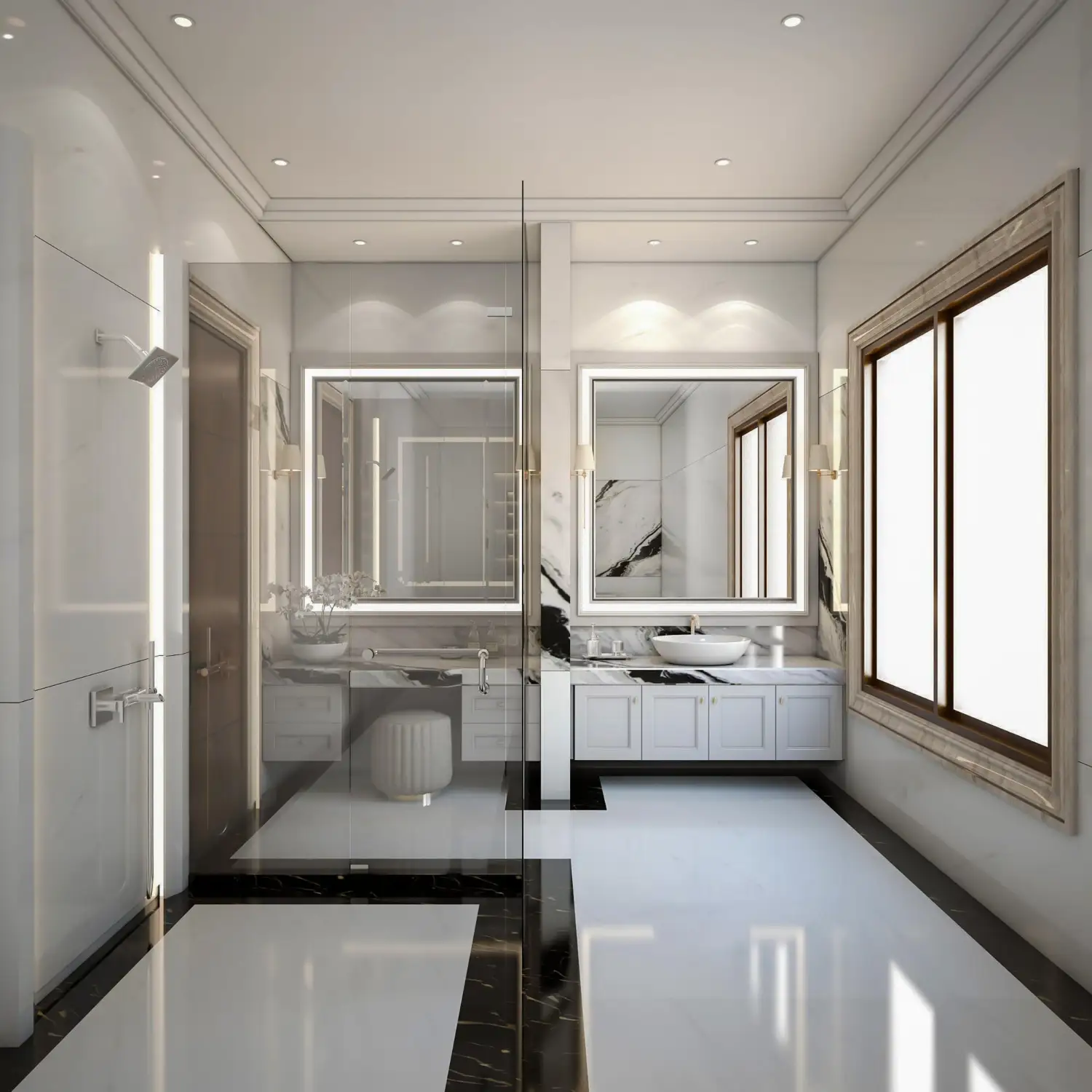
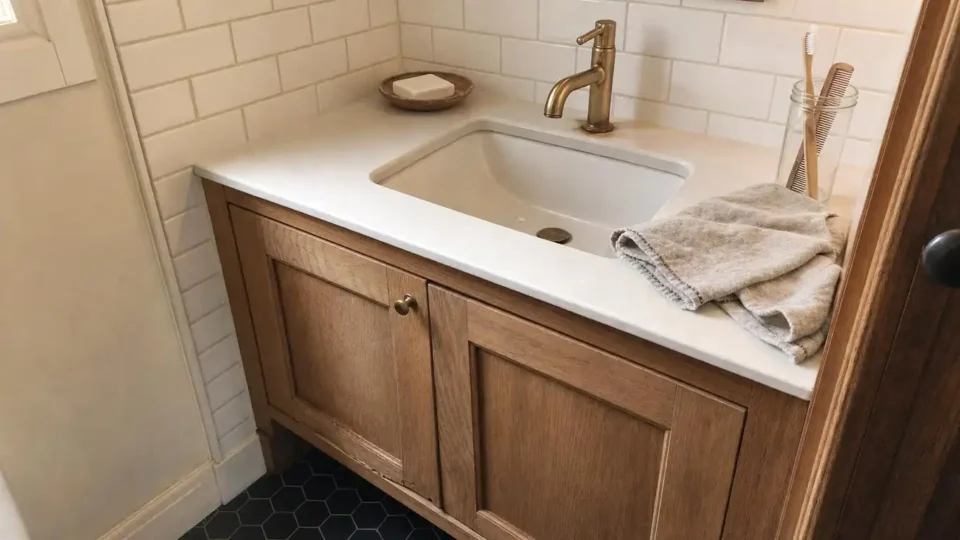
A modern farmhouse bathroom mixes rustic warmth with fresh, simple lines. The palette pairs warm white and soft cream with black and natural oak. Shiplap walls, a black-framed mirror, and a shaker vanity in warm wood set the tone. White subway tile and brushed brass or matte black taps finish it. A freestanding tub or apron sink adds the country note without the clutter. Keep textiles in linen and raw cotton. Our guide to a cozy farmhouse bathroom with timeless rustic charm walks through every layer.
4. Boho Bathroom
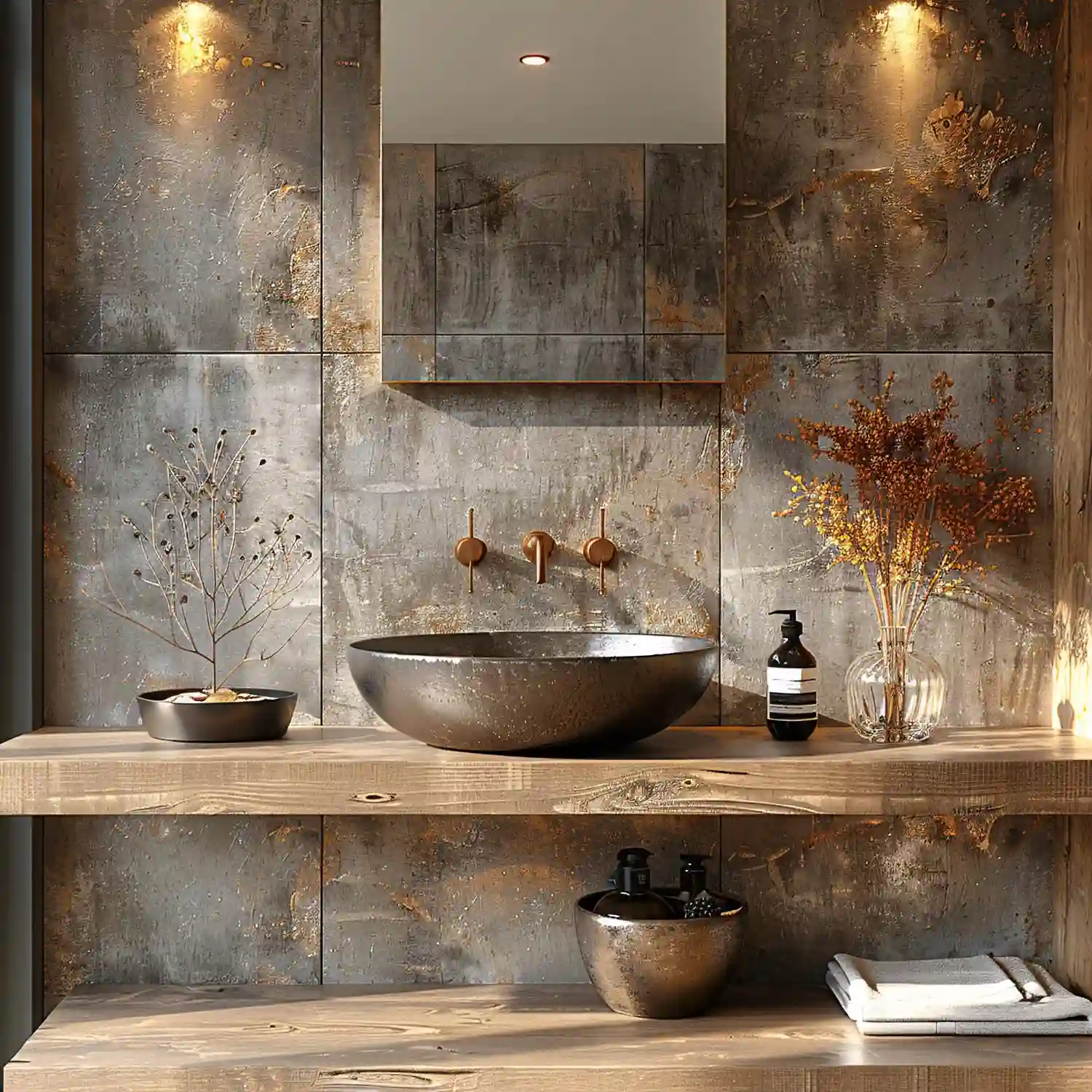
A boho bathroom is warm, layered, and relaxed. The palette runs earthy — terracotta, warm clay, cream, and muted olive. Rattan, a round jute mirror, patterned cement tile, and trailing plants carry the look. Unlacquered or aged brass fixtures warm with age, which suits the style. Add a low wood stool and a woven basket for texture. This is a look that rewards a little imperfection, so mix old and new pieces freely. Our dreamy boho bathroom inspiration shows how to keep it eclectic without feeling messy.
5. Coastal Bathroom
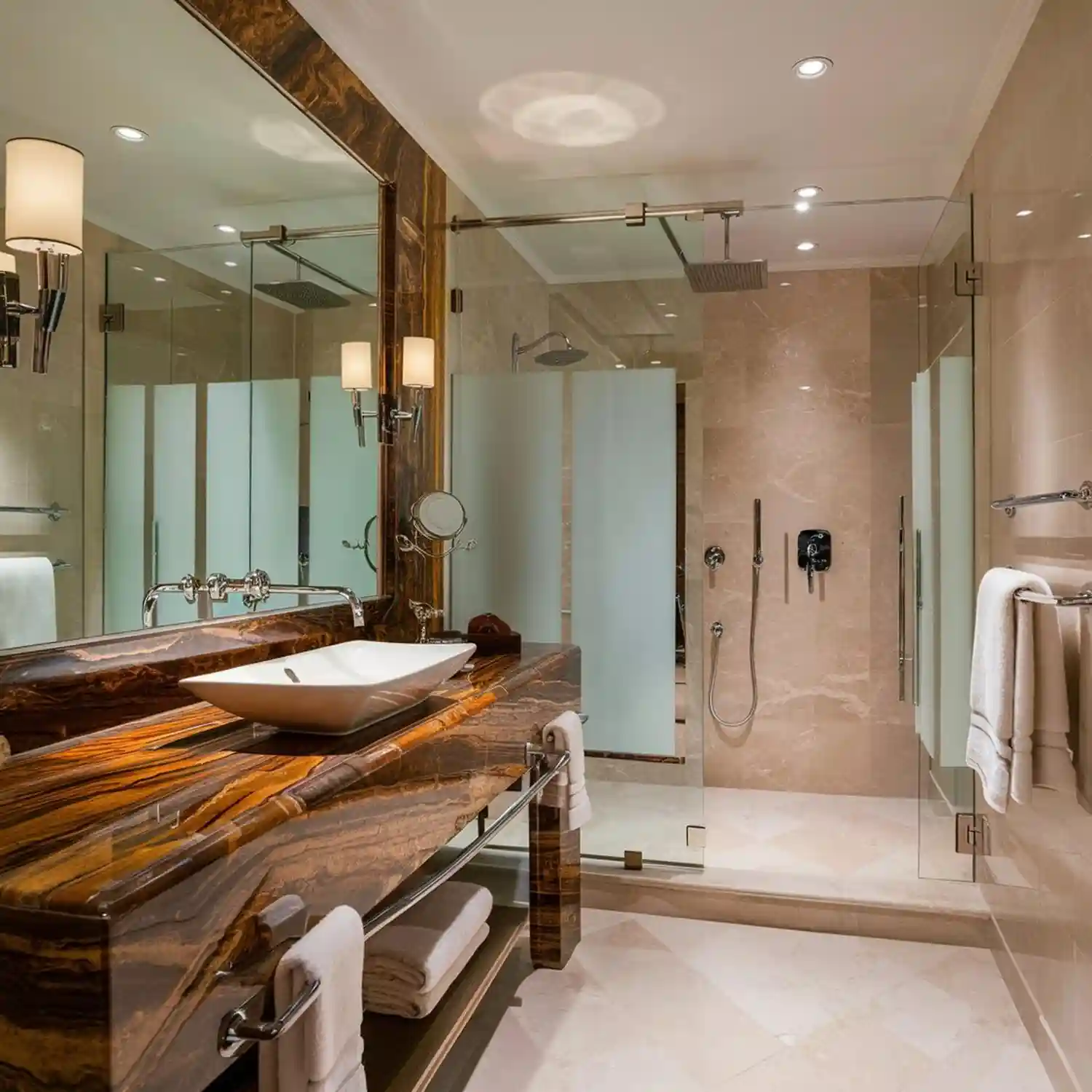
A coastal bathroom feels bright, breezy, and easy. The palette leans on soft white, washed denim blue, and light oak or seagrass. Beadboard or shiplap walls, a light wood vanity, and woven baskets keep it airy. Chrome or polished nickel fixtures look clean and wet-friendly. Natural light is the star, so keep window treatments sheer. Coastal style leans on soft white, washed blue, and light wood, which makes small rooms feel open. These coastal bathroom ideas suit beach homes and city flats alike — the look is about calm, not literal seashells.
6. Industrial Bathroom
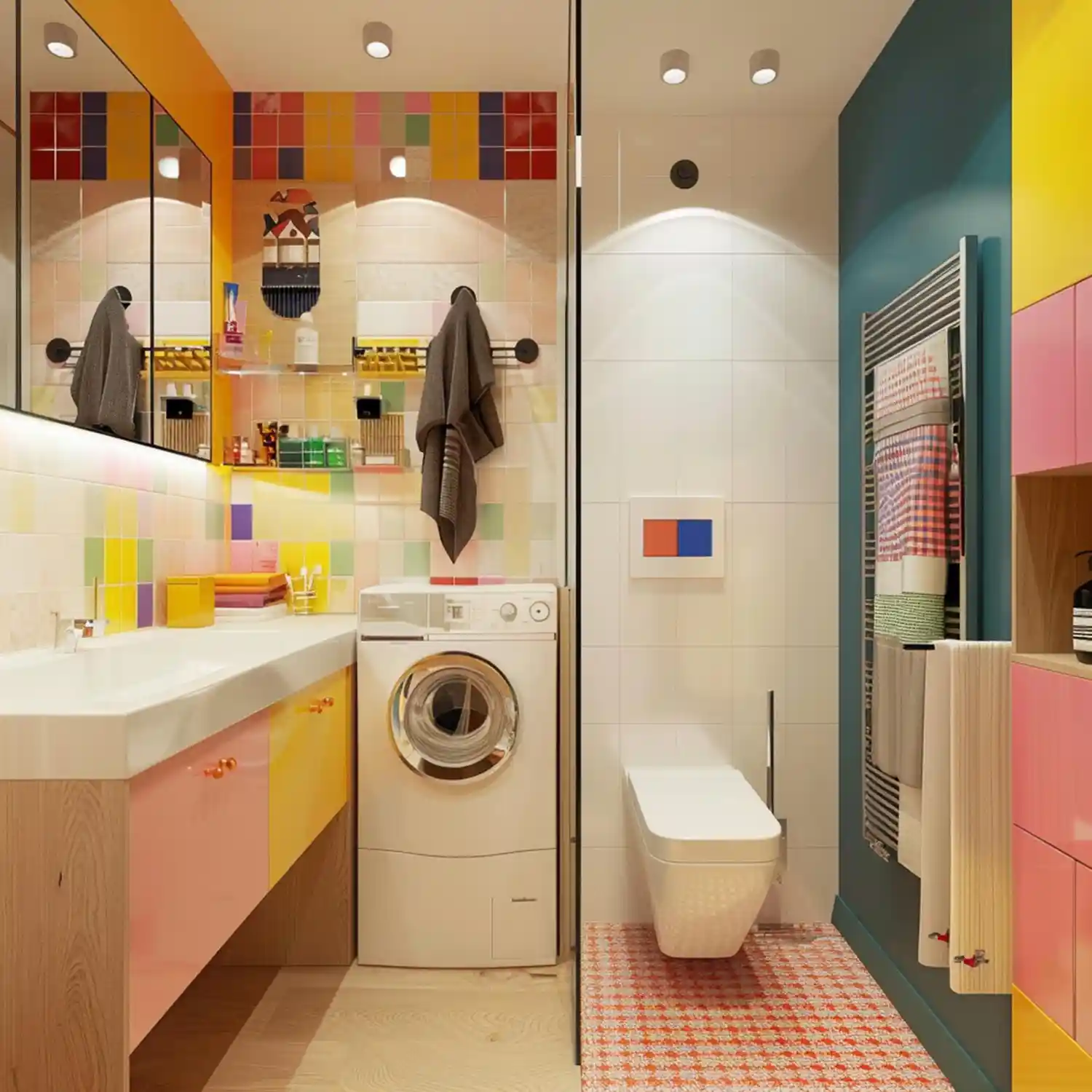
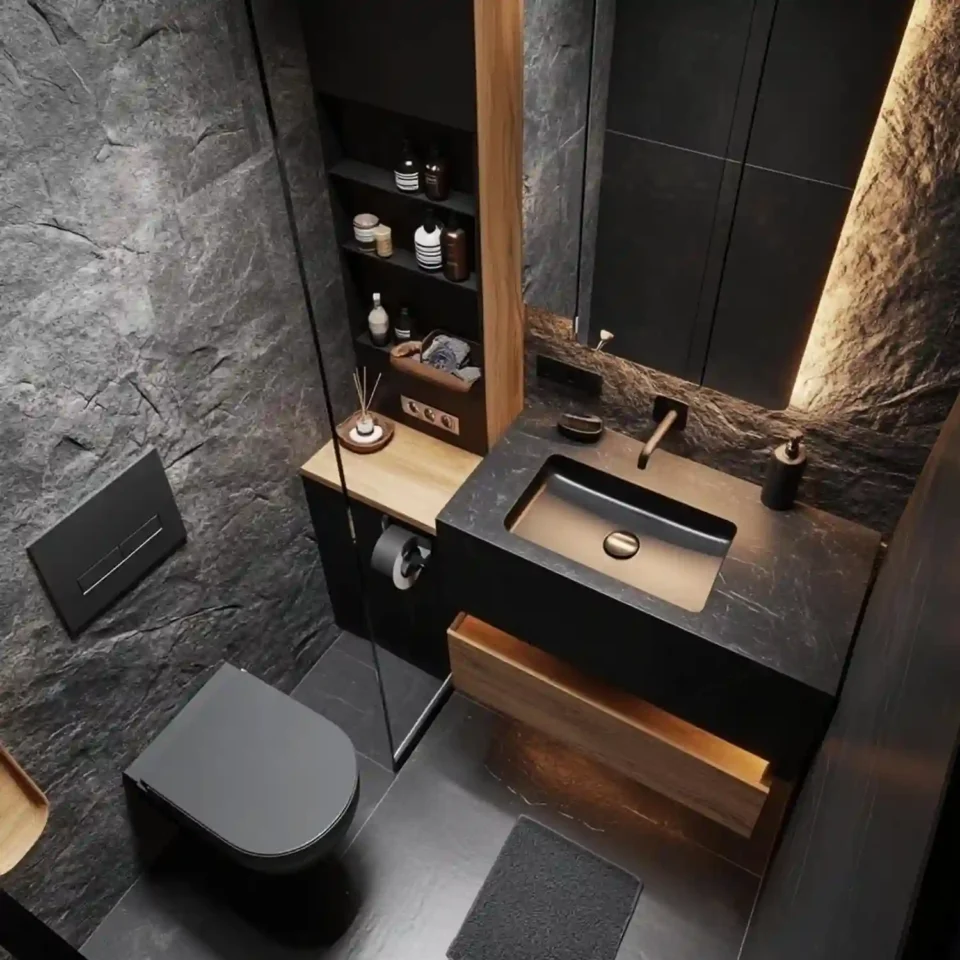
An industrial bathroom celebrates raw, honest materials. The palette is moody — concrete grey, charcoal, and black with warm wood to soften it. Exposed pipe shelving, a concrete or dark stone counter, and black metal framing set the tone. Edison-style or warm-bulb sconces keep the mood low and amber. Dark grout and matte black taps lean into the look rather than hiding it. Balance the hard surfaces with one warm oak vanity or a leather strap detail, so the room feels lived-in instead of cold.
7. Scandinavian Bathroom
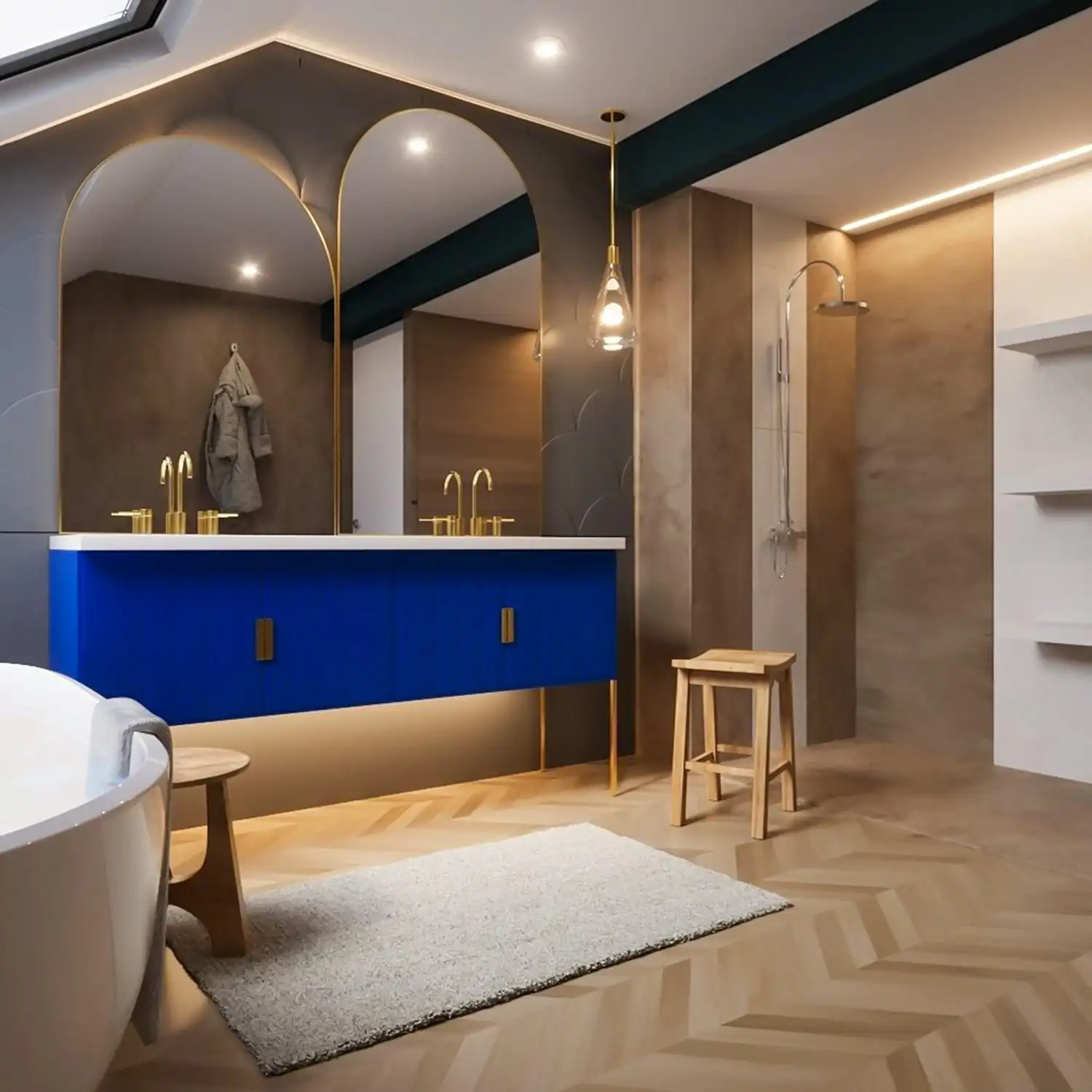
A Scandinavian bathroom is light, simple, and warm. The palette is almost all white and pale wood, with soft grey as the only shadow. Ash or birch vanities, white tile, and plenty of daylight carry the calm. Fixtures stay simple in chrome or brushed steel. Cozy textiles — a chunky bath mat, a linen robe — add the hygge warmth Scandinavian rooms are known for. The whole point is restful clarity, so keep decor to a single plant and one stack of folded towels. Nothing shouts; everything feels soft.
8. Japandi Bathroom
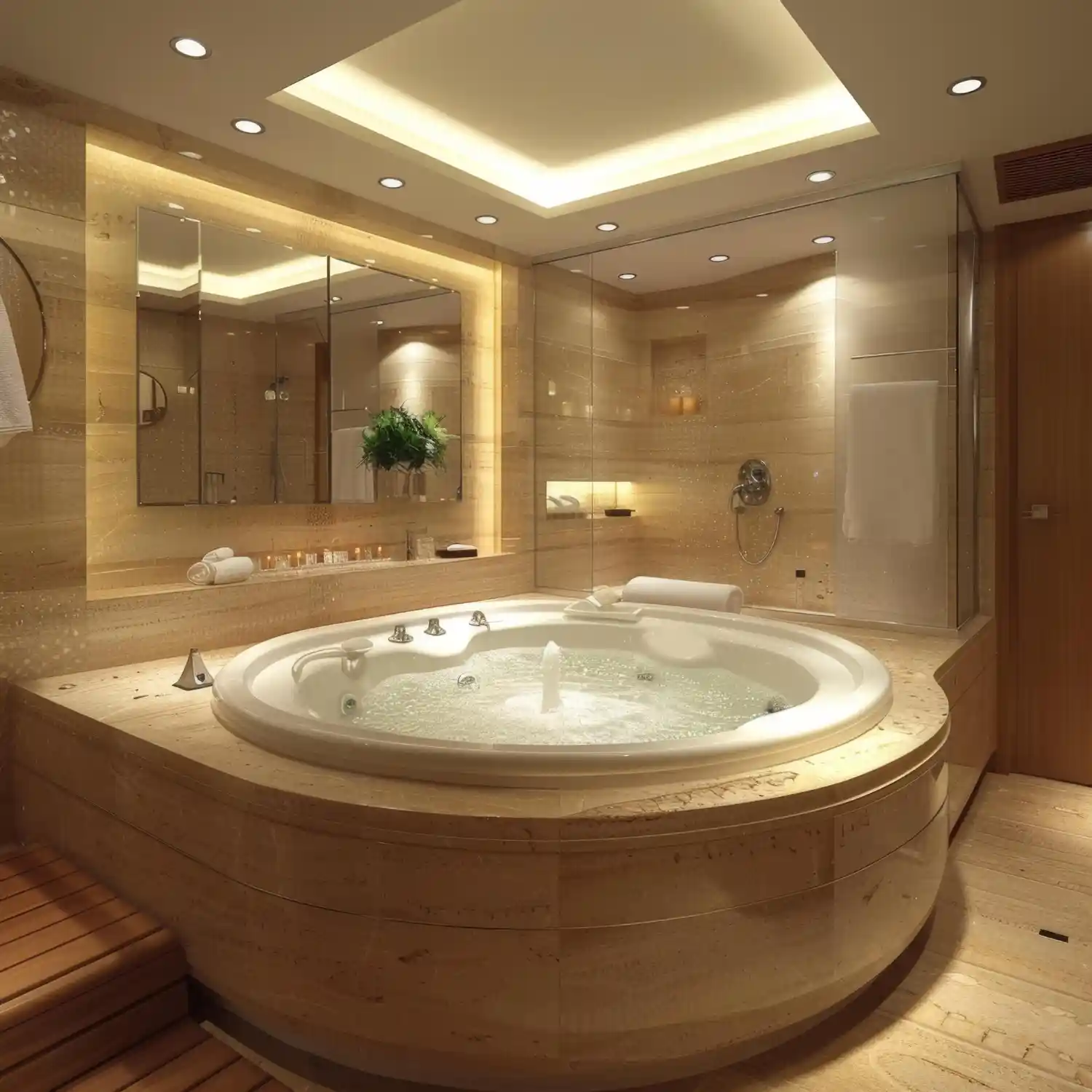
A Japandi bathroom is the calmest look here. Japandi blends Japanese wabi-sabi with Scandinavian function, so it values natural materials and quiet imperfection. The palette pairs warm greige and cream with charcoal and black. A low wood vanity, stone basin, and matte black or aged brass taps anchor the room. Textures matter more than color — smooth stone, raw oak, and soft linen. Keep lines low and surfaces clear. These “bathroom ideas japandi” work beautifully in small spaces because the tight palette and low profile make the room feel settled and open at once.
9. Traditional Bathroom
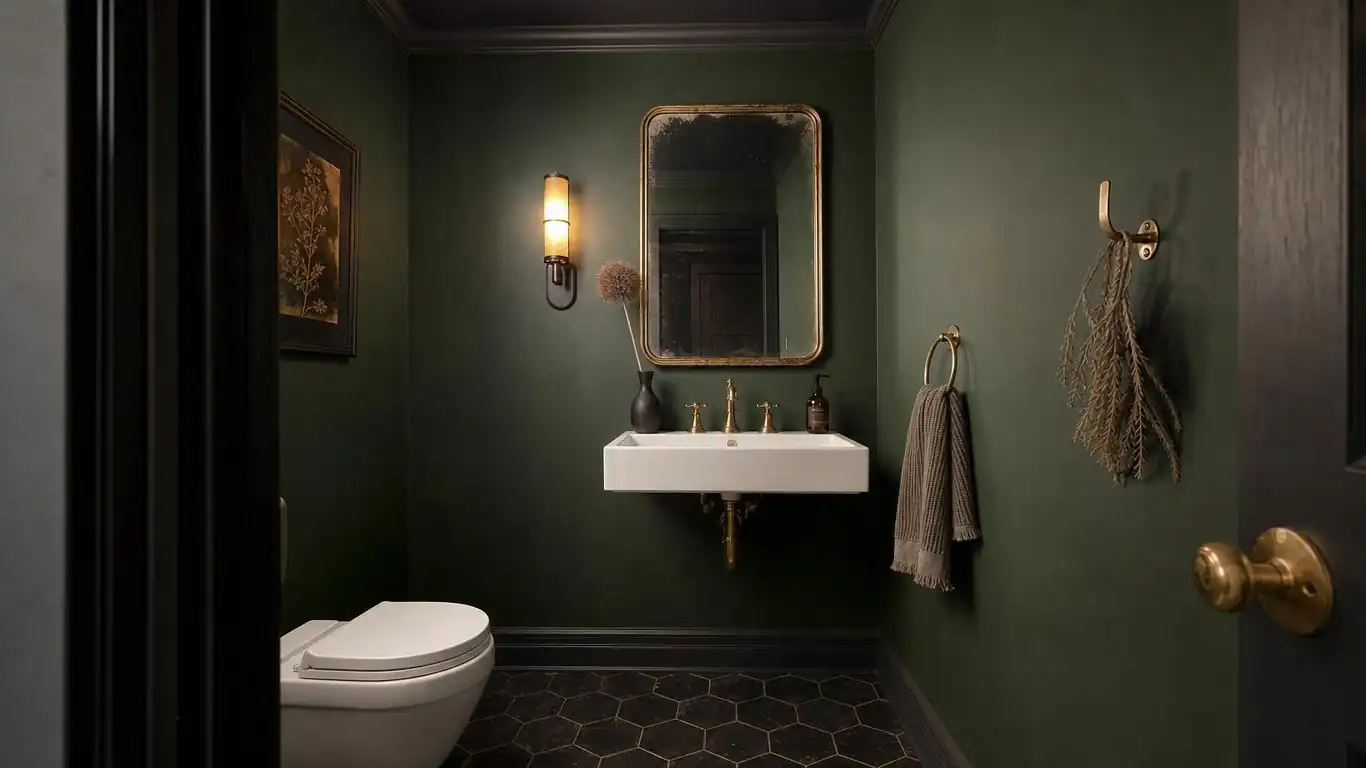
A traditional bathroom feels classic and put-together. The palette is timeless — soft white, warm cream, and pale grey with polished metal. A clawfoot or skirted tub, marble or marble-look tile, and wainscoting set the formal tone. Polished nickel or chrome fixtures, crown molding, and a framed mirror add the finish. Symmetry rules here: paired sconces, paired vanities, matched hardware. This look never dates when the palette stays quiet, which is why it suits older homes and hotel-style bathrooms. Add one fresh detail, like a modern light, to keep it from feeling stiff.
10. Transitional Bathroom
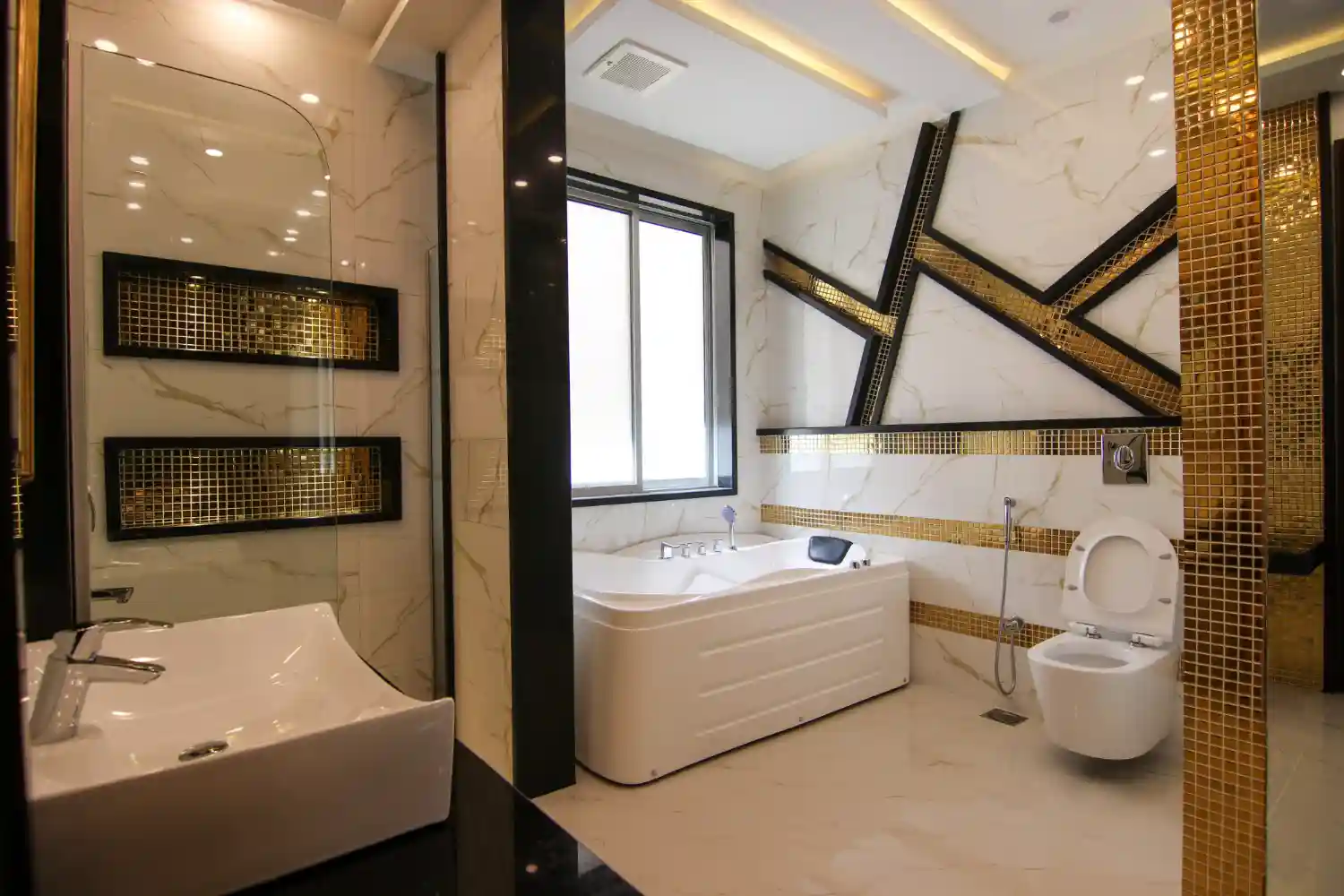
A transitional bathroom sits between traditional and modern, taking the best of both. The palette is soft and neutral — warm greige, cream, and gentle taupe. A shaker-style vanity, marble-look quartz counter, and simple subway or large-format tile keep it flexible. Brushed nickel fixtures bridge classic and current. The look avoids strong trends, so it stays fresh for years. This is the most popular choice for buyers because it feels familiar without looking dated. Think clean lines softened by warm, classic materials, with no single element shouting for attention.
11. Black-and-White Bathroom
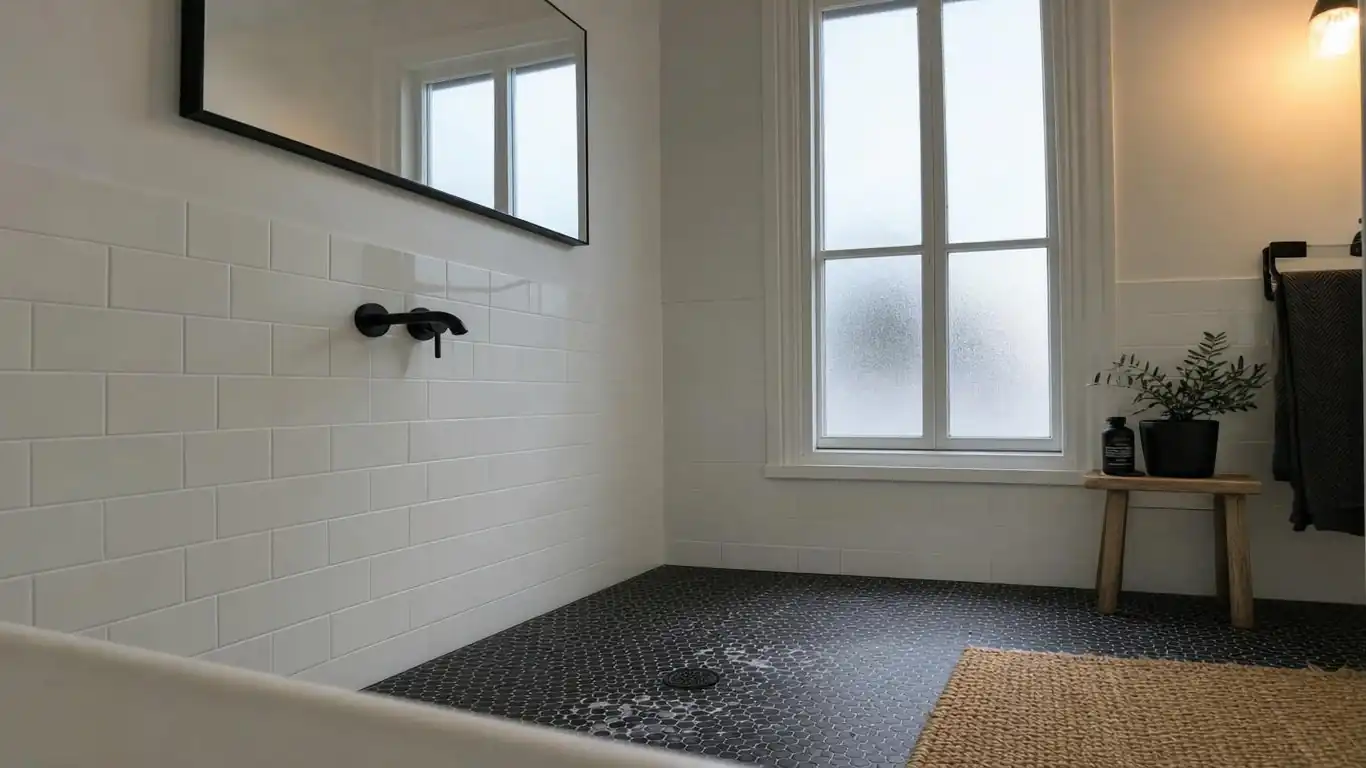
A black-and-white bathroom is bold, graphic, and endlessly classic. The palette is exactly what it says: crisp white walls, black accents, and high contrast throughout. Hexagon or checkerboard floor tile, white subway walls, and matte black fixtures carry the look. A black-framed mirror and black hardware tie it together. Add warm brass or wood in small doses if pure contrast feels too stark. This look photographs beautifully and never goes out of style. See our elegant black and white bathroom designs for a polished, modern finish.
12. Nature-Inspired Green Bathroom
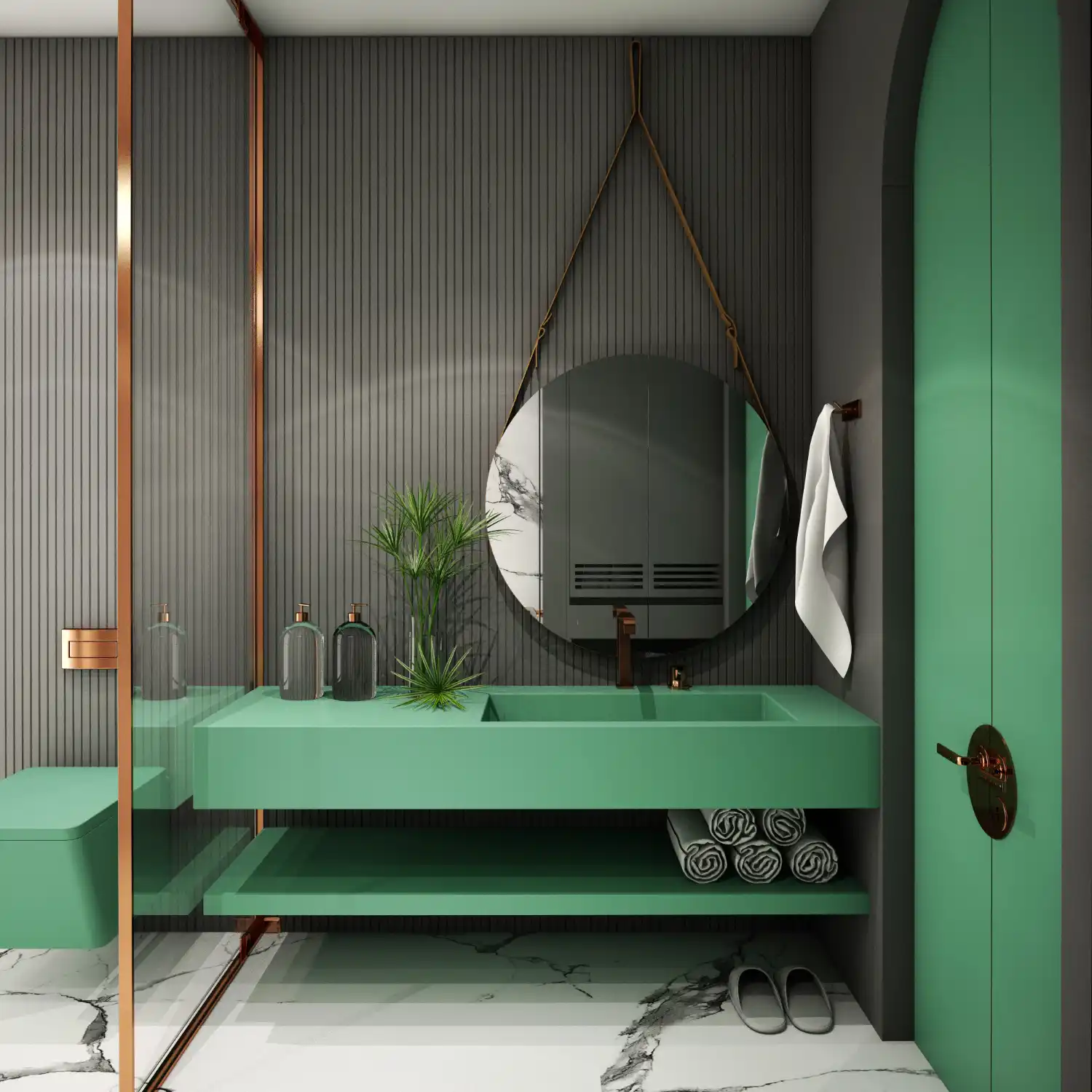
A nature-inspired bathroom brings the outdoors in through color and material. The palette centers on sage or forest green, warmed by natural wood and brass. A green vanity, botanical wallpaper, or green zellige tile anchors the room. Natural stone counters, rattan accents, and real plants complete the look. Brushed brass or aged gold fixtures pair perfectly with green. This style feels calming and grounded, which suits both small powder rooms and large master baths. Our sage green versus forest green bathroom guide helps you pick the right shade for your space.
How Do You Choose the Right Bathroom Design Style?
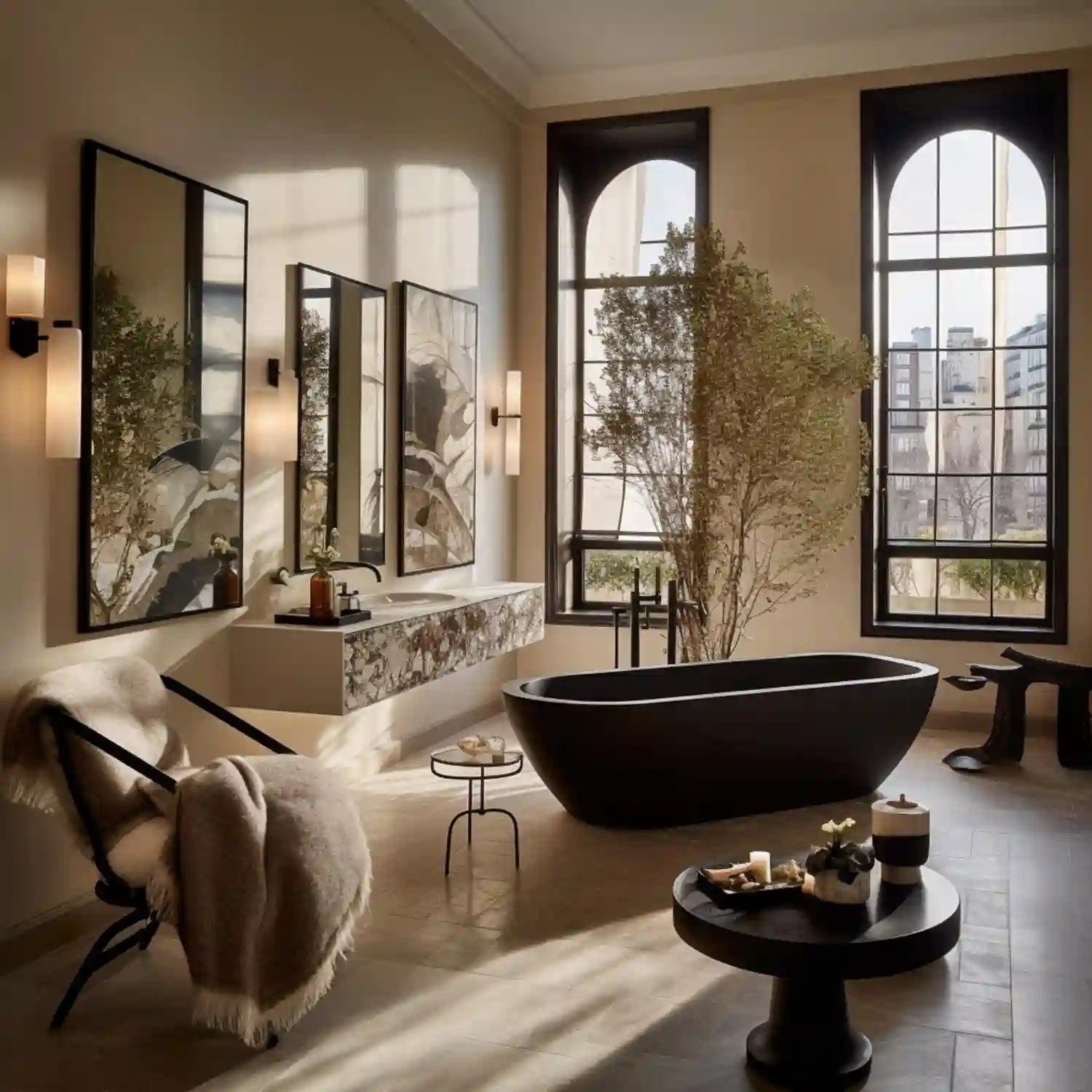
Start with the feeling you want, then match it to your home. A 1920s house wears traditional or black-and-white naturally, while a new build suits modern or transitional. Look at the rooms next to the bathroom too — a bold style beside a calm bedroom can feel jarring. The best bathroom design styles for you are the ones that fit the house, the light, and the way you actually use the space. Small, dark rooms do best with lighter palettes, and our small bathroom ideas show the layout tricks that help. Large rooms can carry moody industrial or deep green.
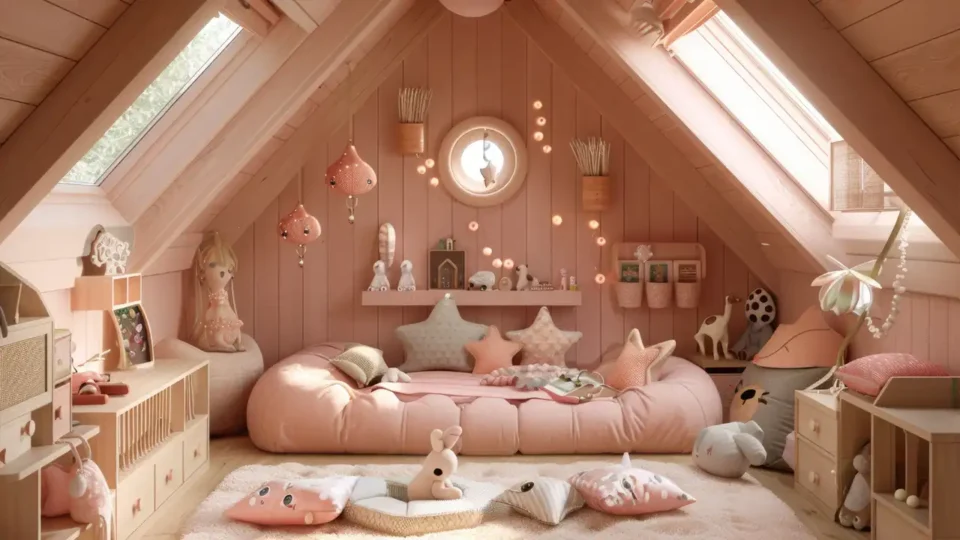
Color-led rooms are their own path. If you love one strong hue, let it drive the whole look, the way our sophisticated pink bathroom designs build around a single confident color. Your tile pattern and finish set the tone before the paint even goes up. It helps to plan the bathroom backsplash and wall tile together as one decision. Keep the palette tight, add real storage, and let the fixtures do the talking.
Use this checklist before you buy anything:
- Pick one main style and, at most, one supporting style — never three.
- Choose a 2-3 color palette and repeat it on walls, tile, and textiles.
- Lock one metal finish (matte black, brushed brass, or nickel) and use it everywhere.
- Set vanity lighting at 3000K-3500K with CRI 90+ and put it on a dimmer.
- Pick a floor tile rated DCOF 0.42 or higher so it stays safe when wet.
- Match one wood tone across the vanity, shelves, and frames.
- Add real storage first, then decor — clutter kills every style.
KEY TAKEAWAY: The style you can execute consistently beats the style you love but only apply halfway.
DESIGNER TIP: Repeat your main metal finish at least three times in the room — faucet, towel bar, and mirror frame — so the look feels planned instead of accidental.
What Does a Bathroom Style Update Actually Cost?
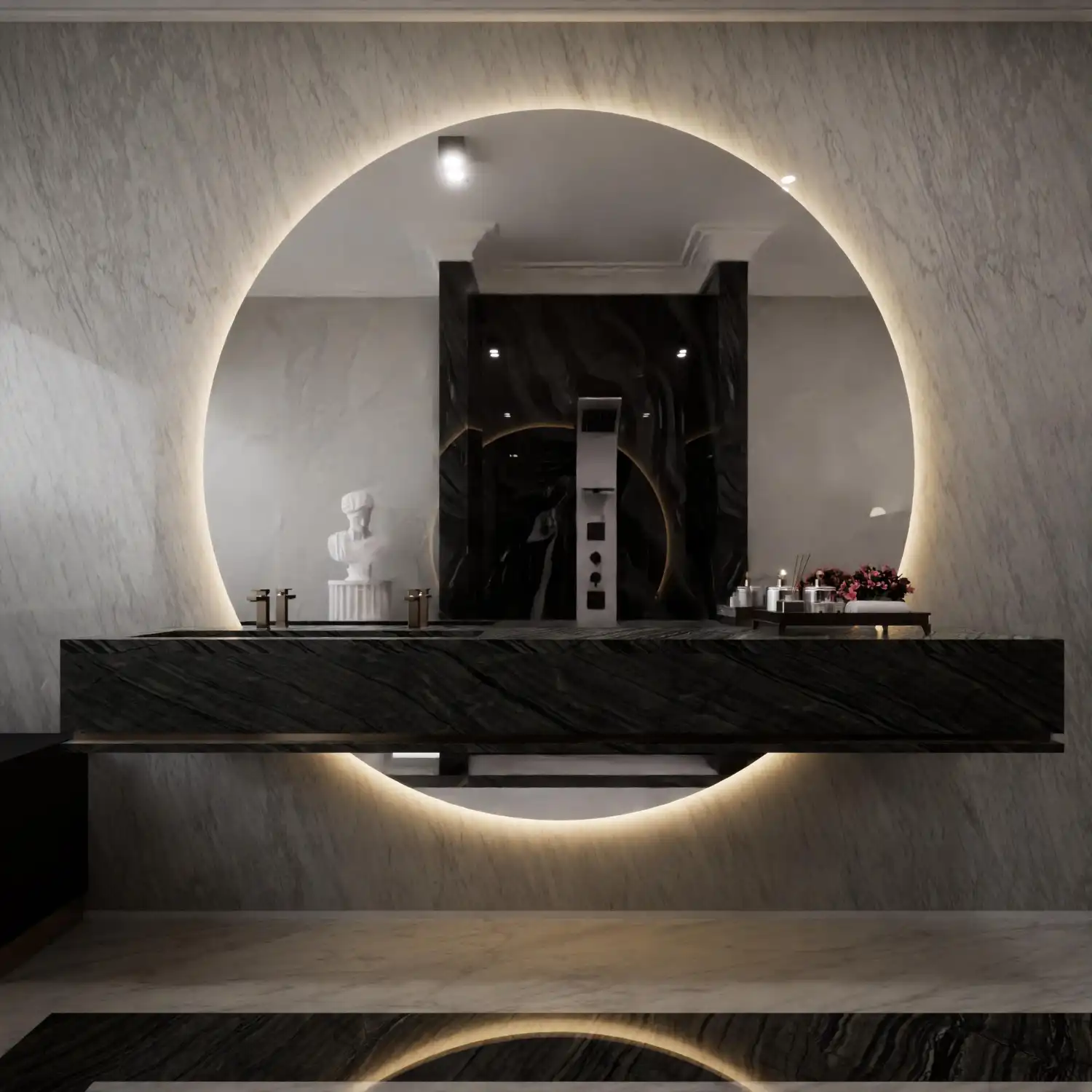
A style change does not always mean a full remodel, and it helps to gather ideas across our room-by-room inspiration before you spend. You can shift the whole look with paint, hardware, lighting, and textiles for a few hundred dollars. Bigger changes — new tile, vanity, or a tub — move you into remodel territory. According to HomeAdvisor’s 2025 remodel cost data, a minor refresh runs about $3,000 to $10,000, a mid-range remodel $10,000 to $25,000, and a full gut $25,000 to $80,000, or roughly $70 to $250 per square foot. Start with the cheap, high-impact swaps first.
| Project | Estimated Cost | Impact Level |
|---|---|---|
| Paint, hardware, mirror, and textile refresh | $150-$600 | High |
| New vanity light + matched faucet and fixtures | $250-$900 | High |
| New vanity, mirror, and accent tile | $1,200-$4,500 | Medium |
| Full style remodel (tile, tub, plumbing) | $10,000-$40,000 | Very High |
Best First Upgrade: Swap the lighting and all visible metal to one matching finish — it changes the whole style for under $900.
Skip for Now: Do not move plumbing or walls until you are sure of the layout, since that is where budgets blow up fastest.
Material Note: Marble is a calcium-based stone that is porous and etches when it meets acid, so it needs sealing and pH-neutral cleaners in a bathroom. Choose marble-look quartz if you want the look with less upkeep.
What Dates a Bathroom Fastest?
Most bathrooms look off for the same few reasons, and each one is easy to avoid once you see it.
❌ Mixing three or four metal finishes → ✅ Pick one main finish and repeat it; add a second only on purpose.
❌ Cool, blue-white overhead light → ✅ Use 3000K-3500K vanity light with CRI 90+ on a dimmer for flattering, current color.
❌ Chasing every trend at once → ✅ Commit to one clear style; let trends show up in cheap, swappable pieces.
❌ Glossy walls that show every splash → ✅ Use a satin or semi-gloss, mildew-resistant paint for a cleaner, longer-lasting finish.
Safety Note: Any tile used on a bathroom floor should be rated for wet slip resistance — a wet DCOF of 0.42 or higher is the standard, per the Tile Council DCOF guidance, and showers do better at 0.50 or above.
Frequently Asked Questions
Conclusion
The fastest way to a bathroom you love is to choose one of these bathroom design styles first, then match every faucet, tile, and light to it. Editorial field note: The rooms that feel finished usually commit to one metal and one wood tone across every fixture, so even a small space looks planned. Pick your look, and start a wider refresh anytime with our home decor guides.
Next Steps
- Pick your one main style from the 12 above and save two example images to work from.
- Lock a 2-3 color palette and one metal finish before buying anything.
- Do the low-cost swaps first — lighting, hardware, mirror, and textiles.
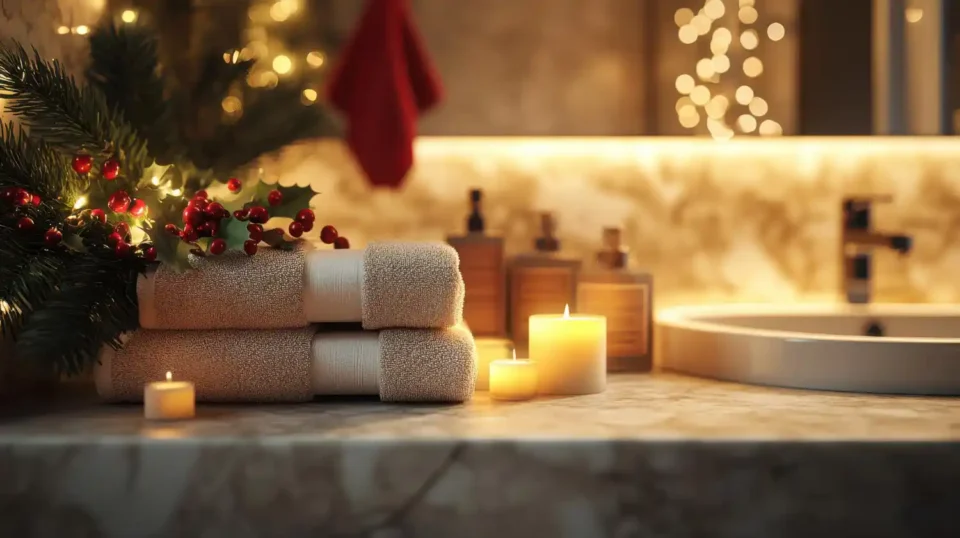
- For a seasonal update, layer in fresh touches with our spring bathroom decor ideas.
Explore Bathroom Design Styles
- 13 Scandinavian Bathroom Ideas for a Bright, Hygge-Warm Space
- 14 Japandi Bathroom Ideas for a Warm, Minimalist Retreat
- 14 Mid Century Modern Bathroom Ideas That Feel Truly Timeless
- 14 Spa Bathroom Ideas to Create a Calming At-Home Retreat
- 15 Coastal Bathroom Ideas for a Bright, Airy Retreat
- 15 Luxury Bathroom Ideas for a Five-Star Hotel Feel at Home
- Aesthetic Bathroom Designs for a Clean and Trendy Look
- Industrial Bathroom Design Works Best as an Accent, Not a Theme
- Modern Bathroom Design Is Trading Cold Minimalism for Warmth
- Modern Farmhouse Bathroom: Is Rustic Overload Finally Over?
- Timeless Bathroom Ideas: Classic Design That Never Goes Out of Style
- Vintage Bathroom Ideas: Why the Retro Revival Is Here to Stay