TL;DR
- Contrast balance: A black and white bathroom needs at least 60-70% of one tone and 30-40% of the other. Equal halves feel restless.
- Tile scale matters: Large-format tiles (24×24 inches or bigger) read as modern and calm. Small subway or penny tiles read as classic or maximalist — choose based on your style intent.
- Fixtures seal the look: Matte black hardware and brushed brass both work — but pick one metal finish and stay committed throughout the room.
- Light is the invisible third color: Warm-toned bulbs at 2700K soften the contrast. Cool bulbs (5000K+) sharpen it. Neither is wrong — they produce very different rooms.
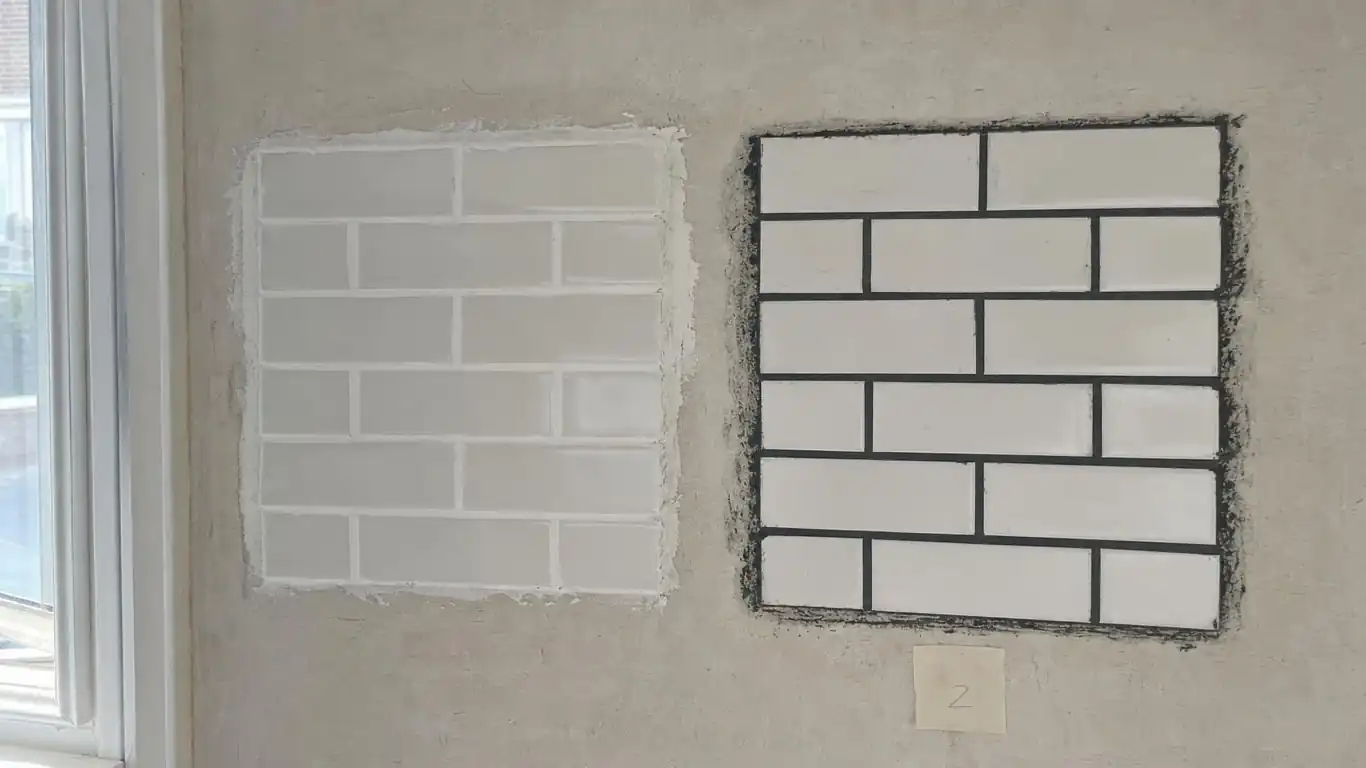
- Grout is a design decision: White grout with white tile blends seamlessly. Dark grout with white tile creates graphic pattern. Both are valid, but they signal completely different design intentions.
Why a Black and White Bathroom Stays Timeless
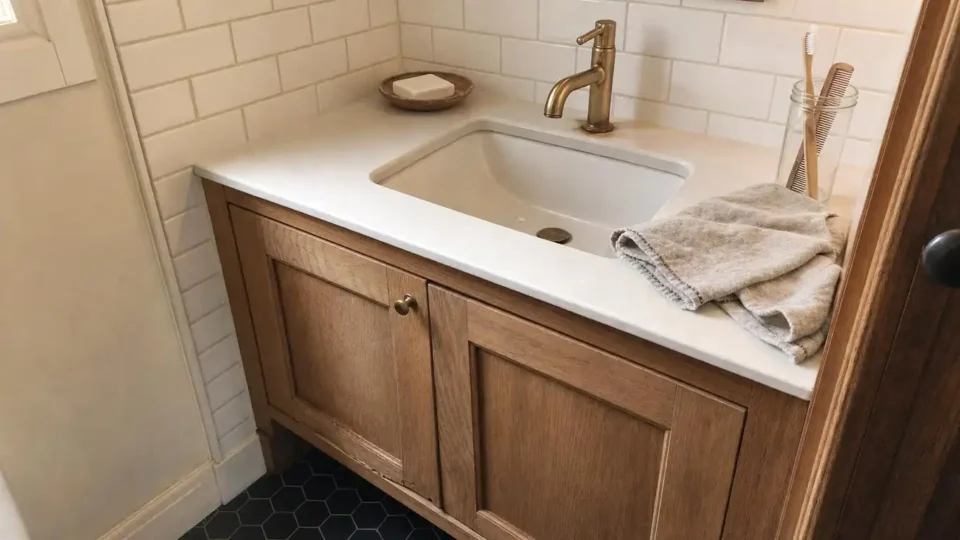
Walk into a well-designed spa at any hotel and notice what most of them have in common. Clean lines. A mostly pale surface — warm cream or crisp white — punctuated by deep charcoal or matte black. The contrast is calm, not cold. The room feels chosen rather than decorated.
That is the black and white bathroom at its best. A black and white bathroom is one of the most copied looks in residential design, yet one of the least understood. Most people get the palette right and the proportions wrong. Or they pick the right tile and the wrong grout. Or they mix metals. The room ends up feeling slightly off without anyone being able to say why.
I first applied this palette seriously in a client’s 1930s terraced house in north London, working on a tiny bathroom with a single sash window. The previous owner had tiled everything in beige — the floor, the walls, the skirting. The room was impossible to make feel bright because every surface absorbed the light the same way. In autumn 2023, we stripped it back and rebuilt around classic white metro tile, a black hex floor, and a matte black basin tap. The single window suddenly looked like a light source instead of a gap in the wall. The client said it felt like a completely different flat.
That outcome is repeatable. You just need to understand why it works. This guide covers the full picture — from definition to application to the mistakes that quietly wreck it. Browse all our bathroom design ideas and keep this as your reference whenever you are ready to commit to the palette. Bookmark this guide for quick reference.
KEY TAKEAWAY: A black and white bathroom succeeds not because of the colors themselves, but because of how contrast, proportion, and light interact across every surface.
| Quick Takeaways | |
|---|---|
| Proportion | Use the 60/40 rule — let one tone dominate to avoid a room that feels visually split. |
| Tile Scale | Large-format tiles feel modern; small tiles feel classic — match the scale to your style intent. |
| Hardware | Matte black hardware ties to the dark tones; brushed brass warms the contrast. Pick one and commit. |
| Lighting | Warm bulbs at 2700K soften the palette; cool daylight bulbs sharpen the graphic contrast. |
| Grout | Dark grout with white tile creates pattern; white grout creates seamless surface — both are design choices. |
What a Black and White Bathroom Actually Is
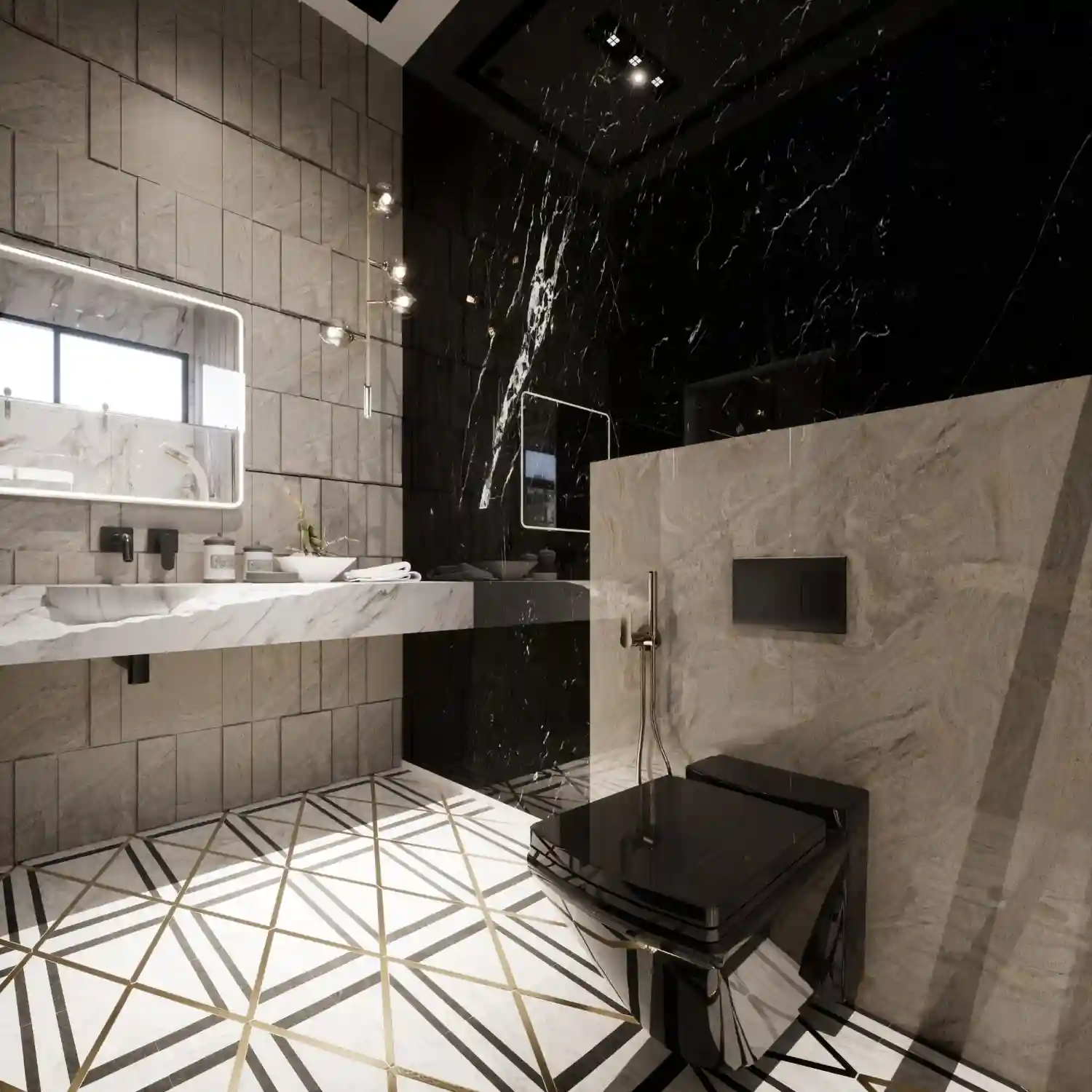
A black and white bathroom is a room built entirely around a two-tone palette — true white, off-white, or soft cream on one end; charcoal, deep grey, or matte black on the other. No third color. No wood accent, no soft green plant shelf, no sage towel. The restraint is the design.
This is not a new idea. The palette draws from Bauhaus design thinking — the early 20th-century movement that stripped rooms down to their structural relationships. Bauhaus interiors favored high-contrast palettes, geometric forms, and materials chosen for honesty rather than decoration. A black and white bathroom in 2026 is a residential version of that principle. It values clarity over warmth and structure over comfort — but when executed well, it achieves both.
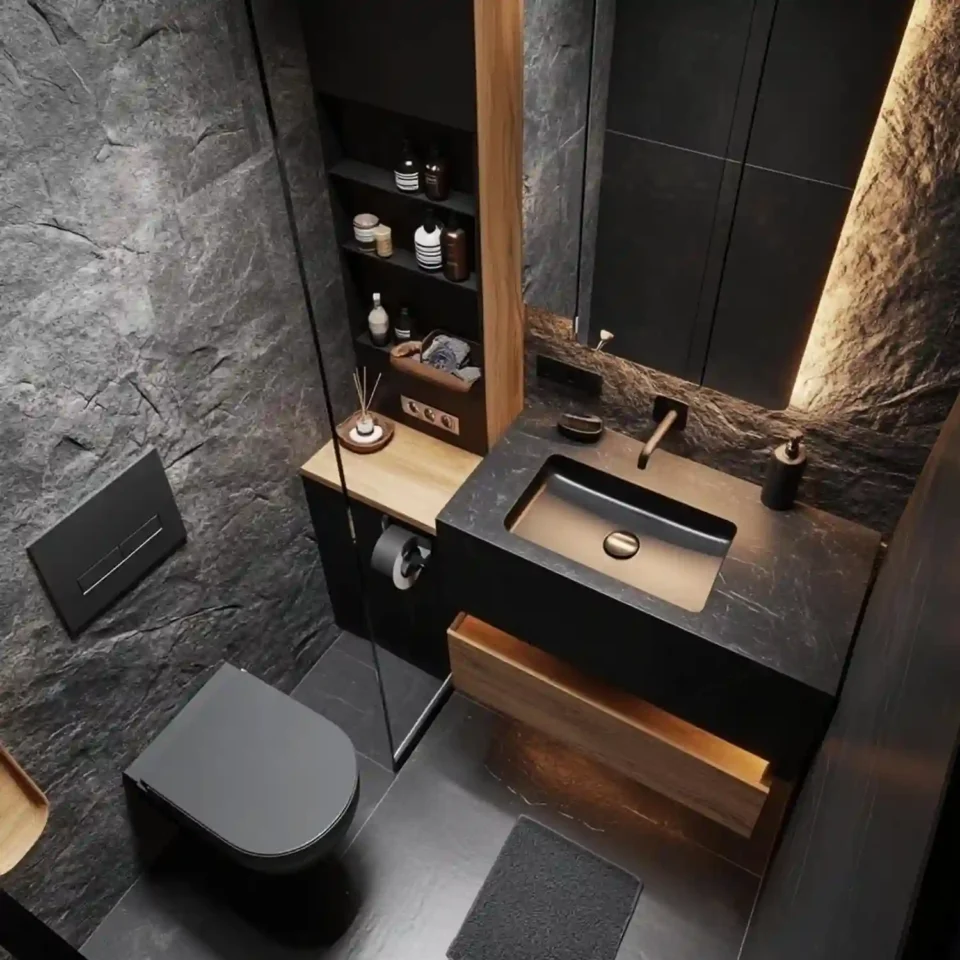
The palette has two distinct modes. The graphic mode leans into pattern — black hexagon floor tiles, white metro walls with charcoal grout, bold geometric borders. This version references the Victorian and Edwardian bathroom tradition and suits older homes. The minimal mode uses large pale surfaces with a single controlled dark element — a matte black vanity, a dark framed mirror, a black fixture set. This version suits modern builds and feels closer to Japandi and contemporary European design.
Both are valid. The mistake is mixing them without realizing you are doing it. You can explore bathroom design trends for 2026 to see where each mode sits within the wider design landscape right now.
KEY TAKEAWAY: A black and white bathroom operates in either graphic mode (pattern and texture) or minimal mode (controlled contrast) — understanding which mode you are building before you buy anything is the single most important decision.
Why Does the Black and White Palette Work So Well in Bathrooms?
Contrast makes a room feel resolved. When every surface is the same tone — all warm beige, all soft grey — the eye has nothing to travel to. The room reads as flat. The moment you introduce a true dark element against a pale field, the eye moves. Sightlines activate. The room feels complete.
Bathrooms are ideal for this because they are small, frequently tiled, and lit from a single source. High contrast makes small spaces feel more defined, not smaller. A black and white bathroom that uses white as the dominant tone reflects light efficiently across every surface. The darker elements anchor the space and prevent the room from feeling clinical. For layout and storage strategies in tight quarters, these small bathroom ideas pair perfectly with a high-contrast scheme.
Materials behave differently under contrast. Ceramic tile in soft white has a surface sheen. Matte black has no sheen at all. That difference in light absorption creates visual depth in a room where depth is hard to generate otherwise. Marble and travertine both respond beautifully to this palette — their natural veining reads as a quiet grey-on-white pattern that ties both tones together without adding a third color. For a parallel, see how minimalist bathroom decor ideas use the same single-tone principle — black and white simply applies it with higher contrast.
KEY TAKEAWAY: High contrast works in bathrooms because small tiled spaces have natural sightlines that activate when the eye has a light surface and a dark element to move between.
How to Apply a Black and White Bathroom at Home
A black-and-white bathroom looks effortless but relies on a few key rules. Work through these — the 60/40 balance, tile scale, fixture finish, lighting, and grout — to get a crisp, intentional result.
Start With the 60/40 Rule
The 60/40 proportion rule is the foundation of any black and white bathroom that feels balanced rather than chaotic. One tone takes 60-70% of total surface area. The other takes 30-40%. Equal halves produce a room that feels restless — the eye has no place to land.
In a standard bathroom, white or soft cream should be the dominant tone in almost every case. White reflects light, makes the room feel larger, and gives the eye a resting place. Use matte black or deep charcoal as the accent — the floor tile, the vanity unit, the fixture set, the mirror frame. A room that is 65% white and 35% black is balanced. A room that is 50/50 reads as striped.
This rule applies even in graphic designs. A bathroom with black hex floor tiles, white subway wall tiles, and charcoal grout is still roughly 65% pale — the walls take far more visual real estate than the floor.
DESIGNER TIP: In a small bathroom under 40 square feet, push the white percentage even higher — to 70-75%. Let the dark element be one surface only: the floor or the vanity, not both.
Choose Your Tile Scale for Your Style Intent
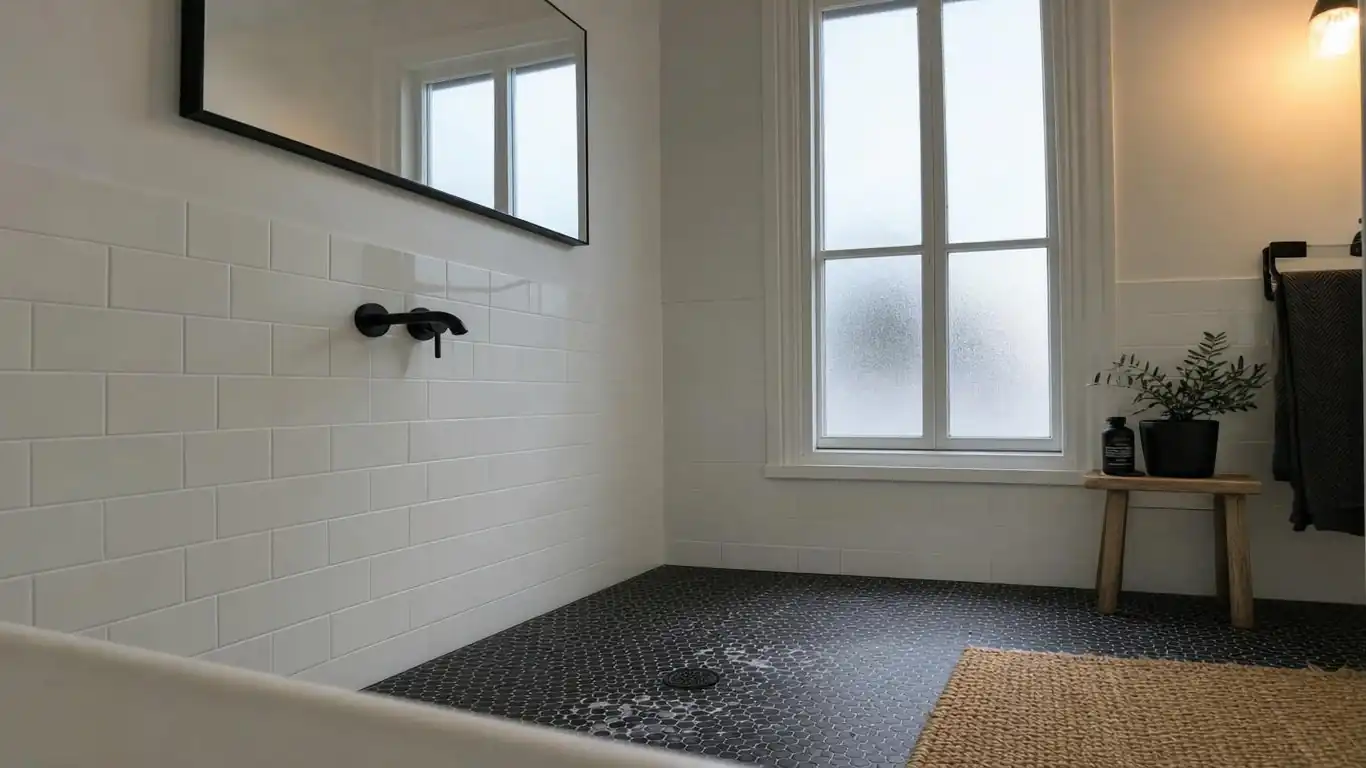
Tile scale determines whether your black and white bathroom feels modern and quiet or classic and graphic. These are two different rooms. Decide which one you want before ordering anything.
Large-format tiles — 24×24 inches, 24×48 inches, or 12×24 inches for walls — feel contemporary. They reduce visible grout lines. The surface reads as smooth and uninterrupted. This is the minimal mode. Smaller tiles — classic 3×6 inch subway, 1-inch penny rounds, small hex — create visible grid patterns across the surface. They read as more decorative and energetic. This is the graphic mode.
The strongest approach pairs a large-format white tile on the walls with a small-scale patterned black tile on the floor. The contrast of scale adds dimension while keeping each individual surface calm. Bathroom backsplash ideas show how tile scale changes the mood of a room beyond just the color choice.
Pick Your Fixture Finish and Commit
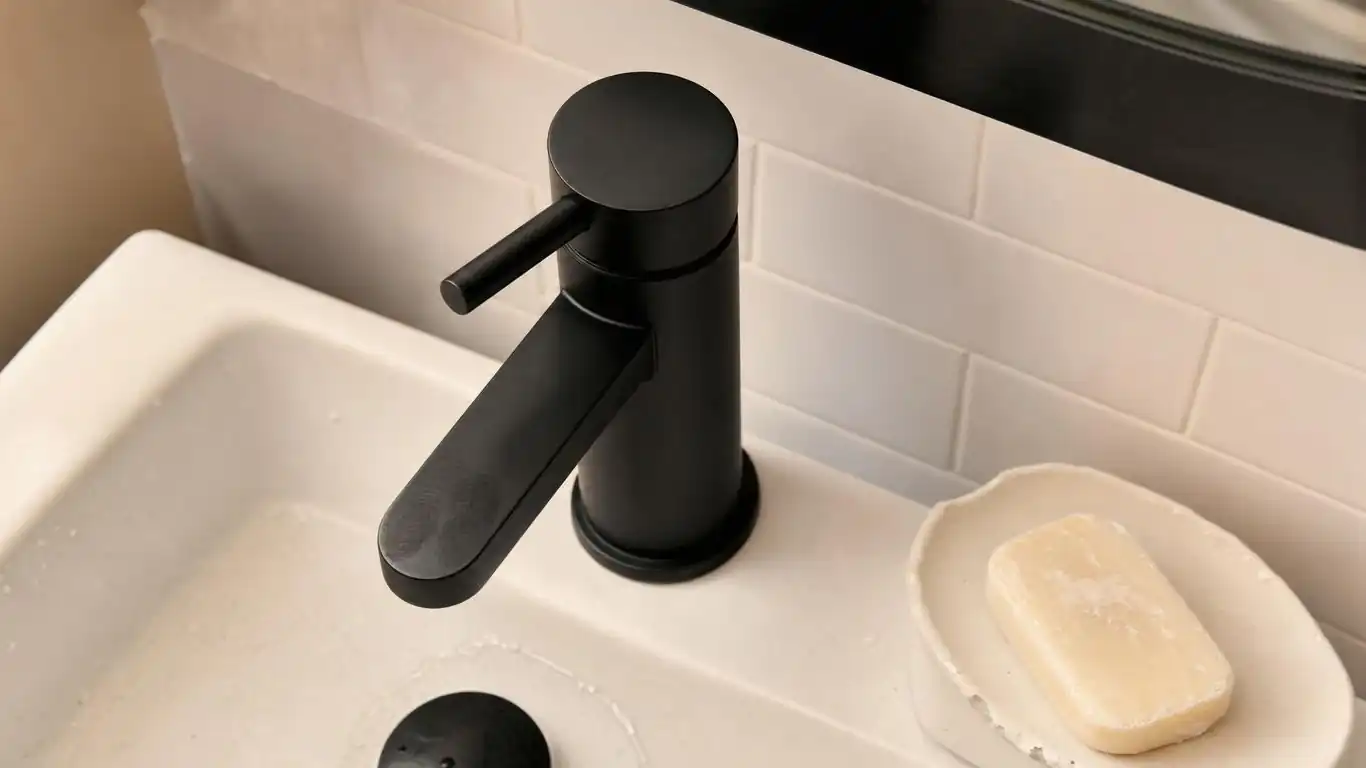
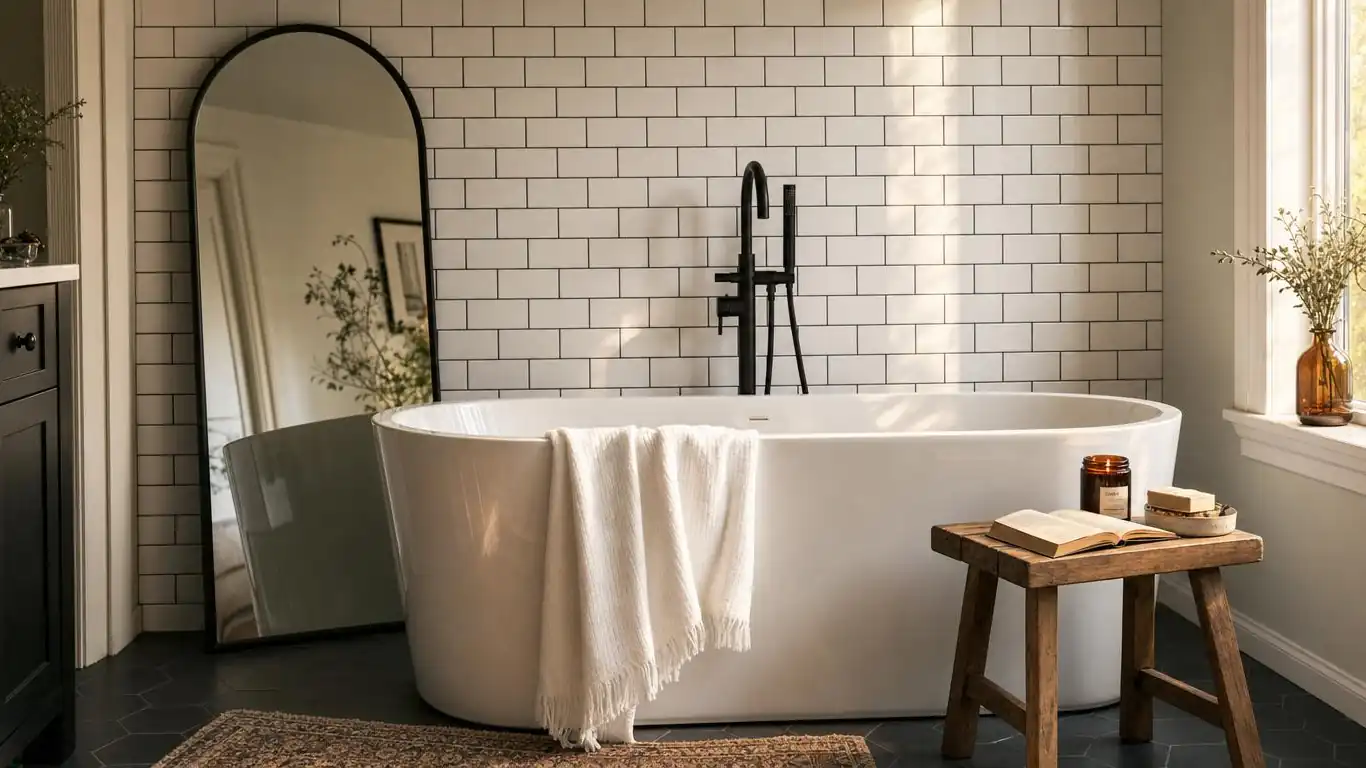
Fixtures in a black and white bathroom are the moment where the room declares its personality. Matte black fixtures — basin taps, shower head, towel rail, toilet roll holder — tie directly to the dark elements of the palette. The room feels graphic, cohesive, and slightly dramatic. Brushed brass fixtures warm the contrast. They pull the room toward the Japandi end of the spectrum — cool structure with a warm metallic note. Chrome fixtures keep things crisp and clinical.
Matte black is the most common choice and for good reason — it ties the palette together cleanly. The non-negotiable rule is to use only one metal finish throughout. A bathroom with matte black taps, chrome towel rails, and brushed brass soap dispensers has three competing signals. None of them wins. Pick one and stay consistent from the first to the last piece of hardware you install.
DESIGNER TIP: Order fixture samples before tiling. Matte black taps vary significantly between brands — some sit closer to dark grey, some are true black. Hold the tap against your tile sample in natural light before committing to either.
Plan Your Lighting Before You Plan Anything Else
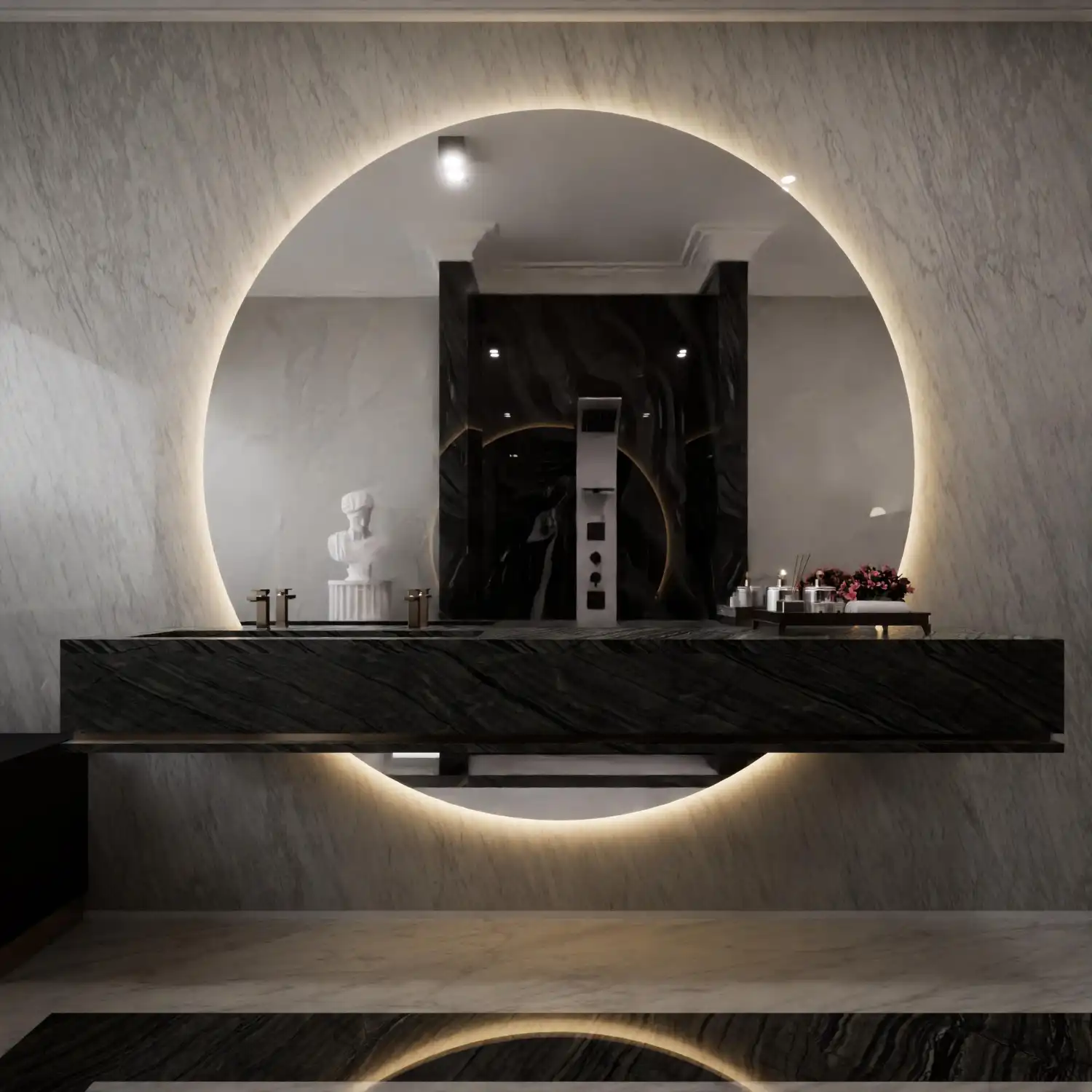
Lighting is the invisible third element in every black and white bathroom. It does not add color, but it changes how every surface feels. A warm bulb at 2700K softens the contrast — white feels creamy, black feels charcoal rather than sharp. A cool daylight bulb at 5000K sharpens everything. White tiles look white-white. Black fixtures look precisely black. This version feels more like a design studio than a home bathroom.
Neither temperature is wrong. The lighting choice should be made before the tile choice — because a warm-toned tile under a cool bulb can look greenish. Layered lighting works best: a recessed ceiling downlight for ambient coverage, wall-mounted sconces at either side of the mirror to eliminate facial shadows, and a backlit mirror as a third layer. Use dimmable fittings where possible — the ability to lower the light level at night transforms the bathroom from functional to restful.
12 minimalist bedroom ideas for 2026 apply the same layered lighting logic to sleeping spaces if you want to extend the principle beyond the bathroom.
Use Grout as a Design Decision, Not an Afterthought
Grout is one of the most overlooked decisions in a bathroom, and one of the most visible once the room is finished. The wrong grout color can undermine months of planning.
White grout with white tile creates a seamless surface. The tile pattern disappears and the wall reads as one unified plane. This is quieter and feels more contemporary. Charcoal or dark grey grout with white tile makes every tile joint visible. The grid pattern becomes a graphic element. This is more energetic and suits the Victorian or maximalist end of the black and white spectrum.
The most dramatic option is white tile with black grout. It turns even a simple subway tile into a statement. It is also the hardest to maintain — dark grout shows efflorescence and soap residue more visibly over time. A penetrating sealer applied immediately after grouting protects it for years. Sealed dark grout in a quality cement-based formula holds its color without staining.
KEY TAKEAWAY: Grout color is a design decision that changes the personality of your tile — white grout creates seamless surfaces, dark grout creates graphic patterns, and the choice should match your intended style mode from the start.
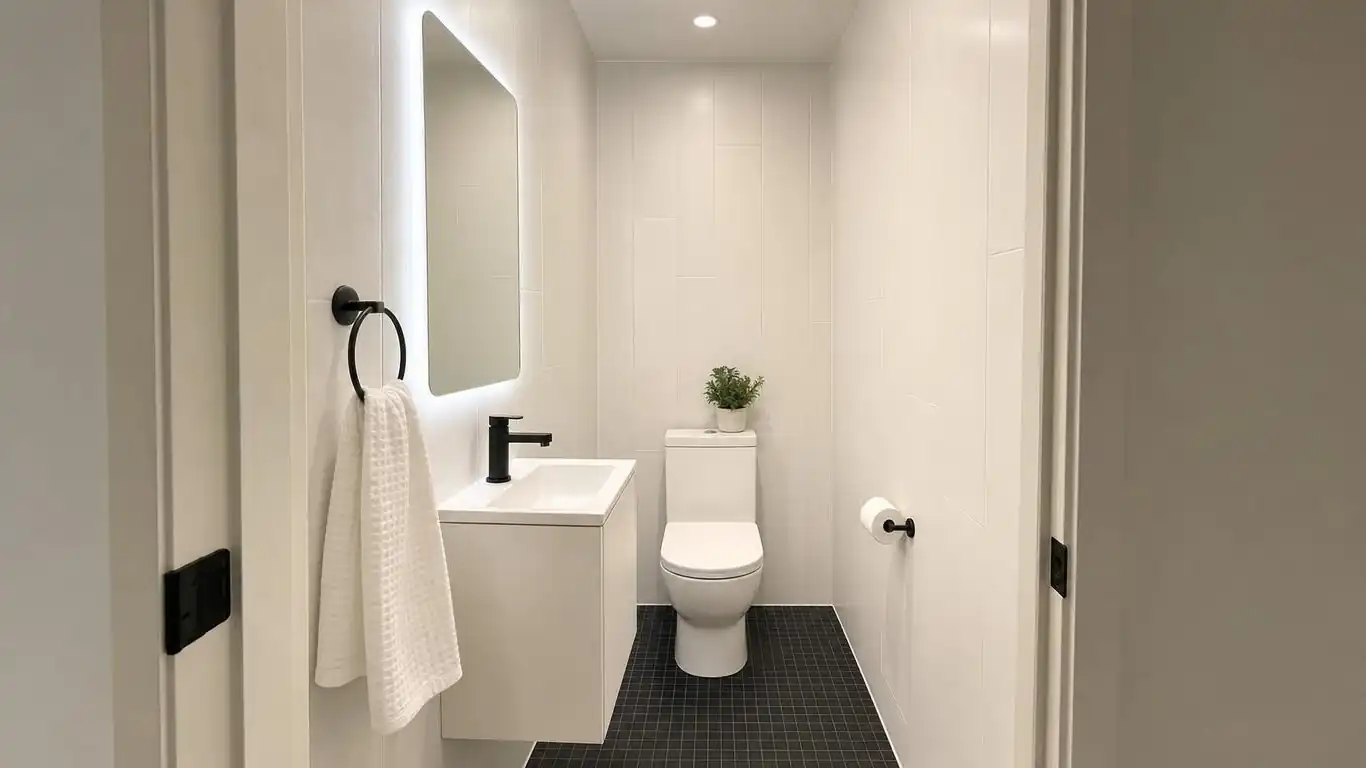
A Recent Black and White Bathroom Project
A Recent Project:
In late spring 2025 I worked on a bathroom in a 1970s terraced house that had been badly renovated in the early 2000s — beige ceramic everywhere, chrome fittings oxidizing at the joints, and a single bare bulb overhead. The clients wanted something clean but not cold. We chose 24×12 inch soft white wall tiles with grout matched exactly to the tile color — the surface reads as seamless. The floor was 2×2 inch matte black mosaic. Matte black fixtures throughout. Two wall sconces flanked the mirror at shoulder height with 2700K bulbs. The room photographs as a true black and white bathroom, but the warm sconce light makes it feel welcoming rather than clinical. The clients said it was the first bathroom they had looked forward to using.
What Most People Get Wrong in a Black and White Bathroom
❌ Going 50/50 on tone split → ✅ Apply the 60/40 rule. Let white dominate to give the eye a rest point and keep the room feeling open.
❌ Mixing metal finishes → ✅ Pick one finish — matte black, brushed brass, or chrome — and use it on every hardware piece in the room.
❌ Choosing grout color without testing it → ✅ Apply a small test patch and photograph it under both natural and artificial light before grouting the full room.
❌ Using a cool white bulb without checking the tile → ✅ Test your lighting temperature against your actual tile sample. Cool bulbs can make ivory or warm-white tiles look grey or greenish.
KEY TAKEAWAY: The most common errors in a black and white bathroom are proportion mistakes and hardware inconsistency — both are invisible until the room is nearly finished and very expensive to reverse.
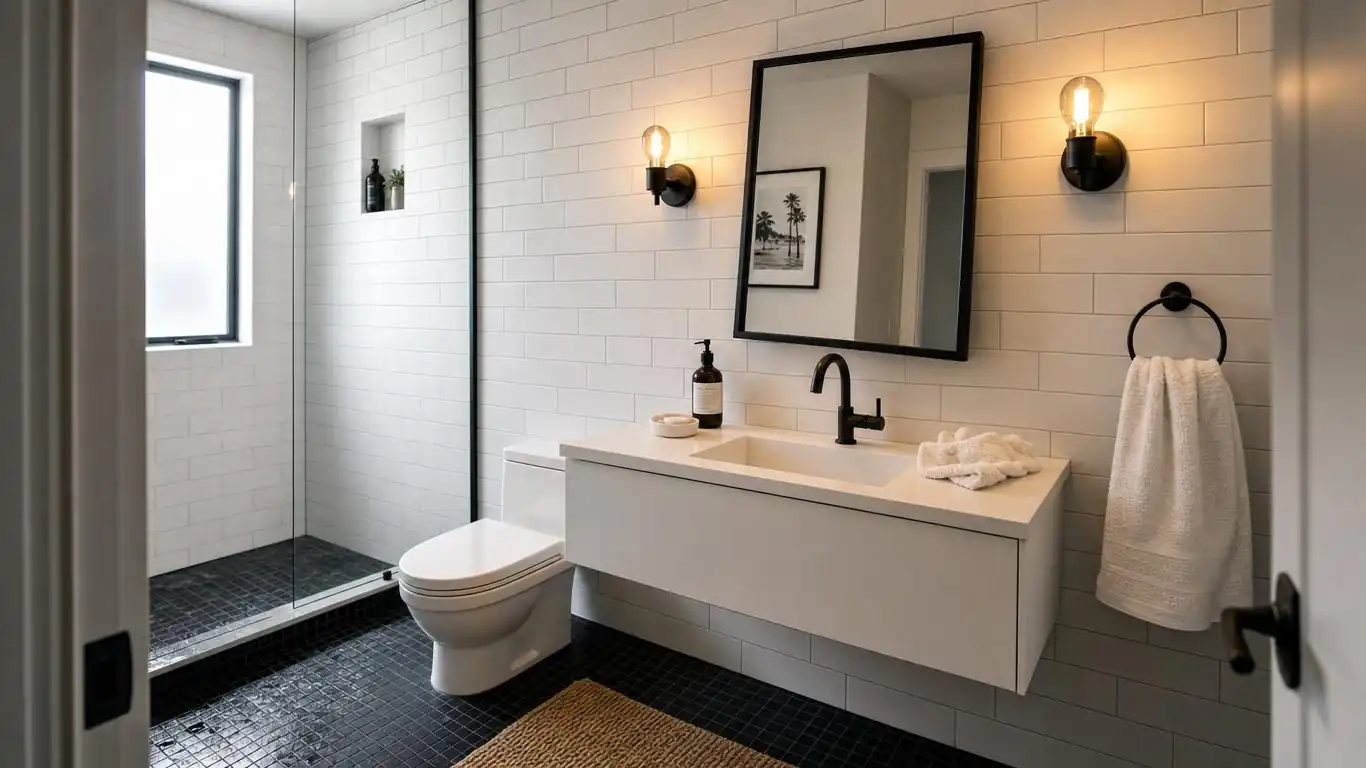
What Does a Black and White Bathroom Cost?
Black and white bathroom renovations vary widely depending on tile choice, fixture quality, and whether you are tiling the full room or just one feature surface. The palette itself is not inherently expensive — the most budget-friendly version uses standard ceramic subway tile and matte black hardware from mid-range suppliers. The premium version uses natural stone, book-matched marble slabs, and designer fixture sets.
| Project | Estimated Cost | Impact Level |
|---|---|---|
| Swap fixtures to matte black (taps, towel rail, accessories) | $150-$400 | High |
| Re-tile floor only with black hex or mosaic tile | $400-$900 (supply + labor) | High |
| Full wall and floor re-tile (ceramic, standard size) | $1,800-$4,500 | Very High |
| Full renovation with natural stone, custom vanity, designer fixtures | $8,000-$20,000+ | Very High |
Budget-conscious renovators often get the biggest visual return by changing just two things: the floor tile and the fixtures. A new black hex floor and a set of matte black taps will redefine the palette of a room without touching the existing wall tile — provided the wall tile is a neutral white or cream. For practical budget guidance, smart design hacks for decorating a small bedroom apply the same prioritization logic to other rooms, and the budget decor section offers a broader framework for cost-conscious renovation.
KEY TAKEAWAY: Swapping the floor tile and fixtures delivers the highest visual return per dollar in a black and white bathroom renovation — a full wall re-tile is not required to establish the palette.
Special Considerations for Small and Awkward Bathrooms
Small bathrooms and awkward floor plans require a few adjustments to the standard black and white approach. The principles stay the same, but the proportions shift.
In a bathroom under 35 square feet — a typical UK terraced house bathroom or a city apartment wet room — the 60/40 rule tips further toward white. Push the pale tone to 75-80% of all surfaces. Keep the dark element to the floor only, or to a single accent wall behind the vanity. This approach feels grounded and chosen without making the room feel smaller. Tiny living room ideas apply the same logic of dominant-pale with controlled-dark accent in tight floor plans.
In a bathroom with an awkward niche, a sloped ceiling, or a corner shower, use the dark tone to frame the irregular feature rather than fight it. A dark tile inside a shower niche turns a structural quirk into a visual accent. A matte black frame around an off-centre mirror acknowledges the asymmetry and makes it look chosen. 12 functional ways to arrange furniture in very small bedrooms covers how to handle irregular room geometry in related spaces.
Long, narrow bathrooms benefit from a horizontal tile layout on the walls — a 3×12 inch tile laid in a horizontal running bond pattern makes the room feel wider. Dark floor tile in a smaller-format mosaic creates a strong ground plane without adding visual weight to the walls.
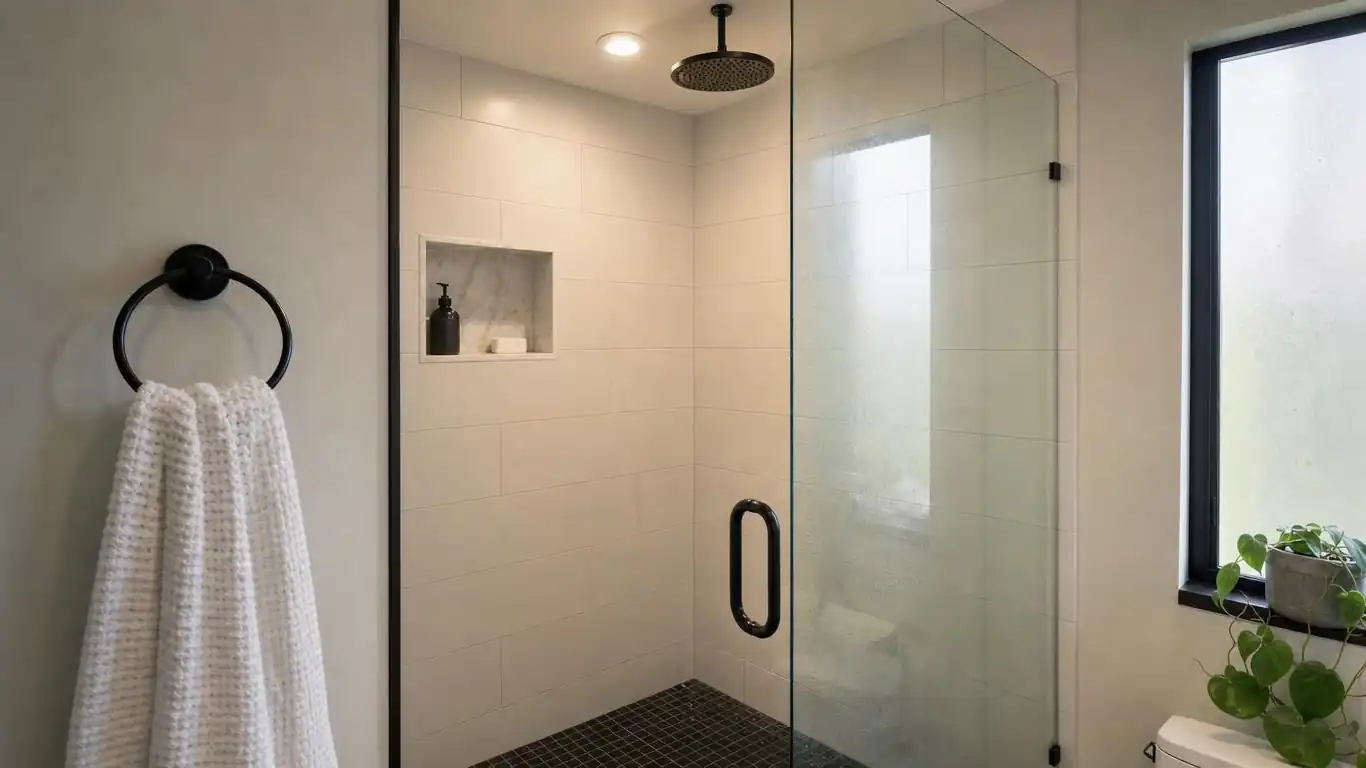
The mirror choice matters more in a black and white bathroom than in a colored room. A black-framed rectangular mirror extends the palette vertically and adds height. A frameless mirror keeps the wall reading as uninterrupted white. An arched black-framed mirror softens the geometry and suits bathrooms where every other line is hard and straight. Browse all our rooms inspiration for layout ideas across different room types and sizes.
For rooms that connect visually to an adjacent bedroom, a consistent palette is worth considering. Grey bedroom design ideas and navy blue bedroom ideas both sit naturally alongside a monochrome bathroom palette if the rooms share an open door or visual sightline. For a more contemporary pairing, earthy modern bedroom ideas work especially well with the minimal mode of the black and white palette.
KEY TAKEAWAY: Small bathrooms need the white percentage pushed even higher — aim for 75-80% pale tone, keep dark elements to the floor or a single accent wall, and use the dark tone to frame awkward architectural features rather than fill them.
Frequently Asked Questions
Part of our guide to Bathroom Color Ideas.
Conclusion
A black and white bathroom is one of the most rewarding palettes to commit to — and one of the easiest to get slightly wrong without knowing why. The palette itself is not the design. The proportions, the grout, the fixture finish, and the lighting temperature are the design. Get those four decisions right and the room will look sharp for decades, not just until the next trend cycle.
After finishing that 1970s terraced bathroom in spring 2025, I went back six months later when the clients had fully settled in. They had not added a single colored object to the room. No plants, no colored towels, no art. The room was still exactly as designed — and it looked better for it. The restraint was doing its work. That is what a well-executed black and white bathroom does: it gives you a room where the structure carries the look, and you stop wanting to redecorate. For more starting points across every room in the house, 101homedecor.com has you covered. And if you are looking at the rooms that connect to your bathroom, moody mid-century modern living room design and chic vanity ideas for bedroom corners both pair naturally with the monochrome palette.