The Plastic Maple Wreath Had Its Run
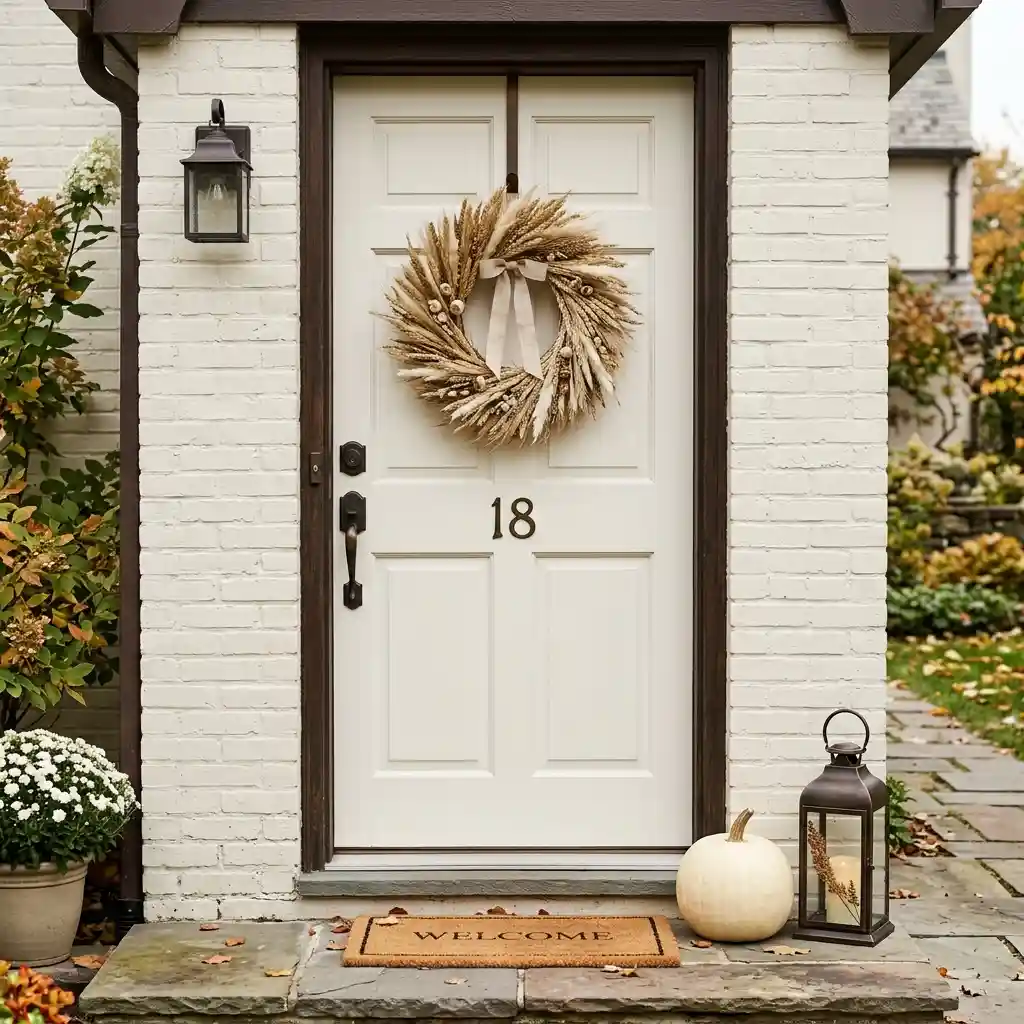
Walk down any street in early October and the front doors sort into two groups. One has a dense ring of orange plastic maple leaves. The other has something pale and dry — wheat, grass, a few seed heads on bare grapevine — and that door looks twice as expensive. The maple ring had a good run; for about fifteen years it was the default, and most advice treated fuller and more orange as the goal. That advice aged badly, and the gap between those two doors is the real story behind this year’s fall wreath ideas.
Looking for more ideas? Explore our full guide to Fall Decor Ideas.
A fall wreath is a seasonal ring of stems, foliage or dried material hung on a door or wall between late August and late November. The current look is quieter than the old one: fewer colors, more texture, and a visible stretch of bare base left on show. Most homes land best with a 22 to 26 inch wreath built from dried wheat, preserved eucalyptus or bleached grass on a grapevine ring.
This page is the hub for every fall wreath decision — front door sizing, DIY dried builds, outdoor durability, and the six autumn styles worth your time. If you are refreshing the whole season and not just the door, start with these creative fall and autumn decor ideas and come back for the door itself. A wreath is also the cheapest seasonal change you can make. It shows from the street, it usually costs under $80, and it comes down in ten minutes.
Everything below is styling only. No ladders, no permanent hardware, nothing that risks a lease. For the rooms behind the door, the rest of our home decor inspiration picks up where the porch ends. Bookmark this guide for quick reference.
Why Are Fall Wreaths Getting Quieter?
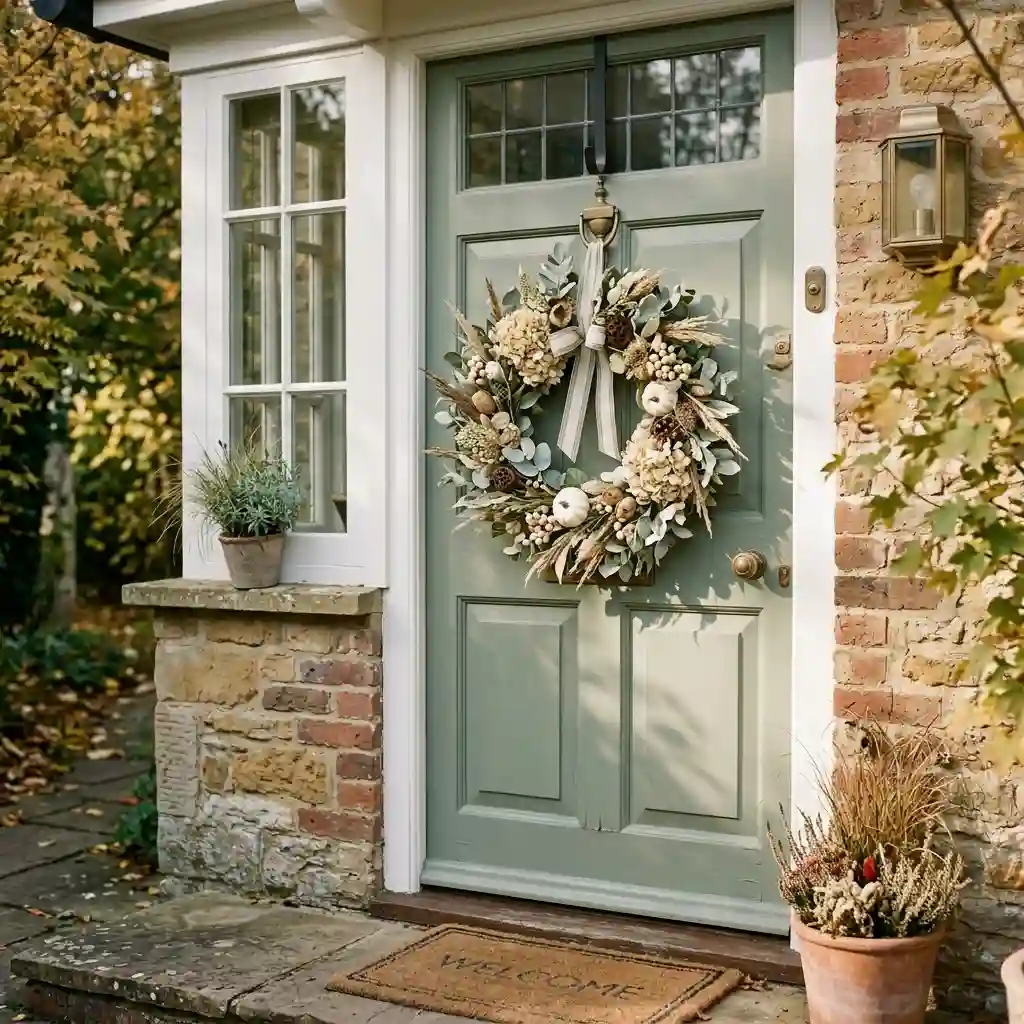
Fall wreaths got quieter because front doors got better. Exterior paint moved toward warm white, sage green, deep charcoal and muted clay, and a bright orange faux-maple ring fights every one of those colors. A cream-and-wheat wreath sits with them instead. That single change is doing most of the work in the shift. Choosing the wreath against the door colour is the whole game, which is why we start with the door itself.
The second driver is the calendar. A wreath built from orange maple and mini gourds has a six-week life. A wreath built from dried grass, olive branch or preserved eucalyptus carries from late August through Thanksgiving, and a swap of one ribbon takes it into December. Buyers noticed that they were paying $90 for six weeks of use.
Signs This Is Catching On:
- Craft retailers now stock dried and preserved stems — wheat, bunny tail grass, bleached ruscus, pampas — beside the faux maple that used to fill the aisle on its own.
- Bare grapevine and twig rings are sold and priced as a finished product, not as a hidden armature you are meant to cover completely.
- Seasonal listings increasingly describe a range (“fall through winter”) instead of one holiday.
- Muted palettes — sage, cream, dusty rose, ochre, rust — have replaced the orange-red-brown default in seasonal lookbooks.
There is a third reason, and it is the honest one: the old wreath photographed badly. A dense faux-maple ring reads as one flat orange blob from twenty feet away. Texture reads from the street. Color does not. The same logic already reshaped modern spring wreath ideas, and fall wreath ideas are simply catching up.
Spring got there first because pastel plastic looked wrong sooner. The rules that emerged there are the same three you will see below: one reusable base, three materials, one cluster. You can watch them at work in these spring wreath styles for a front door.
What Does a Modern Fall Wreath Actually Look Like?
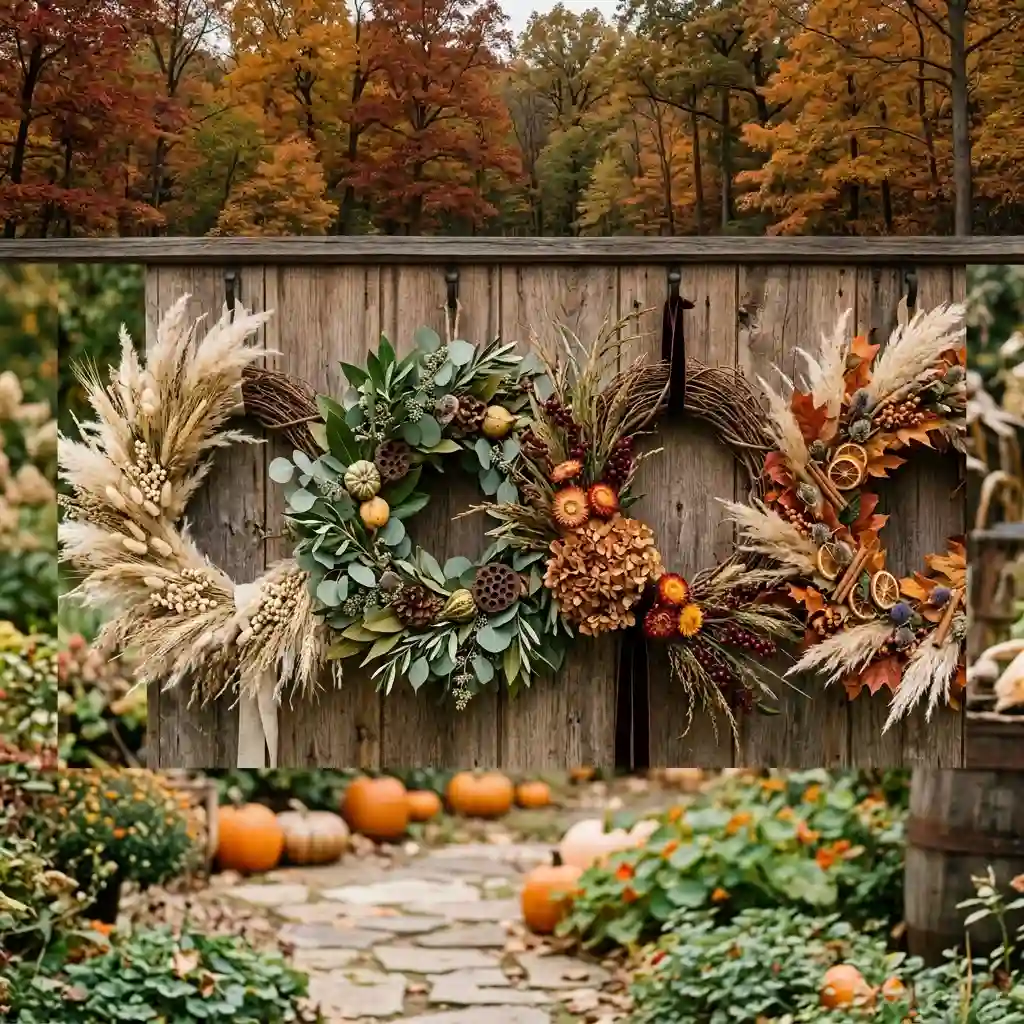
Six styles cover almost every door. They differ in material and in how much of the base stays visible, and each one suits a different exposure. Pick by how much weather your door gets, then by palette.
The Dried Harvest Wreath
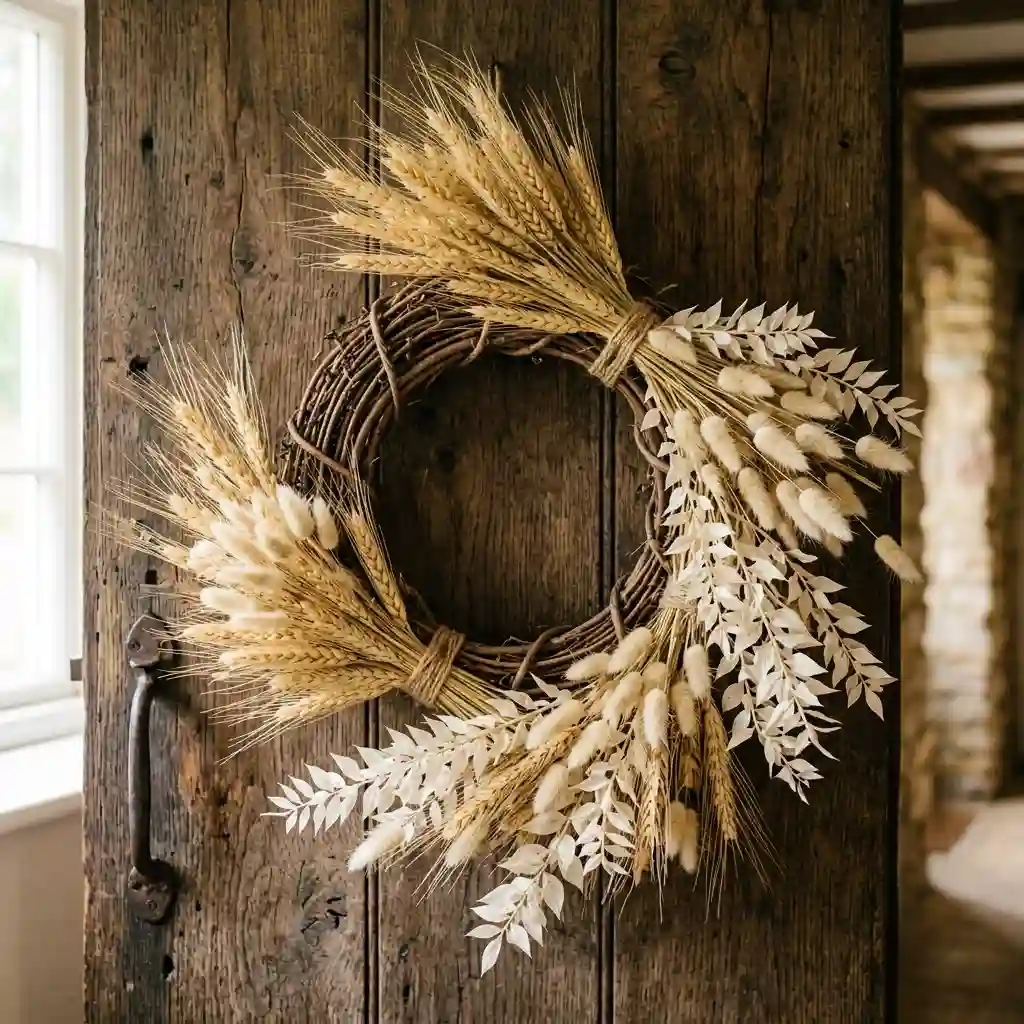
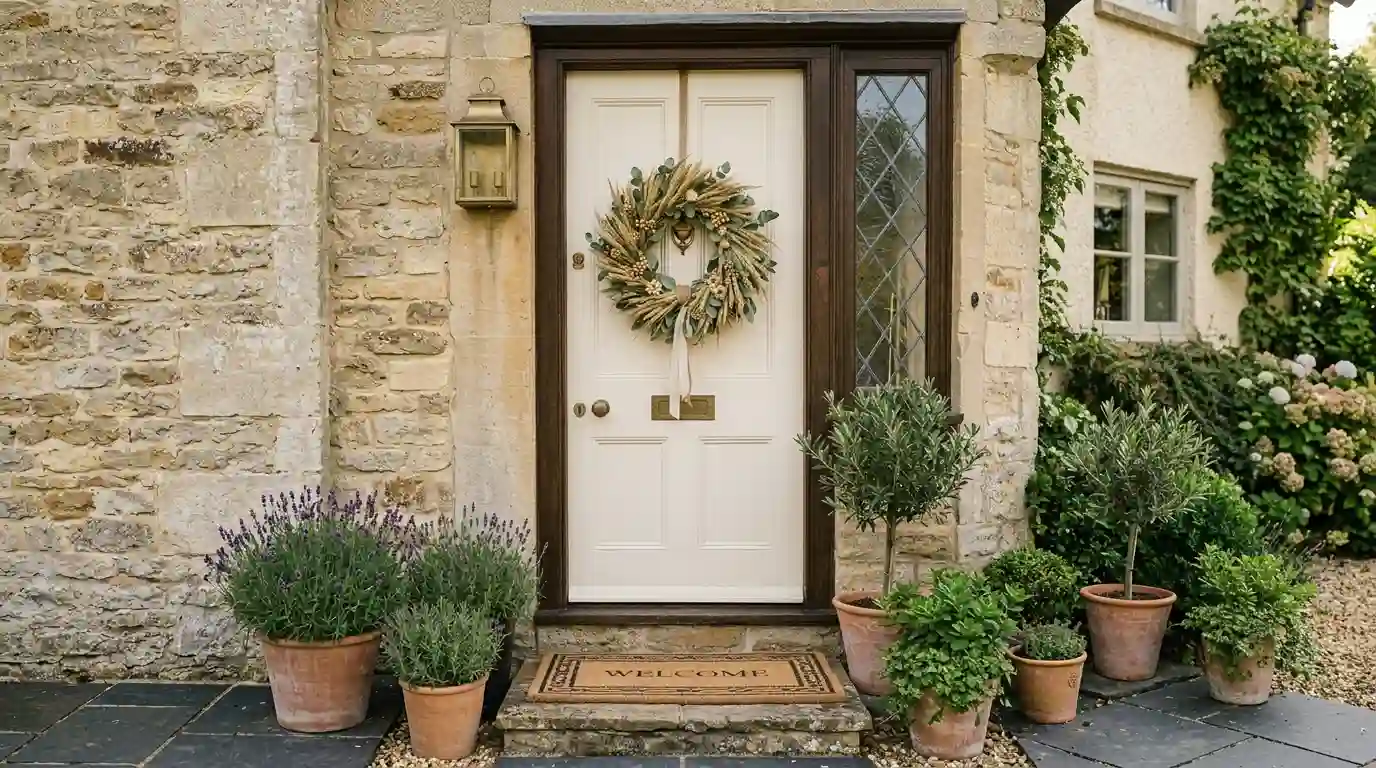
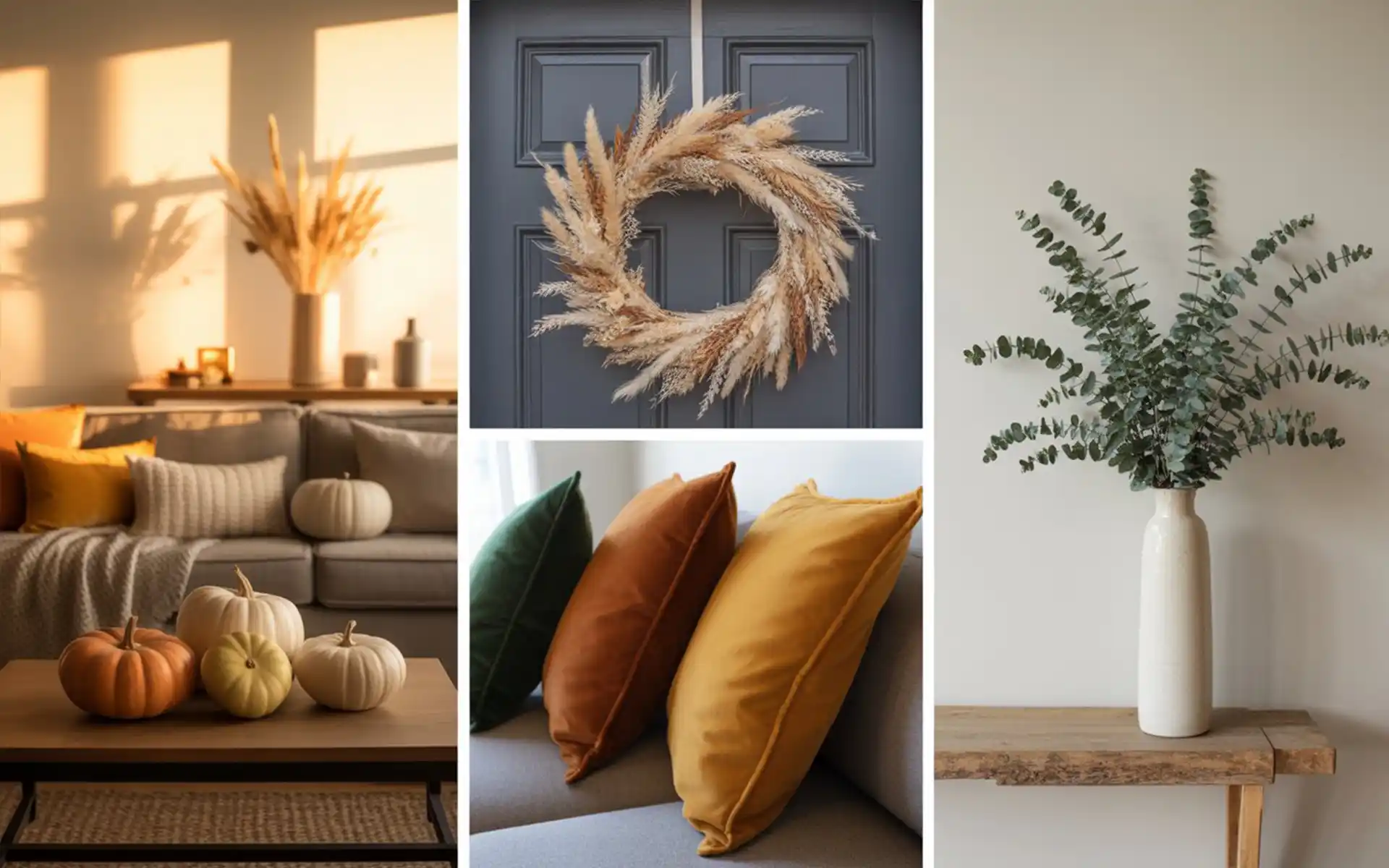
This is the style doing the most damage to the faux-maple market. Build it on an 18-inch grapevine ring in wheat, bunny tail grass, bleached ruscus and one dried hydrangea head. The palette runs wheat, cream and soft ochre with no true orange anywhere. It looks best on a door painted warm white, sage green or charcoal, where the pale stems read clearly against the paint. Keep the stems pointing one direction — a fan, not a circle — so the texture catches side light in the late afternoon.
The Single-Note Greenery Wreath
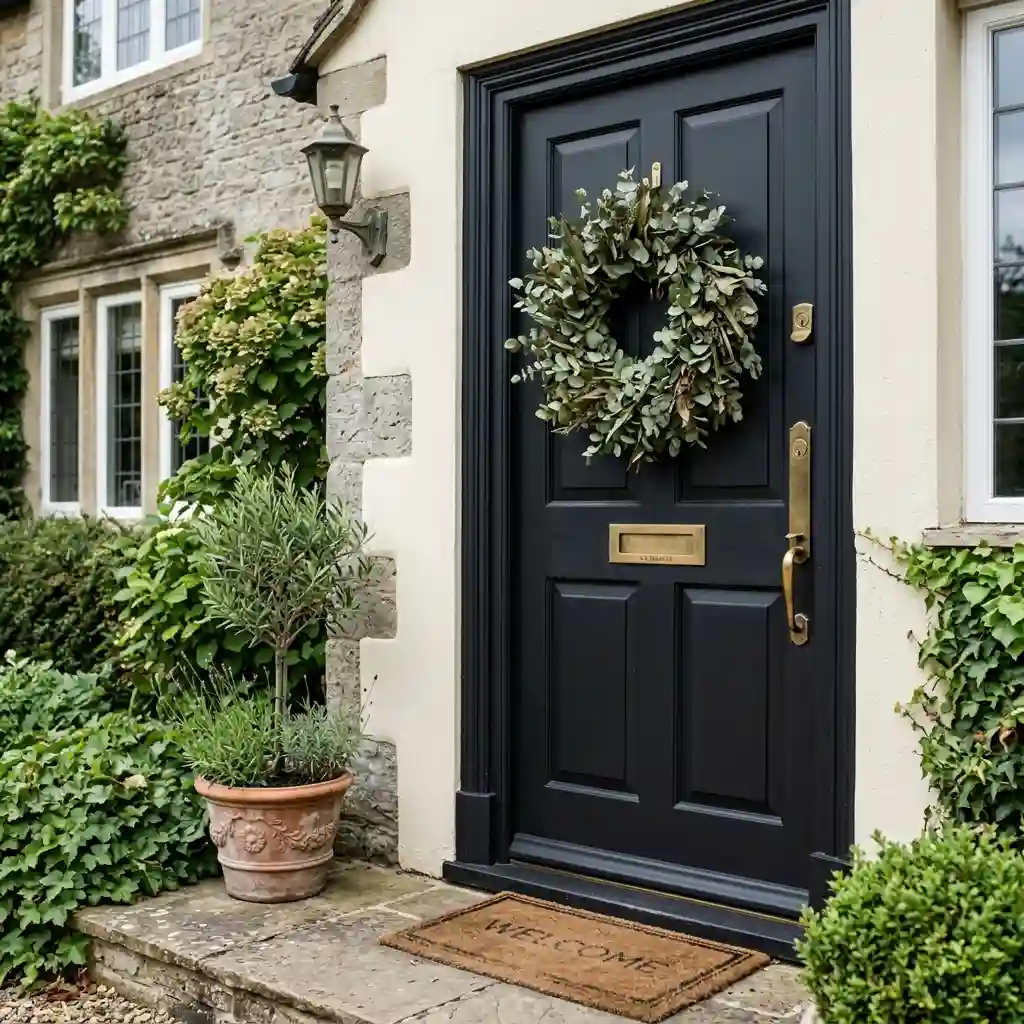
One material, repeated. Preserved eucalyptus, olive branch or southern magnolia leaf, and nothing else. Repetition is what makes it look expensive; the moment you add a second and third material it becomes a craft project. Magnolia is the strongest performer here because the leaves have a matte green face and a warm bronze back, so a single wreath carries two tones on its own. Use a 24-inch version on a matte black or oil-rubbed bronze door for the sharpest contrast.
The Bare Grapevine and Branch Wreath
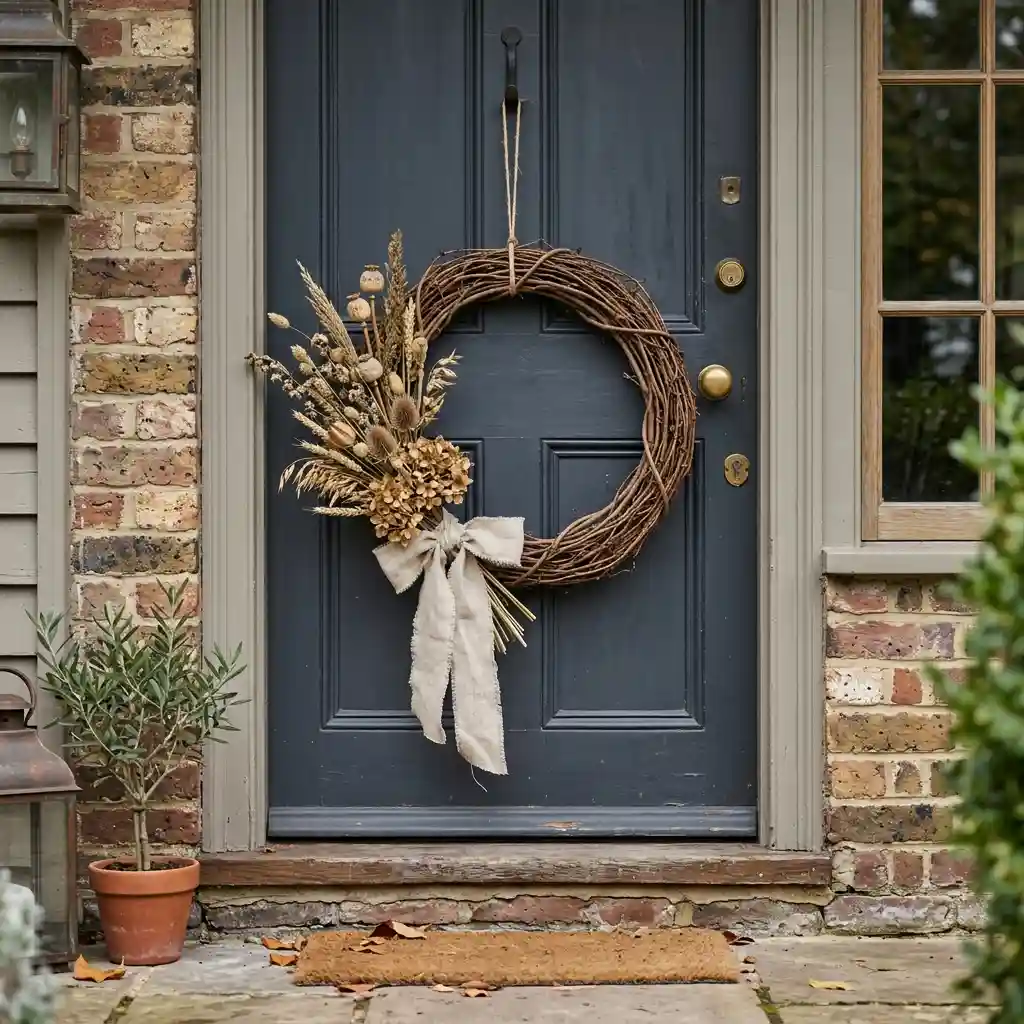
The most restrained of the six, and the cheapest. Leave 60 to 70 percent of the grapevine ring bare and cluster everything else into one third — usually at the 4 or 8 o’clock position. Add three or four elements only: a few dried seed heads, one length of linen ribbon, a sprig of berry. Grapevine is the most reusable wreath base on the market, and a good ring survives five or six seasons in storage. This style suits a covered porch and a painted door in deep colors.
The Muted Faux Bloom Wreath
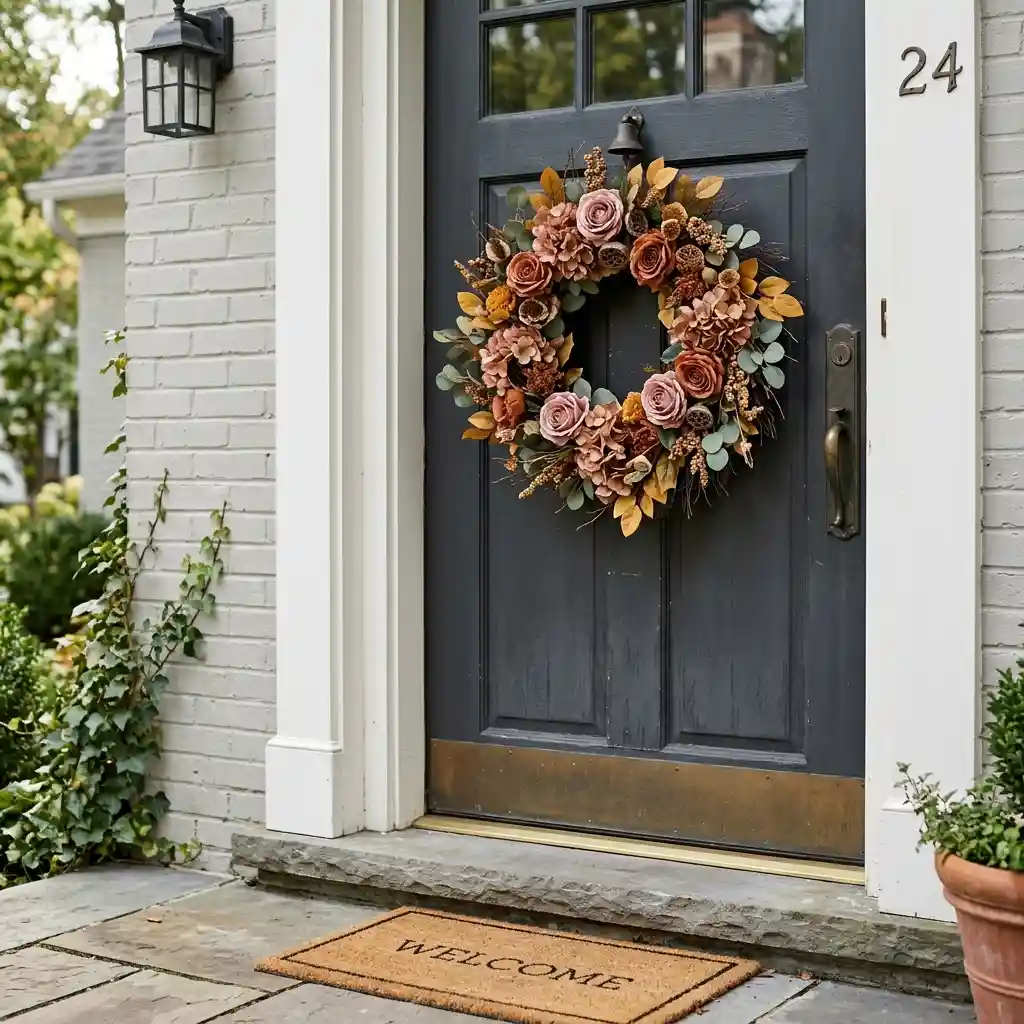
Faux still earns its place on an exposed door. The fix is the palette. Choose dahlias, cosmos and rosehip in dusty rose, rust and ochre instead of the standard orange-and-burgundy mix, and choose stems with a matte finish — shine is what makes faux look plastic from the street. Material Note: Faux stems with UV stabilizers blended into the material hold color longer than ones with a sprayed-on coating, so look for “UV rated” rather than “outdoor safe” on the label.
The Ribbon and Textile Wreath
Softer, quieter, and almost free. Wrap a 16 to 18 inch foam or straw ring in strips of cream linen, washed denim blue or rust velvet, then tie a single wide ribbon at the base — 2.5 to 4 inches wide, knotted rather than bowed, with long tails. It has no weather tolerance at all, so keep it under a covered porch or use it indoors on a hallway mirror. This is the style that fits a rental best, because nothing sheds and nothing stains.
The Wheat, Pod and Dried Fruit Wreath
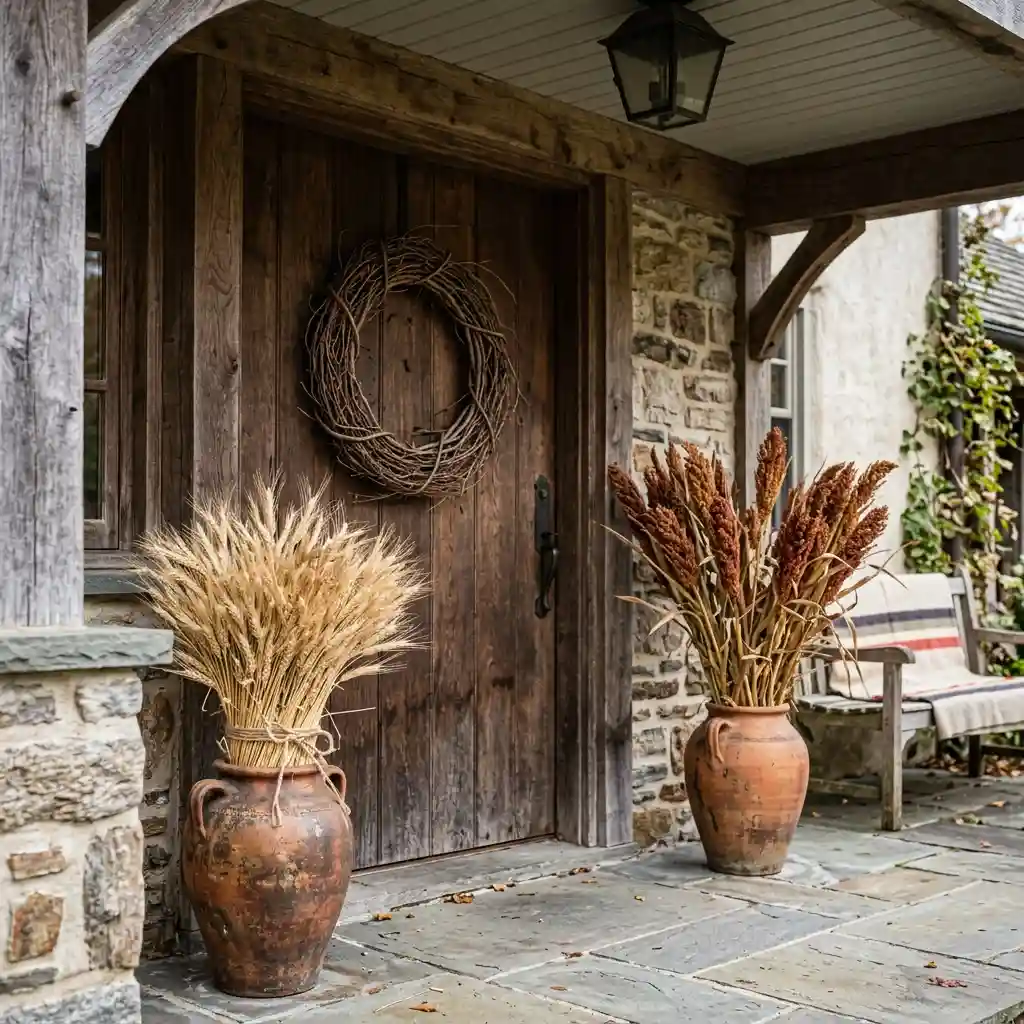
Harvest without a hint of Halloween. Lotus pods, poppy pods, dried orange slices, cinnamon sticks and a few mini white pumpkins wired low on the ring. The palette is warm and edible rather than costume — amber, russet, bleached bone. Dried citrus is the detail people stop for, and it holds color for a full season out of direct sun. Skip anything carved, black or purple — that belongs to Halloween wreaths.
What Size Wreath Should Hang on Your Front Door?
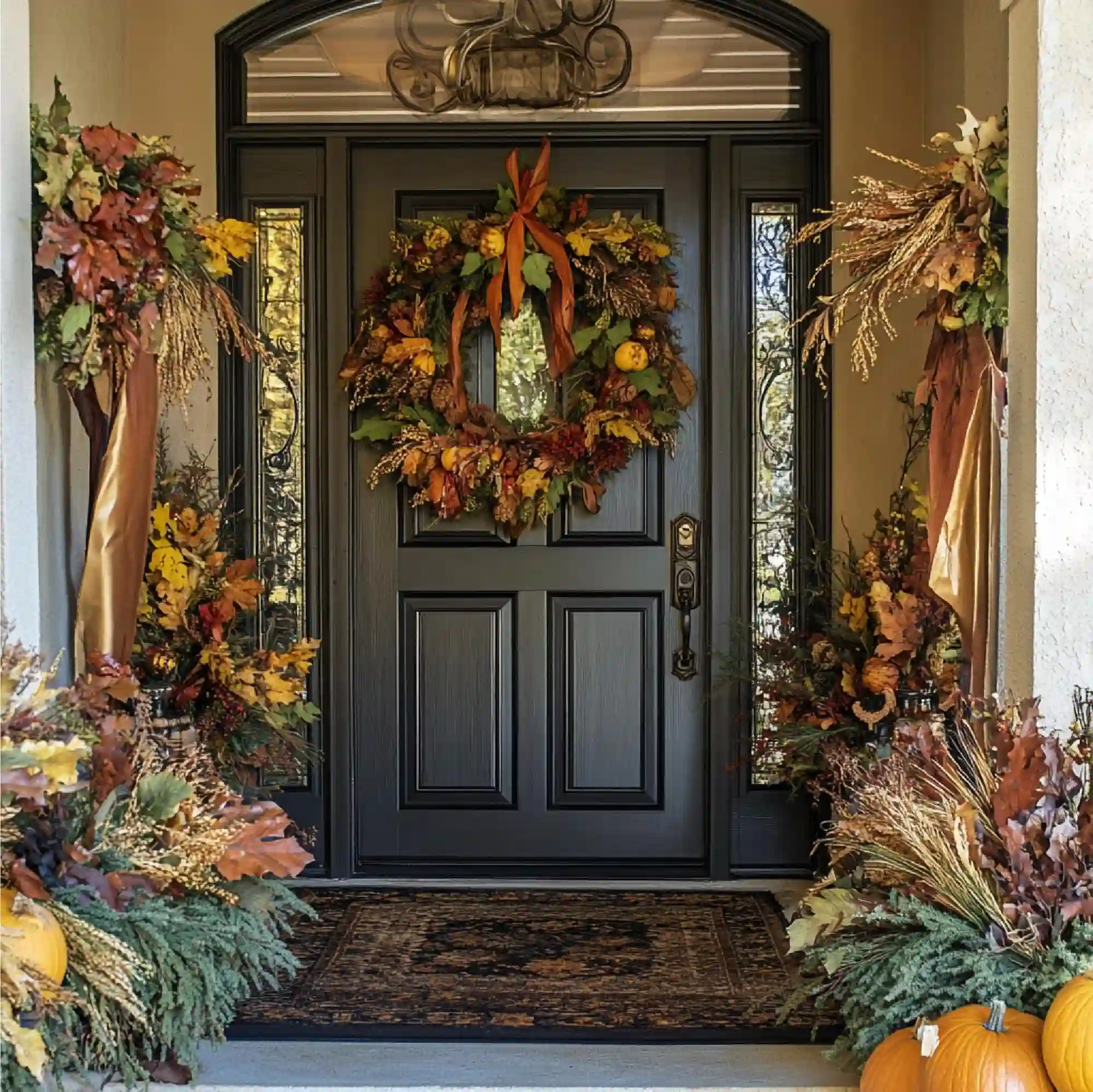
Sizing is where good fall wreath ideas most often fall apart, and it is the easiest thing to fix. Designer Rule of Thumb: the wreath should span roughly two-thirds of the door width. A standard 36-inch front door takes a 22 to 26 inch wreath, which leaves about six inches of clear paint on each side. Doors 40 inches and wider take 28 to 32 inches. Narrow doors and sidelights take 16 to 18 inches, and a mini fall wreath of 10 to 12 inches suits an interior door, a kitchen window or a cabinet front.
Depth matters as much as diameter. If you have a storm door, measure the gap between the two doors before buying anything. Anything deeper than about five inches will press against the glass and flatten one side by mid-October.
DESIGNER TIP: Hang the wreath so its center sits 12 to 16 inches below the top of the door, not dead center on the panel. A wreath hung too low looks like an afterthought and gets kicked by the storm door every time it swings.
Double doors take two matched wreaths of 18 to 20 inches rather than one large one — a single centered wreath splits awkwardly when the doors open. Rental Note: An over-the-door hook or a removable adhesive hook on the door face avoids drilling entirely, and magnetic hangers work only on steel doors, not fiberglass or wood. For more on the whole entry, our modern front porch ideas cover the paint and lighting that sit around the wreath, and you can browse the full run of exterior decorating ideas for the rest of the facade.
How Do You Get the Look Without Starting Over?
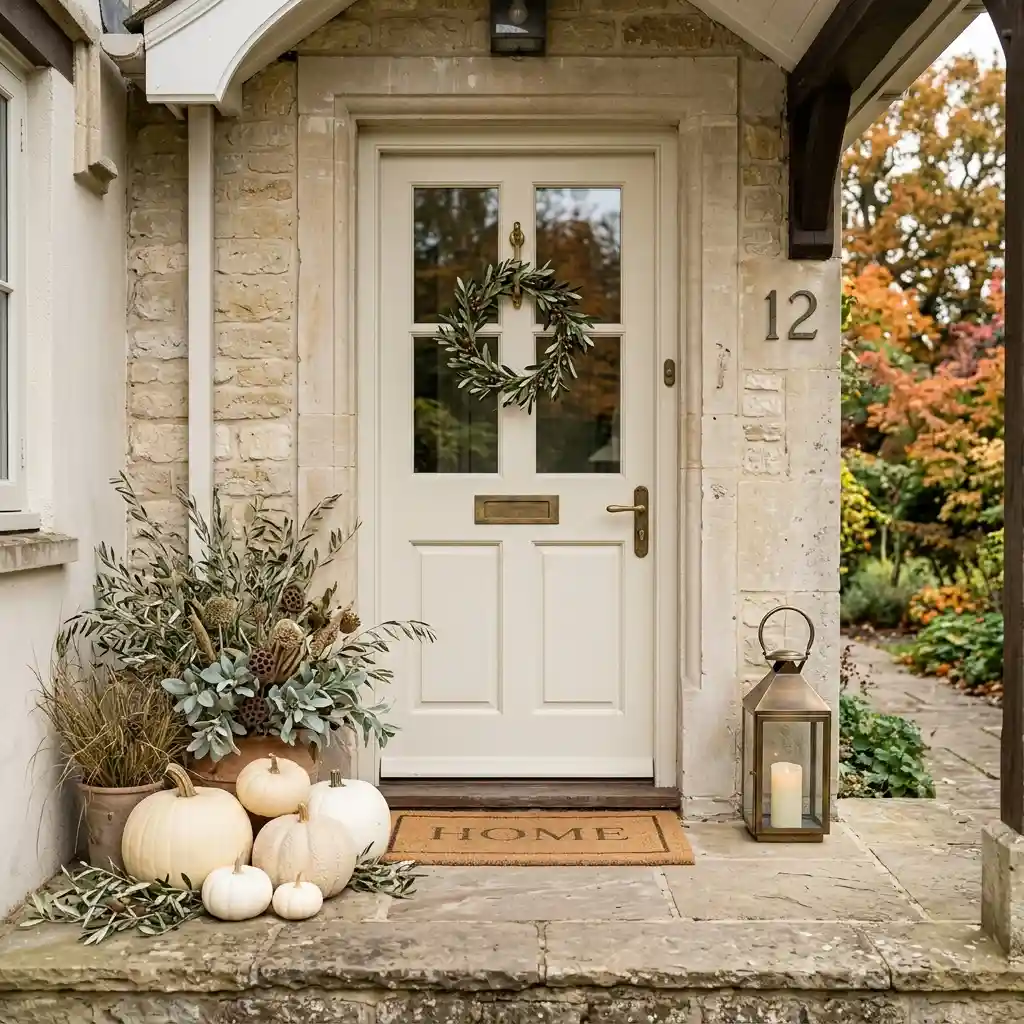
You do not need to replace anything. Five moves take a door from the old look to the new one, and four of them cost under $30.
Start with the base, not the stems. Buy one bare 18-inch grapevine ring and treat it as permanent. Everything after that is a seasonal swap of stems, which is what keeps the running cost low year after year.
Pick three materials and make one of them dry. Dried wheat, bunny tail grass or bleached ruscus adds the texture that faux alone cannot. Two faux and one dried is the easiest ratio to get right.
Build asymmetric. Cluster your stems across one third of the ring and leave the rest bare.
Make the DIY version if you have an afternoon. A DIY fall wreath is one hour of wiring once your stems are ready, and stems you dry yourself cost almost nothing. Source Note: Iowa State University Extension recommends hanging small bunches upside down in a warm, dark, dry, well-ventilated spot and says two or three weeks is usually enough. If you want practice with the technique first, our DIY floral wall hangings use the same wiring method indoors, and felt flower crafts are a no-shed option for an interior wreath.
Plan the handoff to winter now. A wheat-and-eucalyptus wreath carries into December once you swap the ribbon for something deeper. That overlap is exactly how cozy winter front porch decor picks up where fall leaves off, so the door never sits empty in the gap.
Material Note: Dried stems fade fastest in direct sun, and a west-facing door will bleach a dried wreath noticeably within one season. Climate Note: In humid or coastal air, dried wheat and hydrangea soften and droop; preserved eucalyptus and quality faux hold their shape far better.
Fall Wreath Checklist

- Measure the door width first and buy at roughly two-thirds of it — 22 to 26 inches for a standard 36-inch door.
- Check the storm door gap and stay under five inches of wreath depth.
- Choose a bare grapevine or twig ring you can reuse for five or more seasons.
- Limit the palette to three colors, and make none of them bright orange.
- Cluster the stems across one third of the ring and leave the rest bare.
- Use an over-the-door or removable adhesive hook if you rent, and skip magnets on non-steel doors.
- Store the wreath flat in a box, not hanging, so the cluster does not crush.
KEY TAKEAWAY: Size the wreath to the door and leave part of the base showing — those two decisions do more for the look than any material you choose.
What to Avoid This Season
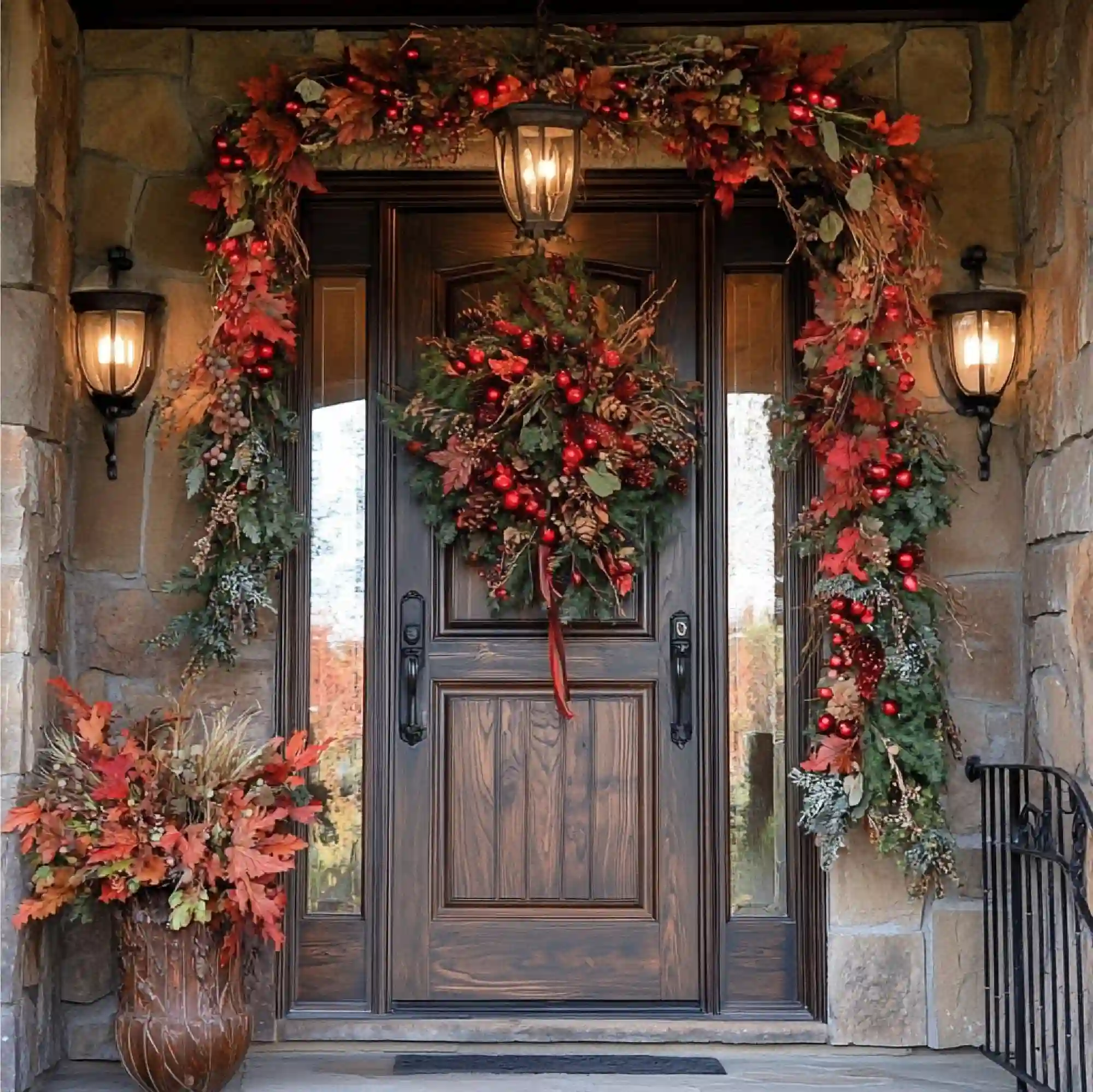
Instead of buying the fullest wreath on the shelf, Try the one with visible gaps. Density is what reads as cheap from the street; texture and shadow are what make a wreath look well made.
Instead of the orange-red-brown maple mix, Try wheat, sage and rust. The old palette clashes with almost every current exterior paint color and dates the whole entry.
Instead of mixing five or six materials, Try three. Wheat, eucalyptus and one ribbon looks finished. The same wreath plus berries, pinecones, burlap and a plaid bow looks like the craft aisle it came from.
Instead of combining fall and Halloween on one door, Try keeping them separate. Pumpkins, bats and black ribbon pull against a harvest wreath, and mixing them usually loses both. Browse the wider seasonal decorating ideas if you want a clean handoff between the two.
Instead of hanging the wreath and forgetting it, Try rotating it 90 degrees in mid-October. Sun-facing sections fade unevenly, and a quarter turn buys a few more weeks of even color. When it comes down in late November, these cozy winter decor ideas carry the same warm-neutral palette indoors.
Budget at a Glance
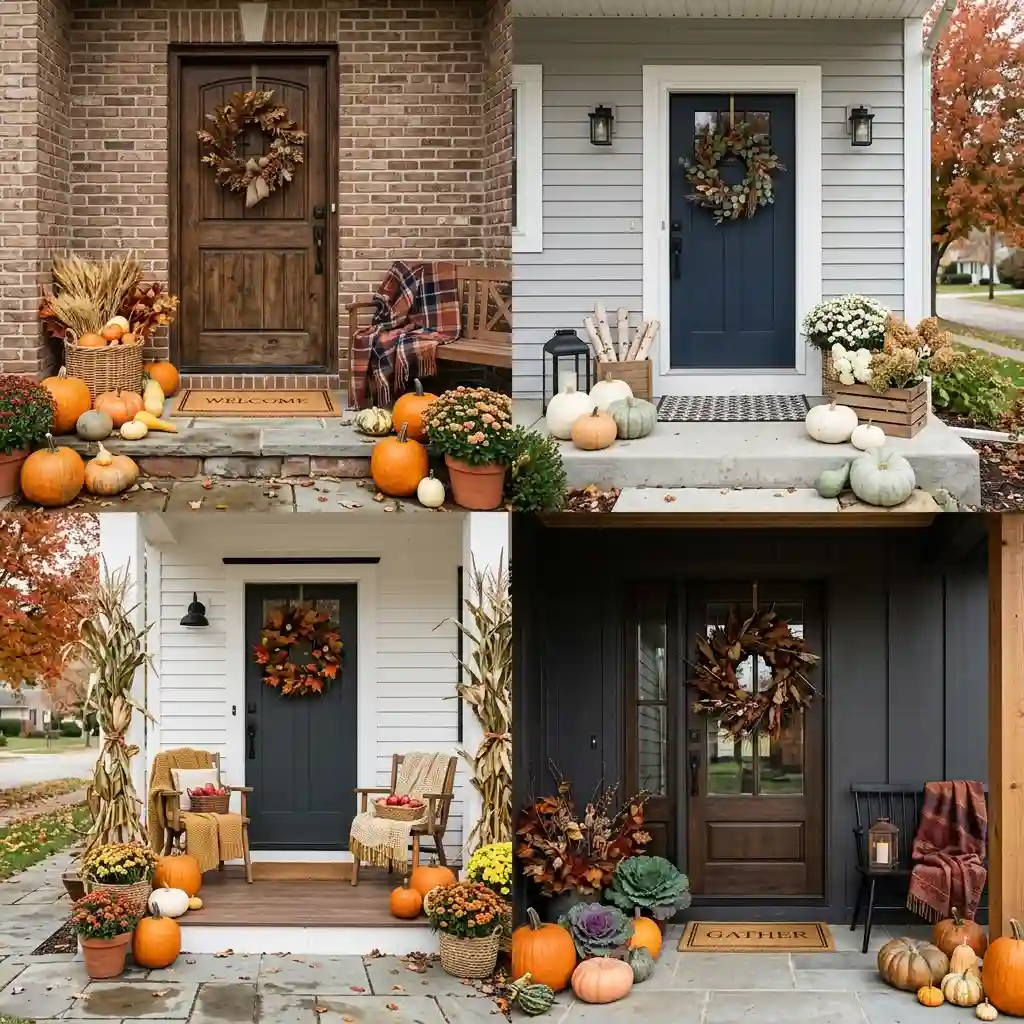
Fall wreaths span a wide range, and the gap between the tiers is mostly material quality rather than size.
At the budget end, a 12 to 14 inch mini fall wreath in dried grass runs $18 to $35 and works on an interior door or a kitchen window. In the middle, a DIY build on an 18-inch grapevine base costs $35 to $70 all in — the bare ring is $8 to $14, and four to six bunches of dried or faux stems run $4 to $9 each. Premium is a ready-made 22 to 26 inch preserved or high-grade faux wreath at $70 to $150, where you are paying for stem quality and UV rating rather than diameter.
| Project | Estimated Cost | Impact Level |
|---|---|---|
| Mini dried wreath, 12-14 in (interior door or window) | $18-$35 | Low |
| DIY dried wreath on an 18 in grapevine base | $35-$70 | High |
| Ready-made preserved or UV-rated faux wreath, 22-26 in | $70-$150 | High |
| Large 28-32 in statement wreath plus hanger and storage box | $160-$300 | Very High |
Best First Upgrade: Buy one bare 18-inch grapevine ring and a bunch of dried wheat — under $25 and it changes the entire door.
Skip for Now: Skip the oversized 30-inch statement wreath until you have confirmed your storm door gap can take the depth.
The Bottom Line
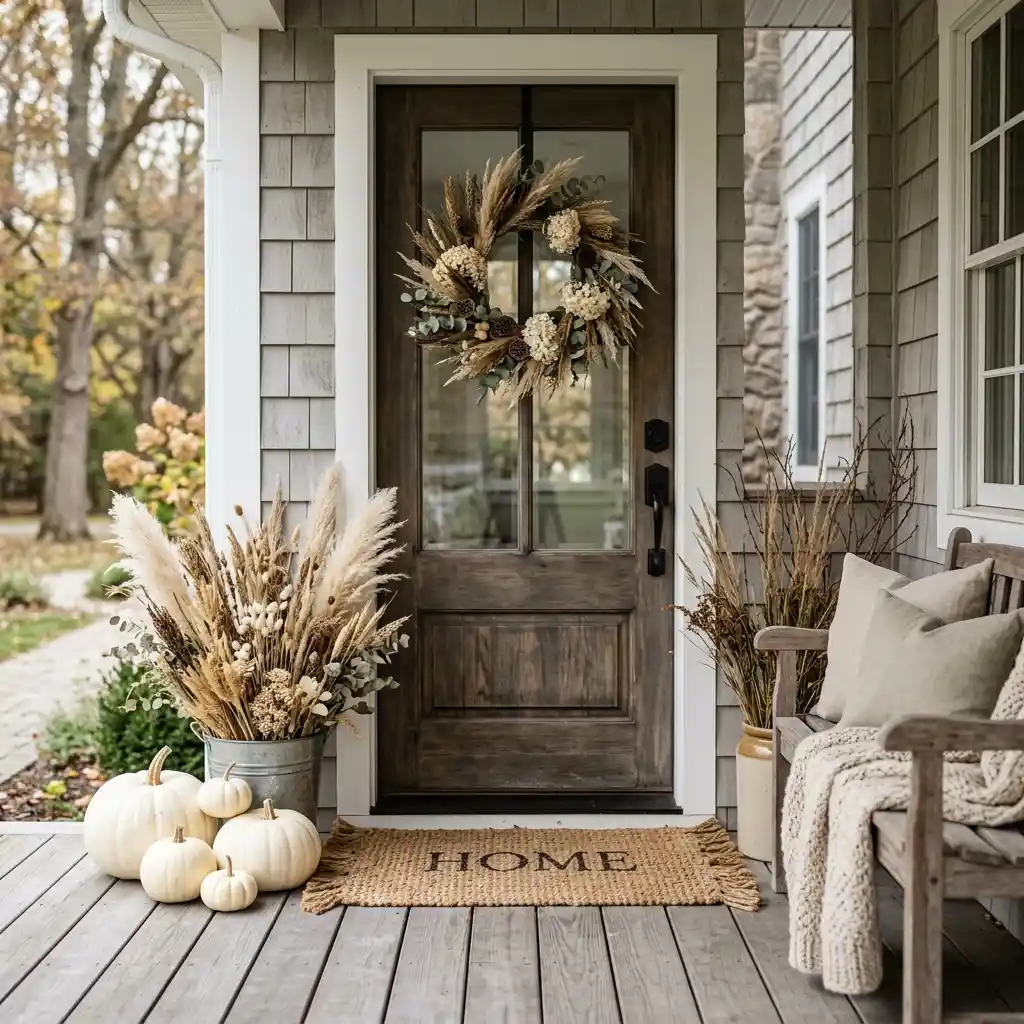
The dried, muted, single-note wreath is not a passing look, and that is the case for buying into it. It is built on materials that outlast one holiday, it works with the exterior paint colors people are actually choosing, and it costs less to maintain than a faux ring you replace every third year. The style that will date is the maximalist harvest wreath with five materials and a plaid bow — it is already reading as 2019.
If you want one pick: a 24-inch grapevine ring with dried wheat clustered at the 4 o’clock position and a knotted cream linen ribbon. It suits nearly every door color, costs about $45 to build, and carries from late August into December. Pair it with a styled step and one oversized planter, since our front porch decor ideas cover the rest of the entry. The wreath is the anchor and the porch is the frame around it. Once the door is settled, more fall decorating ideas take the season indoors.
Editorial field note: A charcoal front door with a bright faux-maple wreath usually looks like two competing statements. Swapping to a wheat-and-cream dried ring on the same door lets the paint stay the strongest element, and the entry looks settled without anything else changing.
Frequently Asked Questions
Conclusion
The best fall wreath ideas this season come down to two decisions: size it at about two-thirds of your door width, and leave part of the base showing instead of filling every inch. Get those right and a $45 grapevine-and-wheat build outperforms a $150 wreath that covers everything. More entry projects sit across the rest of our home decor inspiration, and the fall bedroom refresh ideas handle the season indoors.
Next Steps
- Measure your door width and the storm door gap, then write down your target wreath diameter and maximum depth.
- Buy one bare 18-inch grapevine ring and treat it as a permanent base you restyle each year.
- Pick three materials in wheat, cream and one warm accent, and skip anything bright orange.
- Order an over-the-door or removable adhesive hook now so the wreath is not waiting on hardware.
Explore Fall Wreath Ideas
- DIY Fall Wreath: How to Build One That Won't Fall Apart
- Fall Leaf and Grapevine Wreaths Aren't Built the Same Way
- Fall Wreath Supplies: What to Buy Before You Start
- Fall Wreath for Front Door: How to Get the Size and Placement Right
- Mini Fall Wreath: Why Go Smaller Than the Standard Size?
- Outdoor Fall Wreaths Are Becoming Their Own Shopping Category