TL;DR
- Paint: One quart of exterior enamel changes more than any decoration you can hang on the door.
- Hardware: Repeat a single finish across the handleset, knocker, kick plate and house numbers.
- Placement: Hang in the middle band of the door, never up by the top rail where the eye skips it.
- Alternatives: A swag, garland or ribbon covers far more of a tall door than a round wreath does.
The Wreath Is Doing Too Much Work
A standard front door is 36 inches wide and 80 inches tall. A 24-inch wreath covers less than a tenth of that surface. Everything else a visitor sees — the color, the metal, the frame, the empty stretch below the hook — is doing the rest of the talking, and most of it has not changed since August.
Good fall front door decor is a whole-door job, not a single hook. If you have ever bought a new wreath, hung it on the same old nail, and thought “I decorated, so why does it still look plain?” — the wreath was never the problem.
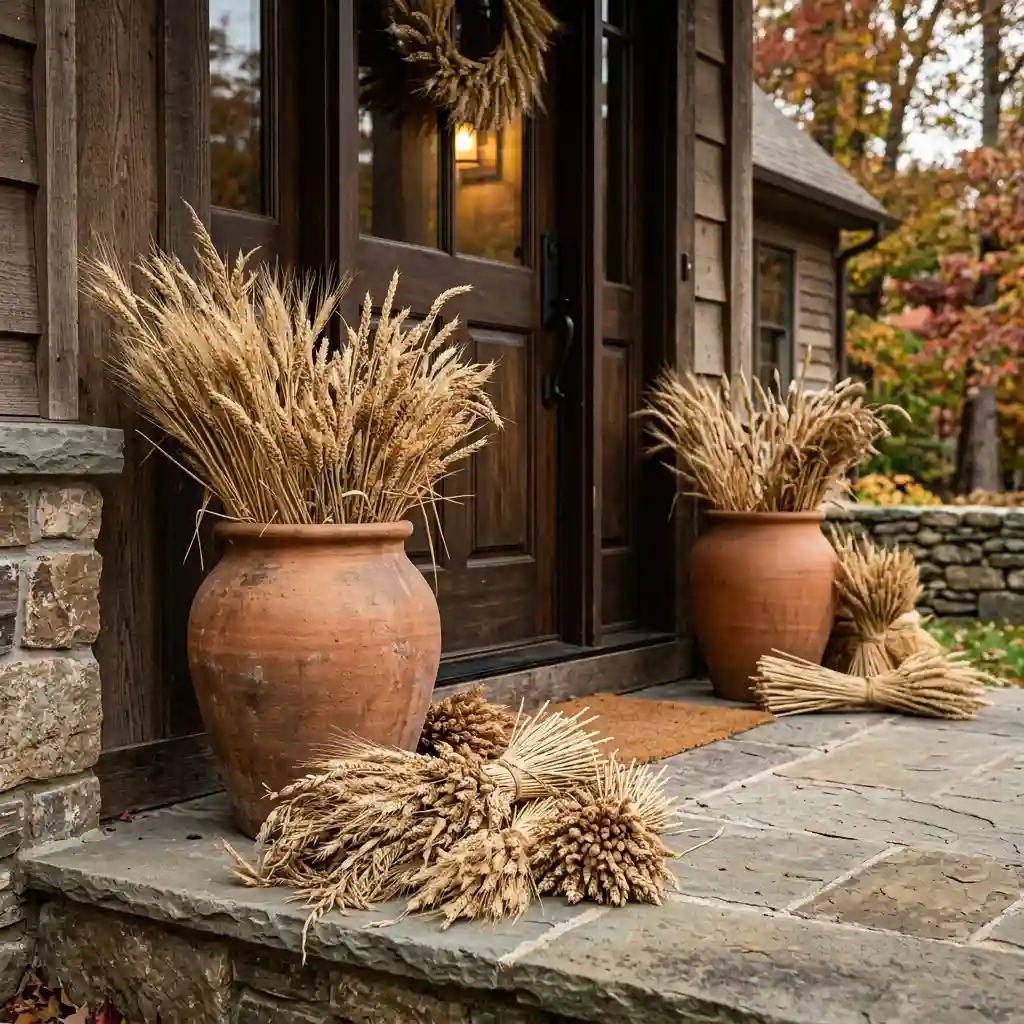
Looking for more ideas? Explore our full guide to Fall Porch Decor.
Editorial field note: a chalky, sun-faded builder-beige door with dull chrome hardware will swallow any wreath you put on it. Wash that door, roll on one coat of warm exterior enamel, and swap the knob set — and the same wreath suddenly looks bought on purpose. Nothing about the decoration changed.
This guide stays on the door itself: what to fix first, what to hang, how high to hang it, and what to leave in the box. If you are styling the steps, planters and porch floor as well, these front porch decor ideas cover that ground. The door is the part most people skip. It is also the part that changes the most for the least money. For the rooms waiting just inside, start with our home decor inspiration.
Why Are Front Doors Getting More Attention This Fall?
The front door has quietly become the most-updated square footage on the outside of a house. It is small, it is cheap to change, and it is the one surface every neighbor and delivery driver looks at. A quart of exterior enamel costs less than a throw pillow and covers a whole door with paint left over. The same money spread across a full facade would barely show, which is why these modern front porch ideas so often begin at the door.
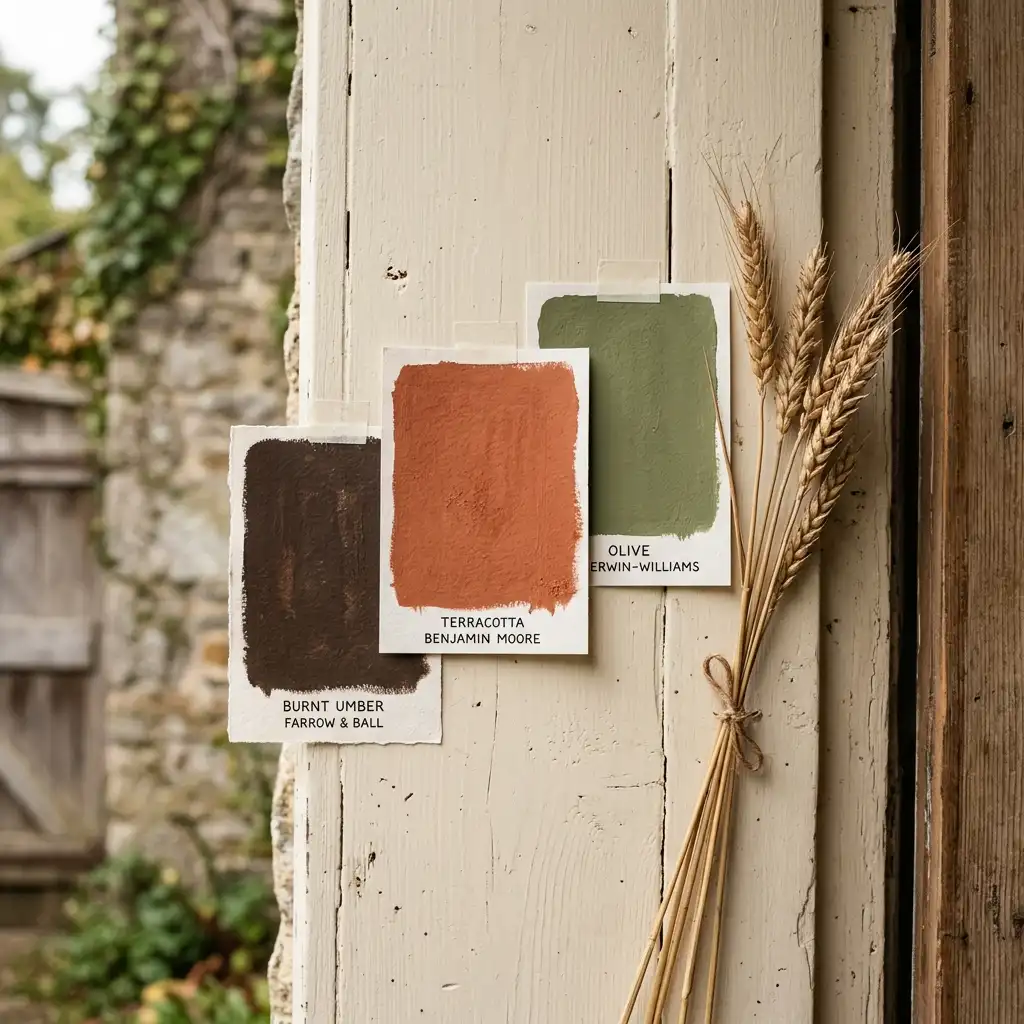
The color story moved too. Exterior color forecasts for 2026 keep landing on the same family: warm earth tones and muted greens instead of high-contrast statement brights. Burnt umber, terracotta, warm brick, olive and sage now show up where glossy fire-engine red and stark black used to sit.
Signs This Is Catching On:
- Exterior paint forecasts for 2026 lead with warm earth tones — burnt umber, terracotta and muted olive — rather than saturated brights.
- Door hardware in aged brass and oil-rubbed bronze has widened at big-box retailers, while polished chrome has narrowed.
- Fall door styling has shifted away from plastic maple garlands toward dried wheat, grapevine and seeded eucalyptus.
That matters for fall specifically. Burnt umber, ochre and olive are already autumn colors, so a door painted in that family stays seasonal from September through Thanksgiving without a single decoration on it. You are not buying a fall look. You are building a base that fall sits on top of. For the interior half of the same shift, our fall and autumn decor ideas guide picks it up inside the house.
Designer Rule of Thumb: if your door color fights the wreath, the wreath loses. Pick the door color first and shop the decorations second.
What Does Fall Front Door Decor Look Like When It’s Done Right?
A finished fall door has four parts working together: the door color, the metal on it, the piece hung on it, and the frame around it. Miss two of those and the entry looks half-done no matter how good the wreath is.
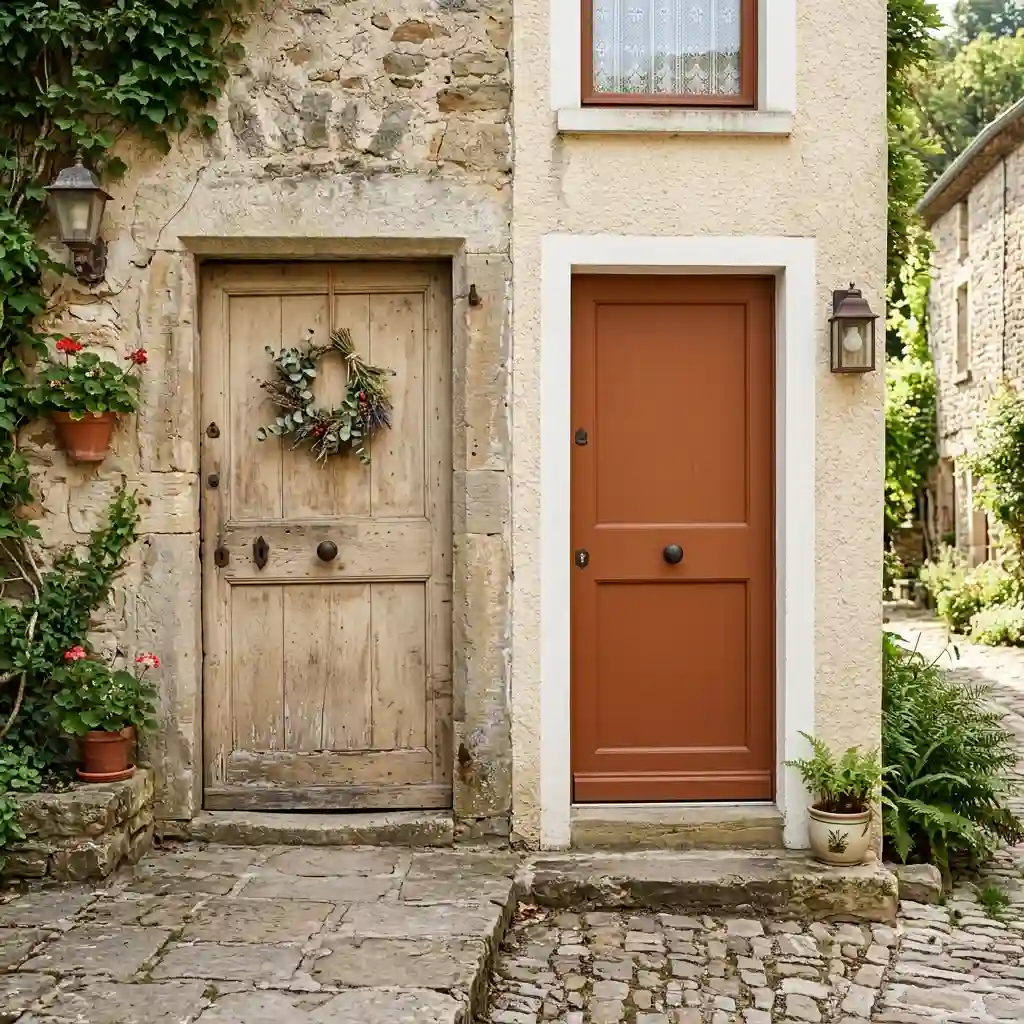
The palette stays tight. Pick one warm neutral (cream, oat, warm greige), one deep earth tone (burnt umber, olive, warm brick), and one muted accent (ochre, dried rust, soft sage). Repeat each one at least twice across the door, the ribbon and the hardware. Three tones repeated look planned. Six tones look like three separate shopping trips.
Materials matter as much as color. Coir, jute, dried wheat, grapevine, seeded eucalyptus, cotton stems and raw wood all beat plastic maple leaves and glitter pumpkins by a wide margin. Matte finishes photograph better and hold up better outside. Anything shiny and orange is the fastest way to date a door.
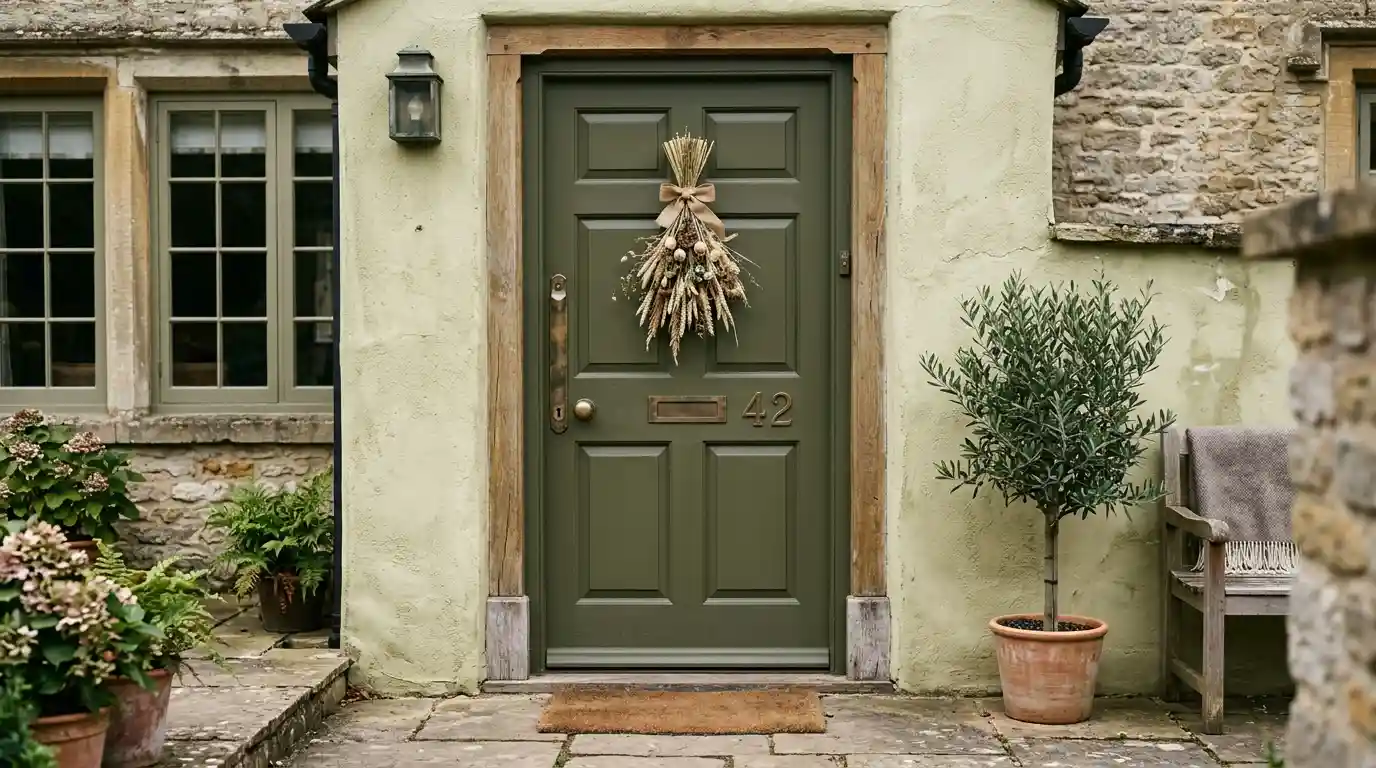
Composite example: imagine a north-facing door painted deep olive with an aged brass handleset, matching brass numbers, and a grapevine-and-wheat swag hung at chest height with an ochre ribbon tail. Nothing in that entry cost more than $150 on its own. The whole thing works because the same three tones repeat four times across one small surface.
How Do You Build It, Layer by Layer?
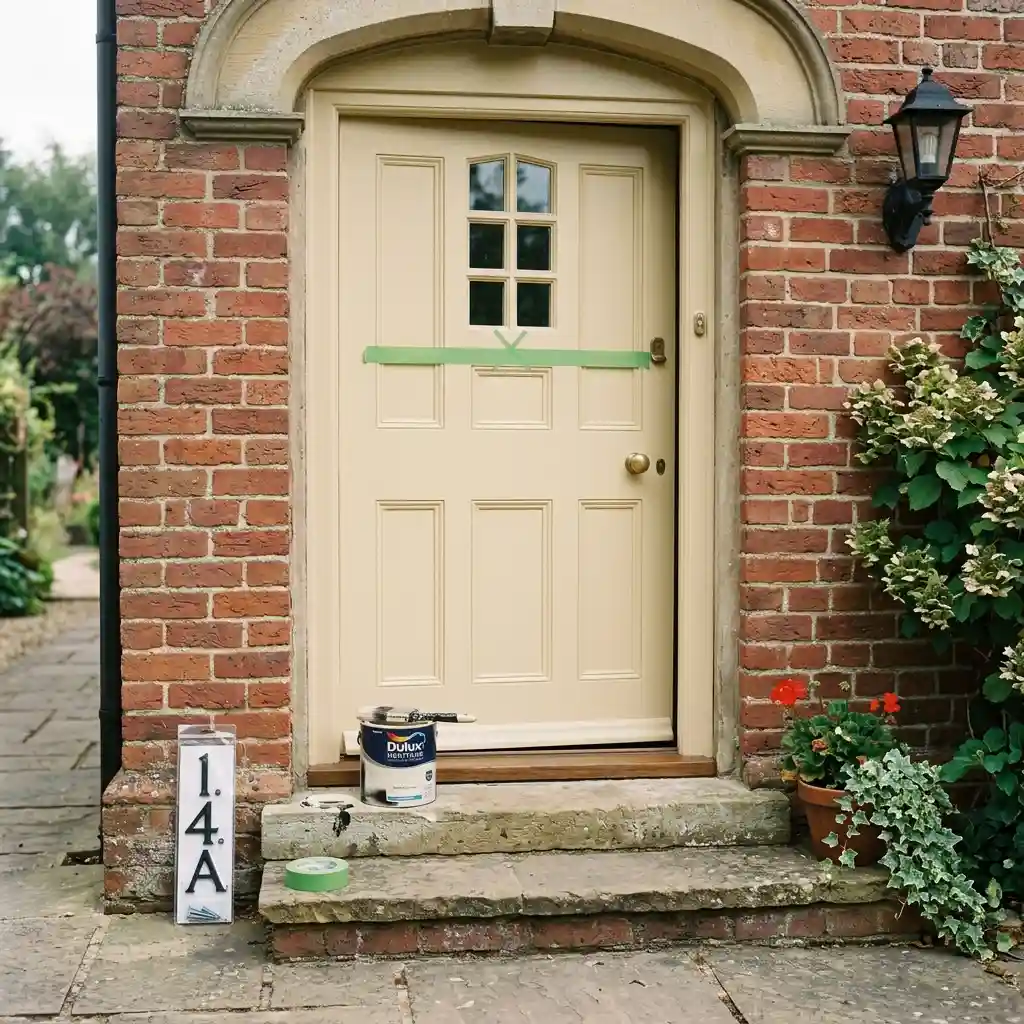
Work in this order and each step makes the next one easier. Skip ahead to the decorating and you will spend money dressing up a surface that is holding you back. The same build order carries over to every season in our seasonal decorating archive.
Wash and Recolor the Door Before Anything Goes On It
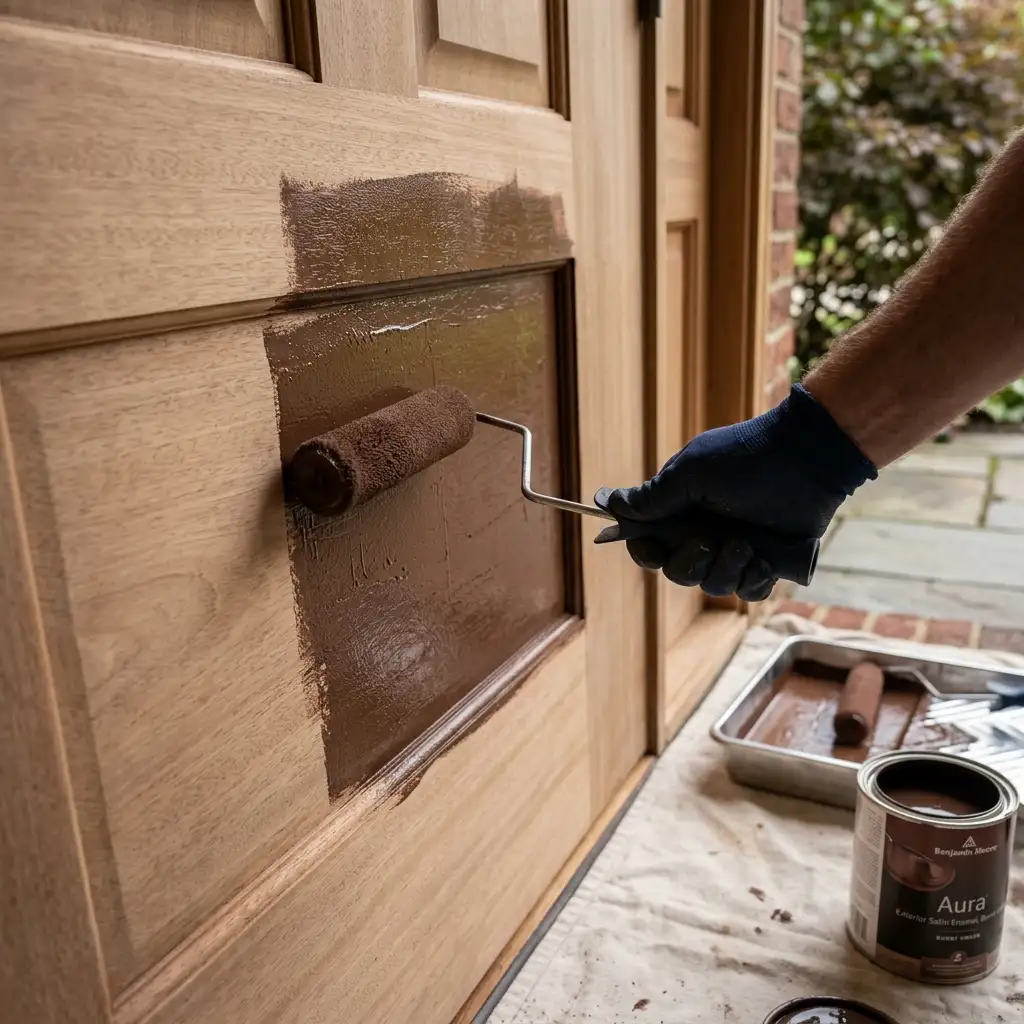
Start with a bucket of warm water and a little dish soap. A season of pollen, spider webs and hand oil sits on most front doors, and it dulls the color more than people expect. Ten minutes of washing is the cheapest upgrade on this page.
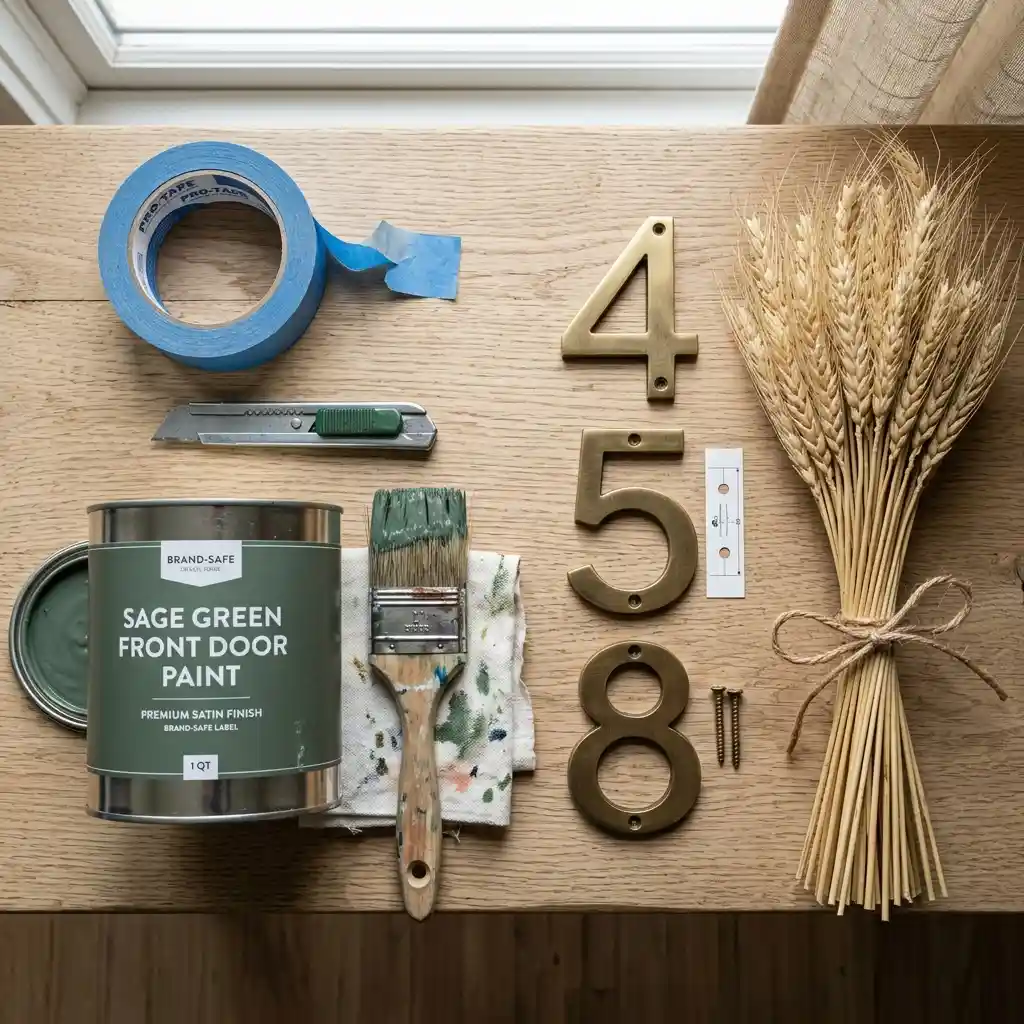
If the color is tired, one quart of exterior enamel in satin or semi-gloss covers a standard door with paint to spare. Sand the gloss off first, prime any bare patches, and work in the shade so the enamel does not skin over before you level it out.
Material Note: dark door colors come with a trade-off. Simpson Door Company defines a dark paint as one with a light reflectance value under 55, and notes that dark surfaces — wood, fiberglass or PVC — absorb more heat than lighter ones, which can make components move and break down over long sun exposure. On a west-facing door with no overhang, take the lighter end of your earth-tone range or check the door maker’s paint rules first.
Choose a Door Color That Works With Your Siding
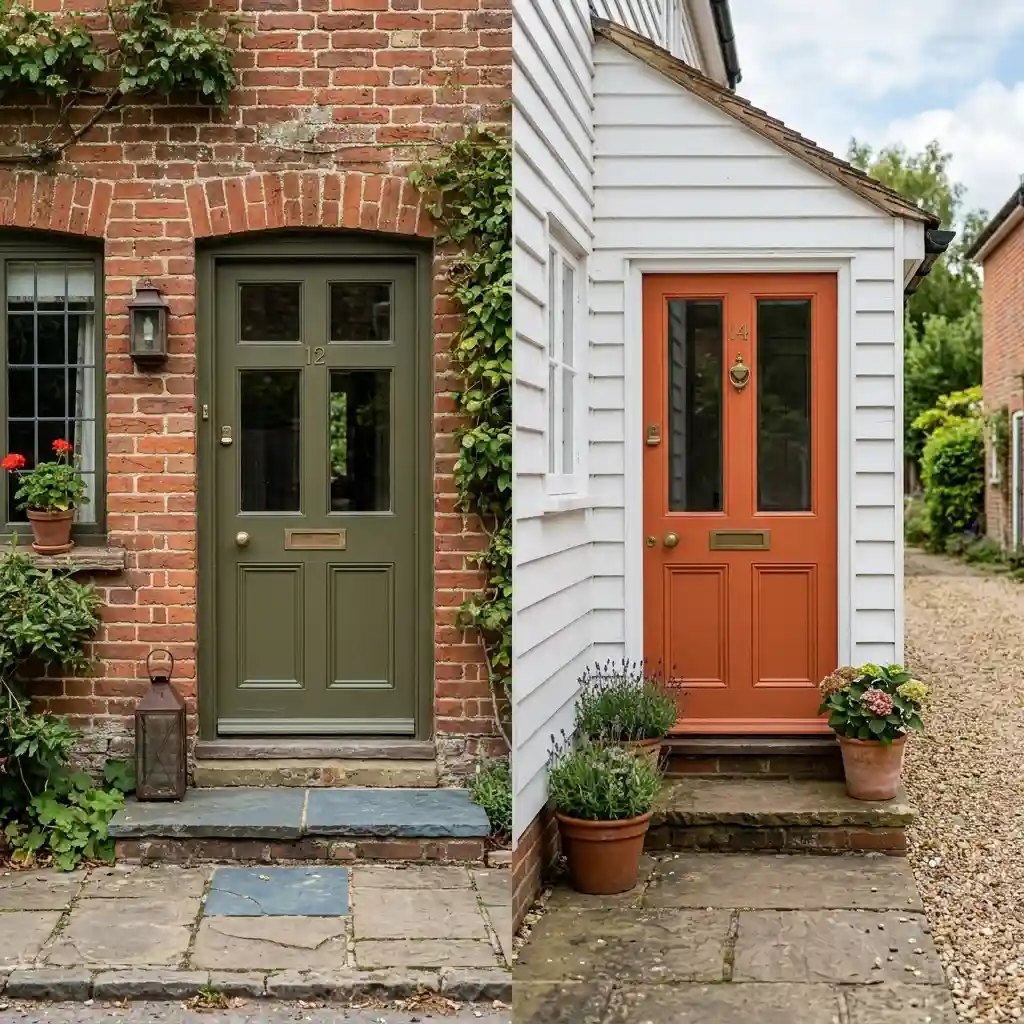
Fall colors do not all sit well on every house. The door has to answer the wall behind it, and that wall is the thing you cannot repaint on a Saturday. We take that facade-first approach further in matching a fall porch to your house.
Red brick already carries orange, so burnt umber and terracotta compete with it. Deep olive, warm charcoal and muted sage settle it down instead. White or cream siding takes almost anything, and it is where burnt brick and true terracotta look their best. Grey siding wants a warm counterweight — ochre, rust or a warm brown-black rather than another cool tone. Tan and beige siding sit closest to trouble, since a warm neutral door disappears into it; go several steps deeper with forest, umber or near-black.
Designer Rule of Thumb: hold a painted sample board against the closed door at 9am and again at 5pm before you commit. Exterior color shifts more between morning and evening light than any interior wall does, and the door is the one surface you see in both. The same rule saves money on wider exterior work like these ranch style home updates.
Match Every Metal on the Door Face
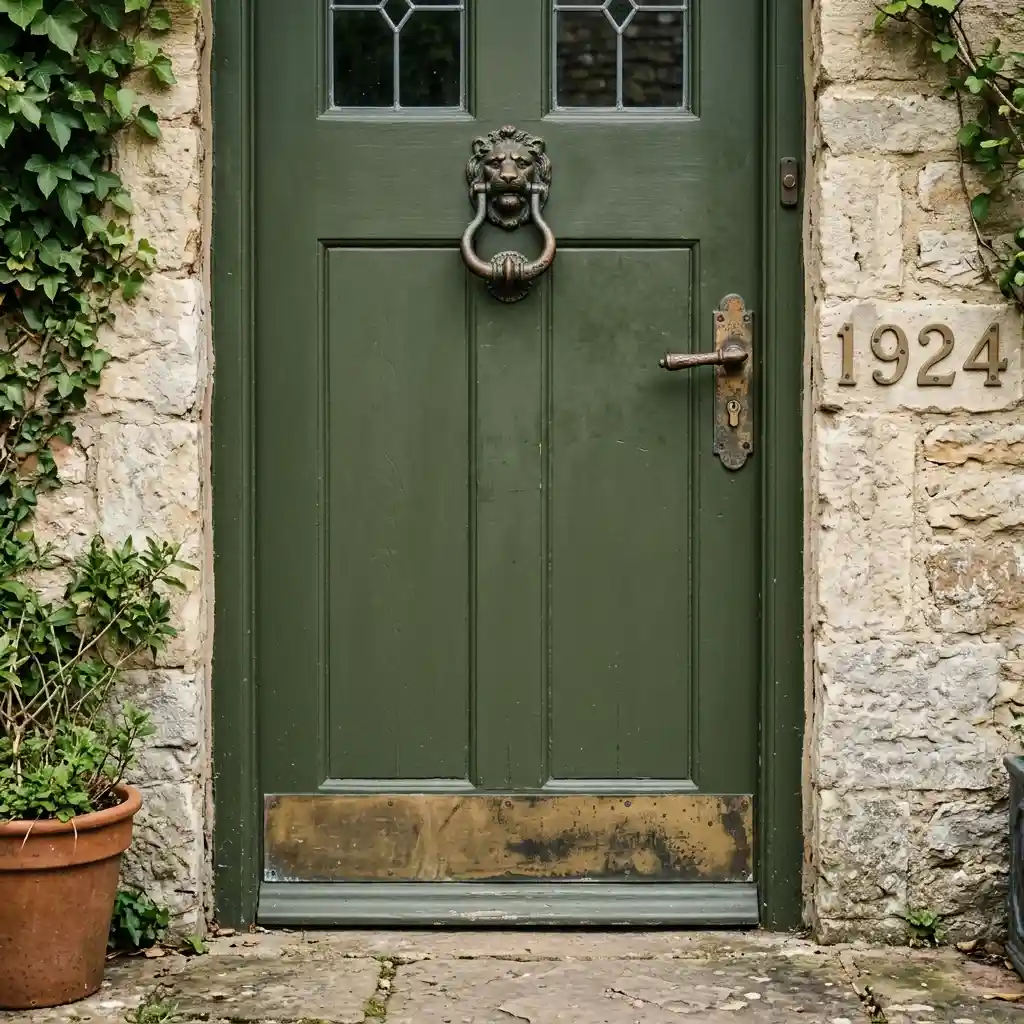
Metal is the detail people notice without naming it. A pitted chrome knob beside satin nickel numbers and a brass kick plate is what makes a door look builder-grade, no matter what is hanging on it.
Pick one finish and repeat it across every piece on the door face: handleset, deadbolt, knocker, kick plate and house numbers. Aged brass, oil-rubbed bronze and matte black all sit comfortably beside warm autumn colors. Mixed metals work inside a room, where distance and furniture separate them. On one small door plane, they just look accidental.
House numbers are the cheapest piece of that set and usually the oldest. A set of 4-inch modern numerals in the same finish as the handle costs less than a mid-range wreath and stays right for a decade.
Set the Hanging Height Before You Shop
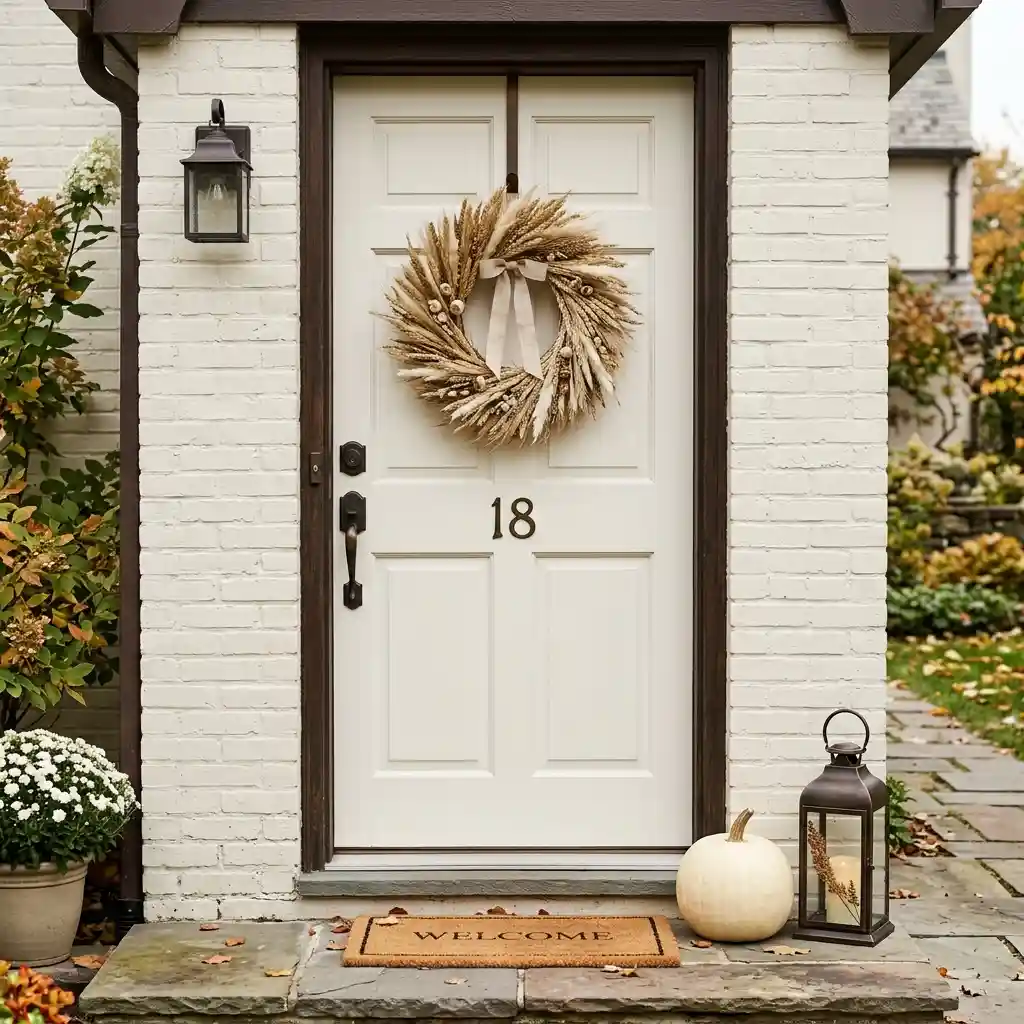
Most fall doors fail on height, not on taste. People hang the wreath from whatever hook is already there — usually up near the top rail — and the decoration floats above eye level with a long empty stretch of door underneath it.
Whatever you hang should sit in the middle band of that 80-inch surface, roughly between hip and shoulder height on the door itself. Mark the spot with painter’s tape before you buy anything. The mark tells you what size piece the gap actually needs, which is the difference between a swag that fits and one that looks stranded.
DESIGNER TIP: put the tape on the door, then look at it through your phone camera from the end of the walk. The screen flattens depth the way distance does, and a piece hung too high is obvious there in a way it never is from three feet away.
Frame the Opening, Not Only the Center
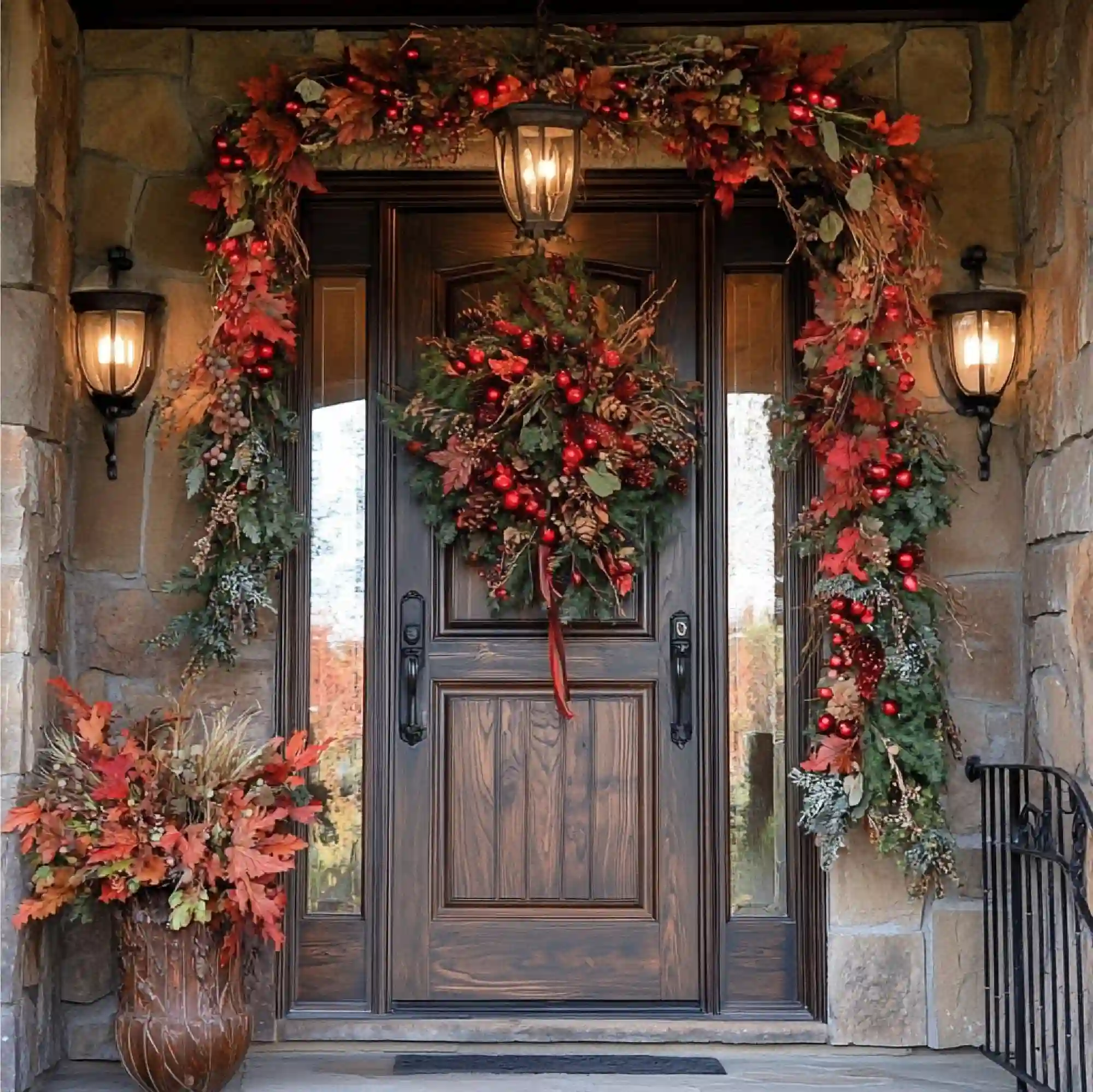
The center of the door is one spot. The frame around it is roughly 16 linear feet of trim that almost everyone ignores. A dried-grass swag over the top, a slim eucalyptus garland down one side, or a wide grosgrain ribbon in ochre changes the shape of the whole entry.
This is also the honest answer for anyone who does not want a wreath at all. Swags, half-moon bunches, corn-husk bundles and vertical dried-stem drops hang on the same hook and cover more of a tall door than a round wreath does. Wreath selection is its own subject, though the seasonal swap is worth seeing — these modern spring wreath ideas show how one hook carries a door through the year.
Safety Note: the front door is a fire exit. The National Fire Protection Association warns that dried flowers, cornstalks and crepe paper catch fire easily, that decorations belong away from open flames and heat sources such as light bulbs and heaters, and that exits should stay clear so nothing blocks an escape route. Keep dried stems off the porch light and keep the doorway itself walkable.
The Front Door Checklist
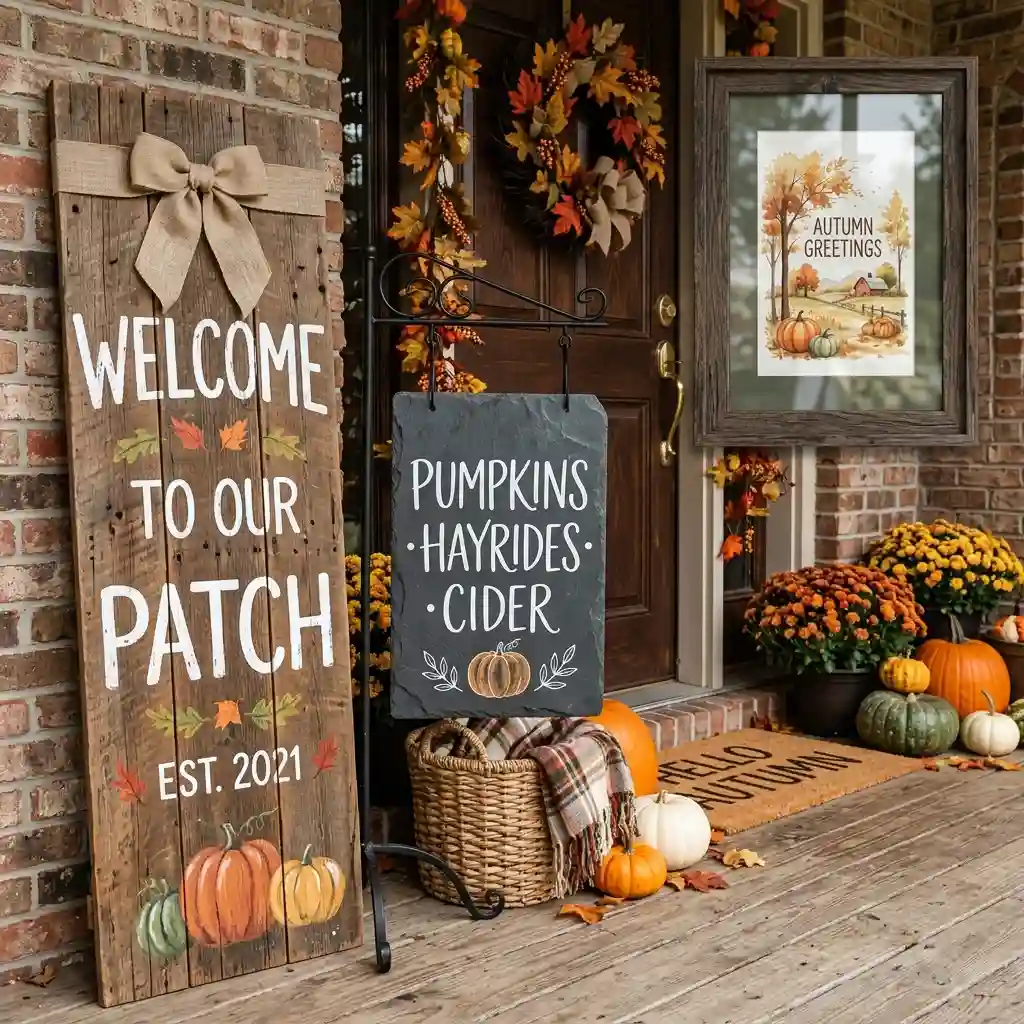
- Wash the door face, frame and hardware with warm soapy water before you buy anything.
- Hold a sample board against the closed door in morning and evening light before painting.
- Choose three tones: one warm neutral, one deep earth tone, one muted accent.
- Match every metal on the door face: handleset, knocker, kick plate, house numbers.
- Mark the hanging height with painter’s tape at mid-door, then shop to that gap.
- Keep dried stems, wheat and cornstalks clear of the porch bulb and the doorway.
KEY TAKEAWAY: Fall front door decor works best when the door surface, the color match and the metal are handled first, because every decoration you hang afterward sits on a better background.
What If You Have a Storm Door, Glass, or a Rental Door?
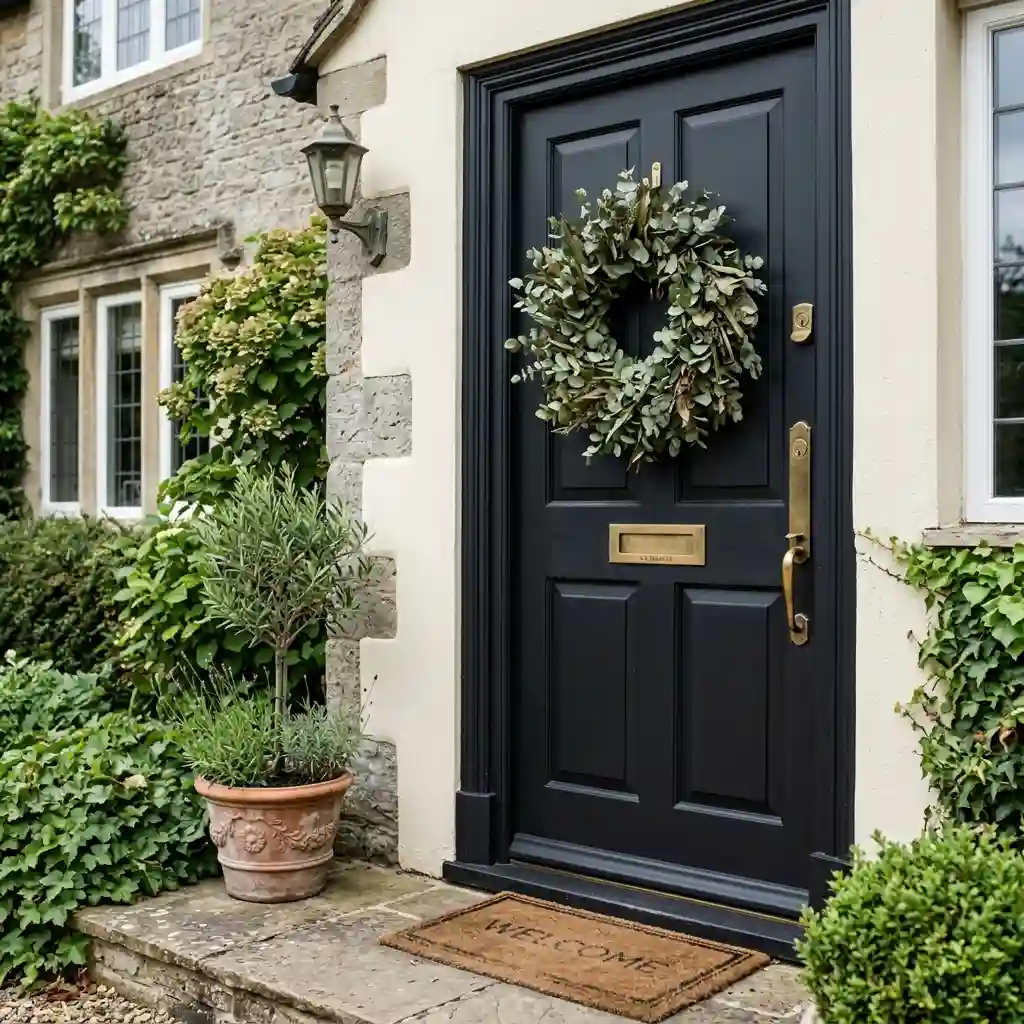
A storm door changes the rules. Heat builds up in the narrow gap between a storm door and the entry door, especially on a wall that catches afternoon sun. Anything you hang in that gap gets crushed every time the storm door closes, and fresh greenery dries out within days.
Material Note: trapped heat in that gap is a known cause of warped door surfaces and faded paint on the entry door behind it, so hang the piece on the outside face of the storm door instead. A magnetic hanger works on a steel frame and a heavy-duty suction hook works on full glass. Keep the piece flat and light — a slim swag, a flat grapevine ring, a ribbon drop. Save the deep, chunky pieces for a door with nothing in front of it, the way these spring wreath for front door ideas are styled.
Glass doors and doors with large glass panels need a different approach again. Hardware and adhesive both struggle on glass, so put the work into the frame and the trim, and let the glass stay clear so the light still comes through.
Rental Note: use an over-the-door hanger, a magnetic hook on a steel door, or removable outdoor adhesive strips instead of screws — and lift the hanger off before the door swells in damp weather. Renters can still change the house numbers, the ribbon and the swag, which is most of the visible difference anyway. If painting is off the table entirely, borrow the layering approach from these cozy winter front porch decor ideas and let texture carry the season instead of color.
What I’d Take Back Off the Door
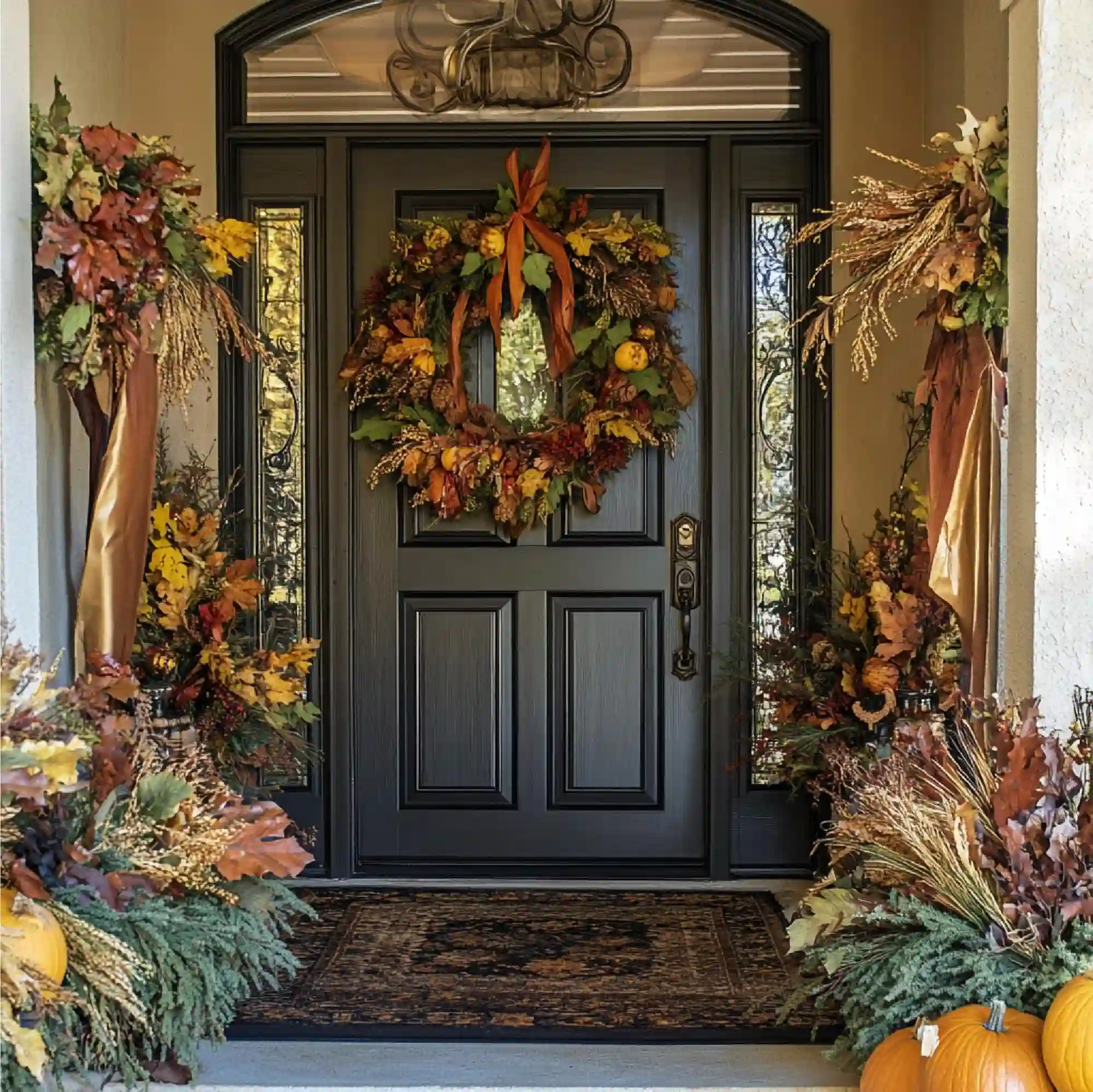
Instead of hanging the wreath from whichever hook is already in the door, Try moving it down to the middle band so the piece lands where the eye actually goes.
Instead of orange on orange on orange, Try one warm accent against cream, olive and umber, and let the door color carry the season.
Instead of fresh cut branches on a sun-facing door, Try dried wheat, grapevine and good matte faux, which hold their shape into December.
Instead of three metals on one door face, Try picking one finish and repeating it on the handleset, the numbers and the kick plate.
Spend It Here, Not There
Fall front door decor is unusually cheap for how much it changes. Under $100 buys a washed and repainted door plus a fresh set of house numbers — the two highest-impact moves on this page. The $150 to $350 middle covers a new handleset or knocker, which is where a door stops looking builder-grade. Above $400 you are into a full hardware set in aged brass, and that is a year-round upgrade rather than a seasonal one. The same spending logic applies just inside, where these spring entryway decor ideas show what the first six feet needs.
| Project | Estimated Cost | Impact Level |
|---|---|---|
| Wash and repaint the door (1 quart exterior enamel, sandpaper, brush) | $45-$120 | Very High |
| House numbers, 4 in, in one finish | $25-$90 | High |
| Dried swag, garland or grosgrain ribbon that lasts more than one season | $30-$120 | Medium |
| Door knocker and kick plate in a matching finish | $45-$180 | Medium |
| Handleset or deadbolt in aged brass, bronze or matte black | $90-$350 | High |
Best First Upgrade: Wash and repaint the door — it costs the least and changes the most of what people see.
Skip for Now: A second wreath. If the first one looks small, the problem is usually the hanging height and the door behind it.
Will It Still Look Right in November?
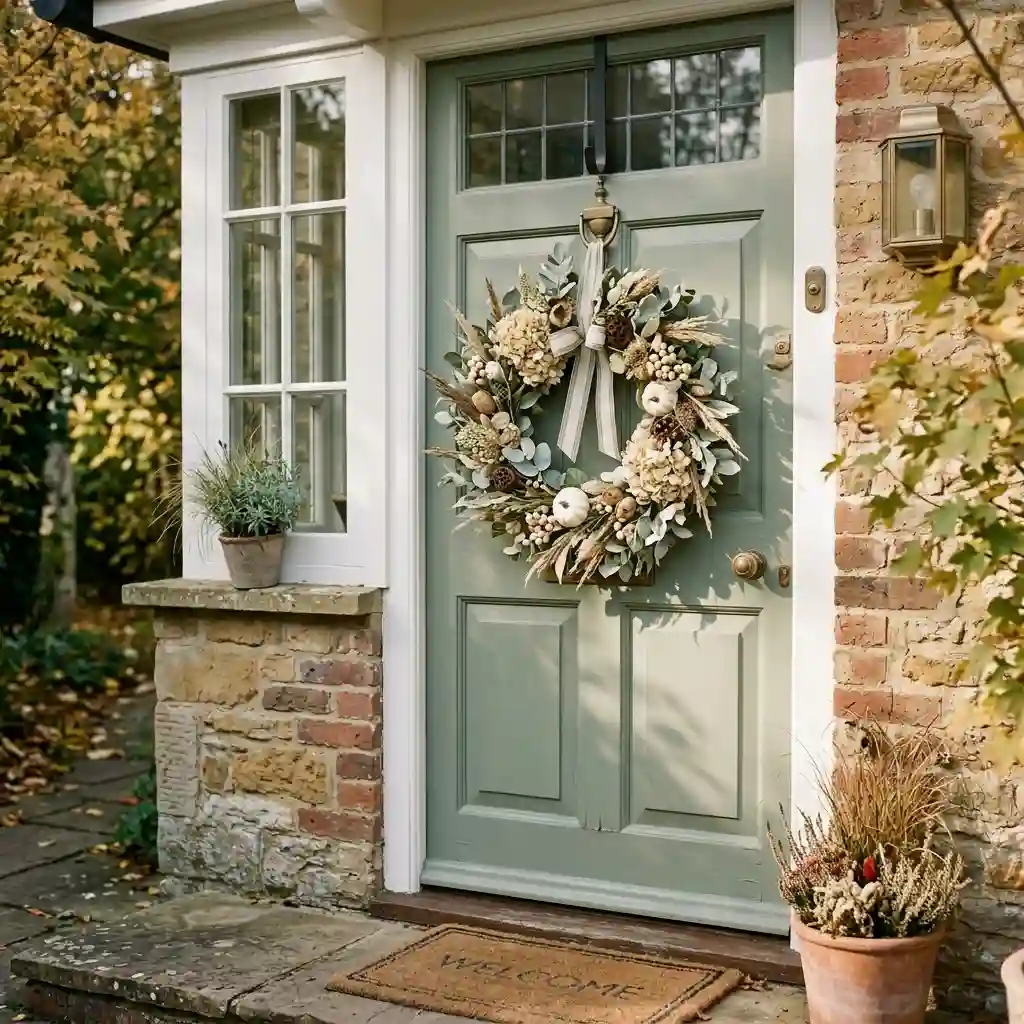
Most of it will. A painted door, matched hardware and new house numbers are not seasonal purchases — they carry straight through Thanksgiving and into winter with only the greenery swapped out. That is the whole argument for spending there instead of on another armful of decorations, and it is why these cozy winter decor ideas can pick up the same door in December.
The pieces with a clock on them are the fresh stems. Cut branches, eucalyptus and grocery bouquets fade fastest, especially on a south or west-facing door. Dried wheat, grapevine, pampas and cotton stems hold their shape into December, which is why they earn their place on a door that has to work for three straight months. The rooms inside run on the same swap-the-soft-stuff logic, which these fall bedroom refresh ideas walk through.
Designer’s Verdict: Spend on the door, rent the seasonality. A repainted door with matched hardware and clean numbers will still look correct in February. If lettering joins the entry, our fall porch signs guide covers the one measurement that decides whether it reads from the driveway. The wheat swag will not, and it does not need to.
Want the rest of the season? Browse all our fall decorating ideas for the months on either side of this one.
Frequently Asked Questions
Conclusion
If you change one thing this season, wash and repaint the door — it costs under $120, takes an afternoon, and makes every piece of fall front door decor you hang afterward look better than it did on the shelf. Editorial field note: a tired beige door with fresh numbers, one repeated metal and the hook moved down to mid-door looks finished before a single stem arrives. Start there, then work your way inside with the rest of our home decorating ideas.
Next Steps
- Photograph your closed door through your phone from the end of the walk and see where the current piece sits.
- Hold a paint sample board against the door at 9am and 5pm before you choose a color.
- Count the metal finishes on your door face — if there is more than one, replace the cheapest piece first.