TL;DR
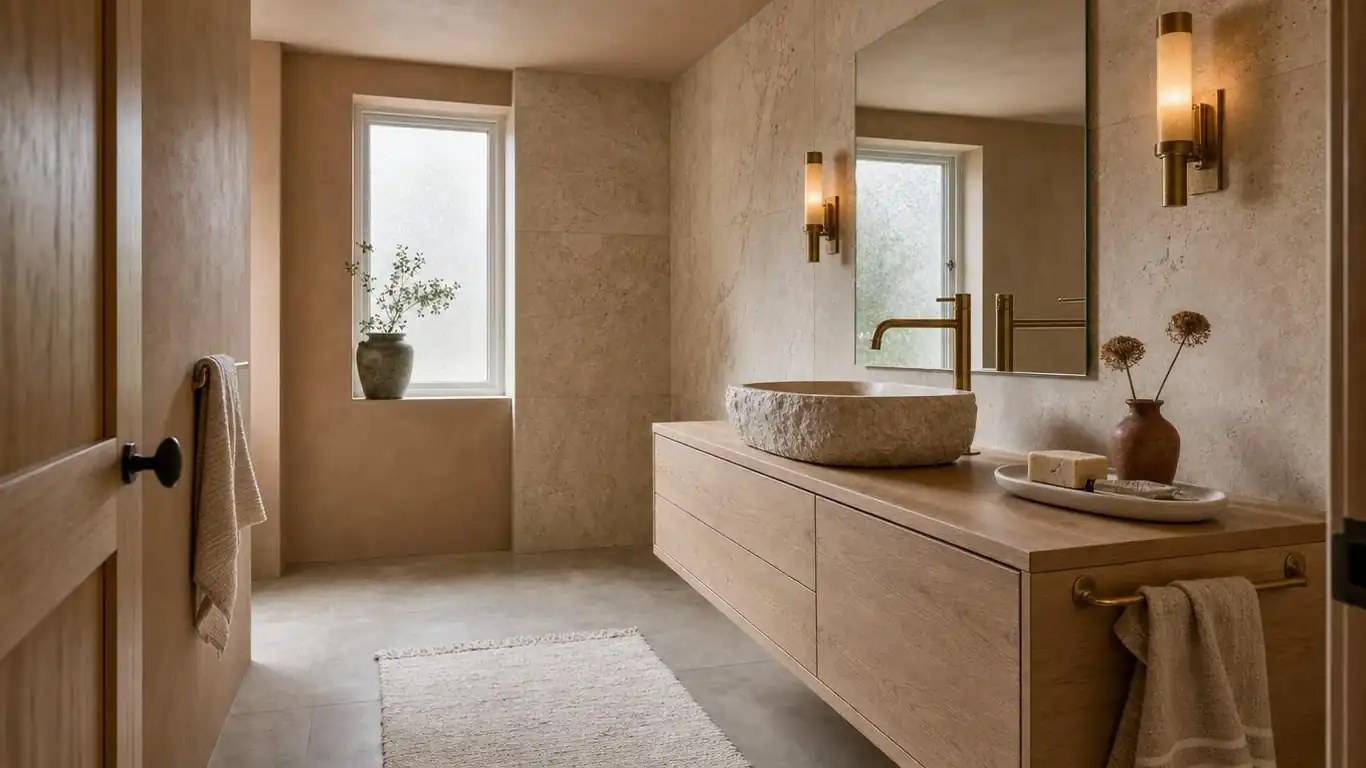
- Materials: Travertine, fluted stone, and warm oak vanity cabinetry are replacing cold white porcelain as the dominant surface choices.
- Color: Warm terracotta, deep muted clay, and sage green are pulling bathrooms away from the grey-and-white era for good.
- Fixtures: Unlacquered brass and oil-rubbed bronze are holding strong — matte chrome is fading fast.
- Layout: Wet rooms and curbless walk-in showers now appear in mid-range remodels, not just luxury builds.
- Mood: Bathrooms in 2026 read less like utility rooms and more like private retreats — spa-adjacent, layered, and lived-in.
Why Bathroom Design Is Shifting So Fast Right Now
Walk into a bathroom showroom built in 2019 and the contrast with 2026’s leading designs hits immediately. Cool grey tiles, chrome fixtures, and floating vanities that looked like hospital cabinetry. The materials felt clean but not warm. The room functioned but it never felt like a place to stay.
Bathroom design trends 2026 are correcting that overcorrection toward clinical white space. Designers are pulling in materials from the rest of the home — travertine that matches the kitchen island, oak cabinetry that echoes the living room shelving, warm terracotta tones that connect the bathroom to the broader palette. The bathroom is finally being designed as a room, not a wet utility closet. Explore the full range of home decor inspiration at 101homedecor.com to see how these bathroom ideas connect to the wider design shifts happening across every room in 2026.
I visited a new-build showroom in early 2026 where every bathroom suite on display used some form of warm-toned stone or fluted ceramic. Not one chrome tap in sight. That’s how fast this has moved.
These 10 trends are not short-term flips. Each one is grounded in materials, proportions, and design principles that hold up across years. Bookmark this guide for quick reference.
KEY TAKEAWAY: Bathroom design in 2026 is defined by warm materials, sculptural shapes, and a deliberate shift away from cold minimalism — these trends are built to last, not to flip.
| Quick Takeaways | |
|---|---|
| Surface | Travertine and fluted stone tile are replacing polished porcelain in every budget range. |
| Hardware | Unlacquered brass and oil-rubbed bronze dominate — matte chrome is declining sharply. |
| Color | Warm terracotta, sage green, and muted clay are the palette story of 2026. |
| Layout | Curbless wet rooms and niche shelving are replacing standard shower enclosures and surface storage. |
| Mood | Private, spa-adjacent, layered — bathrooms are being designed as rooms people want to spend time in. |
Surface and Material Trends
The biggest bathroom shifts this year start with surfaces. These material trends — travertine, textured ceramic, warm oak, and limewash — bring natural depth and movement to the room.
1. Travertine Tile — The Material Everyone Is Specifying
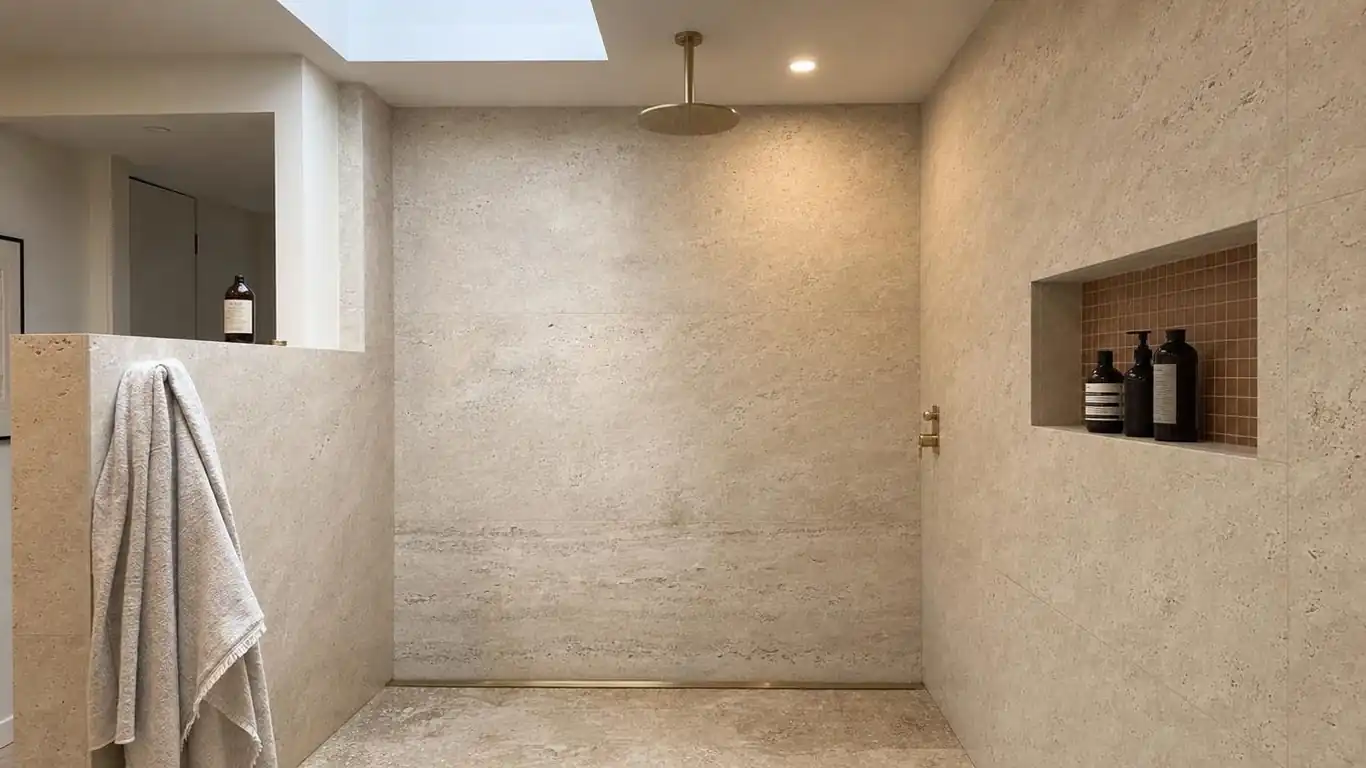
Travertine is having a sustained moment. The natural stone comes in warm ivory, soft beige, and earthy cream — tones that absorb light rather than bounce it back cold. Full-wall travertine in a shower enclosure creates a visual depth that polished porcelain simply cannot. Honed or tumbled finishes are the right call here; polished travertine in a wet area chips at the edges and reads too formal. Pair with unlacquered brass fixtures and a warm cream grout to let the stone’s natural vein pattern become the focal point. Budget around $12–$22 per square foot for standard travertine tile, with larger-format slabs running higher. The same material-first thinking that defines bathroom design trends 2026 also shapes stylish bathroom backsplash ideas for every home budget — worth reading alongside this guide.
KEY TAKEAWAY: Travertine tile works best in honed or tumbled finish paired with warm brass fixtures — polished versions chip in wet areas and lose the natural vein detail.
2. Fluted and Textured Ceramic — Movement Without Pattern
Fluted ceramic tile is the most accessible bathroom design trend 2026 has produced. A single fluted accent wall behind the vanity costs roughly the same as standard subway tile but adds immediate three-dimensional texture. The vertical ridges catch light across the day and create shadow play that makes a small bathroom feel larger than flat tile ever could. Fluted ceramic works in cool cloud grey, warm sand, and deep matte charcoal. It pairs well with floating oak vanity units and brushed brass hardware without requiring a full renovation — a feature wall of 40–60 tiles transforms the space. For smaller bathrooms especially, the texture-over-surface-area approach connects directly to small laundry room ideas that optimize your utility space — the same principle of doing more with less square footage applies.
DESIGNER TIP: Run fluted tile vertically floor-to-ceiling on a single accent wall rather than tiling the entire bathroom. One strong surface reads more considered than four average ones.
KEY TAKEAWAY: A single fluted ceramic accent wall behind the vanity costs similarly to subway tile but adds dramatic shadow texture that flat tile can never achieve.
3. Warm Oak Vanity Cabinetry — Wood Is Back in the Wet Room
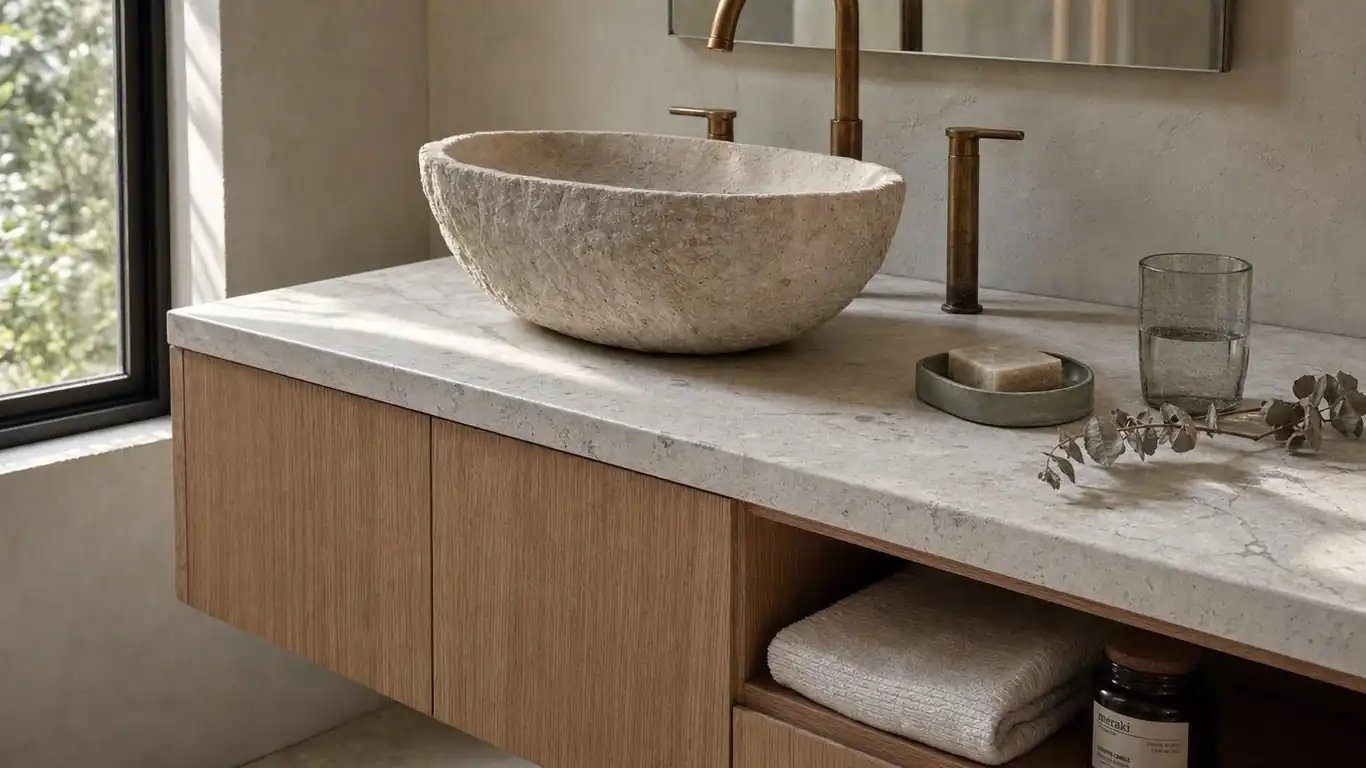
Oak vanity cabinetry has moved from risk to standard practice in 2026. Moisture-resistant engineered oak — treated with hardwax oil or marine-grade sealant — handles the bathroom environment reliably when installed with sealed joints and proper ventilation. The warm grain softens what is usually the coldest room in the house. Pair a floating oak vanity at 32 inches above floor level with a stone basin in warm cream or soft limestone. The combination reads spa-hotel without requiring a hotel budget. For the finish, choose a matte hardwax oil rather than a high-gloss lacquer — it repairs easily and ages better in a humid environment. The warm oak grain palette works beautifully alongside a grey bedroom design approach in adjacent rooms — the tones complement without competing.
KEY TAKEAWAY: Engineered oak treated with hardwax oil handles bathroom humidity reliably — install at 32 inches with a stone basin and sealed joints for a result that lasts.
4. Limewash and Microcement Walls — Texture Beyond Tile
Limewash paint is moving fast into bathrooms. It applies over existing plaster or tile (with the right primer), costs significantly less than a retile, and produces the kind of layered, slightly uneven surface that looks expensive precisely because it’s not perfectly uniform. The natural variation in limewash gives walls a depth that flat emulsion cannot replicate. Use it in warm clay, aged white, or muted terracotta. Microcement is the premium alternative — a 3–5mm layer of pigmented cement applied over existing surfaces, completely waterproof, and available in over 30 tones. Expect $80–$120 per square meter installed for microcement. Both materials perform best in bathrooms with adequate ventilation. For budget-conscious approaches to whole-home texture refresh, 10 fresh spring decorating trends covers how limewash and natural wall treatments are showing up across living spaces in 2026.
KEY TAKEAWAY: Limewash and microcement both apply over existing surfaces and cost significantly less than a full retile — limewash suits DIY, microcement needs a professional applicator.
Space and Form Trends
How bathrooms are laid out is changing as much as how they look. These form trends — curbless wet rooms, built-in niches, and sculptural basins — rethink the space itself.
5. Curbless Wet Rooms — The Layout Shift That Changes Everything
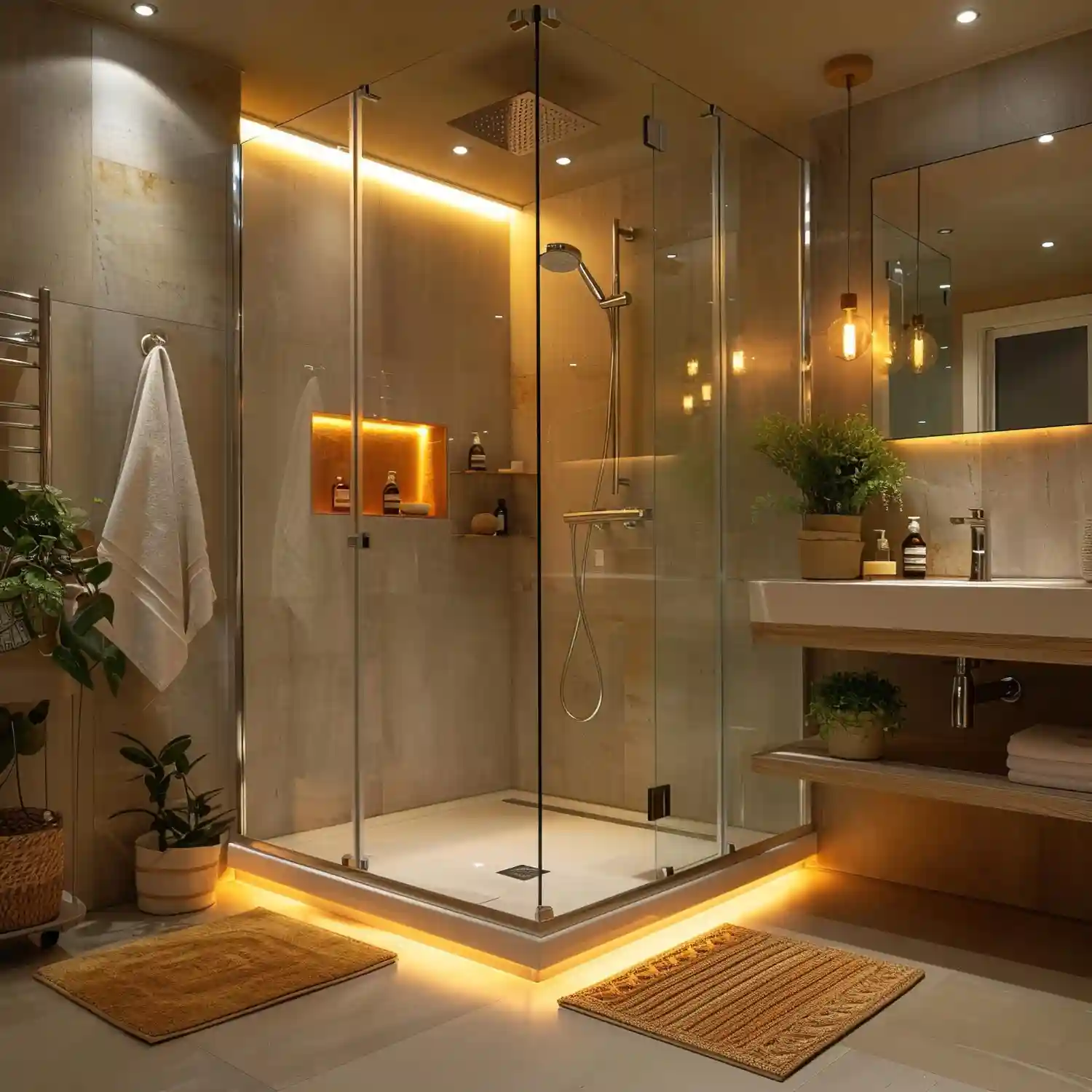
The curbless wet room is the single biggest layout trend in bathroom design trends 2026. A curbless shower eliminates the step-over threshold, opens the floor visually, and makes a small bathroom read as one continuous space rather than a boxed-off enclosure. The practical requirement is a properly graded floor drain with a slope of at least 1 inch per 4 feet. Linear channel drains along one wall are cleaner-looking than central point drains. The accessible design benefit is real — a curbless entry works for every household member across every decade of their life. The same continuous, open-floor effect is what makes a small bathroom with a walk-in shower feel far larger than its footprint.
KEY TAKEAWAY: A curbless wet room requires a floor slope of at least 1 inch per 4 feet and a linear drain — get these two technical details right and the rest follows naturally.
6. Built-In Niche Shelving — Storage That Disappears Into the Wall
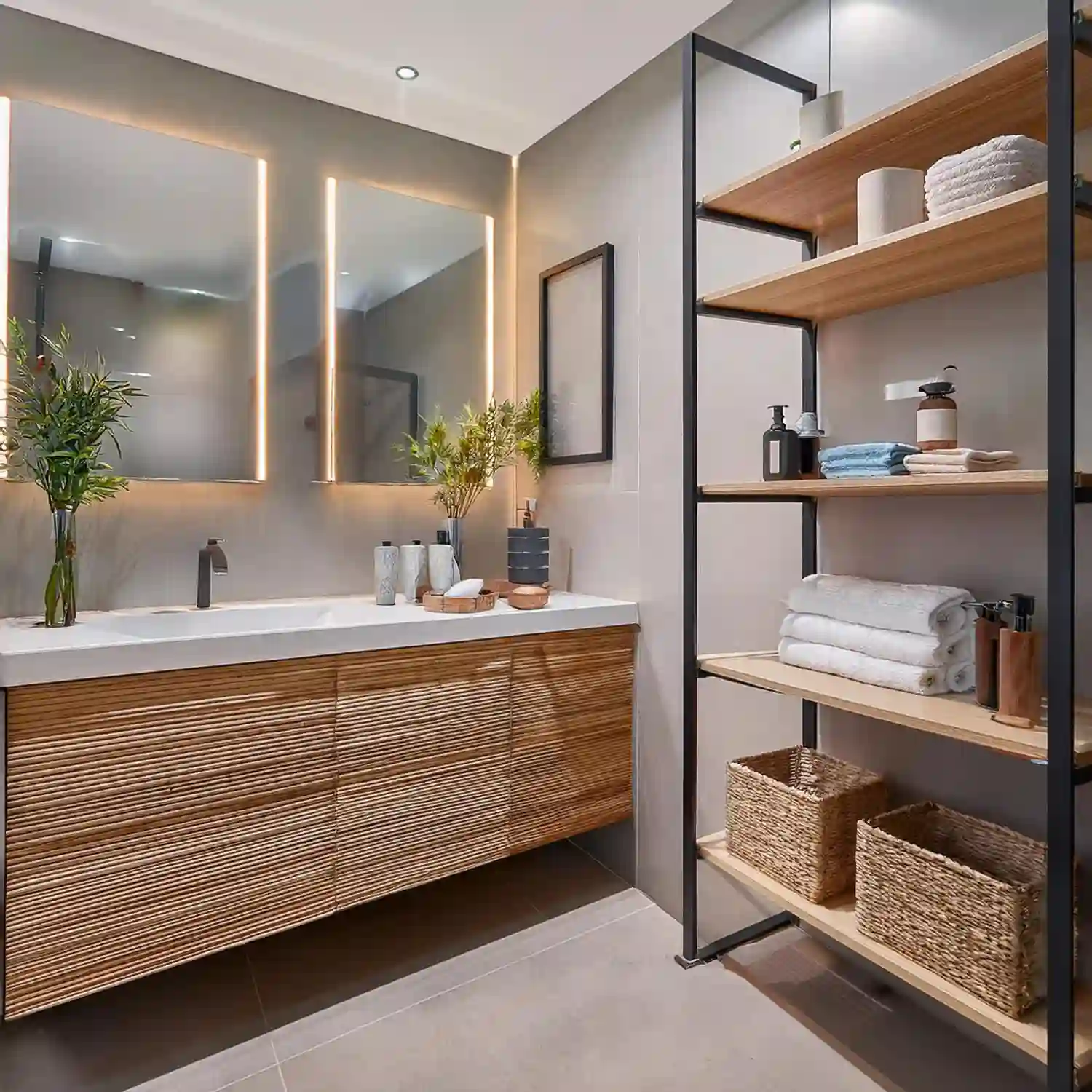
Surface-mounted shower caddies and freestanding shelves are being replaced by recessed niche shelving cut directly into the wall cavity. A niche sits flush with the tile surface, holds full-size bottles without crowding the visual field, and eliminates the hanging tension-rod caddy that always looks temporary. Standard niche sizing runs 12 inches wide by 24 inches tall — deep enough for a full shampoo bottle. Tile the inside of the niche in a contrasting material, such as a small-format mosaic in unlacquered brass-toned porcelain or a honed stone, to create a visual moment within the larger tile surface. Pair with laundry room cabinet ideas for maximum storage for whole-home storage thinking.
DESIGNER TIP: Position the niche at shoulder height — approximately 48–54 inches from the floor — rather than eye height. It reads cleaner and keeps the full bottle height inside the recess without spilling out at the top.
KEY TAKEAWAY: A recessed shower niche at 12 by 24 inches, tiled inside with a contrasting material, holds full-size bottles flush with the wall and adds a designed detail for no extra square footage.
7. Freestanding Stone Basins — The Sculptural Moment Every Bathroom Needs
Freestanding or vessel basins made from solid stone — limestone, travertine, marble composite, or lava stone — are one of the clearest indicators that a bathroom has been designed rather than installed. A stone basin is a single object that does a lot of work: it adds visual weight at the right point on the vanity, it introduces natural material variation, and it connects surface and hardware into one composed moment. The practical note is maintenance — stone requires sealing once or twice annually, and the rim where basin meets vanity needs a waterproof silicone bead replaced every few years. Vessel basins typically sit 5–7 inches above the vanity surface, so drop the counter height to 28–30 inches to keep the overall reach comfortable. The same focal-point logic — one strong statement object doing the heavy lifting — drives navy blue bedroom design and other moody, considered room approaches across the home.
KEY TAKEAWAY: A stone vessel basin raises the visual interest of a bathroom instantly but requires the vanity height dropped to 28–30 inches to compensate for the basin’s extra projection above the surface.
8. Double Vanity With a Gap — The Layout Trend Replacing Side-by-Side Units
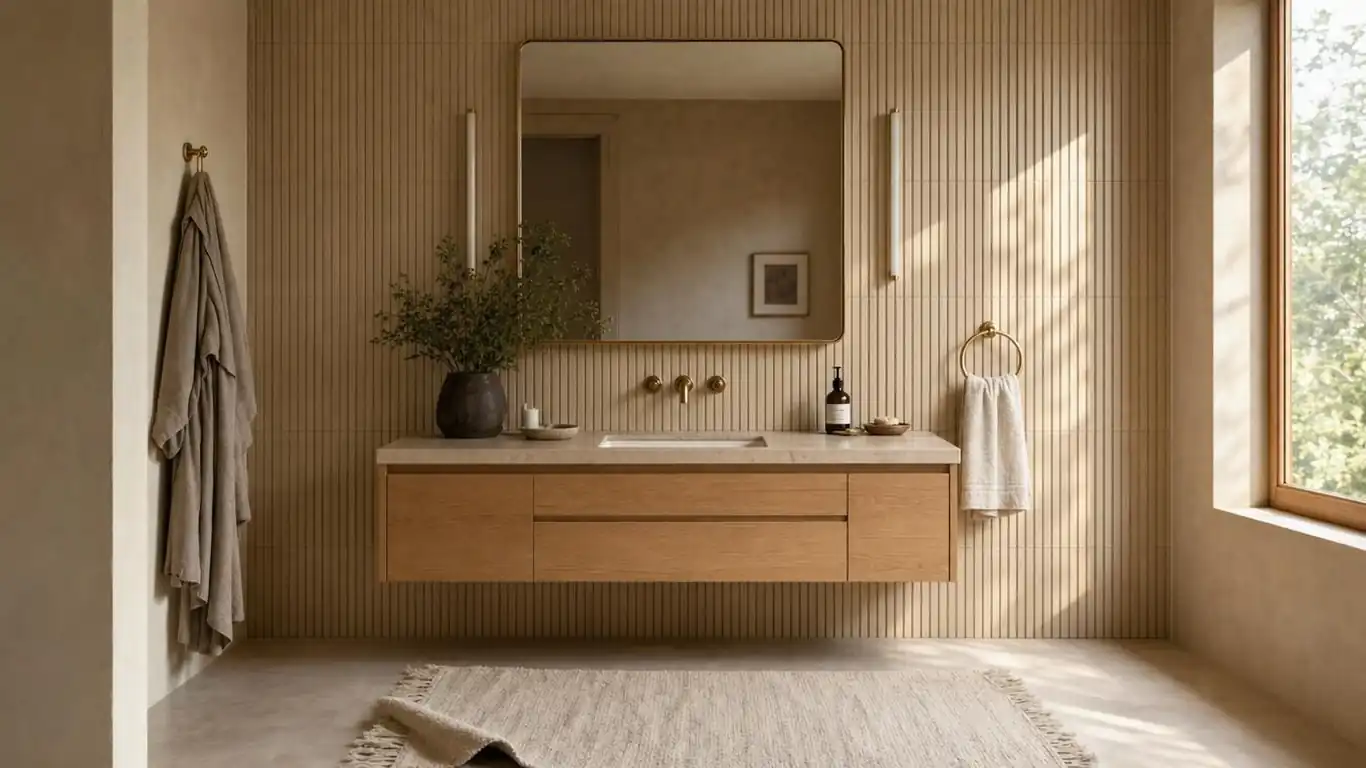
The traditional side-by-side double vanity — two basins in a long unbroken countertop — is being replaced by a split design with a deliberate gap in the middle. Two separate vanity units with a 12–18 inch open section between them creates a visual break that makes a mid-size bathroom feel considered rather than run-together. The gap is not wasted: it functions as a styling shelf for a single ceramic object, a small trailing plant in a matte black planter, or a stack of folded linen towels. For rooms under 7 feet wide, this layout only works with slimmer 18-inch-depth vanity units rather than standard 21-inch depth. This same “deliberate break” approach to symmetry works in minimalist bedroom ideas for 2026 where empty space carries as much weight as the furniture itself.
KEY TAKEAWAY: A split double vanity with a 12–18 inch gap between units costs no more than a standard side-by-side run but adds the considered visual pause that separates a designed bathroom from a functional one.
Mood and Finish Trends
The final layer is all about atmosphere. These finishing trends — living brass and warm, layered spa lighting — give a bathroom a calm, considered mood.
9. Unlacquered Brass Hardware — The Finish That Gets Better With Age
Unlacquered brass is brass without a protective lacquer coating, meaning it reacts to air, water, and handling over time to develop a warm, darkened patina. The living quality of the finish is the point. New unlacquered brass starts bright gold and gradually deepens toward an antique, honey-amber tone — a process that takes 6–18 months depending on how humid the bathroom runs. This natural aging is why designers specify it in bathrooms rather than kitchens: the humidity accelerates the patina in the most visually pleasing way. Unlacquered brass fixtures run $80–$350 per piece depending on brand and profile. Pair with travertine or warm stone tile for maximum effect. Avoid pairing with cool grey or blue tones — the contrast fights rather than complements. You can find a similar warm-metal-plus-natural-material approach in earthy modern bedroom ideas that balance brass accents with oak and linen.
KEY TAKEAWAY: Unlacquered brass develops a natural patina over 6–18 months — this aging is a feature, not a flaw, and works best paired with warm stone surfaces rather than cool-toned tile.
10. Spa-Inspired Lighting — Warm, Layered, and Deliberately Low
The overhead recessed downlight that illuminates every corner equally is the least flattering light possible for a bathroom. Bathroom design trends 2026 are replacing single-source overhead lighting with a layered approach: warm-white ambient at the ceiling (2700K maximum), directional task lighting on either side of the mirror at face height (not above — overhead face lighting creates harsh shadows), and a single accent source such as a wall sconce at low height for atmosphere after the main task is done. Warm-white LED strips running vertically beside a frameless mirror — not the horizontal Hollywood-style strip above — create even, shadow-free illumination for grooming. The result is a bathroom that functions well at 7am and feels like a spa retreat at 9pm. Layered lighting at different heights is the same strategy that transforms moody mid-century modern living room spaces — ambient, task, and accent working together rather than a single ceiling source.
DESIGNER TIP: Add a dimmer switch to every circuit in the bathroom. The difference between grooming light and evening-wind-down light is entirely in the dimmer — same bulbs, same fixtures, completely different mood.
KEY TAKEAWAY: Replace overhead-only bathroom lighting with three layers: 2700K ambient at the ceiling, vertical task strips beside the mirror, and a low wall sconce for evening atmosphere — the dimmer switch connects all three.
What to Avoid in 2026 Bathroom Design
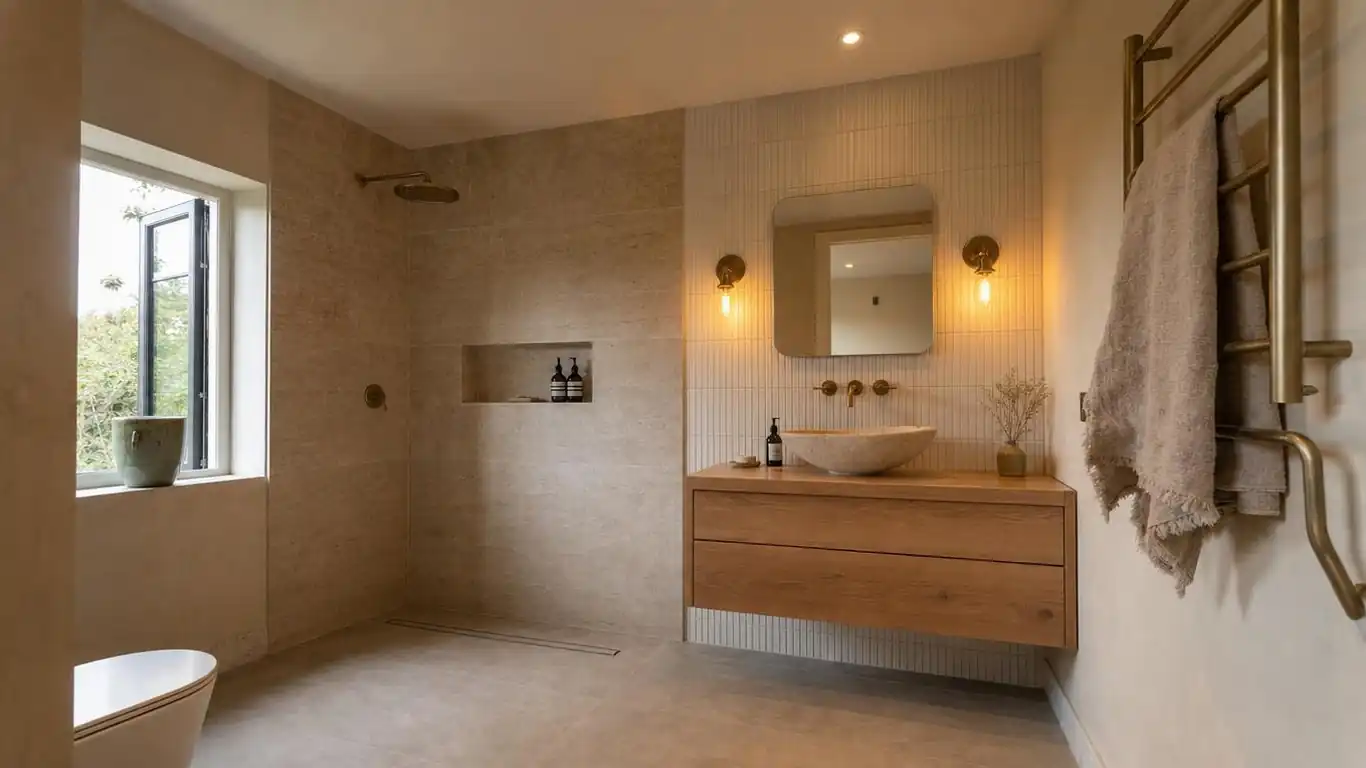
Not every trend from the past decade ages well. These four directions are looking notably dated in 2026 — understanding what to leave behind matters as much as knowing what to move toward. The same editing instinct applies when refreshing a small bedroom — knowing what to remove is half the design decision.
❌ All-grey tile with chrome fixtures → ✅ Shift to warm-toned stone or textured ceramic with brass or oil-rubbed bronze hardware. Grey and chrome together now read as a 2016 hotel corridor.
❌ High-gloss white cabinet doors → ✅ Move to matte shaker-profile cabinetry in warm white, sage green, or warm clay. High-gloss shows every fingerprint and every scuff within months.
❌ Vessel basins placed on high countertops → ✅ Drop the vanity to 28–30 inches when using a vessel basin to maintain proper reach height — a high counter plus a vessel basin is functionally awkward and visually top-heavy.
❌ Open shelving stacked with rolled towels → ✅ Transition to one or two recessed niches and closed cabinetry. The towel-display look peaked around 2018 and now reads as clutter rather than spa styling.
KEY TAKEAWAY: The fastest way to date a bathroom in 2026 is all-grey tile, chrome hardware, high-gloss white cabinets, and open towel shelving — swap any one of these and the room immediately reads more current.
What You’ll Spend
Bathroom design trends 2026 cover a wide investment range. A single fluted accent wall or a new brass tap set can shift the feel of a room for under $500. A full wet-room conversion with travertine tile and a freestanding stone basin is a different project entirely. The same cost-vs-impact framework for small utility spaces applies in tiny laundry room ideas that maximize every square inch — useful if you are budgeting a whole-home refresh. Here is a realistic breakdown by bathroom upgrade type.
| Project | Estimated Cost | Impact Level |
|---|---|---|
| Unlacquered brass hardware swap (taps, towel rail, robe hook) | $200–$600 | High |
| Fluted ceramic accent wall (feature wall, materials + installation) | $400–$900 | High |
| Limewash paint full bathroom walls (materials + application) | $150–$350 | Medium |
| Recessed shower niche (labor + tile matching) | $300–$700 | Medium |
| Stone vessel basin + engineered oak vanity unit | $800–$2,200 | Very High |
| Full curbless wet room conversion (structural + tile + drain) | $4,000–$12,000 | Very High |
KEY TAKEAWAY: The highest-impact single upgrade for the lowest investment is a brass hardware swap — taps, towel rail, and a robe hook in unlacquered brass for $200–$600 shifts a bathroom’s entire character.
Special Considerations for Smaller and Older Bathrooms
Bathroom design trends 2026 are largely designed around mid-size or newly built rooms. Applying them to a 40-square-foot powder room or a pre-1980 bathroom with structural constraints calls for some adjustments.
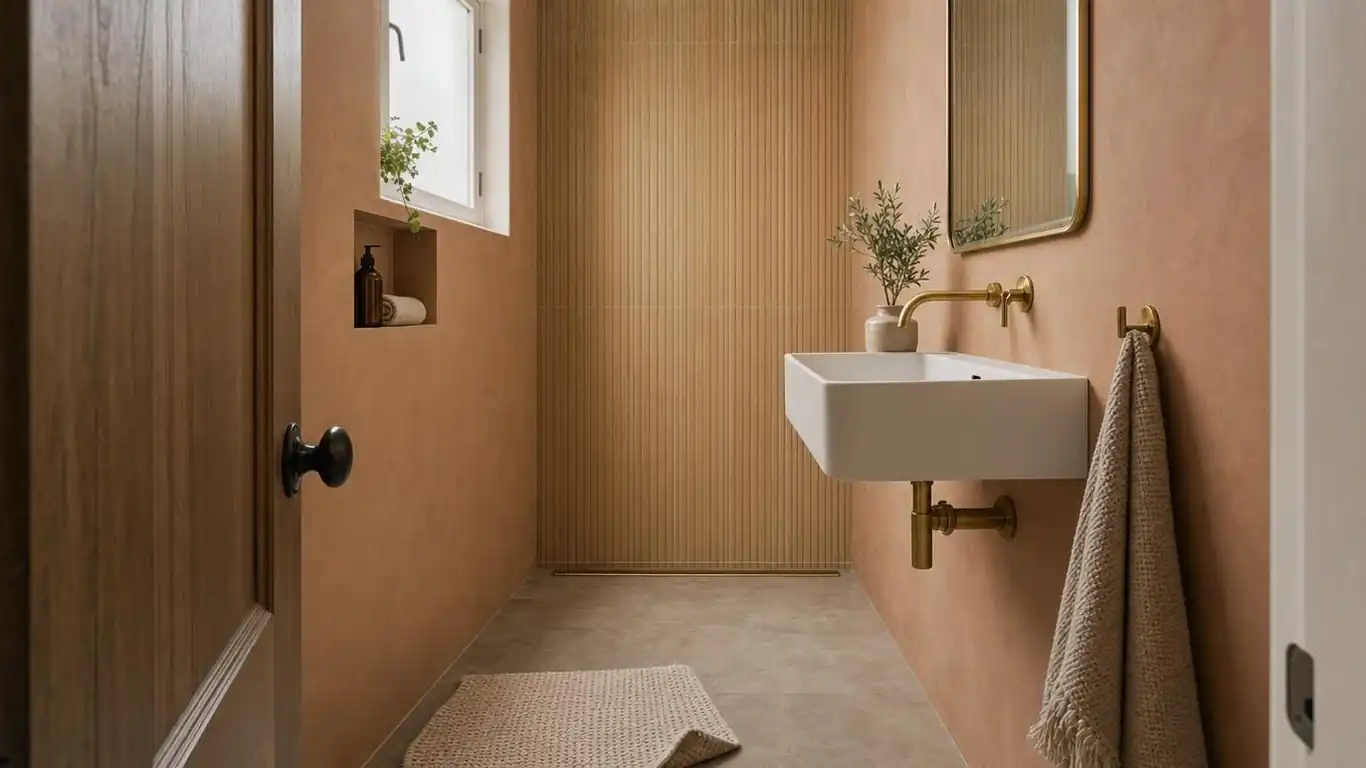
Smaller bathrooms (under 50 square feet): A curbless wet room in a very small bathroom reads beautifully but requires careful waterproofing of the entire floor area — not just the shower zone. A linear drain along the back wall keeps the drain hidden and the floor clean. Fluted tile on one wall is ideal here: it adds depth without reducing perceived floor area. Avoid freestanding stone basins in rooms under 50 square feet — the basin’s visual mass tips the proportion. A wall-hung basin at 32 inches reads lighter and frees the vanity surface for a single well-chosen object.
Older homes (pre-1960s plumbing): Unlacquered brass fixtures are compatible with any plumbing system, but check water pressure first — a low-pressure supply makes rainfall showerheads perform poorly. Limewash over existing tile requires a specialist bonding primer; standard limewash paint adheres poorly to glazed tile surfaces without it. If the existing tile layout means a recessed niche would cut into a load-bearing wall, tile the outside of a niche box built from cement board instead — it reads nearly identical from the front.
Rented spaces: The highest-impact reversible moves are hardware swaps (a new tap set installs and uninstalls without structural work in most cases), limewash in a temporary wallpaper form (available from several specialty suppliers), and freestanding or clip-on mirror options that add the arched or fluted stone look without drilling. Pair these ideas with smart ways to decorate a small living room on a budget for whole-apartment approaches to renter-friendly refresh.
KEY TAKEAWAY: In rooms under 50 square feet, skip the freestanding stone basin and use a wall-hung basin at 32 inches instead — the visual weight difference makes the difference between cramped and considered.
Frequently Asked Questions
Conclusion
Bathroom design trends 2026 are the clearest signal yet that the bathroom has been fully admitted into the design conversation. It is no longer a room you apologize for. The materials carrying this shift — travertine, fluted ceramic, engineered oak, unlacquered brass — are not trend-chasing choices. They are long-horizon decisions that improve with age rather than dating with a season.
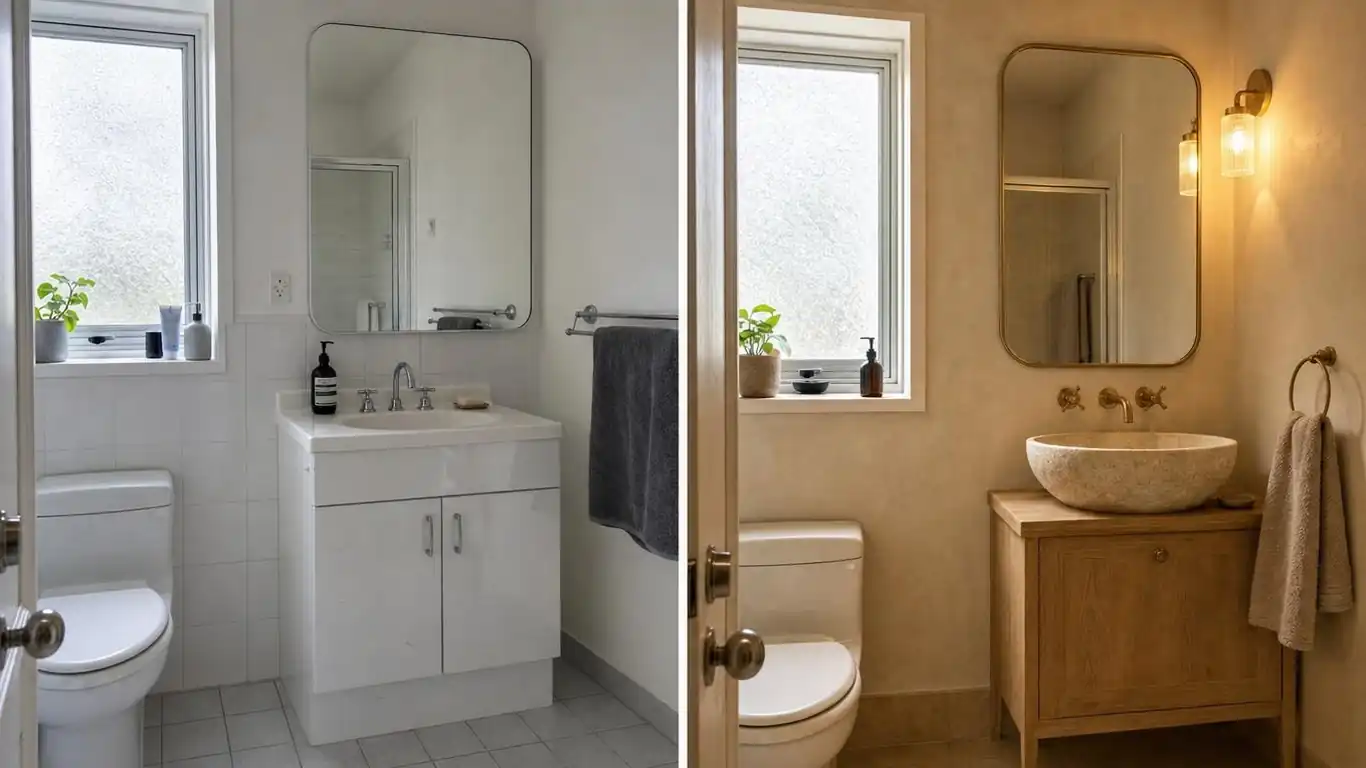
I worked on a bathroom refresh last spring for a client in a 1970s house. The original room was classic: polished white floor tile, chrome everything, a mirrored medicine cabinet above the basin. We made four changes — a fluted ceramic accent wall behind the vanity, unlacquered brass taps and towel rail, a limewash in warm clay on the remaining walls, and vertical LED task strips beside the mirror. No structural work. Total spend was under $1,800. Six months later the client sent a photo. The unlacquered brass had started developing its first honey-amber tones and the room had settled into something that felt genuinely considered. The bathroom had become her favorite room in the house. For deeper design thinking across every room, browse the full collection of home decor ideas at 101homedecor.com — the connections between rooms are often where the strongest ideas live. And for a focused color and material approach that complements these bathroom choices, boho coastal bedroom ideas and neutral coastal living room ideas show how the same warm-material logic extends across the home.