TL;DR
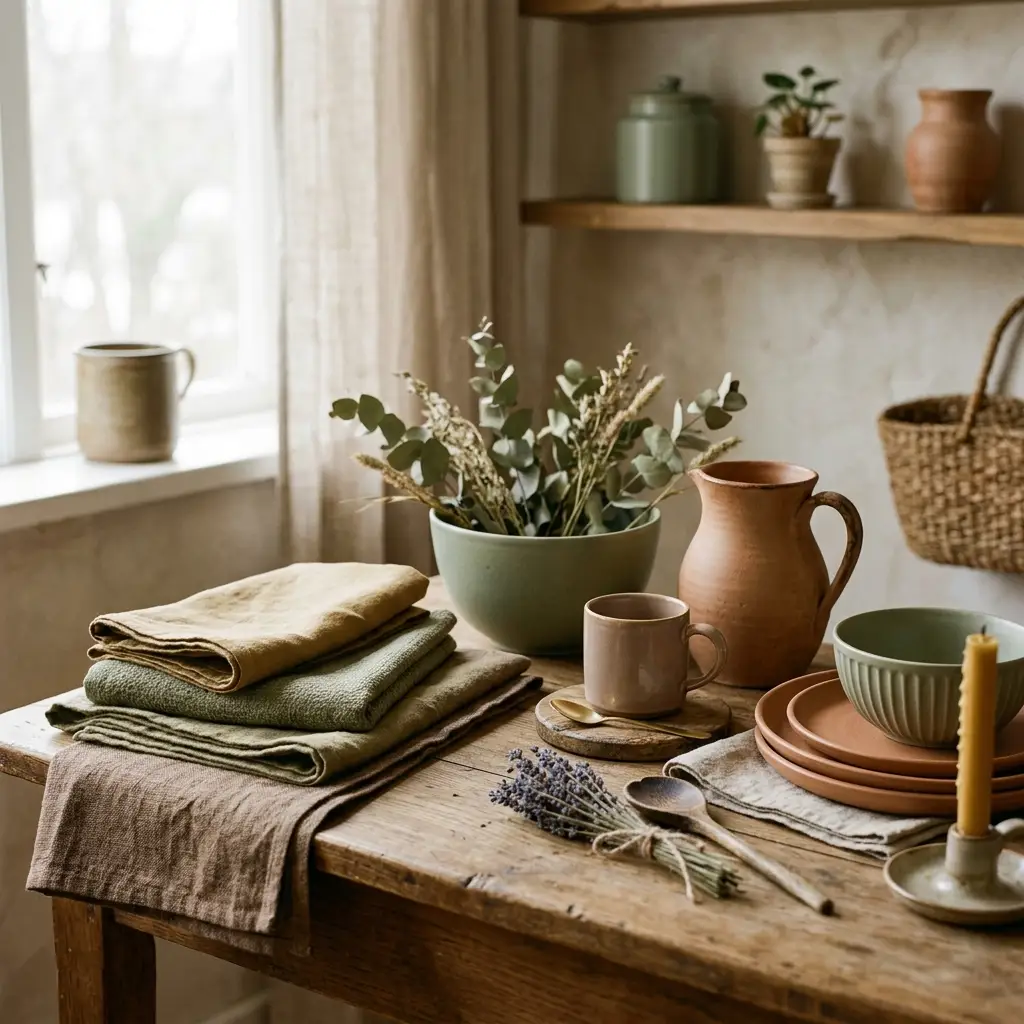
- Base everything in warm neutrals — cream, oat, warm greige, or bare oak.
- Add one deep accent — cranberry, forest green, or bronze — and repeat it three times.
- Keep every centerpiece object under 12 inches so guests can see across the table.
- Use a 14-20 inch linen runner on wood instead of a full tablecloth.
- Light it with taper candles at two heights, then stop adding.
Why Does One Fall Table Look Calm and Another Look Cluttered?
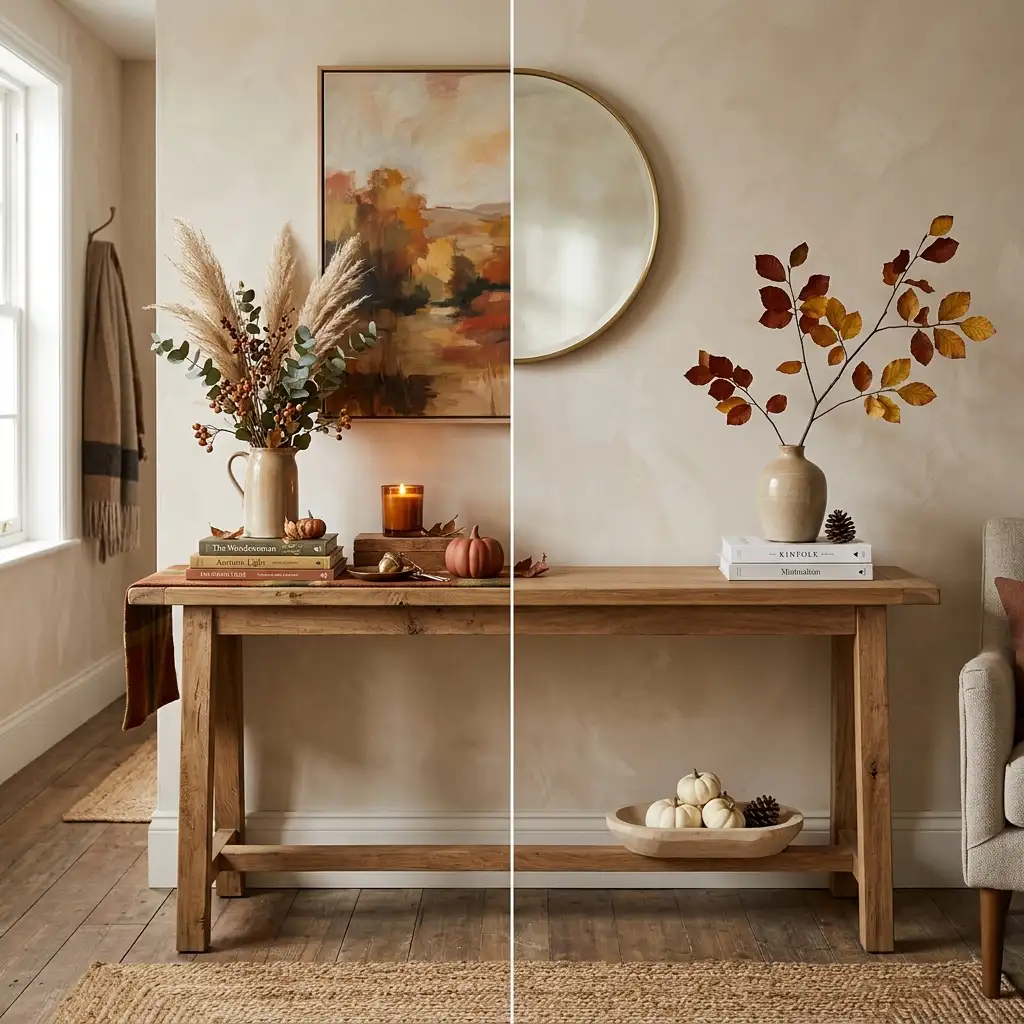
Why does one fall table look calm and expensive while another looks busy and cheap? The difference is rarely money. It is editing. The calm table uses three materials, one color story, and a centerpiece low enough to see over. The busy one uses nine materials and a tall arrangement nobody can talk through.
Part of our guide to Fall Decor Ideas for the Home: The Complete Guide.
The best fall tablescape ideas start by taking things away. Lay one linen runner down the center, keep every object under 12 inches tall, light two or three taper candles, and stop there. That single edit does more for a fall table than another trip to the seasonal aisle. Everything after it is refinement.
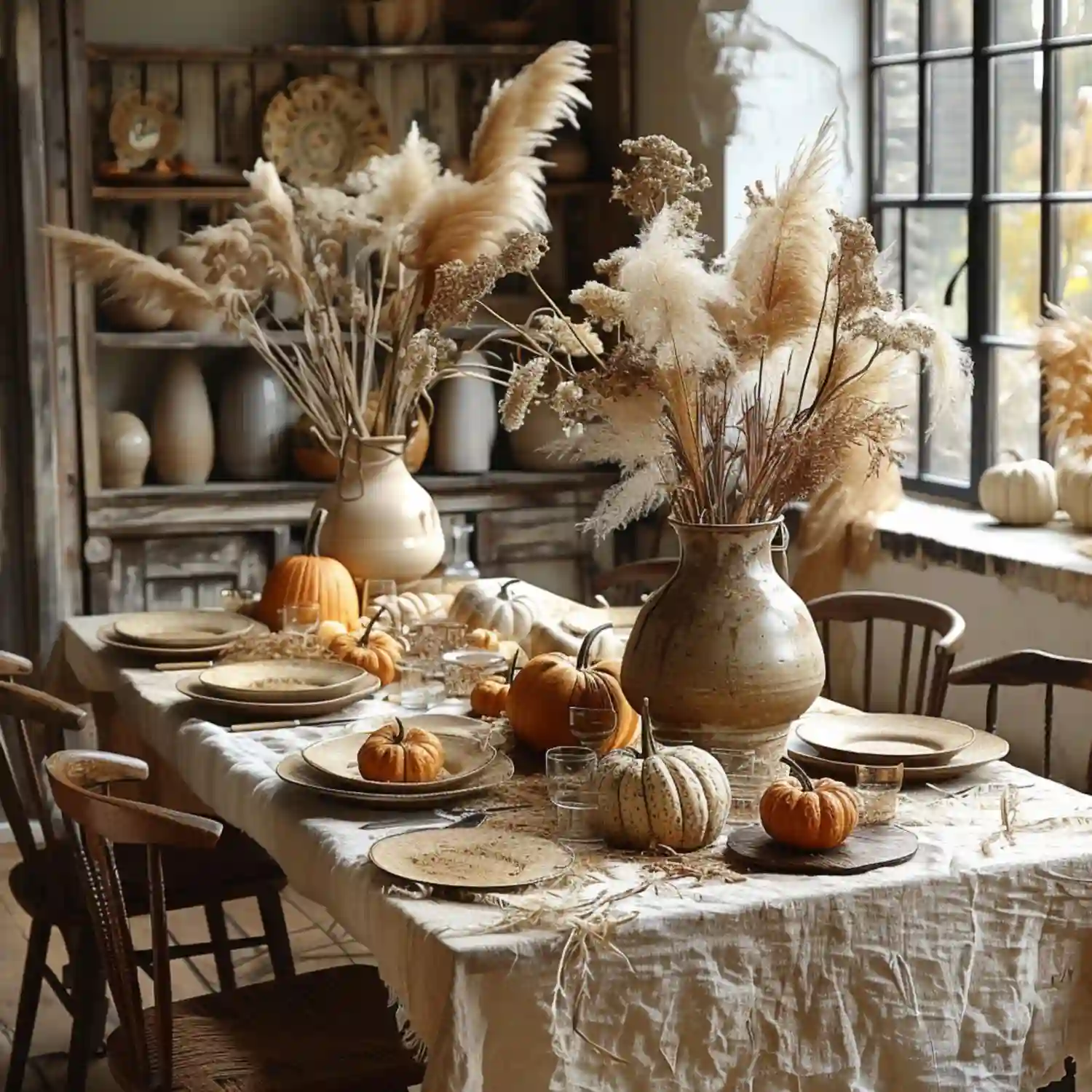
Editorial field note: A long oak table dressed with a full orange cloth, scattered plastic leaves, and a tall floral arrangement looks crowded before a single plate lands. Strip it back to bare oak, one cream linen runner, and three low ceramic vessels of dried wheat, and the same table finally looks settled. Guests can also see each other across it.
This page is the home base for our fall table content, from everyday September dinners through the Thanksgiving main event. Every idea below sits alongside the rest of our home decor inspiration. The table is the one fall surface most people rework two or three times a season, so it earns its own guide. Get it right once in September and the same base carries you to Thanksgiving. For the porch, the mantel, and the rest of the house, the broader fall and autumn decor ideas for a seasonal refresh cover the wider season. Bookmark this guide for quick reference. The coffee table plays by opposite rules to the dining table — our guide to fall table decor covers both surfaces.
| Quick Takeaways | |
|---|---|
| Palette | Warm cream and oat base, one deep accent like cranberry or forest green. |
| Centerpiece | Keep it under 12 inches tall so sightlines stay clear. |
| Textiles | A 14-20 inch linen runner beats a full tablecloth on wood. |
| Light | Taper candles at two heights, warm bulbs dimmed to 2700K overhead. |
| Nature | One element repeated in odd numbers: wheat, olive branch, or white pumpkins. |
| Spacing | Allow about 24 inches of table width per place setting. |
What Changed: Fall Tables Got Quieter, Not Louder
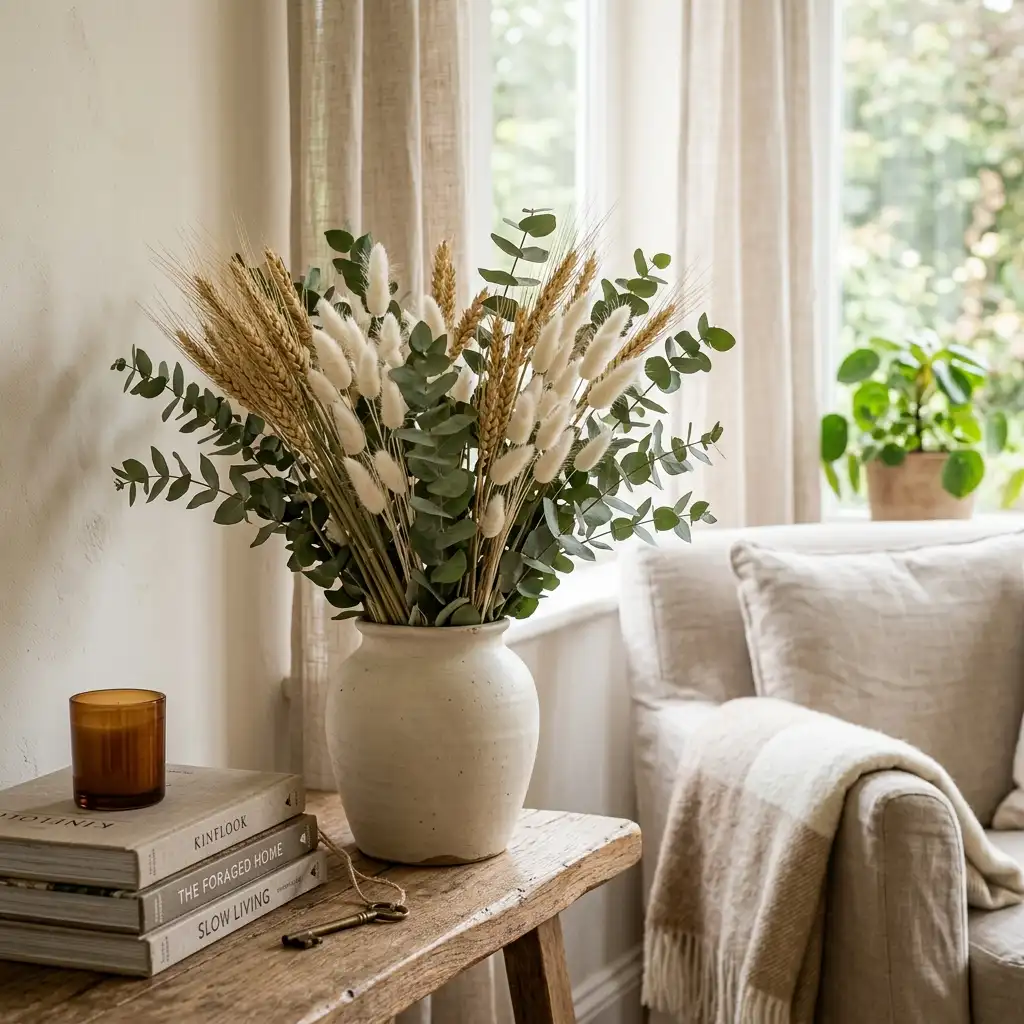
Fall table decor spent a decade getting louder. Burnt orange runners, plaid everything, glitter pumpkins, plastic leaf garland stapled down the middle. That version is fading fast, and the replacement is quieter, warmer, and honestly easier to pull off.
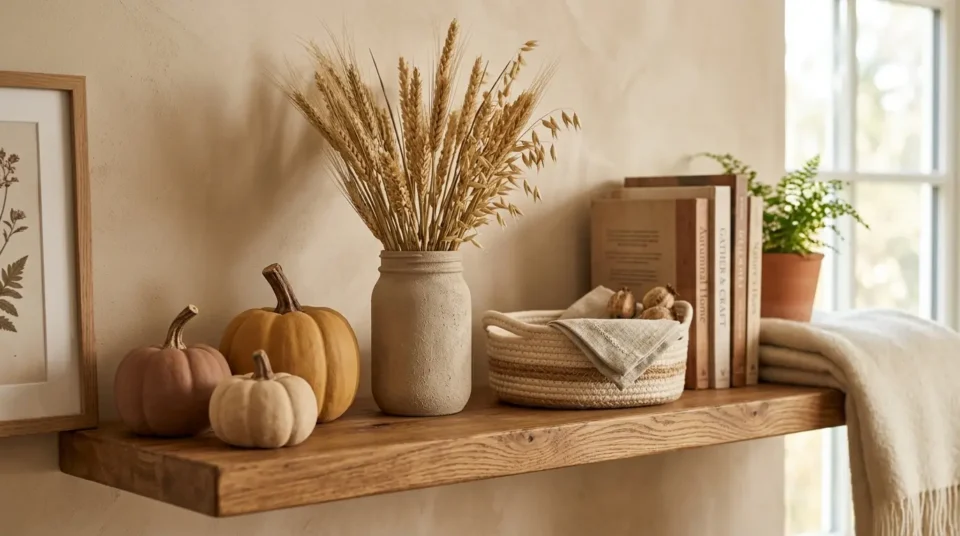
The new look treats fall as a texture season rather than a color season. Raw linen, matte stoneware, unlacquered brass, dried wheat, oak, and beeswax carry the mood. Color still shows up, but it arrives in one deep accent instead of six competing ones. Cranberry, bronze, forest green, or warm olive against a cream base does more work than a full harvest palette ever did.
Signs This Is Catching On:
- Pantone named an off-white, Cloud Dancer, as its 2026 Color of the Year — the first white in the program’s history, and a clear push toward softer table palettes.
- Retailer holiday lookbooks have moved away from orange-and-gold harvest sets toward tonal layering in cranberry, bronze, forest green, and ivory.
- Popular search phrasing has shifted noticeably toward “neutral fall decor” and even “fall decor without pumpkins.”
- Dried and foraged stems — wheat, bittersweet, oak branches, seeded eucalyptus — have largely replaced plastic leaf garland in current styling.
The practical upside is cost. A neutral base you already own carries three seasons. Our winter tablescape ideas reuse the same linen and stoneware with evergreen instead of wheat, which is exactly how a table should work.
What a Modern Fall Tablescape Actually Looks Like
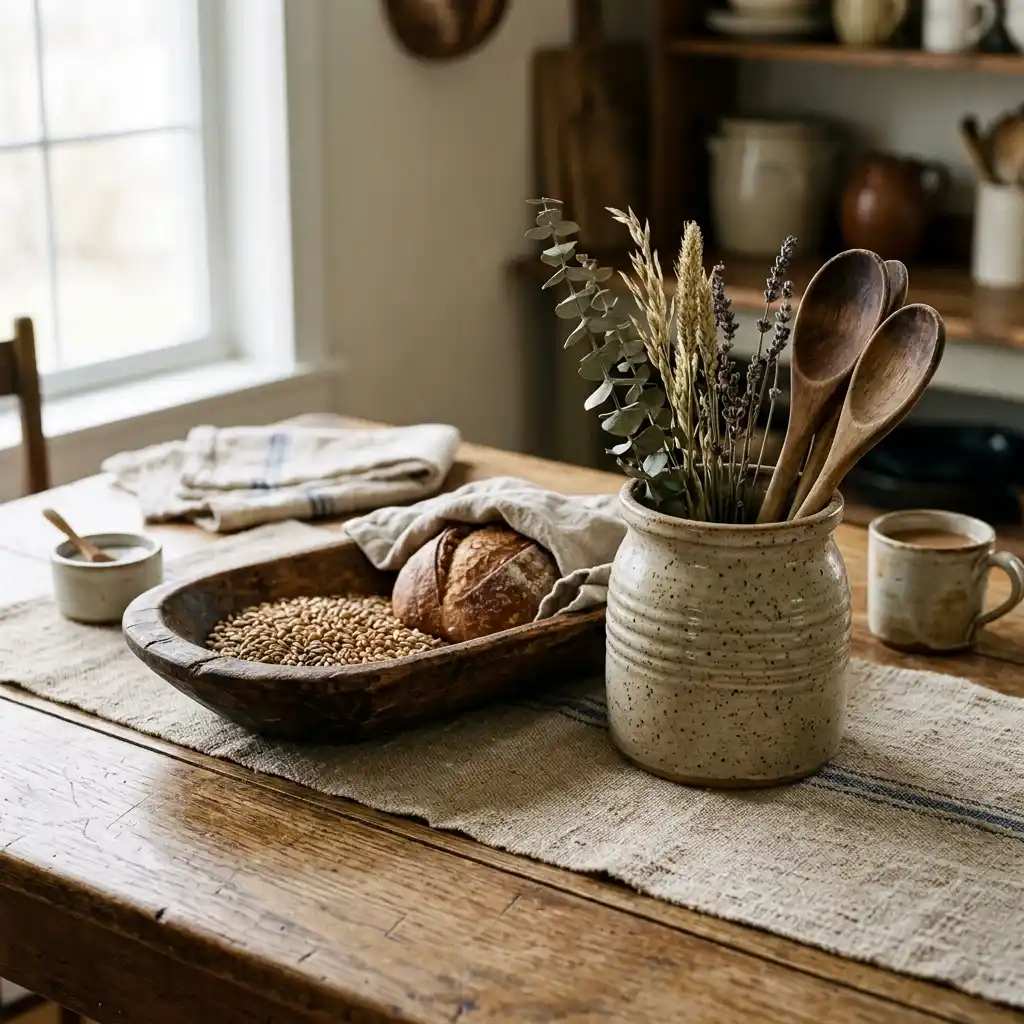
Five decisions build the whole table. Most fall tablescape ideas are variations on these five, and getting them right takes about fifteen minutes of styling.
Start With Warm Neutrals, Then Add One Deep Accent
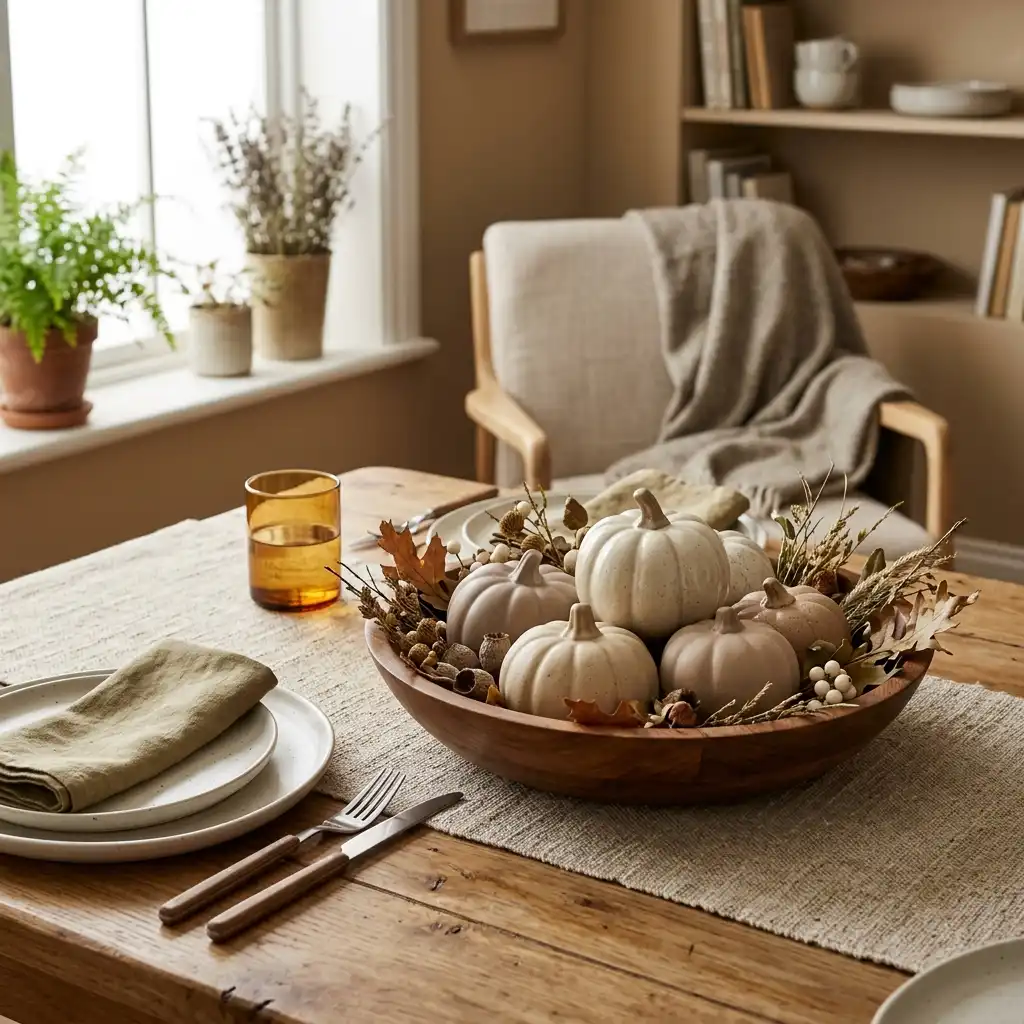
A fall table palette works best as one warm neutral base plus a single deep accent. Build the base from cream, oat, warm greige, or bare oak — the runner, the napkins, the plates. Then choose one accent and repeat it three times: cranberry taper candles, a forest green napkin ring, a bronze charger. Two accent colors already start to fight.
Warm neutrals also solve a real problem. Orange linen looks orange under every light. Cream linen picks up whatever the candles and the room give it, so it looks warm at 6pm and soft at noon.
Designer Rule of Thumb: If you can name more than four colors on the table, one of them is doing nothing. Pull it.
Keep the Centerpiece Low and Long
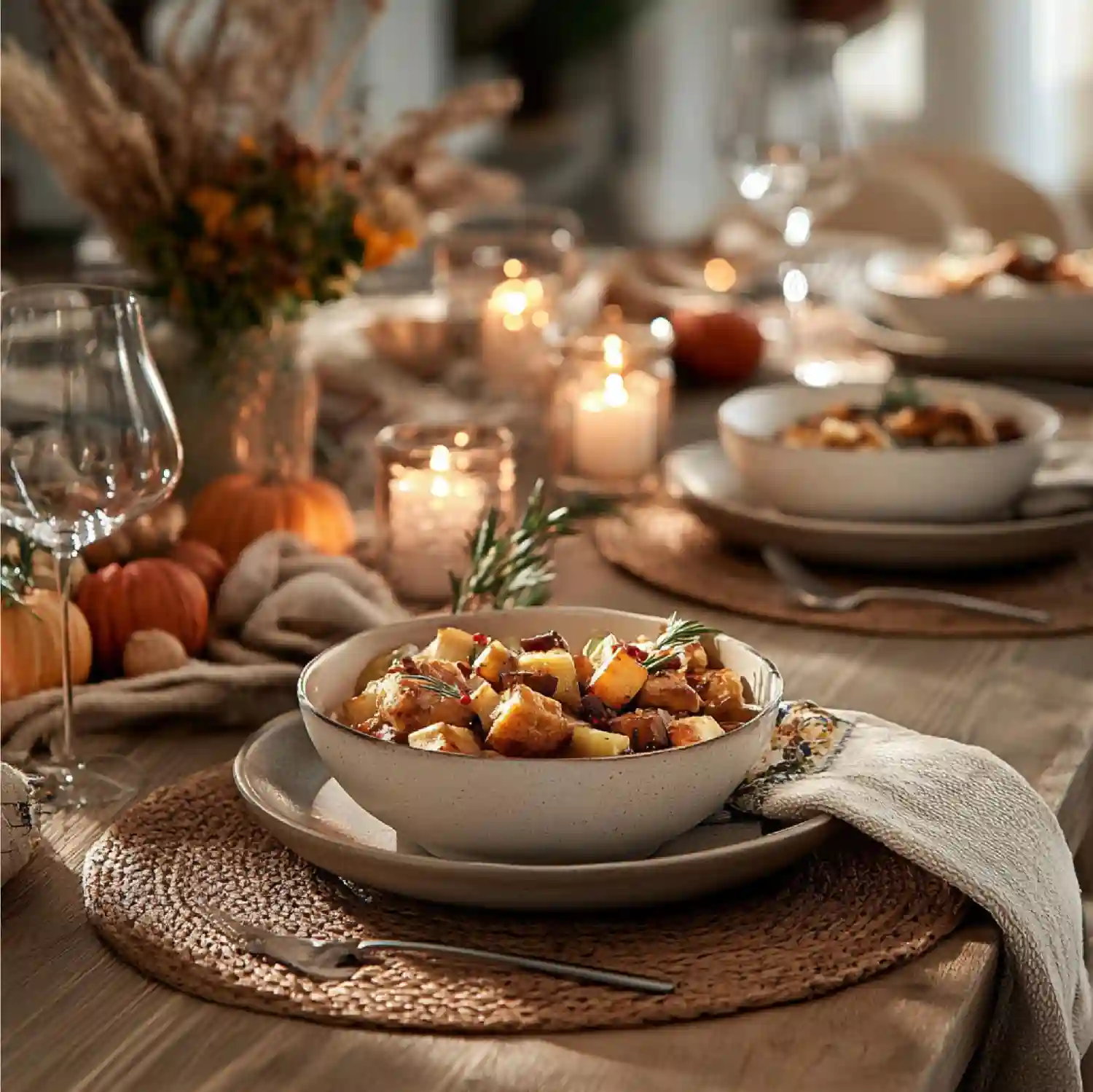
A fall centerpiece works best under 12 inches tall and spread along the table rather than stacked in one spot. Anything taller blocks the sightline between guests seated opposite each other, which is the fastest way to make a dinner feel formal in the wrong way.
The long, low version is simple: three low vessels spaced evenly down the runner, each holding short dried stems, and low candles filling the gaps. On a round table, use one low bowl in the center instead of three. Wheat, bittersweet, seeded eucalyptus, and dried hydrangea all hold their shape for several seasons if kept out of direct sun.
Material Note: Dried stems shed. Shake them outside before they hit the table, and keep them off the plate zone.
Layer a Linen Runner Instead of a Full Tablecloth
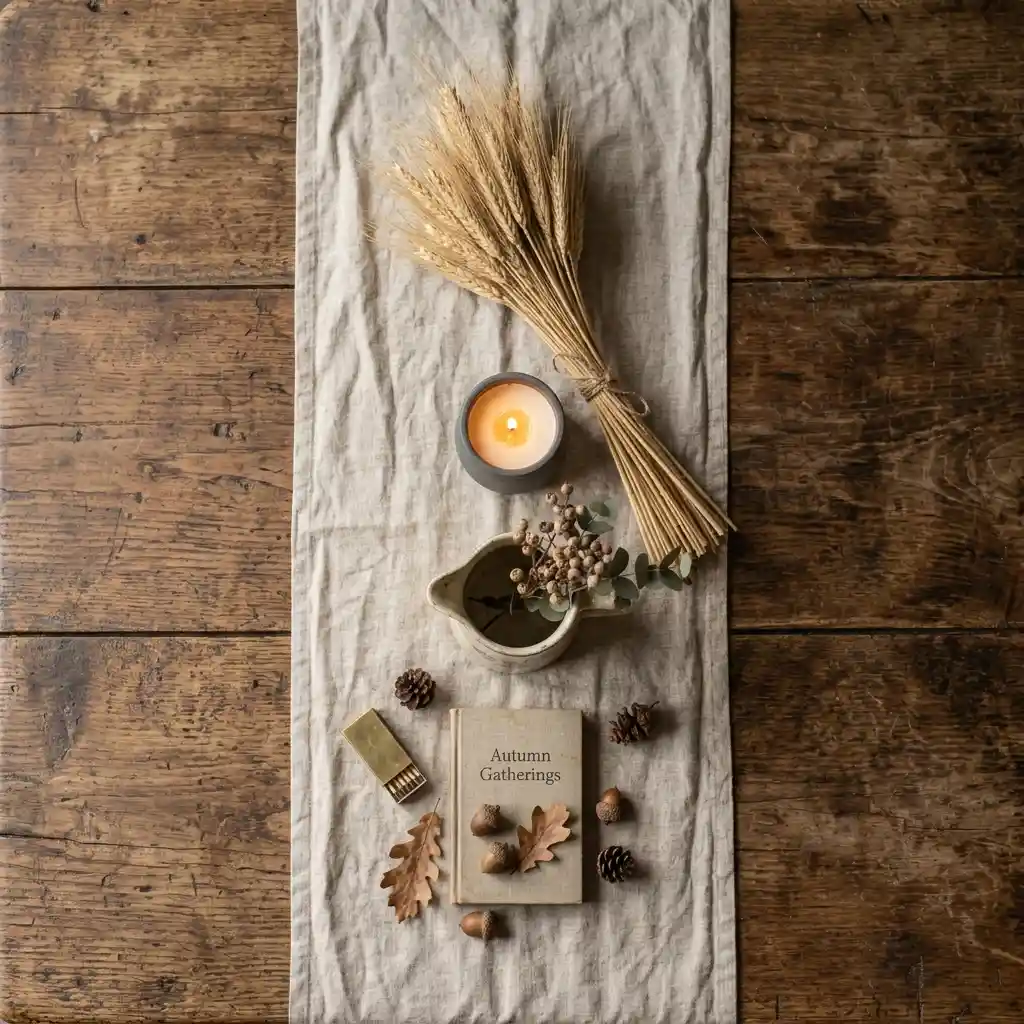
A linen table runner is usually 14 to 20 inches wide and leaves the wood grain visible on both sides, which is most of why the look feels warm rather than covered. A full tablecloth hides the material you paid for and reads more formal than most fall dinners want to be.
Linen also behaves well. It softens with every wash, wrinkles honestly instead of looking damaged, and takes a gravy spill better than cotton blends. Wash it warm, pull it out damp, and skip the iron — the crumple is the point. If your table is scratched or laminate, that is the one case where a full cloth wins — or the case for upgrading the table itself, which our guide to mid century modern dining tables covers.
Light the Table With Candles at Two Heights
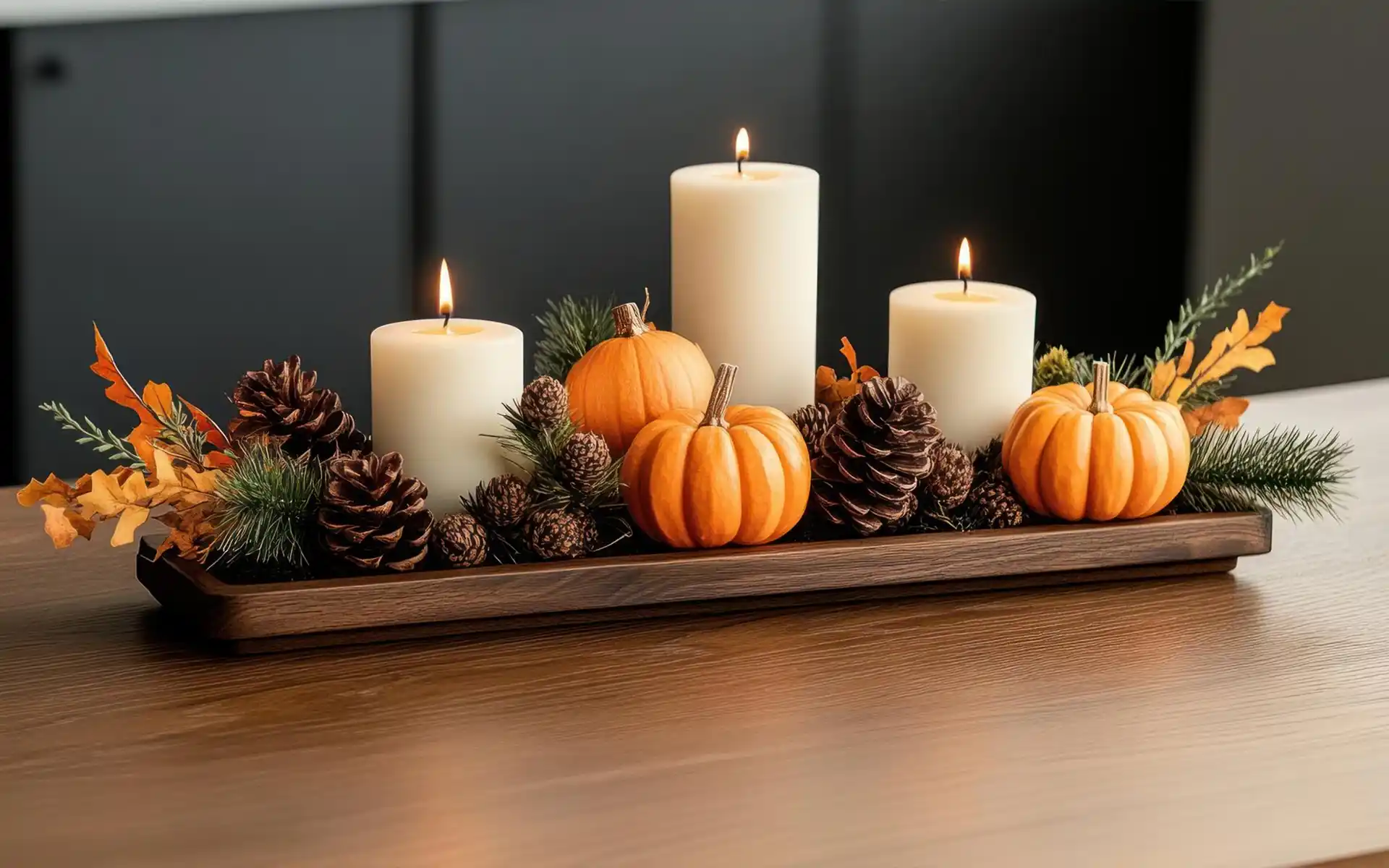
Candles at two heights make a table look styled rather than set. Pair 10-inch tapers in brass or ceramic holders with squat 3-inch pillars or tealights scattered between them. The height difference creates a real glow line instead of a flat row of flames.
Beeswax tapers burn slower and drip less than cheap paraffin, and they carry a faint honey scent that does not compete with food. Skip scented candles at the table entirely — vanilla and pumpkin spice fight with the meal. Overhead, dim to warm light around 2700K, or turn it off and let the candles work.
Safety Note: Never leave a burning candle unattended, trim wicks to about a quarter inch before each use, and keep flames away from dried stems — the National Candle Association’s safety guidance covers the full list.
Add One Natural Element, Not Five
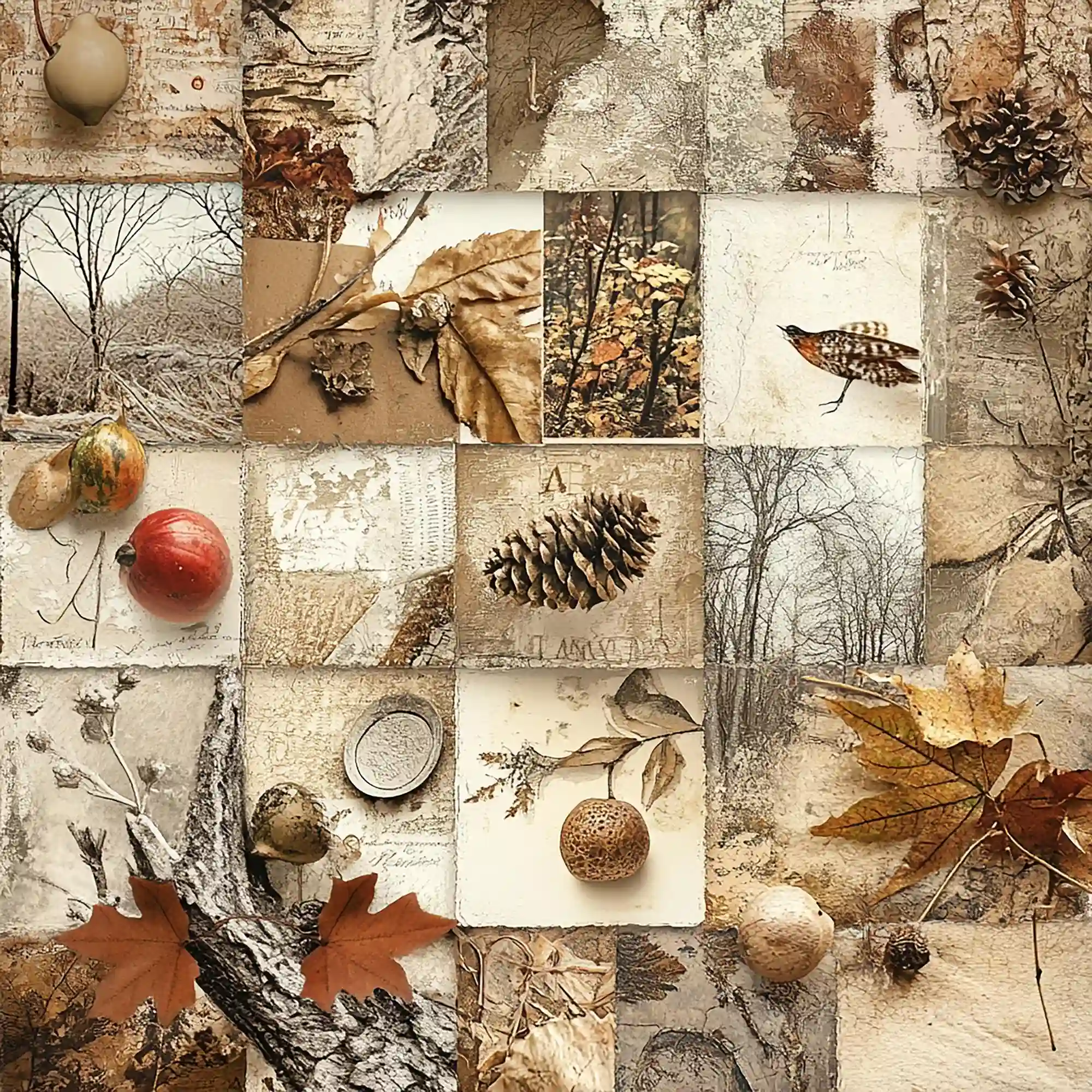
Pick one natural element and repeat it in odd numbers. Three white heirloom pumpkins down the runner. Five small gourds in a low wooden bowl. A single olive branch laid along the center. The repetition is what makes it look chosen instead of collected.
Mixing pumpkins, gourds, acorns, pinecones, leaves, and berries on one table is the single most common fall styling mistake. Each item is fine. Together they cancel each other out. If you want the carved and painted pumpkin route instead, that belongs to your porch and your Halloween decorating — not the dinner table.
How Do You Set a Fall Table Step by Step?
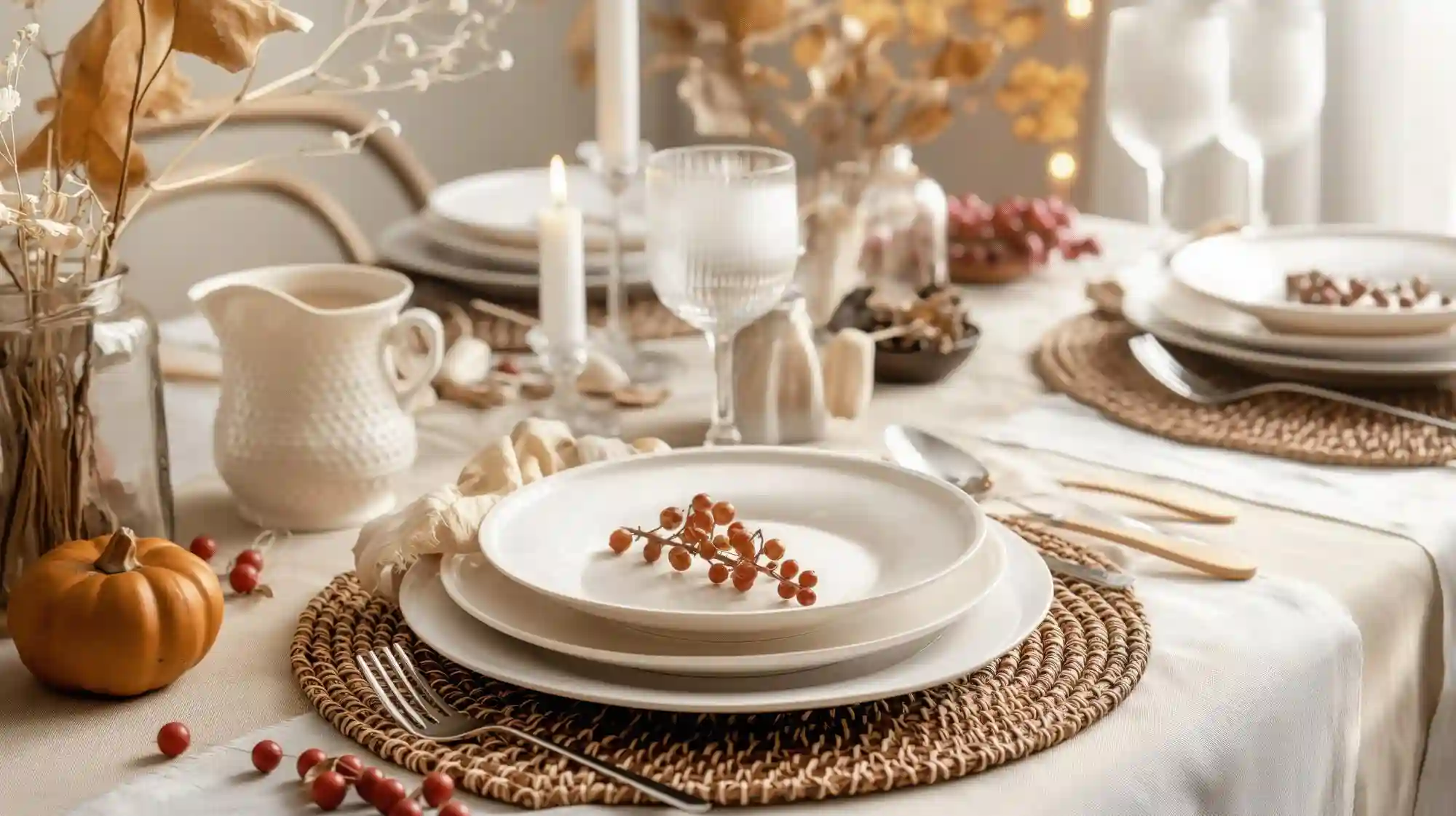
Six steps, in this order, take a bare table to finished.
- Clear the table completely and wipe it down. Style on an empty surface, never around what is already sitting there.
- Lay the runner down the center and smooth it from the middle outward so the overhang matches on both ends.
- Place the plates first and space them evenly. Allow roughly 24 inches of table width for each place setting so nobody bumps elbows.
- Set the centerpiece vessels along the runner between the place settings, then check the height by sitting down and looking across.
- Add candles in the gaps at two heights, keeping them clear of stems, napkins, and serving dishes.
- Fold napkins last and place one per setting. Add a name card, a sprig, or a small pear only if the table still looks bare.
Source Note: The roughly 24-inch place setting allowance comes from standard table setting dimensions, which put a comfortable individual setting at about 24 inches wide.
DESIGNER TIP: Style the table from a seated position, not standing over it. Half of what looks balanced from above blocks a face at eye level.
How Do You Turn a Fall Table Into a Thanksgiving Table?
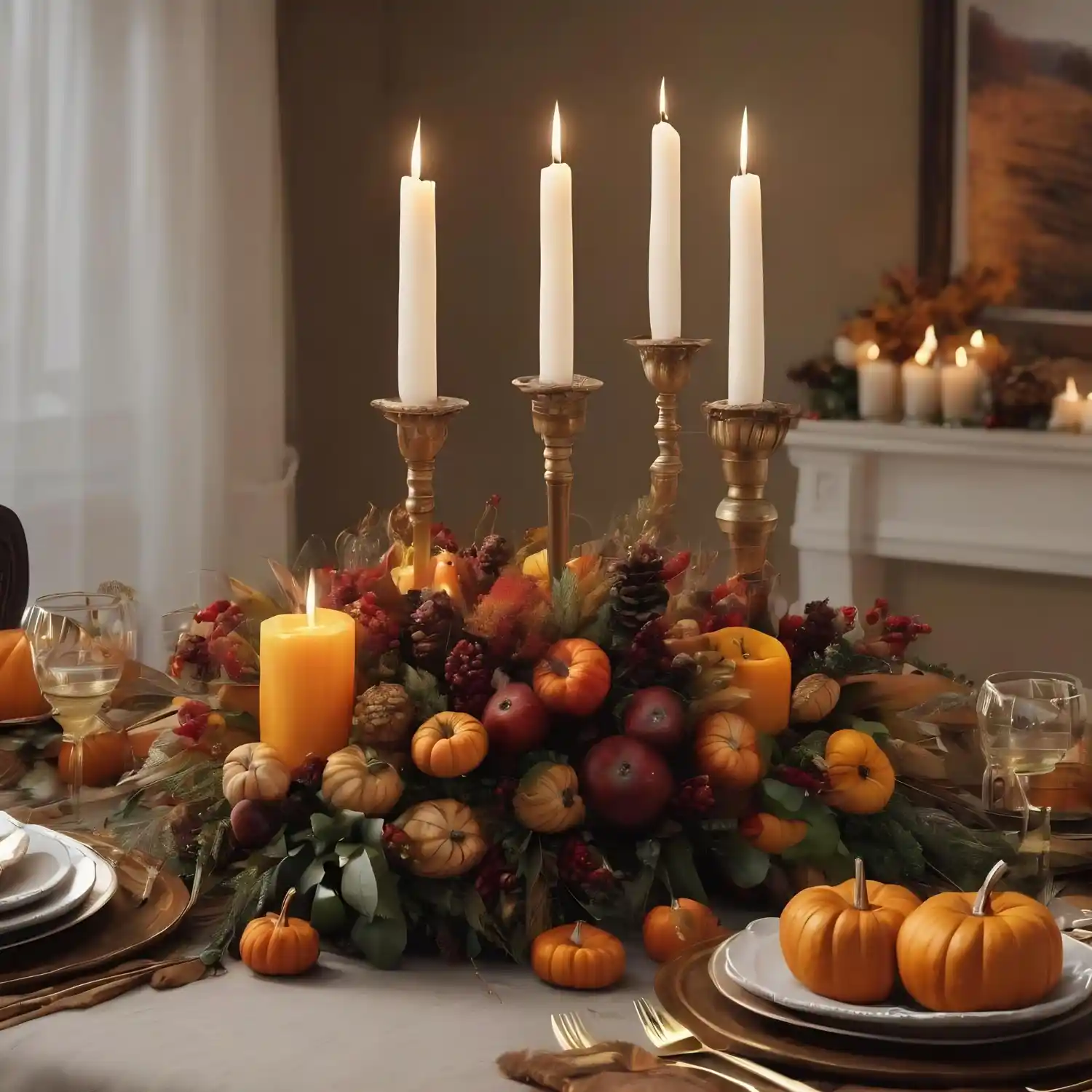
Thanksgiving does not need a different table. It needs the same table with three changes: more serving room, one deeper accent color, and a personal touch at each seat. Our full guide to Thanksgiving table decor works through how much room the food actually needs.
Start by clearing the middle. A Thanksgiving table carries platters, so shrink the centerpiece to two low vessels instead of three and move candles toward the ends. Then deepen the accent — swap cream tapers for cranberry or bronze, and cream napkins for forest green. Finally, add one item per person: a hand-written name card, a small pear, a sprig of rosemary tied with twine. That per-seat detail is what people photograph.
Keep the same linen, the same stoneware, the same brass. Guests never notice the base repeating from September to November. They notice the color shift and the name card.
Designer Rule of Thumb: On Thanksgiving, plan for one-third of the table to stay empty. Food is the centerpiece that day, and a fully styled surface leaves nowhere to land a hot dish.
When the season turns again, the same base carries straight into Christmas table settings with evergreen swapped in for the wheat. Change nothing else but the greenery and the accent color. The linen, the stoneware, and the candlesticks all stay put. Softer winter centerpieces for table arrangements pick the table back up once the holidays clear out.
Small Tables, Rentals, and Kids: The Real-World Versions
Most fall tablescape ideas assume a ten-seat farmhouse table. Most homes do not have one.
On a small round table under 42 inches, skip the runner entirely. A runner cuts a round surface in half and steals plate space. Use one low bowl or a small wooden tray in the center with three tealights and a few dried stems, and let the table edge stay clear. A 12-inch tray gives you a defined centerpiece that lifts off in one motion when dinner arrives.
In a rental or a small apartment, buy textiles before objects. Linen napkins and a runner store flat in a drawer, work every season, and cost far less than seasonal decor that lives in a bin eleven months a year. That buy-once logic runs through the wider seasonal decor archive as well. Renters get the same result with zero holes in a wall.
With kids or a busy household, drop the open flame. Battery tapers with a warm flicker read almost identically at dinner distance, and a low wooden bowl of small gourds survives being knocked. Keep dried stems short so nothing tips into a plate.
If your table is the everyday work-and-homework surface, use a tray as the whole tablescape. Everything lives on it, and the table clears in three seconds. Our furniture styling ideas cover the same tray approach for consoles and coffee tables.
What to Leave Off the Fall Table
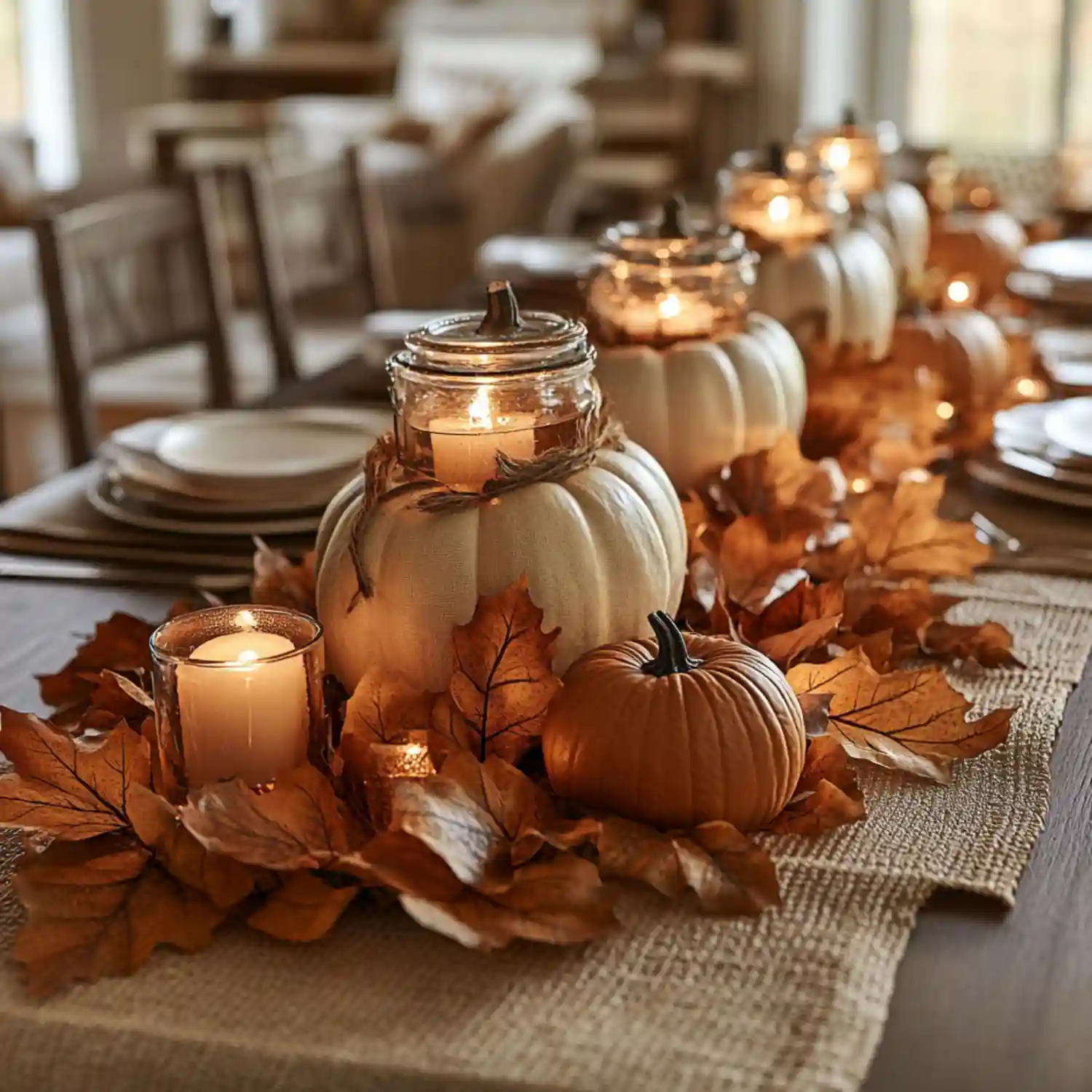
- Scattered fake leaves. Loose plastic leaves down the center read as filler, collect crumbs, and slide under plates all night. A better approach: use one real element with structure — dried wheat, an olive branch, or seeded eucalyptus — laid in a single line rather than scattered.
- A tall floral arrangement. Anything over 12 inches blocks the conversation across the table, which is the whole reason people sit down together. Split the same flowers into three low vessels and the arrangement suddenly works.
- Orange as the base color. Burnt orange linen and orange chargers date a table instantly and make food look worse under warm light. Move orange to the accent slot — a few small pumpkins or a single ribbon — and let cream, oat, or bare wood carry the base.
- Everything matching from one seasonal set. A boxed harvest set with matching runner, napkins, chargers, and centerpiece looks bought rather than styled. Mix the set with pieces you already own, and drop at least two items from it.
Fall Tablescape Checklist
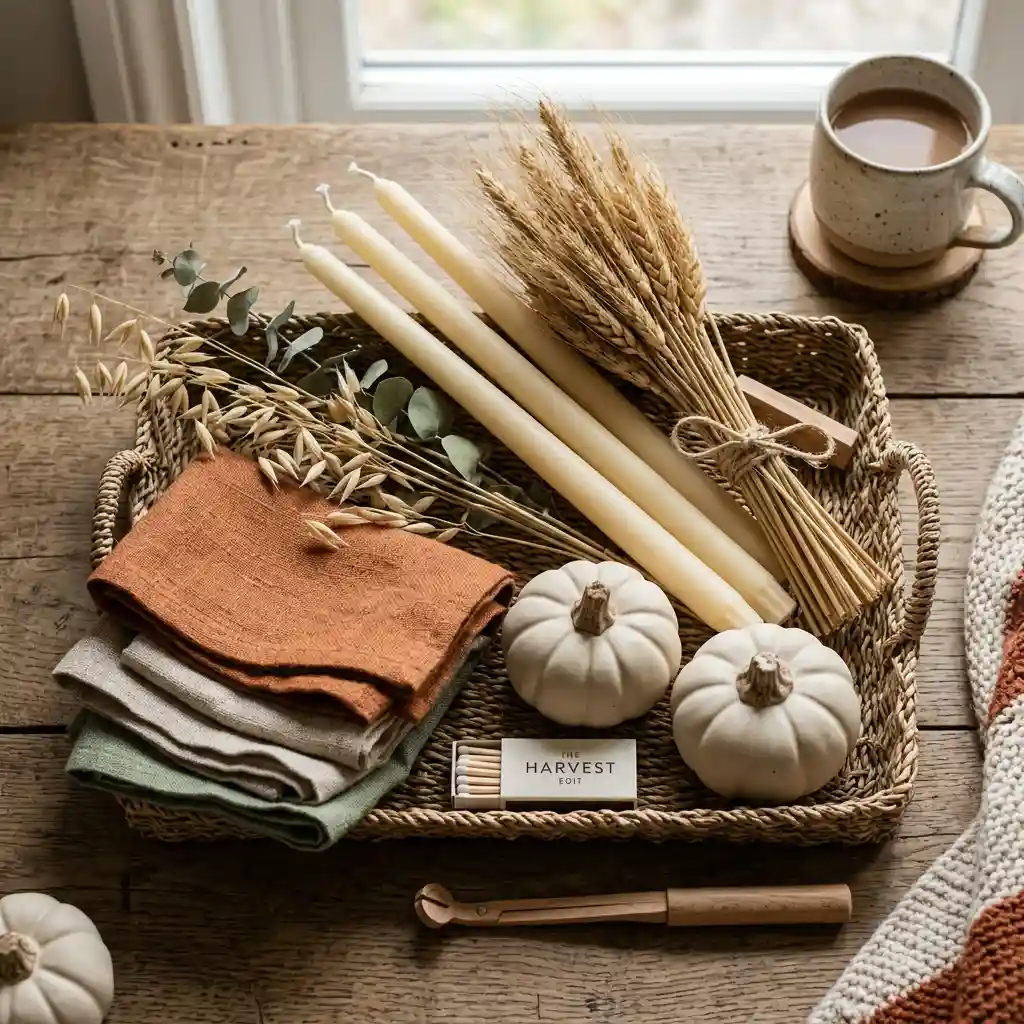
- Clear the table fully, then style on the bare surface from the middle outward.
- Allow about 24 inches of table width per place setting before adding anything else.
- Keep every centerpiece object under 12 inches and check the height while seated.
- Choose one warm neutral base plus one deep accent repeated three times.
- Use a 14-20 inch linen runner on wood, or a full cloth only if the table needs covering.
- Set candles at two heights and trim wicks to a quarter inch before lighting.
- Repeat one natural element in odd numbers instead of mixing five.
- Leave a third of the surface empty for serving dishes on hosting nights.
KEY TAKEAWAY: A fall table looks expensive when it holds three materials, one accent color, and nothing over 12 inches tall.
What a Fall Table Actually Costs
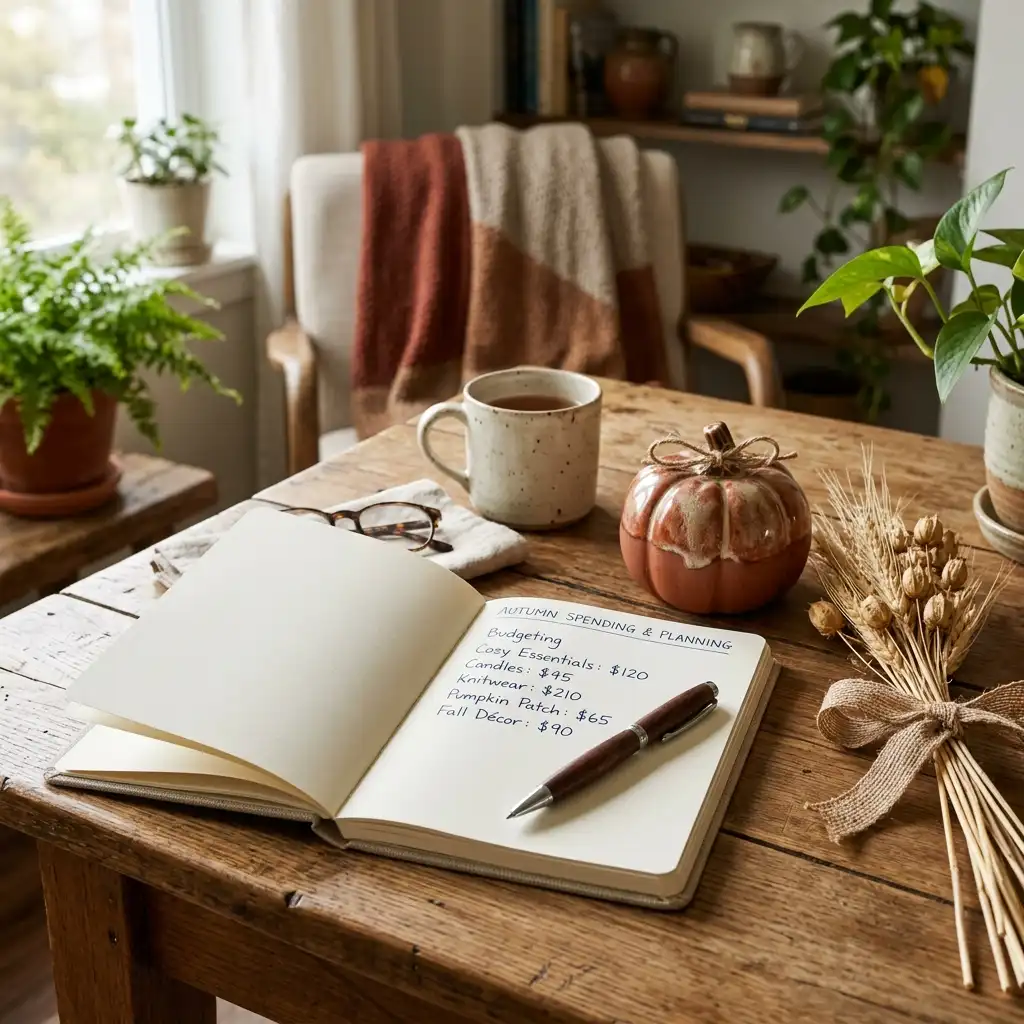
Most of a fall table is textiles and candles, which is why the numbers stay low compared with almost any other seasonal project.
On a budget under $100, a linen runner and eight cloth napkins plus a set of taper candles and simple holders will carry the whole look. That is the version most people should start with. At $150 to $300, add matte stoneware salad plates, brass or ceramic candlesticks, and a few dried stems that last several years. Above $400, you are into a full stoneware dinner set, a heavier washed-linen tablecloth, and fresh florals bought per gathering — worth it only if you host often. If you do host often, our fall hosting decor guide covers the whole route guests take, not just the table.
| Project | Estimated Cost | Impact Level |
|---|---|---|
| Linen runner + 8 cloth napkins | $45-$120 | High |
| Taper candles + 6 brass or ceramic holders | $30-$90 | High |
| Dried wheat, branches + 3 heirloom pumpkins | $35-$85 | Medium |
| Full refresh: all of the above + stoneware plates | $250-$600 | Very High |
Best First Upgrade: A washed-linen runner in cream or oat — it changes the table more than any decor object and works every season.
Skip for Now: The boxed harvest set with matching everything. It ties you to one look and dates faster than anything else on the list.
The Bottom Line
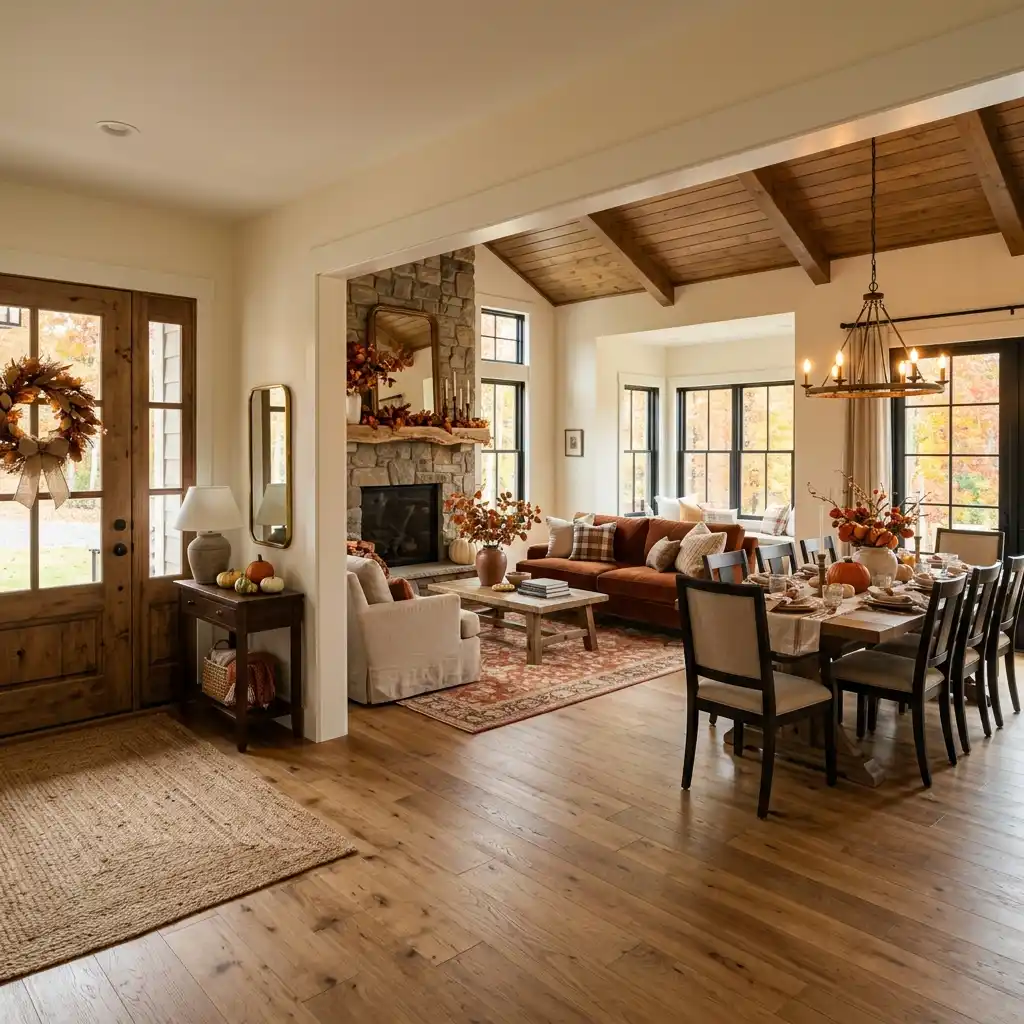
Designer’s Verdict: The quiet neutral table wins, and not because it is trendier. It costs less to build, reuses across four seasons — the same base carries into our spring tablescape ideas in April and our cozy winter decor ideas in December, photographs better under candlelight, and lets people actually see each other — which is the only thing a dinner table has to do. Keep the harvest colors as accents and let linen, stoneware, and wood carry the rest. For the dressed-up version of the same restraint, see our elegant fall tablescape guide.
For the rest of the season, browse all our fall decorating ideas.
Frequently Asked Questions
Conclusion
Good fall tablescape ideas are subtraction, not addition: one warm neutral base, one deep accent, nothing over 12 inches, and candles doing the rest. Build that table once in September and it carries you through Thanksgiving with three small swaps. More seasonal styling lives across our home decor ideas.
Next Steps
- Measure your table and divide by 24 inches to confirm how many settings actually fit.
- Buy one washed-linen runner in cream or oat before any seasonal decor object.
- Sit down at your styled table and check that you can see across it clearly.
- Pick one natural element — wheat, olive branch, or white pumpkins — and repeat it in odd numbers.