Most of the Evening Happens Away From the Table
Every October, the advice is the same: set a beautiful table. So the runner comes out, the candles get lined up, and the centerpiece takes an hour. Then eight people arrive, stand in the kitchen for ninety minutes, sit down for forty-five, and spend the rest of the night on a sofa nobody touched.
Good fall hosting decor follows the guests. A dinner party is a route through your home, not a photograph of one rectangle. The stops on that route are the front door, the surface everyone leans on with a drink, the lit room around the table, and the seat where the night ends. Style those and the table can stay simple. Our fall and autumn decorating ideas cover the wider house through the season.

Looking for more ideas? Explore our full guide to Fall Tablescape Ideas.
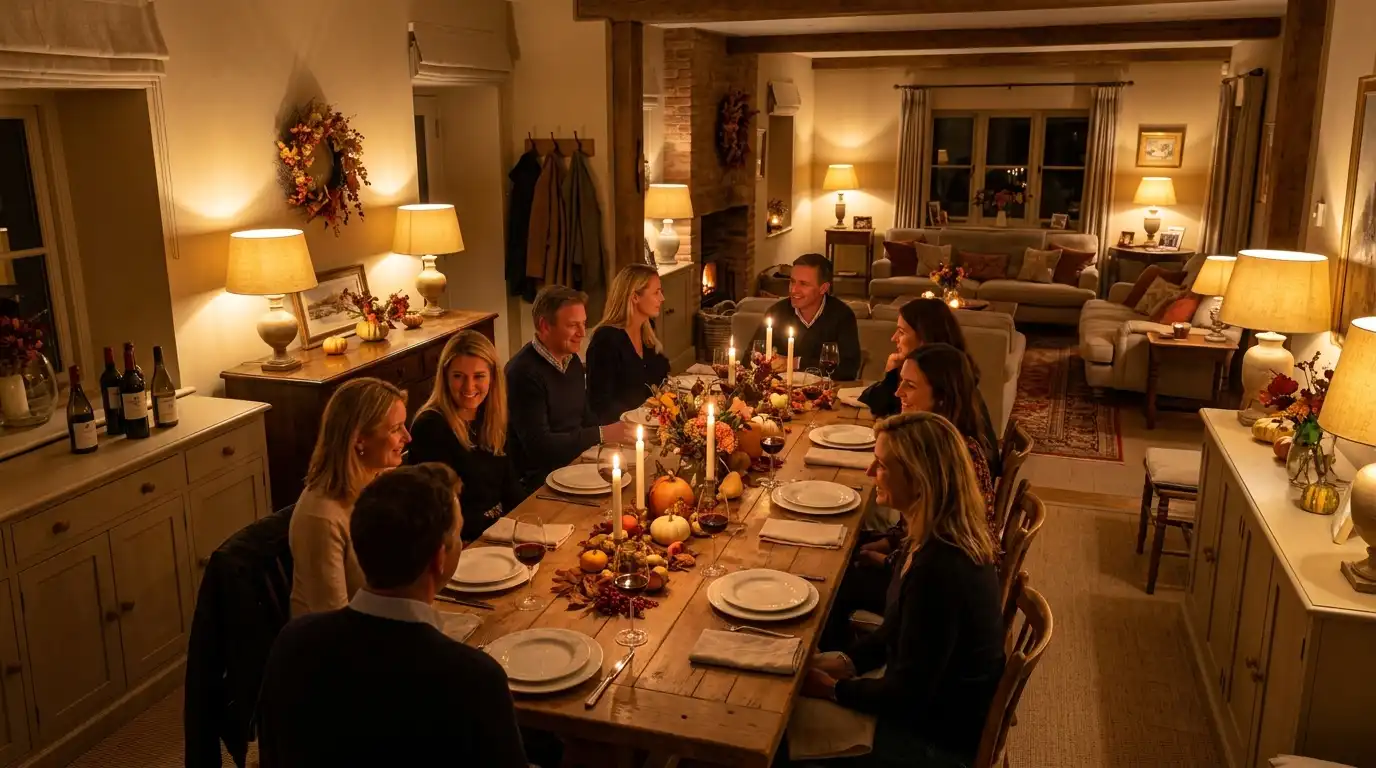
Editorial field note: A dining room styled to magazine standard can still feel cold if the only light in it hangs over the table. Two lamps switched on around the edges of the same room change how loud the conversation gets, because guests can see each other’s faces instead of a bright island in a dark space.
That is the whole argument, and it changes what you buy. This post covers the room, the route and the evening. The table itself — the runner, the centerpiece, the place settings — is a separate job with its own rules and is best handled on its own. For every other room in the house, our home decor inspiration is the place to start.
✦ Free for readers
500+ Original Home Decor Images, Yours to Keep.
Curated room by room, high‑resolution and royalty‑free — created in‑house by 101HomeDecor, not stock. No attribution needed.
Free forever · about one email a month
The Walk-Through to Do the Day Before
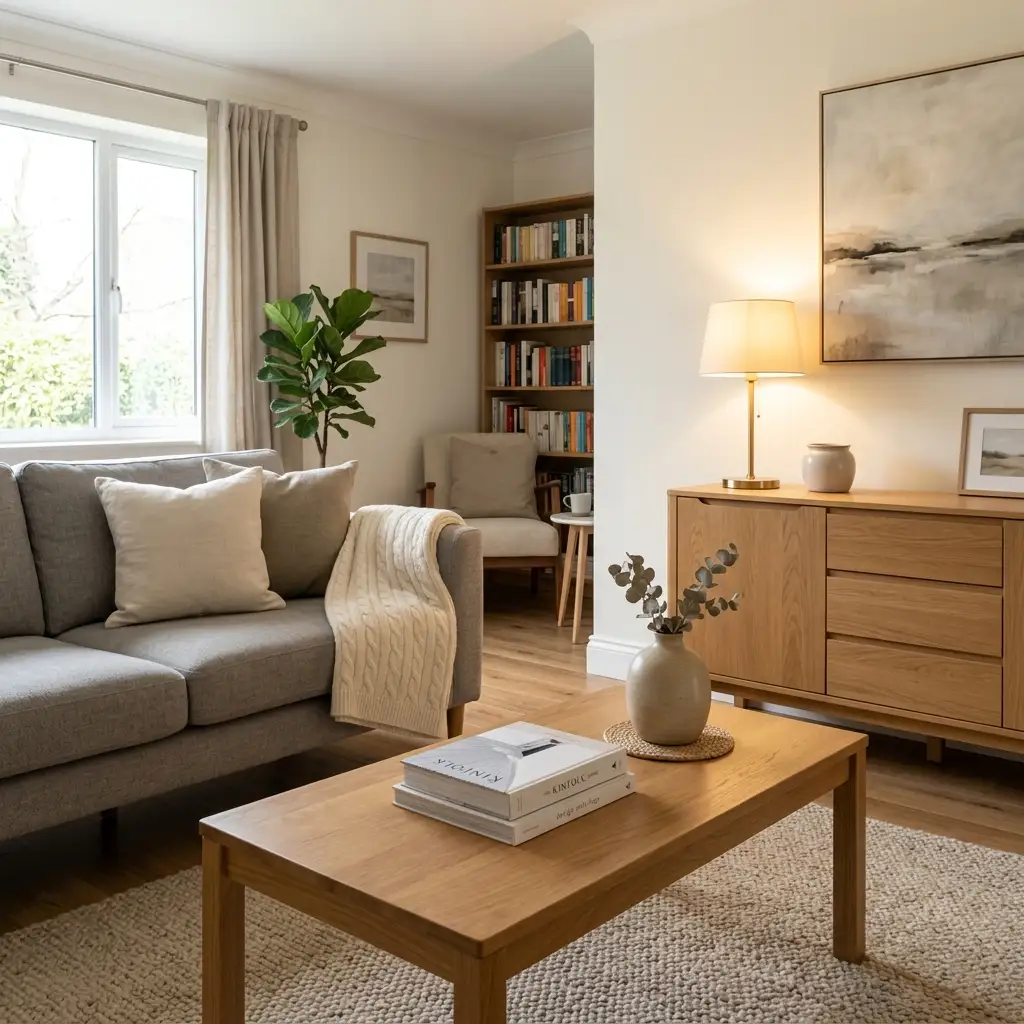
Walk your own route the day before, starting at the front door and moving the way a guest will. Most hosting problems are visible from that angle and invisible from the kitchen.
- Open the front door and stand still for five seconds — decide right there where eight coats will go.
- Clear one full surface near where people will stand, roughly 24 inches of bare counter or sideboard.
- Switch on every lamp in the dining zone and count them; you want at least three separate sources.
- Sit in the chair furthest from the door and check what the room looks like from there.
- Add one seat that is not a dining chair — an ottoman, a bench end, a floor cushion.
- Move anything breakable off the surface people will reach across in the dark.
- Walk into the guest bathroom and look at it cold — it is the one room every guest visits alone.
- Put the candles out where you want them, unlit, so you are not hunting for holders at seven.
KEY TAKEAWAY: If a surface has no clear space on it, guests will use the floor, the arm of the sofa, or your windowsill instead.
Dinner Parties Got Casual, and the Decor Never Caught Up
Autumn entertaining used to mean a separate dining room and a formal sit-down. Most homes now host in one open space where the cooking, the standing and the eating all happen within about fifteen feet of each other. The hosting has changed shape. The decorating advice mostly has not.
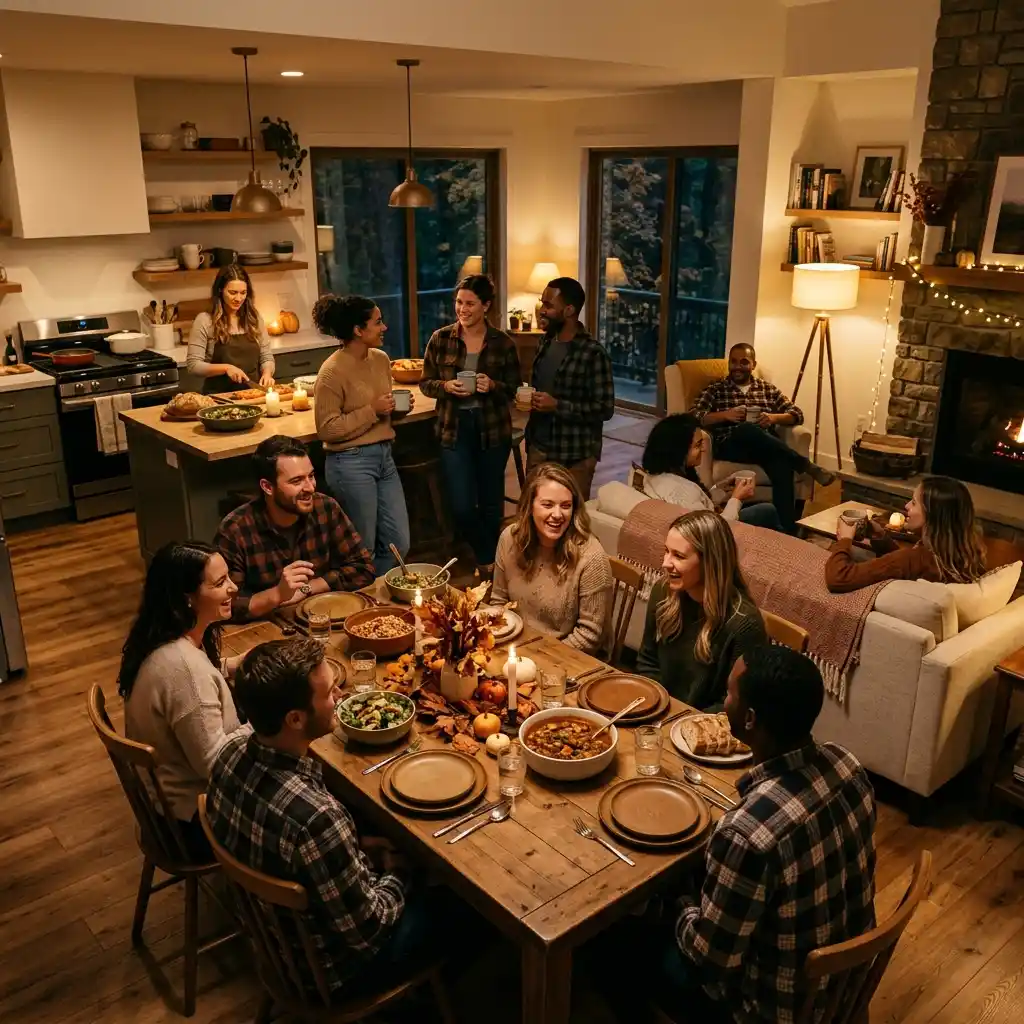
Signs This Is Catching On:
- Open-plan layouts put the kitchen island in the middle of the party, so the island now does the work a drinks trolley used to do.
- Seasonal ranges in home stores have widened from table linen into throws, lanterns, trays and candle holders — objects for rooms, not place settings.
- Plug-in and battery lighting has become normal in living rooms, which lets hosts light a corner without an electrician.
- Serving has moved toward help-yourself, which means guests stand, circulate, and need surfaces in more than one room.
None of that is a reason to abandon a nice table. It is a reason to stop treating the table as the entire job. If you host the same group for the holidays, our winter tablescape ideas show how the same room reads in December.
Three Places That Get More Use Than the Table
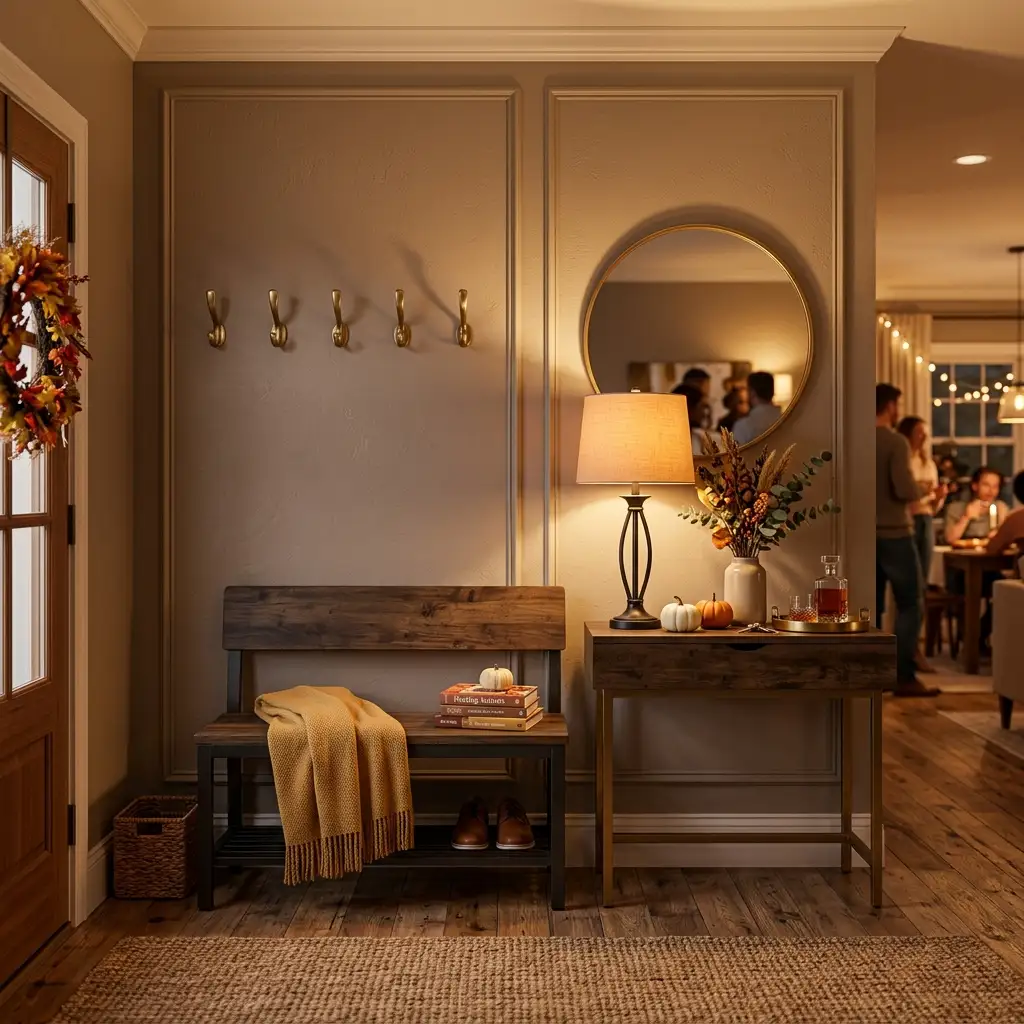
These three stops carry the evening. Each one takes about ten minutes to sort out, and none of them needs anything bought new.
Where Do Coats and Bags Land?
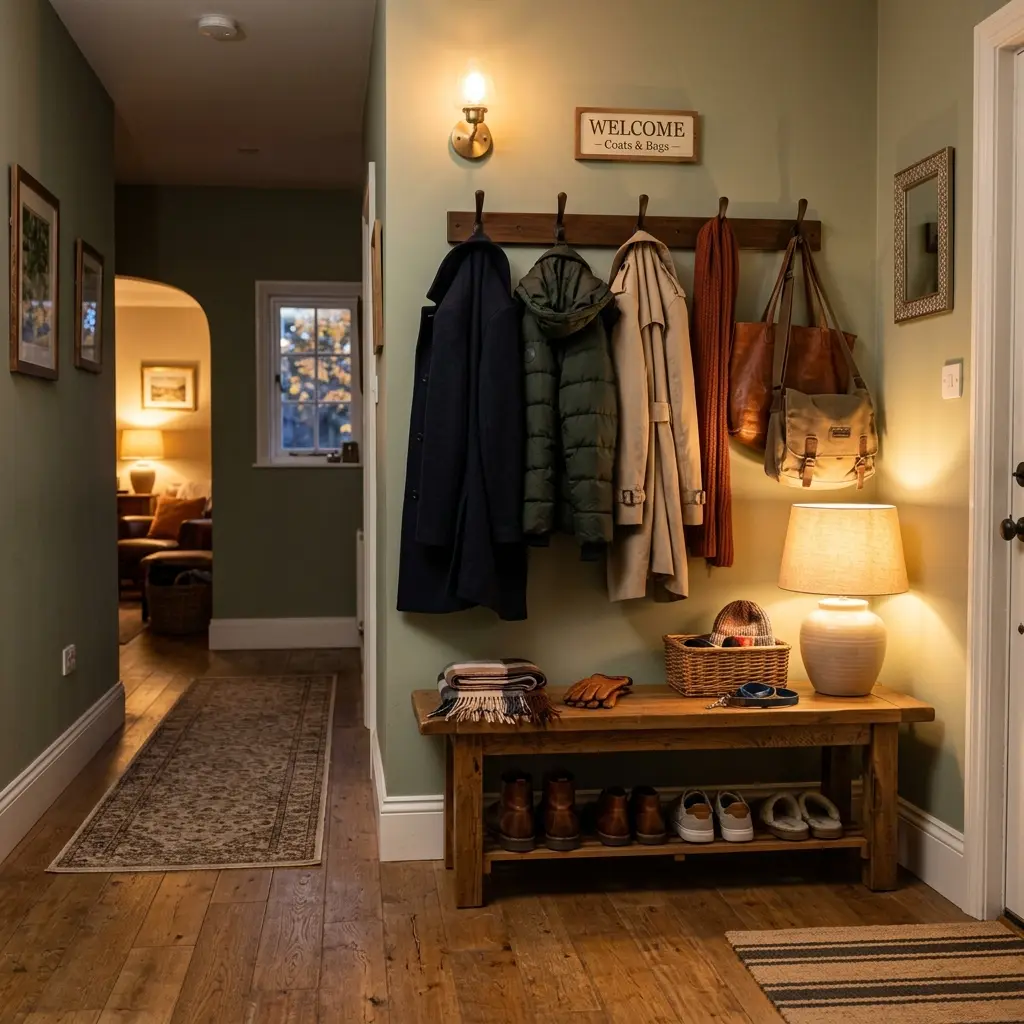
The first thirty seconds of a fall dinner party are spent holding things. Eight guests in October arrive with eight coats, a few bags and usually something for the kitchen. A dining chair back holds two coats before it looks like a pile, and a banister holds three before it stops being a banister.
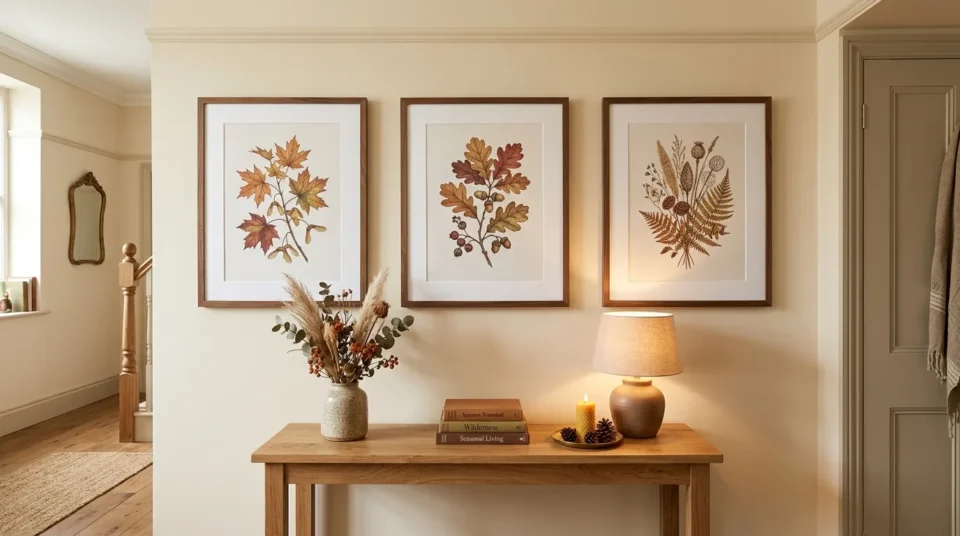
Decide the destination in advance. A spare bedroom bed, a folding rack in a corner, or a row of hooks all work — the point is that the choice is made before the doorbell rings, not improvised while someone stands in the hallway with wet sleeves. Keep the entry surface itself mostly clear on a hosting night; the seasonal styling of a console table is its own project, and this one evening it is a landing strip. Our spring entryway decor ideas cover the year-round version of that surface.
The Counter Everyone Ends Up Leaning On

Guests gather around whichever surface is nearest the drinks, and they stay there. In most homes that is a kitchen island or a sideboard, and it is usually the surface already carrying the most stuff. A crowded counter pushes people into the cook’s path, which is the real reason kitchens feel chaotic during a party.
Designer Rule of Thumb: plan one clear surface for every four guests, with at least 24 inches of bare run on each. That is enough for four glasses, a bowl and a set of keys without anything balancing on an edge.
Move the seasonal objects that live there into a single tray and set the tray at the back. Everything else comes off. A cleared sideboard with one lamp, one tray and a stack of napkins does more hosting work than a fully styled one.
DESIGNER TIP: Put the drinks surface on the far side of the room from the oven. Guests follow the drinks, and a few extra feet keeps the crowd out of the hot zone without anyone being asked to move.
Where Does the Night End Up?
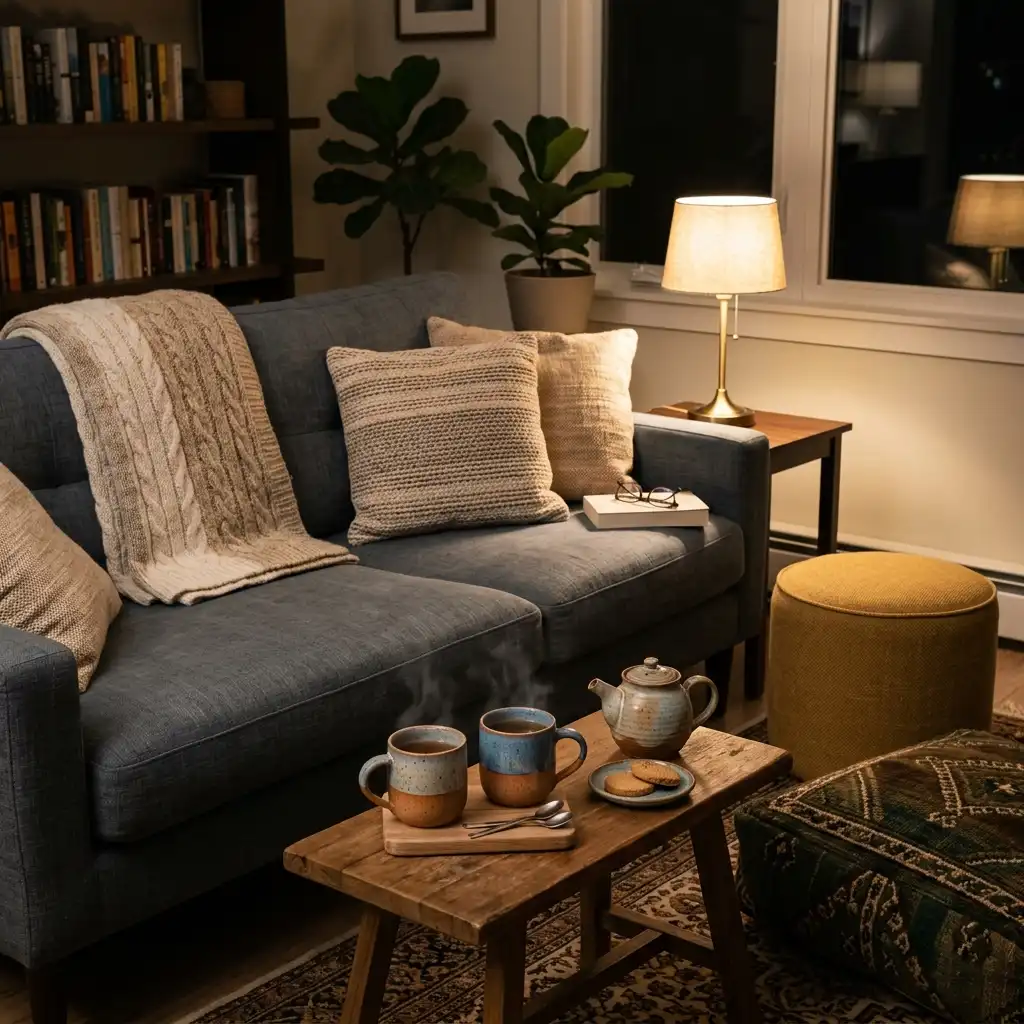
The last hour of a fall dinner party happens on soft seating, and most homes are short by two or three places. Six dining chairs and a three-seat sofa means half the group is standing at ten o’clock, which is usually when people start leaving.
Add perch seating rather than furniture. An upholstered ottoman, a bench pulled in from the hall, a pair of floor cushions by the fireplace — anything low that reads as an invitation. Two folded throws over the sofa arm matter here too, because the room cools once the oven goes off. Our living room decor ideas cover the permanent version of this layout.
How Do You Decorate for a Dinner Party Without Redoing the Table?
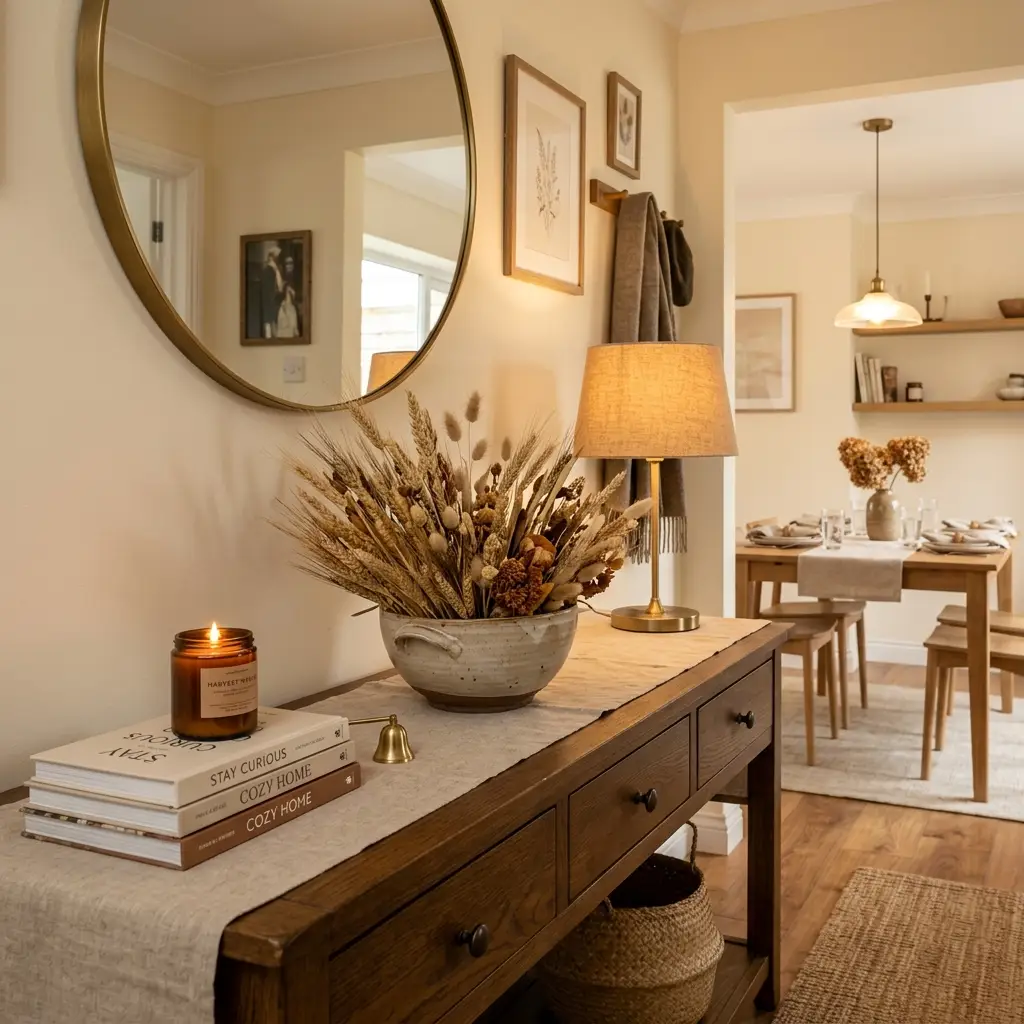
Five moves, in the order they pay off. Together they take an afternoon and cost less than a new set of plates.
How Many Coats Are You Planning For?
Capacity comes first because it is the one thing you cannot fix at seven o’clock. Write down the guest count, then match it: coats, seats, glasses, and surfaces. Eight guests means eight coat spaces, eight places to sit at ten p.m., and two clear surfaces.
A folding wooden rack costs less than a centerpiece and disappears into a closet afterward. Over-door hooks work in a rental with no drilling. Neither is decorative, and neither needs to be — this is the layer guests use, not the layer they photograph.
Every Room Needs One Bare Surface
Pick one surface per room and leave it bare. In the dining zone that is usually the sideboard; in the living room it is half the coffee table; in the kitchen it is a stretch of island. Empty space is a hosting feature, not a missed opportunity.
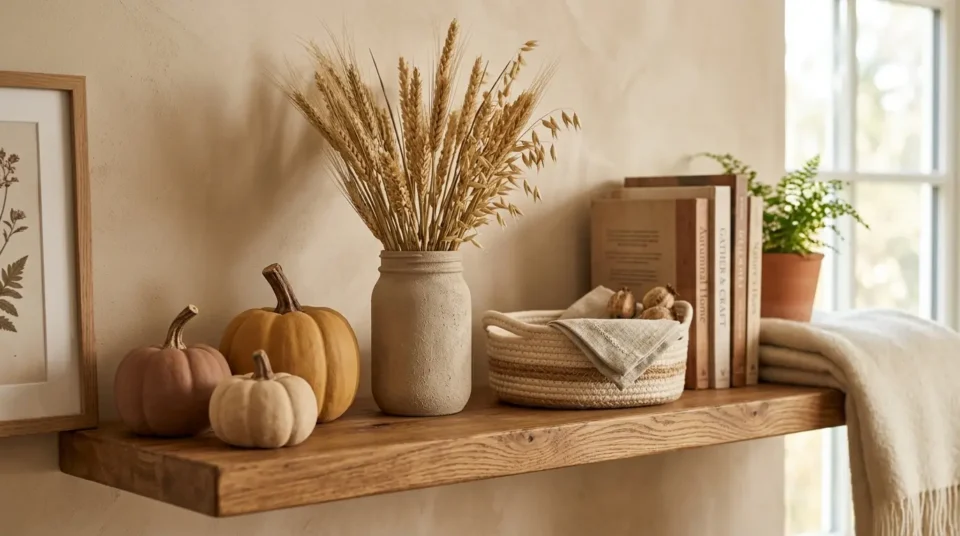
The instinct in autumn runs the other way. Pumpkins, lanterns and dried stems multiply across every flat surface until there is nowhere to set a glass. Fall hosting decor works better when it concentrates: one styled surface per room, one cleared surface per room. The contrast makes the styled one look chosen rather than accumulated.
How Many Lights Should Be On During Dinner?
Three separate sources in the room the table sits in, minimum. One over the table, and at least two around the perimeter at lamp height. A single bright fixture over a dining table turns everything past the chairs into a black wall, and the party shrinks to the size of the lit circle.
Source Note: Lutron’s guidance on layered lighting is that each room should carry ambient, task and accent light together, and that for dining “you want something warmer and less intense” than kitchen task lighting. Read their guide to layering light at home for how the three layers divide up.
Keep the entry brighter than the dining zone so arriving guests are not walking into a cave, then let the light drop as the evening moves inward. Our living room lighting ideas cover fixture choices for the rooms either side of the table.
Safety Note: extra lamps often mean extra cords. The Electrical Safety Foundation International warns that an extension cord “is a temporary solution and is not meant to be used as a long-term extension of your household’s electrical system,” and that cords must not run through walls, doorways or floors, because covered cords cannot release heat. Tape a cord along a skirting board for one evening; do not run it under the rug guests will walk on.
Move the Candlelight Off the Table
Candles on the table are already handled by the people setting it. The hosting move is everything past the table edge: a pair on the sideboard, one on a windowsill, two on the mantel, one in the bathroom guests will use. Spread that way, candlelight lights the route instead of one rectangle.
Material Note: the National Candle Association advises keeping multiple candles at least 3 inches apart so they do not melt each other, and trimming the wick to a quarter inch before each use to prevent high flames and soot. Both matter more when candles are grouped on a narrow shelf than when they are spaced down a six-foot table.
DESIGNER TIP: Buy pillars in one height and one color for the whole house. Mixed heights read as a collection when they sit together on a table, and as clutter when they are scattered through three rooms.
What Should Stay Up After Everyone Leaves?
Decide this before you buy anything. Roughly two-thirds of what you add for a dinner party should still make sense on a Tuesday — the lamp, the tray, the throws, the bench. The other third is event-only: the candles burn down, the flowers go, the rack folds away.
That ratio is what separates hosting decor from party supplies. It also means the money lands on objects that work from September through February rather than for one night in November.
Hosting Mistakes That Show Up Around Eight O’Clock
Instead of buying a full seasonal collection for one dinner, Try adding two objects to what you already own — a tray and a second lamp will change more about the evening than a matching set of anything.
Instead of styling every flat surface in the house, Try leaving one clear surface in each room and concentrating the decorating on the other; guests need somewhere to set a glass more than they need another vignette.
Instead of lighting the room from the ceiling all evening, Try switching the overhead off once everyone sits down and running the room on lamps; the fixture over the table can stay, but it should not be working alone.
Instead of setting the heating the way you would on a quiet night, Try dropping it a couple of degrees before anyone arrives; eight people, an oven and a dozen candles warm a room quickly, and guests notice a stuffy house long before they notice a runner.
Hosting Costs Less Than the Table Does
Most of this budget goes to things that stay useful after the season ends, which is why it comes in lower than a full tablescape. These are ordinary furniture styling decisions more than seasonal buys.
| Project | Estimated Cost | Impact Level |
|---|---|---|
| Over-door hooks or a folding coat rack | $18-$45 | High |
| Pillar candles and holders for three rooms | $30-$80 | Medium |
| Second table lamp for the dining zone | $45-$120 | Very High |
| Two perch seats — ottoman, bench or cushions | $90-$260 | High |
Best First Upgrade: the second lamp in the dining zone, because it changes how the whole room reads the moment the overhead goes off.
Skip for Now: matching seasonal serveware. It costs the most, gets used twice a year, and nobody remembers it the following autumn.
No Separate Dining Room? Start With the Standing Zone
In an open-plan flat or a studio, the route collapses into one space, and the standing zone becomes the most important surface in the home. Clear the counter first, put the drinks at the end furthest from the cooking, and use the dining table only for the meal itself.
Seating is the tighter constraint. A bench on one side of the table seats three where two chairs would fit, and it slides fully under when the meal ends, which gives the room back for the standing hour. Floor cushions stack in a closet. Our small apartment ideas cover the furniture side of hosting in a tight footprint.
If the table is also your desk, the reset is the whole project: clear it completely, wipe it, and let the table itself be the decoration. A bare wood surface with two candles reads better than a styled one covered in a week of paperwork. For tables that hold up to both jobs, our guide to mid century modern dining tables is a useful place to start.
The Part Worth Repeating Every Year
A year from now you will not remember which napkins you used. You will remember whether the room felt warm, whether there was somewhere to sit at ten o’clock, and whether anyone had to hold their coat through the first drink.
That is the case for putting the effort on the route. Table decor is worth doing and worth doing well, but it peaks for forty-five minutes and it changes every season. Lamps, trays, benches and hooks carry every dinner you host from now on, which is why fall hosting decor built around them keeps paying off long after the pumpkins go soft. Our cozy winter decor ideas pick the same room up in December.
Related Seasonal Ideas:
- Browse all our fall decorating ideas
- All seasonal decorating inspiration
- 15 Stunning Christmas Table Settings Your Guests Will Adore
- 15 Spring Tablescapes Ideas to Brighten Your Next Seasonal Brunch
Frequently Asked Questions
Conclusion
The table will look after itself for one night; the route your guests walk is what they will still remember next autumn. Treat fall hosting decor as a set of small permanent upgrades — a lamp, a cleared surface, somewhere for the coats — and every dinner after this one gets easier. Our home decor ideas cover the rest of the house once the season is over.