TL;DR
- Most living rooms rely on one ceiling light. Designers use three layers: ambient, task, and accent.
- Use 2700K warm white bulbs in every fixture — one mismatched bulb disrupts the whole room’s warmth.
- A dimmer switch on the main overhead is the single highest-impact change under $40.
- Plug-in floor lamps and sconces let you build the full layered look without electrical work.
- Target 1,500–3,000 lumens total, spread across sources at three different heights.
The Problem With Most Living Room Lighting
For a long time, the standard setup was one fixture at the center of the ceiling. It lit the space. That felt sufficient.
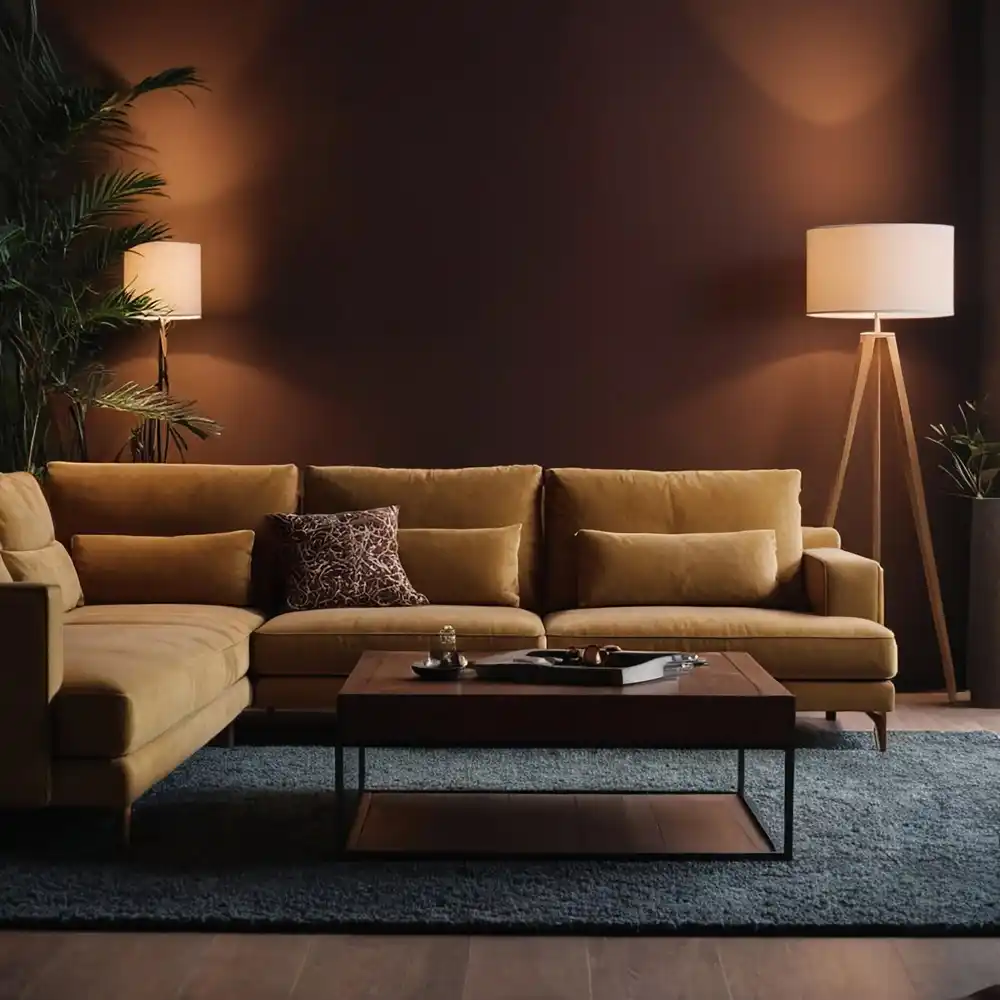
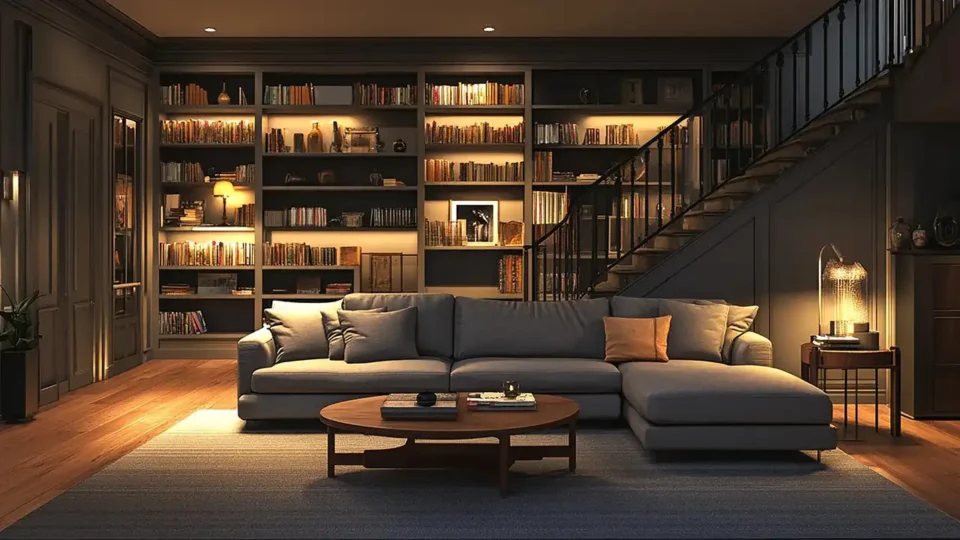
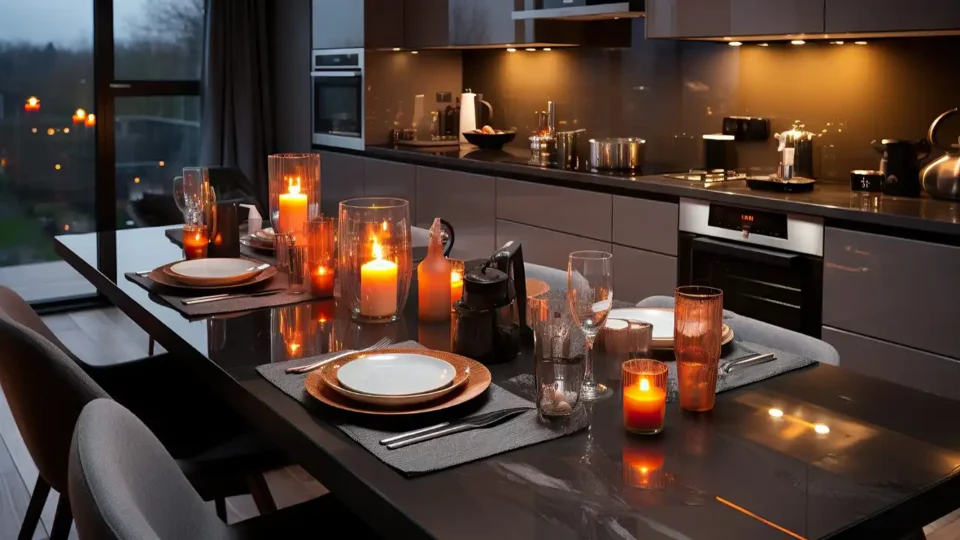
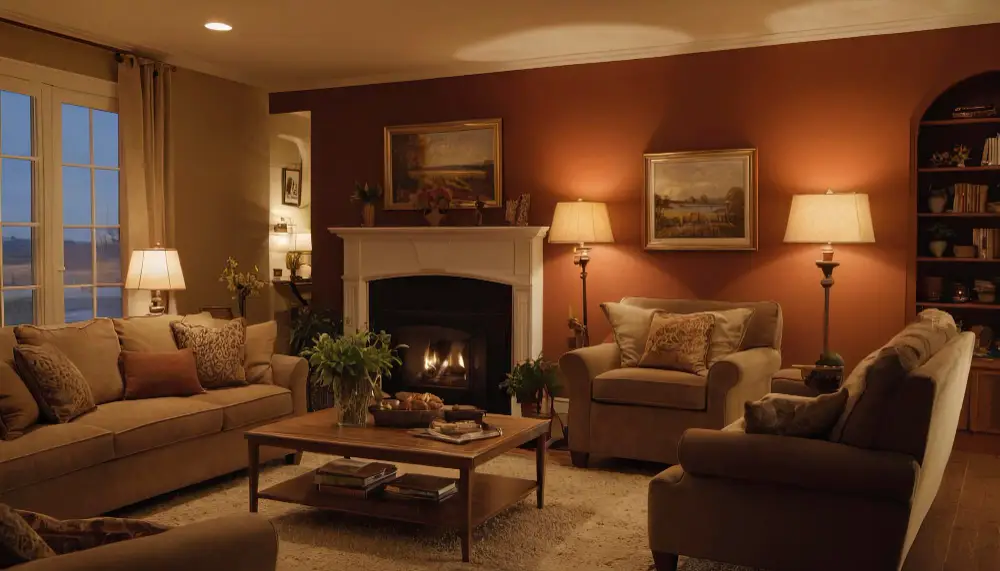
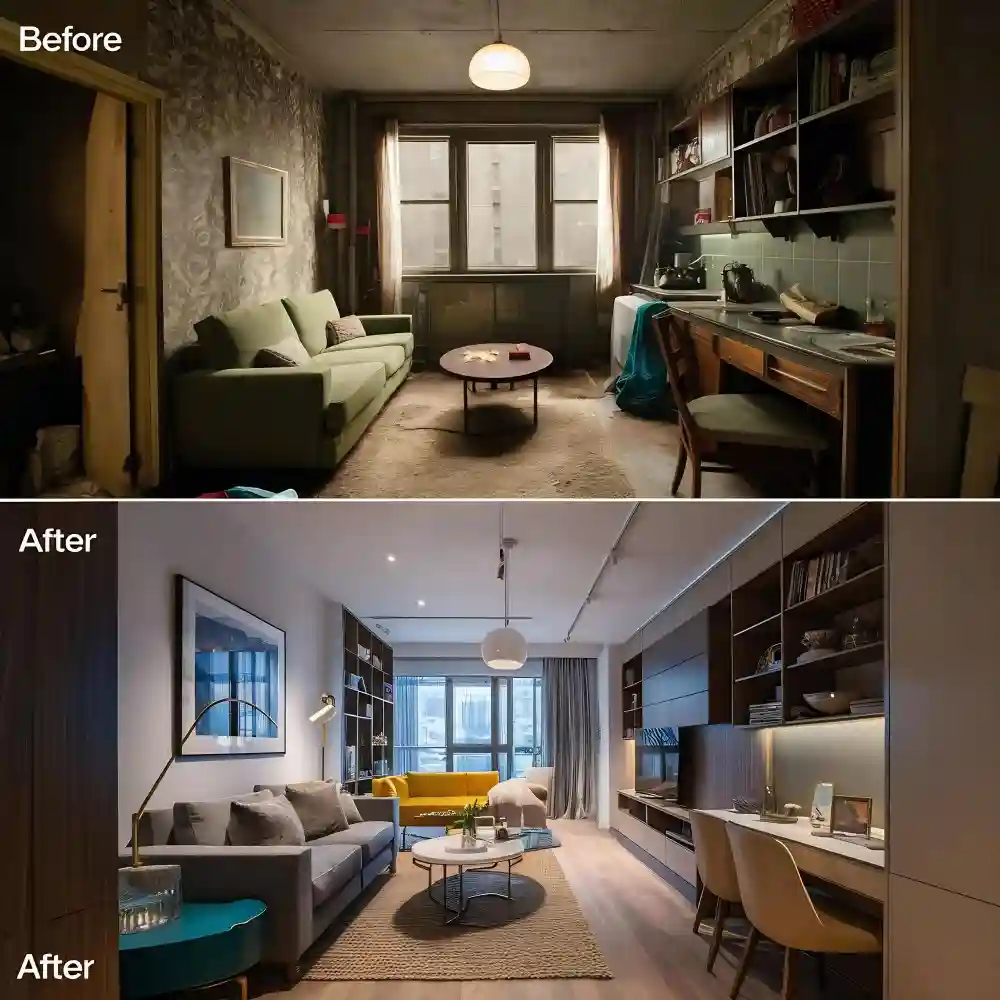
Designers moved past that. Layered lighting — a floor lamp beside the sofa, table lamps at eye level, a dimmed pendant overhead, sconces filling corners — became the default in rooms that feel calm and well put together. Not because the fixtures are expensive. Because light at multiple heights creates shadow and depth in a way a single bulb never can.
Editorial field note: A living room with one central ceiling light usually looks flat during the day and harsh at night. Add a floor lamp behind the sofa, place a table lamp on the console, and dim the overhead to 40 percent. The same room shifts — it feels quieter, warmer, more finished. No furniture changes required. Just the light.
Living room lighting ideas work best when you think in layers, not individual fixtures. The goal is three types of light at three heights: ambient overhead for general brightness, task lighting for reading and functional zones, and accent lighting for depth. Together they eliminate the flat, shadowless quality that makes most living rooms feel like an afterthought. For a wider room refresh, start with living room ideas for a luxurious designer look or browse all living room ideas by style. Bookmark this guide for quick reference.
KEY TAKEAWAY: Warm living room lighting comes from three sources at different heights — not a single bright ceiling fixture.
| Quick Takeaways | |
|---|---|
| Color Temp | Use 2700K warm white bulbs in every fixture — one cooler bulb changes how the whole room feels. |
| Layers | Ambient, task, and accent: identify which one is missing and start there before buying anything new. |
| Dimmers | Install a dimmer on the overhead light first — it changes how every existing source in the room performs. |
| Placement | Spread light at three heights: ceiling, eye level when seated, and floor or shelf level. |
| Budget Start | A 2700K bulb swap and a dimmer kit cost under $60 and make the biggest immediate difference. |
Living Room Lighting Checklist
- Replace all bulbs with 2700K warm white LEDs before adding any new fixtures.
- Install a dimmer switch on the overhead light first ($15–$30, compatible with most LED bulbs).
- Identify which layer is missing — ambient, task, or accent — and start with that gap.
- Add a floor lamp or arc lamp beside or behind the primary seating zone.
- Place at least one table lamp at seated eye level: shade bottom at 28–30 inches from the floor.
- Use plug-in sconces if you want wall-level light without drilling or hardwiring.
- Keep all sources between 2700K and 3000K — mixing warmer and cooler bulbs creates visual tension.
- Aim for 1,500–3,000 lumens total, scaled to room size, spread across the three layers.
KEY TAKEAWAY: Check which layer is missing before spending anything — most living rooms already have ambient overhead light and just need a floor lamp and table lamp added.
10 Living Room Lighting Ideas for a Warm, Designer Glow
The right lighting is what makes a living room feel warm rather than flat. These ten ideas — 2700K bulbs, layered lamps, dimmers, and a statement fixture — build the soft, designer glow that overhead light alone can’t.
Why Does My Living Room Feel Flat Even With the Lights On?
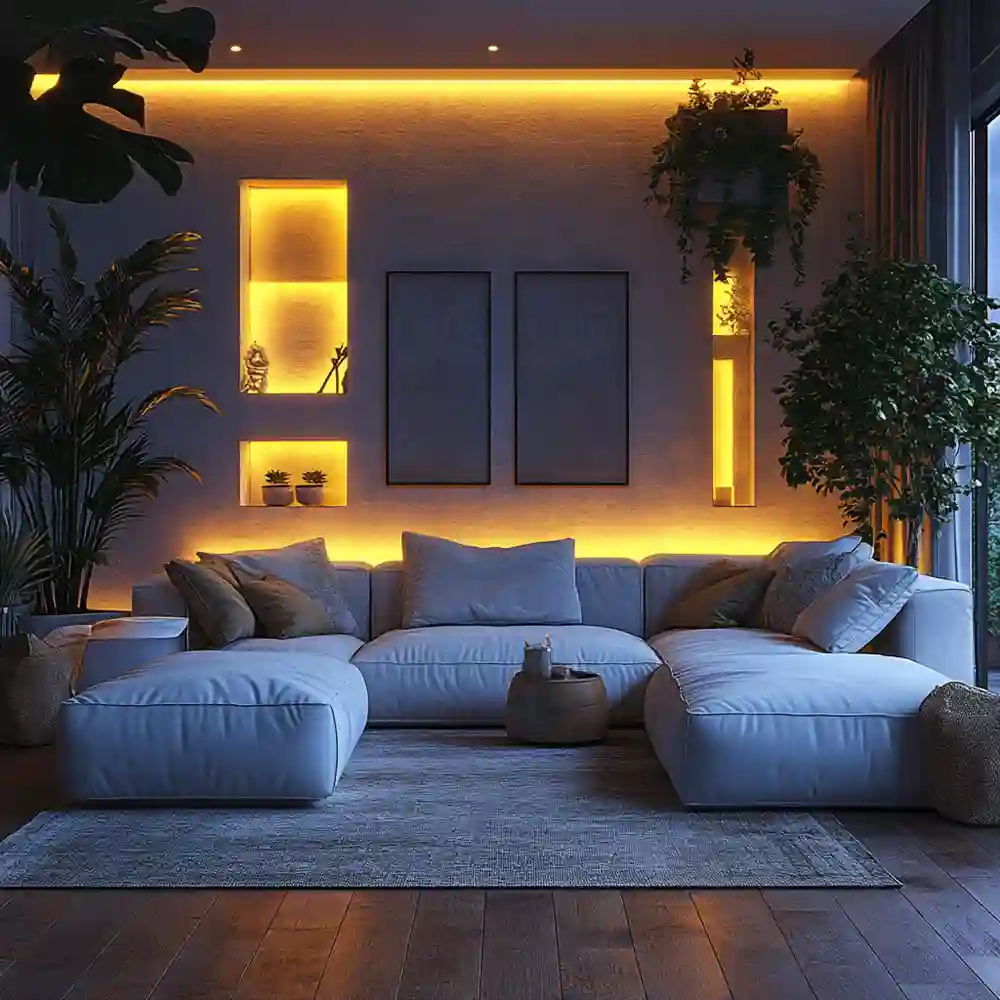
Flat light comes from one source at one height. An overhead ceiling fixture reaches the floor but leaves walls, corners, and the zone above seating in shadow. Ambient lighting works as the base layer of a room’s light plan — it handles general brightness. Task lighting covers specific functional zones like reading or a desk area. Accent lighting adds depth by drawing the eye toward architecture, art, or shelving. When all three types are present, natural-looking shadows form and the room stops feeling like it was lit to check for damage.
Switch Every Bulb to 2700K Warm White
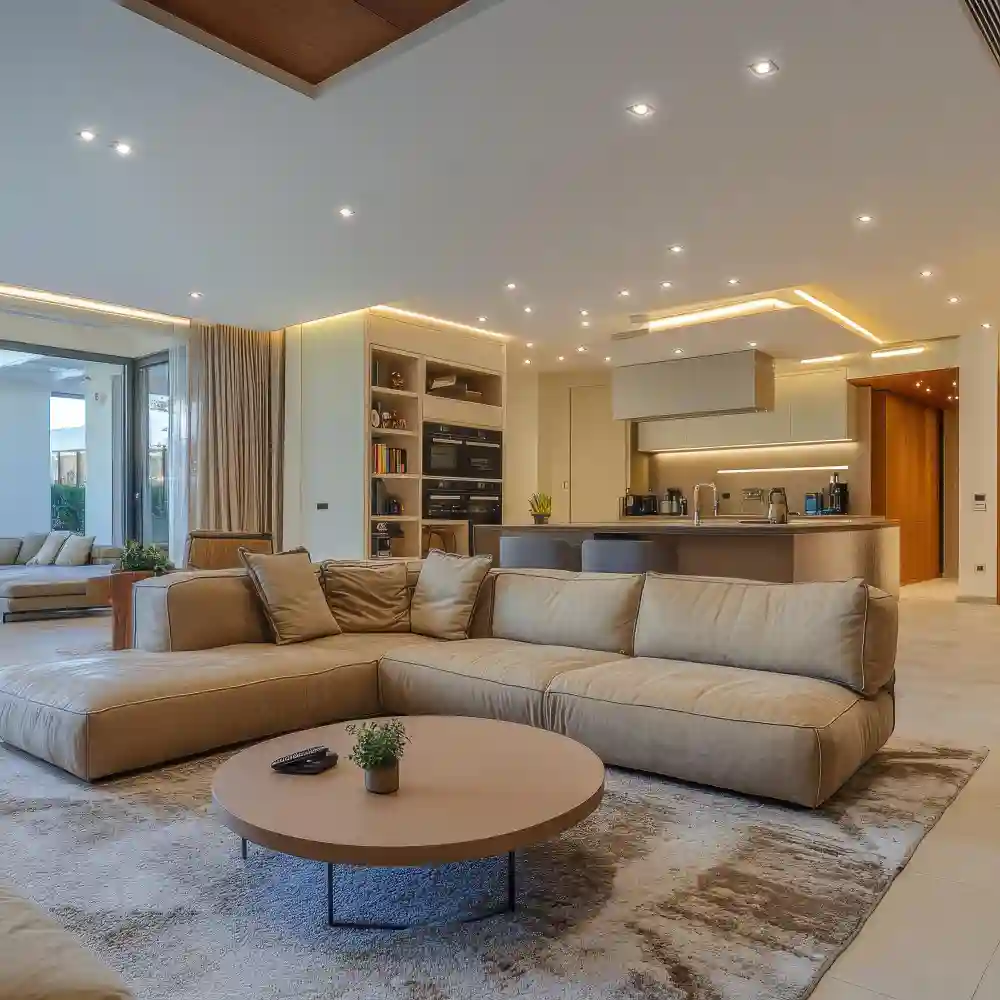
Color temperature is measured in Kelvin (K). A 2700K bulb produces a warm amber glow similar to a traditional incandescent bulb. A 4000K bulb produces the cooler, flatter tones of office lighting. Source Note: According to Feit Electric’s lighting temperature guide, 2700K is the recommended range for living rooms and bedrooms where warmth and relaxation matter most. Replace every bulb first — one 4000K source in a 2700K setup creates a subtle tension that no arrangement change can resolve.
Add a Floor Lamp Behind or Beside the Sofa
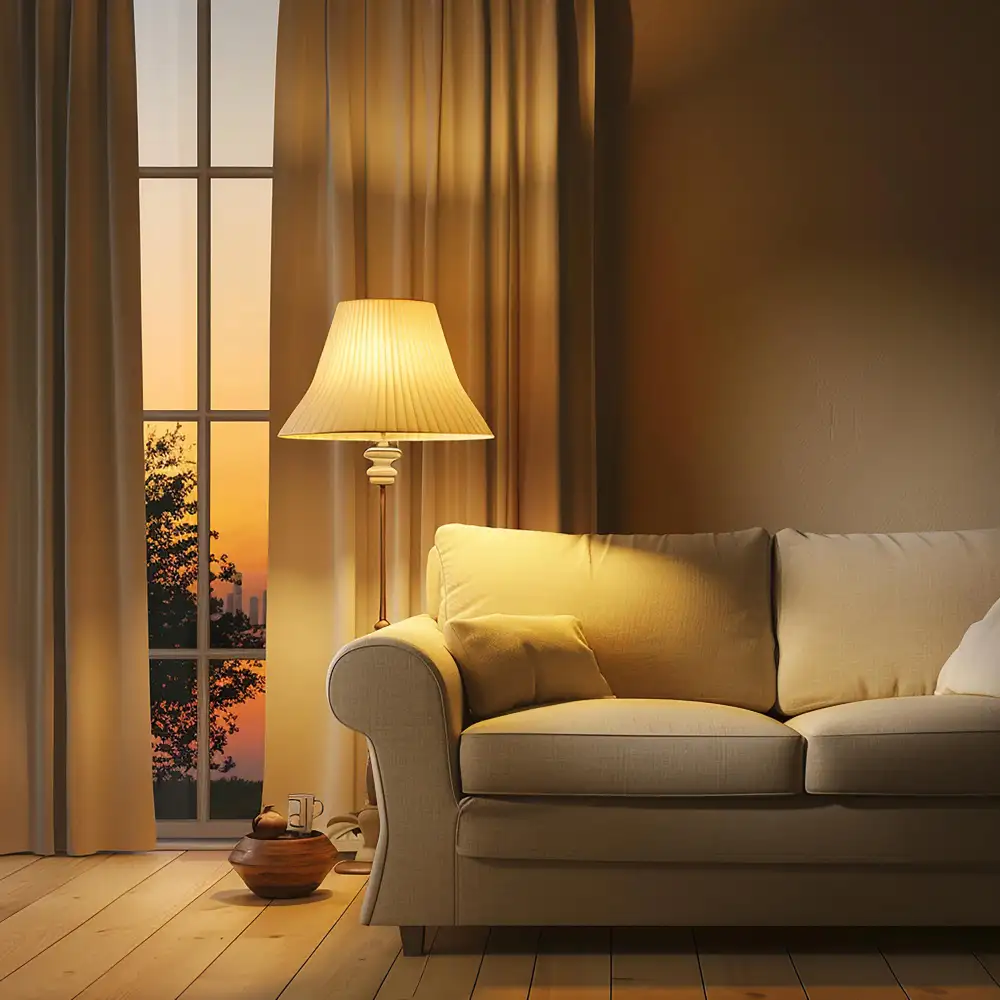
A floor lamp works best when positioned to cast light downward and outward over the primary seating zone. Behind the back corner of a sofa is the most effective spot — it fills the area ceiling fixtures miss and creates a warm halo around the seating. Arc floor lamps extend the shade directly over the sofa. Tripod lamps anchor a corner with less reach but more sculptural presence. Both add the task layer the room needs and fit naturally within a more complete living room decor plan without any hardwiring.
Should Every Light in a Living Room Be on a Dimmer?
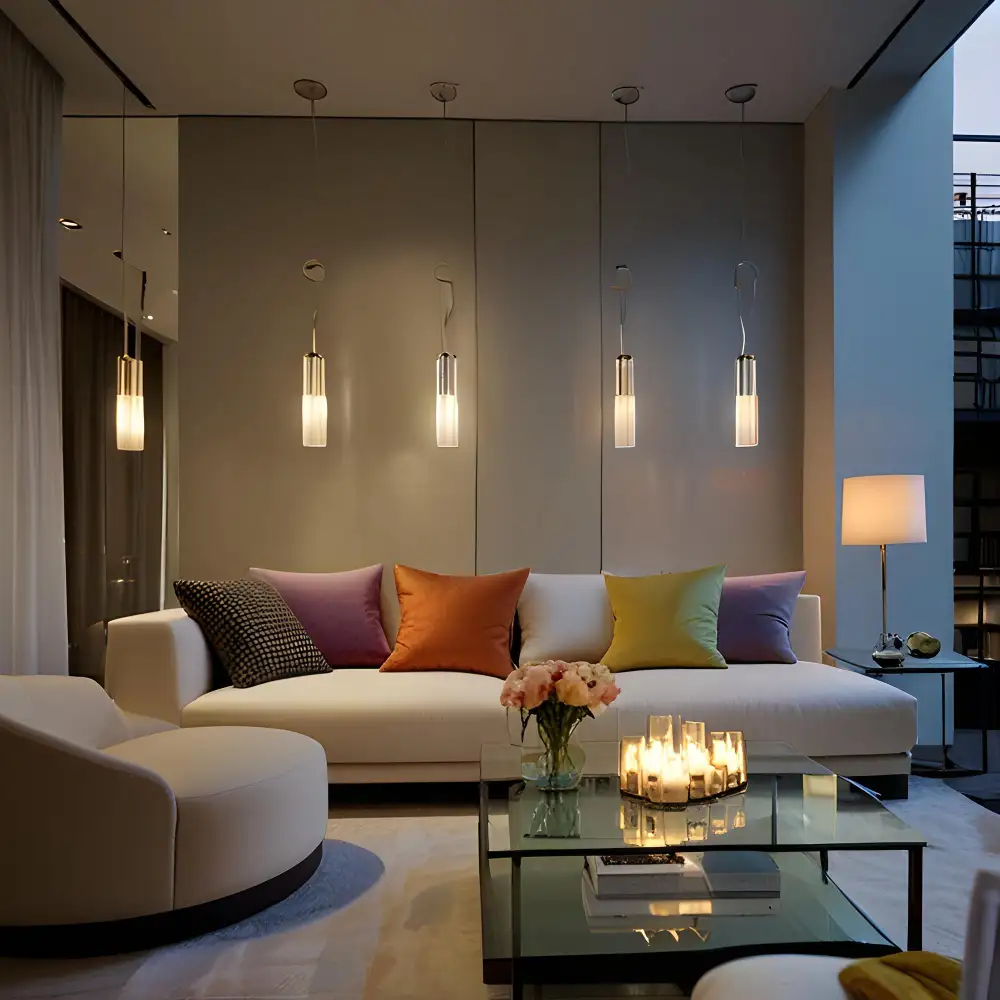
Yes. A dimmer reduces the voltage delivered to the bulb, which lowers both brightness and warmth output. A room at full brightness at 10 pm feels clinical. The same fixtures dimmed to 40 percent feel calm and settled. Safety Note: Before installing a dimmer, confirm the bulbs are labeled “dimmable” on the packaging — non-dimmable LEDs flicker or fail early on dimmer circuits. Turn off the circuit breaker before swapping any switch; consult a licensed electrician if the existing wiring is unclear.
DESIGNER TIP: Put the overhead on one dimmer and floor lamps on a separate plug-in dimmer cord ($15–$25). You can lower ambient and raise task light independently without unplugging anything.
Choose a Statement Pendant or Chandelier for Ambient Light
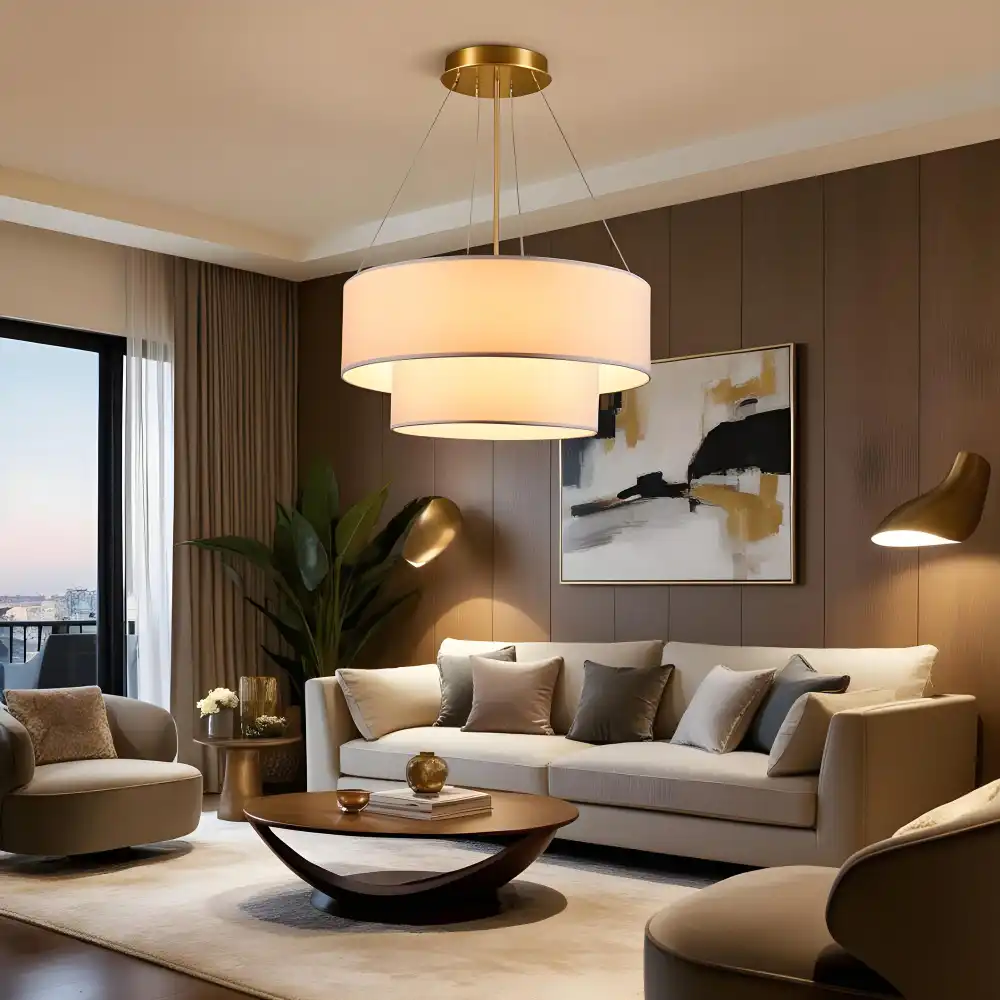
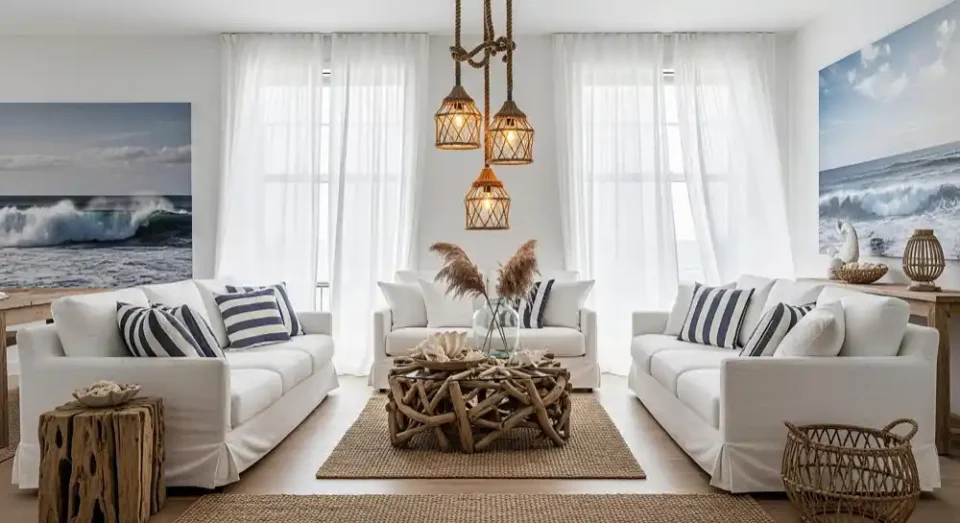
A brass pendant, woven rattan chandelier, or ceramic globe fixture does two jobs at once — it delivers diffused ambient light from the ceiling and creates a focal point in the room’s upper plane. Center it over the primary seating group rather than the room’s geometric midpoint. Furniture arrangements shift; the light should follow the conversation zone, not the floor plan. A globe or drum shade diffuses light outward in all directions. An open-cage or bare-filament pendant creates glare at seated eye level and works better in hallways or dining spaces than living rooms.
Use Wall Sconces to Fill Dark Corners
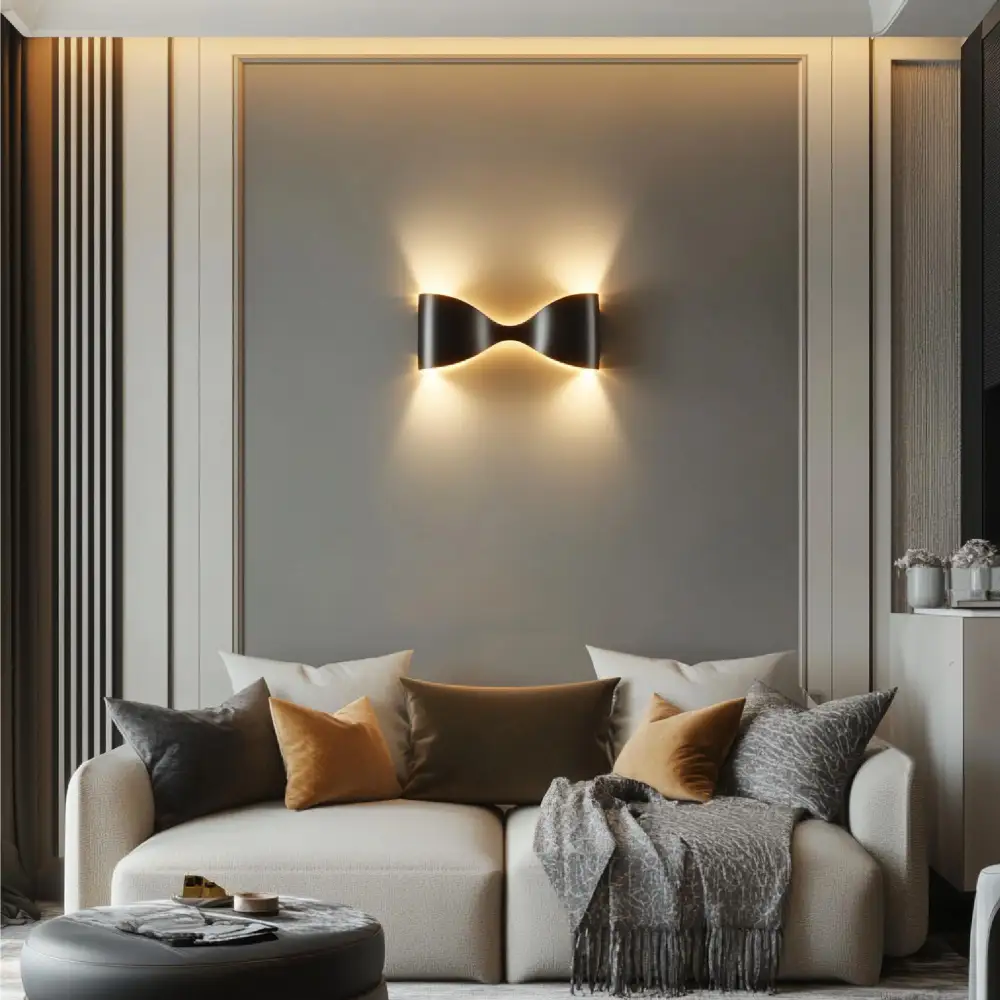
Wall sconces mounted at 60–66 inches from the floor provide eye-level ambient fill without using floor space. Dark corners are the most common lighting problem in living rooms — overhead fixtures angle poorly into them and floor lamps rarely fit. Plug-in sconces in brushed brass or matte black solve both problems without electrical work. Pair them on either side of a fireplace, flanking a console table, or alongside living room wall decor to add a material detail to the wall at the same time as the light.
Place Table Lamps at Eye Level When Seated
Table lamps belong on surfaces where the bottom of the shade sits at roughly 28–30 inches from the floor — eye level when seated on a standard sofa or armchair. Lamps placed too high direct light downward and cast shadow across the face. Lamps placed too low look undersized against the furniture and deliver light at the wrong angle. Pair similar lamps on either side of a sofa or fireplace for balance, or use a single taller lamp on a console to anchor a wall. A cream linen or cotton shade diffuses the glow in all directions.
Pick Shades That Diffuse Rather Than Direct Light
Linen and paper shades diffuse light in all directions rather than directing it downward as a focused beam. A metal shade creates a tight pool of task light — useful for reading at a desk, unflattering as room ambience. A drum shade in natural cotton or linen lets light pass through the shade itself, casting a soft glow onto surrounding walls. This is the detail that makes a room feel warm the moment a lamp turns on. For organic modern living rooms and warm traditional spaces alike, natural-material shades are the stronger default.
DESIGNER TIP: Hold your hand under the shade when the lamp is on. If only the top opening glows while the shade itself stays dark, it’s directing light rather than diffusing it. A good diffusing shade glows on all sides.
Add Accent Lighting to Highlight Architecture or Art
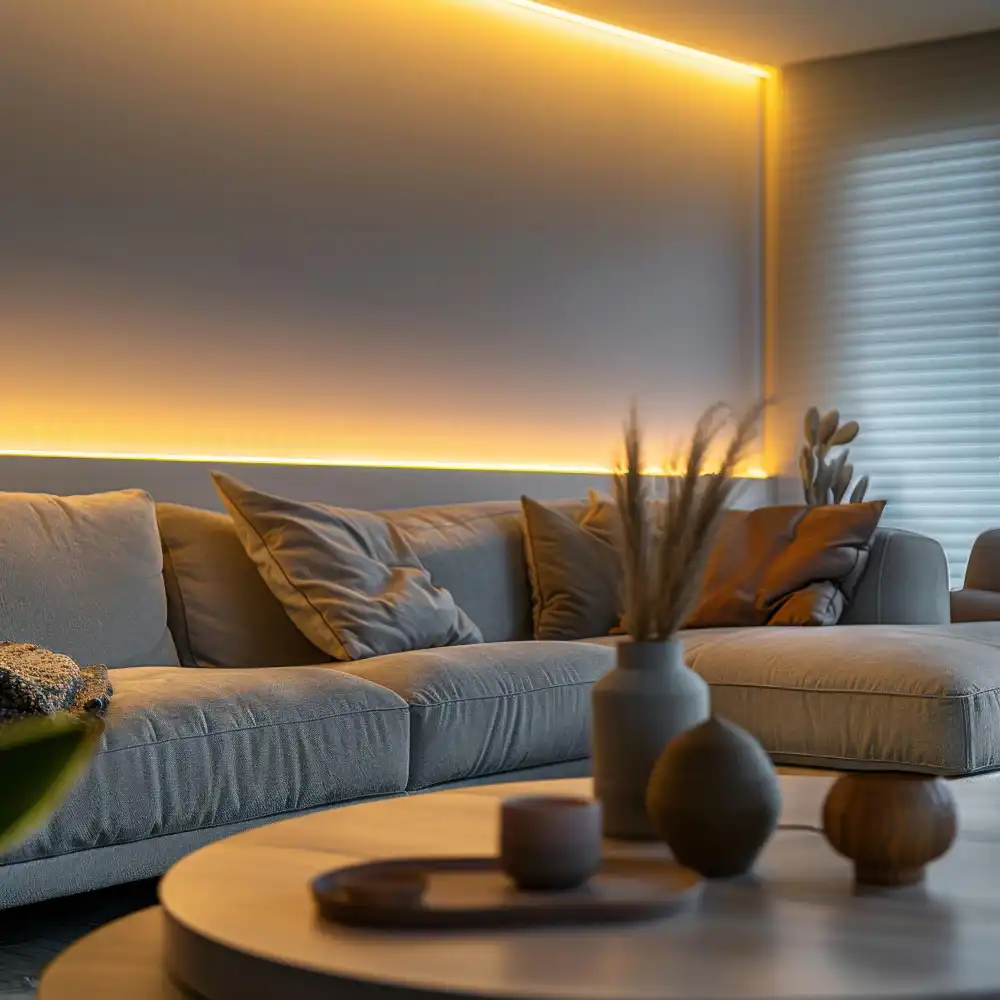
Accent lighting draws the eye to specific objects and adds visual dimension that ambient light alone can’t create. A picture light over a large canvas gives a gallery quality to a bare wall. LED strip lighting inside open shelving makes built-ins feel part of the room’s architecture. A recessed spotlight aimed at a fireplace wall adds texture to brick or stone. These additions are what separate a room that looks designed from one that looks furnished. They work especially well once built-in shelves for the living room are in place and become the natural next layer.
Create a Reading Corner With Dedicated Task Light
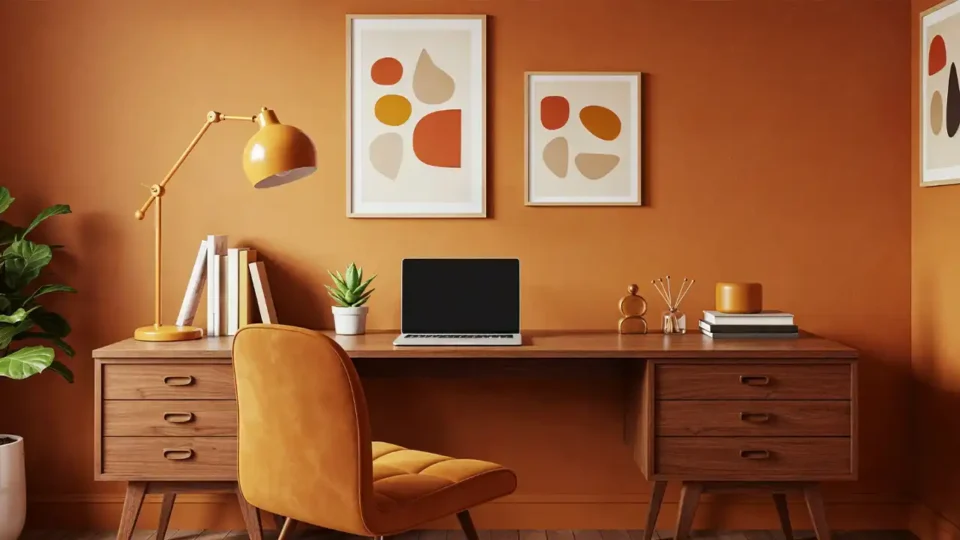
A swing-arm floor lamp or adjustable table lamp beside an armchair creates a functional zone distinct from the room’s ambient layer. Position the lamp so light falls over the shoulder onto the page — not in front of you, where it creates glare. The corner reads as a destination rather than leftover space. In small living rooms especially, a reading corner with its own task lamp is one of the most effective moves — it adds purpose to a zone that might otherwise feel like unused area next to the primary seating.
KEY TAKEAWAY: Each light source should serve one role — ambient fills the room, task serves a specific activity, accent adds depth — and combining all three is what creates warmth.

How These Pieces Fit Together
Good living room lighting ideas don’t require every fixture at once. The practical sequence: start with the overhead dimmed to 40–50 percent as the base layer. Add one floor lamp beside the primary seating. Add one table lamp on the opposite side or on a console. That’s three light sources at three heights. The room already looks different.
From there, add sconces to fill corners that still recede into shadow. Add accent lighting — picture lights, LED strips, shelf spots — once the primary layers are working. The sequence matters. Accent lighting added before the ambient layer is in place creates a spotlit, uneven room where the light draws attention to itself instead of the space.
Source Note: According to Lutron’s layered lighting guide, placing ambient, task, and accent sources on separate dimmer circuits gives the most control — you can shift the room from bright daytime to calm evening without unplugging a single fixture.
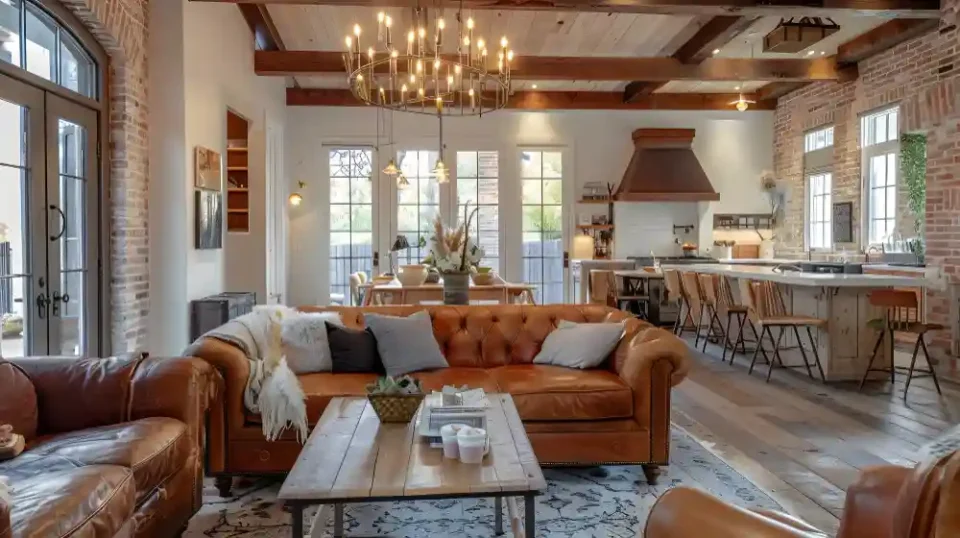
Color temperature consistency across every source matters more than most expect. One 4000K pendant in a room of 2700K lamps produces a tension that’s hard to name but consistently feels off. Set every warm source to 2700K–3000K and the space settles. These same layering principles apply across many styles — see how a warm farmhouse living room puts them to work in a different aesthetic while reaching the same result.
KEY TAKEAWAY: Build the three layers in order — ambient first, task second, accent third — and match all sources to the same 2700K–3000K color temperature range.
Lighting Mistakes That Dull the Room
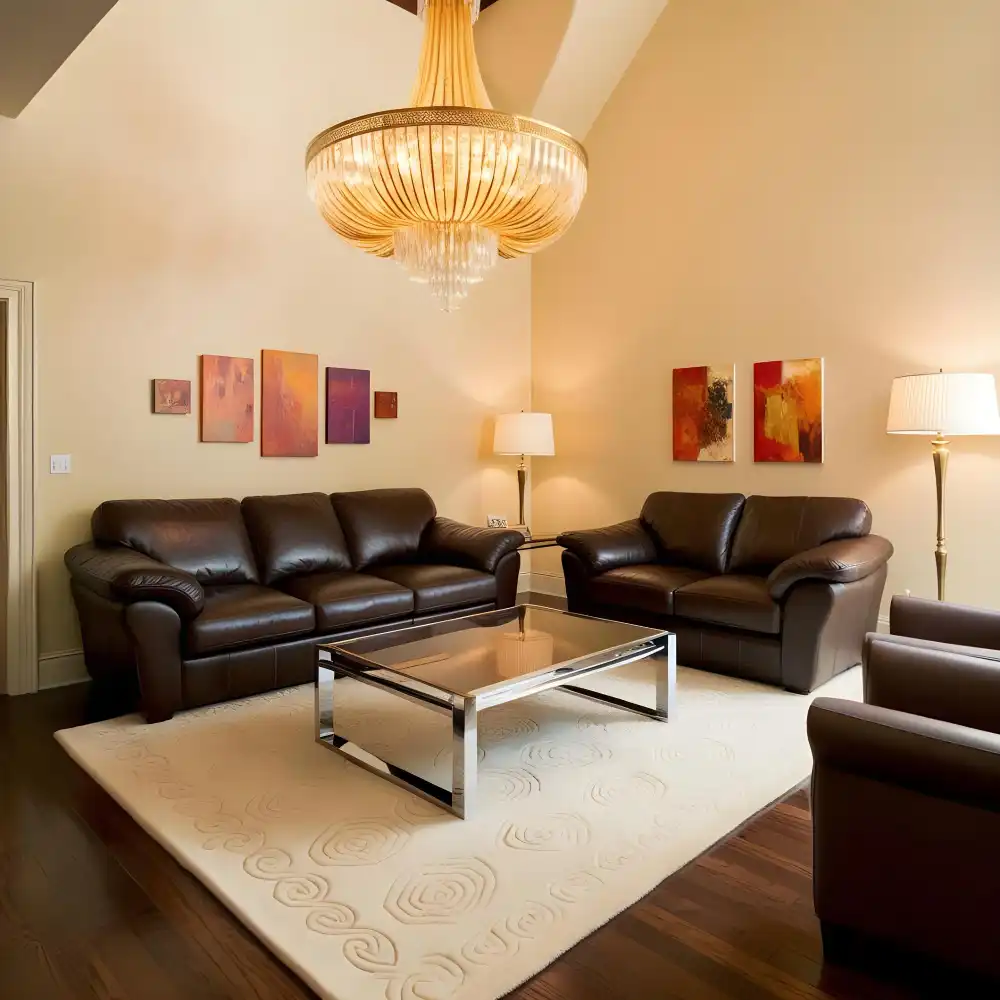
❌ Using only the overhead fixture → ✅ Add at least one floor lamp and one table lamp to create depth and softer pools of light at different heights.
❌ Mixing color temperatures → ✅ Confirm every bulb reads 2700K on the box — one cool-toned bulb changes how the whole room feels, even when everything else is warm.
❌ Skipping the dimmer → ✅ Install a dimmable switch on the overhead first; it costs under $30 and changes how every existing fixture in the room performs.
❌ Table lamps placed too high → ✅ Target a shade bottom at 28–30 inches from the floor — eye level when seated is the correct standard, not eye level when standing.
KEY TAKEAWAY: The most common lighting mistake is buying a new fixture before solving the basics: 2700K bulbs in every socket and a dimmer switch on the overhead.
Price Ranges by Fixture Type
Good living room lighting ideas work at every budget. A single plug-in floor lamp and a dimmer kit shift a flat room for under $80 total. A full layered setup across all three source types is achievable for under $400 without a single hardwired installation.
| Project | Estimated Cost | Impact Level |
|---|---|---|
| Replace all bulbs with 2700K warm white LEDs | $20–$50 | High |
| Dimmer switch for the main overhead | $15–$40 | Very High |
| Plug-in floor lamp (tripod or arc style) | $60–$200 | High |
| Table lamp pair with linen shades | $80–$350 | Medium |
Best First Upgrade: Replace all bulbs with 2700K LEDs and install a dimmer on the main overhead — this combination costs under $90 and is the highest-impact change before adding any new fixtures.
Skip for Now: Hardwired pendant replacements or recessed lighting installs until the three-layer plug-in setup is working and you can see where additional sources are genuinely needed.
KEY TAKEAWAY: Start with the bulb swap and a dimmer before spending on new fixtures — those two changes often solve most of what feels wrong with a living room’s lighting.
Edge Cases & Special Situations
Small living rooms: In a room under 150 square feet, floor lamps that take up corner space can feel cramped alongside furniture. Use plug-in wall sconces instead — they deliver eye-level light without a floor footprint. A single arc lamp curved over the sofa covers both ambient fill and task lighting for the seating zone without requiring a second floor-level fixture.
Rental restrictions: Plug-in sconces with adhesive cord covers, free-standing floor lamps, and battery-powered picture lights handle every lighting layer without drilling a hole. Rental Note: Battery-powered LED strip lights placed inside open shelving also work as rental-safe accent lighting — they’re completely removable and leave no marks behind. For affordable styling decisions that work alongside this approach, see smart ways to decorate a small living room on a budget.
Low ceilings: Skip pendant fixtures that hang below 7 feet from the floor — the shade drops into the eye line and creates glare rather than diffused ambient fill. Flush-mount ceiling fixtures with a warm linen shade work better. Add more floor and table lamps to compensate for the lower overhead contribution and maintain all three layers.
Rooms with no natural light: In north-facing rooms or basement living spaces, layer warm sources aggressively across all three zones. Keep every ambient source at 2700K. Add a 5000K daylight-spectrum bulb only at a desk or specific task lamp if needed — never in the ambient layer, where it creates an unresolvable color-temperature conflict with the warm sources around it.
KEY TAKEAWAY: Plug-in solutions cover every lighting layer for small rooms and rentals — hardwired fixtures are not a requirement for a warm, layered result.
Frequently Asked Questions
Conclusion
Warm living room lighting ideas come down to one practical shift: replace the single overhead source with three layered ones at different heights. The calm, finished quality that makes a room feel designed isn’t expensive or technically complex — it’s a 2700K bulb in every socket, a dimmer on every switch, and fixtures placed at ceiling level, eye level, and floor level.
Editorial field note: The biggest change in most living rooms isn’t new furniture or a fresh coat of paint. It’s swapping one harsh overhead for a layered setup. Once the floor lamp is behind the sofa and the overhead is dimmed to 40 percent, the room stops feeling like a utility space and starts feeling like somewhere to stay.
Start with all rooms inspiration for more ideas across every space, or explore how our home decor inspiration approaches warmth and layering across different room styles. For wall-level detail work that pairs well with a layered lighting plan, see our guide to living room accent wall ideas for a luxurious feel.