TL;DR
- These 16 dorm room ideas are split into three tiers: layout first, comfort and personality second, storage and finishing touches third.
- Start with the bed position and a rug before buying anything decorative — the room’s foundation changes everything.
- Quality bedding, layered warm lighting, and a peel-and-stick accent wall do more work per dollar than any set of matching accessories.
- A lofted bed frees 55–57 inches of under-bed clearance — enough space for a full desk setup, a mini wardrobe, or a lounge zone.
- Most of these ideas are renter-safe: peel-and-stick, Command-strip, and no-drill solutions work on dorm walls without losing your deposit.
The Advice Is Wrong — Here’s What Actually Works
Most people approach dorm rooms the same way: buy the matching bedding set, hang a few posters, hope for the best. The room still feels institutional. It still smells like carpet cleaner and fluorescent light. The fix starts with the layers you touch every day — these dorm bedding ideas make even standard Twin XL bedding look intentional.
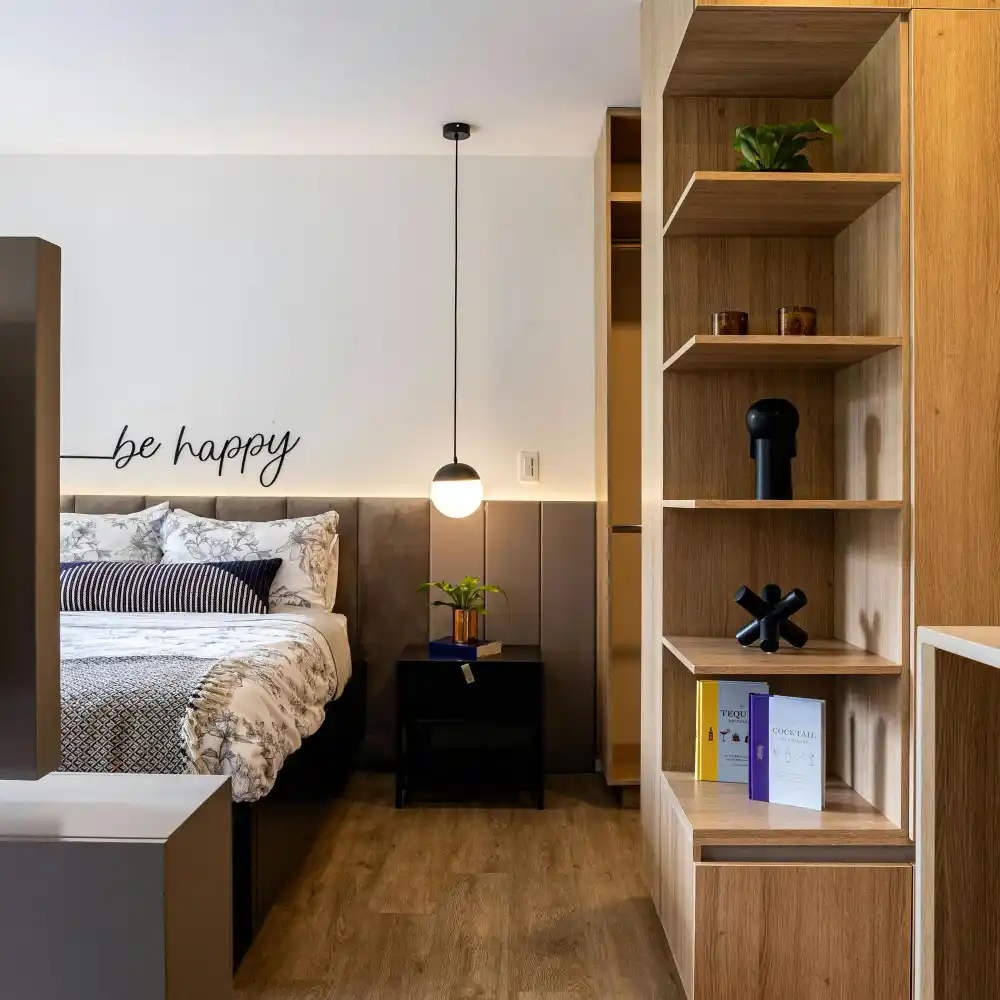
The real problem is that dorm room ideas almost always start with decoration. They should start with layout. A typical double dorm room runs 180–250 square feet — which is roughly the size of a generous walk-in closet. Every square foot matters before a single throw pillow enters the picture.
Dorm room ideas that actually work share three things: they claim physical territory (your zone, not just your half), they replace harsh institutional lighting with something warm, and they add texture and personality in layers. Do those three things, and the room starts to feel chosen rather than assigned.
Once the dorm room setup is dialed in — layout, light, and storage locked down — the fun part is choosing a look. The second half of this guide breaks down the dorm room styles and dorm room themes trending right now, from pink-and-green and purple to boho, chic, and guys’ rooms, plus a desk-and-hutch workstation and DIY dorm decor you can make on a budget. Build the layout first, then jump to the aesthetic that fits you.
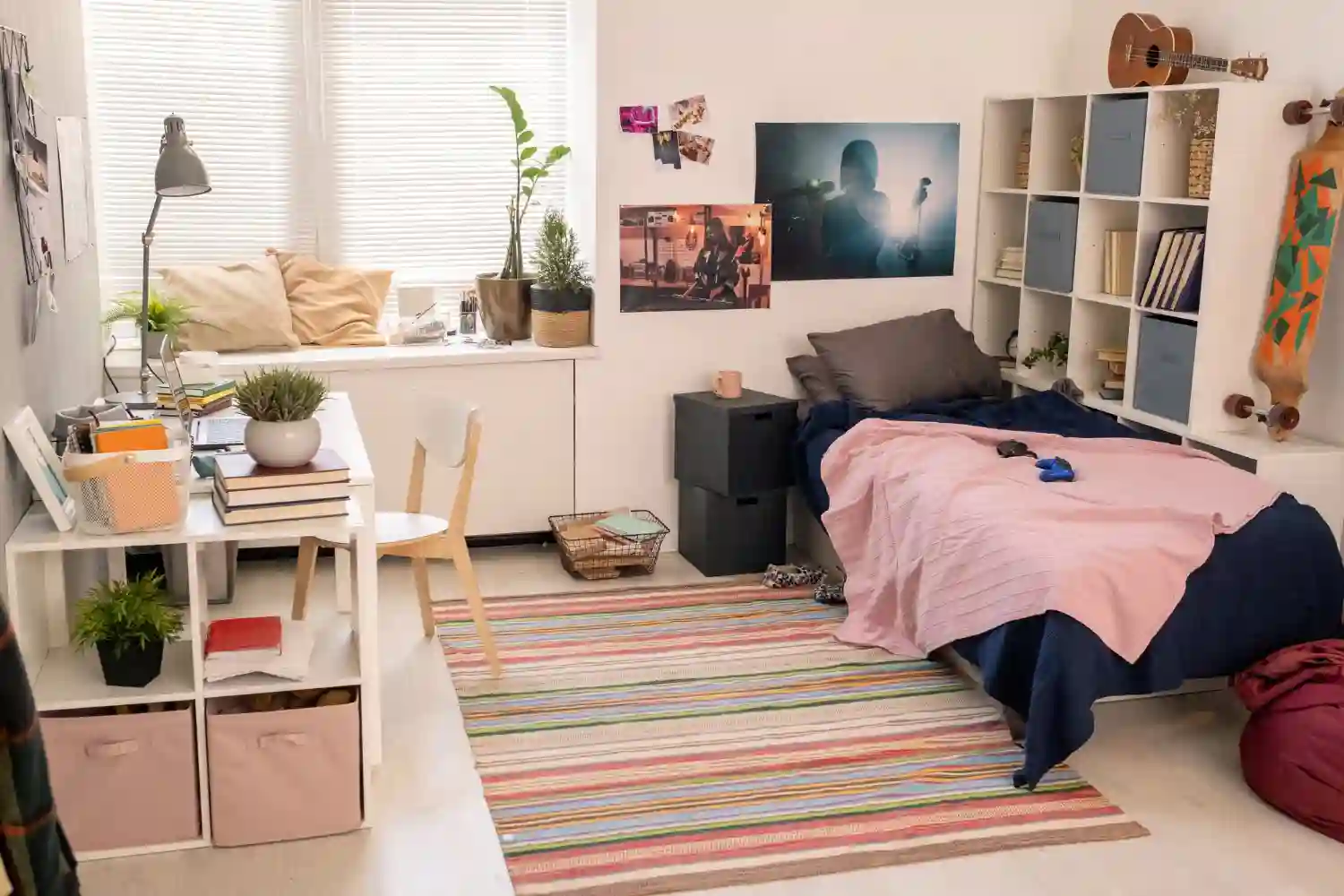
Editorial field note: A room with a lofted bed, a jute rug defining the floor zone below, and two warm-toned USB lamps reads immediately as a designed space — even before you look at the walls. The furniture arrangement carries more weight than the decorative objects.
At 101homedecor.com you’ll find ideas for every kind of bedroom, from small shared spaces to master retreats. Explore the full Bedroom Ideas by Room and Who They’re For hub or browse the Bedroom Decorating Ideas: The Complete Guide for the complete framework. For the spatial and storage strategies that translate directly to dorm living, Small Bedroom Ideas: Smart Layouts, Storage and Style and Bedroom Storage Ideas That Look Stylish, Not Cluttered are also worth a read. You can also browse all rooms and spaces for broader decorating ideas at every scale.
Bookmark this guide for quick reference.
KEY TAKEAWAY: Dorm room ideas work best when you start with layout and light before adding any decorative layers.
Tier 1 — Start With the Layout
These four ideas have nothing to do with aesthetic. They set the physical framework the rest of the room builds on. Skip them and no amount of decorating will fix the institutional feeling.
1. Loft the Bed to Unlock the Room
A lofted Twin XL bed sits at roughly 72 inches off the floor, leaving approximately 55–57 inches of usable clearance underneath — enough for a full desk chair, a small wardrobe rack, or a lounge chair with a floor lamp. Source Note: According to The Dorm Guide, a standard loft height provides around 57 inches of clearance, with a minimum 30 inches recommended above the mattress for safe sitting.
Lofting works best when the space underneath has a clear function before you fill it. Decide whether it becomes a desk zone, a wardrobe zone, or a lounge seat before moving anything in.
Rental Note: Always check your dorm’s lofting policy — most campuses allow it with a request form, and campus facilities often provide lofting kits at no charge during move-in.
2. Claim Your Side With a Rug and a Curtain Divider
A 5×8-foot jute or low-pile rug placed under your bed zone defines your territory without touching a wall. It adds warmth, absorbs sound, and signals where your space begins. Add a curtain panel hung on a tension rod between your side and your roommate’s, and you create a soft visual divide that costs under $30.
Source Note: Twin XL beds measure 38 inches wide by 80 inches long according to Sleep Foundation, so a 5×8 rug extends your zone 2–3 feet beyond the bed footprint in every direction — enough to anchor a small desk chair or floor lamp within the same visual territory.
3. Position the Desk for Natural Light
The standard overhead fluorescent light in most dorm rooms is the enemy of focus and comfort. Before anything else, move your desk to face the window. Even indirect daylight reduces eye strain and makes the room feel twice as large.
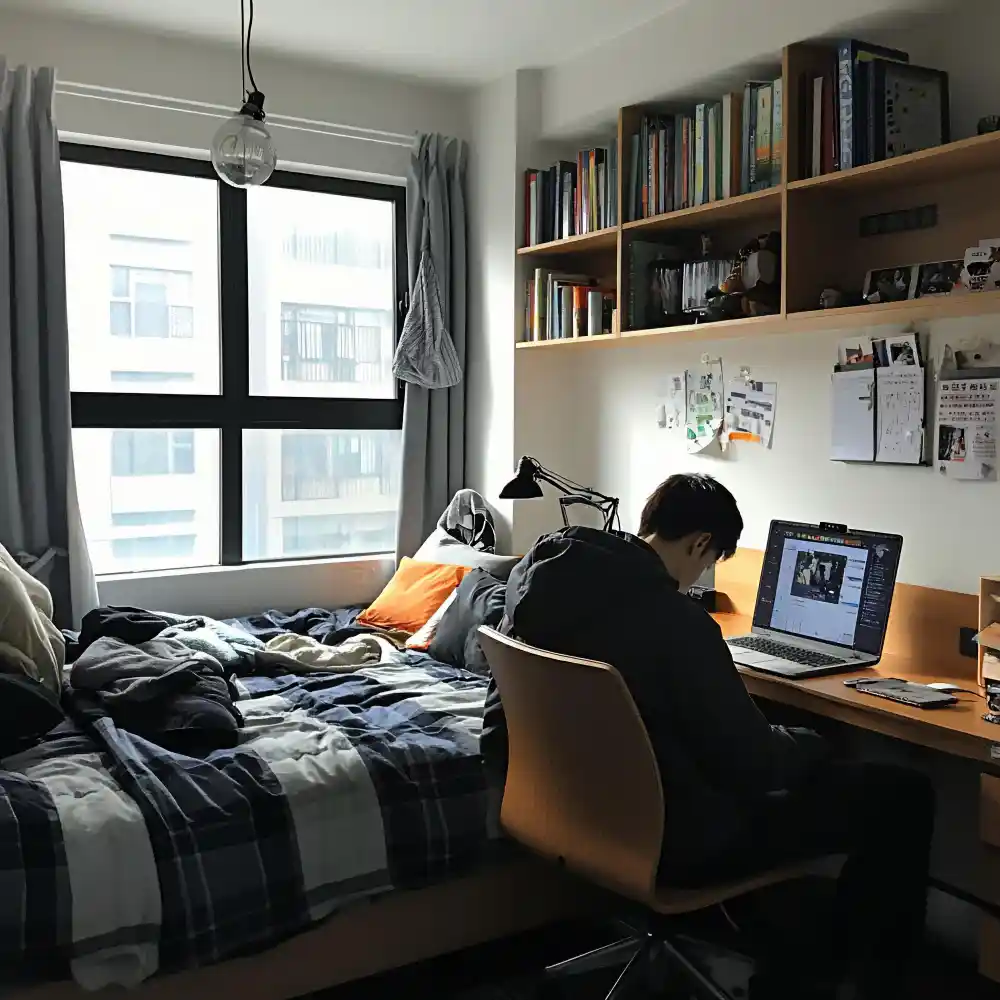
If the desk is fixed and can’t move, add a daylight-balanced LED desk lamp (5000K for focus work, 2700K for evening reading) and hang a mirror on the wall beside the window to bounce light deeper into the room.
DESIGNER TIP: Place a small, narrow mirror (12×36 inches) directly opposite the window — not beside it. The reflection doubles the apparent window depth and makes north-facing rooms feel far less dim.
4. Use the Back of the Door
The back of your door is the most overlooked storage surface in any dorm room. A 6-hook over-the-door organizer holds coats, bags, and towels. A slim over-the-door pocket organizer with clear pockets handles everything from toiletries to stationery to headphones. At 12–18 inches deep, these organizers disappear behind the door when it’s open and free up floor space permanently.
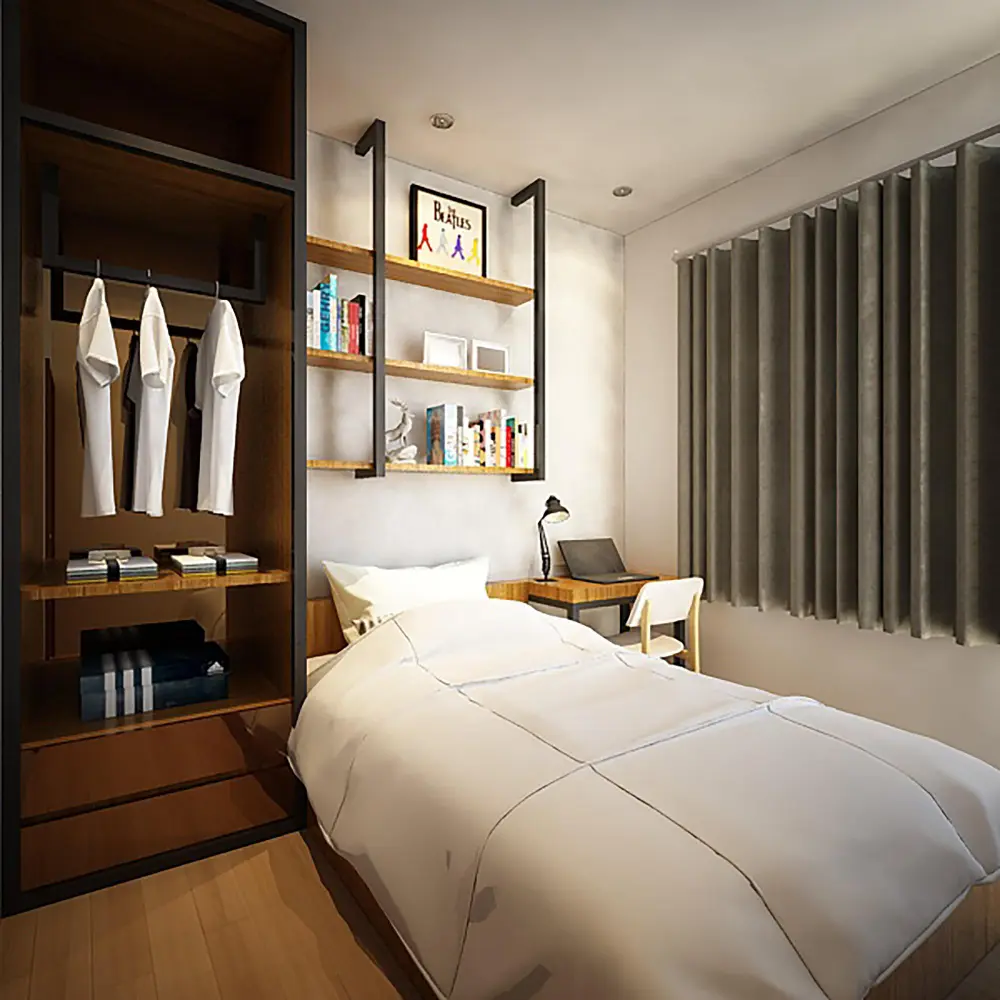
Rental Note: Over-the-door hooks require no drilling and leave no marks — they’re the most renter-safe storage upgrade in any dorm.
KEY TAKEAWAY: Get the layout right first — loft the bed, claim your zone with a rug, face the desk toward light, and load the door — before spending on decoration.
Tier 2 — Add Comfort and Personality
With the layout set, the next six ideas change how the room feels. These are the ones that make visitors say “this feels like a real room.”
5. Treat the Bed as the Room’s Centerpiece
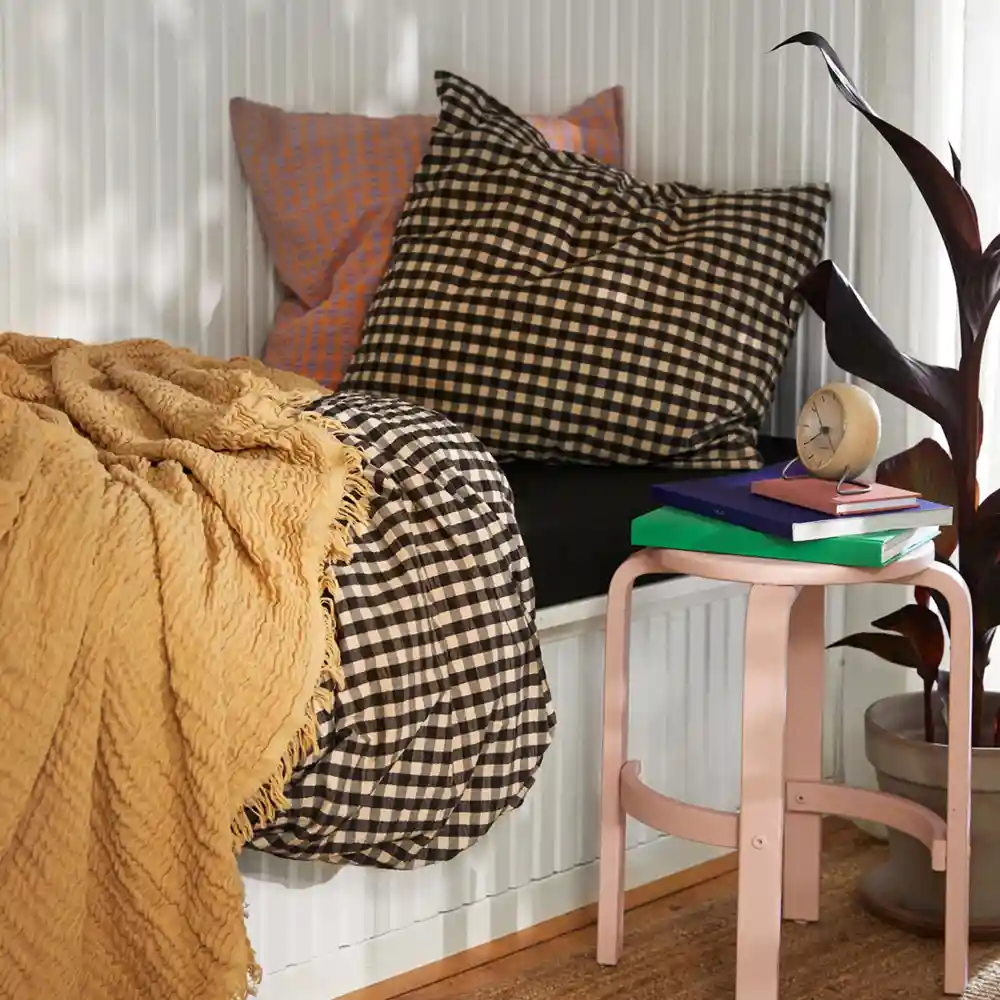
In a dorm room, the bed occupies roughly 25% of the total floor area. It is the first thing people see. A quality duvet in warm white, warm cream, or sage linen — layered with two Euro shams and a chunky knit throw — transforms the bed from furniture into the room’s anchor piece. Skip the matching-set approach. Mix a linen duvet with a cotton fitted sheet and a wool or knit throw in a contrasting texture.
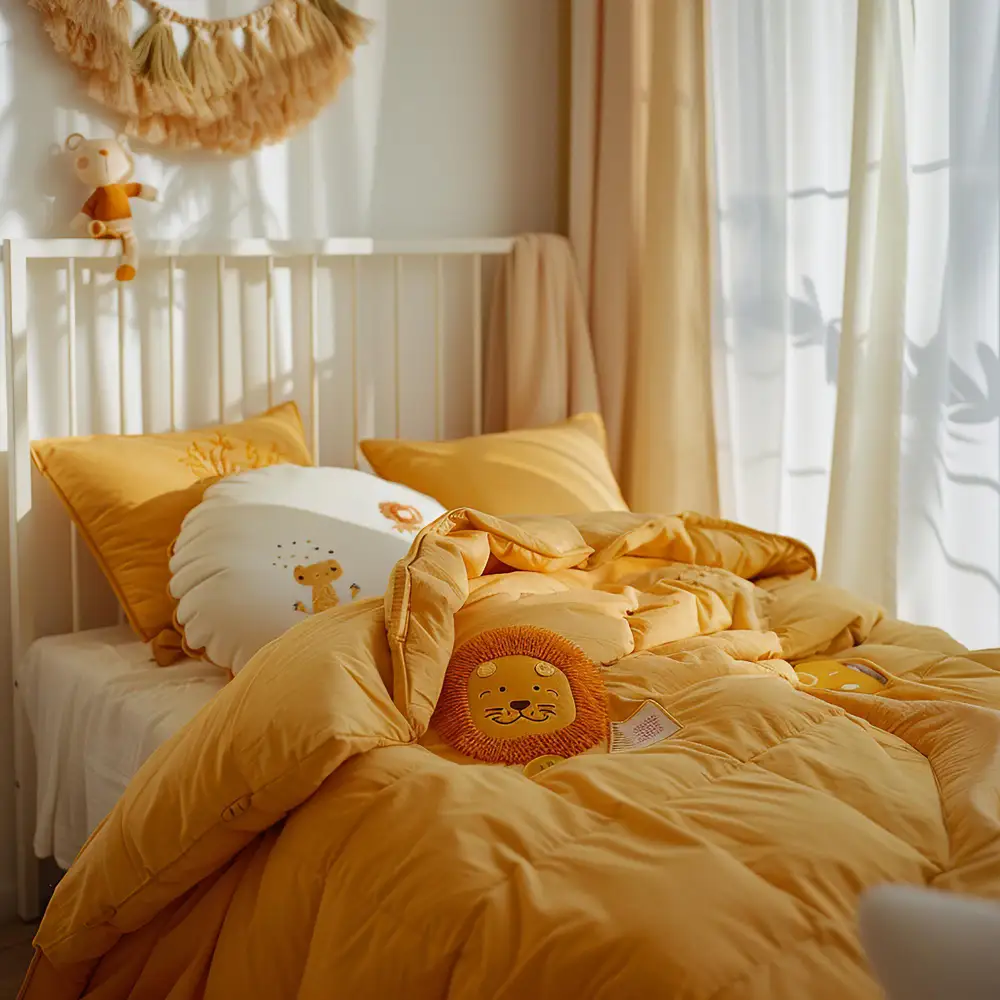
Material Note: Linen duvet covers weigh 150–250gsm — lighter than cotton, wrinkle-resistant, and softer after each wash. For a dorm room, a linen-cotton blend is the most forgiving choice.
6. Replace Harsh Overhead Light With Layered Warm Lighting
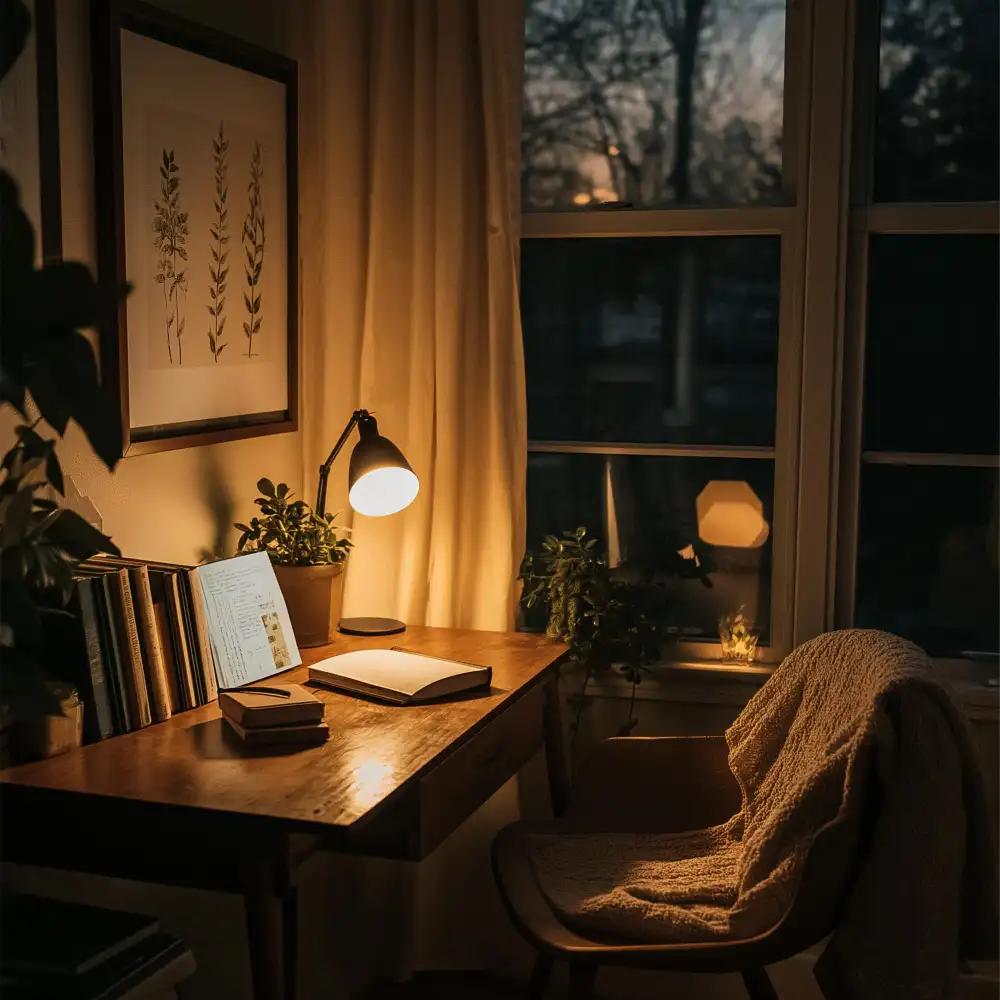
This is the single highest-impact change in any dorm room, and it costs less than $50. Most dorm rooms have one harsh overhead fluorescent or LED fixture with a color temperature around 4000–5000K — the same spectrum as a hospital corridor.
Replace the visual effect with two warm-toned USB or plug-in lamps at 2700K. One goes on the desk. One goes on the nightstand or a floating shelf beside the bed. Turn off the overhead. The room immediately reads warmer, quieter, and more personal.
Designer Rule of Thumb: 2700K warm white is the standard color temperature for residential living spaces — it mimics incandescent warmth and supports evening wind-down far better than the 4000–5000K range found in most institutional overhead fixtures. According to Feit Electric, 2700K is the recommended range for bedrooms and living areas.
7. Anchor the Bed Zone With a Rug
If you chose not to loft, a rug does even more work when the bed sits at standard height. A 5×8 rug placed so the front two legs of the bed rest on it anchors the sleeping zone and creates a distinct “room” within the room. Jute, low-pile wool, or a flat-weave cotton rug all work on hard floors and most thin dorm carpets.
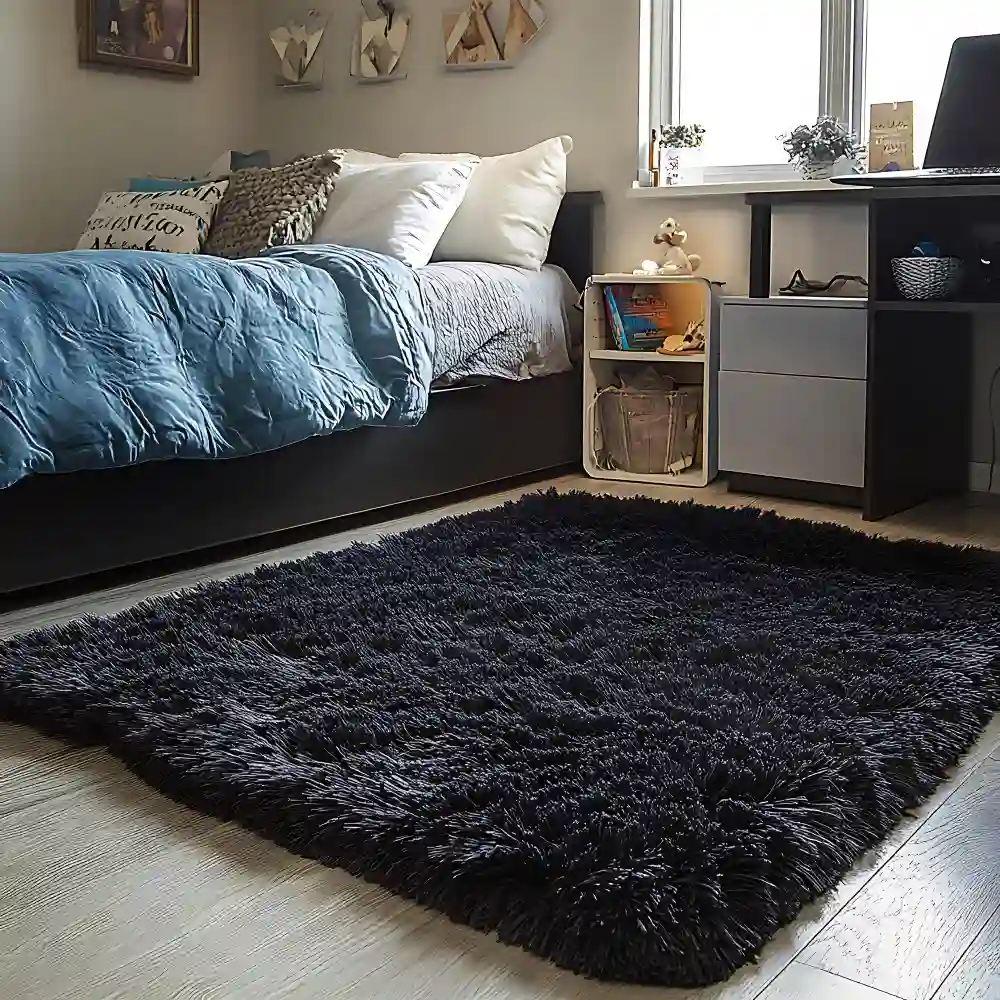
DESIGNER TIP: In a shared double room, keep your rug within your half of the space and your roommate’s area rug-free — the contrast clarifies the boundary without needing a conversation about it.
8. Add a Peel-and-Stick Accent Wall
The wall behind your bed is the room’s focal point. One roll of peel-and-stick wallpaper in a warm geometric, soft botanical, or abstract texture pattern completely changes the room’s personality without touching the paint. A 30-square-foot roll runs $20–$45 and covers most Twin XL headboard walls (roughly 38–42 inches wide).
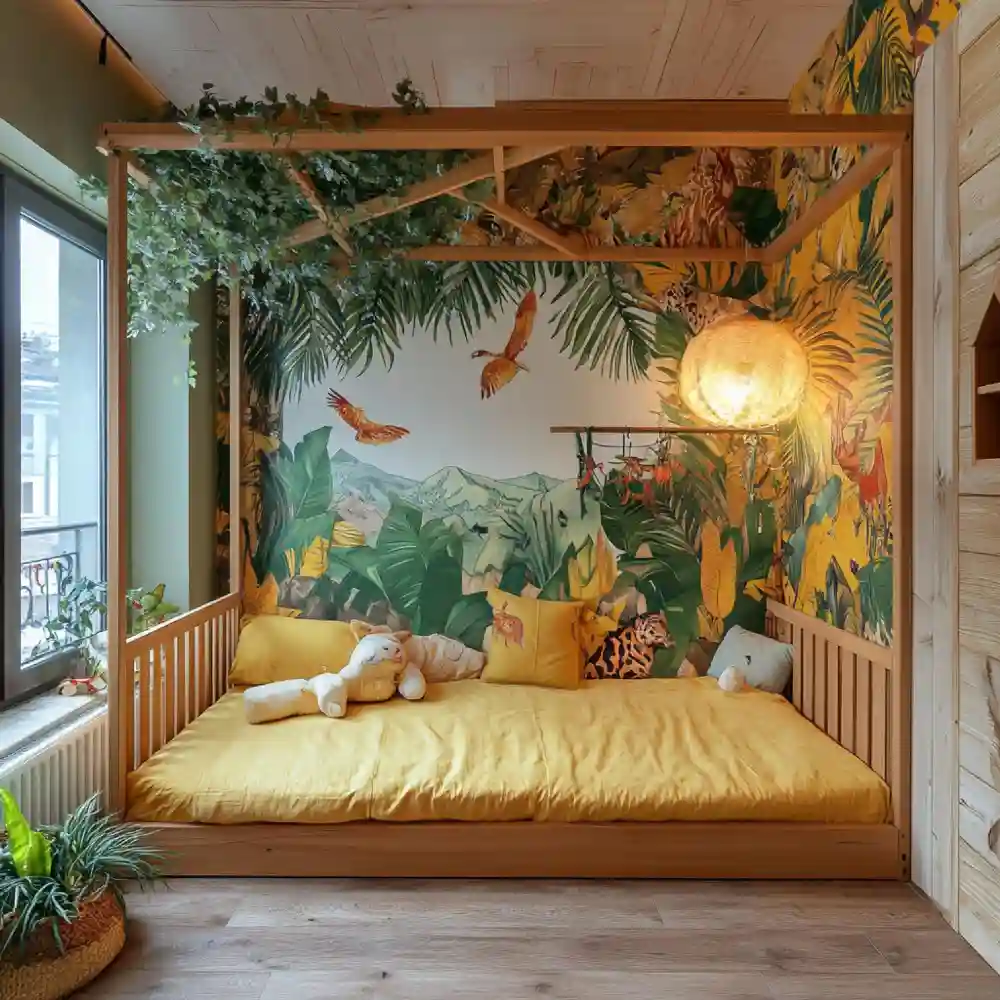
Check your college’s specific policy — most allow peel-and-stick wallpaper as a removable surface covering, but some restrict even Command strips on plaster walls. Explore the full range of wall treatment options in 13 Bedroom Accent Wall Ideas That Transform a Master Bedroom for inspiration you can adapt to any scale.
9. Add a Low-Maintenance Plant
A single plant makes a dorm room feel inhabited in a way no accessory can. Golden pothos, snake plants, and ZZ plants all thrive in low-light dorm conditions and require watering every 7–14 days. A 4-inch pothos in a cream ceramic pot on your desk costs under $10 and adds the one thing a dorm room is always missing: a living thing.

Keep it on a windowsill or desk, away from air conditioning vents which dry the soil rapidly. Avoid peace lilies and other humidity-dependent plants in rooms with aggressive HVAC systems.
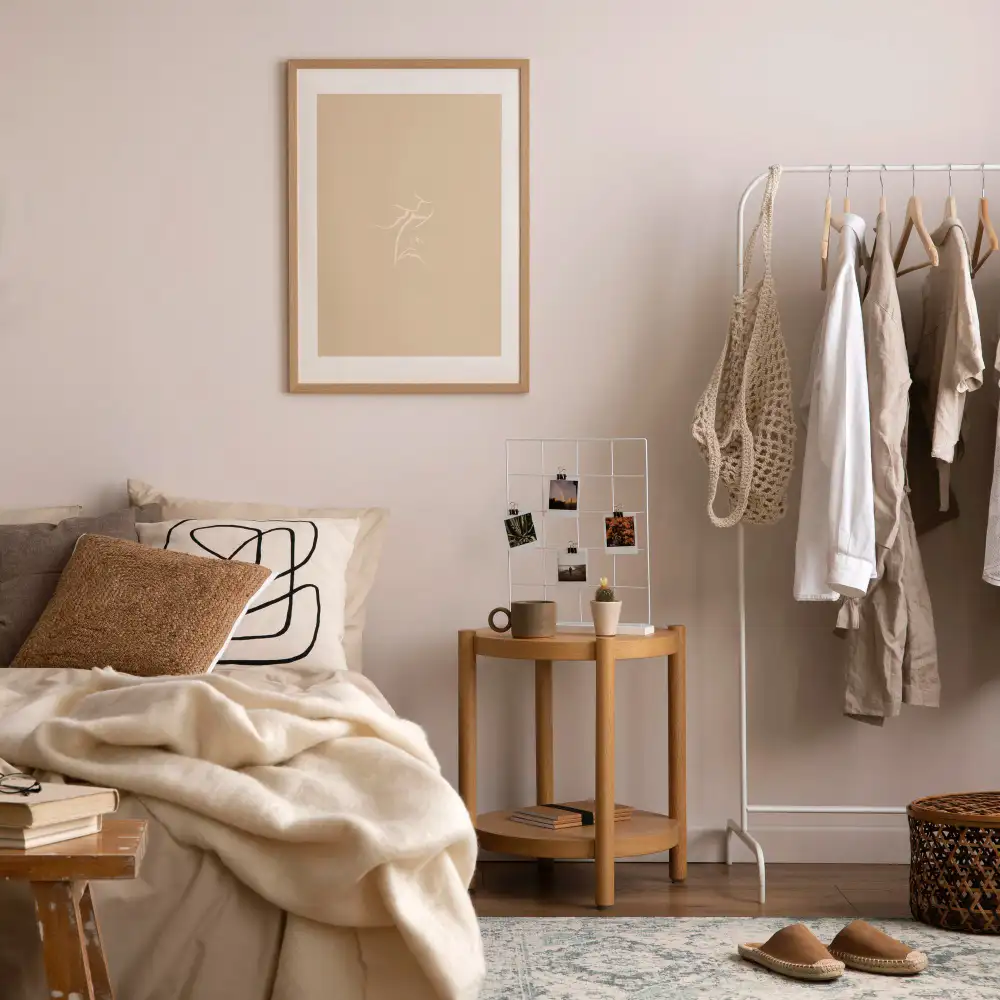
10. Build a Gallery Wall With Command Strips
A gallery wall of 6–10 prints, photos, and cards turns a blank dorm wall into a personal statement without a single nail. Source Note: According to 3M Command, Command Large Picture Hanging Strips hold up to 15 lbs per 4-pair set, and X-Large strips hold up to 20 lbs — more than enough for framed prints and lightweight canvases.
Group your prints in a rough rectangle before sticking anything up. Vary the frame sizes (mix 4×6, 5×7, and 8×10) and keep the color palette within two to three tones so the wall reads unified, not chaotic. Use painter’s tape to map the layout on the wall first.
KEY TAKEAWAY: Layered warm lighting, quality bedding, and a peel-and-stick accent wall deliver the most visible transformation per dollar in any dorm room.
Tier 3 — Storage and Finishing Touches
These six dorm room ideas handle the practical side: where things live and how the room looks fully put together.
11. Use Under-Bed Rolling Bins and Vacuum Bags
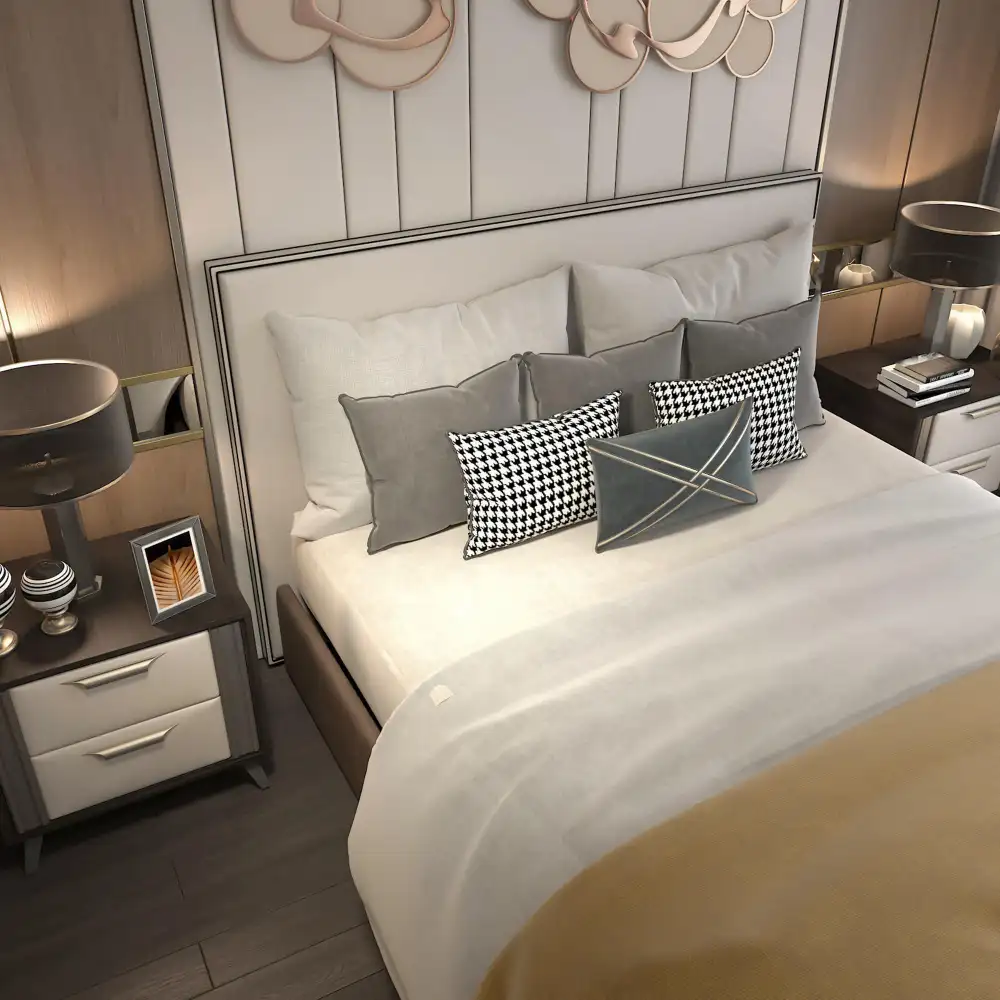
For non-lofted beds, the 6–7 inches of under-bed clearance is your primary off-floor storage. Flat rolling bins (4.5–6 inches tall) on casters slide in and out without lifting. Vacuum compression bags reduce bulky items (extra bedding, winter coats, off-season clothing) by up to 60% in volume.
DESIGNER TIP: Label every bin with a folded index card tucked inside the front so you can identify contents at a glance without pulling the whole bin out.
For more storage strategies that work in constrained spaces, 15 Small Bedroom Ideas for Teens That Maximize Every Square Inch applies directly to dorm conditions — the under-bed and vertical storage logic is identical.
12. Add Cube Shelving as a Room Divider and Storage
A 2×2 or 2×4 cube shelving unit (KALLAX-style) placed perpendicular to the wall at the edge of your zone acts as both a room divider and open storage. Load the cubes with fabric bins, books, and small objects. Position a small lamp on the top to make the shelf itself a light source.
The footprint is roughly 30 inches wide by 15 inches deep — narrow enough not to eat floor space, wide enough to create a genuine visual separation between your desk zone and your sleeping zone. Browse Bedroom Decor Ideas: Furniture, Accents and Styling for more ideas on how furniture placement defines zones in a small room.
13. Add a Leaning Mirror
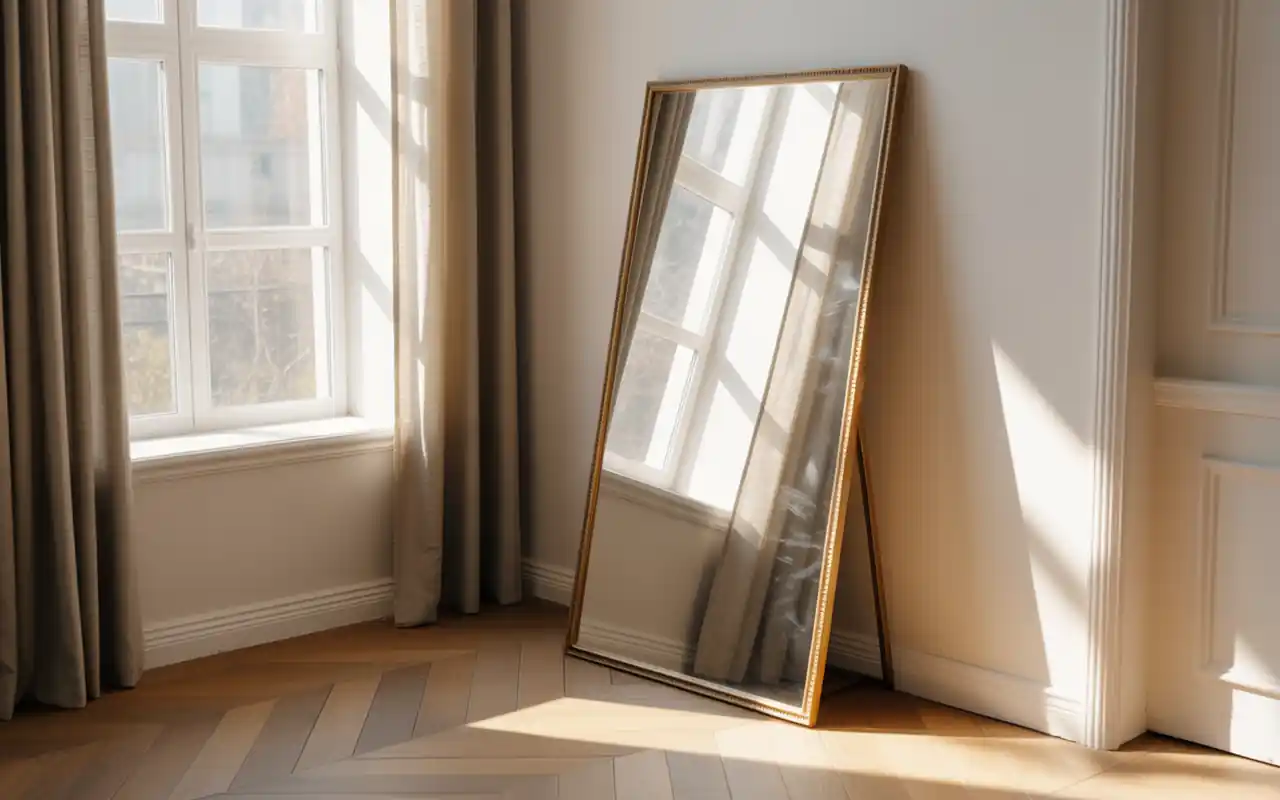
A leaning full-length mirror (typically 12×48 to 14×60 inches) resting against the wall takes up no real floor space and makes the room feel twice as wide. Position it at a slight outward angle on the wall beside the door or beside your desk. The reflection catches the natural light from the window and pushes it across the room.
For more on how mirrors and light work in tight spaces, 14 Teen Boy Bedroom Ideas That Are Cool, Functional, and Clean shows how the same leaning-mirror and natural-light principles apply in any compact shared room.
14. Create a Mini Vanity Corner
A small floating shelf or narrow table (18–24 inches wide) against the wall beside the closet or window creates a dedicated vanity corner. Add a small round mirror hung with a Command strip, one USB-powered lamp at 2700K, and a ceramic tray for daily items. Keep the surface edited: lamp, mirror, tray, and one small plant or candle.
For more vanity ideas adapted to tight spaces, 12 Chic Vanity Ideas for Bedroom Corners That Save Serious Space is worth bookmarking.
15. Add a Lounge Chair for a Second Zone
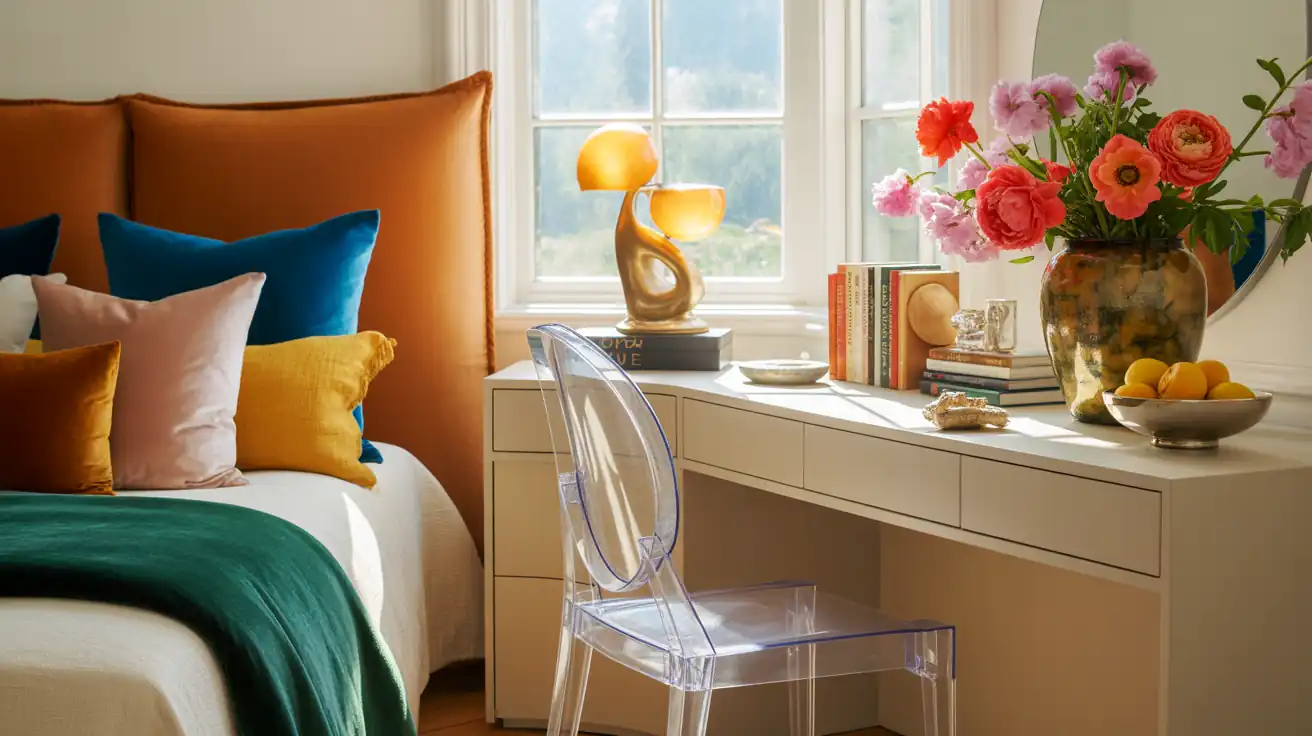
One accent chair — a saucer chair, a small boucle tub chair, or an inexpensive rattan chair — creates a second zone in the room entirely. It gives you somewhere to sit that isn’t your desk chair or your bed, and it makes the room read as a living space rather than a sleeping space.
Place it in the corner beside the door or at the foot of the bed, with a floor lamp behind it at 55–65 inches from the floor. The chair-and-lamp pair anchors the corner and makes the room feel genuinely layered.
DESIGNER TIP: A saucer chair folds flat and slides into a closet for exam periods when you need the floor space back. For students in very compact rooms, this reversibility matters.
For more ideas on how to think about bedroom layout beyond the bed, Bedroom Color Ideas: Palettes, Schemes and Inspiration and Cozy Bedroom Ideas That Feel Warm and Luxurious both show how layering zones changes the feel of a room.
16. Create a Pegboard or Corkboard Vision Wall
A corkboard or pegboard mounted with Command strips on the wall above your desk closes the loop between the functional and personal sides of the room. Corkboard tiles (12×12 inches, 4-tile pack) cover roughly 2 square feet and cost under $15. Load them with photos, cards, a schedule, and small accessories hung on pegboard hooks.
This is the only idea in the list that serves double duty as both a productivity tool and a decor piece — and it’s the one spot in the room that genuinely changes week to week as your semester unfolds.
For more ideas on making a bedroom wall reflect personality without permanent commitment, Bedroom Wall Decor Ideas for Above the Bed covers a wide range of renter-safe approaches.
KEY TAKEAWAY: Under-bed storage, a cube shelf divider, a leaning mirror, and a lounge corner are the four finishing moves that make a dorm room feel like a real home.
Dorm Room Styles & Themes
Once the layout works, the look is what makes the room yours. The most-searched dorm room styles right now fall into a handful of clear directions — guys’ rooms built around function, the pink-and-green and purple palettes dominating move-in season, relaxed boho, and pared-back chic. Pick one theme and let it guide every purchase, because a consistent dorm room theme is what separates a designed space from a pile of trendy objects. If you’re still deciding, the Bedroom Color Ideas: Palettes, Schemes and Inspiration guide is a fast way to test a palette before you commit.
Whatever direction you choose, keep it renter-safe: peel-and-stick, Command strips, and textiles do all the heavy lifting, so nothing you add costs you your deposit at move-out.
Dorm Ideas for Guys
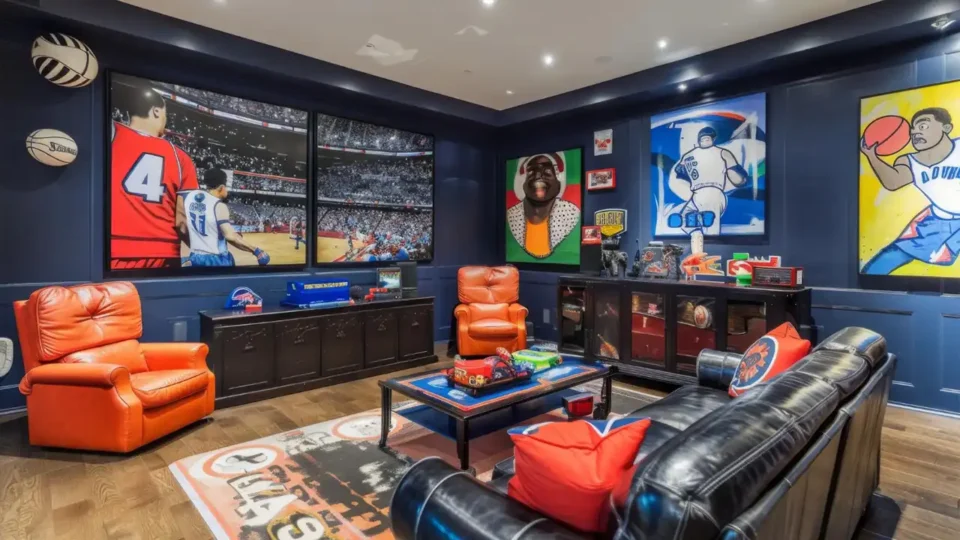
A guys’ or boys’ dorm reads best when it leans into function and a tight, low-contrast palette instead of posters alone. Think charcoal or navy bedding, a warm wood-tone desk riser, one graphic textile (a flag, a tapestry, a team throw), and matte-black or brushed-metal hardware on lamps and organizers. Two 2700K lamps still beat the overhead light here — warm light flatters a dark palette instead of flattening it.
For a fuller breakdown of masculine layouts, storage, and color that translate straight to a dorm, the 14 Teen Boy Bedroom Ideas guide covers the same principles at bedroom scale.
Pink & Green Dorm
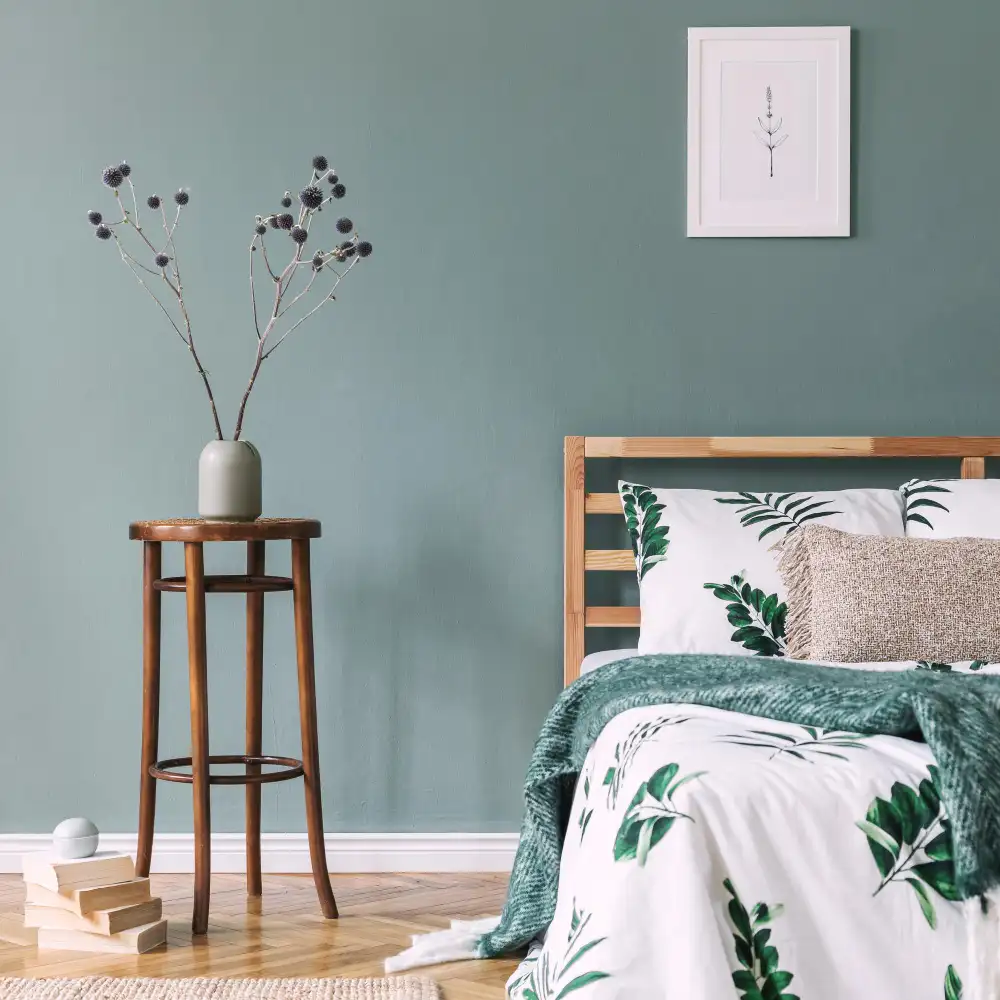
Pink and green is the standout dorm color trend this year, and it works because it’s really sage-plus-blush — a muted green grounds the room while soft pink keeps it warm. Start with a sage or blush duvet, add the second color in a peel-and-stick accent wall or a gallery of prints, then repeat it once more in a rug or throw so the palette reads intentional. Keep whites and naturals (rattan, jute, light wood) as the base so the two colors don’t compete.
Faux eucalyptus or a low-light pothos reinforces the green with zero maintenance, and dried florals carry the pink into three dimensions on a shelf or desk.
Purple Dorm
A purple dorm can go two ways: soft lavender for a calm, airy room, or plum-and-eggplant for something moody and dramatic. Lavender pairs beautifully with warm brass and cream; plum wants deeper contrast — charcoal, gold, and warm wood. One warning that trips people up: purple is unusually sensitive to color temperature, so stick to 2700K bulbs. Cool white light turns most purples grey and muddy.
Layer the color through bedding, a single accent wall, and an LED strip tucked behind the headboard or desk for the after-dark glow this aesthetic is known for.
Boho Dorm
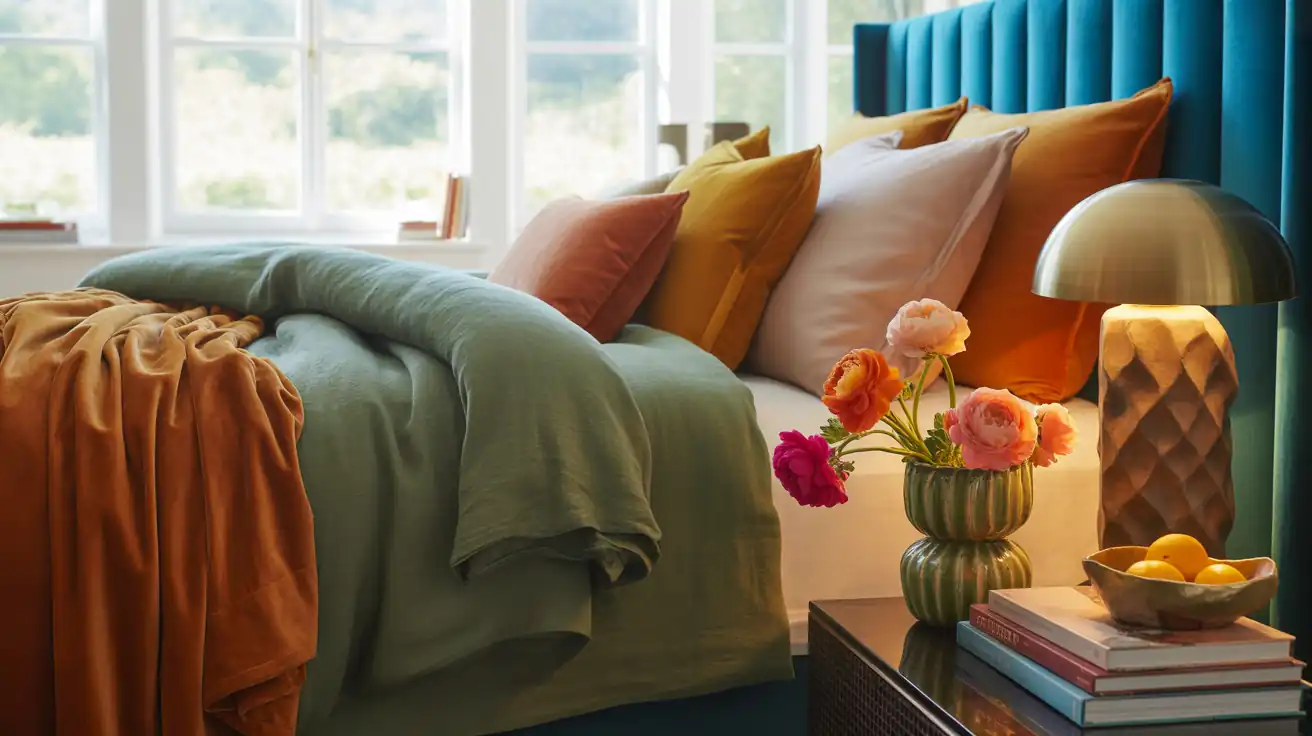
Boho is the most forgiving dorm theme because it’s built on warm neutrals and texture rather than a strict color rule. Layer a jute or low-pile patterned rug, a macramé wall hanging on Command hooks, a rattan or cane accent (a mirror frame, a basket, a small shelf), and as many plants — real or faux — as your light allows. The look thrives on mismatched, collected pieces, which makes it ideal for a budget and for thrifted finds.
Warm string lights and a couple of floor cushions turn the under-bed or corner zone into the lounge spot boho rooms are known for.
Chic Dorm
A chic dorm is the minimal, elevated end of the spectrum — one restrained palette, matching textiles, and a few polished details instead of a lot of stuff. Stick to a two-tone scheme (cream and taupe, white and black, blush and gold), match your bedding to your curtains, and add metallic accents in a leaning mirror frame, a lamp base, or a picture ledge. The discipline is in editing: fewer, better pieces, all in the same finish.
A small mirrored or lacquer tray on the desk and a compact vanity corner finish the look — the 12 Chic Vanity Ideas for Bedroom Corners guide shows how to build one in a tight footprint.
Desk & Hutch Setup
The desk is where dorm square footage is won or lost, and a desk hutch is the single best upgrade. A hutch — or a simple two-tier riser with a wall shelf above it — lifts your monitor to eye level, frees the desktop for actual work, and turns the vertical space above the desk into storage for books, supplies, and a small plant. Add a clamp-on task lamp to keep the surface clear and an under-desk cable tray to kill visual clutter.
If a built hutch won’t fit your unit, stack a monitor riser, a pair of desktop shelves, and a pegboard on the wall for the same eye-level, vertical result — no drilling required.
DIY Dorm Decor on a Budget
DIY dorm decor is where personality gets cheap. A few high-impact projects: a no-sew throw-blanket headboard mounted on a tension rod ($20–$30), a photo-and-fairy-light gallery clipped to twine with mini pegs (under $15), fabric-wrapped canvas panels for a custom accent (about $10 a panel), and a contact-paper desk-drawer refresh. Each one reads custom without touching a wall permanently, and these dorm decor ideas scale up or down to whatever budget you’re working with.
For the layer that ties any DIY theme together, these dorm bedding ideas show how the right Twin XL bedding makes even budget projects look pulled-together.
What Makes a Dorm Room Feel Like a Hospital?
These are the four most common mistakes that keep dorm rooms looking institutional no matter how much you buy.
❌ Overhead light only → ✅ Add two 2700K lamps and leave the overhead off in the evening. The overhead light is functional — use it for cleaning, not living.
❌ Matching everything → ✅ Mix textures and tones. A matching bedding set reads as a display, not a home. A linen duvet, a knit throw, and cotton pillowcases in related but different tones reads as layered and chosen.
❌ Leaving walls completely bare → ✅ Even three pieces of art in the same palette change the room entirely. A gallery wall, a peel-and-stick panel behind the bed, or a large poster in a proper frame all work.
❌ Ignoring the floor → ✅ A rug defines the space. On hard floors or thin institutional carpet, a 5×8 rug under the bed zone makes the room feel like an apartment, not a cell.
KEY TAKEAWAY: The four things that keep dorm rooms looking institutional are overhead-only lighting, matching everything, bare walls, and no rug — fix any two of them and the room shifts.
What Does Decorating a Dorm Room Cost?
A dorm room doesn’t need to cost much to feel good. The highest-impact items are almost always the cheapest.
| Project | Estimated Cost | Impact Level |
|---|---|---|
| Two warm-toned USB/plug-in lamps (2700K) | $25–$60 | Very High |
| Linen-blend duvet cover + throw | $40–$120 | Very High |
| 5×8 jute or low-pile rug | $35–$120 | High |
| Peel-and-stick wallpaper (1 roll) + Command strips gallery | $25–$70 | High |
Best First Upgrade: Replace the overhead light with two 2700K lamps — it costs under $60 and changes the room’s atmosphere more than any other single purchase.
Skip for Now: Matching desk sets, decorative trays, and themed accessories — buy the foundational pieces first, then add personality in small layers once the room has a base.
KEY TAKEAWAY: The two lighting upgrades and a quality duvet cost under $120 combined and deliver the biggest visible shift in any dorm room.
Frequently Asked Questions
Conclusion
Dorm room ideas work when they start from the inside out: layout first, light second, texture and personality third. Most of the ideas on this list cost less than $50 individually, require no tools, and reverse cleanly at the end of the year. The ones that make the biggest difference — lofting the bed, replacing the overhead light, choosing quality bedding — have nothing to do with aesthetics and everything to do with how a small room functions.
Editorial field note: A dorm room with a lofted bed, a warm-toned lamp on the desk, a jute rug on the floor, and a gallery wall of personal photos looks nothing like a hospital. It looks like someone lives there — which is exactly the point. Dorm room ideas like these don’t ask for a big budget or a design background. They ask you to make three or four deliberate choices before you fill the space with things.
For more on bedroom styling across every room type and life stage, visit 101homedecor.com or browse all our bedroom ideas and inspiration in the bedroom archive.
More Bedroom Ideas by Room Type
- 14 Apartment Bedroom Ideas That Make a Rental Feel Like Home
- 14 Teen Boy Bedroom Ideas That Are Cool, Functional, and Clean
- 15 Men’s Bedroom Ideas That Feel Modern and Masculine
- 15 Rental Bedroom Ideas That Look Stylish Without Risking Your Deposit
- 15 Studio Apartment Bedroom Ideas That Make One Room Feel Like Two
- 15 Women’s Bedroom Ideas That Feel Elegant, Feminine, and Fully Yours
- 16 One Bedroom Apartment Ideas That Feel Bigger and Look Expensive
- 16 Teen Girl Bedroom Ideas for Every Aesthetic and Personality
- Cozy Master Bedroom Ideas That Feel Warm and Inviting
- Luxury Master Bedroom Ideas for a Hotel-Worthy Retreat