TL;DR
- Use the dead space under your bed first — it is the biggest hidden zone in most rooms.
- Go vertical with wall shelves, hooks, and tall units to free up the floor.
- Pick closed storage over open bins so the clutter actually disappears from view.
- Let one or two pieces, like a storage bench or headboard with shelves, do double duty.
- Treat decluttering as styling — empty surfaces are what make a room look expensive.
Why Smart Storage Is the Difference Between Calm and Cluttered?
Open a hotel room closet and notice what you don’t see: laundry piles, loose chargers, or a tower of folded sweaters on a chair. The room feels calm because the storage is built in and hidden. Your bedroom can work the same way. The goal is not more bins. The goal is fewer visible things and smarter hiding spots.
Part of our guide to Bedroom Decor & Accent Pieces.
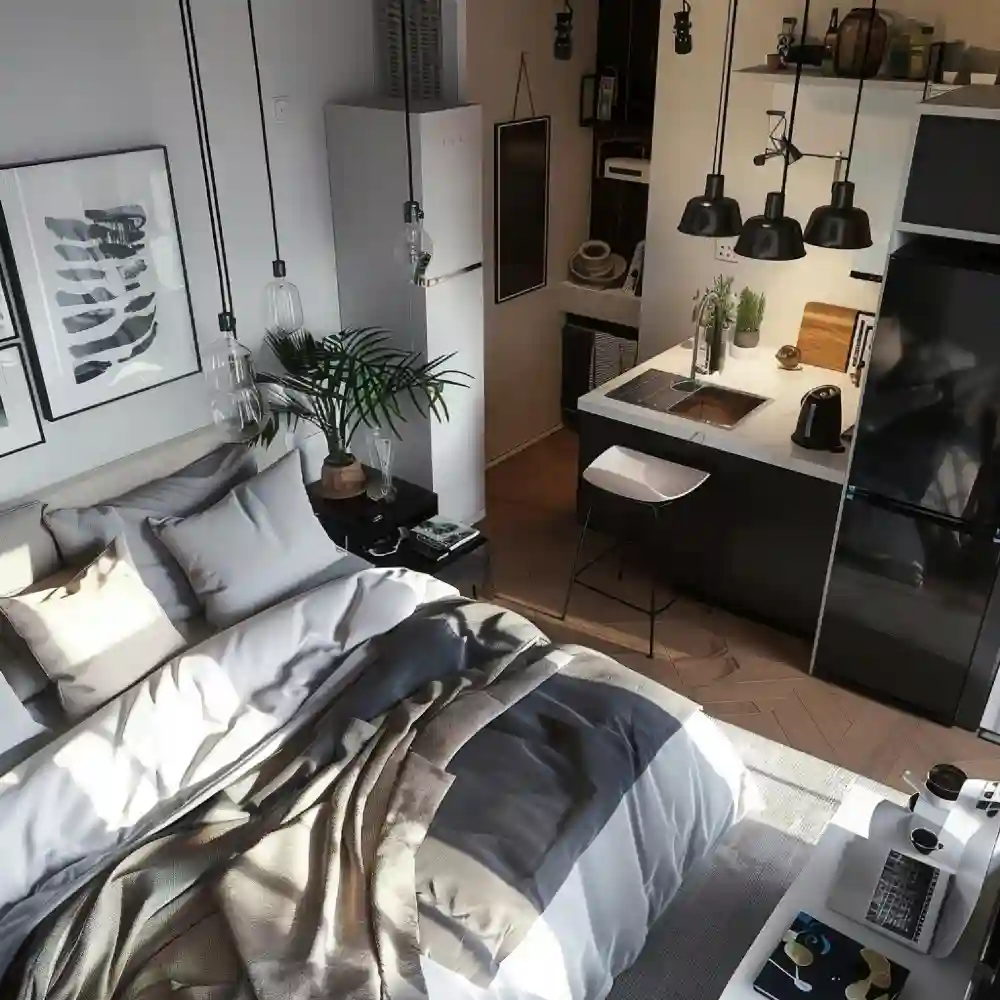
Bedroom storage ideas work best when they pull clutter out of sight and keep your surfaces clear. The smartest fixes use three zones most people ignore: the space under the bed, the empty walls, and the inside of the closet. Closed storage beats open shelves for hiding mess. One or two double-duty pieces, like a storage bench, do the heavy lifting. Start there before you buy a single new container.
For a wider room refresh, you can pair these fixes with our home decor inspiration and the calm, layered look in these cozy bedroom ideas that feel warm and luxurious. A clutter-free room reads as more expensive than an expensive one full of stuff. Bookmark this guide for quick reference.
KEY TAKEAWAY: Stylish bedroom storage hides clutter in three zones — under the bed, on the walls, and inside the closet — so surfaces stay clear.
Bedroom Storage Checklist
- Measure floor-to-frame clearance under your bed before buying any bin or drawer.
- Choose closed storage (lidded bins, drawers, cabinets) over open baskets to truly hide clutter.
- Anchor any wall shelf or tall unit into studs, not drywall alone, for safety.
- Add at least one double-duty piece, like a storage bench or nightstand with a drawer.
- Keep your largest surface — the dresser top or bedside table — at least half empty.
- Match storage finishes to your bed or trim so units blend in instead of standing out.
- Declutter first; only buy containers for what you decide to keep.
KEY TAKEAWAY: A short checklist — measure, choose closed storage, anchor safely, and declutter first — prevents storage that adds to the mess.
Editorial field note: A bedroom with one overflowing nightstand and a chair buried in clothes usually feels chaotic, even when it is clean. Clear the chair, add a slim dresser with a drawer for the loose items, and keep one lamp and a book on the nightstand. The room looks settled before anything else changes.
Start Under the Bed — Your Biggest Hidden Zone
The space under your bed is the largest unused storage area in most bedrooms. It is hidden, easy to reach, and perfect for seasonal and bulky items. Used well, it clears your closet and floor at the same time. Used badly, it becomes a dusty catch-all you forget about. The trick is matching the container to your clearance and keeping it closed.
Flat Rolling Bins for Off-Season Clothes
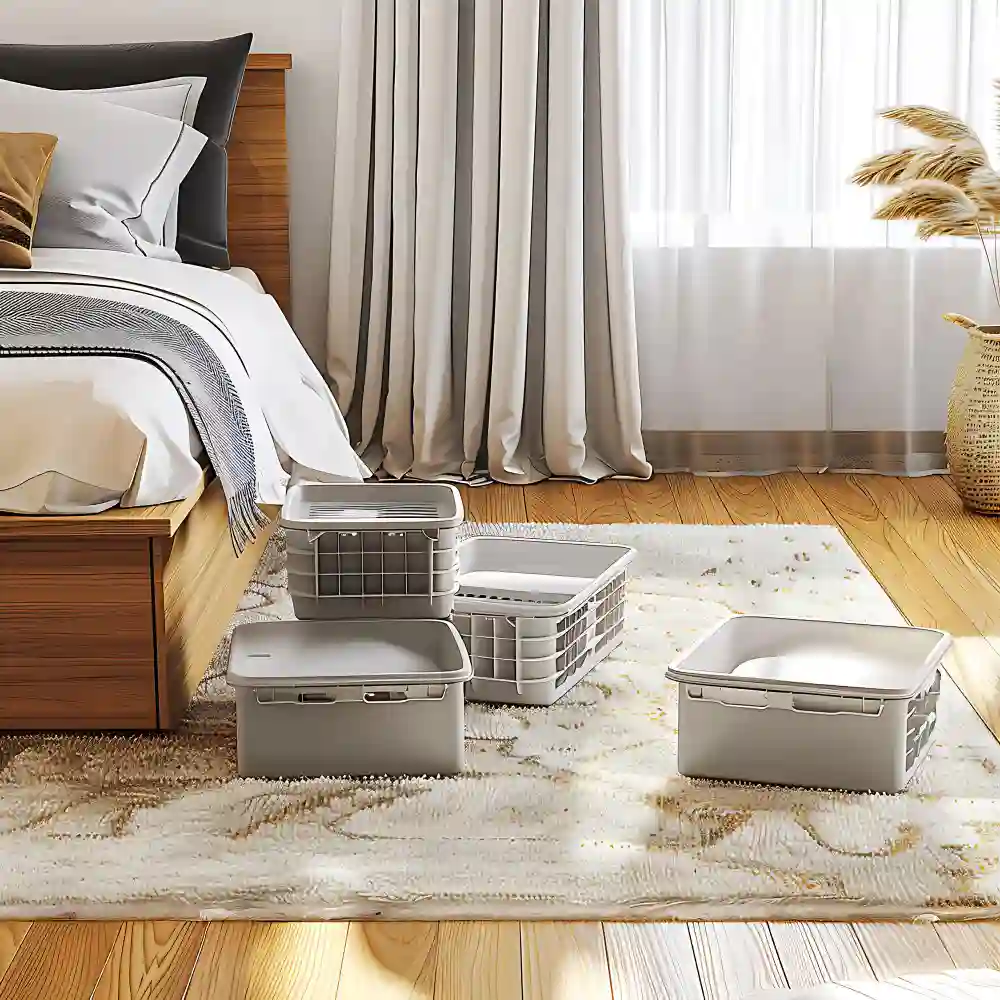
Low rolling bins turn dead floor space into a hidden closet. Measure from the floor to the bottom of your bed frame first, then subtract one inch so the bin slides in and out without scraping. Most platform beds give 6 to 7 inches of clearance, so look for shallow bins around 4.5 to 6 inches tall. Pick lidded bins in a matte neutral, not clear plastic — clear lets you see the clutter, which defeats the point. Store sweaters, spare bedding, and off-season shoes here.
DESIGNER TIP: Add casters or buy bins with wheels so a heavy load glides out on carpet instead of catching and tipping.
KEY TAKEAWAY: Flat lidded bins under a 6-to-7-inch platform bed hide off-season clothes without touching your closet or floor space.
A Lift-Up Ottoman Storage Bed
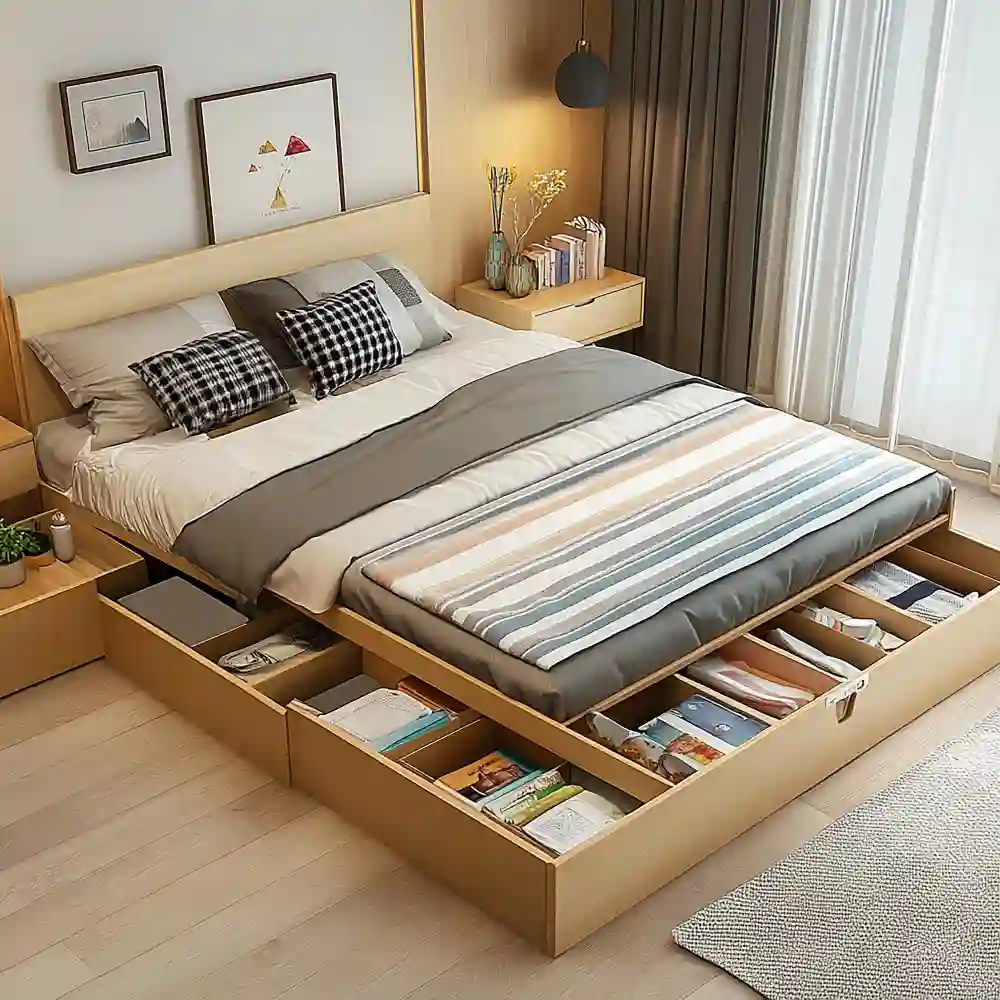
A lift-up storage bed turns the entire footprint under your mattress into one deep, hidden compartment. The mattress platform rises on a gas-lift hinge, so you reach everything with one pull — no crawling on the floor. Gas-lift and ottoman beds typically run $230 to $500 for a queen or king, which is reasonable for the storage you gain. This is the best fix for a small bedroom with no room for a dresser. It swallows duvets, pillows, and luggage and leaves your surfaces clear.
KEY TAKEAWAY: A lift-up ottoman storage bed converts the whole under-bed footprint into one deep compartment you reach with a single pull.
Built-In Bed Drawers for Everyday Access
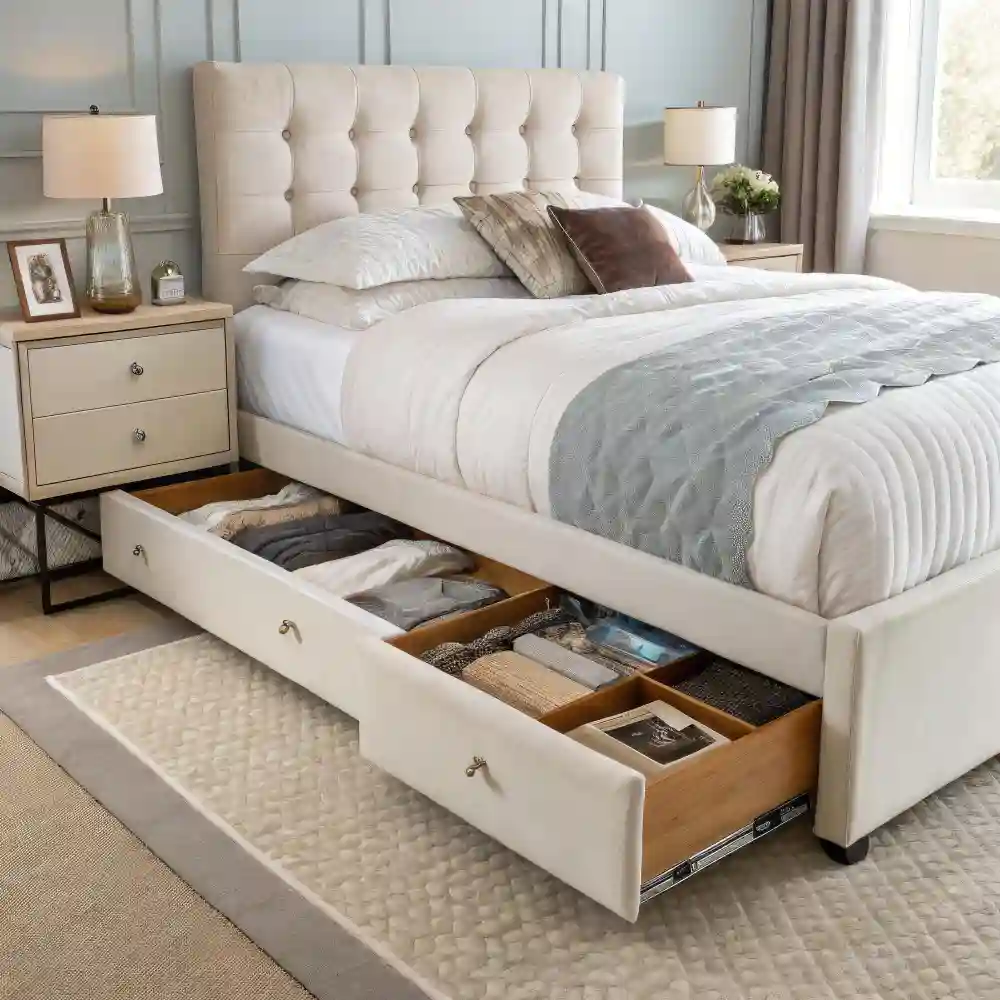
Beds with built-in side drawers give you dresser-style storage without the dresser. The drawers pull straight out from the base, so folded clothes stay flat and easy to grab daily. This works well when you want the look of a low platform bed but still need somewhere to put pajamas, T-shirts, and gym clothes. Choose a frame in warm oak or a painted finish that matches your nightstands. Two to four drawers per side hold a surprising amount and keep a small dresser out of the room entirely.
DESIGNER TIP: Reserve the deepest drawer for bulky knits and the shallow ones for folded basics, so nothing gets crushed at the bottom.
KEY TAKEAWAY: Built-in bed drawers replace a dresser entirely, keeping folded everyday clothes flat and within easy reach.
A drawer bed also helps when two people share a tight room, an idea we cover further in these small bedroom ideas for couples that stop the clutter wars.
Go Vertical — Free the Floor With Walls and Height
Floor clutter is what makes a bedroom feel small and messy. The fix is to move storage up. Walls, the backs of doors, and tall narrow units hold a lot without eating square footage. Vertical storage also draws the eye upward, which makes the ceiling feel higher and the room feel calmer. Keep these pieces slim and anchored, and the floor stays open.
Floating Wall Shelves Above the Dresser or Bed
Floating wall shelves add storage and display space without a single piece of furniture on the floor. Mount them into wall studs, not drywall anchors alone — a shelf on two studs holds roughly 90 to 100 pounds, while drywall anchors alone manage only 10 to 25. Safety Note: Always find the studs with a stud finder and drive screws into them before loading any wall shelf with books. Style each shelf with a few books, a small plant, and one object — not a crowd. A nearly empty shelf reads as styled; a packed one reads as storage overflow.
KEY TAKEAWAY: Floating shelves anchored into two studs hold 90 to 100 pounds and add storage without using any floor space.
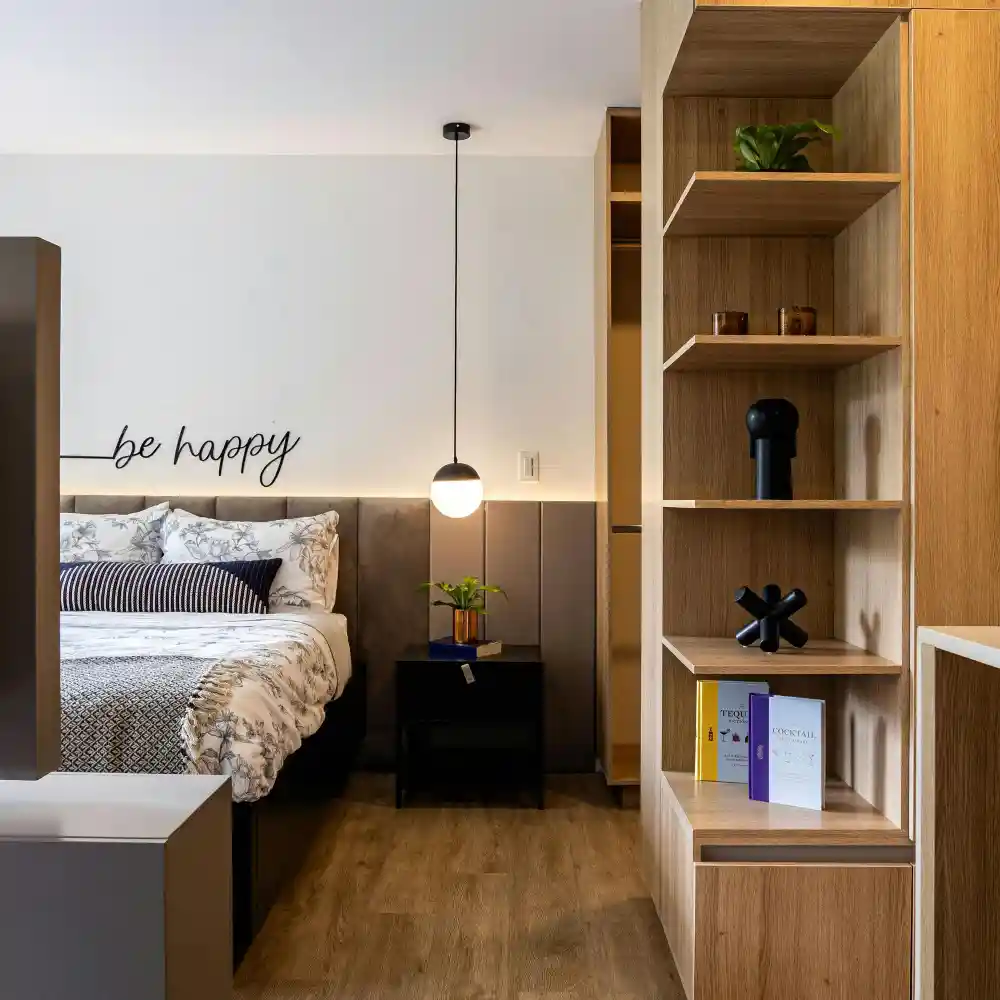
A Tall Narrow Cabinet or Bookcase
A tall, slim cabinet uses vertical space that a wide dresser wastes. A unit 12 to 16 inches deep and 5 to 6 feet tall fits in a corner or beside a doorway and holds as much as a dresser twice its width. Choose a closed-front cabinet in a finish that matches your bed frame, so it blends into the room instead of shouting “storage.” The closed doors are the key — they hide folded clothes, boxes, and odds and ends completely. This is one of the most space-smart bedroom storage ideas for narrow rooms. If you also need a getting-ready spot, these chic vanity ideas for bedroom corners that save serious space use the same corner-first logic.
DESIGNER TIP: Place the tall cabinet on the same wall as your door so it sits out of your sightline when you walk in, keeping the room’s first impression open.
KEY TAKEAWAY: A tall, slim closed-front cabinet stores as much as a wide dresser while using a fraction of the floor.
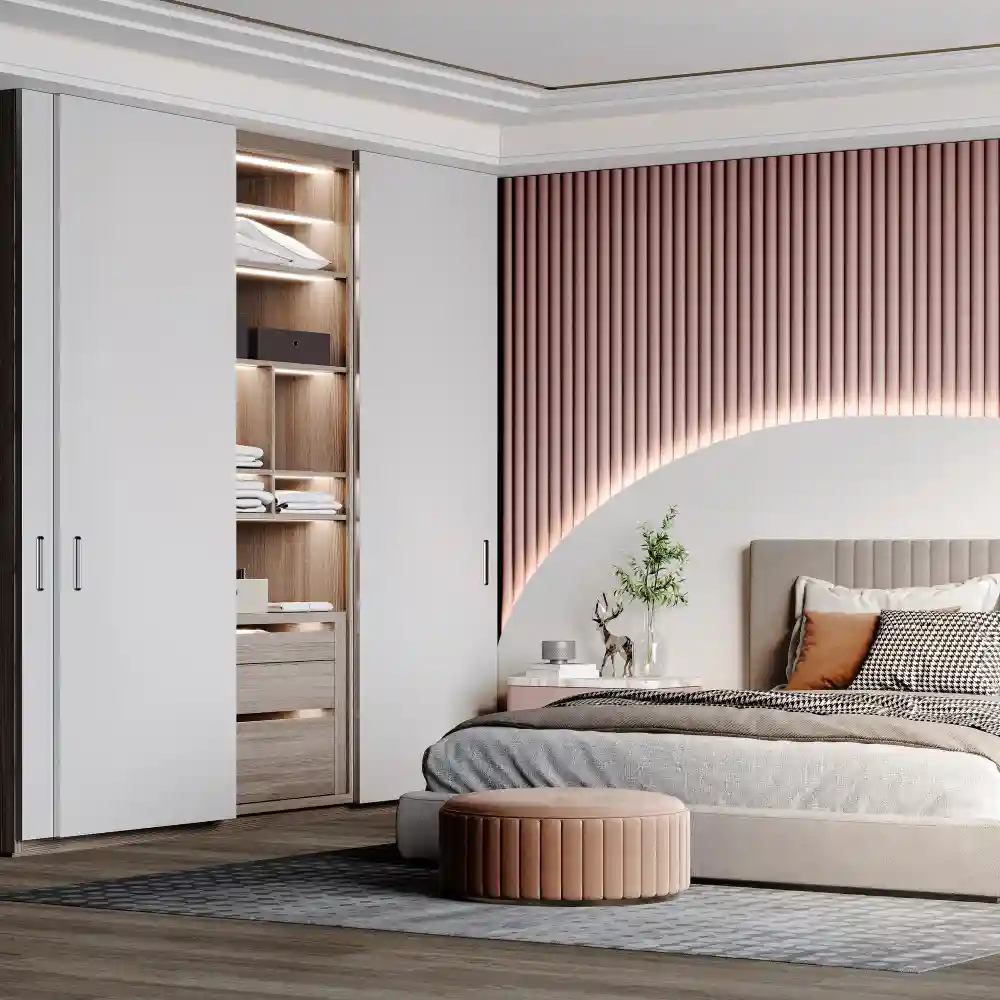
Over-the-Door and Back-of-Door Hooks
The back of your bedroom or closet door is free real estate most people ignore. A row of hooks or an over-the-door organizer holds robes, bags, belts, and tomorrow’s outfit, which keeps them off the chair and floor. Choose matte black or brushed brass hooks to match your other hardware so the row looks planned, not added. Keep it to items you use daily — a back-of-door zone works only when it stays to five or six things, not a tangled pile.
KEY TAKEAWAY: Hooks or an organizer on the back of the door hold daily-use items, keeping the floor and chair clear.
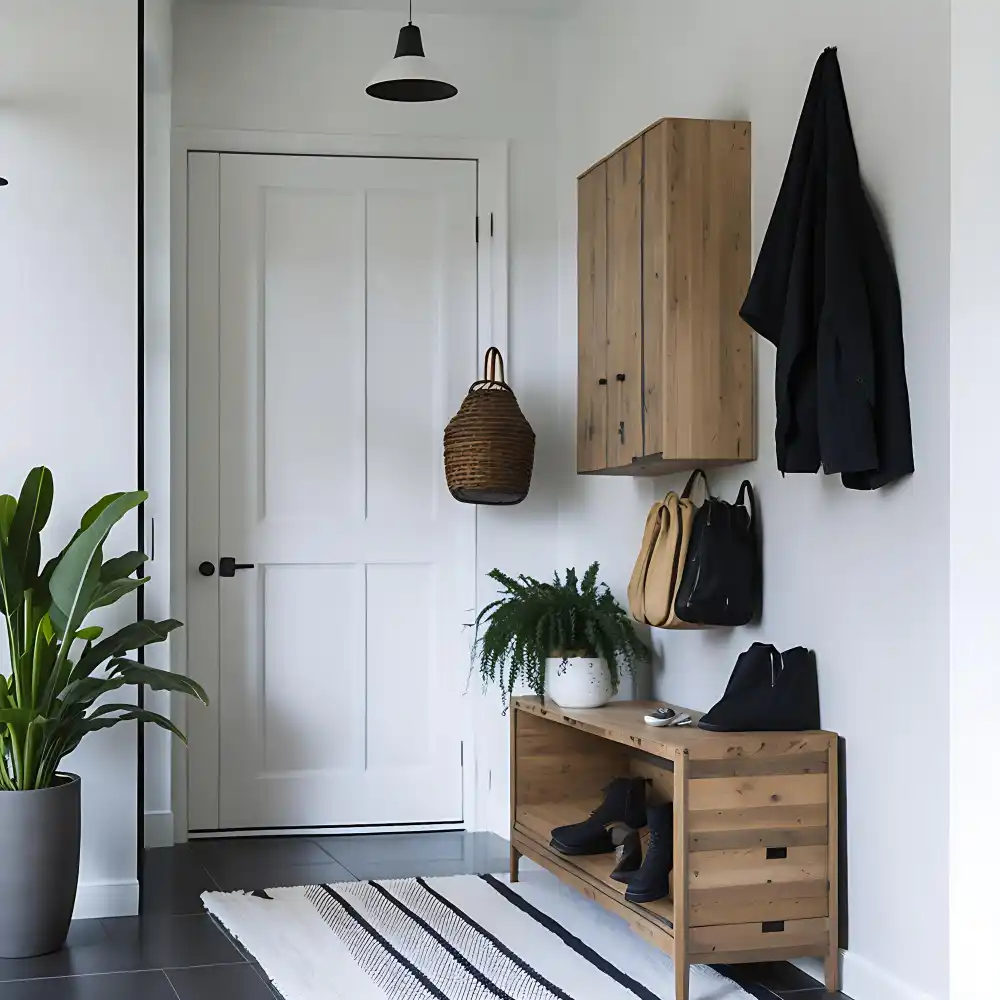
Make Furniture and the Closet Work Harder
The pieces you already own can hold more if you choose them well. A bench, a nightstand, and a smarter closet layout each pull double duty — storage plus function. This is where the room starts to feel finished rather than just tidy. Closed, built-in-looking storage hides the most and looks the most polished.
A Storage Bench at the Foot of the Bed
A storage bench earns its place twice. It gives you a spot to sit and pull on shoes, and the hollow base hides blankets, extra pillows, or off-season bedding behind a lid. Choose an upholstered bench in linen or boucle for softness, or a wood-top bench for a cleaner line. Size it to about two-thirds the width of your bed so it looks proportional. The closed lid is what keeps it stylish — everything inside disappears the moment you set it down.
DESIGNER TIP: Drape one folded throw over the corner of the bench and leave the rest of the top clear so it reads as styled, not as a shelf.
KEY TAKEAWAY: A storage bench at the foot of the bed hides bedding behind a closed lid while doubling as a place to sit.
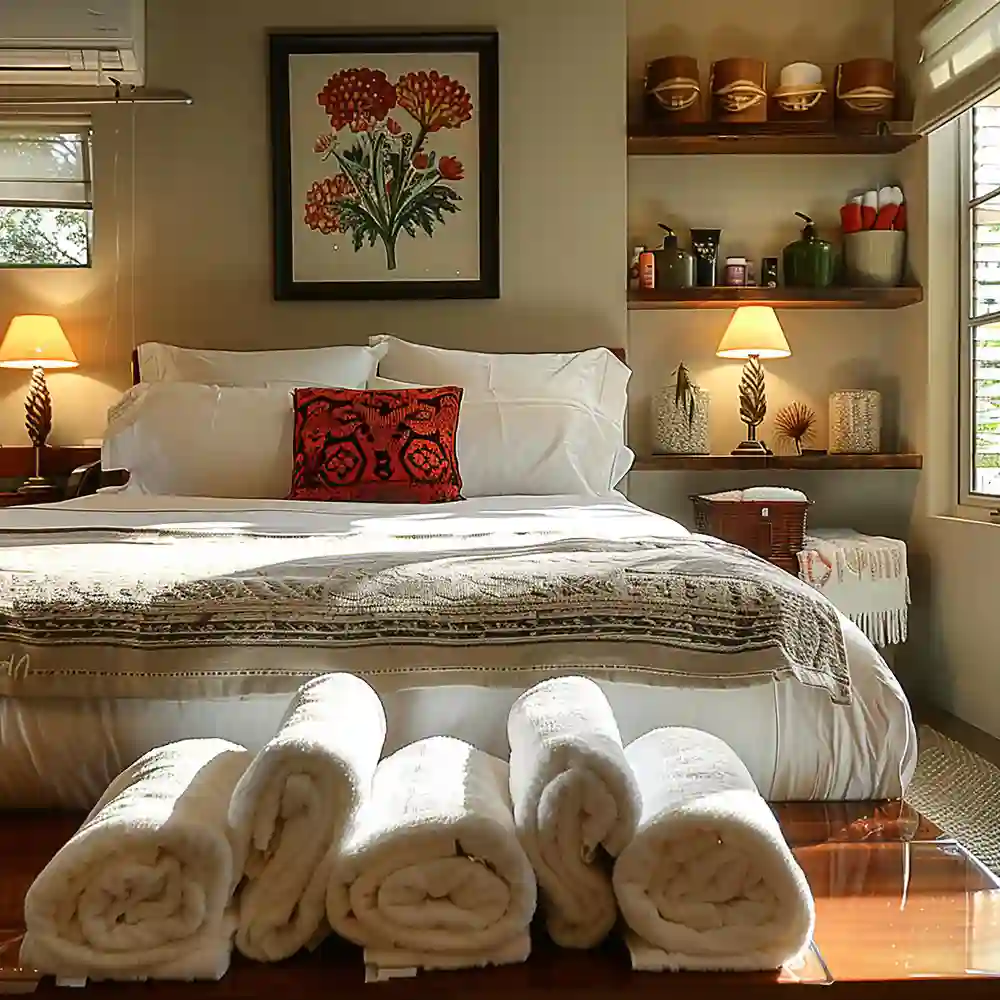
Nightstands With Drawers, Not Open Shelves
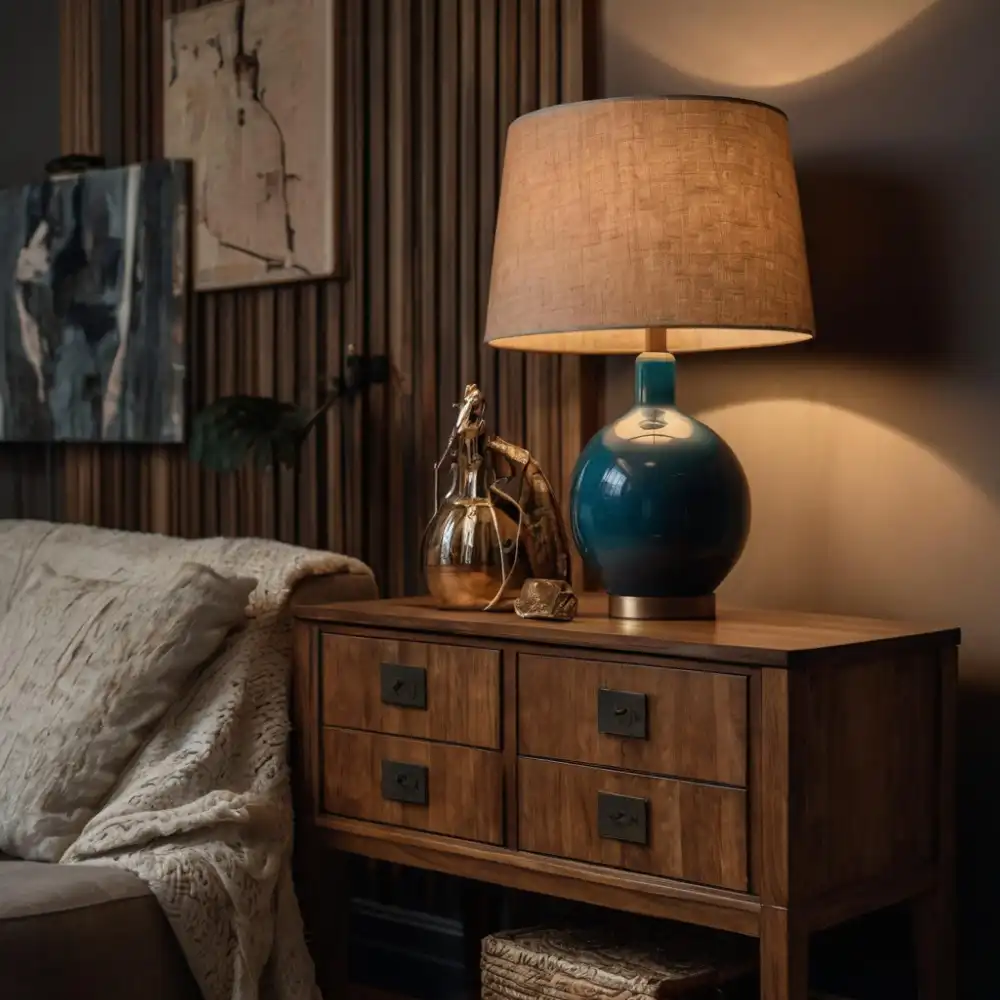
A nightstand with a drawer hides the small clutter that makes a bedside table look messy — chargers, lip balm, hand cream, reading glasses. Open-shelf nightstands put all of that on display, which works against a calm room. Pick a two-drawer nightstand in warm oak, walnut, or a painted finish, and keep the top to one lamp, one book, and maybe a small dish. The drawer absorbs everything else. This single swap quietly removes the most-seen clutter in the whole room.
KEY TAKEAWAY: A nightstand with a closed drawer hides daily small clutter that open-shelf versions leave on display.
A Closet Rod Setup That Doubles Hanging Space
Most closets waste vertical space with a single rod and a lot of empty air below it. Adding a second rod can nearly double your hanging room. Hang a single rod at 66 inches from the floor for long items, or for a double-hang setup, place the top rod near 80 inches and the lower rod around 40 inches for shirts and folded-over pants. Keep at least 2 inches of clearance between a shelf and the top of the rod. A tidy closet means less spills out into the room.
DESIGNER TIP: Use matching slim velvet hangers throughout — they take up less rod space and instantly make an everyday closet look like a boutique.
KEY TAKEAWAY: A double-rod closet, with rods near 80 and 40 inches, nearly doubles hanging space and keeps clothes out of the room.
Baskets and Cubbies That Match the Room
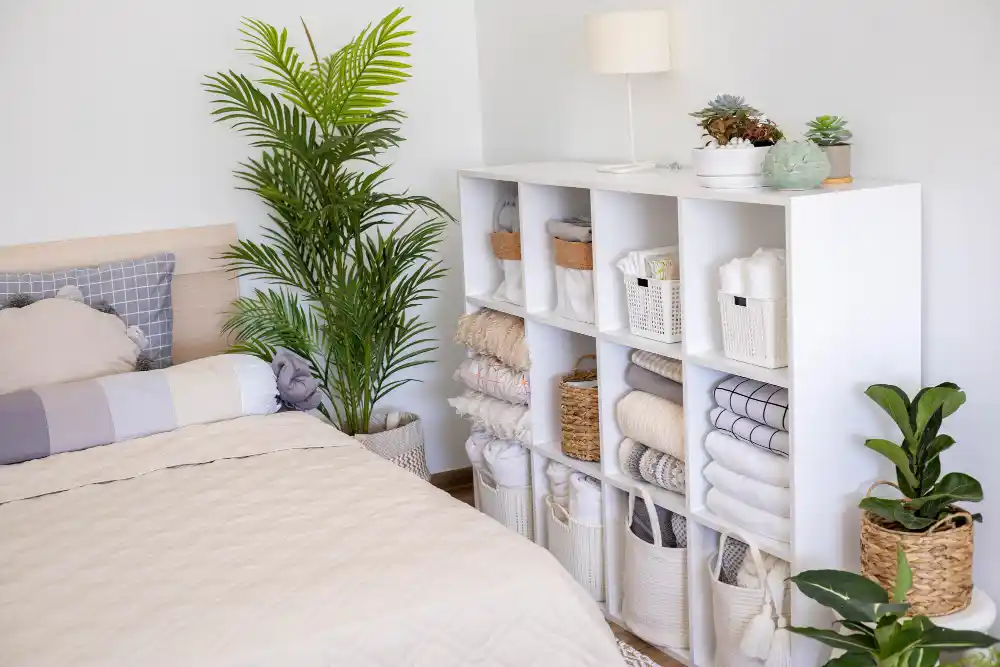
Open baskets work — but only when they are part of the design, not an afterthought. A row of matching woven or fabric baskets in a cube unit looks deliberate; a mix of mismatched bins looks like clutter with a lid. Choose one material and one color family — natural jute, soft grey felt, or cream canvas — and label them if it helps. Baskets are best for soft, lightweight items like scarves, hats, and throws. Keep heavy and ugly clutter in fully closed storage instead.
KEY TAKEAWAY: Matching baskets in one material and color read as styling; mismatched bins read as clutter, so commit to a set.
Decluttering Is the Real Storage Upgrade
The most powerful storage move costs nothing. Before you buy a single bin, decide what actually stays in the room. A calm bedroom is mostly about empty surfaces, not clever containers. When you store less, every fix above works better and the room finally looks the way you want.
Clear Surfaces First, Then Style With a Few Objects
Empty surfaces are what make a bedroom look expensive. Clear your dresser top, nightstand, and any shelf completely, then add back only a few chosen pieces — a lamp, a small stack of books, one plant, a tray for daily items. A tray is the secret: it corrals keys, jewelry, and lotion into one defined spot so loose objects never scatter. Aim to keep at least half of every surface bare. The bare space is the design.
DESIGNER TIP: Group small daily items on one tray per surface — the tray turns scattered clutter into a single styled vignette.
KEY TAKEAWAY: Clearing surfaces and styling with a few grouped objects on a tray makes a bedroom look expensive without new furniture.
Compress Bulky Items to Reclaim Hidden Space
Vacuum storage bags shrink bulky soft items so they fit in places you could not use before. A vacuum bag can reduce the volume of clothing by around 60 percent, and up to 80 percent for puffy items like duvets and winter coats. That means a whole season’s coats can flatten into one under-bed bin. Material Note: Do not store wool, fur, or anything you want to keep crisp this way for more than a few months, since long compression causes deep creasing and can weaken fibers. Use it for synthetics, cotton, and spare bedding instead.
KEY TAKEAWAY: Vacuum bags cut clothing volume by about 60 percent, letting a season of coats flatten into a single under-bed bin.
What Turns Storage Into Clutter
Storage can backfire. The wrong containers or the wrong amount make a room look busier, not calmer. These are the four mistakes that quietly undo good intentions.
Common Bedroom Storage Mistakes to Avoid
❌ Using clear plastic bins everywhere → ✅ Choose matte, lidded, or closed storage so the contents disappear from view.
❌ Filling every shelf to the edge → ✅ Leave a third of each shelf empty so it reads as styled, not stuffed.
❌ Buying containers before decluttering → ✅ Decide what stays first, then buy storage only for that.
❌ Mismatched baskets and bins → ✅ Stick to one material and color family so storage looks planned.
KEY TAKEAWAY: Open clutter, overfilled shelves, premature buying, and mismatched bins are the four habits that make storage look messy.
What Bedroom Storage Costs
Good storage spans every budget, and the highest-impact fix is often the cheapest. You can start under $40 with bins and hooks, or invest in a storage bed for a whole-room solution.
| Project | Estimated Cost | Impact Level |
|---|---|---|
| Under-bed bins, door hooks, hangers | $20-$80 | High |
| Floating shelves or a second closet rod | $40-$150 | Medium |
| Storage bench or tall narrow cabinet | $120-$400 | High |
| Lift-up ottoman or drawer storage bed | $230-$700 | Very High |
Best First Upgrade: Spend $20 to $80 on lidded under-bed bins and a few door hooks — it clears the most visible clutter for the least money.
Skip for Now: Hold off on a full closet system or custom built-ins until you have decluttered and know exactly what you still need to store.
KEY TAKEAWAY: A $20-to-$80 set of under-bed bins and door hooks clears the most clutter per dollar, so start there before bigger pieces.
Storage for Small, Rental, and Tricky Bedrooms
Small and rental bedrooms need storage that works without drilling or taking floor space. In a tiny room, lead with the bed itself — a lift-up or drawer bed gives you a dresser’s worth of storage in the footprint you already own. For more layout help, see these small bedroom ideas with a single bed to maximize your space and these smart small bedroom layouts.
Rental Note: Use over-the-door organizers, freestanding tall cabinets, and tension-rod or adhesive hooks instead of drilling, so you keep your deposit. A freestanding wardrobe or open clothing rack with a fabric cover can replace a built-in closet without a single hole in the wall. Keep everything closed or covered, and even a no-drill room stays calm. You can borrow more organizing strategy from our organization tips archive.
KEY TAKEAWAY: In small or rental rooms, lead with a storage bed and use no-drill organizers so you gain space without losing your deposit.
Frequently Asked Questions
Conclusion
Stylish bedroom storage is less about buying more and more about hiding what you own in the right places. Start under the bed, move up the walls, make your closet and furniture work twice as hard, and clear your surfaces before anything else. The best bedroom storage ideas are the ones you stop noticing, because the room just looks calm.
Editorial field note: A bedroom with a cluttered dresser top and bins stacked in the corner usually feels heavy, even when it is organized. Move the loose items into one closed cabinet, clear the dresser down to a lamp and a tray, and slide the bins under the bed. The room looks settled and larger before you change a single piece of furniture. For more calm, put-together rooms, browse our home decor inspiration and the full bedroom ideas collection, or step back to all our room design inspiration.
More Bedroom Decor & Accent Pieces
- 12 Chic Vanity Ideas for Bedroom Corners That Save Serious Space
- 13 Bedroom Accent Wall Ideas That Transform a Master Bedroom
- 17 Dorm Bedding Ideas for a Cozy, Aesthetic College Room
- Bedroom Wall Decor Ideas for Above the Bed
- Cozy Bedroom Lighting Ideas for a Warm, Layered Glow
- Headboard Ideas That Make a Bedroom Feel Luxurious
- How to Style a Bed Like a Designer?
- Nightstand Decor Ideas for a Styled Bedroom