TL;DR
Here is the whole process in five steps. Work them in this order and the room comes together without guesswork.
- Plan the layout first — float the bed on the main wall and protect a 30-inch walking path on each side.
- Set a calm color base before you buy anything, using one dominant tone across walls and large pieces.
- Pick one style and let it lead every later choice, from bedding to hardware.
- Layer decor outward from the bed — headboard, lighting, wall art, then nightstands and textiles.
- Solve for your room size and who sleeps there, then route to the deeper guide for your exact situation.
Where Do You Start When Decorating a Whole Bedroom?
The best bedroom decorating ideas start with the layout, not the paint chips. That single shift fixes most stuck bedroom projects. A bedroom feels calm when the bed sits on the strongest wall, walkways stay clear, and the eye lands on one focal point first.

If you have ever pinned forty rooms and still felt frozen, you are not alone. Most people start by shopping for a pretty duvet, then wonder why the finished room feels busy. The duvet was never the problem. The order was.
Editorial field note: A bedroom with the bed jammed into a corner and a tall dresser by the door usually feels cramped, even when every piece is nice. Pull the bed to the center of the main wall and move the dresser to a side wall, and the same furniture suddenly reads as calm. Nothing was bought. The plan changed.
These bedroom decorating ideas follow that logic from start to finish. You will plan the layout, set a color base, choose a style, layer decor from the bed outward, and then handle your room size and who it is for. For the full picture of our room work, browse our home decor inspiration and all our bedroom design ideas. Bookmark this guide for quick reference.
KEY TAKEAWAY: A bedroom comes together fastest when you plan the layout first and add color, style, and decor in that order.
What Order Should You Decorate a Bedroom In?
Decorate a bedroom in five stages: plan the layout, set the color base, pick one style, layer decor from the bed outward, then adapt for room size and the person who sleeps there. This order works because each stage sets limits for the next, so you stop second-guessing. Layout decides where light and furniture go. Color sets the mood. Style narrows your choices. Decor finishes the room.
| Quick Takeaways | |
|---|---|
| Layout | Float the bed on the main wall and keep 30-inch side walkways. |
| Color | Pick one dominant tone, one secondary, one accent (the 60-30-10 split). |
| Style | Commit to a single look so every later choice agrees with it. |
| Decor | Layer from the bed outward: headboard, lighting, art, textiles. |
| Room size | Small rooms need light walls, vertical storage, and one mirror. |
KEY TAKEAWAY: The five-stage order — layout, color, style, decor, room fit — turns a vague refresh into clear steps.
Bedroom Decorating Checklist
Use this fast plan before you spend a dollar. It keeps the project moving in the right order.
- Measure the room and the bed, then float the bed on the main wall with 30-inch side clearance and 36 inches at the foot.
- Pick one dominant color for walls and large pieces before buying bedding or art.
- Choose a single style and write it down so later purchases stay on track.
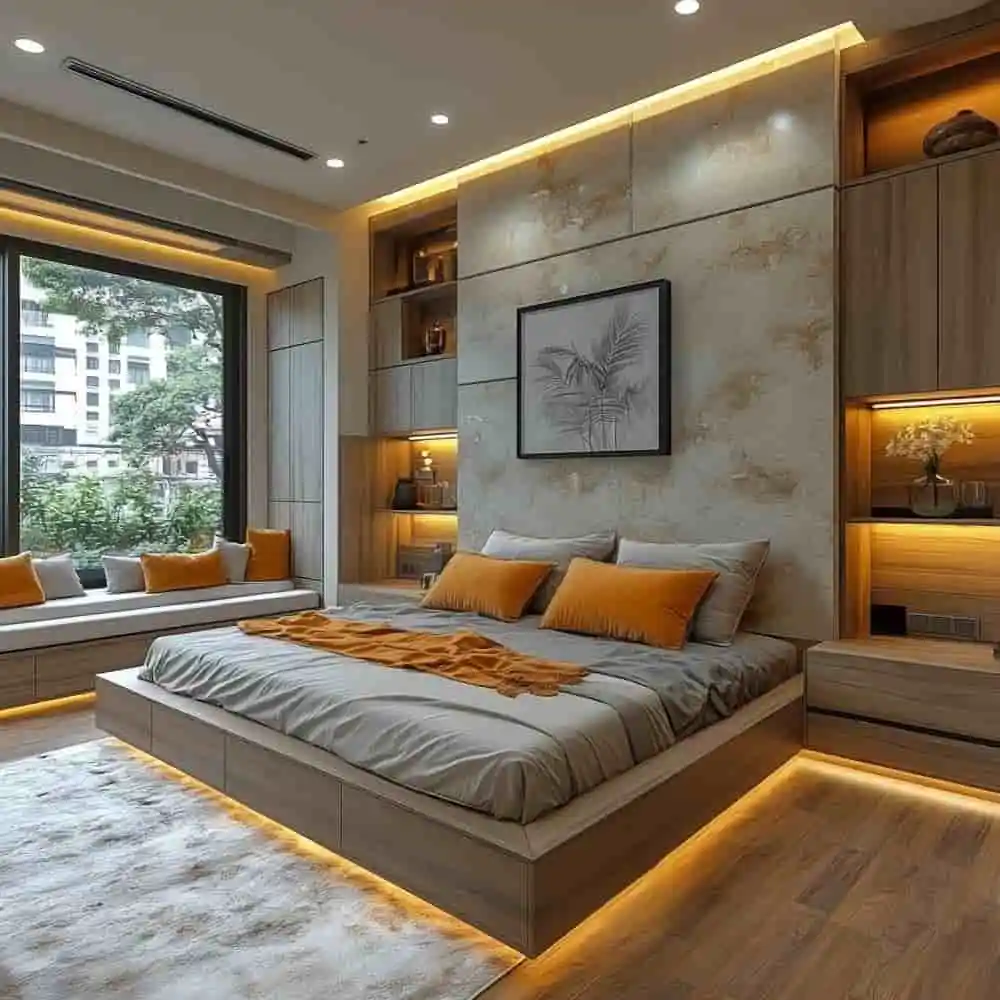
- Set three light sources: one ambient, one bedside task light, one accent, all at 2700K.
- Hang wall art so it spans about two-thirds of the bed width above the headboard.
- Add a rug that runs under the bottom two-thirds of the bed with 18 inches showing on each side.
- Clear every surface, then add back only what earns its place.
KEY TAKEAWAY: A short checklist done in order prevents the most common whole-room bedroom mistakes.
How Do You Lay Out a Bedroom Properly?
Lay out a bedroom by placing the bed on the longest unbroken wall, then protecting the paths around it. A bed on the main wall gives the room a clear focal point the moment you walk in. Keep at least 30 inches of walking space on each side and 36 inches at the foot, which is the spacing range interior designers use for comfortable bedroom movement, per this expert guide to bedroom clearances from Homes & Gardens.
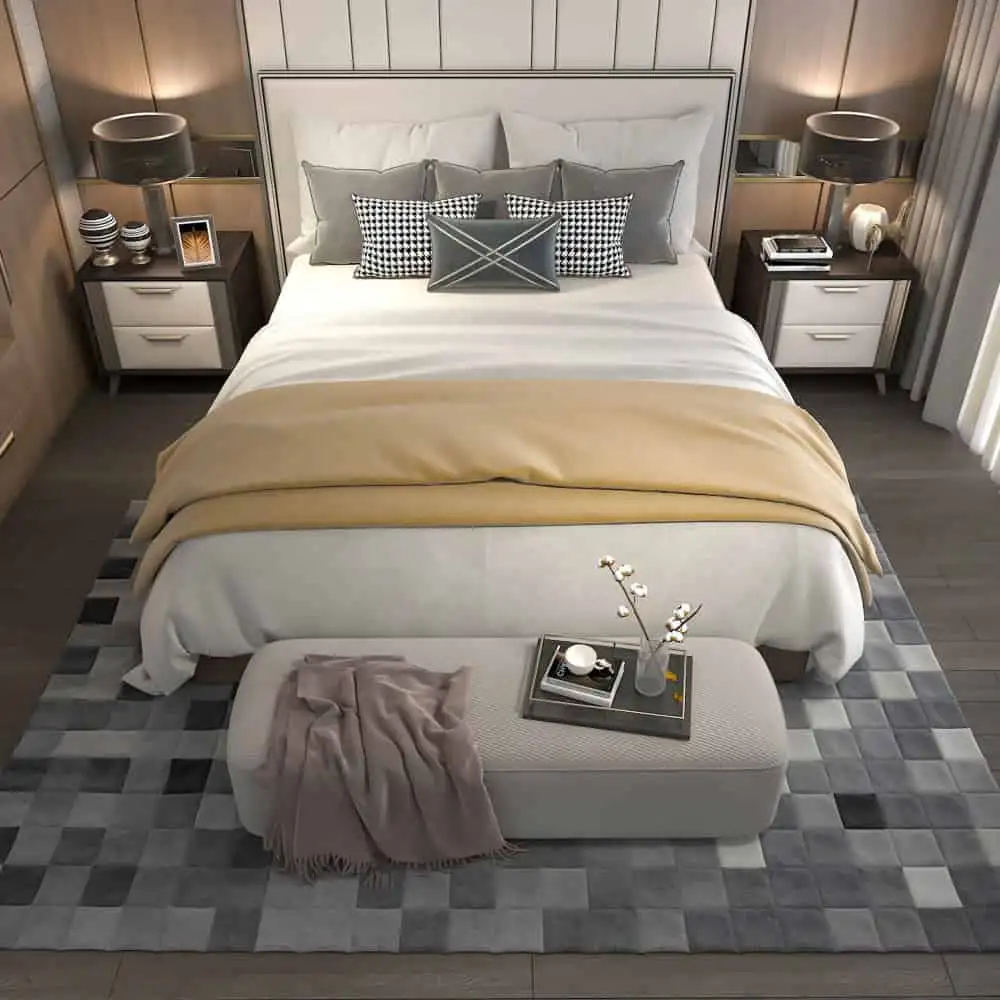
The foundation matters more than any single pretty object. Get the bed placement, walkways, and one focal point right, and an average duvet still looks good. Get them wrong, and a designer duvet still looks off.
DESIGNER TIP: If your bedroom has one window on an odd wall, do not let it dictate the bed. Place the bed where the layout works, then balance the window with curtains hung high and wide. Our guide on how to arrange a bedroom with one window walks through the tricky cases.
A few layout rules carry most rooms. The nightstands should sit within a few inches of the mattress so a lamp lands at the right height. A dresser belongs on a side wall, not crowding the door. Leave one wall lighter than the others so the room has somewhere to breathe.
KEY TAKEAWAY: Float the bed on the main wall, hold 30-inch side walkways, and the rest of the room falls into place.
How Do You Choose a Bedroom Color Scheme?
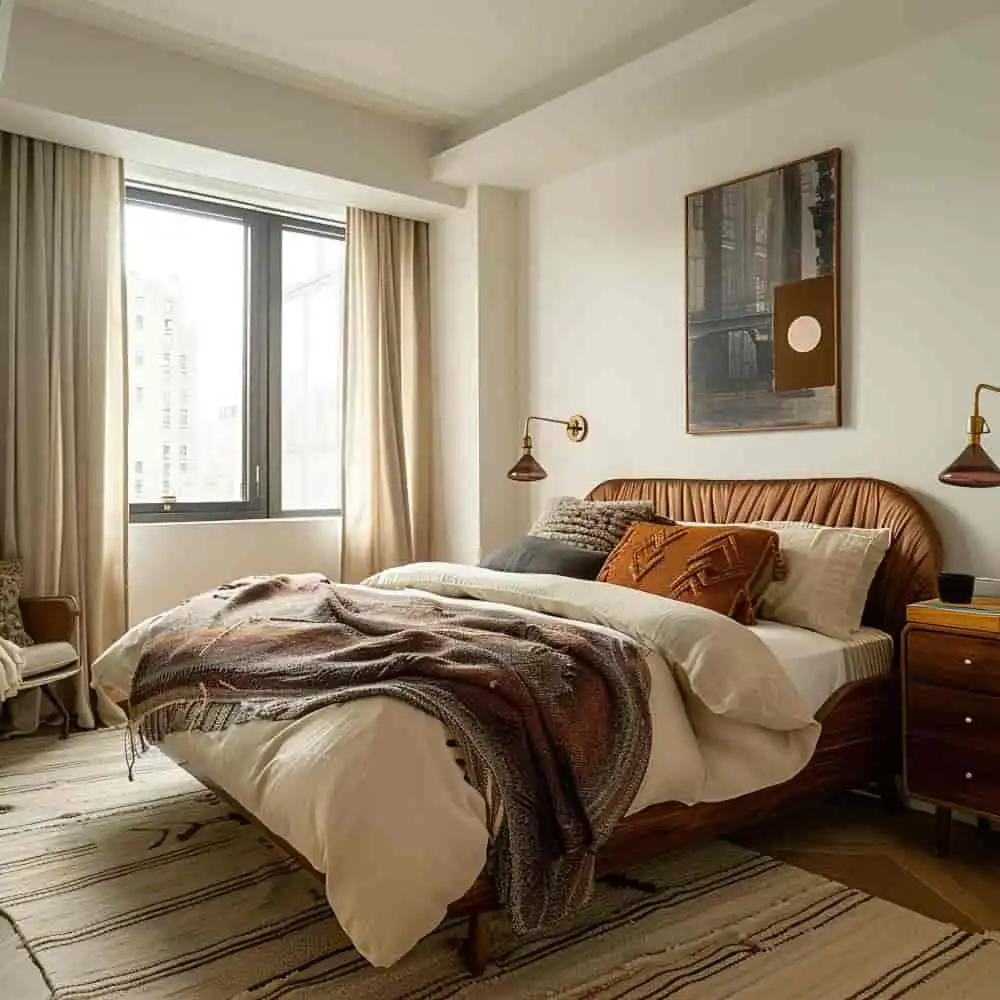
Choose a bedroom color scheme by picking one dominant tone first, then a secondary, then a small accent. A reliable split is the 60-30-10 rule: 60% dominant on walls and large pieces, 30% secondary on bedding or curtains, and 10% accent on pillows and art, as explained in this breakdown of the 60-30-10 rule from Apartment Therapy. Warm neutrals like greige, oat, and soft cream make the easiest 60% base.
Color sets the mood before any furniture arrives. Calm bedrooms usually lean on quiet, low-contrast palettes — warm greige walls, cream linen bedding, a single sage or navy accent. Bolder rooms still follow the same split; they just push the accent harder.
DESIGNER TIP: Test paint on the wall, not the chip. A warm white that looks soft in the can can turn grey under north light. Tape a large sample near the bed and check it at night under your lamps before you commit.
This pillar only sketches color. The full menu — every individual color, ready-made palettes, and how to combine two shades — lives in our hub on bedroom color ideas, palettes and schemes. Start there if color is where you feel stuck. If you want a proven moody choice, our navy blue bedroom ideas show how a deep blue stays calm rather than heavy.
KEY TAKEAWAY: One dominant color, one secondary, one accent — the 60-30-10 split makes any bedroom palette read balanced.
How Do You Pick the Right Bedroom Style?
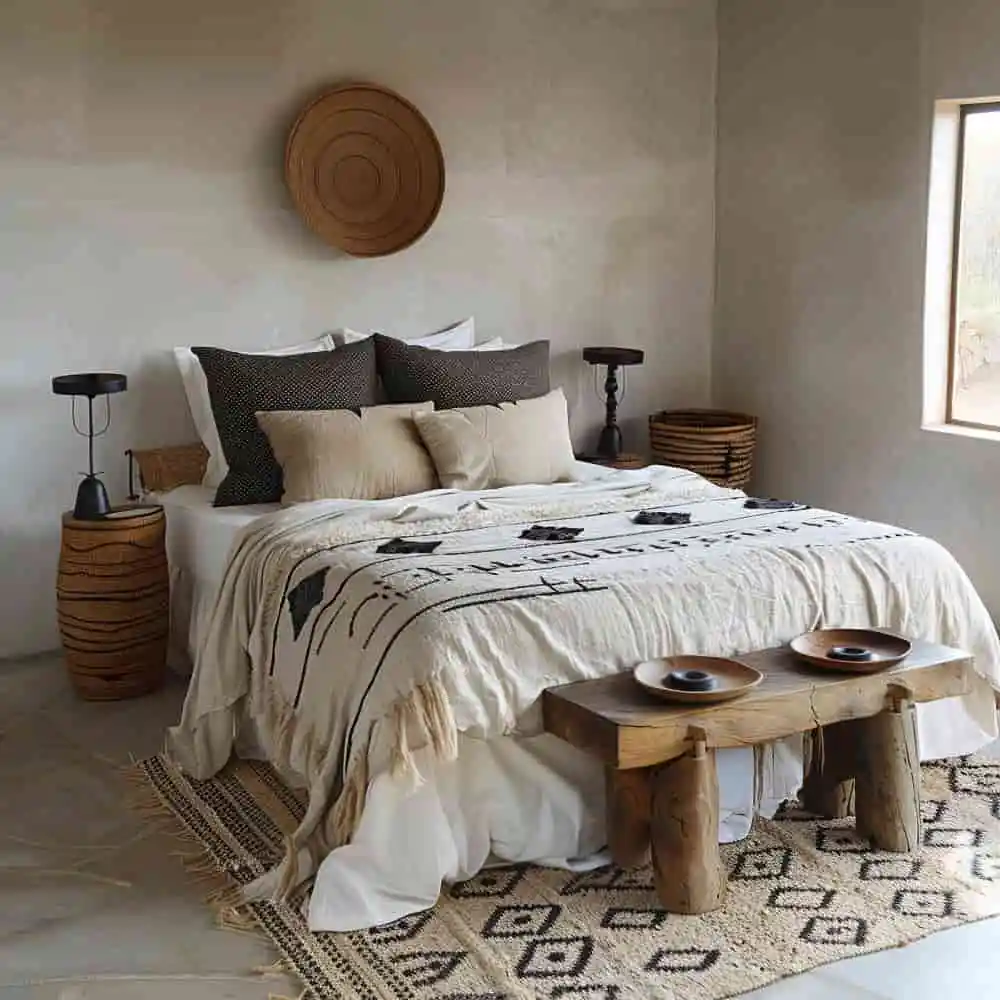
Pick one bedroom style and let it lead every later choice. Style is the filter that turns endless options into a short list. Once you commit to japandi, modern farmhouse, boho, or coastal, your bedding, hardware, and wood tones all answer to that one look. The room reads finished because nothing fights.
Most people skip this step and shop look by look, which is how a room ends up with a coastal rug, a farmhouse bed, and glam lamps that never settle together. Choose the feeling first. Then choose pieces that fit it.
Composite example: Imagine a plain rental bedroom with white walls and a basic oak bed. Commit to warm japandi, swap the bedding to oat linen, add one low wood nightstand and a paper-shade lamp, and the same bed now looks deliberate. The style did the work, not a renovation.
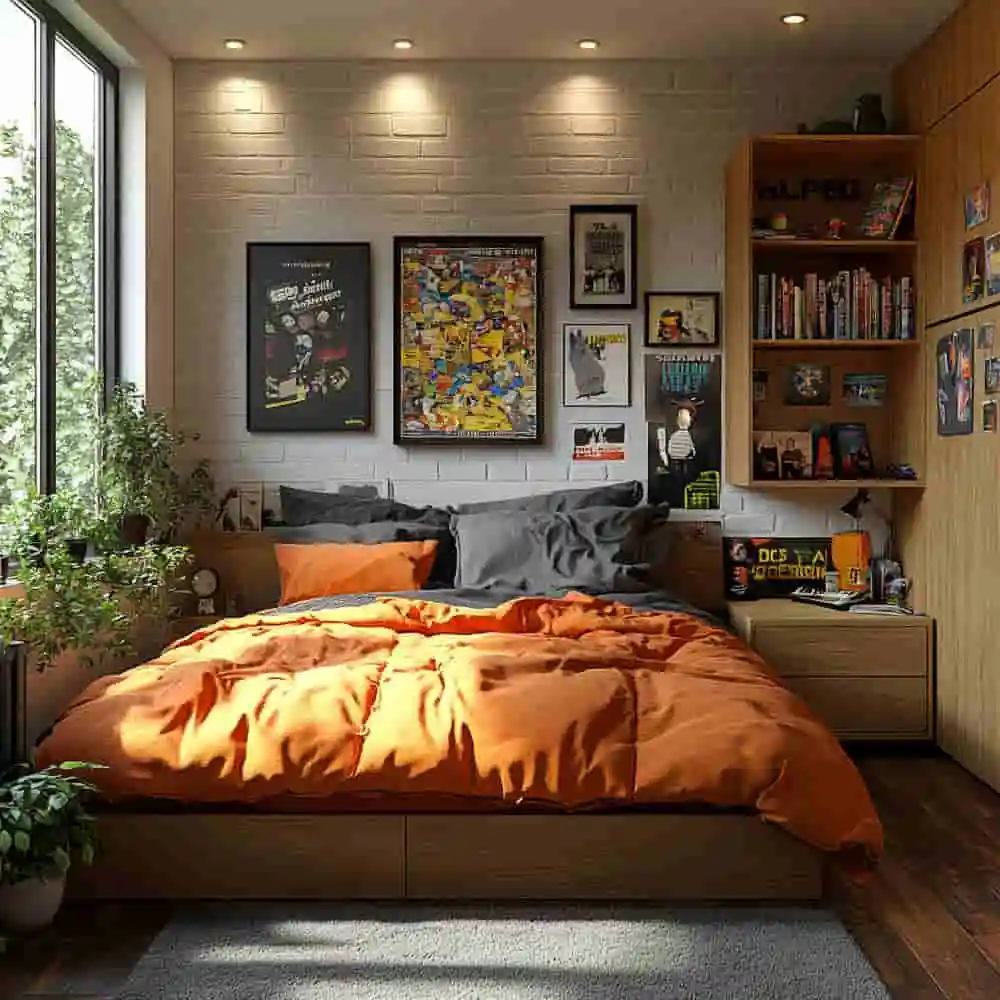
You do not need to learn every aesthetic to start. Our hub on bedroom aesthetic ideas covering every style and look helps you find the one that fits you, then points to a focused guide. If you already lean grounded and natural, our olive green bedroom ideas show one calm direction in detail.
KEY TAKEAWAY: Commit to a single bedroom style first, and every bedding, color, and hardware choice gets easier.
How Do You Layer Bedroom Decor From the Bed Outward?
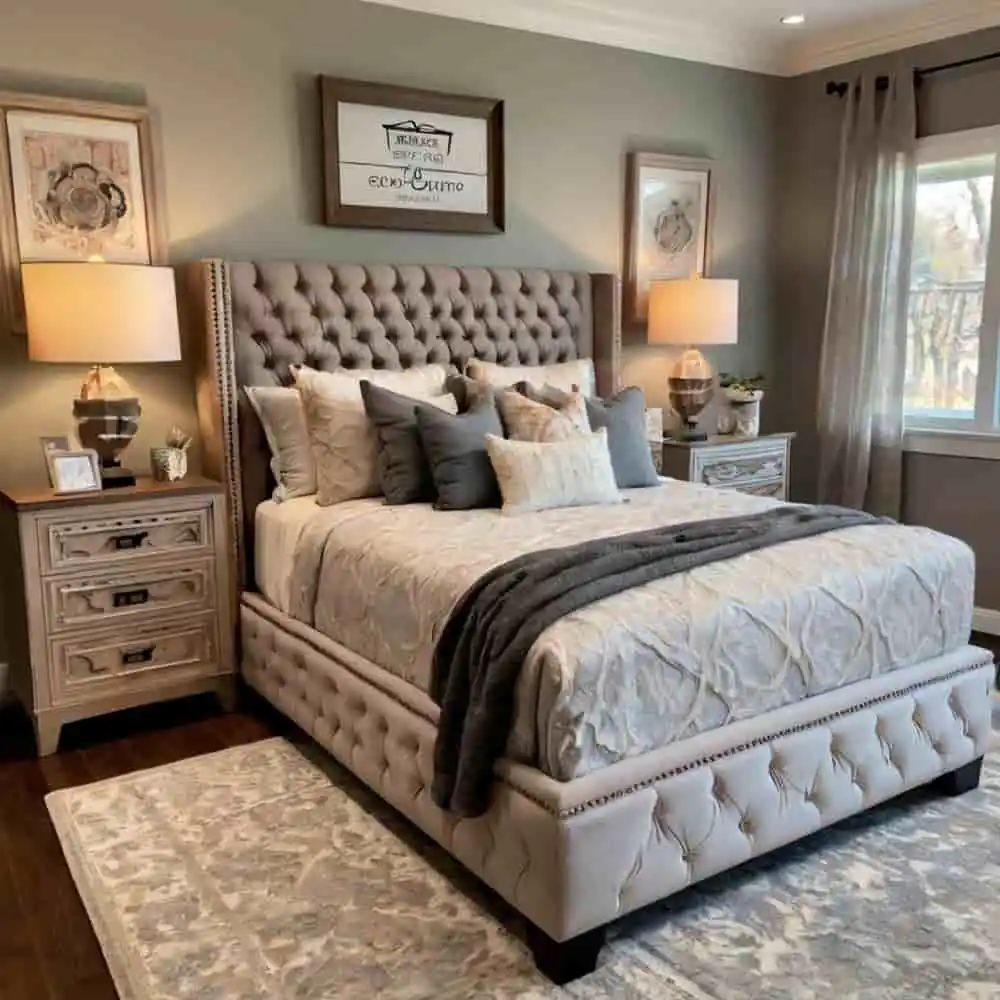
Layer bedroom decor outward from the bed, the room’s anchor. Start with the headboard, because it sets the scale of the whole wall. Then add lighting at three levels. Then hang art above the bed. Then style the nightstands and add textiles. Working outward keeps the focal point strong and stops the room from feeling scattered.
Lighting deserves real attention. A single overhead bulb flattens a bedroom. Replace it with three sources — ambient, bedside task, and one accent glow — all in warm 2700K, the golden tone lighting brands recommend for winding down, per this color temperature guide from Feit Electric. Warm light makes even a simple room feel calm.
The bed itself is its own skill. Crisp sheets, a slightly oversized duvet, layered pillows, and one throw at the foot read as styled rather than messy. Our step-by-step on how to style a bed like a designer covers the exact order.
DESIGNER TIP: Hang art above the headboard so it spans about two-thirds of the bed width, with the bottom edge 6 to 10 inches above the headboard. Tiny frames floating high are the most common wall mistake.
KEY TAKEAWAY: Decorate from the bed outward — headboard, lighting, art, nightstands, textiles — to keep one clear focal point.
What Decor and Furniture Finish a Bedroom?
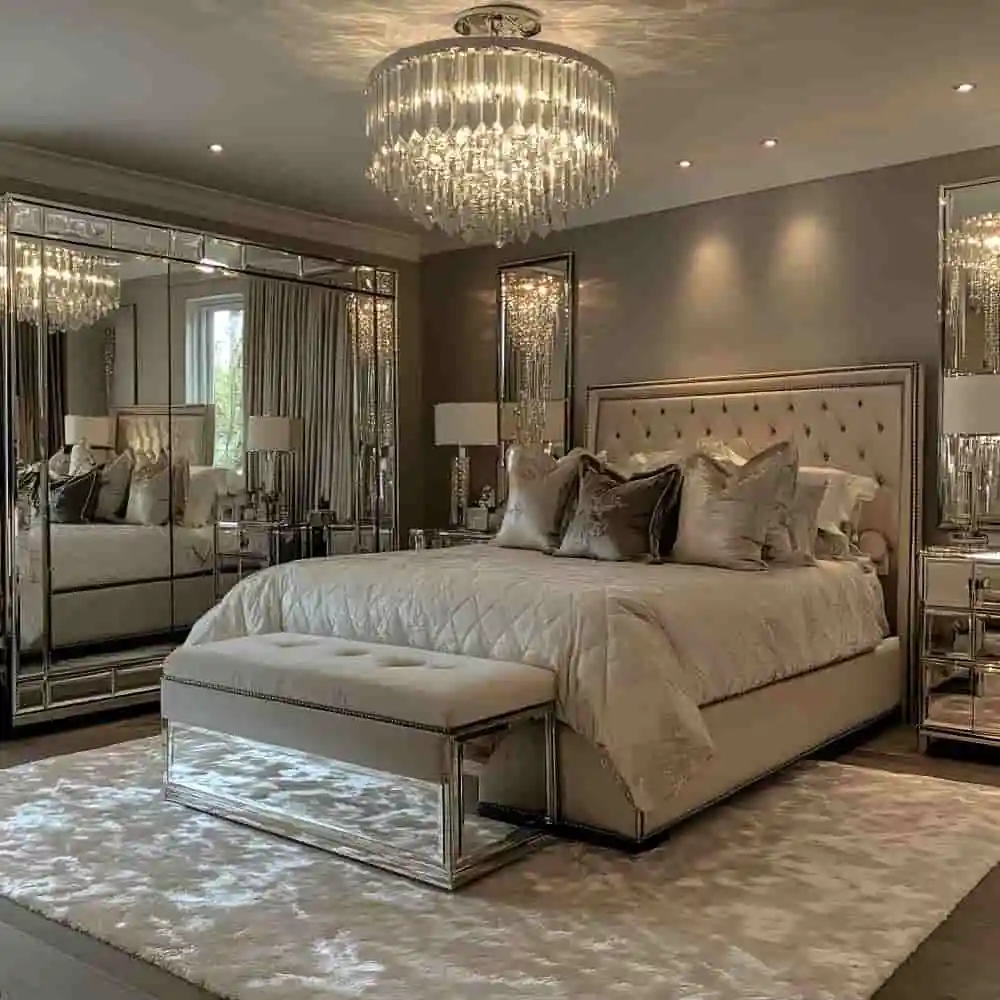
The finishing pieces are the headboard, lighting, wall decor, nightstands, rug, curtains, storage, and a vanity or mirror. Each one is small on its own, but together they decide whether the room looks furnished or truly decorated. A rug under the bottom two-thirds of the bed, with 18 inches showing on each side, instantly grounds the whole layout, a sizing rule echoed in this rug placement guide from Bassett Furniture.
Curtains carry more weight than people expect. Hung close to the ceiling and run to the floor, they make the wall taller and the window grander. Storage matters too — a bedroom only feels calm when chargers, laundry, and clutter have a home.
DESIGNER TIP: Match your metals within the room. If the lamp base is brushed brass, keep the curtain rod and drawer pulls in the same family. Mixed finishes are fine on purpose, but accidental mixing reads as unplanned.
This is the deepest cluster, so we keep it short here. Most bedroom decorating ideas live in these finishing pieces, so for the full tour of furniture, accents, and styling — from headboards and lighting to nightstands and mirrors — go to our hub on bedroom decor ideas for furniture, accents and styling.
KEY TAKEAWAY: Headboard, lighting, rug, curtains, and storage are the finishing pieces that move a room from furnished to decorated.
How Do You Decorate a Bedroom for the Person Who Sleeps There?
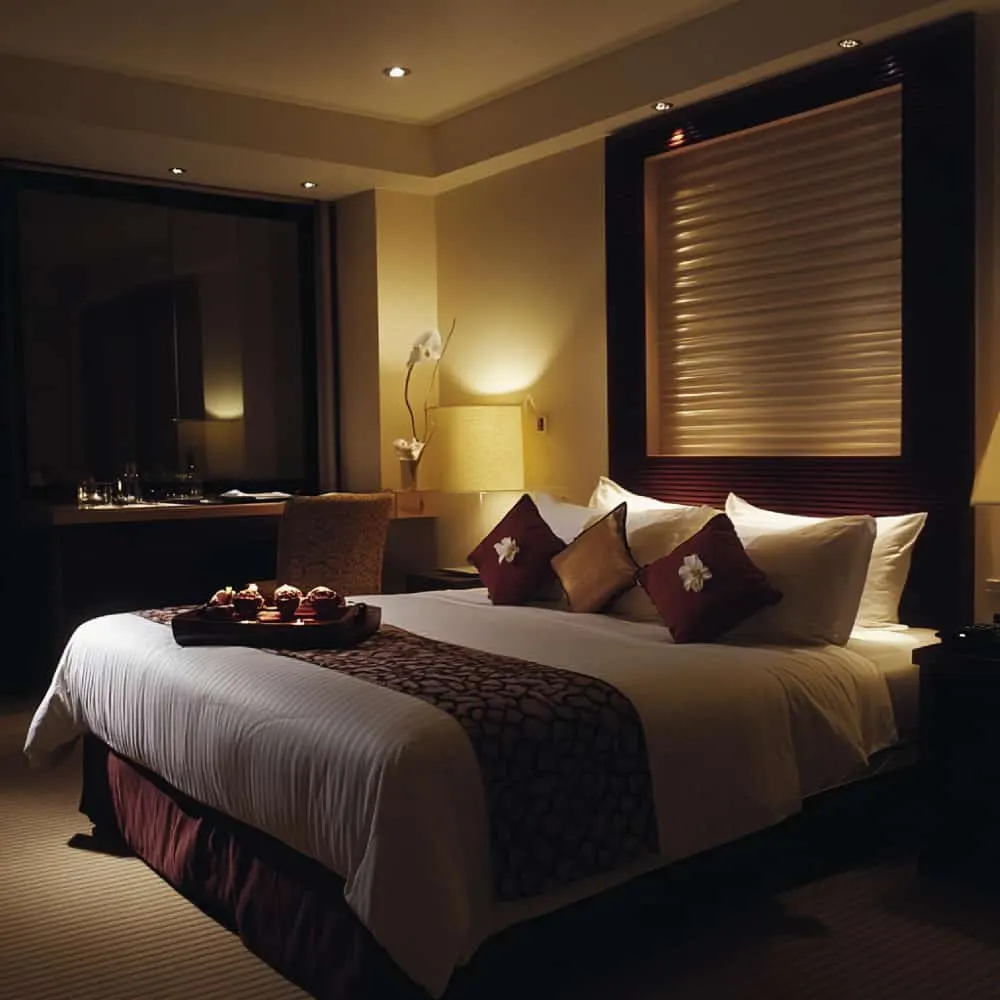
Decorate a bedroom around who uses it, because a master, a teen room, a guest room, and a shared room each need different priorities. A master leans calm and hotel-like. A teen room needs flexible storage and personality. A guest room needs a clear surface and a place to set a suitcase. The person sets the brief.
This step often gets skipped, and the room ends up generic. A guest room with no luggage spot and no empty drawer feels unwelcoming even when it is pretty. Match the room to the routine first.
For a hotel-calm primary suite, our luxury master bedroom ideas show how to layer texture and light. To match the full room to its occupant — kids, teens, guests, couples, renters — start with our hub on bedroom ideas by room and who they’re for.
KEY TAKEAWAY: Decorate around the sleeper — master, teen, guest, or shared — so the room fits the real routine, not a generic template.
How Do You Decorate a Small Bedroom?
Decorate a small bedroom by keeping walls light, storage vertical, and the floor as clear as possible. Light walls bounce daylight and make the room feel larger. Vertical storage — tall narrow cabinets, over-door hooks, under-bed bins — frees the floor. One well-placed mirror across from a window doubles the light. Small rooms reward restraint, not more pieces.
The biggest small-room mistake is buying furniture that is too big or too much. A bed that blocks a walkway, a bulky dresser, and dark walls all shrink the space at once. Scale down, lighten up, and lift storage off the floor.
DESIGNER TIP: In a tiny bedroom, choose the smallest bed that genuinely fits your needs and leave a real walkway around it. A clear path matters more than an oversized mattress.
Small rooms have their own deep cluster. For layouts, storage systems, and space-smart styling, go to our hub on small bedroom ideas with smart layouts, storage and style. For the wall color question specifically, our best paint colors for a small bedroom shows shades that make a tight room feel bigger.
KEY TAKEAWAY: Light walls, vertical storage, and a clear floor make a small bedroom feel calm and larger than it is.
How Do You Make a Bedroom Feel Cozy?
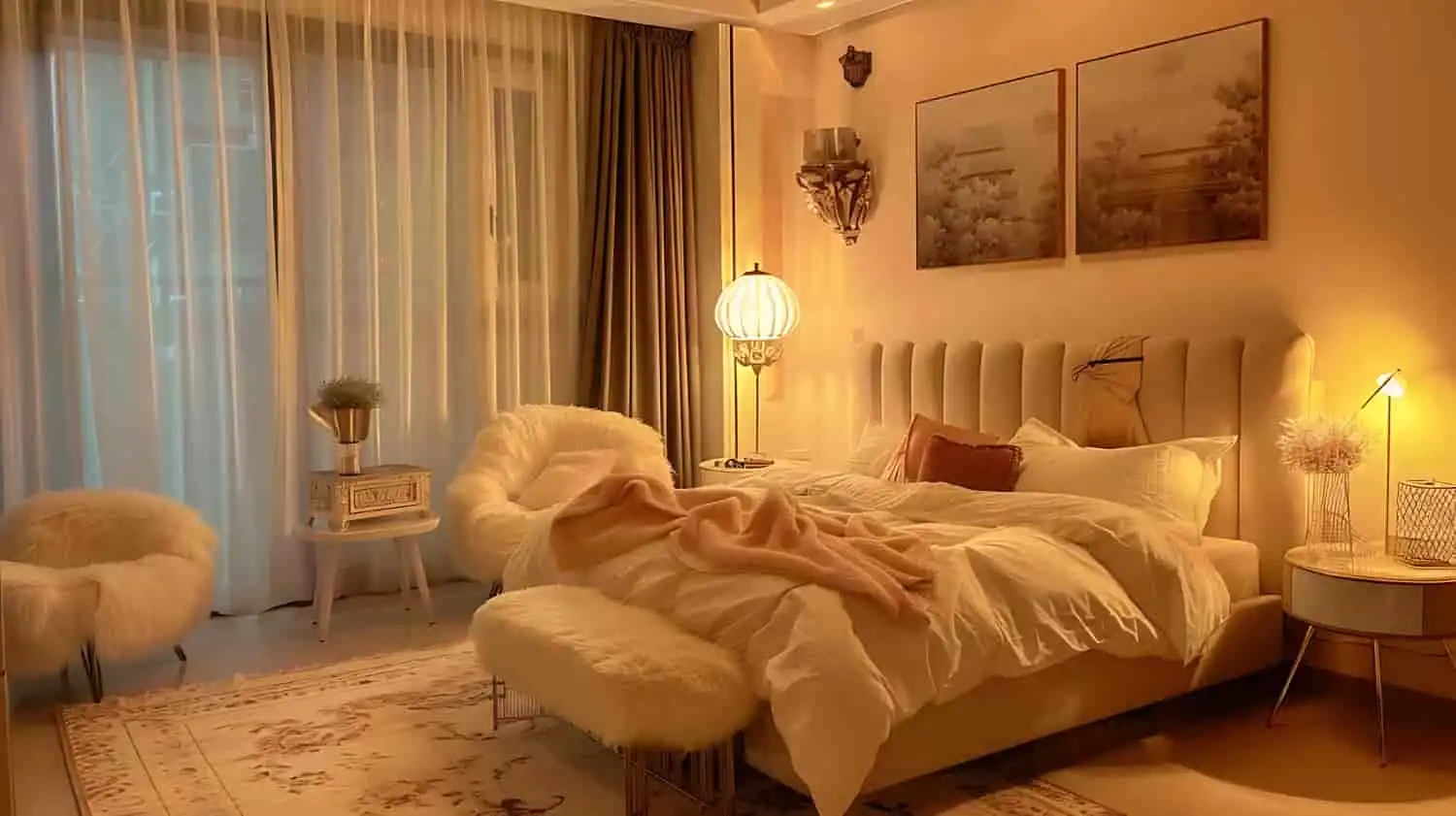
Make a bedroom feel cozy by layering soft texture and warm light. Cozy is a result, not a style — you reach it through fabrics and lamps, not a single purchase. Add a chunky knit throw over cream linen, a low-pile wool rug underfoot, and warm 2700K lamps instead of overhead glare. The room warms up before you change any furniture.
Warmth also comes from contrast and a settled palette. A few deeper tones — soft clay, warm olive, deep charcoal on one wall — give the eye something to land on. Too many cool greys, and the room can feel flat even when it is tidy.
Our guide on cozy bedroom ideas that feel warm and luxurious goes deeper on layering for warmth without losing a polished look.
KEY TAKEAWAY: Cozy comes from layered texture and warm 2700K light, not from buying one cozy-looking object.
How Do You Refresh a Bedroom for the Season?
Refresh a bedroom for the season by swapping the easy, soft layers and leaving the bones alone. The bed, layout, and wall color stay put. You change the duvet weight, the throw, the pillow covers, and maybe one piece of art. A seasonal refresh is cheap, fast, and reversible.
In cooler months, lean into knit throws, flannel or heavier linen bedding, and warmer lamp glow. In warmer months, switch to lightweight cotton, paler covers, and a lighter rug. Small swaps keep the room current without a full redo.
DESIGNER TIP: Keep one storage bin per season for bedding and throws. Rotating two sets of soft layers is the lowest-effort way to keep a bedroom feeling fresh all year.
KEY TAKEAWAY: Swap soft layers — duvet, throw, pillow covers — to refresh a bedroom by season without touching the layout.
Where Whole-Room Bedroom Plans Fall Apart
Most bedroom projects do not fail on taste. They fail on order and scale. Here are the four mistakes that quietly wreck a whole-room plan, and the fix for each.
❌ Shopping for bedding before planning the layout → ✅ Place the bed and protect walkways first, then buy soft goods.
❌ Picking too many colors with no dominant tone → ✅ Lock one dominant color, then add a secondary and a small accent.
❌ Lighting the room with one overhead bulb → ✅ Add three warm 2700K sources: ambient, bedside, and accent.
❌ Buying furniture that is too big for the room → ✅ Measure first and leave 30-inch walkways around the bed.
For a deeper list of what makes a room feel less polished, see our guide on bedroom mistakes to avoid for a more luxurious space.
KEY TAKEAWAY: Whole-room plans fall apart from wrong order and wrong scale, not bad taste — fix both and the room works.
What a Full Bedroom Refresh Costs
A full bedroom refresh ranges widely, so spend in order of impact. Paint and styling give the biggest visible change for the least money. Furniture is the larger line. Below are realistic ranges to help you prioritize.
| Project | Estimated Cost | Impact Level |
|---|---|---|
| Paint and styling refresh (samples, one accent wall, soft layers) | $80-$250 | Very High |
| Layered lighting (bedside lamps plus warm 2700K bulbs) | $90-$300 | High |
| New bedding, rug, and curtains | $300-$800 | High |
| Anchor furniture (bed, headboard, nightstands) | $700-$2,500 | Medium |
Best First Upgrade: Repaint the walls a warm neutral and add layered 2700K lighting — the highest visible change for the lowest spend.
Skip for Now: Do not buy a full matching furniture set early; settle the layout and color first, then add anchor pieces over time. For a tighter budget plan, our smart hacks for decorating a small bedroom on a budget stretches every dollar.
KEY TAKEAWAY: Spend in order of impact — paint and lighting first, anchor furniture last — and the refresh feels expensive for less.
Frequently Asked Questions
Conclusion
Decorating a bedroom is less about taste and more about order. Plan the layout, set a calm color base, choose one style, layer decor from the bed outward, then adapt for your room size and the person who sleeps there. Follow that sequence and these bedroom decorating ideas turn a vague wish into a clear plan you can actually finish.
Editorial field note: A bedroom with nice pieces but no plan usually feels busy rather than restful. Strip it back to the bed, one warm light, and a clear surface, then add layers one at a time, and the room settles fast. The change is the order, not the budget. For more rooms and full-home inspiration, explore our home decor ideas and browse every guide under all our room inspiration.
Browse Bedroom Topics
- Bedroom Color Ideas
- Bedroom Decor & Accent Pieces
- Bedroom Ideas by Room Type
- Bedroom Style & Aesthetic
- Small Bedroom Ideas
More Bedroom Decorating Guides
- 12 Fall Bedroom Refresh Ideas for a Cozy, Layered Seasonal Look
- 15 Winter Hygge Bedroom Ideas for a Warm, Candle-Lit Retreat
- Bedroom Makeover on a Budget That Looks Like You Spent More
- Bedroom Mistakes to Avoid for a More Luxurious Space
- Bedroom Trends 2026: What’s In, What’s Out, and What to Follow
- Cozy Bedroom Ideas That Feel Warm and Luxurious
- Elegant Spring Bedroom Decor Ideas for Every Design Style
- How to Arrange a Bedroom With One Window
- How to Decorate a Bedroom (Step-by-Step)
- How to Make a Bedroom Feel Cozy (9 Designer-Approved Techniques)