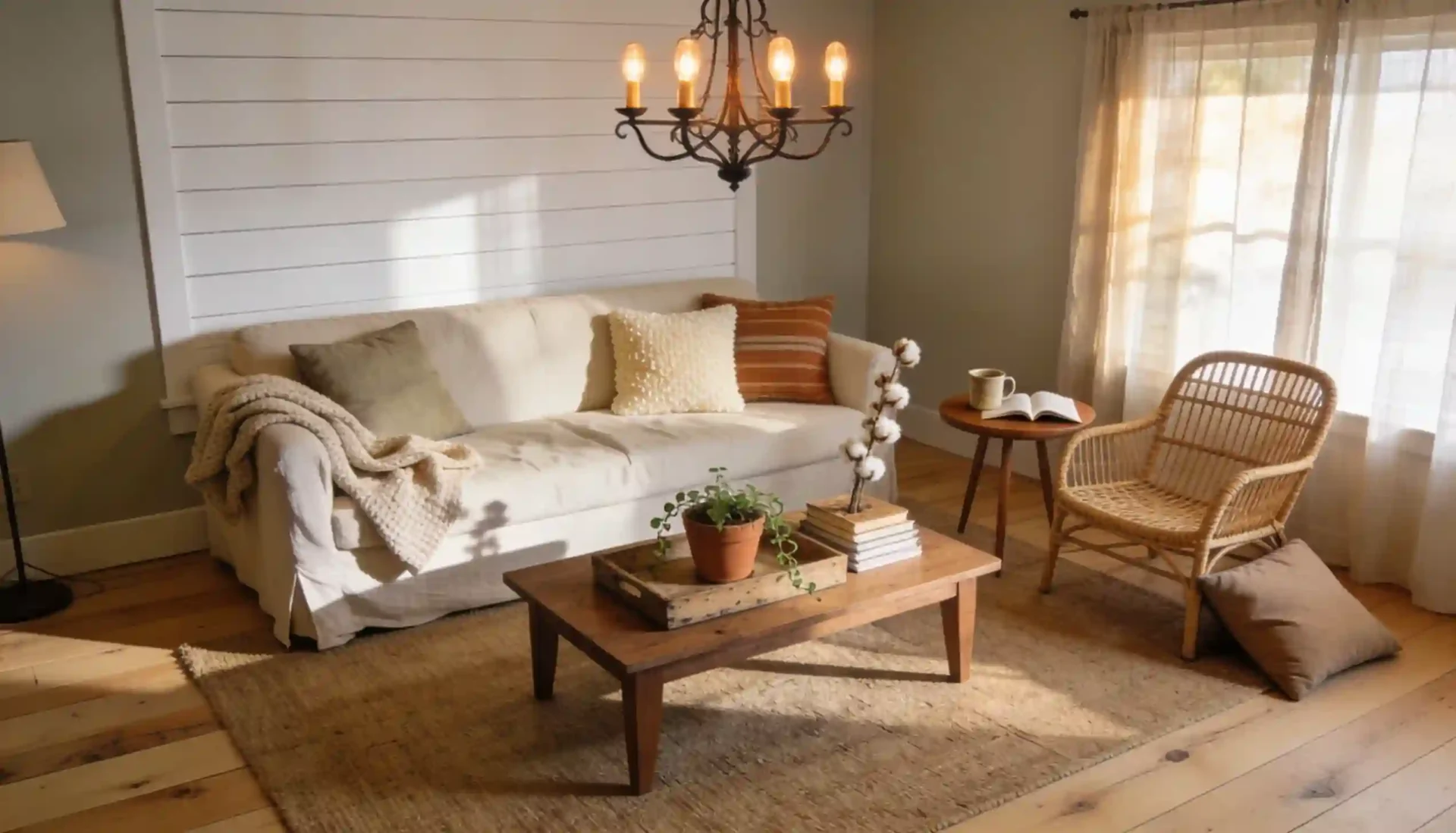
TL;DR
- Warm greige and soft cream walls work better than pure white — they hold warmth under natural light without going flat
- An 8×10-foot or larger jute or distressed area rug anchors the seating zone and ties furniture together
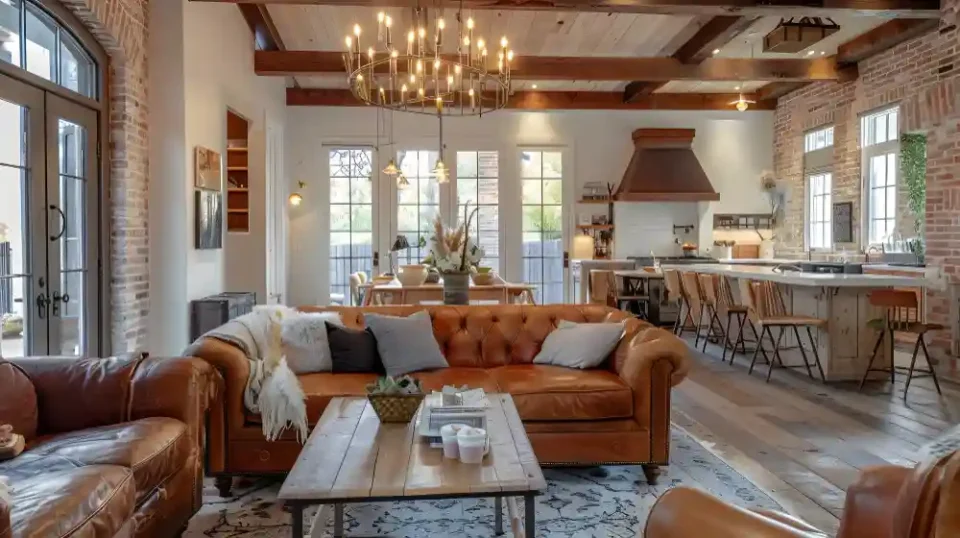
- Slipcovered linen sofas mixed with rattan or woven accent chairs give the layered, collected feel farmhouse style needs
- Shiplap or board-and-batten on one accent wall adds dimension without making the whole room feel like a barn
- Layered lighting — chandelier plus two table or floor lamps — creates warmth at every hour of the day
Why Most Farmhouse Living Rooms Stop Short of Warm
For years, the formula was clear. Shiplap on one wall. Cream linen sofa. Galvanized metal accents. Jute rug on pale birch floors. Rooms looked styled. They also had a ceiling — push the formula far enough and the warmth disappeared. What was left felt assembled rather than collected. Farmhouse-adjacent, but not actually warm.
The shift that makes modern farmhouse living room ideas work comes from what you stop adding first. The matching knick-knacks. The all-white walls that read cool under northern light. The perfectly coordinated wood tones that look like a furniture set. Once those are edited out, the actual warmth — from mixed materials, layered light, and a wall color with a real undertone — has room to come through.
If you are building a full living room refresh from scratch, our home decor guides at 101homedecor.com and all living room inspiration are a good starting point. For a modern rustic take on the same principles, these cozy farmhouse living room ideas show how the two styles overlap naturally.
Editorial field note: A room painted entirely in cool white — bright white walls, white shiplap trim, pale birch floors — can feel clinical even with warm textiles piled on the sofa. Switching the wall color to a warm greige while keeping the trim bright white creates the contrast that makes warmth actually land. The room looks calmer and more finished before any furniture changes.
Bookmark this guide for quick reference.
KEY TAKEAWAY: Warmth in a modern farmhouse living room comes from contrast — warm walls against white trim, mixed wood tones, layered light — not from adding more farmhouse accessories.
| Quick Takeaways | |
|---|---|
| Palette | Start with warm greige or creamy white walls and white trim — the contrast creates the warmth. |
| Rug | An 8×10-foot rug is the standard minimum; front legs of all seating pieces must sit on it. |
| Textiles | Layer at least 3 fabric textures per sofa: linen, boucle, and knit wool work well together. |
| Lighting | A wrought iron or linen-shade chandelier plus two lamps creates warmth at every hour. |
| Editing | Group surface objects in threes, remove everything that doesn’t add texture or organic material. |
Modern Farmhouse Living Room Checklist
- Paint walls in SW Alabaster (SW 7008), BM White Dove (OC-17), or SW Accessible Beige — keep trim bright white for contrast
- Choose an area rug at least 8×10 feet and position the front legs of all seating pieces on it
- Pick one wall for shiplap or board-and-batten rather than covering every surface
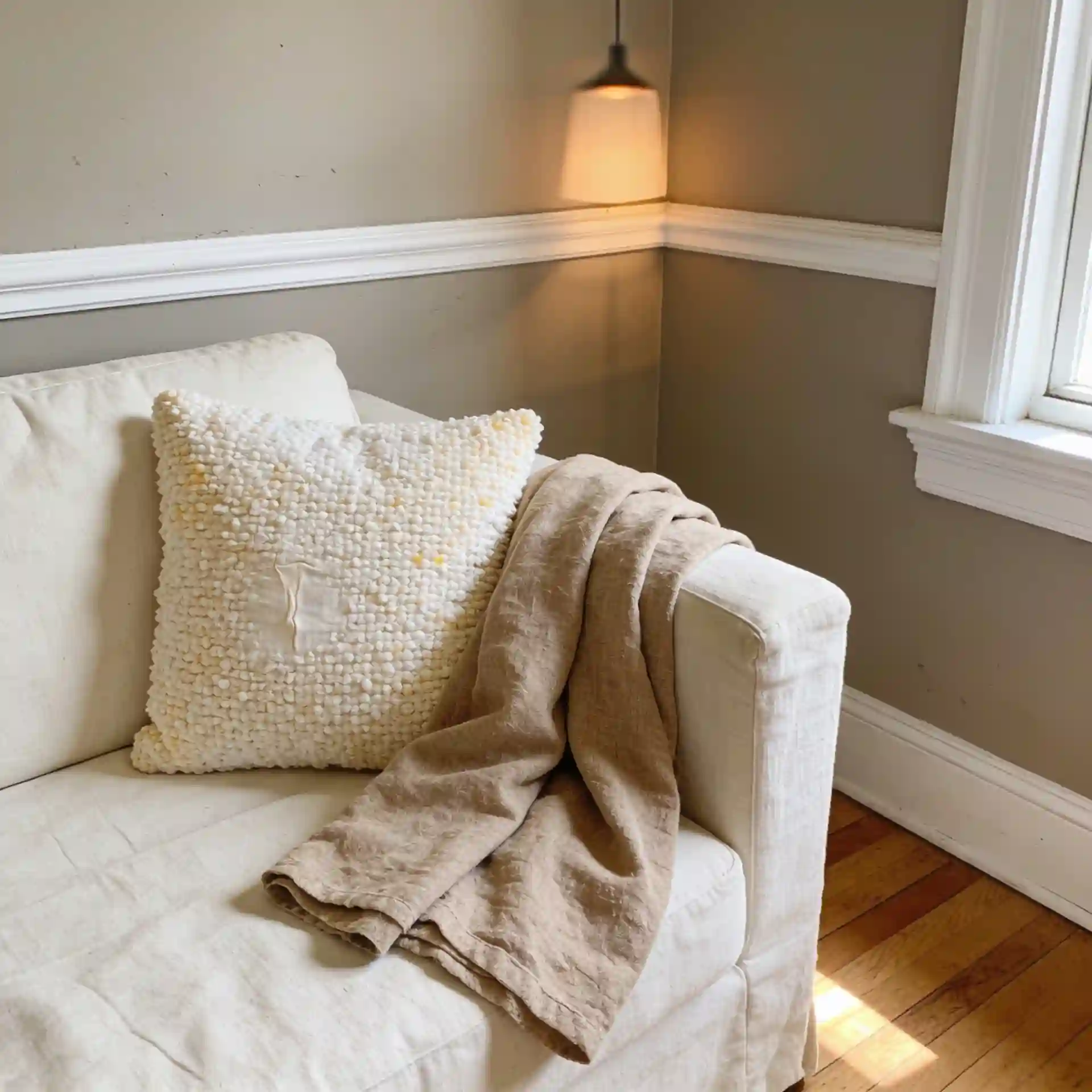
- Layer 3 or more fabric textures on the sofa: one linen or cotton cushion, one boucle or velvet pillow, one knit throw
- Add a chandelier or pendant fixture plus at least two table or floor lamps to eliminate single-overhead-light reliance
- Mix 2 to 3 distinct wood tones throughout the room — pale floor, medium coffee table, natural rattan chair frame
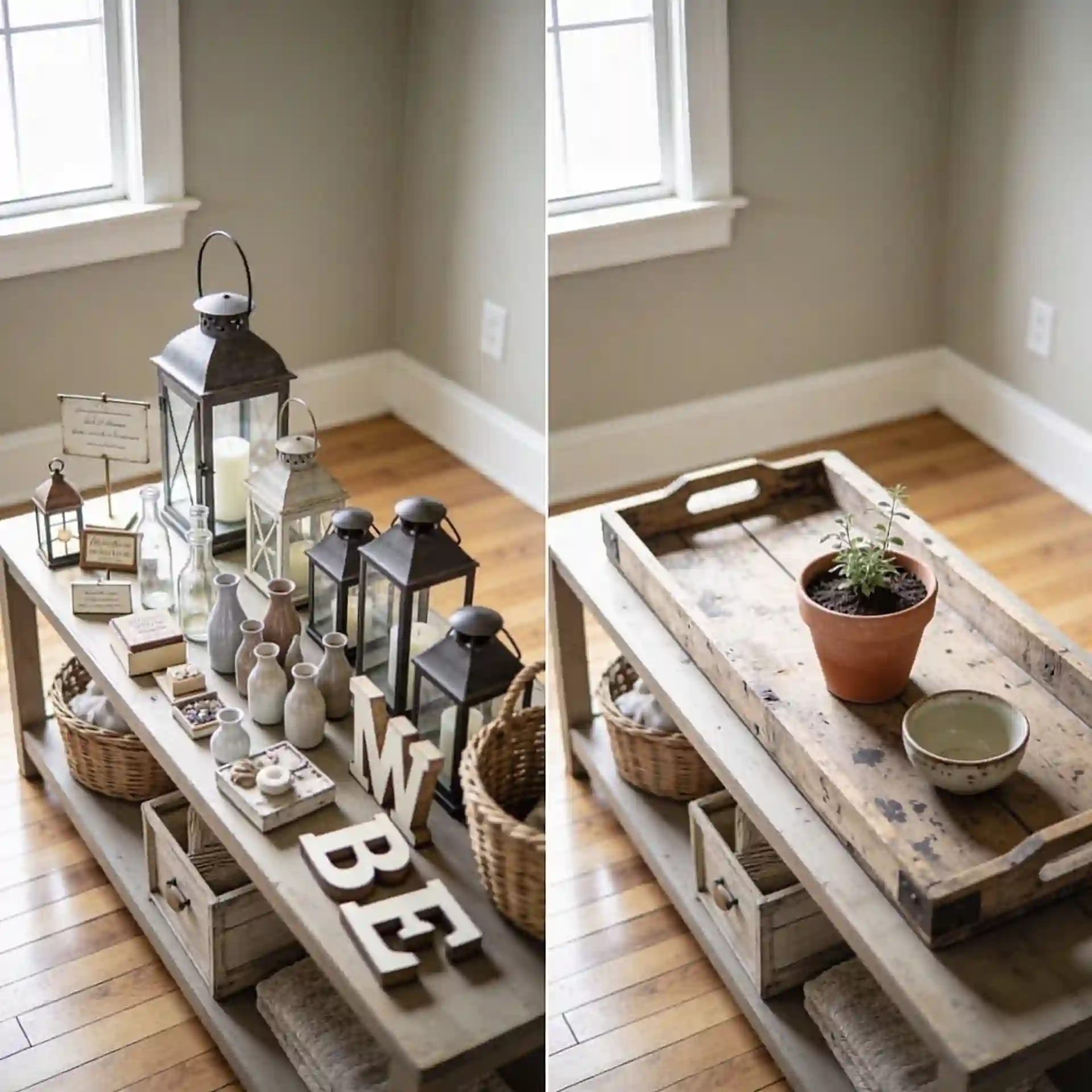
- Keep every surface to three objects or fewer, grouped in odd numbers, with at least one natural material per surface
- Include one live plant and one organic element such as a terracotta pot, dried botanicals, or a worn wooden tray
KEY TAKEAWAY: The fastest upgrade in any farmhouse living room is editing surfaces down to three well-chosen objects rather than adding more.
Tier 1 — Start With the Foundation
The four decisions below determine whether everything else in the room looks elevated or just placed. Get these right first.
1. Build a Warm Neutral Base Palette
A modern farmhouse living room starts on the walls. The specific undertone of the wall color affects every material in the room — warm-undertone walls make wood floors look richer, linen look softer, and iron fixtures look more intentional. Cool whites work against all of that.
Sherwin-Williams Alabaster (SW 7008) and Benjamin Moore White Dove (OC-17) are the two most reliable warm whites for farmhouse interiors. Both have an LRV above 80 — meaning they stay light and airy — while holding enough warmth to prevent the blue-grey shift that true white walls get in north-facing rooms. For rooms that receive strong natural light, Sherwin-Williams Accessible Beige or Benjamin Moore Pashmina adds more depth without going dark.
Pair the wall color with bright white trim. That contrast — warm field color against crisp white molding — is one of the signature visual qualities of modern farmhouse rooms. It looks considered without being cold.
Source Note: According to Benjamin Moore’s modern farmhouse color guide, warm creams and greiges paired with white trim form the defining palette for farmhouse-inspired interiors across all room types.
2. Add Shiplap or Board-and-Batten on One Wall
Shiplap is still the most recognizable farmhouse wall treatment — and it works best on one wall, not all four. A full room wrapped in horizontal wood boards becomes heavy and closes in quickly. One well-placed wall — behind the sofa, the fireplace surround, or the TV — adds texture and dimension without tipping into a look that is more cabin than home.
Board-and-batten is the subtler alternative. The vertical lines add visual height, which makes it a strong choice for a wall that isn’t anchored by furniture. Both treatments can be painted the same color as the walls for a tonal, quieter effect, or in bright white against a greige room for a stronger contrast accent.
Source Note: According to HomeGuide’s 2026 shiplap cost data, shiplap installation runs $3–$11 per square foot installed — a 150-square-foot accent wall typically costs $2,250–$4,500 with professional labor, with pine shiplap at the lower end and hardwood species at the higher end.
Peel-and-stick shiplap panels and removable wallpaper in board-and-batten patterns offer a no-drill alternative that reverses cleanly — both are renter-safe.
3. Anchor the Room With Wide-Plank Wood Floors
Wide-plank wood floors are a foundational farmhouse element. The finish matters more than the species. Light white oak or pale ash floors work well with warm neutral walls — the contrast keeps the room from going muddy and flat. Darker floors like walnut or hickory suit moodier palettes where walls are a deeper mushroom or warm clay tone.
If solid hardwood is outside the budget, luxury vinyl plank in a warm wood tone achieves the same visual effect. Choose planks at least 5 inches wide — narrower boards lean more traditional than farmhouse. A wire-brushed or hand-scraped finish adds the lived-in texture that new-looking floors lack. If that traditional direction appeals to you, these country farmhouse living room ideas explore the cozier, classic side of the style.
Material Note: White oak hardwood is denser than pine and handles everyday foot traffic well; a wire-brushed surface texture masks small surface scratches over time without refinishing.
4. How Big Should the Rug Be in a Farmhouse Living Room?
A rug that is too small is the single most common layout mistake in farmhouse living rooms. It leaves all the furniture looking unmoored — sofas and chairs floating on bare floor with no anchor zone between them. The standard for most rooms is an 8×10-foot rug at minimum.
The front legs of every seating piece — sofa, accent chairs, and any additional seats — should sit on the rug. The rug should extend 6 to 8 inches beyond those front legs, and 18 to 24 inches of bare floor should remain visible around the room’s perimeter. For open-plan spaces or rooms over 200 square feet, a 9×12-foot rug creates a better anchor.
Jute rugs are the go-to farmhouse choice — neutral, textured, and durable under everyday use. A distressed Turkish-style rug in warm cream and muted terracotta adds more warmth while staying within the neutral palette. Avoid flat-weave rugs as the primary rug in high-traffic farmhouse living rooms — they don’t hold enough visual weight to anchor large furniture.
Designer Rule of Thumb: When choosing between two rug sizes, go one size larger. A rug that is slightly too big almost always looks better than one that is slightly too small.
KEY TAKEAWAY: Palette, a single accent wall, warm wood floors, and the right rug size are the four structural decisions that determine whether the room looks elevated or just decorated.
Tier 2 — Build the Style Layer
Once the foundation is in place, the furniture and textile choices in these modern farmhouse living room ideas are what make the room feel collected and warm rather than staged.
5. Choose a Slipcovered or Upholstered Linen Sofa
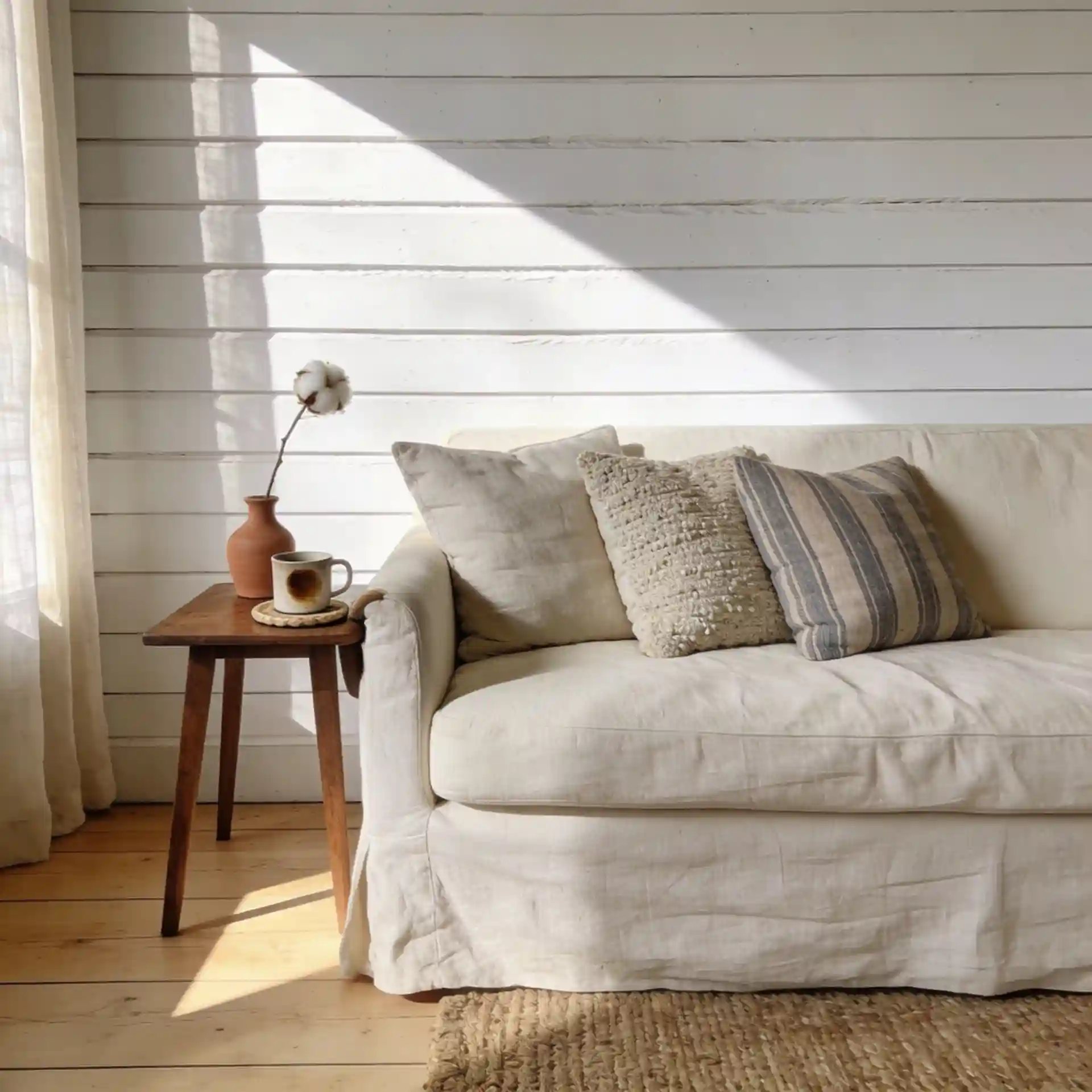
The sofa is the room’s primary anchor piece. For a modern farmhouse living room, a slipcovered linen sofa in cream, warm white, or soft oat gives the most versatile starting point. Linen ages differently from polyester blends — it softens and relaxes with use, developing a lived-in texture that improves rather than degrades.
At the budget end, the IKEA Uppland sofa starts around $849 with a slipcover. Pottery Barn’s slipcovered lines start near $1,500 and run past $3,000 for larger configurations. A tight-back upholstered sofa in cream or mushroom is equally strong if a tailored look fits the room better than the relaxed slipcovered version.
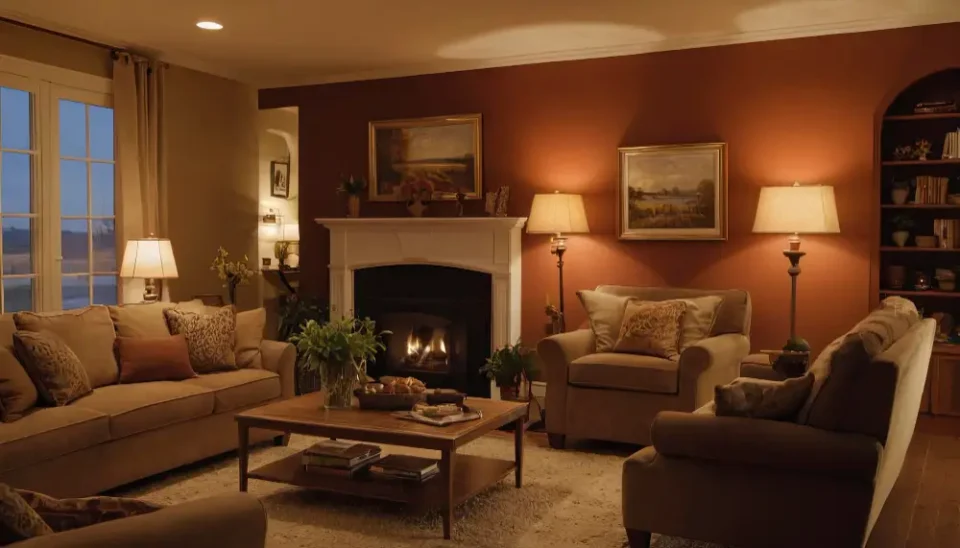
For a darker take on farmhouse seating, these cozy moody farmhouse living room ideas show how cognac leather and aged tan upholstery work within the same material framework.
DESIGNER TIP: Pull the sofa at least 18 inches from the wall. Floating furniture — not pinned against the perimeter — makes the room feel larger and allows the rug to properly define the seating zone.
6. Mix Wood Tones and Metal Finishes With Purpose
Matching all wood tones makes a farmhouse living room look like a furniture set. A room with pale oak floors, a walnut coffee table, and a natural rattan chair frame — three distinct tones — reads layered and collected. That variety is what gives the room its organic quality.
The same principle applies to metal finishes. Matte black door hardware pairs naturally with brushed brass light fixtures. Aged iron and antique bronze can share a room without clashing. The one combination to avoid is warm metallics (brass, gold) and cool metallics (chrome, nickel) in roughly equal amounts — choose a dominant finish and let the other appear in smaller supporting doses.
Matte black finishes on hardware and lighting show fingerprints less than polished chrome and pair naturally with both warm and cool wood tones — a practical advantage in any room used every day.
7. How Do You Layer Textiles Without Making It Look Cluttered?
Three textures per sofa is the starting minimum. One smooth fabric — linen or cotton in a cushion cover or throw pillow. One nubby or napped surface — boucle, chunky knit, or a loose-weave wool blanket. One woven or structured element — a jute-trimmed pillow, a rattan tray on the side table, or a braided textile draped across the armrest.
Keep the color palette across all textiles to two or three tones at most so the layers read as a group rather than a jumble. Limit patterns to one patterned piece for every three solids — a worn kilim-style cushion, a subtle stripe in the throw, or a faded floral pillow in muted warm tones. More than that and the sofa starts to compete with the rest of the room rather than anchor it.
8. Add a Rattan or Woven Accent Chair
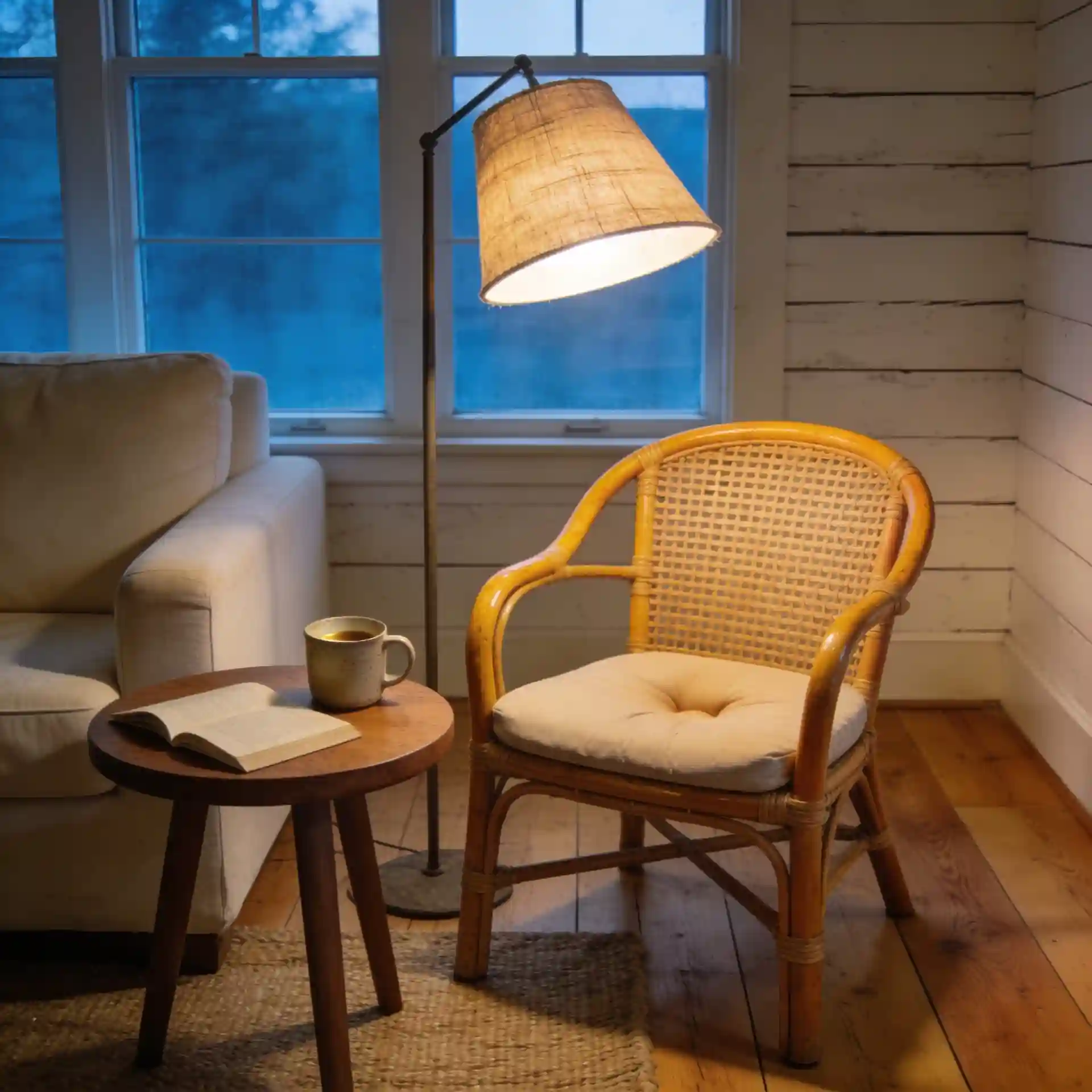
One rattan armchair, woven barrel chair, or cane-back accent seat completes the farmhouse material story in a way upholstered furniture alone cannot. Natural woven pieces add a texture that reads immediately as organic — lighter in visual weight than a second sofa and more varied than another upholstered chair.
A curved rattan chair in natural or light honey tone works alongside a cream linen sofa. Pair it with a small wooden side table rather than a matching accent table — the mix feels found rather than purchased together. For rooms where space is tight, these tiny living room layout ideas show how to arrange one sofa plus an accent chair without blocking sightlines.
KEY TAKEAWAY: The style layer is built on three decisions — the right sofa material, intentionally varied wood and metal tones, and enough textile layers that the room feels lived-in rather than arranged.
Tier 3 — The Elevated Finish
These four details do not add complexity — they add warmth and specificity. A room can be styled right and still feel flat until the lighting, the focal point, the organic elements, and the wall arrangement are resolved.
9. What Lighting Works Best in a Farmhouse Living Room?
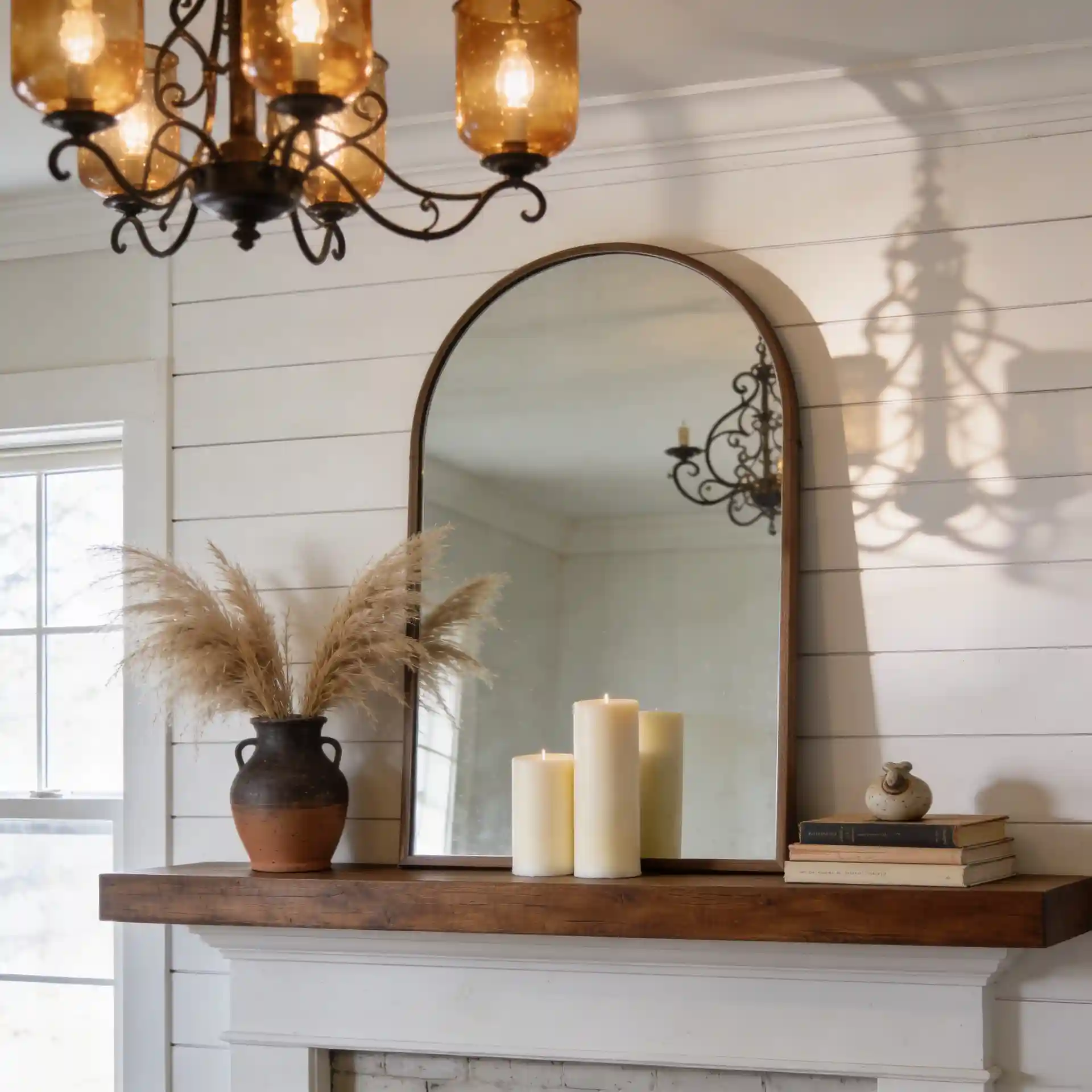
Lighting is the fastest way to change how a room feels after dark. A wrought iron chandelier, a linen drum shade pendant, or a wagon-wheel-style fixture shifts the entire mood the moment it turns on. Choose bulbs at 2700K color temperature for the warmest tone — this produces the amber glow associated with incandescent Edison bulbs without the heat output or energy draw.
For rooms with 9-foot or higher ceilings, hang the chandelier so the bottom sits 7 to 7.5 feet from the floor. One ceiling fixture is not enough light for a living room. Add at least two table or floor lamps to eliminate the dark corners that make a room feel closed. Wall sconces in brushed brass or aged iron flanking a fireplace or TV wall add warmth without taking floor space.
Safety Note: Before hanging a heavy wrought iron chandelier, have a licensed electrician confirm your junction box is rated for the fixture weight — standard boxes are rated to 35 pounds.
10. Style the Mantel as the Room’s Focal Point
A fireplace mantel works best when styled at three distinct heights rather than filled with a row of equal-height objects. One tall anchor piece — a large art print, an arched mirror, or a simple canvas — goes against the wall. One or two medium-height elements — candles at varying heights, a small sculptural object, a vintage clock — sit in front or to the side. One low accent — a ceramic bowl, a small stack of cut wood, a bundle of dried botanicals — finishes the base layer.
A working fireplace is not required. A shiplap accent wall with a floating walnut mantel shelf creates the same focal moment for a fraction of the cost. Style it the same way — three heights, no matching sets, one natural material at every level.
For rooms where the television is the dominant feature, these ranch style home interior update ideas show how designers balance screens with architectural elements in open-plan farmhouse spaces.
11. What Natural Elements Work Best in a Farmhouse Living Room?
Modern farmhouse living rooms need organic texture beyond furniture and textiles. A fiddle leaf fig or snake plant in a terracotta or matte clay pot adds a vertical element that softens rooms with strong horizontal lines. Trailing pothos works in lower-light corners. For zero-maintenance options, dried pampas grass, cotton stems, or eucalyptus in a tall woven basket add the same organic texture without watering.
Layer organic elements across the room at different heights: a seagrass basket under the coffee table, a worn wooden tray on the coffee table surface, unglazed ceramic vases in muted terracotta or sage on a shelf. Every surface gains warmth from at least one natural material that isn’t painted or upholstered. That contrast — soft organic versus finished furniture — is what separates the room that feels lived-in from one that looks staged.
DESIGNER TIP: Group plants and organic objects in odd numbers — three ceramic vessels of different heights read as a curated arrangement; two identical ones read as symmetry for its own sake.
12. Curate a Gallery Wall With an Intentional Farmhouse Mix
A farmhouse gallery wall works when the frames share a finish — matte black, antique gold, or raw natural wood — and the content is loosely related rather than precisely matched. Black-and-white farm or architectural photography, simple botanical line prints, a vintage botanical illustration, and one minimal text piece in a complementary tone all sit comfortably together.
Mix frame sizes but keep a dominant size consistent — mostly medium frames with one or two larger anchors prevents the cluttered look that comes from too many equally sized pieces. Leave 2 to 3 inches between frames. Keep the overall shape rectangular or deliberately irregular — never let it spread in a way that looks unplanned.
Living room wall decor approaches vary across styles — farmhouse, coastal, and modern palettes each handle gallery wall arrangements differently, but the shared principle is the same: one consistent frame finish, a dominant size, and deliberate asymmetry rather than a grid.
KEY TAKEAWAY: The elevated finish comes from restraint — one well-styled mantel, layered ambient lighting, organic textures placed at multiple heights, and a gallery wall that feels found rather than assembled.
Where People Go Off Track
❌ Painting every wall in pure cool white → ✅ Use a warm greige or creamy white for walls and save bright white for trim — the contrast is what makes the warmth land.
❌ Matching all wood tones across furniture and floors → ✅ Introduce 2 to 3 distinct wood tones at different scales; the mix reads natural and collected, not coordinated from a catalog.
❌ Choosing a rug that is too small for the room → ✅ Front legs of every seating piece must sit on the rug; an 8×10-foot rug is the standard minimum for most living rooms.
❌ Crowding surfaces with small farmhouse accessories → ✅ Group objects in threes, keep surfaces clear, and let natural materials — terracotta, worn wood, dried botanicals — do the work that clutter used to do.
KEY TAKEAWAY: The most elevated farmhouse living rooms edit down rather than layer up — the warmth comes from the materials, not the quantity of objects.
Price Ranges by Style
Modern farmhouse living room upgrades span a wide cost range. The highest-impact changes are not always the most expensive — paint and lighting shift the feel of a room more than a new sofa does.
| Project | Estimated Cost | Impact Level |
|---|---|---|
| Shiplap or board-and-batten accent wall (approx. 150 sq ft, professional install) | $2,250–$4,500 | Very High |
| Slipcovered linen sofa (budget to mid-range) | $850–$2,000 | High |
| 8×10 jute or distressed area rug | $150–$600 | High |
| Wrought iron chandelier plus two lamps (lighting layer) | $300–$900 | Very High |
Best First Upgrade: Repaint walls in a warm greige and swap overhead lighting for a chandelier plus two lamps — both changes cost under $500 combined and shift the room’s entire feel before a single new furniture piece arrives.
Skip for Now: Matching furniture sets — they are the fastest route to a room that looks assembled rather than collected. Source furniture pieces individually over time and let the room build gradually.
KEY TAKEAWAY: Paint and lighting give the highest return per dollar in any modern farmhouse living room — start there before spending on furniture.
What If Your Room Has Challenges?
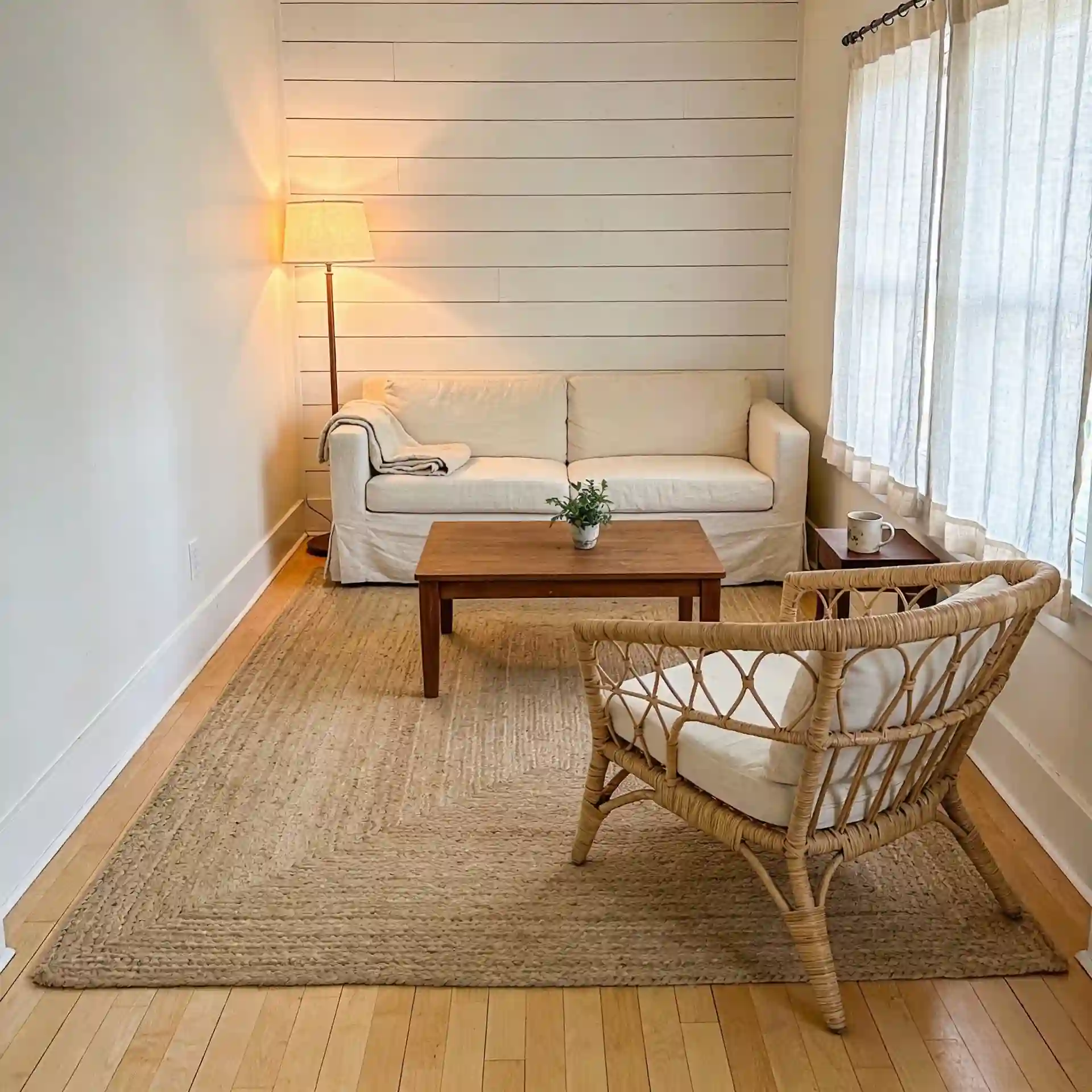
Small or narrow living room: Lighter wall colors (SW Alabaster over a deeper greige) keep small rooms from closing in. Choose one sofa and one accent chair instead of a sofa and loveseat. Use tall vertical elements — floor-to-ceiling linen drapes, shiplap, or an 84-inch bookcase — to pull the eye upward rather than across. These small living room decorating tips on a budget cover how to sequence changes without overspending.
Rental-friendly version: Peel-and-stick wood panels and removable board-and-batten wallpaper create the farmhouse wall texture without permanent installation. Use furniture risers instead of recessed lighting. Swap standard hardware for matte black or brushed brass pulls using adhesive mounting where drilling is off-limits.
If you prefer the darker, moodier farmhouse tone: A cozy winter cabin interior aesthetic applied to a living room uses deeper wall colors — warm mushroom, soft charcoal, or dark greige — while keeping the organic farmhouse materials. The result feels more layered and suits rooms with limited natural light.
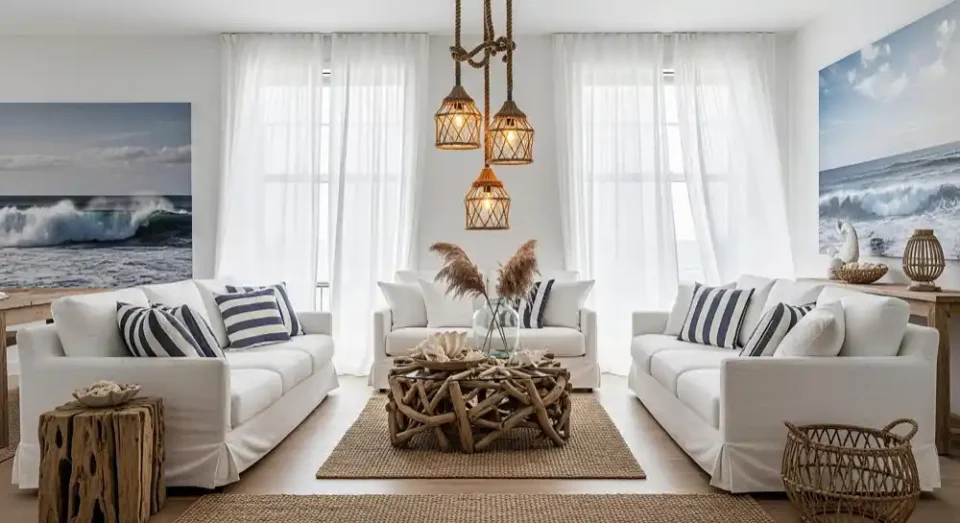
If you want farmhouse style that leans toward the coast: The farmhouse palette shifts naturally toward a neutral coastal living room when you swap jute for sisal, terracotta for muted blue-grey, and wrought iron fixtures for aged brass or weathered rattan. The structural decisions — warm base palette, rug scale, layered lighting — stay identical. Also explore barndominium interior ideas for how the open-plan farmhouse look scales to larger footprints.
KEY TAKEAWAY: The modern farmhouse framework adapts cleanly to small rooms, rentals, darker palettes, and coastal leanings — only the specific materials shift, not the underlying decisions.
Frequently Asked Questions
Conclusion
The twelve modern farmhouse living room ideas here follow a specific sequence for a reason. The foundation decisions — palette, accent wall, floors, rug — determine whether everything that comes after looks grounded or just placed. The style layer builds on that foundation with materials and textures that give the room its warmth. The finishing details lift the whole thing from styled to genuinely elevated. Skip ahead to the details before the foundation is right and the room will feel like it is missing something you cannot name.
Editorial field note: Rooms that feel warm without obvious effort usually have one thing in common — the surfaces have been edited down. The warmth comes from the materials themselves, not from what covers them. A worn oak coffee table in an otherwise clear room looks collected. The same table surrounded by small accessories looks crowded. Start by removing, then decide what actually needs to go back.
For more room inspiration across every style in the rooms category and everything else on home decor ideas at 101homedecor.com, let the room tell you what it is missing before you add anything new.