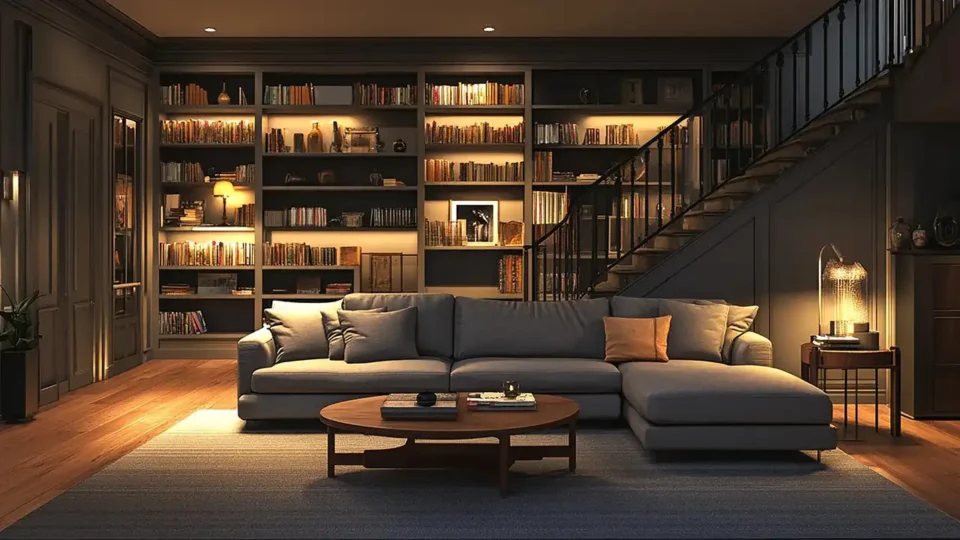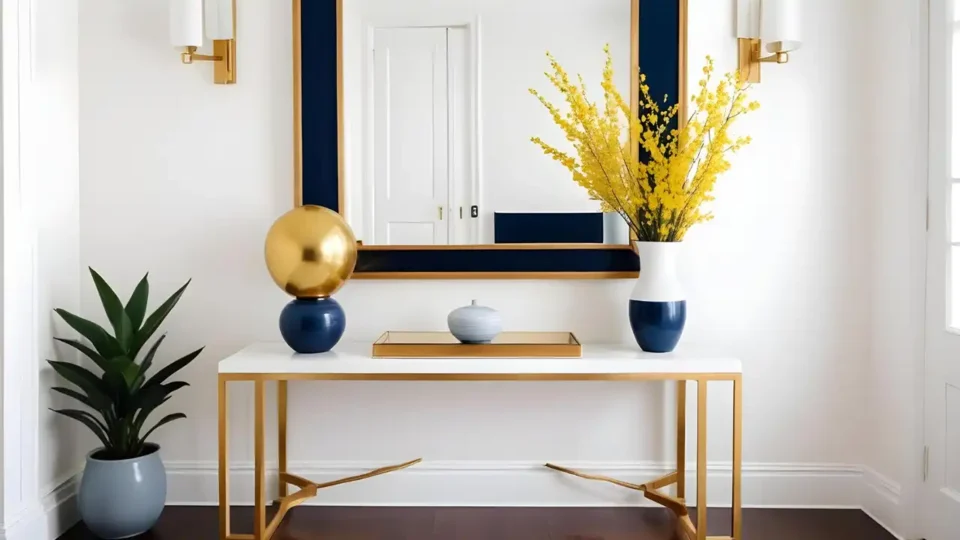
TL;DR
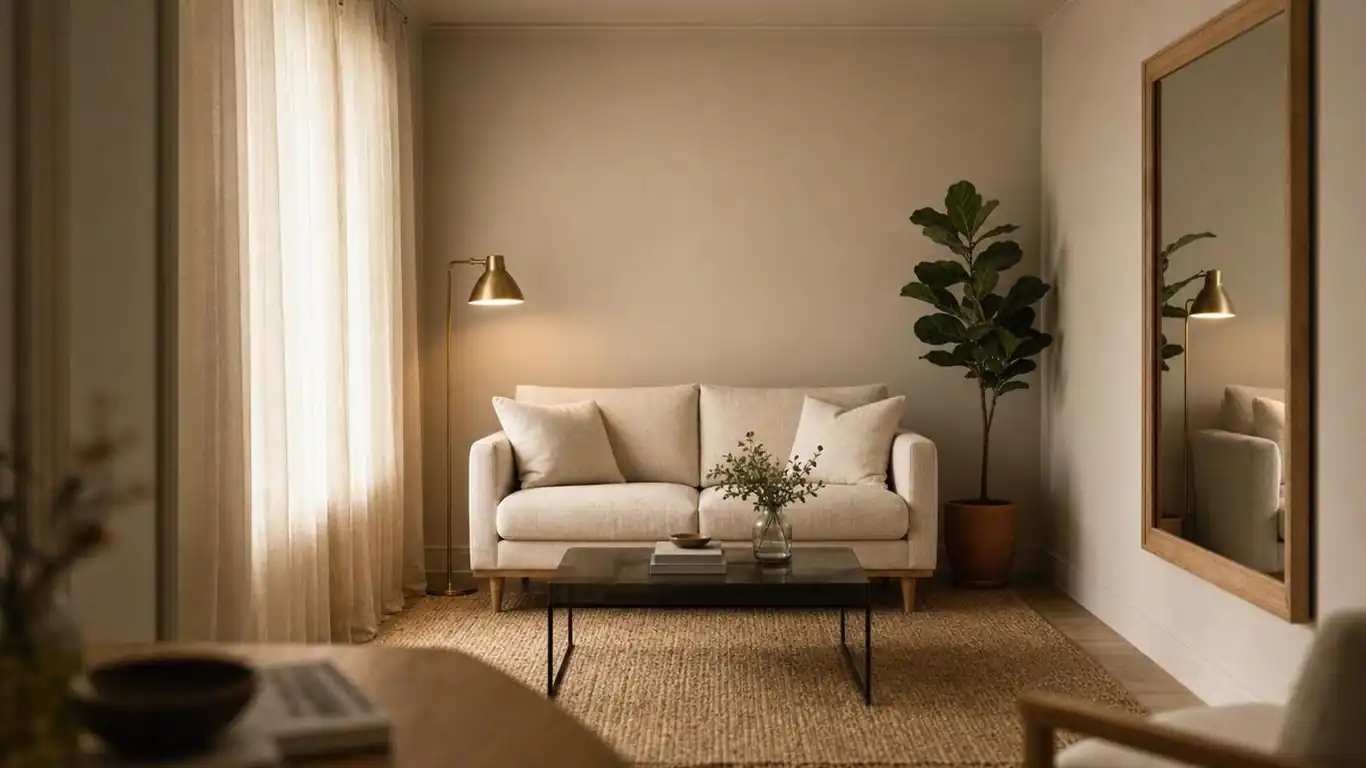
- Color: Warm greige or soft white on walls, trim, and ceiling reads as a single continuous surface — the room stops feeling divided.
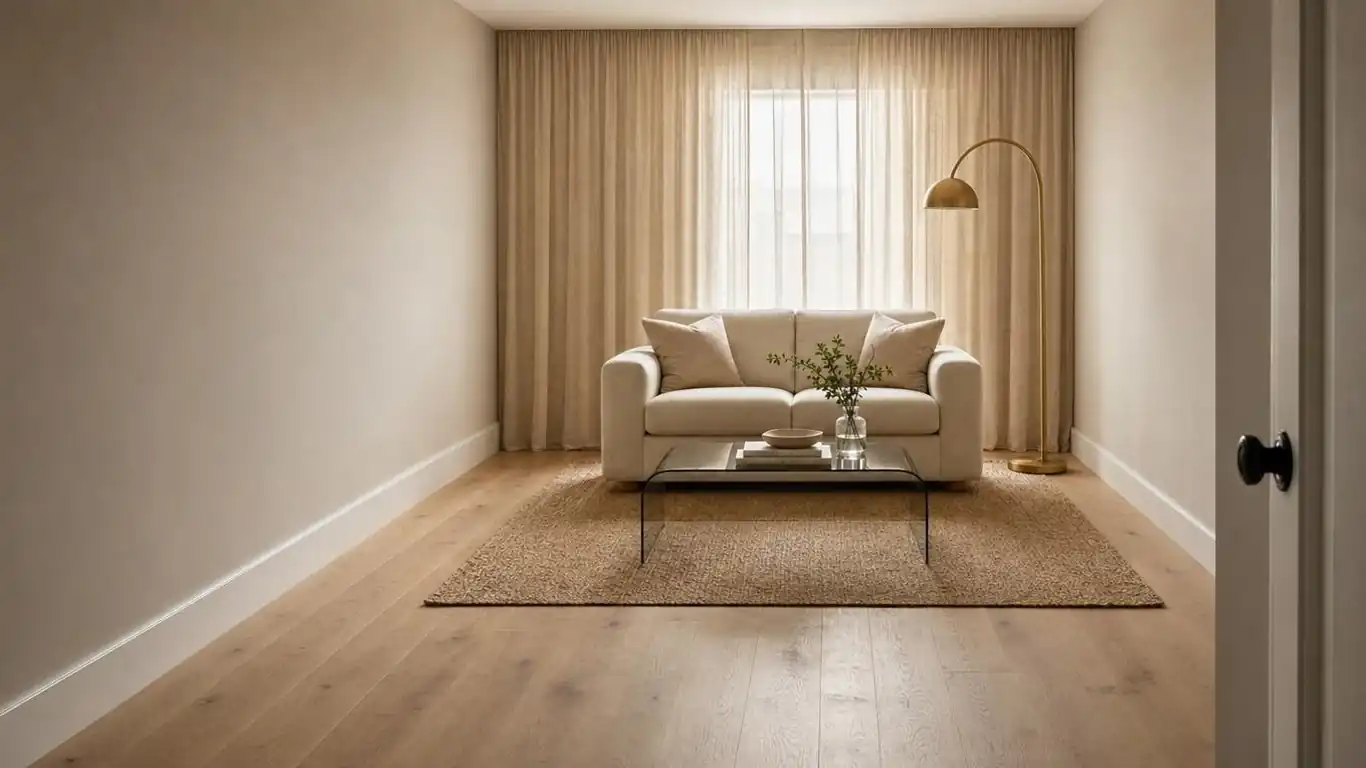
- Furniture scale: A cream linen loveseat with visible oak legs at 52–70 inches takes 30 fewer inches of visual floor than a standard sofa. That gap is everything.
- Mirrors and light: A large mirror opposite a window doubles the natural light entering the room. Layered lighting at 2700K removes shadows that make walls feel closer.
- Layout: Floating furniture 4–6 inches from walls and keeping one wall completely clear opens the sightlines a dark, packed room destroys.
- Storage: Floating shelves at 72 inches or higher use dead vertical space without adding visual weight at eye level.
Why One Tiny Living Room Feels Open and Another Feels Like a Box
Why does one tiny living room feel open and welcoming while another of the same square footage feels like a box? The answer is almost never the room itself. It is the decisions made inside it — the sofa scale, the curtain drop, the paint color on the ceiling, and whether the furniture floats or presses flat against every wall.
Tiny living room ideas that work all share the same logic: reduce visual weight, extend sightlines, and layer light so the eye travels rather than stops. These are not design tricks. They are the same rules designers apply on 101homedecor.com whether the room is 90 square feet or 900. The difference is that in a small room, every decision matters more.
I restyled a 10 by 12-foot sitting room in a 1930s semi-detached home last spring. The client had given up on it — she called it “the room we walk through, not the one we sit in.” The sofa was pushed flat against the wall. Dark navy curtains started at the window frame. A large solid storage cabinet blocked the back wall. After switching to a low-slung linen loveseat with visible legs, hanging pale sheer panels from ceiling height, and repainting in warm cream throughout, the room stopped feeling like a corridor. Two weeks later she texted to say they’d had friends over for a dinner party — the first time in four years.
If you’ve ever stared at your living room and wondered why even new furniture doesn’t fix it — you’re not alone. The furniture was never the problem. Scale, placement, and light were. This guide covers all 25 fixes, from creative small apartment ideas to the specific dimensions that make small rooms breathe. You’ll also find honest guidance on what to skip, drawn from cozy farmhouse living room ideas and smart ways to decorate a small living room on a budget that have worked across dozens of rooms.
Bookmark this guide for quick reference.
KEY TAKEAWAY: Tiny living room ideas that work share one logic — reduce visual weight, extend sightlines, and layer light so the eye moves freely through the room.
| Quick Takeaways | |
|---|---|
| Color | Monochromatic warm cream on walls, trim, and ceiling unifies the room into one continuous surface. |
| Furniture | Visible legs on sofas and chairs lift visual weight off the floor and open the room immediately. |
| Mirrors | A large mirror opposite a window doubles natural light and creates a second sightline. |
| Layout | Float furniture 4–6 inches from walls — one empty wall makes the room feel planned, not packed. |
| Storage | Vertical shelves at 72 inches or above use height without adding visual bulk at eye level. |
What Tiny Living Room Design Actually Means
A tiny living room measures under 150 square feet. A small living room sits between 150 and 250 square feet. These are different problems with different solutions. Knowing which you have determines which of the 25 ideas below you prioritize.
Visual weight is the mass a piece appears to carry, regardless of its actual dimensions. A solid upholstered sofa with a high back and no legs reads as heavier than its size. A glass coffee table reads as almost weightless. A dark painted wall reads as closer than it is. Visual weight is the single most powerful variable in tiny living room design — more influential than square footage, furniture count, or storage solutions.
The principles that govern a 10 by 12-foot sitting room are the same ones explored in 7 effortless very small bedroom ideas — rooms succeed when every element reduces perceived mass and extends how far the eye travels before it stops.
KEY TAKEAWAY: Visual weight — how heavy a piece looks, not how heavy it is — determines whether a tiny room feels spacious or cramped.
Why These Strategies Work
Three rules govern all 25 tiny living room ideas below. Understanding them makes the specific tactics easier to apply.
Sightlines. A clear sightline is an unobstructed visual path from one wall to another. Sightlines make rooms feel larger because the eye travels rather than stopping on a dense cluster of furniture. A 36-inch traffic path keeps sightlines open while meeting building safety standards for clear passage.
Visual weight. A mirror placed opposite a window doubles the natural light entering the room. That mirror also creates a second sightline — the reflection adds perceived depth where a solid wall would stop the eye. Visual weight is the mass a piece appears to carry. Low-profile furniture with visible legs reduces visual weight at floor level, which is where small rooms most often feel dense.
Layered light. A bulb at 2700K produces warm white light close to late-afternoon sun. That warmth softens edges and makes walls feel less hard and close. Overhead lighting throws flat illumination and casts shadows downward — those shadows make ceilings feel lower. Layered lighting using ambient, task, and accent sources removes those shadows entirely. An 8 by 10-foot area rug anchors a seating area in rooms up to 200 square feet — it creates a zone without adding visual bulk, which is exactly what sightlines need to remain clear.
Sheer linen panels reflect morning light across the room. Curtains hung at ceiling height add perceived height without structural change — the eye follows the fabric up, reads the ceiling as higher, and the room expands vertically even when the floor plan cannot.
KEY TAKEAWAY: Sightlines, visual weight, and layered light are the three forces that make a tiny living room feel bigger — every idea below addresses at least one of them.
How to Apply These Ideas at Home
Color and Paint (Ideas 1–5)
Idea 1 — Paint walls in soft white or warm greige.
Soft white and warm greige are the two most effective colors for tiny living rooms. Benjamin Moore Pale Oak OC-20 is a warm greige that reads cream in natural light and picks up a soft honey tone in artificial light. Farrow & Ball Elephant’s Breath is a cooler greige that works in north-facing rooms receiving less direct sun. Both colors keep the eye moving across the room rather than stopping at a defined boundary. A flat or matte finish diffuses rather than reflects, which prevents the walls from competing with the furnishings.
KEY TAKEAWAY: Warm greige and soft white walls extend sightlines because they read as light, continuous surfaces rather than hard edges.
Idea 2 — Go monochromatic.
A monochromatic room uses the same color family on walls, trim, and ceiling. The room reads as one envelope rather than several distinct surfaces. Painting the trim the same warm cream as the walls removes the contrast that makes a room feel sectioned. Contrast adds visual interest but costs space. In a tiny living room, removing contrast is almost always the right trade.
Idea 3 — Paint the ceiling two shades lighter than the walls.
The ceiling is the fifth wall. Painting it two shades lighter than the walls lifts it visually — the eye reads light as higher and the room gains perceived height without any structural work. In rooms already painted warm greige, choose the lightest tint of that same swatch family for the ceiling.
Idea 4 — Use one deep accent wall for depth.
A deep navy or charcoal accent wall on the wall furthest from the entry creates the illusion of receding space. The wall appears to pull away from the viewer, adding perceived depth. This works best on a single wall only — two deep walls in a small room close it in rather than opening it up.
Idea 5 — Avoid two-tone wainscoting or chair-rail panels.
Chair-rail panels and two-tone wainscoting cut the wall horizontally in half. That horizontal line shortens the room’s perceived height by drawing the eye to the midpoint of the wall rather than the ceiling. Skip this treatment in any room under 200 square feet.
DESIGNER TIP: Farrow & Ball Builders’ White works on walls, trim, and ceiling simultaneously — no color-matching required. It saves time and creates the seamless monochromatic look that makes rooms feel larger.
KEY TAKEAWAY: Monochromatic color from floor to ceiling — walls, trim, and ceiling in the same family — removes contrast and makes the room feel like a single open volume. Explore serene neutral coastal living room ideas for palette inspiration that carries this logic beautifully.
Mirrors and Light (Ideas 6–10)
Idea 6 — Hang a large mirror on the longest wall.
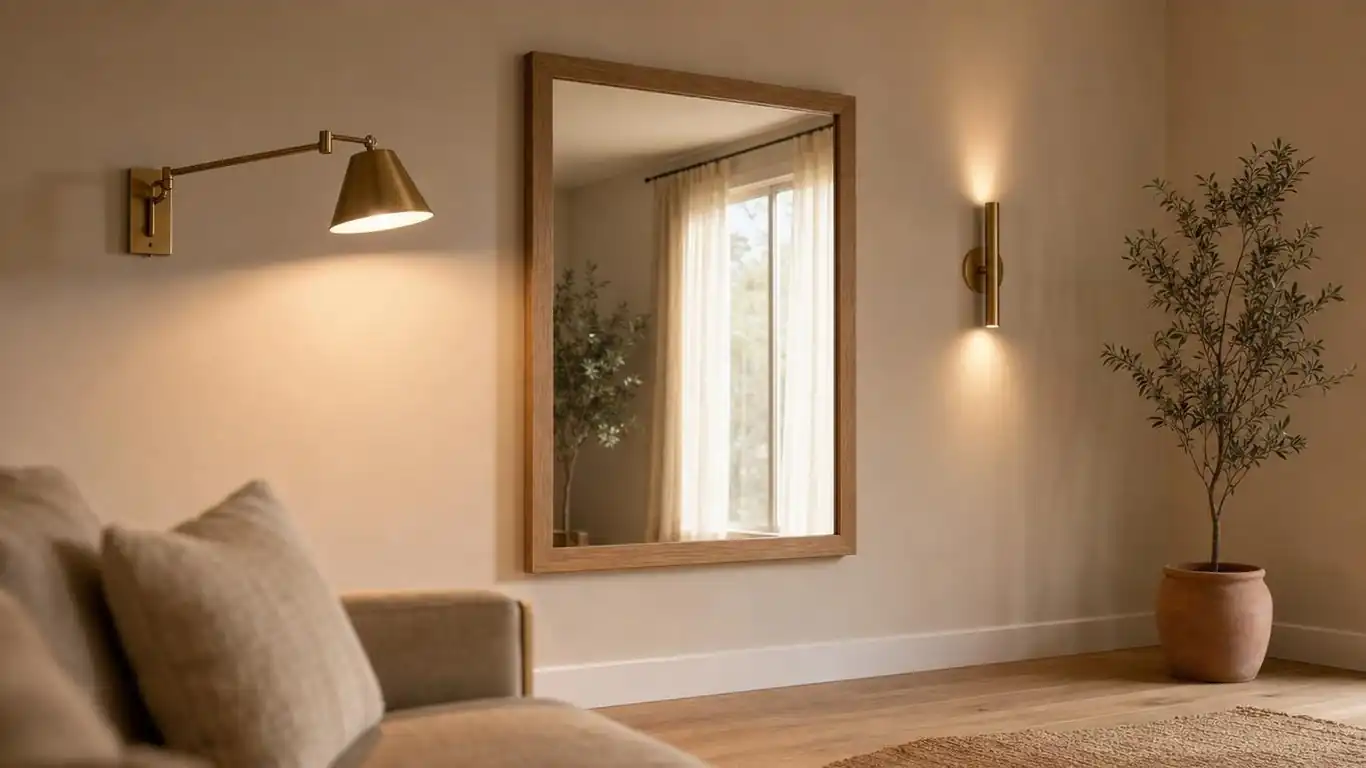
A large mirror — at least 24 by 36 inches, ideally larger — on the longest wall creates a second sightline. The mirror doubles the perceived width of the room and bounces natural light across surfaces. A mirror placed opposite a window doubles the natural light entering the room. In a room with no window on that wall, the mirror creates the illusion of one.
Idea 7 — Use a full-length leaning mirror.
A full-length leaning mirror at 60–72 inches reflects the full height of the room from floor to ceiling. It is more effective than a smaller mirror for vertical expansion because the reflection shows the floor, the furniture, and the ceiling simultaneously — the eye reads the room as taller. Lean it at a slight angle against the wall rather than mounting it flat for maximum light bounce.
Idea 8 — Layer three light sources.
A tiny living room needs three types of light: ambient (a floor lamp casting broad soft glow), task (a swing-arm lamp for reading), and accent (a wall sconce adding depth to a corner). Three sources eliminate the flat, shadow-producing effect of a single overhead fixture. Shadows in a small room make walls feel closer. Remove the shadows and the room expands.
Idea 9 — Use a tall floor lamp at 2700K.
A tall floor lamp at 58–64 inches produces light at eye level rather than overhead. Use a bulb rated at 2700K — that is warm white light close to late-afternoon sun in quality, and it softens hard edges and makes surfaces feel less dense. Skip overhead ceiling fixtures in a tiny living room wherever possible. They flatten the room.
Idea 10 — Add a brass wall sconce.
A brushed brass wall sconce frees the side table surface entirely while adding a layer of accent light. Wall sconces draw the eye upward toward the ceiling, which adds perceived height. For elegant coastal living room aesthetics, a single brushed brass sconce on either side of a mirror creates a balanced and space-efficient lighting moment.
DESIGNER TIP: A dimmer switch on every source lets you control atmosphere — at 60–70% intensity, a tiny room feels calm rather than exposed.
KEY TAKEAWAY: Layered lighting from three sources at 2700K removes the shadows that make small room walls feel closer — it is the single fastest way to change how a room feels without moving a single piece of furniture.
Furniture and Scale (Ideas 11–16)
Idea 11 — Choose sofas and chairs with visible legs.
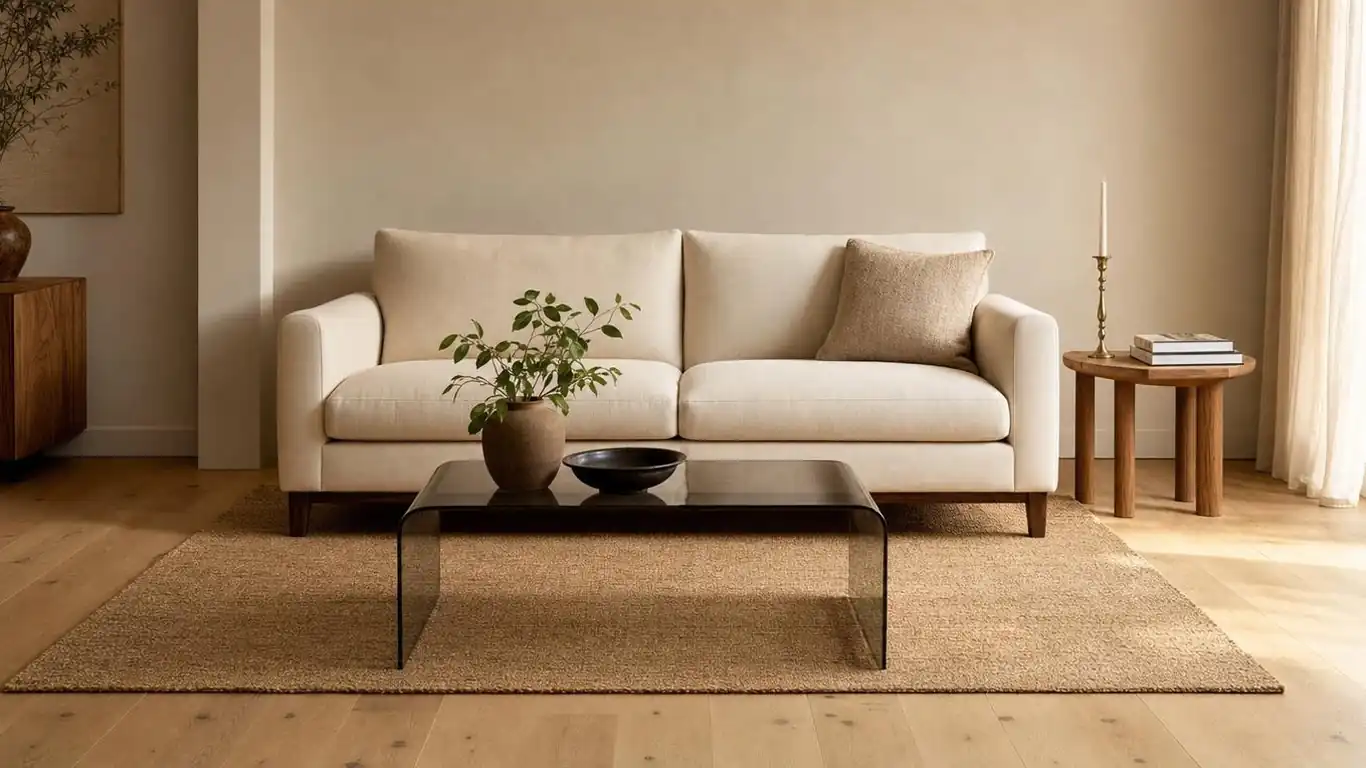
Visible legs at 5–7 inches in natural oak or walnut lift the sofa off the floor visually. The eye can see under the furniture — floor space reads as continuous rather than blocked. A sofa with a skirted base or legs hidden by a tight-fit base covers the floor and creates a wall of mass at ground level. Visible legs eliminate that wall.
Idea 12 — Pick a low-back sofa under 32 inches high.
A sofa back at 32 inches or under keeps the sightline across the top of the furniture clear. A high-back sofa at 36–40 inches creates a visual wall inside the room — the eye stops at the sofa back before it reaches the opposite wall. Low-profile seating keeps the room open above the furniture line.
Idea 13 — Use a glass or acrylic coffee table.
Glass and acrylic are nearly weightless visually. A glass coffee table in a tiny living room occupies the same floor area as a solid wood table but registers as almost nothing in the space. The floor reads as continuous beneath it. Smoked glass adds warmth without adding opacity.
Idea 14 — Choose a loveseat over a full sofa in rooms under 120 square feet.
A loveseat at 52–70 inches leaves 30 more inches of floor plan than a standard sofa at 84–96 inches. That 30 inches is the difference between a room that works and a room that feels impossible. In rooms under 120 square feet, a loveseat is not a compromise — it is the right piece. 15 functional studio apartment layout ideas use exactly this logic to make compact open-plan spaces feel planned and spacious.
Idea 15 — Use a single large area rug rather than multiple small ones.
An 8 by 10-foot area rug in natural jute or warm ivory low-pile anchors the seating area as a defined zone without cutting the floor into fragments. Multiple small rugs create visual complexity that reads as clutter. One rug in a warm neutral — jute, sisal, or low-pile ivory wool — reads as ground.
Idea 16 — Skip the armchair entirely in rooms under 110 square feet.
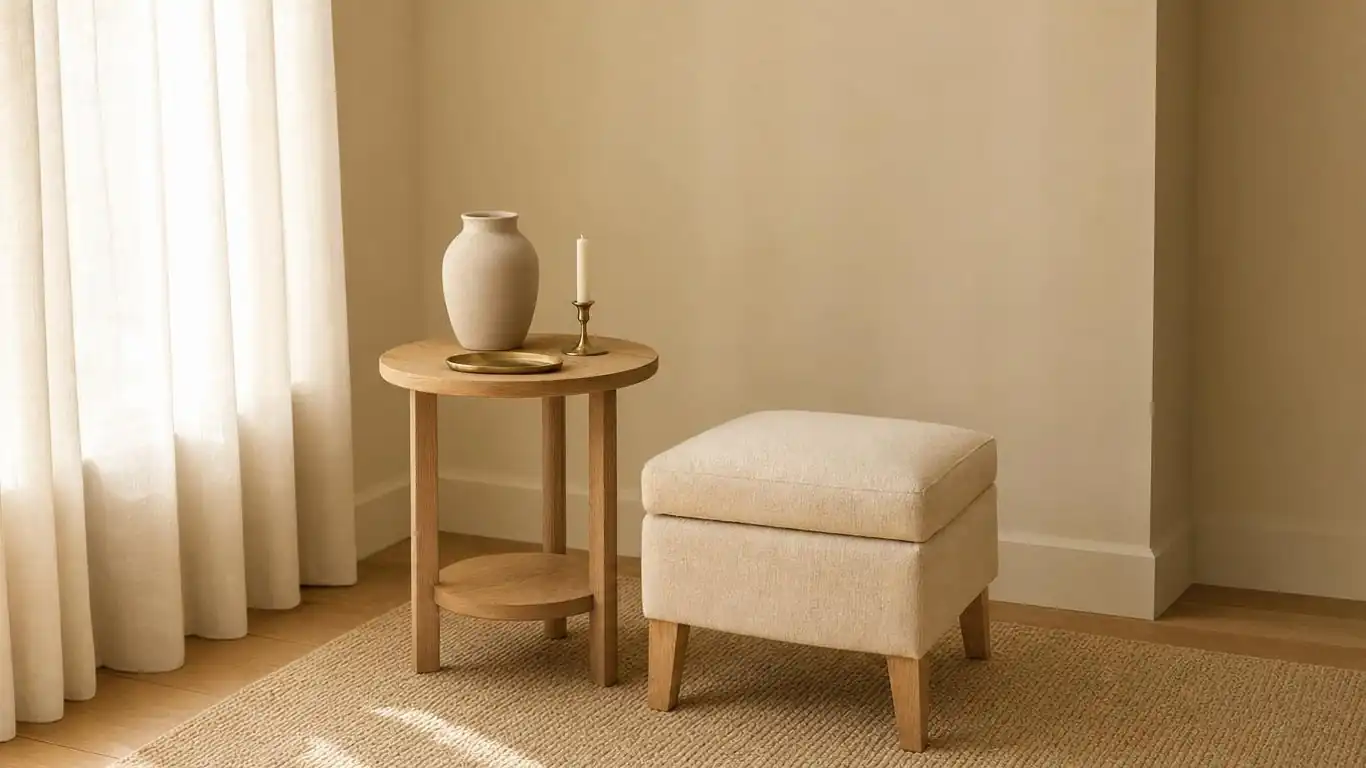
In rooms under 110 square feet, a loveseat plus an armchair creates a traffic problem and doubles the visual weight of seating. Skip the armchair. Use a low pouf or a small ottoman instead — it adds flexible seating without the visual bulk of a chair back. 12 cozy aesthetic small bedroom ideas apply the same principle: one strong anchor piece always reads better than two mid-size ones competing.
KEY TAKEAWAY: Furniture with visible legs, a low back under 32 inches, and a footprint that fits — loveseat over full sofa in rooms under 120 square feet — are the three scale decisions that transform a tiny living room.
Layout and Sightlines (Ideas 17–20)
Idea 17 — Float furniture 4–6 inches away from walls.
Pushing furniture flat against every wall is the single most common mistake in small room design. Furniture pulled 4–6 inches from the wall creates a breathing gap that reads as intentional space. The room looks curated rather than crammed. The gap also improves acoustics and makes cleaning easier — a practical benefit that compounds over time.
Idea 18 — Keep one wall completely clear.
One clear wall — nothing on it, nothing leaning against it, no shelving — gives the eye a rest. A room where every wall is occupied with furniture or storage reads as a storage unit. One clear wall signals open space even when the rest of the room is fully furnished.
Idea 19 — Create a clear 36-inch traffic path.
A 36-inch clear traffic path from the entry to the main seating area meets building code in the UK and US and, more practically, feels comfortable to walk through. A room with obstructed sightlines and narrow passages feels smaller than its actual dimensions. Smart small bedroom layouts that maximize floor space show how a single clear path through the room — measured and planned — changes the entire experience of the space.
Idea 20 — Face the sofa toward the room’s longest diagonal.
Placing the sofa facing the room’s longest diagonal rather than parallel to a wall uses the full depth of the room. The diagonal is always the longest dimension in any rectangular space. Furniture aligned to the diagonal opens sightlines toward every corner simultaneously.
KEY TAKEAWAY: Float furniture 4–6 inches from walls, keep one wall empty, and align seating along the room’s longest diagonal — three layout moves that cost nothing and change everything.
Storage Without Sacrifice (Ideas 21–23)
Idea 21 — Use floating shelves at 72 inches or higher.
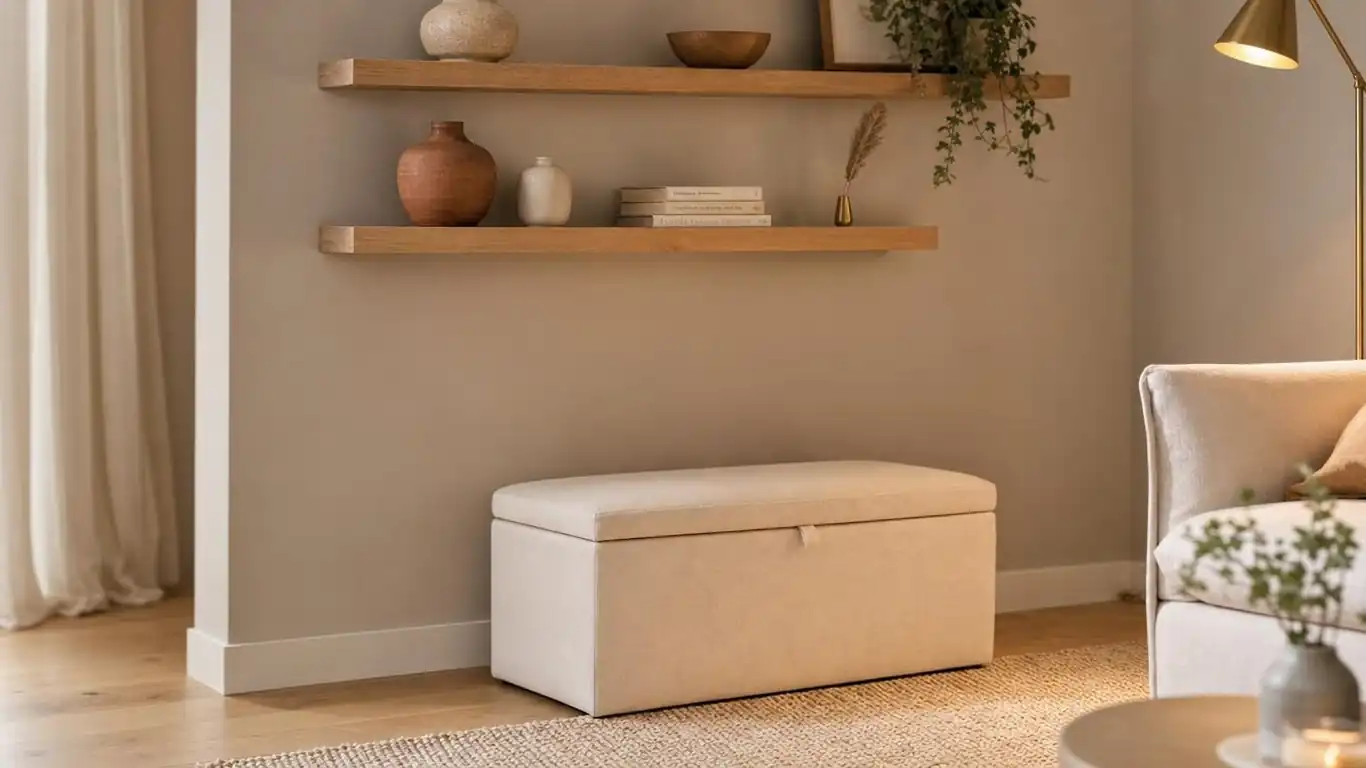
Floating shelves mounted at 72 inches or above use the dead vertical space above eye level. Eye-level shelving adds visual mass directly in the sightline. High shelves keep the sightline clear and pull the eye upward. This logic applies across small spaces — it is exactly what tiny laundry room ideas that maximize every square inch and tiny kitchen ideas for small apartments use to recover storage without sacrificing the feeling of openness.
Idea 22 — Choose a coffee table or ottoman with hidden storage.
A linen ottoman with a lift-top lid stores blankets, remotes, and books without a visible trace. West Elm’s storage ottomans and CB2’s nesting coffee tables with drawer storage are two accessible options in the $200–$450 range. Hidden storage removes the need for additional units — every new storage piece added to a tiny room takes floor space that the room cannot afford to give up.
Idea 23 — Use built-in shelving on either side of a fireplace or TV wall.
Built-in shelving flanking a fireplace or TV wall uses the alcove space that would otherwise be empty or occupied by bulky freestanding cabinets. Floor-to-ceiling built-ins on either side read as intentional architecture rather than added storage. They keep the center of the wall clear while absorbing books, objects, and media equipment into the wall plane.
KEY TAKEAWAY: Floating shelves at 72 inches or above and hidden-storage ottomans add significant capacity without adding any visual weight at the sightline level.
Textiles and Finishing Touches (Ideas 24–25)
Idea 24 — Hang curtains from ceiling to floor.
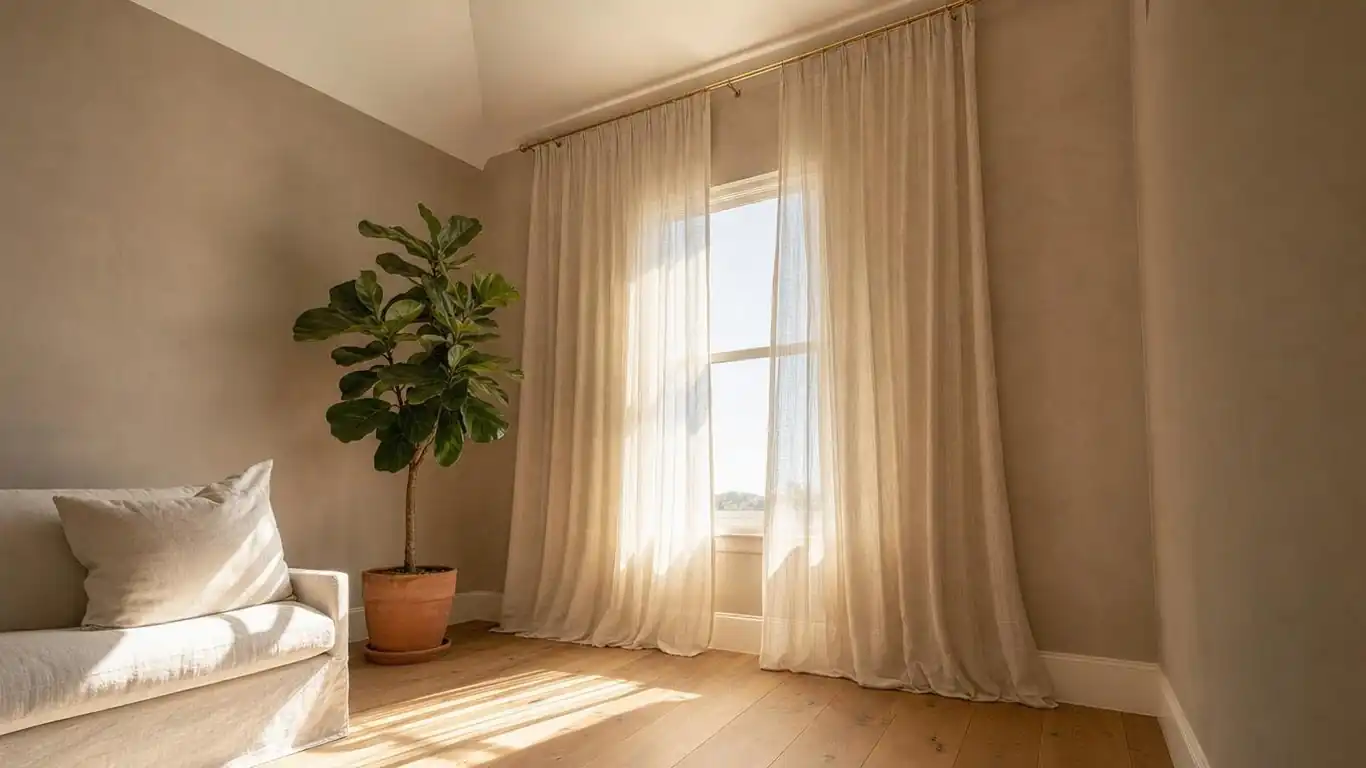
Sheer linen panels in warm cream hung from the ceiling rail — not from above the window — extend the perceived height of the room by several visual feet. Curtains hung at window height frame the glass. Curtains hung at ceiling height frame the entire wall. A loveseat at 52–70 inches leaves 30 more inches of floor plan than a standard sofa, but ceiling-height curtains achieve the same kind of proportional shift on the vertical plane. For smart small sunroom ideas this same ceiling-drop curtain approach opens up glass-heavy rooms that would otherwise feel like boxes.
Idea 25 — Add plants in tall, narrow planters.
A fiddle-leaf fig or snake plant in a terracotta or matte black planter draws the eye upward, adds a living vertical line, and introduces organic texture that softens the hard lines of furniture and walls. Tall, narrow planters take minimal floor footprint. Wide, squat planters compete with furniture for floor space. The vertical line of a tall plant works with ceiling-height curtains to reinforce the room’s perceived height.
KEY TAKEAWAY: Ceiling-height sheer linen curtains and a tall plant in a narrow planter are the two finishing touches that lock in the sense of height and airiness the other 23 ideas create.
A Recent Project:
In early 2025, I worked on a 10 by 12-foot living room in a 1930s semi-detached home. The client had filled it with a large sectional sofa, dark navy curtains hung at window height, and a tall solid storage cabinet against the back wall — all quality pieces that made the room feel airless. We replaced the sectional with a 65-inch cream linen loveseat, hung pale sheer panels from the ceiling, and fitted floating oak shelves above the doorframe. One month later she messaged to say she’d hosted friends there for the first time in years.
What Most People Get Wrong
❌ Pushing all furniture flat against the walls → ✅ Float every piece 4–6 inches from the wall. The breathing gap signals space — furniture pressed to the wall signals a room that ran out of ideas.
❌ Hanging curtains at window height → ✅ Mount the curtain rod at the ceiling line. Curtains hung at window height frame the glass. Curtains hung at ceiling height frame the entire wall and add perceived height that no paint color can match. For minimalist small bedroom ideas, the same ceiling-height curtain logic is the most recommended spatial fix.
❌ Buying oversized furniture first → ✅ Measure the room, then choose the sofa. A loveseat at 52–70 inches in a room under 120 square feet leaves traffic paths clear and sightlines open. A standard sofa at 84–96 inches in the same room closes both. Budget decorating hacks for small rooms consistently rank right-sizing furniture as the highest-impact, zero-cost change.
❌ Using multiple small rugs → ✅ One large area rug at 8 by 10 feet anchors the seating zone. Multiple small rugs fragment the floor into sections. Each section feels like a smaller room. One rug reads as one clear, open zone.
KEY TAKEAWAY: The four most common mistakes in tiny living rooms — wall-pressed furniture, low curtains, oversized sofas, and fragmented rugs — are all reversible without renovation or new purchases.
Frequently Asked Questions
Conclusion
Tiny living room ideas work when they share a single logic: reduce what the eye stops on and extend how far it can travel. Every fix above — the warm greige paint, the ceiling-height sheer panels, the 65-inch loveseat with oak legs, the floating shelves — serves that same purpose. None of them require renovation. Most require only a tape measure and a willingness to question the decisions made when the room was first furnished.
I redesigned my own living room in a rented flat six years ago using exactly these ideas — no renovation budget, no permission to paint, just furniture rearrangement, a pair of second-hand floor lamps, and sheer panels from a discount shop. The room changed completely. Nobody who visited could explain why it felt different. They just sat down and stayed. That is the goal of every good tiny living room idea: a room that makes people want to be in it. Start with the two or three fixes that fit your budget and space today. The rest of the changes can follow. For ongoing inspiration on making small spaces feel purposeful and beautiful, 101homedecor.com is where these ideas continue — alongside minimalist bedroom ideas for 2026 that apply the same principles across the rest of the home.