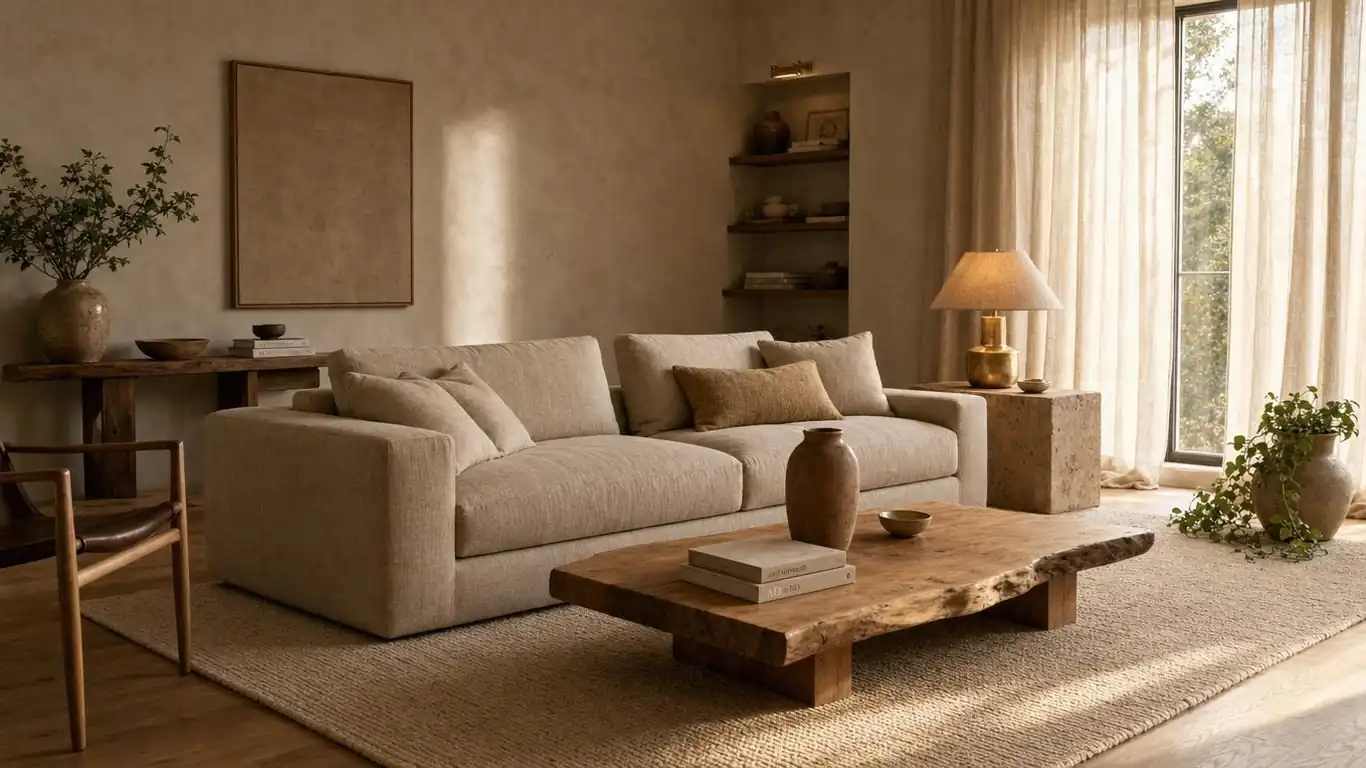
TL;DR
- Build the palette on warm neutrals — warm greige, soft clay, raw linen — not cool whites or flat greys.
- Prioritize natural materials: raw oak, travertine, linen, boucle, and leather over synthetic stand-ins.
- Start with the rug and anchor the entire furniture arrangement around it — the floor is the foundation.
- Choose a sofa with clean, low-profile lines in natural upholstery — avoid overstuffed arms or heavy tufting.
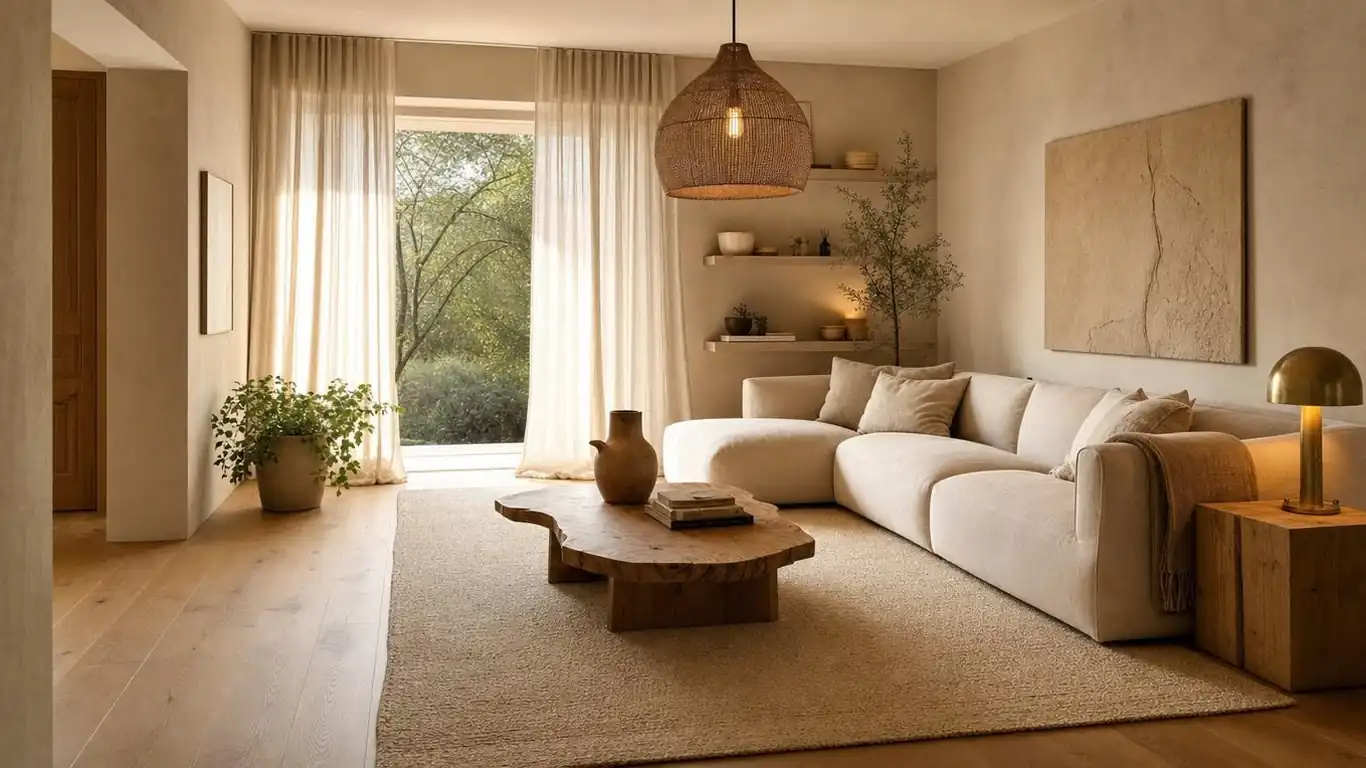
- Introduce one defining organic element — a live-edge coffee table, an arched stone surround, a statement ceramic — and let it lead.
- Layer lighting at three levels: ambient, task, and accent, all warm-toned and dimmable.
- Edit the room down — organic modern only works when surfaces have room to breathe.
What Organic Modern Actually Means
Why does the same modern living room feel effortless in an architect’s portfolio and oddly flat in a new build? The difference is almost always material. Clean geometry without natural warmth reads clinical. Softness without structure reads unresolved. Organic modern sits in the middle — rooms with quiet, considered forms and a material vocabulary that keeps them from feeling cold.
The defining formula: warm neutral palette, natural materials, and enough restraint to let the room breathe. It isn’t a rigid style so much as a discipline. Every piece earns its place. Nothing is synthetic when a natural alternative exists. The result reads warm and modern at the same time, which very few approaches actually deliver.
I worked on a similar brief last year — a newly renovated open-plan space with white plaster walls and a polished concrete floor. The clients loved the architecture but couldn’t understand why the room felt so unwelcoming. We changed nothing structural. We changed the material layer: a raw oak console, a linen sofa, a travertine lamp base, a wool rug. The room shifted entirely. That shift is what these steps teach. Browse our home decor inspiration for more room ideas as you plan, and see how 11 cozy farmhouse living room ideas approach the natural material question from a warmer, more rustic angle. Bookmark this guide for quick reference.
KEY TAKEAWAY: Organic modern is less a visual checklist than a material discipline — natural over synthetic, warm over cool, considered over filled.
| Quick Takeaways | |
|---|---|
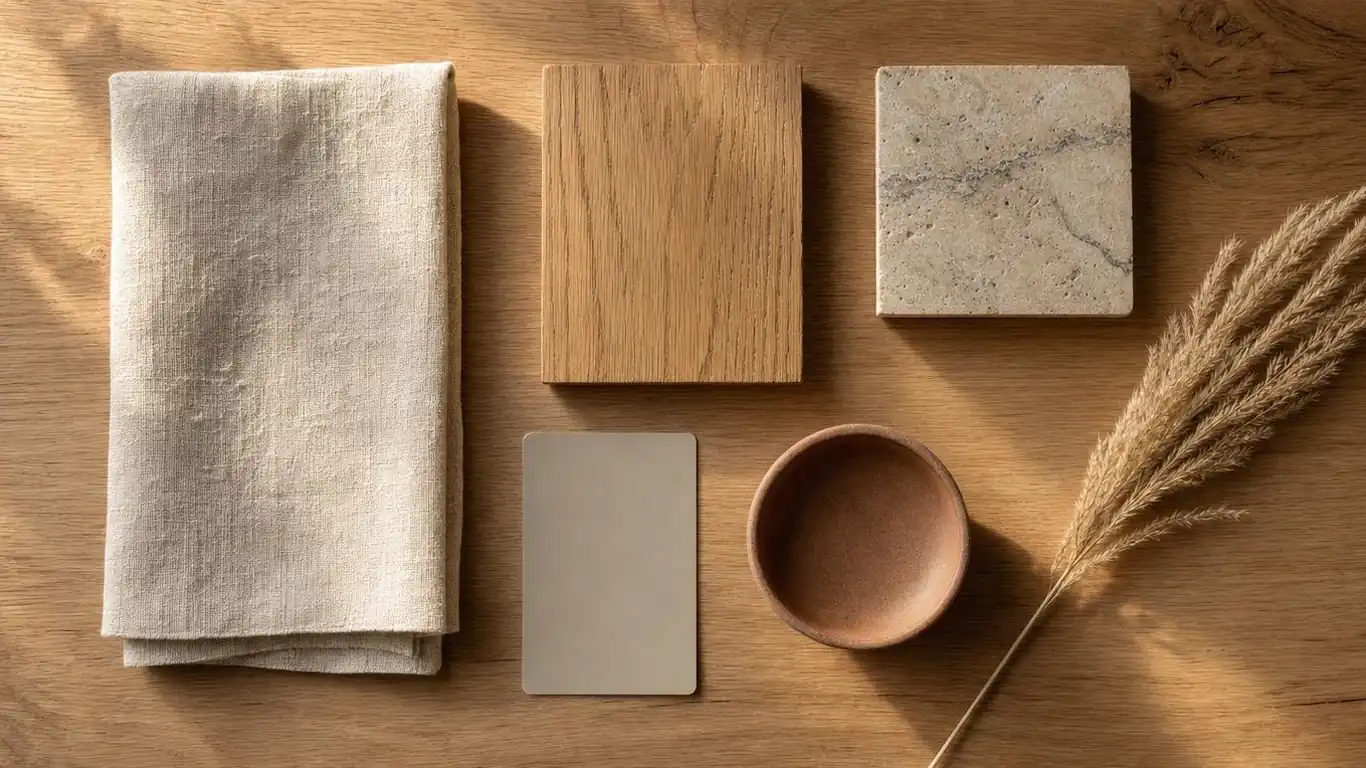
| Palette | Warm greige, soft clay, raw linen white, and muted sage — never cool grey or stark white. |
| Materials | Raw oak, travertine, linen, boucle, rattan, and natural leather anchor every organic modern room. |
| Furniture | Low-profile, clean-lined, and undecorated — form follows material, not trend. |
| Statement piece | One defining organic element — not five — carries the room’s entire visual character. |
| Editing | Surfaces with breathing room are the signature of organic modern — resist filling every inch. |
What You’ll Need Before You Start
Gather these decisions before anything enters the cart:
- A warm neutral palette of two to three tones — one wall color, one primary furniture tone, one accent
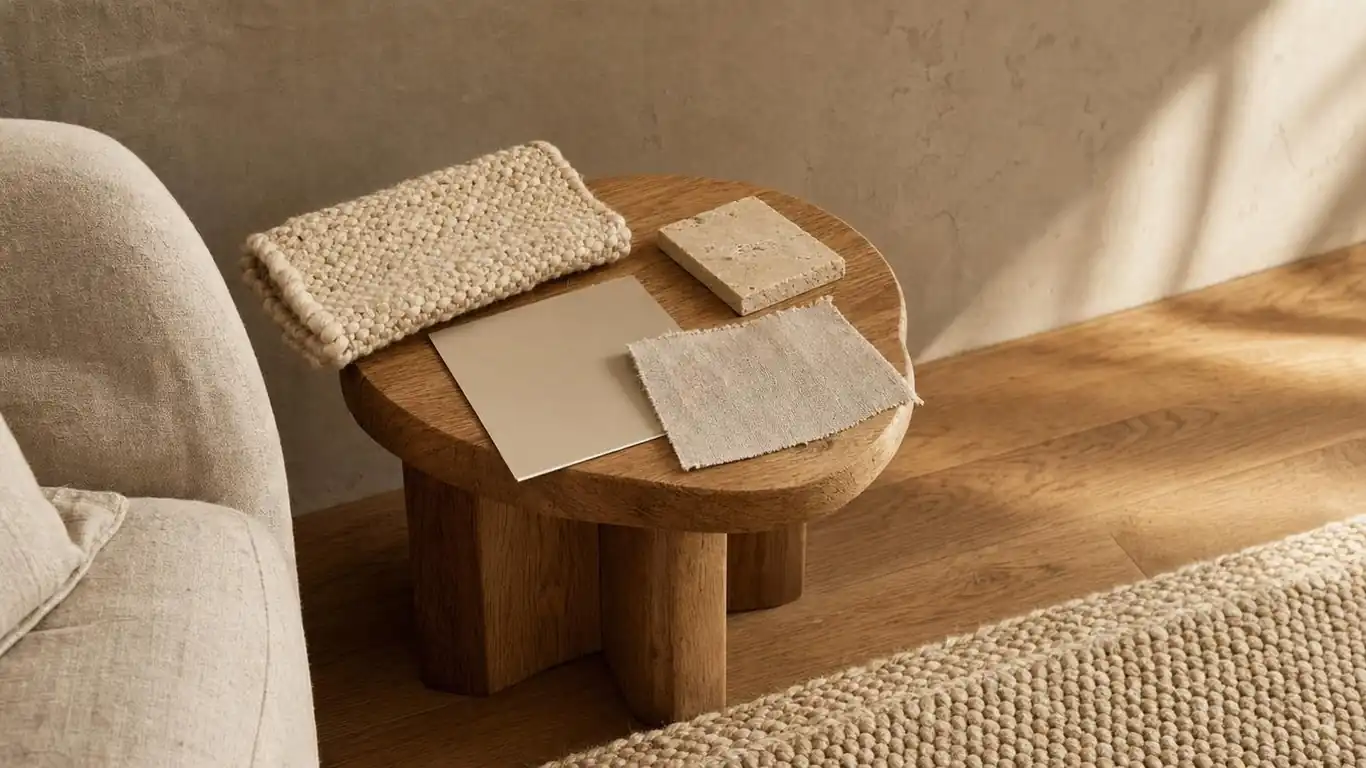
- Material samples in hand: at minimum two natural textures (wood + textile, or stone + linen)
- A rug sized to the room — at least 8×10 for most living rooms, 9×12 for footprints over 300 square feet
- A focal point plan: fireplace wall, a large window, or a statement architectural feature
- A lighting brief: at least three sources, all warm-toned and dimmable
None of these need to be finalized before you start. But having each decided before you buy anything prevents the two most expensive organic modern mistakes: buying furniture before the palette is set, and choosing a rug last when it should always come first. 11 serene neutral coastal living room ideas offer a useful reference for how focal points and sightlines work in a restrained, warm-neutral room.
KEY TAKEAWAY: Palette, material plan, and focal point — decide all three before any purchase, in that order.
Step-by-Step: Building the Room
Organic modern style comes together best when you build it in order. These five steps — palette, materials, rug, sofa, and one defining organic element — take the room from empty to complete.
Step 1 — Define the Palette Around Warm Neutrals
The most consistent mistake in organic modern design is reaching for cool greys or stark whites as the wall and textile foundation. Both strip the warmth from natural materials rather than amplifying it. The correct palette starts with one of three base tones: warm greige (a grey with a distinct warm undertone), soft raw linen white (off-white with a gentle yellow cast), or muted clay (a quiet terracotta-adjacent neutral). From there, add a single accent — sage green, dusty ochre, or deep charcoal — in a throw, a pillow, or one furniture piece. Keep everything else within the warm neutral register and let the materials do the work. 11 earthy modern bedroom ideas apply this same warm-neutral palette discipline to a bedroom context — the color logic translates directly.
Step 2 — Source Natural Materials Over Synthetic Alternatives
Material selection is where organic modern either holds together or quietly falls apart. Every room needs at least two natural materials as its structural backbone: most commonly raw or lightly oiled oak for furniture and shelving, paired with linen or boucle upholstery. From there, add travertine on a side table or lamp base, natural leather on an accent chair, or rattan in a pendant lamp. The rule is simple — if a synthetic version exists, use the genuine material or leave the category out entirely. Faux leather, melamine wood grain, and PVC rattan all break the material coherence the style depends on, often in ways that are hard to name but immediately felt. 14 cozy winter cabin interior aesthetic ideas show how far natural material layering can push warmth before it tips into rustic — a useful calibration point.
DESIGNER TIP: Request wood samples in person before ordering. Furniture photographed in a showroom frequently reads two to three shades darker or lighter than it does under actual room light. A physical sample in your own space is the only reliable test.
Step 3 — Anchor the Room With the Right Rug
The rug is the first physical decision in an organic modern living room, not the last. It does three things simultaneously: defines the seating zone, introduces natural texture at floor level, and sets the warmth register for everything that sits above it. Choose a flat-weave or low-pile wool rug, a natural fiber blend (wool-jute or undyed sisal), or a hand-knotted piece with a quiet organic pattern. Size matters more than most people expect. For a standard three-seat sofa arrangement, 8×10 is the minimum; go to 9×12 in rooms over 300 square feet. An undersized rug makes the room feel unanchored regardless of how well everything else is styled. Elegant coastal living room aesthetics apply the same rug-first anchoring logic in a lighter palette — the placement principle holds across styles.
Step 4 — Choose a Sofa That Earns Its Space
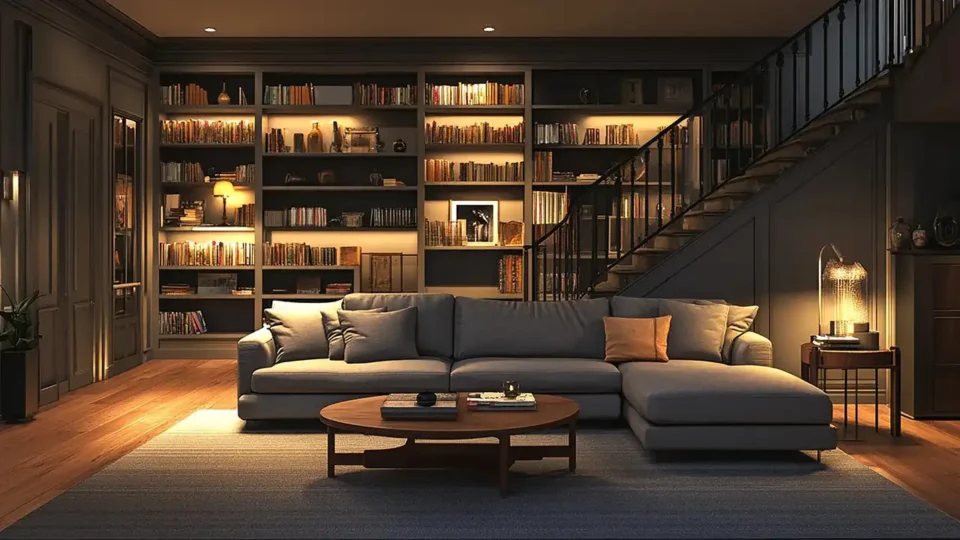
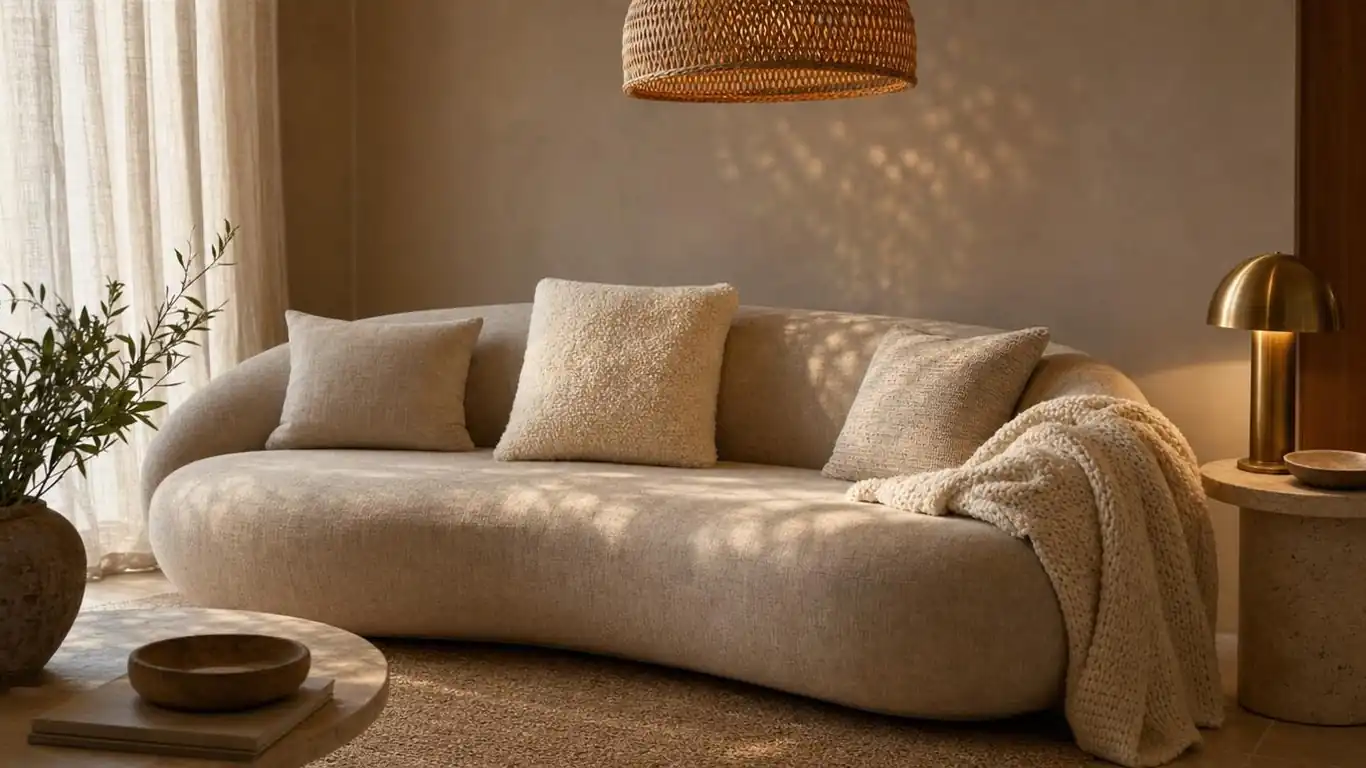
The organic modern sofa has two fixed requirements: clean lines and natural upholstery. Avoid overstuffed arms, button tufting, nail-head trim, and decorative skirts — all carry style signals that compete with the room’s quiet character. Instead, look for a low-profile silhouette with a tight or lightly loose seat cushion, a straight or gently curved arm, and upholstery in linen, brushed cotton, or boucle. Warm cream, natural flax, and muted clay are the correct color registers. Scale it so at least 18 inches of floor remain visible between the sofa base and any adjacent wall — organic modern rooms are defined as much by what isn’t present as by what is. 12 minimalist bedroom ideas 2026 apply the same negative space thinking to furniture placement in a different room context.
DESIGNER TIP: In high-traffic rooms, choose a tightly woven linen over boucle for the sofa. Boucle photographs beautifully but pills with daily use. Save boucle for the accent chair or throw pillows where contact is occasional rather than constant.
Step 5 — Introduce One Defining Organic Element
Every organic modern living room needs a single piece that carries the room’s character — one object or material moment that makes the space distinctly itself rather than generically neutral. This might be a live-edge wood coffee table with visible grain and natural irregularity, an arched stone fireplace surround in travertine or limestone, a large-format ceramic vessel in a warm earthy glaze, or a sculptural rattan pendant light. One. Not four “organic moments” distributed around the room. One statement that anchors the visual identity, surrounded by pieces that quietly support it without competing. 11 olive green bedroom ideas use a similar single-anchor approach — one grounding color or material element leads while everything else defers.
Step 6 — Layer Lighting at Three Levels
Lighting is the step most often left to last, and it’s the one that determines whether the material palette reads warm or clinical after 4 p.m. A single overhead recessed fixture, however high-quality, flattens every natural material in the room. The correct approach uses three source types in combination: ambient (a pendant, small chandelier, or flush fixture that provides general fill), task (a floor lamp positioned beside the sofa or reading chair), and accent (a table lamp or wall sconce that creates a warm pool in a corner or on a side table). All three should run at 2700K to 3000K bulb temperature. All three should be dimmable. Brushed brass or antique gold fixtures add the warm metallic note that reads well against raw oak and linen without pulling the room into a more contemporary register. 12 sunroom decorating ideas apply the same three-level layering approach in light-filled spaces where light quality and direction shape the entire room character.
DESIGNER TIP: Install dimmer switches on every existing lighting circuit before introducing any new fixtures. A $25 dimmer transforms a competent lighting scheme into a genuinely flexible one. Without it, you’re locked into a single intensity for every moment and every mood.
Step 7 — Edit the Room Down to What Stays
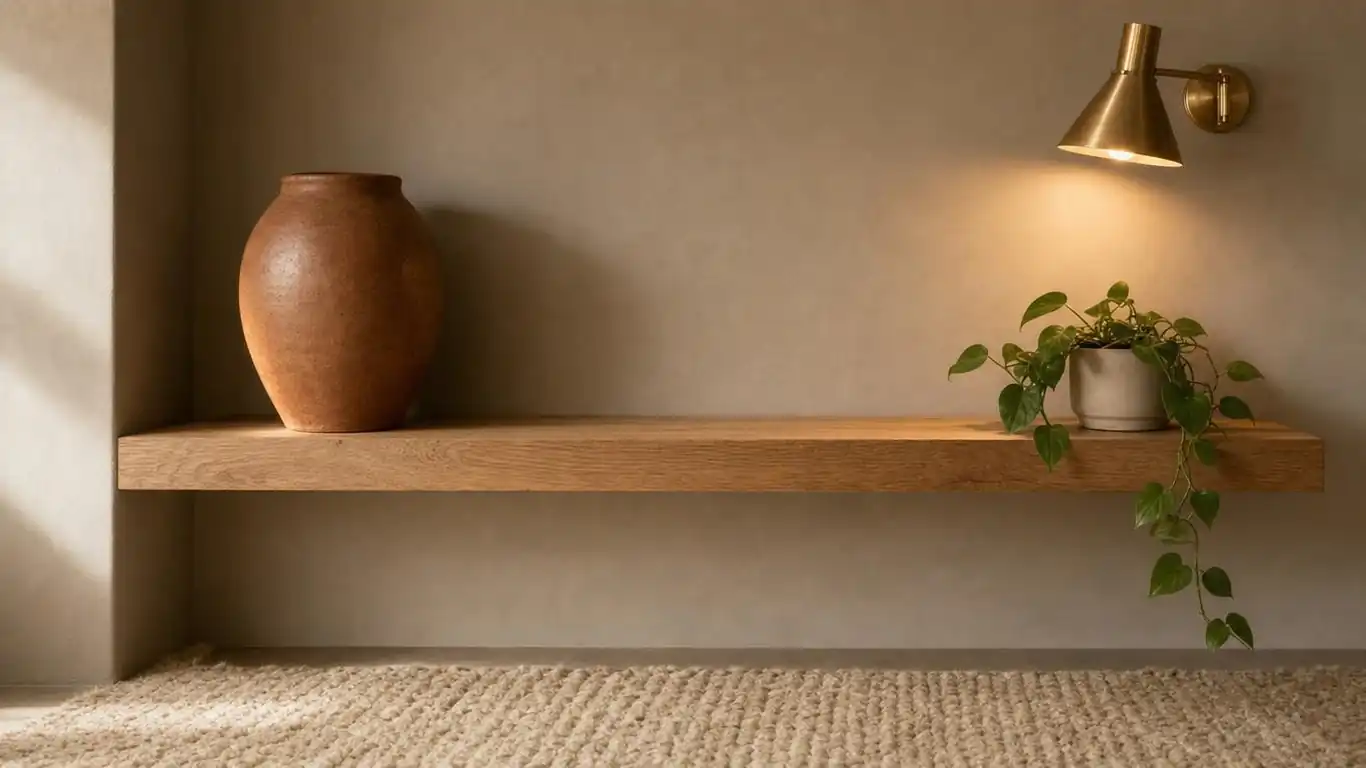
The final step isn’t adding — it’s removing. Organic modern rooms fail most often not because they’re missing something but because they have too much. Once the major pieces are in place, walk every surface and ask: does this earn its place, or is it filling a gap? A single dried pampas stem in a tall ceramic vase earns its place. Five candles in mismatched holders do not. A stack of two design books on the coffee table earns its place. A scattering of small objects across every visible surface does not. The room should have deliberate empty space — on the coffee table, on shelving, on side tables. 12 spring shelf styling ideas show the editing process in close detail; the principle that keeps a shelf from looking cluttered applies to every surface in an organic modern room.
KEY TAKEAWAY: Organic modern rooms are built in two phases — assembling the right pieces, then removing everything that doesn’t earn its place.
Mistakes That Wreck the Look
❌ Cool grey or stark white walls → ✅ Repaint in warm greige or raw linen white — even a slight warm undertone changes how every natural material reads in the room.
❌ Synthetic materials standing in for natural ones → ✅ Use genuine linen, solid oak, and real travertine — faux versions break the quiet material coherence the look depends on, even when the difference is hard to name.
❌ Multiple competing “statement” pieces → ✅ Choose one defining organic element and let everything else support it. 14 minimalist small bedroom ideas apply this same single-focal-point rule in a compact bedroom — the restraint principle is identical.
❌ Undersized rug that floats in the center of the room → ✅ Size up: 8×10 at minimum, 9×12 in rooms over 300 square feet. An anchored rug makes every other piece feel more resolved.
KEY TAKEAWAY: The look breaks at the palette and the material level first — fix both before changing anything else.
When the Room Isn’t Clicking
It feels too minimal and bare. The issue is almost always a missing textile layer. Add a chunky-knit throw over the sofa arm, a second linen pillow in a contrasting texture (smooth linen beside boucle), and a low-pile wool rug if it isn’t already in place. Texture adds warmth more reliably than additional furniture. 12 cozy aesthetic small bedroom ideas show how textile layering shifts a room that reads cold into one that reads considered.
It feels too rustic — not modern enough. Pull back on raw or reclaimed wood and introduce one piece with cleaner geometry: a concrete or stone side table, a powder-coated steel shelving unit, or a simple marble tray. The modern side of organic modern comes from restraint of line, not absence of natural material. 10 fresh spring decorating trends show how current organic-modern interiors balance natural warmth against clean structure.
The room is small. Scale every piece down but keep the layering logic intact. A smaller round rug, a loveseat in place of a three-seat sofa, and one accent chair instead of two can deliver the full style in a compact footprint. 10 smart ways to decorate a small living room on a budget cover the scaling and placement principles that keep small rooms from feeling stuffed.
The room has poor natural light. Lean harder on warm-toned artificial light and choose reflective naturals: polished travertine, lightly oiled oak, linen in warm cream rather than a cool flax. Mirrors work well in organic modern rooms when framed in raw wood or unlacquered brass. 15 grey bedroom design ideas navigate similar low-light challenges with a restrained neutral palette — the light strategy translates directly.
KEY TAKEAWAY: Most organic modern rooms that feel off are missing either a textile layer (reads bare) or a clean geometric piece (reads too rustic) — identify which, then add it.
Investment Levels
Natural materials cost more than synthetic alternatives. That’s the honest trade-off of organic modern design. Budget strategically: spend where materials are touched daily, save where they’re primarily visual.
| Project | Estimated Cost | Impact Level |
|---|---|---|
| Linen or boucle sofa (mid-range) | $900–$2,500 | Very High |
| Natural fiber or wool rug (8×10) | $150–$600 | Very High |
| Raw oak or live-edge coffee table | $300–$1,200 | High |
| Rattan or woven pendant lamp | $80–$350 | High |
| Travertine or stone side table | $200–$700 | Medium |
| Statement ceramic vessel | $60–$300 | High |
| Linen curtains (per panel) | $35–$100 | Medium |
| Dimmer switches (set of 3) | $30–$90 | High |
KEY TAKEAWAY: Prioritize budget on the sofa and rug — both are touched daily, are visually dominant, and are expensive to swap out once the rest of the room is built around them.
Frequently Asked Questions
Conclusion
Organic modern design is not a style you apply to a room — it’s a discipline you practice while making each decision. The palette comes first, the material plan follows, and the editing is what makes it land. Get those three right and the specific pieces almost choose themselves.
If the room still feels off after working through each step, the answer is almost always in the material layer: something synthetic slipped in, or the palette is pulling cool when it needs to sit warm. Go back to Step 1, re-audit each piece against the natural material standard, and the room will show you what needs to change. For more ideas across every room in the home, our home decor guides are a good place to keep building. And if you’re thinking about how the organic modern approach carries into the rest of the house, 12 refreshing spring entryway decor ideas show how warm-neutral, natural material principles create a cohesive first impression before anyone reaches the living room.