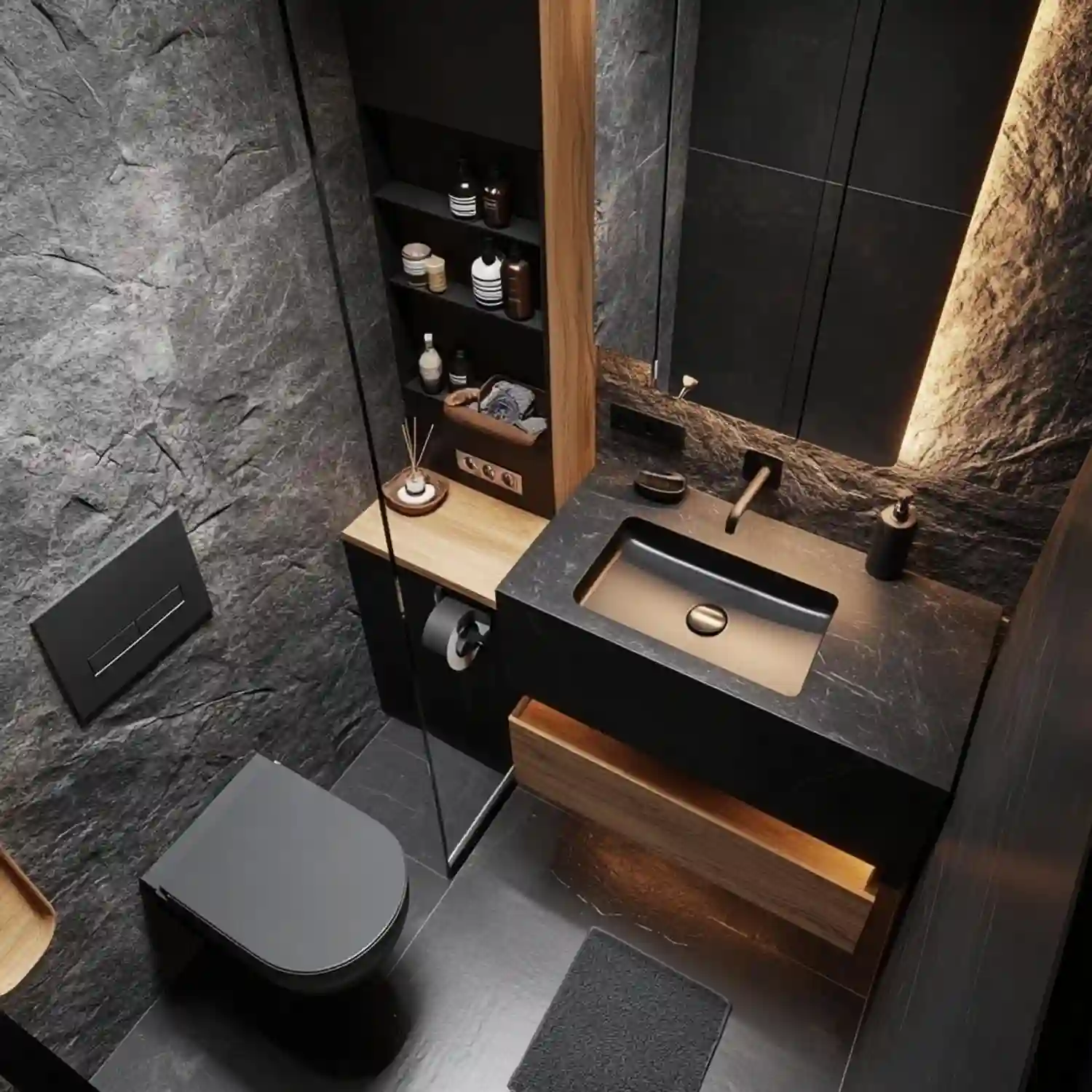
Why the Towel Bar Is the Most Overlooked Piece in the Bathroom
The towel bar is the piece almost nobody chooses on purpose. It comes with the house, in shiny chrome, screwed to the wall in a spot the builder picked. Most of us never touch it again.
That is the missed opportunity. Bathroom hardware — the towel bar, the ring, the hooks, the toilet paper holder — is the jewelry of the room. It is small, it is cheap, and it is the fastest thing to swap. Change it well and a plain bathroom starts to look like someone planned it.
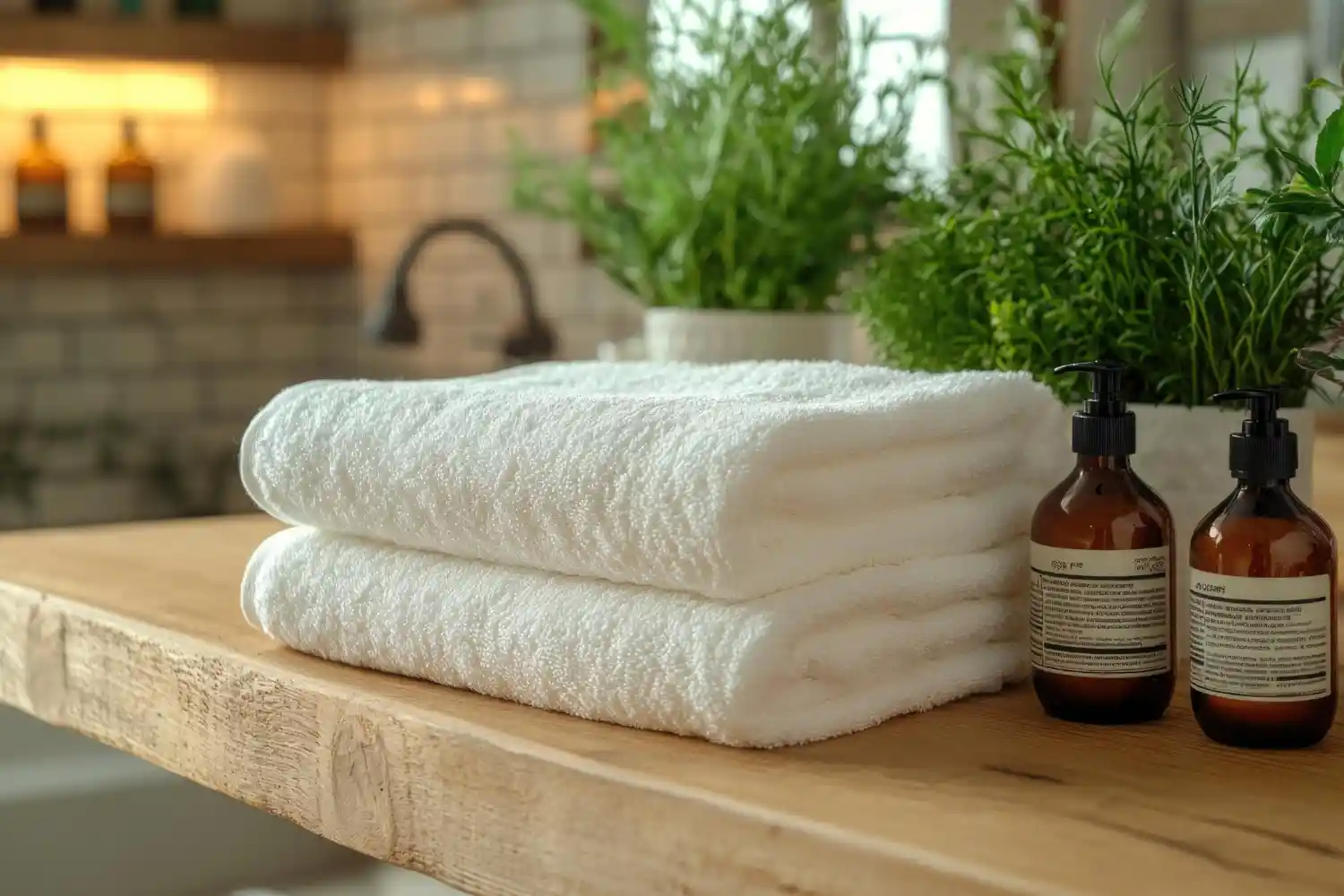
Bathroom towel bar ideas in 2026 favor one warm, coordinated metal finish over mixed builder-grade chrome. Unlacquered brass, brushed brass, champagne bronze, and matte black are the go-to looks, and hooks are quietly replacing bars for how people actually dry towels. The rule that matters most is simple: pick one dominant finish and repeat it on every piece.
This is a decor and styling guide, not a plumbing manual. Swapping a towel bar or hook is a screwdriver job. Relocating a wall-mount faucet or moving plumbing is not — leave that to a licensed pro.
If you are styling the whole vanity area, start with our full guide to bathroom vanity ideas, then use this post for the hardware layer on top.
Why Is Bathroom Hardware Changing in 2026?
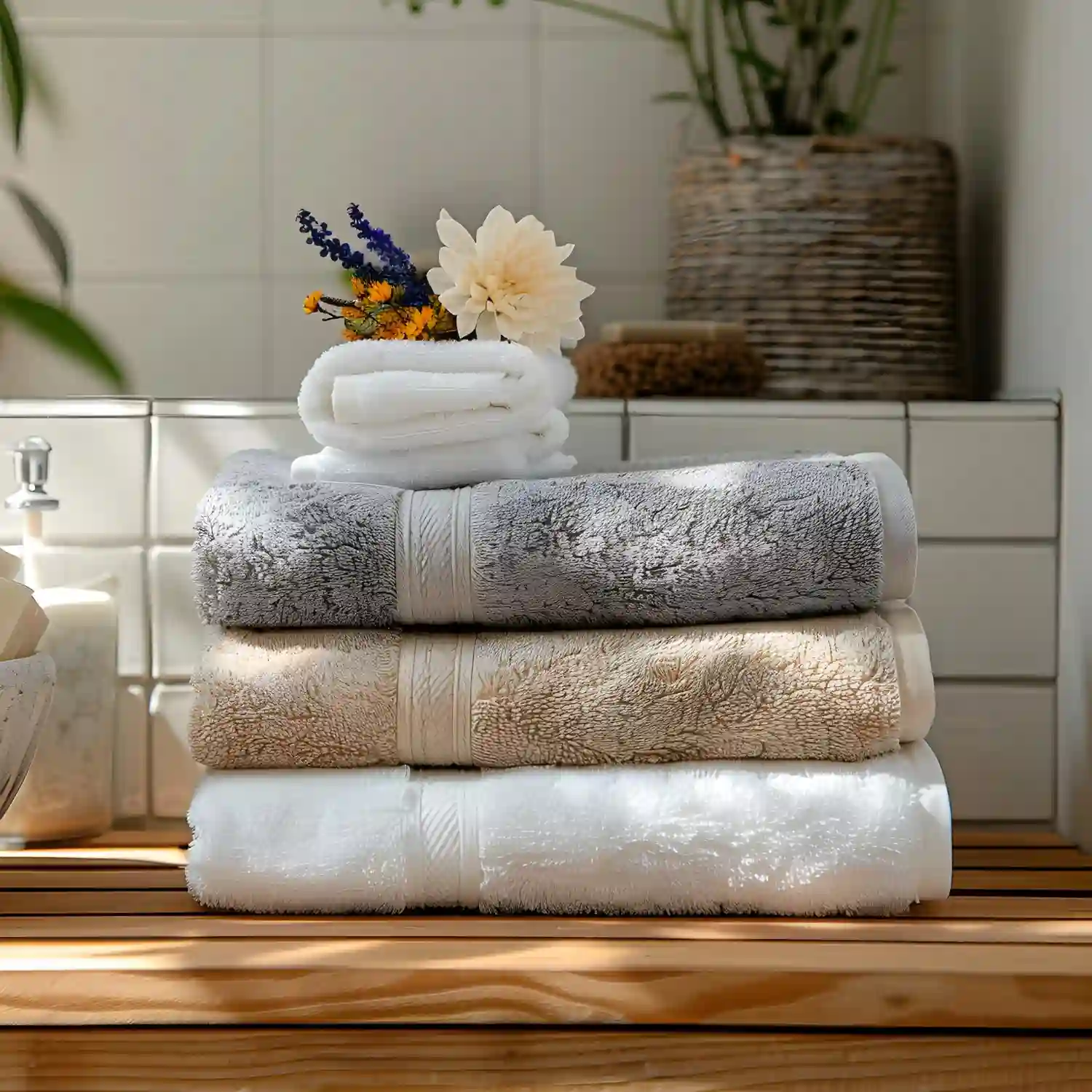
The shift is away from cold and shiny, toward warm and lived-in. For years the default was bright polished chrome, chosen because it was cheap and matched nothing in particular. Now warm metals are leading, and the hardware is treated as a real design choice, not an afterthought.
Two things drive the change. Warm tones are replacing cool ones across the whole bathroom, and finishes that age are winning over finishes that stay flat. Unlacquered brass is the clearest example. It is a living finish that develops a soft patina as hands touch it, so it looks more like an antique and less like a big-box package deal.
Design editors are tracking the same move. Alexander Marchant’s roundup of 2026 architectural hardware finishes notes that today’s designers “rarely rely on a single finish throughout a home” and lean on warm metals, rich bronze tones, and classic nickel to feel current yet timeless.
What is fading from the old bathroom:
- Bright, high-polish chrome on every accessory by default.
- A random mix of finishes — a chrome bar, a nickel ring, a builder-white light.
- Cheap hollow towel bars that flex and rattle when you pull a towel.
- Hardware chosen for maximum shine instead of warmth or weight.
- Fussy, ornate scrollwork mounts that date a room fast.
Signs This Is Catching On:
- Trend roundups now name unlacquered and brushed brass as the finishes designers reach for first.
- Mixing two warm metals on purpose is treated as a skill, not a mistake.
- Matte black stays popular, but paired with warm wood and brass rather than used alone.
- Hardware “suites” — a matched bar, ring, hook, and holder in one finish — are the easy default sell.
The One Rule That Makes Hardware Look Custom
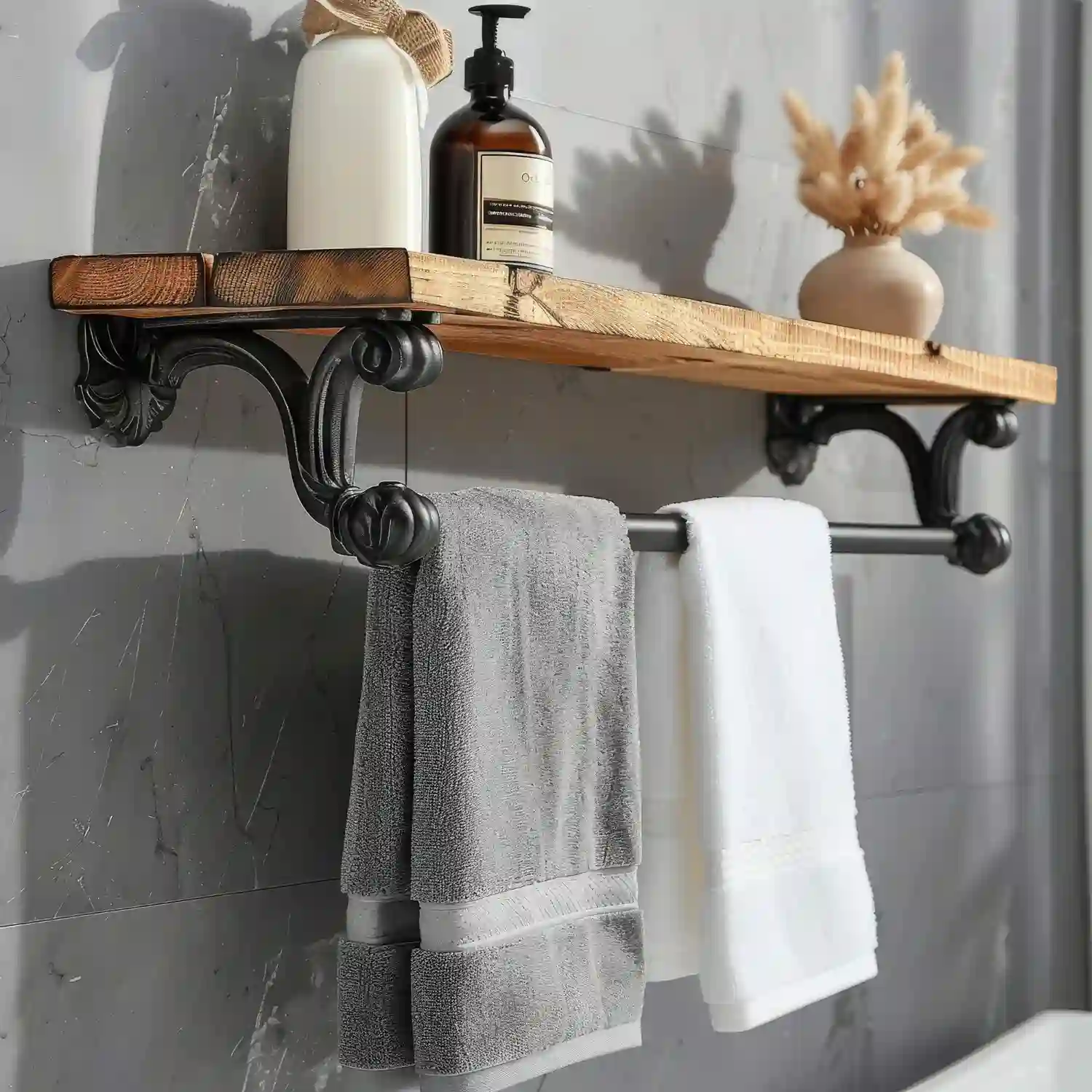
Here is the whole secret, and it costs nothing to follow: pick one dominant finish and repeat it. The reason builder bathrooms look cheap is rarely the hardware itself. It is that the bar, the ring, the hook, and the light are four slightly different metals. Your eye reads the mismatch as unplanned.
Choose a lead finish — say, brushed brass — and put it on every towel bar, ring, hook, and holder in the room. Suddenly the pieces belong together. This single move does more for a bathroom than any one expensive fixture, and it works even with budget hardware.
You can add a second metal on purpose, and we will get to that. But the foundation is one finish, repeated. Designers choose a dominant finish first, then introduce a secondary metal only in small accents so the room feels curated, not chaotic. The mismatch that ages a bathroom is the accidental kind, not the intentional kind.
The Bathroom Hardware Suite: What Actually Belongs on the Wall
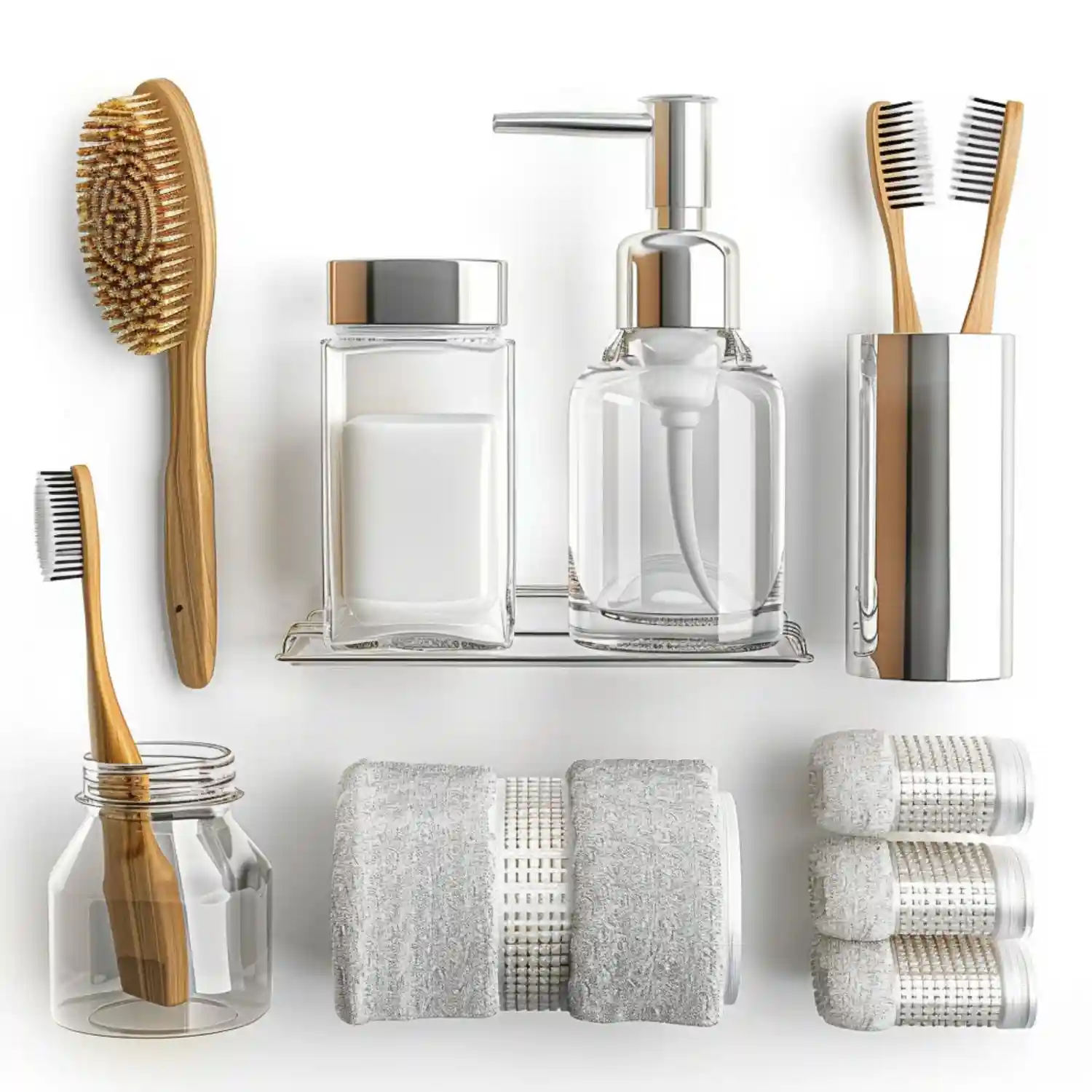
A full hardware suite is a small, specific set of pieces. You do not need all of them in every bathroom. Below is what each one does, where it earns its place, and the trade-off to know before you buy. Match the finish across the whole set and you are most of the way to a designed room.
The Towel Bar — Best for Drying, Not Just Holding
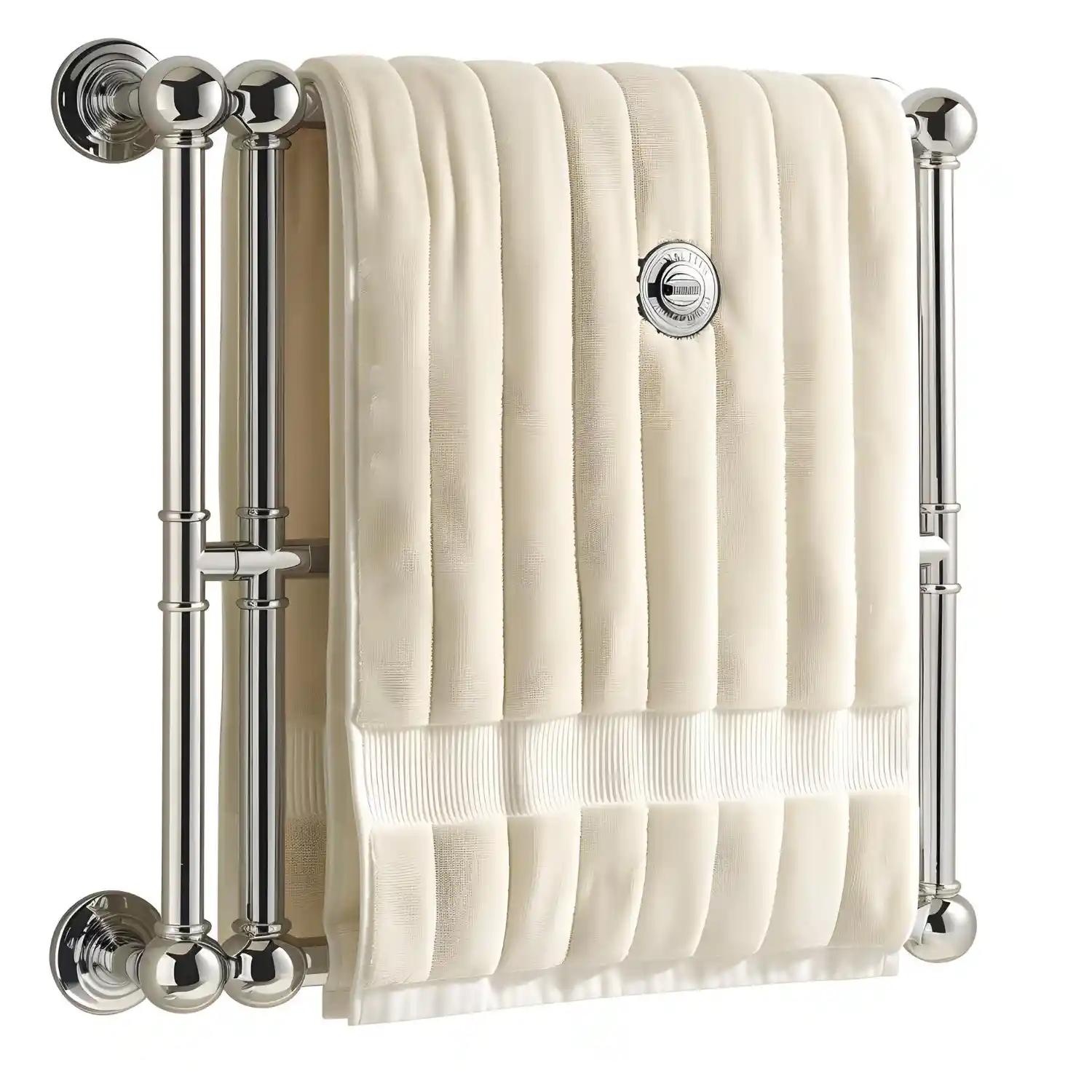
A towel bar is the classic for a reason. It lets a bath towel spread out flat, so it dries fast and does not sour. A single 18-to-24-inch bar suits a small bath; a 30-inch bar or a double bar suits a shared one. Mount it where a towel can hang without touching the toilet or the floor.
The trade-off is space and habit. A bar needs a clear stretch of wall, and it only works if people actually spread the towel instead of bunching it. In a tight powder room or a busy family bath, a row of hooks often beats a bar for real life.
The Towel Ring — The Hand-Towel Workhorse
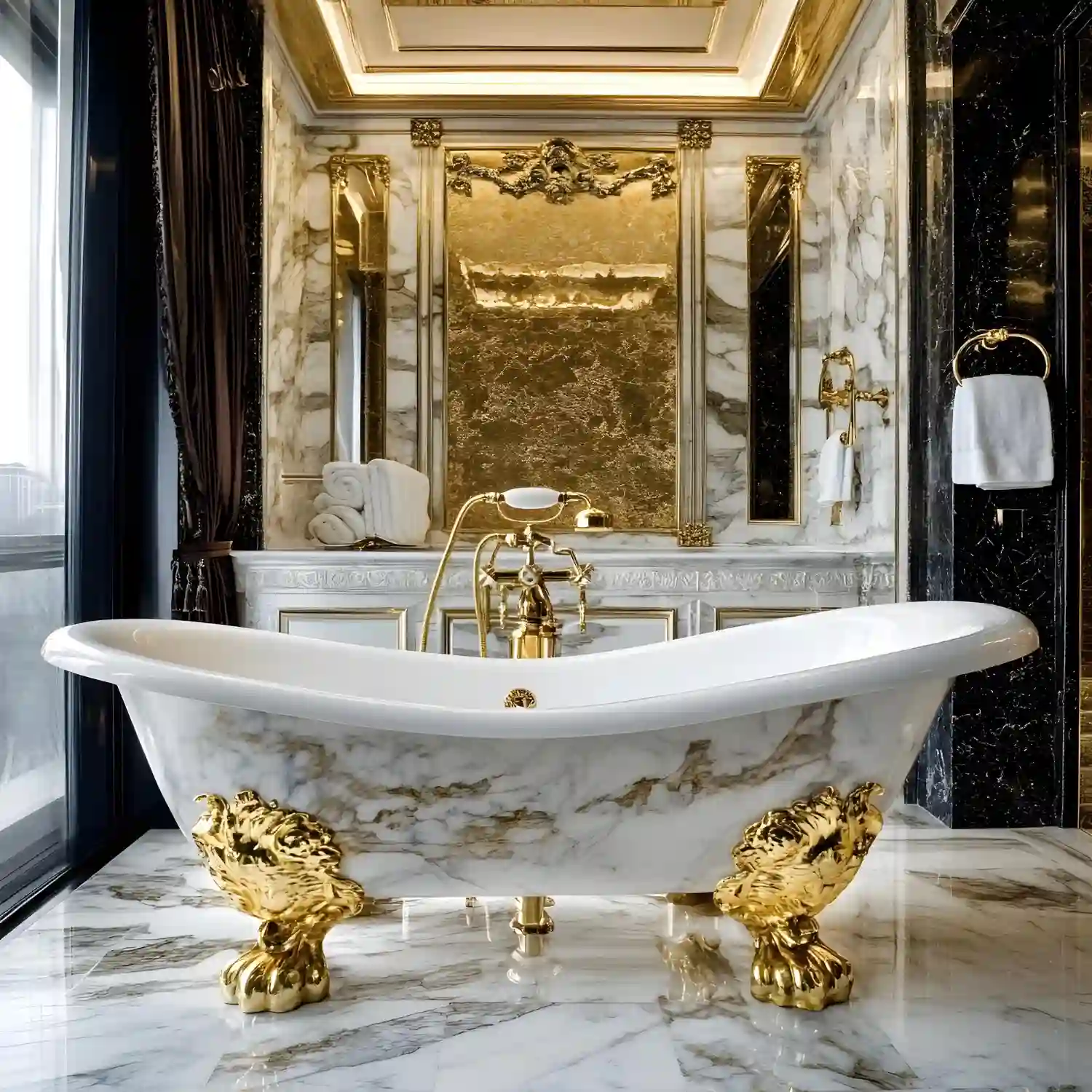
A towel ring is the small hoop beside the sink that holds a hand towel. It is the one piece guests use most, so it is worth getting right. Set it next to the vanity, within easy reach of the basin, so a wet hand does not drip across the counter to find it.
Keep it simple and in your lead finish. A ring reads clean and current; skip the ornate, scrolled versions. If your vanity is short on wall, a small hook can stand in for a ring and take up even less room.
Robe and Towel Hooks — The Practical Hero
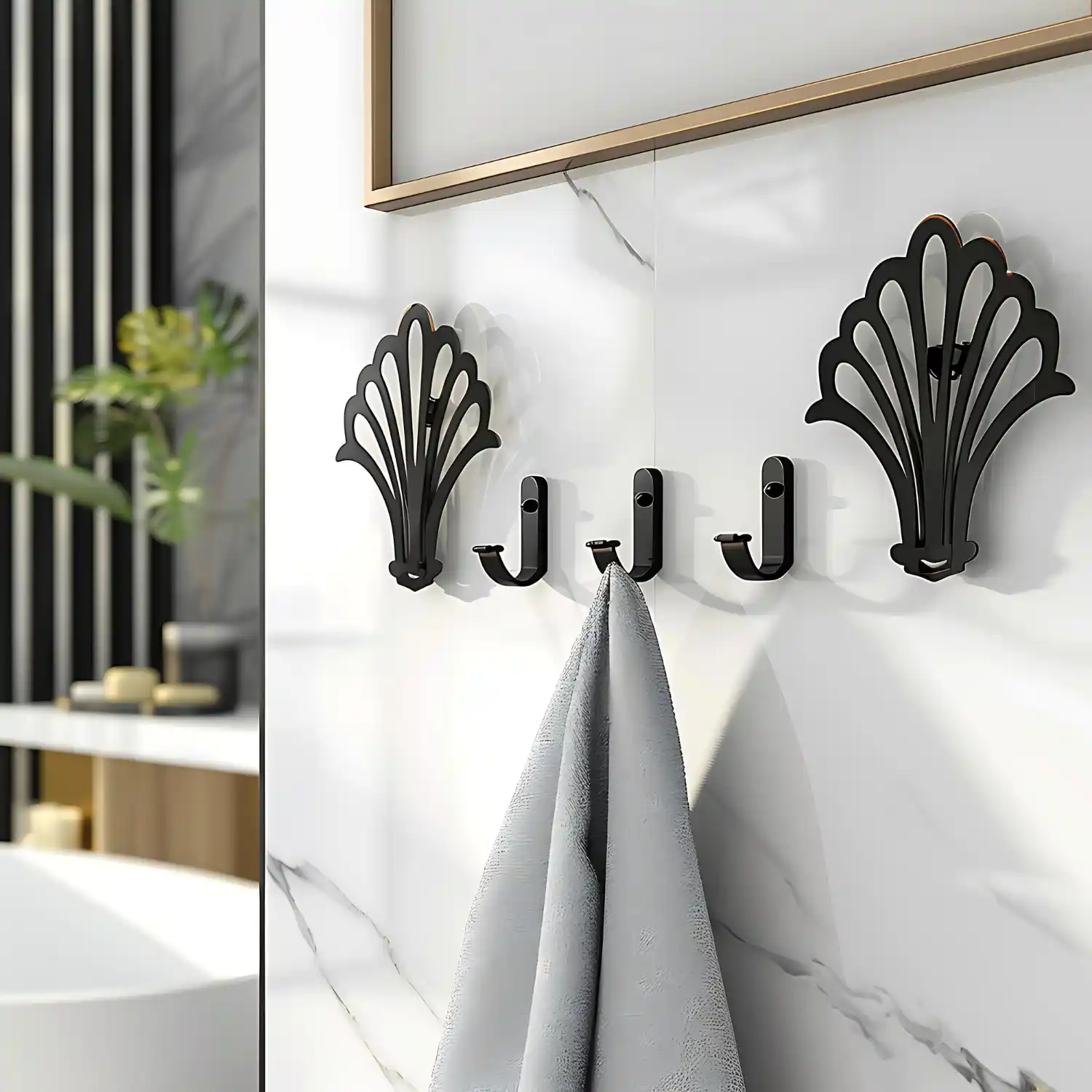
Hooks are the unsung stars of a modern bathroom. They cost the least, install the fastest, and fit where a bar cannot — behind the door, on the side of a vanity, in a narrow strip of wall. A single robe hook holds a bath towel, a robe, or tomorrow’s outfit without fuss.
Hang a row of two or three at the same height for a hotel look, or stagger a robe hook higher and a towel hook lower. Because people naturally grab and hang, hooks stay tidy in homes where a folded bar towel never would. For more ways to keep towels handy and good-looking, our guide to towel storage ideas goes deeper on open display.
The Toilet Paper Holder — Small Piece, Big Tell
The toilet paper holder is tiny, and it is a dead giveaway when the finish does not match the rest. Swap it to your lead metal and it disappears into the scheme the way it should. Choose between a two-post holder, a single-post pivoting arm, or a simple open spindle you can restock one-handed.
An open, hook-style holder or a freestanding stand is the low-commitment option, since it needs no drilling at all. Whatever style you pick, this is the cheapest piece to bring in line with the rest of the suite.
The Hand-Towel Bar and Small Extras
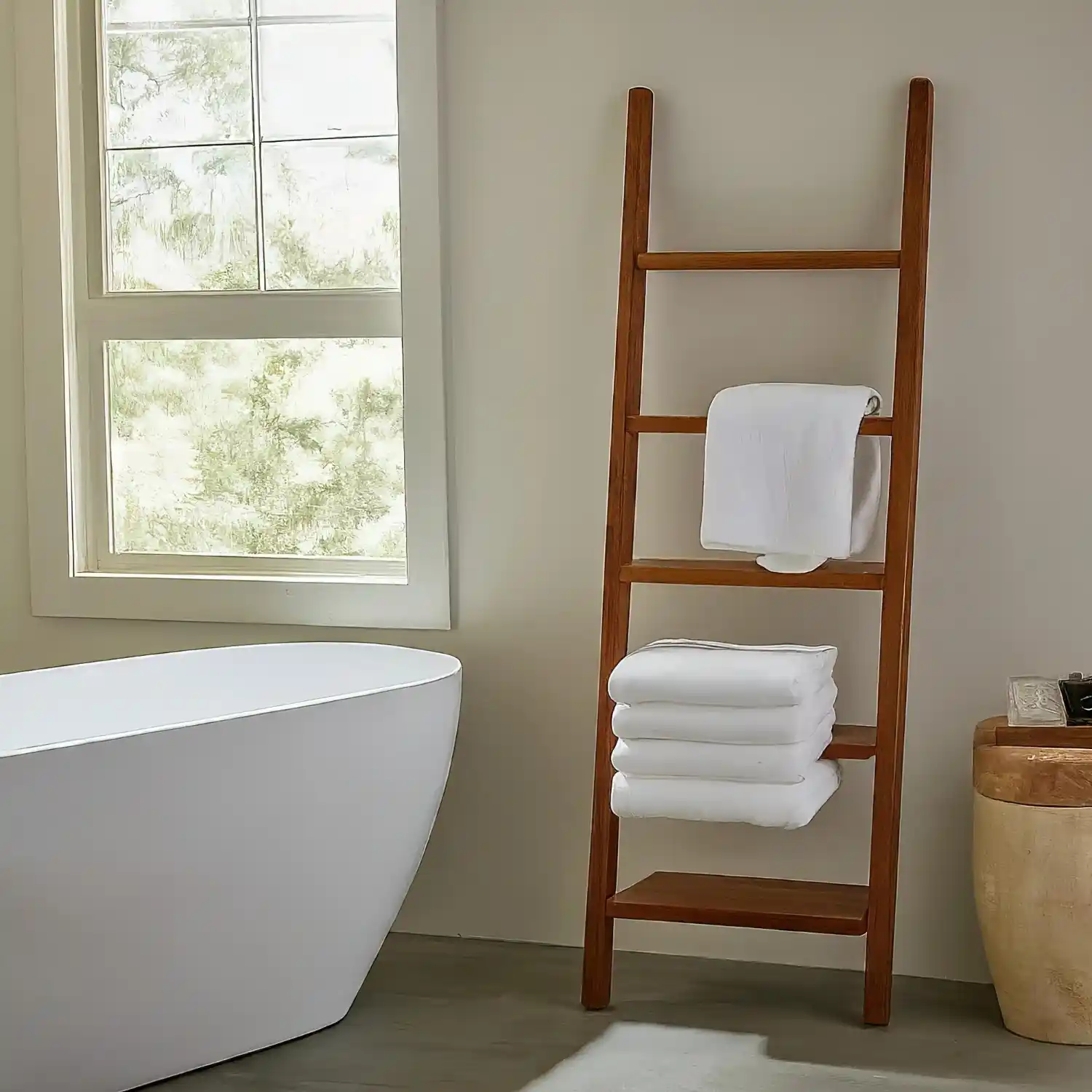
A few small pieces finish the set. A short hand-towel bar mounts on the side of the vanity or beside the sink. A slim wall shelf holds a folded stack, a candle, and a plant. A tray on the counter corrals the daily clutter into something that looks arranged.
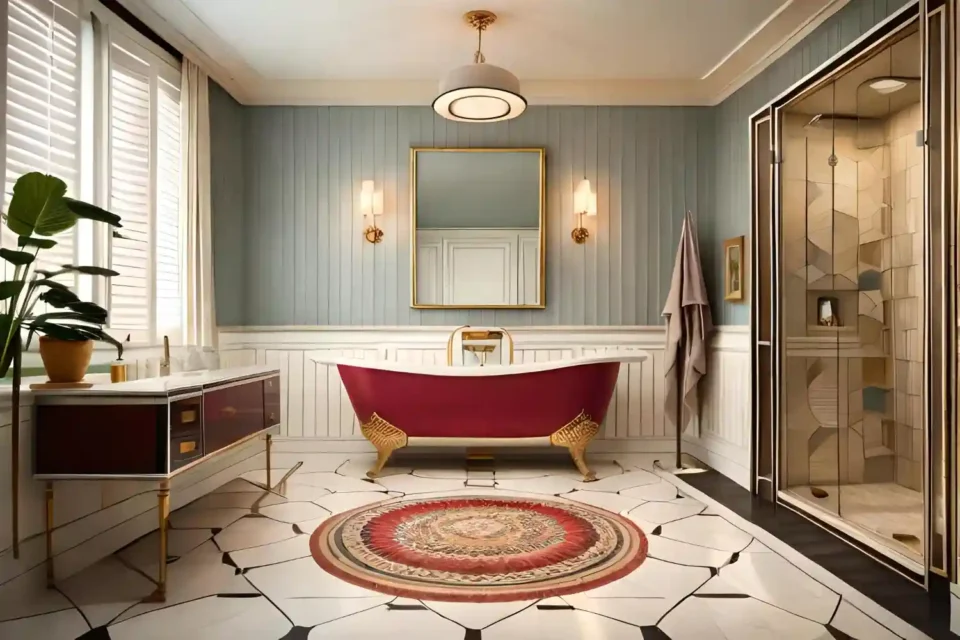
These extras are where a bathroom starts to feel styled rather than stocked. Keep them in the same finish family, and treat a warm-metal tray or a small brass hook as the jewelry that ties the vanity together. The same layered logic runs through these luxury bathroom ideas, where hardware and accessories carry the hotel feel.
Towel Bar vs. Hook: Which One Should You Actually Install?
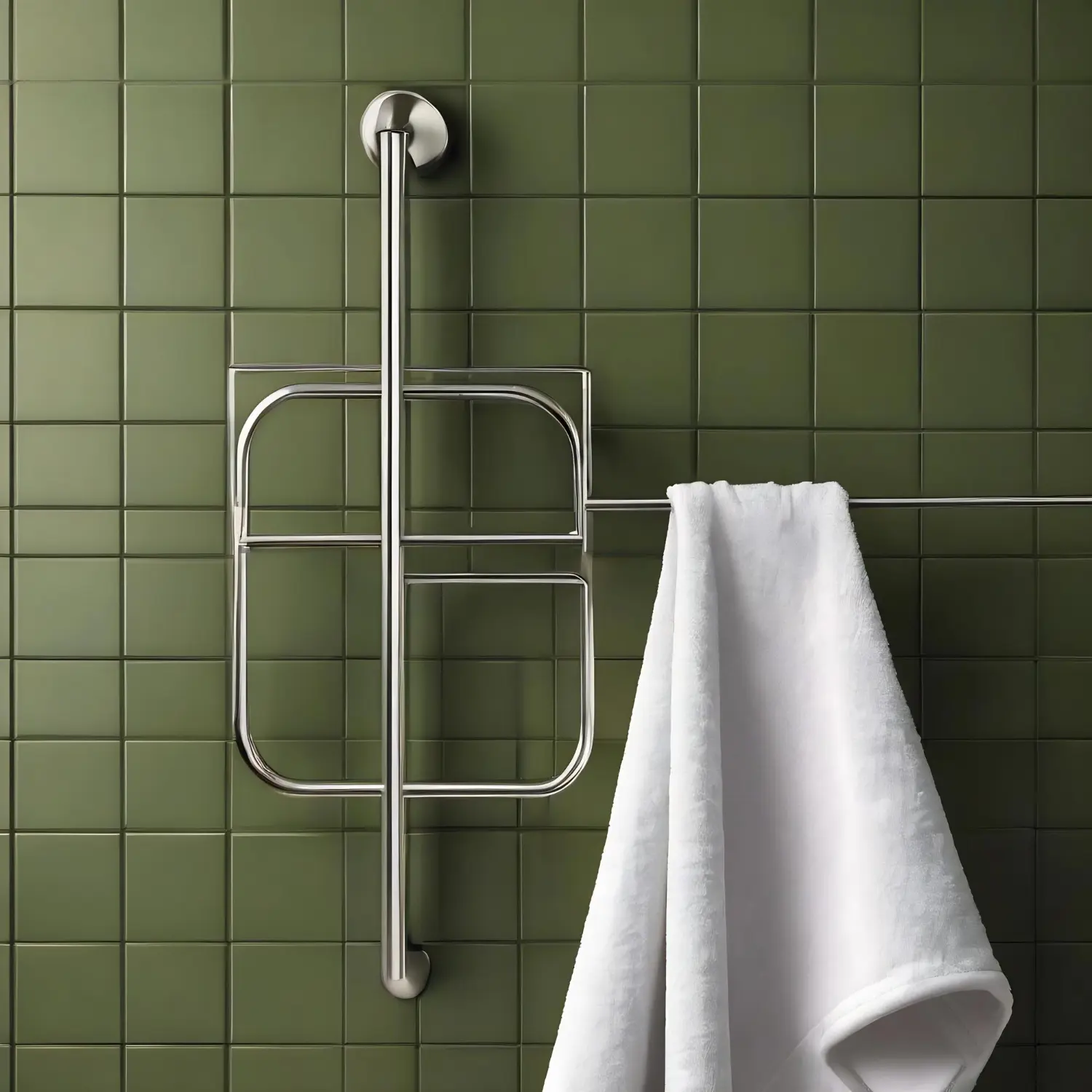
This is the real decision most people face, and the honest answer is: usually hooks, sometimes a bar. A bar dries a towel better because the towel lies flat. A hook is faster to use, fits more places, and stays neat because hanging is a one-second habit. In a home with kids, hooks win almost every time.
The best bathrooms often use both. Put a bar or a heated rail where a bath towel can spread and dry, and add hooks by the shower and behind the door for robes and quick grabs. Match the finish and the mix looks deliberate.
| Piece | Best For | Watch Out For |
|---|---|---|
| Towel bar | Drying a full bath towel flat; a clean, classic wall run | Needs open wall; only works if towels get spread out |
| Robe / towel hook | Daily use, tight walls, behind doors, family baths | A bunched towel dries slower than one on a bar |
| Towel ring | Hand towels right beside the vanity | Too far from the sink means drips on the counter |
| Heated rail | Warm, dry towels and a spa feel | Hardwired versions need a licensed electrician |
KEY TAKEAWAY: If you can only do one thing, add hooks — they are the cheapest piece, the fastest to install, and the one people actually use.
Which Hardware Finish Is Right for Your Bathroom?
Finish sets the whole mood, and 2026 rewards warmth. The strongest bathroom towel bar ideas start by matching the metal to the room’s tone and the metals already in it — the faucet, the light, the mirror frame. Here is the short menu, from warmest to coolest.
Unlacquered and Brushed Brass — The Warm Favorite
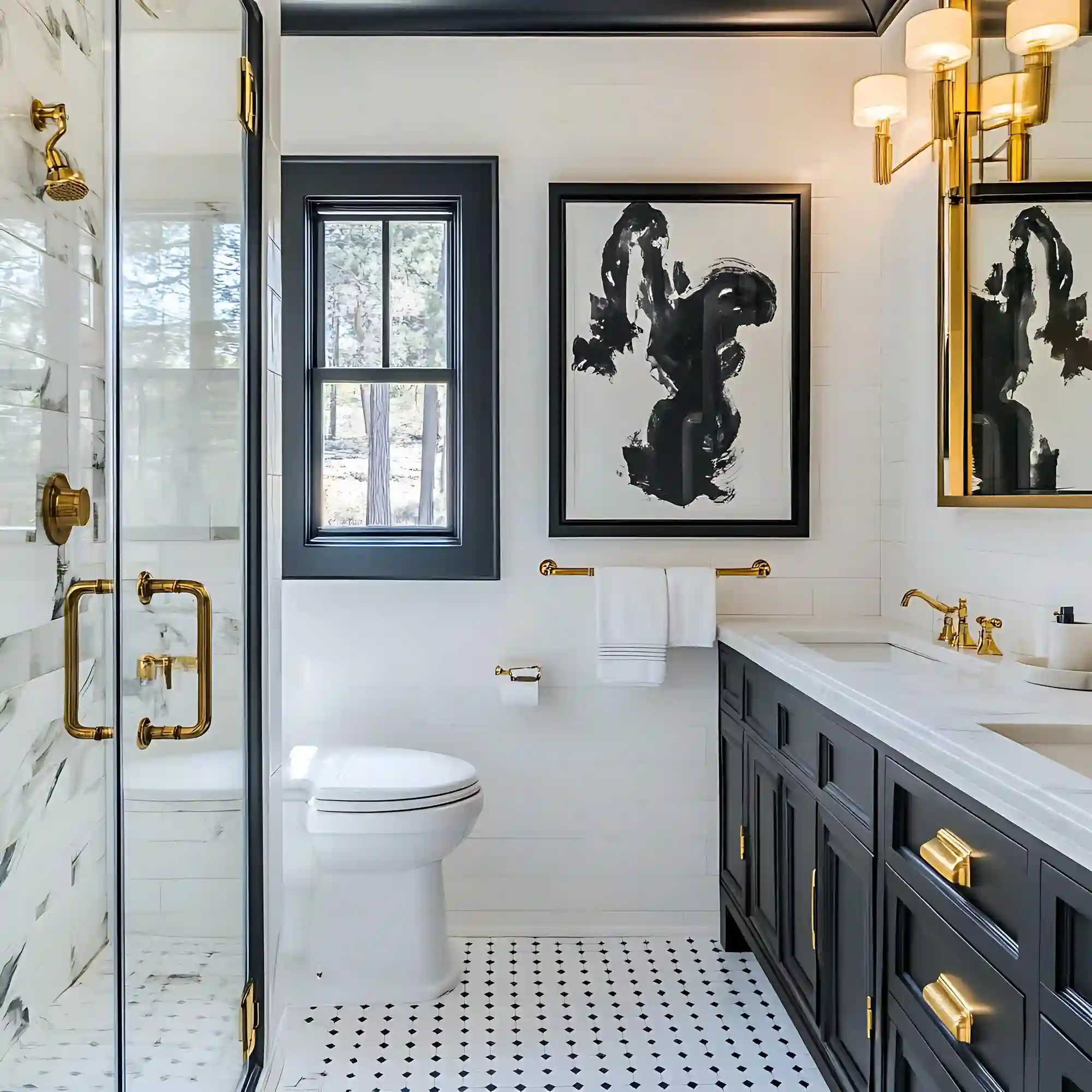
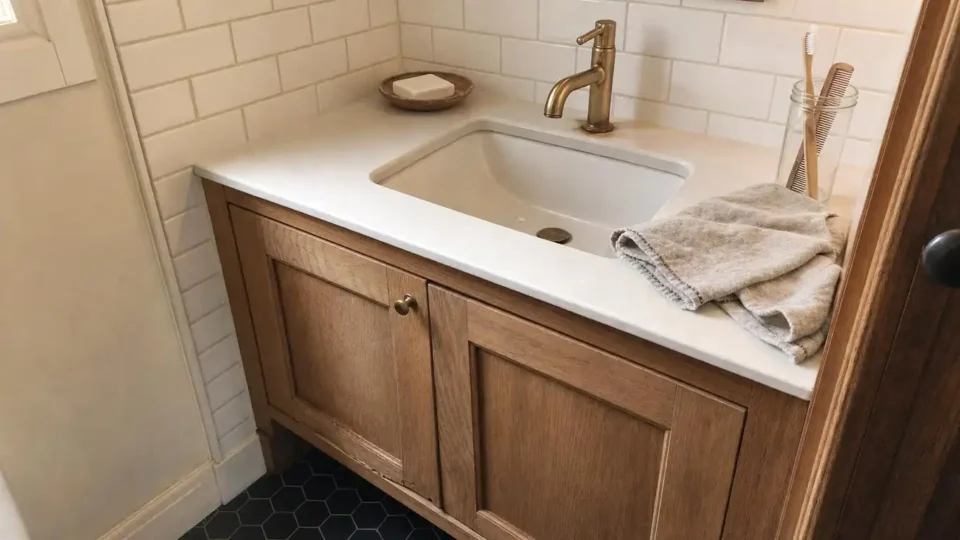
Brass is the finish of the moment. Brushed brass gives a soft, satin gold that flatters warm woods and creamy tile. Unlacquered brass goes further: it is a living finish that darkens and patinas over time, so it earns an aged, collected look no coating can fake.
Know the trade-off before you buy. Unlacquered brass will change color, which is the point for some and a surprise for others. If you want the warm gold to stay exactly as it arrived, choose a lacquered brushed brass instead. Either one pairs beautifully with a cozy farmhouse bathroom or a warm modern scheme.
Matte Black — Crisp and Graphic
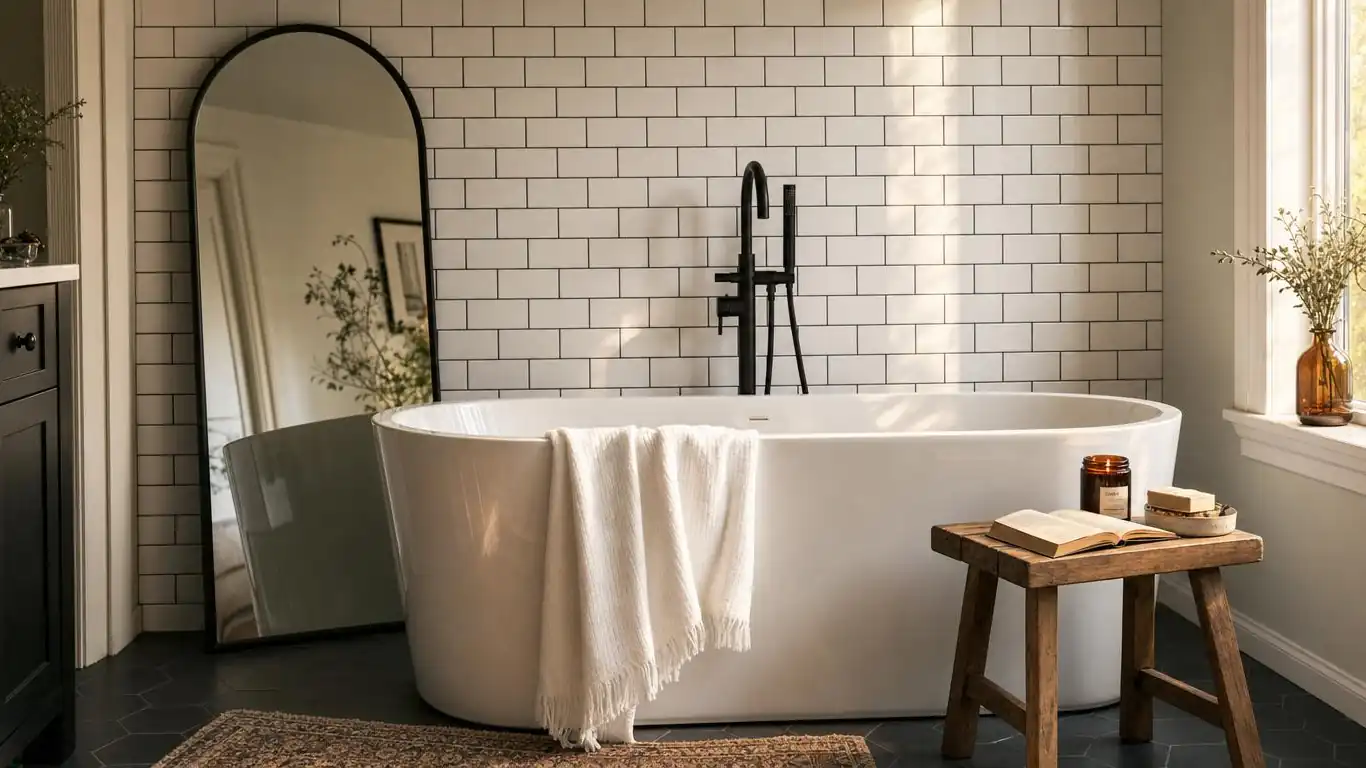
Matte black is the clean, high-contrast choice. It reads modern against white tile and grounds a bright bathroom with a few sharp lines. It hides water spots better than chrome and works in almost any style, from industrial bathroom design to farmhouse.
The caution is overuse. All-black hardware in an all-white room can feel stark, so warm it with wood, brass accents, or soft textiles. Black earns its keep as a crisp graphic layer, the same way it does in these black and white bathroom designs.
Brushed Nickel and Chrome — The Safe Neutrals
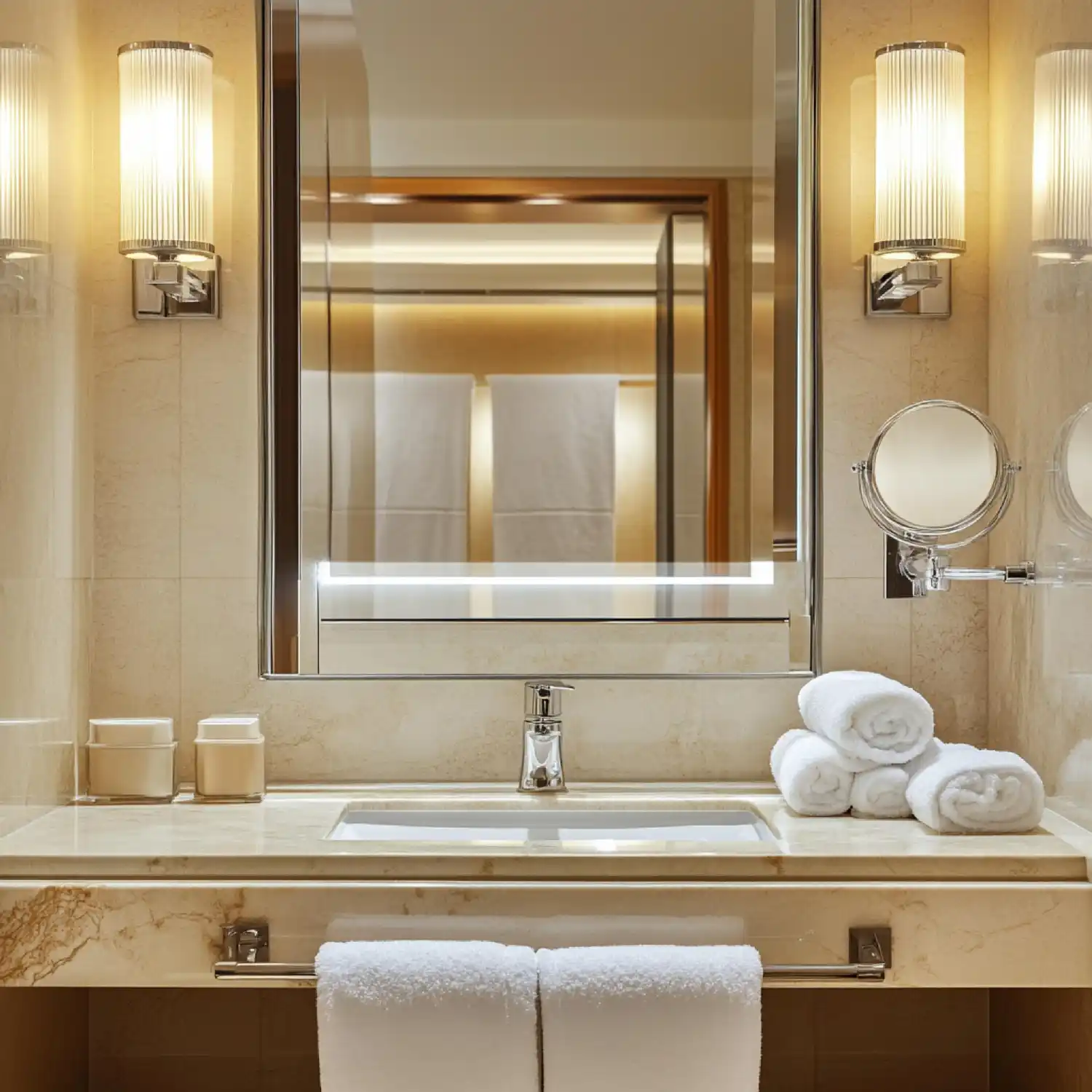
Brushed nickel is the quiet, cool-toned neutral. It is soft, forgiving, and matches most existing fixtures, which makes it the low-risk pick if you are not replacing the faucet. Polished chrome still has a place in a crisp, classic, or coastal bathroom where a little shine suits the light.
The honest note: plain builder chrome is what dates so many bathrooms, so if you keep chrome, keep it deliberate and matched. A brushed finish almost always feels calmer than a high-polish one, the same logic behind these minimalist bathroom decor ideas.
Mixing Two Metals the Right Way
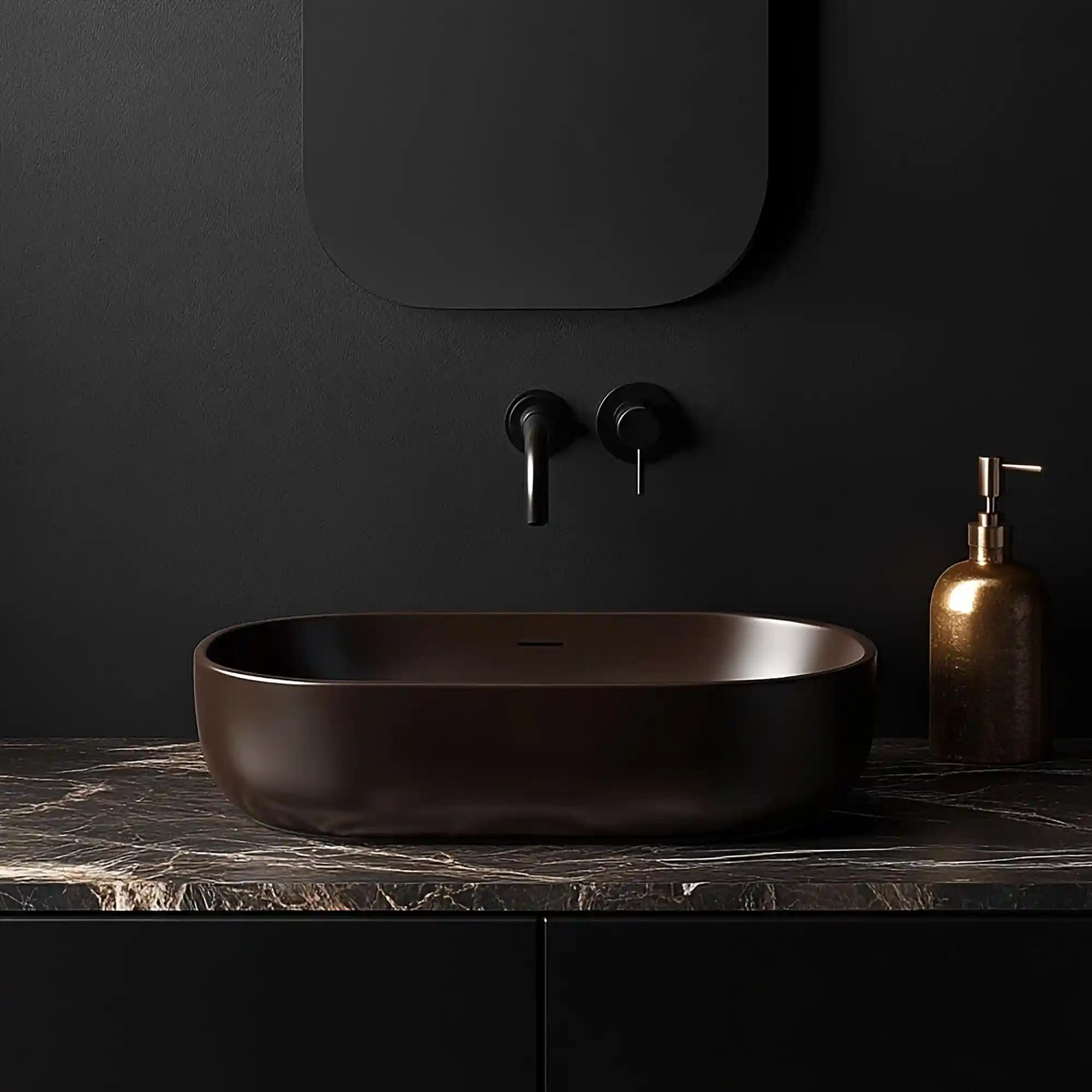
Mixing metals is a trend, not a free-for-all. The rule is one dominant finish plus one secondary, in a rough 70/30 split. Let brass lead on the towel bar, ring, and hooks, then bring in matte black on a small piece like the toilet paper holder or a mirror frame.
Keep it to two metals, and repeat each one at least twice so it looks intentional. Warm-with-warm (brass and bronze) is the easiest mix; warm-with-black is the boldest. This measured pairing is part of the wider story in our bathroom design trends for 2026.
Where Should Bathroom Hardware Go? The Heights That Look Right
Placement is half the battle. Good finishes hung at the wrong height still look off. These are the standard measurements designers use, so pieces sit where hands reach them and towels hang clear of the floor and the toilet.
- Towel bar: about 48 inches from the floor to the center of the bar, per Bob Vila’s fixture height guide; drop it to around 44 inches for shorter users or a kids’ bath.
- Towel ring: set it beside the vanity, and when it hangs above the counter, keep the ring 18 to 22 inches above the vanity so the towel clears the sink, per Driven by Decor.
- Robe hook: mount adult hooks 55 to 70 inches off the floor, high enough that a long robe or towel hangs without pooling.
- Toilet paper holder: about 26 inches from the floor to the center of the roll, and 8 to 12 inches in front of the toilet rim so it is an easy reach.
A quick practical note: anchor every piece into a stud or use proper wall anchors, and go gently when drilling into tile. If you are unsure about a tricky wall or want a heated rail wired in, a handyman or electrician handles that part.
What Quietly Dates Bathroom Hardware?
Small mistakes are what make good hardware look cheap. Fix these and even budget pieces read as chosen.
❌ Mixing four accidental finishes → ✅ Pick one dominant metal and repeat it on every piece.
❌ Defaulting to high-polish builder chrome → ✅ Choose a warm brass, bronze, or a calmer brushed finish.
❌ Hanging a single bar and forcing everyone to share it → ✅ Add hooks by the shower and behind the door for daily use.
❌ Buying a hollow, flimsy towel bar that rattles → ✅ Spend a little more on a solid metal piece that feels weighty.
❌ Mounting the ring too far from the sink → ✅ Keep the hand towel within an easy, drip-free reach of the basin.
A Quick Hardware Checklist
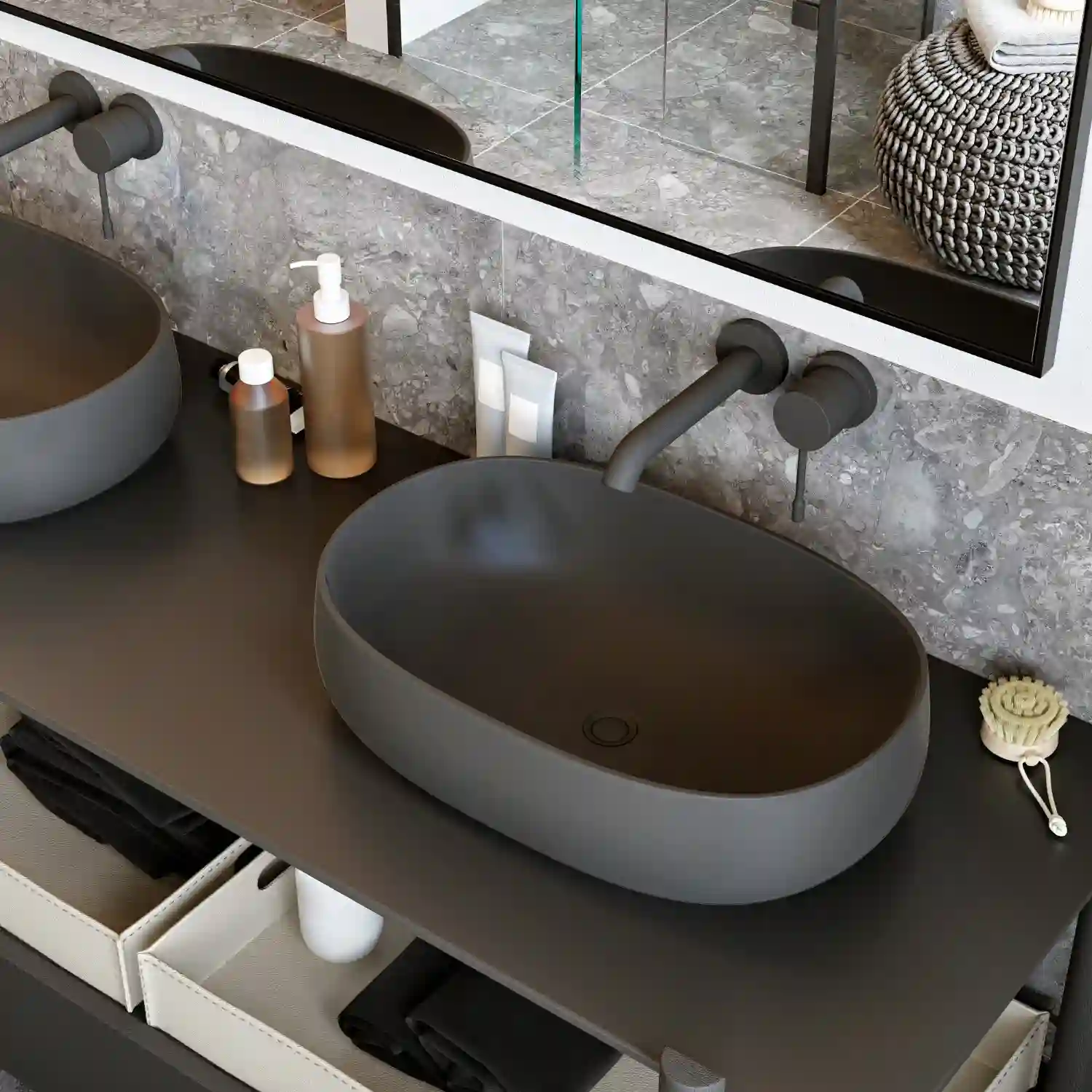
Use this fast plan before you buy:
- Choose one dominant finish — brass, bronze, matte black, or brushed nickel.
- Decide bar, hook, or both based on how your household actually dries towels.
- Buy a matched suite, or match finishes carefully if you piece it together.
- Add a second metal only on purpose, in a 70/30 split, and repeat it twice.
- Check your heights: bar near 48 inches, ring above the vanity, hooks high, holder low.
- Pick solid, weighty pieces over hollow ones that flex.
What You’ll Spend
Hardware is the rare upgrade where a full swap stays affordable. These are rough per-piece and per-room material ranges, not installation.
| Item | Estimated Cost | Impact Level |
|---|---|---|
| Single robe or towel hook | $8-$30 each | High |
| Towel bar or towel ring | $20-$70 each | High |
| Matched hardware suite (bar, ring, hook, holder) | $60-$200 per room | Very High |
| Heated towel rail | $120-$500+ | Medium |
Best First Upgrade: Replace the whole matched suite in one bathroom with a single warm finish — the biggest visual jump for the least money.
Skip for Now: Do not pay a premium for an unlacquered brass piece if a changing, patinating finish will bother you every day; a lacquered brushed brass keeps the same warmth without the surprise.
The Bottom Line
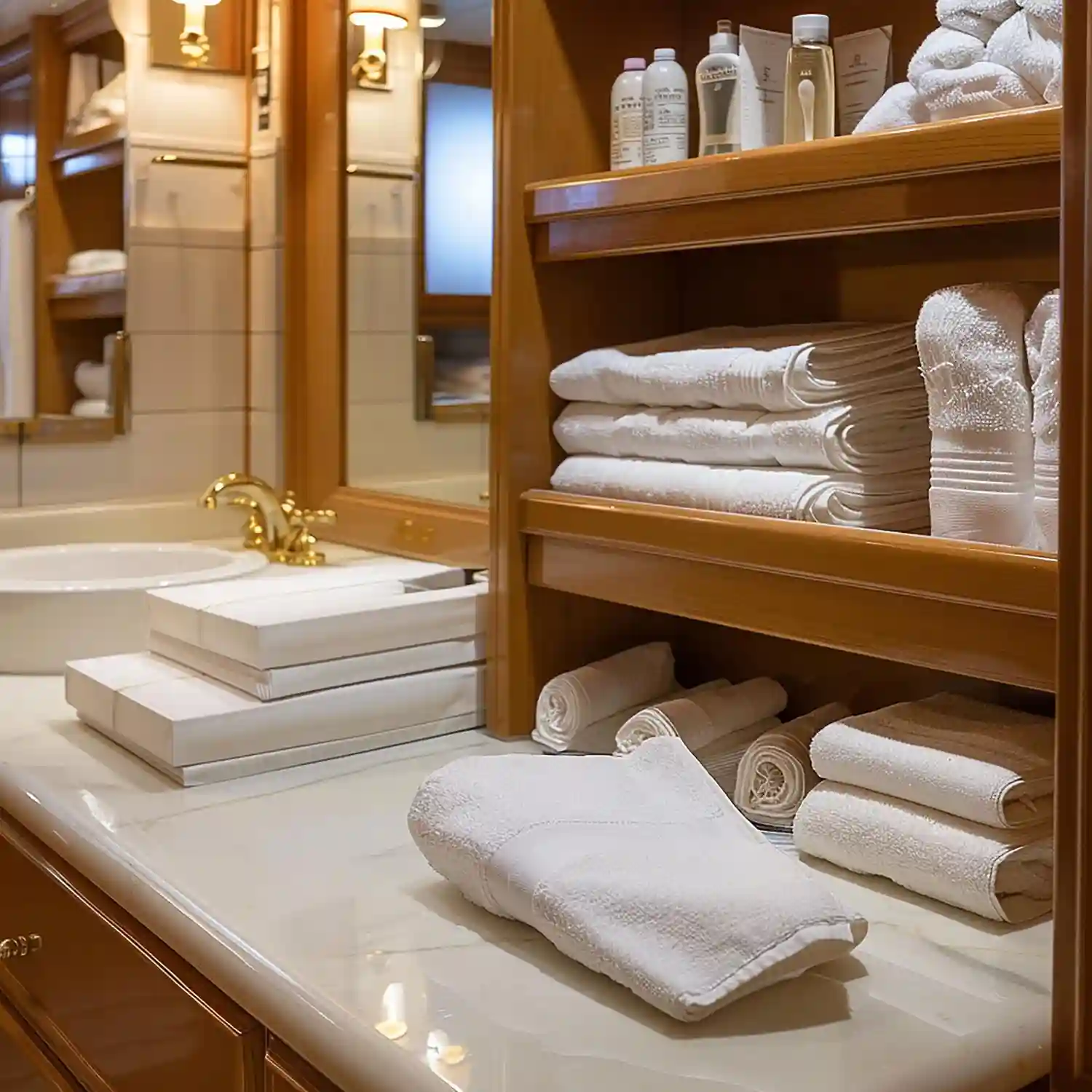
The Bottom Line: Bathroom hardware is small and cheap enough to be the first thing you change, so treat it as jewelry — one warm finish, repeated on every piece, does the most work for the least money.
Designer’s Verdict: For most homes, a matched suite in brushed or unlacquered brass, with hooks doing the daily lifting and a bar or heated rail where a towel can dry, is the sweet spot. Save all-black hardware for a room with enough warm wood to balance it, and keep chrome only if you can commit to matching it everywhere.
Frequently Asked Questions
Conclusion
The best bathroom towel bar ideas in 2026 come down to one quiet move: treat hardware as jewelry, pick one warm finish, and repeat it on every piece. Add hooks for how you really live, hang each piece at the right height, and a plain builder bathroom starts to look designed for the price of a nice dinner. For more ways to pull the room together, browse our bathroom design ideas or the wider home decor inspiration across the site.
If you are refreshing the vanity area next, these calm modern bathroom ideas pair naturally with a warm-metal hardware swap.
Next Steps
- Pick one dominant finish — brass, bronze, matte black, or brushed nickel — and commit to it across the room.
- Decide bar, hook, or both based on how your household actually dries towels.
- Buy a matched suite or match finishes carefully, choosing solid, weighty pieces.
- Hang each piece at the right height, and leave any heated rail or plumbing work to a pro.
- Related Bathroom Ideas:
- Bathroom Ideas: The Complete Design and Decor Guide
- 15 Warm Neutral Bathroom Ideas That Feel Cozy, Not Boring
- How to Decorate a Bathroom: 10 Steps for a Designer Look
- 14 Spa Bathroom Ideas to Create a Calming At-Home Retreat
- More bathroom design inspiration across all rooms
More Bathroom Vanity Ideas
- Bathroom Mirror Ideas: Why the Right Mirror Is Your Highest-Impact Upgrade
- Bathroom Lighting Ideas: Why Layered Light Beats a Single Overhead
- Bathroom Cabinet Ideas: Why Warm Wood Beats the White Box
- Walk-In Shower Ideas: Why the Curbless, Doorless Look Won
- Bathtub Ideas: The Freestanding Soaking Tub Now Leads the Room
- Dream Bathrooms: What Do the Best Ones Have in Common?
- Bathroom Curtain Ideas: The Soft Layer Most Bathrooms Skip
- Bathroom Sink Ideas: Is the Vessel Sink Still Worth It in 2026?