TL;DR
- The industrial bathroom look pairs raw materials — concrete, brick, blackened steel — with warm textures instead of covering every surface in them.
- Cold, all-black industrial looks are losing ground; a warmer version paired with walnut, terracotta, or brass is taking over.
- The best rooms treat industrial as an accent: one hero material, one metal finish, one warm counterpoint.
- Fixtures within 3 feet of a tub or shower need a damp or wet safety rating, not just a style you like.
- A styling refresh runs roughly $80 to $2,500 depending on how much of the room you touch.
Why Do So Many Industrial Bathrooms Feel Like an Unfinished Garage?
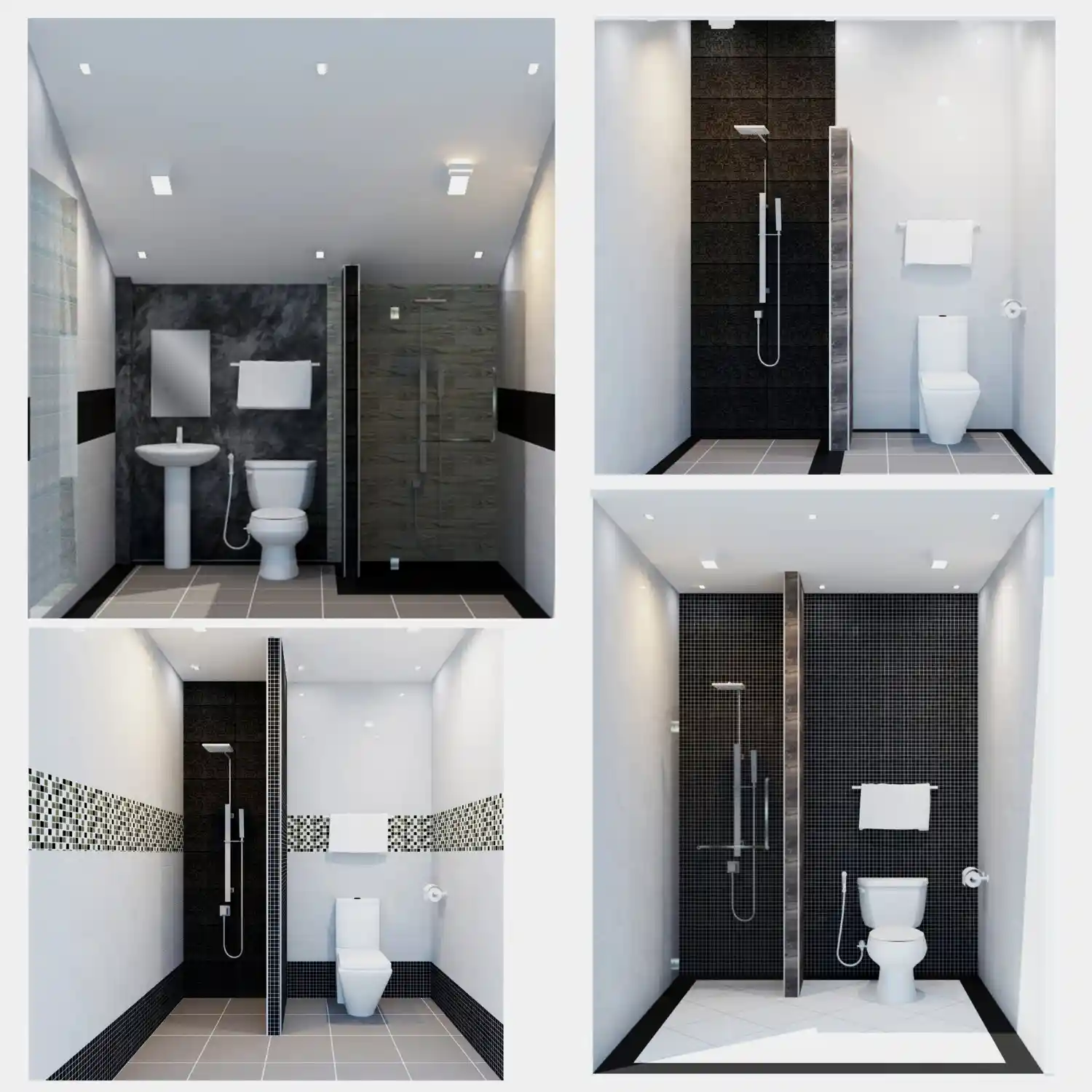
Industrial bathroom design gets blamed for feeling cold before anyone even steps inside. A quick scroll shows grey concrete, black pipe shelving, and bare bulbs, and the room looks more like a parking garage than a place to get ready for the day. That reputation is not really about the materials. It is about how many of them show up in one small room at once.
Looking for more ideas? Explore our full guide to Bathroom Design Styles.
If you have ever saved an industrial bathroom photo and then worried the real version would feel like a construction site — you are not alone. Editorial field note: a guest bathroom with an all-concrete vanity and open black pipe shelving photographed beautifully but felt uninviting in person, right up until one warm walnut shelf and a brass mirror frame were added. Nothing structural changed. The room simply stopped looking half-built.
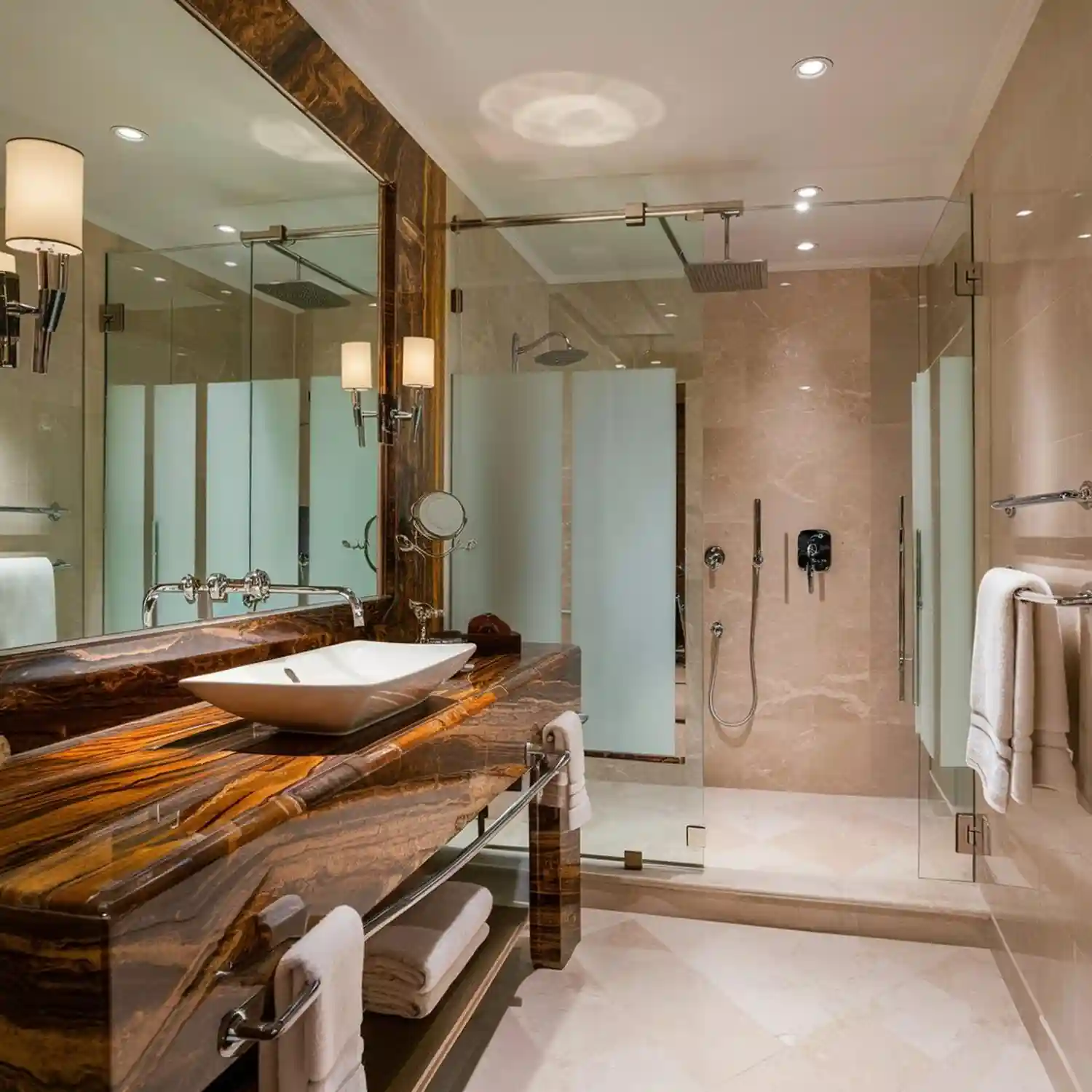
Industrial bathroom design works when raw materials stay in the minority. Concrete, brick, and blackened steel carry the most weight when only one or two of them appear, paired with warmer counterparts like walnut, brass, or linen. Skip the version that tries to look like an entire converted warehouse, and the look holds up in a small home bathroom just as well as it does in a loft. For more on where bathroom style is headed generally, this breakdown of current bathroom design trends is a useful companion piece.
This piece breaks down what actually makes the look work, what to avoid, what it costs, and how to try it in a small or rented space. Browse more home decor inspiration while you are here. Bookmark this guide for quick reference.
| Quick Takeaways | |
|---|---|
| Palette | Warm greige, walnut, and clay balance out black steel and concrete. |
| Materials | Concrete, brick, and steel work best as one accent, not every surface. |
| Fixtures | Match the faucet, shower trim, and towel bar to a single metal finish. |
| Lighting | Fixtures within 3 feet of a tub or shower need a damp or wet rating. |
| Cost | A styling refresh runs roughly $80 to $2,500 depending on scope. |
Industrial Bathroom Checklist
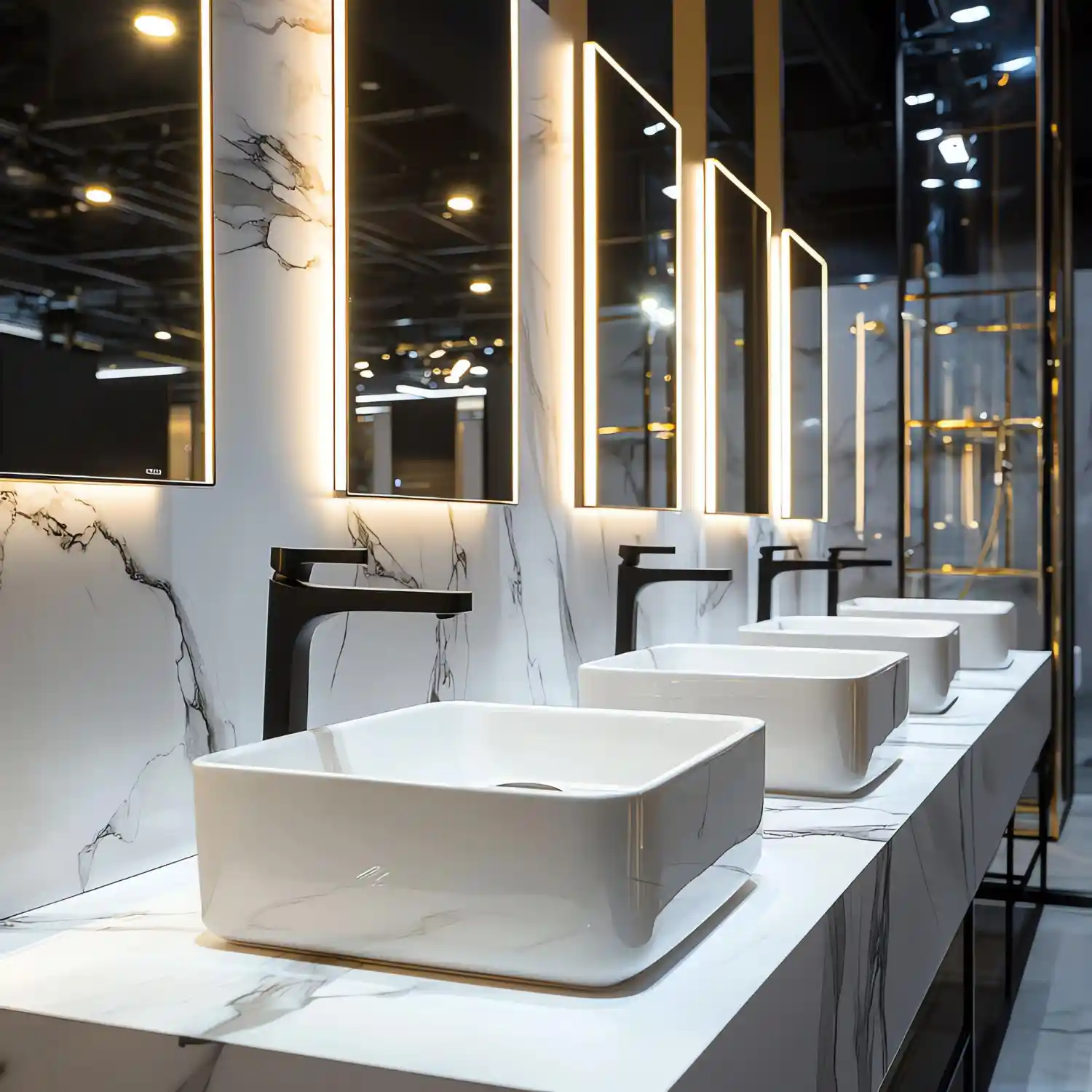
- Pick one hero material — concrete, brick, or blackened steel — and use it in a single spot, not the whole room.
- Match every plumbing fixture to one metal finish: matte black, aged brass, or unlacquered brass.
- Add one warm material for every raw one: a walnut vanity, leather stool, or jute mat.
- Choose damp- or wet-rated light fixtures for anything within 3 feet of the tub or shower.
- Budget to reseal exposed wood or wax raw steel every 1 to 2 years in a humid bathroom.
- Keep paint and grout in warm off-white or greige instead of stark white to soften concrete and brick.
- Save poured concrete floors for a full renovation; use a concrete-look tile or vanity top for a lighter change.
- Browse our full bathroom room gallery for more real-room examples before you commit to a palette.
KEY TAKEAWAY: Industrial bathroom design reads as finished, not unfinished, the moment raw materials share the room with something warm.
Why Industrial Bathroom Design Is Shifting Toward Warmth
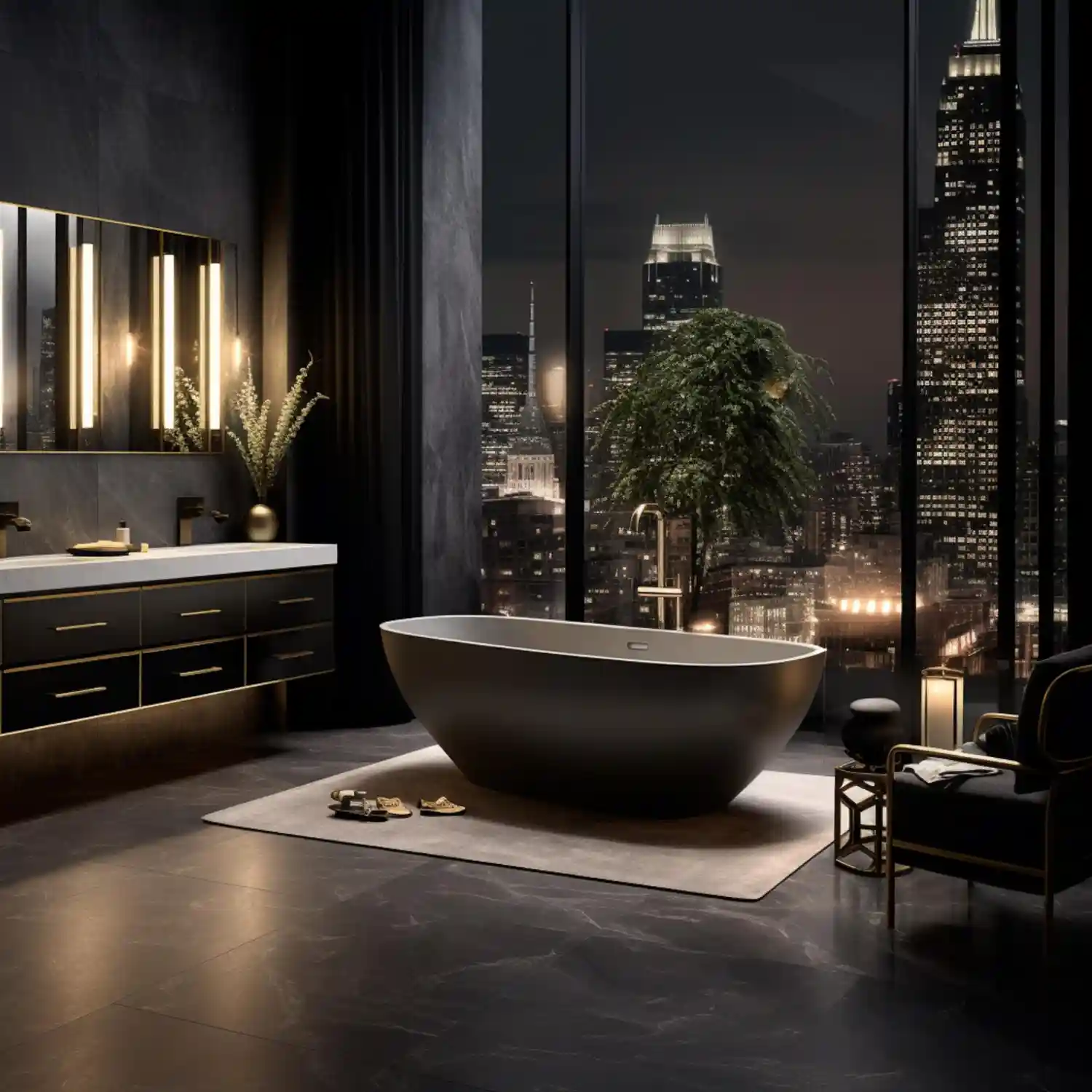
Industrial style did not start as a design choice. It started in 1960s SoHo, where artists moved into empty factory floors after New York’s manufacturing left the city. Rent was cheap and the buildings came as they were, so residents kept the brick, the beams, and the pipe shelving rather than covering them up. What began as a practical decision, keeping exposed brick and structural steel because tearing them out cost money nobody had, slowly became a look people paid to recreate.
That history explains why stripped-back industrial bathrooms can feel more like an unfinished space than a designed one — the original version genuinely was unfinished. Current bathroom coverage for 2026 backs up the shift: flat, cold industrial looks are named among the styles losing ground, while a warmer pairing of blackened steel with earthy colors like terracotta or deep walnut is called out as the version gaining traction instead. Industrial bathroom design that leans into that warmth feels like a thought-out choice, not a leftover job site.
Signs This Is Catching On:
- Trend roundups for 2026 list flat, all-cold industrial bathrooms among the looks fading, while a warmer version paired with terracotta or walnut is named as the one replacing it.
- Bathroom material coverage keeps favoring texture-rich surfaces like zellige tile and natural stone over the flat glossy tile that used to define showroom-industrial bathrooms.
- Fixture brands are pairing matte black with warm brass or champagne bronze instead of selling black hardware on its own, the same mixed-metal shift showing up across other bathroom styles too.
If your taste runs toward color instead of raw material, pink bathroom designs are proof that a completely different palette can feel just as thought-out.
What Does a Warm Industrial Bathroom Actually Look Like?
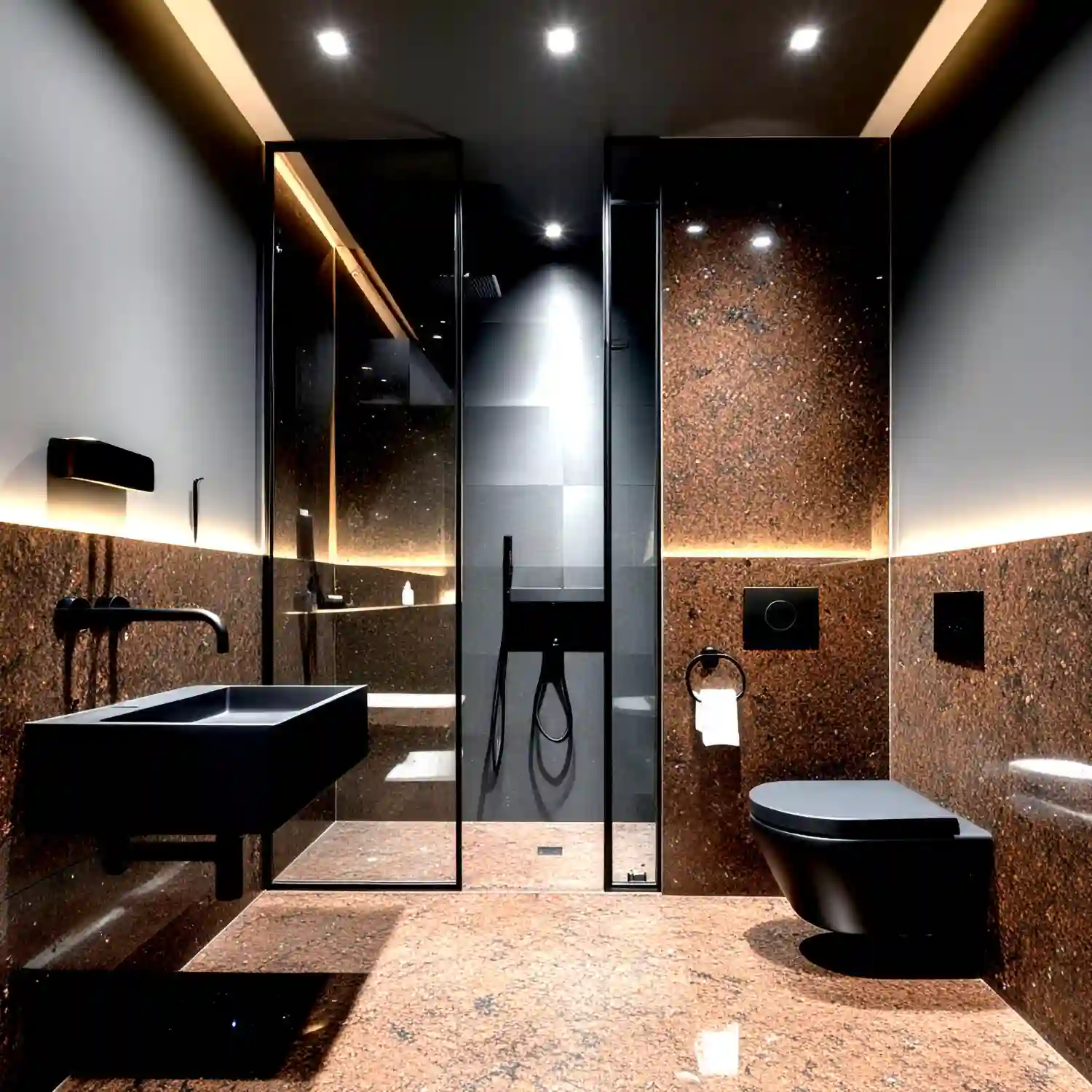
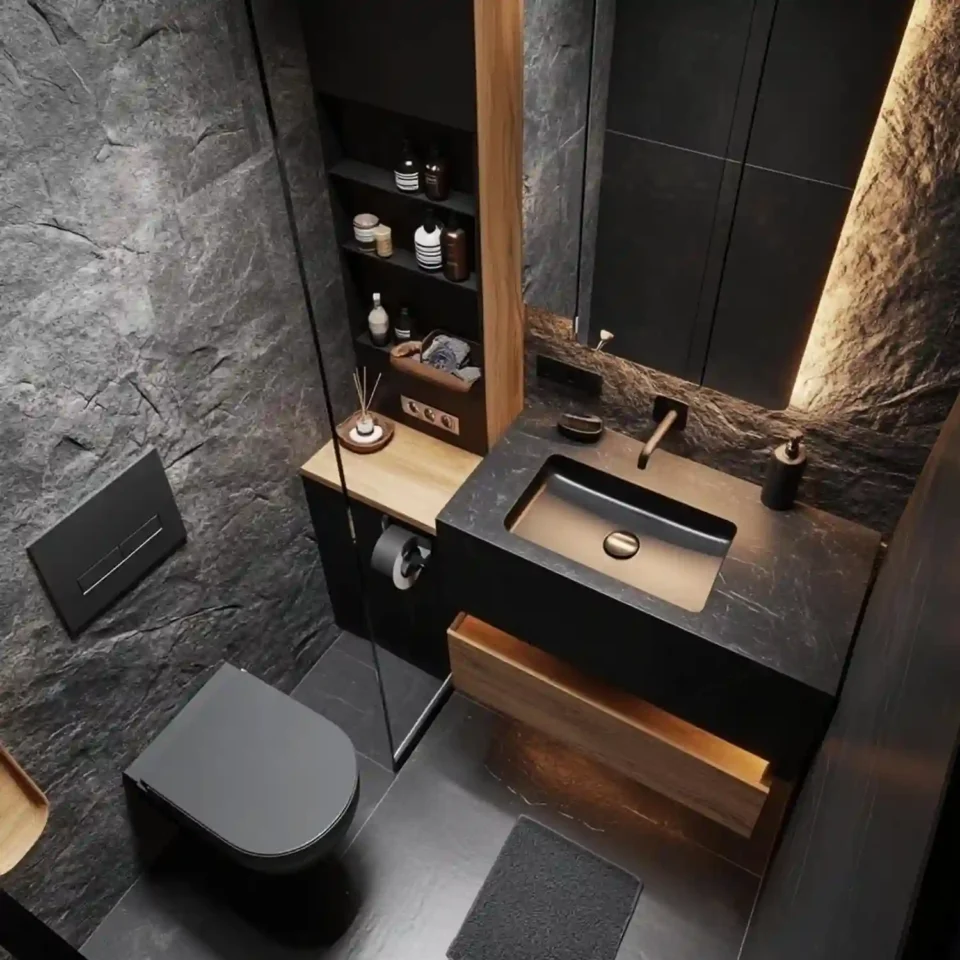
A warm version of the style still uses raw materials. It just does not let them run the whole room. Picture one exposed material, one metal finish, and enough warm texture that the space feels lived-in rather than staged for a photo shoot.
The Palette That Keeps Industrial From Feeling Cold
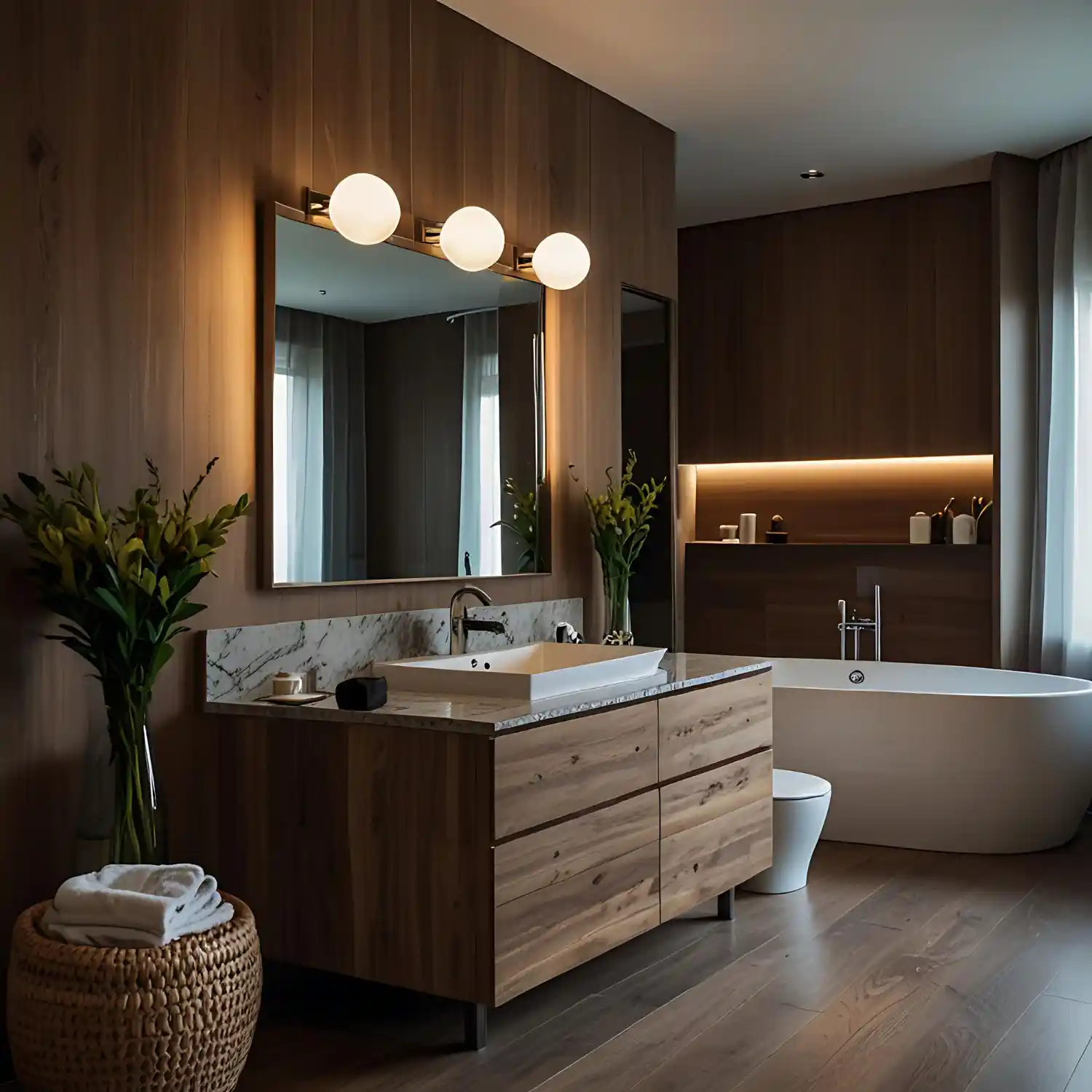
Warm greige, putty, and soft charcoal replace stark white and battleship grey as the base wall color. Terracotta, rust, and deep walnut show up in towels, a stool, or a single accent wall, giving the concrete and steel something to sit against instead of competing with more grey. A brick-look tile backsplash behind the vanity brings in texture without a full masonry wall, and these bathroom backsplash ideas cover several ways to work it in without redoing the whole room.
The Materials Doing Most of the Work
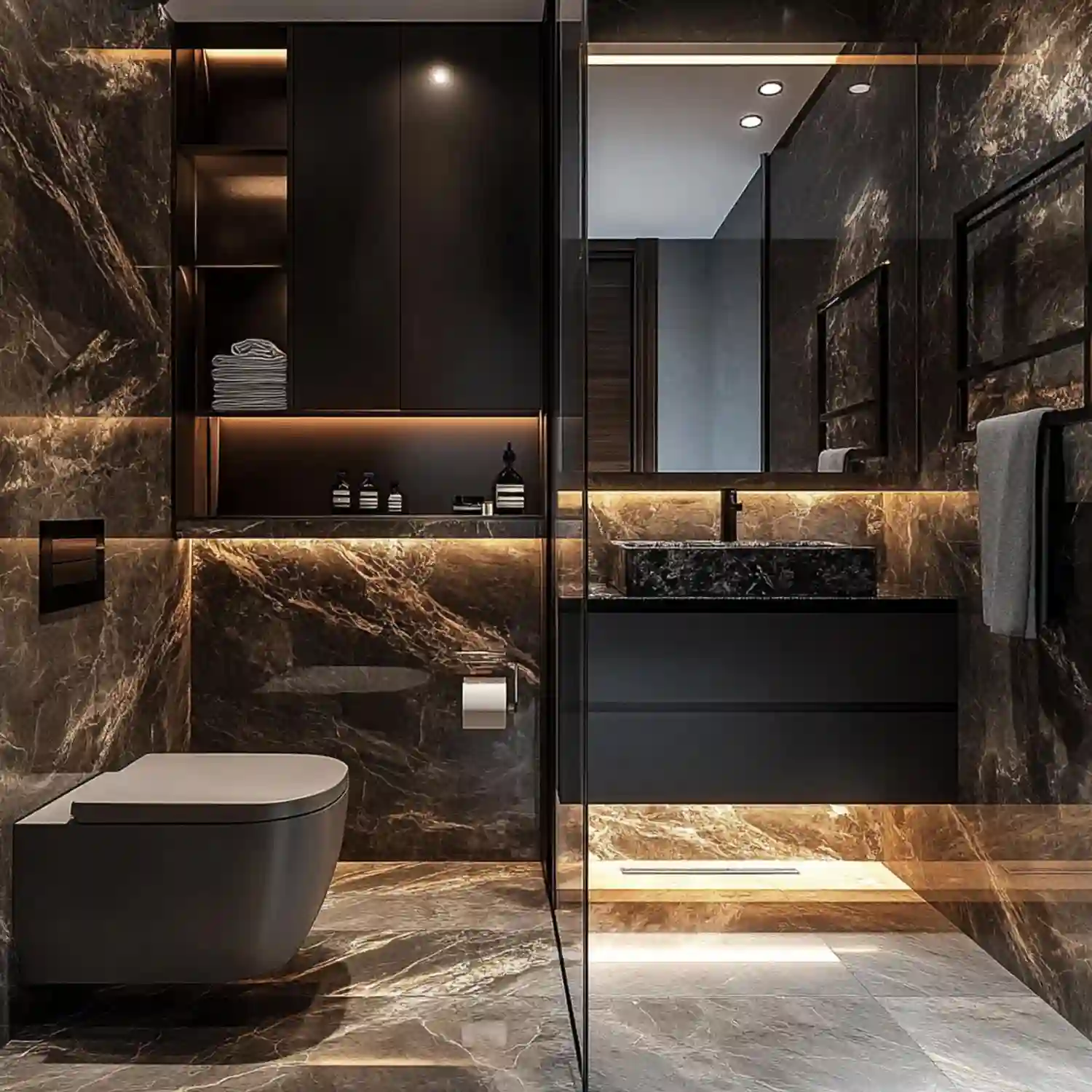
Poured concrete or a concrete-look vanity top anchors the sink. Reclaimed or faux brick covers one wall, never all four. A walnut or white oak shelf softens the hard edges, and the pairing of reclaimed wood with raw material is not unique to industrial bathrooms — farmhouse bathroom styling leans on the same reclaimed-wood-plus-raw-surface mix, just with a softer color story. Material Note: unfinished concrete needs a penetrating sealant to resist staining and moisture in a humid bathroom, and most sealants need reapplying every one to two years depending on use.
Which Metal Finishes Anchor an Industrial Bathroom?
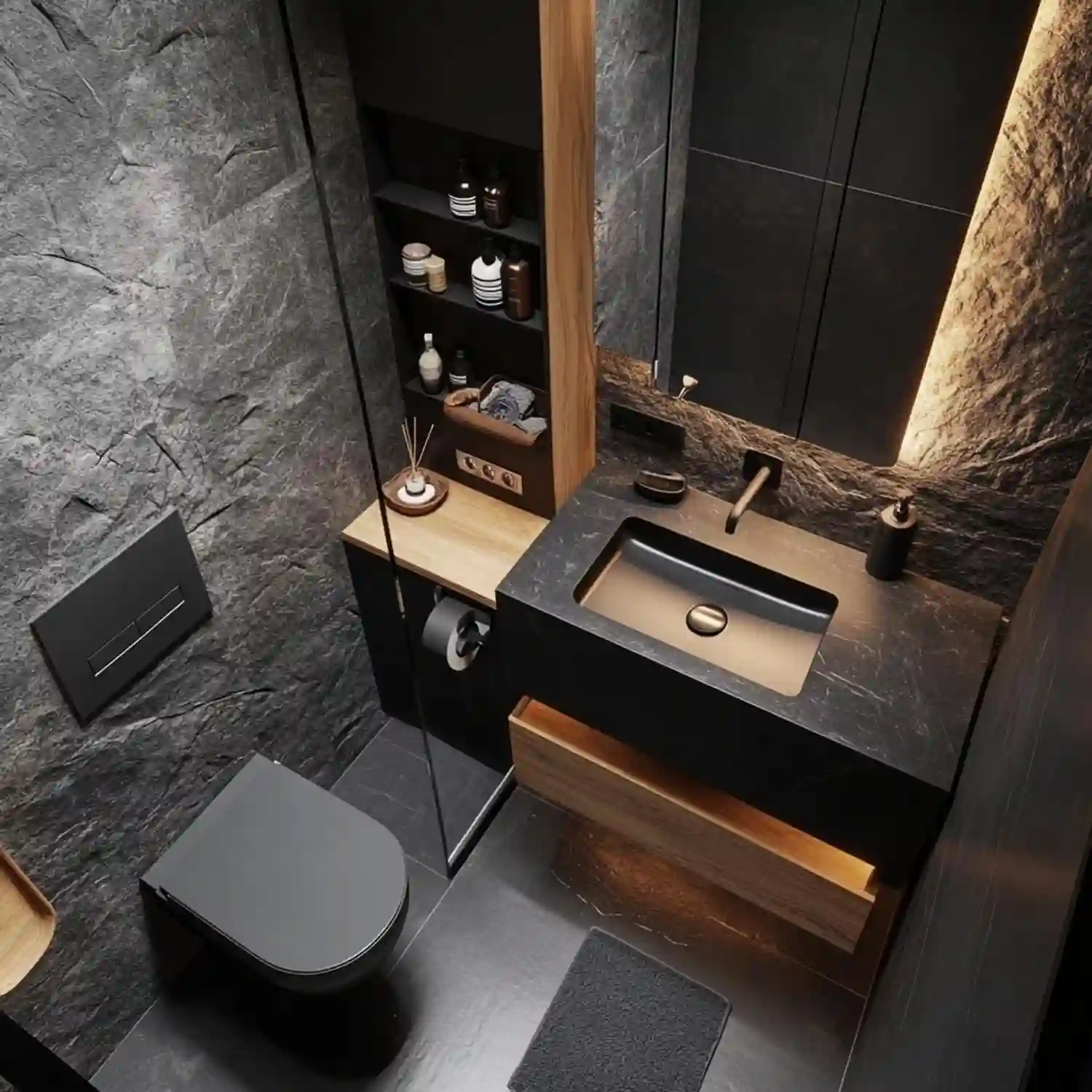
Matte black is the default anchor finish for faucets, shower trim, and towel bars. It hides water spots better than a polished finish, though hard water can still leave mineral deposits that need occasional cleaning. Pair it with one warm metal, usually unlacquered or brushed brass, rather than adding a third or fourth finish. That same black-plus-one-metal logic is what makes a black and white bathroom feel graphic instead of busy, and it works the same way here.
DESIGNER TIP: Buy the faucet and shower trim first, then match every other metal in the room to it. Mixing more than two finishes is what makes a raw-material bathroom look accidental instead of chosen.
Lighting That Makes Raw Materials Feel Warm, Not Sterile
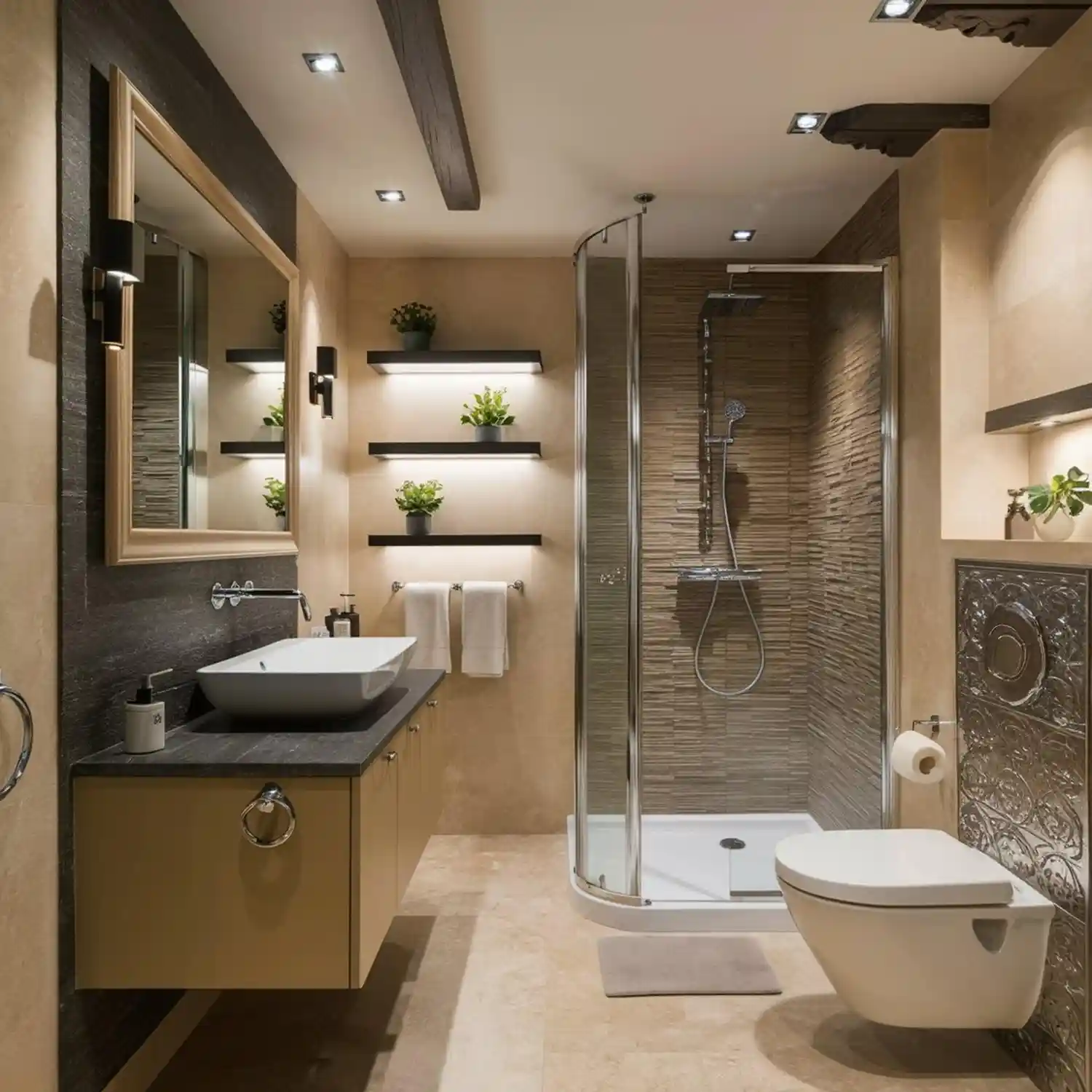
Exposed-bulb sconces and a caged pendant carry the industrial signal, but a single overhead fixture at full brightness is what pushes the room toward sterile. Layer in a small table lamp on the vanity or a dimmer on the main fixture so the light shifts warmer in the evening. Warm-white bulbs, generally in the 2700K to 3000K range, keep skin tones and wood finishes looking natural instead of clinical.
How to Bring the Industrial Bathroom Look Into Your Home
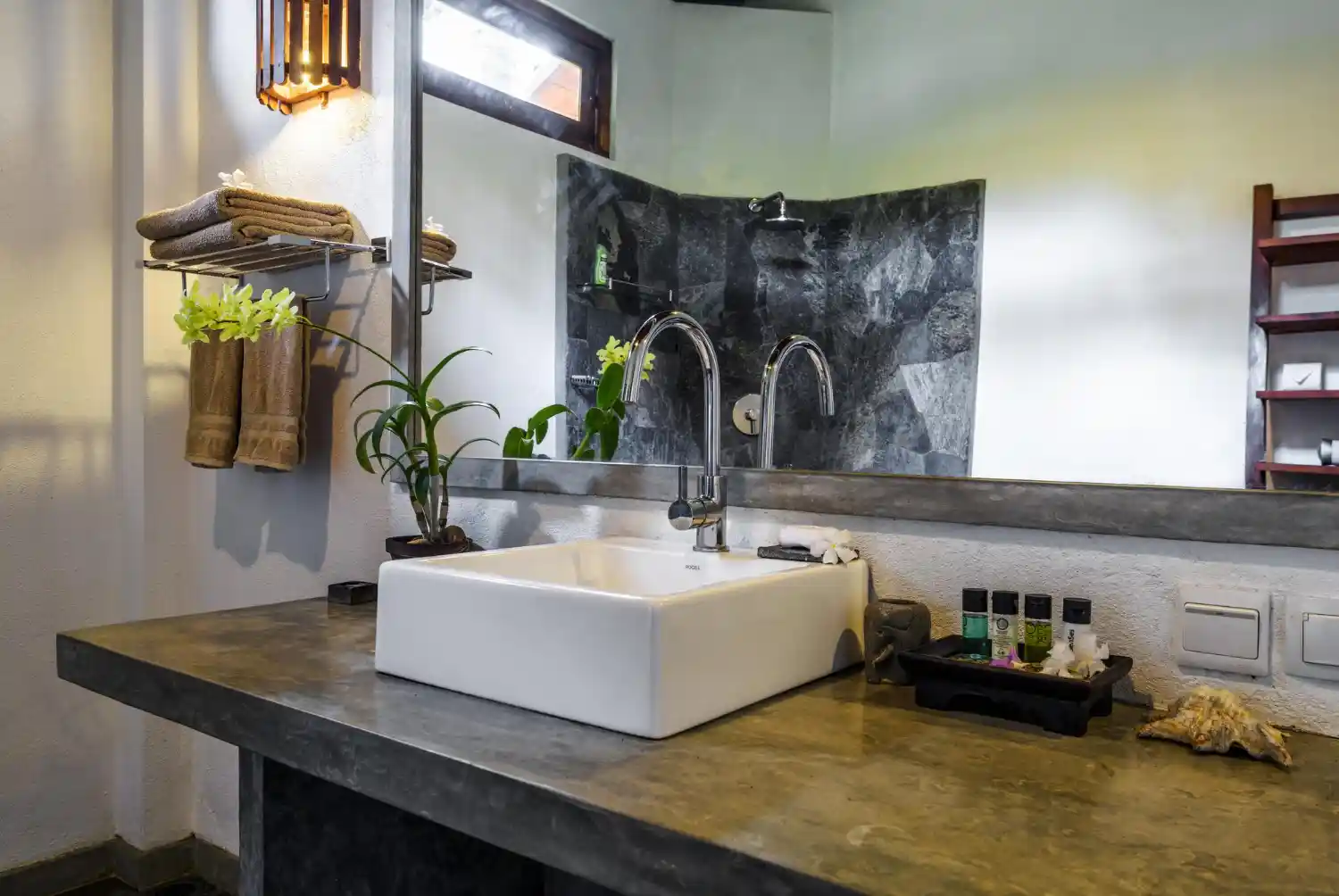
Adopting this look does not require a gut renovation. Most of it comes from four decisions, made in the right order.
Why Start an Industrial Bathroom With Just One Hero Material?
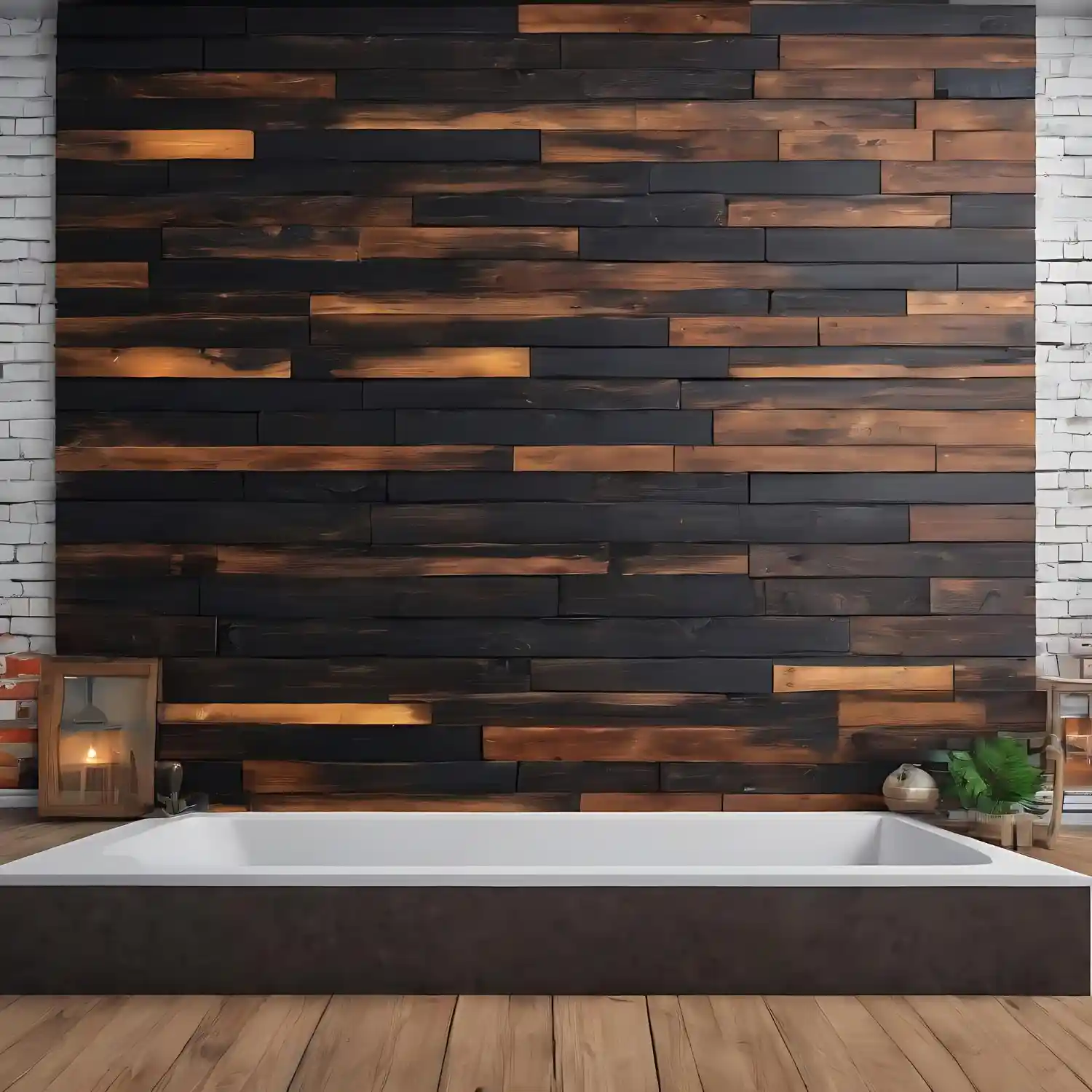
Pick concrete, brick, or blackened steel as the one material that says “industrial,” then let everything else support it. A concrete-look vanity top paired with a regular painted wall looks like a clear choice. A concrete vanity, a brick wall, exposed pipe shelving, and a steel mirror frame in the same small room looks like a theme park version of a loft. One material, done well, does more work than four done halfway.
Match Plumbing Fixtures to a Single Metal Finish
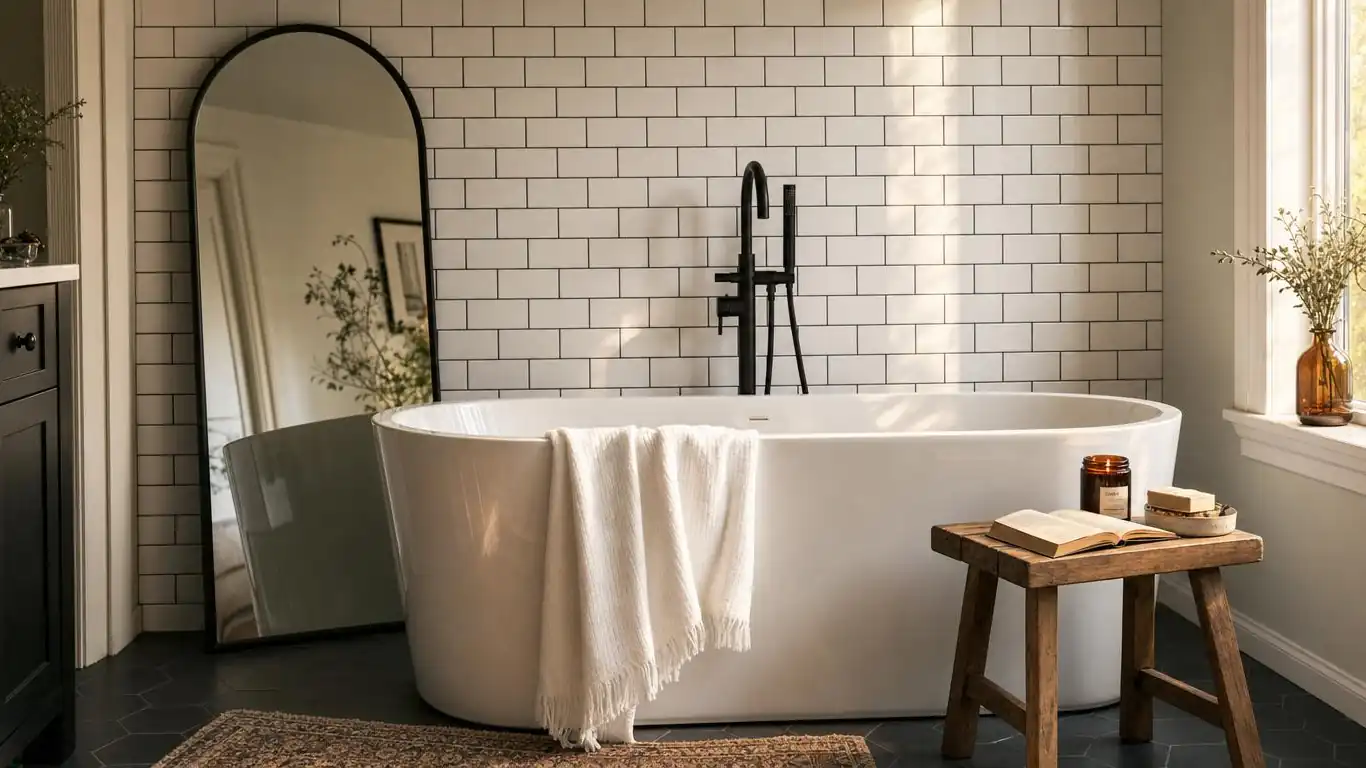
Choose the faucet, shower trim, and towel bar in the same finish before shopping for anything else. Matte black is the most common choice, but aged bronze or blackened steel looks just as industrial with less shine. Save the second metal, usually brass, for the mirror frame or a light fixture so it stays an accent, not a competing statement.
Add One Warm Texture for Every Raw Material
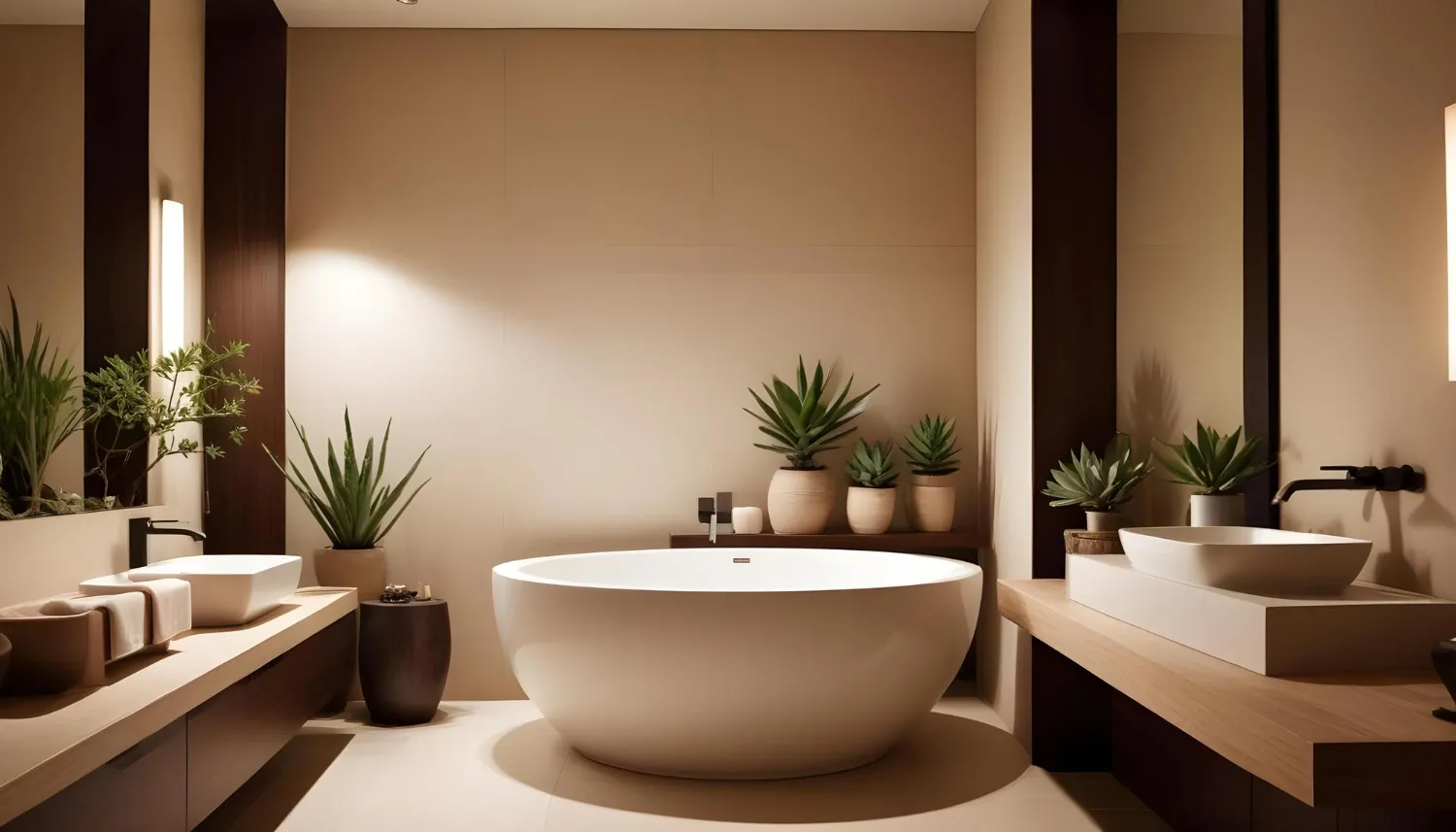
Every hard surface needs a soft counterpart. A concrete vanity pairs with a linen hand towel and a wood tray. A brick accent wall pairs with a woven jute bath mat. This same swap-a-few-soft-pieces approach is the easiest seasonal refresh in any bathroom, and these spring bathroom decor ideas show how far new textiles alone can shift a room’s mood.
Why Does Industrial Bathroom Lighting Need a Damp Rating?
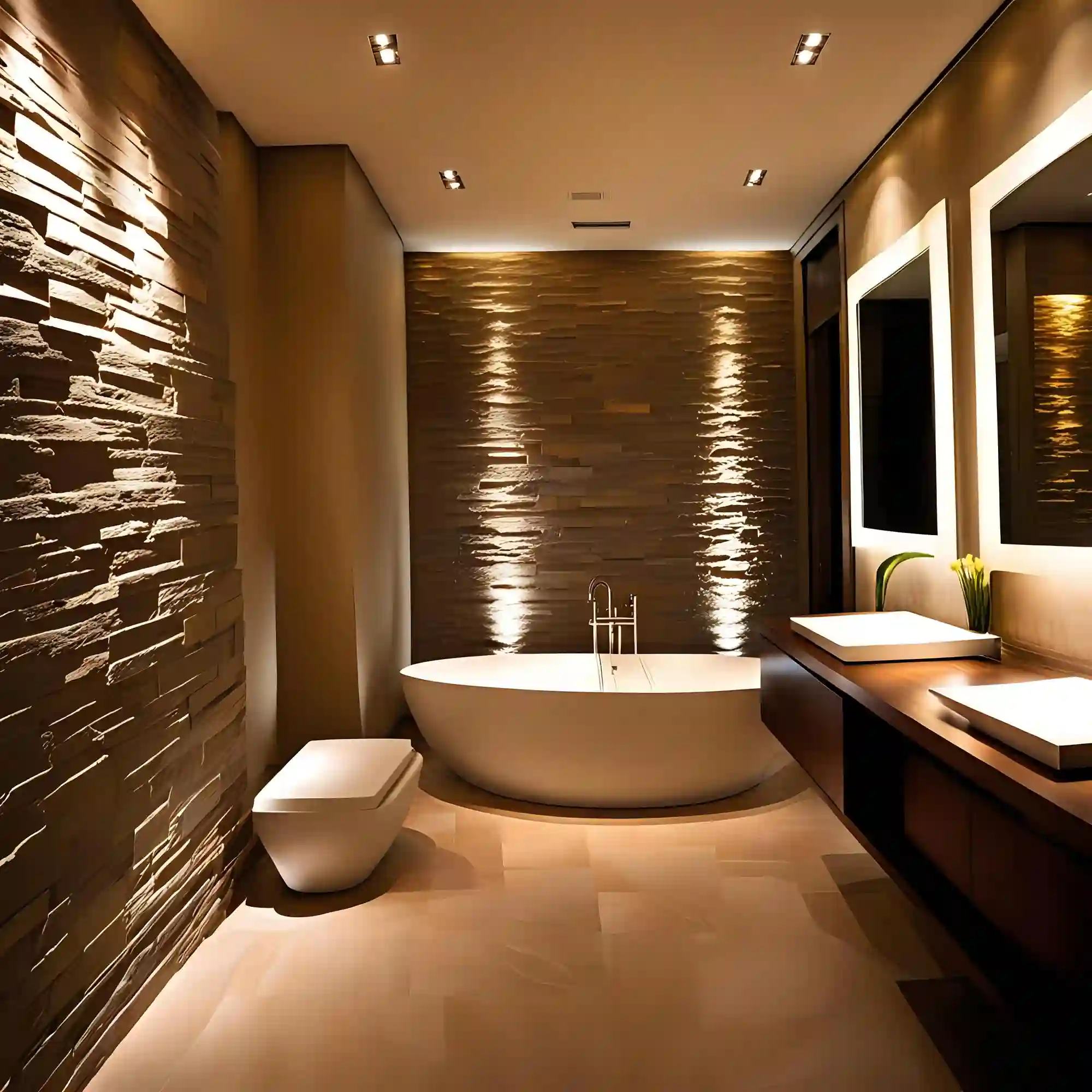
Safety Note: fixtures within 3 feet horizontally and 8 feet vertically of a tub or shower rim must carry a damp or wet safety rating under electrical code for bathtub and shower areas, and cord- or chain-hung pendants are not allowed in that zone at all regardless of their rating. A caged Edison-style fixture over the vanity is usually fine outside that zone; anything closer to water, or any new hardwired run, is a job for a licensed electrician rather than a weekend swap.
Where Industrial Bathrooms Go Wrong
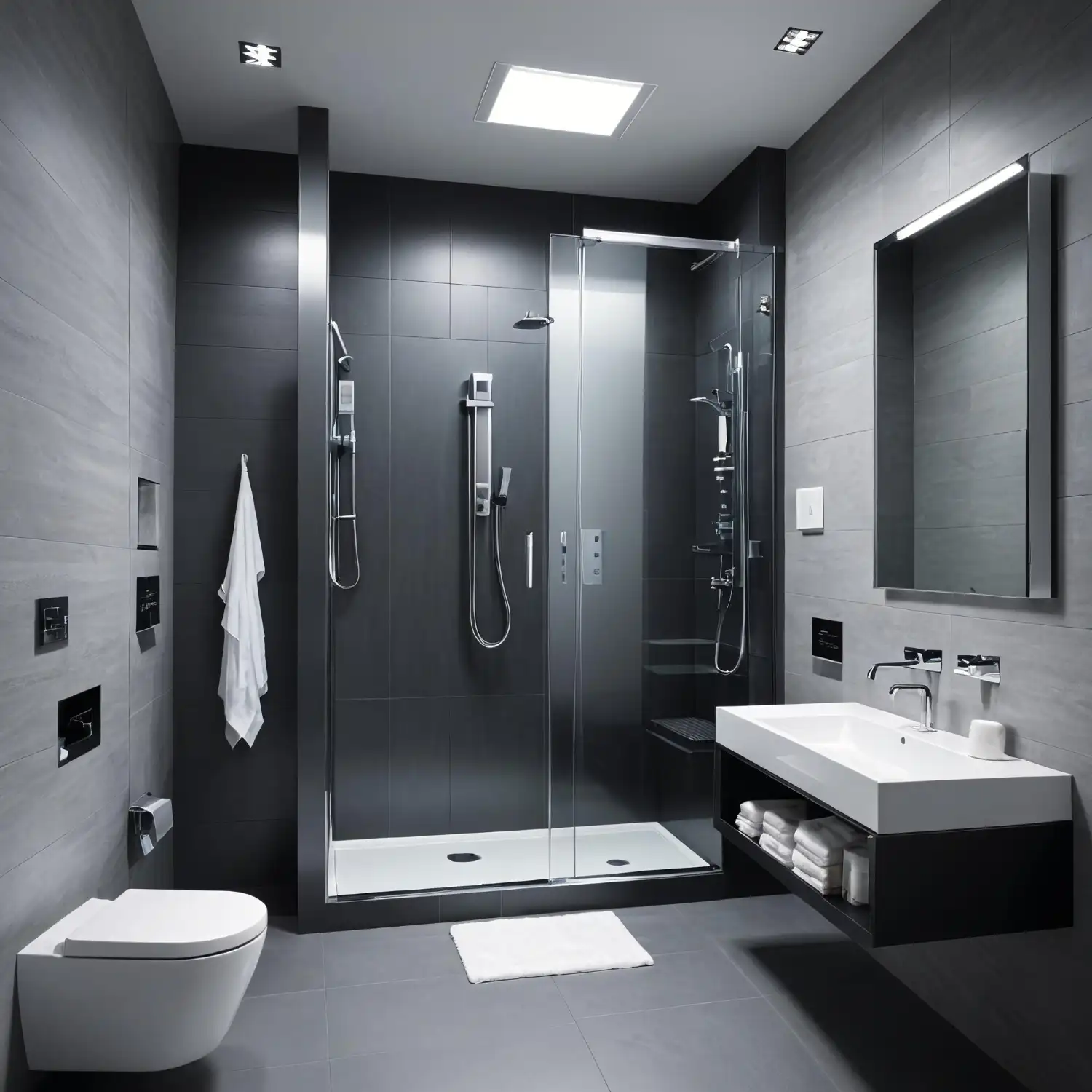
The most common mistake is treating industrial as a full theme instead of one material choice. A bathroom with concrete floors, a brick wall, black pipe shelving, and steel light fixtures all at once loses the balance that makes the style work, and it starts to read as unfinished rather than designed. If a fully raw-material room already feels overwhelming on paper, minimalist bathroom decor ideas show how the same editing instinct works with softer materials instead.
Matching every metal finish to matte black is a close second mistake. A room with a black faucet, black towel bar, black mirror frame, and black light fixture loses depth fast, even though each piece looks good on its own. One warm metal accent breaks up the monotony without diluting the style.
Cold lighting undoes warm materials faster than anything else. A bright white overhead bulb over a walnut vanity and warm plaster wall makes both look flat and slightly wrong, the same way a phone flash photo makes a cozy room look clinical. Warm-toned bulbs and layered lighting fix this in an afternoon.
Skipping the sealant on raw materials is the mistake that costs the most later. Unsealed concrete stains within weeks in a humid bathroom, and bare steel can pick up surface rust in under a year without an occasional coat of wax or clear sealant. Neither problem is expensive to prevent, but both are frustrating to fix after the fact.
Does Industrial Bathroom Design Have Staying Power?
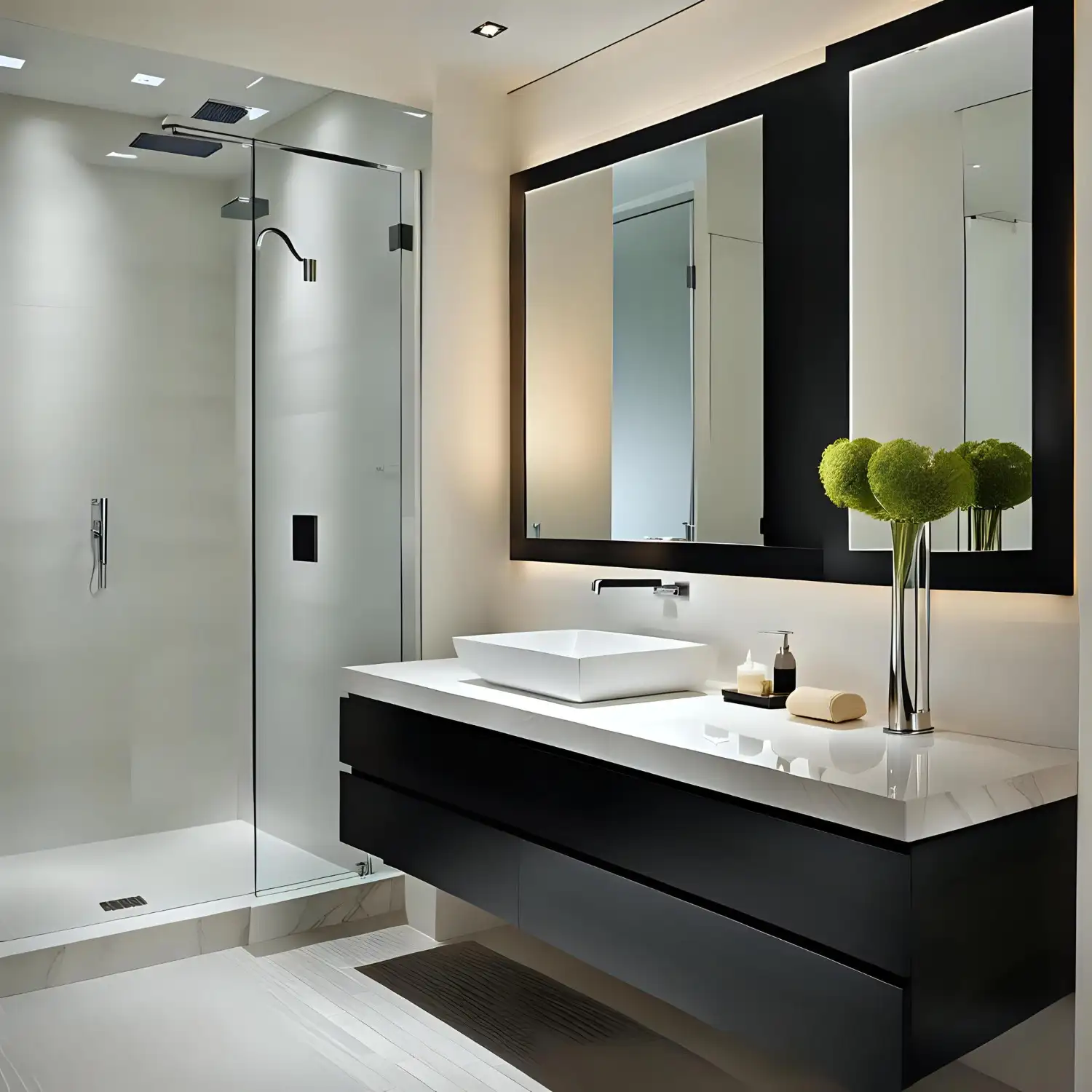
Designer’s Verdict: industrial bathroom design has staying power as long as it stays an accent. A bathroom built around one raw material and warm, well-matched finishes will outlast a bathroom trying to look like a warehouse in every direction, because the eye tires of an all-one-texture room far faster than a mixed one. That same one-strong-material logic shows up in boho bathroom styling too, just applied to pattern and texture instead of raw surfaces.
Can a Small or Rental Bathroom Pull Off Industrial Design?
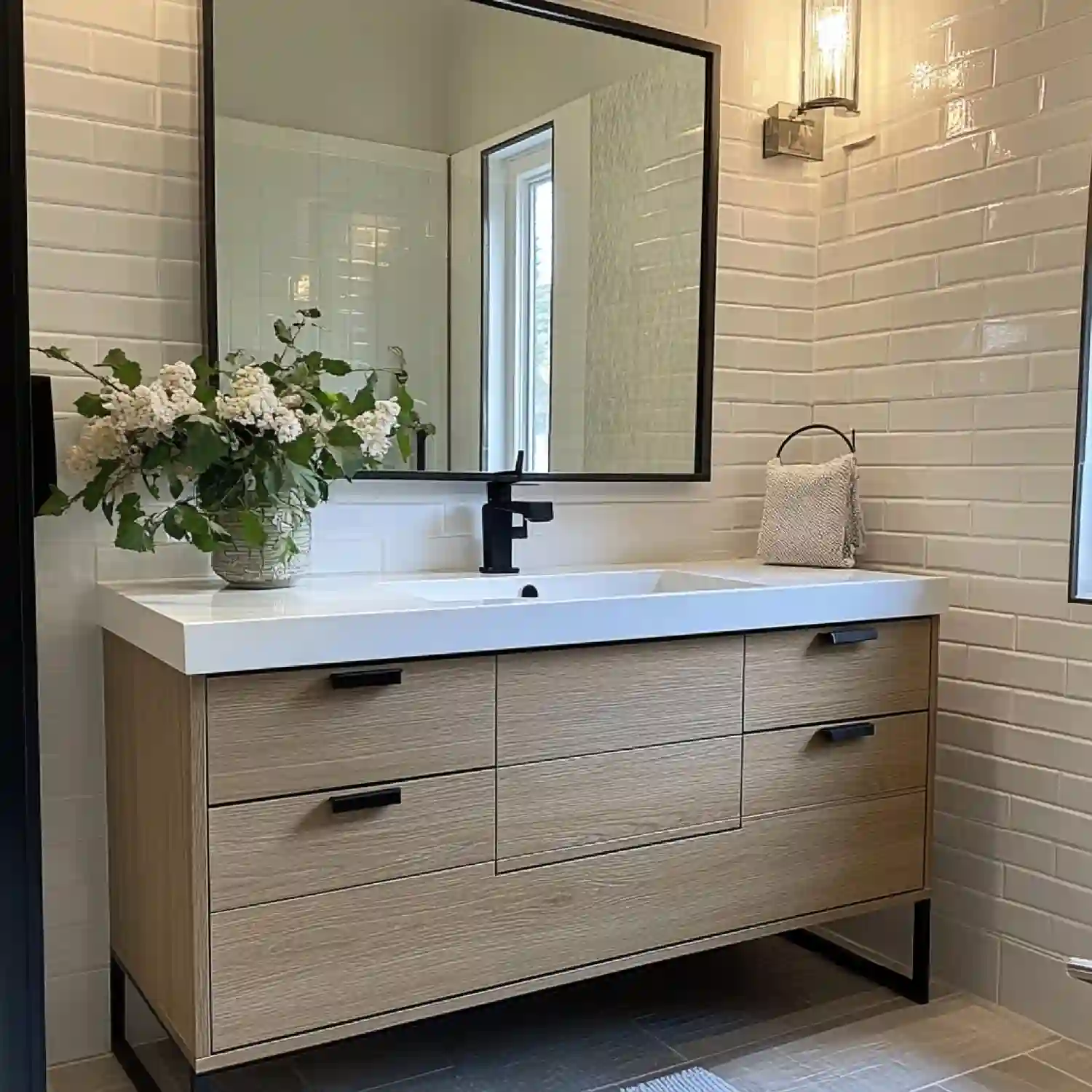
Yes, and it is often easier in a small bathroom than a large one, since there is less room for the raw materials to pile up. Peel-and-stick brick or concrete-look wallpaper covers one accent wall without touching the actual wall underneath, which matters in a rental. Swap only what is removable: a black-framed mirror, a matte black shower curtain rod, black cabinet knobs, and a caged pendant plugged into an existing outlet rather than hardwired. In a small room, keep the darkest material below eye level and let the upper walls stay a warm light color so the ceiling does not feel like it is closing in.
Color-forward renters who want personality without a raw-material commitment might prefer a different route entirely, and these green bathroom ideas show how much a small rental bathroom can change with paint and textiles alone.
Budget Tiers for a Warm Industrial Bathroom
A styling refresh, not a renovation, is where most of this look actually lives. The table below breaks down realistic ranges for a decor-level update, and every project here is a swap or a surface change rather than structural work. For general bathroom inspiration beyond one style, our full rooms and spaces gallery is worth a browse too.
| Project | Estimated Cost | Impact Level |
|---|---|---|
| Paint + matte black hardware swap | $80-$250 | Medium |
| Brick-look accent wall, one wall | $250-$550 | High |
| Matte black faucet, shower trim, towel bar set | $300-$700 | High |
| Concrete-look vanity top, materials and install | $900-$2,500 | Very High |
Thin brick veneer for that one accent wall typically runs $7 to $10 per square foot installed, which is exactly why most industrial bathrooms keep it to a single wall instead of the whole room.
Best First Upgrade: paint and a matched matte black hardware set change the room’s temperature for the least money.
Skip for Now: a full poured concrete floor is structural, expensive, and better saved for a complete remodel than a styling refresh.
Frequently Asked Questions
Conclusion
Industrial bathroom design holds up best as a supporting material, not the entire script for the room — one raw surface, one metal finish, and enough warmth to keep it from reading like an unfinished space. Composite example: picture a builder-grade bathroom with a plain white vanity and flat overhead light, updated with only a concrete-look counter, a matte black faucet, and a warm walnut shelf; the raw material shows up once, and the room reads as finished rather than half-done. For more ideas across every room in the house, start at 101HomeDecor.
Next Steps
- Pick one hero material — concrete, brick, or blackened steel — before buying anything else.
- Choose a single dominant metal finish and one accent metal, then shop fixtures to match.
- Confirm any light fixture near the tub or shower carries a damp or wet safety rating.
- Add one warm texture, wood, linen, or leather, for every raw material in the room.
More Bathroom Design Styles
- 15 Luxury Bathroom Ideas for a Five-Star Hotel Feel at Home
- 13 Scandinavian Bathroom Ideas for a Bright, Hygge-Warm Space
- 14 Japandi Bathroom Ideas for a Warm, Minimalist Retreat
- 15 Coastal Bathroom Ideas for a Bright, Airy Retreat
- 14 Spa Bathroom Ideas to Create a Calming At-Home Retreat
- Aesthetic Bathroom Designs for a Clean and Trendy Look
- Modern Bathroom Design Is Trading Cold Minimalism for Warmth
- 14 Mid Century Modern Bathroom Ideas That Feel Truly Timeless