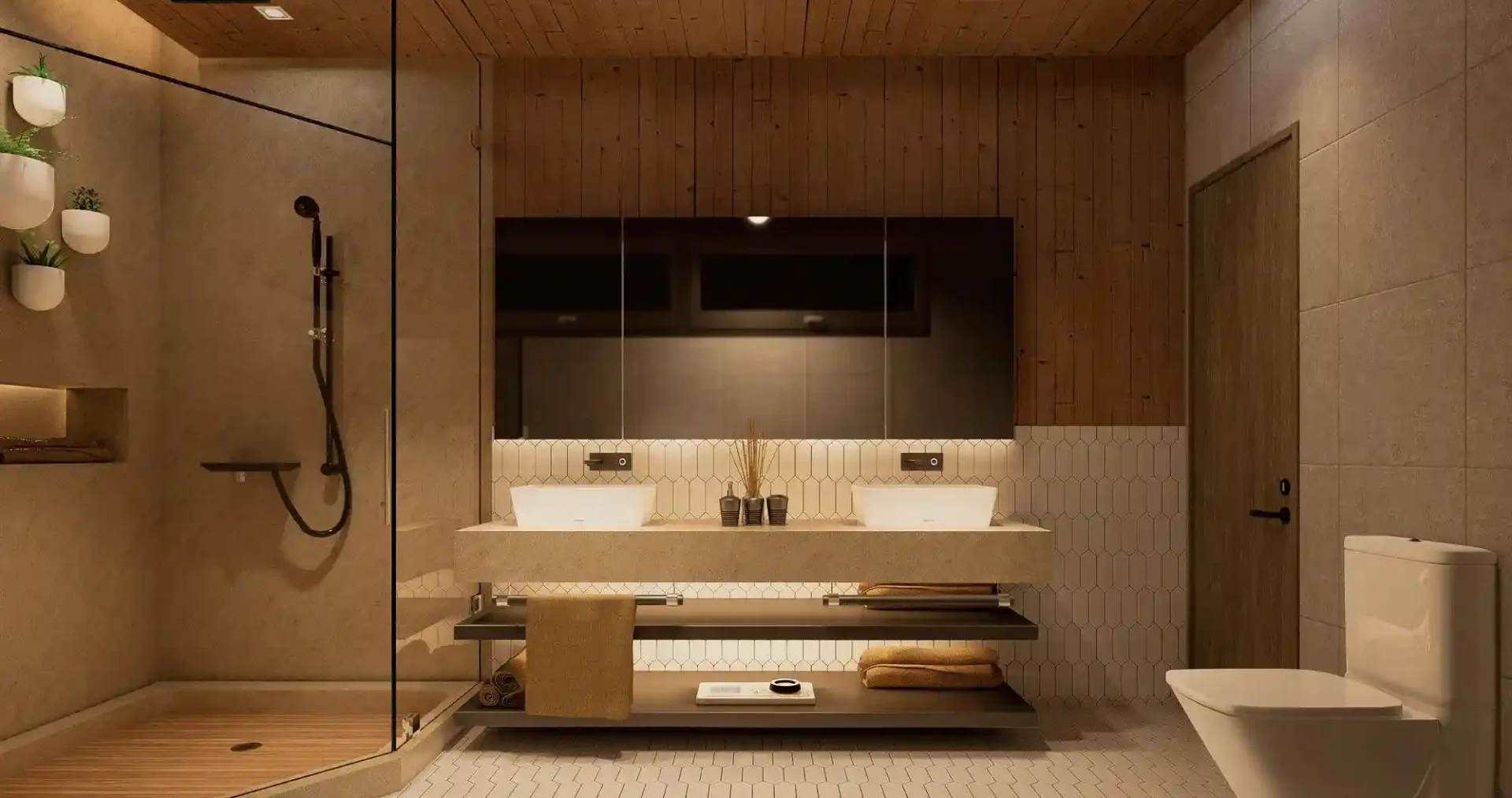
TL;DR
- The look: Japandi blends Japanese wabi-sabi warmth with Scandinavian simplicity — not stark white minimalism.
- Materials: Warm oak or walnut, lime plaster or limewash, and one dark metal accent, either matte black or brushed brass.
- The tub: A low Japanese soaking tub trades length for depth and fits small bathrooms well.
- The ideas: 14 Japandi bathroom ideas cover the vanity, walls, lighting, textiles, and small styling details.
- The cost: A refresh runs $200 to $4,000+, depending on how many layers you take on.
What Do Real Japandi Bathroom Ideas Actually Look Like?
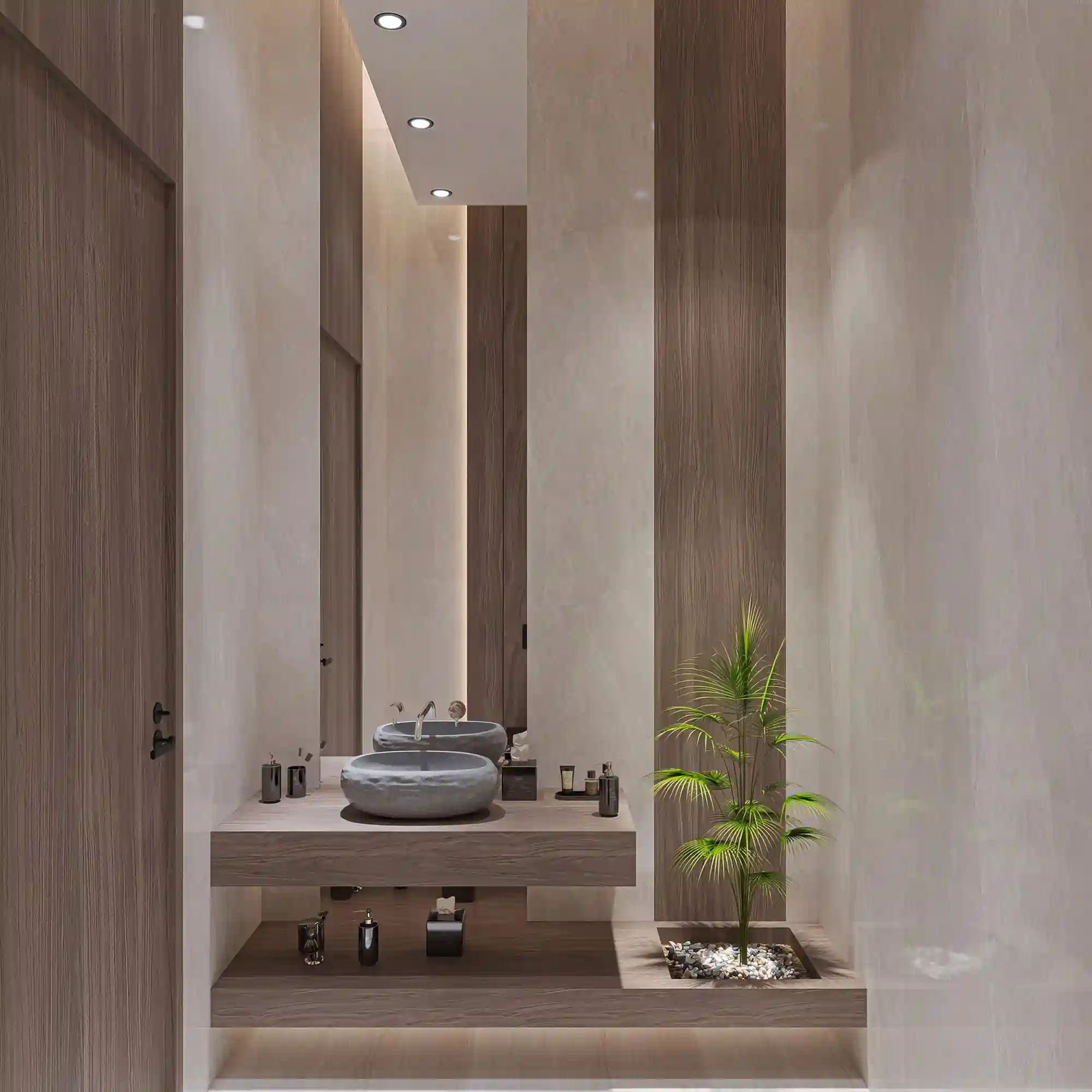
Most “Japandi bathroom” boards on Pinterest show the same room: white walls, one teak stool, a lone fern by the tub. That is minimalism borrowing a Japanese prop, not real Japandi bathroom ideas. If you have saved a dozen of those images and your own bathroom still feels flat and cold, you are not alone.
Looking for more ideas? Explore our full guide to Bathroom Design Styles.
Editorial field note: A bathroom with all-white tile and one wood stool often photographs well but feels sterile after a week of daily use. Swapping the vanity for warm oak, adding a lime-plaster accent wall, and layering in one matte black faucet usually fixes that flatness in a single weekend — the room feels warmer without a single new paint color anywhere else.
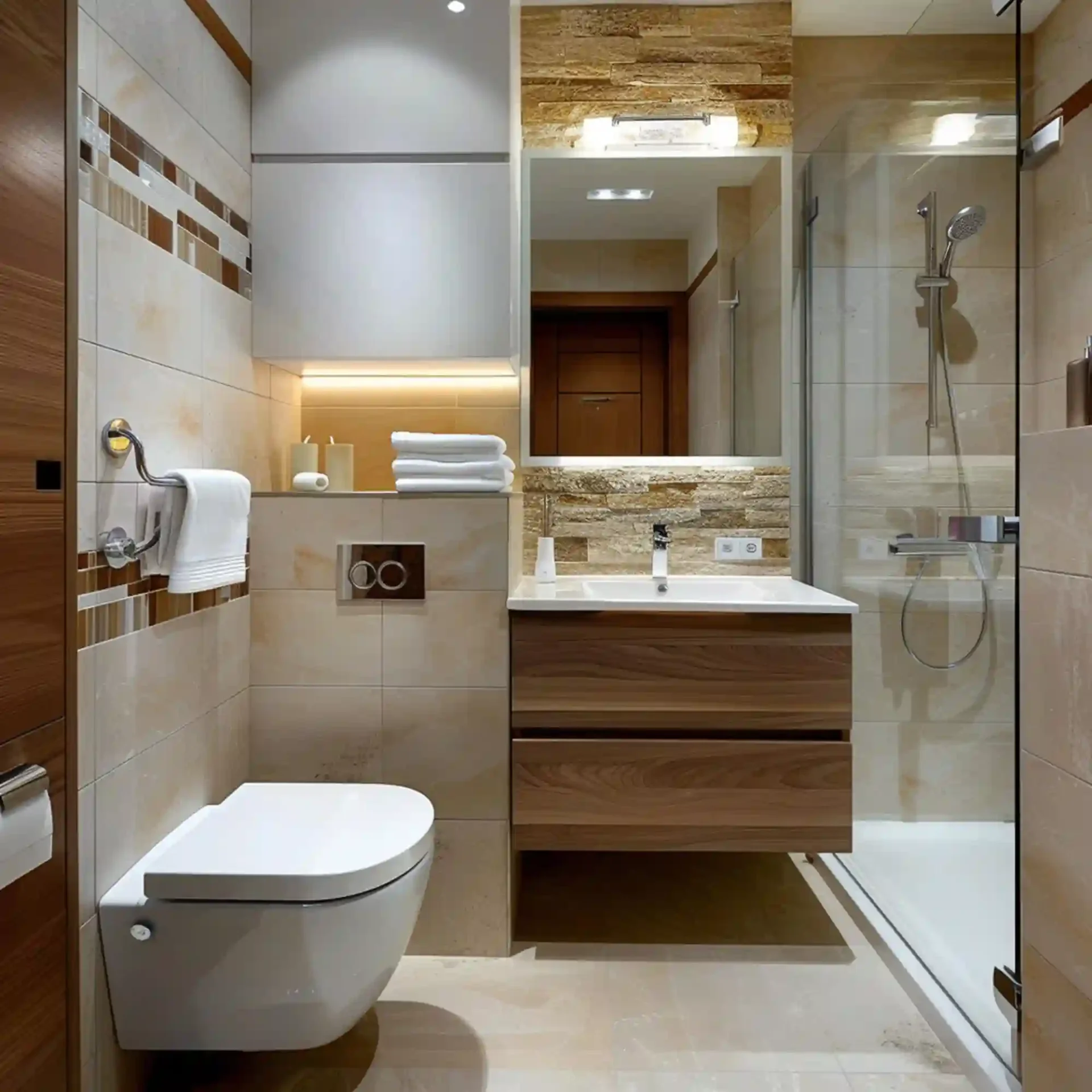
A Japandi bathroom blends Japanese wabi-sabi warmth with Scandinavian simplicity. The style leans on natural wood, warm plaster or limewash walls, and one dark metal accent — usually matte black or brushed brass — instead of stark white minimalism. A floating oak vanity, a low Japanese soaking tub, and warm 2700K lighting are the fastest way to get an authentic look, not just a moodboard image.
This guide covers 14 Japandi bathroom ideas that use real materials, real costs, and one clear rule: wood first, texture second, empty space last. Japandi sits alongside other bathroom design trends worth watching this year, but it earns its own space because of how much warmth it adds to a small room. Every idea below includes a real cost range, so you can plan the room in layers instead of all at once. The goal is a bathroom that still feels like yours, not a showroom. Start exploring more home decor inspiration for the rest of the house once your bathroom feels finished. Bookmark this guide for quick reference.
| Quick Takeaways | |
|---|---|
| Wood tone | Warm oak or walnut, repeated on the vanity and at least one shelf. |
| Wall treatment | Lime plaster or limewash in a warm putty greige, kept away from splash zones. |
| Metal accent | One dominant finish — matte black or brushed brass, not both competing. |
| Tub or shower | A low Japanese soaking tub or a stone-floor shower niche. |
| Lighting | Warm 2700-3000K, layered instead of a single overhead fixture. |
| Textiles | Waffle-weave or linen towels in oat, stone, or charcoal tones. |
Japandi Bathroom Checklist
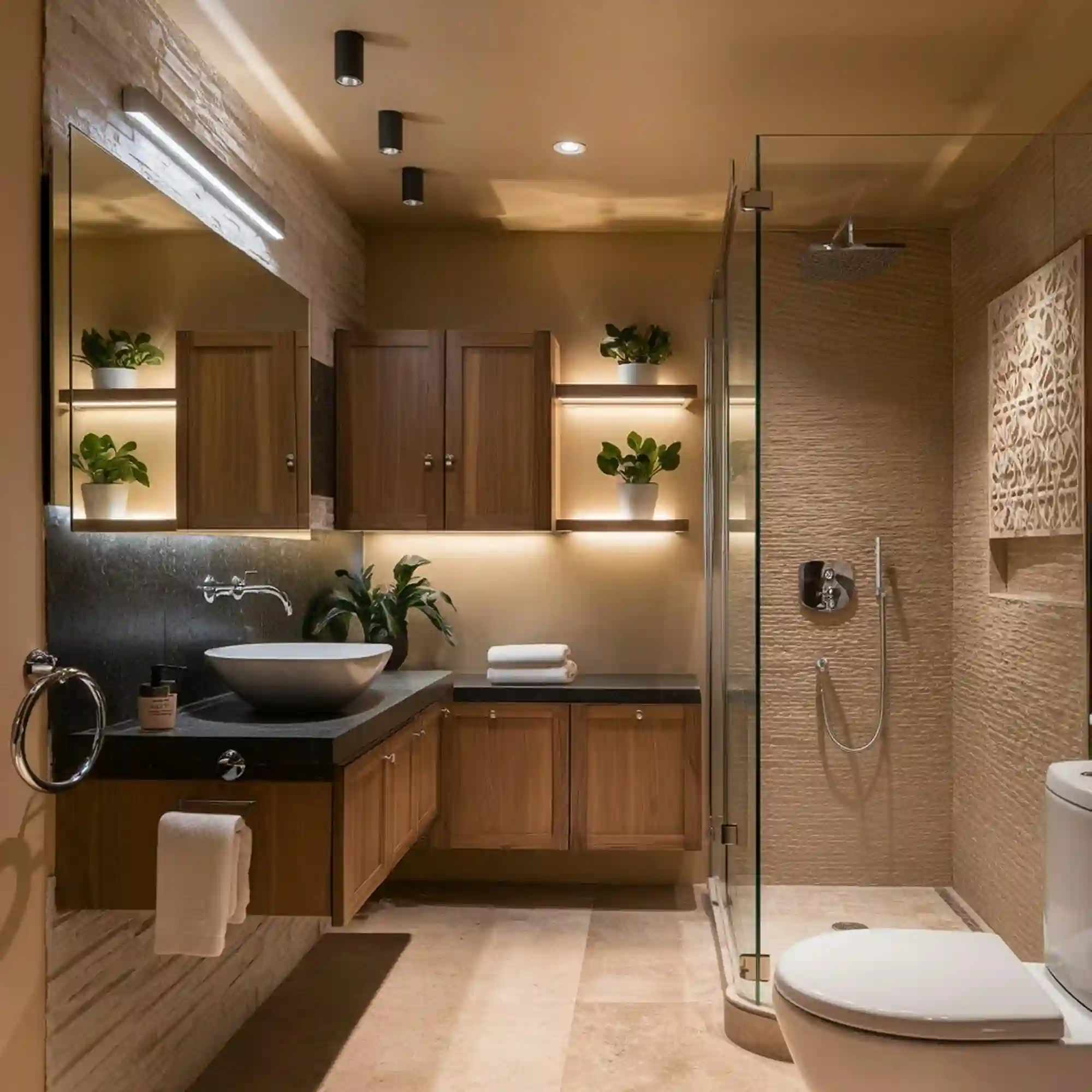
- Pick one warm wood tone — oak or walnut — and repeat it on the vanity and at least one shelf.
- Cap the palette at three neutrals plus one dark accent in matte black or brushed brass.
- Choose a single hardware finish family so the faucet, hooks, and pulls all match.
- Leave one open, uncluttered counter zone near the sink for the wabi-sabi look to breathe.
- Add one humidity-tolerant plant, like a pothos or a small fern, for a living texture layer.
- Layer lighting at 2700-3000K instead of relying on a single overhead fixture.
- Skip limewash or plaster inside the shower stall or right against the tub’s splash zone.
- Use woven rattan or seagrass baskets for storage instead of plastic bins.
KEY TAKEAWAY: A Japandi bathroom needs three things to feel authentic — warm wood, one dark metal accent, and enough empty counter space for the materials to breathe.
14 Japandi Bathroom Ideas Worth Copying
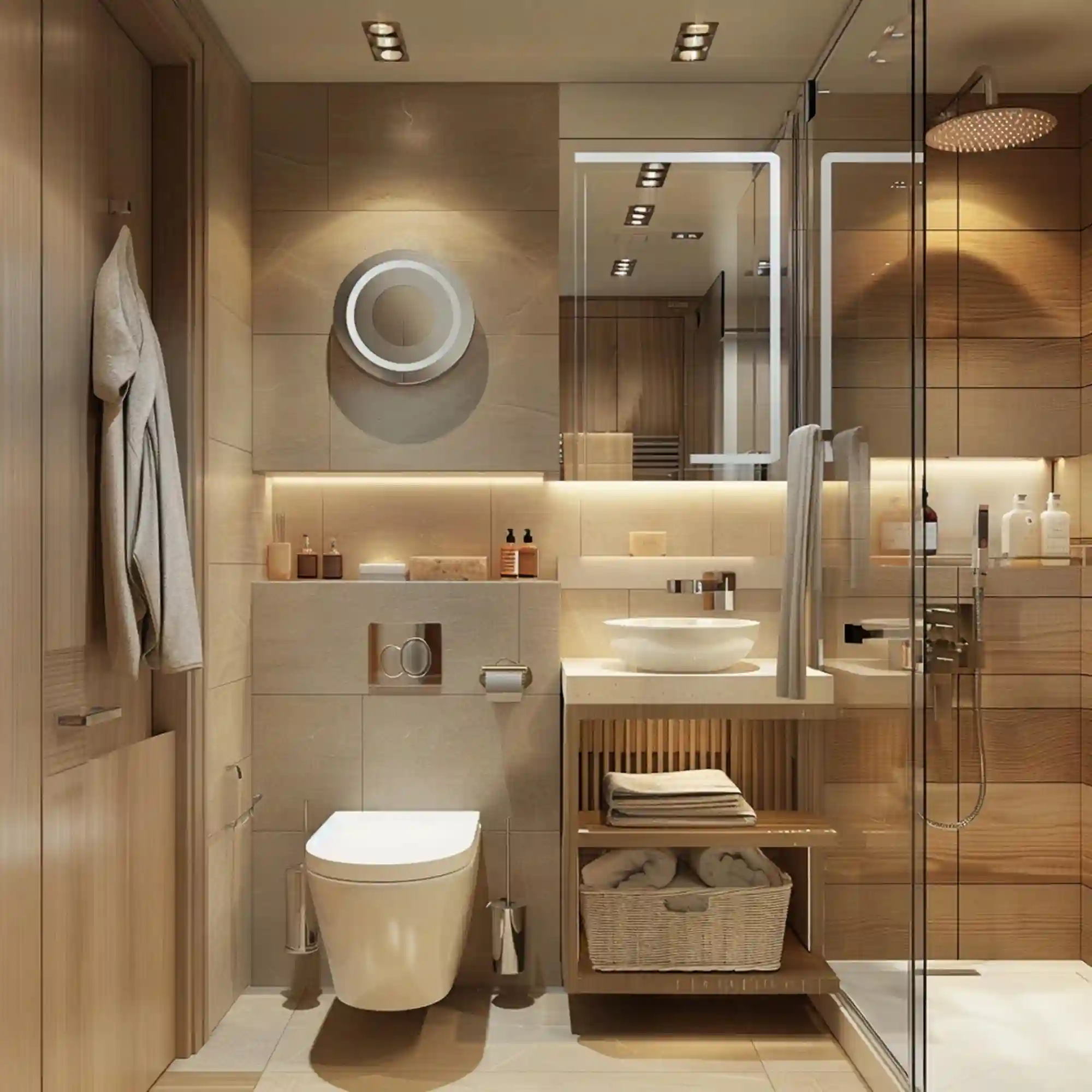
These 14 Japandi bathroom ideas move from big changes, like a floating vanity, to small styling swaps you can finish in an afternoon. Start with whichever fits your budget and layer in the rest over time, then revisit our spring bathroom decor ideas later in the year for a seasonal color refresh.
Floating Oak Vanity With a Hand-Thrown Ceramic Basin
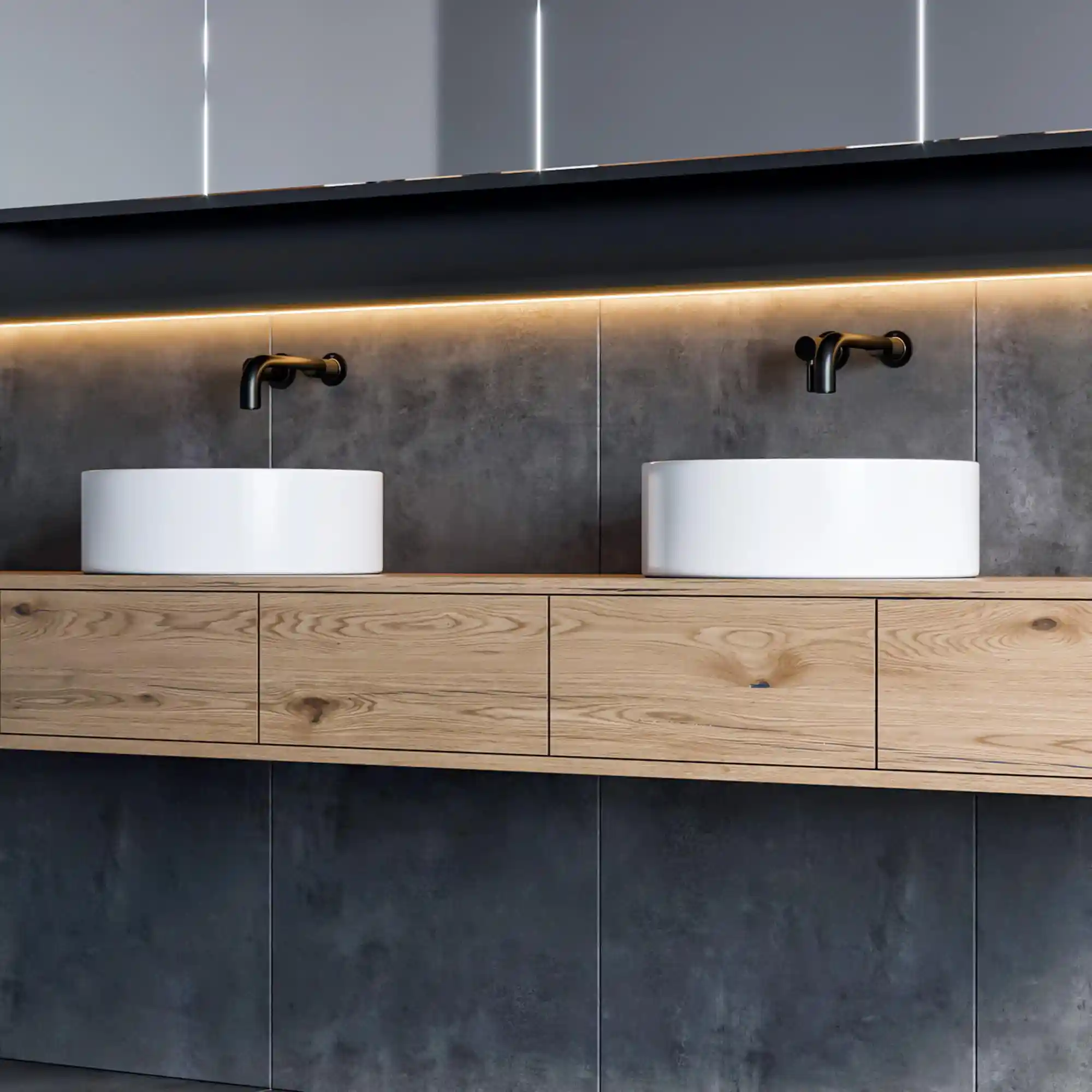
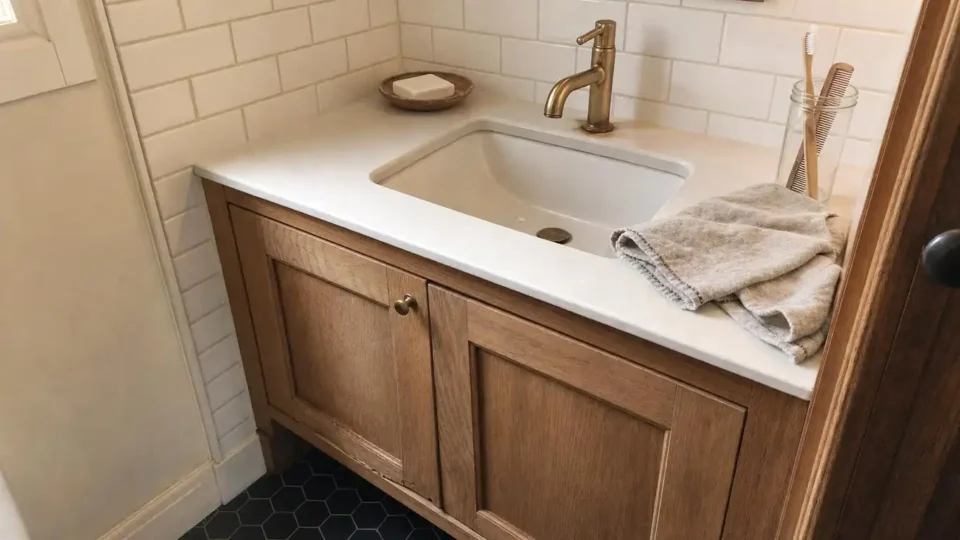
A floating oak vanity is the fastest way to bring warmth into a Japandi bathroom. Mount it 32-34 inches off the floor so the wall shows underneath — that gap is what makes a small room feel lighter. Pair it with a hand-thrown ceramic vessel sink in an uneven, cream glaze; the small imperfections are the wabi-sabi part of the look. Finish the faucet in matte black for contrast against the honey-toned wood. Expect $450-$1,400 for the vanity, depending on width and wood grade.
Why Choose a Low Japanese Soaking Tub Over a Long Western One?
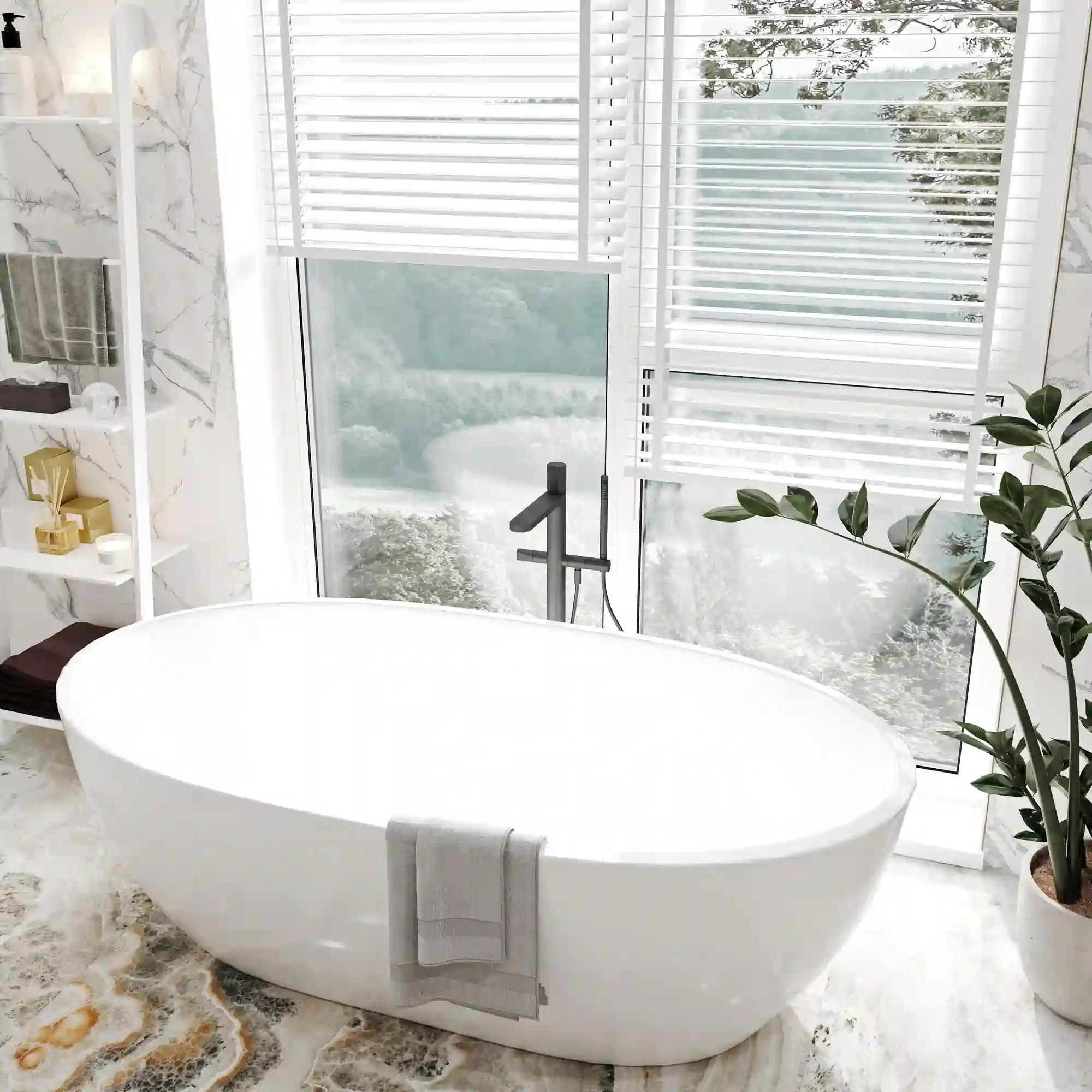
A Japanese soaking tub, or ofuro, sits shorter and deeper than a standard tub. Most run 41-55 inches long with 22-27 inches of water depth, compared to 14-17 inches in a typical Western tub, according to Badeloft’s Japanese soaking tub guide. You sit upright rather than recline, so the footprint fits small bathrooms that could never hold a 67-inch freestanding tub. Surround it in walnut or cedar decking for warmth, and add a low wooden step stool beside it for an easier entry. Tubs alone run $900-$3,500 before any plumbing work.
Warm Lime Plaster or Limewash Walls in Putty Greige
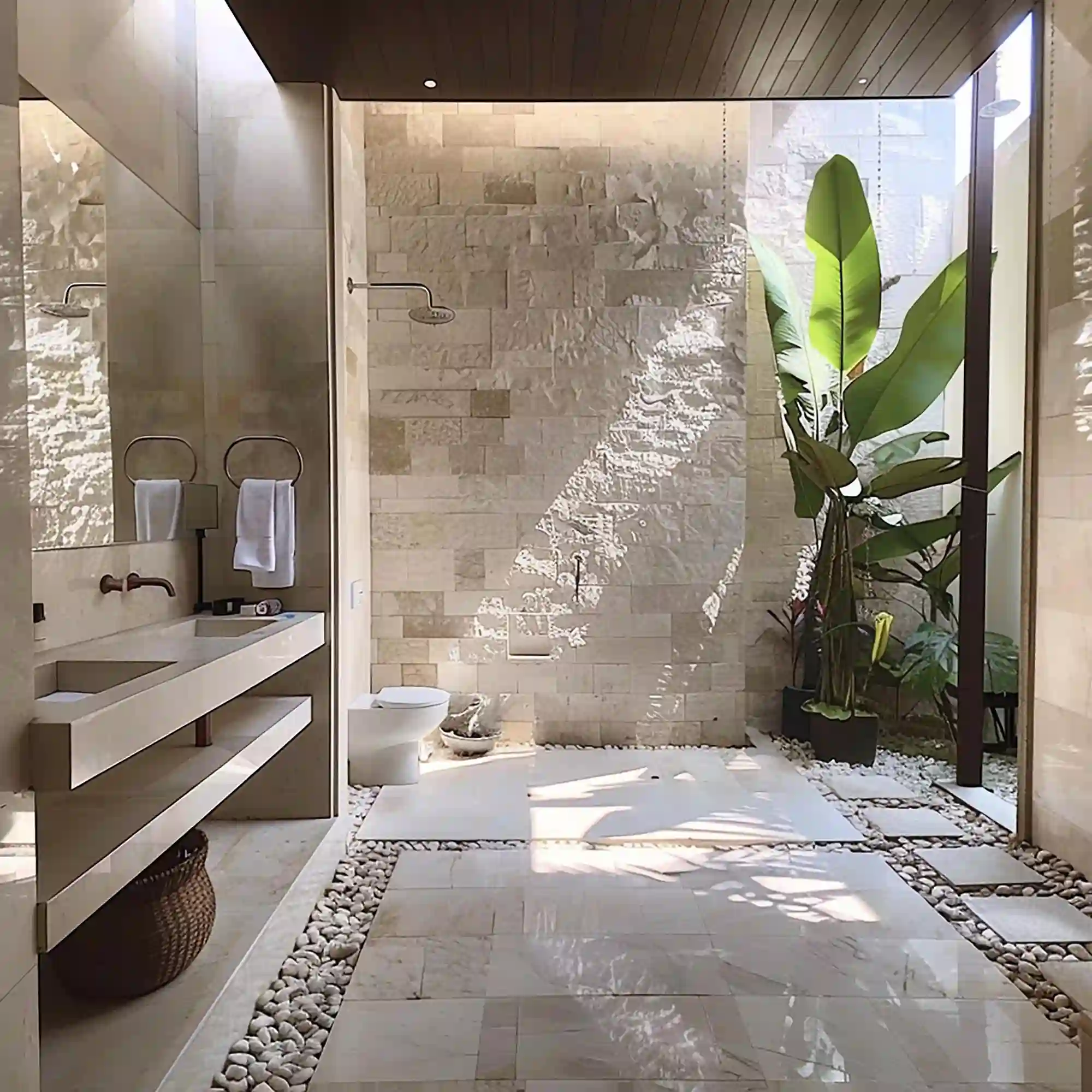
Lime plaster and limewash both bring the uneven, hand-finished texture that Japandi design leans on. The finish is breathable and naturally mold-resistant, which suits a humid bathroom better than flat latex paint, per Bauwerk Colour’s limewash bathroom guidance. Material Note: manufacturer guidance advises against applying limewash directly inside a shower stall or right against a tub’s splash zone — keep it to the dry walls instead. Choose a warm putty greige or soft clay tone rather than cool white for the Japandi warmth to come through.
Why Pick One Dominant Metal Finish Instead of Mixing Four?
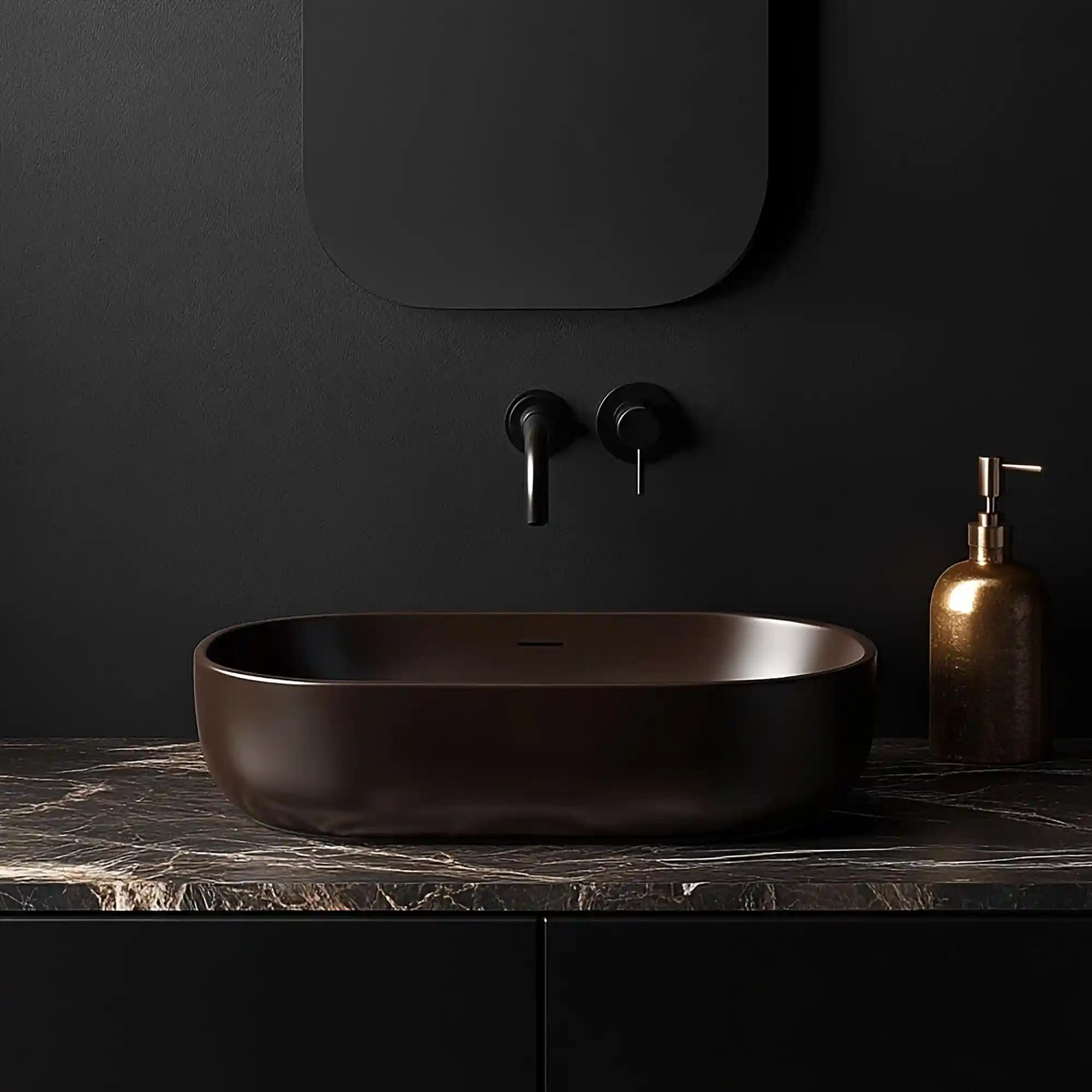
Japandi bathrooms pick one dark metal finish and repeat it, instead of mixing four. Matte black pairs well with cooler wood tones like white oak; brushed brass warms up darker walnut. Designer Tip: keep the second finish, if you use one at all, to a single fixture — a brass towel hook against an all-black faucet set feels like a chosen accent, not a mismatch. Expect $180-$550 to swap the faucet, hooks, and cabinet pulls in one pass. For a graphic, high-contrast alternative to this soft palette, our black and white bathroom designs go the opposite direction entirely.
A Shoji-Inspired Frosted Glass Shower Screen
A shoji screen is a traditional Japanese room divider made from a wood lattice frame and translucent paper. A full clear-glass shower door skips the warmth; a frosted or reeded glass panel set in a slim oak frame borrows the shoji look without the upkeep. Light passes through softly instead of bouncing off clear glass, which keeps a small footprint feeling calm rather than exposed. Match the frame to your vanity’s wood tone so the two pieces feel connected.
River Stone or Pebble Tile in the Shower Floor
A pebble-tile shower floor adds texture underfoot and nods to the wabi-sabi habit of using stone in its natural, uneven shape. Choose a warm-toned stone — sandstone or tumbled river rock — rather than stark grey or black, so the floor feels warm with the rest of the room. Keep the grout tone close to the stone color so the pattern stays quiet instead of graphic. Pebble tile runs roughly $12-$25 per square foot installed, more than standard porcelain but with far more texture. For more surface and tile pairings beyond the shower floor, see our bathroom backsplash ideas.
A Wood-Slat Sliding Screen for Privacy and Zoning
A wood-slat sliding screen splits a Japandi bathroom into a wet zone and a dry zone without a full wall. Space the slats 1-1.5 inches apart in a light oak or ash frame so daylight still passes through. This works especially well in an open-plan ensuite, where the screen replaces a shower curtain and adds architectural interest at the same time. Rental Note: mount a track-style screen on a tension-rod system instead of drilling into the ceiling if that’s not an option in your lease.
Woven Rattan or Seagrass Storage Baskets
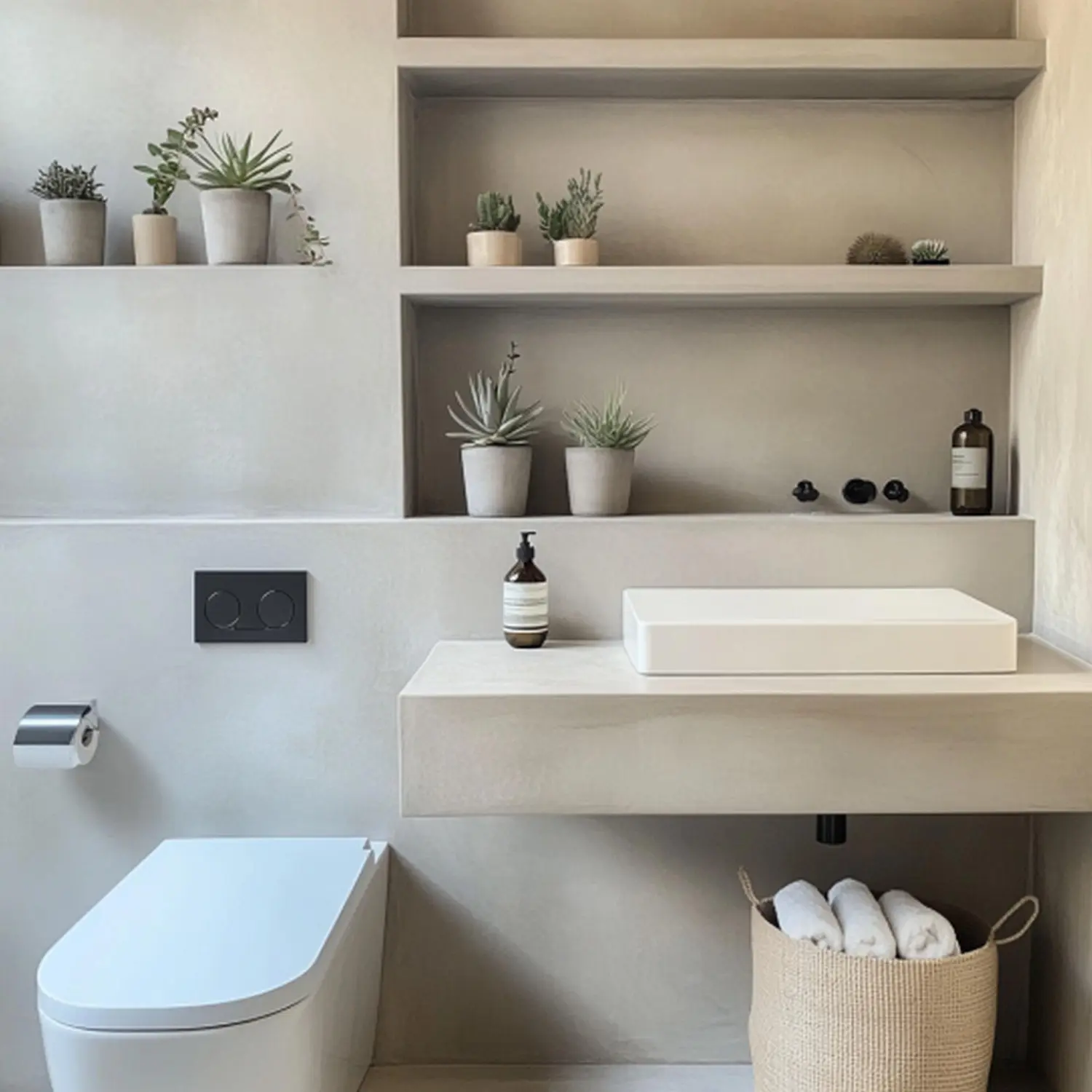
Woven rattan or seagrass baskets replace plastic bins for towels, extra toilet paper, and bath essentials. The natural fiber adds texture without adding visual noise, which matters in a small bathroom where every object competes for attention. Stick to two or three baskets in a matching weave rather than a mismatched collection — Japandi rewards repetition over variety. Open-weave styles work best on open shelving; tighter weaves with lids suit under-sink storage. If you want more pattern and color alongside natural texture, our boho bathroom inspiration leans further into layered pattern.
Why Add a Low Teak Shower Stool or Bath Bench?
A low teak stool serves double duty in a Japandi bathroom — a seat during a long soak and a plant stand or towel perch the rest of the week. Teak resists water naturally better than most woods, which is why it shows up in outdoor furniture too. Designer Tip: choose a stool 16-18 inches tall so it tucks under a floating vanity when it’s not in use, keeping the floor clear.
Warm Paper-Lantern-Style Pendant or Wall Sconce Lighting
A paper-lantern-style pendant or a linen-shade wall sconce softens the light in a way a bare bulb never will. Choose warm 2700-3000K bulbs — the same range hotel spas favor — instead of the cooler 4000K light common in most builder-grade bathroom fixtures. Layer one overhead fixture with a second light near the mirror so the room avoids harsh shadows during grooming tasks. Dimmable options let the same fixture handle both a quick shower and a slow evening soak.
One Quiet Plant Instead of a Crowded Shelf
A single potted plant does more for a Japandi bathroom than a shelf full of small objects. Pothos and snake plants tolerate low light and humidity swings better than most houseplants, making them a practical pick for a windowless bathroom. Set the pot in a simple stoneware or concrete planter instead of a patterned ceramic one, so it fits the room’s material palette rather than standing out as a separate decoration. For a bolder, color-forward take on bringing nature into a bathroom, our green bathroom ideas leans into saturated color instead of neutral texture.
A Raw-Edge Floating Wood Shelf for Towels
A raw-edge wood shelf keeps one natural, uneven line in a room full of straight cabinet edges. Live-edge oak or walnut works well here since the bark-side curve is the whole point — sand it smooth but leave the shape alone. Mount it at 60-66 inches for towel storage, or lower, around 40 inches, for daily-use items like soap and a hand towel. Safety Note: floating shelves need anchoring into a wall stud or blocking, not just drywall anchors, to hold wet towel weight safely. If you like this wood-forward look but want a more rustic edge, farmhouse bathroom ideas show the other end of that spectrum.
Neutral Waffle-Weave or Linen Textiles
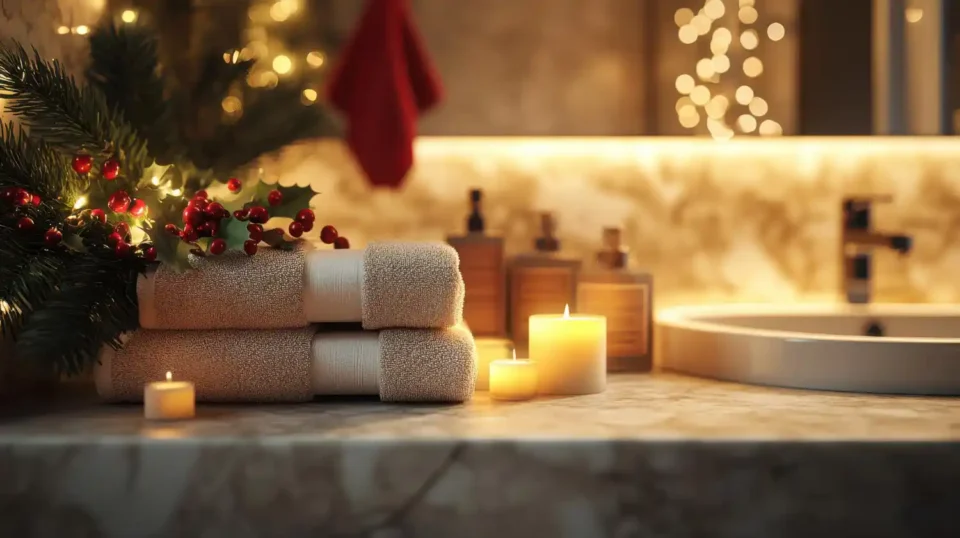
Waffle-weave cotton and linen towels add texture without adding pattern, which keeps a Japandi bathroom from feeling busy. Stick to oat, stone, and charcoal tones instead of bright white, since stark white can look cold against warm wood. Fold towels into simple stacks instead of hanging them, or roll them in a woven basket for a more relaxed, spa-adjacent feel.
Handmade Stoneware Accessories in a Matte Glaze
Small stoneware accessories — a soap dish, a toothbrush cup, a tray for the counter edge — carry the wabi-sabi idea into the smallest details. Look for a matte, slightly uneven glaze rather than a glossy, perfectly uniform one; the small variations are the point, not a flaw. Group them in odd numbers, usually three, on the vanity or open shelf for a display that looks curated instead of scattered.
How Do These Japandi Bathroom Ideas Fit Together?
These 14 Japandi bathroom ideas work best combined in threes, not all at once. Start with the vanity and metal finish — those two choices set the wood tone and hardware finish for everything else. Add the wall treatment next, since limewash or tile choices are the hardest to change later. Save lighting, textiles, and small accessories for last; they are the cheapest layer to swap if your taste shifts.
For a small bathroom, skip the floating shelf and the slatted screen in favor of a single storage tower — Japandi bathroom ideas scale down fine as long as the wood tone and one dark metal accent stay consistent. In an open-plan ensuite attached to a bedroom, carry the same oak tone through to the Japandi bedroom ideas on the other side of the wall so the two rooms feel like one continuous space.
What Turns Japandi Into Plain Minimalism?
- Painting every surface white is the single fastest way to lose the Japandi part of the room. Wood, plaster, and stone need to stay visible somewhere — even one warm surface changes how the whole room feels. If pure white minimalism is actually the goal, our minimalist bathroom decor ideas covers that cooler direction properly; Japandi simply isn’t it.
- High-gloss tile and chrome fixtures push a bathroom toward hotel-lobby modern, not Japandi. Matte and honed finishes absorb light instead of bouncing it, which is part of what makes the style feel calm.
- Filling every shelf with decorative objects crowds out the empty space wabi-sabi design depends on. Edit down to a handful of pieces and let the counter breathe.
- Mixing three or more metal finishes — chrome, brass, black, nickel — reads as indecision rather than variety. Pick one dominant finish and treat any second finish as a single accent, not a competing choice.
How Much Does a Japandi Bathroom Refresh Cost?
A Japandi bathroom refresh can start under $200 with hardware and textiles alone, or run past $4,000 if a soaking tub joins the plan.
| Project | Estimated Cost | Impact Level |
|---|---|---|
| Matte black or brushed brass hardware swap (faucet, hooks, pulls) | $180-$550 | High |
| Floating oak or walnut vanity | $450-$1,400 | High |
| Lime plaster or limewash accent wall (roughly 40 sq ft) | $150-$400 | Medium |
| Low Japanese soaking tub, tub only | $900-$3,500 | Very High |
Best First Upgrade: Swap the faucet, hooks, and cabinet pulls to one matte black or brushed brass finish — it changes the room’s whole mood for under $550.
Skip for Now: Hold off on the soaking tub until the wood tone, wall treatment, and lighting are settled. It’s the most expensive layer and the hardest to change once it’s in place.
Can a Small or Rented Bathroom Still Do Japandi?
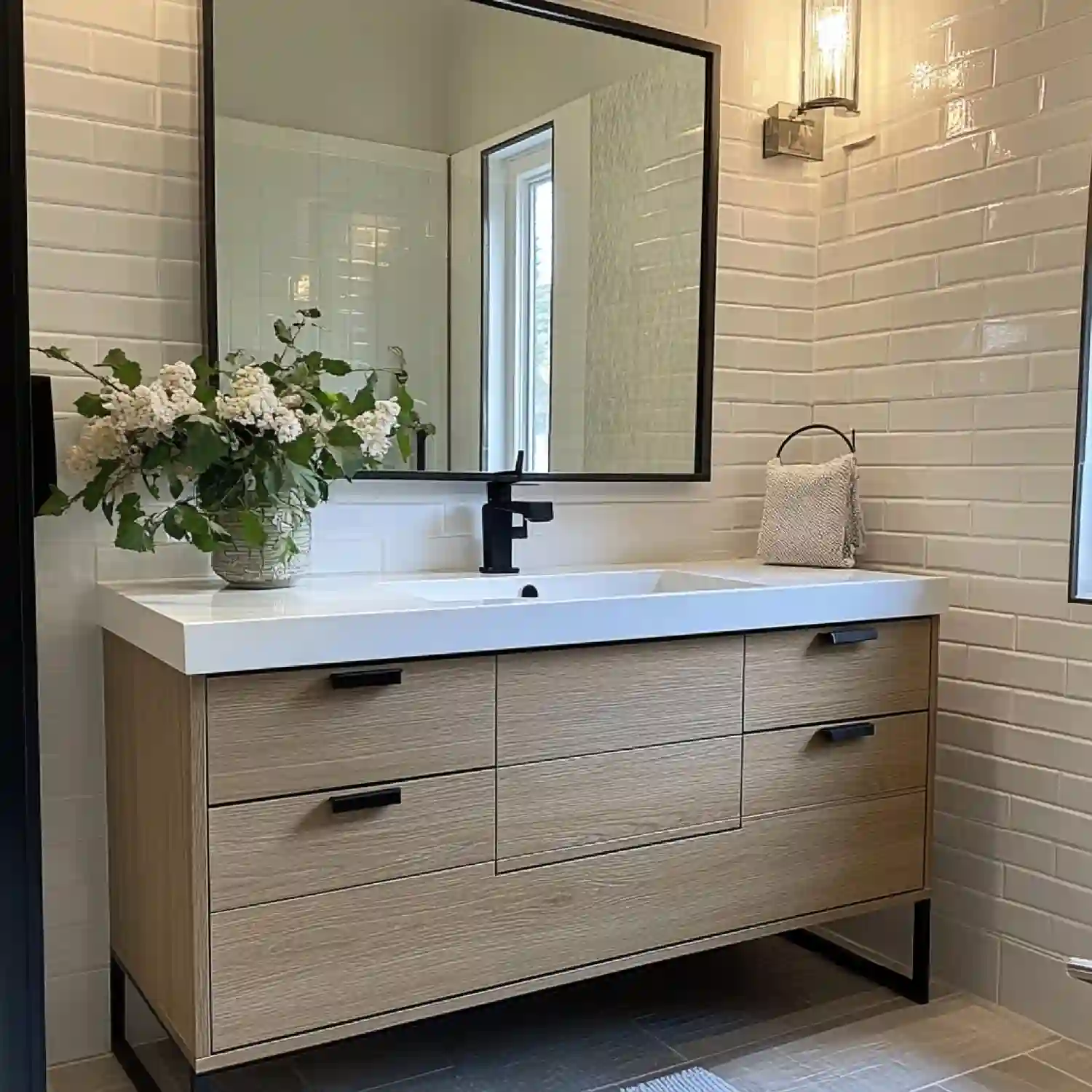
A small bathroom can still pull off Japandi bathroom ideas — the style actually suits tight footprints better than busier aesthetics, since it depends on editing down rather than filling up. Choose a corner floating vanity instead of a full-width one, and use a single tall storage tower rather than open shelving that needs constant styling. Browse more of our bathroom decor ideas for additional small-space palettes once your Japandi base layer is set.
Rental Note: skip the limewash and the built-in soaking tub if drilling and repainting aren’t allowed. Peel-and-stick wood-look wall panels, a woven bath mat, and a swap-in matte black shower head cover most of the visual change without touching the walls or plumbing.
Climate Note: bathrooms in humid climates should skip unsealed wood near the tub and shower entirely. Stick to teak or a sealed oak rated for wet areas, and keep any lime plaster to the dry walls only. For a completely different, color-forward mood in a compact room, pink bathroom designs shows how far you can push the opposite direction.
Frequently Asked Questions
Conclusion
A Japandi bathroom works when wood comes first, one dark metal accent follows, and empty space gets the last word. Editorial field note: the fastest way to test whether a bathroom is really Japandi is to remove one object from every surface — if the room still feels finished, the material choices were doing the real work, not the clutter. For more room-by-room inspiration, visit 101homedecor.com and keep building out your Japandi bathroom ideas one space at a time.
Next Steps
- Pick your wood tone (oak or walnut) and your one metal finish before buying anything else.
- Test a limewash or lime-plaster swatch on a dry wall section for one week before committing to the whole room.
- Swap hardware and lighting first — it’s the cheapest, highest-impact change on this list.
- Browse our room-by-room decor inspiration archive for other spaces in the home.
More Bathroom Design Styles
- 14 Mid Century Modern Bathroom Ideas That Feel Truly Timeless
- 14 Spa Bathroom Ideas to Create a Calming At-Home Retreat
- 15 Coastal Bathroom Ideas for a Bright, Airy Retreat
- 15 Luxury Bathroom Ideas for a Five-Star Hotel Feel at Home
- Aesthetic Bathroom Designs for a Clean and Trendy Look
- Modern Bathroom Design Is Trading Cold Minimalism for Warmth