TL;DR
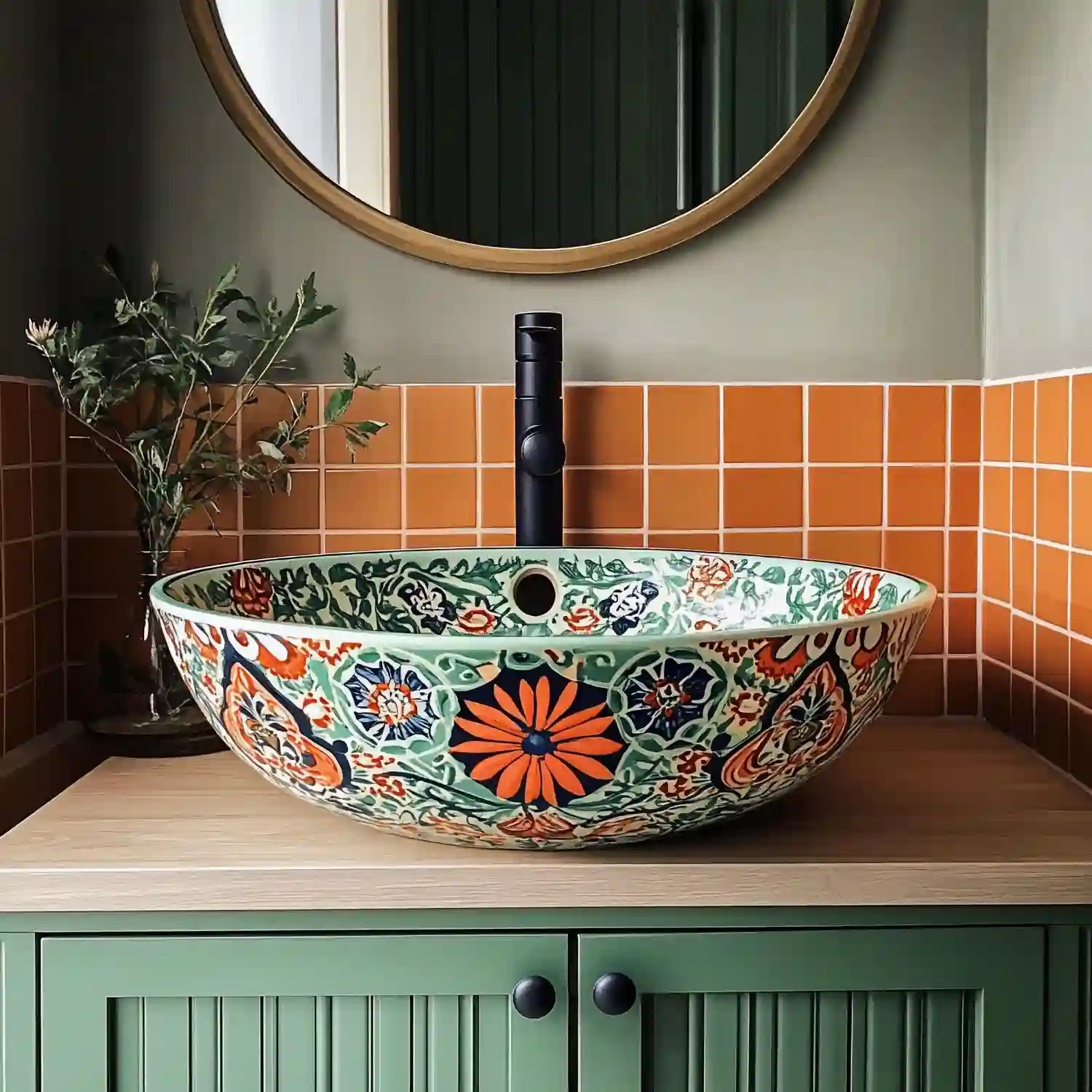
- Wood: Use walnut or teak, sealed with marine-grade polyurethane on every surface.
- Metal: Pick one finish, brass or matte black, and repeat it on every fixture.
- Tile: Terrazzo or two-tone geometric tile in warm, cream-based tones reads most period-accurate.
- Color: Limit avocado, burnt orange, or mustard to one accent, never the whole room.
- The List: All 14 mid century modern bathroom ideas below move from the vanity to small styling details, so start wherever your budget allows.
Why Does Mid Century Modern Feel Timeless Instead of Dated?
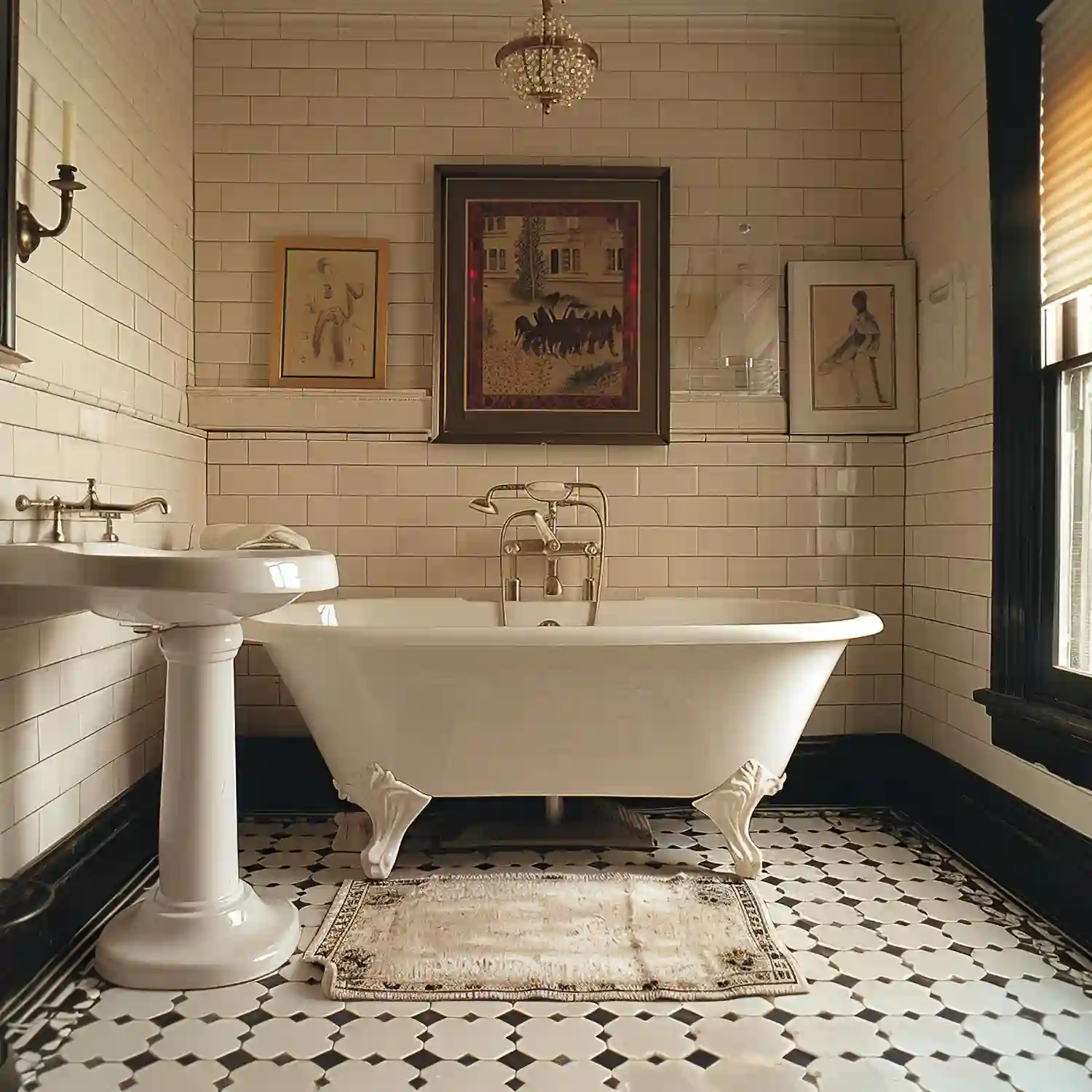
Search “mid century modern bathroom ideas” and you’ll still find avocado tile sitting next to truly timeless walnut vanities. For years, the style got shorthanded into one narrow decade — harvest-gold sinks, shag-adjacent bath mats — and that’s the decade most designers now skip. If you’ve ever pinned a walnut vanity photo and worried your own bathroom would land closer to a 1972 rec room, you’re not alone.
Looking for more ideas? Explore our full guide to Bathroom Design Styles.
Editorial field note: a builder-grade bathroom with a boxy oak vanity and plain white subway tile often looks flat, not because the layout is wrong but because every finish is generic. Swap in a walnut vanity with tapered legs, one brass faucet, and a run of two-tone tile, and the same square footage looks curated instead of accidental — no wall moved, no plumbing touched.
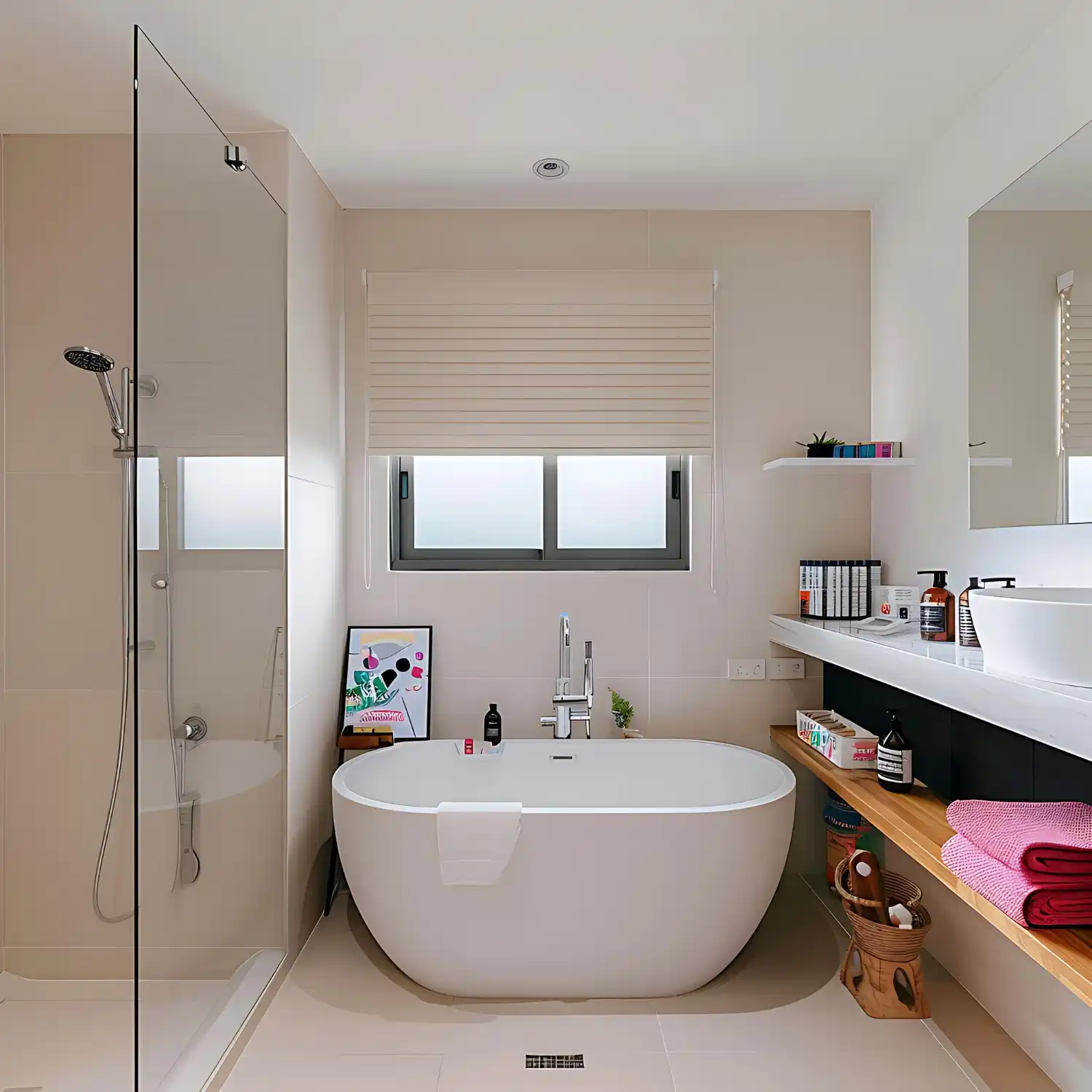
Mid century modern bathroom ideas work best when they borrow three things from the 1945-1969 style: warm wood tones like walnut, one confident metal finish, and clean geometric lines instead of ornate detail. The look stays timeless when bold color appears only as a small accent, not the whole room. Keep the boldest 1970s cues — shag texture, mustard tile wall-to-wall — to a minimum, and the style holds up for decades instead of one trend cycle.
This guide walks through 14 ways to bring the look home — vanity, tile, lighting, color, and the small styling moves that tie a room together. Start with our home decor inspiration for more whole-room direction. Bookmark this guide for quick reference.
| Quick Takeaways | |
|---|---|
| Wood | Use walnut or teak for the vanity or slat wall, sealed on every surface with marine-grade polyurethane. |
| Metal | Pick one finish — brass or matte black — and repeat it on the faucet, hardware, and lighting. |
| Tile | Terrazzo or two-tone geometric tile in cream and walnut-brown is the most period-accurate choice. |
| Color | Limit avocado, burnt orange, or mustard to one wall, tile run, or textile. |
| Lighting | Warm 2700-3000K sconces flanking the mirror replace the era’s harsh overhead bulb. |
| Budget | A lighting and hardware swap in one metal finish delivers the biggest change for $250-$700. |
Mid Century Modern Bathroom Checklist
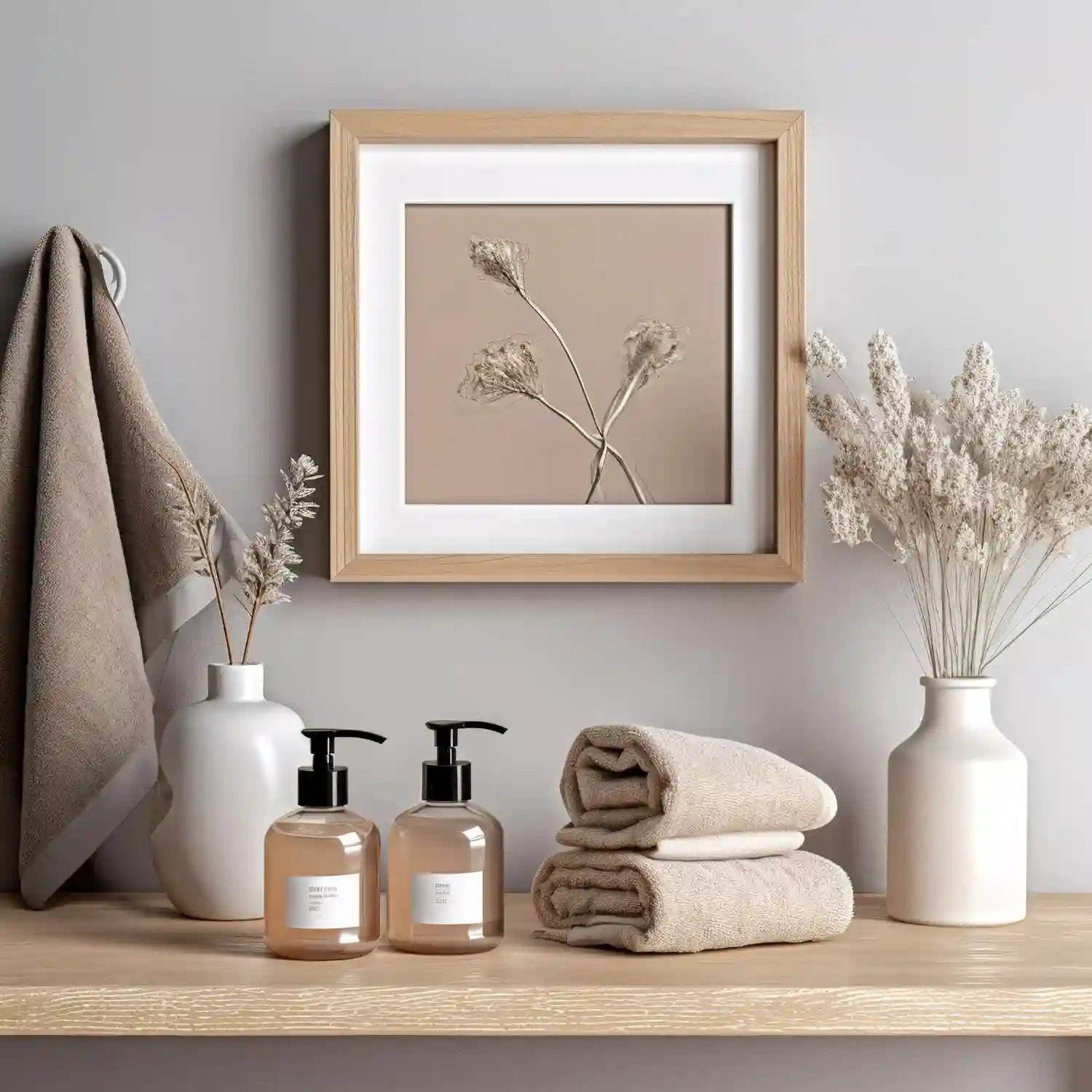
Use this checklist before you start swapping finishes, so every purchase pulls the room in the same direction instead of five different ones. For more room inspiration beyond the bathroom, browse all rooms inspiration.
- Pick one wood tone — walnut or teak — and repeat it in the vanity, a shelf, or a slat wall.
- Choose one metal finish (brass or matte black) for the faucet, hardware, and light fixtures.
- Limit bold color to one wall, one tile run, or one textile — never the whole room.
- Look for terrazzo, two-tone tile, or a bold geometric pattern for the floor or shower wall.
- Add one curved or organic shape, like an oval mirror or a rounded vanity edge.
- Choose bathroom floor tile with a DCOF rating of 0.42 or higher for slip safety in wet areas.
- Keep hardware and lighting warm-toned (2700-3000K) instead of cool white.
KEY TAKEAWAY: A mid century modern bathroom feels timeless when it repeats one wood tone and one metal finish throughout, instead of introducing a new material with every purchase.
14 Mid Century Modern Bathroom Ideas to Try
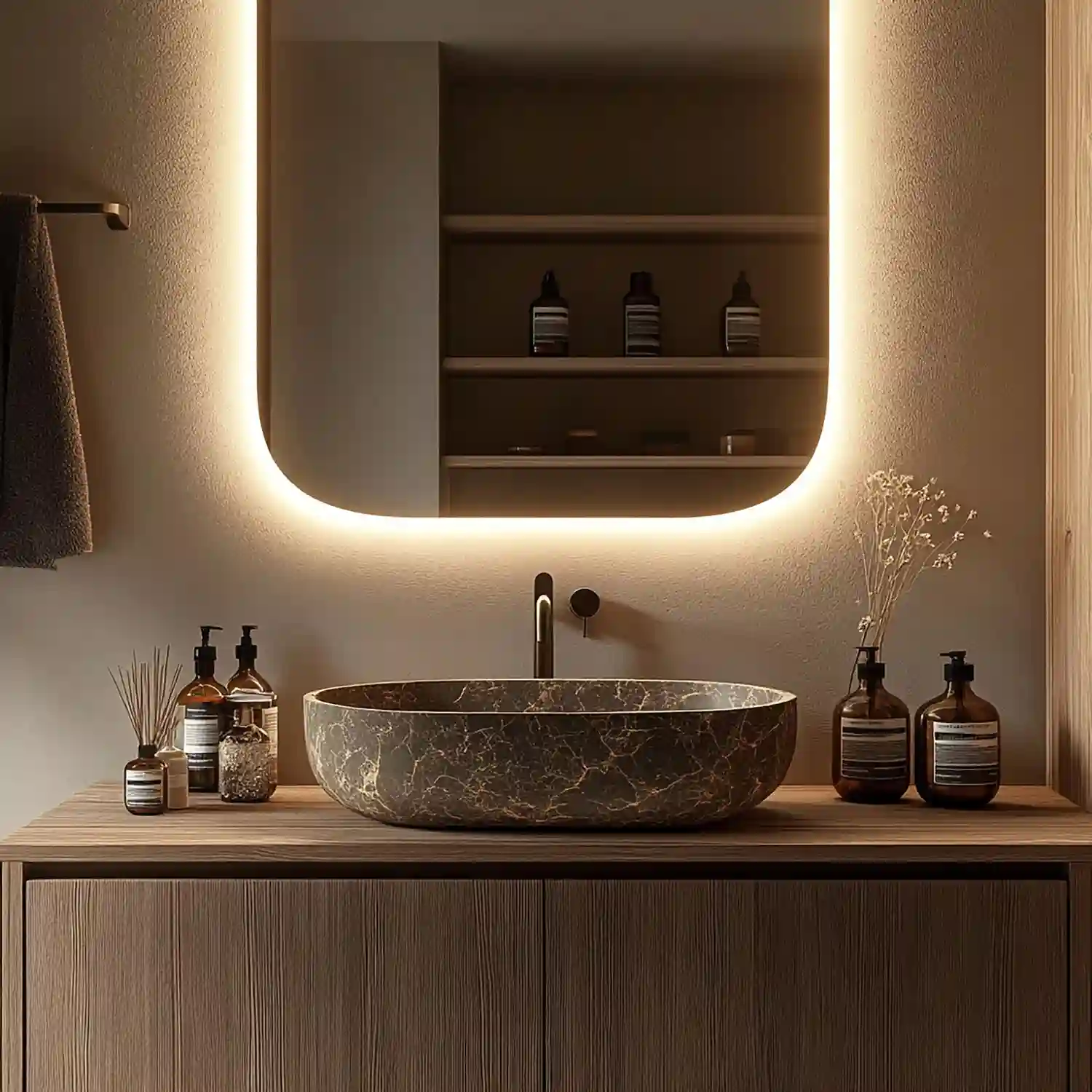
These 14 mid century modern bathroom ideas move from the biggest investment, the vanity, to the smallest, a styled shelf, so you can start wherever your budget and timeline allow. Each one leans on the same three rules: warm wood, one metal finish, and color used sparingly.
A Walnut Vanity With Tapered Legs
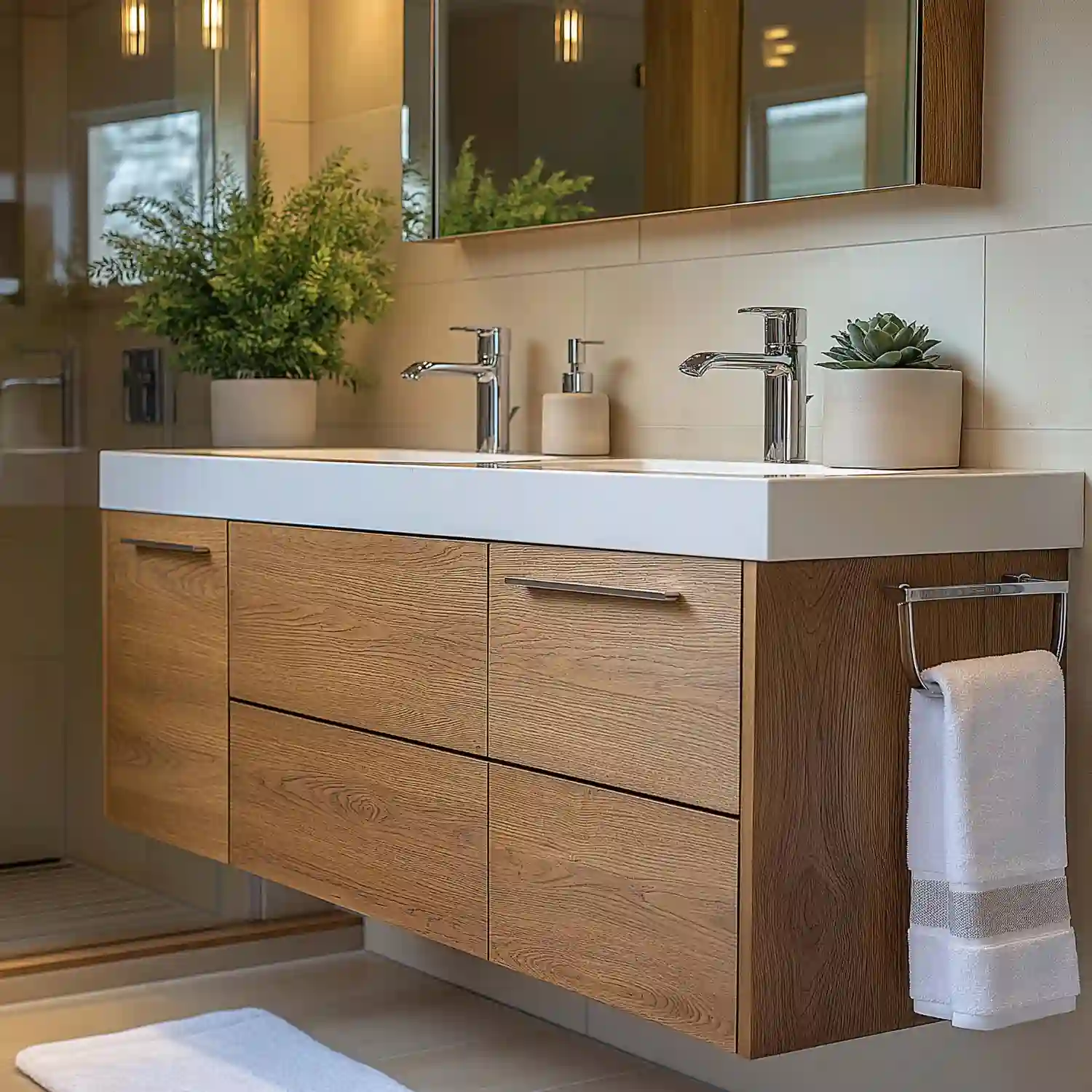
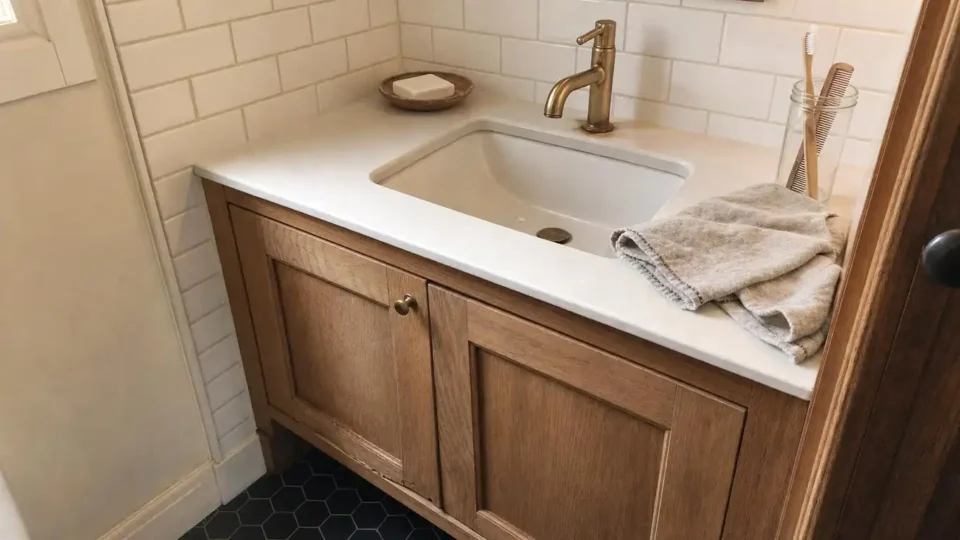
A walnut vanity with tapered legs signals mid century modern faster than any other single piece. Walnut is a naturally rot-resistant hardwood, but bathroom humidity still calls for a marine-grade polyurethane sealant on every surface, including the back and underside. A tapered leg is a design cue borrowed from 1950s-60s furniture, and it looks lighter than a boxy cabinet sitting flush on the floor. Look for a 30-36 inch single vanity with a floating or leggy base, paired with a simple white or warm stone counter so the wood stays the focus. The same tapered-leg silhouette shows up in furniture too — see these mid century modern dining tables for the living-room-and-kitchen version of the same leg detail.
DESIGNER TIP: seal a solid walnut vanity on every surface, including the back and underside — bathroom humidity attacks unsealed edges first, not the finished top.
Terrazzo Tile in a Warm, Modern Palette
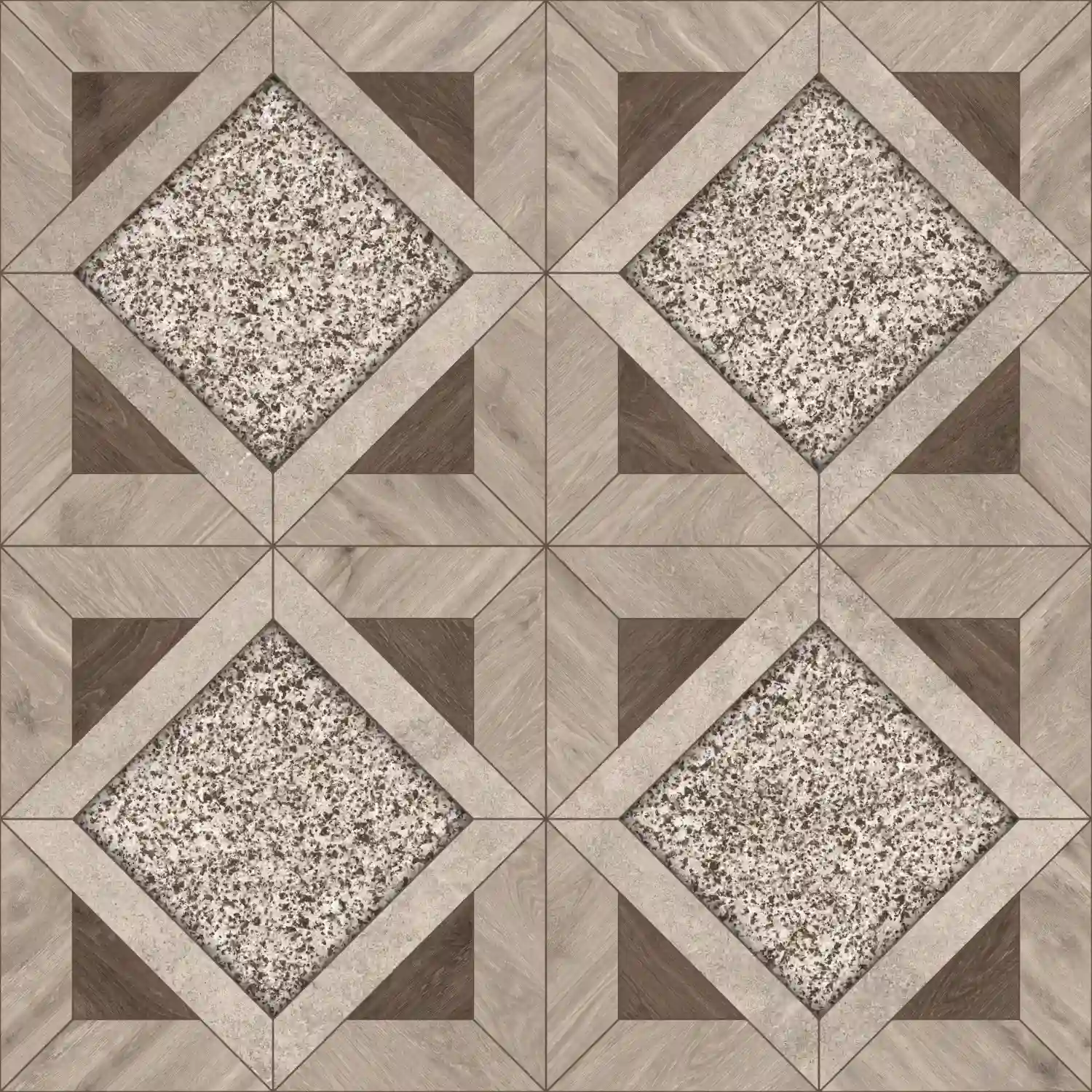
Terrazzo is a blend of marble, quartz, or glass chips set into a cement or epoxy binder, and it was everywhere in mid century schools and hotel lobbies for a reason: it wears well and hides wear at the same time. Installed terrazzo tile for a bathroom floor typically runs $15-$50 per square foot, depending on chip size and binder type. Choose a warm palette — a cream base with rust, olive, or walnut-toned chips — instead of the cool grey-and-white mix that leans more modern-minimalist than mid century. Safety Note: bathroom floor tile should carry a DCOF rating of at least 0.42 per the industry’s ANSI A137.1 wet-slip standard.
A Freestanding Tub With a Retro Oval Silhouette
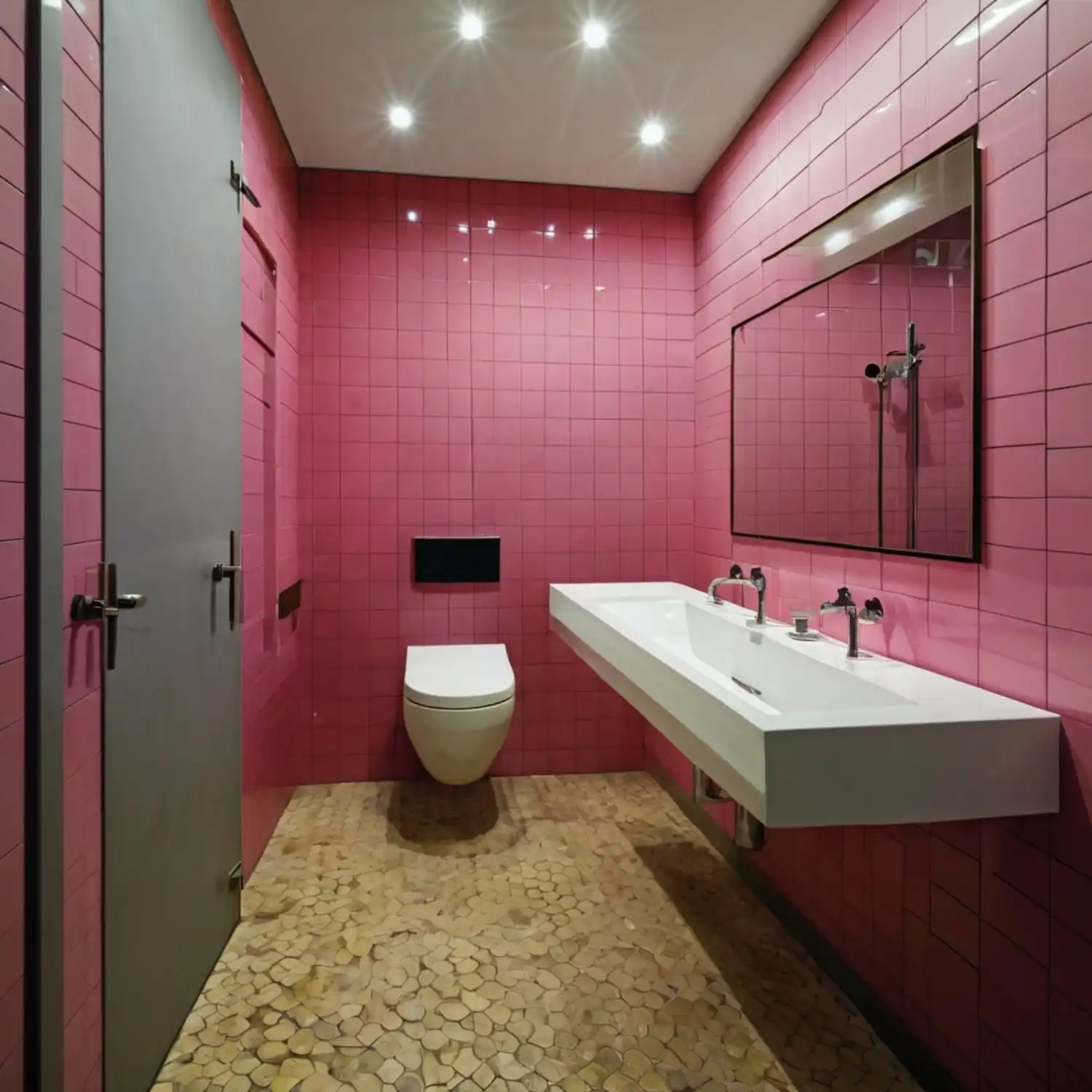
A freestanding tub with a rounded, oval silhouette echoes the sculptural furniture shapes the era is known for, without copying one specific decade’s color. Freestanding tubs typically range from $2,000 to $9,000 or more depending on material, with acrylic at the low end and cast iron or copper at the high end. An oval or gently tapered tub looks softer than a sharp-cornered rectangular tub, and it pairs naturally with a curved faucet and a low-profile filler. If floor space is tight, a compact 60-inch oval still delivers the shape without demanding a large-format bathroom.
Bold Two-Tone Geometric Tile
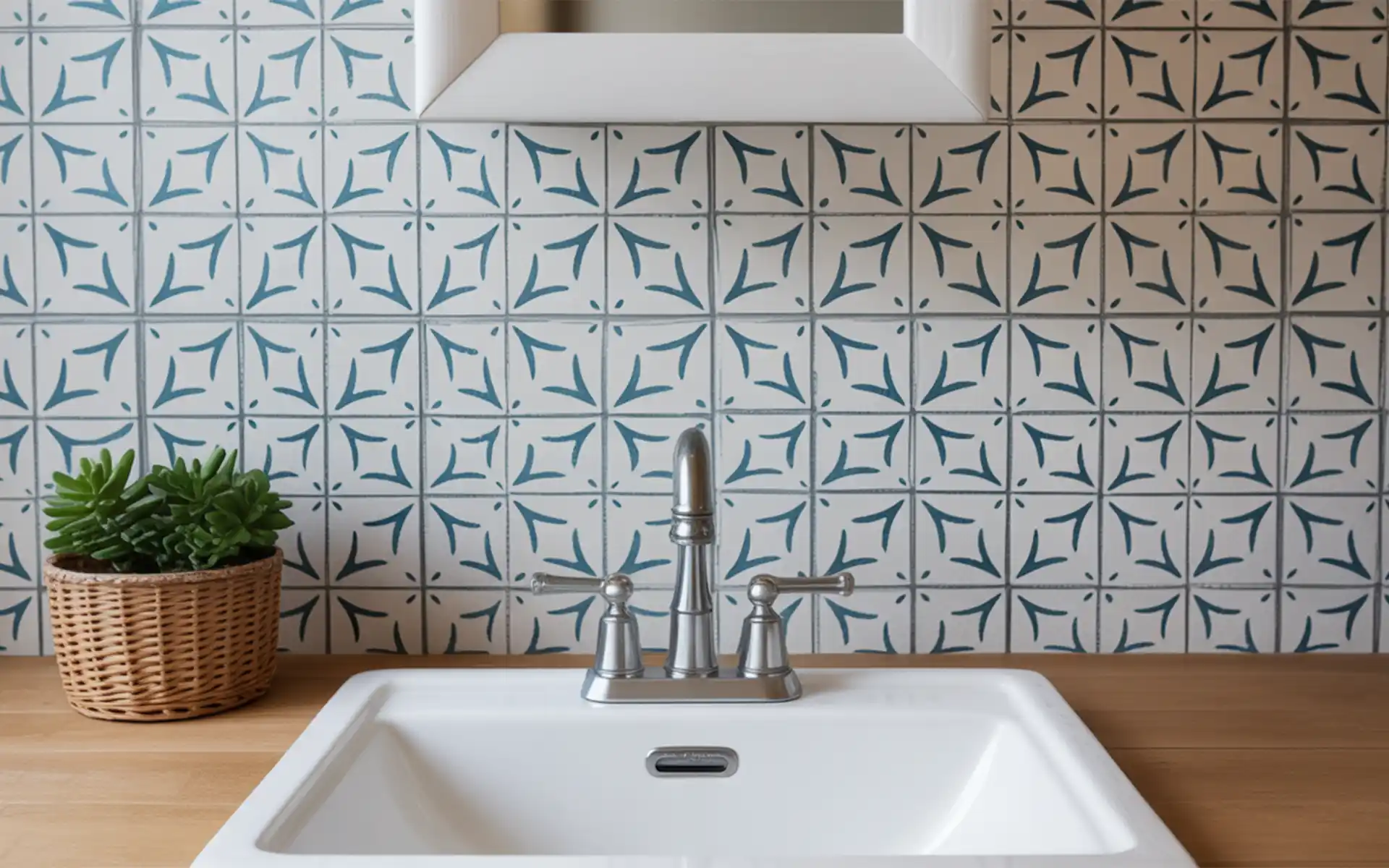
Two-tone geometric tile — hexagons, diamonds, or a simple checkerboard in cream and walnut-brown, or cream and black — is one of the clearest mid century signatures. Keep the pattern to one surface, like a shower floor or an accent wall, so it looks chosen on purpose instead of like pattern overload. A 1-inch or 2-inch hexagon in two tones is a classic period-accurate scale, while a larger 4-inch format leans more modern-adjacent. If you’d rather go cooler than warm walnut-brown, a black and white bathroom palette uses the same two-tone logic with a completely different mood.
Brass Fixtures That Patina Over Time
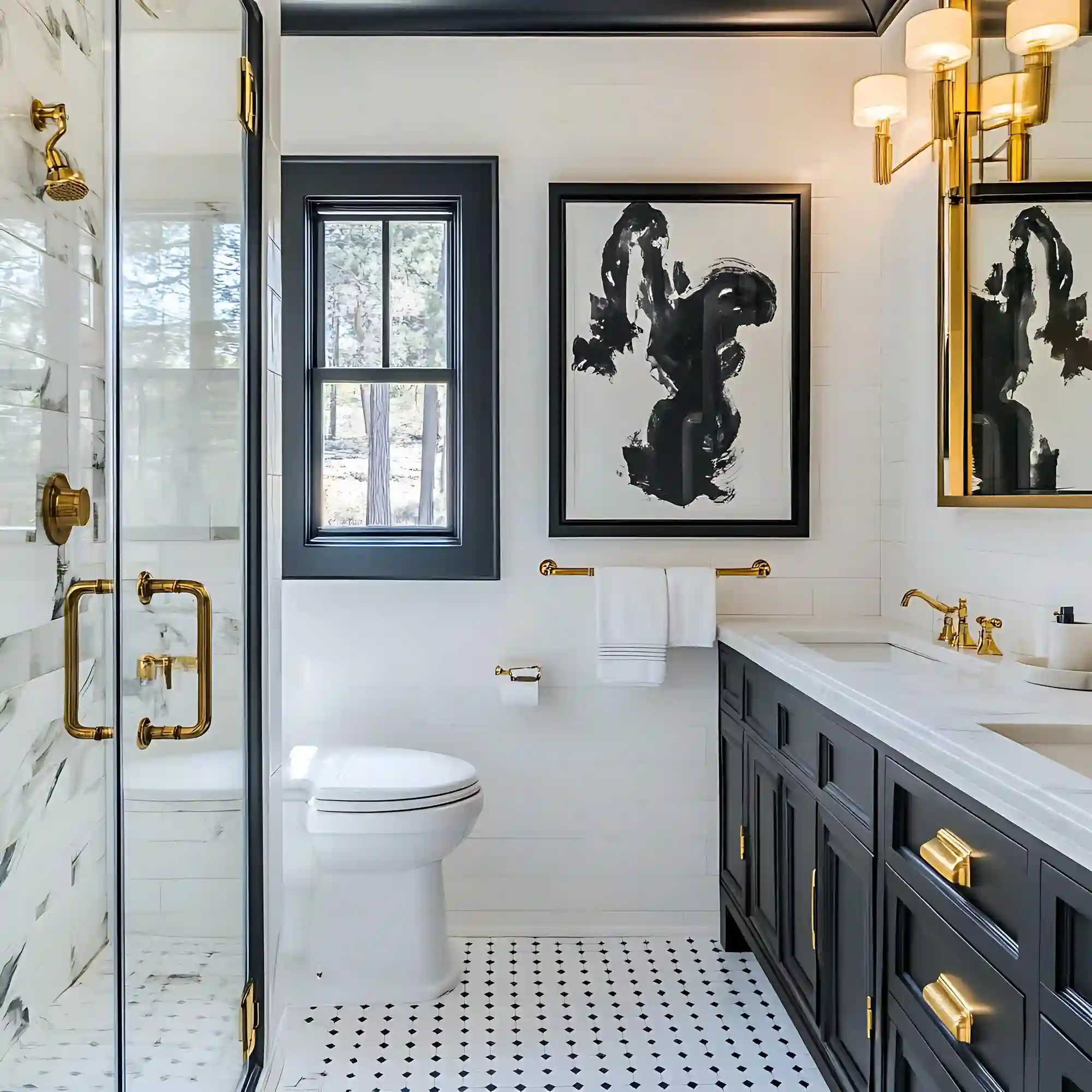
Brass is the metal finish most associated with the era, and unlacquered brass is the version that ages the way mid century pieces actually did. Unlacquered brass has no protective coating, so it develops a living patina from touch, water minerals, and humidity — a faucet near a well-used sink often shows a warmer, richer color within a year. Solid unlacquered brass faucets typically cost $200-$2,000+, depending on size and brand. If you’d rather skip the patina process, a warm gold or brushed-brass lacquered finish gives a similar tone without the upkeep, though it won’t develop the same living surface over time.
A Walnut Slat Accent Wall
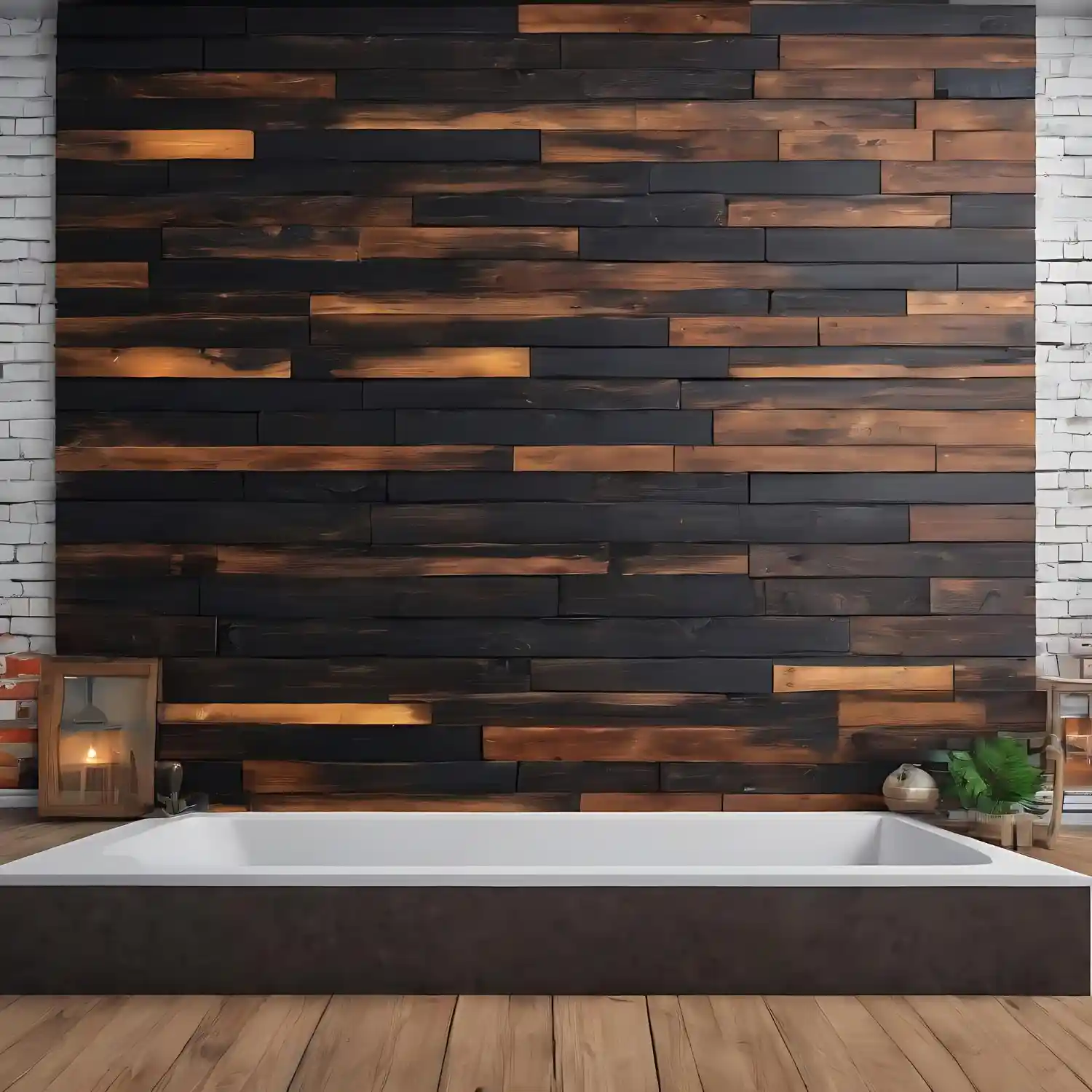
A walnut slat wall — thin vertical wood strips spaced a half-inch to an inch apart over a plain or acoustic-backed panel — adds warmth and texture without competing with tile or paint. Behind a freestanding tub, or as a headboard-style wall behind a vanity mirror, it works as a focal point that costs less than a full remodel. Choose a moisture-rated slat panel, or seal solid wood slats the same way you’d treat a walnut vanity, since standing water and steam reach walls too. Keep the slats running floor to ceiling for the most period-accurate proportion. The same slatted-wood approach also shows up in a farmhouse bathroom, usually paired with whitewash instead of a warm walnut stain.
Sculptural Globe or Drum Pendant Lighting
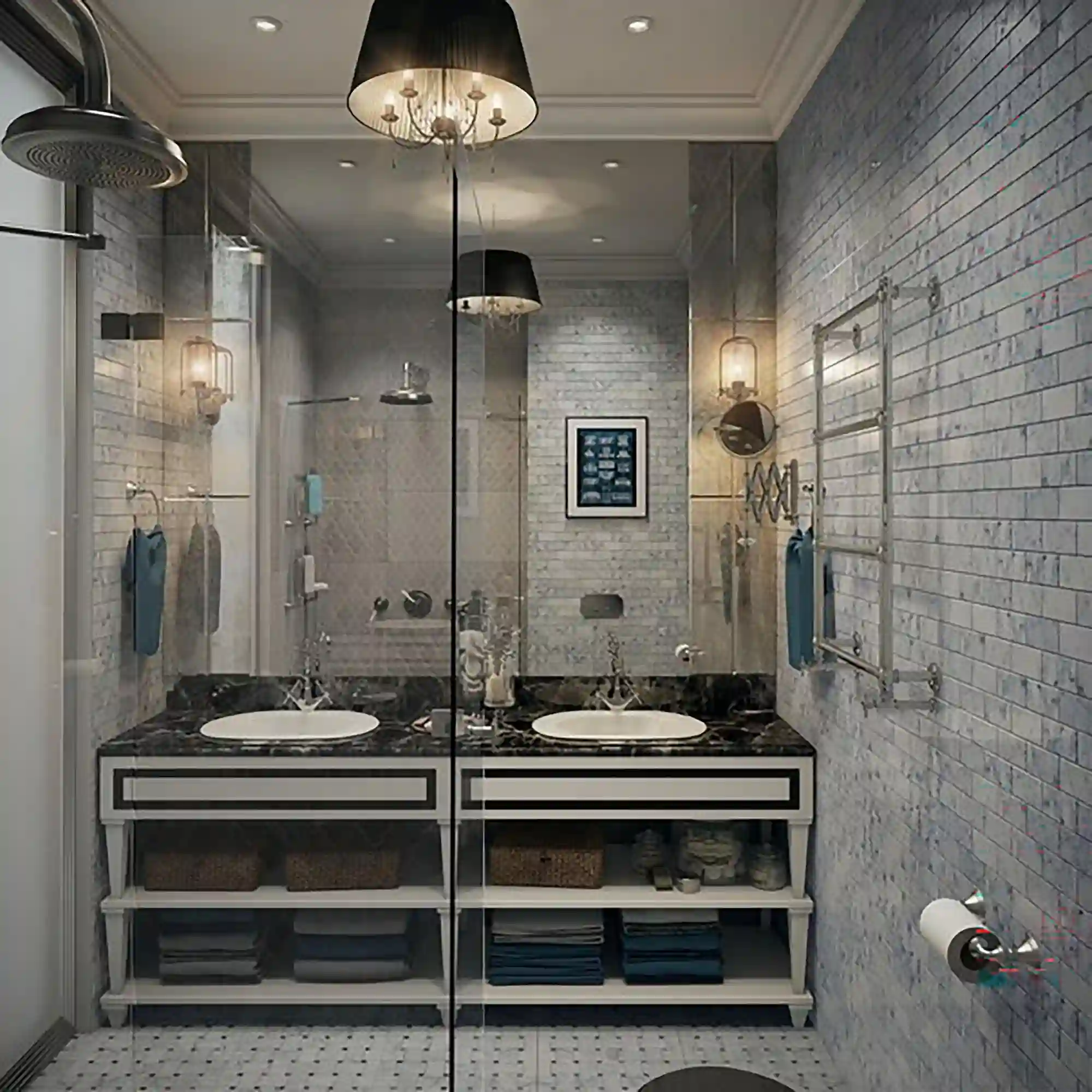
A single sculptural pendant — a glass globe, a drum shade, or an angular sputnik-style fixture — replaces the flat overhead light most bathrooms default to. Choose a warm 2700-3000K bulb so the fixture’s shape does the visual work while the light itself stays flattering. A globe pendant over a freestanding tub or a drum shade centered above a double vanity both work, as long as the fixture sits at least 7 feet above the floor in a wet-rated or damp-rated location near water. Safety Note: any pendant near a tub or shower needs a UL damp- or wet-rated fixture, and new wiring belongs to a licensed electrician.
Two-Tone Wainscoting, Paint Above and Tile Below
Two-tone wainscoting — tile or wood paneling on the lower third of the wall, paint above — is a period-accurate way to add color without covering the whole room. Cap the tile or paneling at 32-36 inches, then paint the upper wall in one earthy accent: warm avocado, burnt orange, or mustard, used as the single boldest color choice in the room. A simple cap rail in the same wood tone as the vanity ties the two zones together. This split treatment also protects the lower wall from splashes near the sink or tub, and it pairs well with a patterned lower band inspired by these bathroom backsplash ideas.
An Organic Curved Mirror
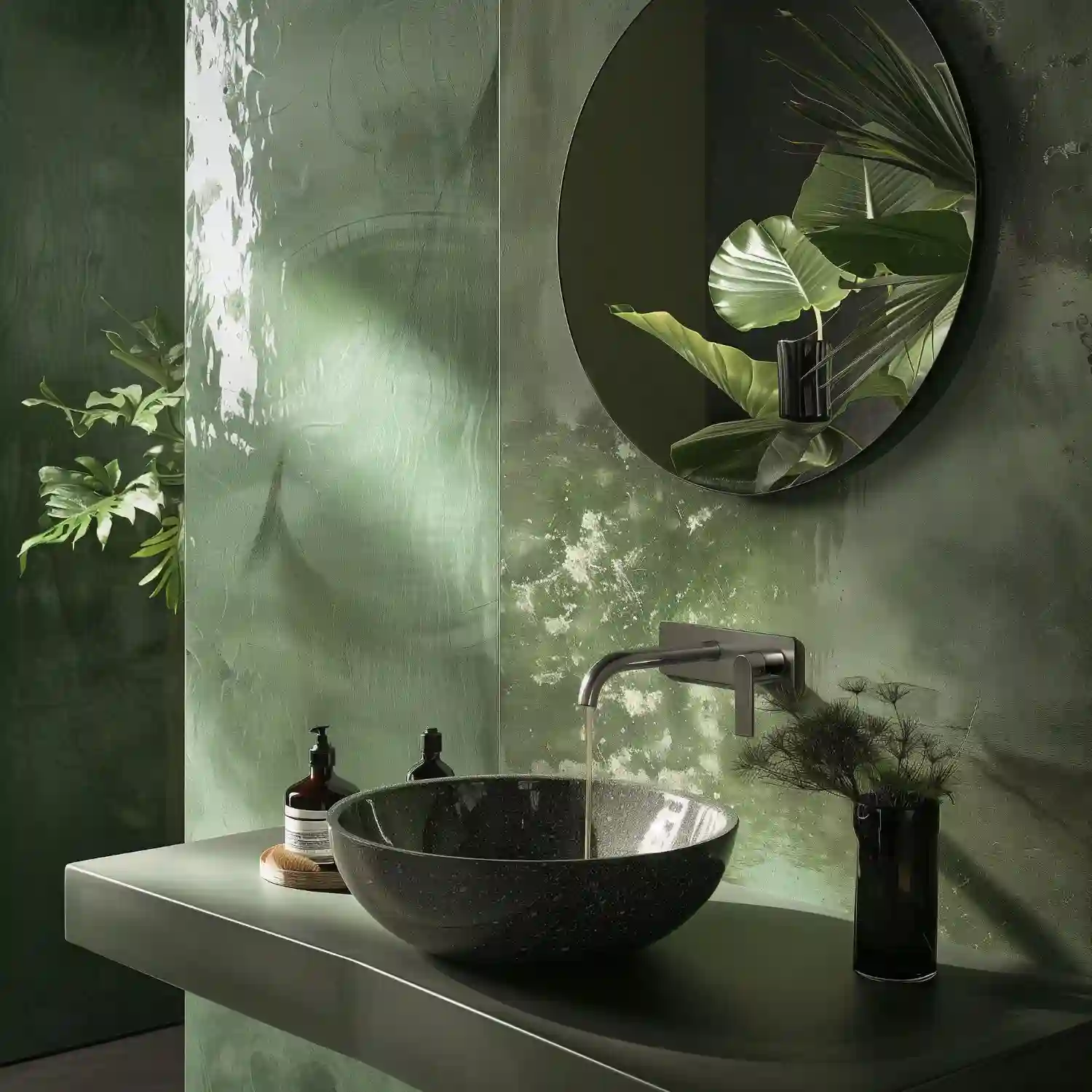
A mirror with a soft, organic outline — an asymmetric oval, a kidney shape, or rounded corners — softens a room built mostly from straight lines and hard tile edges. Pair it with a thin brass or walnut frame so the shape, not the frame, carries the mid century reference. A 28-32 inch mirror works well over a single vanity, while two smaller organic mirrors, offset rather than perfectly matched, suit a double-sink layout. This is one of the lowest-cost ideas on the list, since a mirror swap alone can shift how the whole room feels.
One Earthy Accent Color, Used Sparingly
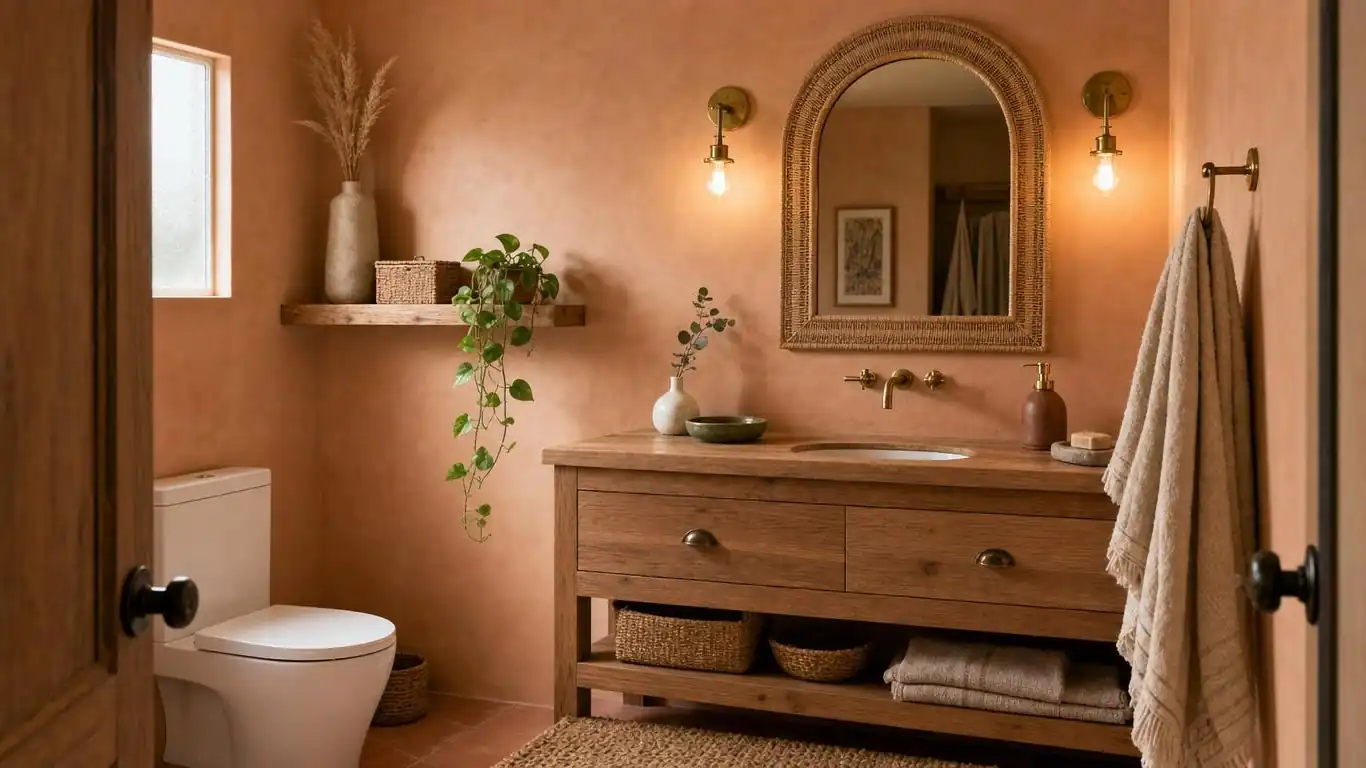
Avocado, burnt orange, and mustard are the era’s signature colors, and they still work in 2026 as long as they stay an accent instead of the whole palette. Paint one wall, choose one patterned tile run, or add one textile — a shower curtain, a bath mat, a stack of towels — in the color, and keep every other surface neutral. Designer Tip: pick one accent color from this earthy family and repeat it exactly twice, once in a hard surface like tile or paint and once in a soft textile, so the room looks planned instead of costume-y. If you want to push that color further into a moodier, low-light direction, this moody mid century modern living room guide shows how the same earth-tone family looks in a darker room.
A Floating Vanity on Hairpin Legs
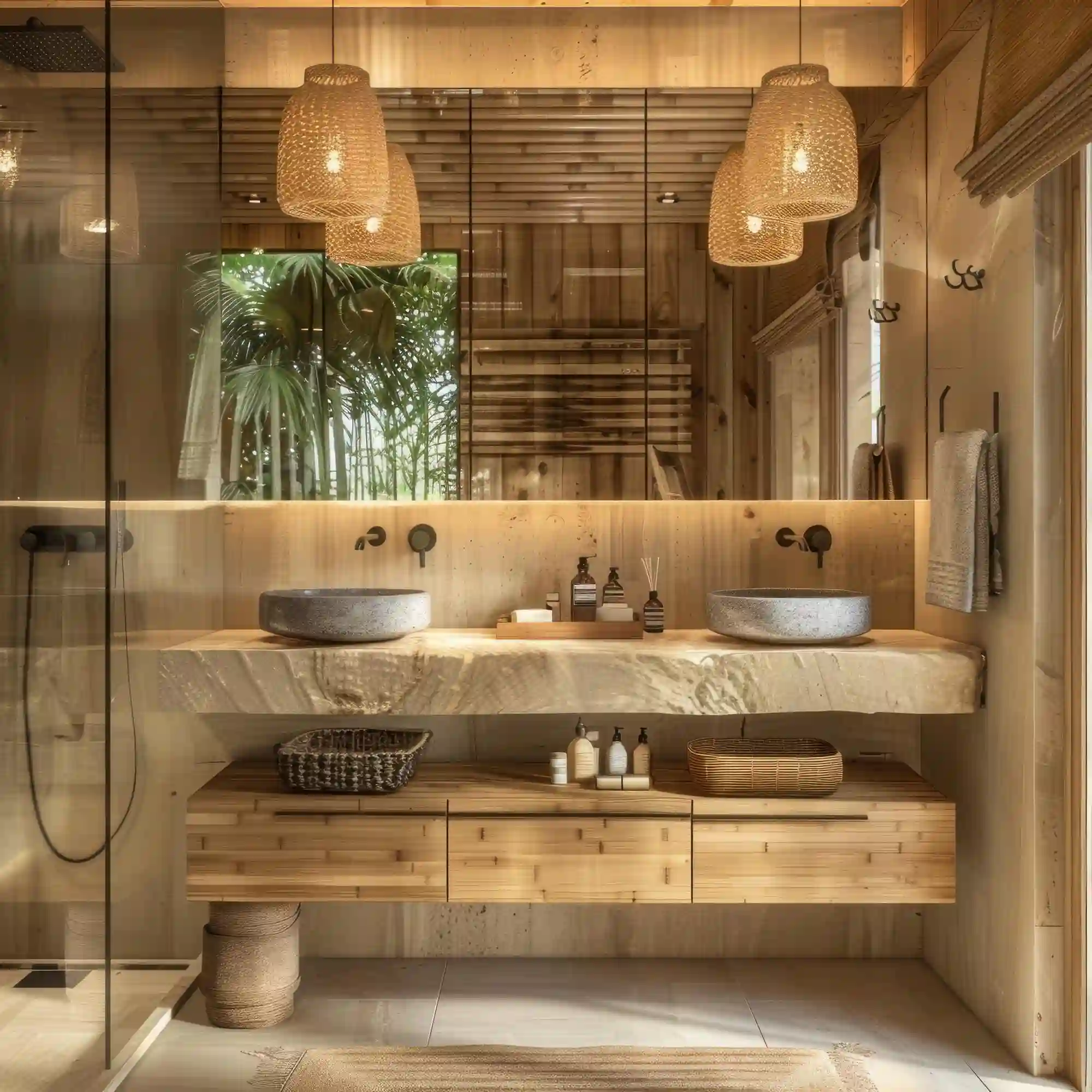
A floating vanity is a wall-mounted cabinet with no legs touching the floor, and a hairpin-leg version — thin bent-steel legs shaped like a hairpin, first popularized in mid-century furniture — adds visual support without the bulk of a full base cabinet. This combination works especially well in a small bathroom, since the visible floor beneath the cabinet makes the whole room look larger than its actual square footage. A 24-30 inch floating vanity with a single hairpin-leg support is a common small-bathroom size, and it pairs naturally with a compact round or oval mirror.
Woven Textures for Warmth
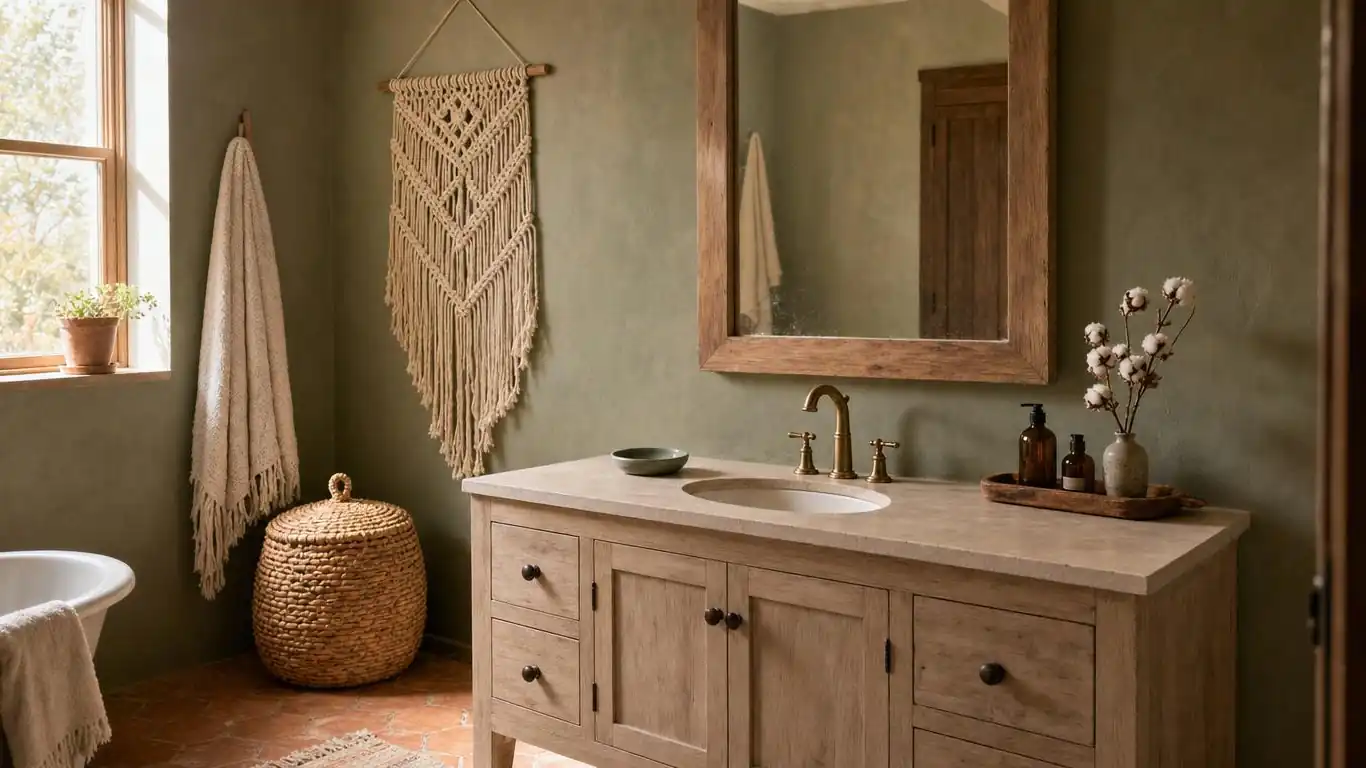
A woven rattan stool, a jute bath mat, or a seagrass storage basket brings in texture that wood, tile, and metal alone can’t provide. These natural materials were common in the era’s furniture and accessories, and they still soften a room built from hard, glossy surfaces. Choose a rattan stool as a plant stand or a step for reaching a high shelf, and stick to one or two woven pieces so the texture stays an accent, not the main event. A jute or sisal-look bath mat also holds up better in a humid room than a plush cotton one. If woven, natural texture is a direction you keep gravitating toward, a boho bathroom leans on it even harder, with rattan and jute as the main event instead of a supporting accent.
Vintage-Inspired Sconces Flanking the Mirror
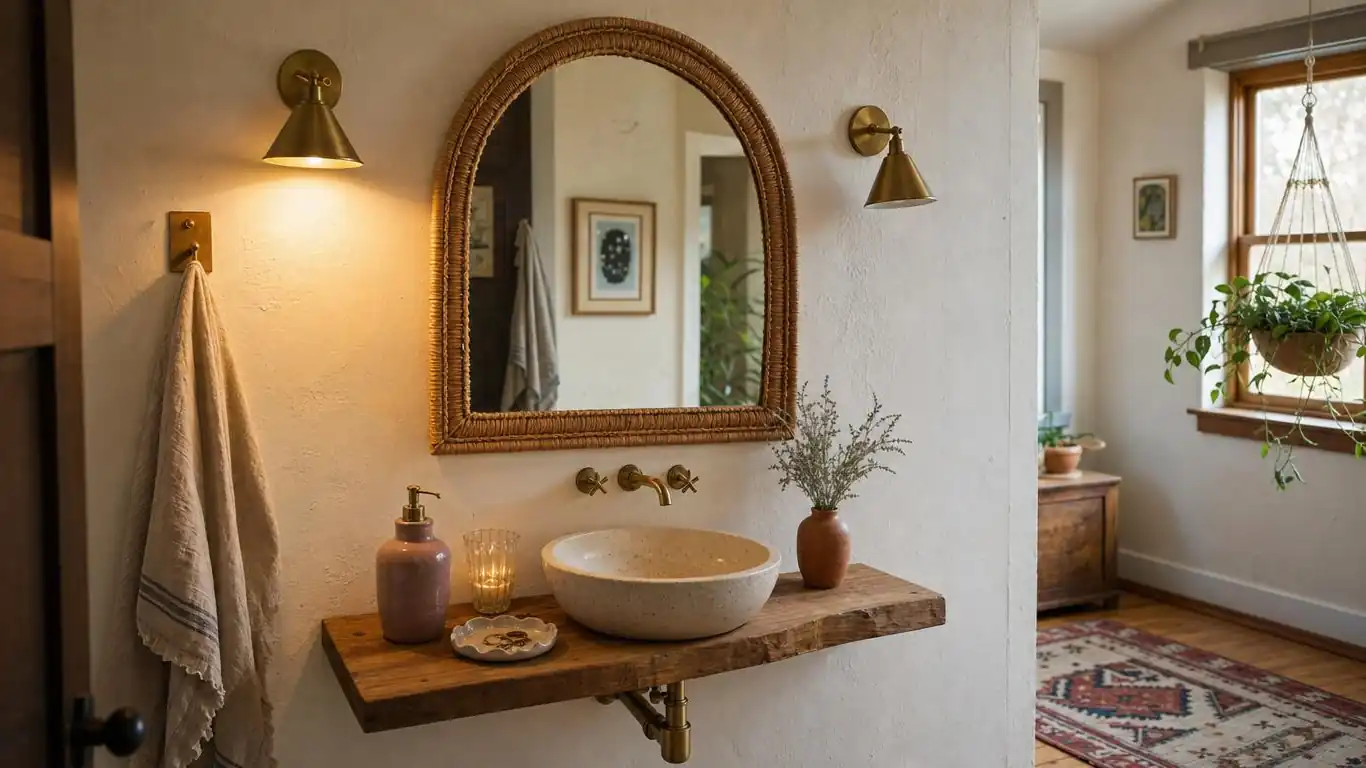
A pair of sconces mounted at eye level on either side of the mirror, roughly 60-65 inches from the floor, gives the kind of shadow-free, side-lit glow the era’s vanities were built around. Choose a globe, drum, or capsule-shaped shade in brass or smoked glass instead of a modern rectangular bar light. This layout works for a single or double vanity, as long as the sconces sit close enough to the mirror’s edges to light the face evenly. Warm 2700K bulbs keep the glow consistent with the room’s wood and brass tones.
Sculptural Ceramics and a Statement Plant
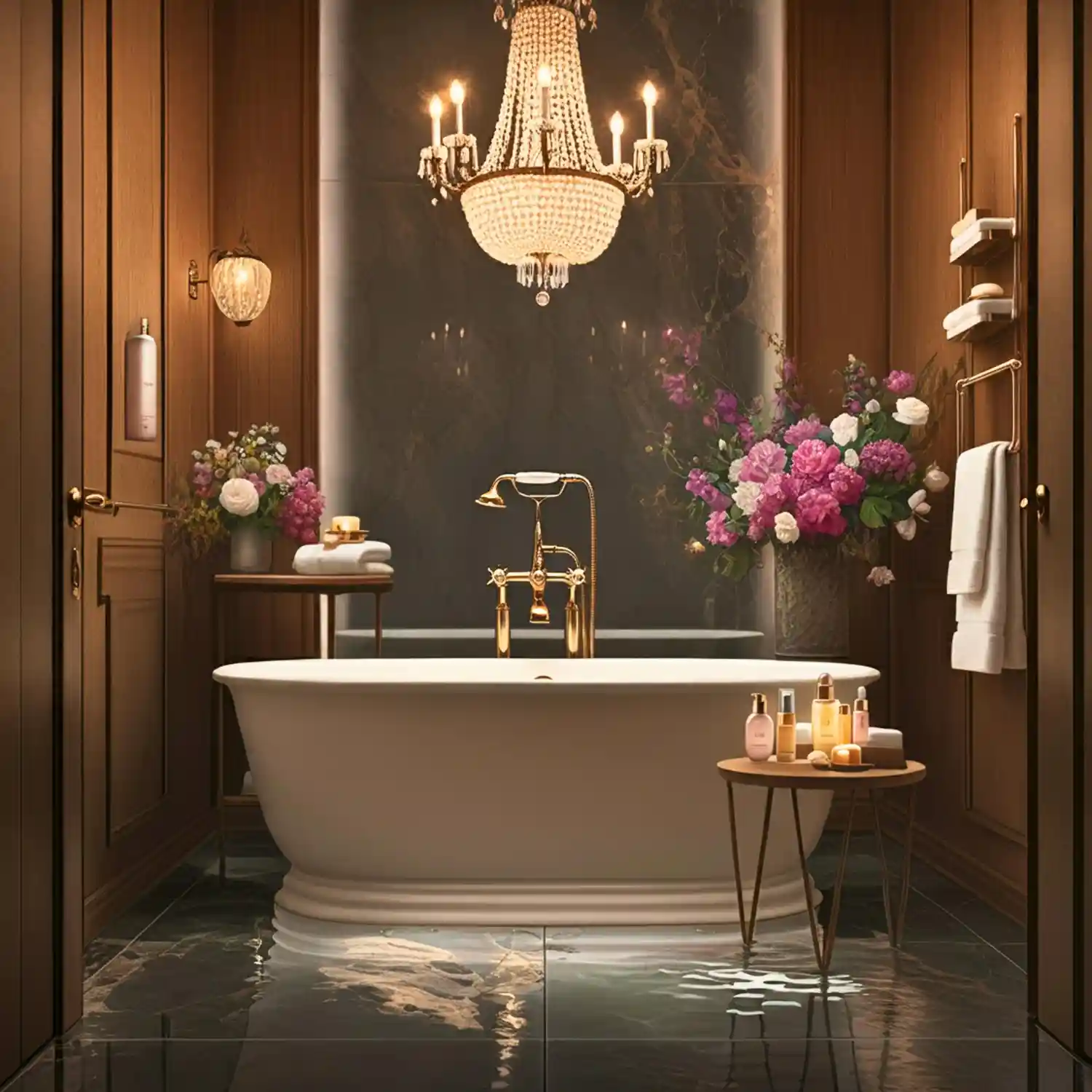
A rounded ceramic vessel, a small sculptural vase, or a stack of two or three earth-toned bowls on open shelving finishes the look without adding another hard-surface purchase. Pair the ceramics with one humidity-tolerant plant — a pothos or a snake plant both handle a bathroom’s higher moisture and lower light — to soften the shelf edge with something living. Group objects in odd numbers, three rather than four, so the shelf looks styled instead of stocked. This is the easiest idea on the list to update seasonally without touching a single fixed finish.
How Do You Keep the Mid Century Modern Look From Feeling Dated?
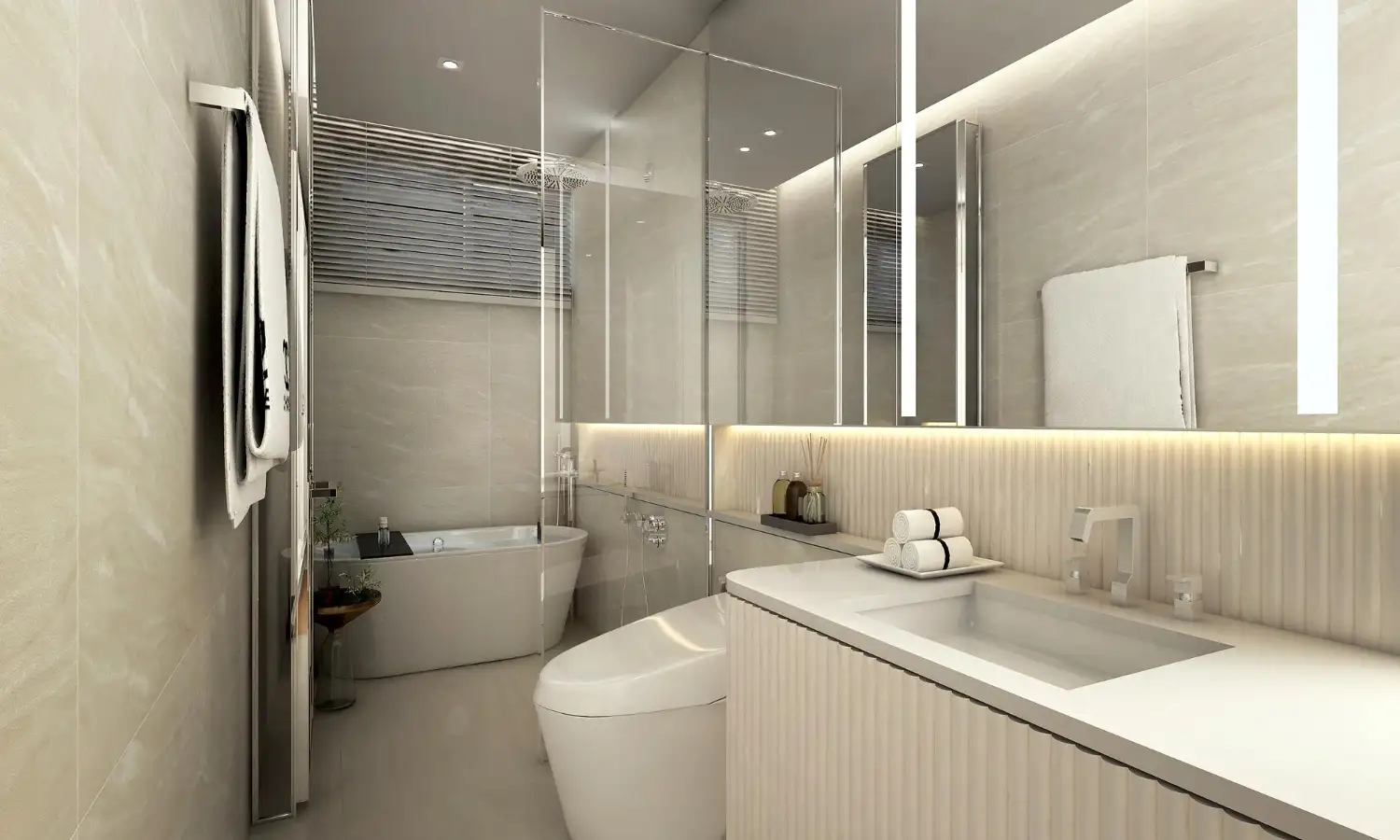
The mid century modern bathrooms that hold up longest repeat two or three quiet moves instead of piling on statement pieces. One wood tone, one metal finish, and one accent color are usually enough — a fourth or fifth material tends to pull the room back toward costume territory instead of a finished look.
Mid century modern design is a style rooted in the 1945-1969 postwar decades, built around function-first form and warm wood tones, according to Herman Miller, the furniture brand most closely tied to the movement’s rise. That history explains why the look favors clean lines and honest materials over ornate carving or heavy trim — the same values that keep a bathroom from feeling like a period piece.
A bathroom that leans too hard on one specific decade, like head-to-toe avocado or a single bold wallpaper covering all four walls, looks more like a themed room than a lasting design choice. Spreading the personality across two or three well-chosen pieces keeps the room flexible enough to update one item, like a light fixture, without a full redo a decade from now.
If you want to see the same three rules applied in a different room first, the Mid Century Modern Living Room Ideas hub shows twelve variations built on the same warm-wood-and-single-metal formula. That range runs from restrained neutrals to bold, saturated color, and it’s worth a look if you’re still deciding how far to push your own palette. Most of the variation between those twelve looks comes down to just one thing: how much color the room is allowed to carry.
For a fuller look at the color end of that range, this colorful mid century modern living room guide shows how far the same three rules can stretch before a room stops feeling timeless.
Mistakes That Wreck the Mid Century Modern Look
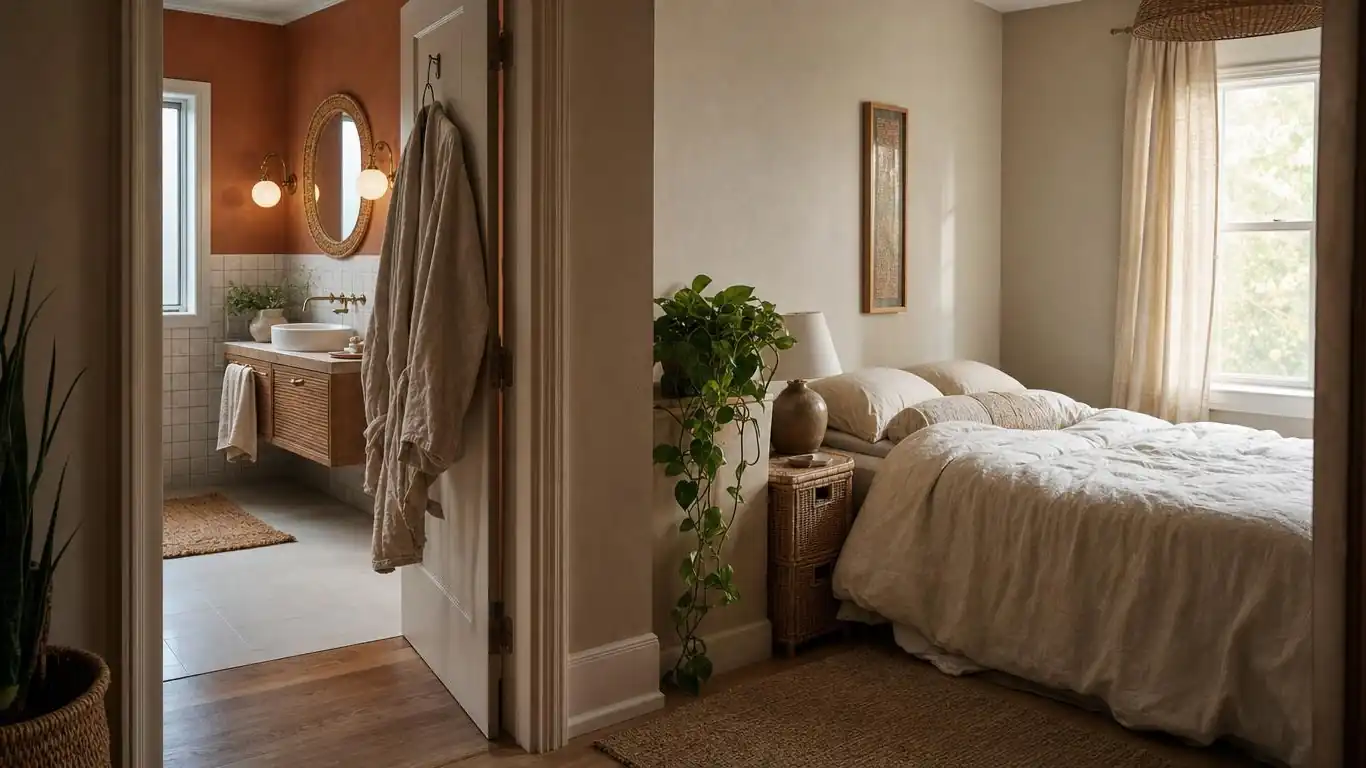
❌ Painting every wall in one bold 1970s color, like head-to-toe avocado → ✅ Limit that color family to one wall, one tile run, or one textile.
❌ Mixing three or more metal finishes across the faucet, hardware, and lighting → ✅ Pick one finish, brass or matte black, and repeat it throughout.
❌ Choosing a glossy, high-shine tile that fights the era’s matte, warm materials → ✅ Look for a honed or matte finish on tile, stone, and paint alike.
❌ Skipping the sealant on a solid wood vanity or slat wall → ✅ Seal every surface, including the back and underside, with a marine-grade finish.
For a sense of where the wider style is heading this year, these bathroom design trends show how warm wood and mixed materials are showing up beyond mid century bathrooms too.
Budget Tiers for the Mid Century Modern Look
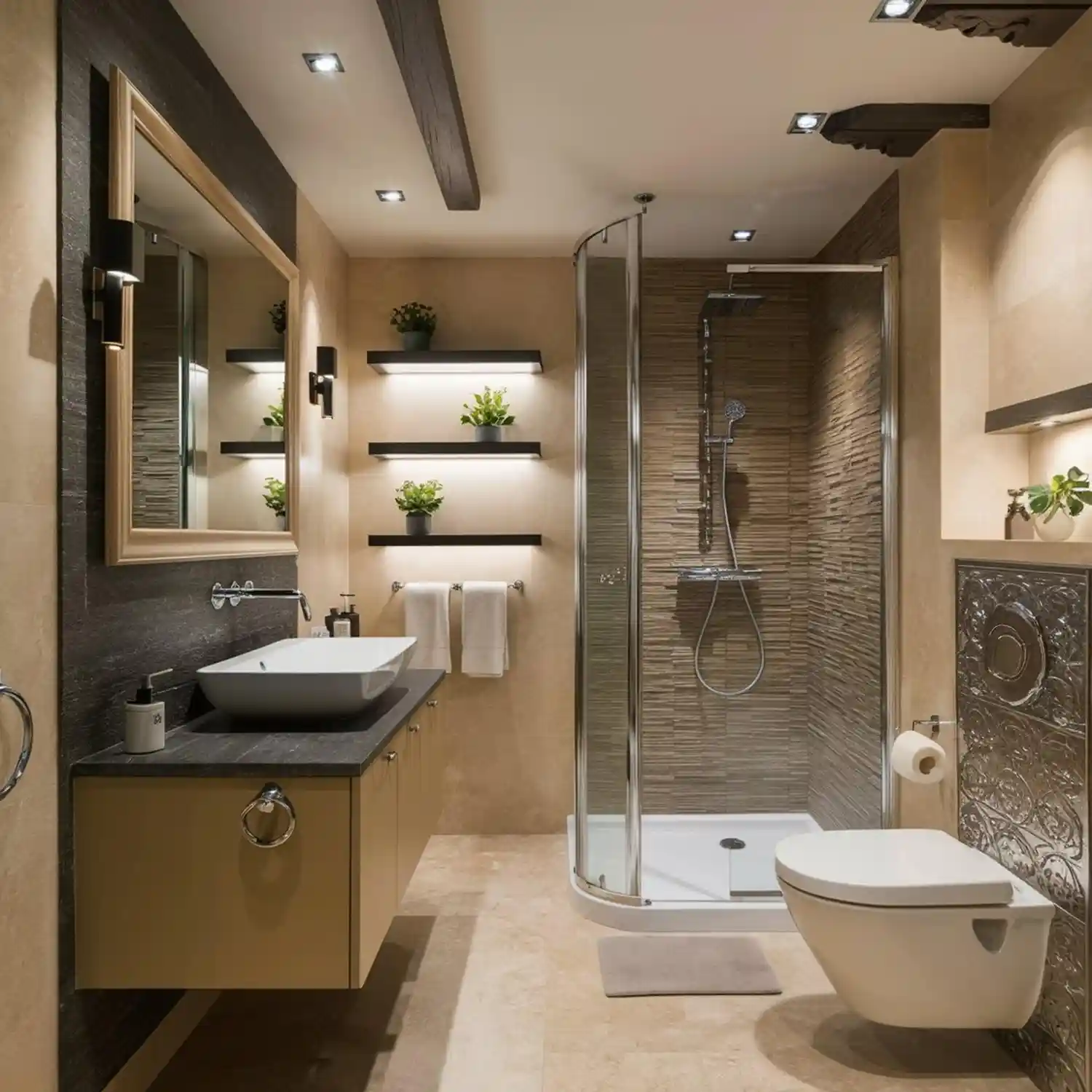
A mid century modern bathroom update can start small or go all-in, depending on which pieces you tackle first. The ranges below cover decor and fixture swaps only, not plumbing relocation, structural work, or a full renovation. For more room-specific budget context, browse our full range of bathroom ideas.
| Project | Estimated Cost | Impact Level |
|---|---|---|
| Paint + Accent Textiles (one accent wall, towels, bath mat) | $80-$200 | Medium |
| Lighting + Hardware Swap (sconces, faucet, cabinet pulls in one finish) | $250-$700 | High |
| Vanity Replacement (walnut vanity with tapered or hairpin legs) | $600-$2,200 | Very High |
| Freestanding Tub Upgrade (oval or curved-silhouette tub) | $2,000-$9,000+ | Very High |
Best First Upgrade: A lighting and hardware swap in one metal finish changes how every other material in the room looks for around $250-$700, without touching the vanity or tile.
Skip for Now: A full tub replacement — it’s the most expensive single item on this list and the easiest to add later without redoing anything else.
What If You’re Renting or Working With a Small Bathroom?
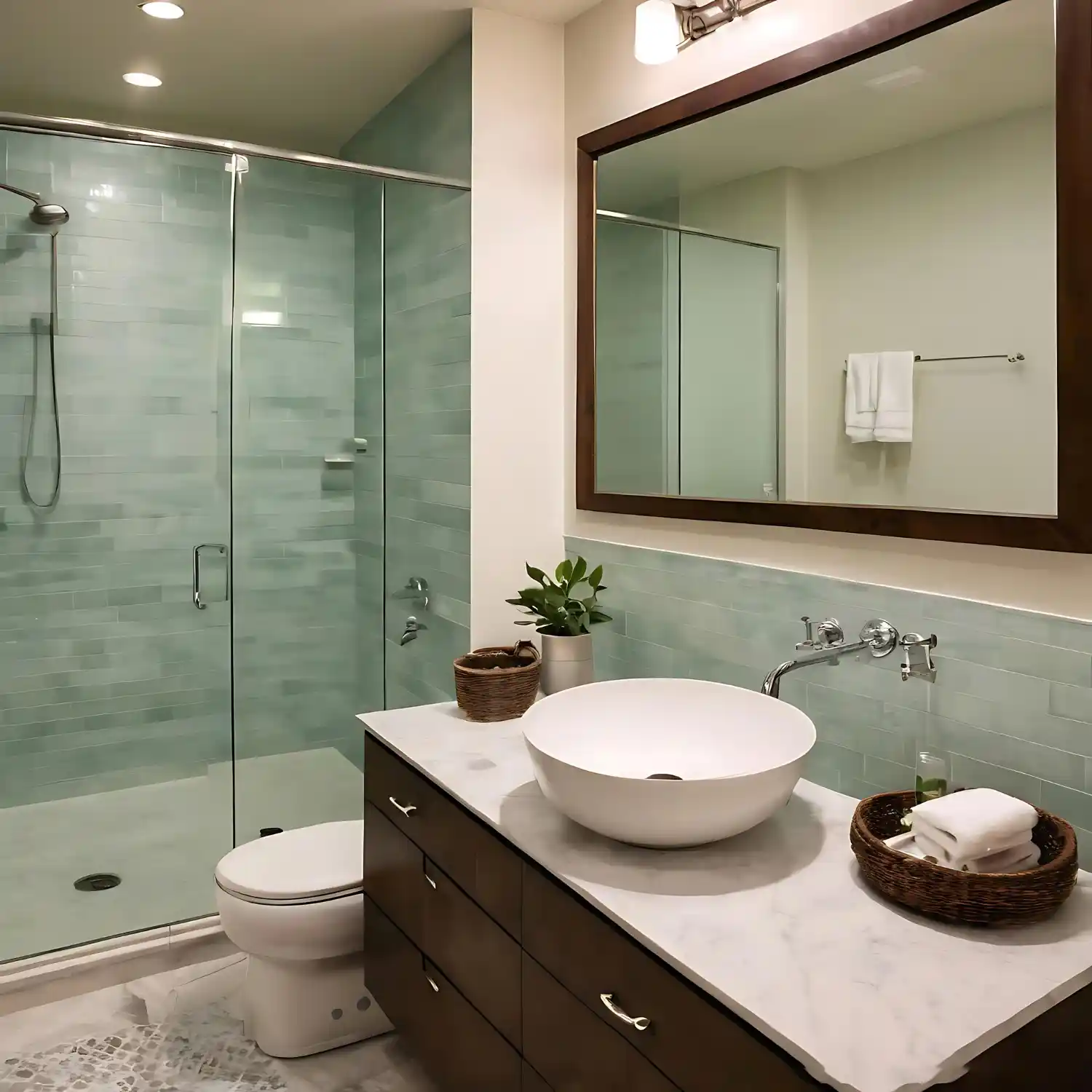
A small bathroom can still carry the look — scale it down instead of skipping it. A 24-30 inch floating vanity on hairpin legs, one curved mirror, and a single accent-color textile deliver the same three rules (wood, metal, color) in a fraction of the square footage.
Rental Note: skip the vanity swap and the slat wall if you can’t drill or paint permanently. A brass-toned removable faucet aerator, a peel-and-stick two-tone tile mat for the floor, and a rattan stool or ceramic tray get most of the look without touching a lease-restricted surface.
If mid century modern isn’t quite your style once you’ve tried a few pieces, a minimalist bathroom keeps the same less-is-more approach with even less pattern and no wood-tone requirement at all.
Frequently Asked Questions
Conclusion
Mid century modern bathroom ideas hold up best when a room repeats one wood tone, one metal finish, and one accent color instead of chasing every era-specific detail at once. Editorial field note: the bathrooms that feel most finished rarely lean on a single statement piece — they repeat the same two or three quiet choices until the room looks pulled together rather than themed. Browse more of our home decor inspiration for the next room on your list.
Next Steps
- Pick one wood tone, walnut or teak, and one metal finish before buying anything else.
- Test your earthy accent color (avocado, burnt orange, or mustard) on a sample board under your bathroom’s real lighting.
- Start with the lighting and hardware swap — it’s the highest-impact, lowest-cost first move.
- Seal any solid wood vanity or slat wall on every surface before it meets daily humidity.
More Bathroom Design Styles
- 14 Spa Bathroom Ideas to Create a Calming At-Home Retreat
- 15 Coastal Bathroom Ideas for a Bright, Airy Retreat
- 15 Luxury Bathroom Ideas for a Five-Star Hotel Feel at Home
- Aesthetic Bathroom Designs for a Clean and Trendy Look
- Modern Bathroom Design Is Trading Cold Minimalism for Warmth
- Timeless Bathroom Ideas: Classic Design That Never Goes Out of Style