TL;DR
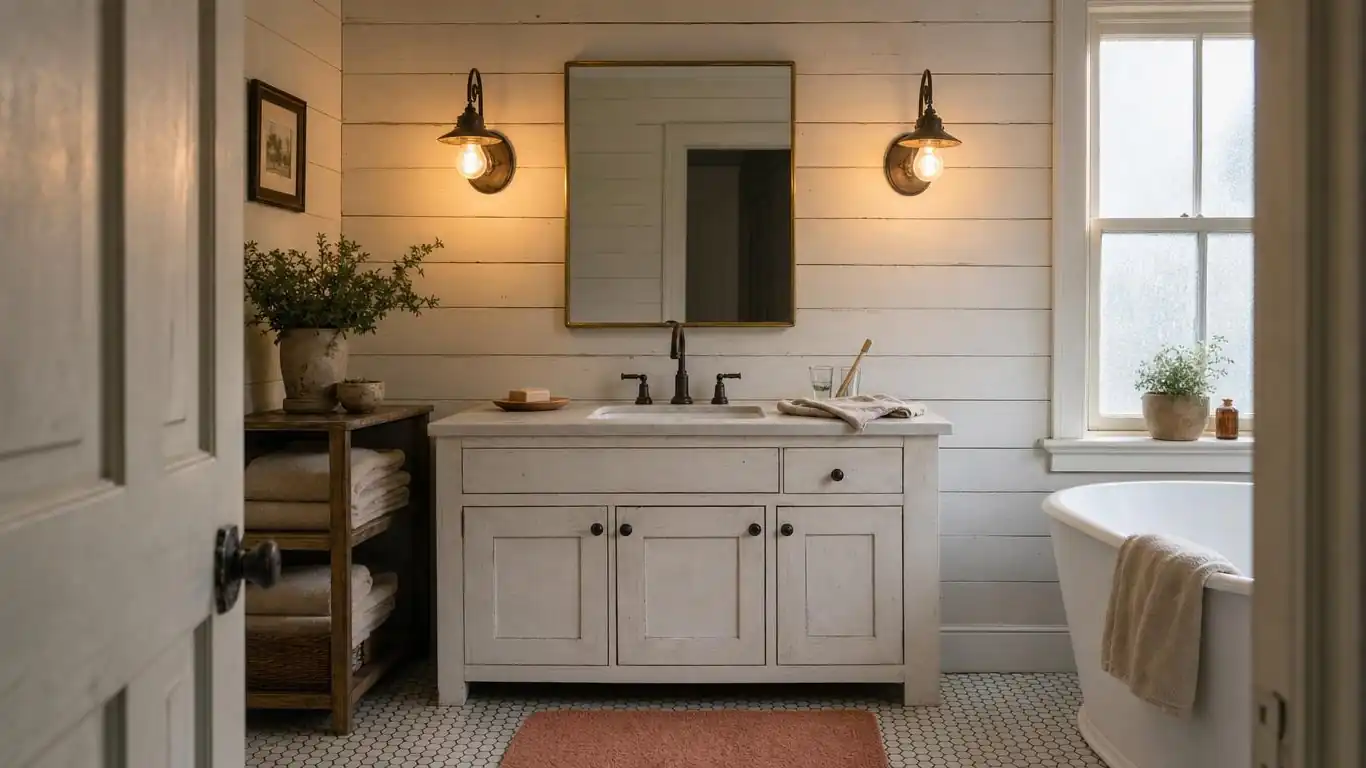
- The vanity is the anchor: A shaker-style vanity in distressed white or warm oak sets the entire tone of the room.
- One metal finish, used everywhere: Oil-rubbed bronze or unlacquered brass — choose one and stay with it across every fixture and piece of hardware.
- Shiplap or beadboard adds texture fast: Even a single accent wall shifts the feel of the whole space.
- Farmhouse flooring works hard: Hex cement tile, wide-plank vinyl, or subway tile with dark grout carry the look all the way to the floor.
- Lighting is often the missing piece: Aged iron lantern sconces or brushed brass vanity bars finish what every other element sets up.
What a Farmhouse Bathroom Actually Looks Like
Why does one bathroom feel like a cozy country retreat and another just look dated? The answer is almost always the same — the dated room mixed too many unrelated pieces. The charming one picked a direction and committed.
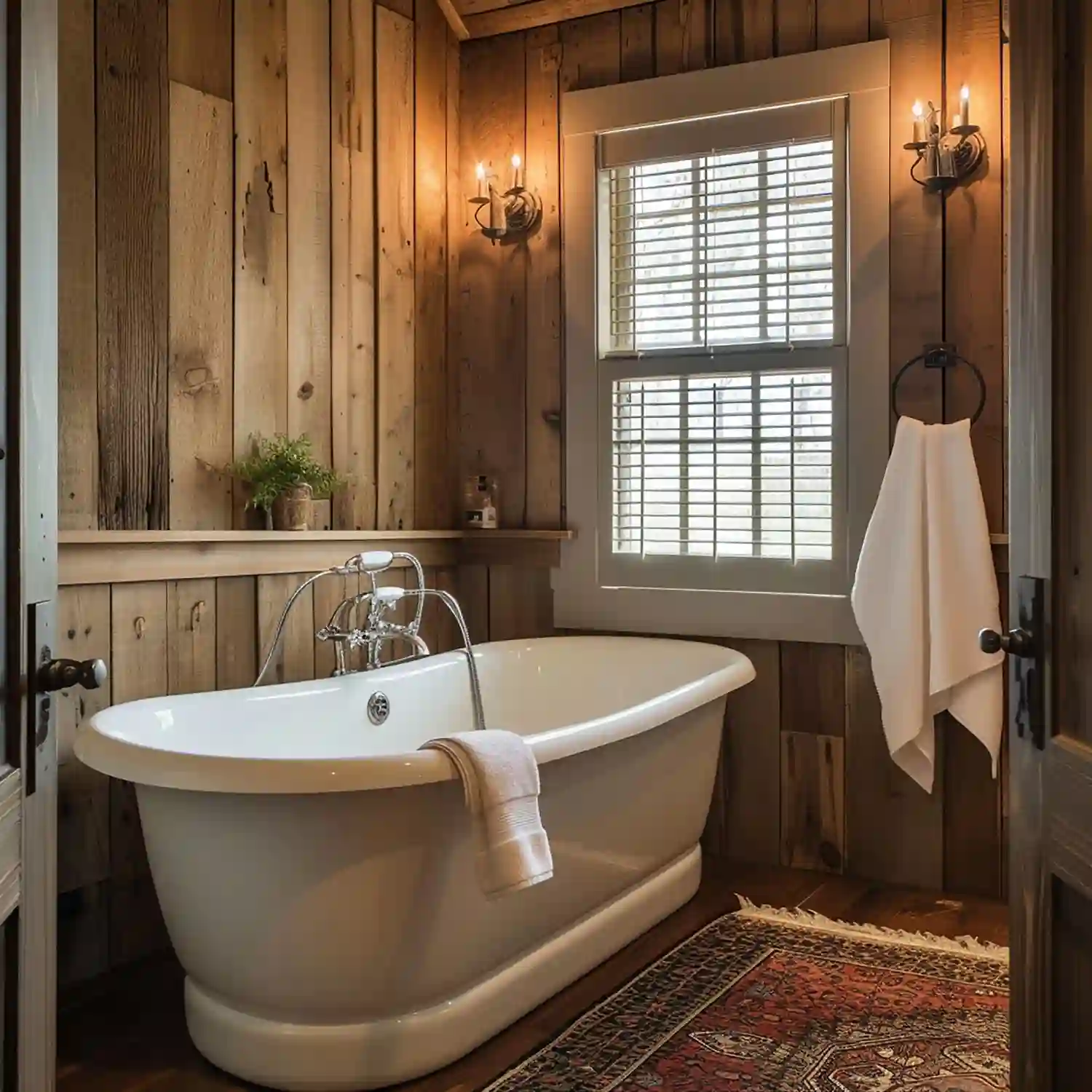
A farmhouse bathroom is built on contrast: rough wood beside smooth porcelain, aged brass beside clean white tile, warm layered lighting beside pale painted walls. The look feels lived-in and purposeful without tipping into rustic-kitsch. Getting there is mostly about knowing what to shop for and what to skip.
I redesigned a farmhouse bathroom for a client in rural Virginia last spring. The space was 70 square feet of builder-grade beige — beige walls, chrome fixtures, hollow-core vanity, basic subway tile. We swapped in a distressed white shaker vanity, replaced every chrome piece with oil-rubbed bronze, and ran board-and-batten paneling halfway up the walls. The room felt like a completely different house within a single weekend. No structural changes. No contractor.
The key is knowing which pieces carry the most visual weight — and shopping those first. Bookmark this guide for quick reference.
KEY TAKEAWAY: A farmhouse bathroom comes together when materials contrast in texture but stay consistent in finish across every hardware piece.
| Quick Takeaways | |
|---|---|
| Vanity | Shaker-style in distressed white, warm oak, or sage green — the room’s anchor piece. |
| Fixtures | Oil-rubbed bronze or unlacquered brass on every tap, towel bar, hook, and cabinet pull. |
| Walls | Shiplap or beadboard paneling — even one wall transforms the feel instantly. |
| Flooring | Hex cement tile, wide-plank vinyl, or subway tile with dark grout carries the farmhouse look underfoot. |
| Lighting | Aged iron lantern sconces or brushed brass vanity bars — warm-toned and layered, not overhead-only. |
What to Look For Before You Buy
Farmhouse style is easy to get right — and surprisingly easy to get wrong. These buying criteria separate the rooms that feel curated from the ones that look like a prop warehouse.
Material authenticity. Real wood veneer ages differently than painted MDF. In a humid bathroom, moisture resistance matters more than the finish name. Look for vanities with solid wood or plywood carcass construction rather than particleboard. Browse all our bathroom ideas to see which materials hold up long-term in real spaces.
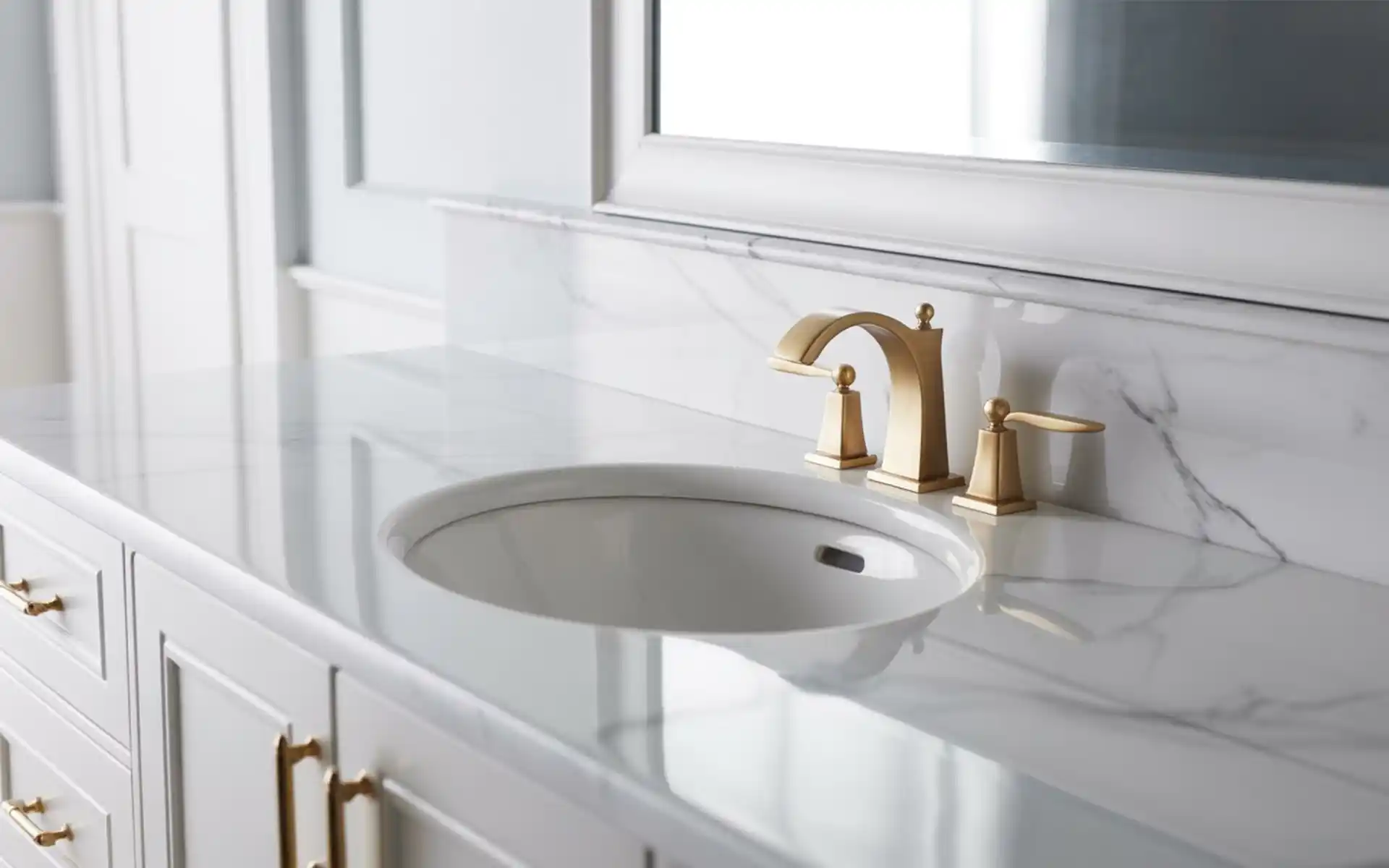
Finish consistency. Oil-rubbed bronze is darker and more moody. Unlacquered brass is warmer and develops a patina with age. Matte black looks sharper and more modern. Pick one family and stay with it — faucets, towel bars, robe hooks, mirror frame, and cabinet pulls all need to match. Mixed metals feel unfinished in a farmhouse bathroom, not layered. See how finish consistency plays out across an entire home in 14 Stylish Bathroom Backsplash Ideas for Every Home Budget.
Scale and proportion. A vanity that’s too small for its wall looks like an afterthought. A freestanding clawfoot tub in a 50-square-foot bathroom feels crammed. Farmhouse style depends on pieces that feel grounded and weighty. A vanity should span at least 60% of its available wall width. The same proportion rule applies to the rustic homes covered in Simple Ranch Style Home Interior and Exterior Updates for Better Curb Appeal.
Practicality first. Open wood shelving looks perfect in photographs. In a humid bathroom without proper ventilation, it warps and watermarks within months. Check ventilation, sealing, and finish durability before committing to any natural wood element in the space.
KEY TAKEAWAY: Finish consistency across all hardware delivers more visual impact than any single design element you buy.
The Key Elements to Shop
A farmhouse bathroom comes together around a handful of key pieces. Focus your shopping on these five — the vanity, tub, fixtures, wall treatment, and flooring — to build the look without guesswork.
1. The Farmhouse Vanity
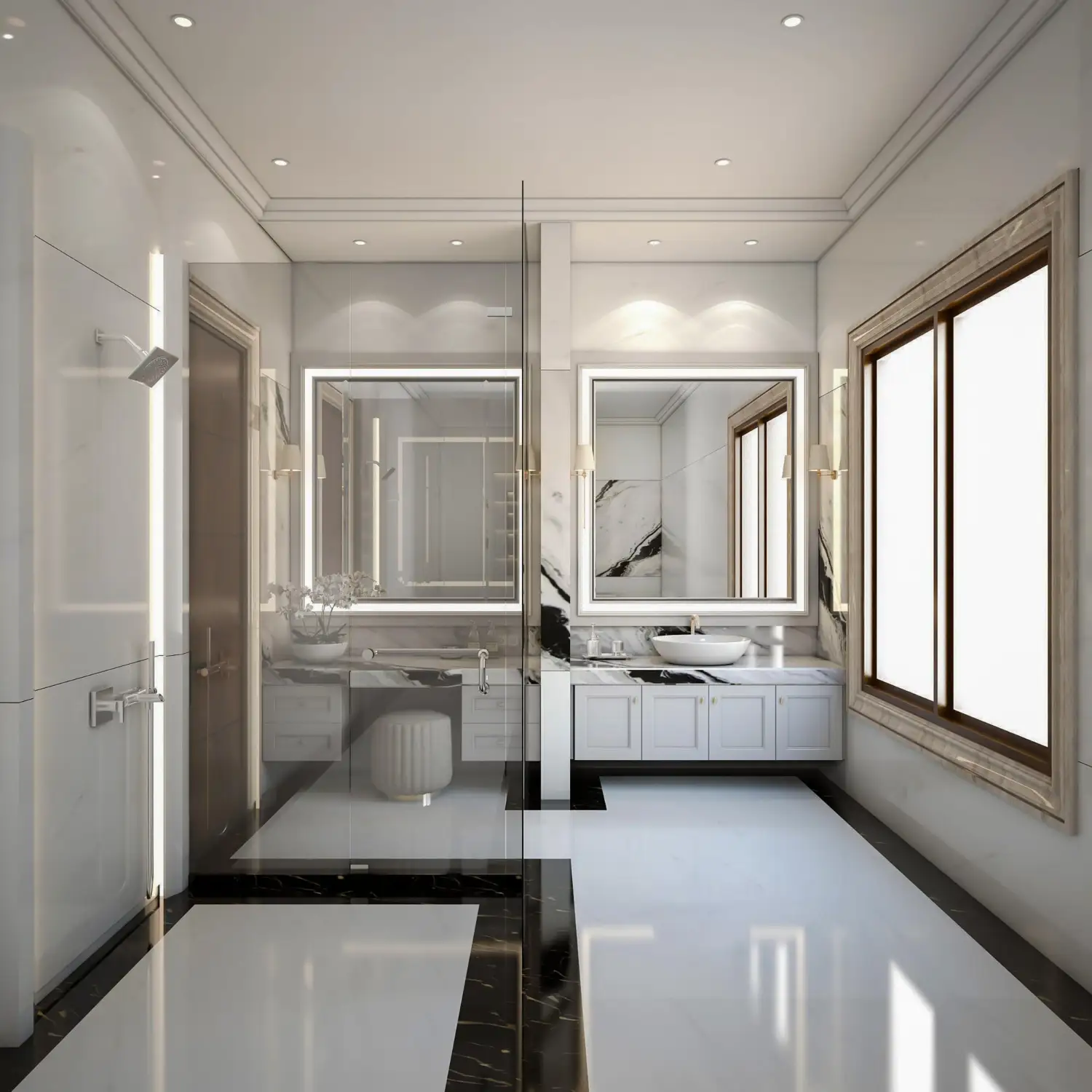
The vanity is the room’s anchor piece. A shaker-style vanity in distressed white, warm oak, or sage green sets the entire tone before anything else is in place. For mirror, lighting, and fixture pairings beyond farmhouse, these bathroom vanity ideas cover the whole vanity wall.
Who it’s for: Anyone starting a farmhouse bathroom from scratch or doing a partial refresh. A new vanity is the single biggest visual shift available without a full renovation.
Pros:
- Immediately establishes the farmhouse palette
- Shaker doors work in both transitional and rustic-style rooms
- Available in sizes that fit any bathroom footprint
Cons:
- Quality varies widely — particleboard core construction is a common cost-cutting move
- Heavily distressed finishes can look costumey if over-applied
Price range: $350–$1,400 for a standard single-sink vanity. Double vanities run $900–$2,500.
DESIGNER TIP: Warm oak or walnut stain reads more current than all-white distressed. If you go white, add warmth through bronze fixtures and woven cotton textiles.
2. The Freestanding or Clawfoot Tub
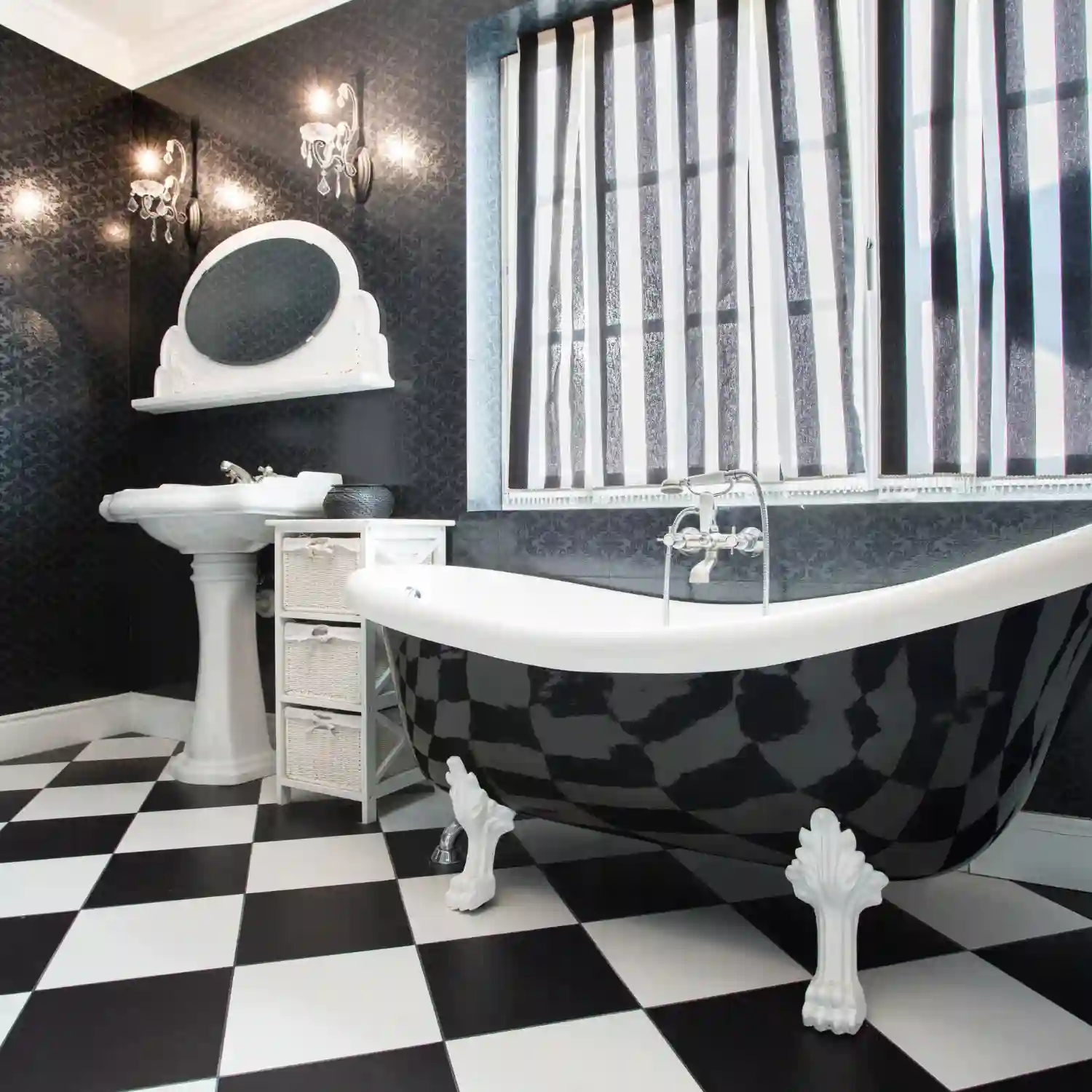
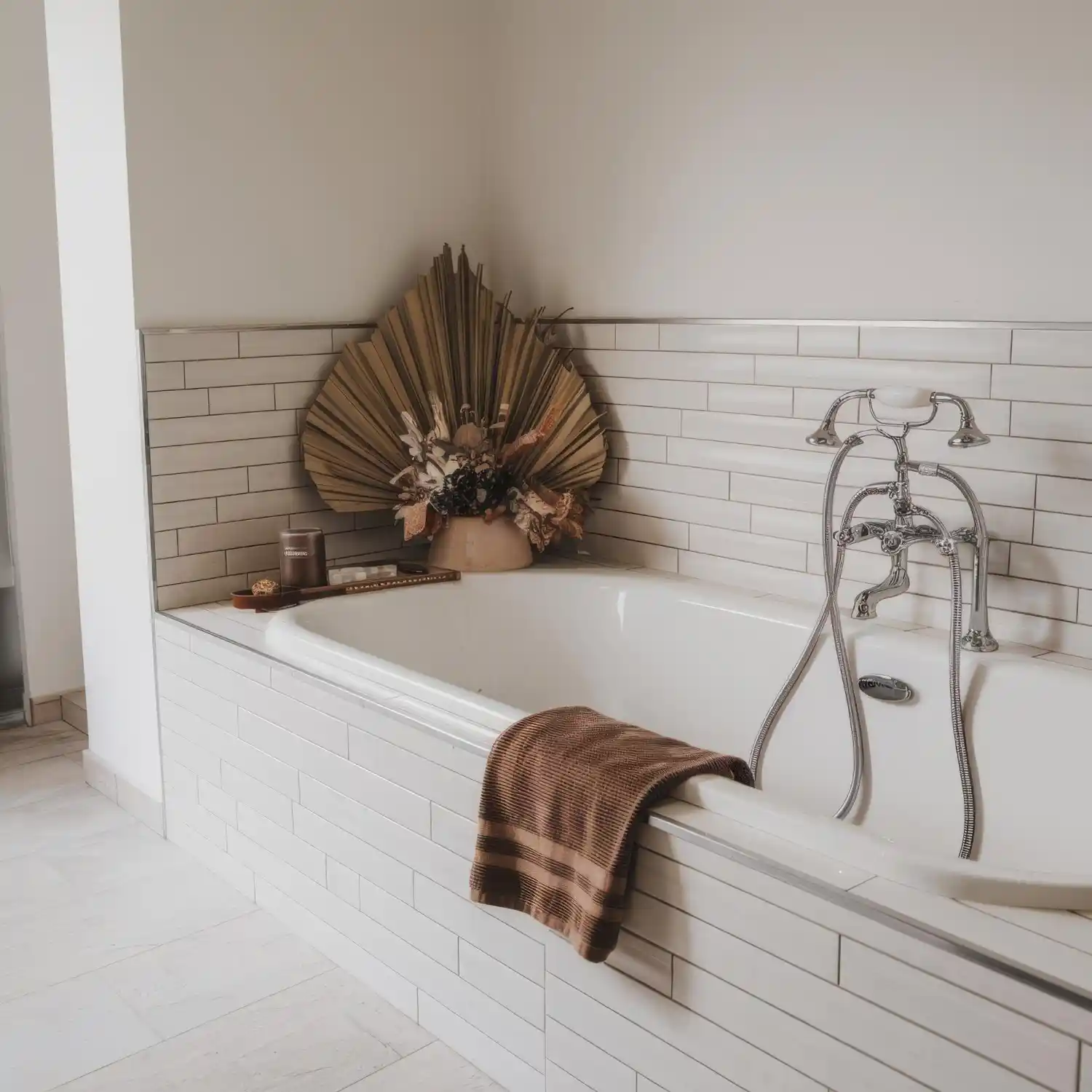
A clawfoot tub or modern freestanding soaking tub is the statement piece of any farmhouse bathroom. Cast iron is the classic choice. Acrylic weighs far less and costs far less.
Who it’s for: Bathrooms with at least 35–40 square feet of clear tub zone, and homeowners who genuinely use a bathtub. If you shower only, this investment doesn’t earn its floor space.
Pros:
- Defines the room’s entire personality at a glance
- Works in both vintage and modern farmhouse interpretations
- No tiled surround needed — saves on tile and labor budget
Cons:
- Cast iron weighs 300+ lbs and may require floor reinforcement
- Acrylic doesn’t stay warm as long as cast iron
- New plumbing rough-in adds significant cost if supply lines are in the wrong spot
Price range: $800–$1,800 for acrylic. $1,800–$4,500+ for cast iron. For storage and cabinet layout ideas that work around a freestanding tub, 12 Laundry Room Cabinet Ideas for Maximum Storage and Style applies the same built-in storage logic to bathroom cabinetry planning.
3. Fixtures and Faucets
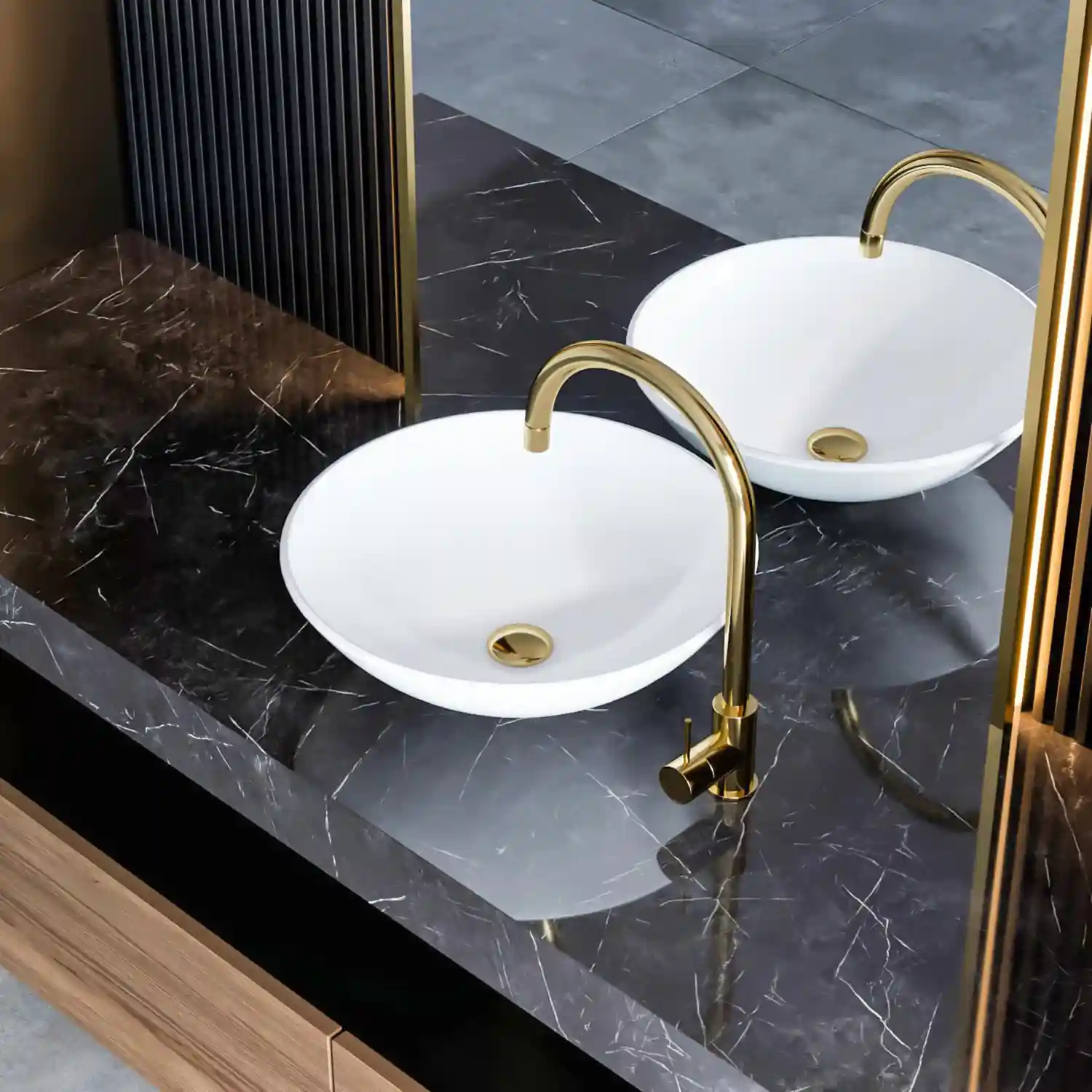
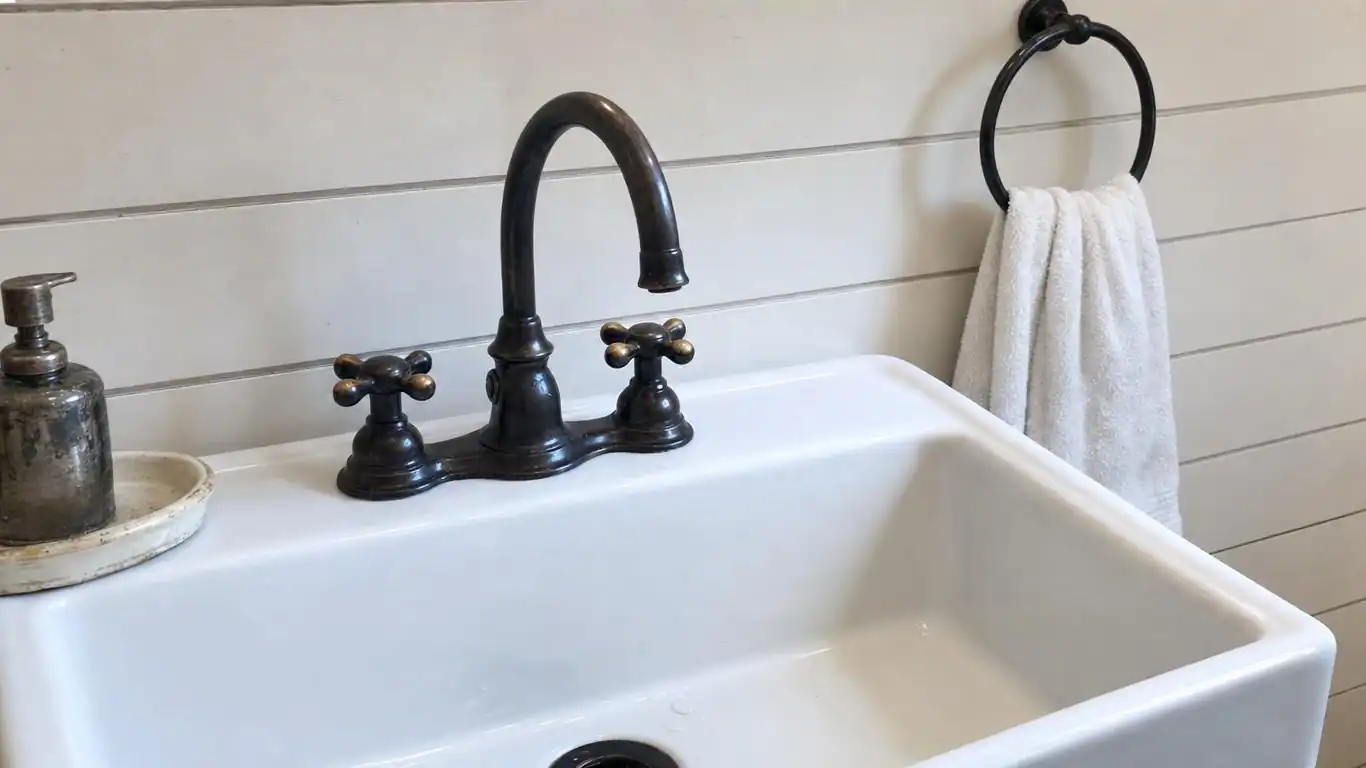
Oil-rubbed bronze is the signature finish of the farmhouse bathroom. It runs dark, warm, and pairs with almost every wall treatment. Unlacquered brass is warmer still and develops a natural patina over time. Matte black works for a more modern farmhouse interpretation.
Who it’s for: Anyone refreshing without replacing major fixtures. New faucets, towel bars, and cabinet hardware in a matching finish can transform a bathroom that already has decent bones.
Pros:
- Lower cost, high visual impact
- Swappable without contractor help in most installations
- Pulls together mismatched existing finishes quickly
Cons:
- Unlacquered brass patinas unevenly without regular maintenance
- Oil-rubbed bronze wears through to the base metal at friction points over years of use
Price range: $80–$300 for a quality faucet. A full hardware set — towel bars, hooks, paper holder — adds $150–$450. Coordinate your finish with your tile selection; 10 Major Bathroom Design Trends for 2026 That Every Designer Loves shows how current fixtures pair with fresh tile options.
4. Wall Treatment: Shiplap or Beadboard
Shiplap runs as horizontal planks with a visible gap between boards. Beadboard uses narrow vertical grooves and a more refined texture. Both deliver the warmth and depth that make a farmhouse bathroom feel like more than tile and painted drywall.
Who it’s for: DIYers and weekend renovators. Pre-primed beadboard sheets install in an afternoon with minimal tools and no special skills.
Pros:
- One accent wall changes the room without a full renovation
- Paintable — start white and repaint without replacing
- Works as wainscoting or full-wall depending on ceiling height
Cons:
- Wet zones near the tub require a moisture-resistant primer or proper sealer
- Full-wall shiplap in a very small room can feel visually heavy
Price range: $150–$600 for one accent wall, materials included. DIY saves roughly 50% on labor. The same texture-layering logic that defines a farmhouse bathroom also shapes the living spaces in 11 Cozy Farmhouse Living Room Ideas for a Modern Rustic Home.
5. Farmhouse Flooring
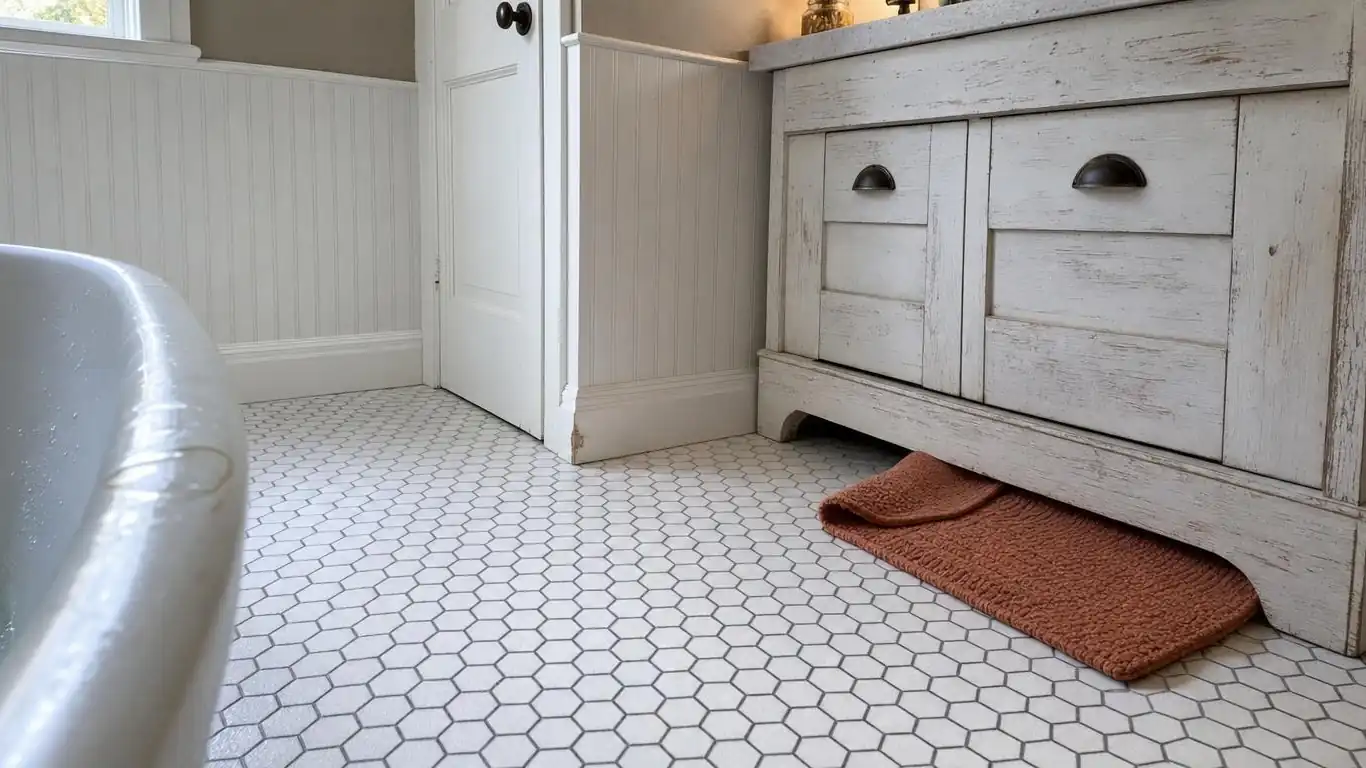
Hex cement tile in white with charcoal grout is the most classic farmhouse bathroom floor. Wide-plank luxury vinyl in warm oak is the most practical. Subway tile with a dark crosshatch grout reads vintage without a full floor replacement.
Who it’s for: Full renovations or anyone willing to tackle a tile refresh. Peel-and-stick vinyl plank offers a lower-commitment version for renters.
Pros:
- Flooring ties the entire room’s palette together
- Hex tile is timeless — it won’t date within a decade
- Vinyl plank is waterproof, warm underfoot, and DIY-friendly
Cons:
- Real cement tile requires annual sealing to resist moisture
- Very dark grout looks oppressive in bathrooms under 50 square feet
Price range: $4–$12 per square foot for hex cement tile. $2–$6 per square foot for vinyl plank. For how flooring and wall materials stack in rustic spaces, 18 Best Barndominium Ideas Interiors to Elevate Your Floor Plan walks through how each material choice affects the next.
6. Lighting Fixtures
Farmhouse bathroom lighting belongs in two places: vanity lighting directly beside or above the mirror, and an overhead fixture for ambient fill. Lantern-style sconces in aged iron or brushed brass deliver the look while casting flattering warm light.
Who it’s for: Every farmhouse bathroom. Lighting is the most under-budgeted element and the most immediately felt once it’s right.
Pros:
- Swapping a builder-grade light bar for two sconces costs under $200
- Warm-toned bulbs at 2700K make every finish in the room look richer
- Layered lighting eliminates the harsh overhead-only effect
Cons:
- Rewiring for sconces requires an electrician if existing boxes are at the wrong height
- Very large vintage-look fixtures overpower small bathrooms
Price range: $60–$250 per sconce. A pair of vanity sconces runs $120–$500. See how simpler lighting approaches work in smaller farmhouse bathrooms in 12 Minimalist Bathroom Decor Ideas for a Clean and Tidy Look.
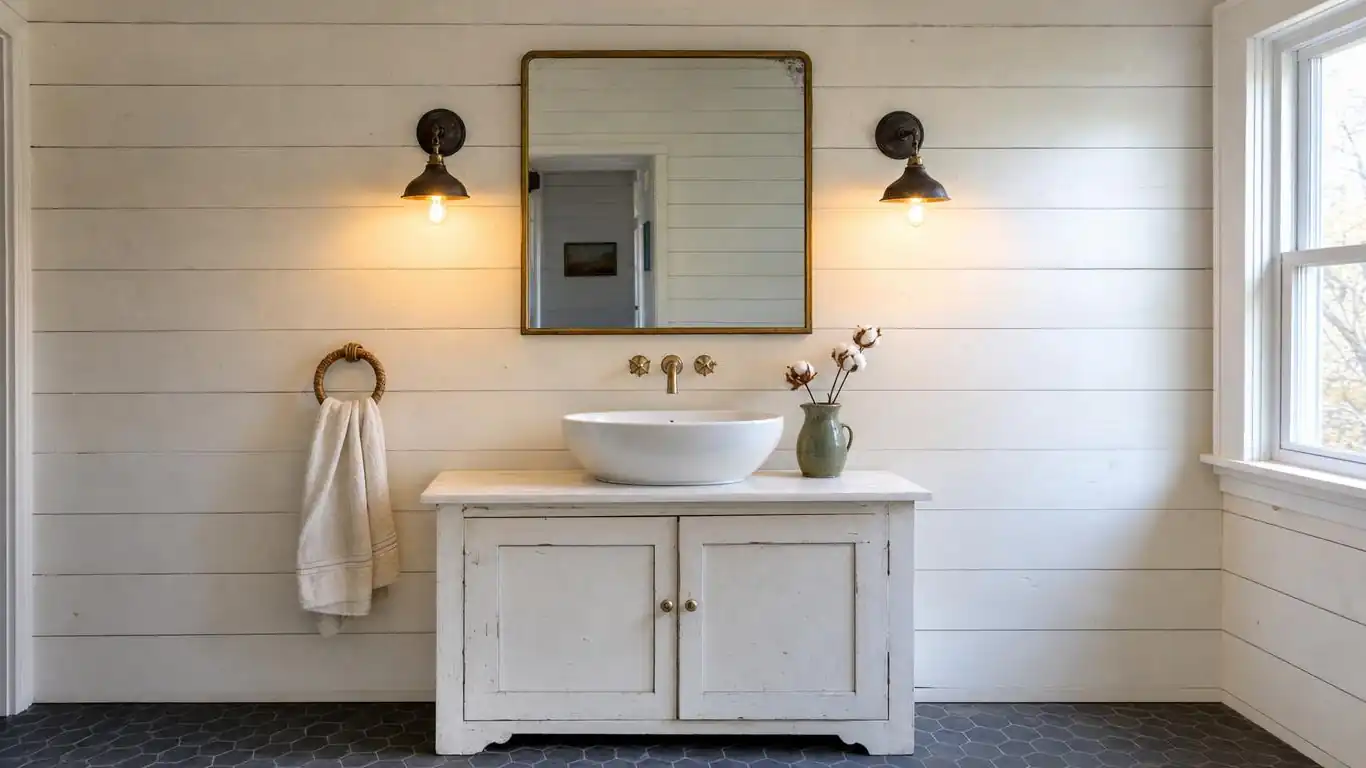
KEY TAKEAWAY: The vanity, fixtures, and wall treatment carry the most visual weight — prioritize these three before flooring or lighting.
Quick Reference
| Goal | Best Pick | Price Range |
|---|---|---|
| Best for small bathrooms | Shaker vanity in warm oak + hex cement tile floor | $500–$1,400 |
| Best on a budget | Subway tile + beadboard wall + swapped bronze hardware | $250–$700 |
| Best premium choice | Cast iron clawfoot tub + unlacquered brass fixtures | $2,500–$6,000 |
| Best DIY weekend project | Beadboard paneling + painted vanity + new hardware set | $200–$600 |
KEY TAKEAWAY: A budget farmhouse bathroom refresh starts with new hardware and one beadboard wall — both achievable under $500 in a single weekend.
Investment Levels
A full farmhouse bathroom renovation with a contractor runs $6,000–$18,000. A focused refresh — new vanity, matching fixtures, and one wall treatment — costs $1,200–$3,500 and shifts the look completely without a gut reno.
| Project | Estimated Cost | Impact Level |
|---|---|---|
| Farmhouse Shaker Vanity | $400–$1,400 | Very High |
| Shiplap or Beadboard Wall | $150–$600 | High |
| Oil-Rubbed Bronze Hardware Set | $150–$450 | Medium |
| Clawfoot or Freestanding Soaking Tub | $800–$4,500 | Very High |
KEY TAKEAWAY: Budget for the vanity and tub first — these two pieces carry the highest visual return of any purchase in a farmhouse bathroom.
The Pick
A distressed white or warm oak shaker vanity is the single smartest investment in a farmhouse bathroom. It anchors the style, sets the color palette, and works whether the rest of the room is a full renovation or a slow build-out. Pair it with oil-rubbed bronze faucets and one shiplap or beadboard accent wall, and the room looks finished even before the flooring is updated.
Designer’s Verdict: Buy the vanity and hardware first. The rest of the farmhouse bathroom look builds naturally around those two choices.
What Most People Get Wrong
❌ Mixing metal finishes across fixtures → ✅ Pick one finish — oil-rubbed bronze, unlacquered brass, or matte black — and use it on every piece of hardware in the room.
❌ Going too rustic, too fast → ✅ One shiplap wall and a distressed vanity is enough. Adding barn wood floors, antler hooks, and rope accents tips from farmhouse into theatrical.
❌ Ignoring bathroom ventilation → ✅ Shiplap and wood vanities need proper airflow. Install a quality exhaust fan before adding any wood element to the room.
❌ Underbudgeting the lighting → ✅ A builder-grade light bar undermines every other investment in the room. Two sconces at $80–$150 each make an immediate difference. See lighting approaches that work beautifully in 12 Refreshing Spring Bathroom Decor Ideas to Brighten Your Space.
KEY TAKEAWAY: The most common farmhouse bathroom mistake is layering too many rustic elements — restraint makes the look feel elevated rather than themed.
Edge Cases Worth Thinking Through
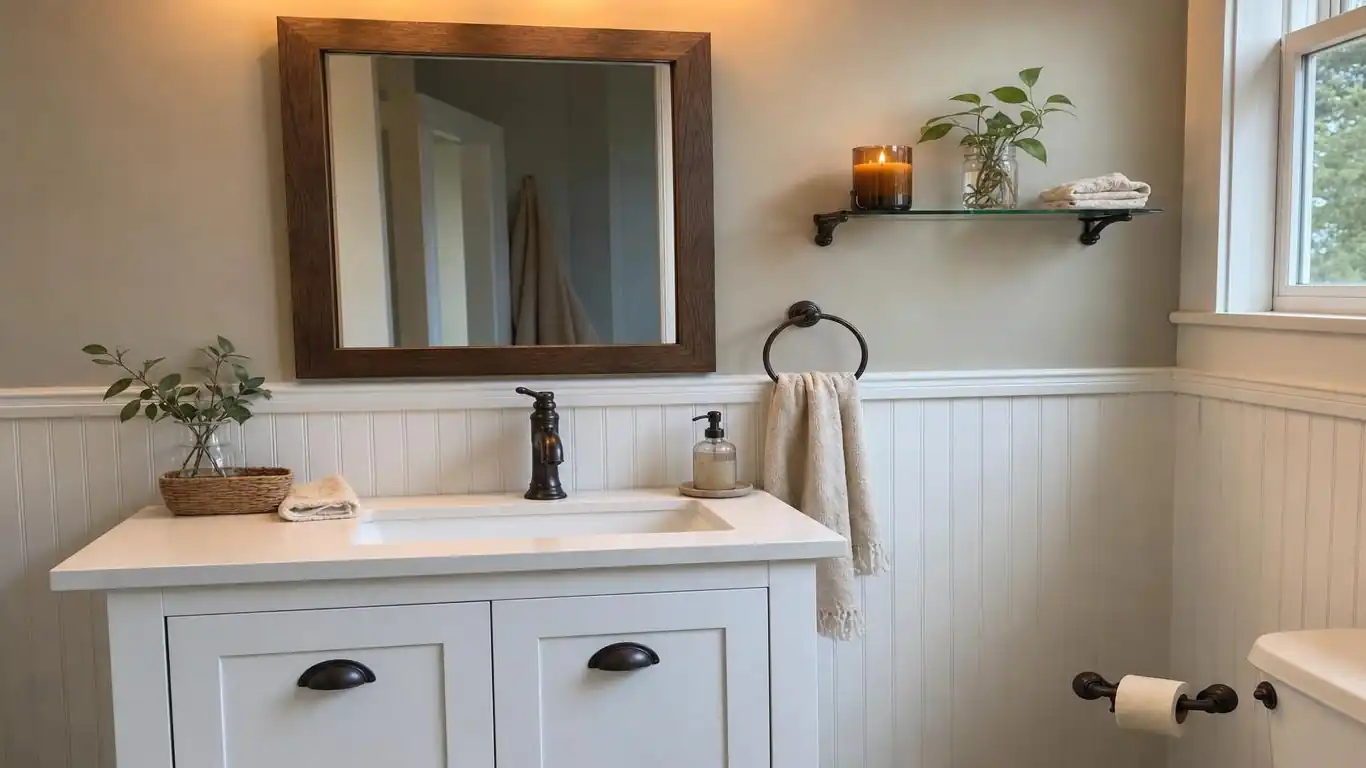
Small bathrooms under 50 square feet. Skip the clawfoot tub. A freestanding tub in a small farmhouse bathroom crowds every other element out. Focus the budget on the vanity, fixtures, and one shiplap wall — these three deliver the full farmhouse look without sacrificing movement. The rooms inspiration at 101homedecor.com covers several small-bathroom layouts that work cleanly with farmhouse styling.
Rental situations. Renters can still build the farmhouse bathroom look without permanent changes. Peel-and-stick vinyl plank flooring, removable shiplap panels, and a new hardware set all install without altering the space. Spend on fixtures — they leave with you when you move.
Modern farmhouse vs. traditional farmhouse. Modern farmhouse leans cleaner: matte black fixtures, white shiplap, shaker vanity, minimal accessories. Traditional farmhouse is warmer: oil-rubbed bronze, distressed wood, apron-front sink, woven cotton rugs. Both directions work. The mistake is mixing signals from both. For how the farmhouse sensibility carries across adjacent rooms, see 15 Cozy Moody Farmhouse Living Room Ideas You’ll Want to Copy and how it scales up in larger spaces like 16 Simple Barndominium Exterior Ideas for a Modern Farmhouse Look and 12 Small Barndominium Ideas for a Compact and Cozy Rural Life.
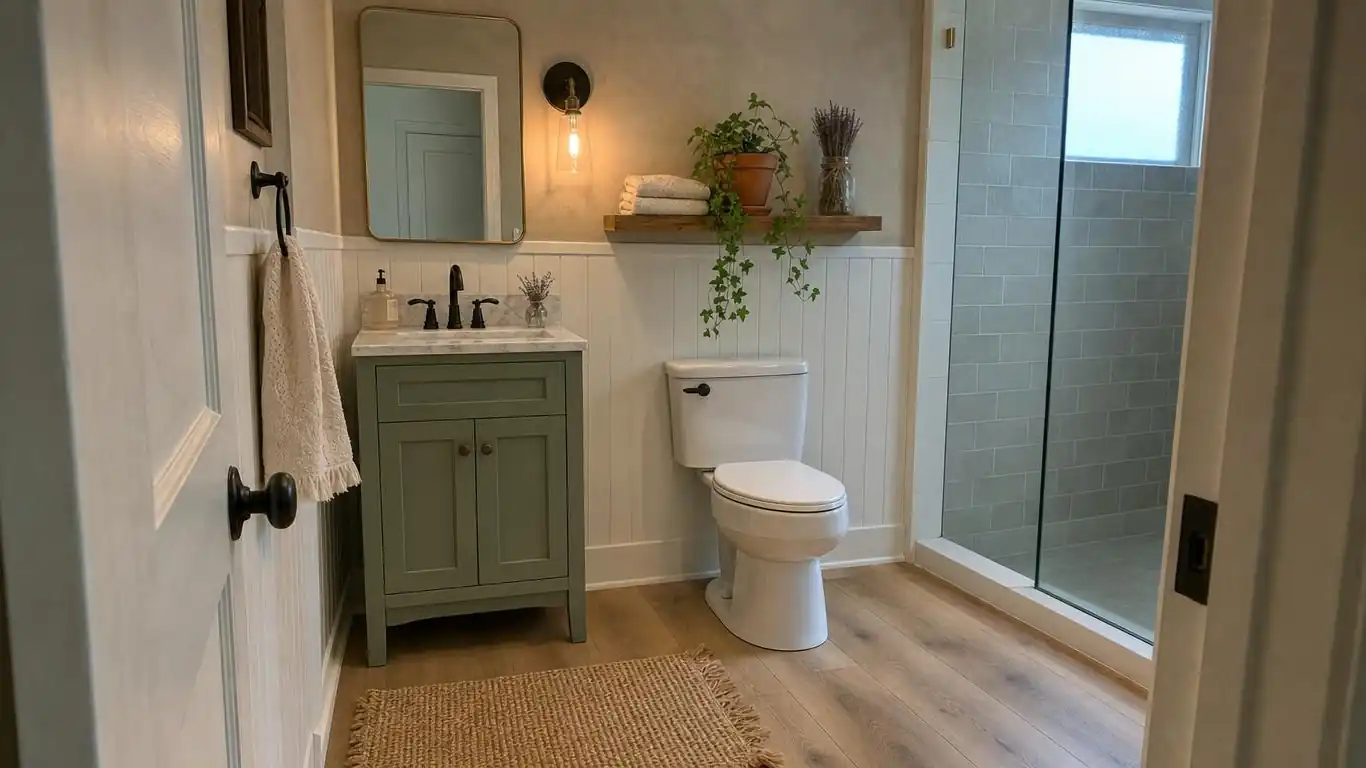
KEY TAKEAWAY: For rentals, peel-and-stick flooring, removable paneling, and quality hardware create the full farmhouse bathroom look without a single permanent change.
Frequently Asked Questions
Part of our guide to Bathroom Design Styles.
Conclusion
A farmhouse bathroom works because it’s built on contrast — rough wood against smooth porcelain, aged brass against crisp white tile, warm light against pale painted walls. None of these pieces are expensive on their own. What makes the look feel expensive is how carefully each one is chosen and how consistently they fit together as a system.
Two years ago, I helped a friend start from scratch in a 65-square-foot bathroom that came with builder beige walls, chrome fixtures, and a hollow-core vanity. We spent just under $2,000 total: a distressed oak shaker vanity from a local furniture outlet, a full oil-rubbed bronze hardware set, and one wall of pre-primed beadboard painted soft warm white. She still tells visitors she spent $15,000. The look is that convincing when the pieces work together.
Start with the vanity and hardware. Build from there. Your home decor inspiration doesn’t need a large budget — it needs choices made in the right order. For farmhouse styling beyond the bathroom, explore 13 Rustic Farmhouse Christmas Decor Ideas for a Warm Country Home and 15 Small Barn House Designs for Cozy and Efficient Country Living to see how the same rustic warmth carries through an entire home.