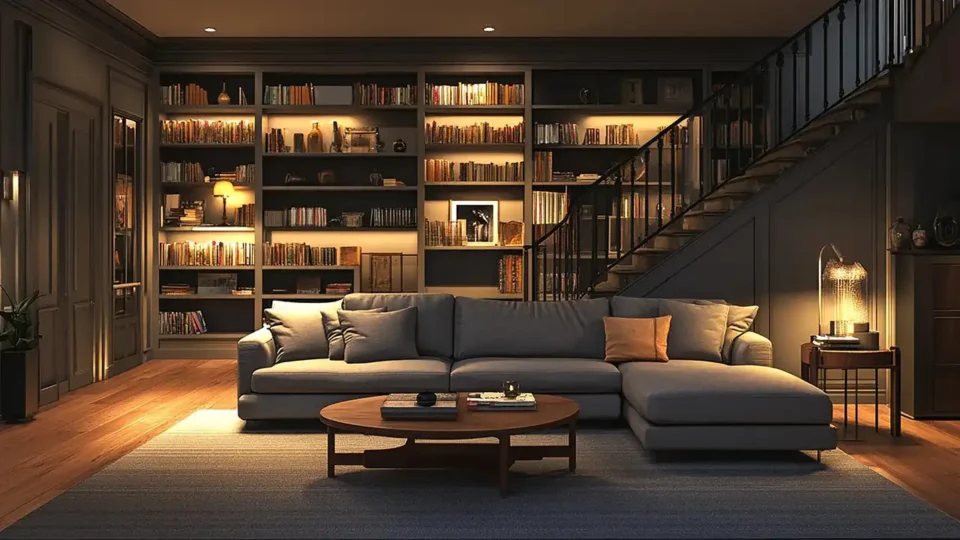
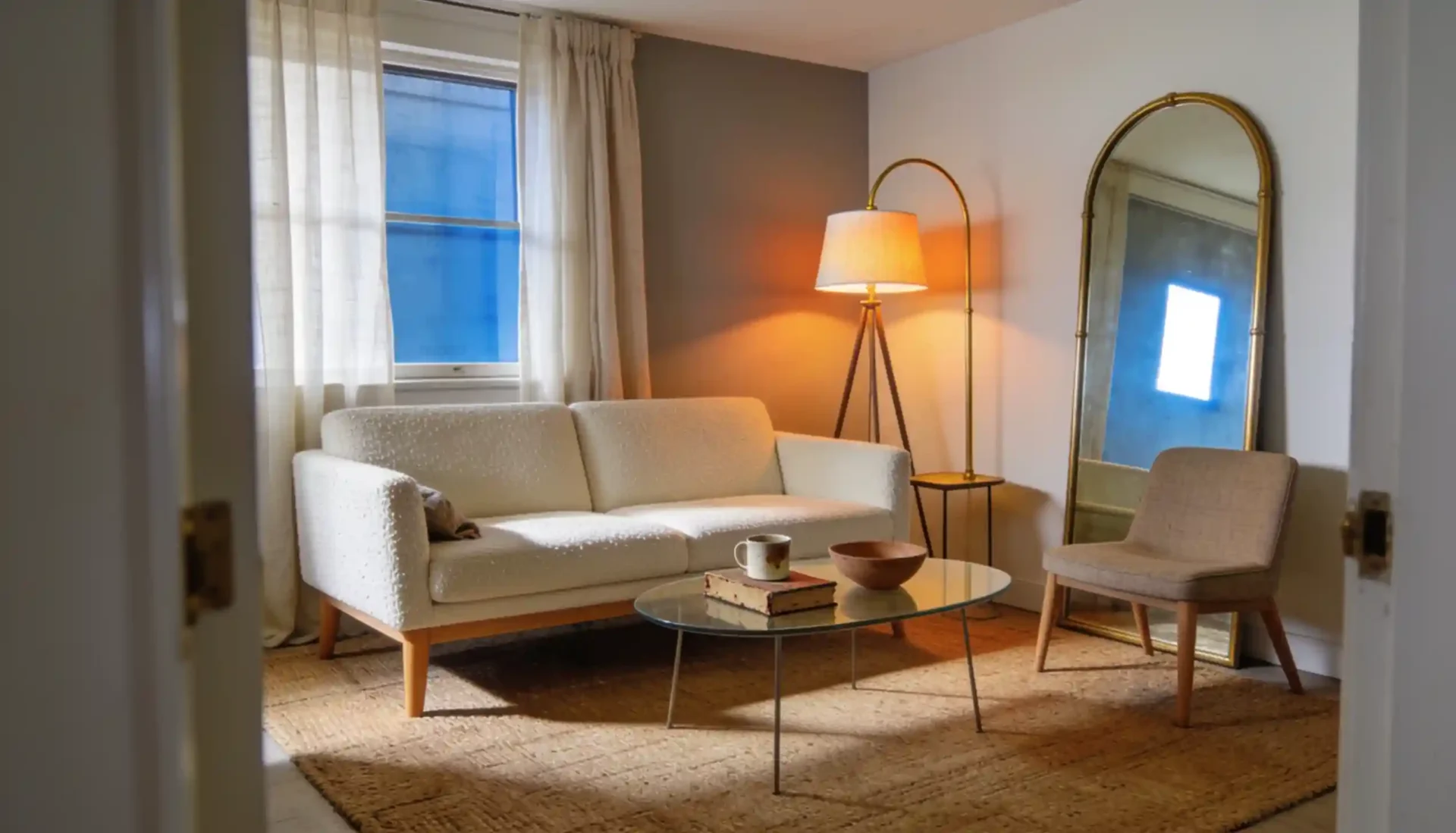
TL;DR
- Choose a sofa that leaves at least 36 inches of circulation space on each side — oversized sofas shrink the room even before you add anything else.
- Paint walls in warm white or soft greige, then use one richer tone on a single accent area to create depth without closing the space in.
- An 8×10-foot area rug anchors most small living rooms — front legs of all seating on the rug, never floating on bare floor.
- Layered lighting (one floor lamp, one table lamp, one ceiling source) makes a small room feel finished; a single overhead light makes it feel like a waiting room.
- Mirrors, sheer curtain panels hung ceiling-to-floor, and low-profile furniture all create the illusion of height and space without a single structural change.
Why Small Living Rooms Feel So Hard to Decorate
Walk into a cramped living room and notice what’s actually making it feel tight. Nine times out of ten it isn’t the size of the room. It’s an oversized sofa pulled too far from the wall, a rug that’s three feet too small, and a bare overhead bulb doing the work of an entire lighting scheme.
Small living room decor ideas work best when you start with that diagnosis rather than with a shopping cart. The room doesn’t need more things. It needs the right things, in the right scale, placed with some basic awareness of how the eye moves through a space.
If you’ve walked into a 10-by-12-foot living room in a well-decorated home and thought “this actually feels generous” — you’re not alone. Designers get this result through proportion, light, and material choice, not magic square footage. The ideas below cover all three.
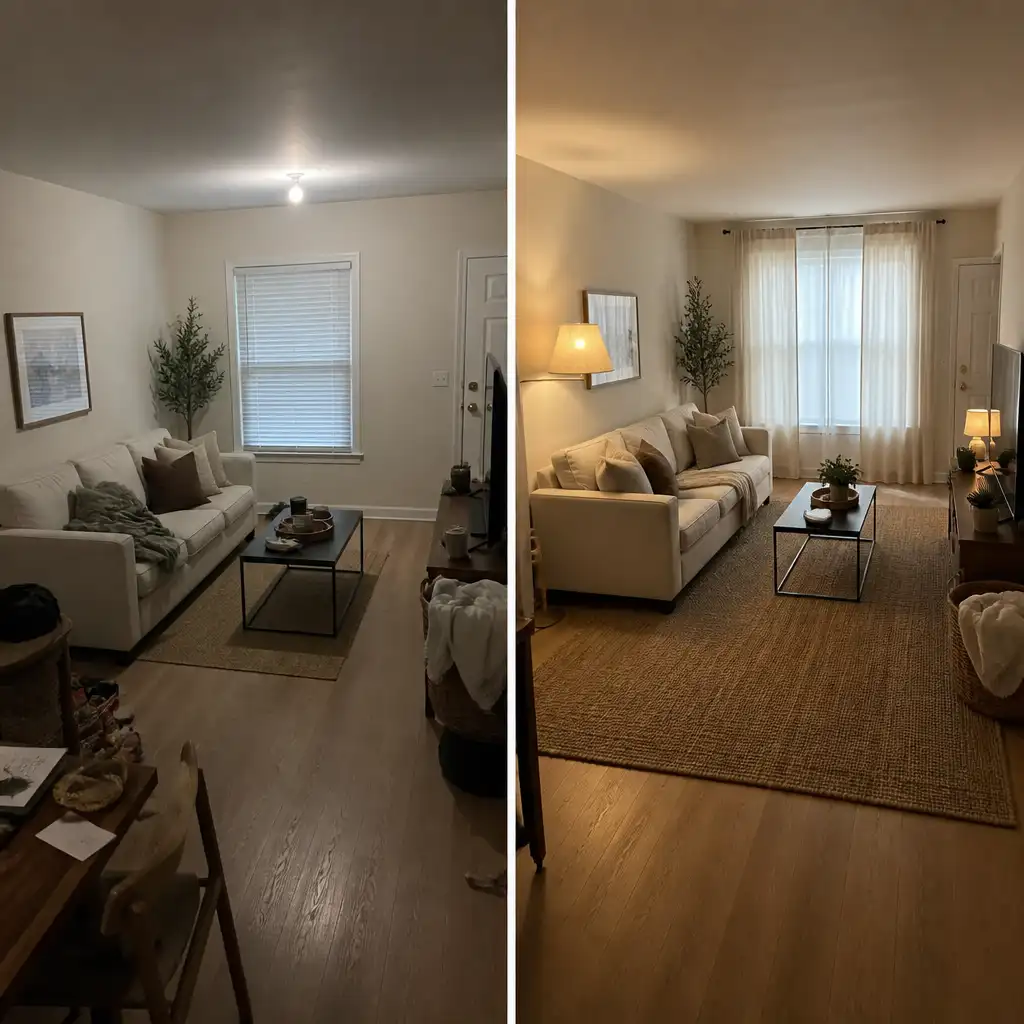
Editorial field note: A narrow apartment living room with one sofa, a coffee table, and a floor lamp can feel completely finished once the rug size is correct and the curtains hang from the ceiling rail. The room isn’t bigger. It just reads as complete rather than unfinished.
For a broader look at what makes any living space feel expensive and considered, browse living room ideas for a luxurious designer look — the pillar guide this post sits under. You’ll also find the full range of small living room ideas that make any space feel luxurious in the cluster hub for this series. And for the complete catalog of every style and approach, the living room ideas archive has it all in one place.
Bookmark this guide for quick reference.
KEY TAKEAWAY: Small living room decor ideas fail most often because of scale errors — the wrong rug size, an oversized sofa, or a single overhead light — not because the room is genuinely too small.
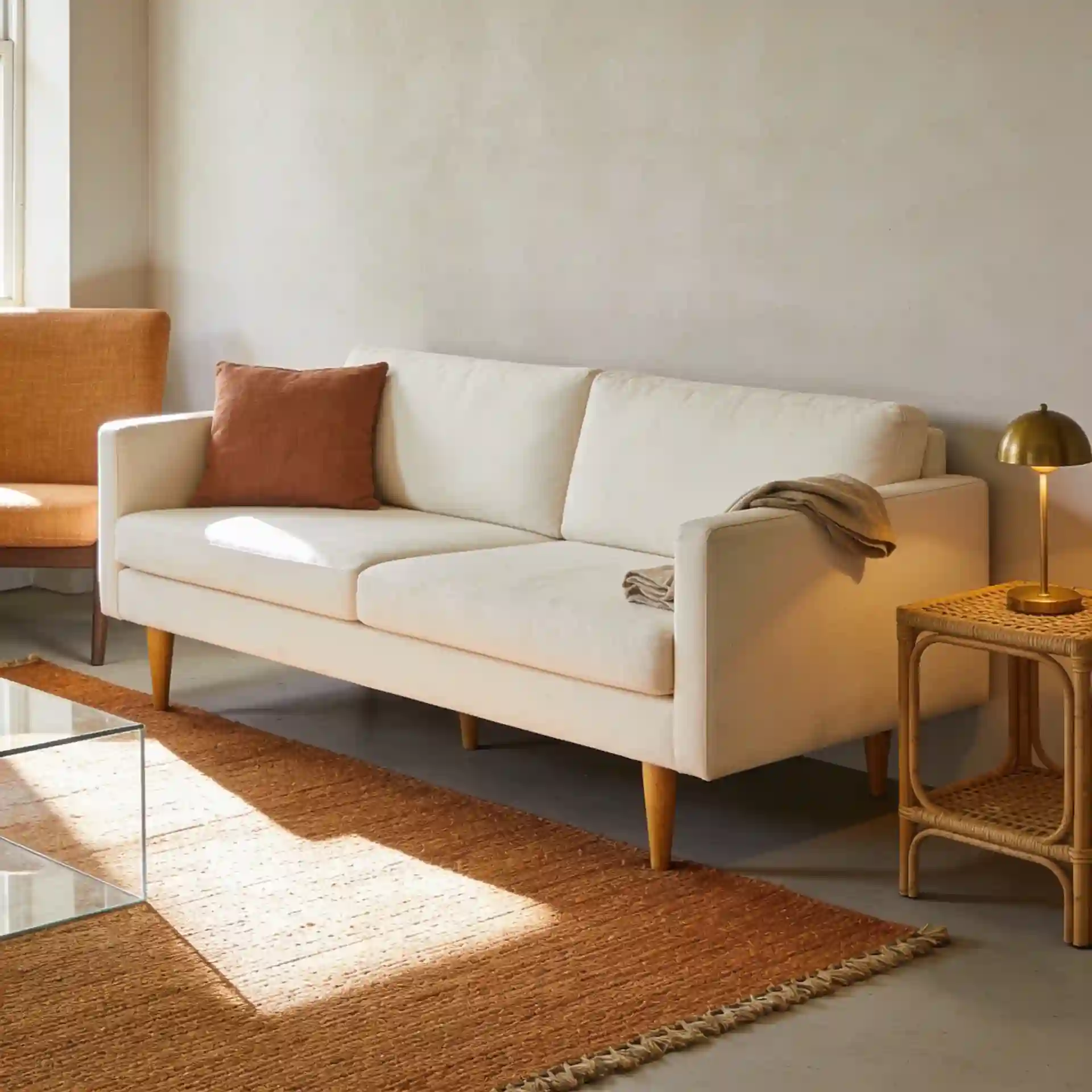
| Quick Takeaways | |
|---|---|
| Scale | Choose a sofa 76–86 inches wide and leave at least 36 inches of floor clearance on each side. |
| Rug | An 8×10-foot rug anchors most small living rooms — front legs of all seating pieces should sit on it. |
| Color | Warm white or soft greige on walls with one richer accent tone adds depth without closing the space. |
| Lighting | Layer at least three light sources; never rely on a single overhead fixture. |
| Mirrors | A large mirror on the main wall reflects light and doubles visual depth — one well-placed mirror outperforms four small ones. |
Small Living Room Decor Checklist
- Choose a sofa no wider than 86 inches for rooms under 200 square feet — measure before you buy.
- Size the rug so front legs of every seating piece sit on it; minimum 8×10 feet for most layouts.
- Hang curtains at ceiling height (or within 4 inches of the ceiling), even if your windows are low.
- Install at least three light sources: one ambient floor lamp, one table lamp, one ceiling or wall source.
- Place one large mirror (at least 24×36 inches) on the main wall opposite or adjacent to a window.
- Choose a coffee table with a lighter footprint — glass, acrylic, or a low-profile open-base design.
- Clear at least 18 inches of visible floor around each furniture piece for open sightlines.
KEY TAKEAWAY: Work through this checklist before buying anything — most small living room fixes require a different placement or size, not an additional purchase.
Foundation: Get the Scale and Layout Right First
Every small living room starts with getting scale and flow right. These foundational moves — a properly sized sofa, an anchoring rug, and clear walkways — set up everything else to work.
1. Choose a Sofa That Fits the Room, Not the Wishlist
The sofa is the single biggest scale decision in a small living room. A sofa wider than 86 inches in a room under 200 square feet leaves almost no floor space to work with. Designer Rule of Thumb: in a room between 120 and 180 square feet, a two-seat sofa at 64–76 inches wide or a compact three-seat at 78–84 inches wide usually fits best. Look for sofas with exposed legs — the visible floor beneath the frame keeps the room feeling open rather than heavy.
Pull the sofa away from the wall by 4–6 inches rather than pushing it flush. That small gap lets the room breathe and makes the piece look intentional rather than squeezed in.
2. Use an Area Rug That Actually Anchors the Space
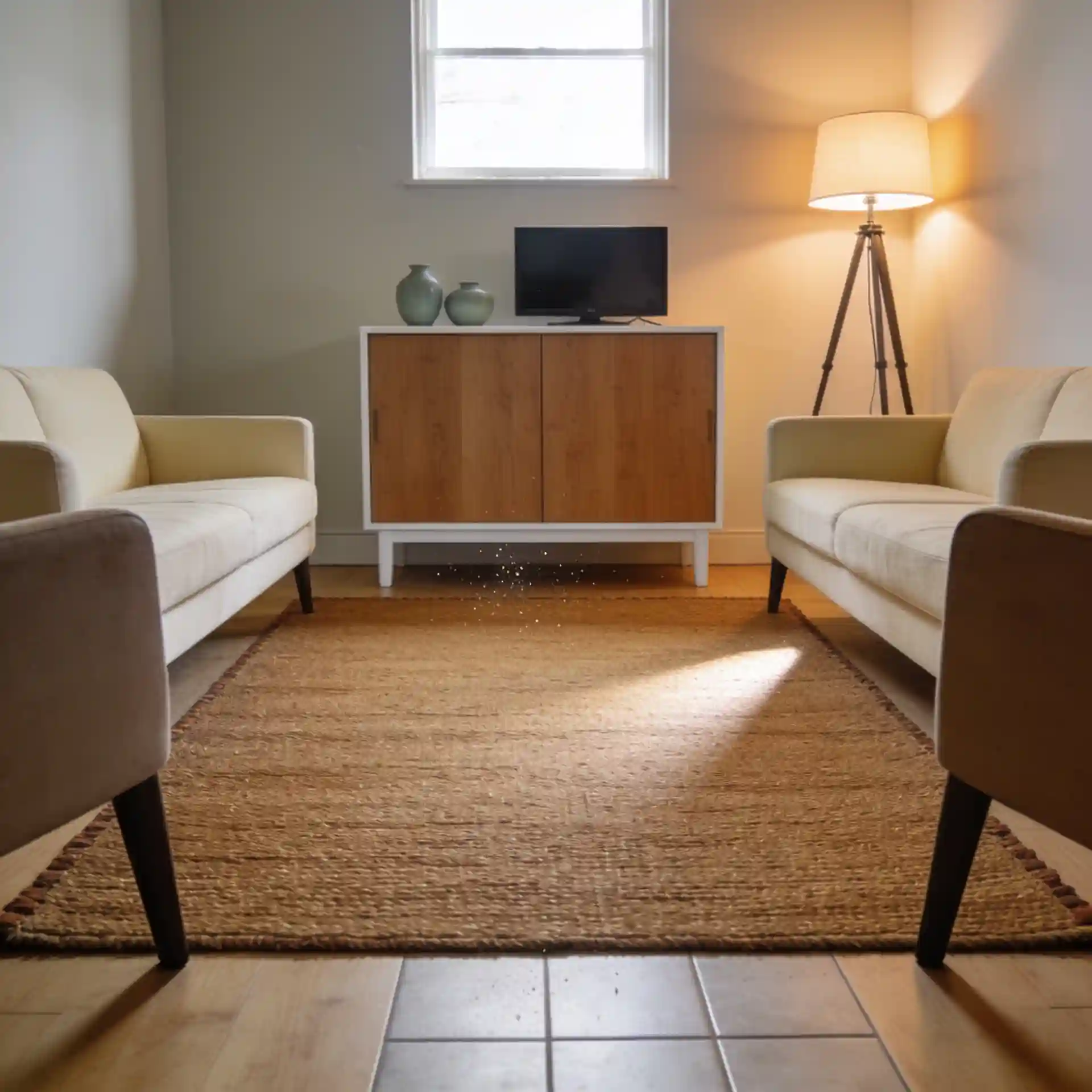
Designer Rule of Thumb: For rooms between 100 and 200 square feet, an 8×10-foot area rug is the minimum that works well. The front legs of every seating piece — sofa and accent chairs — should sit on the rug. This creates one anchored conversation zone rather than furniture that looks like it’s floating across the floor. According to Rugs Direct’s living room rug size guide, leaving 12–18 inches of floor visible around the rug’s edges maintains balance and keeps walkways clear.
The most common rug mistake in small rooms: a 5×7-foot rug under a standard sofa. It makes the furniture look oversized and the floor look chopped up. Size up, even if the rug fills most of the floor.
3. Keep 36 Inches of Circulation Space
Every small living room layout needs clear pathways. Designer Rule of Thumb: leave at least 36 inches between the sofa and any opposing furniture piece, and at least 18 inches between the coffee table and the sofa front. When these clearances are tight, the room feels like an obstacle course. When they’re right, the same furniture looks placed on purpose.
For rooms under 140 square feet, consider replacing a full-size coffee table with two small side tables or a single round ottoman. A 20-inch-diameter round ottoman takes up a fraction of the visual floor space that a 48-inch rectangular coffee table does. For more on exactly how to map furniture in tight rooms, small bedroom layouts that maximize floor space uses the same proportional approach — the layout logic transfers directly to a compact living room.
DESIGNER TIP: Map your layout on paper before moving a single piece. Measure the room and draw the furniture footprints to scale — 36 inches of clearance looks obvious on paper and invisible in a cluttered room.
KEY TAKEAWAY: Scale and circulation come before any styling decision — a room with the wrong furniture size will never look finished no matter how many accessories you add.
Light and Color: Make the Room Feel Bigger Without Moving a Wall
Color and light can visually expand a room no renovation could. These ideas — soft warm walls, high curtains, a large mirror, and layered lighting — make a small space feel noticeably bigger and brighter.
4. Paint Walls in Warm White or Soft Greige
Soft, warm neutrals reflect more natural light and make a small room feel airier than it actually is. Warm white (think a slightly creamy tone with no blue undertone) and soft greige work because they add warmth without adding visual weight. Farrow & Ball’s “All White” or Benjamin Moore’s “White Dove” both have that quality — they read as white on a bright day but feel warm and livable in evening light.
Avoid pure bright white with a blue undertone in north-facing rooms. It reads cold and can actually make a small room feel stark rather than open. One wall in a richer tone — warm clay, muted sage, or deep greige — adds depth without closing the space in.
5. Hang Curtains at Ceiling Height
Curtain placement is one of the cheapest and most effective small living room decor ideas available. Hang the rod within 4 inches of the ceiling, even if your window sits much lower. The vertical drop of the fabric pulls the eye upward and makes the ceiling feel taller. Use sheer linen or cotton panels in a tone close to the wall color — this adds softness without reducing light.
Floor-to-ceiling curtains in a small room also frame the window as a feature rather than an afterthought. The effect is a room that feels curated rather than just furnished. For rooms where painting isn’t an option, this is the highest-impact rental-friendly change available.
Rental Note: Use a tension rod or a no-drill curtain bracket to hang ceiling-height curtains without drilling into the wall or ceiling.
6. Use One Large Mirror Instead of Several Small Ones
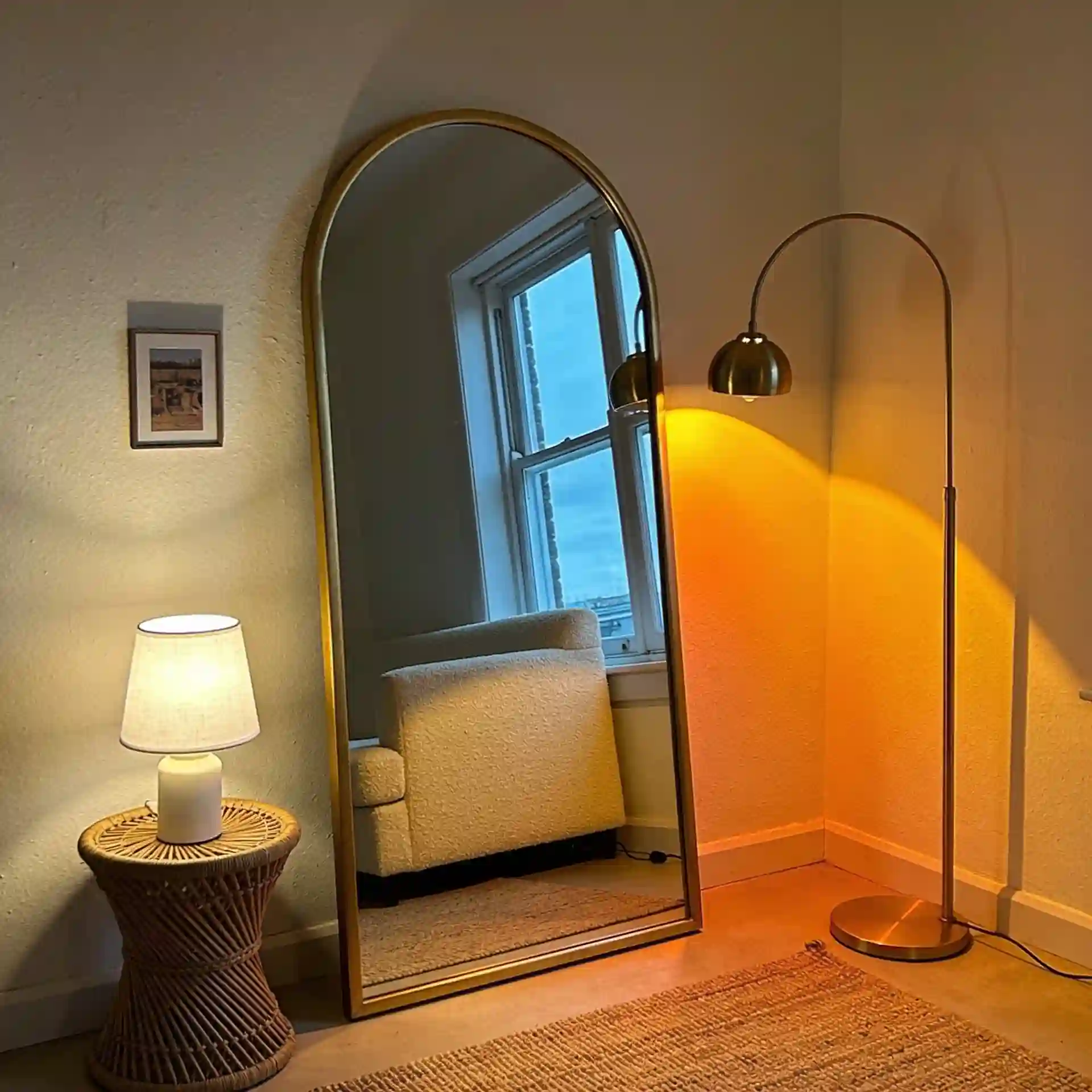
A large mirror placed on the main wall — or leaning against it — reflects light and doubles the perceived depth of the room. One mirror at least 24×36 inches outperforms four small decorative mirrors scattered across different walls. The key is placement: position it across from or adjacent to a window so it captures and bounces natural light.
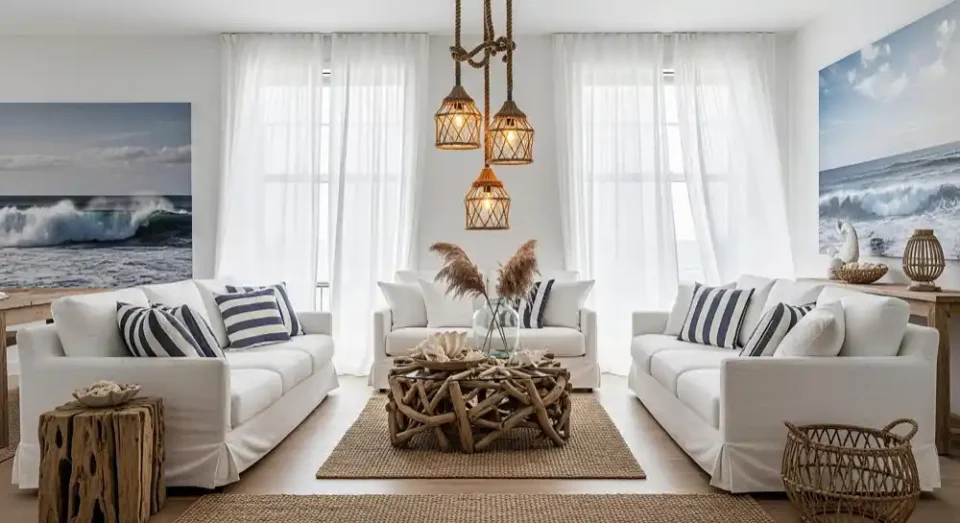
The arc mirror trend of 2025–2026 works especially well in small living rooms because its rounded shape adds visual softness alongside the space-expanding effect. An arched mirror in brushed brass or matte black reads as a deliberate design choice rather than a functional afterthought. For a calmer, more minimal version of this approach, the neutral coastal living room ideas post shows how mirrors, light materials, and soft palettes work together in small rooms where the goal is an open, airy feel.
7. Layer Three Types of Lighting
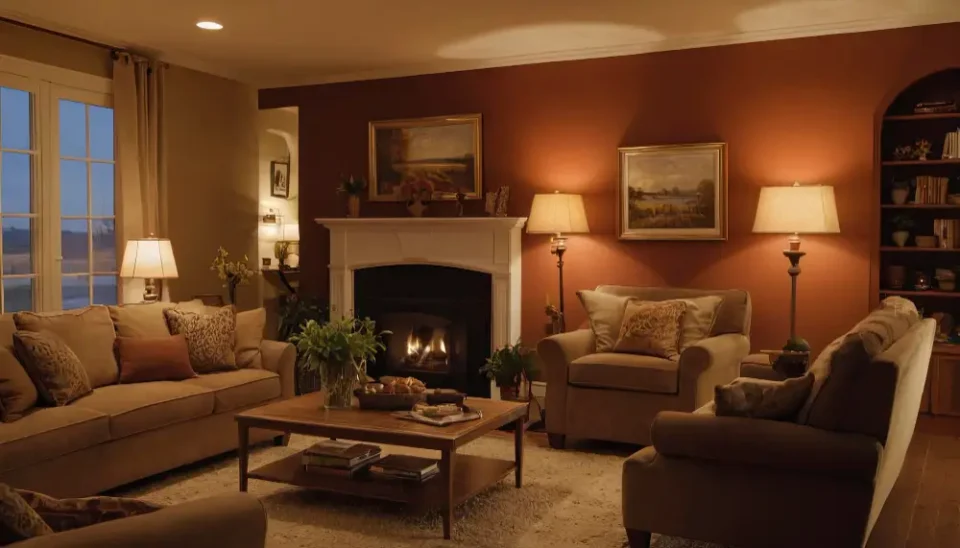
Small living rooms with a single overhead light always feel flat and harsh. Three-source layered lighting changes the whole atmosphere. Use one floor lamp (a slim arc or tripod style) in a corner, one table lamp on an end table or console, and one ceiling or wall-mounted source for overall fill. This creates soft, overlapping pools of warm light rather than one bright spot.
Set all sources to bulbs between 2700K and 3000K — this range produces warm white light that feels like natural evening glow rather than office fluorescence. Dimmable bulbs add flexibility; you can pull the living room from functional to atmospheric in seconds.
DESIGNER TIP: If the ceiling light is on a dimmer and the table and floor lamps are on, you barely notice the overhead light is even there. The layered effect does the work. Try turning the overhead off entirely one evening — most small living rooms look better without it.
KEY TAKEAWAY: Ceiling-height curtains, a warm neutral wall color, one large mirror, and three layered light sources are the four light-and-color changes that most visibly enlarge a small living room.
Smart Styling: Texture, Furniture Choices, and the Details That Finish the Room
With the basics set, styling is where a small room comes together. These choices — leggy low-profile furniture, layered texture, and vertical storage — add depth and function without clutter.
8. Choose Low-Profile Furniture With Exposed Legs
Low-profile furniture keeps the visual horizon open, which makes the ceiling feel higher by contrast. A sofa with slim tapered legs in natural oak or brushed brass, a coffee table with an open base, and a low-slung accent chair all let the floor show beneath them — and visible floor is one of the easiest ways to make a small room feel less crowded.
Aim for seat heights between 15 and 17 inches for the sofa. Anything taller starts to block sightlines across the room. A slim credenza at 20 inches high used as a TV stand keeps the main wall feeling open compared to a bulky entertainment center at 72 inches.
9. Layer Texture to Add Depth Without Visual Clutter
A small living room with only flat surfaces and hard textures feels sparse and cold even when it’s nicely arranged. Layering soft textures — a boucle throw across the sofa arm, a jute or low-pile wool area rug, linen pillow covers, and a rattan side table — adds material richness without adding more objects to the space.
Material Note: Boucle fabric adds warmth and visual softness without the visual weight of velvet, which can feel heavy in a small room. Jute and sisal rugs work well in lighter-toned rooms; low-pile wool is better for rooms with heavy-use or pets since it holds shape longer.
Keep the palette tight: two or three colors maximum, with texture providing variety rather than color contrast. A cream sofa, a warm greige wall, and a jute rug in amber-natural together create a layered, complete look in fewer pieces than most people expect.
10. Use Vertical Storage to Clear the Floor
Floor space is the most precious resource in a small living room. Every piece of furniture that sits on the floor competes for it. Wall-mounted shelves at 72 inches or higher — above sightline rather than at eye level — store books, plants, and objects without adding furniture mass to the floor plan.
Safety Note: Wall-mounted shelves should be anchored into wall studs or masonry anchors, not just drywall. A loaded floating shelf on a drywall-only anchor is a fall risk.
A narrow console table pushed against one wall serves as both storage surface and visual anchor without taking up floor footprint the way a bookcase does. A set of wall-mounted hooks near the entry point also keeps bags, throws, and accessories off chairs and floors. For studio and one-room living situations, functional studio apartment layout ideas shows how vertical storage and wall-mounted pieces solve the same floor-plan problem on an even tighter scale.
11. Add One Statement Piece as the Room’s Focal Point
A small room with no focal point feels unsettled. Every object has equal visual weight, which means the eye has nowhere to land and the room feels busy. Pick one statement piece — an oversized piece of art, a textured accent wall panel, a bold pendant light, or a large architectural mirror — and let everything else in the room support it.
The focal piece doesn’t need to be expensive. A large canvas print in a warm, earthy tone costs less than $80 from a print shop and reads as a design decision from across the room. Position it on the wall the sofa faces so it’s the first thing visible when entering.
12. Use Multifunctional Furniture to Earn Every Square Foot
Every piece of furniture in a small living room should justify its square footage. A storage ottoman replaces both a coffee table and a blanket chest. A slim sofa table behind the couch doubles as a desk or a display surface without taking up any additional floor plan. A nesting table set provides two surfaces when needed and tucks to one when not.
The lift-top coffee table is particularly useful: the surface rises for laptop work or dining, then lowers flat. This single piece removes the need for a separate desk in a studio or one-bedroom apartment living room. For a longer look at space-saving ideas in tight layouts, 25 tiny living room ideas that actually make space feel bigger covers multifunctional furniture in rooms even smaller than what most of these ideas assume.
DESIGNER TIP: Before buying any new piece, ask: does this item earn its square footage? If it only serves one purpose and takes up more than 4 square feet of floor, look for a multifunctional alternative that does the same job.
KEY TAKEAWAY: Low-profile furniture, layered texture in a tight palette, vertical storage above sightline, one focal point, and multifunctional pieces are the five styling choices that turn a furnished room into a finished one.
Mistakes That Shrink the Room
❌ Too-small rug → ✅ Size up to at least 8×10 feet so front legs of all seating sit on it — floating furniture on a tiny rug makes the room feel fragmented, not spacious.
❌ Sofa pushed hard against the wall → ✅ Pull it 4–6 inches forward — a gap behind the sofa creates the illusion of a larger footprint and makes the piece look intentional.
❌ One overhead light source → ✅ Layer at least three light sources at different heights — floor lamp, table lamp, and one wall or ceiling source — to create warmth and depth.
❌ Curtains hung at window height → ✅ Move the rod to ceiling height, even if the window is low — the vertical drop makes the ceiling feel a foot taller.
KEY TAKEAWAY: The four most common small living room mistakes all involve scale or light — fix them before adding any decor and the room will look 30 percent more spacious with zero additional spending.
What You’ll Spend
A small living room refresh doesn’t require a full renovation budget. The highest-impact changes — rug sizing, curtain placement, and lighting layers — are also among the most affordable. Here’s what to expect across three spending levels.
| Project | Estimated Cost | Impact Level |
|---|---|---|
| Area rug (8×10 ft, jute or low-pile wool) | $120–$350 | Very High |
| Ceiling-height curtain panels (two windows) | $60–$180 | High |
| Layered lighting (floor lamp + table lamp) | $80–$250 | High |
| Large mirror (24×36 in or larger) | $75–$300 | High |
Best First Upgrade: The rug — correctly sized at 8×10 feet — is the single change that most immediately makes a small living room look designed rather than assembled. It anchors every piece of furniture and unifies the floor plan in a way no accessory can.
Skip for Now: A new sofa. If your current sofa fits the room’s scale (under 86 inches wide for rooms under 200 square feet), rearranging it with a proper rug and lighting upgrade will have more visible impact than replacing it.
Also worth exploring: 10 smart ways to decorate a small living room on a budget for no- and low-cost approaches to every idea on this list.
KEY TAKEAWAY: A correct-sized rug, ceiling-height curtains, and layered lighting together cost less than $600 and deliver more visible impact than any furniture replacement.
Tougher Layout Questions
Some layouts need a more tailored answer. Here’s how to handle a combined living-dining room, a dark or north-facing wall, and a rental you can’t paint.
What If Your Living Room Is Also Your Dining Area?
Open-plan living-dining rooms in small apartments need a clear visual boundary between the two zones. A rug defines the seating area; a different flooring material or a narrow console table defines where the dining zone begins. Keep the furniture low-profile in the living area to avoid blocking sightlines to the kitchen.
In rooms under 250 square feet with both functions, a round dining table at 36–42 inches diameter takes up noticeably less visual floor space than a rectangular 4-seat table. A round table with a pedestal base (no legs to navigate) also keeps traffic flow easier.
For more ideas on maximizing compact shared spaces, creative small apartment ideas to make your space feel larger covers layouts, zone-definition, and furniture choices for apartments where every square foot does double duty.
What If the Room Has a Dark or North-Facing Wall?
North-facing rooms get cool, indirect light all day. Warm white paint with a yellow or red undertone (rather than a blue or grey undertone) compensates without looking orange. Benjamin Moore’s “Chantilly Lace” reads crisp and white in north-facing rooms without going cold. Farrow & Ball’s “Pointing” adds just enough warmth to prevent that grey-green cast that pure white gets in low light. For a full palette reference, color ideas for any room has paint tone comparisons organized by light direction.
Add warm-toned lamps — 2700K bulbs in amber-shaded fixtures — to counteract the cool natural light. A large mirror on the north wall bounces that diffuse light around the room more effectively than any lamp alone.
What If You Rent and Can’t Paint?
Rental-friendly small living room decor ideas work through removable layers rather than permanent changes. Peel-and-stick wallpaper on one accent wall adds color and texture without adhesive damage. Large gallery walls using picture rail hooks or adhesive strips (Command strips rated for 5+ pounds per frame) add personal character without drilling.
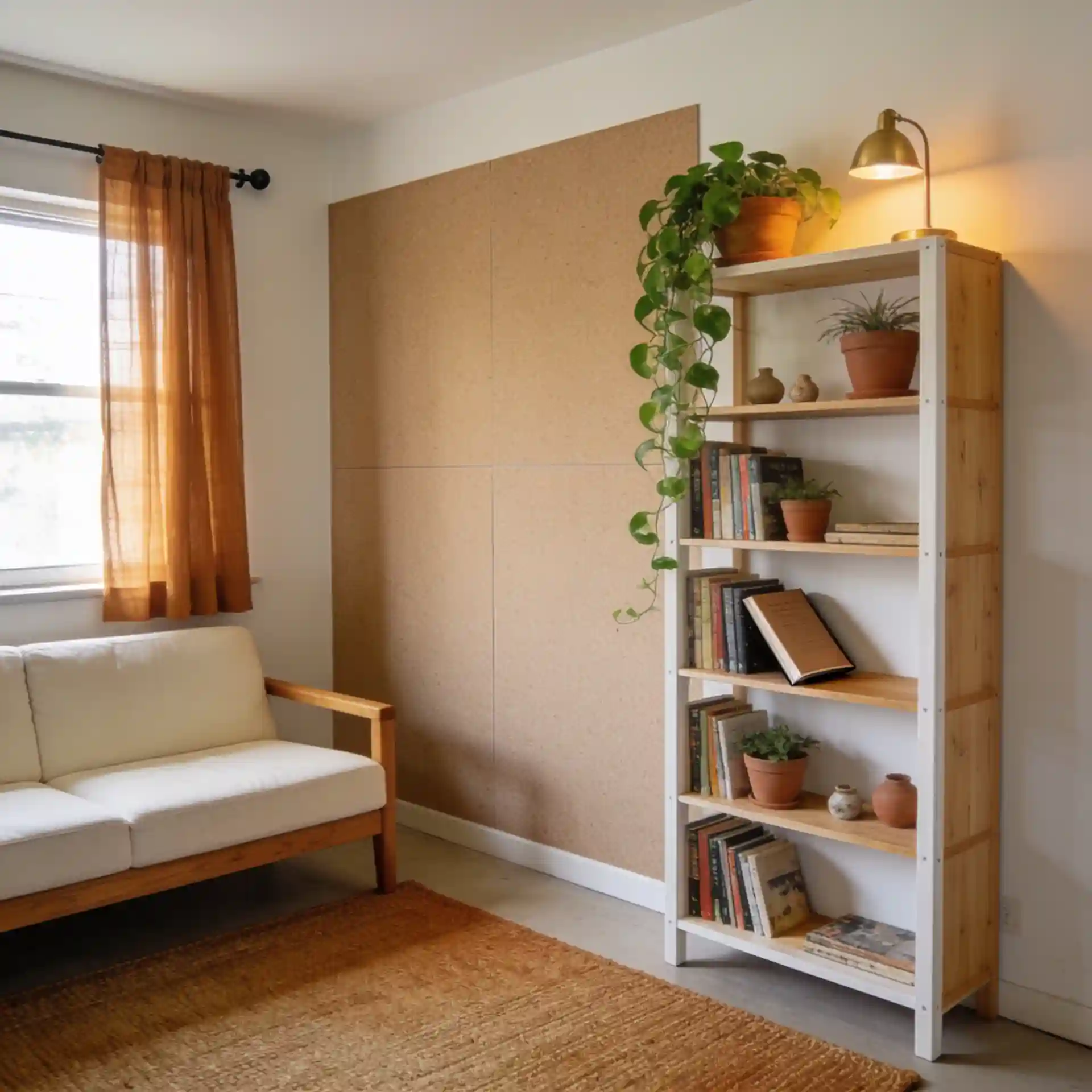
Tall, freestanding bookshelves anchor vertical visual height in the same way built-ins would. Curtains on tension rods or no-drill brackets placed at ceiling height replicate the ceiling-height curtain effect without a single hole in the wall. The decorating tips archive also has rental-specific guides that expand on no-drill and no-paint approaches across every room type.
For layout ideas that work in fixed footprints with rental constraints, the coastal living room aesthetics guide shows how to layer soft materials and light tones for a finished look without permanent changes. And for a broader view of every rooms inspiration across the site, the parent archive has every room category in one place.
KEY TAKEAWAY: Open-plan rooms benefit from a rug-defined seating zone and a low-profile layout; rental rooms can replicate most of these ideas without a single permanent change.
Frequently Asked Questions
Conclusion
Small living room decor ideas come down to one consistent principle: every choice should make the room feel more open and more finished, not more filled. The right sofa scale, a correctly sized rug, ceiling-height curtains, and layered warm lighting will do more for a compact living room than any number of accessories stacked on top of the wrong foundation.
Composite example: Picture a 12-by-14-foot apartment living room with a loveseat pushed to the wall, a 5×7 rug in the center, and a single overhead bulb. Swap in a 76-inch sofa floated 5 inches from the wall, an 8×10 jute rug with front legs on it, two warm-toned lamps, and sheer curtains hung at ceiling height — the room looks twice the size without a single wall moved. That’s what these small living room decor ideas are designed to produce.
For more inspiration across every corner of your home, visit 101homedecor.com — and if compact living is a recurring challenge, the small spaces archive has practical guides for every tight floor plan, from studio apartments to narrow balconies.