TL;DR
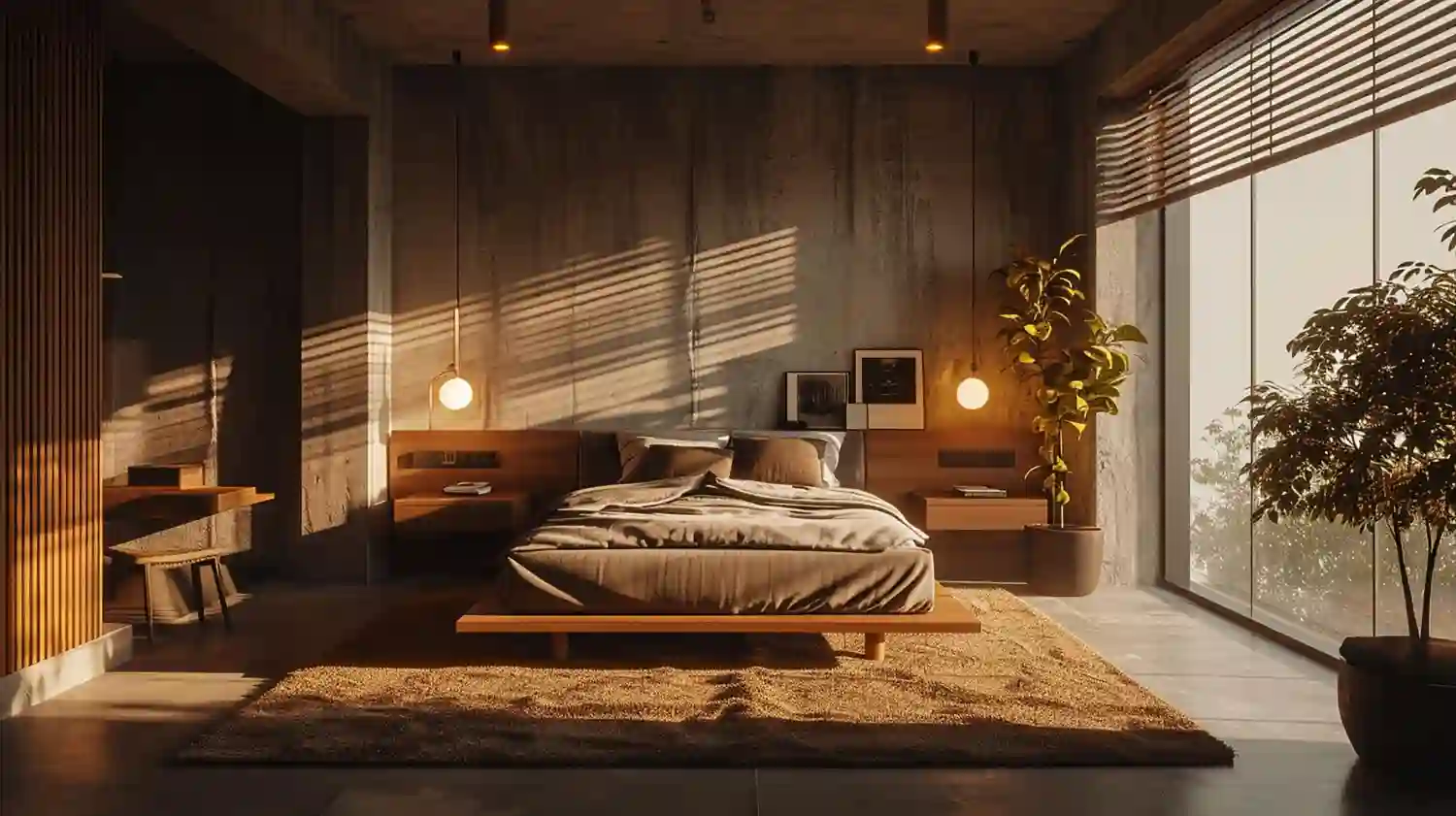
Japandi bedroom ideas blend Japanese warmth with Scandinavian simplicity: a muted earthy palette, a low natural-wood bed, quiet linen layers, and soft floor-level light. The look feels serene because it is restrained, not because it is empty. Minimalism starts with editing the layout — our complete small-bedroom guide covers how to clear the floor before you style
Part of our guide to Bedroom Style & Aesthetic.
Here is the short version:
- Palette: two or three muted neutrals plus one grounding dark, like ink or charcoal.
- Anchor: a low platform bed in matte oak, ash, or walnut.
- Texture: washed linen, wool, paper, and rattan, all in a quiet tonal range.
- Light: warm 2700K lamps at floor and table level, never one harsh ceiling bulb.
- Styling: leave space empty on purpose, then add one branch or a single object.
What Makes a Bedroom Japandi, Not Just Minimal?
Minimal is the most misread word in bedroom design. People hear it and picture a cold, bare room: white walls, a low mattress, nothing soft. That room looks calm in a photo and feels like a waiting room in real life. Japandi is the warm correction to that idea.
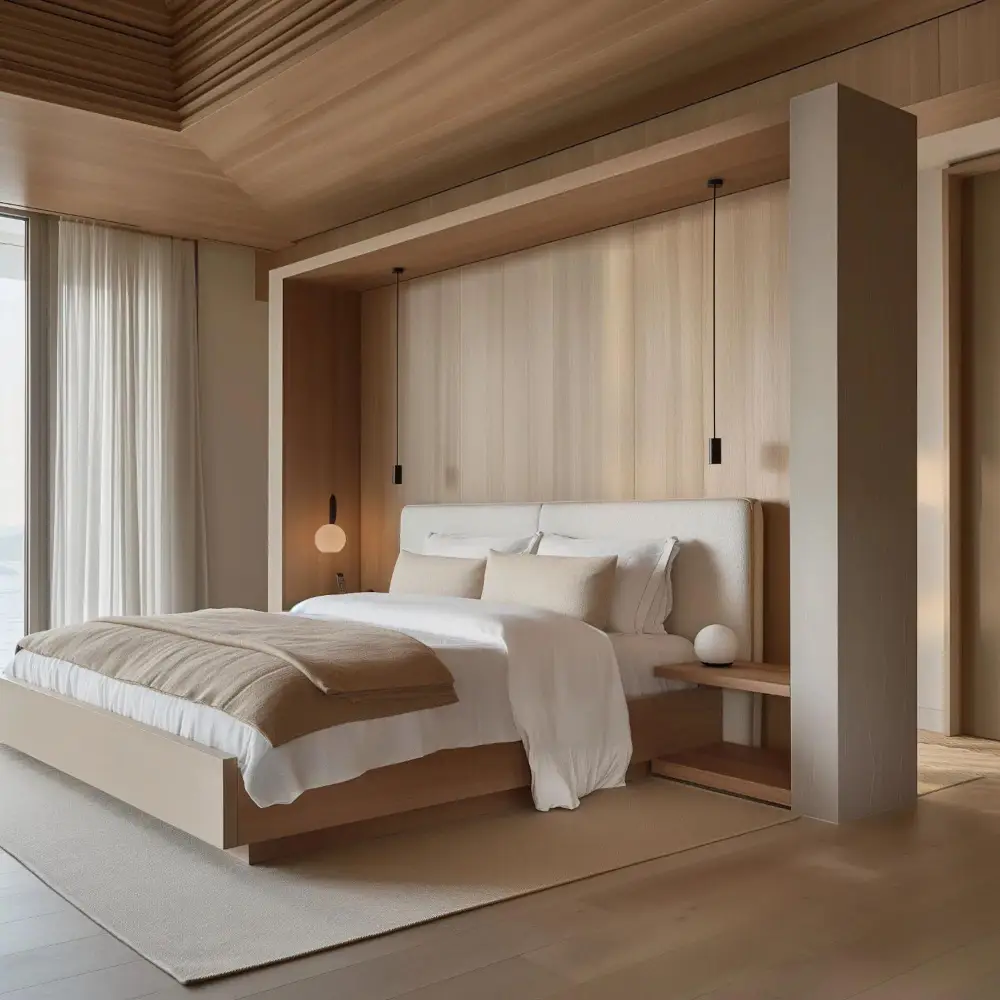
Japandi blends two traditions. From Scandinavia it borrows clean lines, function, and light wood. From Japan it borrows natural materials, craft, and wabi-sabi, the quiet love of imperfect, weathered, lived-in beauty. The result is minimal but never sterile. A japandi bedroom feels hand-made and grounded, with warm neutrals, low furniture, and a few honest materials doing all the work.
So the difference is warmth and texture, not just less stuff. Strip a room bare and it feels empty. Strip it back, then add linen, wood grain, and soft light, and it feels serene. These same calm instincts carry other rooms too, from these earthy modern bedroom ideas to a whole-home version in these organic modern living room ideas. For a broader starting point, browse our home decor inspiration hub.
Bookmark this guide so the order of steps stays handy.
KEY TAKEAWAY: A japandi bedroom is minimal and warm at once, built from muted color, natural wood, honest texture, and soft light, not from empty space alone.
Japandi Bedroom Checklist
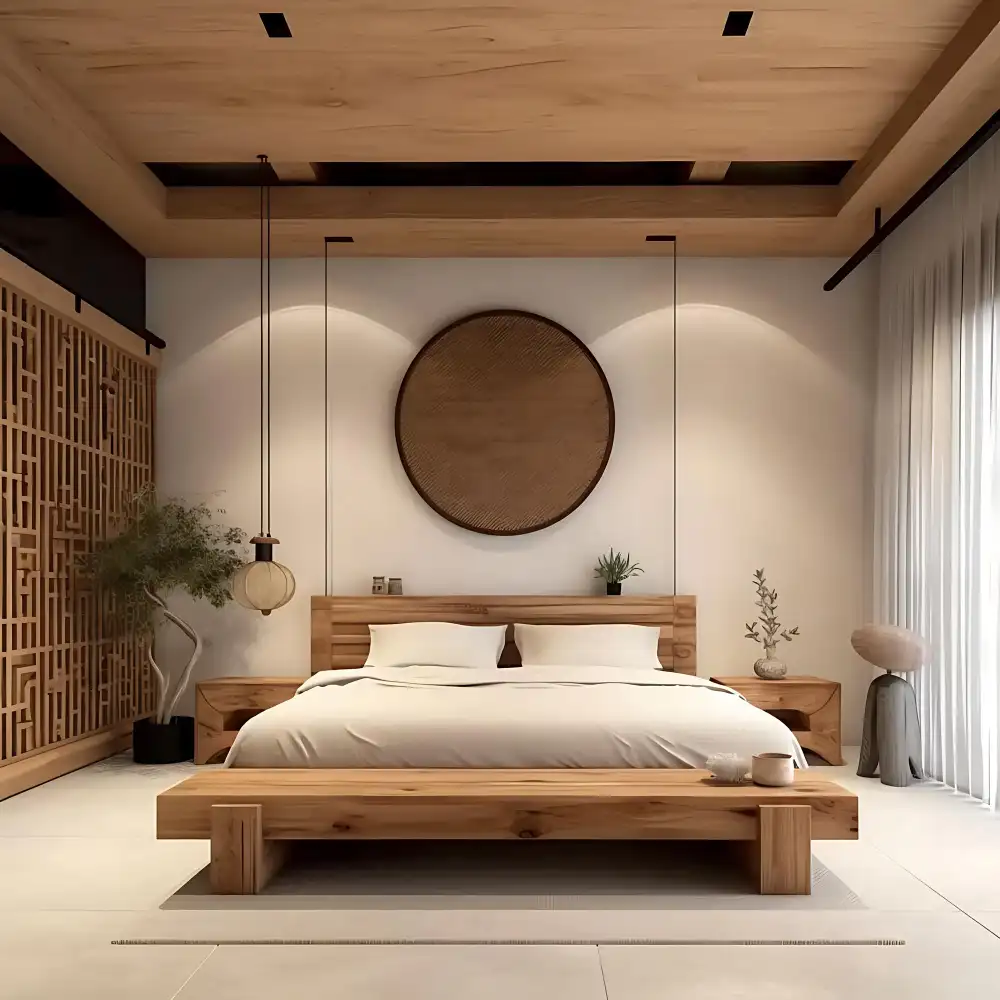
- Choose two or three muted neutrals, then one grounding dark like charcoal or ink.
- Anchor the room with a low platform bed in matte oak, ash, or walnut.
- Keep walls soft and textured, with limewash or a flat warm neutral, not glossy paint.
- Layer washed linen, wool, paper, and rattan, all in a close tonal range.
- Light at floor and table level with warm 2700K bulbs and a dimmer.
- Leave one surface and one wall deliberately empty as breathing room.
- Hide clutter in closed storage so the calm shows instantly.
KEY TAKEAWAY: A short order, palette, bed, walls, texture, light, then restraint, gives a japandi bedroom its serene, collected feel without guesswork.
The Japandi Foundation: Palette, Walls, Bed, and Floor
The best japandi bedroom ideas start with the calm base. Get the color, the bed, the walls, and the floor right, and every later layer falls into place.
1. A Muted, Earthy Color Palette
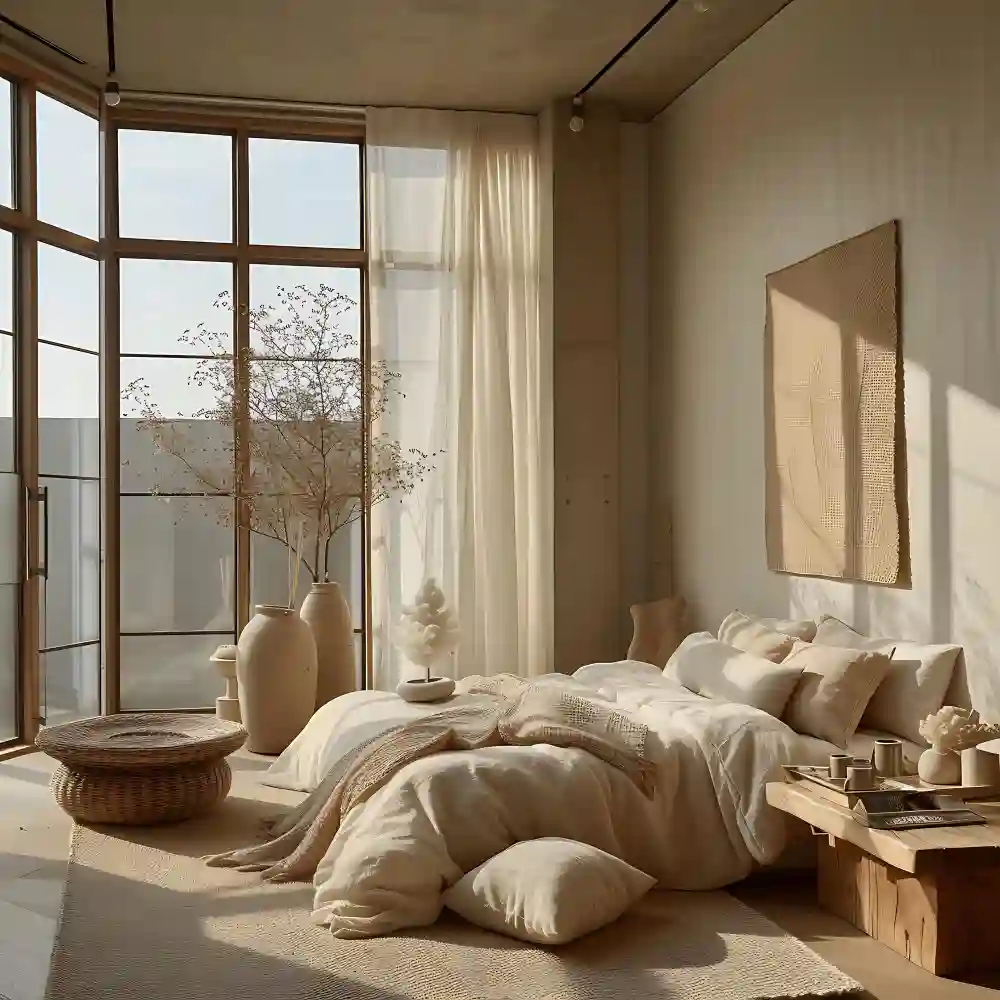
Start with a quiet palette of two or three muted neutrals, then add one grounding dark. Think warm greige, oat, and soft clay, anchored by charcoal or a near-black ink. The colors stay low in contrast, which is what makes the room read calm rather than busy.
Keep the brights out. Japandi color is soft and slightly grey, like stone, raw plaster, and unbleached linen. This restraint is the whole serene mood in a single choice.
2. A Low Platform Bed Close to the Floor
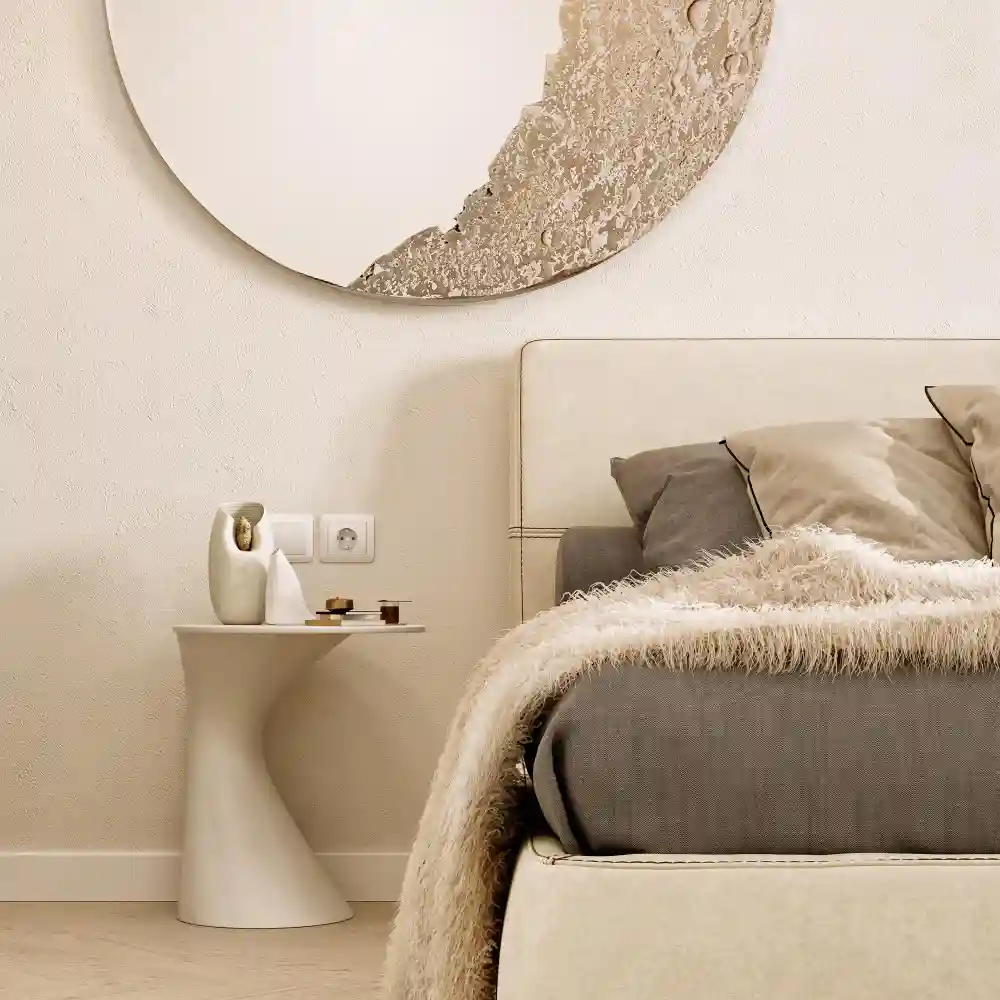
The low bed is the most recognizable japandi move. A platform bed that sits close to the floor feels grounded and calm, and it echoes the Japanese habit of living low. Choose a simple frame in matte oak, ash, or walnut with clean, square lines.
Leave a little floor visible around it. That open margin of wood or rug is part of the quiet. A tall, upholstered headboard fights the look, so keep the bed low and the lines plain.
DESIGNER TIP: Keep at least a hand’s width of visible floor on both sides of the bed. That sliver of empty space is what makes a low bed feel intentional, not just short.
3. Soft, Textured Walls in a Warm Neutral
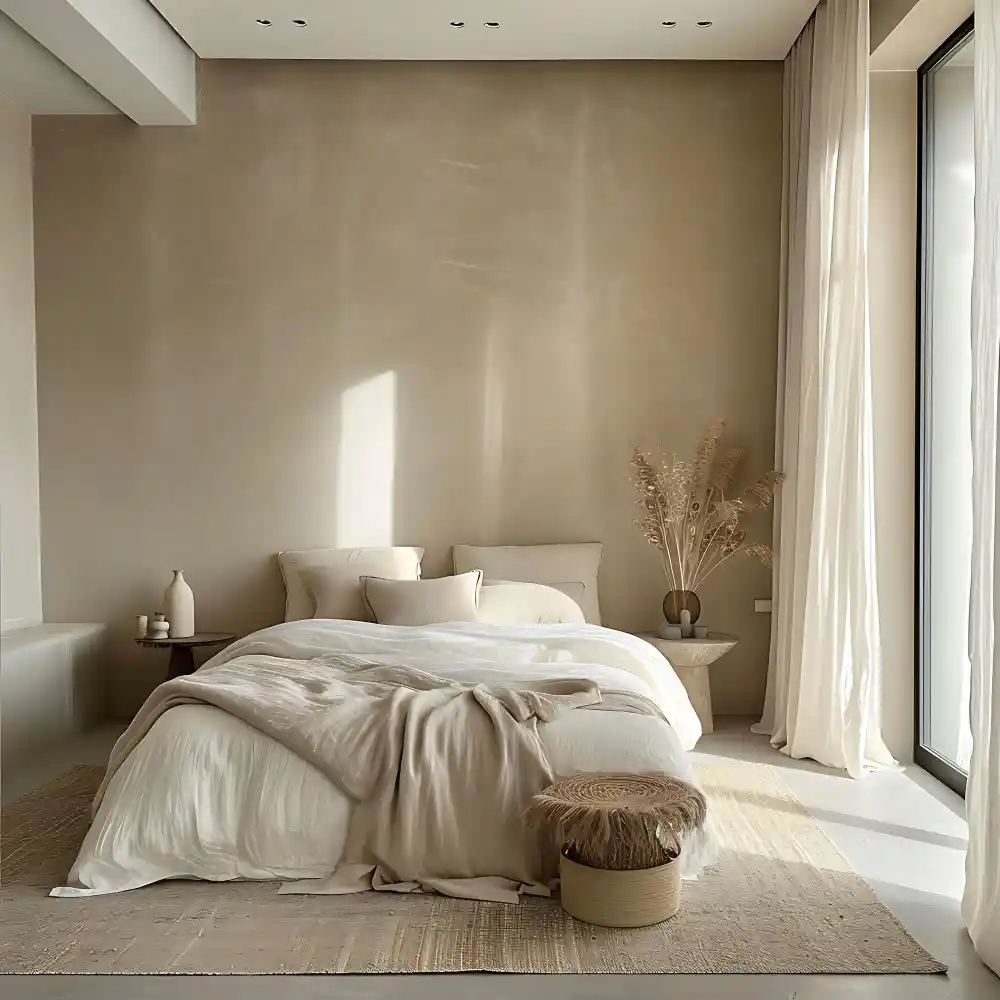
Flat builder paint can make a minimal room feel cheap. Japandi walls have quiet depth instead. A limewash or soft matte finish in warm greige or oat gives a chalky, hand-troweled texture that catches light in a gentle, uneven way.
This is where wabi-sabi shows up most. The small variations and soft cloudiness are the point, not a flaw. One warm, textured neutral across all four walls keeps the room calm and lets the wood and linen stand out.
4. A Natural Floor With a Low Wool or Jute Rug
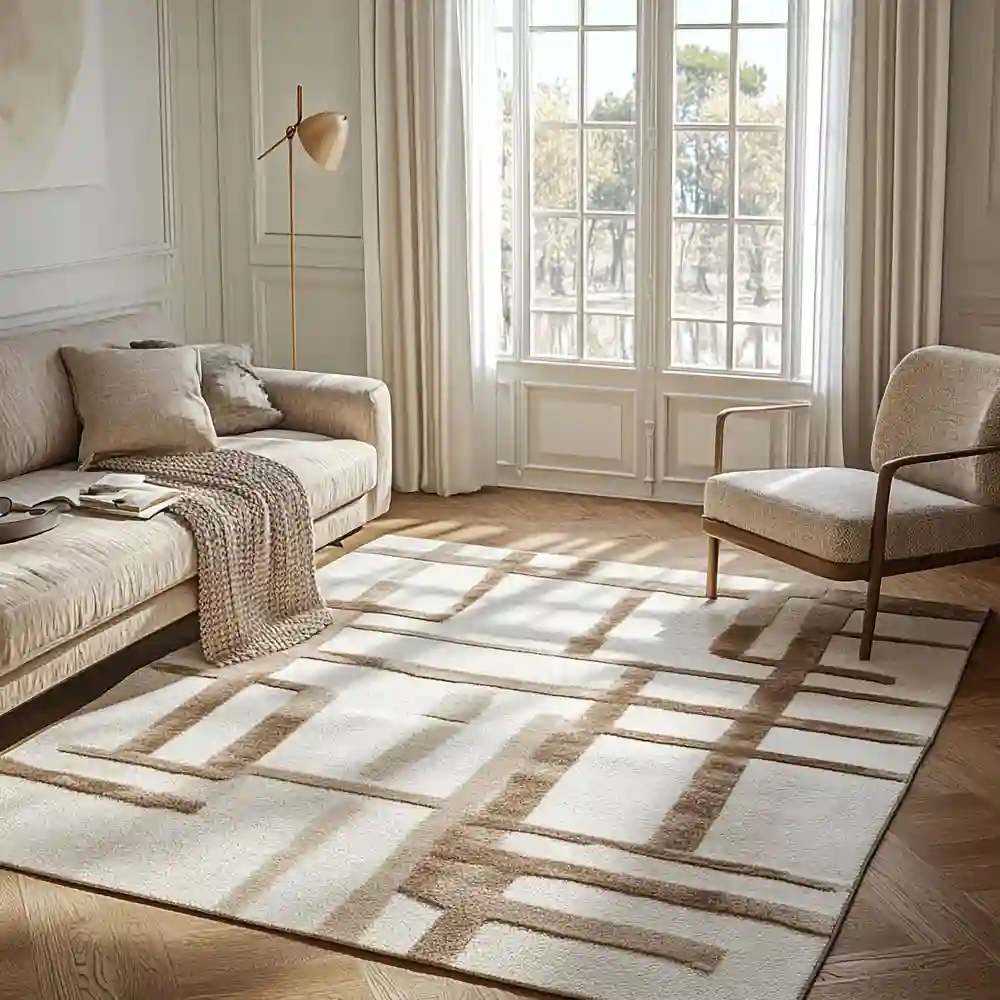
Ground the room with a natural floor. Light oak or a pale wood-look floor suits japandi best, softened by a single low-pile wool or jute rug. The rug should feel like a tatami mat underfoot: flat, textured, and quiet, never plush or shaggy.
Size it to the bed. Designer guidance on bedroom rugs suggests the rug extend 18 to 24 inches past the sides and foot, so an 8 by 10-foot rug suits most queen beds and a 9 by 12-foot fits a king. That soft margin frames the bed and finishes the floor.
KEY TAKEAWAY: A muted palette, a low wood bed, soft textured walls, and a flat natural rug give a japandi bedroom its grounded, serene foundation.
Warmth, Texture, and Light
A japandi bedroom stays warm because of what you can feel and how it is lit. These looks build quiet texture and soft light so the minimal base never turns cold.
5. Layered Linen and Quiet Textiles
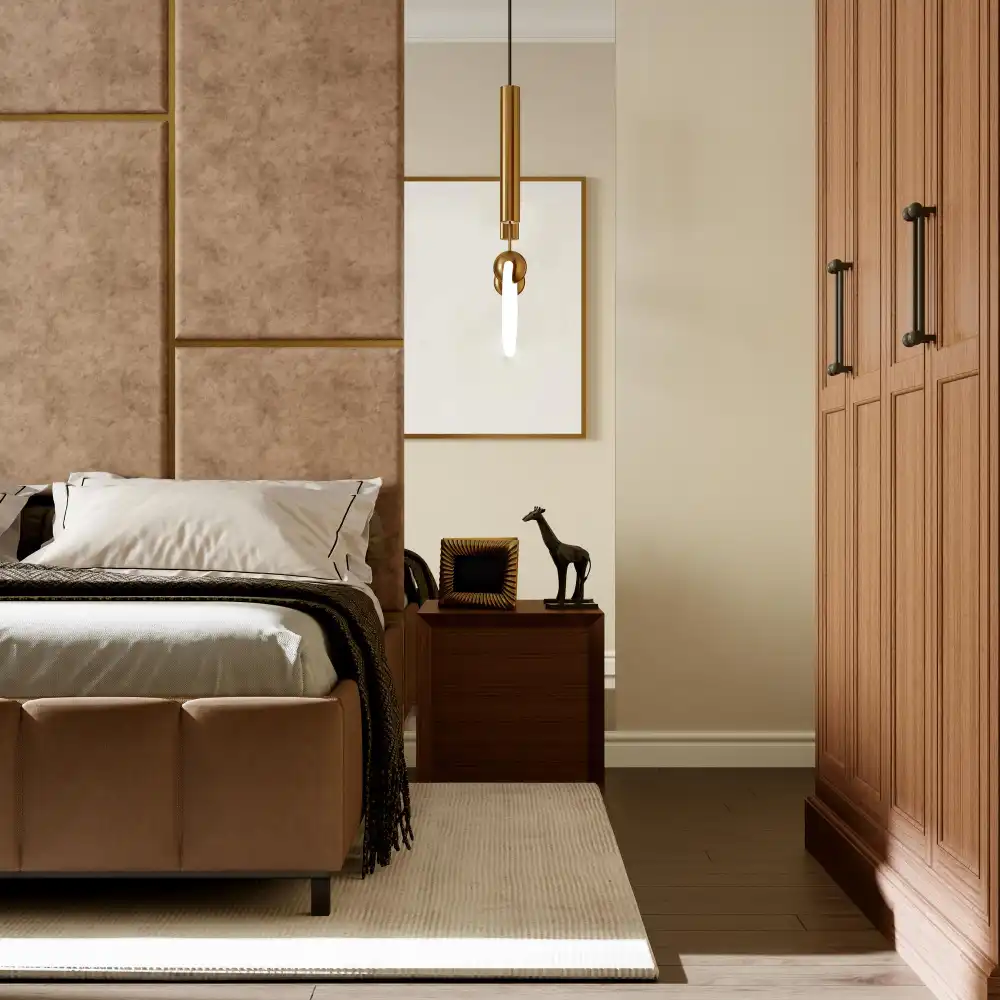
Washed linen is the heart of a japandi bed. It has a soft, lived-in wrinkle that suits wabi-sabi perfectly, since it never looks too pressed or perfect. Layer a linen duvet, a folded wool throw, and two or three pillows in oat, stone, and soft white.
Keep the whole bed in one tonal family. The interest comes from texture, not color or pattern. A smooth linen sheet against a nubby wool blanket is all the contrast the bed needs. If you love that soft, layered warmth, these cozy aesthetic small bedroom ideas use the same restraint.
6. Two Natural Wood Tones, Both Matte
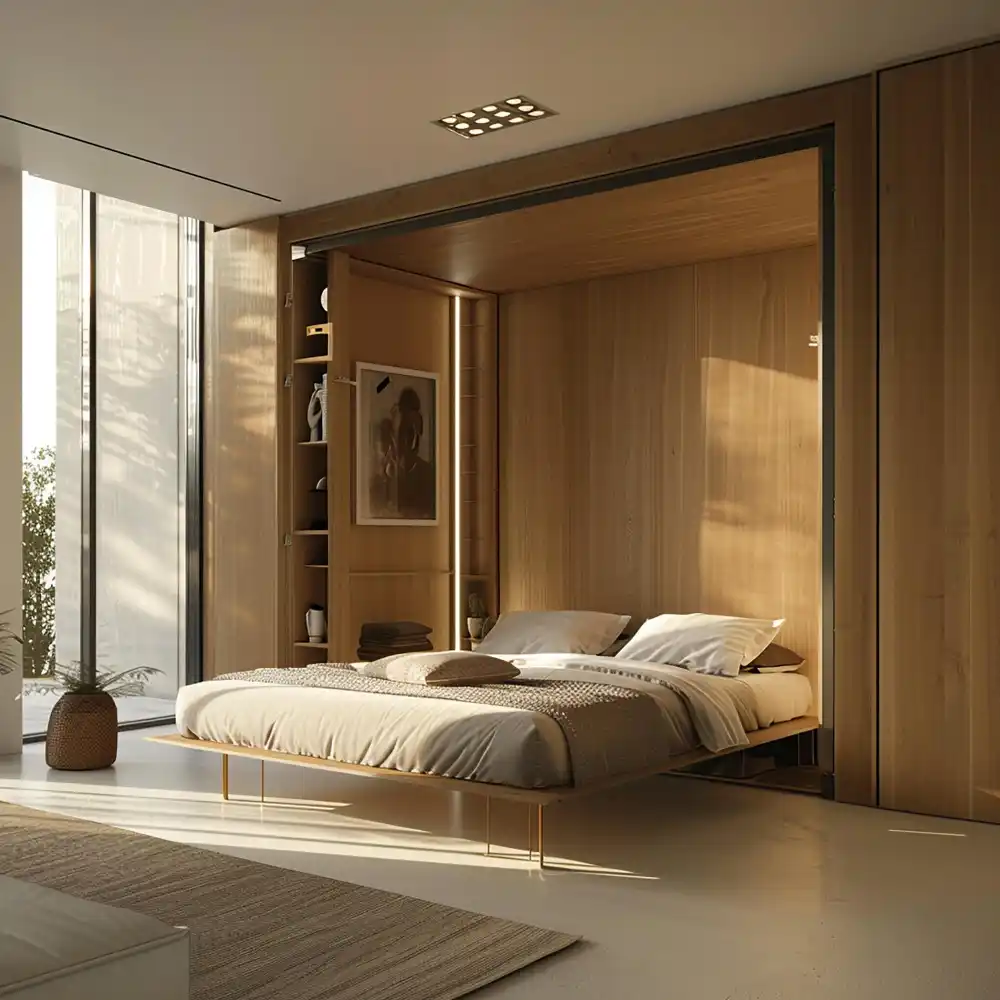
Wood is where Scandinavian craft and Japanese joinery meet. Use two natural wood tones rather than one matched set: a pale oak bed with a deeper walnut or ash stool, for instance. The visible grain and matte finish look hand-made and warm.
Skip glossy or orange-toned wood, which looks dated next to the muted palette. Keep both tones in the same soft, natural family so the mix feels collected, not random. Two woods are plenty in a calm room.
DESIGNER TIP: Choose woods with a matte or oiled finish, not a high-gloss lacquer. A flat finish shows the grain and keeps the room quiet, while shine pulls the eye and breaks the calm.
7. Woven, Paper, and Rattan Details
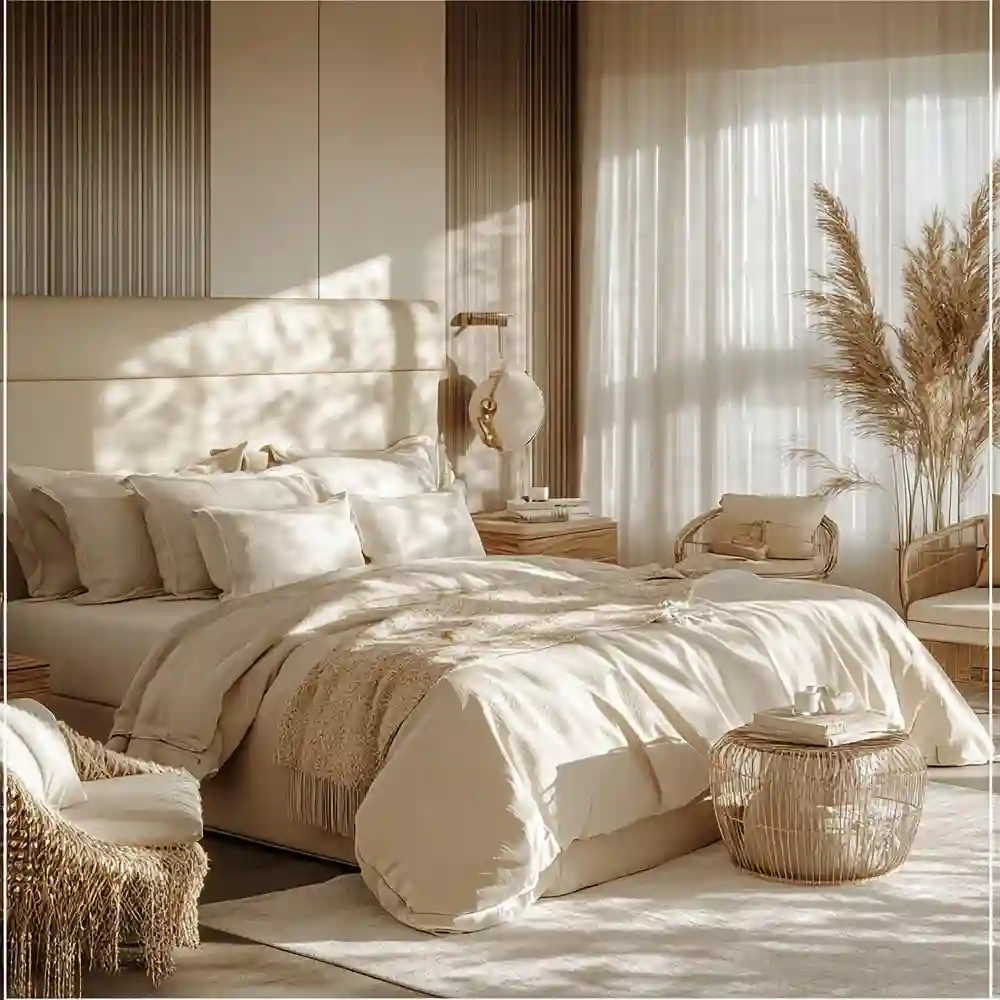
The craft layer is what makes japandi feel hand-touched. Add a paper lantern shade, a rattan bench, a woven basket, or a simple bamboo blind at the window. These materials are light, natural, and quietly textured, and they carry the Japanese side of the look.
Use them sparingly. One paper pendant and one woven piece can be enough for a small room. The goal is a few honest, natural materials, not a full collection.
8. Warm, Low 2700K Lighting
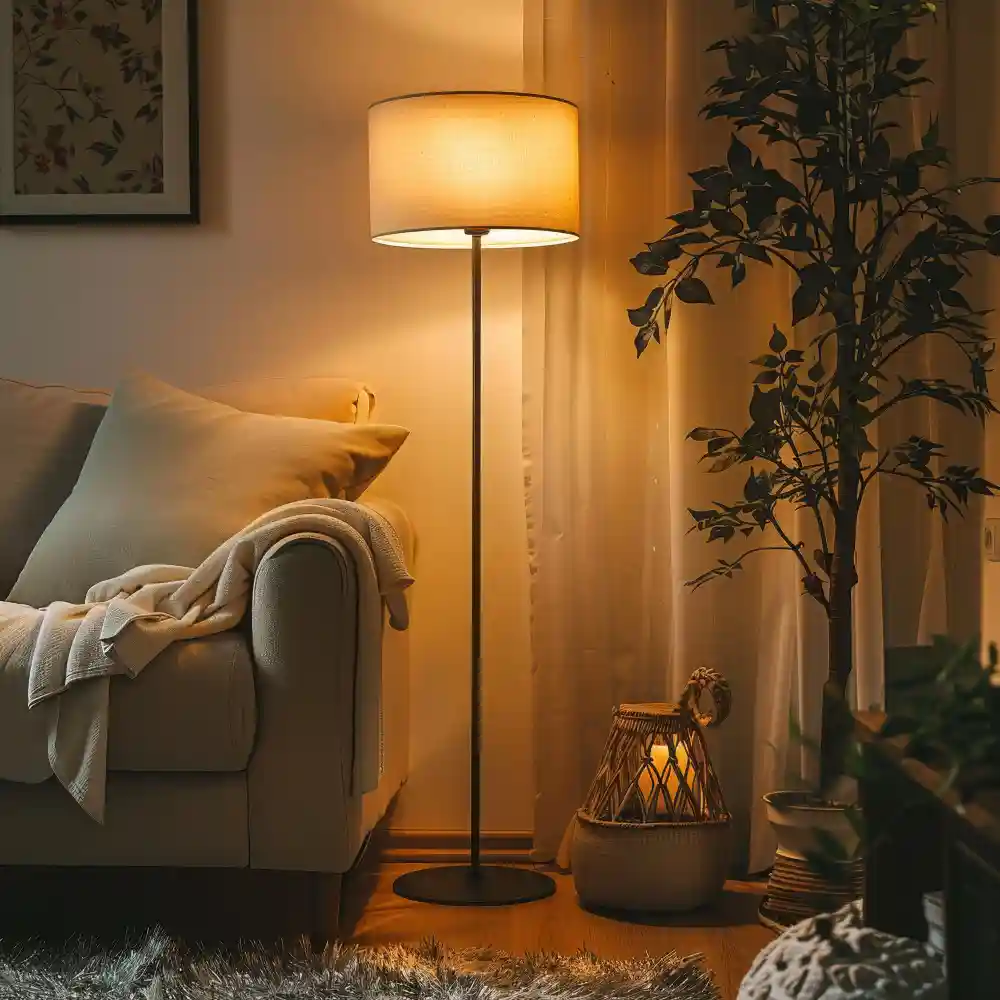
Lighting decides whether a minimal room feels calm or clinical. Skip the single bright ceiling bulb and build soft light at low levels instead: a paper floor lantern, a low table lamp, and a small bedside glow. Feit Electric notes that 2700K is a warm white well suited to bedrooms and relaxing spaces.
Add a dimmer wherever you can. Low, warm, layered light makes linen and wood look richer after dark and keeps the room feeling like a retreat. For more calming, low-light bedroom looks, these navy blue bedroom ideas lean on the same soft-glow approach.
KEY TAKEAWAY: Tonal linen layers, two matte wood tones, a few woven or paper details, and soft 2700K light keep a japandi bedroom warm, textured, and calm.
The Finishing Layer: Styling and Restraint
The last layer is mostly about what you leave out. These looks turn a tidy room into a serene one through space, nature, and low, simple furniture.
9. Negative Space You Leave on Purpose
In Japanese design, the empty space between things has a name, ma, and it matters as much as the objects. In a japandi bedroom, that means leaving one wall bare and one surface clear on purpose. The quiet around an object is what lets it breathe.
Resist the urge to fill every nightstand and shelf. A single lamp on an otherwise empty surface looks calm and deliberate. Empty space is not unfinished here; it is the design.
DESIGNER TIP: Follow a one-object rule on open surfaces. A nightstand holds a lamp and nothing else; a dresser holds one tray or vessel. The restraint is what reads as calm and expensive.
10. One Living Element, Kept Simple
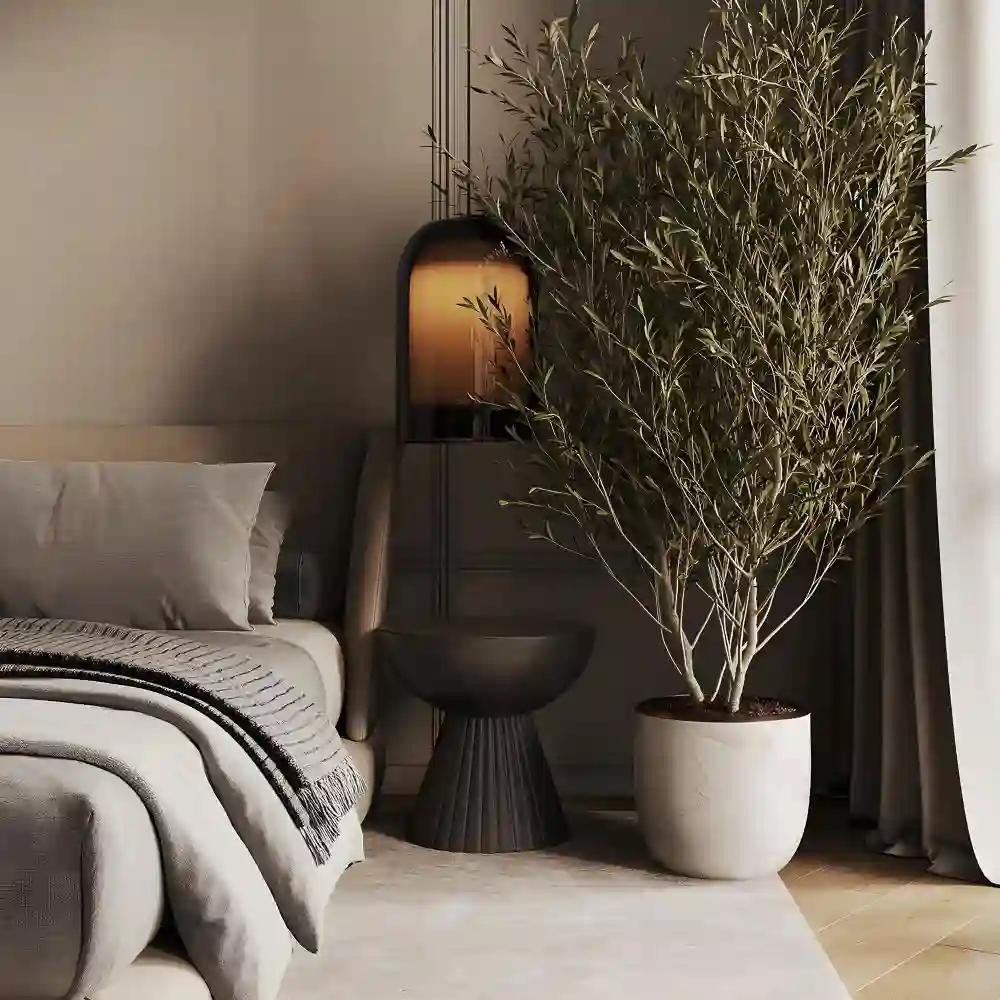
Japandi loves a single, sculptural piece of nature over a crowd of plants. One branch in a tall stoneware vase, a small ikebana arrangement, or a single potted tree brings life without clutter. The shape matters more than the volume.
Keep the container plain and matte, in stoneware or unglazed ceramic. One quiet, living shape softens all the straight lines and adds the imperfect, natural note the whole style is built on.
11. Low, Simple, Functional Furniture
Match the low bed with low, simple furniture. A short bench at the foot of the bed, a small stool as a nightstand, or a floor cushion in a corner keeps sightlines open and the room calm. Every piece should earn its place and do a job.
Avoid bulky, tall, or heavily detailed furniture. Clean, low, and useful is the japandi rule. A short oak bench is more in keeping than a large upholstered chair, and it leaves more visual space around it. These minimalist bedroom ideas follow the same less-but-better logic.
12. Hidden Storage and Clear Surfaces
The calm in a japandi bedroom comes from what you cannot see. Closed storage, a simple wardrobe, under-bed drawers, and a lidded basket keep daily clutter out of sight. Clear surfaces are what make the whole look feel serene.
Decide that nothing lives on the floor and little lives on top of furniture. When everything has a closed home, the room stays quiet with almost no effort. Restraint, repeated daily, is the finishing layer. A muted, grounded color like olive can extend the same calm, as in these olive green bedroom ideas.
KEY TAKEAWAY: Deliberate empty space, one living element, low simple furniture, and hidden storage give a japandi bedroom its serene, collected finish.
What Throws a Japandi Bedroom Off Balance
Most japandi bedrooms that miss the mark share the same few errors. Fix these and the room settles into calm.
❌ Going stark and bare with no texture → ✅ Add linen, wool, wood, and paper so minimal still feels warm.
❌ Using cool grey or glossy white walls → ✅ Choose a warm, soft, matte neutral with quiet texture.
❌ Lighting the room with one bright ceiling fixture → ✅ Build low, warm 2700K light at floor and table level.
❌ Crowding every surface with decor → ✅ Leave one wall and one surface deliberately empty.
KEY TAKEAWAY: A japandi bedroom falls flat from bare coldness, cool glossy walls, harsh overhead light, and cluttered surfaces, all easy to correct.
What Does a Japandi Bedroom Cost?
A japandi bedroom can be budget-friendly or an investment, depending on how much you change. Most of the calm comes from paint, bedding, and light, which sit at the lower end. A low wood bed and a wool rug cost more but anchor the whole room. Below are typical estimates to help you plan.
| Project | Estimated Cost | Impact Level |
|---|---|---|
| Warm 2700K bulbs, dimmer, and one paper or low lamp | $50-$120 | High |
| Washed linen duvet and tonal layered bedding | $150-$350 | Very High |
| Low-pile wool or jute rug (8×10 or 9×12) | $200-$600 | High |
| Low platform bed in oak, ash, or walnut | $500-$1,400 | Very High |
Best First Upgrade: Swap to warm 2700K bulbs and layer washed linen bedding, the fastest way to make the room feel calm and warm.
Skip for Now: Hold off on a new platform bed until the palette, walls, and bedding are settled.
KEY TAKEAWAY: A japandi bedroom starts cheap with paint, bulbs, and linen, then scales up with a wool rug and a low wood bed over time.
Small Rooms, Rentals, and Tricky Layouts
A japandi bedroom suits small and rented spaces beautifully, since restraint is its whole language. In a small room, keep the palette to two muted neutrals, choose the lowest bed you can, and leave one wall bare to make the space feel larger. Aim for 24 to 30 inches of clear walking space on each side of the bed so the room breathes.
Renters can get the look without paint. Removable limewash-look wallpaper, peel-and-stick wood panels, and plug-in paper lamps all read japandi with no drill holes. Rental Note: Use command strips or removable adhesive instead of drilling to protect your deposit. For more compact strategies, these minimalist small bedroom ideas and simple small bedroom refresh ideas pair well with a muted japandi palette. You can also browse all our bedroom ideas or explore all of our room design ideas across the house.
KEY TAKEAWAY: Small and rental japandi bedrooms work with two muted neutrals, the lowest bed possible, one bare wall, and removable wood or wallpaper.
Frequently Asked Questions
Conclusion
A serene japandi bedroom is mostly about warmth and restraint working together. Keep the palette muted, anchor the room with a low natural-wood bed, soften the walls, and layer linen, wool, and paper in a quiet tonal range. Then light it low and warm, and leave space empty on purpose.
Editorial field note: A minimal bedroom with bare walls and one harsh ceiling light usually feels cold rather than calm. Adding a textured limewash wall, a washed-linen bed, and two warm 2700K lamps makes the same spare room feel like a retreat, before any new furniture arrives. These japandi bedroom ideas are meant to be layered slowly, one quiet choice at a time. For a softer neutral version of the same calm, these grey bedroom design ideas are a natural next read, or start fresh from our home decor inspiration hub.
More Bedroom Style & Aesthetic
- 11 Earthy Modern Bedroom Ideas That Feel Like a Warm Embrace
- 12 Cottagecore Bedroom Ideas for a Romantic, Vintage-Inspired Retreat
- 12 Mid-Century Modern Bedroom Ideas for a Warm, Timeless Retreat
- 12 Minimalist Bedroom Ideas 2026 That Create a Calming Escape
- 12 Rustic Bedroom Ideas for a Warm, Layered, and Timeless Look
- 15 90s Bedroom Ideas for an Authentic Nostalgic Aesthetic
- 15 Scandinavian Bedroom Ideas for a Calm, Light-Filled Retreat
- 15 Y2K Bedroom Ideas for a Nostalgic 2000s Aesthetic
- Modern Farmhouse Bedroom Ideas for a Cozy Designer Look
- Warm Farmhouse Bedroom Ideas That Feel Luxurious