TL;DR
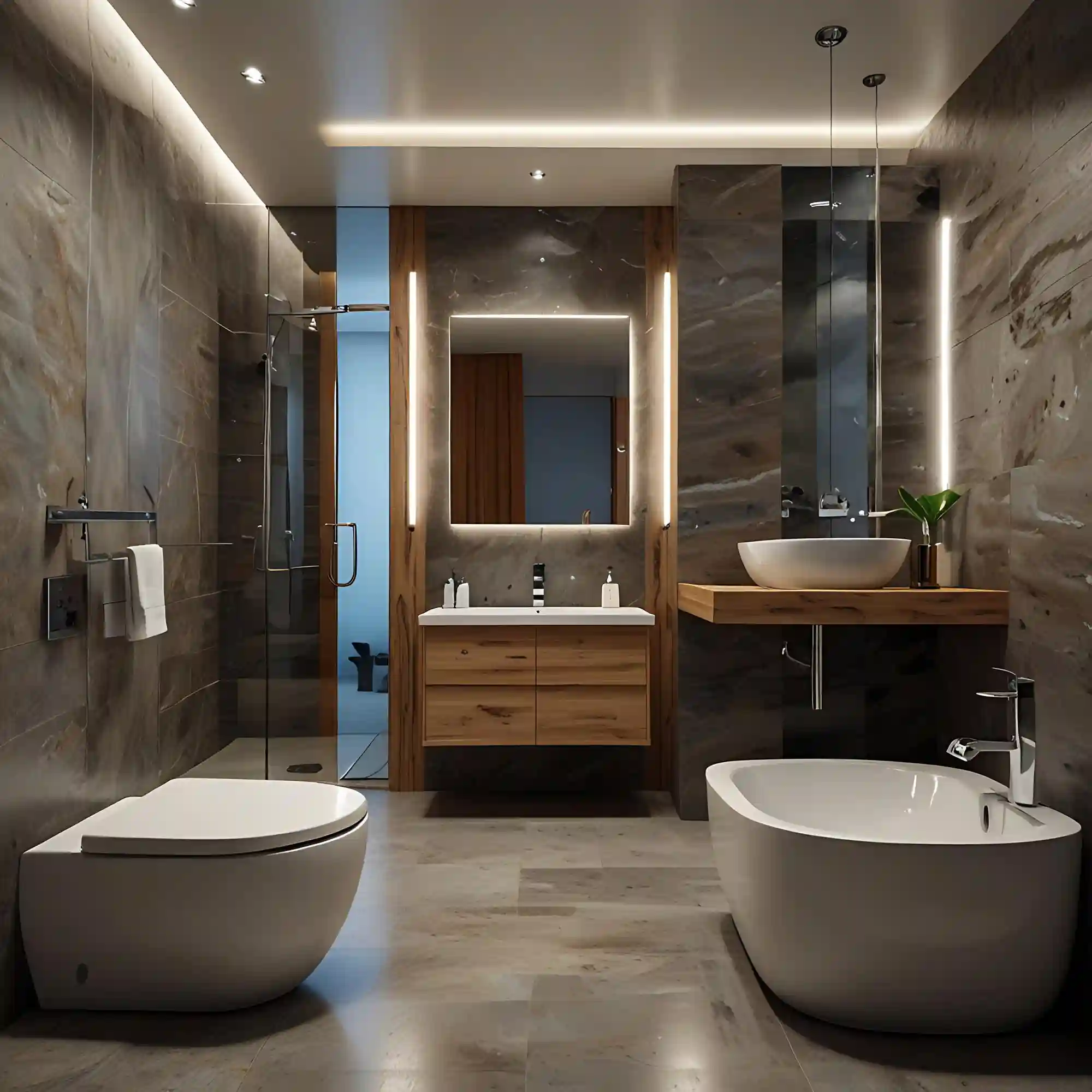
- These 13 Scandinavian bathroom ideas lean on pale oak or birch wood, soft white or warm greige walls, and warm layered light.
- Natural texture, including wool, linen, and one hardy plant, replaces color as the room’s main source of warmth.
- The style rests on lagom (“just the right amount”) and hygge (coziness), not bare, cold minimalism.
- One warm accent color and one repeated metal finish keep the palette from feeling flat.
- A full decor refresh runs roughly $90 to $4,200 depending on how much you change.
Getting the Scandinavian Bathroom Look Right
For a while, “Scandinavian bathroom” got treated as shorthand for stark: bare white tile, one steel faucet, a room that reads more clinic than home. That reading always missed half the story. Real Scandinavian design leans on warmth just as much as it leans on a simple, pared-back look, and a bathroom built only from white paint and hard edges skips the part that makes the style work.
Looking for more ideas? Explore our full guide to Bathroom Design Styles.
If you’ve pinned dozens of pale, airy Scandinavian bathrooms and ended up with something closer to a dentist’s office than a Nordic retreat, you’re not alone. Editorial field note: A white-tile bathroom lit only by a cool overhead bulb can feel sterile even with a pale oak vanity already installed. Swapping in one warm 2700K wall sconce and a wool bath mat brings the same room back to calm and lived-in without touching a single fixture.
Scandinavian bathroom ideas work because they layer warmth into minimalism instead of stripping it out. Pale wood, soft textiles, warm light, and a narrow, calm palette do the real work, not bare walls alone. This guide covers 13 of these ideas, plus real costs and the mistakes that turn a Scandinavian bathroom cold. Start with our home decor inspiration hub for whole-home direction, or browse our bathroom design ideas archive for more styles to compare against this one.
Bookmark this guide for quick reference.
| Quick Takeaways | |
|---|---|
| Palette | Soft white, warm greige, and one muted accent — never a cold, all-grey room. |
| Wood | Pale oak or birch does the warming work that color usually does elsewhere. |
| Lighting | Maximize daylight, then layer warm 2700K bulbs so the room never feels clinical. |
| Texture | Wool, linen, and wood balance the hard tile and porcelain in every bathroom. |
| Budget | A decor refresh runs about $100 to $4,200 depending on how much you change. |
What Makes a Bathroom Feel Scandinavian (Not Just Minimalist)?
A Scandinavian bathroom is a room built on a narrow palette, pale natural wood, and warm layered light, with texture doing the job that color and pattern do in other styles. It works best when every surface earns its place instead of following a strict all-white rule. The main difference from plain minimalism is warmth: Scandinavian design keeps things simple, but it never wants a room to feel bare or clinical.
Two Swedish and Danish ideas explain the difference. Lagom is a Swedish word that roughly means “just the right amount,” and it shapes how a Scandinavian bathroom balances calm with comfort. Hygge is the Danish idea of coziness built from soft light, natural texture, and simple, well-made objects. According to Duravit, Scandinavian bathrooms favor light woods like oak and birch, white-to-grey palettes, and natural light as the main source of brightness — with dimmable lighting filling the gap when daylight runs short.
Birch is a pale, tight-grained wood that resists warping better than many softer woods, which is one reason it shows up so often in Nordic furniture and vanities. Oak works the same way with a slightly more visible grain. Both woods read calm and warm at once, which is exactly the balance a Scandinavian bathroom is built around.
Scandinavian Bathroom Checklist
Use this checklist before you buy anything for a Scandinavian bathroom refresh:
- Keep walls in soft white or warm greige with an LRV above 65 so daylight bounces around the room.
- Choose one pale wood tone — oak or birch — and repeat it on at least two surfaces.
- Pick one muted accent color, such as dusty blush, sage, or warm clay, and use it in one or two spots only.
- Layer warm 2700K bulbs at the vanity instead of relying on one cool overhead fixture.
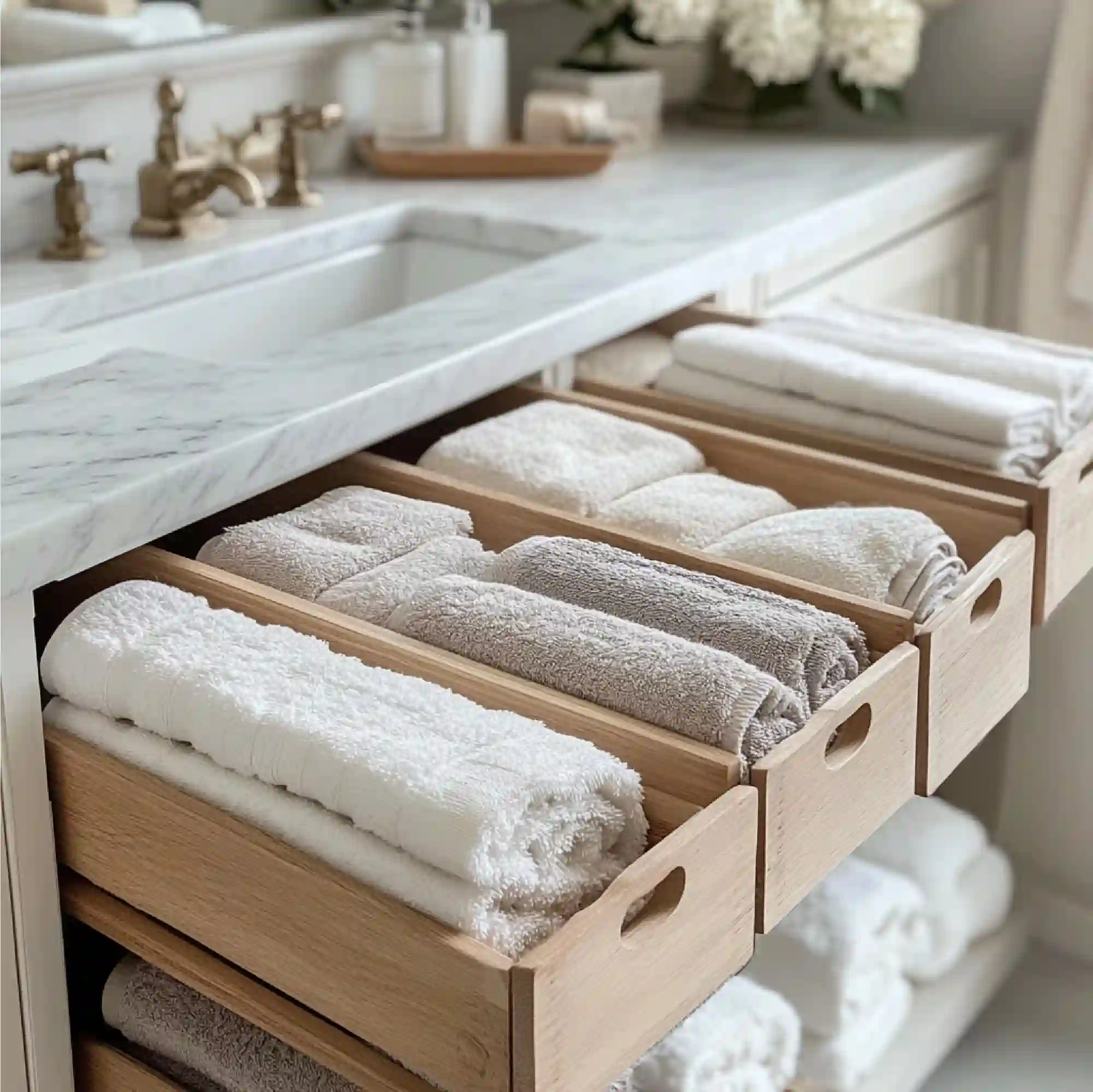
- Add at least one natural textile: a wool bath mat, a linen curtain, or a cotton towel set.
- Keep decor to 3-5 objects per surface so the room stays calm, not empty.
- Set a budget tier before shopping — under $400, $400 to $1,500, or $1,500-plus.
If you like this bright, airy mood in a different season, our spring bathroom decor ideas guide covers a related light, seasonal palette.
KEY TAKEAWAY: A Scandinavian bathroom comes together fastest when you pick one pale wood tone and one accent color first, then let warm light and natural texture carry the rest of the room.
The Foundation: Palette, Light, and Wood
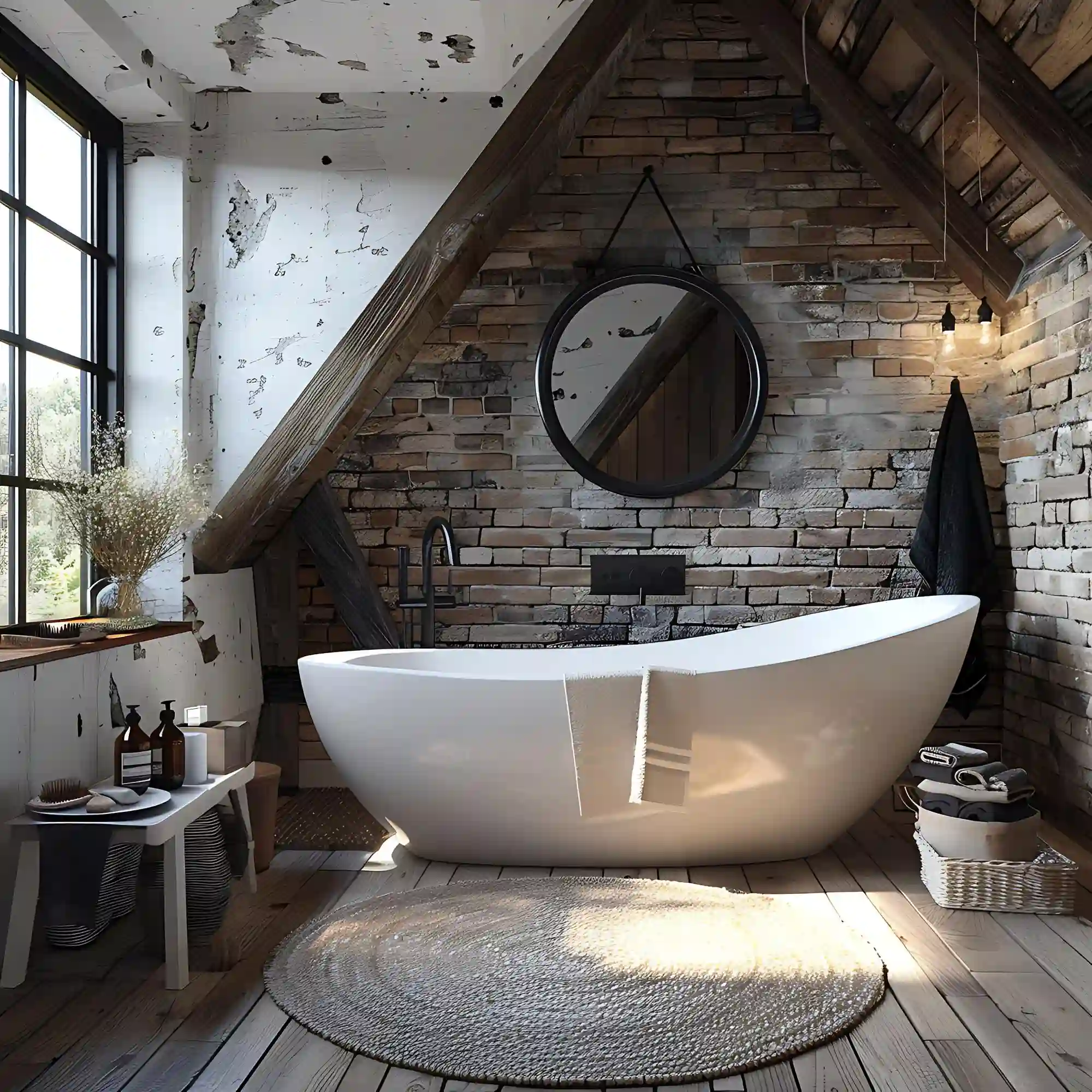
These five Scandinavian bathroom ideas build the base layer every other choice sits on top of. Get the walls, wood, and light right first, since they cost the least and change the room the most.
1. Soft White or Warm Greige Walls as the Calm Base
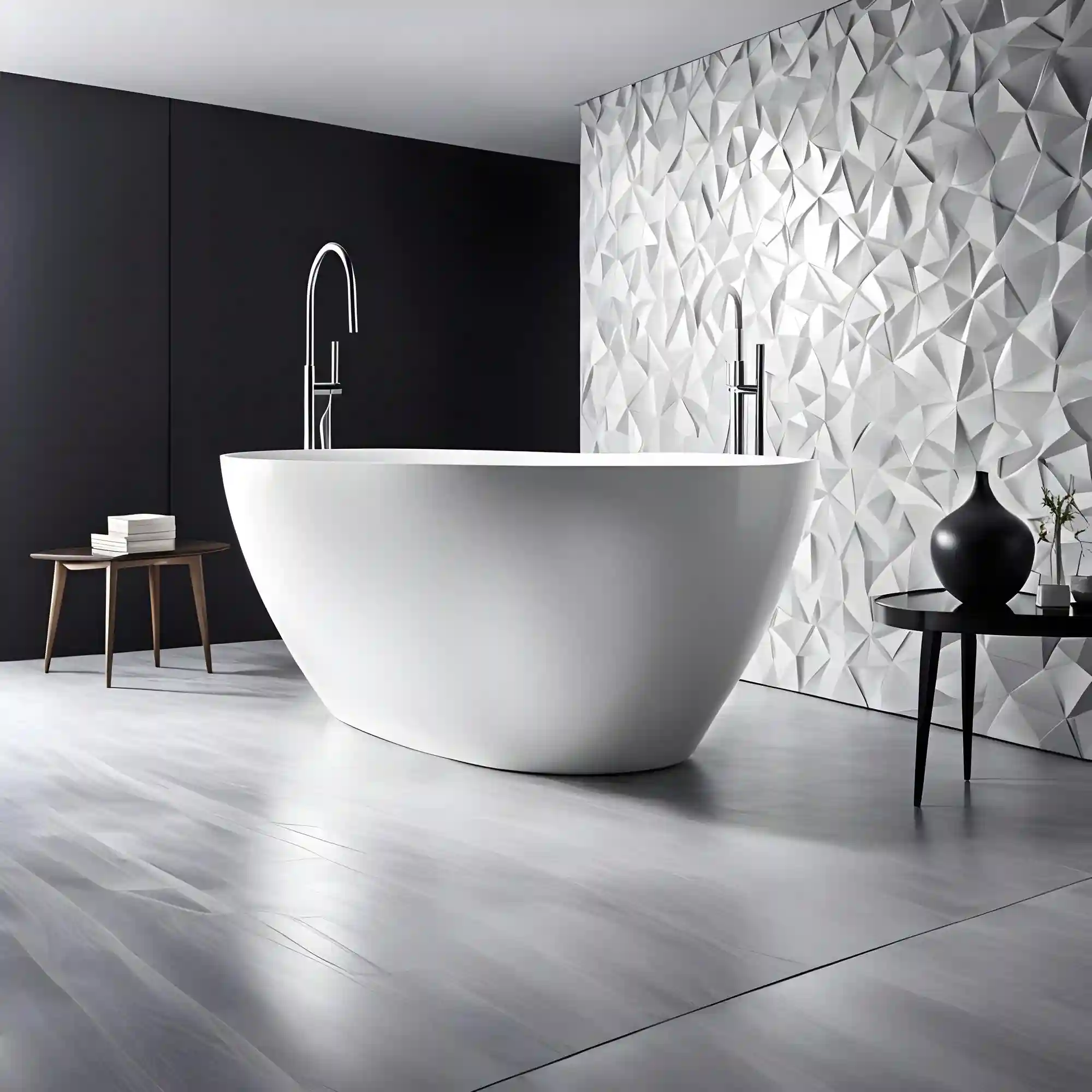
A Scandinavian bathroom starts with the walls. Benjamin Moore’s Simply White (OC-117) is a warm, bright white with a soft undertone that avoids the flat, stark feel of a pure cool white. A warm greige works just as well in rooms with less daylight, since it holds a touch more warmth without reading beige. Look for a wall color with an LRV, or light reflectance value, above 65 so the room bounces daylight instead of absorbing it. Keep trim in the same warm family rather than stark white, so the whole room feels like one calm surface instead of two competing tones.
2. A Pale Oak or Birch Vanity as the Room’s Anchor
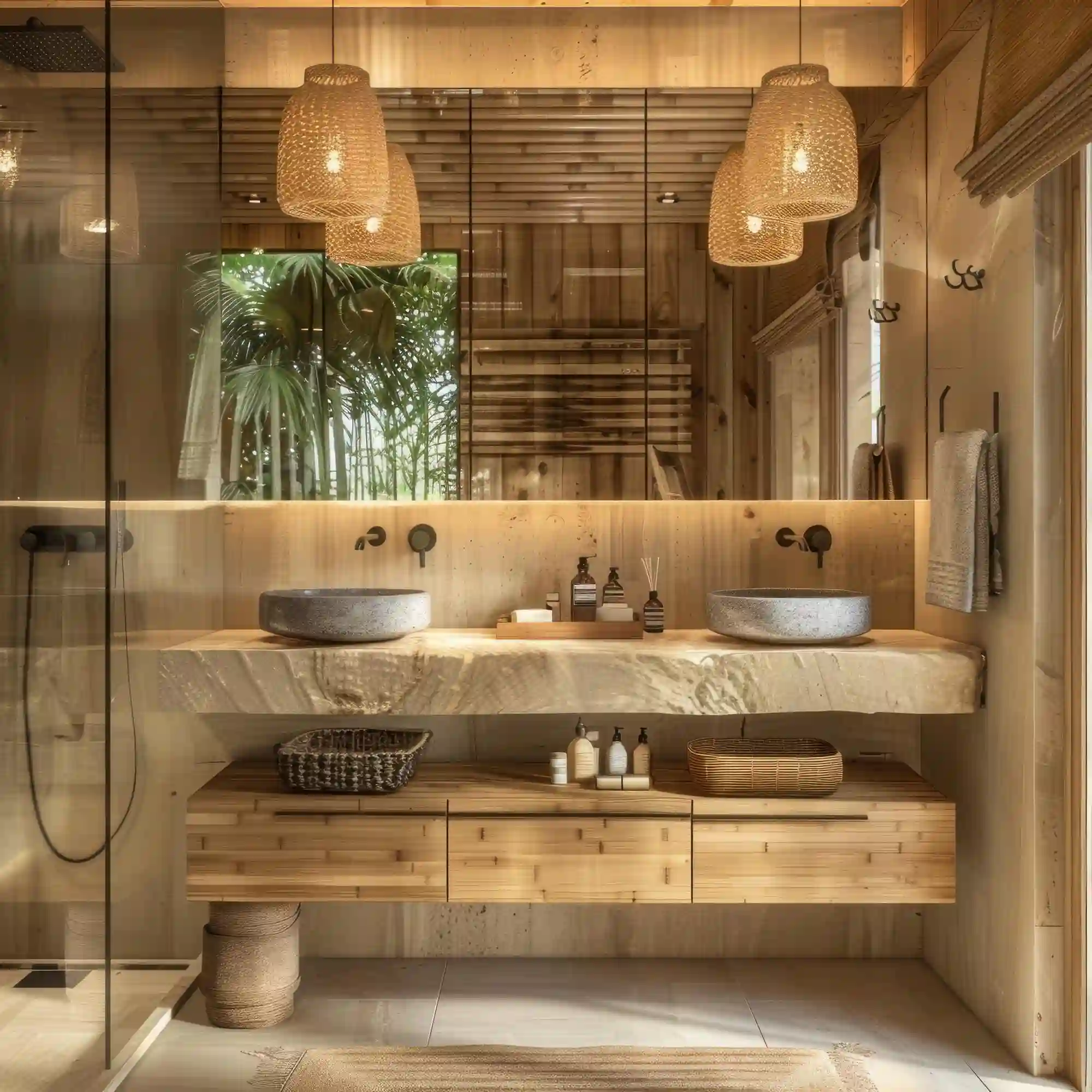
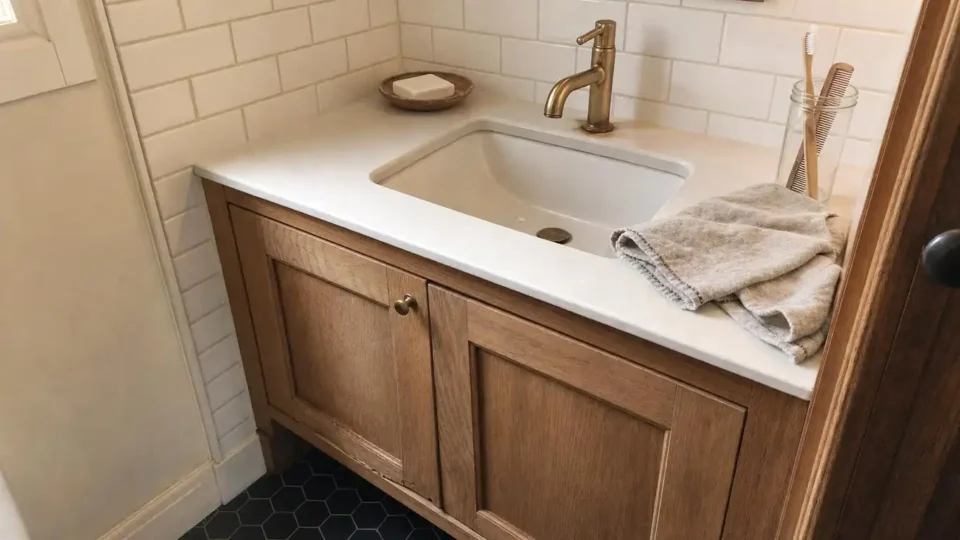
The vanity is the one piece of furniture most Scandinavian bathrooms build around. A pale oak or birch vanity, roughly 30 to 34 inches tall, works as the room’s anchor piece the same way a console table anchors a living room. Material Note: Birch and oak both need a marine-grade polyurethane or varnish sealant on every exposed surface in a bathroom, with a fresh coat every 2 to 3 years in a humid climate to stop warping at the joints. Choose simple, tapered or straight legs over ornate carving, since clean lines are part of what makes the piece read Scandinavian instead of traditional.
3. Sheer Linen Curtains to Maximize Natural Light
Natural light is the real engine of a Scandinavian bathroom, and a heavy curtain blocks the one thing the style depends on most. A sheer linen curtain, typically 150 to 250gsm, filters harsh sun without shutting it out, so the room stays bright through the day. Hang the rod as close to the window frame as the fixture allows, so no wall space is lost to fabric that isn’t doing anything. If privacy is a concern, pair the sheer panel with a simple frosted film on the lower half of the glass instead of a heavier drape.
4. Large-Format Light Tile With Minimal Grout Lines
A large-format tile, generally defined as 12 inches or larger per side, keeps grout lines to a minimum across a floor or shower wall. Fewer visible grout lines mean fewer dark breaks in the surface, so a small Scandinavian bathroom looks calmer and a little bigger. Choose a matte or honed finish in a soft white, warm grey, or sandy tone over a glossy tile, since matte surfaces read warmer under daylight. Save any patterned tile for one accent zone, like a shower niche, rather than the whole room. For more ways to bring texture into a tiled wall without breaking the calm palette, our bathroom backsplash ideas guide covers that in more depth.
5. One Warm Accent Color, Used Sparingly
Scandinavian color works in one place, not everywhere. A dusty blush vanity, a sage-green tiled wall, or a warm clay-toned towel gives the room its single moment of color while everything else stays quiet. Sherwin-Williams’ Sea Salt (SW 6204), a soft green-grey with an LRV near 63, is one named example designers reach for in exactly this role. Use the accent on one furniture piece or wall, then echo it in a small way elsewhere, such as a hand towel, so the color feels planned rather than accidental.
Layering In Warmth and Texture
Once the palette and wood are set, these four ideas add the softness a Scandinavian bathroom needs so it never feels bare.
6. Matte Black or Warm Nickel Fixtures, Repeated Once
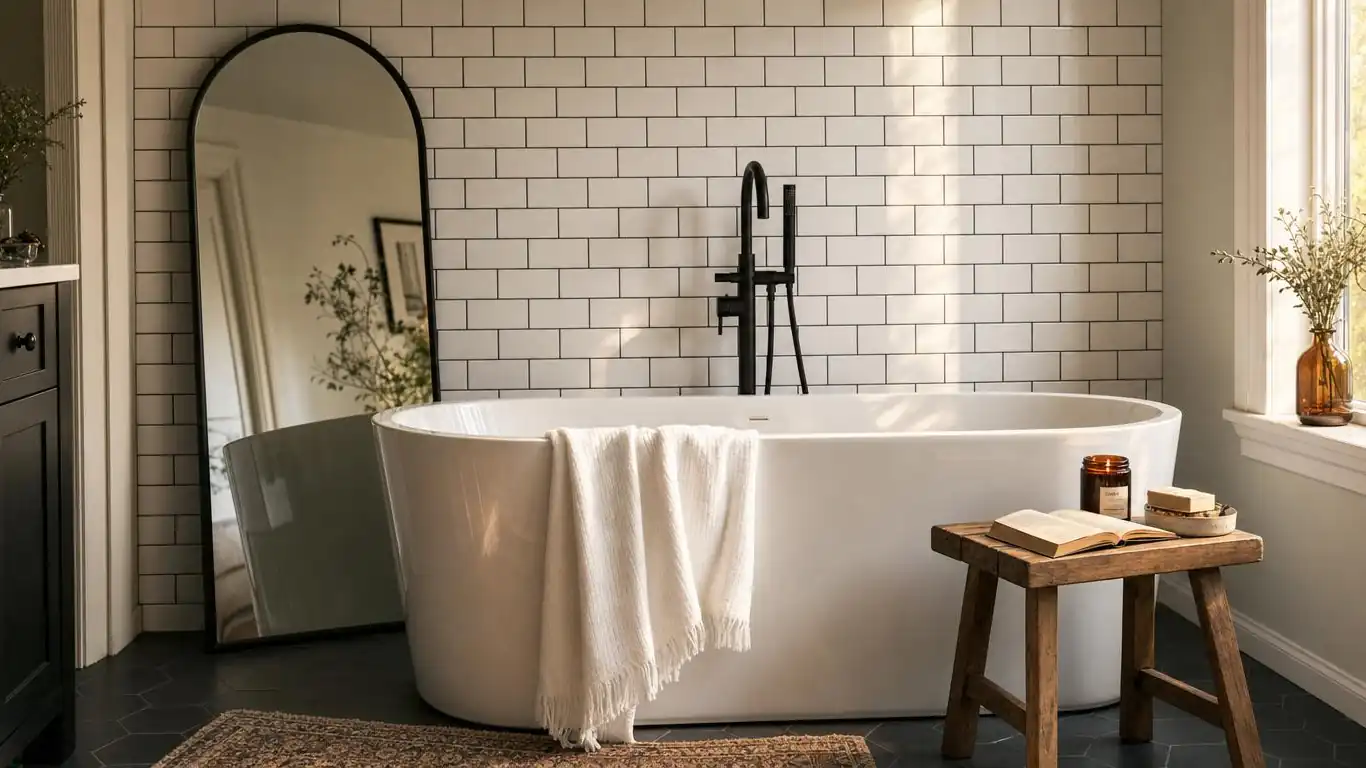
Pick one metal finish for the whole room and repeat it on the faucet, the towel bar, and the mirror frame. Matte black gives a Scandinavian bathroom a quiet, graphic edge against pale wood and white walls, while warm brushed nickel keeps things softer and less contrasty. Designer Tip: Avoid mixing more than one metal finish in a small bathroom — even two well-chosen finishes can start to look unplanned once you add faucet, hardware, and light fixtures together.
7. A Wool or Cotton Bath Mat for Texture Underfoot
Hard tile and porcelain need one soft surface to balance them, and the floor is the easiest place to add it. A wool bath mat holds warmth underfoot and dries faster than it looks, while a chunky woven cotton mat gives a similar texture at a lower cost. Choose a natural cream, oatmeal, or soft grey tone over a bright pattern, so the mat feels like quiet texture instead of a decor statement competing with the walls.
8. Layered Warm Lighting for Cloudy Days and Evenings
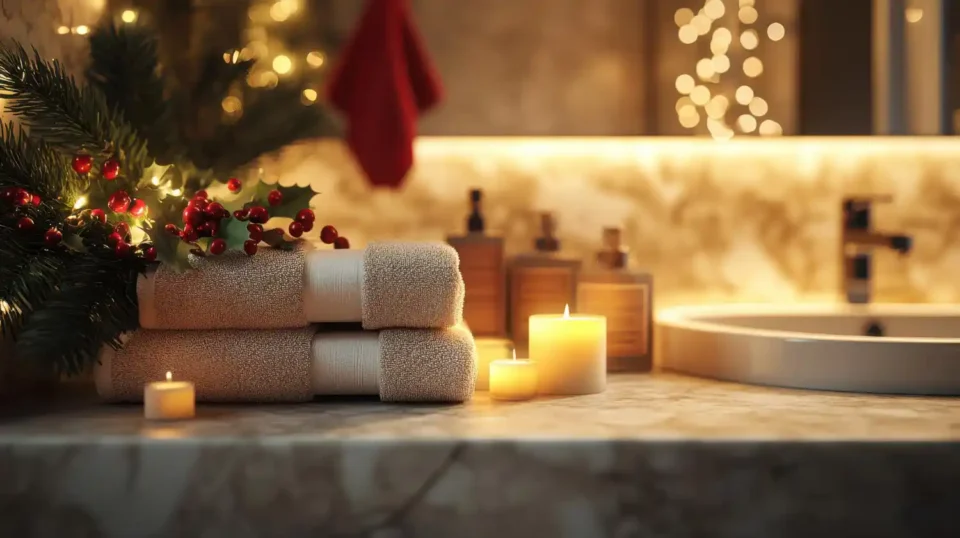
A Scandinavian bathroom depends on daylight, but it needs a backup plan for early mornings and darker months. Layer two light sources at 2700K to 3000K: a pair of wall sconces at the mirror, plus one small lamp or a real or flameless candle on the counter. Safety Note: If you use real candles for the warm flicker, keep them away from linen curtains and never leave one burning unattended in the room. This layered light is what keeps a pale, quiet bathroom from turning grey and flat once the sun goes down.
9. A Woven or Wood Stool as a Soft Seat
A small stool, about 16 to 18 inches tall, gives a Scandinavian bathroom a functional piece that also softens the room’s straight lines. A light wood stool with turned or tapered legs echoes the vanity, while a woven rush or paper-cord seat adds a second texture without adding pattern. Use it beside the tub to hold a towel and a candle, or tuck it under a floating shelf when the floor needs to stay clear.
The Finishing Touches
The last four ideas are the small, easy swaps that finish a Scandinavian bathroom once the bigger pieces are already in place.
10. Open Wood Shelving With Ceramic and Glass Accessories
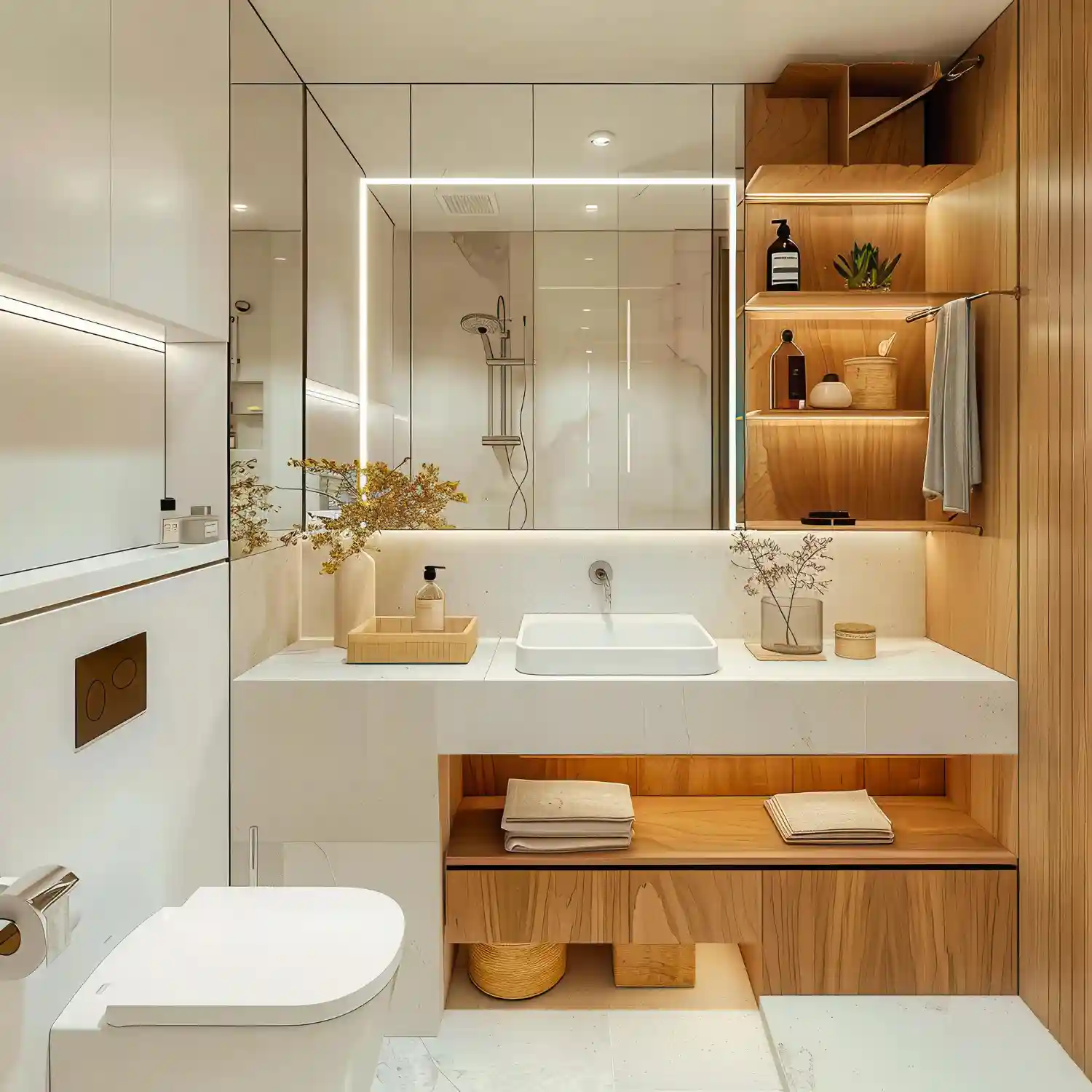
A single floating oak or birch shelf holds more visual interest than a closed cabinet, as long as it isn’t overloaded. Group three or five ceramic dishes, glass jars, or folded towels together, since odd numbers tend to look more gathered than even ones. Leave visible space between each grouping so the shelf looks styled, not stocked, and keep any labels or packaging turned away from view.
11. A Round Mirror in a Light Wood Frame
A round mirror softens a room built mostly from straight lines and hard tile edges. A light oak or ash frame, roughly 24 to 30 inches across, echoes the vanity’s wood tone and keeps the whole room’s material story consistent. Center the mirror over the sink rather than the full vanity width, so a wall sconce has room to sit on either side without crowding the frame.
12. One Hardy Plant for Living Texture
A single plant brings living texture into a room that otherwise leans on wood, tile, and textiles alone. A snake plant or a pothos both tolerate the low light and swings in humidity that many bathrooms have, and neither needs daily attention. Skip a whole shelf of plants — one well-placed pot on the vanity or a floating shelf does more for a Scandinavian bathroom’s calm, edited feel than a crowded windowsill.
13. A Single Framed Print or Simple Wall Art
One framed print, in a simple black or light-wood frame, finishes the room without pulling focus from the materials already doing the work. A botanical line drawing, an abstract shape in a muted tone, or a black-and-white photograph all fit the mood. Keep it to one piece per wall rather than a gallery grouping, since a Scandinavian bathroom’s calm depends on empty wall space as much as the art itself.
How Do These Scandinavian Bathroom Ideas Work Together?
Scandinavian bathroom ideas work best in layers, starting with the cheapest, highest-impact changes first. Paint, lighting, and one textile swap cost the least and shift the whole room’s mood before a single fixture changes. Add the vanity and wood tone next, then finish with the small accessories, plant, and art once the bigger pieces are settled.
DESIGNER TIP: Choose your one pale wood tone before buying anything else, then check every new piece against it. A second, unmatched wood tone is the fastest way to make a calm Scandinavian bathroom look assembled instead of planned.
If you already own a plain white bathroom with builder-grade fixtures, the fastest path to this look is paint, warm bulbs, and one wood accessory — a shelf, a stool, or a mirror frame. That combination alone often does more than people expect before any tile or vanity work begins. If you’d rather push the palette starker and skip the wood-warmth layer entirely, our minimalist bathroom decor ideas guide covers that more pared-back direction. For a warmer, more rustic take on natural wood, our farmhouse bathroom guide leans further into reclaimed texture and cottage-style detail.
What Turns Scandinavian Into Just Plain Cold?
A few habits turn a Scandinavian bathroom sterile instead of calm. Here is where most attempts go wrong, and what to do instead.
- Many people treat “Scandinavian” as permission to skip color and texture completely, ending up with a room that feels more like a waiting room than a home. Add the one accent color and one natural textile from the checklist above before calling the room finished.
- A cool white LED bulb over the mirror is one of the fastest ways to make pale wood and white tile feel clinical instead of calm. Warm 2700K to 3000K bulbs fix this in an afternoon, with no other changes needed.
- Leaving every surface hard — tile, porcelain, glass, and a bare vanity — with nothing soft anywhere in the room ends up looking unfinished, not calm. One wool mat, one linen curtain, or one wood stool solves this without adding clutter.
- A single bold accent wall, painted in a saturated color and left to stand alone, can fight the rest of a Scandinavian bathroom’s quiet palette instead of supporting it. Keep bold color to a small object, like a stool or a towel, rather than a full wall.
For more on where bathrooms in general go dated or stale, our bathroom design trends roundup covers the bigger picture beyond just this one style.
Investment Levels for a Scandinavian Bathroom Refresh
A Scandinavian bathroom refresh scales with how many layers you take on. Paint and lighting sit at the low end, while a full vanity and tile update lands much higher.
| Project | Estimated Cost | Impact Level |
|---|---|---|
| Paint, warm bulbs, and one textile | $90 – $320 | High |
| Wood accessories and bath textiles (stool, shelf, mirror, mat) | $150 – $600 | High |
| Pale wood vanity and hardware swap | $900 – $3,200 | Medium |
| Full decor refresh (vanity + tile accent + lighting + textiles) | $1,500 – $4,200 | Very High |
Best First Upgrade: Repaint the walls and swap in warm 2700K bulbs — it changes the whole room’s mood for well under $350.
Skip for Now: Hold off on a full vanity and tile replacement until you’ve tested paint, lighting, and one wood accessory first.
What About a Small, Rental, or Windowless Scandinavian Bathroom?
A small or windowless bathroom can still read Scandinavian without a single wall moved. Large-format tile and a single narrow palette both cut visual clutter, which matters more in a tight room than a large one. Layer two warm light sources — a vanity sconce pair plus a ceiling fixture — at 2700K to 3000K so artificial light does the work daylight would otherwise handle.
Rental Note: Peel-and-stick wood-look shelf liner, a removable mirror frame, and a tension-rod curtain rod all deliver the pale-wood-and-linen look without drilling into rented walls. Keep receipts for any hardware you plan to take with you when you move.
Climate Note: In consistently humid climates, reseal any exposed wood yearly instead of every 2 to 3 years, and run the exhaust fan during and after every shower to protect both the vanity and any wood shelving.
If you want more pattern and color layered into a similarly natural-material room, our boho bathroom guide shows a fuller, more collected version of the same warm-materials idea. For a brighter, more colorful take on a calm neutral base, our sage green bathroom guide covers a close cousin to the muted accent colors used here. And if a graphic black-and-white palette appeals more than a soft neutral one, our black and white bathroom guide covers that higher-contrast direction.
Frequently Asked Questions
Conclusion
Scandinavian bathroom ideas work best when pale wood, warm light, and one soft textile carry the room, not bare walls alone. Editorial field note: A plain white bathroom with a birch shelf and one wool mat added later often feels more Scandinavian than a room full of white paint and nothing else, because the texture does the talking. For more room-by-room styling direction, browse our home decor inspiration collection, or start with our room-by-room ideas archive to compare this look against every other space in the house.
Next Steps
- Pick your wall color and one pale wood tone before buying anything else.
- Swap vanity bulbs to 2700K–3000K and test the room at night before choosing tile.
- Add one textile and one wood accessory — a bath mat or a floating shelf — before a full vanity update.
- Set your budget tier (under $400, $400–$1,500, or $1,500-plus) so upgrades stay in order.
More Bathroom Design Styles
- 14 Japandi Bathroom Ideas for a Warm, Minimalist Retreat
- 14 Mid Century Modern Bathroom Ideas That Feel Truly Timeless
- 14 Spa Bathroom Ideas to Create a Calming At-Home Retreat
- 15 Coastal Bathroom Ideas for a Bright, Airy Retreat
- 15 Luxury Bathroom Ideas for a Five-Star Hotel Feel at Home
- Aesthetic Bathroom Designs for a Clean and Trendy Look