Why Doesn’t a House Full of Fall Decor Feel Cozy?
Most fall decorating advice hands you a distribution problem dressed up as a styling problem. A garland on the mantel, stems on the console, a runner on the dining table. Every surface gets something, the house photographs well, and the room still feels the same temperature it did in August.
Editorial observation: a living room with fall pieces on six surfaces and the ceiling light doing all the work feels colder in October than the same room with one armchair, one wool throw, and a lamp switched on beside it. The pieces on the far shelf never touch you. The throw does.
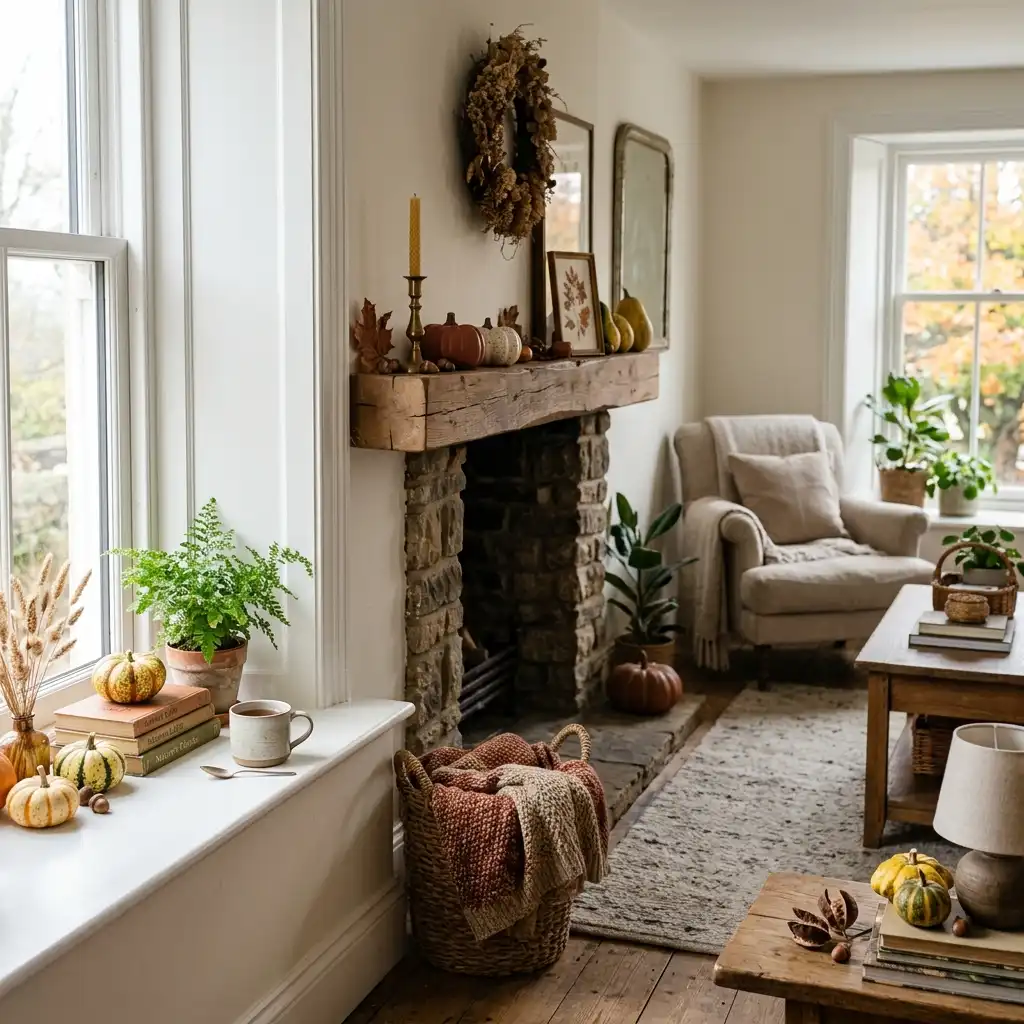
Looking for more ideas? Explore our full guide to Cozy Fall Aesthetic.
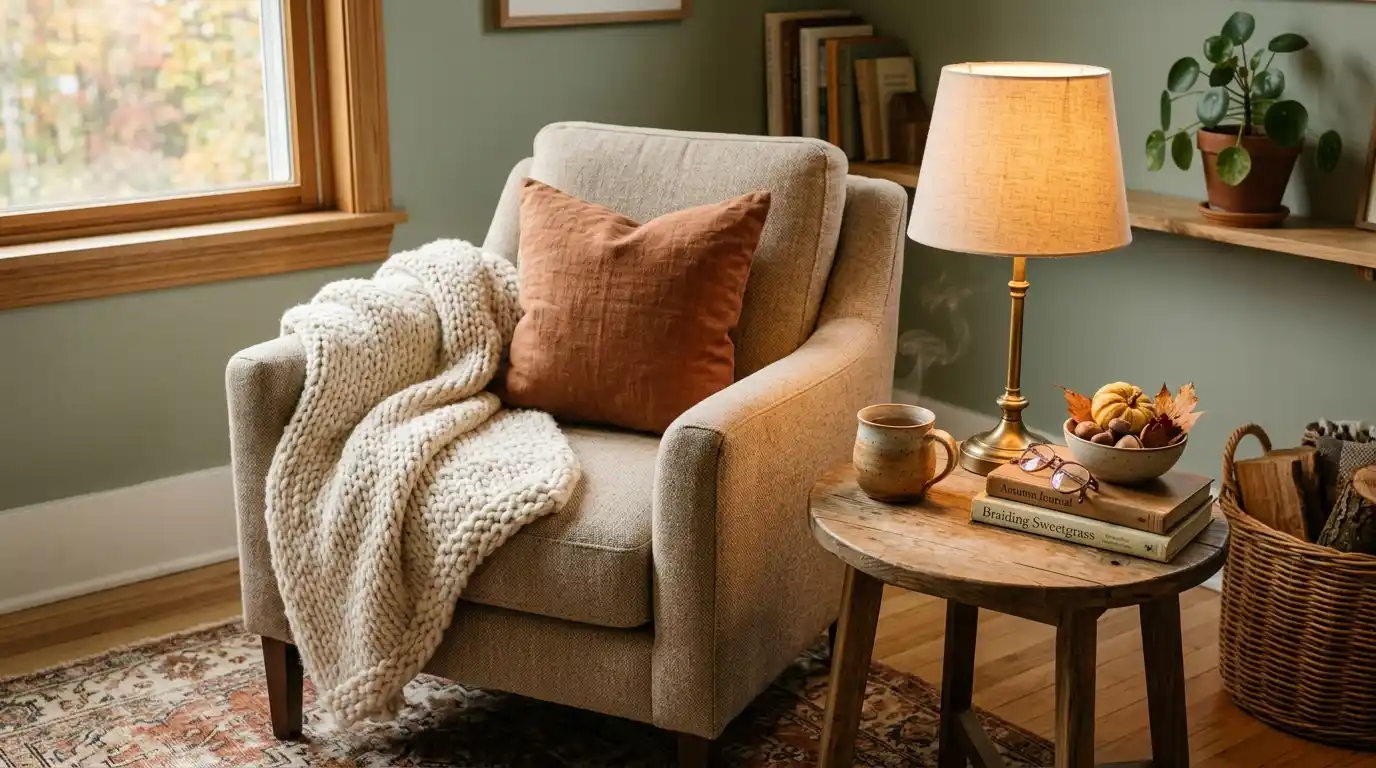
Cozy fall decor works within arm’s reach or it does not work at all. A throw you can actually pull across your legs, a lamp at seated eye level, and a surface within two inches of the chair arm change how a room feels far more than styled shelves across the room. Build one corner completely before you add anything to a second.
This guide covers what fits inside that reach zone, the measurements that decide whether each piece earns its spot, and what a corner costs. For the whole-house version of the season, these creative fall and autumn decor ideas cover every room, and for seasonal ideas beyond that, our home decor inspiration covers every room.
Your Cozy Fall Corner Checklist
- Pick the seat you actually use most, then build only around that one chair or sofa end.
- Measure a 30-inch radius from where your shoulder lands — everything cozy goes inside it.
- Choose a throw at least 50 by 60 inches so it covers a body, not a cushion.
- Set the side table within 2 inches of the chair arm, usually 24 to 26 inches tall.
- Add one lamp with a warm-white bulb so the ceiling fixture can stay off after dark.
- Keep candles at least 12 inches from throws, curtains, and dried stems.
- Leave the far side of the room alone until the first corner is fully finished.

What Arm’s Reach Actually Means
Arm’s reach is roughly a 30-inch radius from your shoulder when you are seated. That circle holds the armrest, the side table, the lamp switch, the throw, and whatever mug is going cold. Everything outside it is scenery, and scenery does very little for how warm a room feels at 7 p.m. in October.
Warmth is also a surface problem, not only an air problem. Source Note: thermal comfort models behind ASHRAE Standard 55, implemented in the CBE Thermal Comfort Tool from UC Berkeley’s Center for the Built Environment, count mean radiant temperature — the temperature of nearby surfaces — alongside air temperature. A body seated next to cold glass loses heat toward that surface, which is why a chair by the window feels chilly in a room the thermostat calls comfortable.

That reorders the shopping list. A lined curtain, a wool throw, and a rug under the seat do more for a fall room than three more decorative objects, because they change surfaces you sit against rather than surfaces you look at.
Is Cozy Fall Decor Really Shrinking to One Corner?
Cozy fall decor is drifting away from the harvest display and toward things people physically use. The shift shows up in what fills the front of seasonal aisles and what carries into November instead of going back in a bin.
Signs This Is Catching On:
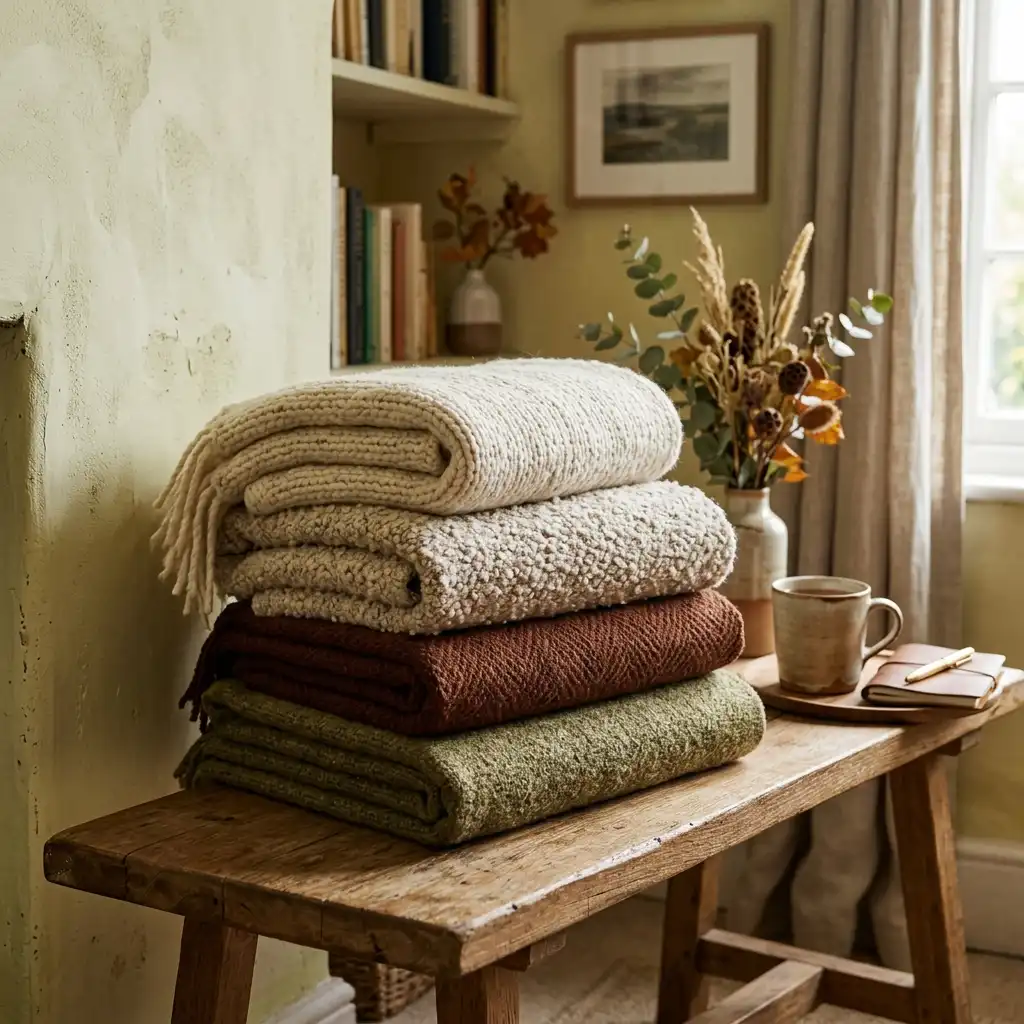
- Warm neutral bases — cream, oatmeal, mushroom, taupe — anchor most fall 2026 lookbooks, with burnt umber, olive, and deep gold arriving only as textile accents.
- Chunky knits, boucle, and undyed wool appear more often than printed leaf motifs and molded harvest props.
- Seasonal displays lead with throws, lamps, and candles rather than plastic centerpieces — objects that stay in use after Thanksgiving.
The signal is useful: the pieces holding their place are the ones a person touches. For the year-round version, browse our cozy decor collection.
The Five Pieces a Cozy Corner Needs
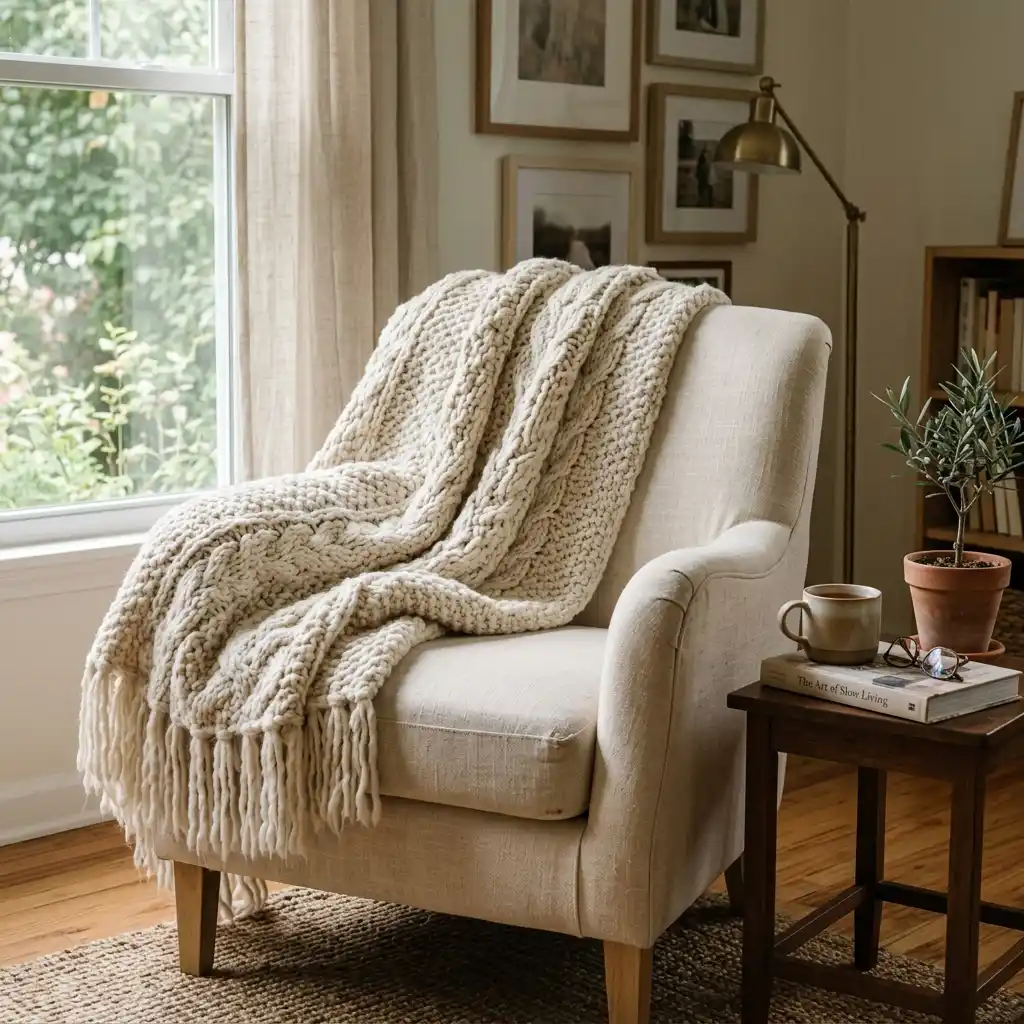
A finished corner runs on five things. Add them in this order and stop when it is done, because a second half-built corner undoes the first.
A Throw Sized for a Body, Not a Sofa Arm
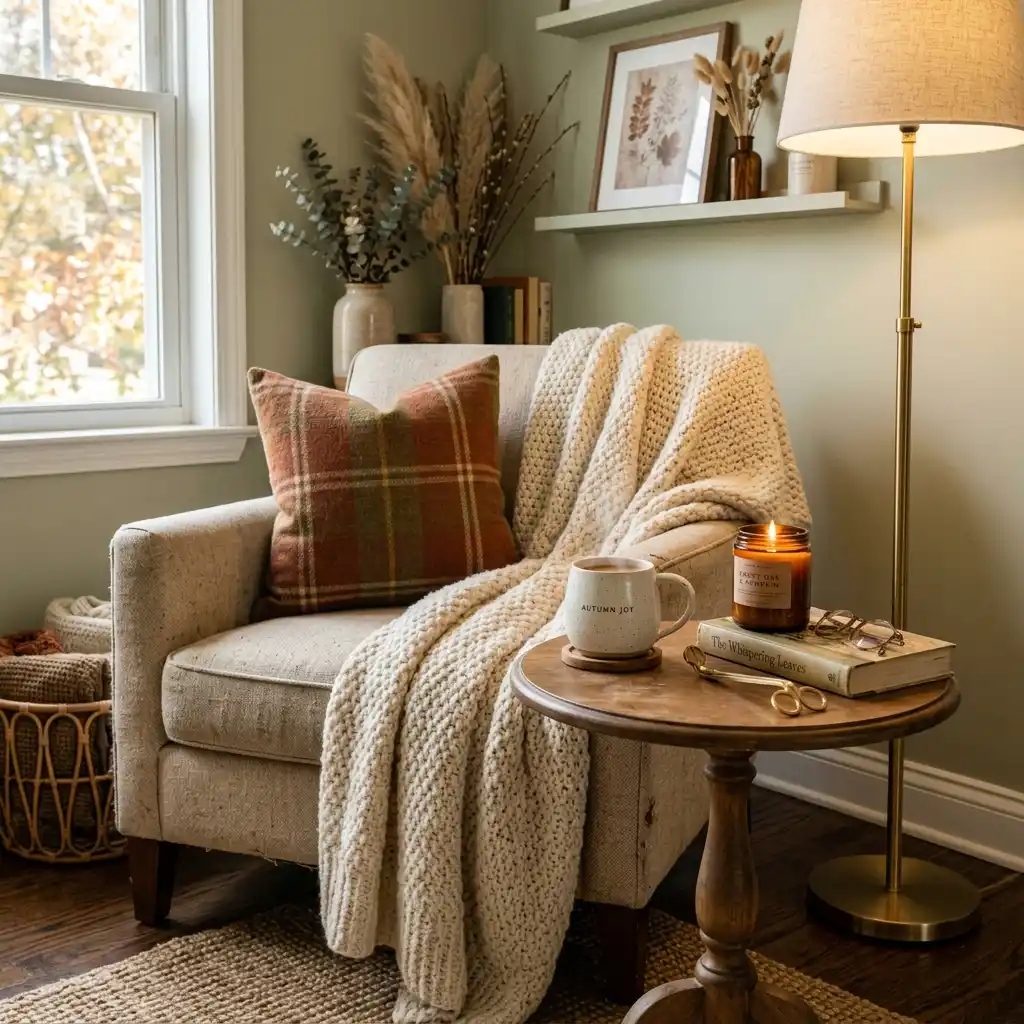
A throw only counts if it covers the person sitting under it. The US retail standard, about 50 by 60 inches, clears that bar for one adult; the half-size decorative rectangles folded over a sofa arm never do, which is why they never get used. Weight decides the rest. Rule of Thumb: inside the reach zone, buy for weight before color — a loose-knit cotton throw does almost nothing against skin, while wool blends and heavy brushed cotton hold heat where a seated body actually loses it. The color is visible from across the room. The warmth is only available from the seat.
A Surface Within Two Inches of the Arm
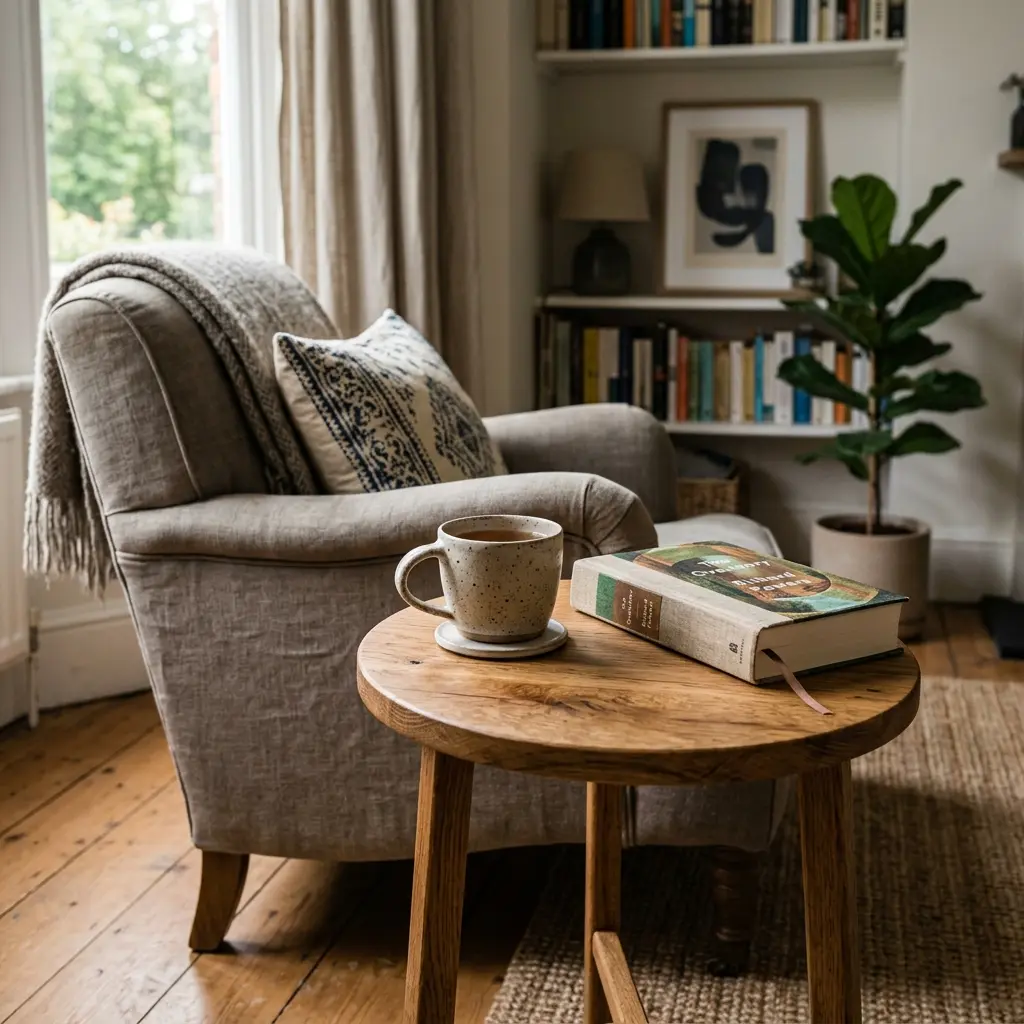
A side table earns its place by height, not by looks. Most sofa and chair arms sit between 24 and 32 inches, and the table should land within about 2 inches of that arm so a mug goes down without looking. Designer Rule of Thumb: if you lift your elbow to reach the table it is too tall; if you drop your shoulder it is too low. A 15- to 18-inch round top in oak, walnut, or stoneware holds a mug, a book, and one small object. Skip anything wider — a big surface inside the zone fills with mail by week two.
Light That Sits Below Eye Level
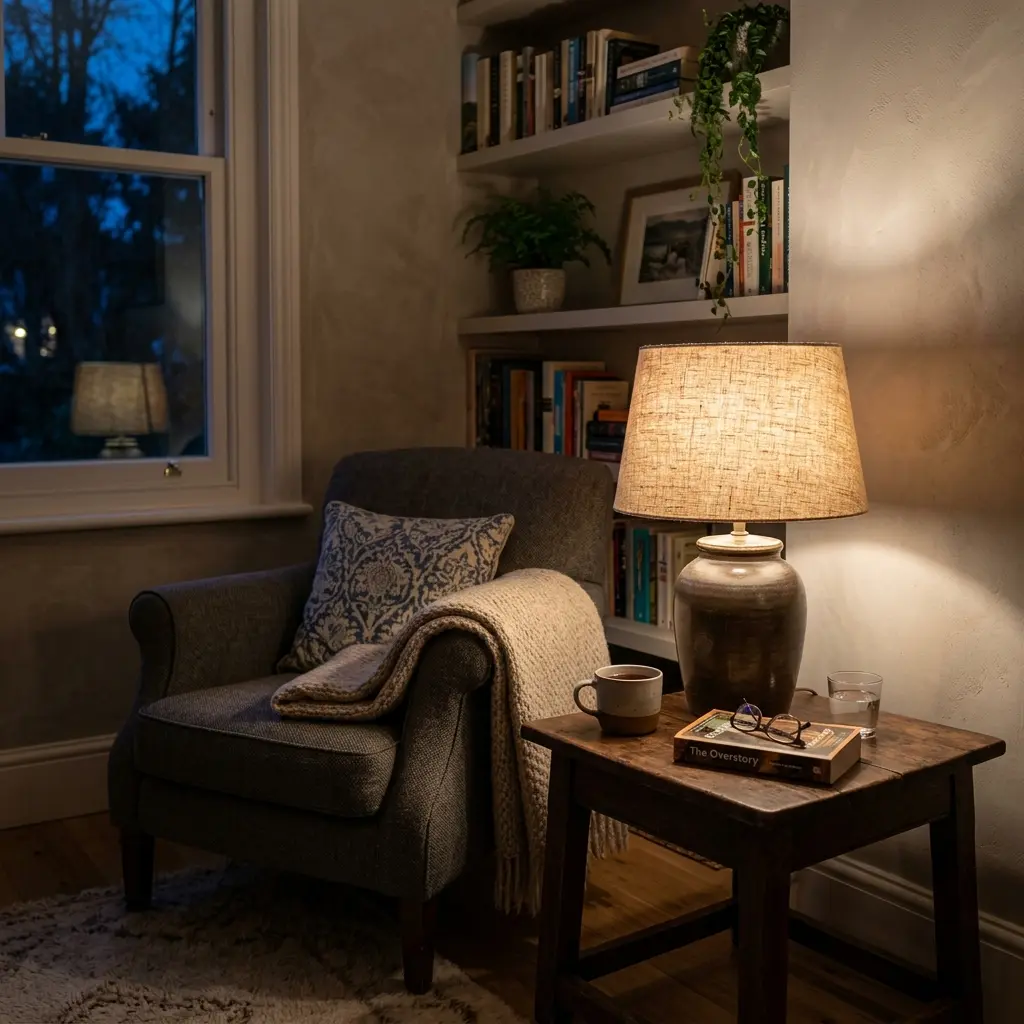
One lamp inside the corner does more than any ceiling fixture. The bottom of the shade should land near seated eye level so the bulb stays hidden and the light falls on your hands, not into your eyes. On a 24-inch side table, a 26- to 30-inch lamp gets there. Fit a warm-white bulb, not a daylight one, so the overhead can go off after sunset. These cozy bedroom lighting ideas apply the same logic to a bedside, and our living room lighting ideas cover the wider room.
One Warm Object You Touch Every Day

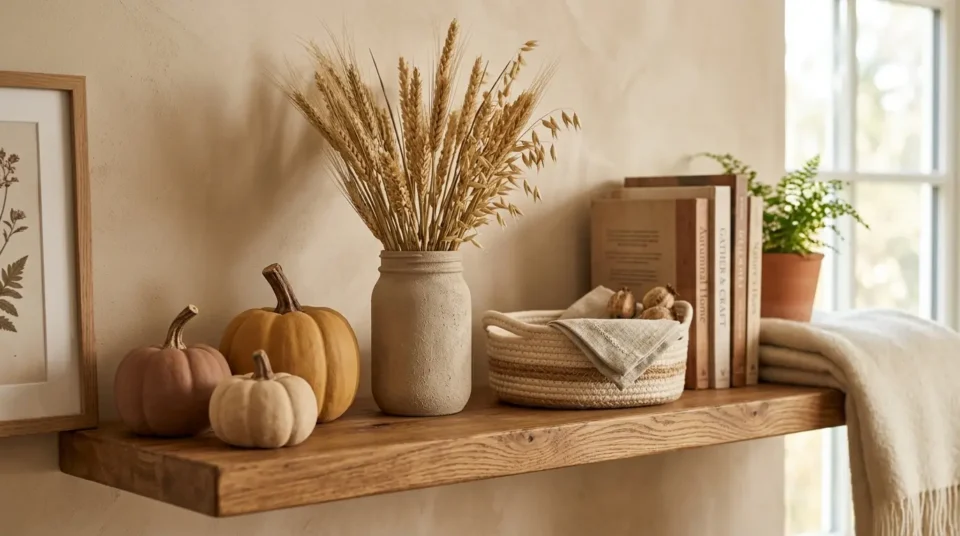
Every corner needs one seasonal object at close range, and one is enough. A stoneware mug in clay or oatmeal, a small vase of dried wheat, a wood tray — the test is whether you would pick it up. Objects at three feet register texture, weight, and temperature; the same object across the room registers as a shape. One uncarved pumpkin on the side table beats five lined along a mantel you never walk past.
Heat or Scent in the Air
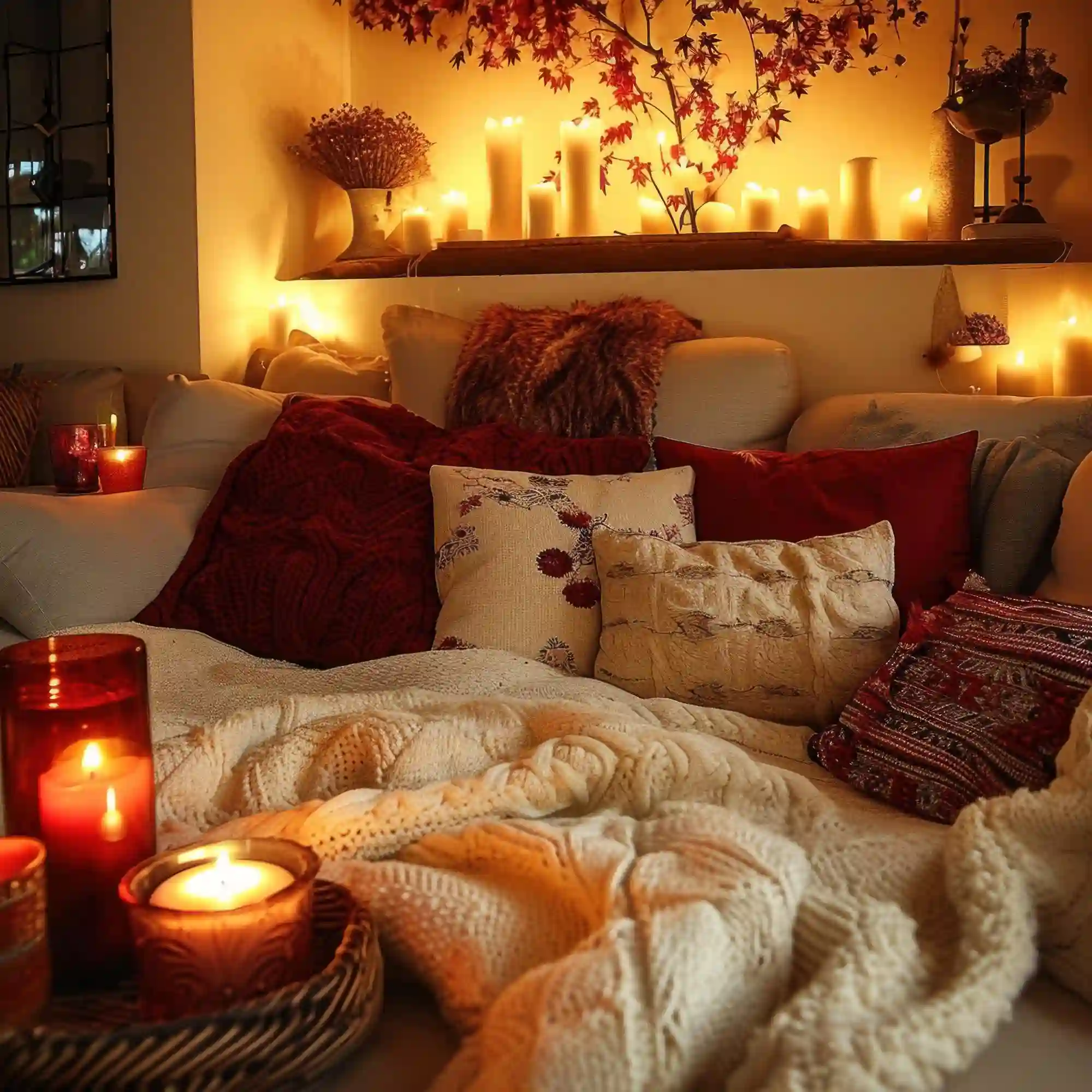
The last layer is the one that moves. A candle, a reed diffuser, or a mug of something hot puts warmth or scent into the air inside the zone, and air is the part of a room your body reads fastest. Safety Note: the U.S. Fire Administration advises keeping candles at least 12 inches from anything that burns, blowing them out when you leave the room, and skipping open flames in bedrooms. In a corner built around a throw, dried stems, and a curtain, a flameless candle or diffuser is the safer default.
Where the Corner Goes, Room by Room

The living room corner is almost always the sofa end nearest a lamp outlet, not the middle cushion and not the accent chair by the door. In a bedroom it is the side of the bed you sleep on, which makes the nightstand the whole project — these nightstand decor ideas cover that surface, and our fall bedroom refresh ideas handle the bedding above it. A kitchen rarely has a real seat, so the corner shrinks to one warm-toned tray beside the kettle. Cozy fall decor scales down cleanly; it just cannot be spread out.
One corner per room you spend evenings in is the ceiling, and two rooms is plenty for most homes through October and November. These designer-approved techniques for a cozy bedroom work in any season.
Where the Cozy Feeling Leaks Out

Instead of spreading a bin of fall pieces across every shelf, console, and windowsill, Try putting most of it inside one seating corner and leaving the rest of the room bare until that corner is finished.
Instead of styling the guest chair nobody sits in, Try building around the seat with the worn cushion. Cozy only counts where a body actually lands.
Instead of leaving the ceiling fixture to do all the work, Try one warm-white lamp inside the corner. Overhead light flattens texture, which is the thing you spent the money on.
Instead of folding a small decorative throw over the sofa arm, Try an oversized one someone can pull across their legs without it sliding to the floor.
Instead of pushing a reading chair tight against a large window in late October, Try moving it two feet inward or hanging a lined curtain. Cold glass draws heat off you even when the room air is warm.
What One Corner Costs to Build
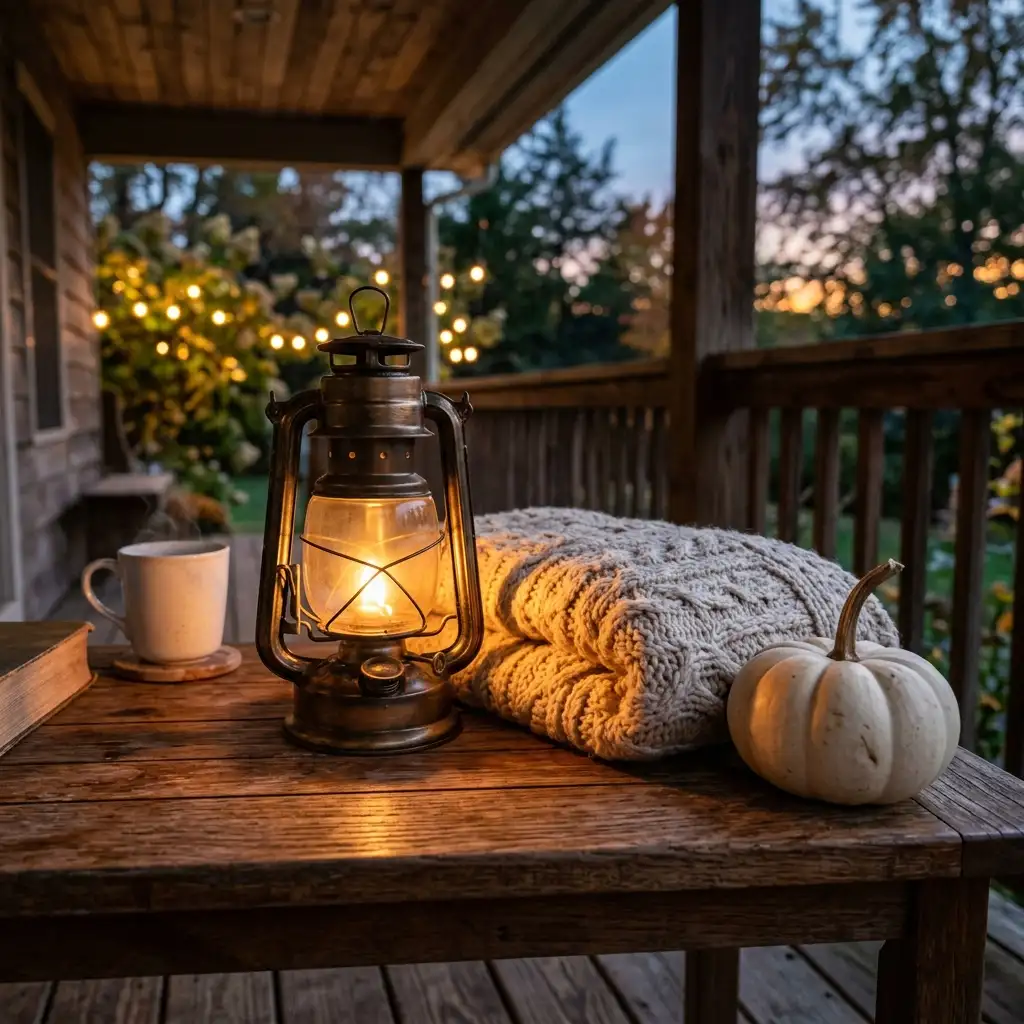
A single corner runs about $25 at the low end and rarely passes $400 fully outfitted. Nearly all of it stays in use after the season, which is the main argument against the seasonal props it replaces.
| Project | Estimated Cost | Impact Level |
|---|---|---|
| Warm-white bulb swap + one wool-blend throw | $25-$55 | High |
| Table lamp sized to the side table | $45-$120 | Very High |
| Side table matched to the chair arm height | $60-$150 | Medium |
| Full corner: throw, lamp, table, small rug, scent | $180-$400 | Very High |
Under $60, the bulb and the throw carry the corner alone. Around $150, a lamp joins them and the ceiling light comes off the rotation. Past $250, the rug and side table finish the zone for good.
Best First Upgrade: A table lamp with a warm-white bulb inside the reach zone — it changes the corner after dark more than any textile does.
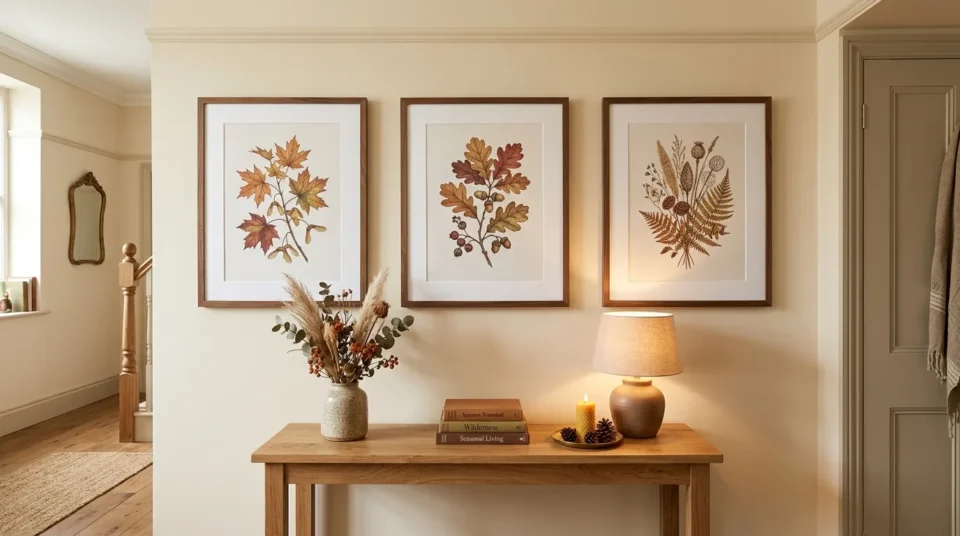
Skip for Now: The console-table vignette. Nothing on a surface you walk past makes a room feel warmer.
What I’d Build First
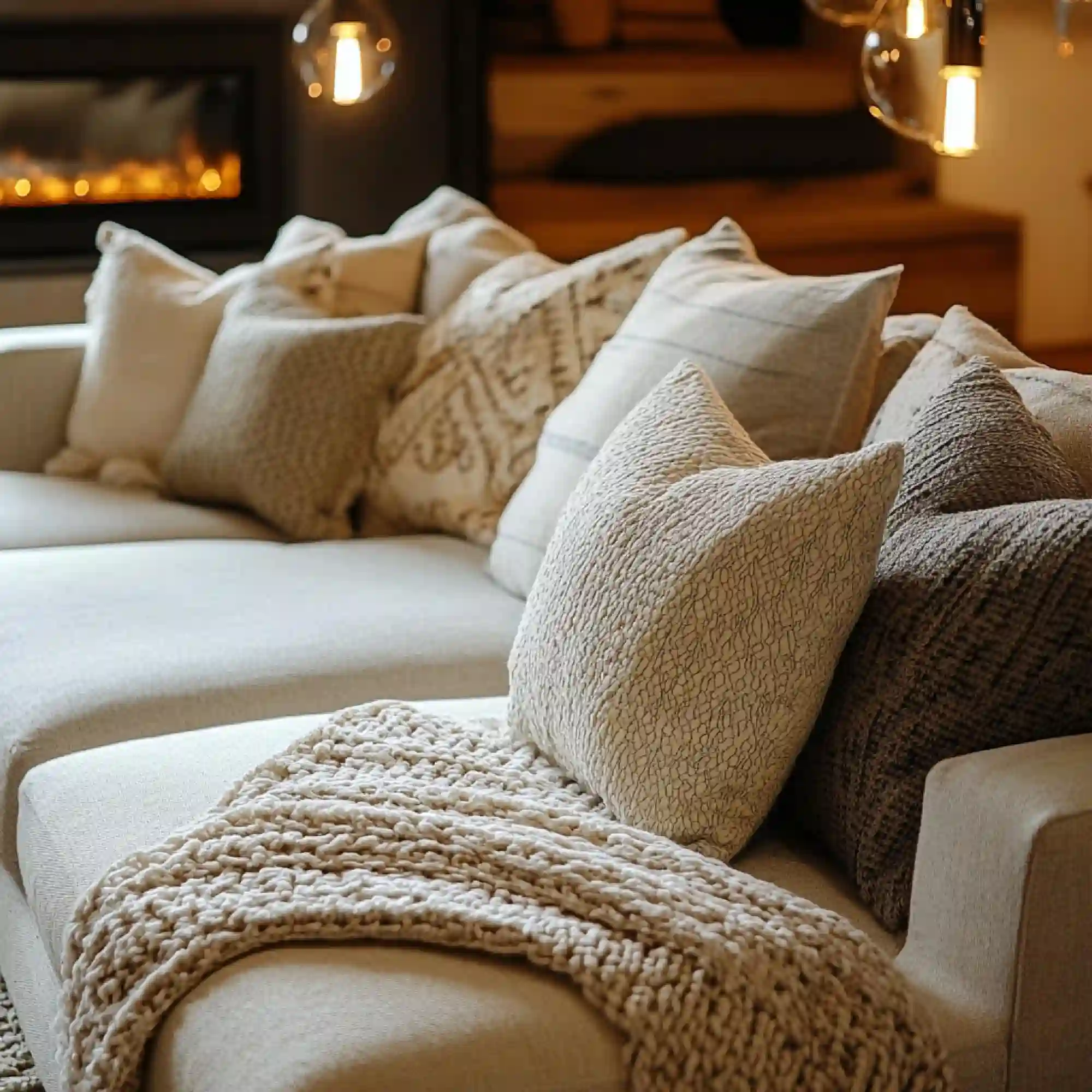
One finished corner beats five styled surfaces, every October. Get the throw size and the lamp height right and the season arrives in the room; get them wrong and no amount of stems, signs, or garland makes up the difference. When the palette turns evergreen in December, these cozy winter decor ideas pick up the same corner with a colder set of materials.
Frequently Asked Questions
Conclusion
The bin of fall decor was never the problem — the even spread was, and the fix is to concentrate rather than distribute. A living room with one fully outfitted armchair corner feels warmer in October than the same room with a seasonal object on every shelf and the ceiling light doing the work, which is why cozy fall decor pays off where a body actually lands. For more ways to warm a room this season, browse our home decor ideas and inspiration.