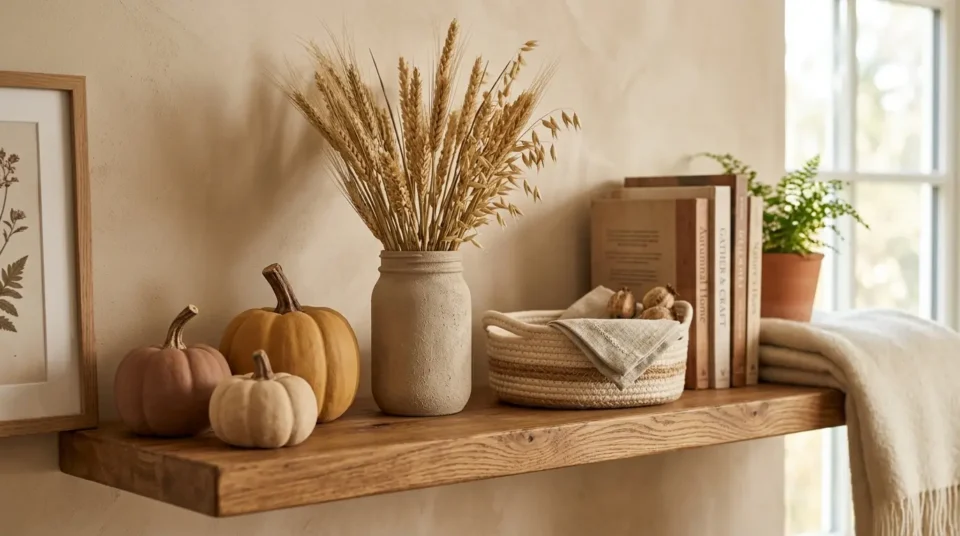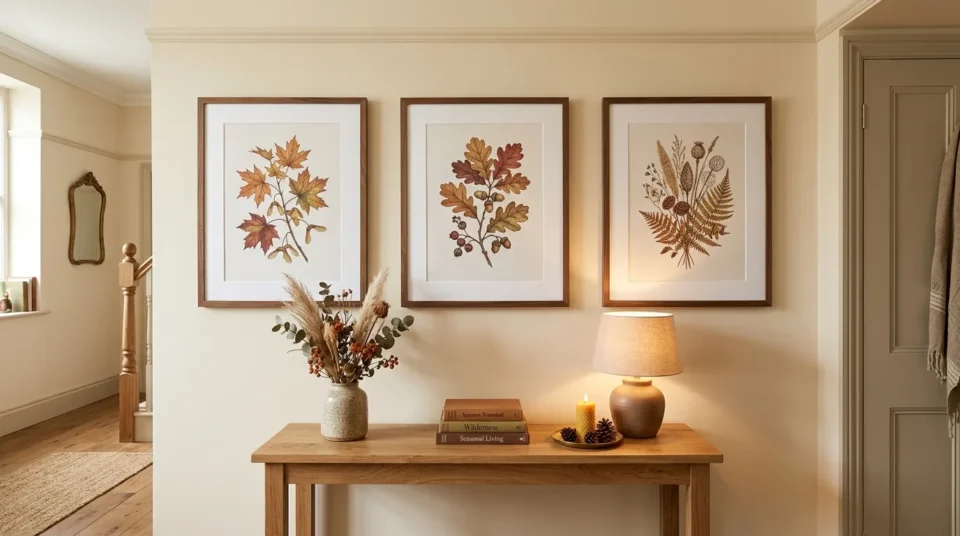
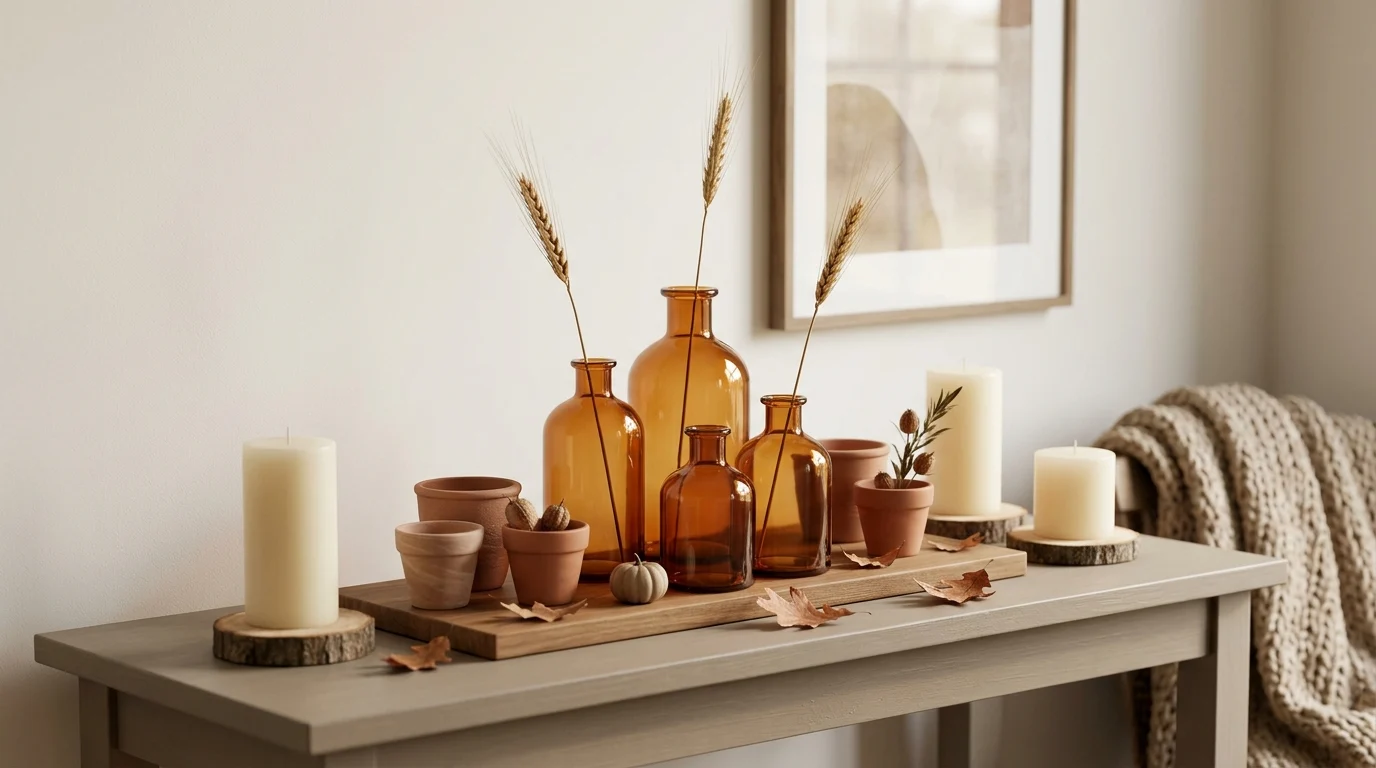
The Fall Aisle Fills Up in August and Empties by Labor Day
The endcap goes up while it is still ninety degrees outside. Two rows of orange, a wall of foam pumpkins with painted faces, glittered stems in a bin, and somewhere behind it all, a shelf of plain glass cylinders nobody is touching. By the middle of September the orange is gone and the plain glass is still there.
Looking for more ideas? Explore our full guide to DIY Fall Decor.
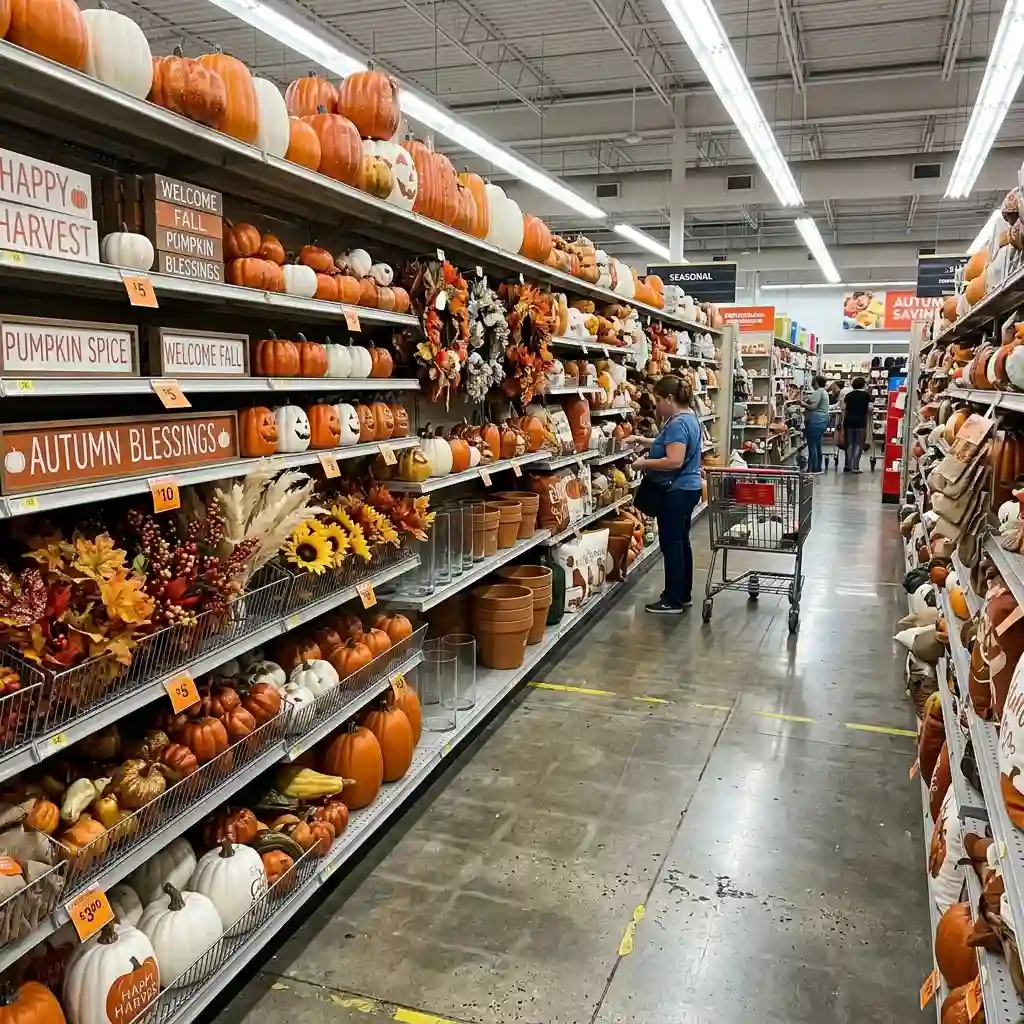
That plain glass is the part worth carrying home.
Dollar Tree fall decor works when you treat the store as a materials aisle rather than a decorations aisle. The pieces that already look like fall — printed signs, glitter stems, molded plastic pumpkins — are the ones that read cheap in a real room. The plain, undecorated things — glass, terracotta-look pots, unfinished wood, solid-color stems, white candles — are the ones that disappear into a styled surface and let you spend your real money on one good piece. If you are pulling together a broader plan first, start with these creative fall and autumn decor ideas.
✦ Free for readers
500+ Original Home Decor Images, Yours to Keep.
Curated room by room, high‑resolution and royalty‑free — created in‑house by 101HomeDecor, not stock. No attribution needed.
Free forever · about one email a month
Why Everybody Suddenly Shops the Dollar Store for Fall
Seasonal decorating used to mean one autumn trip to a craft store. That habit has shifted, and the dollar store is where a lot of it landed. Part of it is price fatigue after several expensive holiday seasons. Part of it is that fall is the longest decorating stretch of the year — roughly eight weeks between the first cool morning and Thanksgiving — and nobody wants to spend Christmas money twice.
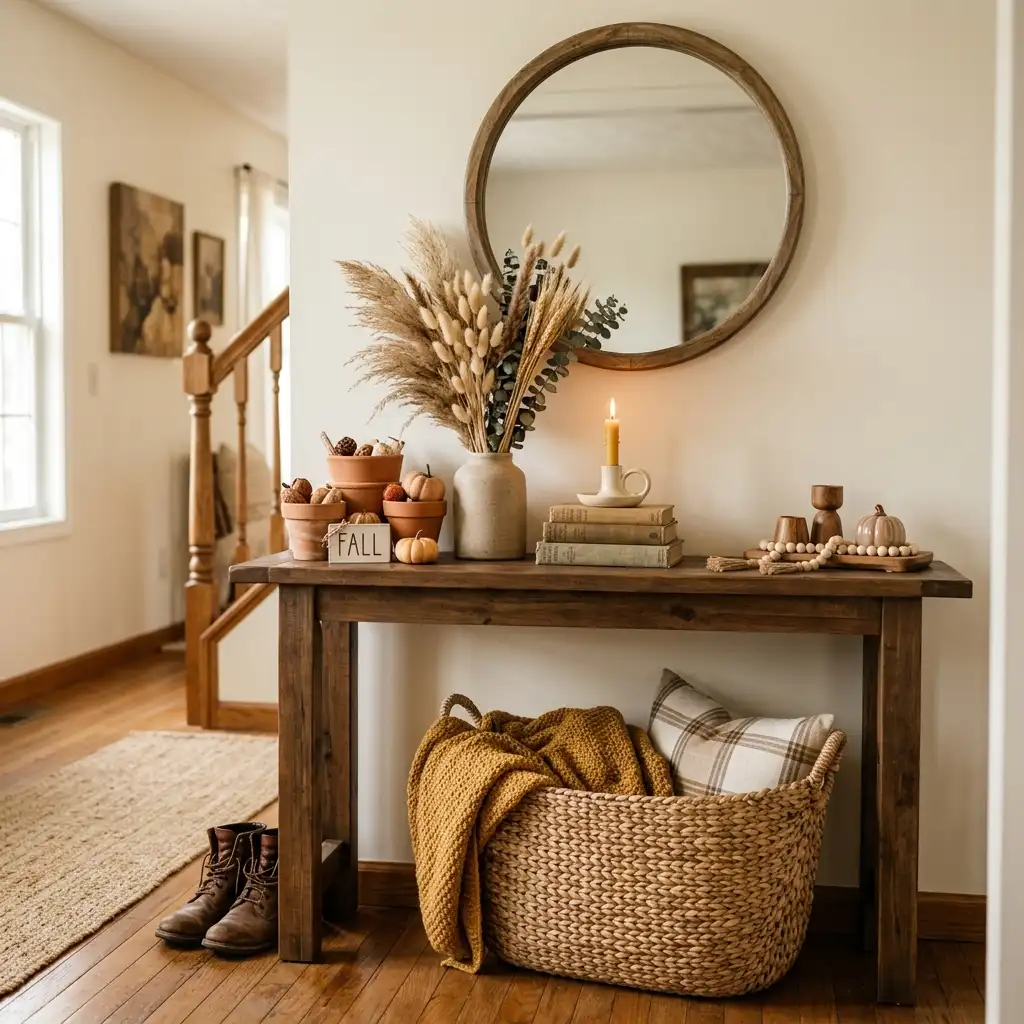
The store itself changed too, which matters more than most shoppers notice. Dollar Tree has been rolling out multi-price shelves that run well above the old single price, and industry reporting on its 2026 store plans describes hundreds of new locations built around a $3 to $5 assortment alongside the $1.25 base. So “dollar store” is no longer one price. It is a spread, and the $5 shelf is where the store stops being obviously cheap and starts competing with the low end of a craft store.
Signs This Is Catching On:
- Multi-price shelving is expanding across the chain rather than staying a test, with more $3 to $5 seasonal stock than the aisle carried three years ago.
- Fall sets now arrive in stores in August, weeks ahead of the season, which is retail’s own signal that the category sells.
- Search interest around cheap fall decor and dollar store hauls climbs every August and holds through October, then collapses — a seasonal spike, not a passing fad.
The Sort That Decides Everything Is Decorated vs Undecorated
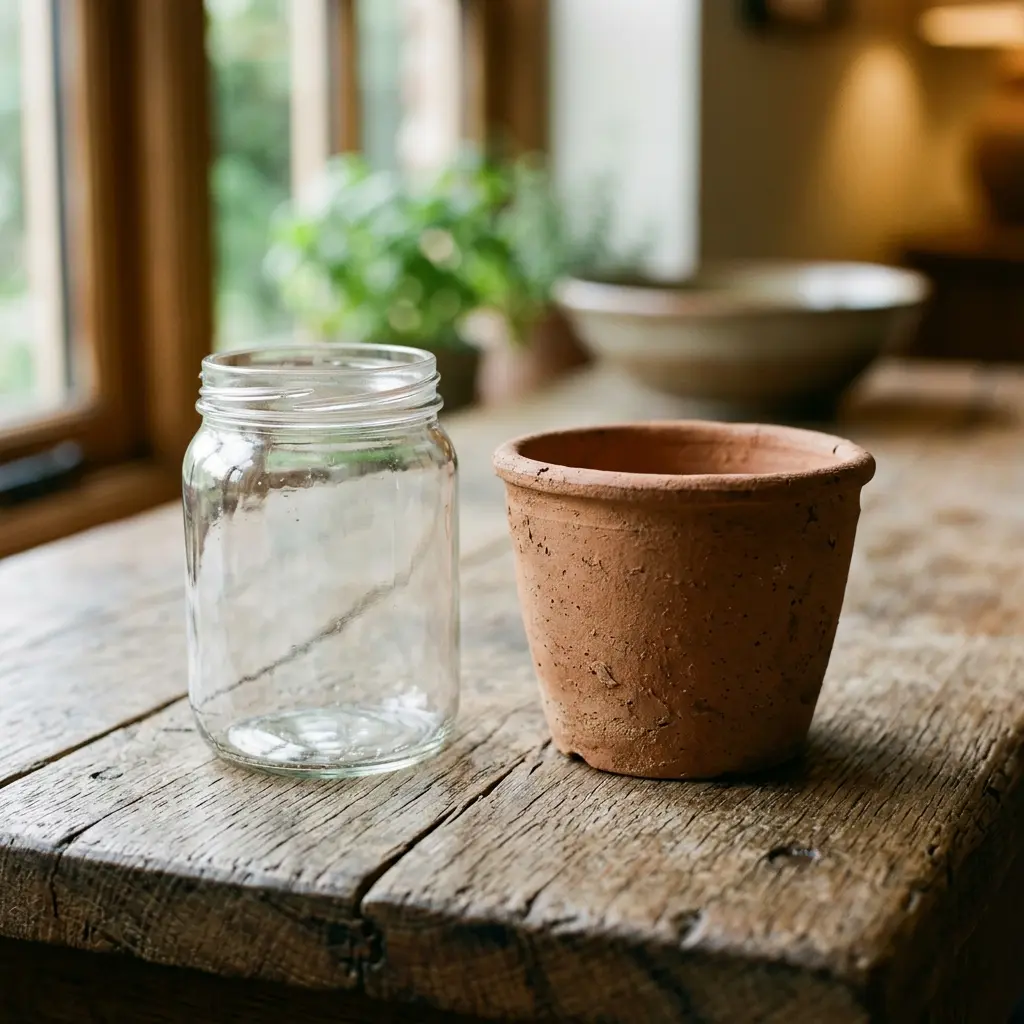
Here is the whole method in one line: buy the thing that has not been decorated yet.
A $1.25 glass cylinder is a $1.25 glass cylinder in any house. Nobody can price it. A $1.25 sign printed with a leaf graphic and the word HARVEST is legible as a dollar-store object from across the room, because the printing is the cheap part. The same is true of glitter, of orange-and-brown plastic molded to look like a gourd, and of anything with a pre-tied ribbon.
Undecorated objects are priced by material and shape, and glass, ceramic and wood look the same at every price point once they are styled. Decorated objects are priced by their artwork, and artwork is exactly where a $1.25 budget shows. That single test — has someone already decorated this for me? — will sort a whole cart in ten minutes.
*Designer Tip: Turn the item over before it goes in the cart. If the back is hollow, unfinished plastic with a molded seam, it only works standing dead-center against a wall — and that limits where it can ever live.*
Six Things Worth Buying at Dollar Tree This Fall
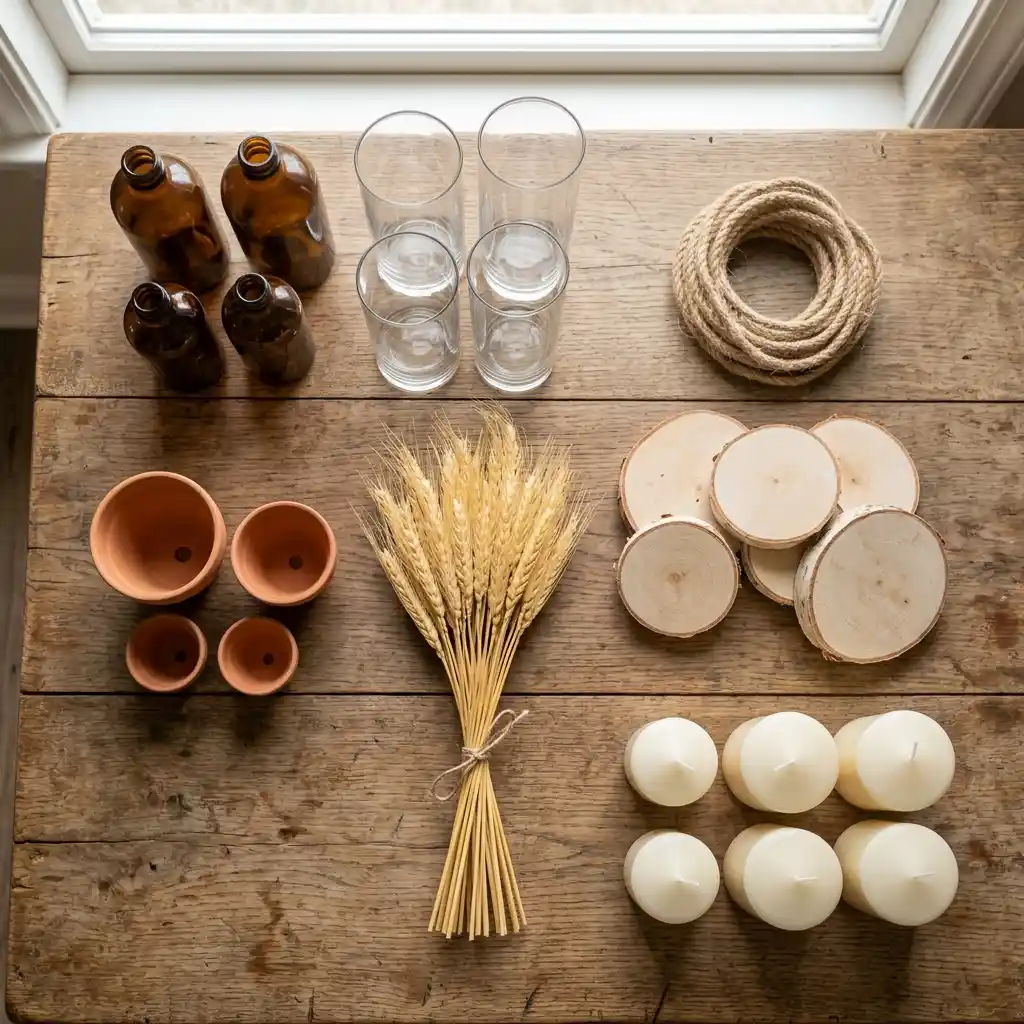
These six categories survive the sort above, and all six are things you would otherwise pay a craft store four to six times more for. Buy across them narrowly rather than broadly — depth in two categories beats one item from each of six.
Clear and Amber Glass
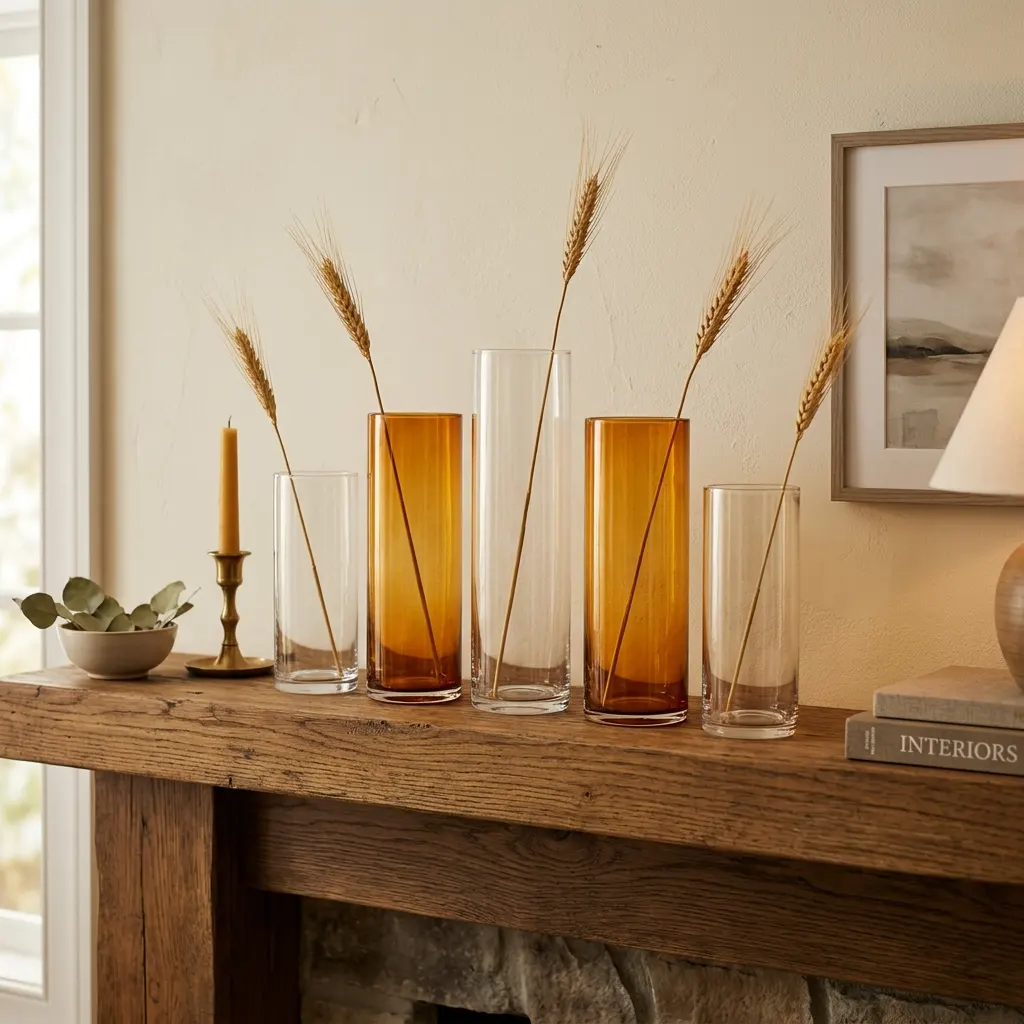
Glass is the single best buy in the store, and amber glass in particular has become one of the defining fall materials of the last few seasons. Look for straight-sided cylinders, small apothecary jars and squat votive holders. Buy in odd numbers, five or seven, in two or three heights.
Glass has no tell. A cylinder holding three wheat stems on a mantel is not readable as inexpensive, because the visual interest comes from what is inside it and how many of them there are. The same vessels refill straight through the cold months, which is how these winter centerpieces for table arrangements are built. Check the rim for chips and the base for a heavy mold seam, and skip anything with a frosted printed pattern.
Terracotta-Look Pots and Glazed Ceramic
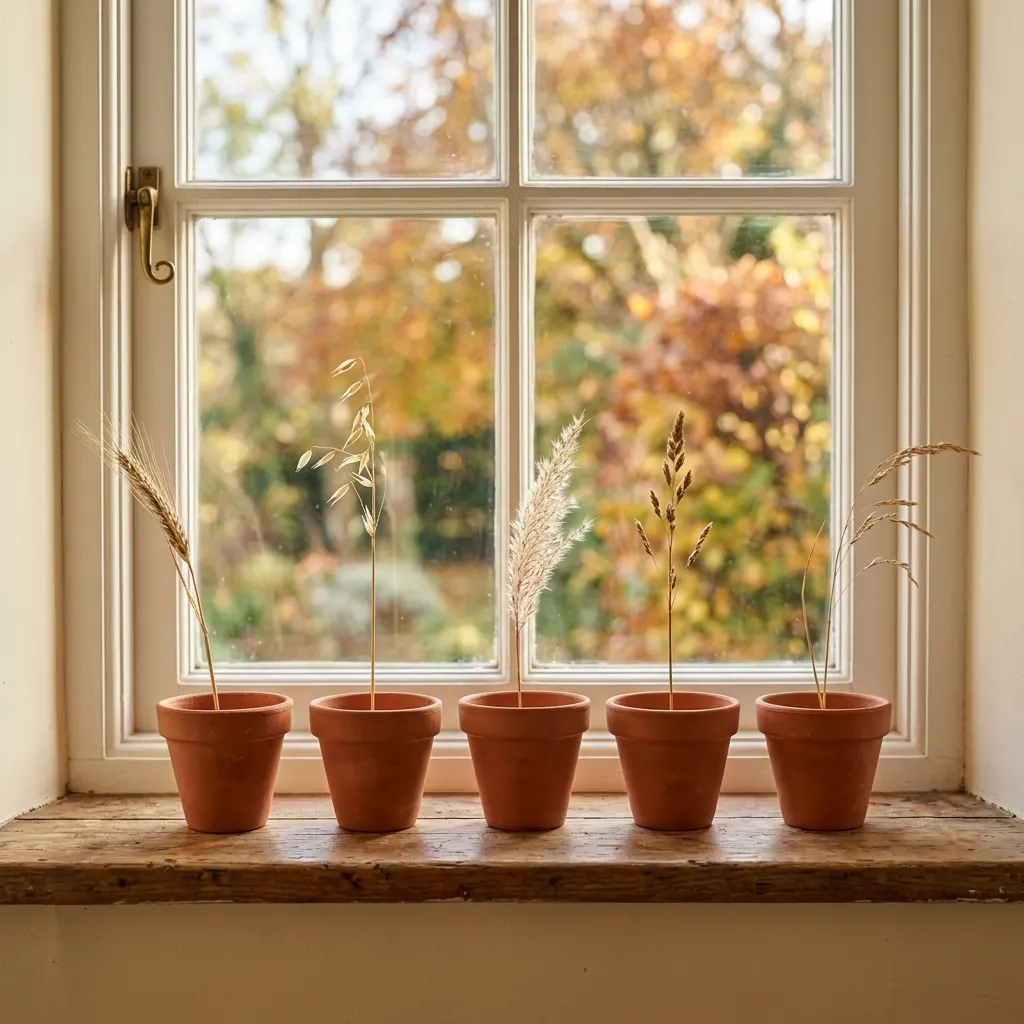
Small pots in unglazed terracotta or a simple matte glaze are the second-best buy. They read as warm clay, they group beautifully in threes, and they hold everything from a faux stem to a real trailing plant.
Skip the ones with a painted face or a printed word on the front. Look instead for a plain body in muted clay, cream or a soft sage. A row of five small pots along a windowsill, each with a single dried stem, is a complete fall vignette for under ten dollars and does not look it. For more low-cost styling of this kind, our budget decorating ideas archive covers the same thinking room by room.
Unfinished Wood Rounds, Crates and Trays
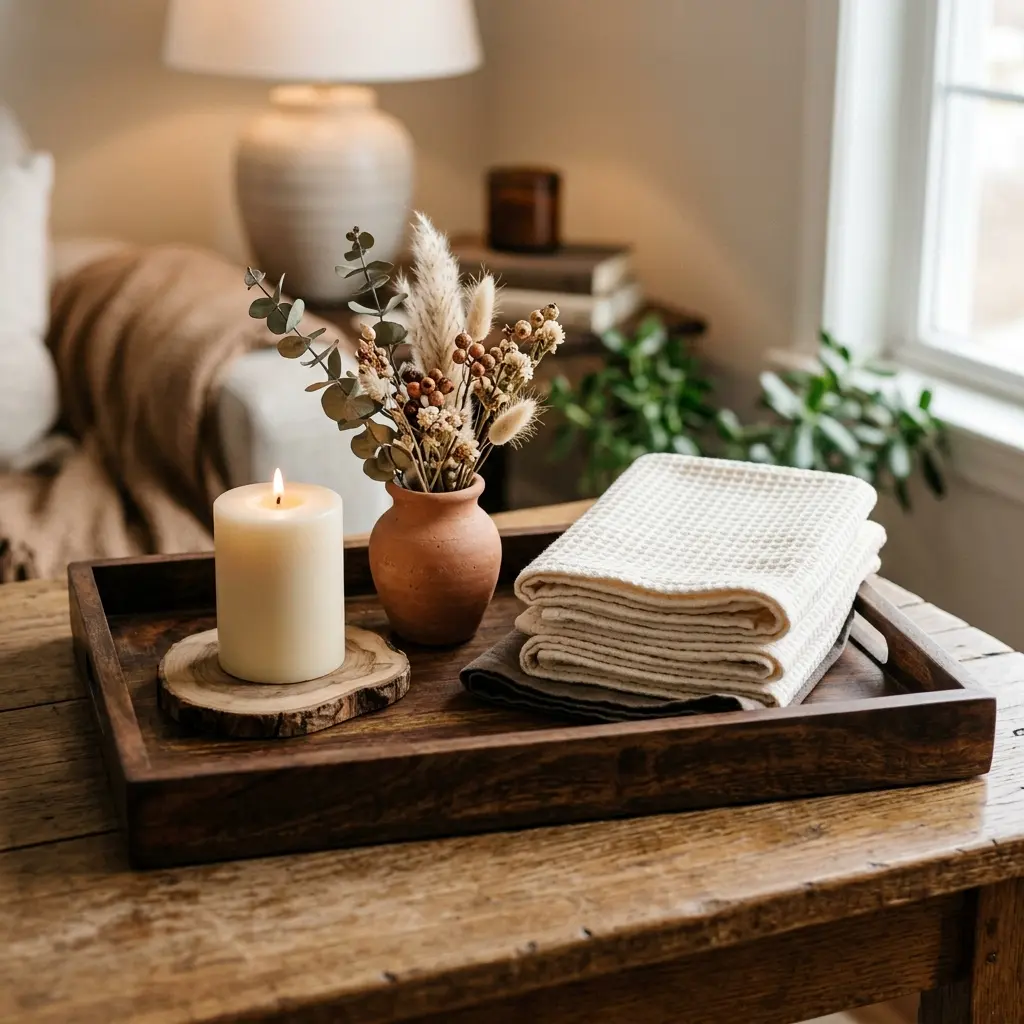
Raw wood is warm, cheap and impossible to date. Slim wood rounds work as risers under a candle or a pot, small crates corral clutter on a console, and a plain tray gives any grouping an edge to sit inside.
Wood is also the easiest thing in the store to upgrade. A wipe of dark walnut stain on a pale pine round takes four minutes and moves it from craft-aisle blonde to something that reads like real furniture. Material Note: unfinished softwood absorbs stain unevenly, so a light coat of pre-stain conditioner first will stop the blotching.
Solid-Color Faux Stems and Loose Filler
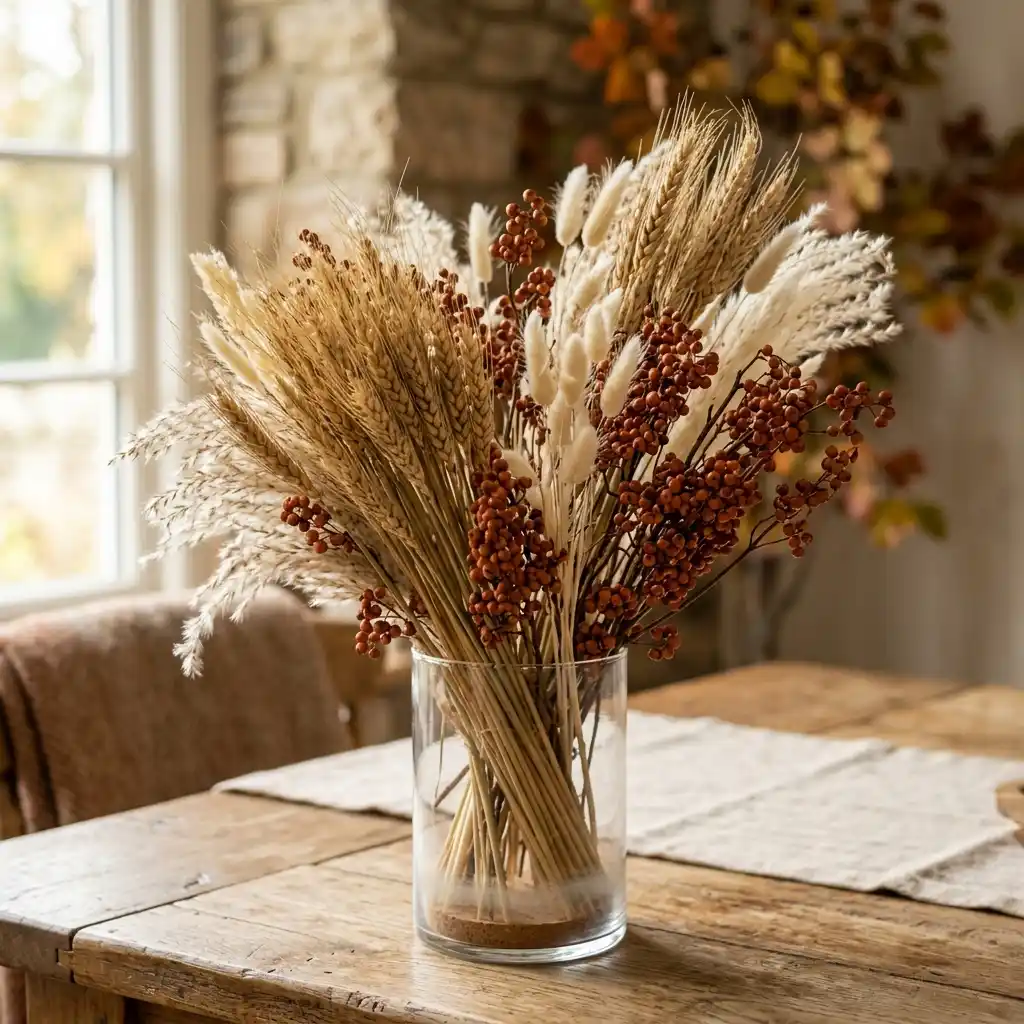
Stems are where most people go wrong and where the savings are largest. The rule is solid color only: wheat, plain eucalyptus shapes, muted berry stems, dried-look grasses in wheat, rust or bleached cream. No glitter, no metallic tips, no two-tone ombre spray.
Check the stem itself, not the head. A wire core bends and holds; a rigid plastic core snaps and forces every stem to point the same direction. Pull one leaf — if it slides straight off the wire, the whole bunch will shed by November. Buy three or four bunches of one stem type rather than one bunch each of four types.
Plain Pillars, Tapers and Tealights
Unscented white and ivory candles are consistently the best value in the store. Cheap wax burns faster and less evenly than a premium candle, but a taper in a real holder or a pillar on a wood round is doing a visual job more than a burning one.
Buy plain. Skip anything with a printed sleeve, a glitter coating or a strong artificial scent, which is where low-cost candles are weakest. Safety Note: the National Candle Association advises trimming wicks to a quarter inch before each burn and stopping once half an inch of wax remains — worth following closely with inexpensive wax, which tends to sit deeper in its holder.
Baskets, Jute and Cotton Towels
Natural fiber is the last of the six. Small woven baskets, jute rope, plain cotton dish towels and simple burlap squares all carry real texture, and texture is what a room actually reads as expensive.
One caution on the textile shelf: thin polyester runners and printed pumpkin dish towels are not the same category. Look for cotton, and check the weave against the light — if you can see through it easily, it will not drape. A stack of three plain cream towels beats one printed autumn set every time.
How Do You Make $1.25 Pieces Read as Intentional?
Four moves separate a styled surface from a haul dumped on a console. Do all four and almost nobody can price what they are looking at.
Buy in multiples, not in variety. Five of one glass cylinder in staggered heights looks like a collection. One cylinder, one pumpkin, one sign and one candle looks like a shopping trip. Repetition is the cheapest luxury signal there is, and it is one of the few practical decorating tips that works at every price point.
Spray it matte. Warm cream, soft clay or charcoal in a flat finish is the highest-return ten minutes in this whole process. Adhesion is the whole game on plastic — Rust-Oleum’s plastic primer guidance calls for a wipe-down first, one thin coat rather than a heavy one, and a full 24 hours before the piece gets handled.
Contain the grouping. Put the whole arrangement inside something with an edge — a wood tray, a shallow bowl, a slim crate. A contained group reads as one considered object; the same pieces spread across bare surface read as clutter.
Pay the anchor tax. Every grouping needs one heavier piece that did not come from the store: a real ceramic bowl, a stone object, a good wood board, a real dried branch. It costs $20 to $40 once, it comes back every year, and it lifts everything sitting next to it. The same principle drives our approach to a bedroom makeover on a budget — one real piece, then cheap around it.
The Dollar Tree Fall Checklist
Run this list before you go, and again in the aisle.
- Set a hard cap in dollars and a hard cap in items — most people overspend on quantity, not price.
- Pick two categories to buy deep in, and ignore the other four this trip.
- Buy odd numbers, five or seven, in at least two heights.
- Turn every item over and reject hollow backs, molded seams and printed graphics.
- Carry one real anchor piece into every grouping, bought elsewhere.
- Check that everything in the cart stores flat or nests, or it will not come back next year.
KEY TAKEAWAY: Depth in two categories will always style better than one item from every shelf.
One Surface, One Grouping: The Rental and Small-Room Version
If you rent, this is the easiest seasonal decorating there is — none of it is fastened to anything. Rental Note: keep it to freestanding groupings on surfaces you already own and skip adhesive hooks entirely, since removable strips still lift paint on older walls.
In a small apartment, style one surface only. A console, a coffee table or a windowsill is enough, and one well-built grouping beats four thin ones. The same restraint applies to how you decorate a small living room on a budget at any time of year.
One question settles the cart in a small home: would you happily re-buy this exact thing next October? Anything you would replace rather than re-shop is a rental of one season, and the price stops mattering. Neutral glass and clay pass that test easily, which is also why they roll straight into cozy winter decor ideas once the amber and rust come out.
Three Ways Dollar Tree Fall Decor Goes Wrong
All three are fixable in the aisle, before any money is spent. The first one causes the most damage, because it is the one that feels like restraint at the time. Buying a single item from six different shelves feels careful and costs little, but it produces six objects that cannot hold a surface between them. Depth is the discipline here, not moderation.
❌ Spreading one of everything across four rooms → ✅ Keep the whole haul on one surface until you own enough for a second.
❌ Buying seasonal color instead of seasonal material → ✅ Choose clay, wood, dried stems and amber glass, and walk past the orange plastic.
❌ Carrying the pieces home unfinished → ✅ Give it five minutes: matte spray on plastic, a stain wipe on pale wood, plastic leaves pulled off the stems.
What $35 Buys, and Where the Savings Stop
A full fall surface is genuinely achievable at well under fifty dollars, but the savings stop at a clear line — the anchor piece and the finish supplies are worth paying real money for, because they carry across every year.
| Project | Estimated Cost | Impact Level |
|---|---|---|
| Six glass vessels plus three bunches of solid-color stems | $12-$18 | High |
| Matte spray paint and plastic primer to refinish a plastic batch | $14-$24 | Medium |
| One real wood tray, stone bowl or ceramic anchor piece | $25-$60 | Very High |
Best First Upgrade: Buy the anchor piece first, at whatever the real price is, and build the cheap layer around it.
Skip for Now: The $5 multi-price shelf until you have checked a craft-store sale price on the same object — that is where the store’s value advantage narrows fastest.
My Take on the Fall Aisle in 2026
The dollar store is now genuinely useful for autumn styling, and that is a real change from five years ago — but only in the plain aisles, and only for people willing to do five minutes of finish work. The multi-price shelves have made the $3 to $5 ceramics and glass legitimately competitive with the low end of a craft store, while the printed and molded stock has stayed exactly where it always was.
Designer’s Verdict: Shop the store for glass, clay, wood and stems, spend your actual money on one anchor piece and a can of matte spray, and walk past every printed sign in the building.
*Designer Tip: Photograph your grouping on your phone before you commit to it. The camera flattens depth and shows you instantly which piece is reading as plastic — it is nearly always the shiniest one.*
Frequently Asked Questions
Conclusion
The useful shift with Dollar Tree fall decor is dropping the idea that you are shopping for decorations at all — you are shopping for glass, clay, wood and stems, and the styling is the part you supply. Buy narrow, buy plenty of one thing, add one real piece you would keep for a decade, and browse more home decor inspiration when you are ready to plan the rest of the season.