Why Does a Rustic Man Cave Feel Warmer Than Every Other Style?
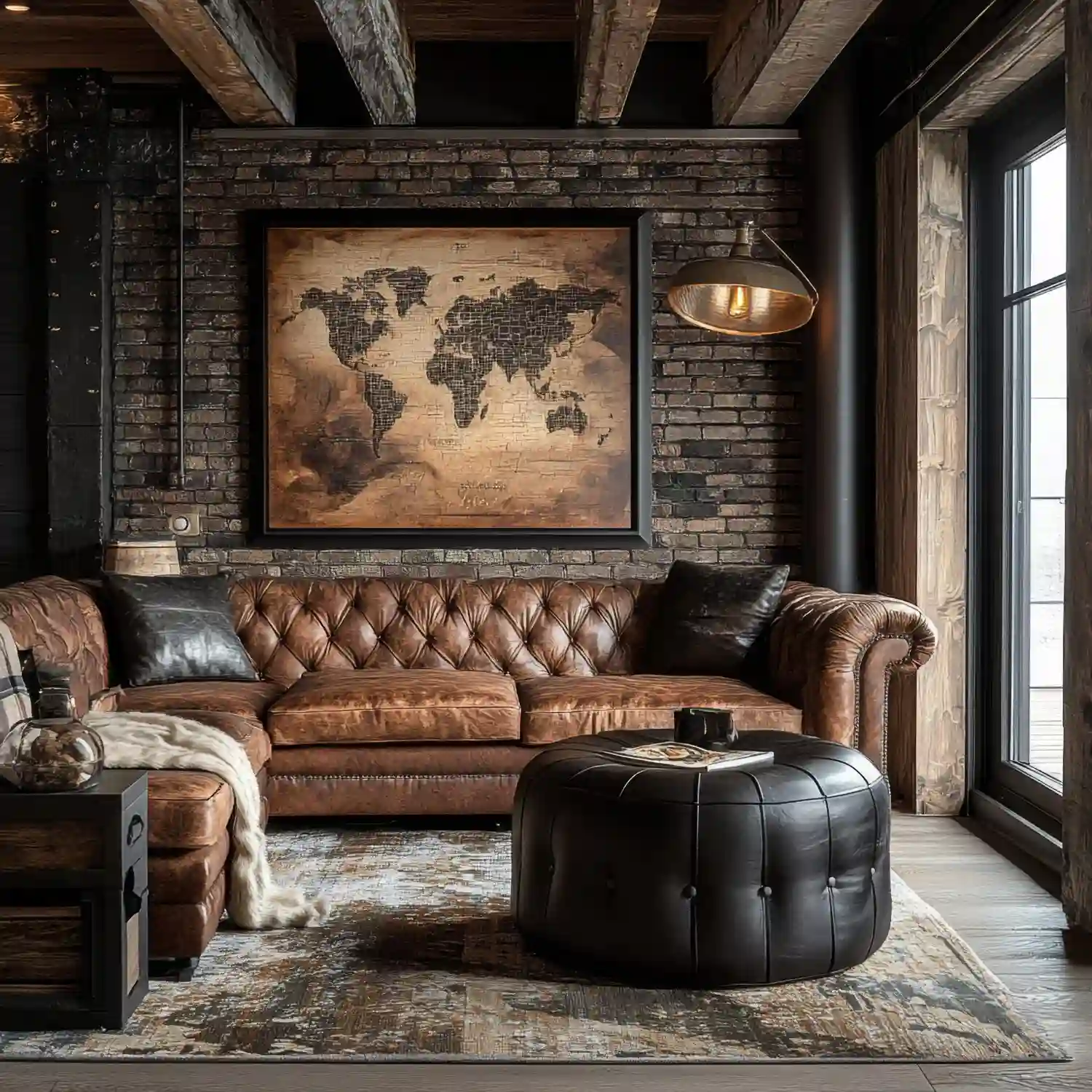
A bare basement corner or an unused garage bay rarely feels like a retreat. Concrete floors, flat overhead light, and a folding chair say storage, not sanctuary. If you’ve ever hung one flag on a blank wall and still felt like the room wasn’t finished — you’re not alone.
Looking for more ideas? Explore our full guide to Man Cave Style Ideas.
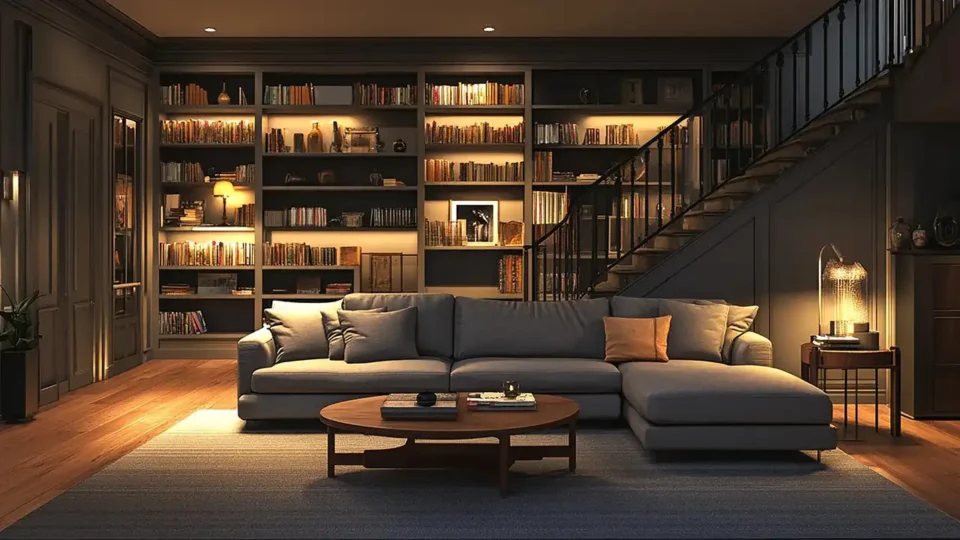
Editorial field note: A cold, unfinished basement corner with flat overhead light usually feels like leftover space. Swap in one reclaimed wood accent wall, a worn leather chair, and a warm brass floor lamp, and the same square footage starts to feel like a room someone actually chose to spend time in.
Rustic man cave ideas work by leaning on natural, textured materials — reclaimed wood, stone, leather, and warm 2700K lighting — instead of matching furniture sets or glossy finishes. The style forgives uneven walls, secondhand furniture, and a tight budget, because texture and warmth carry the room. For most homes, the fastest way in is one wood accent wall or a single leather seating piece, then building outward from there.
This guide walks through 12 rustic man cave ideas for turning a flat, unfinished space into a warm, woodsy hideaway — from wood and stone structural details to the furniture, lighting, and personality touches that finish the room. Our full man cave ideas collection covers every style, and if a more polished spin appeals to you, our classy man cave ideas lean refined instead of rustic. For more whole-home inspiration, browse our home decor idea library anytime. Bookmark this guide for quick reference.
| Quick Takeaways | |
|---|---|
| Materials | Reclaimed wood, stone veneer, and leather do most of the work — skip matching furniture sets. |
| Lighting | Warm 2700K bulbs beat cool white for a cozy, lived-in feel. |
| Furniture | One leather seating piece plus a wood or barrel accent table anchors the room fast. |
| Budget | A bulb swap and one throw can cost under $150; a full build-out runs $4,000 to $7,000. |
| Small Spaces | A single accent wall looks rustic without a full room overhaul. |
Rustic Man Cave Checklist
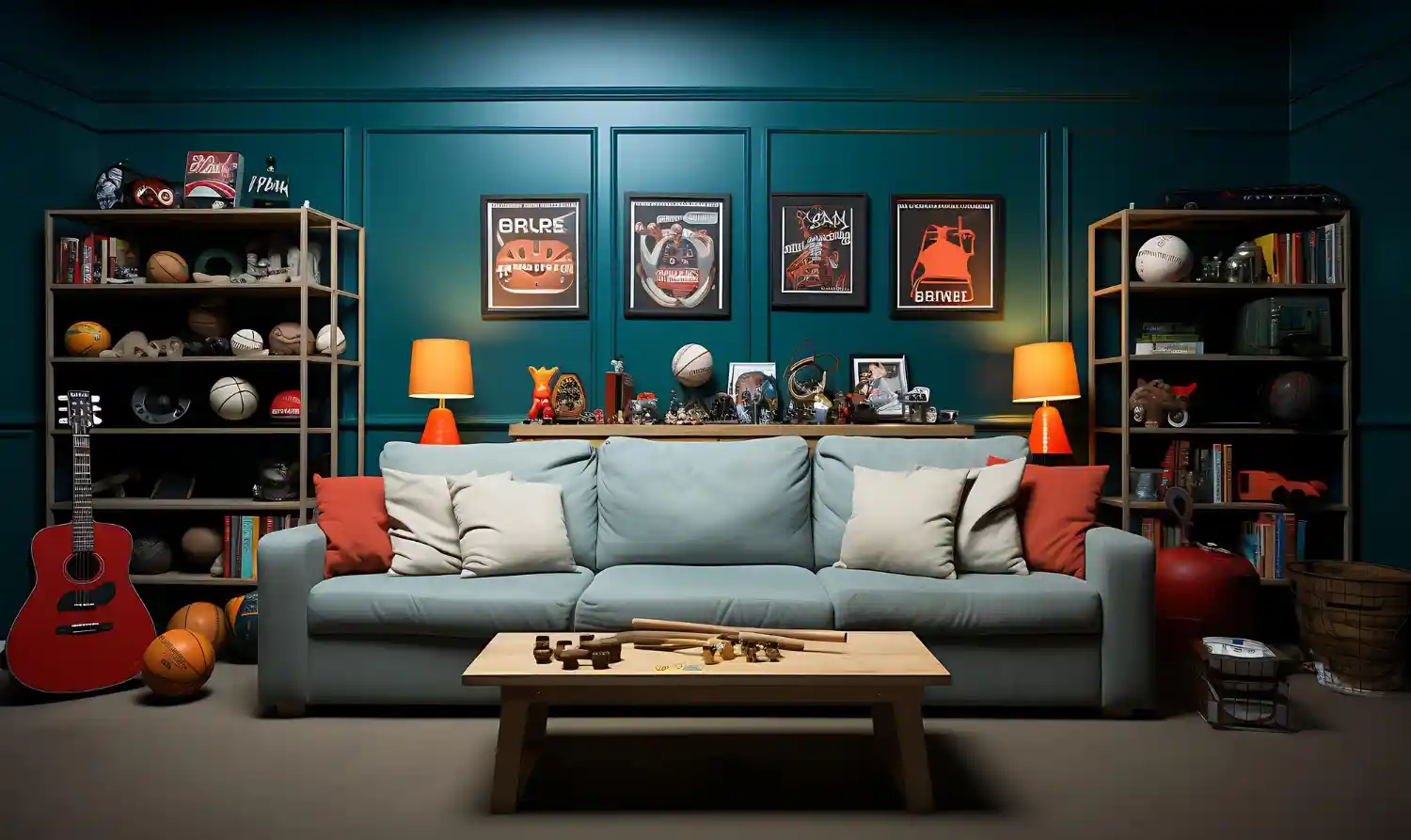
- Pick one dominant wood tone (oak, pine, or walnut) and repeat it in at least two pieces.
- Swap any cool-white bulbs for warm 2700K bulbs before buying new furniture.
- Add one leather or leather-look seating piece as the room’s anchor.
- Use a wool or jute rug at least 8 by 10 feet to ground a seating area.
- Limit stone or brick accents to one wall so the room doesn’t feel closed in.
- In a basement, install a vapor barrier before mounting any wood paneling.
- Cap wall decor at one gallery cluster and one larger anchor piece.
KEY TAKEAWAY: A rustic man cave needs one wood or stone accent, warm lighting, and a leather seating piece to feel finished — not a full material overhaul.
What Wood and Stone Details Make Rustic Man Cave Ideas Work?
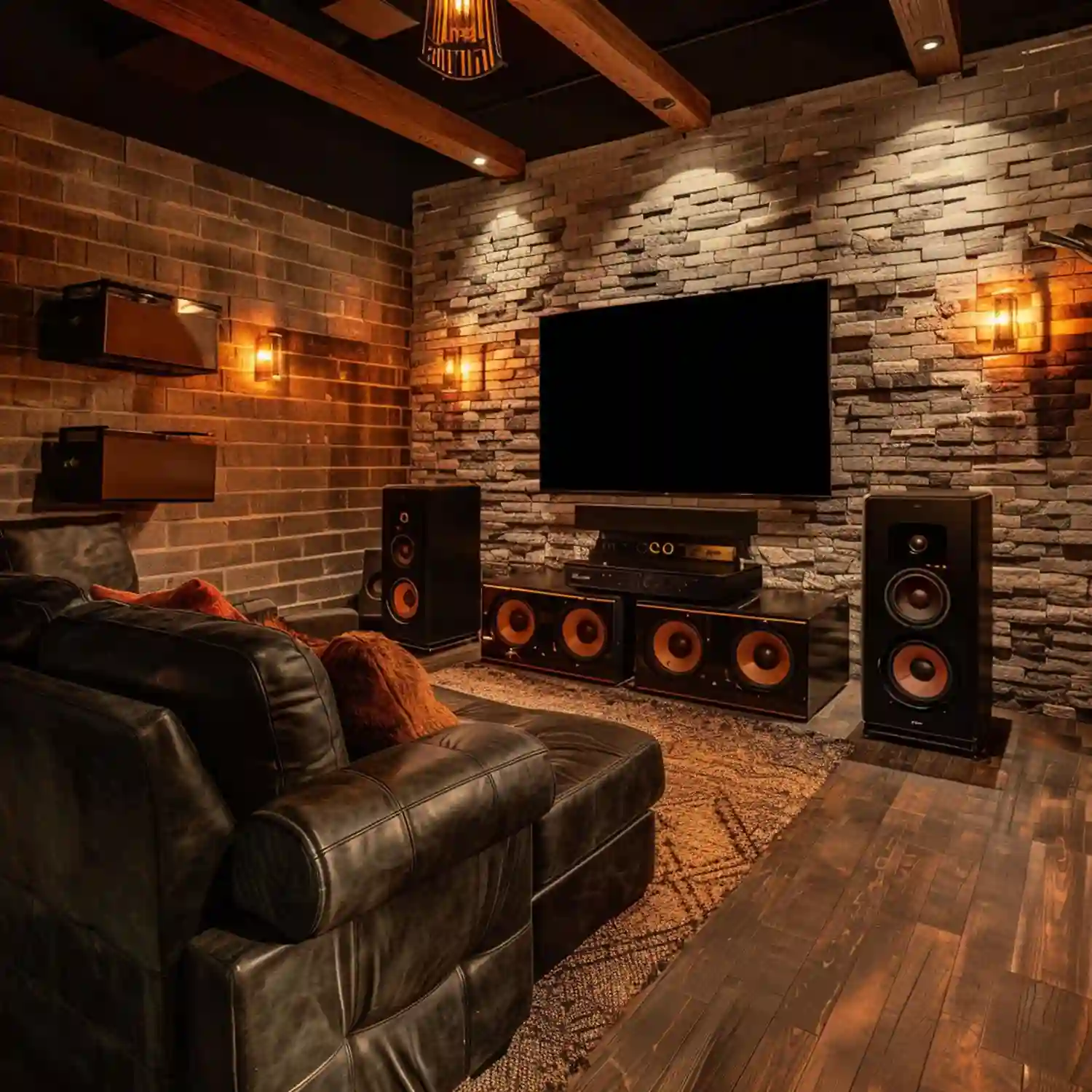
If you love this warm, woodsy palette elsewhere in the house, our cozy winter cabin interior ideas apply the same materials to a living room or seasonal retreat. In a man cave, wood and stone carry most of the rustic weight, so getting these four details right sets the tone for everything else in the room.
Reclaimed Wood Accent Wall
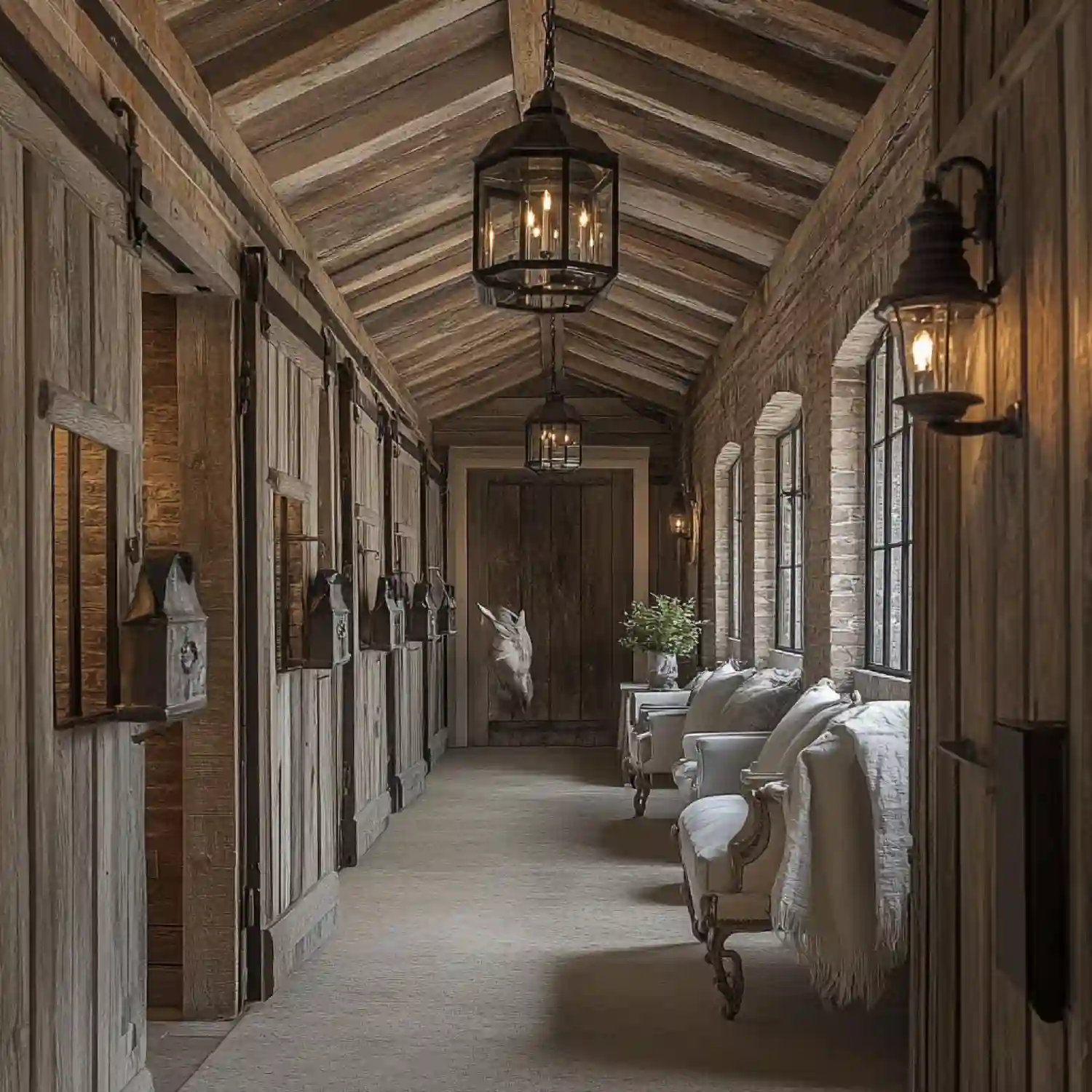
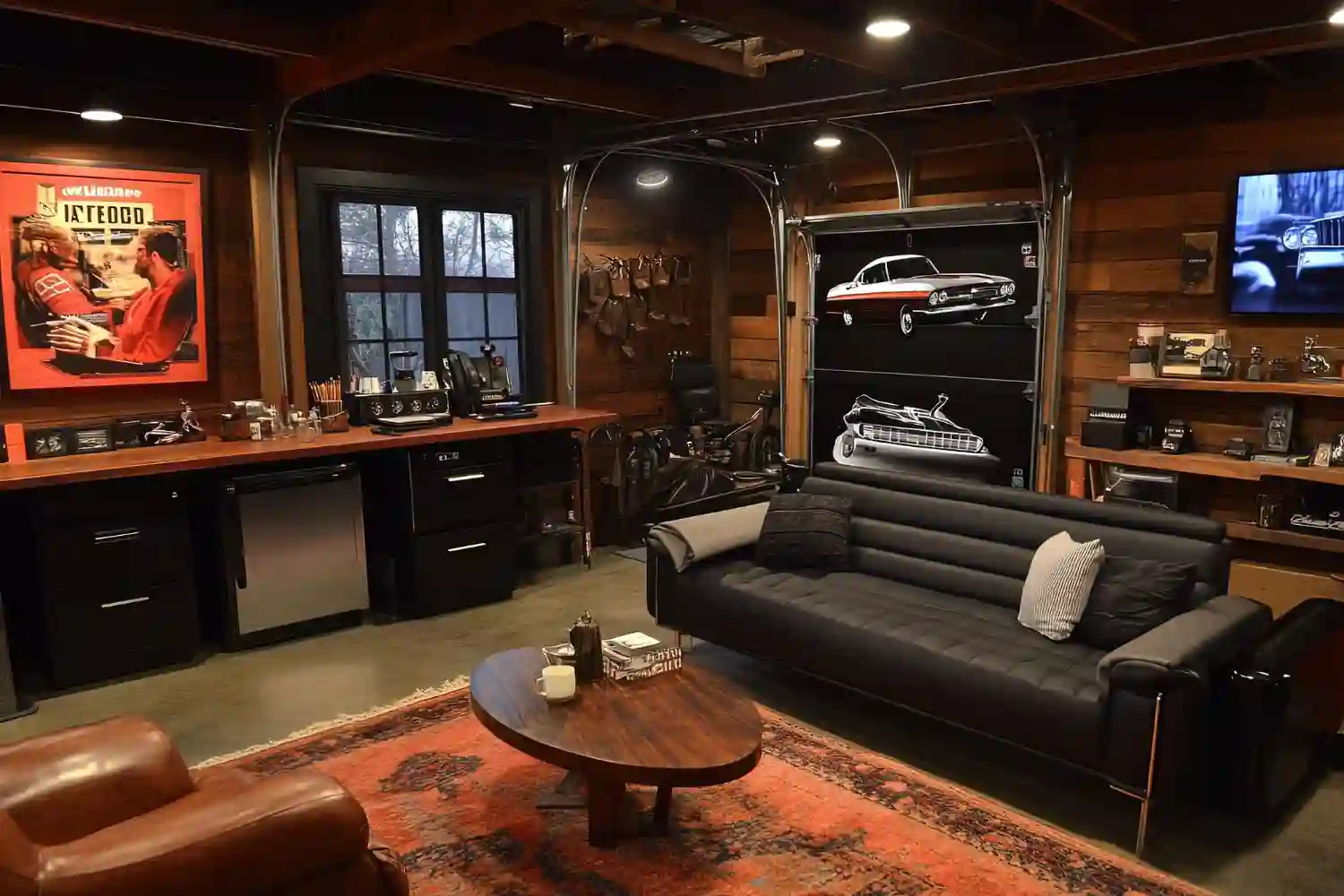
A reclaimed wood accent wall is the fastest way to make a bare room feel rustic. Board widths of 3.5 to 5.5 inches in mixed brown tones look like authentic barn wood rather than a themed backdrop. Material Note: Reclaimed wood paneling material typically runs in the $9 to $11 per square foot range (Designer Rule of Thumb: budget more for hand-picked or antique boards), while professional installation adds $7.78 to $11.55 per square foot, according to Homewyse. Cover one wall only — behind a sofa or TV — and leave the other walls in a warm white or greige so the texture stays the focal point. For a larger-scale version of this same idea, our pole barn man cave designs show reclaimed wood used across a full high-ceiling structure.
Exposed or Faux Wood Beams
Exposed beams — real or faux — add rustic structure overhead without touching the walls. Faux beams made from lightweight polyurethane install directly onto ceiling drywall with construction adhesive and a few finish screws, so they suit rented spaces as well as owned ones. Stain them in a deep walnut or weathered grey to contrast against a lighter ceiling color. Designer Rule of Thumb: space parallel beams 24 to 32 inches apart so the ceiling looks like a real structural grid rather than a few random boards.
Stone or Brick Veneer Feature Wall
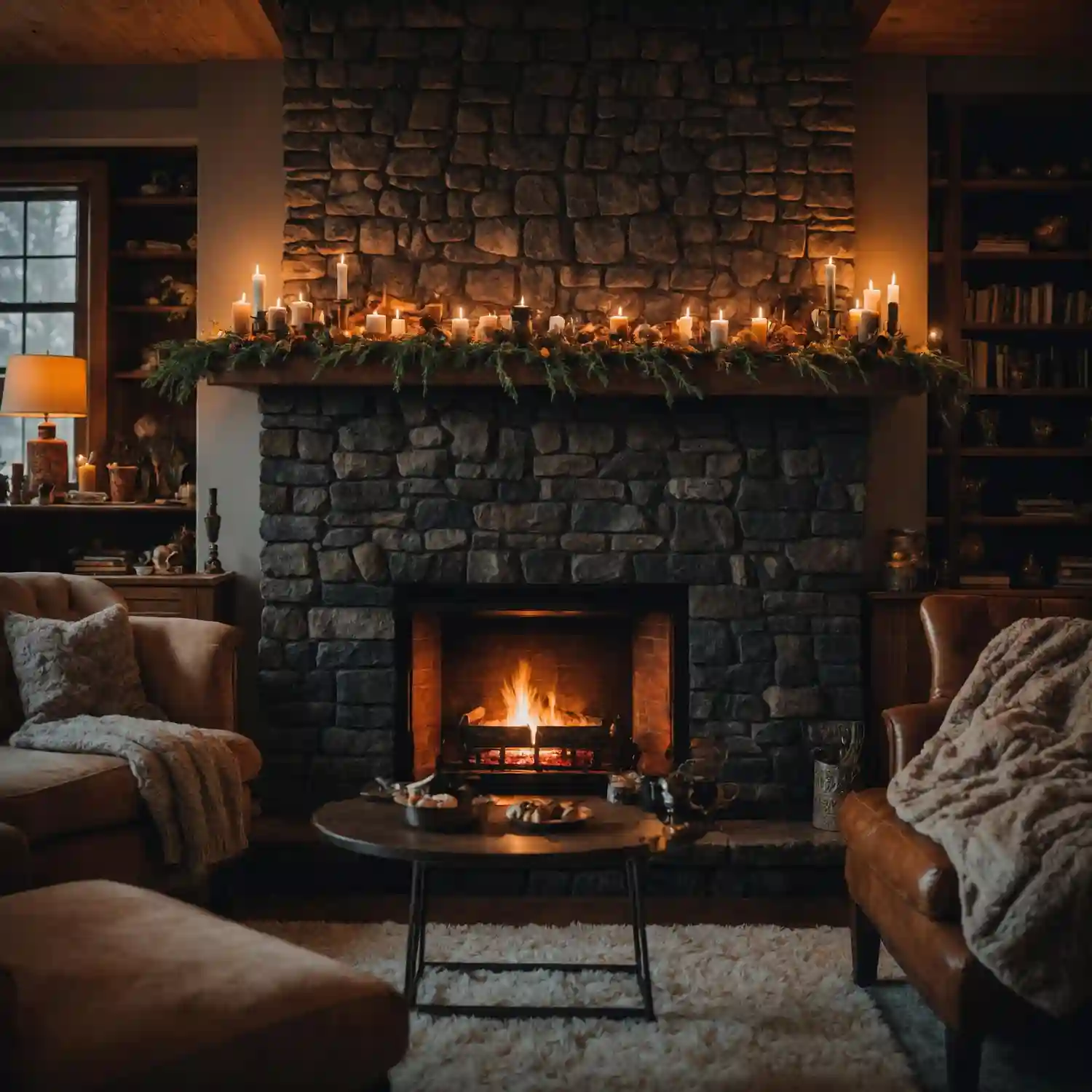
A stone or brick veneer wall works best around a fireplace, bar, or TV niche, where its texture becomes a natural focal point. Material Note: Faux stone panels typically cost more per square foot than paint or basic wood paneling, but most styles install directly over drywall without added structural support — a practical option for a basement or garage conversion. A garage shell often already has the bones for this look; see our garage man cave ideas for conversion-specific tips. Keep the stone to one wall and pair it with warm wood tones elsewhere so the room feels cozy instead of cave-like in the literal sense.
Wide-Plank Wood Flooring With a Layered Wool Rug
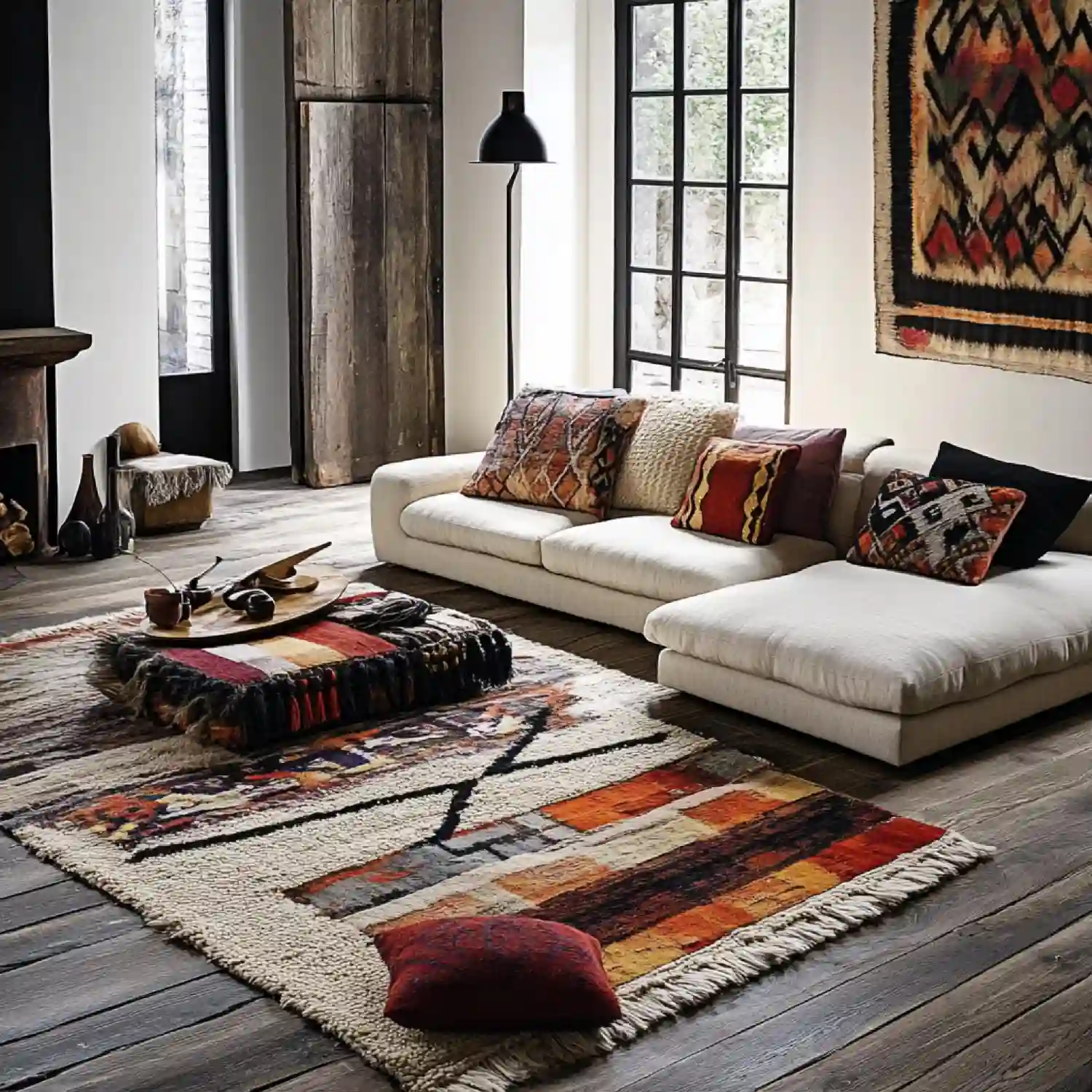
Wide-plank flooring in oak or hickory, 5 to 7 inches per board, looks more rustic than standard 2.25-inch strip flooring. If replacing the floor isn’t in the budget, a wide-plank vinyl or laminate look-alike gets a similar effect for a fraction of the cost. Layer a wool or jute area rug at least 8 by 10 feet over it to soften footsteps and ground a seating group. Rental Note: In a rented space, a peel-and-stick wood-look vinyl plank works over existing flooring without any adhesive or removal issues.
Rustic Furniture and Layout Choices That Anchor the Room
Once the walls and floor set the tone, furniture decides whether the room feels curated or just cluttered. These four pieces work together instead of competing for attention.
Leather Sofa or Sectional Seating
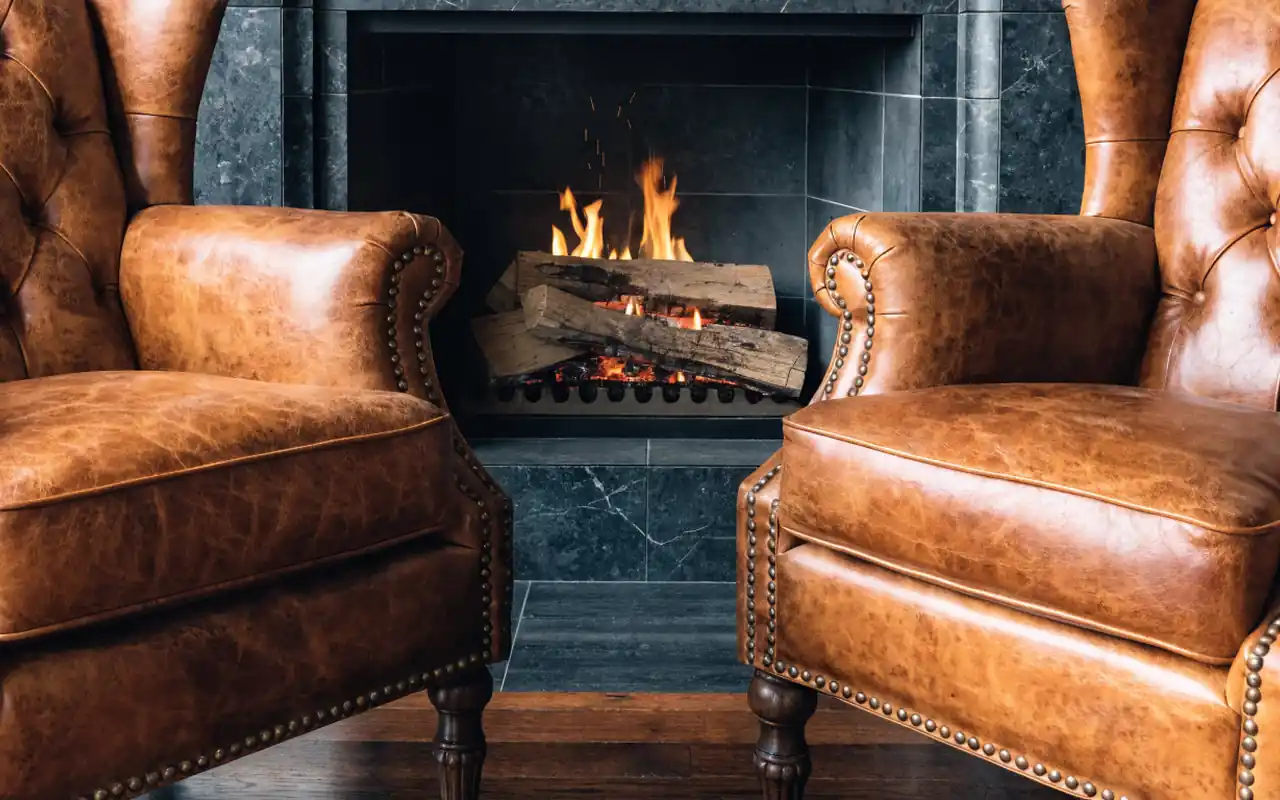
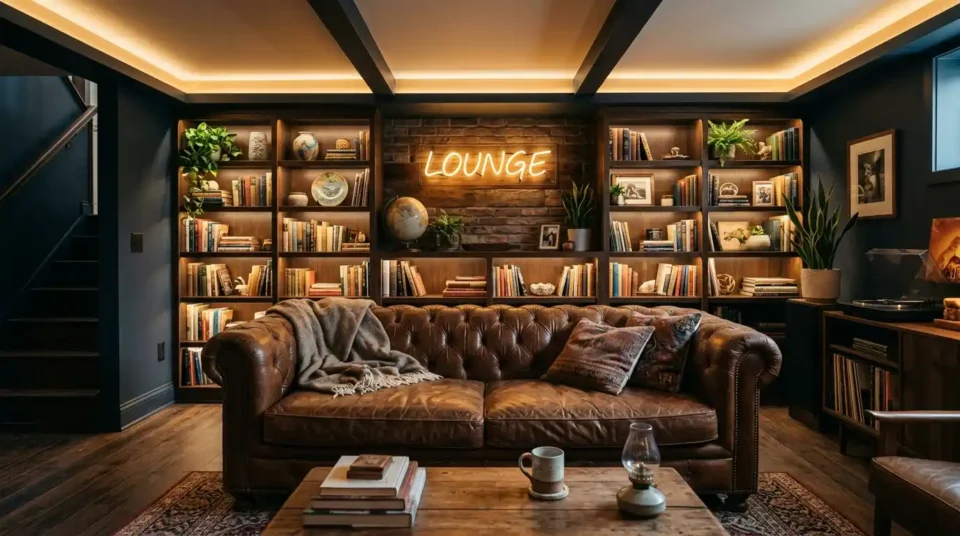
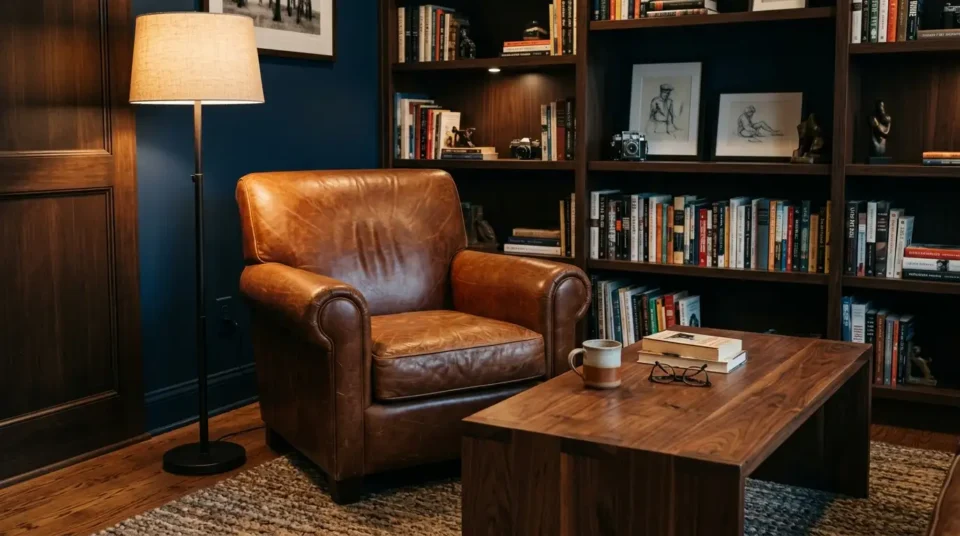
A leather sofa or sectional in a worn brown or cognac tone anchors a rustic man cave the way a fireplace anchors a living room. Top-grain leather costs more upfront but resists cracking better than bonded leather over years of daily use. Material Note: Condition genuine leather every 6 to 12 months with a dedicated leather conditioner to keep the surface from drying out and cracking. For a lower-cost version, leather-look faux upholstery in a similar cognac tone gets most of the visual effect at a fraction of the price.
Whiskey Barrel Side Table or Bar Cart
A repurposed whiskey barrel makes a genuinely rustic side table, plant stand, or mini bar — something a standard end table can’t match. Look for barrels finished with a clear or matte sealer so they don’t leave residue on drinks or decor. Pair one barrel table next to the leather seating piece instead of scattering several around the room, so it feels like a chosen accent instead of a theme-park prop.
Industrial-Rustic Shelving for Storage and Display
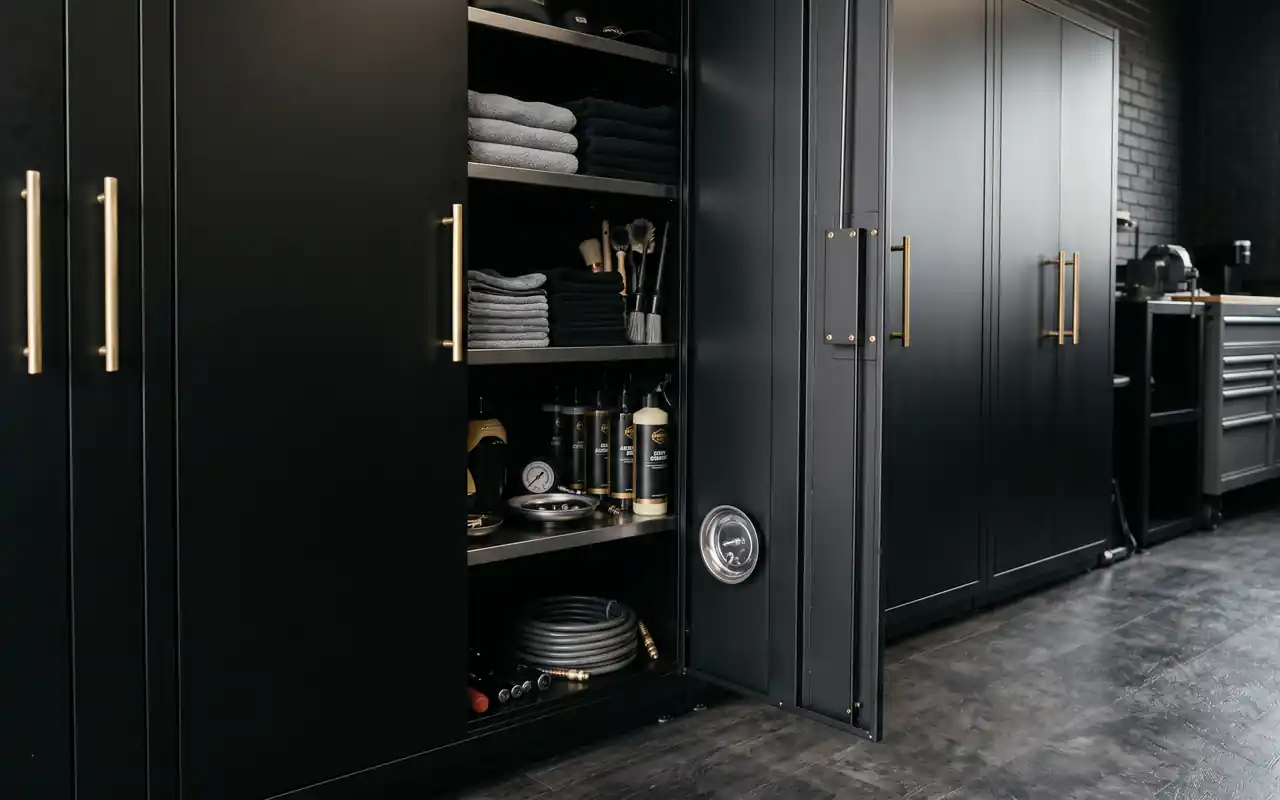
Open shelving built from reclaimed wood planks and black pipe or angle-iron brackets keeps collectibles, glassware, or vinyl records on display instead of hidden behind cabinet doors. Space shelves 10 to 12 inches apart for books and taller items, or 14 to 16 inches for larger decor and speakers. Designer Tip: Stain new pine shelving with a walnut gel stain, then dry-brush a lighter oak stain on top — the two-tone finish mimics reclaimed wood without the reclaimed-wood price tag.
Vintage Trunk or Reclaimed Wood Coffee Table
A weathered steamer trunk or a coffee table built from reclaimed barn wood does double duty as a surface and hidden storage for blankets, controllers, or board games. Choose a trunk roughly two-thirds the length of the sofa in front of it so the proportions feel balanced rather than crowded. If floor space is tight, a smaller trunk on locking casters rolls out of the way between uses.
What Lighting and Textiles Finish a Rustic Man Cave Look?
Materials and furniture set the bones. Lighting, texture, and personal touches are what make the room feel finished instead of half-done.
Warm Amber Edison or Lantern-Style Lighting
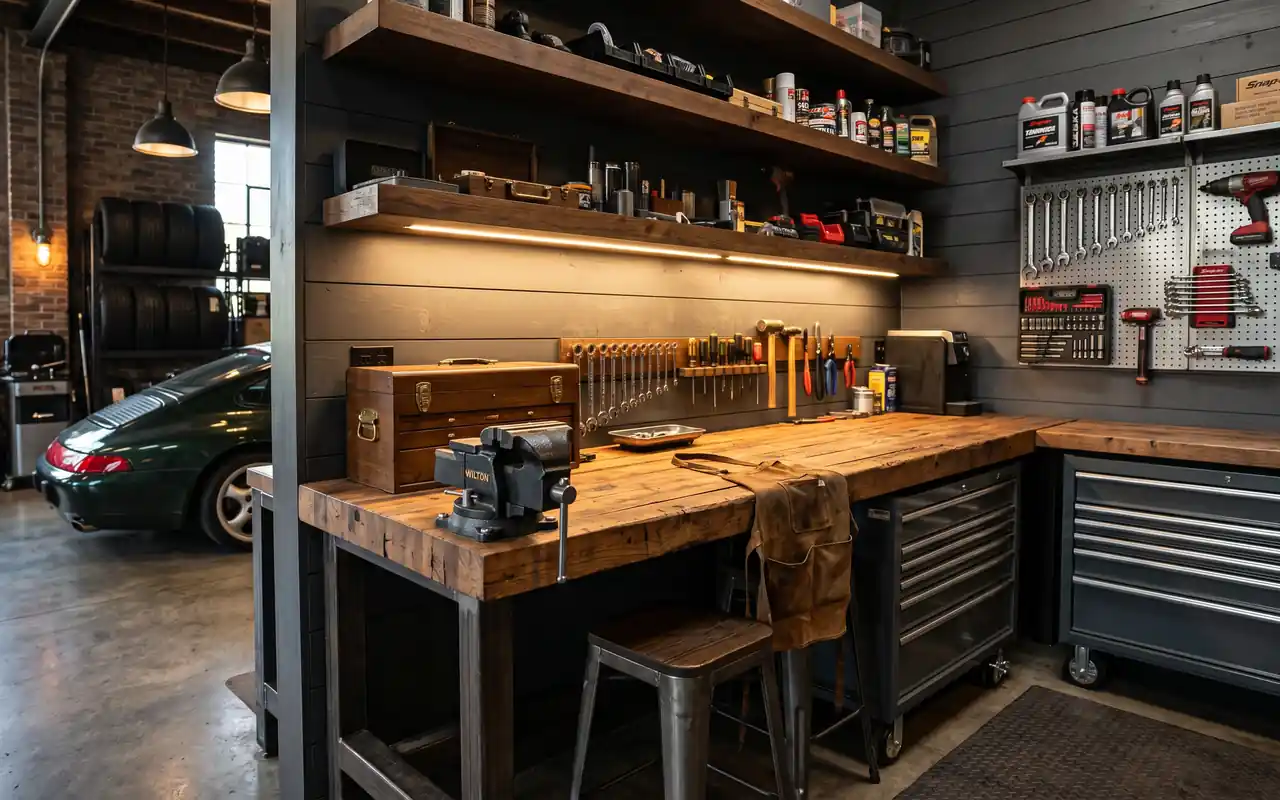
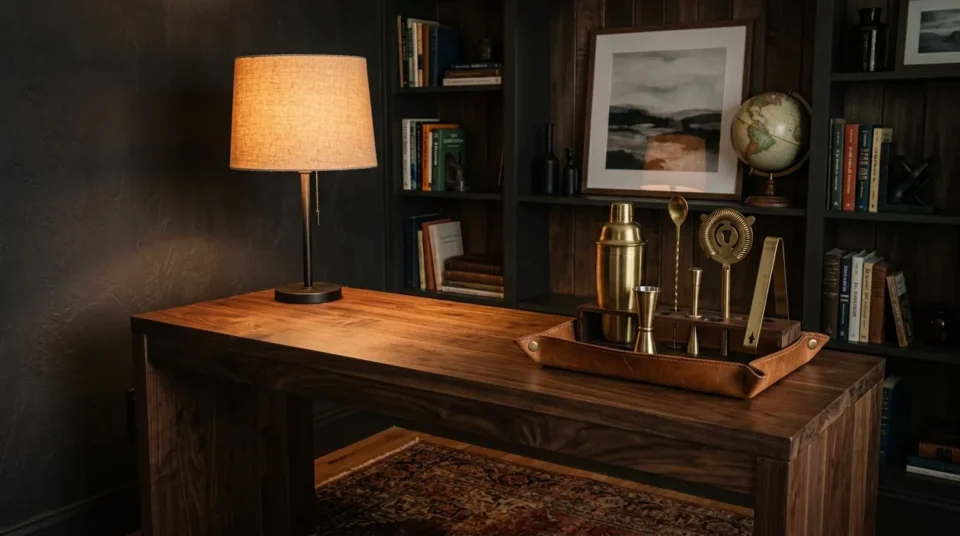
Warm-toned lighting does more to finish a rustic man cave than almost any other single change. Bulbs rated at 2700K produce a warmer, more relaxing glow than 3000K or daylight bulbs, which look cooler and more clinical by comparison, according to Waveform Lighting. Exposed-filament Edison bulbs in wall sconces or a hanging lantern fixture reinforce the vintage, industrial-rustic feel without adding much cost. Safety Note: Keep any exposed-bulb fixture at least 12 inches from curtains or paper decor, and confirm the fixture is rated for its intended wattage before installing.
Plaid and Wool Textiles for Warmth
Plaid wool throws, waffle-knit blankets, and a buffalo-check accent pillow bring in pattern without competing with the wood and stone already in the room. Stick to two or three colors — often deep red, forest green, and charcoal — repeated across textiles so the mix feels planned rather than random. A wool or sherpa throw over the leather sofa also softens a surface that can feel cold to the touch in an unheated garage or basement.
Lodge-Style Wall Decor and Vintage Signage
Wall decor built around forged-iron sconces, vintage enamel signs, or a faux-antler accent light reinforces the lodge feel without requiring real taxidermy. Choose two or three larger pieces instead of a dozen small ones, since a rustic room feels more intentional with fewer, better-placed items. For a theme-driven build, our man cave theme guide walks through matching decor to a specific setup, from hunting-lodge to whiskey-and-cigar styling.
A Curated Gallery Wall of Personal Memorabilia
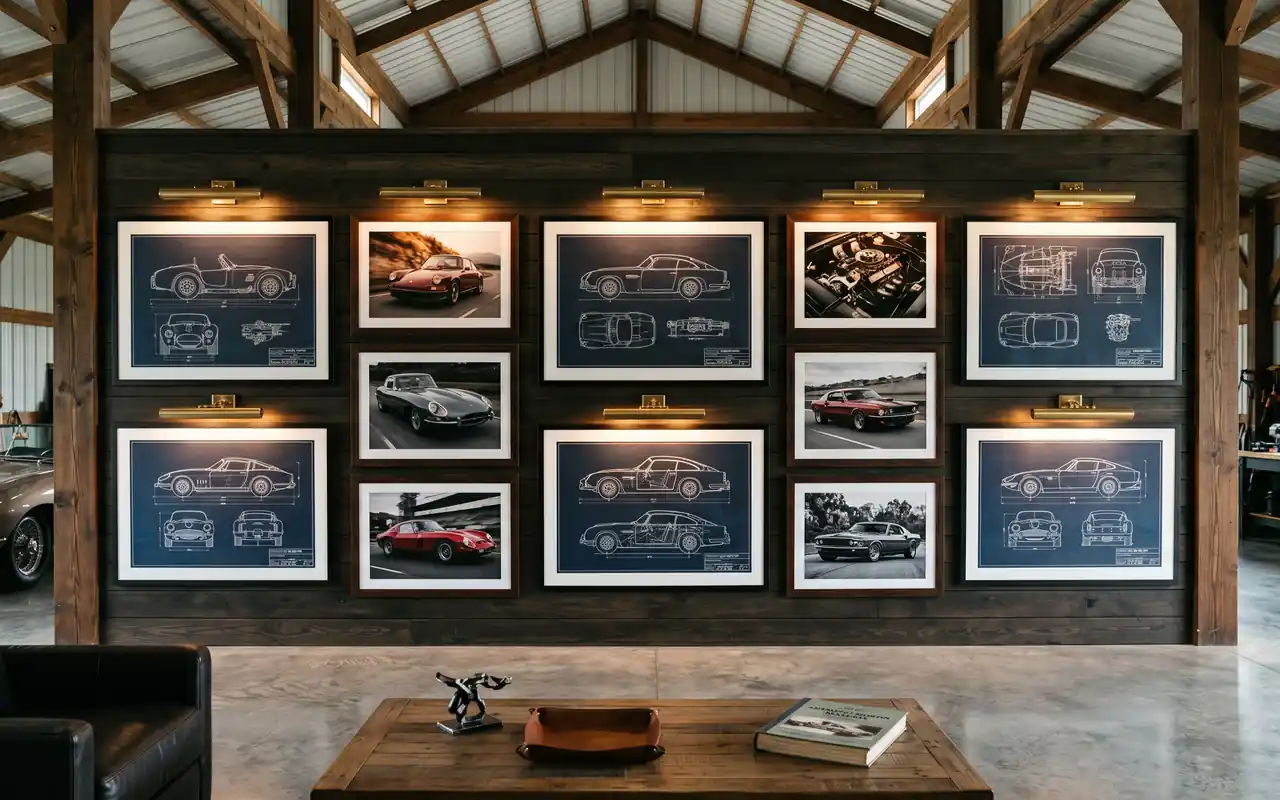
Rustic man cave ideas come together fastest when the room includes something personal, like a gallery wall of framed photos, ticket stubs, or a favorite jersey. Frame pieces in matching dark wood or oil-rubbed bronze so the collection feels like one wall, not a scattered pile of mismatched frames. Designer Tip: Group frames in odd numbers — three or five — spaced two to three inches apart; even-numbered grids look more like an office display than a lived-in wall.
Mistakes That Wreck a Rustic Look
- Many people cover every wall in wood paneling or shiplap, which flattens the texture that made reclaimed wood special in the first place. A better approach: limit wood paneling to one wall and let paint or drywall carry the rest of the room.
- Buying an entire matching “cabin” furniture set from one catalog page often looks staged rather than lived-in. Mix at least one vintage or secondhand piece — a barrel table, an old trunk — with newer upholstered furniture instead.
- Cool white or daylight bulbs at 4000K and above undercut every warm material in the room, making leather and wood look flat instead of rich. Swap to 2700K bulbs before spending more on furniture or wall treatments.
- Skipping a vapor barrier before installing wood paneling in a basement invites warping and mold within a season or two. Install a vapor barrier and furring strips first, and keep basement humidity under 50 percent with a dehumidifier.
Cost Breakdown for a Rustic Man Cave
A rustic man cave can start under $150 with lighting and textiles alone, or run several thousand dollars for a full wood-and-stone build-out.
| Project | Estimated Cost | Impact Level |
|---|---|---|
| Warm 2700K bulb swap + accent lamp | $40-$120 | High |
| One reclaimed wood accent wall (materials + install, ~100 sq ft) | $1,700-$2,300 | High |
| Leather sofa or sectional (new, mid-range) | $900-$2,200 | High |
| Full rustic build-out (wood wall, stone accent, leather seating, rug, lighting) | $4,000-$7,000 | Very High |
Best First Upgrade: Swap to warm 2700K bulbs and add one leather or leather-look seating piece — this changes the room’s entire feel for well under $300.
Skip for Now: Skip a fully wood-paneled ceiling or whole-room stone veneer until the walls and lighting are settled — it’s the most expensive change and the easiest one to regret.
Is a Basement, Garage, or Small Room Right for a Rustic Man Cave?
A rustic man cave doesn’t need a large footprint. In a small room, our small man cave ideas show how one accent wall and a single leather chair can carry the whole look without crowding the space.
A basement build carries its own risk: unfinished basements trap humidity, and wood paneling installed directly against a damp wall can warp or grow mold within a season. Climate Note: Keep basement humidity under 50 percent with a dehumidifier, and install panels over furring strips with an air gap rather than flush against concrete, following guidance from Ayers Basement Systems. For basement-specific layouts, see our man cave basement ideas.
If your setup lives in a garage, attic, or spare room instead, the same rustic materials apply in slightly different proportions. Our man cave ideas by room and location breaks down setup-specific advice for each space, and you can browse the full Man Cave archive or the broader Rooms collection for more inspiration. If the same reclaimed-wood-and-leather palette appeals to you beyond the man cave, our modern rustic farmhouse living room ideas carry it into the rest of the house.
Frequently Asked Questions
Conclusion
A rustic man cave comes together fastest when you resist changing everything at once. Composite example: picture a plain garage bay that gets one reclaimed wood wall, a leather chair, and a single warm floor lamp — three changes, and the space already feels like a room worth spending time in. Start with one of these rustic man cave ideas this weekend, then let the rest of the room grow from there, and browse more inspiration in our full home decor library anytime.
Next Steps
- Pick one wall for a reclaimed wood or stone accent and leave the rest of the room simple.
- Swap any cool-white bulbs for warm 2700K bulbs before buying new furniture.
- Add one leather or leather-look seating piece as your room’s anchor.
- If you’re building in a basement, install a vapor barrier before any wood paneling goes up.