TL;DR
- Style match first: Pick your hot tub style before you pick the unit — deck-inset, sunken, freestanding, or pergola-wrapped each requires a different install approach.
- Budget range: Entry-level portable units start around $3,000. Full in-ground or deck-inset installs with landscaping run $15,000–$40,000+.
- Privacy matters more than size: A smaller hot tub with solid privacy screening gets used far more than a large exposed unit.
- Plan for access: Electrical, drainage, and cover lift clearance are the three most overlooked requirements before buying.
- 17 setups inside: From compact 2-person tubs to resort-style outdoor spas, every main configuration is covered below.
Why the Right Hot Tub Setup Changes Everything
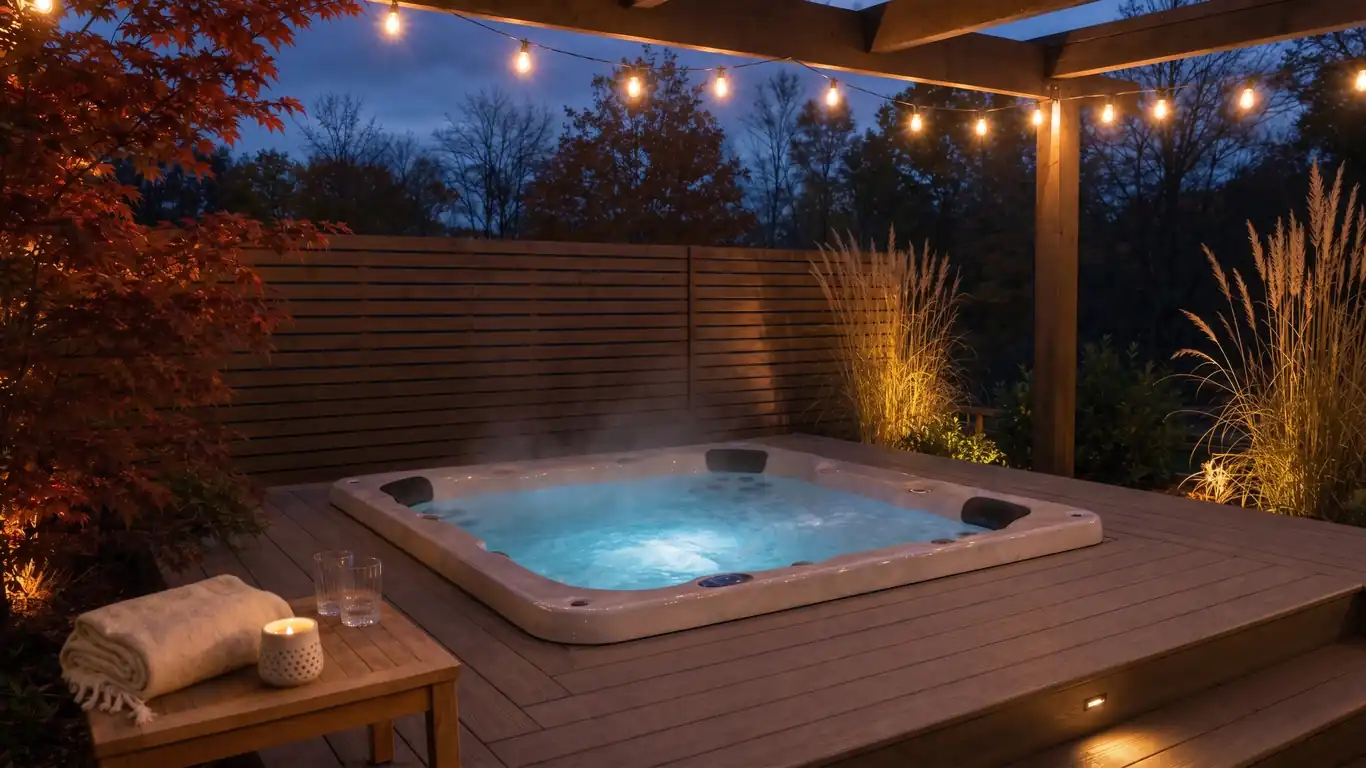
Walk into a backyard on a cool evening and notice the ones that have a hot tub people actually gather around. The water steams softly. String lights loop overhead. There’s a low cedar deck surrounding the tub, a privacy screen of tall ornamental grasses, and a small side shelf holding a few towels and a candle. Nobody designed that scene from a catalog. They thought through it carefully — the position, the surround, the sightlines, the lighting.
That’s the gap most buyers miss. They research jet counts and kilowatt ratings, then drop the tub onto bare concrete and wonder why they only use it twice a year.
I helped a client in a narrow suburban backyard work through this last spring. The yard was only 28 feet wide. She’d been staring at hot tub ads for months but couldn’t visualize how any of them fit her space. We ended up with a 5-person square tub inset into a raised ipe wood deck, wrapped on two sides by a slatted cedar privacy screen. She texts me on Friday nights now. Used it every week since we finished.
This guide covers all 17 hot tub ideas for backyard setups worth considering — from the simplest plug-and-play options to full spa retreats — so you can land on the right configuration before you spend a dollar. Browse all of our outdoor exterior decor ideas for more backyard styling inspo, or explore the full outdoor design section for landscaping and patio ideas alongside this guide. You’ll also find everything from patio furniture to fence and pergola ideas across 101homedecor.com.
Bookmark this guide for quick reference.
KEY TAKEAWAY: The right backyard hot tub setup depends on sightlines, privacy, and access — not just the unit itself.
| Quick Takeaways | |
|---|---|
| Setup type | Freestanding, deck-inset, sunken, and pergola-wrapped are the four main configurations. |
| Privacy | Cedar slatted screens, ornamental grasses, and board-on-board fencing are the highest-performing options. |
| Lighting | Warm-toned LED strips at deck level plus overhead string lights create the most usable evening atmosphere. |
| Surround materials | Ipe wood, composite decking, and natural travertine are the three most durable hot tub surround surfaces. |
| Access planning | Allow 36 inches of clearance on at least two sides for safe entry, cover removal, and maintenance access. |
What to Look For Before You Buy
A hot tub is a 10–15 year purchase. The unit itself matters, but the setup around it drives whether you actually use it. Evaluate these five criteria before choosing any configuration from this guide.
Electrical capacity. Most full-size hot tubs require a dedicated 240V/50A or 240V/60A circuit. A licensed electrician must install it — budget $500–$1,500 for wiring depending on distance from your panel. Portable 110V “plug-and-play” tubs exist for under $1,500 but heat slowly and limit jet pressure significantly.
Surface and weight. A filled 6-person hot tub weighs 3,000–5,000 lbs. A concrete pad, reinforced deck, or compacted gravel base is required. Wood decks need structural assessment before supporting that load.
Privacy sightlines. Before placing any unit, stand in the proposed spot at tub-height (approximately 36 inches seated). Note which neighbors, windows, or public sightlines are visible. Then plan your screening before finalizing position. Our guide to privacy fence ideas for backyard spaces covers every screening option in detail.
Cover and access clearance. Every hot tub cover needs 36 inches of clearance behind or beside it to lift off cleanly. Cover lifter mechanisms need up to 48 inches. Factor this into your layout before you pour concrete.
Climate. In cold climates, insulation rating (R-value) matters enormously for operating costs. A well-insulated cabinet with full-foam insulation can cut energy costs by 40–60% vs. a standard insulated unit in a northern winter.
KEY TAKEAWAY: Electrical, weight load, and privacy sightlines are the three non-negotiable criteria to assess before buying any hot tub.
17 Hot Tub Ideas for Backyard Setups Worth Considering
1. Deck-Inset Hot Tub with Ipe Wood Surround
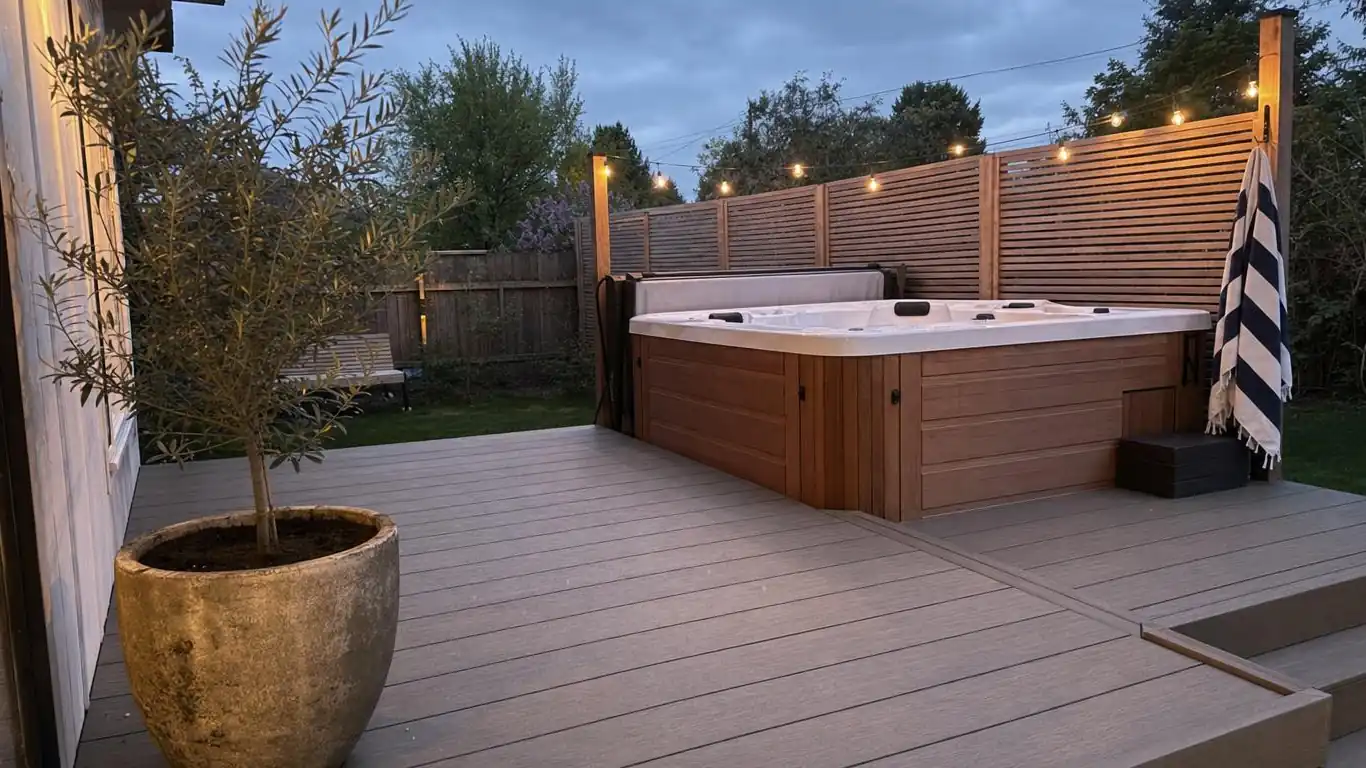
A deck-inset hot tub sits flush with the deck surface, dropping into a framed cutout so the tub rim aligns with the decking. This is the most visually clean configuration available — the tub disappears into the deck rather than sitting on top of it. Ipe wood handles wet conditions better than most hardwoods — it rates Class A for fire and is nearly impervious to rot. Expect $8,000–$18,000 for deck build plus tub. Best for: homeowners with existing deck plans or a contractor already on site.
DESIGNER TIP: Build a removable access panel into at least one side of the deck surround. You’ll need it for pump and filter maintenance — a sealed deck makes servicing a nightmare.
2. Freestanding Tub on a Composite Deck
The most common setup, and still one of the best. A 6-person acrylic tub sits on a composite decking platform — Trex or TimberTech in warm cedar or driftwood tones. Composite decking requires zero sealing and holds up in wet environments for 25+ years. The tub sits proud of the deck surface, which means entry steps are required. This setup is faster and less expensive than an inset build — total installed cost runs $5,000–$14,000 depending on deck size. Best for: first-time buyers who want a clean result without a complex installation.
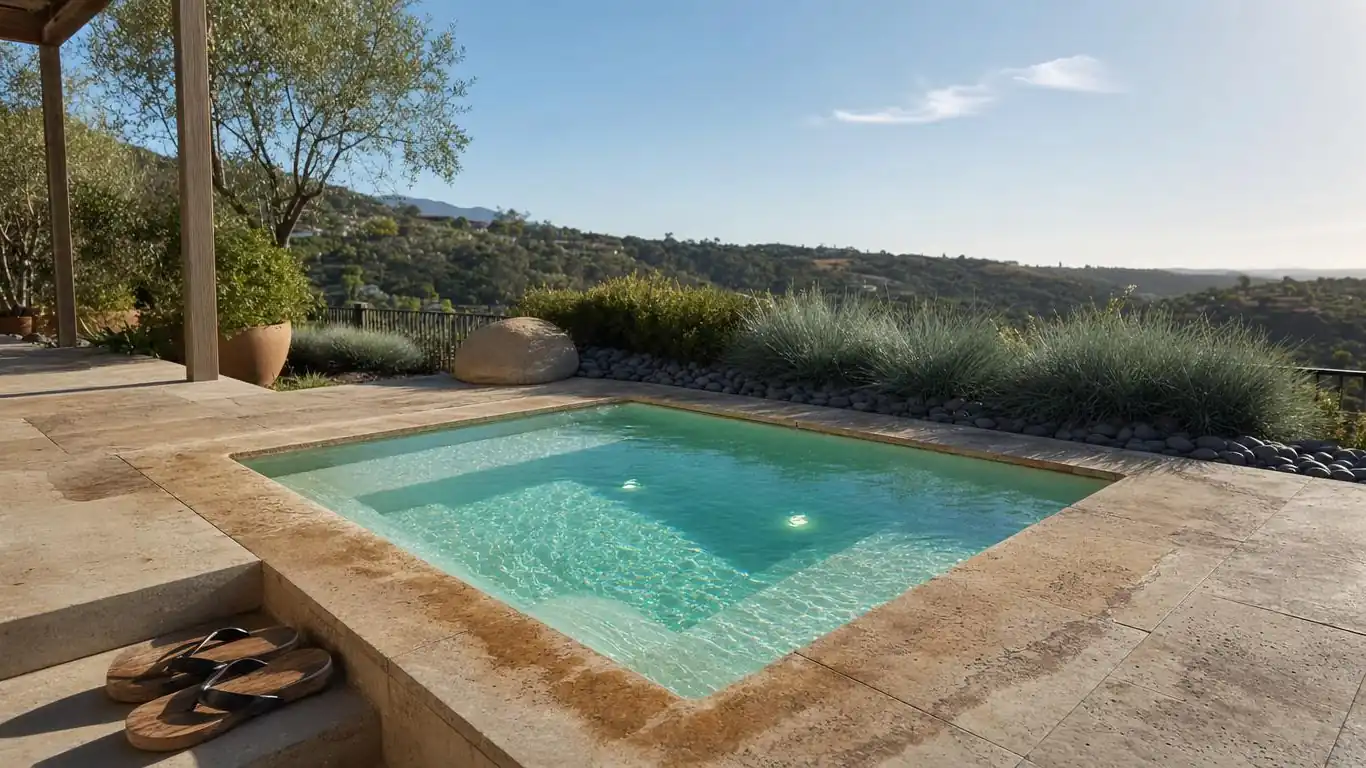
3. Sunken Hot Tub with Travertine Surround
A sunken hot tub requires excavation — the tub sits below grade, with the rim at or near ground level. Travertine tile surrounds work beautifully here: the stone’s natural variation in cream, walnut, and warm beige pairs well with water and ages gracefully. This setup has a resort quality that freestanding units can’t replicate. Budget $20,000–$45,000 installed. It’s the most involved build, but the most striking visually. Best for: buyers treating this as a permanent landscape feature and investing in a 20+ year backyard.
4. Pergola-Wrapped Hot Tub Retreat
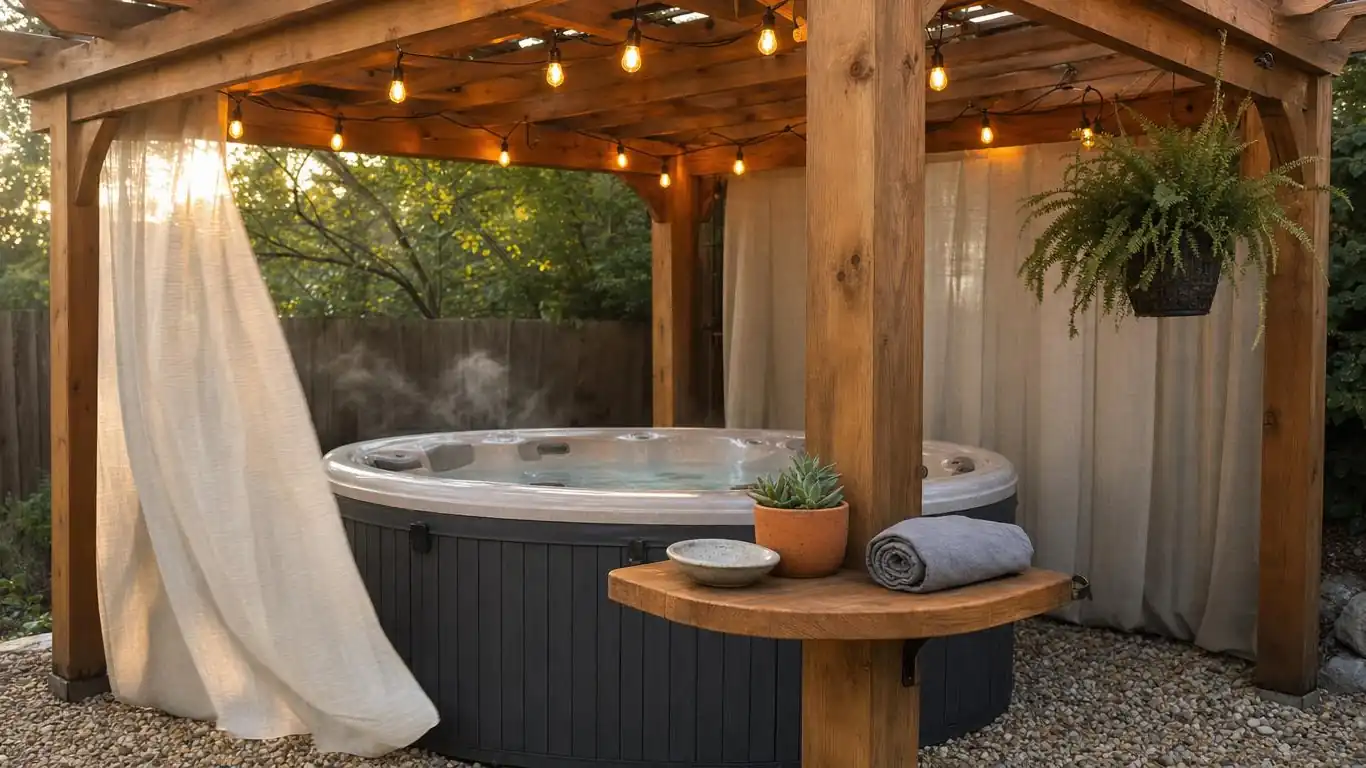
A pergola frames the hot tub on three or four sides, creating a defined outdoor room. Cedar or powder-coated aluminum pergolas both work well — cedar gives warmth, aluminum gives longevity. Hang sheer outdoor curtain panels on the open sides for privacy that still breathes. String warm-toned Edison bulbs from the rafters. The pergola itself costs $3,000–$12,000 depending on material and size; add a mid-range 5-person tub and the total runs $10,000–$22,000. Best for: homeowners who want a spa-like atmosphere without major excavation.
DESIGNER TIP: Size the pergola 24 inches beyond the tub footprint on all four sides — this gives you room to add seating, towel hooks, and a small side shelf without the pergola feeling crowded.
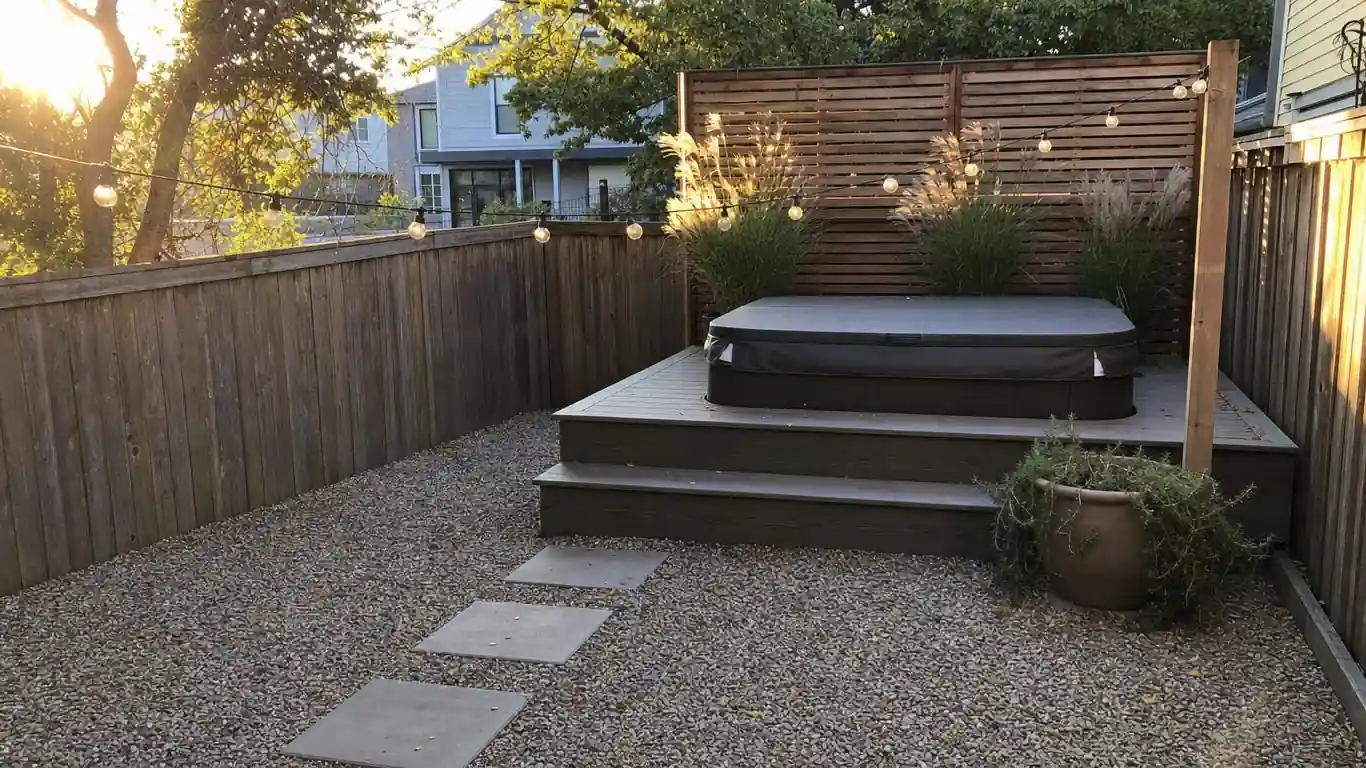
5. Hot Tub with Privacy Fence Surround
Board-on-board cedar fencing at 6 feet creates near-total privacy for a freestanding tub. A U-shaped or three-sided fence section wraps the tub zone, with the open fourth side facing the home for easy access. Stain the fence in a warm charcoal or natural cedar tone to tie it to the tub cabinet. This is the most budget-friendly privacy solution — a three-sided 6-foot cedar fence section runs $1,200–$3,500 including posts. Best for: suburban backyards where neighbor sightlines are the primary concern. If you’re building a deck at the same time, our simple outdoor patio ideas guide covers how to combine fencing, decking, and landscaping into one cohesive plan.
6. Hot Tub Corner Install with L-Shaped Deck
Tucking a hot tub into a back corner of the yard, surrounded by an L-shaped deck, uses dead space efficiently and creates natural privacy from two directions. The deck’s two arms create a logical circulation path around the tub and room for lounge chairs along the longer run. This layout works especially well in smaller backyards — the 28-foot-wide yard from my client project used this exact configuration. Composite or pressure-treated pine both work well for the L-shaped structure. Installed cost: $7,000–$16,000.
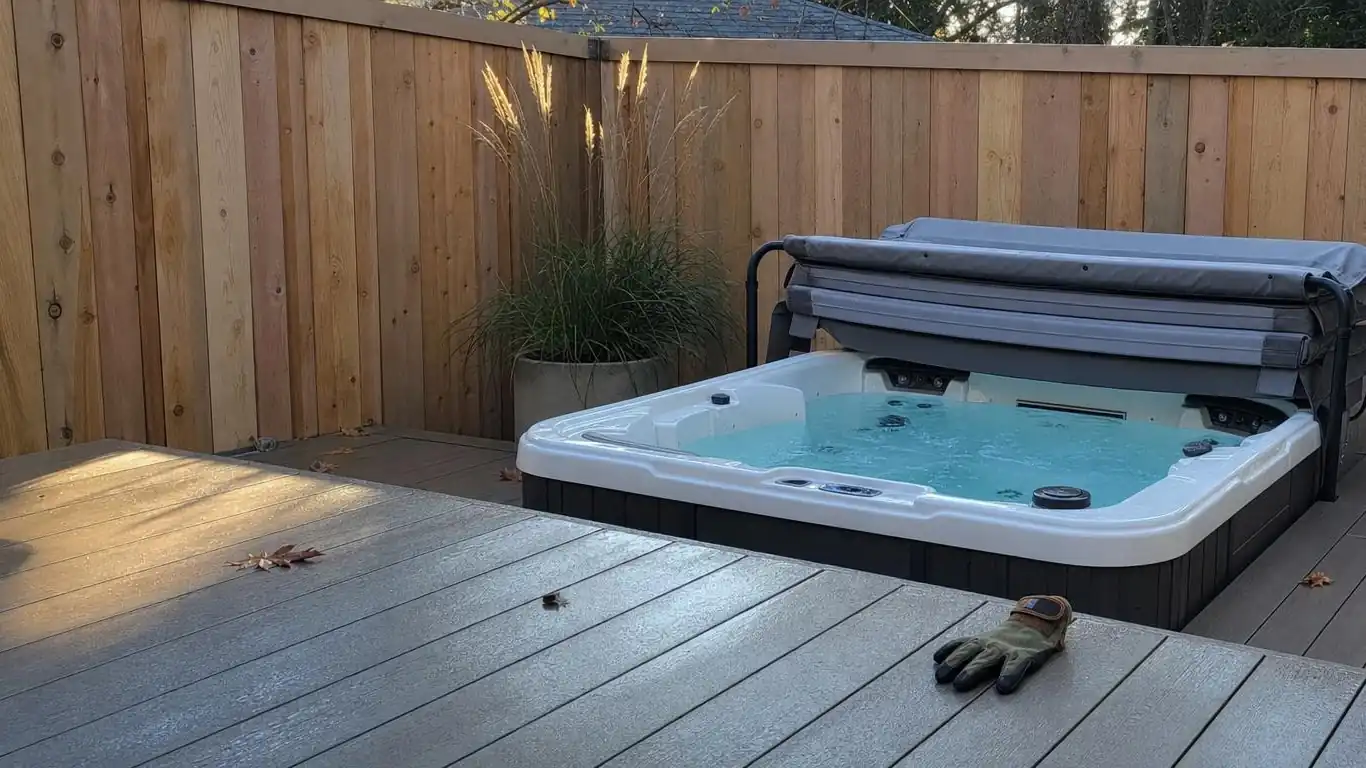
7. Plug-and-Play Inflatable Hot Tub for Small Backyards
An inflatable hot tub — brands like Intex or Bestway — plugs into a standard 110V outlet and costs $400–$1,200. It heats more slowly (allow 12–24 hours) and has lower jet pressure, but for renters, small backyards, or buyers testing a location before committing to a permanent install, it’s a legitimate option. Set on a flat concrete area or sturdy composite pad. Pair with a simple cedar side shelf and string lights to elevate the aesthetic. Best for: renters, first-timers, or anyone with a backyard under 400 sq ft.
DESIGNER TIP: Lay a rubber-backed outdoor rug under the inflatable base — it protects the surface below, provides cushioning, and makes the setup look intentional rather than temporary.
8. Swim Spa Combo for Active Households
A swim spa is a longer, rectangular vessel — typically 12–19 feet — that combines a swim current at one end with a hot tub zone at the other. Fibreglass construction is standard. Total cost runs $15,000–$45,000 installed. The swim current requires 240V/60A dedicated wiring. These are best-suited for households where at least one person wants a swimming option without a full pool footprint. For pool and spa ideas side by side, our modern small pool design ideas guide shows how compact water features can coexist in a modest backyard.
9. Hot Tub Integrated Into a Pool Deck
If you already have or are building a pool, integrating a hot tub into the same deck structure is the most cost-effective spa addition. The plumbing, electrical, and decking already exist. An attached spa unit shares water treatment chemistry with the pool. A raised spa spilling water into the pool via a waterfall weir is one of the most visually impressive configurations possible. The spill water adds ambient sound and movement. This setup adds $8,000–$20,000 to a pool build. Best for: buyers already planning a pool project. Combine with barndominium exterior ideas if you’re designing a full property with detached structures and outdoor entertaining zones.
10. Japanese Soaking Tub Inspired Hot Tub
A round cedar or hinoki cypress soaking tub brings a distinctly Japanese onsen aesthetic to a backyard. These tubs are typically smaller — 3–5 person — and focus on deep soaking rather than jets. Many are wood-fired or heated via an external wood-burning stove, which eliminates electrical requirements. The cedar develops a beautiful silver-grey patina over time. Pair with Japanese maple plantings, smooth river stones around the base, and a bamboo privacy screen. Total cost runs $2,500–$9,000 including the surround. Best for: minimalist, nature-forward backyard designs.
DESIGNER TIP: Apply a teak oil treatment to cedar soaking tubs every spring to slow weathering and maintain that warm honey tone for 2–3 extra years.
11. Hot Tub on a Raised Platform with Steps
Raising the hot tub 18–24 inches above grade on a sturdy platform creates a visual focal point in the yard and eliminates sightline issues with low fences. The elevated position also simplifies maintenance — pump access, filter changes, and water chemistry checks happen at a comfortable working height rather than crouched at ground level. Built from pressure-treated lumber or composite, with steps and handrails on one or two sides. Installed cost: $4,500–$11,000 including the tub. Best for: flat yards that need a vertical element.
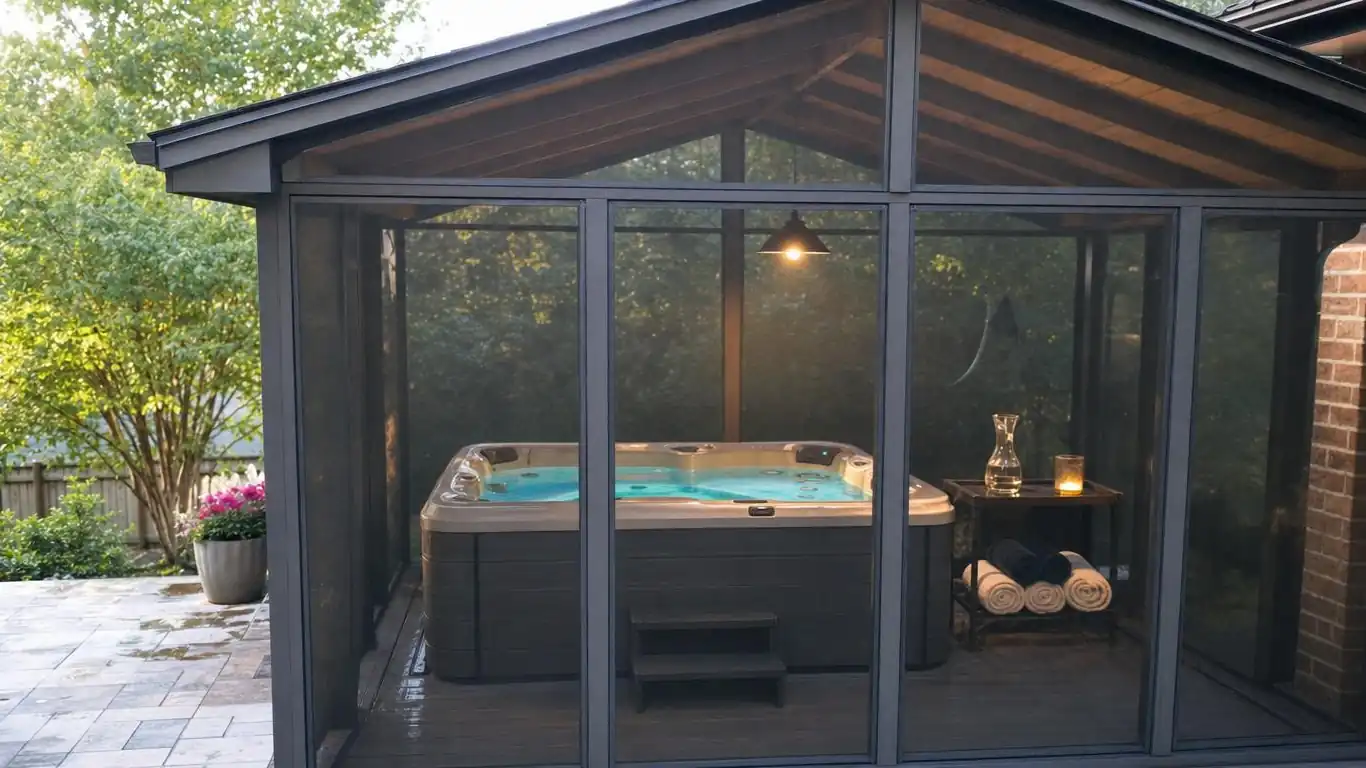
12. Enclosed Screened Hot Tub Room
An enclosed screened structure — essentially a screened porch built around the hot tub — extends the usable season dramatically. In mild climates, a screened room keeps bugs out in summer and blocks wind in early spring and late fall. In colder climates, a four-season enclosure with polycarbonate panels keeps the hot tub usable year-round. A screened hot tub room costs $8,000–$20,000 for the enclosure alone. Our guide to enclosed porch ideas for private retreats covers the structural options in detail.
13. Rustic Wood-Wrapped Hot Tub with Fire Pit Surround
A wood-wrapped acrylic tub — with cedar tongue-and-groove siding replacing the factory cabinet — pairs naturally with a nearby fire pit. The wood tones connect the two elements visually. Position the fire pit 8–10 feet from the tub edge for safety. Add a curved wooden bench between the two to create a clear flow between fire and water. This is a popular setup for entertaining — guests move naturally between the fire and the soak. Total cost: $6,000–$15,000 depending on fire pit style and deck finish.
14. Hot Tub Under a Sail Shade or Retractable Awning
A tensioned sail shade or motorized retractable awning over a hot tub provides UV protection, reduces evaporative heat loss by up to 30%, and defines the space visually without permanent construction. Sail shades in warm cream, slate grey, or sage green work well in most backyard palettes. A quality motorized awning from a brand like SunSetter or Sunsetter runs $2,500–$5,500 installed. Sail shades start at $200 for a basic tensioned panel. Best for: backyards that need sun control without major structure. For outdoor living inspiration without breaking the budget, our cheap backyard ideas guide shows how shade, planting, and lighting upgrades can transform a plain yard for under $2,000.
15. Naturalistic Hot Tub with Rock and Landscape Surround
A hot tub surrounded by natural stone boulders, ornamental grasses, and drought-tolerant plantings feels less like a product and more like a natural feature. Fieldstone or manufactured stone veneer wraps the tub cabinet. Blue fescue, Karl Foerster grass, and low-growing rosemary provide year-round texture at varying heights. A single Japanese maple in the background provides seasonal color. This approach integrates the tub into the garden rather than treating it as a separate installation. Cost varies widely — the landscaping alone can run $4,000–$12,000 in addition to the tub. See our secret garden ideas for planting and layout references.
16. Modern Minimalist Hot Tub with Concrete Surround
A gunite or poured concrete hot tub with smooth grey or warm white plaster finish and a cantilevered concrete deck around it is the cleanest architectural statement available. The surround is maintenance-free, heat-neutral underfoot when shaded, and visually striking against dark landscaping. Coping options include brushed concrete, honed limestone, or large-format porcelain tile. The concrete surround handles freeze-thaw cycles well with proper sealing. This is an architect-client type build — expect $25,000–$55,000 total. Best for: modern or transitional homes with a clean architectural language.
DESIGNER TIP: Add an in-floor drainage channel around the concrete perimeter — it’s far more elegant than a surface drain and keeps water from pooling on the surround during use.
17. Rooftop or Terrace Hot Tub
Rooftop and terrace hot tub installations are structurally intensive — you need a structural engineer to confirm load capacity (typically 3,500–5,000 lbs for a filled 5-person unit). But for urban townhouses or flat-roof properties with rooftop access, this configuration is transformative. City views, open sky, and complete privacy from surrounding yards. Lightweight fibreglass or rotomoulded acrylic models reduce the load slightly. Combined with a roof terrace design that includes planters, seating, and lighting, a rooftop hot tub becomes the most dramatic backyard entertainment feature possible.
KEY TAKEAWAY: Each of the 17 configurations suits a different site, budget, and lifestyle — matching setup to context is what separates a hot tub people use daily from one that sits under a cover for months.
What You’ll Spend — Hot Tub Budget by Setup Type
Hot tub costs span a wide range depending on configuration, materials, and site conditions. These ranges reflect full installed cost — unit plus surround, electrical, and basic landscaping prep. They do not include major excavation, pool integration, or rooftop structural work.
| Setup Type | Estimated Installed Cost | Impact Level |
|---|---|---|
| Inflatable / plug-and-play | $400 – $1,500 | Low |
| Freestanding on composite deck | $5,000 – $14,000 | High |
| Deck-inset with ipe or cedar surround | $8,000 – $18,000 | High |
| Pergola-wrapped retreat | $10,000 – $22,000 | Very High |
| Sunken / in-ground with stone surround | $20,000 – $45,000 | Very High |
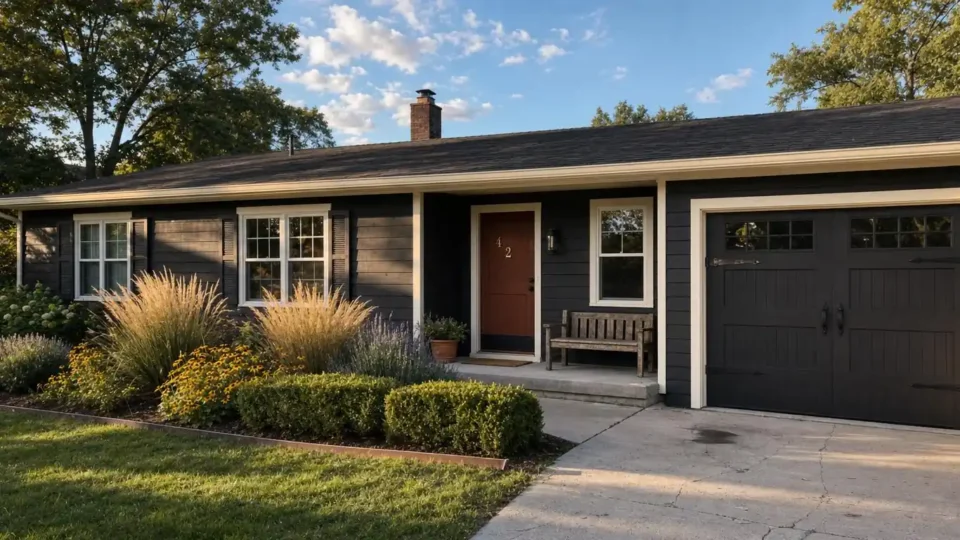
For buyers working with a tighter budget, combining a mid-range portable tub ($3,500–$5,000) with a DIY cedar surround and string lights can produce a genuinely lovely result. Our ranch style home exterior and outdoor updates guide is worth reading too — it covers low-cost landscape and exterior improvements that tie a new hot tub zone into the broader property aesthetic.
KEY TAKEAWAY: A mid-range portable tub with a thoughtful DIY surround often outperforms a budget in-ground installation in both usability and visual impact.
The Pick — Designer’s Verdict
For most homeowners, the deck-inset hot tub with a composite or ipe wood surround is the right buy. It looks intentional and permanent, handles every climate, maintains well, and stays within a $8,000–$18,000 budget that most buyers can manage without a major financial stretch.
If budget is a genuine constraint and you want to test the lifestyle first, a mid-range portable unit ($3,500–$5,000) placed on a proper concrete or composite pad with a simple privacy screen and string lights will deliver 80% of the experience at 30% of the cost. I’ve seen more well-used $4,500 portable setups than ignored $30,000 sunken spas.
For buyers who want to go all-in and have the yard for it: the naturalistic hot tub with rock and landscape surround is the most enduring design. It ages gracefully, improves with the plantings, and looks nothing like a product after three years.
Designer’s Verdict: The deck-inset hot tub with composite surround wins for most buyers — it’s the setup that balances visual quality, long-term durability, and accessible budget without requiring excavation.
Pitfalls to Skip
❌ Skipping the privacy sightline check before positioning → ✅ Stand at seated tub height (36 in.) and trace every sightline before pouring concrete or ordering materials.
❌ Buying a tub before confirming electrical capacity → ✅ Have an electrician assess your panel and run a cost estimate before you commit to any 240V unit.
❌ Undersizing the surround area → ✅ Allow a minimum 36-inch walkway on all entry sides and 24 inches on service sides — crowded surrounds feel bad and make maintenance harder.
❌ Ignoring the cover lift in layout planning → ✅ Measure cover lift clearance before finalizing tub placement — most systems need 36–48 inches of clear space behind the tub.
KEY TAKEAWAY: The most common hot tub mistakes happen before installation — sightlines, electrical, and cover lift clearance need to be resolved in the planning phase.
Special Considerations for Tricky Backyards
Sloped sites. A sloped backyard complicates any hot tub installation — the ground must be leveled under the tub or a retaining structure built to create a level platform. A sloped site often actually benefits a deck-inset setup: the slope becomes a feature when the deck is built at grade on the high side and raised on the low side, creating natural under-deck storage. Our guide to modern sloped backyard ideas covers exactly this type of terracing approach.
Small backyards under 400 sq ft. A 4-person square or round hot tub with a 2-foot composite surround on all sides fits in a space as small as 12×12 feet. Position it in a corner to free the rest of the yard. A private small courtyard layout can frame a compact hot tub beautifully with smart plant placement and defined pathways.
Shared or rental properties. For renters or shared properties, a portable inflatable unit on a concrete slab with a removable privacy screen is the right call. It leaves no permanent marks, moves with you, and costs a fraction of a built installation. A smart terrace garden setup alongside the tub adds greenery and privacy simultaneously.
Year-round cold climates. Full-foam insulated cabinets, a quality safety cover with R-12 or higher rating, and a covered or enclosed structure around the tub make year-round use genuinely efficient. Running costs on a well-insulated 5-person tub in a northern climate run $50–$80/month in electricity. A small sunroom enclosure adapted for hot tub use solves the cold-climate problem entirely.
Noise and neighbours. Hot tub pumps produce 60–70 decibels at the source — quieter than a lawn mower but audible to neighbours in quiet evenings. Position the pump/motor end away from property lines. A solid privacy fence acts as a sound barrier as well as a visual one. Consider also checking your local noise ordinances for evening hours. See our modern front porch ideas for how other homeowners have handled screening along property edges.
KEY TAKEAWAY: Sloped yards, small spaces, and cold climates each have a specific hot tub configuration that solves the constraint — matching setup to site condition avoids costly workarounds.
Frequently Asked Questions
Conclusion
Hot tub ideas for backyard spaces work best when the setup is planned with the same care as the unit itself. The tub is just the centerpiece — the privacy screening, the deck surround, the lighting, and the access path are what turn a product purchase into a backyard feature you look forward to every week.
I’ve seen the difference a specific, thought-through plan makes. A client last autumn asked me to help her reconfigure a hot tub she’d bought two years earlier and never used — it was sitting on bare concrete next to the house, exposed on all sides, facing the back fence. We moved it 12 feet, built a simple raised composite deck around it, added a cedar slatted screen on two sides and a string of warm Edison bulbs overhead. She called me six weeks later to say she’d used it nine times since we finished. Nothing about the tub changed. Everything about the setting did. For more backyard and outdoor decor inspiration across every style and budget, the home decor ideas collection at 101homedecor.com covers patios, landscaping, outdoor lighting, and beyond.