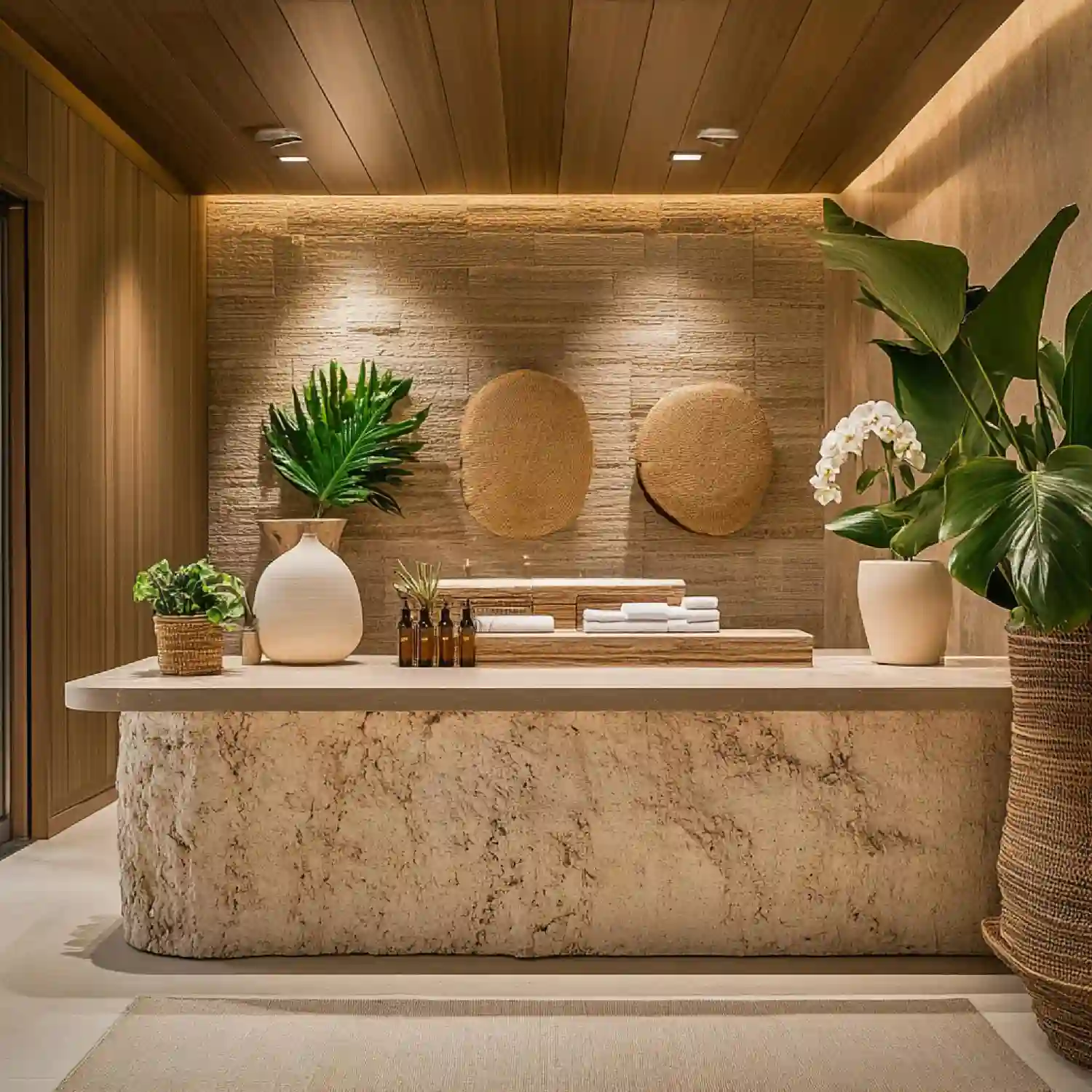
Why a Small Vanity Deserves a Big Slab
The bathroom vanity holds the smallest run of countertop in the house. A kitchen might need 40 square feet of stone. A single vanity often needs less than 12. Yet most of us accept whatever speckled granite or glossy cultured-marble top the builder installed and never look again.
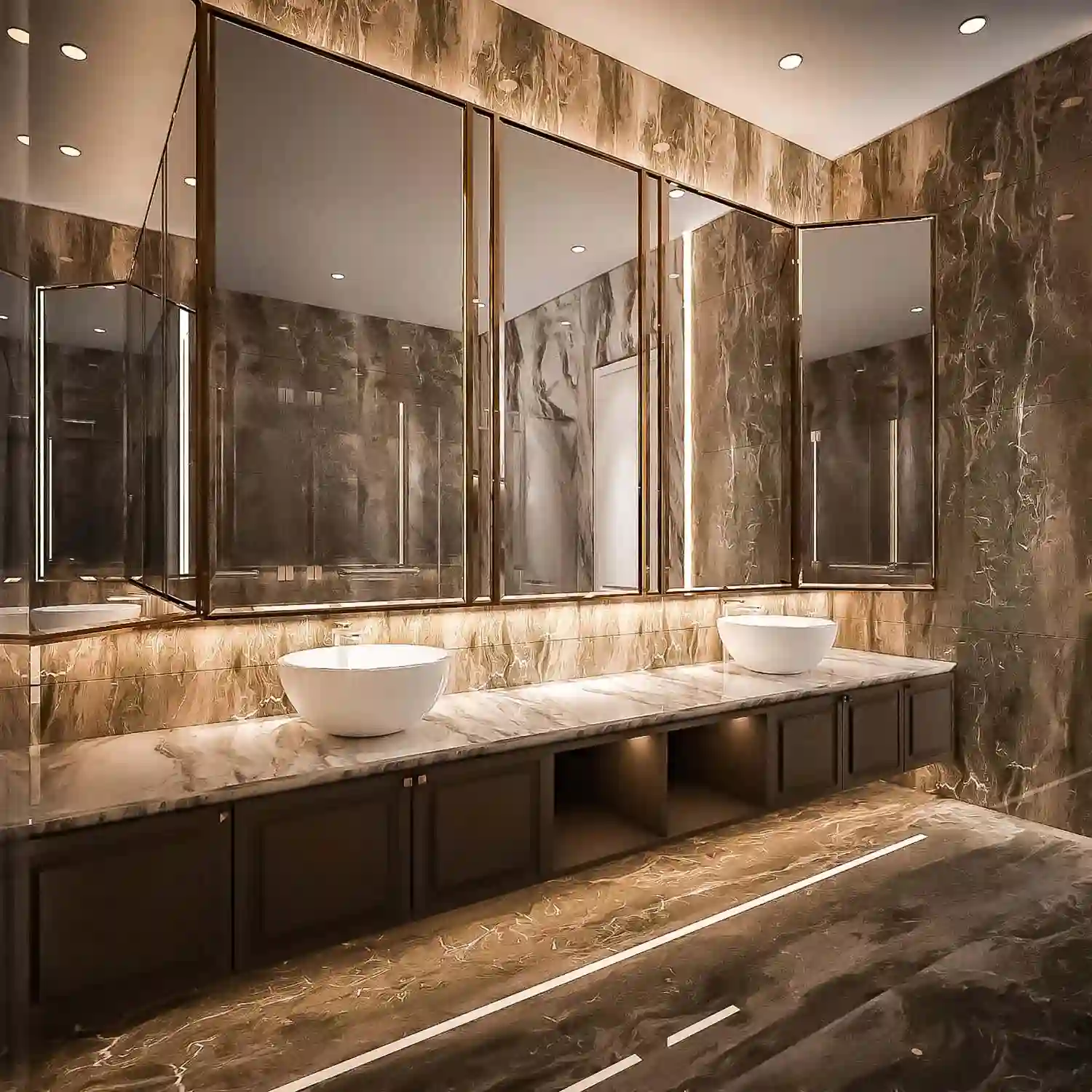
Looking for more ideas? Explore our full guide to Bathroom Wall Ideas.
That small footprint is the whole opportunity. Because the slab is tiny, you can afford a material you would never run wall to wall in a kitchen. The best bathroom countertop ideas start there — with the one surface you actually touch every morning.
Bathroom countertop ideas in 2026 favor one warm, honed statement slab over cold builder-grade granite. A vanity is small, so quartzite, honed marble, or a creamy quartz stays within reach. Engineered quartz is the low-maintenance default. The move is a matte finish, a warm tone, and a simple edge — not high-gloss speckle.
First, a quick distinction. A countertop is the flat, horizontal surface you set things on. A backsplash is the vertical strip that guards the wall behind it. This post is about the slab itself; for the wall strip and how to pair one, our guide to bathroom backsplash ideas covers that side.
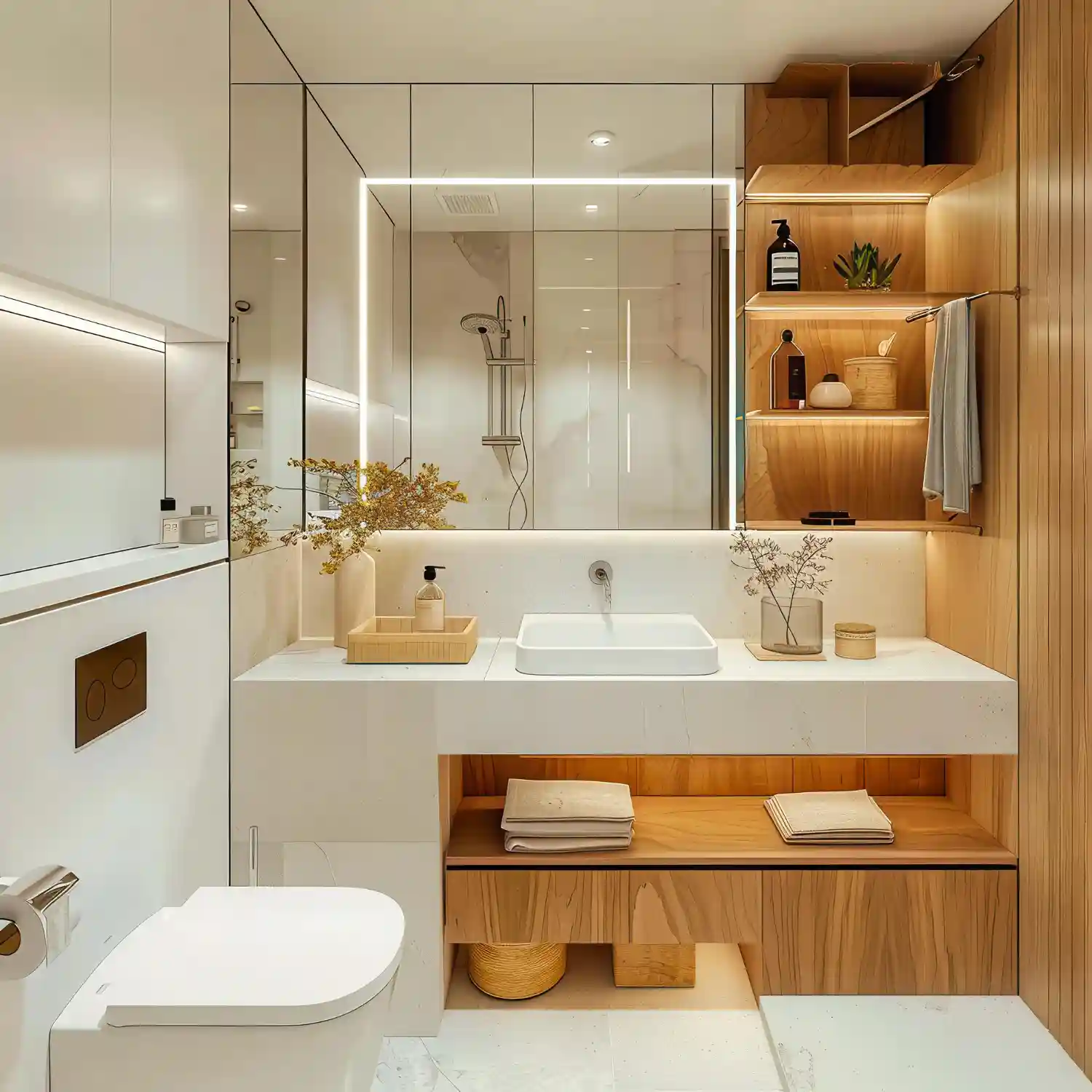
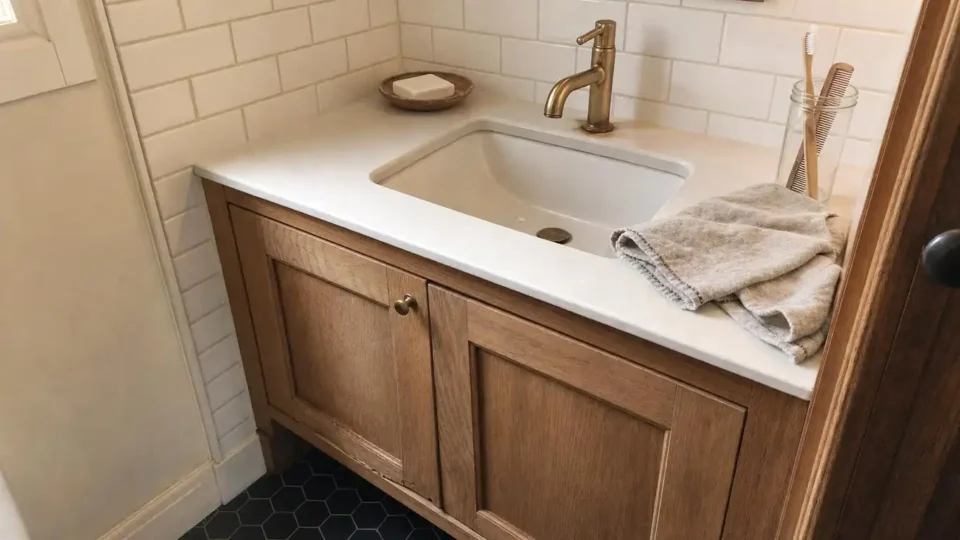
Editorial field note: A small vanity topped in shiny, brown-flecked builder granite makes the whole room look cheaper than it is. Swapping it for a honed, creamy quartzite remnant — same footprint, same plumbing — is often the single change that makes a dated bathroom feel calm and current.
If you are refreshing more than the counter, our home decor inspiration is a good place to browse for warm, liveable rooms. Countertops are only one layer of a calm bathroom. A lighter seasonal refresh pairs well with a new top, and these spring bathroom decor ideas keep the room feeling bright. Bookmark this guide for quick reference.
Why Are Bathroom Countertops Changing in 2026?
The shift is away from cold and glossy, toward warm and matte. For a decade, the default vanity top was high-gloss granite with heavy speckle, or a cultured-marble slab with a rolled-in backsplash. Both looked fine on day one. Both now date a bathroom fast.
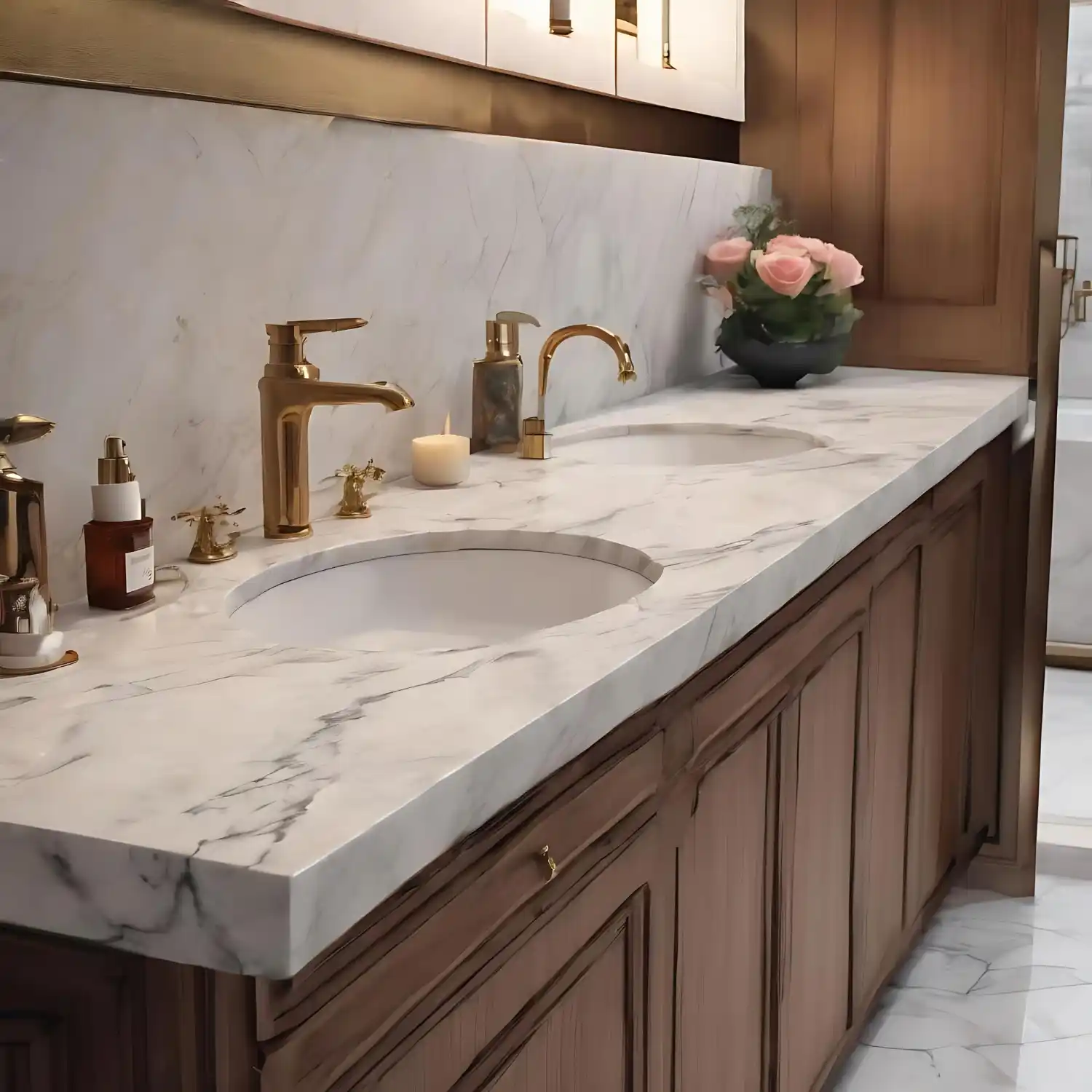
Two things drive the change. Warm neutrals are replacing cool gray across surfaces, and honed, low-sheen finishes are replacing mirror-polish. A creamy quartzite with soft taupe veining feels calm and current. A busy gray-brown granite with a wet shine feels like a 2012 builder package.
Design editors are tracking the same move. Houzz’s roundup of 2026 countertop and surface trends points to warm, creamy backgrounds with taupe and soft-gold veining, plus a wave of quartzite looks — a step “away from the stark feel of the bright whites and cool grays that once dominated.”
What’s fading from the old vanity top:
- High-gloss, heavily speckled granite in gray-brown and black-fleck patterns.
- Cultured-marble integrated tops with the curved, rolled-up backsplash.
- Cool gray stone paired with bright chrome and stark builder white.
- Waterfall edges, which overwhelm a small vanity and cost far more.
- Any surface chosen for maximum shine rather than warmth or texture.
Signs This Is Catching On:
- Editorial trend roundups now name warm neutrals as the replacement for cool gray on countertops.
- Quartzite looks, especially Taj Mahal-style creams, are what stone yards and quartz makers are pushing.
- Honed and matte finishes are showing up where high-gloss used to be the default.
- Wood-finish vanities with matte black or brushed brass hardware are the common pairing with creamy stone.
The 2026 Bathroom Countertop Material Menu
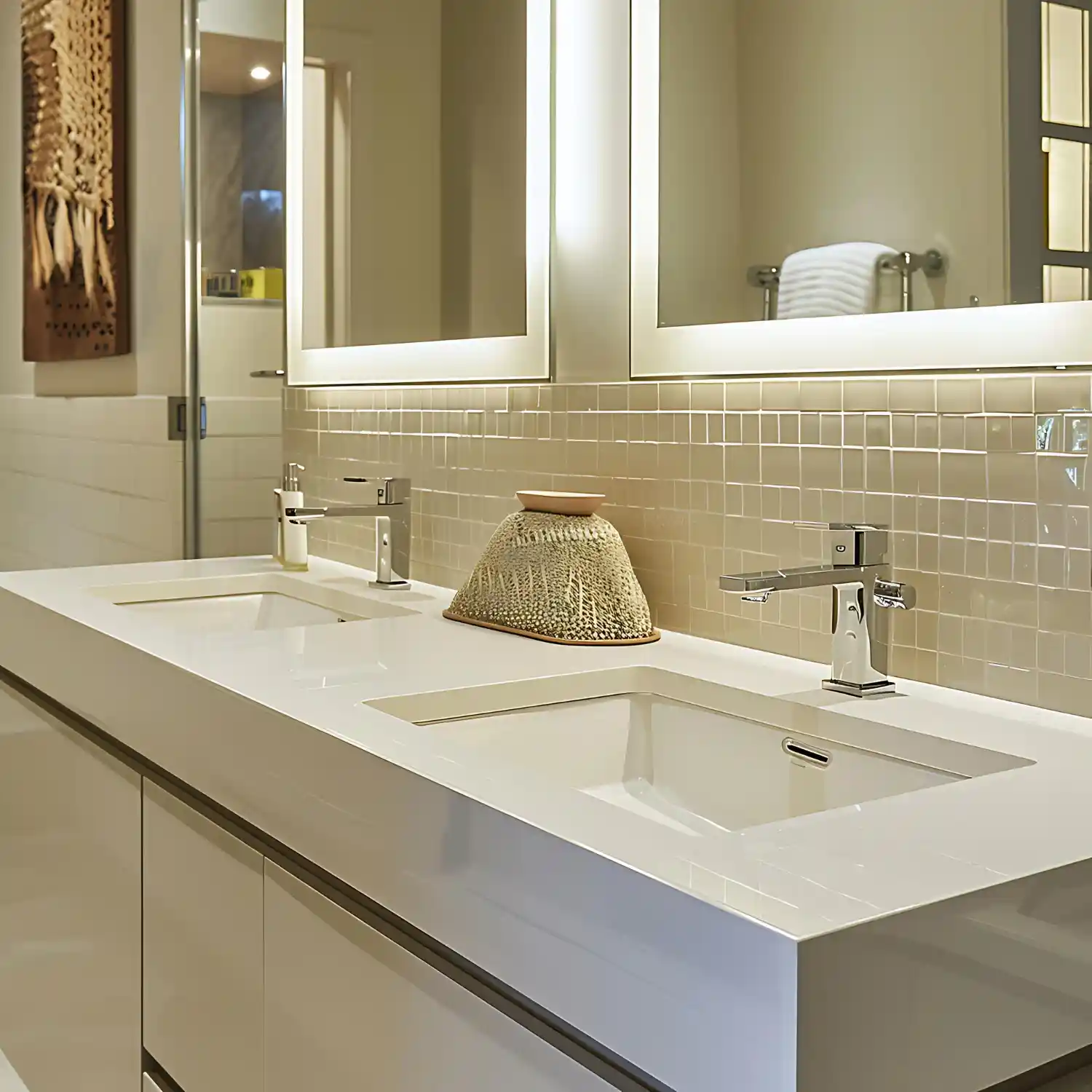
The strongest bathroom countertop ideas come down to picking the right material for how you live. Below is the real menu, from low-maintenance workhorse to full statement stone. Each one lists what it is, why it works on a vanity, and the trade-off to know before you buy. For room-level context beyond the counter, browse more bathroom design ideas.
Engineered Quartz — The Low-Maintenance Default
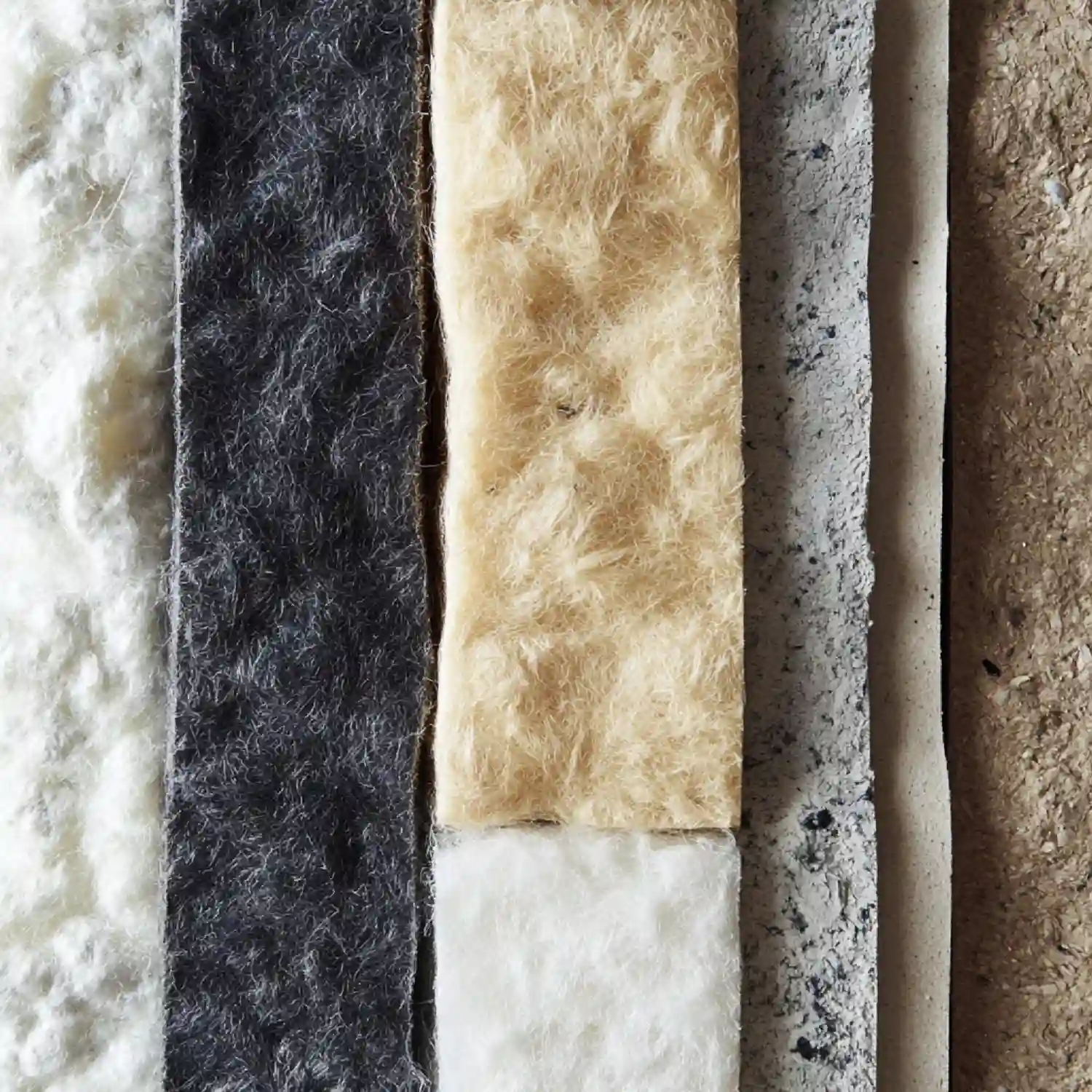
Engineered quartz is crushed natural quartz bound with resin, sold as a consistent slab. It is the safe, easy default for a busy bathroom. Choose a creamy or warm-white color with soft, marble-like veining rather than the flat, sparkly speckle of older quartz.
Material Note: Engineered quartz is non-porous, so it never needs sealing and resists the stains that soak into porous natural stone. That makes it forgiving around toothpaste, makeup, and cleaners.
The trade-off is heat and UV. Quartz can scorch under a hot tool and can fade in a sun-flooded window over years. In a bathroom, neither is usually a problem. Expect a mid-range price and almost no upkeep.
Quartzite — Marble Drama With Real Durability
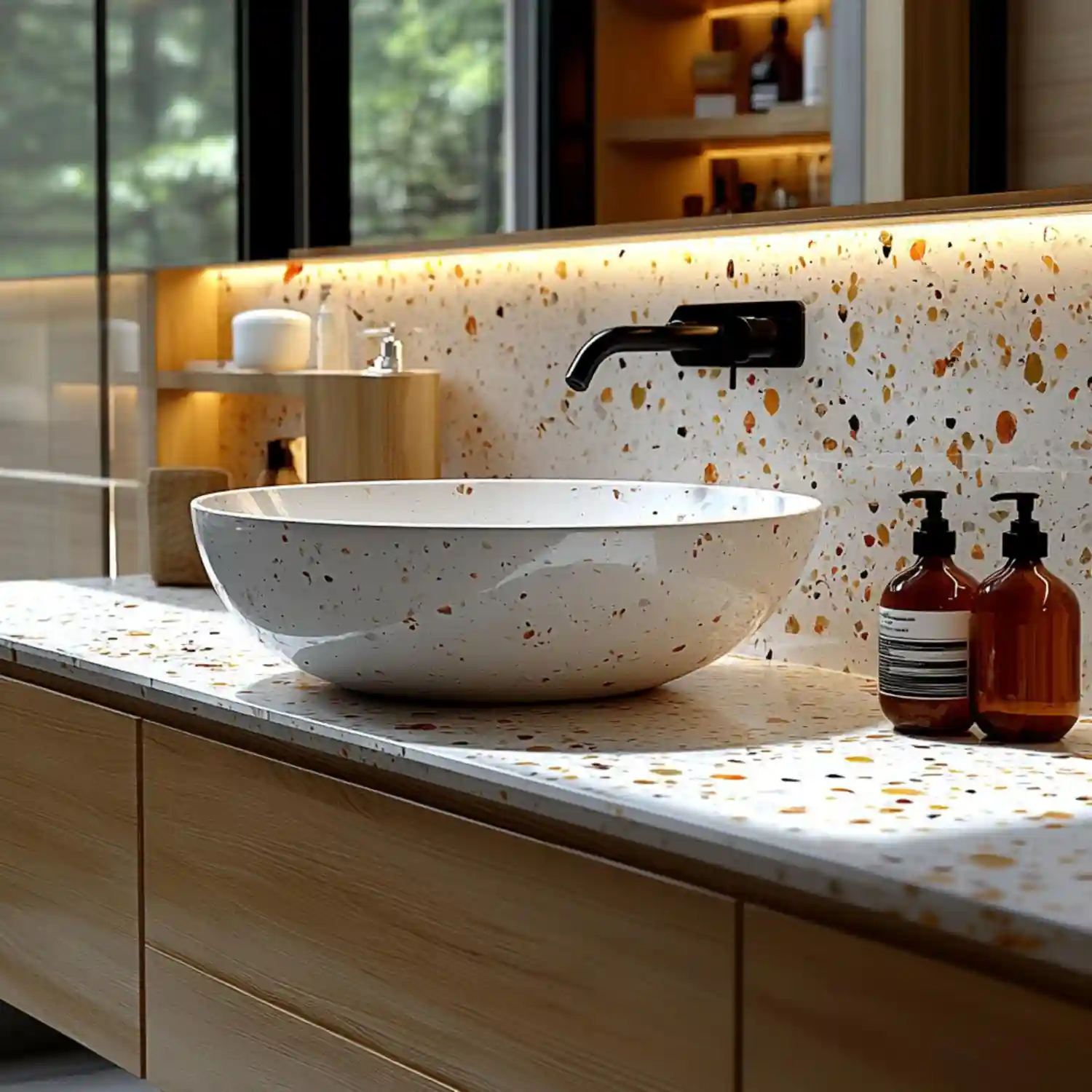
Quartzite is a natural metamorphic stone, not the same thing as quartz. It gives you the flowing veins and depth people love in marble, with much harder wear. Taj Mahal and other warm-cream quartzites are the standout look for 2026 vanities.
Quartzite is harder than marble and resists etching far better, though it is still natural stone and should be sealed. On a small vanity, its natural variation reads as expensive without shouting. It pairs beautifully with a warm oak vanity and aged brass.
Material Note: Quartzite is porous to a degree and takes a periodic sealer to shrug off water spots and cosmetics; most tops want resealing every year or two.
Honed Marble and Marble-Look Slabs
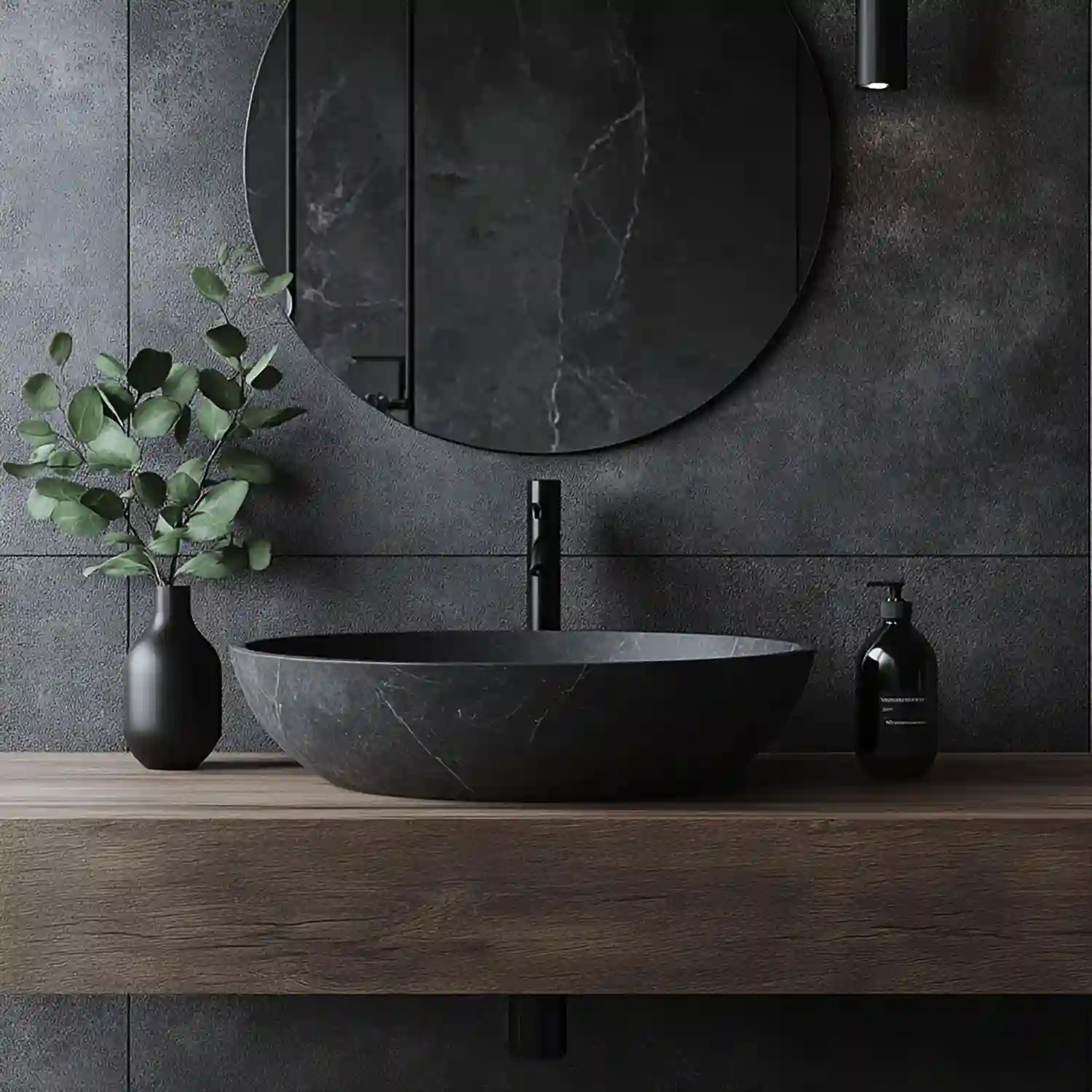
Marble is the classic, and honed marble is having its moment. A honed finish is matte and low-sheen, so it softens the stone and forgives daily marks. Carrara and Calacatta give cool-to-warm veining that suits a calm, hotel-style bathroom.
Know the material first. Marble is calcium carbonate, so acids etch it — lemon, vinegar, and many cleaners can leave a dull, cloudy mark. A honed finish hides that etching far better than a polished one, but marble still asks for care. If you want the veining without the worry, a marble-look quartz or porcelain copies it with none of the etching.
Travertine and Warm Natural Stone
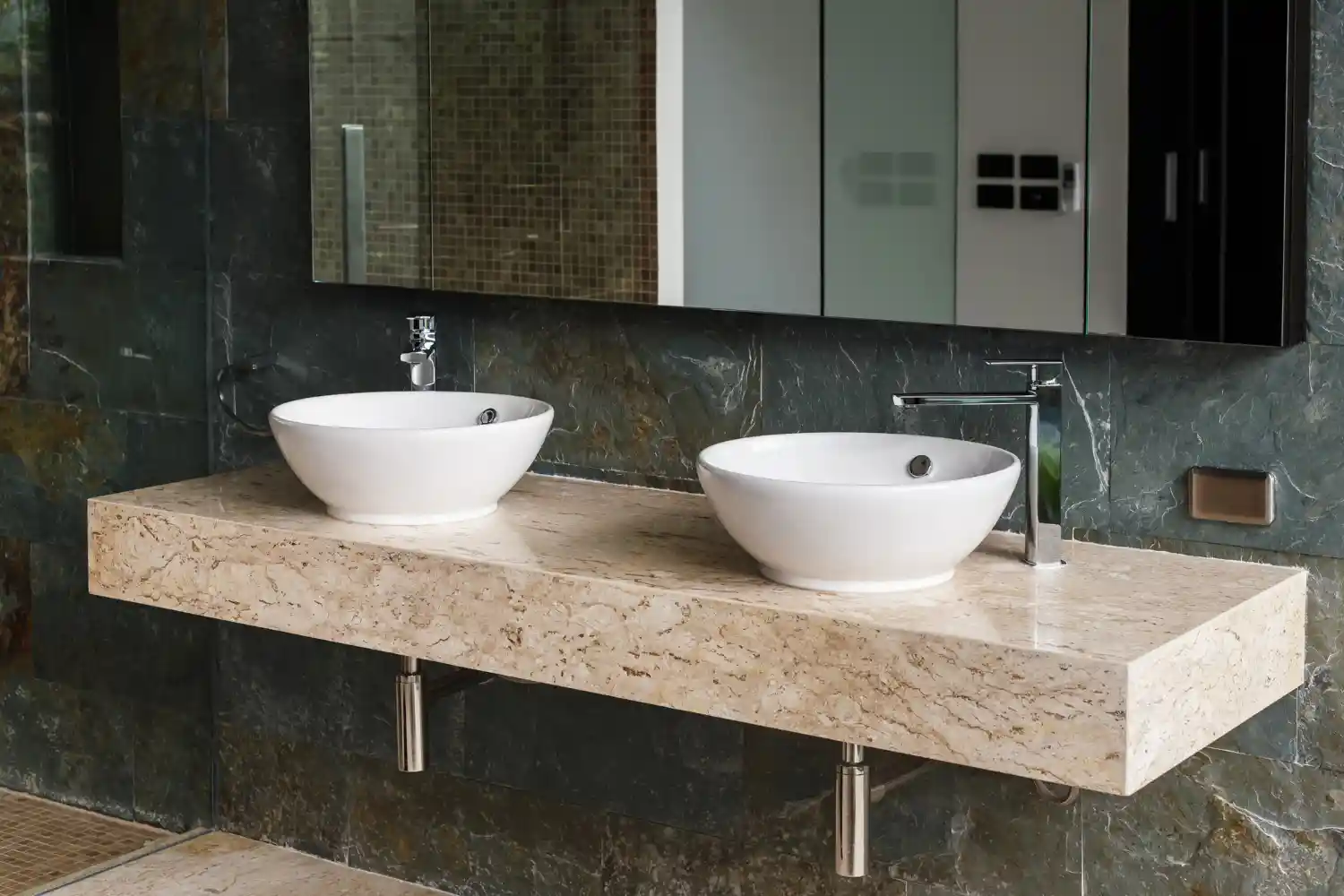
Travertine and other warm limestones bring an earthy, sun-baked tone that quartz cannot fake. In a honed, filled slab, travertine feels handmade and grounded. It suits an organic, spa-like room or a warm, earth-toned scheme.
These softer stones are the most character-rich and the most demanding. They are porous and etch-prone, so they want sealing and a gentle hand. Use them where you want warmth and patina, and skip them in a hard-used family bath. The look leans into the same earthy palette you see in these dreamy boho bathroom ideas.
Soapstone — Soft, Matte, and Timeless
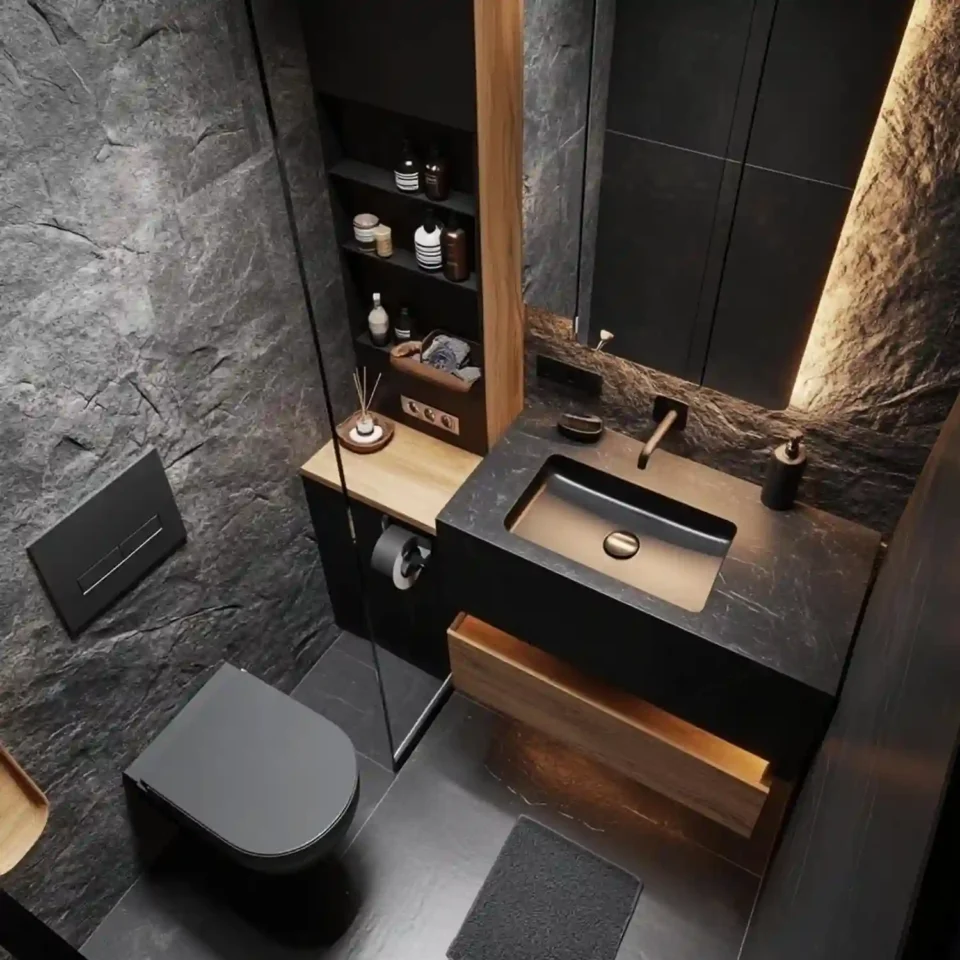
Soapstone is a dense, naturally matte stone in soft charcoal to deep green-gray. It has a quiet, old-world feel that works in a moody or a classic bathroom. Unlike marble, soapstone shrugs off acids entirely, so cleaners and cosmetics do not etch it.
Soapstone is non-porous and stain-resistant, but it is soft, so it scratches and dents more easily than quartzite. Owners rub it with mineral oil to deepen the color and blend small marks. Its dark tone anchors a room the way these elegant black and white bathroom designs use high contrast.
Porcelain and Sintered Slab
Porcelain and sintered slabs are the newest option and the toughest. Fired from clay and minerals, they are non-porous, and they resist heat, scratches, stains, and UV. Large slabs mimic marble, concrete, or stone with a printed, through-body face.
Porcelain is non-porous, so it never needs sealing and stays stable in a sunny window. It can be run thin for a sleek edge or built up for a chunkier look. The trade-offs are a printed surface that lacks true stone depth up close, and fabrication that needs an experienced pro.
Poured or Cast Concrete
Concrete gives a soft, matte, slightly industrial surface you can tint and shape to fit. It suits a modern, minimalist, or industrial bathroom, and it can be cast around an integrated sink for a seamless look. Each top is a little different, which is the point.
Material Note: Concrete is porous and can hairline-crack as it cures, so it needs sealing and periodic resealing to resist water spots and stains in a bathroom.
Concrete is heavy and custom, so it is not the cheapest small-vanity choice. But for a one-off, hand-made surface, nothing else reads quite the same.
Sealed Wood and Butcher Block
A wood or butcher-block top brings instant warmth that stone cannot match. Walnut, oak, or teak over a vanity feels soft and natural, and it pairs well with a vessel sink. It is the budget-friendly way to add real character.
Wood and water need a truce. A bathroom wood top must be sealed with a marine-grade or penetrating oil finish and re-oiled on a schedule, and it does best on a vanity away from a heavy splash zone. Keep it out of a kids’ bath unless you enjoy upkeep. This same warm-wood logic runs through a cozy farmhouse bathroom.
Terrazzo and Solid Surface
Two more options round out the menu. Terrazzo — chips of marble, quartz, or glass set in a binder — brings playful speckle and color, and modern versions feel fresh rather than retro. Solid surface, like Corian, is a seamless acrylic-and-mineral top that is the budget-friendly workhorse.
Solid surface is non-porous, repairable, and easy to shape with an integrated sink, though it scratches and can scorch. Terrazzo ranges from an affordable solid-surface look to a premium poured slab. Both give a clean, one-piece surface for less than natural stone.
What Details Quietly Date a Vanity?
The material is only half the choice. Finish, edge, and veining are the small calls that make a vanity look current or tired. Get these right and even a mid-range slab looks considered.
Honed or Polished Finish?
Finish sets the whole mood. A polished finish is glossy and reflective, which shows every water spot and looks shiny and hard. A honed finish is matte and soft, which hides marks and feels calm. For 2026, honed wins on almost every vanity.
Honed also plays to each material’s strength. It masks etching on marble, spots on quartzite, and glare on quartz. Save high polish for a deliberate glam moment, not a default. The pared-back, matte approach here echoes these minimalist bathroom decor ideas.
Edge, Thickness, and Veining
Keep the edge simple. A clean eased or squared edge looks current; heavy ogee and bullnose profiles date a vanity. A standard slab runs about three centimeters thick, and a mitered edge can fake a chunkier two-inch look without a waterfall.
Veining is a style dial, not just a color. Soft, dispersed veins read calm and timeless. Bold, dramatic veins make a small vanity a focal point — a strong move in a powder room, where a little drama is welcome. That colorful powder-room energy is exactly where bold schemes like these sophisticated pink bathroom designs come alive. Match the scale of the veining to the size of the room.
KEY TAKEAWAY: A small vanity is the one place you can afford a premium slab — so spend on the material, keep the finish honed, and keep the edge simple.
Integrated or Undermount? The Sink Decision
The sink choice changes how the slab looks and cleans. An undermount sink sits below the counter, so you wipe crumbs and water straight into the bowl and the slab stays the star. It is the clean, current default for stone and quartz.
An integrated sink is molded from the same material as the top, giving one seamless surface with no seam to catch grime. Quartz, solid surface, and concrete all do this well. A vessel sink, by contrast, sits on top and shows off more of the counter, which suits a wood or stone slab you want to display. For a double vanity, two undermounts keep a long slab looking calm and hotel-like.
How Far Up Should a Slab Backsplash Go?
Pairing the counter with the wall behind it is where many vanities go wrong. The current look skips the tall, dated 4-inch stone curb and instead uses either no backsplash with a tiled wall, or a short slab return that matches the counter. A matched slab strip looks seamless and calm.
If you want pattern on the wall, let the counter stay quiet and put the interest into tile above it. Keep the two in conversation, not competition. For how the counter-and-wall pairing fits the bigger picture, these bathroom design trends for 2026 put it in context.
Can a Small Vanity Handle a Statement Slab?
Yes — and the small size is exactly why. A powder room or single vanity often needs only a remnant, the leftover piece from a larger kitchen slab. Stone yards sell remnants at a steep discount, so a premium quartzite or marble that costs a fortune per full slab becomes affordable on a small top.
This is the smartest play in the whole post. Spend up on one small, beautiful slab you would never dare run across a kitchen. A dramatic marble or a deep-green quartzite on a compact vanity is a genuine luxury for a modest total. A rich, deep color pairs well with the tones in these sage green and forest green bathroom ideas.
A Quick Countertop Checklist
Use this fast plan before you visit a stone yard or order online:
- Pick honed over polished unless you truly want a glossy, glam finish.
- Choose a warm off-white, greige, or earthy tone over cool gray.
- Match the material to your habits: quartz or porcelain for low upkeep, quartzite or marble for drama.
- Keep the edge clean — eased or squared, not a heavy ogee or bullnose.
- Ask the stone yard for remnants to afford a premium slab on a small vanity.
- Confirm which materials need sealing and how often before you commit.
What to Avoid
❌ Defaulting to high-gloss speckled granite → ✅ Choose a honed, warm-toned quartz, quartzite, or marble instead.
❌ Running a delicate polished marble in a kids’ bath → ✅ Use quartz or porcelain where etching and spills are guaranteed.
❌ Keeping the old rolled cultured-marble backsplash → ✅ Switch to a short matched slab return or a clean tiled wall.
❌ Adding a waterfall edge to a tiny vanity → ✅ Keep a simple eased edge and spend the money on the slab.
What You’ll Spend
Countertop cost depends mostly on material. These are rough material-only price ranges, not fabrication or installation, which vary by region and edge work.
| Material | Estimated Cost | Impact Level |
|---|---|---|
| Solid surface, cultured marble, or laminate top | $25-$65 / sq ft | Medium |
| Engineered quartz or porcelain slab | $50-$120 / sq ft | High |
| Quartzite, honed marble, or natural stone | $70-$200+ / sq ft | Very High |
| Small-vanity remnant of premium stone | $200-$600 total | High |
Leave measuring, templating, fabrication, and installation to a countertop fabricator or pro — those steps and their labor costs sit outside this decor guide.
Best First Upgrade: Swap a builder-grade glossy granite top for a honed, creamy quartz or a quartzite remnant — the biggest visual jump for the least money.
Skip for Now: Do not pay a premium for a soft, polished marble in a hard-used family bath; that money buys constant upkeep, not lasting beauty.
The Bottom Line
The Bottom Line: A vanity is small enough to be the one place you splurge on material, so put the budget into a warm, honed slab and keep every other detail quiet.
Designer’s Verdict: For most homes, a creamy honed quartzite or a warm marble-look quartz is the sweet spot — it looks like real luxury, wears well, and skips the cold shine that dates a bathroom. Save true polished marble for a low-traffic powder room where its patina can be a feature, not a chore.
Frequently Asked Questions
Conclusion
The best bathroom countertop ideas in 2026 reward restraint and one good splurge — in practice, the smallest counter in the house is the one most worth upgrading, since a single honed remnant can quietly reset a whole tired room. For more calm, warm-material rooms, browse our rooms inspiration. You will find plenty more to borrow across our home decor ideas too.
Next Steps
- Decide your priority — low upkeep points to quartz or porcelain, while drama points to quartzite or honed marble.
- Pick a honed finish in a warm off-white, greige, or earthy tone over cool gray.
- Ask a local stone yard for remnants so a premium slab fits a small vanity budget.
- Confirm which materials need sealing, then leave measuring and fabrication to a countertop pro.
More Bathroom Wall Ideas
- Bathroom Wallpaper Ideas: Why One Bold Wall Changes the Whole Room
- Bathroom Tile Ideas: Why Warm, Textured Tile Beats the Cold White Grid
- Bathroom Wall Decor: Why Your Blank Walls Are a Wasted Opportunity
- Shiplap Bathroom Walls Feel Modern and Refined, Not Dated
- Bathroom Floor Tile Ideas: Why the Floor Should Lead the Room
- Bathroom Accent Wall Ideas: Which One Wall Is Worth It?
- Shower Tile Ideas: Why the Busy Accent Strip Is Finally Over