TL;DR
- The default is changing: glossy white subway tile with gray grout and cold gray large-format porcelain are giving way to warm, tactile, handmade-look tile.
- Warmth and texture lead. Zellige, terracotta, 3D relief tile, tumbled stone, and warm-toned porcelain add depth a flat white grid never had.
- Pattern is confident again. Checkerboard floors, vertical stacks, arches, scallop tile, penny and hex mosaics, and encaustic patterns are back in bathrooms.
- How you set the tile matters as much as the tile. Tile-drenching a wall, choosing grout on purpose, and using large-format in small baths change the whole room.
- Buy for the room’s light and use first. Check slip rating for floors, seal porous tile, and order extra for handmade lots.
What Do the Best Bathroom Tile Ideas Have in Common Now?
For most of the last decade, one finish showed up in nearly every bathroom: glossy 3-by-6 white subway tile set with gray grout. It was safe, cheap, and clean. It also left thousands of bathrooms looking the same, and a little cold.
Looking for more ideas? Explore our full guide to Bathroom Wall Ideas.
If you have stared at a white-tiled bathroom and thought “this looks tidy but feels like a hospital hallway” — you are not alone. The freshest bathroom tile ideas are moving away from that flat white grid toward warmth and real texture.
Editorial field note: A small bathroom finished all in glossy white subway with gray grout usually looks clean but bare, like a budget hotel. Swap the wall for warm zellige in a soft clay tone and the same room feels calm and hand-touched, before a single towel goes up.
This post walks the tile directions worth adopting, grouped by material, pattern, and how the tile is set. If you only want the sink-and-vanity splash strip, our guide to stylish bathroom backsplash ideas for every budget covers that narrower job. Here we are talking about whole-room tile on walls, floors, showers, and wainscot. Bookmark this guide for quick reference.
Bathroom tile ideas are shifting from the cold, glossy white grid toward warm, tactile, handmade-look tile. Zellige, terracotta, textured relief, tumbled stone, and warm porcelain lead, along with confident pattern like checkerboard and penny mosaic. How you set the tile matters too — drench one wall, choose grout on purpose, and size tile to the room. Buy for the room’s light and use first.
For broader room inspiration beyond tile, browse our home decor ideas and design guides.
Why Is the Cold White Grid Fading?
The white subway trend was a reaction to the busy, beige bathrooms of the 2000s. It looked clean and modern for years. Design press is now openly calling time on it — one 2026 roundup from Homes & Gardens is literally titled “Bye-Bye Subway Tiles” and points designers toward warm, artisan tile instead.
Two things changed. First, taste moved toward warmth. Cool gray and stark white started to feel flat, and people wanted rooms that feel human and calm. Second, handmade-look tile got easier to buy. Zellige, terracotta, and textured tile used to be niche and pricey; now most tile shops stock a warm, tactile option.
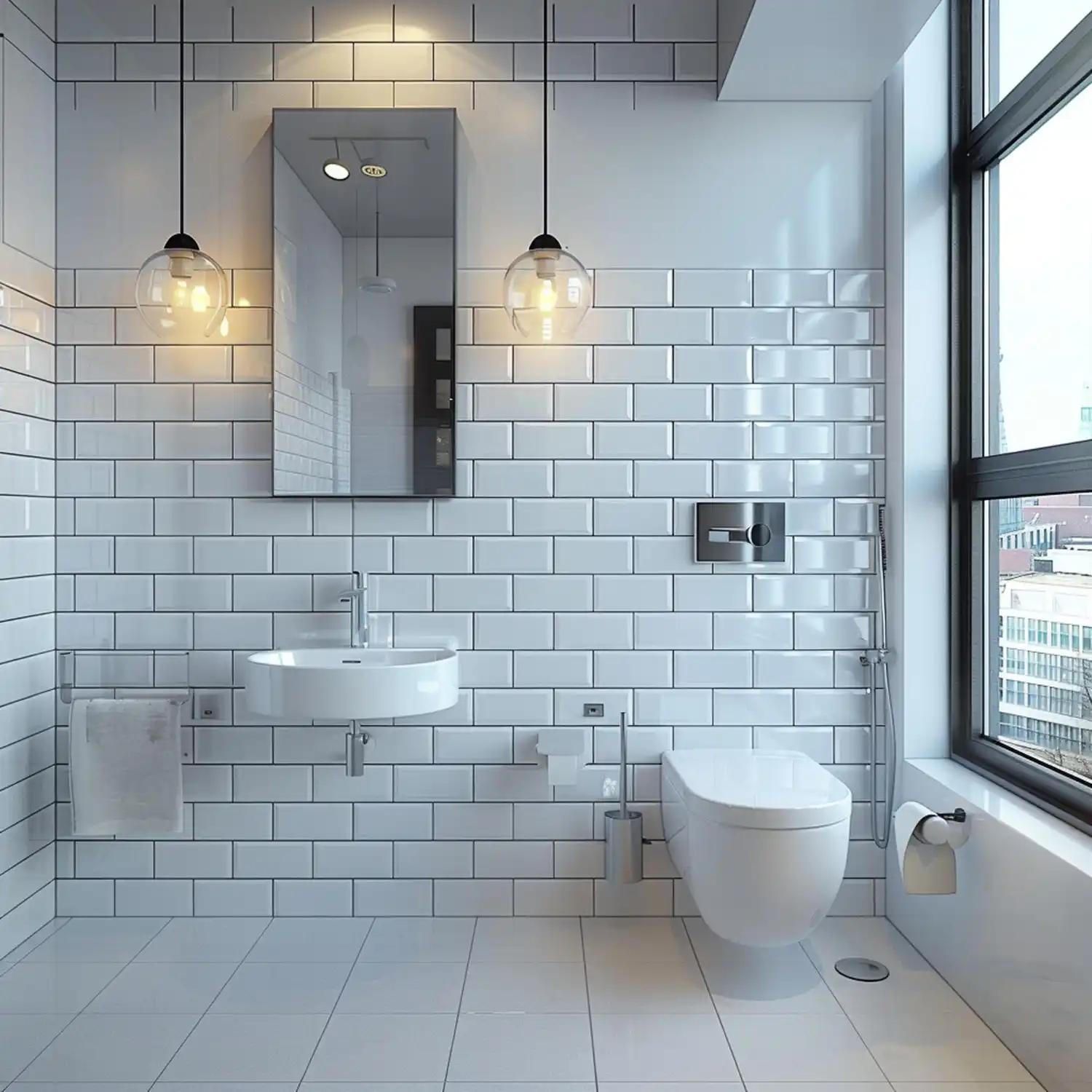
The white grid is not banned. A warm-white handmade subway with contrast grout still looks great. What is fading is the automatic default — reaching for the same glossy white 3-by-6 and gray grout without a thought. Bathroom tile now gets chosen for mood, not just for being safe.
Cold gray large-format porcelain is fading for the same reason. Big gray tiles once felt sleek and spa-like. In a north-facing or windowless bath, that same gray now looks gloomy and dated by afternoon. If you want drama with warmth, our elegant black and white bathroom designs show how to get contrast without cold gray.
Warm, Handmade Tile Is Leading the Shift
Warmth and texture are the heart of the change. These tiles carry natural color variation, a slightly uneven surface, and a hand-touched quality that catches the light. They make a bathroom feel wrapped and lived-in rather than clinical. This is where most warm bathroom tile ideas start.
Zellige Tile for a Hand-Glazed Shimmer
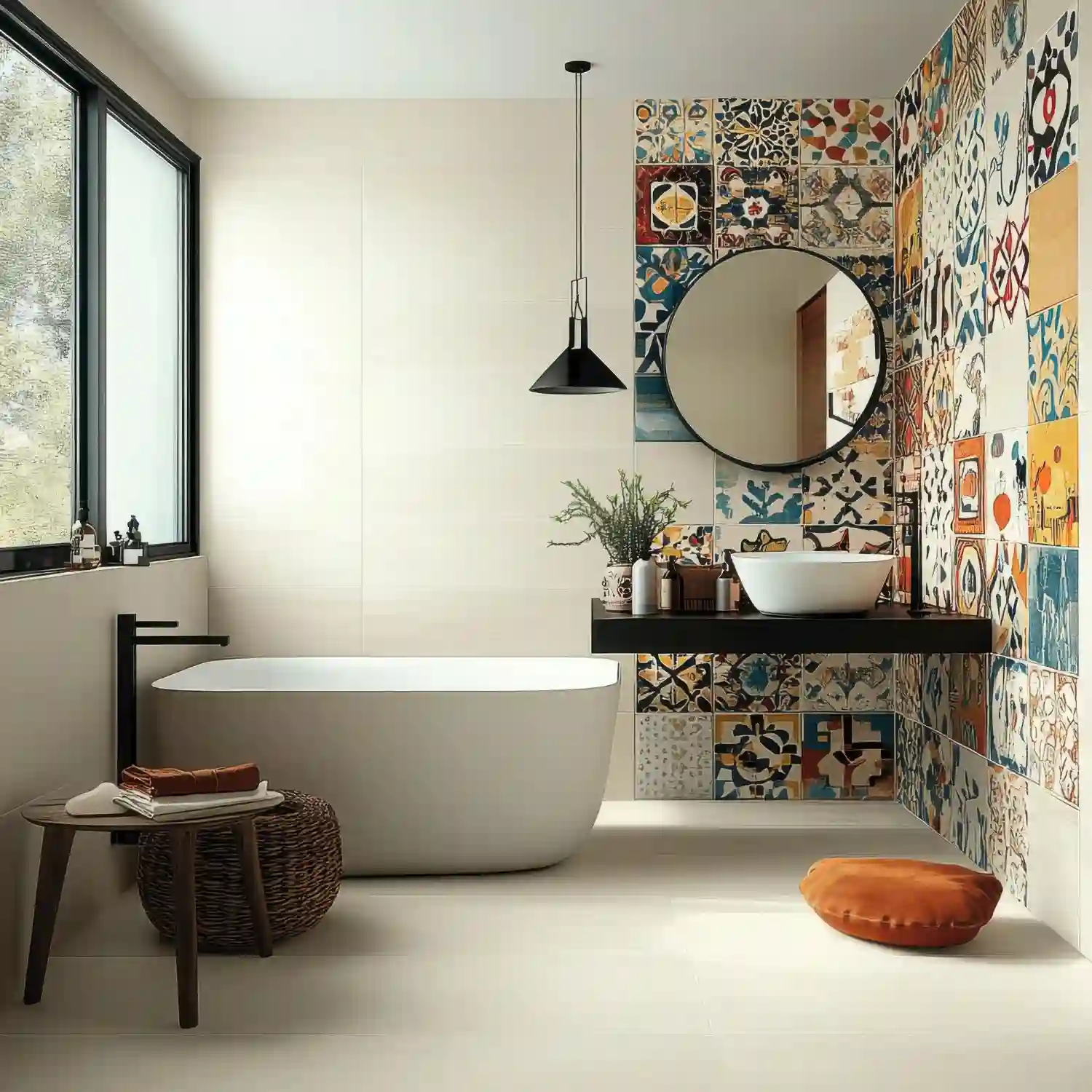
Zellige is a handmade Moroccan clay tile with a glossy, slightly uneven glaze. Each tile varies in color, thickness, and shine, so a zellige wall shimmers and shifts as the light moves across it. That variation is the whole point, not a defect.
Zellige suits a shower wall, a tub surround, or a full feature wall. Soft clay, warm white, sage green, and dusty blue are popular tones. Because the glaze is water-friendly, it works in wet zones, though the grout still needs sealing. A green zellige wall pairs beautifully with the palettes in our sage and forest green bathroom guide.
DESIGNER TIP: Buy zellige from a single production batch and order 15 to 20 percent extra — mixing batches later can show a visible seam in tone across the wall.
Terracotta and Clay for Earthy Warmth
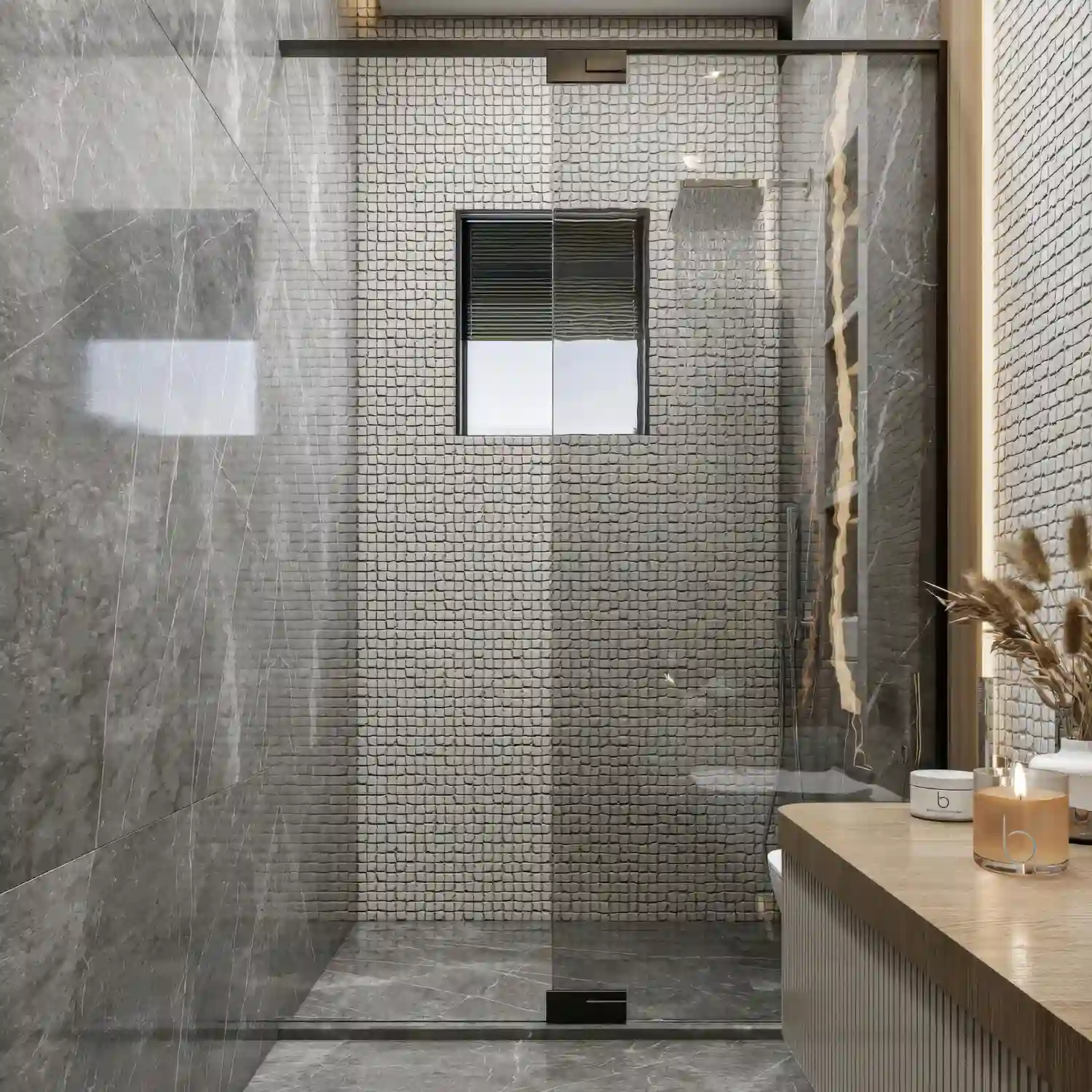
Terracotta is fired clay in warm rust, ochre, and clay tones. It brings instant heat to a room and looks earthy and Mediterranean. Terracotta works as a floor, a lower-wall wainscot, or a niche accent.
Unglazed terracotta is porous, so it needs sealing before and after grouting in a wet bathroom. Glazed clay tile is more forgiving near water. The payoff is a floor with genuine warmth underfoot, the opposite of cold gray porcelain. Terracotta and clay tile also fit relaxed, layered styles like the ones in our boho bathroom inspiration.
3D Relief and Textured Tile for Shadow and Depth
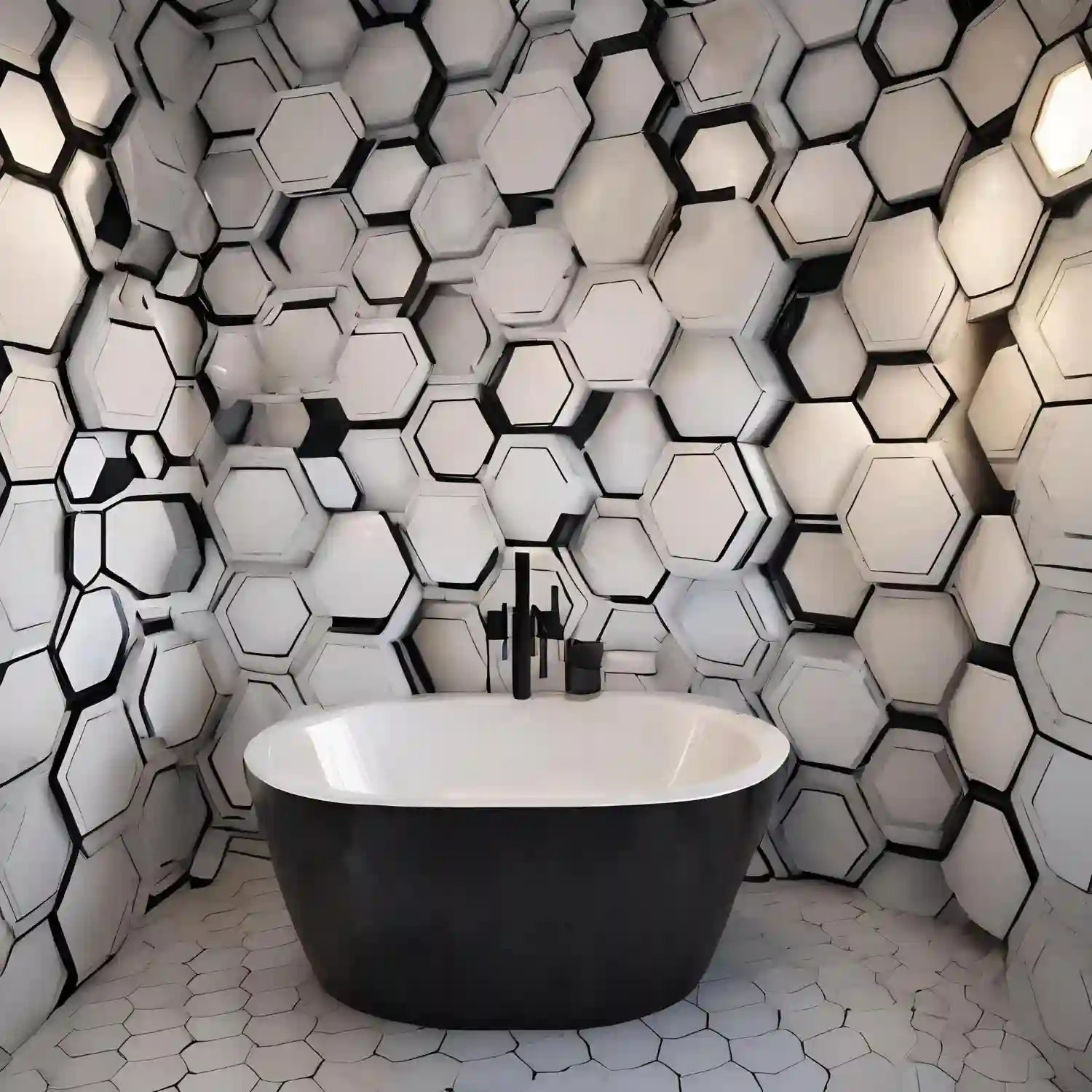
Relief tile has a raised, sculptural surface — fluted ribs, hammered dimples, ogee waves, or scallop-shaped bumps. Light hits the raised areas and casts soft shadow, so a plain wall gains depth without any color at all. It is one of the easiest ways to make white or off-white tile look expensive.
Keep heavily textured tile on walls and dry zones, where it stays easy to clean. A fluted or ribbed tile behind the vanity or in a shower niche adds quiet character. Even a small band of relief tile lifts a flat wall.
Tumbled Stone and Travertine for Soft, Natural Beige
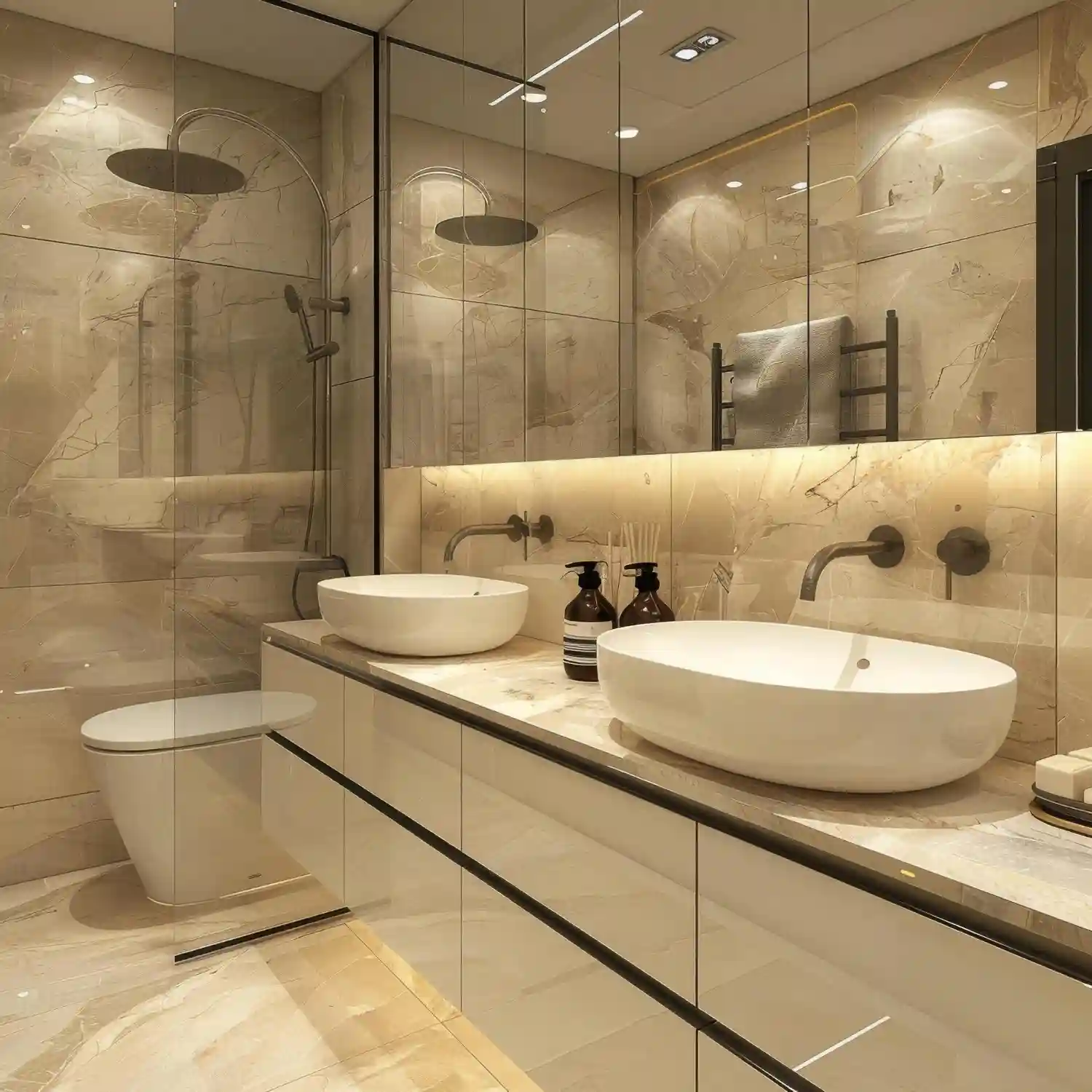
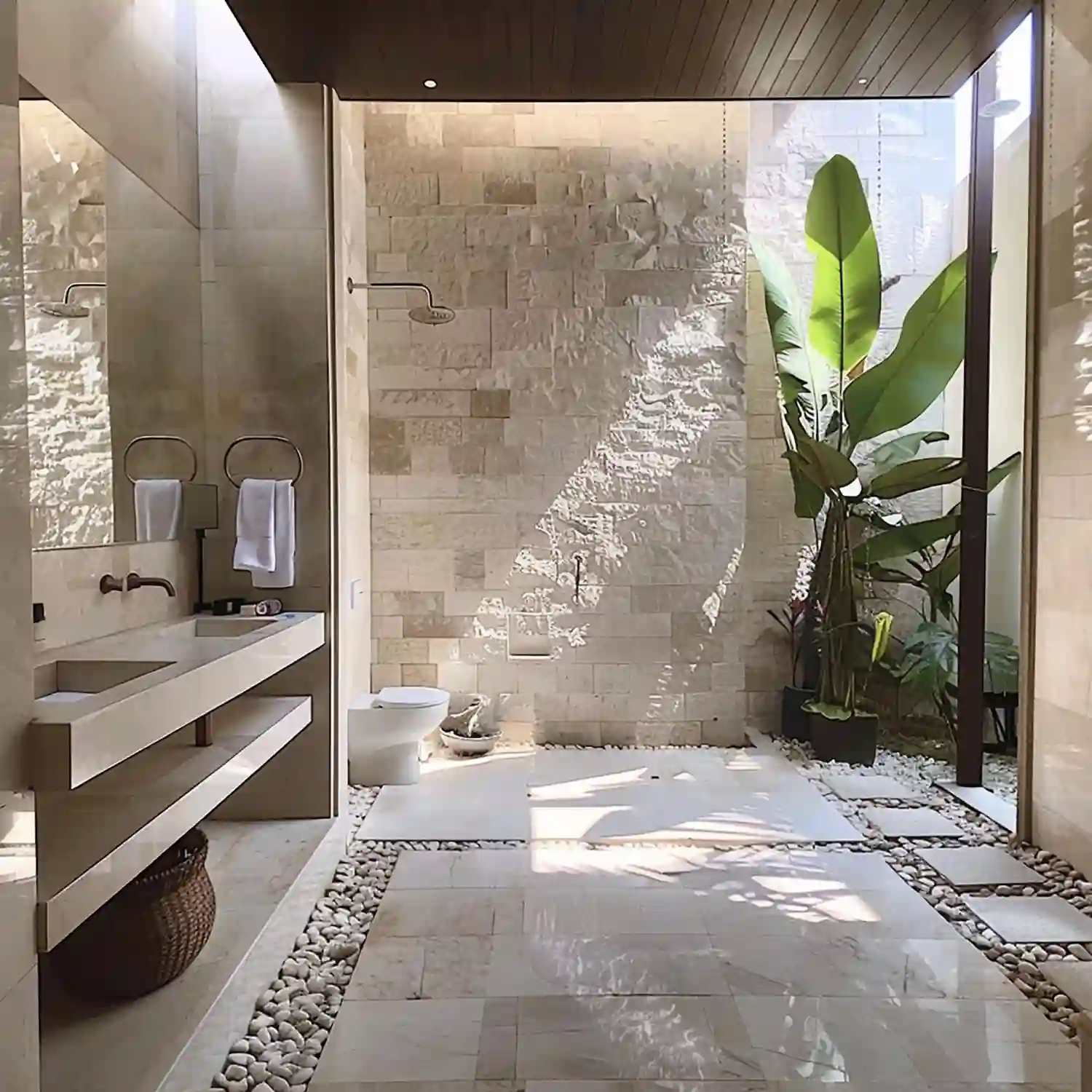
Travertine is a natural stone in warm ivory, beige, and walnut tones, with a soft, cloudy surface. Tumbled stone has gently worn edges that feel old and organic. Both bring warmth that manufactured tile struggles to copy.
Natural stone is porous and needs periodic sealing to resist water and stains. On floors, choose a honed or tumbled finish rather than polished, since polished stone gets slippery when wet. Travertine looks warm and timeless, and it plays well with the pared-back look in our minimalist bathroom decor ideas.
Warm-Toned Porcelain for Easy, Durable Warmth
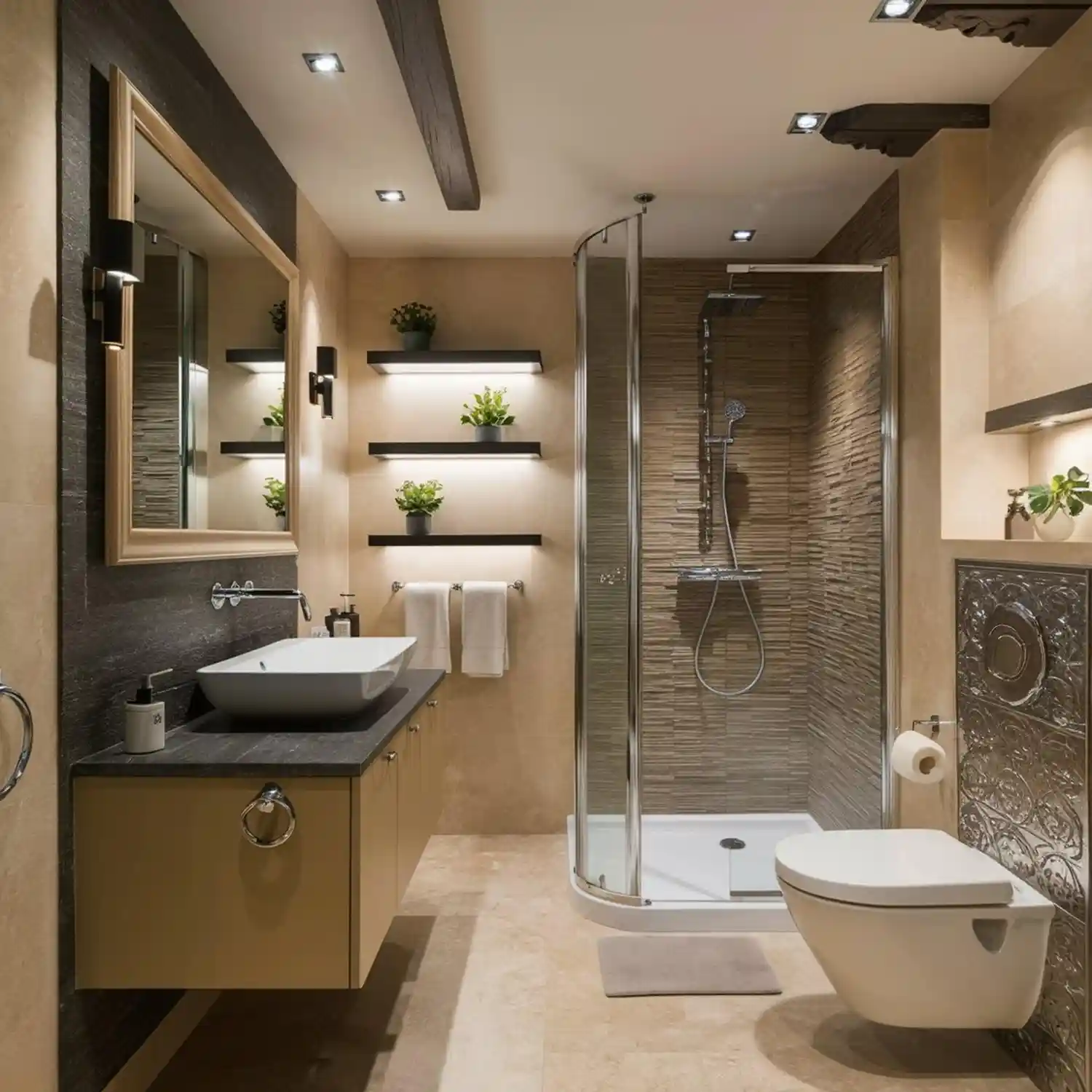
If you want the low-maintenance ease of porcelain but not the cold gray, warm-toned porcelain is the answer. Tile makers now offer greige, sand, taupe, and stone-look porcelain that mimics travertine or clay. Porcelain is low-porosity and durable, and floor-rated porcelain carries a PEI of 3 or higher.
This is the practical middle path. You get a warm, current color, a surface that wipes clean, and a tile that holds up on floors and in showers. It suits busy family bathrooms where sealing natural stone every year is not realistic.
Pattern Is Back in the Bathroom
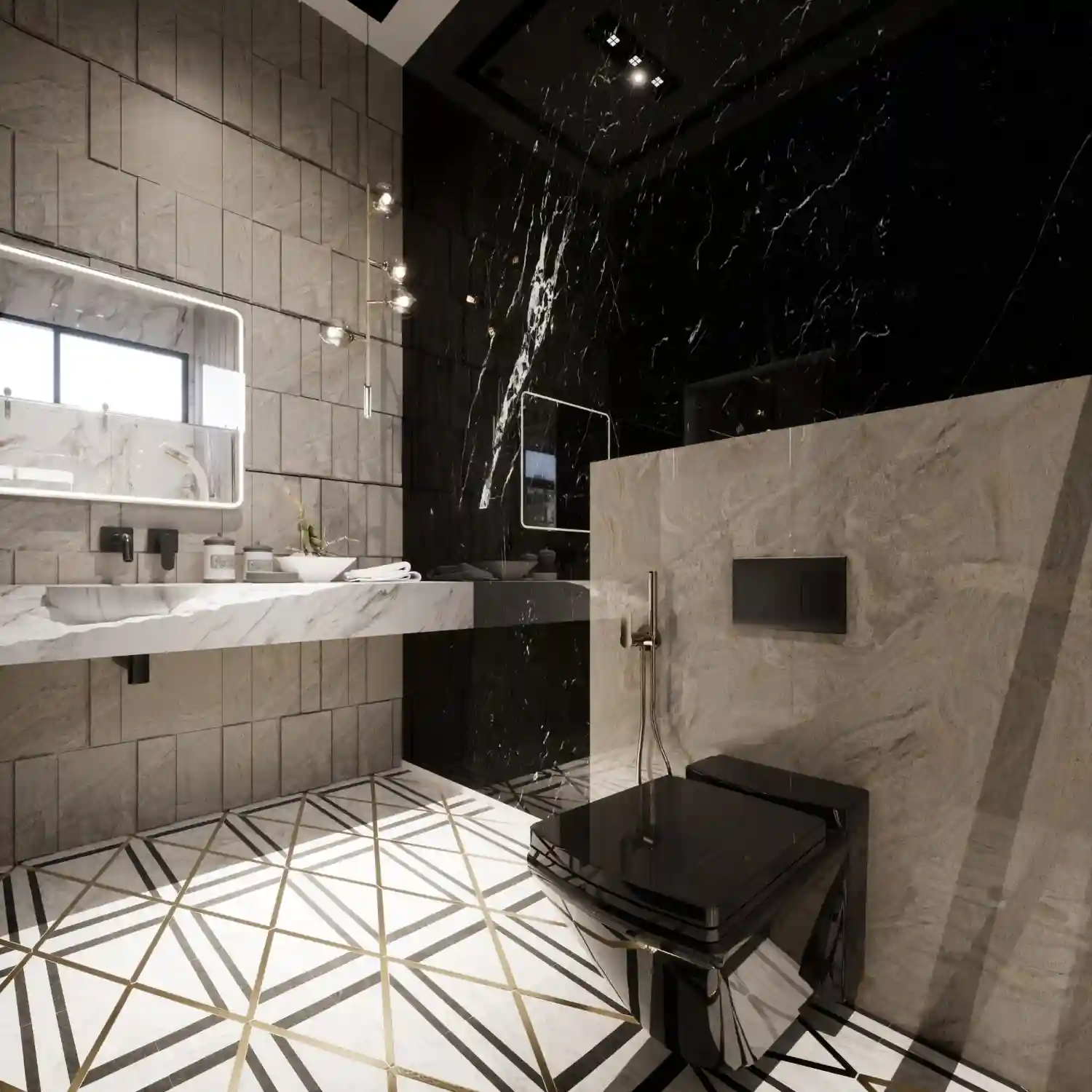
For years, safe meant plain. That is over. Confident pattern — on floors, on feature walls, in the shower — is one of the clearest signs a bathroom was designed on purpose rather than by default. Pattern is where a plain bath gets its personality, and you will see it turn up across all our bathroom ideas.
Checkerboard Floors for Timeless Punch
A checkerboard floor is two tile colors laid in a grid, straight or on the diagonal. Classic black and white feels crisp and a little vintage. Warmer pairs like terracotta and cream, or sage and off-white, feel softer and current.
Scale the square to the room. Small squares suit a tiny powder room; larger squares suit a big primary bath. A checkerboard floor turns a plain bathroom into a talking point for the price of two tile colors. Our sophisticated pink bathroom designs show how a vintage-leaning floor pairs with a soft color scheme.
Vertical Stack for a Fresh Take on Subway
If you love subway tile but want it to feel current, stack it vertically instead of the usual offset brick pattern. Vertical stack-bond draws the eye up, which makes a low bathroom feel taller. It looks clean and modern without going cold.
Stacked tile needs a flat, even wall behind it, since the straight grout lines show any wobble. Pair a warm-white or soft green stacked tile with a slim grout line for the best effect. It is a small change with a big payoff.
Arches for a Soft, Architectural Line
Arches are everywhere in bathrooms now, and tile is an easy way to add one. Tile an arch shape behind the vanity, cap a shower niche with a curve, or echo an arched mirror with a tiled arch surround. The curve softens all the hard right angles a bathroom usually has.
You do not need to rebuild a wall to get the look. A painted or tiled arch behind the sink gives the same soft, architectural line. It pairs especially well with zellige or a small handmade tile.
Scallop and Fish-Scale for Playful Character
Scallop tile, also called fish-scale or mermaid tile, is fan-shaped and full of movement. It brings a playful, slightly retro character that flat tile cannot. A scallop feature wall, tub front, or shower niche becomes the star of the room.
Fish-scale tile comes in glossy and matte, and in warm tones like clay, blush, and sage as well as classic white and green. Use it on one zone rather than every wall, so it stays special. It is a favorite for adding personality to a small bath.
Penny and Hex Mosaics for Vintage Grip
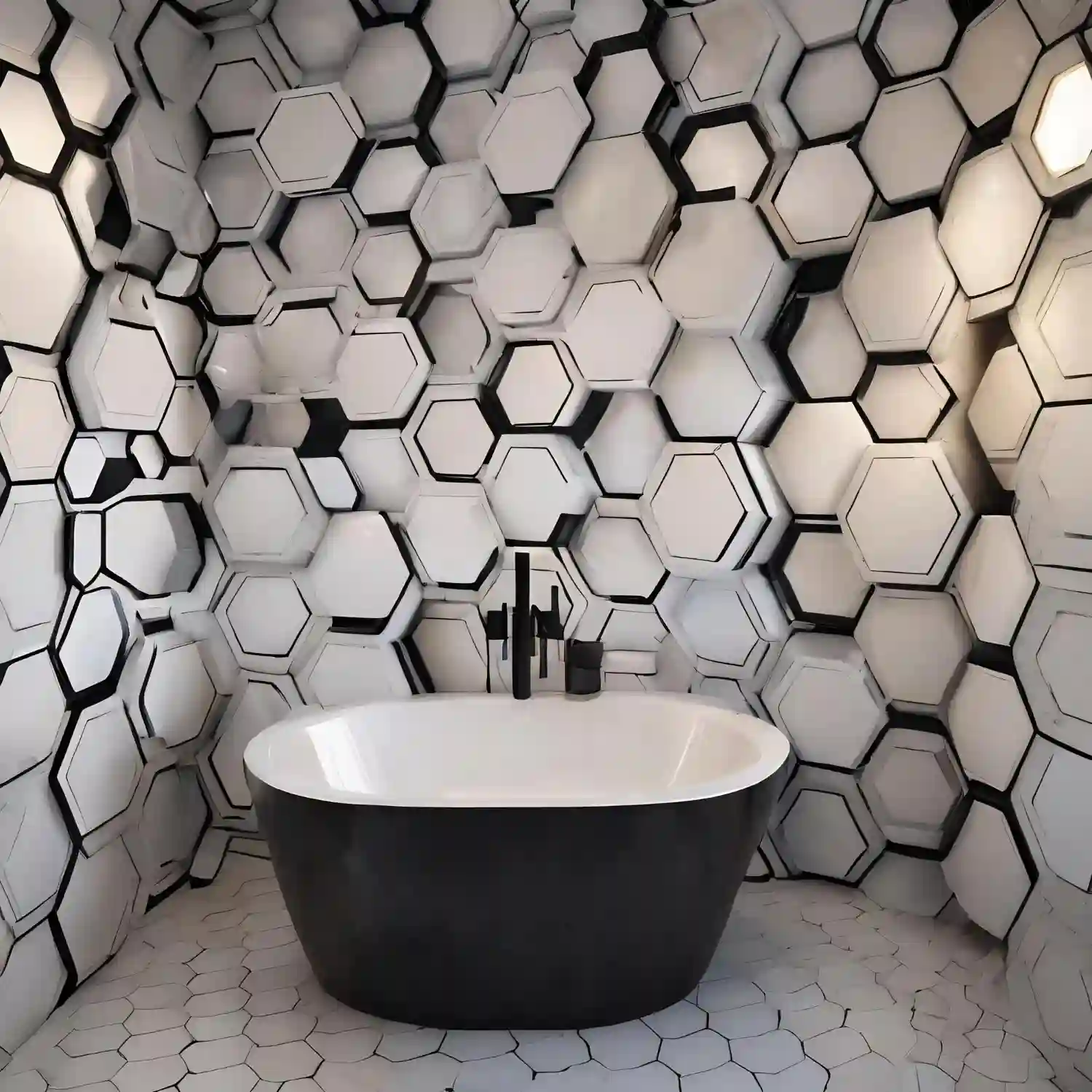
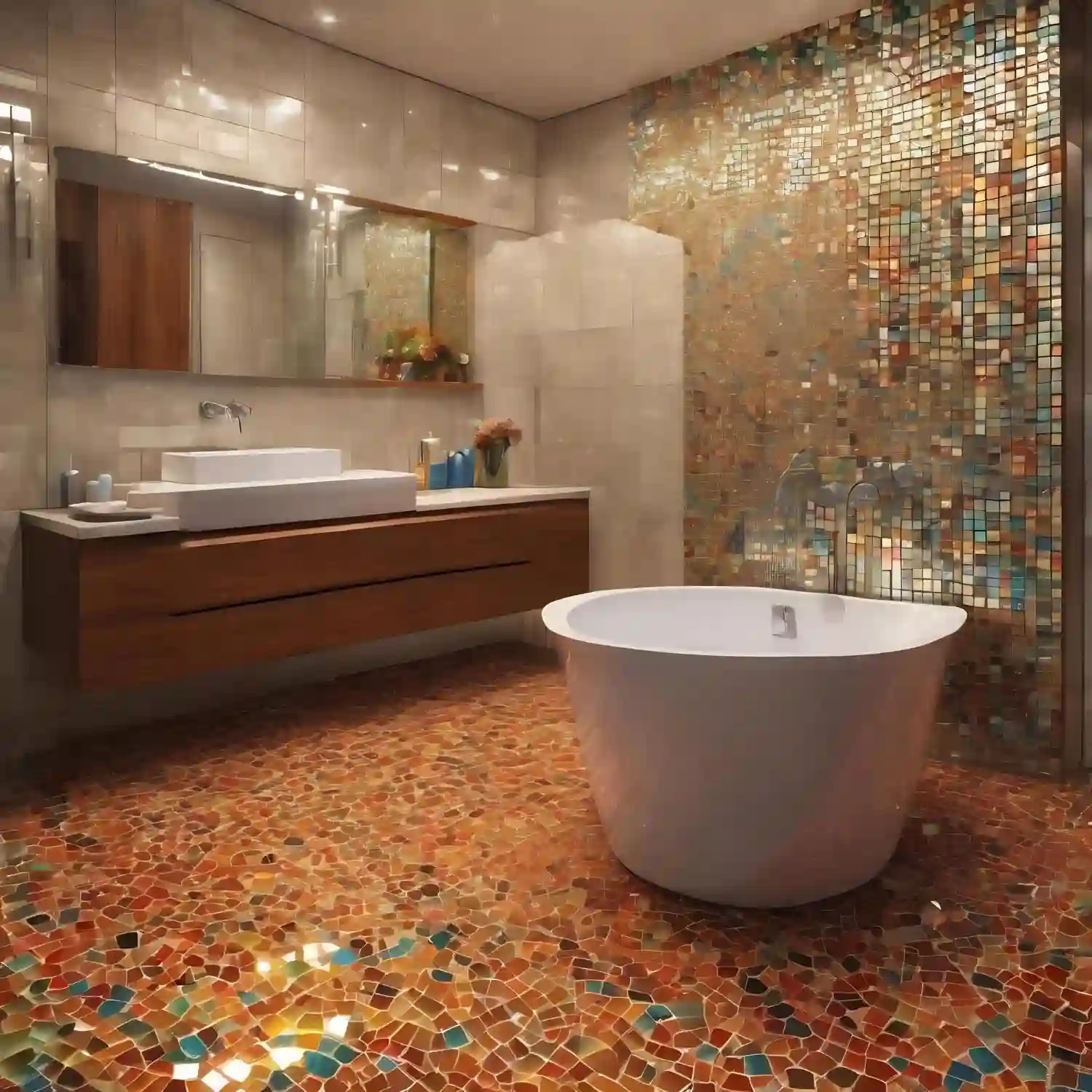
Penny tile is small and round; hexagon tile is small and six-sided. Both are mosaics, which means lots of small tiles and lots of grout lines. On a floor, all those grout lines add real grip, which helps with slip resistance. They also carry a charming, old-house feel.
Penny and hex mosaics suit vintage and farmhouse bathrooms especially well. A white hex floor with contrast grout, or a warm terracotta penny floor, feels classic without feeling tired. Our cozy farmhouse bathroom guide leans on penny, hex, and wainscot for exactly this reason.
Encaustic Patterns for a Tiled Rug
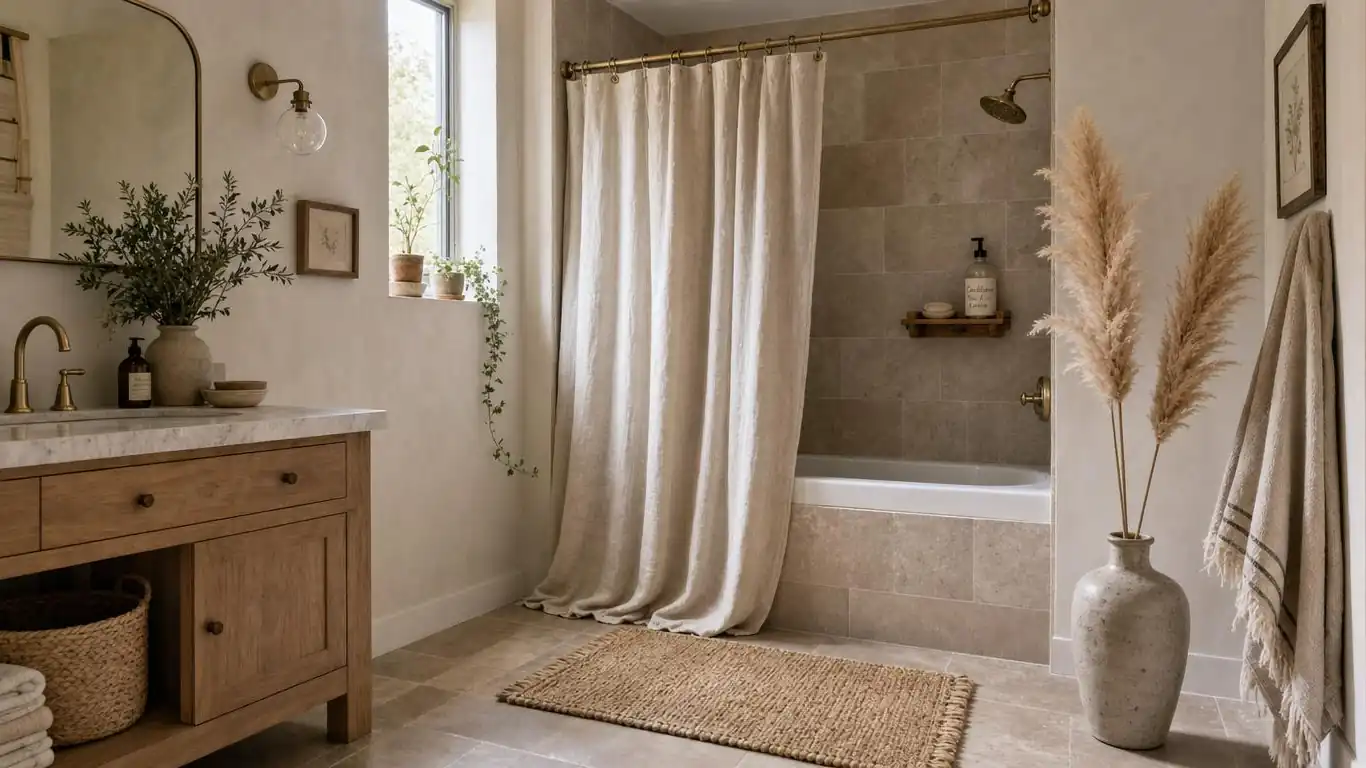
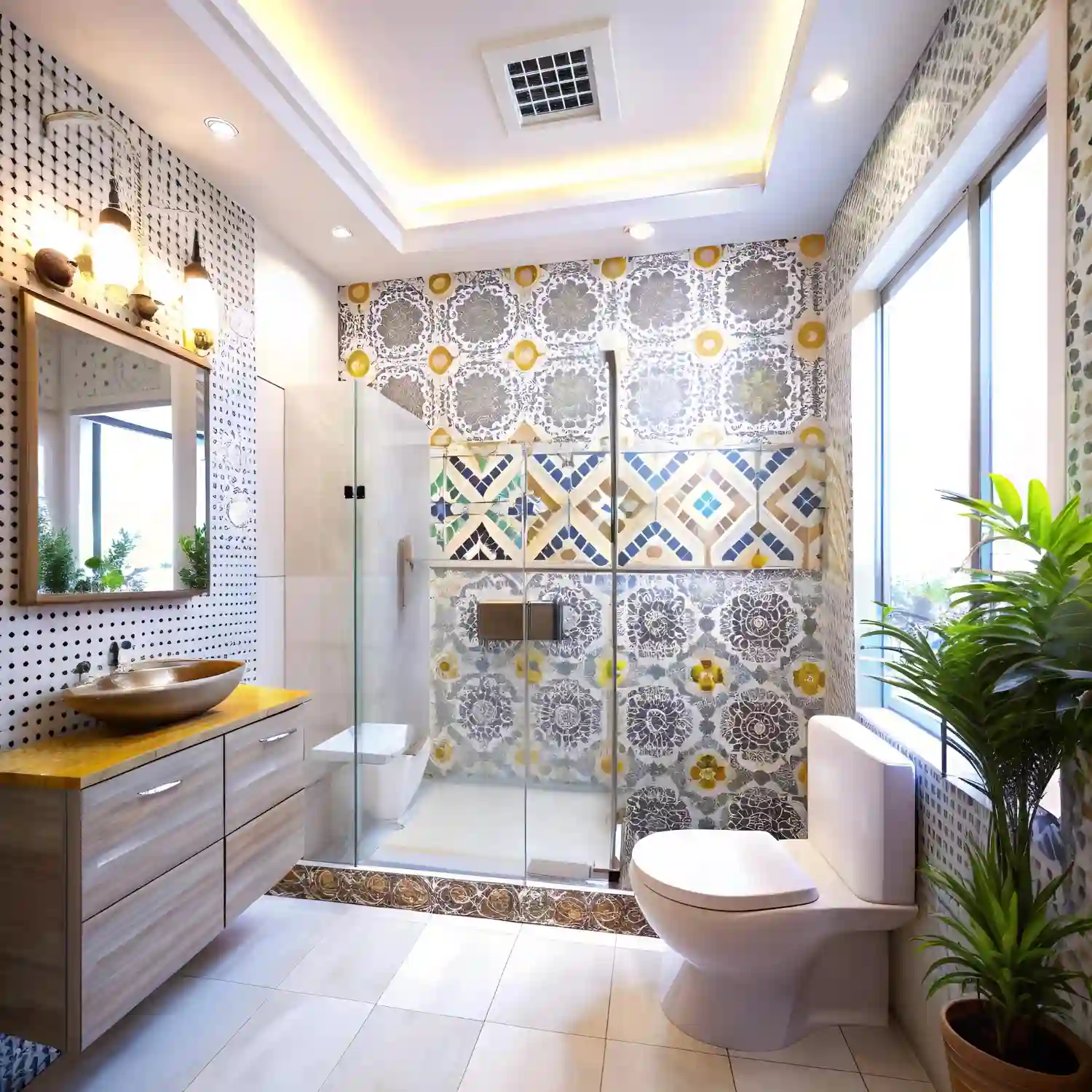
Encaustic tile has a bold graphic pattern where the color runs through the tile, not just printed on top. True cement encaustic is handmade and premium; porcelain look-alikes print the pattern for far less. Either way, a patterned floor acts like a built-in rug that anchors the room.
Keep the pattern to the floor or one wall, and let the rest of the room stay quiet so the pattern has space to shine. True cement tile is porous and needs sealing. A printed porcelain version skips the sealing and still delivers the look.
Smarter Ways to Set the Tile
The tile you pick is only half the decision. How the tile is set — where it stops, what grout you use, how big the pieces are — changes the whole room. This is where good bathroom tile ideas turn into a finished-looking bath.
Tile-Drenching a Wall Floor-to-Ceiling
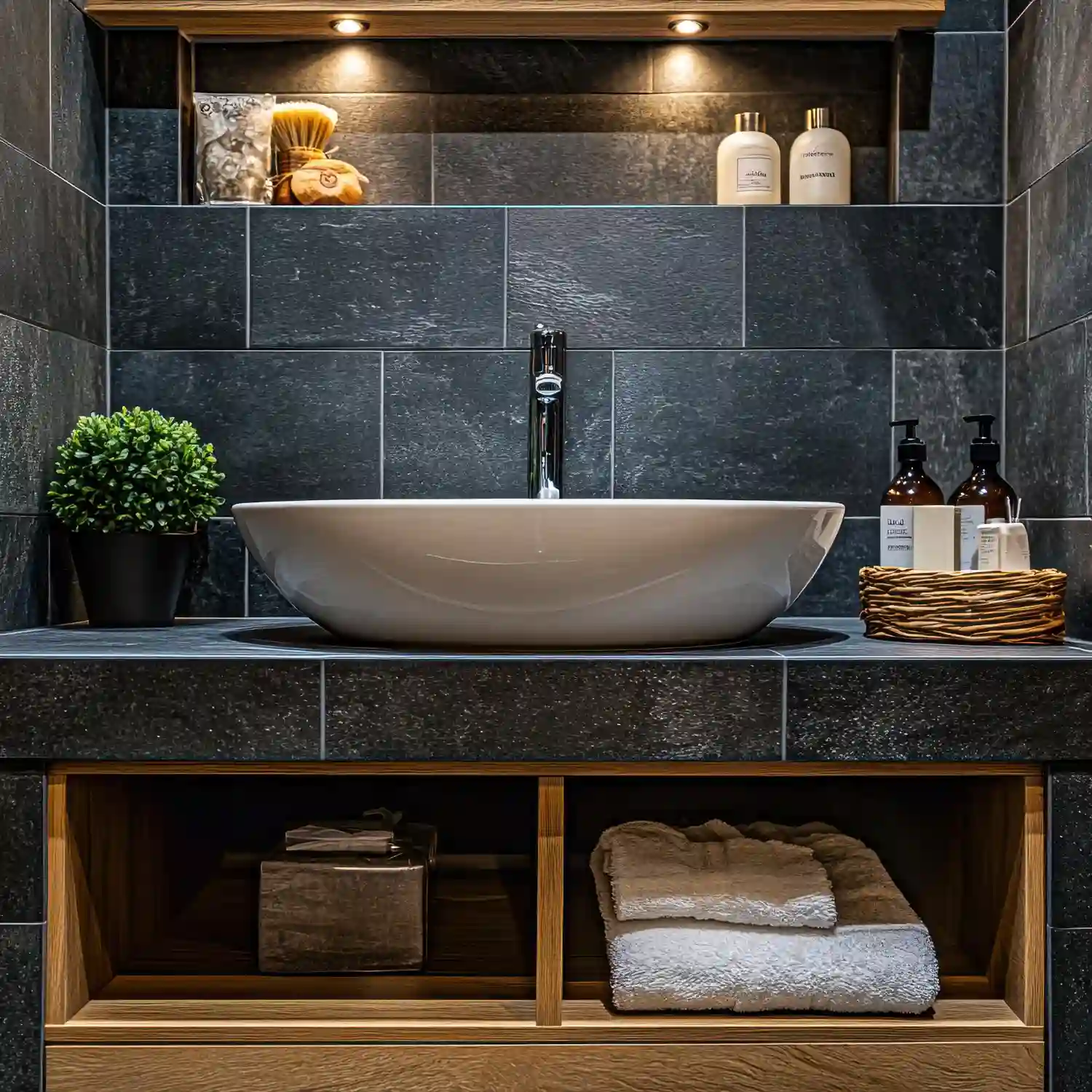
Tile-drenching means running one tile all the way up a wall, or wrapping the whole wet zone, instead of stopping at a half-height line. The unbroken surface makes a small bathroom feel wrapped and calm, and it can make the room look larger, not smaller. Fewer stopping points means fewer busy lines.
Drench the main wet wall or the whole shower for the strongest effect. A single warm, textured tile taken from floor to ceiling is one of the biggest upgrades you can make. It suits zellige, warm porcelain, and relief tile especially well.
Grout as a Deliberate Design Choice
Grout is not just filler — it is a design decision. Match grout to the tile for a soft, seamless look that lets texture lead. Contrast the grout to show off the pattern, like white tile with charcoal grout or terracotta tile with pale grout.
Darker grout also hides everyday grime on floors, which keeps a bathroom looking clean between deep cleans. In showers and wet zones, epoxy grout resists staining and water better than standard grout.
DESIGNER TIP: On a floor, choose grout one or two shades darker than the tile so foot traffic and splashes do not show; save bright white grout for walls that stay cleaner.
Large-Format Tile for Small Bathrooms
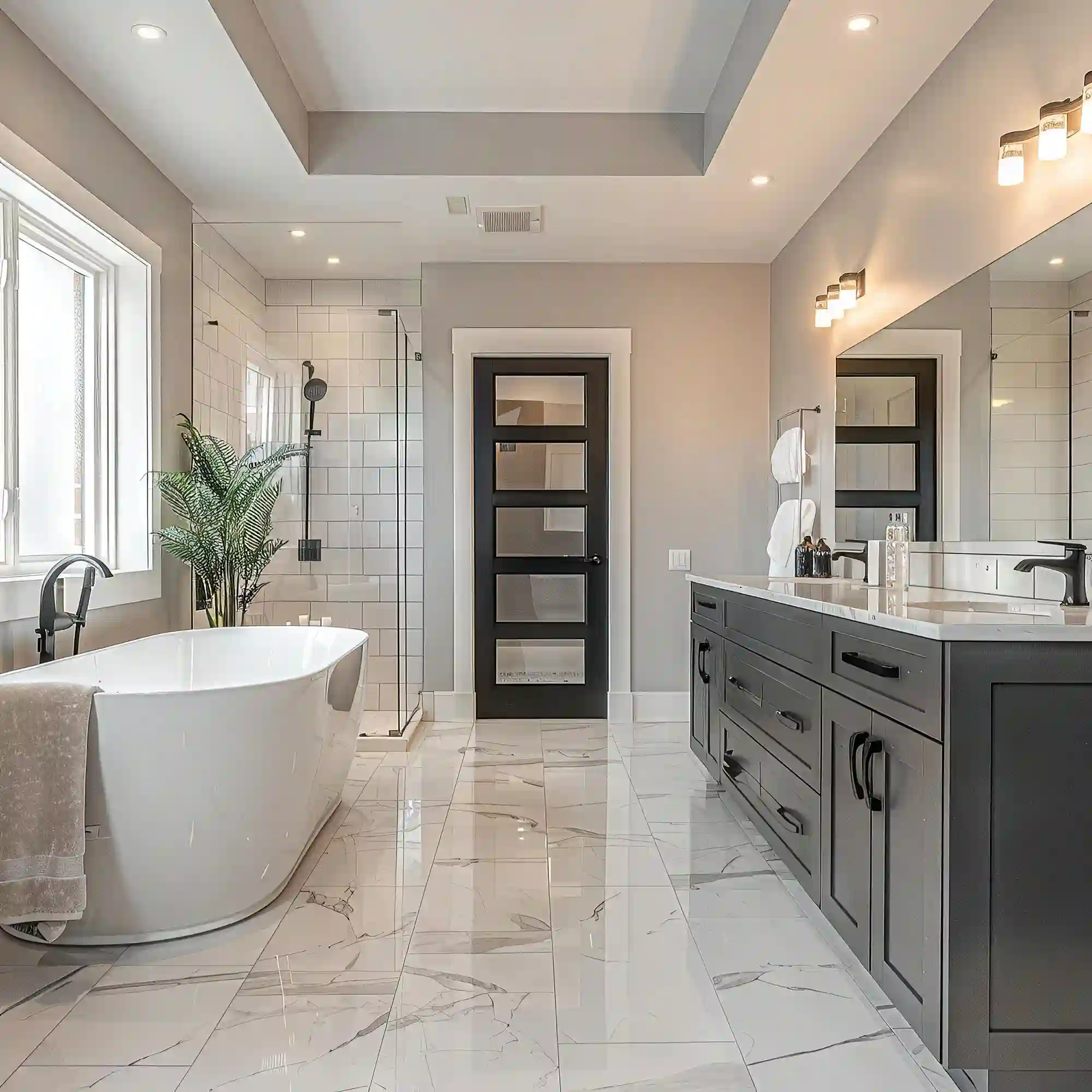
It sounds backward, but large tiles make a small bathroom feel bigger. Fewer tiles mean fewer grout lines, and fewer lines mean less visual clutter. A 12-by-24 or larger tile keeps a small bath calm and open. Rectified tiles, with their crisp cut edges, allow the thin grout joints that sell the look.
Warm-toned large-format porcelain gives you this clean, roomy feel without the cold gray of the old trend. It is the quiet, low-maintenance choice for a compact bath.
Mixing Two Tiles With Purpose
You do not have to choose one tile. A confident bathroom often mixes two — a patterned or handmade tile paired with a plain field tile. Use a patterned floor with a plain wall, or a handmade feature wall with simple field tile everywhere else.
Let one tile be the star and the other stay quiet. Transition between them with a pencil trim, a chair-rail line, or a natural change of plane like where the wall meets the shower. Two tiles, chosen with care, look richer than one tile everywhere.
KEY TAKEAWAY: How you set the tile — drenching one wall, choosing grout on purpose, and sizing tile to the room — often changes a bathroom more than the tile itself.
What’s Fading in Bathroom Tile?
Trends work in both directions. A few looks that felt fresh a few years ago now read as the safe, dated default. None of these are wrong forever — they are just no longer the automatic choice.
Glossy white 3-by-6 subway with gray grout as the reflex pick is fading. It still works when chosen on purpose, especially in a warm-white glaze. As a thoughtless default, it now makes a bathroom look builder-basic.
Cold gray large-format porcelain everywhere is fading too. The all-gray “gray box” bathroom felt sleek in the 2010s and now feels flat and chilly, especially in low light. Warm-toned porcelain gives the same easy surface with none of the gloom.
All-beige builder tile with no texture or variation is the third one to rethink. Flat beige is not warm the way clay or travertine is — it is just absent. If you love neutral, choose a beige with real texture, tone variation, or a handmade edge. For more on where the category is heading, see our roundup of major bathroom design trends for 2026.
Signs This Is Catching On
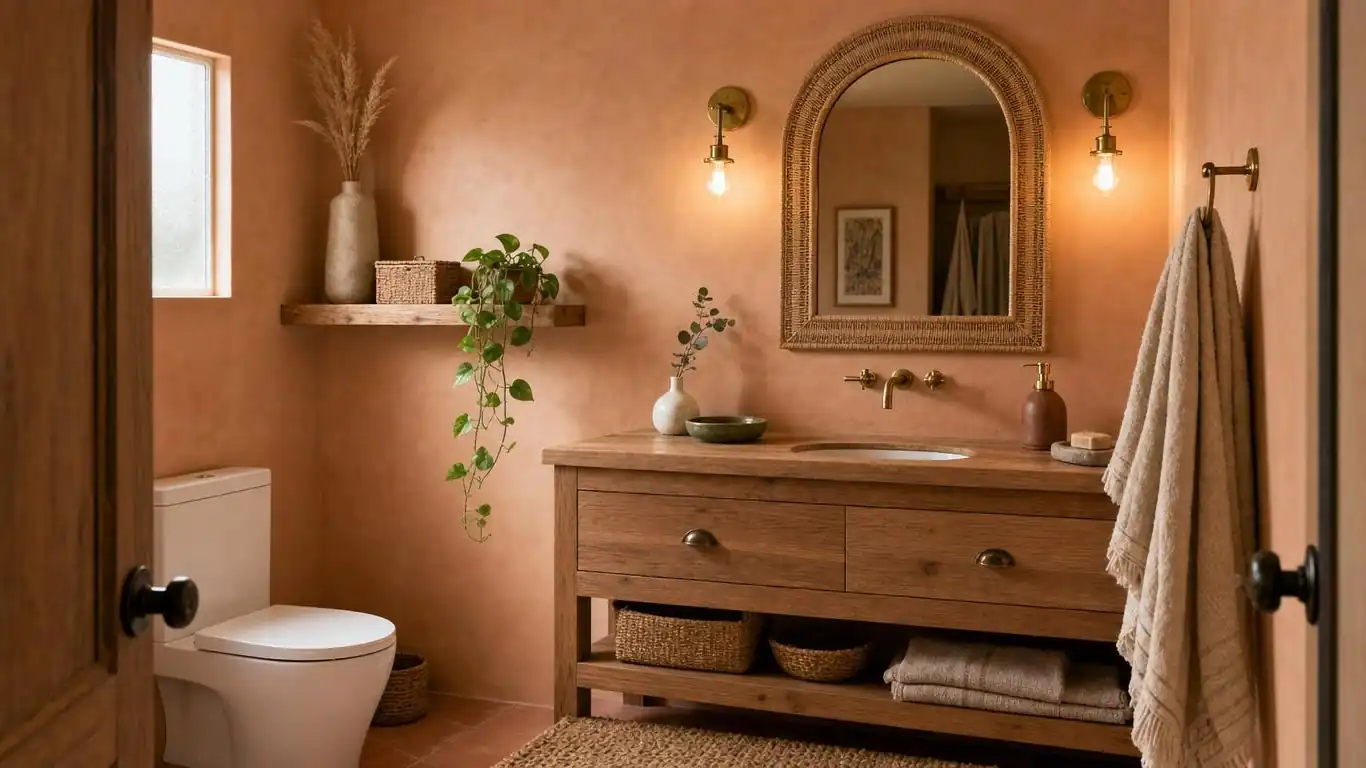
The shift toward warm, textured tile is easy to observe if you look at where the industry is pointing. The evidence is directional, not a hard statistic, but it lines up from several directions.
Signs This Is Catching On:
- Design press is calling it directly. Major outlets are running 2026 headlines like “bye-bye subway tiles” and naming zellige and terracotta as the new direction.
- Tile makers are leading their 2026 collections with texture, artisan glazes, and handmade looks rather than flat gloss.
- Warm earthy palettes — terracotta, sand, greige, soft green — are replacing cool gray across tile lines and paint decks alike.
- Zellige and handmade square tile have moved from niche specialty shops to mainstream stock at most tile retailers.
None of this means white tile disappears. It means the safe, cold default is losing its grip, and warmth is winning the new bathrooms. For a low-commitment way to test the mood, our spring bathroom decor ideas show simple ways to warm a room before you touch the tile.
Common Bathroom Tile Mistakes to Avoid
❌ Reaching for glossy white subway with gray grout by default → ✅ Choose tile for the room’s light and mood; if you love subway, warm it with an off-white glaze, a handmade edge, or contrast grout.
❌ Judging zellige or handmade tile by one perfect sample → ✅ Expect color and tone variation, and order 15 to 20 percent extra; the variation is the look, not a flaw.
❌ Using porous stone, terracotta, or cement tile unsealed in a wet zone → ✅ Seal the tile and its grout, and confirm wet-area suitability with your installer before it goes up.
❌ Putting slippery polished tile on the bathroom floor → ✅ Choose floor tile with a DCOF of 0.42 or higher, or a small mosaic whose grout lines add grip.
Safety Note: Tile selection is a decor choice, but wet-zone waterproofing, plumbing, and setting the tile are jobs for a licensed installer.
What Does Bathroom Tile Cost by Material?
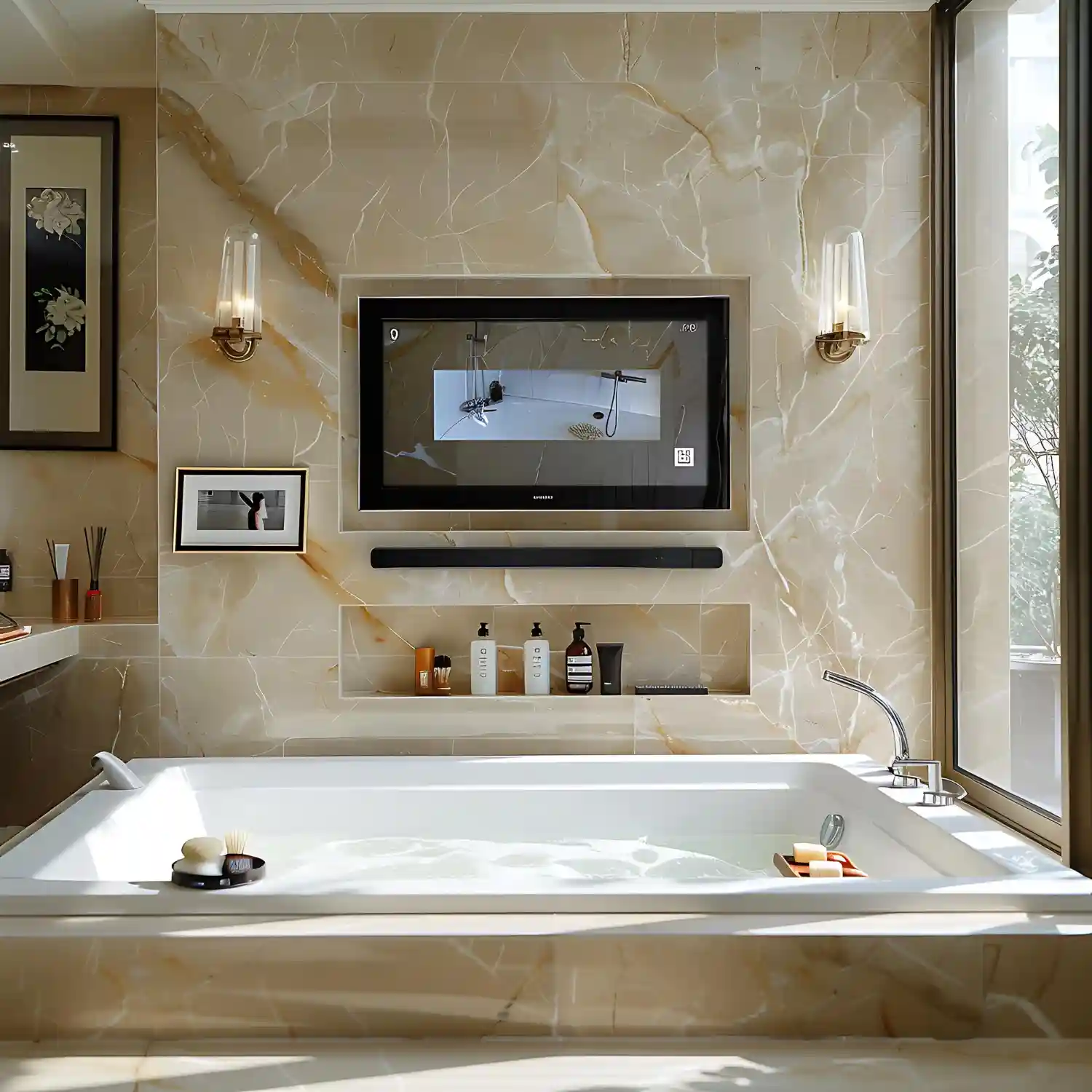
Tile prices swing widely by material, so plan by the look you want. The ranges below are for the tile material only — professional installation and waterproofing are separate and quoted by your installer. You can style almost any budget; see how far small changes go across our room-by-room decorating ideas.
| Tile Choice | Estimated Cost (Material) | Impact Level |
|---|---|---|
| Basic ceramic or porcelain field tile (white subway, plain hex) | $1–$5 per sq ft | Medium |
| Warm porcelain, terracotta, textured relief, printed encaustic look | $5–$12 per sq ft | High |
| Handmade zellige, natural travertine or stone, true cement encaustic | $15–$50 per sq ft | Very High |
| Small-batch feature tile for one wet wall or niche | $150–$500 for the zone | High |
Best First Upgrade: Drench one main wet wall in a warm, textured tile — even premium tile is affordable on a single wall and it shifts the whole room.
Skip for Now: Do not tile every wall in expensive handmade tile; use it on one zone and pair it with a plain field tile everywhere else.
Designer’s Verdict: If you adopt one idea, run a single warm, textured tile from floor to ceiling on the main wet wall and match the grout to it — that one move delivers the biggest jump from cold to calm.
Frequently Asked Questions
Conclusion
The strongest bathroom tile ideas today all point the same way: warmth and texture over the cold, uniform grid. Choose tile for your room’s light and use, warm the grout to match, and let one handmade or patterned surface do the talking.
Editorial field note: A north-facing bath with cold gray large-format tile can look flat and gloomy by afternoon. Running a warm, textured tile from floor to ceiling and warming the grout brings the light back — the room feels wrapped, not just tiled. For more ideas by room, start with our home decor guides and inspiration.
Next Steps
- Order three warm, textured tile samples and view them in your actual bathroom light, morning and evening.
- Pick one wet wall to tile-drench floor-to-ceiling as your feature, and choose a plain field tile for the rest.
- Decide your grout now — match it for calm, contrast it for pattern — and specify epoxy grout in the shower.
- For floor tile, confirm the DCOF is 0.42 or higher and seal any natural stone, terracotta, or cement before use.