The Shower Is Quietly Becoming the Calmest Wall in the Home
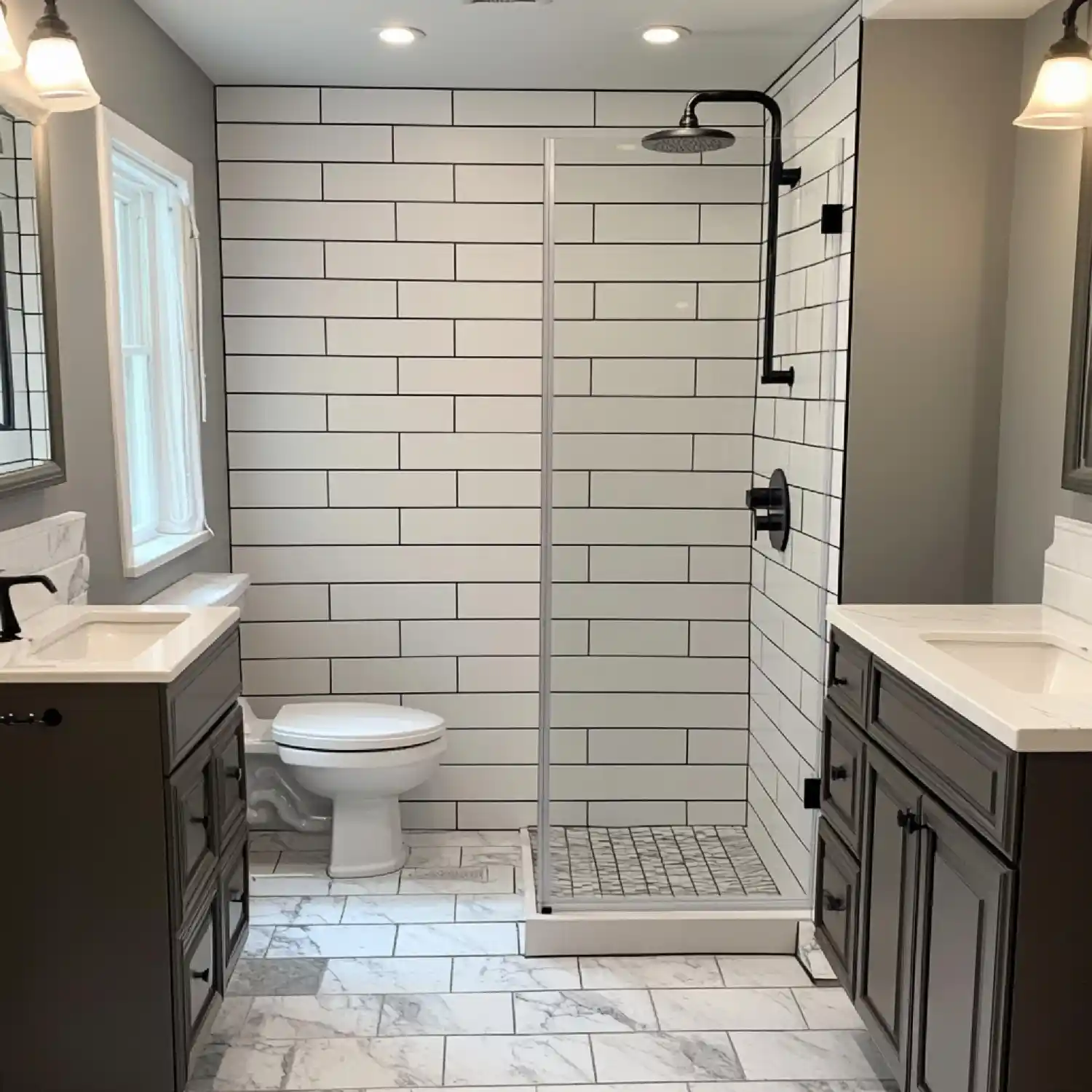
Step into a shower that was tiled well, and the first thing you notice is what’s missing. No busy band of glass mosaic at chest height. No grid of glossy white 4-by-4s broken up by a strip of tumbled marble that dates the whole room. Just calm, continuous walls and one quiet moment of interest.
Looking for more ideas? Explore our full guide to Bathroom Wall Ideas.
For years, the standard shower was a patchwork: plain field tile, a decorative accent stripe, and a mismatched floor. It read as cluttered the day it went in. The best shower tile ideas now move the other way — fewer grout lines, one confident feature, and a floor picked for grip instead of pattern. That thinking sits inside a wider shift in home decor ideas toward surfaces that feel settled, not fussy.
Editorial field note: I’ve watched the accent strip go from a must-have upgrade to the first thing designers pull out. The change isn’t about spending more. It’s about choosing fewer, better surfaces and letting them carry the room. You can see the same instinct across our bathroom design ideas, where one strong material now beats three competing ones.
The best shower tile ideas today share three moves: cut the grout lines with larger tile, commit to one feature instead of a busy accent band, and choose a shower floor for slip resistance, not just looks. Large-format porcelain keeps walls calm and easy to wipe down. A single handmade or slab-look surface adds depth. Small mosaic underfoot adds traction. Bookmark this guide for quick reference.
Why Are Shower Tile Trends Changing?
The move toward calmer showers is easy to see once you know what to look for. Tile makers now push extra-large formats as the premium standard, with reduced grout lines that read as one refined surface. Tile manufacturer Cotto d’Este notes in its 2026 tile trends that large-format slabs and vertical layouts are replacing the small, broken-up grids of the past.
There’s a practical reason underneath the look. Every grout line is a place that collects soap film and needs scrubbing. Fewer joints mean a wall that stays cleaner with less effort. So the calm look and the low-maintenance look happen to be the same choice, which is why it’s spreading fast across new builds and refreshes alike.
The other driver is confidence. A busy shower tries to do everything — pattern, contrast, and a feature stripe all at once. The current approach trusts one idea to carry the space. That mindset lines up with the broader bathroom design trends shaping walls, color, and fixtures right now.
Fewer Grout Lines, Calmer Walls
The fastest way to modernize a shower is to reduce how many lines your eye has to track. These ideas trade the small-tile grid for larger, quieter surfaces that feel intentional and stay easier to clean.
Cover Shower Walls in Large-Format Porcelain
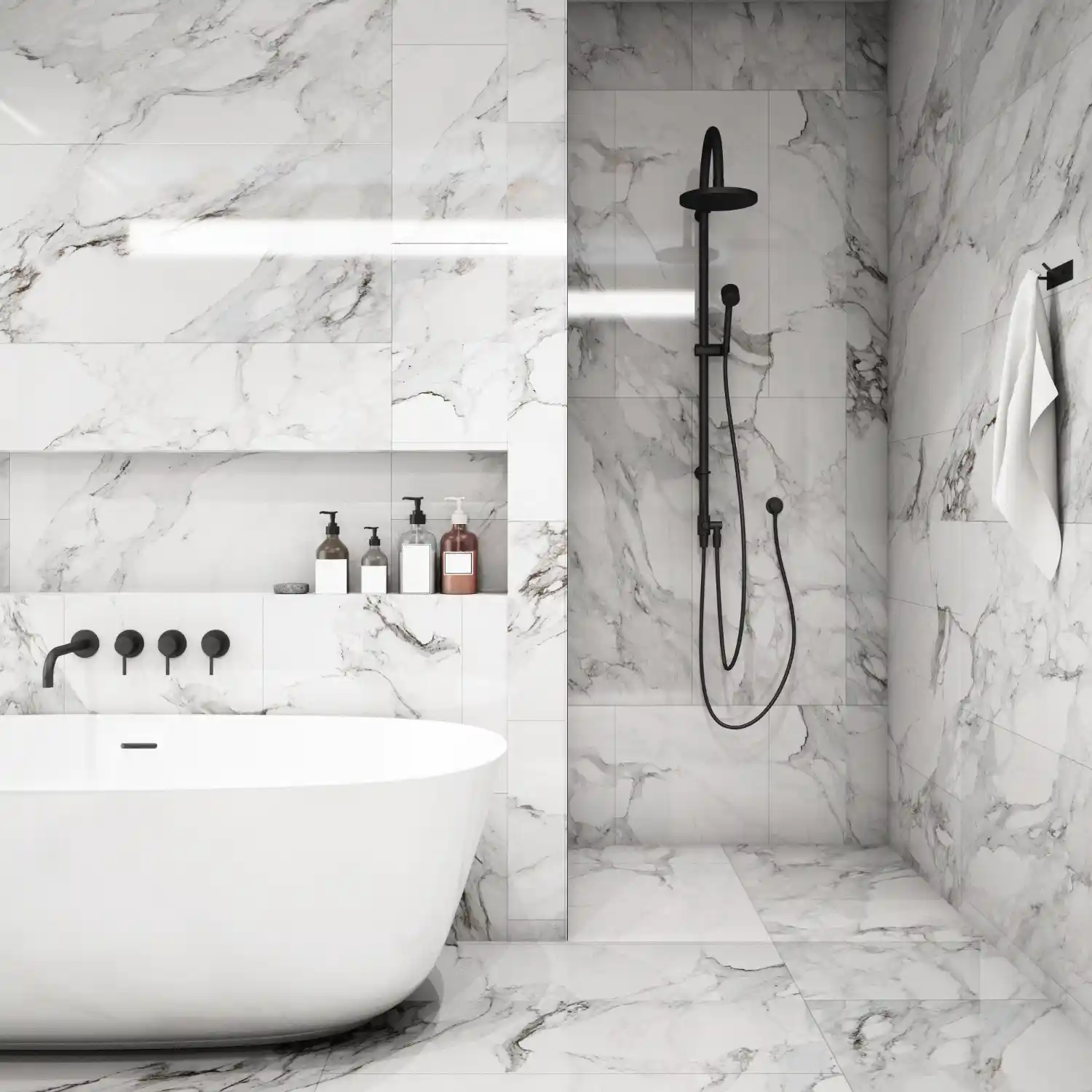
Large-format porcelain — think 12-by-24 inches or bigger — is the single clearest upgrade for a shower wall. Fewer tiles mean fewer grout lines, so the wall looks like a smooth, continuous plane instead of a busy grid. It also cuts cleaning time, since soap film has fewer joints to cling to. Warm greige, soft white, and stone-look porcelain all work here, and the effect suits everything from a spa look to a modern one.
DESIGNER TIP: Run large-format tile starting from the most visible wall so any cut pieces land in the corners, where the eye rarely stops.
Run One Material From Floor to Ceiling
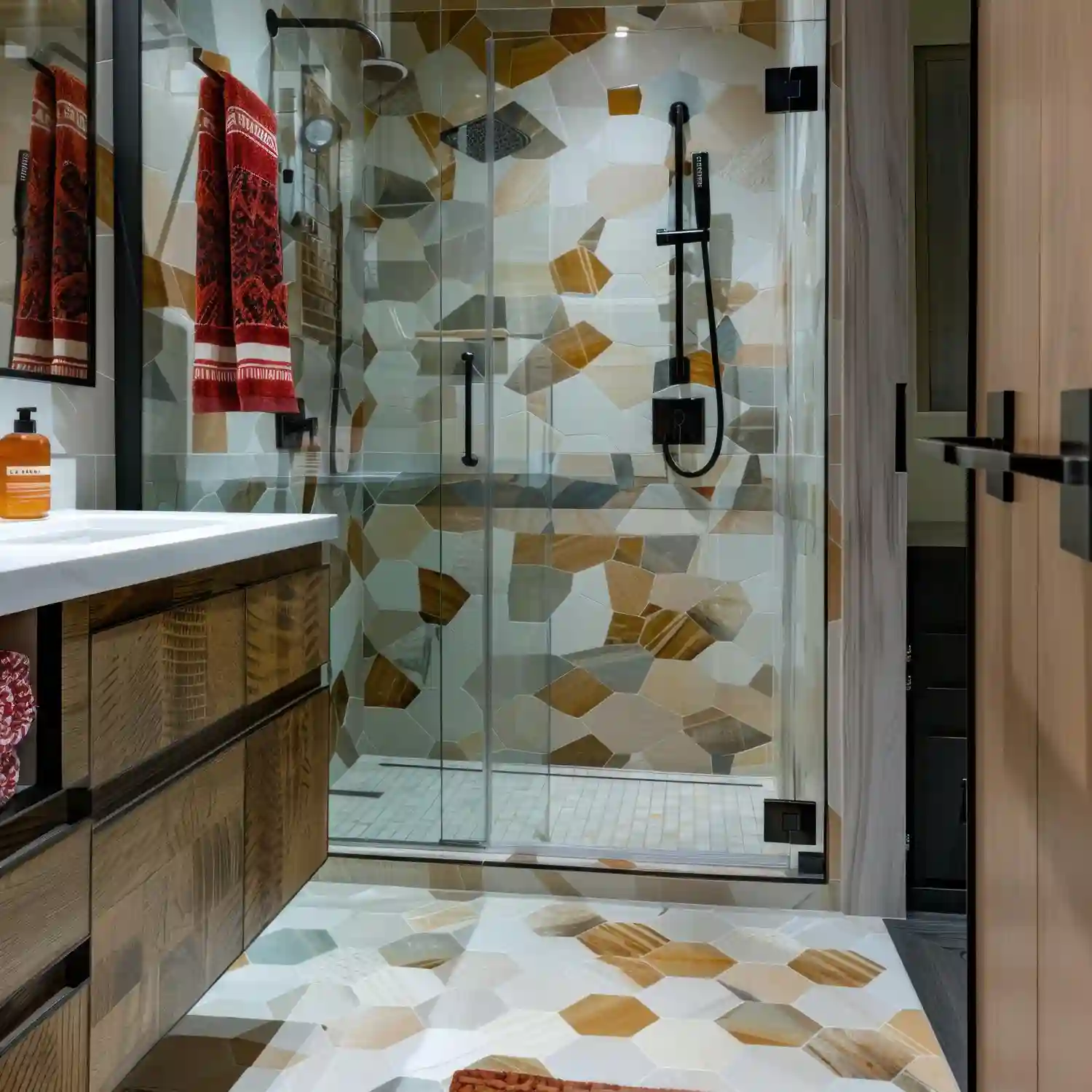
Wrapping the shower in a single tile, floor to ceiling, is the calmest look available. When the walls and the surround share one material, the enclosure feels like a quiet box rather than a collage of finishes. This “tile-drenched” approach makes a small shower feel taller and larger because nothing interrupts the surface. Keep the palette tonal — a warm limestone-look porcelain or a soft matte white — so the space feels wrapped, not boxed in.
Stack Tile Vertically to Lift a Low Ceiling
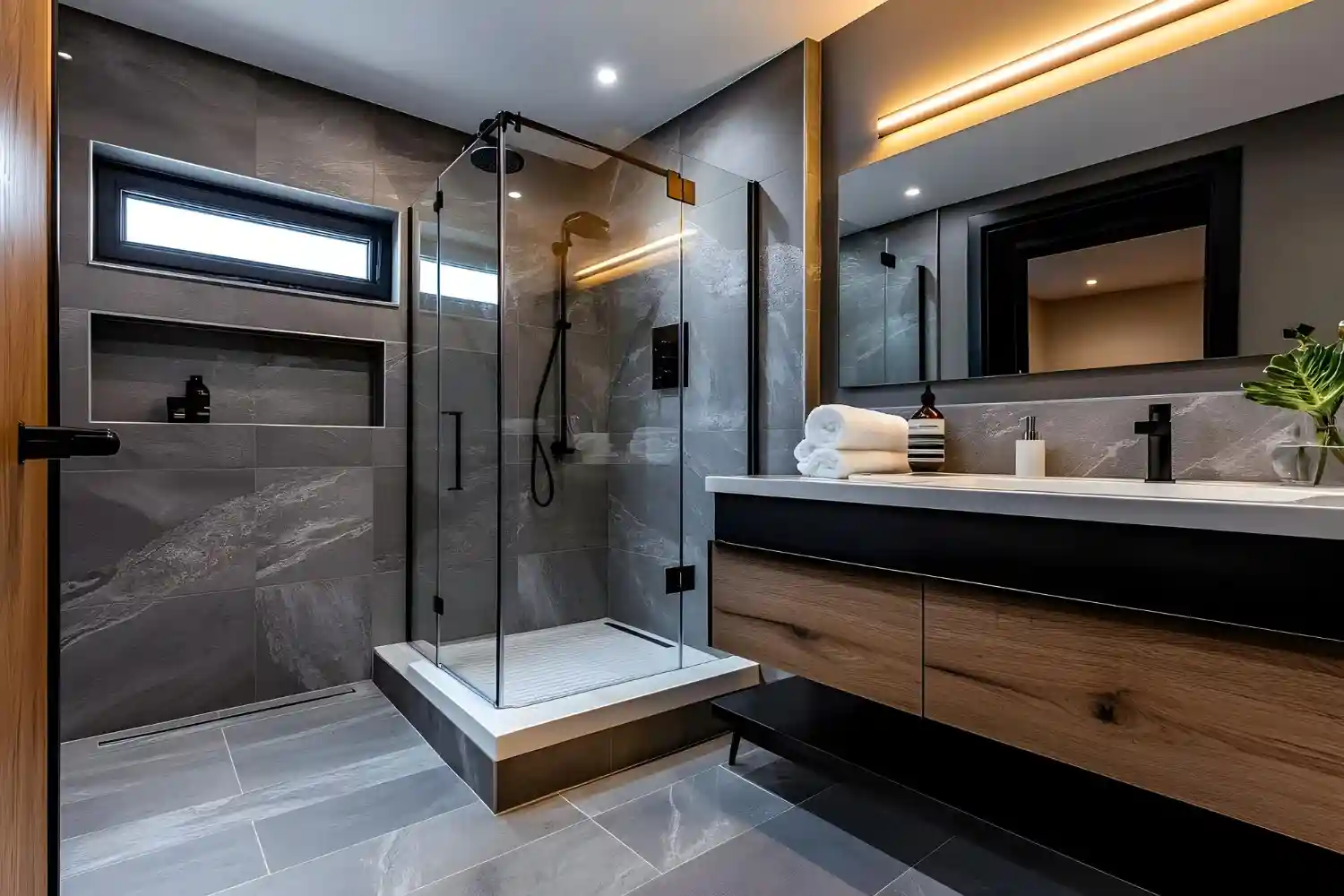
Vertical layouts are quietly replacing the old horizontal offset. Setting rectangular tile in a straight vertical stack draws the eye upward and makes a low shower feel taller. It’s a subtle, architectural look that suits narrow enclosures and small bathrooms especially well. A stacked vertical run in a warm white or soft sage looks modern without shouting, and it pairs cleanly with a minimalist bathroom approach.
Choose Slab-Look Porcelain Panels for a Seamless Marble Look
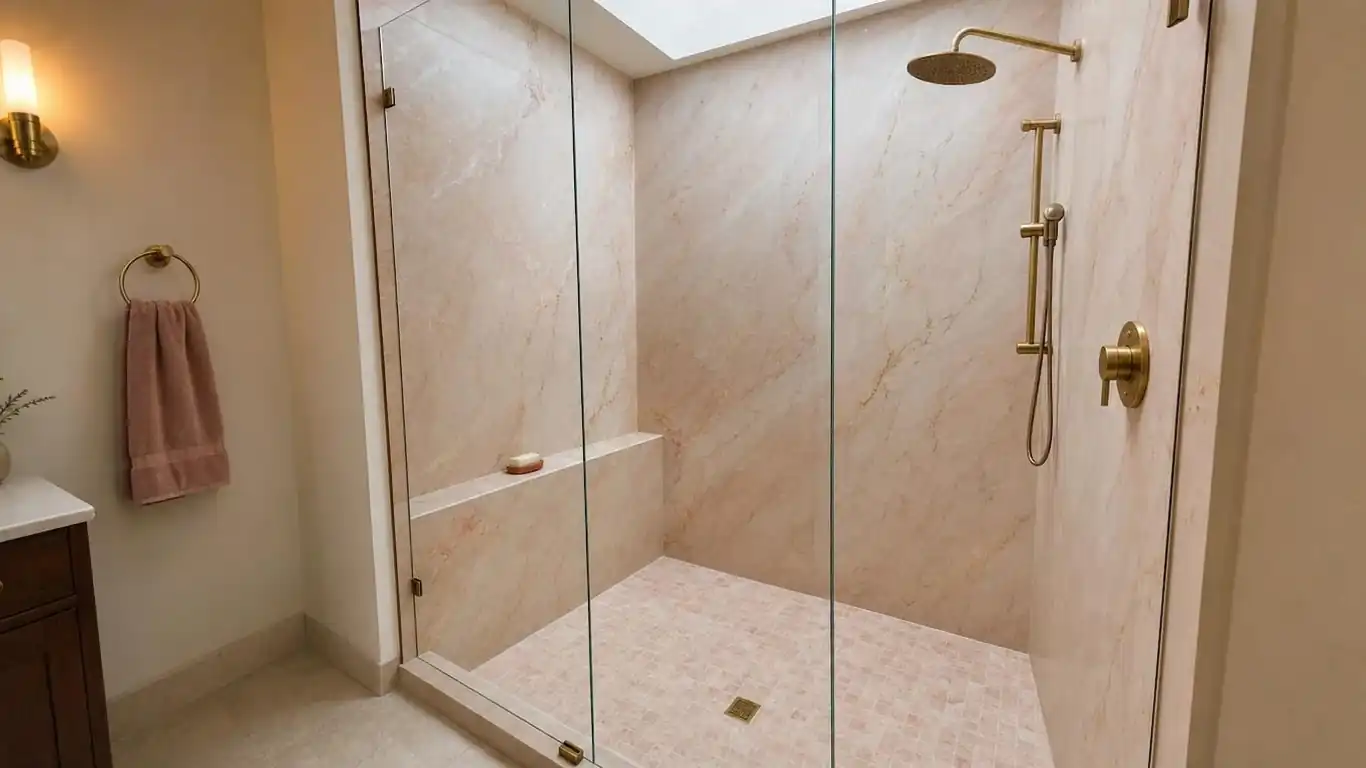
If you love the drama of a full marble slab but not the upkeep, large slab-look porcelain panels get you close. These oversized panels mimic veined marble or travertine with almost no grout lines, so you get the movement of stone without the seams — or the sealing. Book-matched panels, where the veining mirrors across a joint, turn one shower wall into a genuine feature. It’s the low-maintenance way to get that marble-bathroom look people save on Pinterest.
One Confident Feature, Not a Busy Band
Once the walls are calm, the shower has room for a single point of interest. The trick is to pick one — a wall, a texture, or a color — instead of layering a decorative stripe over everything. These shower tile ideas give the eye somewhere to rest.
Make One Wall the Feature and Drop the Accent Strip
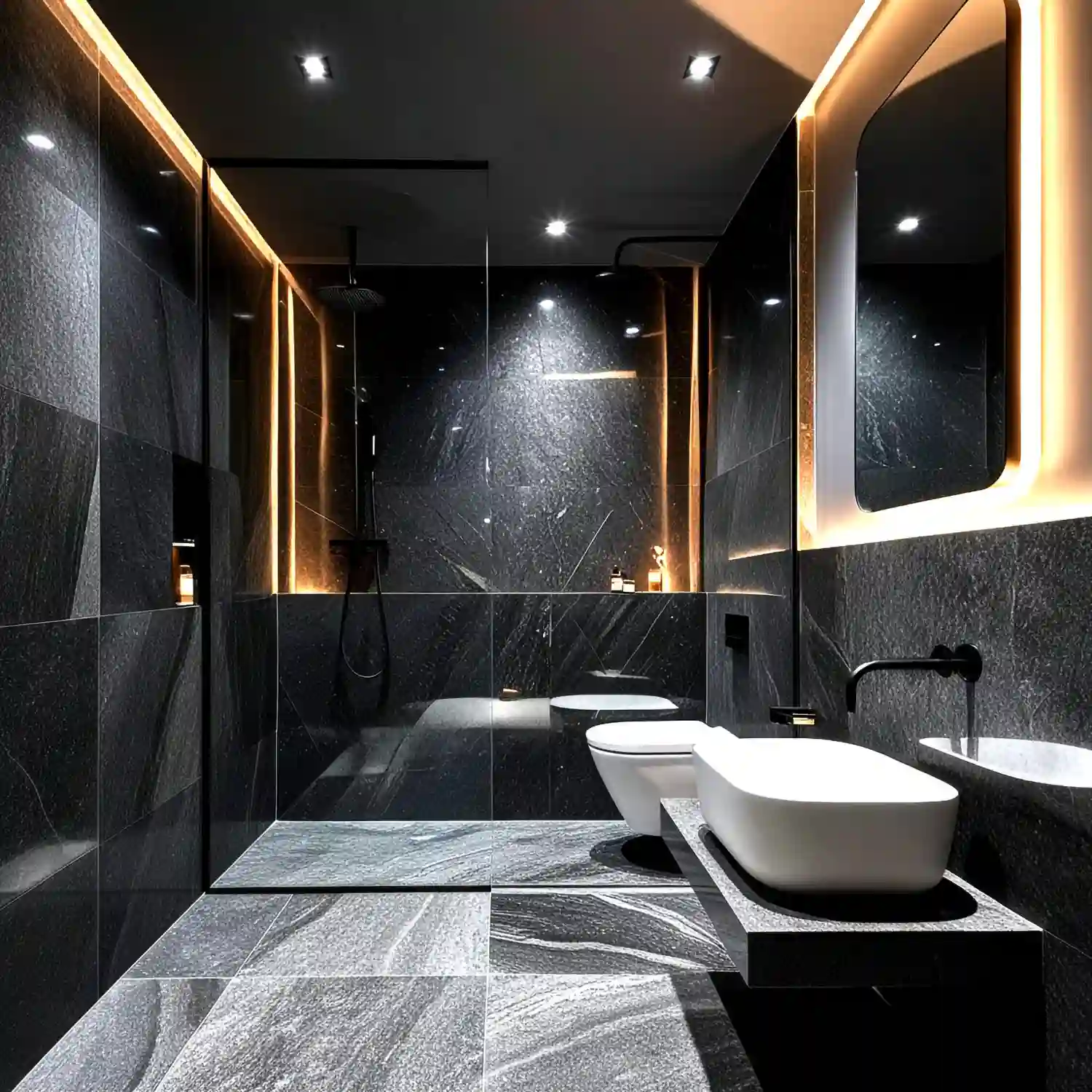
The horizontal accent band — a stripe of mosaic or contrasting marble at chest height — is the look that dates a shower fastest. The stronger move is to let one full wall carry the interest, usually the back wall you face or the wall holding the niche. This is the same logic behind a good bathroom backsplash: one surface earns the attention while the rest stays quiet. A single feature wall feels designed; a floating stripe feels like an afterthought.
Use Zellige or Handmade Tile for Depth and Light Play
Handmade tile brings something large-format can’t: a surface that shifts with the light. Zellige, the glazed Moroccan clay tile, has a slightly uneven face that catches light differently across the wall, giving the shower gentle movement instead of flat repetition. It’s a favorite for anyone chasing warmth or a boho bathroom feel, and it comes in soft greens, warm whites, and earthy clays. Used on one wall, it reads as depth rather than pattern noise.
DESIGNER TIP: Order 15 to 20 percent extra zellige from a single production batch — shade varies lot to lot, and handmade tile is meant to look slightly uneven.
Color-Drench the Whole Shower in One Deep Tile
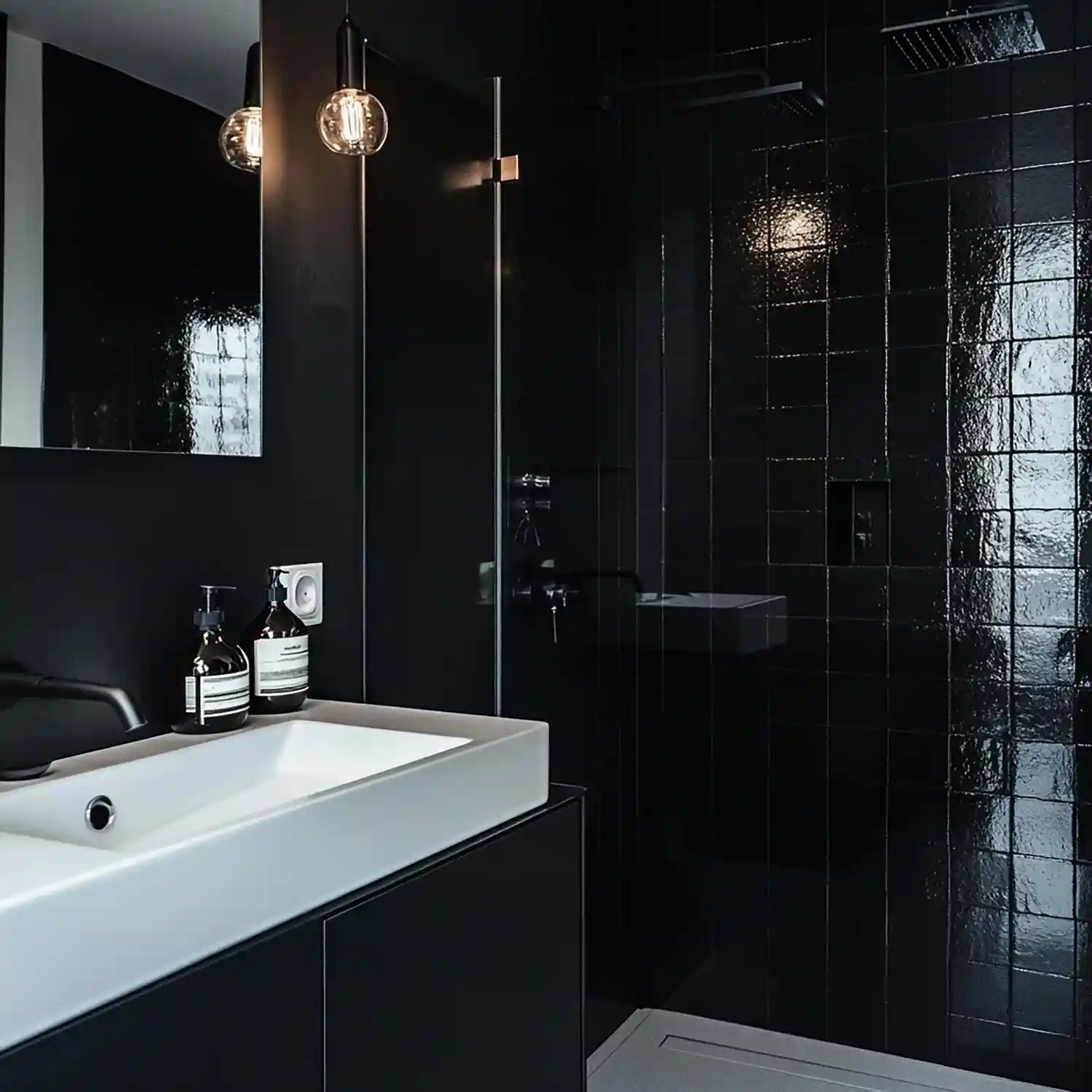
For people who want drama without clutter, wrapping the shower in a single deep color is the answer. A forest green, charcoal, or navy tile run across every wall turns the enclosure into a rich, cocooning moment. Because the color is uniform, it feels calm and confident rather than busy. Deep green suits a green bathroom scheme beautifully, while a soft blush works when the rest of the room leans toward a pink bathroom palette.
Add Fluted, Textured, or 3D Relief Tile as a Quiet Statement
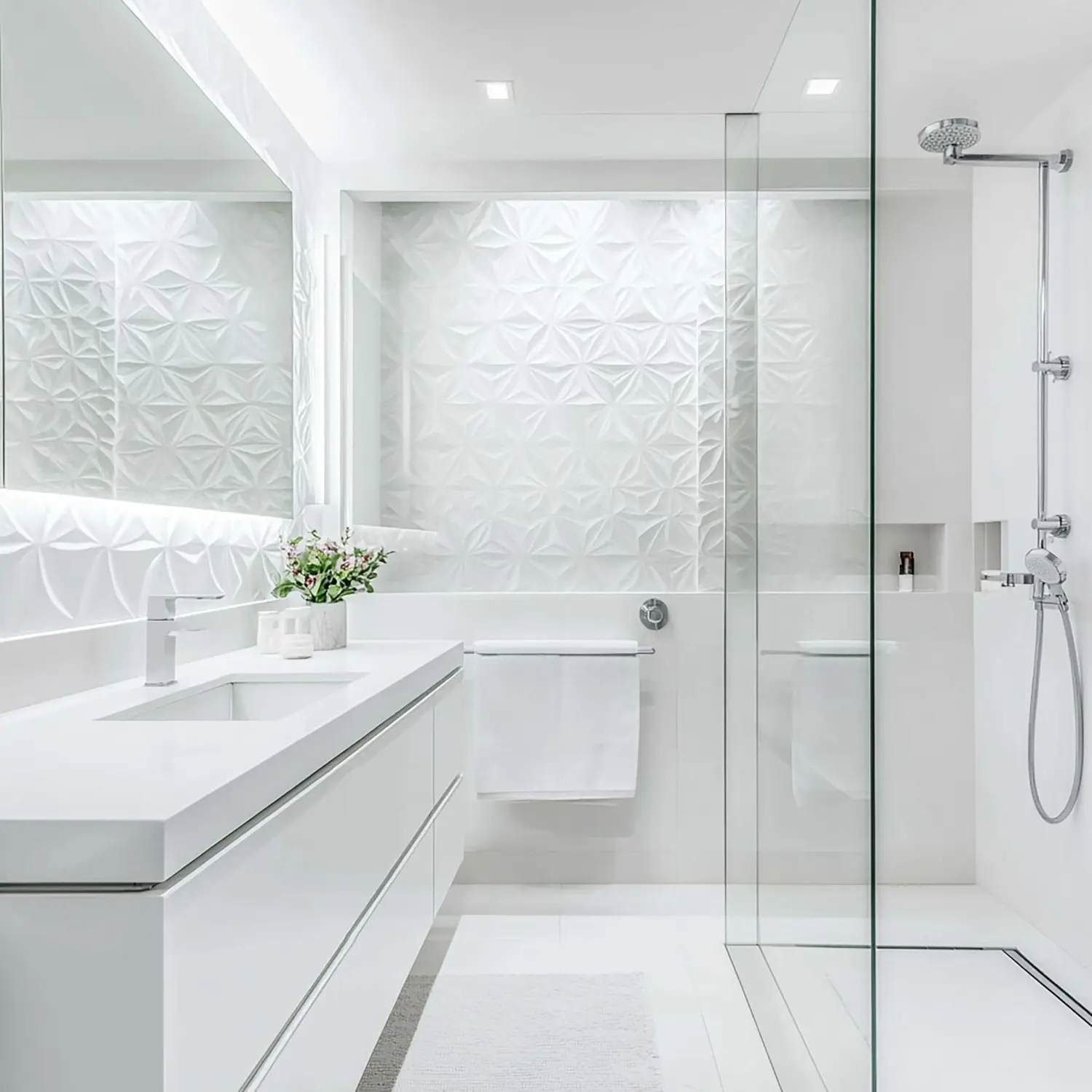
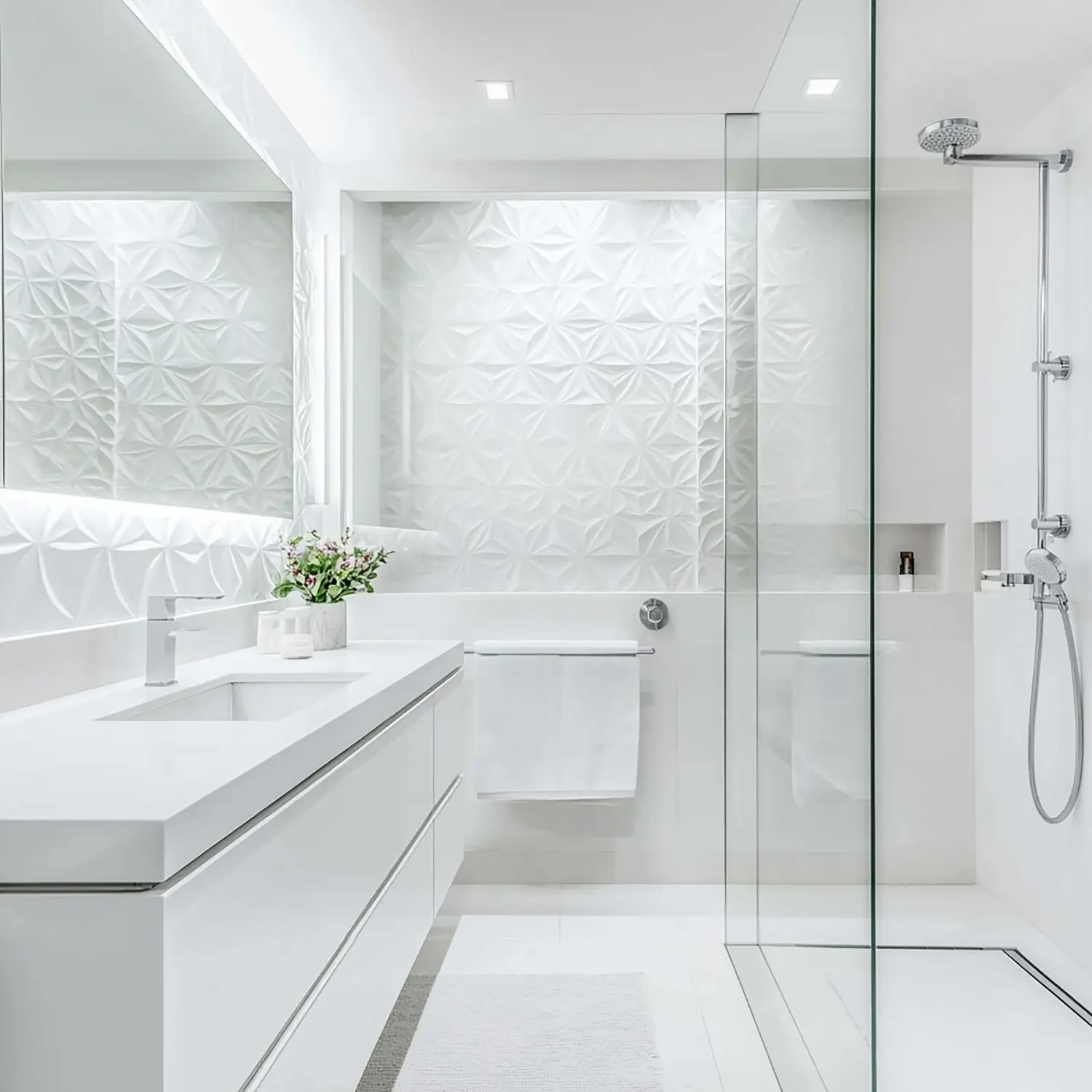
Texture is the current way to make a wall interesting without adding color or pattern. Fluted, ribbed, and 3D relief tiles cast soft shadows that change through the day, so the feature is the surface itself. A tone-on-tone textured wall — white on white, or greige on greige — feels tactile and expensive while staying restrained. It’s a clean fit for a black and white bathroom, where a fluted white feature wall adds interest without breaking the two-tone scheme.
The Details That Make Shower Tile Work
The difference between a good shower and a great one usually lives in the details most people rush. These three decisions — the niche, the floor, and the grout — quietly decide whether the whole thing looks planned.
Design the Niche as a Clean Line, Not an Afterthought
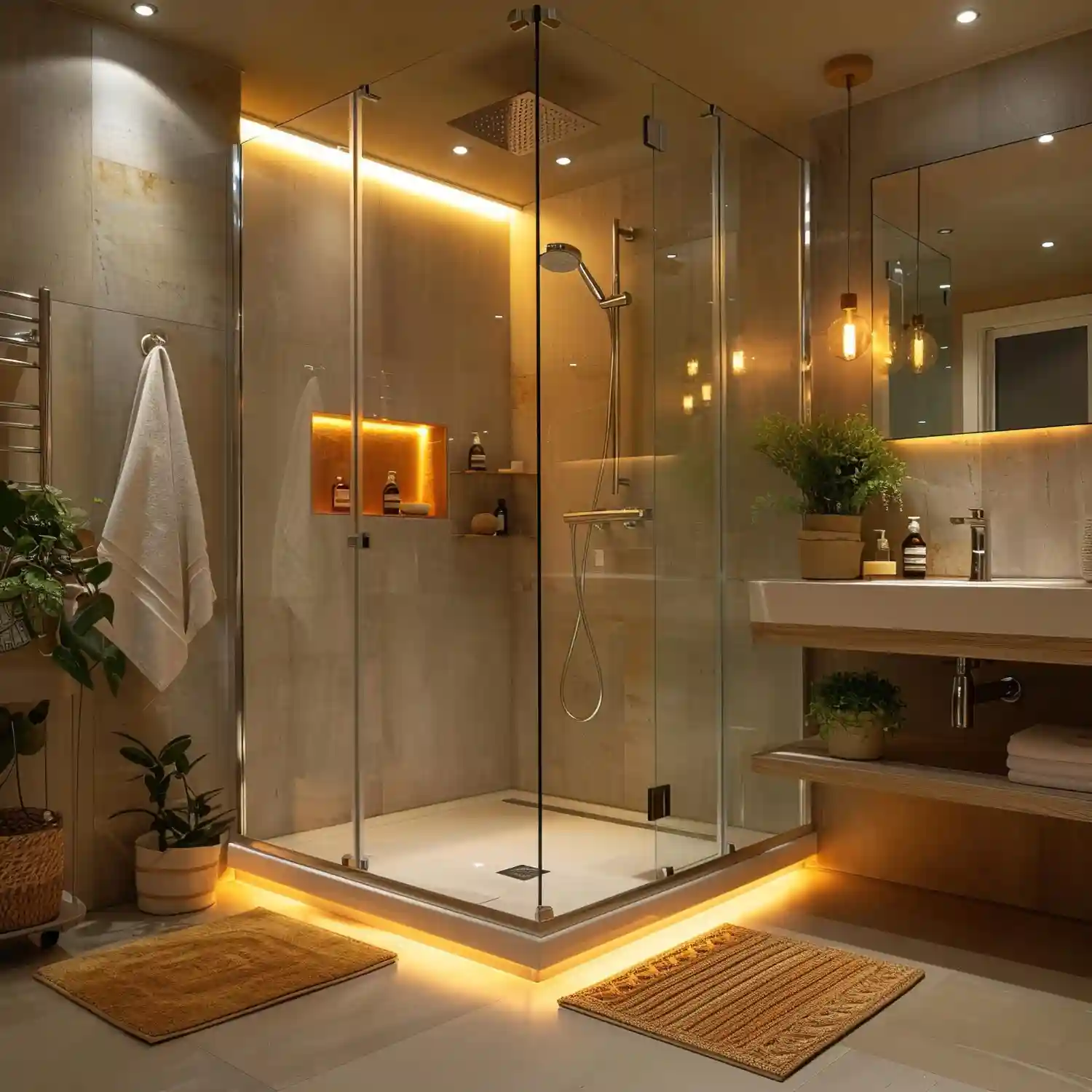
A recessed niche holds your shampoo, but it’s also a design element you can either plan or ignore. The best niches align with a grout line or a full tile course, so they sit inside the wall’s rhythm instead of cutting across it. You can tile the back of the niche in the feature material for a pop, or match it to the walls for a seamless look. A single wide niche reads cleaner than two small ones stacked awkwardly.
What Tile Is Safe for a Shower Floor?
A shower floor should be chosen for grip first and looks second. Small mosaic, penny round, and hexagon tiles work best because their many grout lines add traction and help the water drain. For wet areas, look for tile rated at a wet DCOF of 0.42 or higher — the minimum slip-resistance standard set by ANSI A137.1, with many pros preferring 0.50 or above for a shower pan. A small matte mosaic underfoot pairs happily with large-format walls above.
Safety Note: Waterproofing, slope, and slip-rated tile selection are structural choices — have a licensed installer confirm the pan and substrate before you commit to a finish.
Treat Grout as a Design and Upkeep Decision
Grout is not an afterthought — its color and type change both the look and the maintenance. A grout that matches the tile keeps a large-format wall looking seamless; a contrasting grout turns a simple tile into a graphic feature. For constant wet zones like the shower floor and lower walls, epoxy grout resists staining and water far better than standard cement grout. Choosing grout color on purpose is one of the cheapest ways to lift a plain tile.
Consider a Curbless Floor That Flows Into the Room
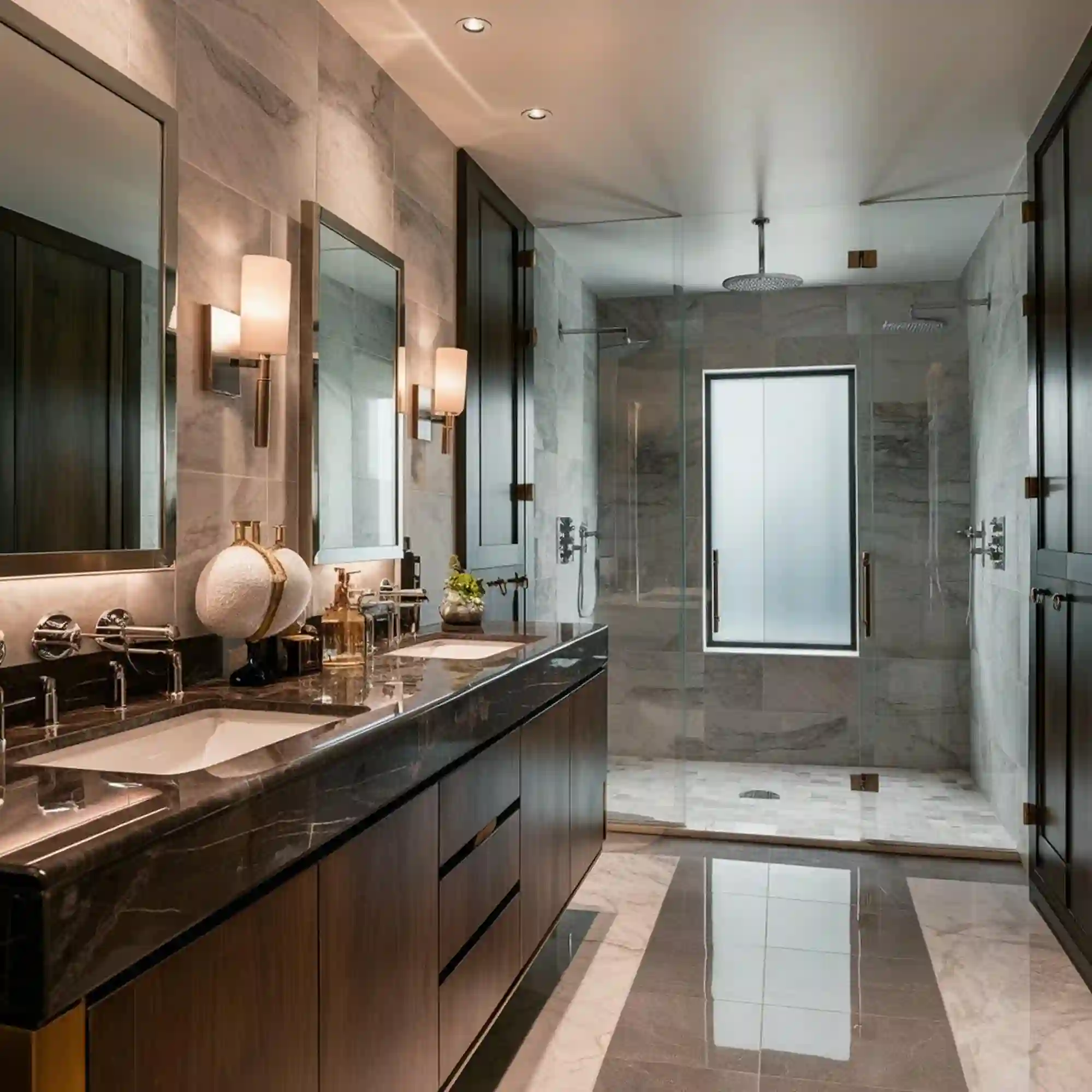
Running one floor tile from the bathroom straight into a curbless shower is the most seamless look going. With no raised curb to step over, the floor looks continuous, which makes the whole bathroom feel larger and more open. It suits a modern or a farmhouse bathroom alike, depending on the tile. Just remember the shower zone still needs a grippier floor tile and a proper slope, even when the material appears to flow unbroken.
What’s Fading in the Shower
A few once-standard choices now age a shower the moment they’re installed. Skipping these is half the work of getting the look right.
- The chest-height accent stripe of glass or tumbled-marble mosaic — it dates faster than anything else.
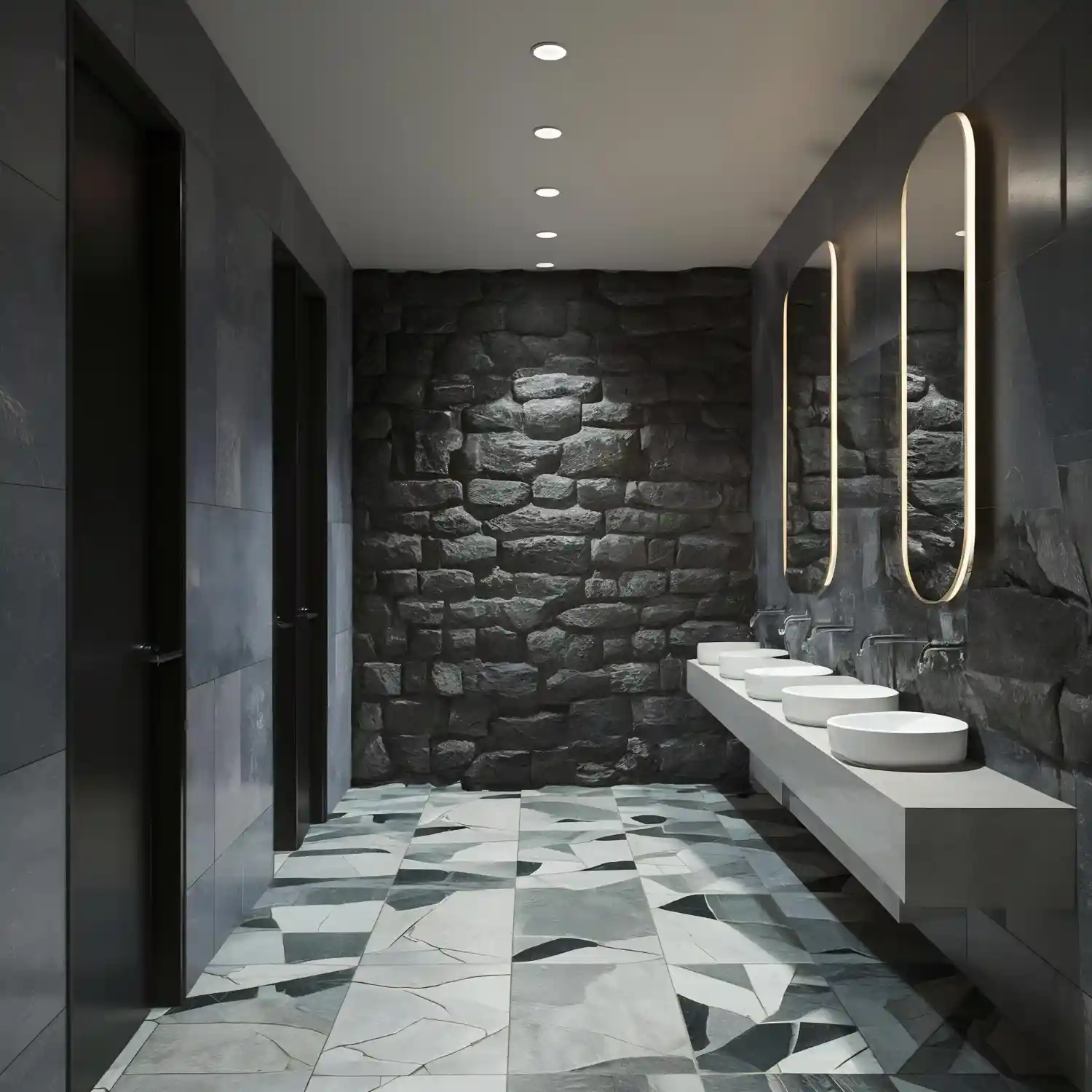
- Tiny glossy white 4-by-4 field tile with dark grout, which looks like a grid of dirty lines within a year.
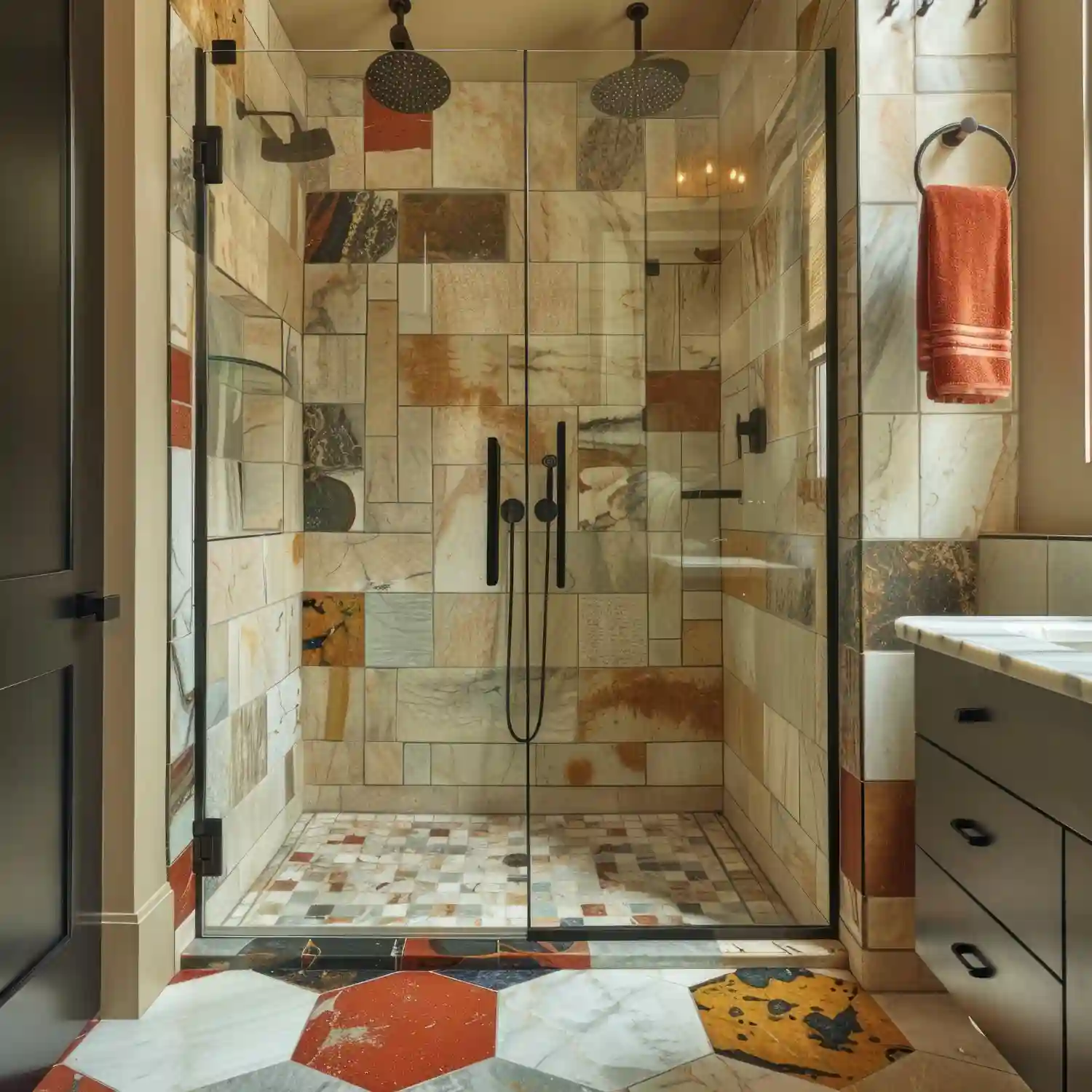
- A busy patterned floor fighting a busy patterned wall, with no calm surface to rest on.
- Bullnose-edged niches and mismatched trim tile that break the wall’s clean lines.
Signs This Shift Is Real
This isn’t only a matter of taste — the direction shows up in what tile makers produce and what builders now offer as standard.
Signs This Is Catching On:
- Major tile makers now lead their collections with extra-large formats and slab panels, marketing fewer grout lines as the premium feature.
- Vertical and stacked layouts have replaced the horizontal offset as the default “modern” shower setting in current lookbooks.
- Handmade and zellige-style tile keeps expanding in mainstream ranges, not just specialty lines.
- Curbless, single-material wet zones now appear in standard builder upgrade menus, not only custom projects.
Common Shower Tile Mistakes to Avoid
The usual missteps come from adding more instead of choosing better. Here’s what to do instead.
Instead of adding a decorative accent stripe across the wall, Try letting one full wall or the niche be the single feature.
Instead of covering the shower floor in the same large tile as the walls, Try a small mosaic or penny tile that adds grip and drains well.
Instead of defaulting to bright white grout everywhere, Try a grout color matched to the tile on the walls and a stain-resistant epoxy on the floor.
Instead of mixing three finishes because a showroom board suggested it, Try one field tile, one feature, and one floor — three surfaces, not six.
What Does Shower Tile Cost by Material?
Shower tile spans a wide range, and the material you choose drives most of the price. The figures below are typical material-only ranges per square foot — they do not include waterproofing, labor, or install, which are separate professional costs. Use them to plan where your budget lands, not as a quote.
| Project | Estimated Cost | Impact Level |
|---|---|---|
| Ceramic or standard porcelain field tile | $2-$7 per sq ft | High |
| Small mosaic, penny, or hex floor tile | $8-$20 per sq ft | Medium |
| Zellige or handmade feature tile | $12-$25 per sq ft | High |
| Large-format or slab-look porcelain panels | $15-$40 per sq ft | Very High |
Best First Upgrade: Switch the walls to a large-format porcelain in a warm neutral — it cuts grout lines and cleaning while modernizing the whole shower.
Skip for Now: A full natural-stone slab shower, which carries the highest material cost plus ongoing sealing that porcelain skips.
The Bottom Line
Designer’s Verdict: Fewer, better surfaces win — large-format walls, one confident feature, and a grippy small-tile floor beat any accent stripe. This look has staying power because it’s calmer to live with and easier to clean, not just because it’s current. The busy patchwork shower is fading for good reason, and the calmer approach ages far more gracefully. A quiet touch of seasonal styling, the kind in our spring bathroom decor ideas, is all a well-tiled shower needs on top.
Frequently Asked Questions
Conclusion
The strongest shower tile ideas all point the same way: fewer grout lines, one clear feature, and a floor you can trust underfoot. Choose large-format walls first, then let a single handmade or slab-look surface do the talking. See more ways to plan the space across our home decor ideas and bathroom archive.
Next Steps
- Measure your shower walls and price a large-format porcelain in a warm neutral to cut grout lines.
- Pick one feature — a back wall, a niche, or a textured tile — and keep every other surface quiet.
- Choose a small mosaic or penny floor tile with a wet DCOF of 0.42 or higher for grip.
- Confirm waterproofing, slope, and substrate with a licensed installer before ordering any finish.
More Bathroom Wall Ideas
- Bathroom Wallpaper Ideas: Why One Bold Wall Changes the Whole Room
- Bathroom Tile Ideas: Why Warm, Textured Tile Beats the Cold White Grid
- Bathroom Wall Decor: Why Your Blank Walls Are a Wasted Opportunity
- Shiplap Bathroom Walls Feel Modern and Refined, Not Dated
- Bathroom Floor Tile Ideas: Why the Floor Should Lead the Room
- Bathroom Accent Wall Ideas: Which One Wall Is Worth It?