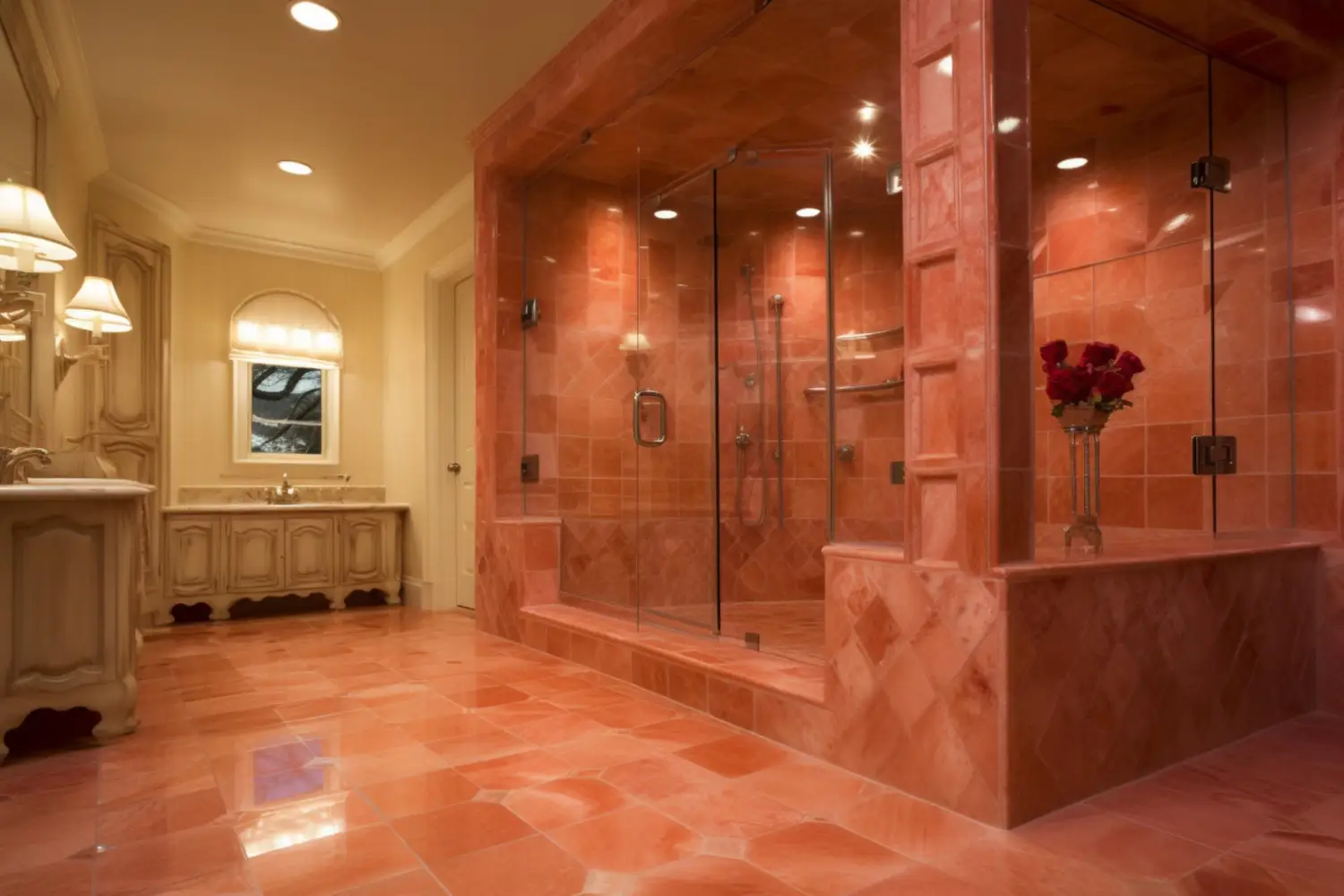
Your Bathroom Floor Works Harder Than Any Wall
Step out of a warm shower and the first thing your bare feet touch is the floor. Wet, cold, and slick, most days. That surface takes more traffic, more water, and more weight than any wall or vanity in the room. Yet it is usually the last thing anyone chooses, and it usually ends up cold gray large-format tile picked to be safe.
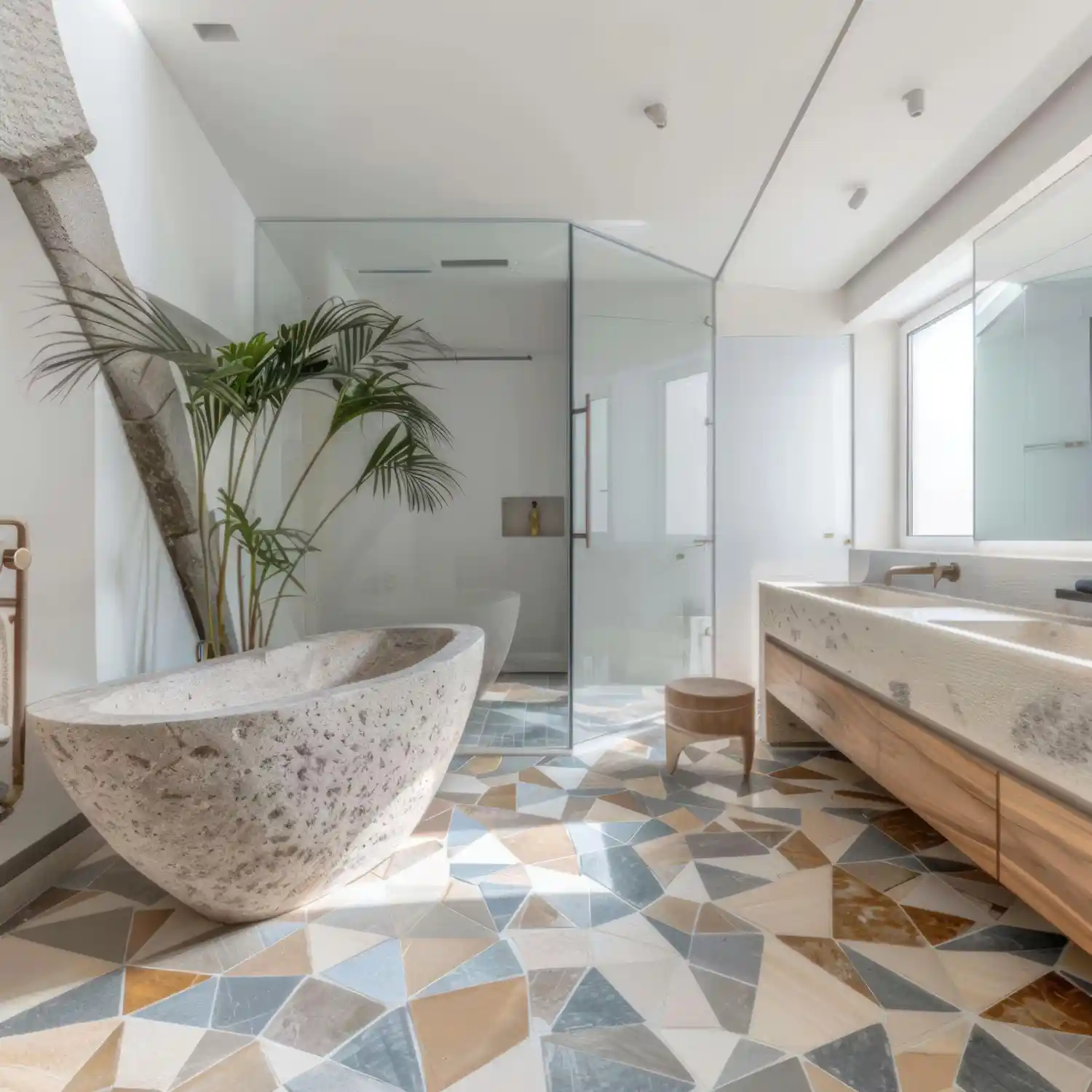
Looking for more ideas? Explore our full guide to Bathroom Wall Ideas.
The best bathroom floor tile ideas flip that order. They treat the floor as the hardest-working surface in the room, so it should lead the design, not disappear under it. Warm, tactile, pattern-forward floors are replacing the flat gray default. They look richer, they feel better underfoot, and the right ones grip better when wet.
Editorial field note: A small bath with glossy white walls and a cold gray floor often reads as unfinished, like a builder stopped halfway. Swap that floor for warm terracotta-look porcelain and the whole room settles. The walls suddenly look intentional because the floor gives them something to sit on.
This is a floor-first guide. It covers warm materials, confident pattern, and smarter ways to set tile so the floor grips, holds heat, and pulls the room together. For the walls and shower behind it, our stylish bathroom backsplash ideas cover the splash strip above the sink — this guide stays underfoot. If you want the full picture, browse more of our bathroom design ideas or start with our full home decor inspiration. Bookmark this guide for quick reference.
Why the Cold Gray Floor Is Fading
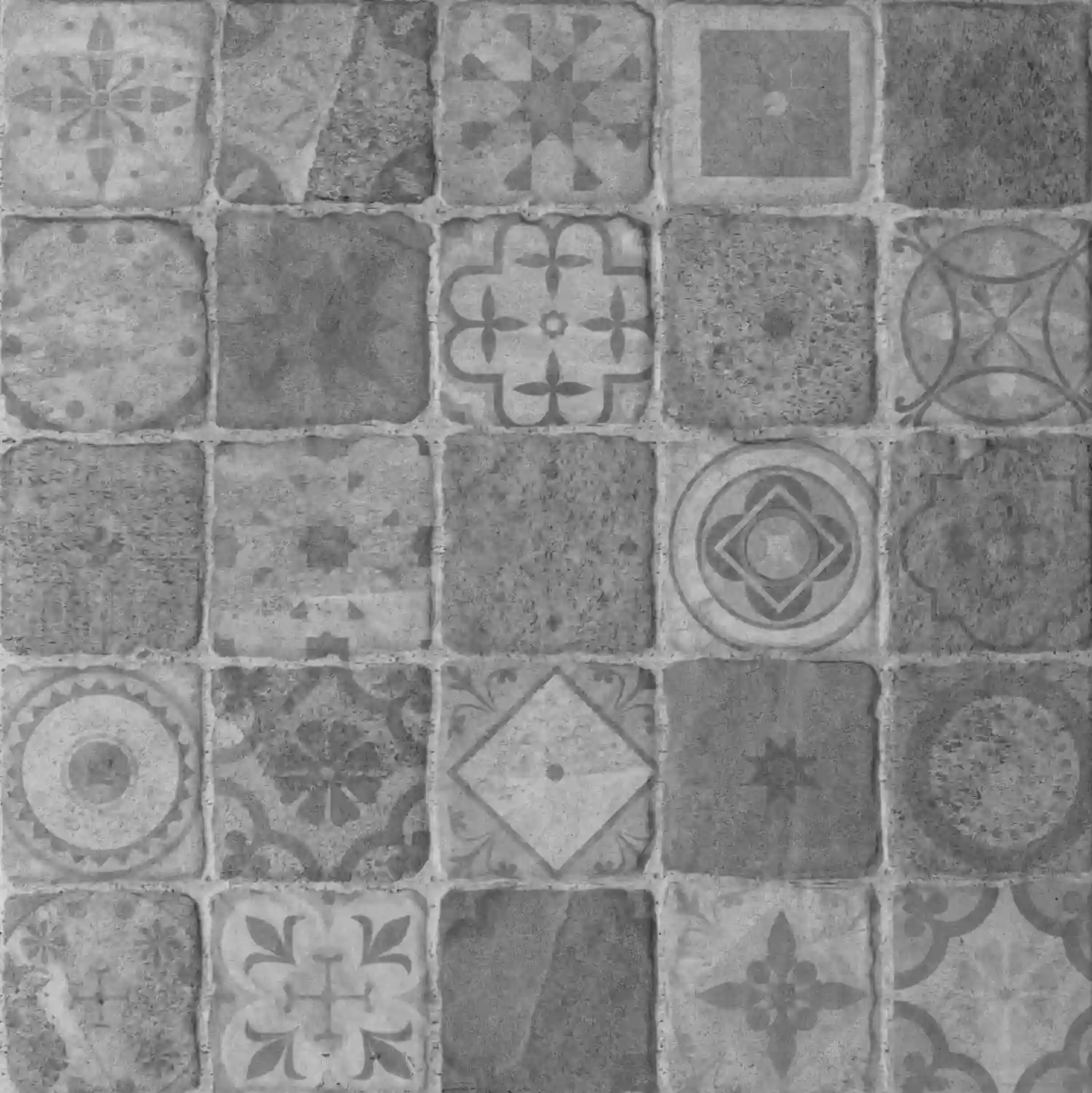
Gray large-format porcelain was the default for a decade. It was cheap, easy, and hard to get wrong. It was also cold, flat, and forgettable — and now it reads as dated the same way beige builder tile did before it. The look was never wrong. The problem is that a gray floor gives the eye nothing, so the whole room leans lifeless.
The shift is toward floors with warmth and texture. Deep green, terracotta, and warm stone are being called the new neutrals for bathrooms, and handmade-look tile is replacing anything overly polished, according to design editors at Livingetc’s 2026 bathroom tile roundup. This is the same warm, tactile direction driving the major bathroom design trends for 2026 across every surface, not just the floor.
A warm floor also does practical work. It hides water spots and grime far better than flat gray, which shows every drip and dust bunny. It softens hard fixtures like a white tub or chrome faucet. And because you feel the floor with bare feet, warmth underfoot changes how the room feels more than any wall color can.
Warm and Tactile Bathroom Floor Tile Ideas
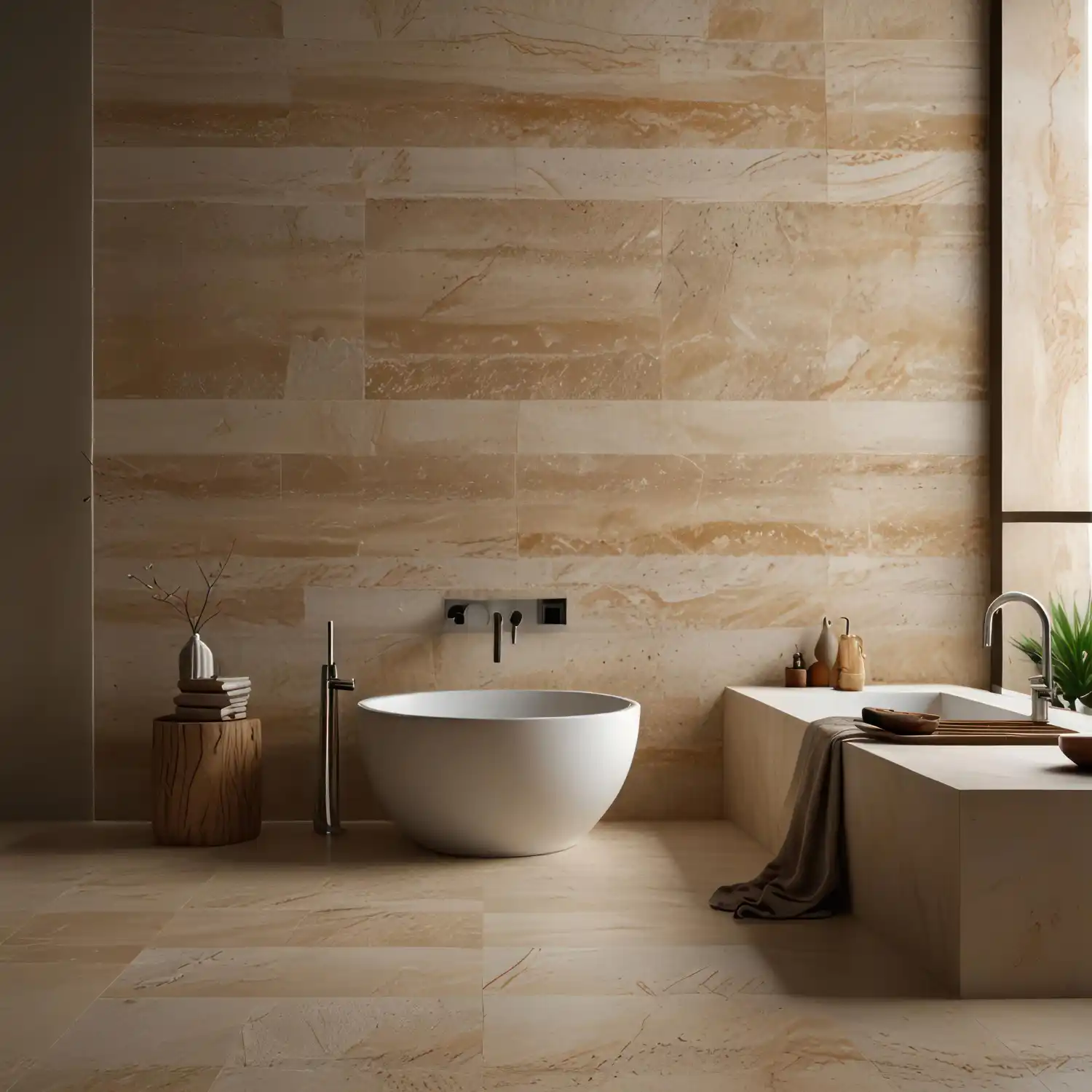
This first group leans into material and color. These are the floors that feel good underfoot and give the room its warmth. Each one trades the cold gray flatness for something with depth, grain, or a soft glow. Pick the material first, then match the walls to it — not the other way around.
Terracotta and Clay Tile
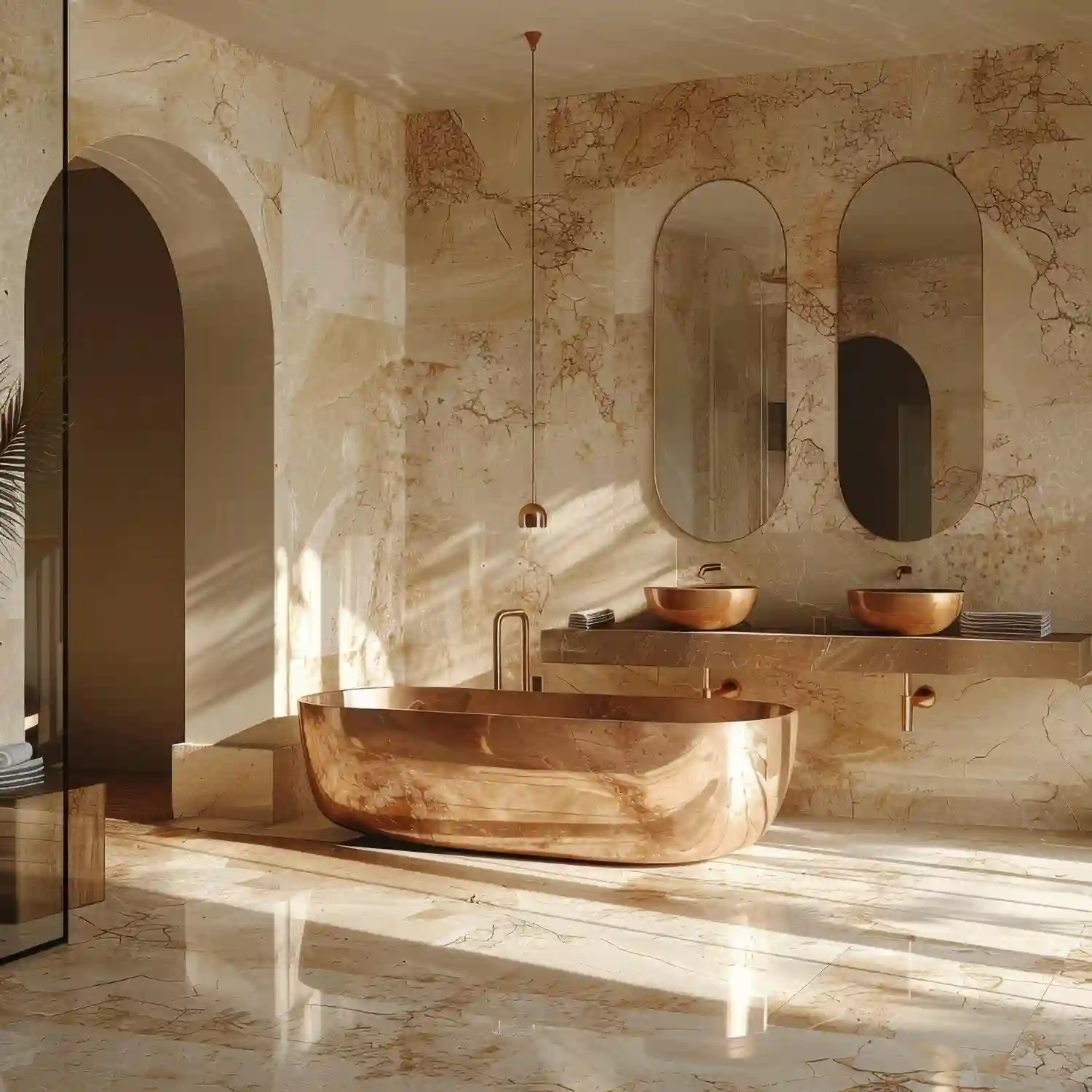
Terracotta is fired clay tile, and it brings an earthy, sun-warmed glow no gray can match. Colors range from soft blush-clay to deep rust and burnt ochre. The surface has natural color variation, so every tile reads slightly different, which is exactly why the floor looks alive. Terracotta suits a warm, rustic, or Mediterranean bath and pairs beautifully with cream walls, aged brass, and warm oak.
Sealed terracotta handles a bathroom floor well, though unglazed clay needs resealing over time. Glazed terracotta-look porcelain gives the same warm color with less upkeep. This clay-warm palette is the same one running through our cozy farmhouse bathroom looks, so the two work well as a set.
Warm Wood-Look Porcelain
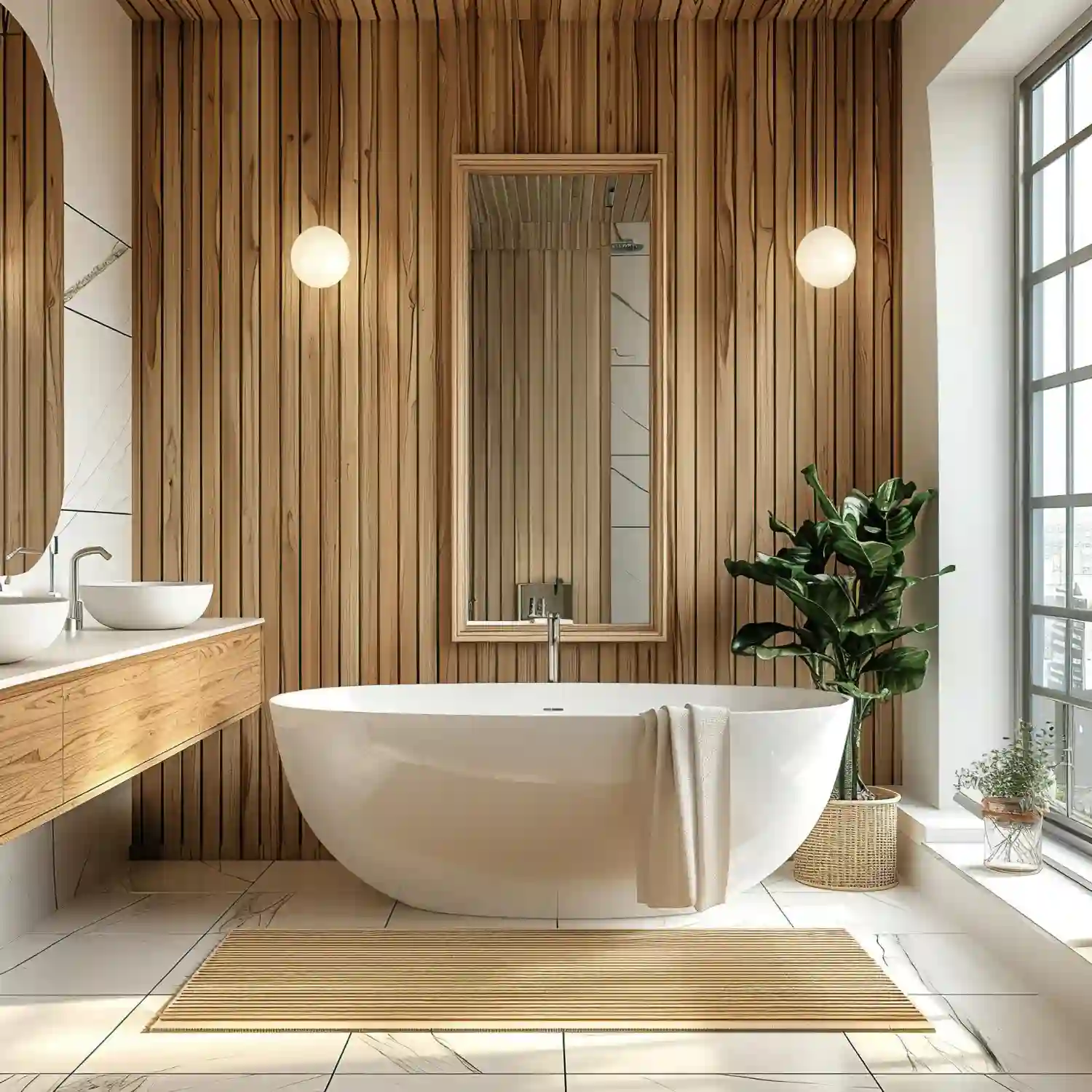
Wood-look porcelain gives you the grain and warmth of timber without the water risk. Real wood swells and rots in a wet room. Porcelain planks shrug off moisture, so you get oak, walnut, or driftwood tones on a floor rated for splashes and steam. Warm honey and mid-brown planks read cozy; gray-brown planks stay cooler and more modern.
Lay the planks in a straight run to stretch a narrow bath, or in herringbone for a richer, more custom look. Wood-look is one of the easiest bathroom floor tile ideas for anyone who wants warmth but worries about maintenance. It cleans like tile and never needs refinishing.
Tumbled Stone and Travertine
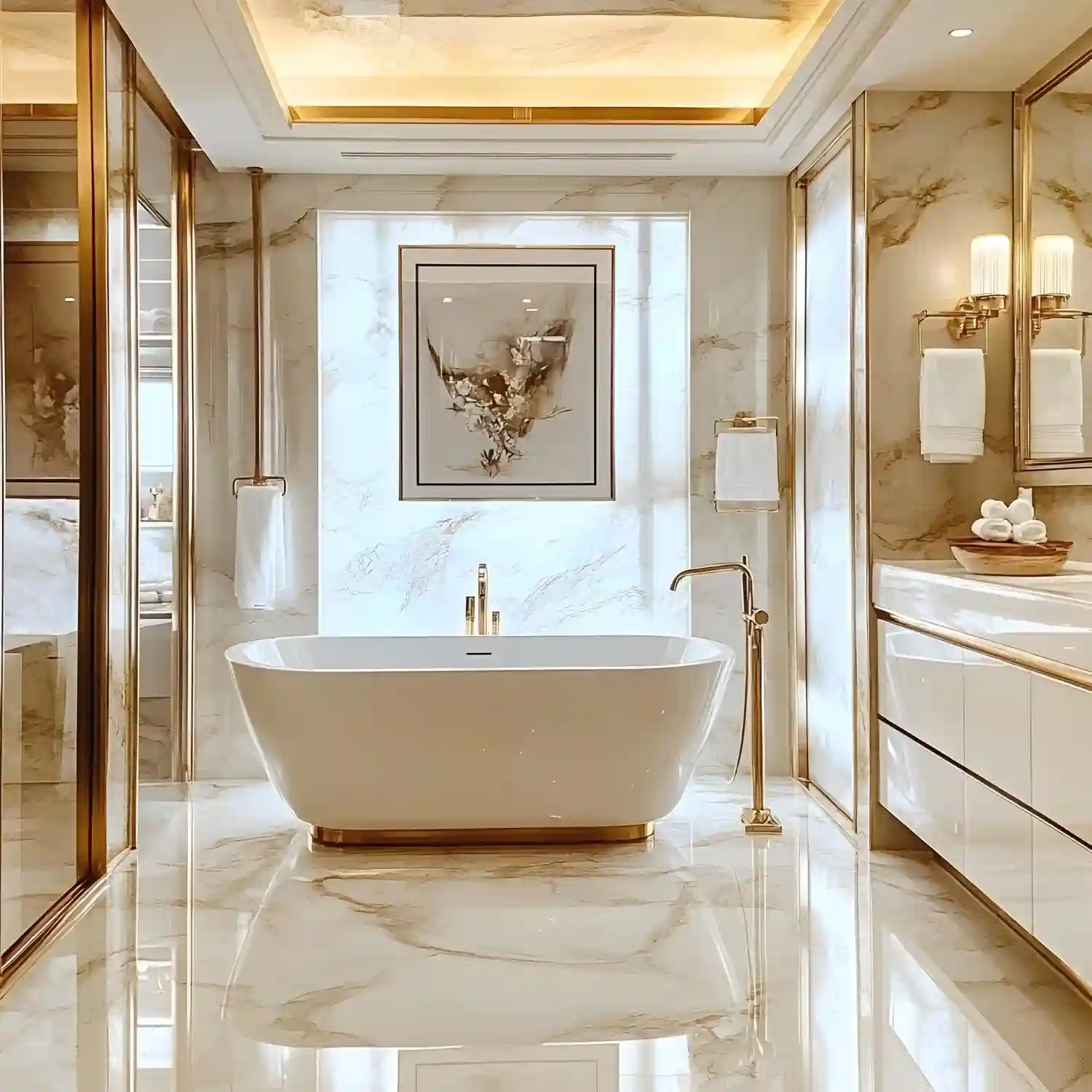
Tumbled travertine, limestone, and marble bring soft, honed warmth and a floor that feels centuries old. The tumbled edge and matte surface give a gentle grip and a quiet, creamy tone. Travertine in particular carries warm beige and ivory veining that flatters brass, oak, and off-white walls. It is a natural fit for a spa-calm or old-world bath.
Material Note: Natural stone is porous and needs sealing to resist water and staining, with resealing every year or two depending on wear. A honed or tumbled finish grips better than polished stone, which turns slick when wet. If you love the look but not the upkeep, stone-look porcelain copies the veining with zero sealing.
Warm-Toned Porcelain
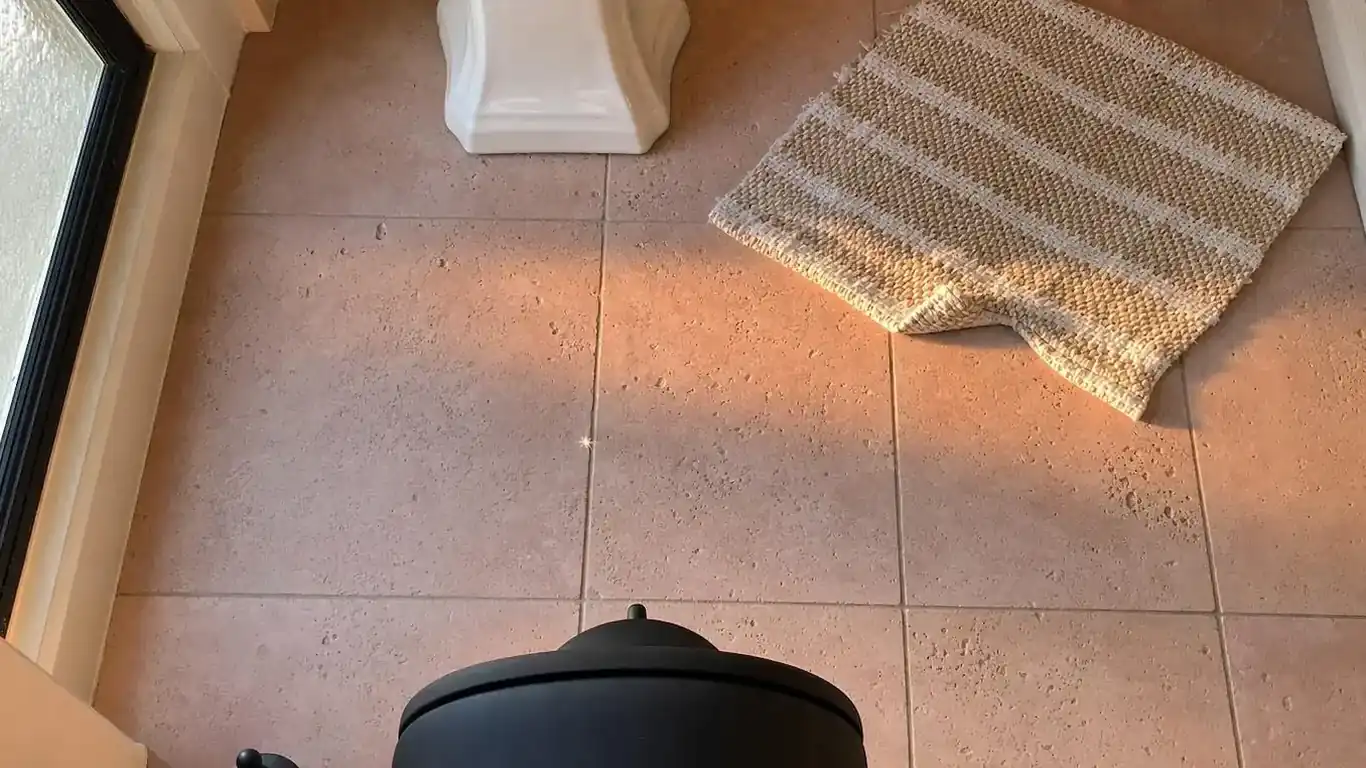
If you want the easy care of porcelain but not the cold gray, warm-toned porcelain is the answer. Think greige, warm taupe, soft clay, and even deep forest green — the colors doing the heavy lifting as the new bathroom neutrals. A warm-beige large-format floor still reads clean and modern, but it glows instead of chilling the room.
Deep green floor tile is having a real moment for baths with personality, and it pairs with brass and warm wood the way our sage and forest green bathroom palettes do on the walls. For a softer, brighter room, warm greige or blush-taupe porcelain keeps things light without the sterile edge of pure gray or stark white.
Pattern Underfoot
Pattern is where a floor earns the right to lead. A patterned floor becomes the focal point, which means you can keep the walls plain and let the ground do the talking. This group covers the pattern directions worth copying — and several of them add grip as a bonus, because more tile edges mean more grout and more traction.
Checkerboard, Softened
Checkerboard is back, but the sharp black-and-white version has softened. The most current take pairs muted tones — cream with warm gray, ivory with sage, or clay with off-white — for a European, lived-in feel instead of a stark grid. Set on the diagonal, a checkerboard floor makes a small bath feel wider and instantly gives it character. It is also the clearest sign of the vintage bathroom revival, softened for a modern room.
A true classic black-and-white checkerboard still works beautifully in a vintage or powder room, and our elegant black and white bathroom designs show how to keep the contrast crisp without feeling cold. For most modern baths, though, the tonal version ages more gracefully.
Penny and Hex Mosaic for Grip
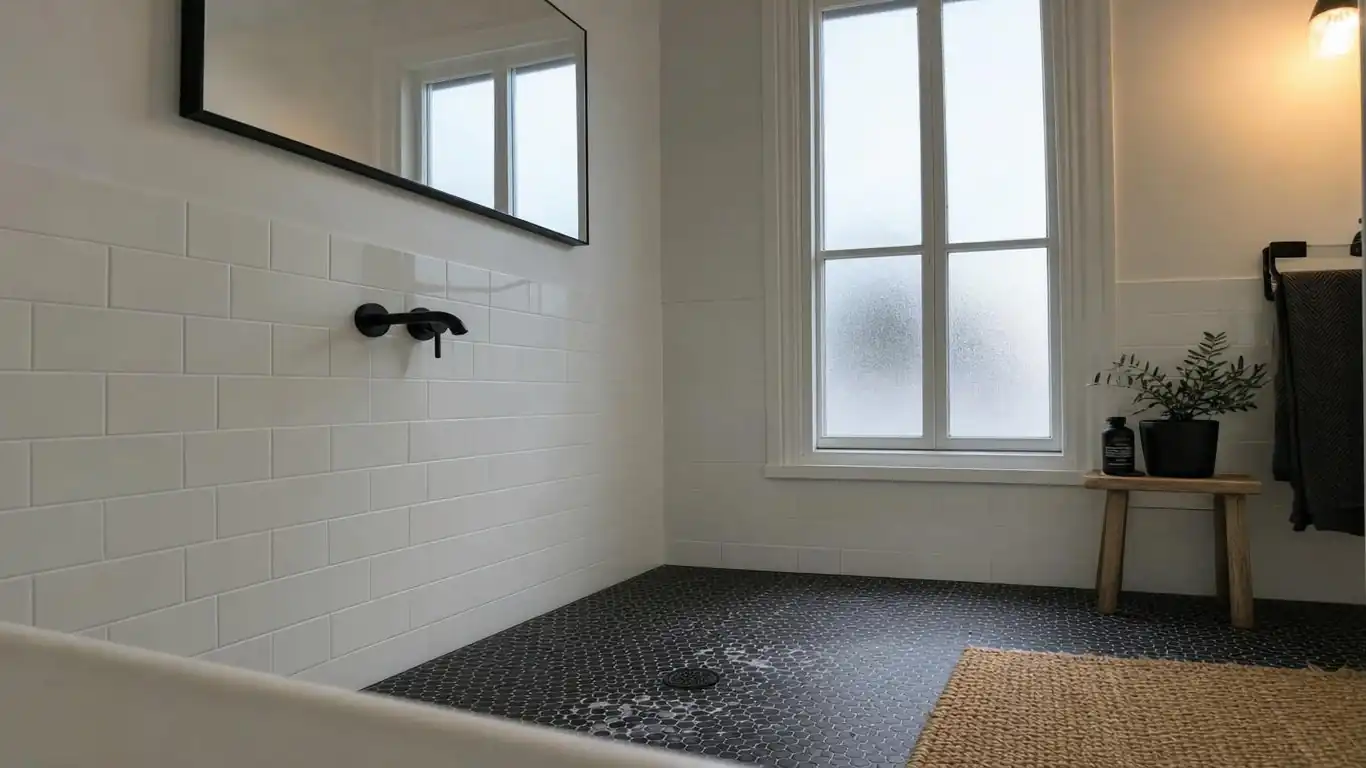
Penny rounds and hexagon mosaics are the smart-and-pretty choice. Small tiles mean many grout lines per square foot, and grout grips wet feet far better than a wide glazed surface. So a mosaic floor is one of the few pattern choices that actually makes the room safer underfoot. That is a rare win — good looks and better traction in the same tile.
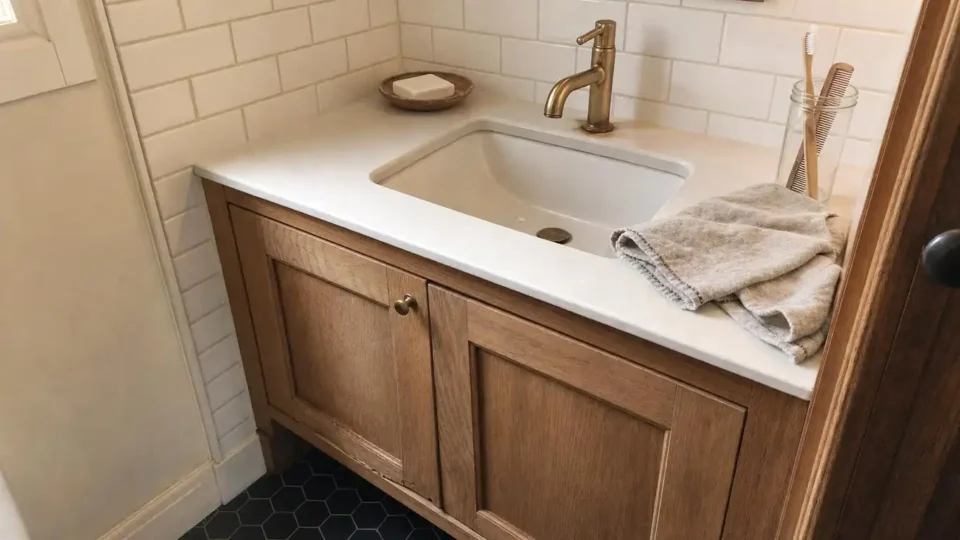
Penny tile reads playful and vintage; matte hex reads clean and modern. Both come in warm cream, terracotta, sage, and black for a border or accent. Run a single warm tone for calm, or drop in a scatter pattern for a floor that carries the whole room’s personality.
Encaustic and Moroccan Pattern
Encaustic cement tile brings bold, graphic pattern — the painterly florals and geometrics you see in Moroccan and Spanish baths. This is maximum floor personality. One patterned encaustic floor can carry an entire small bathroom, so you keep the walls and vanity simple and let the ground be the art. Warm ochre, faded terracotta, and inky navy patterns feel richest.
These layered, pattern-happy floors are a natural fit for the relaxed, collected look in our dreamy boho bathroom inspiration. Cement encaustic needs sealing to resist water, so many people choose encaustic-look porcelain for the same pattern with far less maintenance.
Zellige-Look Floor Tile
Zellige is handmade Moroccan clay tile, prized for its glossy, uneven glaze and gentle color shifts. On a floor it gives a floor that catches light differently across every tile — no two are quite the same. That handmade variation is exactly what design editors say is replacing flat, polished, mass-made tile. It brings soul to a plain room.
Zellige comes in warm blush, honey, olive, and soft white glazes, so it can bring quiet color or real personality. Blush and warm-neutral zellige floors carry the same grown-up softness as our sophisticated pink bathroom palettes. For wet floors, choose a matte or lightly textured zellige-look tile rather than a high-gloss one.
Herringbone and Vertical Lay
Sometimes the pattern is in the layout, not the tile. A plain plank or rectangular tile set in herringbone, chevron, or a vertical stack turns a simple material into a custom-looking floor. The lay direction also shapes the room. Planks run lengthwise stretch a narrow bath, while a herringbone weave adds richness and movement to a plain square room.
DESIGNER TIP: In a small or narrow bathroom, run rectangular floor tile the long way down the room’s longest wall — the lines pull the eye and the space reads longer than it is. Save busy herringbone for rooms with enough open floor to show it off.
Smarter Ways to Set the Floor
The material and pattern matter, but so does how the tile is set. These moves make a floor safer, warmer, or visually bigger without changing the tile you picked. They are the details that separate a floor that merely looks good from one that also works.
Small Mosaic Means More Grout and More Grip
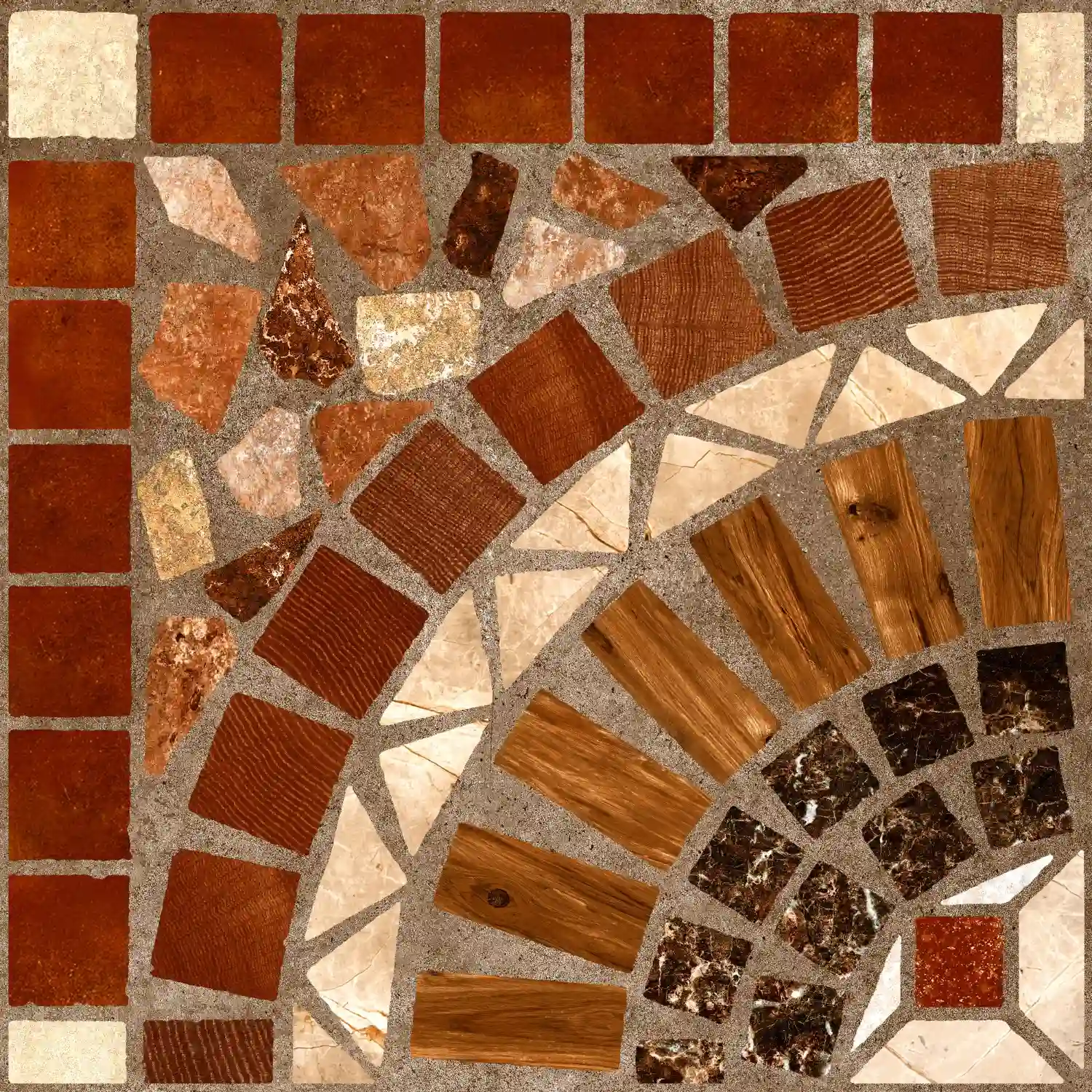
Grip comes down to a number. Tile made for wet floors should have a wet DCOF of 0.42 or higher — the slip-resistance minimum set by the ANSI A137.1 standard for interior floors walked on when wet, as Daltile explains in its DCOF guide. Below that, a wet floor gets risky.
Smaller tiles help you clear that bar. A mosaic floor has many more grout lines per square foot, and grout grips wet skin better than a wide glazed face. So penny, hex, and small-square mosaics tend to feel more sure-footed than big glossy planks. If you want a large-format look, choose a matte or textured finish and check the DCOF rating before you buy.
Pair Tile With a Heated Floor
Tile is the ideal partner for a heated floor. Stone, ceramic, and porcelain conduct and hold heat well, so radiant warmth spreads evenly and lingers after the system shuts off, as Daltile notes in its heated-floor guide. That is why the “cold tile” complaint disappears the moment you add underfloor heat — warm terracotta or stone underfoot on a winter morning is a genuine comfort upgrade.
Porcelain and thin natural stone transfer heat best; thick stone warms slower but holds it longer. Safety Note: Wet-zone waterproofing, subfloor prep, tile setting, and any heated-floor electrical work belong to a licensed installer and electrician — pick the tile, then hand the wiring and waterproofing to a pro.
Match Floor to Wall in a Small Bath
In a tiny bathroom, carrying the same tile from the floor up onto the lower walls tricks the eye. There is no hard line where floor stops and wall starts, so the room reads bigger and calmer. It works best with a warm, light tile — greige, cream, or soft clay — that keeps the wrapped surface from feeling heavy or cave-like.
This one move can make a windowless powder room feel like it grew a foot in every direction. For more ways to brighten and open a compact bath, our refreshing spring bathroom decor ideas lean into exactly that light, airy feeling.
Grout Color as a Design Choice
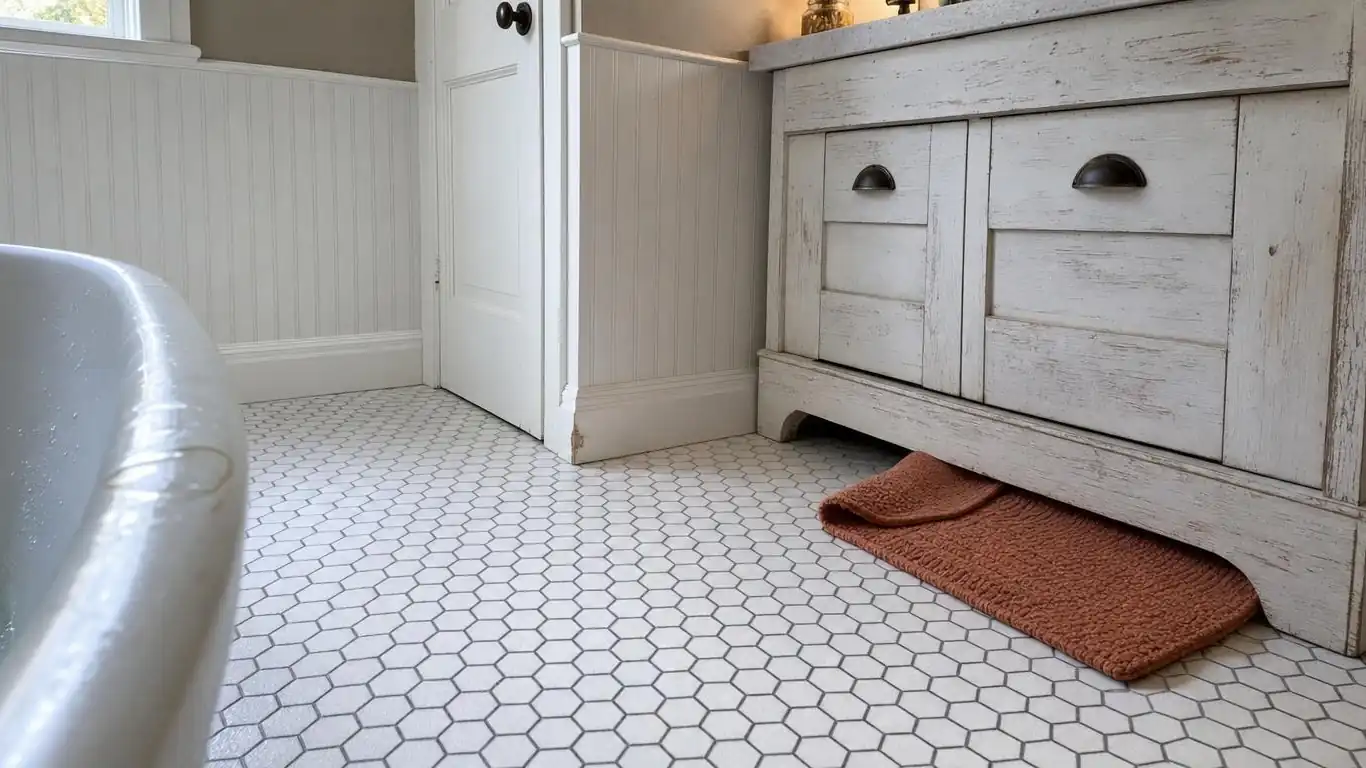
Grout is not an afterthought — it is a design decision. Match the grout to the tile and the floor reads as one smooth, calm surface, which suits large-format and minimalist rooms. Contrast the grout and every tile edge pops, which is what makes a checkerboard, hex, or penny floor graphic and lively. Same tile, two completely different floors.
Designer Rule of Thumb: In a wet, high-traffic bathroom, avoid bright white grout on the floor — it grays and stains fast. A warm greige, soft taupe, or charcoal grout hides wear and keeps the floor looking clean far longer between deep cleans.
Large-Format With Minimal Grout
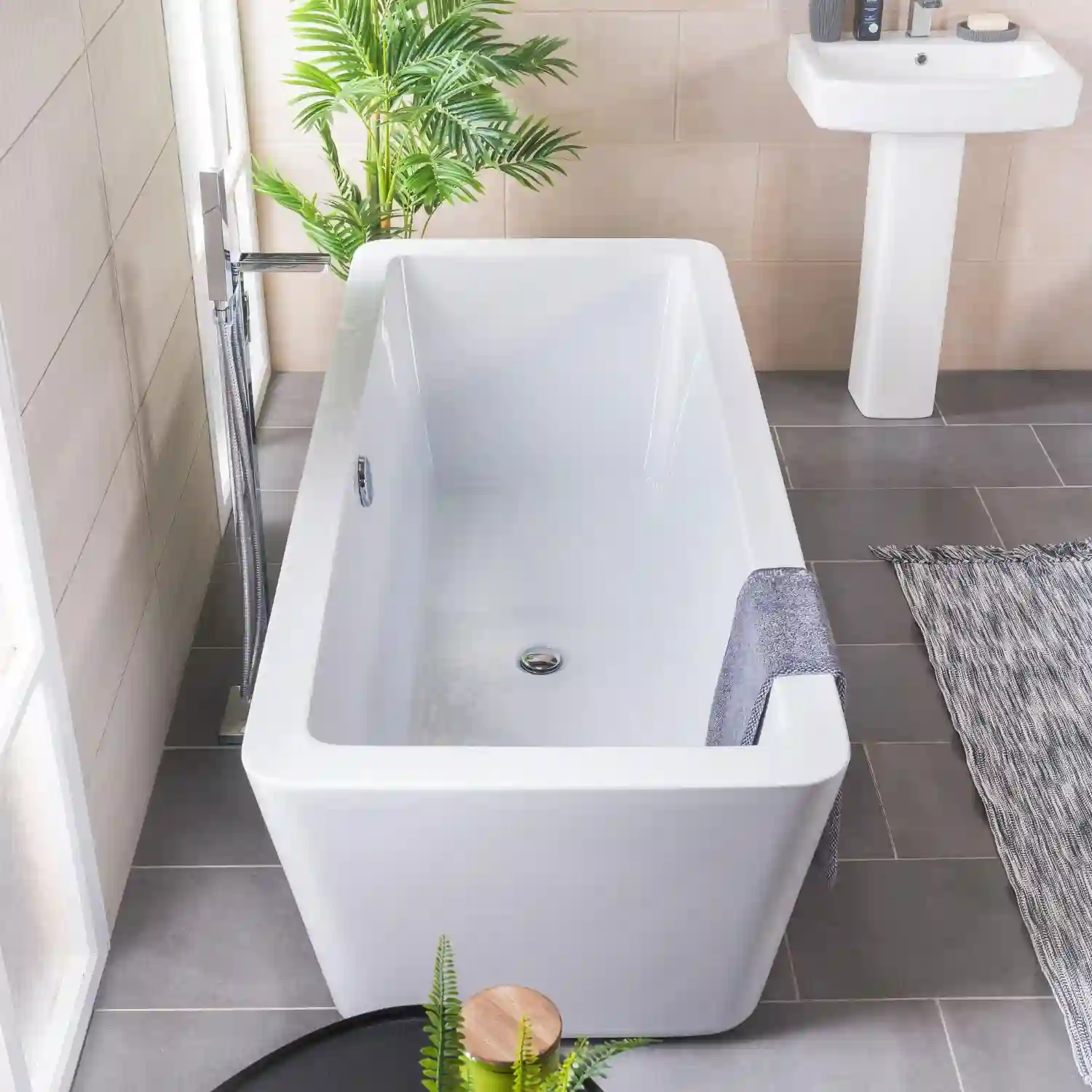
Large-format tile is not off the table — it just needs warmth and the right finish. Big warm-toned or stone-look planks with a tight, color-matched grout line give a seamless, spa-calm floor with very little to clean. The trick is choosing a warm color and a matte, textured surface so it grips and glows instead of chilling the room.
This pared-back, low-line look is right at home in the clean rooms from our minimalist bathroom decor ideas. Just confirm the tile carries a wet-rated DCOF, since wide glossy formats are the most likely to turn slick underfoot.
How to Choose Your Bathroom Floor Tile
- Pick the material and color first (warm porcelain, terracotta, stone, or mosaic), then match the walls and vanity to the floor.
- Confirm the tile has a wet DCOF of 0.42 or higher before buying — this is the wet-floor slip minimum.
- Choose small mosaic or a matte, textured finish in the wettest zones for extra grip.
- Seal terracotta, cement, and natural stone; skip sealing with glazed porcelain look-alikes if upkeep worries you.
- In a small bath, carry one warm light tile up the lower walls to make the room feel bigger.
- Pick grout color on purpose: matched for calm, contrasting for pattern, and warm-toned to hide wear.
- Budget for tile material by the square foot first, then get an installer quote separately.
KEY TAKEAWAY: The best bathroom floor tile ideas start with a warm, wet-rated material and let the floor lead — the walls follow the floor, not the reverse.
Signs This Is Catching On
The warm, pattern-forward floor is not a fringe idea — it is where the industry is clearly heading.
Signs This Is Catching On:
- Design editors now name terracotta, deep green, and warm stone as the “new neutrals” for bathrooms, pushing cool gray out of the default slot.
- Handmade-look and zellige tile with visible glaze variation are being called out as the replacement for anything overly polished and mass-made.
- Tonal checkerboards in cream, sand, and soft gray are resurfacing across new projects, replacing the stark black-and-white grid.
- Manufacturers are expanding warm terracotta, wood-look, and stone-look porcelain lines, a reliable signal that demand has moved past cold gray.
Where Tile Floors Go Wrong
Even a beautiful tile can fail if the setup is off. These are the mistakes that trip people up most.
❌ Choosing a glossy tile for a wet floor → ✅ Pick a matte or textured tile with a wet DCOF of 0.42 or higher.
❌ Defaulting to cold gray large-format → ✅ Start with a warm material and let the floor lead the room.
❌ Using bright white grout on the floor → ✅ Choose warm greige, taupe, or charcoal grout to hide wear and stains.
❌ Skipping sealer on stone, terracotta, or cement → ✅ Seal porous tile on install and reseal every year or two.
What You’ll Spend on Floor Tile
Costs below are for tile material only, priced per square foot — installation, waterproofing, and subfloor work are quoted separately by your installer.
| Project | Estimated Cost | Impact Level |
|---|---|---|
| Ceramic and wood-look ceramic floor tile | $2–$6 / sq ft | Medium |
| Quality porcelain (wood-look, warm-toned, large-format) | $5–$12 / sq ft | High |
| Penny and hex mosaic sheets | $8–$20 / sq ft | High |
| Zellige, encaustic cement, and natural stone | $10–$30+ / sq ft | Very High |
Best First Upgrade: Warm-toned or wood-look porcelain gives the biggest change for the money — it kills the cold gray look, resists water, and needs no sealing.
Skip for Now: A full natural-stone floor if the budget is tight — a stone-look porcelain gets 90% of the look for a fraction of the material cost.
The Bottom Line
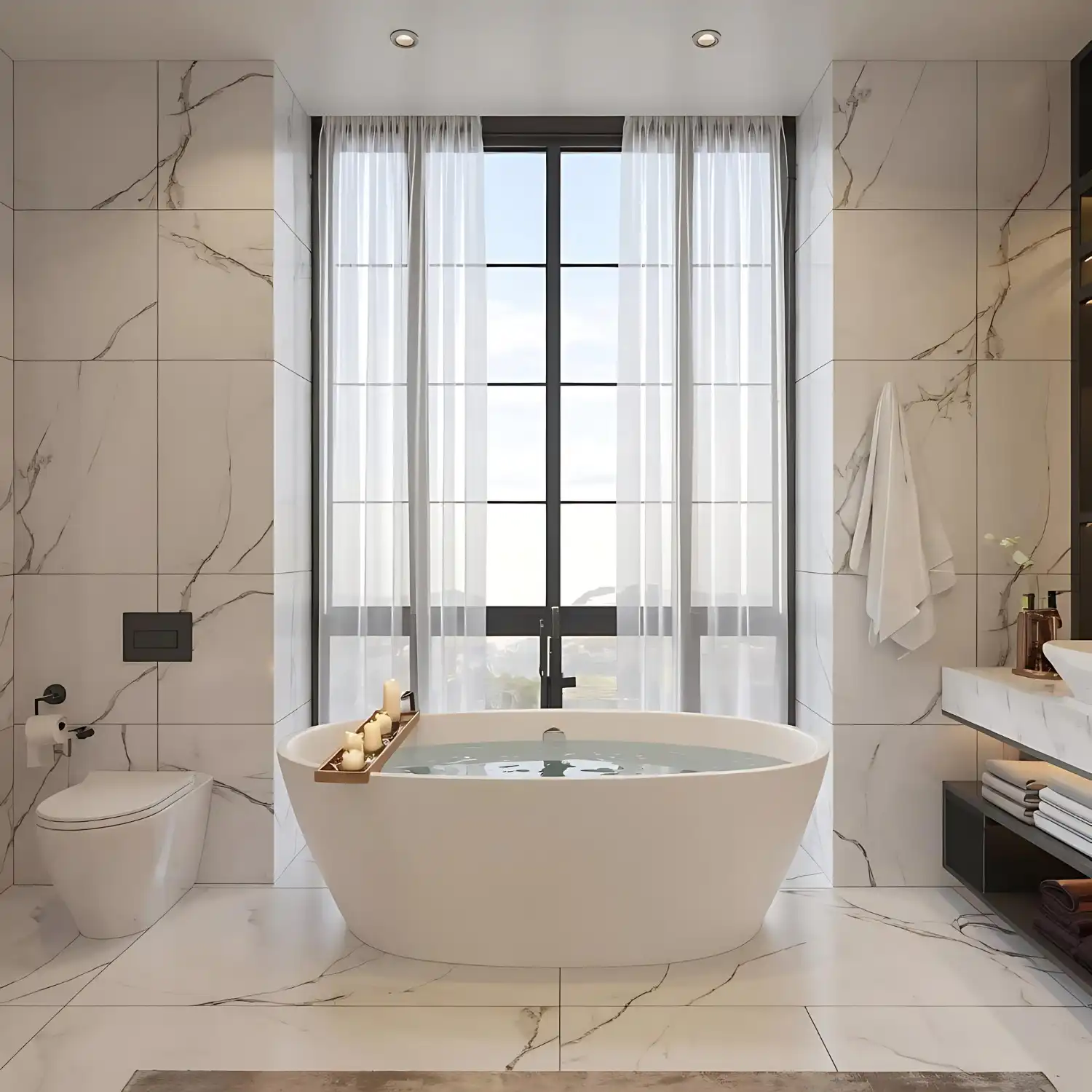
Designer’s Verdict: If you choose one floor to lead the room, make it warm wood-look or warm-toned porcelain — it beats cold gray on looks, warmth, and water resistance while staying easy to live with. Save terracotta, zellige, and encaustic for the room where you want the floor to be the whole personality, and reach for penny or hex mosaic anywhere grip matters most. The gray large-format era is closing because a warm, tactile floor simply does more for the room.
Frequently Asked Questions
Conclusion
The strongest bathroom floor tile ideas share one belief: the floor is the hardest-working surface in the room, so let it lead with warmth, texture, and grip instead of hiding under flat gray. Editorial field note: a plain bath with white walls and a cold floor almost always feels finished the moment a warm terracotta or wood-look floor goes down — the room stops looking like it is waiting for something. Start with the material underfoot and the rest of your home decor choices fall into place, and browse more of our room-by-room ideas when you are ready for the next surface.
Next Steps
- Measure your bathroom floor in square feet, then set a tile-material budget using the per-square-foot ranges above.
- Order samples of two warm options — one wood-look or warm porcelain and one terracotta, stone, or mosaic — and set them on the floor in daylight.
- Check each sample’s wet DCOF rating and confirm it is 0.42 or higher before you commit.
- Get a separate installer quote for waterproofing, subfloor prep, and setting, and ask about adding a heated floor while the tile is up.